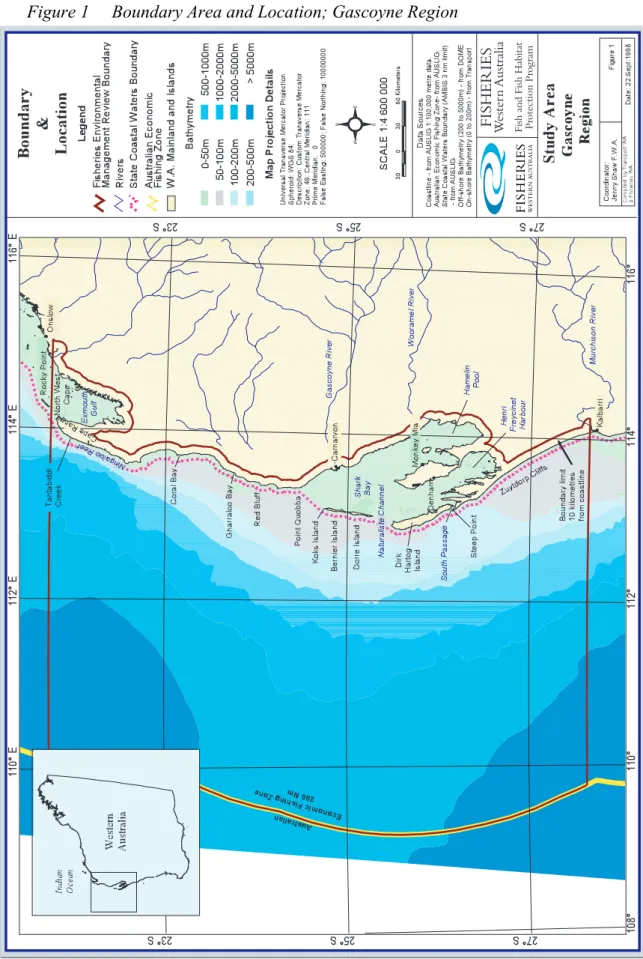
Fisheries Environmental Management Plan for the Gascoyne Region - Draft Report June 2002 Compiled by Jenny Shaw Fisheries Management Document No. possible impacts of fishing on the environment. A draft Gascoyne Fisheries Environmental Management Plan was published in conjunction with the Fisheries Environmental Management Review (2000).
The Department of Fisheries undertakes a series of Fisheries Environmental Management Reviews (FEMRs) and plans.
- P HYSICAL AND B IOLOGICAL E NVIRONMENT
- C OASTAL AND I NSHORE ECOSYSTEMS
- O FFSHORE AND O CEANIC E COSYSTEMS
- M ARINE F AUNA
- S TAKEHOLDERS
- Fishing
- Post-Harvest Fishing Interests
- Tourism and Recreation
- Mining and Petroleum Industry
- Ports and Shipping
- Agriculture
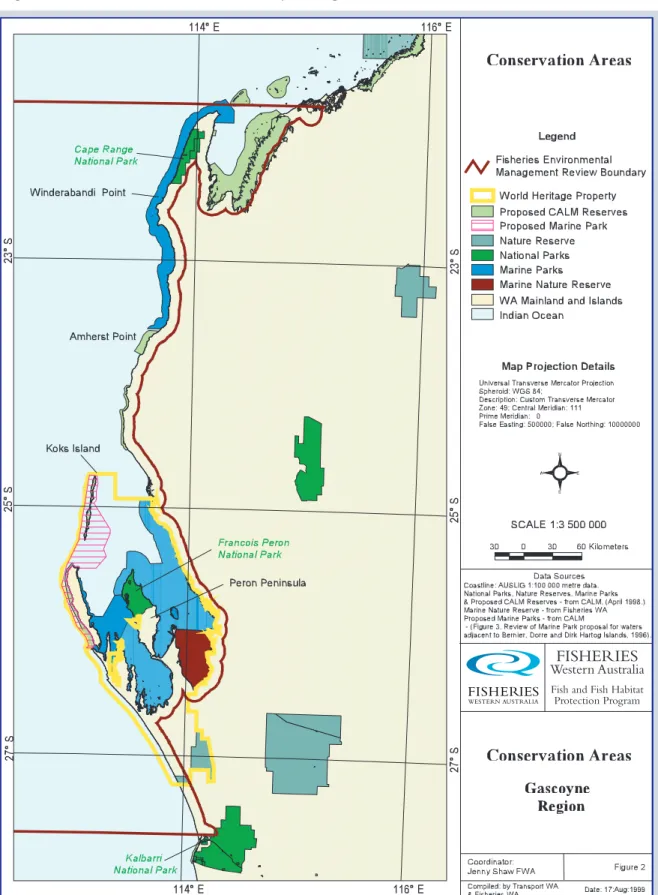
- Conservation and Conservation Areas
- Research
Mangroves: The east coast of Exmouth Gulf supports one of the largest mangals in the region. The economic value of post-harvest fishing interests in the Gascoyne is unknown, but is considered significant (McLeod P., press comm.). It is estimated that visitors who spent more than one night in the Gascoyne region spent about $57 million in 2000 (WA Tourism Commission).
Agricultural interests in Gascoyne include a significant horticultural industry in Carnarvon and extensive pastoral land along much of the coastal areas.
FISHERIES AND FISHING ACTIVITIES IN THE GASCOYNE
C URRENT M ANAGEMENT OF THE F ISHERIES OF THE G ASCOYNE
- Commercial
- Recreational
- Fishing Tourism Operators
- Pearling and Aquaculture
While catch data are extensive in many fisheries, some of the minor fisheries in the Gascoyne region have limited or no stock assessment analysis (Shaw, 2000) - for example the Marine Aquarium Fish Managed Fishery. These small fisheries are managed by assessing the risk of the fishery on the fish stocks and the environment. There are also certain restrictions on the type of fishing that can occur in a specific area, especially in the marine parks of the Gascoyne region.
Fishing The tourism industry is more closely aligned with the recreational fishing sector than the commercial sector due to the species targeted, fishing gear used and motivation for fishing.
F ISHERIES E NVIRONMENTAL M ANAGEMENT I SSUES FOR THE G ASCOYNE
- Inshore Ecosystems
- Offshore and Oceanic Ecosystems
There is no documented evidence to demonstrate significant habitat changes as a result of seine fishing in the Gascoyne region. Commercial fisheries operating in the coastal habitats of the Gascoyne Region are managed to ensure that resources are exploited at sustainable levels. In the Gascoyne region this is also true, however there are large relatively remote areas (all south of Shark Bay) that are accessible and widely visited by recreational anglers.
This is pertinent in light of proposed marine parks and coastal development in the region. In the Gascoyne region, the impact of vessels tends to be concentrated around ports and favored anchorage areas. In the coastal and coastal areas of the Gascoyne region, urban development is relatively minimal.
Mining in the area is limited to salt production (Lake MacLeod and Useless Loop), gas gathering and limestone mining (North West Cape) and shell mining (Shark Bay). The level of fishing activity in the offshore and oceanic ecosystems of the Gascoyne region is low. There are two Commonwealth fisheries operating in the deeper offshore and oceanic areas of the Gascoyne - the Western Deepwater Trawl Fishery and the Western Tuna and Stingray Fishery.
In the coastal and oceanic environment of the Gascoyne, there appears to be little threat to fisheries. The table below is a brief summary of the known, perceived and potential environmental impacts of fishing in the Gascoyne region. It provides a qualitative and subjective assessment of the level of environmental impacts in the region (if any) and examines whether the regional fishing activity and its associated environmental impacts (if any) potentially threaten the ecological sustainability of the region. .
The table includes agencies other than Fisheries WA which may have responsibility for a particular area of the environment in the Gascoyne region.
F ISH P ROTECTION M EASURES
- Eastern shore of Exmouth Gulf
- An area or areas between Gnarraloo Bay and Point Quobba
- Miaboolya Beach - Carnarvon
- Shark Bay
Many of the species targeted by commercial and recreational fishers use the eastern gulf as a nursery. Fishermen in the Exmouth Gulf Beach Seine Fishery catch mullet and whiting in the southern part of the gulf. Part of the proposed area (particularly around the islands) is used by sport fishermen fishing from boats.
The mangal is one of the largest in the state and includes a range of mangrove assemblages. The area is home to turtles and the eastern part of the gulf is also home to a significant dugong population. Much of the area has had relatively few visitors due to access issues.
The area south of the proposed southern extension of Ningaloo Marine Park to Quobba Point (Figure 5). Access to part of the area is closed, and traffic is limited. Recreational fishing is one of the main tourist attractions for the Carnarvon area (Department for Tourism Industry Development, 1997).
A large proportion of the catch for the Shark Bay Prawn Managed Fishery is taken from this area (estimated catch value for the entire fishery. $34m). A large proportion of the catch for the Shark Bay Scallop Managed Fishery is taken from this area (estimated catch value for the entire fishery. $7.4m).
PROPOSALS FOR FURTHER ENVIRONMENTAL MANAGEMENT OF
R ECOMMENDATIONS ARISING FROM THE FEMR, SPECIFIC TO THE G ASCOYNE R EGION
- Formally Incorporate Environmental Management Measures Into Each Commercial And
- Increase The Protection Of Marine Habitats By Re-Defining Trawl Licence Areas And The
- Quantify The Socio-Economic Value Of Fishing In The Gascoyne Region
- Rationalise Recreational Fishing Rules In The Region
- Increase The Education And Compliance Awareness For Recreational Fishers In The More
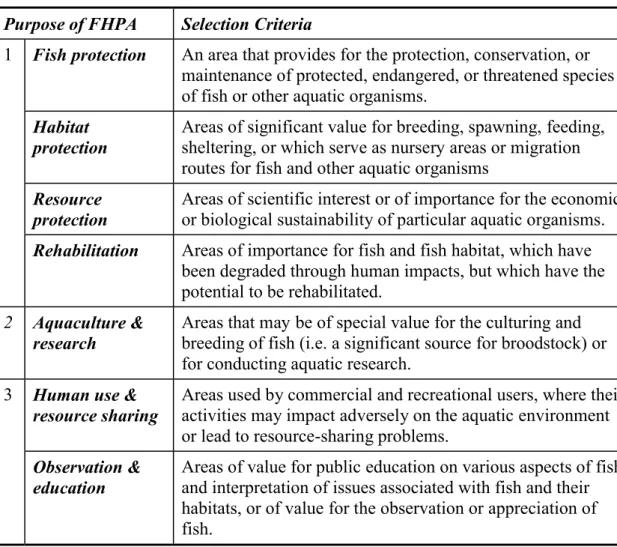
- Establish Fish Habitat Protection Areas
While the cost of data collection and analysis is an issue, the data provided in catch returns can be a good overall measure of ecosystem health. Commercial fishing returns can be modified to enable the collection of more information on the health of the marine ecosystem. It is recommended that areas in the Shrimp and Scallop Bay Shark Bay Managed Fishing License Area, which are not currently used, be closed to anglers.
Early work (McLeod and McGinley 1994) indicated that the main fisheries in the Gascoyne region accounted for almost 33 per cent of the total output of WA fisheries. Using economic multipliers, the total value of the commercial fishery to the economy in the Gascoyne is estimated at approximately $254.3 million. These figures are based on production value and do not take into account other interests that contribute to the socio-economic value of fishing in the Gascoyne, such as fish processing operations.
In the Gascoyne the numbers are likely to be significant and may be important when assessing the ecological sustainability of regional fisheries. It is recommended that the socio-economic value of all fisheries sectors in the Gascoyne region be quantified. Following community discussion and submissions on a draft recreational fisheries management strategy, a five-year management strategy for recreational fisheries in the Gascoyne region of WA (Fisheries Management Paper No.) has recently been released.
The Gascoyne Strategy will specifically define the objectives of recreational fisheries management in the region, provide guidelines and priorities for management and provide for a uniform set of controls across the region. With the number of Marine Parks in the region and the proposed expansions, the costs of compliance within Marine Parks and in remote areas must be addressed.
B ROADER D EPARTMENT OF F ISHERIES INITIATIVES RELEVANT TO THE G ASCOYNE R EGION
- Develop A Whole Of Government Approach To Marine Management
- Adopt Management Tools for Ecologically Sustainable Fisheries
- Map Ecosystem Types
With the agreement of the Minister, community groups can nominate Fish Habitat Protection Areas for consideration and the Minister for Fisheries can transfer the management of an FHPA to a community group that is a body corporate. The Department of Fisheries has reported annually to Parliament on the state of WA fisheries since 1968 in a document entitled "The State of Fisheries". As part of this development, the Department of Fisheries, in close consultation with the Office of the Auditor General and the Department of Environment, Water and Catchment Protection, intends to further develop an expert system of biological auditing based on the objectives of the EDH.
The Department of Fisheries' report on fisheries sustainability will be included in the WA Government's State of the Environment report. Development of the "Protection and Sharing of Western Australia's Coastal Fisheries Resources" initiative (2000) is one of the key tools in the management of the state's fisheries using an ecosystem approach. This process is intended to facilitate a fair and equitable distribution of the fishery resource to all major users, and the best way to do this may well be to integrate the management of the state's coastal fisheries within one agreed framework.
It is expected that the process of developing integrated management of the state's coastal and estuarine stocks will be long, but it will provide an effective basis for fisheries management in the future. The Ministry of Fisheries is developing a series of environmental management reviews of fisheries and supplementary management plans for the state's marine areas as well as inland fisheries. However, subsequent plans will evolve to reflect the agency's progress in their ability to report on ESD targets.
There is a need to map ecosystem types in terms of physical and biological resources to identify areas of particular importance in the Gascoyne region, as well as those areas affected by fisheries. There is little or no information on habitats or ecosystems in the coastal and oceanic regions of Gascoyne.
IMPLEMENTATION STRATEGY
FIGURES
FISHERIES MANAGEMENT PAPERS
55 Rock Lobster Industry Advisory Committee, Chairman's Report to the Minister of Fisheries on Management Proposals for the 1993/94 and 1994/95 Seasons (September 1993). Economic Performance of Alternative Input-Output Management Systems in the Lobster Fishery, Volume 2. 69 Long-term management strategies for the lobster fishery. Market Economic Assessment for the Western Lobster Industry, Volume 3. 70 Long-term management strategies for the western lobster fishery.
71 Report of the Chairman of the Rock Lobster Industry Advisory Committee, October 1994, The Western Rock Lobster Fishery - Management Proposals for the 1994/95 and 1995/96 Seasons (November 1994). 82 The impact of the new management package on smaller operators in the Western Rock lobster fishery R. 86 A summary of ministerial policy guidelines for lobster processing in Western Australia by the Working Group appointed by the Minister for Fisheries and chaired by Peter Rich (December 1995).
94 Report from the spiny lobster industry's advisory committee - Management arrangements for the western spiny lobster fishery for the 1997/98 season. 103 Future Management of the Aquatic Charter Industry in Western Australia by the Tour Operators Fishing Working Group (September 1997). Prepared by the Abrolhos Islands Management Advisory Committee in collaboration with Fisheries Western Australia (October 1997).
123 Future Directions for the Rock Lobster Industry Advisory Committee and the Western Rock Lobster Managed Fishery. A discussion paper prepared by Kevin Donohue on behalf of the Rock Lobster Industry Advisory Committee.