http://researchcommons.waikato.ac.nz/
Research Commons at the University of Waikato
Copyright Statement:
The digital copy of this thesis is protected by the Copyright Act 1994 (New Zealand).
The thesis may be consulted by you, provided you comply with the provisions of the Act and the following conditions of use:
Any use you make of these documents or images must be for research or private study purposes only, and you may not make them available to any other person.
Authors control the copyright of their thesis. You will recognise the author’s right to be identified as the author of the thesis, and due acknowledgement will be made to the author where appropriate.
You will obtain the author’s permission before publishing any material from the thesis.
i The Use of Mobile Technology Apps when Teaching and Learning
Geometry in Sri Lankan Secondary Schools
A thesis submitted in fulfilment of the requirements for the degree
of
Doctor of Philosophy in Education at
The University of Waikato by
Meegasdeniya Nelie Shiyama Edirisinghe
2022
ii
Abstract
In the last decade, there has been rapid development of digital technologies (DT), and their adoption in mathematics education has been widely discussed in the research literature. The Sri Lankan curriculum stipulates the use of digital technologies in learning, but the practice differs among most teachers. The purpose of this study was to explore different perspectives surrounding the use of mobile technology applications (apps) by pre-service mathematics teachers with a focus on the pedagogical approaches used when teaching geometry to year ten students in Sri Lanka. The interpretive paradigm was selected as the most appropriate philosophical basis and paradigm for underpinning the study. It enables the interpretation of the identification of any pattern, permits insights into the pre-service teachers’ beliefs and knowledge, and outlines the research setting (block-teaching) of GeoGebra being used for teaching and learning (social processes). Pre-service teachers’ knowledge about the use of GeoGebra for teaching and learning geometry was analysed with the technological pedagogical content knowledge (TPACK) framework.
This study followed the mixed method approach. Two case studies were conducted in two teacher education institutes (TEIs) in Sri Lanka to examine pre-service teachers’
beliefs and knowledge of the use of apps in geometry after their block-teaching experience. Quantitative and qualitative methods were used for the data collection.
Two case studies conducted with the survey questionnaire were followed by semi- structured focus group interviews with pre-service teachers and individual interviews with teacher educators. The purposive sample of 163 pre-service mathematics teachers and eight mathematics teacher educators from pre-service TEIs in Sri Lanka participated in the study. Findings have revealed that pre-service teachers not only need an understanding of geometry for GeoGebra, but their beliefs about DT and their geometry content knowledge have played crucial roles as they influence both their interpretation and engagement. The study proposes four ways that apps can influence mathematics pre-service teachers’ perspectives. Namely, pedagogical (which focuses on teaching and learning geometry); technological (the affordances of GeoGebra and features of the dynamic geometry environment (DGE) relevant to the curricula);
epistemological (understanding about GeoGebra for the development of geometrical concepts); and political (which considers context, including policy, social, and cultural
iii settings). These aspects were identified as being relevant to the use of apps in the selected geometry content during the block-teaching practices. Findings from this study also suggested that it may contribute to the literature in the field by the identification and consideration of metacognitive technological pedagogical content knowledge (M-TPACK) relevant to the selected geometry concepts.
.
iv
Acknowledgements
I sincerely thank the pre-service teachers and teacher educators who agreed to be volunteers in this research. Their participation in this research provided time for shared academic reflection and engagement in dialogue about mathematics education, even during the COVID-19 pandemic. This help was highly appreciated.
I offer huge gratitude to my supervisors. Associate Professor Nigel Calder was the first to accept my proposal and he gave unconditional academic and moral support during the challenging circumstances and difficult times in my PhD journey. His expertise in the field of DT was highly valued. Associate Professor Sashi Sharma provided constant support and care, as necessary. I appreciate her expertise in relation to mathematics education and teachers’ professional development.
I also thank all other academic and non-academic staff who have supported me during this journey. I'd also like to thank my proof-reader who helped me with the accuracy of the writing. In addition, I would like to thank relevant officers in the Ministry of Education and the National Institute of Education in Sri Lanka for their continuous support of my academic work.
Lastly, none of this would have been possible without the unconditional support of my family throughout this process, especially my husband, Sunil Kumara, and my two daughters, Niluka Dilhani and Anjalika Sewwandi.
.
v
Table of Contents
Abstract ... ii
Acknowledgements ... iv
List of Figures ... x
List of Tables ... xi
List of Acronyms...xii
Chapter 1 ... 1
1.1 Introduction... 1
1.1.1 My motivation ... 2
1.1.2 Rationale for the study ... 3
1.1.3 Significance of the study ... 3
1.2.1 Teacher education institutes (TEIs) ... 6
1.2.2 Teacher education and curriculum policy ... 8
1.3 Mathematics education ... 10
1.3.1 Pre-service teachers’ teaching practice... 11
1.3.2 Pre-service teacher education challenges ... 13
1.4 Conceptual framework and research questions ... 14
1.4.1 Statement of research ... 15
1.4.2 Research questions ... 15
1.5 T hesis outline ... 16
Chapter 2... 18
Literature Review ... 18
2.1 Introduction... 18
2.1.1 Background of the current study ... 19
2.1.2 Secondary education policy in Sri Lanka ... 22
2.1.3 Secondary school geometry curriculum resources ... 24
2.2 Vygotskian perspectives relevant to the study ... 27
2.2.1 Zone of proximal development (ZPD)... 28
2.2.2 Semiotic mediation ... 29
2.2.3 Instrumental genesis relevant to DGS ... 31
2.3 Teaching geometry ... 33
2.3.1 van Hiele model for geometry teaching and learning ... 34
2.3.2 Pre-service teachers’ beliefs about mathematics... 39
2.3.3 Mathematics teachers’ pedagogical beliefs ... 39
2.4 Mathematics teachers’ knowledge ... 41
vi
2.4.1 Pre-service teachers’ geometry knowledge ... 43
2.4.2 Pedagogical content knowledge (PCK)... 44
2.5 Digital technologies for teaching ... 47
2.5.1 Technological Pedagogical Content Knowledge (TPACK) model ... 48
2.5.2 TPACK for the apps ... 52
2.5.3 DT for task design... 54
2.6. Affordances of DT ... 57
2.6.1 Affordances of mathematics apps ... 57
2.6.2 Affordances of Dynamic Geometry Software (DGS) ... 59
2.7 DGS for geometry teaching and learning ... 59
2.7.1 DGS for professional development ... 60
2.7.2 GeoGebra for geometry ... 63
2.7.3 Metacognition knowledge: possibilities for teaching with apps ... 64
2.8 Summary of the literature review ... 65
Chapter 3... 67
Methodology ... 67
3.1 Introduction... 67
3.2 Theoretical framework ... 68
3.3 Methodology ... 71
3.3.1 Mixed method ... 71
3.4 Research design... 75
3.4.1 Design of the study... 77
3.4.2 Case study design ... 79
3.5 Participants and setting ... 81
3.5.1 Setting ... 81
3.5.2 Participants... 81
3.6 Methods ... 85
3.6.1 Survey ... 85
3.6.2 Geometry test ... 86
3.6.3 Semi-structured individual interview ... 87
3.6.4 Semi-structured focus group Interviews ... 88
3.6.5 Document analysis ... 90
3.7 Data analysis... 92
3.7.1 Quantitative data analysis ... 94
3.7.2 Qualitative data analysis ... 95
3.7.3 Validity and reliability ... 97
vii
3.7.4 Social and personal bias... 98
3.7.5 Methodological limitations ... 98
3.8 Ethical issues... 99
3.8.1 Participants’ right to withdraw from the study or to withdraw data ... 99
3.9 Chapter summary ... 100
Chapter 4... 101
Pre-service teachers’ knowledge and practices ... 101
4.0 Introduction... 101
4.1 Geometry learning... 102
4.1.1 Pre-service teachers’ geometry learning with apps ... 102
4.1.2 Geometry content knowledge ... 105
4.1.3 Challenges in the learning context ... 106
4.2 Geometry teaching ... 108
4.2.1 Confidence in geometry teaching ... 108
4.2.2 Confidence in the use of apps for teaching ... 110
4.2.3 Teaching with reflective practice ... 113
4.3 Perspectives on GeoGebra for teaching ... 114
4.3.1 Instructional methods ... 117
4.3.2 Technological content knowledge (TCK) for geometry apps ... 122
4.3.3 Potential thinking of DGE features for geometry teaching... 124
4.4 Technological pedagogical content knowledge (TPACK) for apps ... 125
4.4.1 Fidelity of geometry apps for teaching ... 127
4.4.2 TPACK for apps ... 128
4.4.3 Familiarisation of geometry apps ... 131
4.5 Possible factors that influence the use of apps for geometry... 133
4.5.1 Personal factors ... 134
4.5.2 Institutional factors... 135
4.5.3 Social factors... 141
4.6 Chapter summary ... 145
Chapter 5... 147
Pre-service teachers’ beliefs about teaching and learning geometry... 147
5.0 Introduction... 147
5.1 Pre-service teachers’ beliefs about geometry learning with apps ... 148
5.1.1 Personal beliefs ... 148
5.1.2 Beliefs about geometry block-teaching ... 149
5.1.3 Beliefs of past geometry learning experiences as students ... 150
viii
5.2 Beliefs of geometry teaching with apps ... 152
5.2.1 Pedagogical beliefs about apps ... 152
5.2.2 Beliefs about curriculum resources with apps ... 155
5.2.3 Epistemological beliefs ... 156
5.3 Beliefs about the affordances of app... 159
5.3.1 Visual manipulation ... 159
5.3.2 Dynamic manipulation ... 161
5.4 Different ways of interacting with TPACK ... 165
5.4.1 Factor analysis ... 167
5.4.2 Possible interrelationships ... 172
5.4.3 Possibility of extending knowledge in TPACK with qualitative analysis 173 5.4.4 Potential features ... 174
5.5 Belief in policies ... 176
5.5.1 Mathematics curriculum policy ... 177
5.5.2 DT policy ... 178
5.5.3 TEI policy ... 179
5.6 Summary of findings... 180
Chapter 6... 183
Discussion ... 183
6.1 Geometry teaching and learning with the app... 184
6.1.1 Pre-service teachers’ geometry block-teaching experience ... 186
6.1.2 Hypothetical learning trajectories... 189
6.2.1 Dynamic affordance of GeoGebra ... 193
6.3 Pre-service teachers’ geometry content knowledge ... 196
6.4 Pre-service teachers’ pedagogical beliefs about apps... 199
6.4.1 Inconsistency of pedagogical beliefs... 201
6.5 Pre-service teachers’ perspectives about the use of GeoGebra... 204
6.5.1 Unpacking pre-service teachers' TPACK levels ... 205
6.5.2 Relevance of TPACK ... 207
6.5.3 Possibilities of M-TPACK ... 209
6.6 Gaps in policies and use of digital tools for teacher education... 210
6.6.1 Making connections to policy. ... 213
6.6.2 Communication of institutional and personal elements ... 214
6.6.3 Pre-service teachers’ perspectives in geometry teaching and learning. 216 6.7 Summary of discussion... 218
Chapter 7... 221
ix
Conclusion... 221
7.0 Introduction... 221
7.1 Overall summary that addresses the RQ ... 222
7.2 Contribution to the field ... 227
7.2.1 Mathematics education ... 229
7.2.2 Teacher education ... 231
7.3 Implications... 234
7.3.1 Mathematics teachers ... 236
7.3.2 Pre-service teacher education ... 238
7.3.3 Curriculum policy ... 240
7.4 Limitations of the study... 243
7.4.1 Methodological limitations ... 243
7.4.2 Social limitations ... 244
7.5 Recommendations for future research... 245
7.6 Summary of conclusions ... 247
x
List of Figures
Figure 2.1 Time allocation for geometry content in secondary mathematics Figure 2.2 TPACK framework
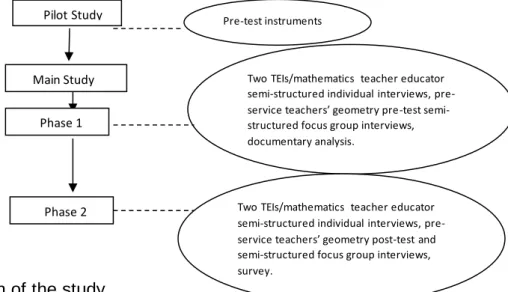
Figure 3.1 Design of the study
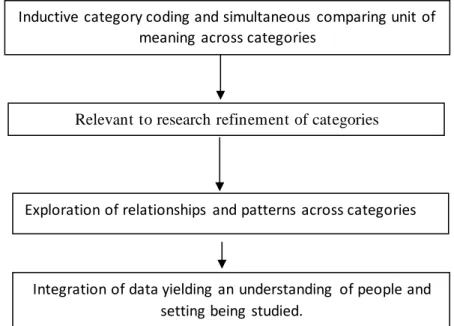
Figure 3.2 Pre-service teachers’ ages versus gender Figure 3.3 Data analysis plan
Figure 3.4 Constant comparative method of data analysis Figure 4.1 Lesson plan reflection (T3)
Figure 4.2 Main study: teaching aid (P2/T30)
Figure 5.1 Geometry question about a tangent to the circle Figure 5.2 Resource material
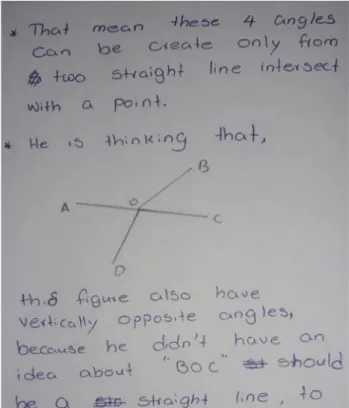
Figure 5.3 A student’s note
Figure 5.4 P2/T4 Geometrical construction problem Figure 5.5 Working with GeoGebra
Figure 5.6 Steps marked for the geometry problem Figure 5.7 Step completed diagram
Figure 5.8 Screen plot diagram with eigenvalues
Figure 5.9 TPACK interrelationships among different components
xi
List of Tables
Table 2.1 van Hiele model elaboration
Table 2.2 Mathematics Pedagogical Content Knowledge Table 2.3 Comparison of TPACK in different perspectives Table 2.4 TPACK lens with apps
Table 3.1 Summary of some mixed-method research designs Table 3.2 Summaries of studies
Table 3.3 Data collection summary
Table 3.4 TEIs by gender (cross-tabulation) Table 3.5 Test paper structure
Table 3.6 Summary of data collection methods and participants Table 3.7 Test paper structure and evaluation
Table 4.1 Paired samples’ t-test statistics
Table 4.2 Mean statistics of geometry test and confidence in geometry teaching Table 4.3 Chi-squared tests (geometry teaching with apps vs TEI)
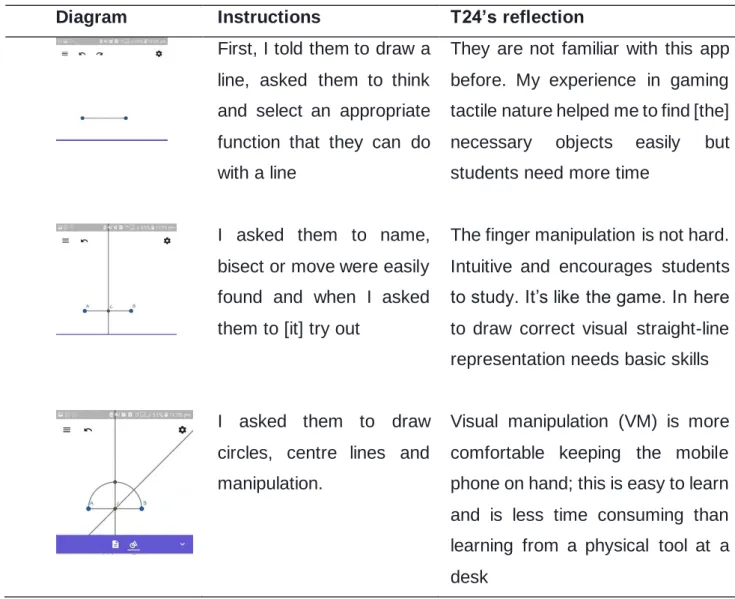
Table 4.4 Different perceptions of app use (survey data) Table 4.5 Part of the reflective journal, GeoGebra instructions Table 5.1 Past geometry learning experiences
Table 5.2 Pre-service teachers’ beliefs and knowledge about apps
Table 5.3 Kaiser-Meyer-Olkin (KMO) index and Bartlett’s test of sphericity Table 5.4 Extraction values for each statement
Table 5.5 Total variances
Table 5.6 Component pattern matrix Table 5.7 Component correlation matrix
xii
List of Acronyms
DGE Dynamic Geometry Environment DGS Dynamic Geometry Software DMK Didactic Mathematical Knowledge DoE Department of Examination DoM Department of Mathematics DT Digital Technology
GCE(O/L) General Certificate of Education (Ordinary Level) GCE(A/L) General Certificate of Education (Advanced Level) ICT Information Communication Technology
MoE Ministry of Education MT Mobile Technology
NATE National Authority of Teacher Education NCTM National Council of Teachers of Mathematics NDT National diploma in teaching
NEC National Education Commission
NEREC National Education Research and Evaluation Centre NIE National Institute of Education
PCK Pedagogical Content Knowledge TCK Technological Content Knowledge
TEDS-M Teacher Education and Development Study in Mathematics TEI Teacher Education Institute
TG Teacher Guide
TPACK Technology Pedagogical Content Knowledge UGC University Grant Commission
VM Visual Manipulation
WB World Bank
ZPD Zonal Proximal Development
1
Chapter 1 1.1 Introduction
The immersive proliferation of smartphone applications (apps) and digital technology (DT) media have altered the nature of many social activities (Jepson
& Ladle, 2015). Goos et al. (2020) explained the nature of DT activities (necessary, optional, social) in the physical space that changes to virtual space.
Thus, the use of mobile applications has altered day-to-day activities in society as well as in education (Sangrà & González-Sanmamed, 2010). Mobile technology (MT) applications capable of running in mobile technology devices have changed the nature of activities in society by positively and negatively impacting education, day-to-day life, work, and entertainment.
MT advances have meant that MT devices (e.g., smartphones) have changed from being simply an accessory for communication to being an accessible piece of equipment for education. People communicate through social communication applications (networks), which are socially connected through virtual spaces. Despite most MT applications not being produced for educational purposes, some offer great flexibility for teaching and learning (Crompton & Burke, 2014). Recognition of the communicative abilities and other touch-based facilities offered by “mobile applications” led to the development of the term apps (Handal et al., 2014). The proliferation of mobile phone apps has had a critical impact on the way users organise and/or socialise (Barzel et al., 2019). In addition, mathematics apps have self-contained programs that are endowed with various technical and pedagogical challenges for mathematics education when they are used as tools.
Chapter 1 introduces the research study and the thesis, including the first section about the motivation, including personal, to undertake the study while the second section discusses the teacher education research context in Sri Lanka. The third section reviews the background relating to mathematics education and the possibility of using mathematics apps for geometry, while the fourth section describes the theoretical considerations related to the research question. The final section summarises the thesis outline.
2 1.1.1 My motivation
First, as a mathematics teacher and later as a teacher educator in the National Institute of Education (NIE), I am interested in understanding more about the use of MT apps in mathematics education (pre-service teacher education). I have identified different perspectives and examined the factors that may influence the pedagogy, knowledge, and beliefs of pre-service mathematics teachers. I have ensured that the investigation is realistic and relevant to the needs of junior secondary classroom practitioners in the education system.
Second, I have chosen to undertake the study as it is relevant to current social and educational needs in Sri Lanka. Mathematics educationhas been identified as an area of great concern and a priority for the Sri Lankan education system.
It represents my discipline and is something that I am interested in investigating.
The report of the National Education Commission (NEC) in 1992 identified a set of basic competencies for the Sri Lankan school system as a means of achieving the National Goals (Ginige, 2008; Mampitiya, 2014). The NEC (2003) report justified a competency-based mathematics curriculum approach for the school and teacher education systems to improve students’ mathematics achievement. Ministry of Education (MoE) statistical data showed that only 1%
of all Sri Lankan teachers are untrained, which is an improving trend compared to previous years. However, the Department of Examination (DoE) and Department of Mathematics (DoM) stated that during the last decade mathematics achievement had declined consistently in national examinations.
The DoE (2016) explained that after an analysis of students’ responses in the national examination (General Certificate of Education-Ordinary Level (GCE (O/L)) in mathematics in 2015, geometry problems had the lowest proportion of correct responses in examinations. This is particularly evident with low achievement in geometry affecting national mathematics achievement (World Bank, 2011). Thus, the fact that success rates in examination results are declining, even with the increased presence of trained teachers in the profession, is alarming and is my key motivation for this research.
3 1.1.2 Rationale for the study
I decided to conduct research on junior secondary pre-service mathematics teacher education in TEIs in Sri Lanka. First, I am familiar with the teacher education research context as a teacher educator, and TEIs are the only possible access point for influencing novice teachers’ mathematics education practice in the Sri Lankan education system. Second, pre-service teachers are employed as secondary mathematics teachers in Sri Lankan state schools after they obtain diplomas from TEIs. Third, Athurupana (2011) indicated that junior secondary mathematics teachers may be weak in some geometry content knowledge that is specific to developing teaching practice. The National Education Commission (NEC) also suggested the need for research on DT integration for pre-service teacher education to improve secondary students’
achievement (NEC, 2014).
Fourth, the local research (DoM, 2016) and international researchers (Tatto et al., 2011) emphasised the importance of upskilling the geometry component in mathematics teacher preparation (e.g., pre-service teacher education) courses.
In the international literature, Tatto et al. (2011) argued that in a Teacher Education and Development Study in Mathematics (TEDS-M) of teacher preparation there were notable variations in teacher content knowledge in mathematics, with some domains, including geometry, having differences in between and within countries. However, the Ball et al. (2008) study indicated the bridge between teachers’ knowledge and teaching practice is still inadequately understood. Some studies have discussed significant aspects affecting teaching and learning secondary geometry with DT (Baccaglini-Frank et al., 2009; Baltaci, 2018).
1.1.3 Significance of the study
NEC (2014) has suggested that the DT tool trend may open new avenues for pre-service teacher education. First, I consider how this new exposure to the MT app1 has affected what pre-service teachers do with the MT available to them. Kearney et al. (2012) argued that young people behave and learn differently because of their continuous, pervasive exposure to modern MT.
1 DT facilities available in TEIs vary, but mobile phones were available for all pre-service teachers who participated in the study. MT were not considered DTs in general.
4 Early researchers applied various labels to how these young, novice teachers behave, including “digital natives” (Prensky, 2001) and ‘the next generation’
(Tapscott, 1998). In addition, Kearney et al. (2012) noted that MT apps have offered numerous opportunities as well as challenges for education. The argument is that teachers can engage in a wide range of different mobile apps in mathematics with students, which may entail learning being formalised or informative ways, and even without a formal classroom (Faggiano & Mennuni, 2020; Maton, 2010). Therefore, by introducing a multi-approach for mathematics teaching and learning with MT, pre-service teachers may have the opportunity to understand different ways of acquiring mathematical knowledge in different pedagogical media in different learning environments (Drugova et al., 2021; Marriotti, 2006).
Second, Sri Lankan studies identified that secondary mathematics students have difficulties in geometry that are similar to secondary mathematics teachers (DoE, 2016). The World Bank (2011) emphasised that there may be problems in pre-service teachers’ beliefs concerning geometry teaching and learning. The debate has been on distinguishing knowledge from beliefs, a daunting task that mathematical education researchers are battling with (Sahin & Basgul, 2020).
In the context of this research, pre-service teachers’ knowledge (Goos, 2005) and pedagogical beliefs have been considered regarding students’
mathematics achievement. Ertmer (2005) suggested that pedagogical beliefs act as an additional filter, specifically concerning mathematics teachers.
Third, another issue is that sparse mathematics teacher education research is available in the Sri Lankan context, and systematic research about pre-service mathematics teacher education is rarer. The Sri Lanka Association for the Advancement of Education (SLAAD) has shown that the former competency- based secondary curriculum has had many implementation problems in teacher education (SLAAD, 2010). Discussion around issues with the current mathematics education curriculum has been prevalent in much of the local literature (McCale, 2007; Perera, 2008). The World Bank (2011) informed relevant authorities about the problems in the competency-based mathematics curriculum. In 2008 national-level study for students’ mathematics achievement
5 (Grade 4 and Grade 8) were conducted by the NEREC2. Since then, no systematic studies have been published regarding mathematics education.
Therefore, I feel this study is significant in the Sri Lankan context. It will be useful for my career, and it may add another viewpoint about the possibilities for mobile apps to provide support for mathematics teacher education.
1.2 Background
In the last decade, there has been a rapid development of mobile applications (apps) for mathematics, and their adoption for mathematics education has been widely discussed in the research literature (Calder, 2015; Carr, 2012; Larkin, 2016; Ng & Sinclair; 2015; Octal, 2017). Octal (2017) investigated mobile apps more concerning conceptual development than procedural or declarative knowledge in mathematics. Apps have many other possibilities to benefit mathematics education. For example, Calder and Murphy (2018) addressed the potential opportunities of app affordances that could facilitate the mathematics learning process. Crompton and Traxler (2015) focused on the potential areas of application and possibilities in the use of apps for students’ mathematics achievement. However, Larkin and Milford (2017) indicated that teachers or students merely using the app did not necessarily improve the students’
achievements.
Most of the empirical studies (Ertmer et al., 2012; Tondeur et al., 2016) explored the relationships between teachers' personal beliefs and their teaching practices. Evidence indicated a mismatch between teachers’ beliefs and their actual practice with DT (Chen, 2008). However, a growing body of research has discussed different aspects of the use of digital tools for mathematics teaching and learning (Drijvers et al., 2008; Hillmayr et al., 2020). Drijvers et al. (2008) explained the benefits of didactical functions of DT in mathematics education and categorised them under (i) doing mathematics, (ii) practical skills to learn mathematics and, (iii) developing concepts to learn mathematics. Specifically, geometry conceptual developments have been discussed by several researchers (Kuzle, 2017; Olivero & Robutti, 2007) who indicated the possibility
2 National Education Research and Evaluation Centre, University of Colombo
6 of using Dynamic Geometry Software (DGS3) for geometrical thinking in problem solving. In contrast, Gunbas, (2015) indicated that mathematics teaching and learning with DT tools was not an easy task. In particular, there is a lack of adequate strategies even from education policy to effectively integrate them into teaching and learning mathematics.
1.2.1 Teacher education institutes (TEIs)
Sri Lanka has a bureaucratic model for pre-service TEIs, according to the Education Act of 1986. This Act enables the MoE to administer4 19 TEIs to conduct initial teacher education courses leading to the award (by the NIE) of diplomas for 32 different courses. These are recognised as teaching qualifications in state schools. Sri Lankan state education is free from Grade 1 to tertiary education. The government supports TEIs to provide meals and accommodation for pre-service teachers. Therefore, the NIE and TEIs hold the principal academic power in all pre-service teacher education. These pre- service teachers have compulsory block-teaching sessions in the first two years’ residence period at TEIs, and then in the third year, they are allocated an internship period at secondary schools.
There are two categories of secondary mathematics pre-service teachers in secondary schools: National Diploma in Teaching (NDT) holders (with initial teacher education qualifications from TEIs) and first-degree qualification holders who have obtained their qualifications from universities approved by the University Grant Commission (UGC). Sometimes, due to the needs of the education system, these graduates are absorbed5 into the teacher education service. Programmes available for pre-service teacher education at TEIs coupled with the annual output of qualified mathematics teachers were still insufficient to meet the demand for qualified teachers (NEC, 2014).
Entry into pre-service institutes in Sri Lanka has age-range limitations:
prospective students must be above 20 and below 26 years of age. As a result, all local pre-service institutes enrol young teachers (NEC, 2014). National
3 Software provides the user with tools for creating Euclidean geometry (points, lines, etc..) through direct motion via a pointing device (mouse, touch pad), and to construct geometric relations among these objects .
4 Act 30 of 1986.
5 Circular No.95/07 absorbed Science/ Mathematics diploma holders from Peradeniya, Kelaniya, Colombo universities as trained teachers.
7 curriculum documents suggest that this cohort being relatively familiar with DT may open new avenues for pre-service teacher education. Administrative authorities argue that young people behave and learn differently because of their continuous, pervasive exposure to modern MT apps (Abeygunasekara, 2021). There is only one research study (Ekanayake & Wishart, 2014) on MT application for teacher education in Sri Lanka. In the research, they conducted case studies with science teachers use of MT in selected schools in the central province. However, in Sri Lanka, MT was not officially authorised pedagogical media in school education until the Covid-19 pandemic.
The international literature shows that this exposure affected novice teachers’
use of available DT for teaching (Maton, 2010; Tondeur et al., 2016). The argument is that teachers can learn in a wide range of different DT/MT apps in educational institutions as separate subject modules. The challenge for teachers is to connect curriculum and technology in classroom practice (Niess, 2001). Kearney et al. (2012) discussed different pedagogical perspectives for learning with MT. In addition, they explained the benefit of MT apps is that users can generate learning contexts, with the learning occurring in different contexts and at different times and not confined to formal learning settings in educational institutions. Pre-service teachers experienced different perspectives in acquiring mathematical knowledge in different pedagogical media (Calder, 2011). Mariotti (2006) explained how teachers should make mathematical knowledge accessible to students. DT tools can also be used for such purposes as manipulatives. Patsiomitou (2018) explains that MT apps can be used as digital manipulatives, so it is necessary for teachers to recognise the affordances of apps to develop creative responses to the cultural and social needs of students.
Admission to TEIs to follow a “Pre-Service Professional Course in Teacher Education" is advertised each year through the MoE’s Gazette in Sri Lanka.
The pre-service teachers are chosen based on the results of their GCE (A/L) examination and interviews and then trained for three years for a teaching diploma. The pre-service teacher education programme for mathematics is conducted in all three national languages (Sinhala, Tamil, and English) as the mathematics subject major and mathematics subject minor programmes. In
8 these mathematics major and minor programmes, pre-service teachers receive instruction in their mother tongue or English (e.g., bilingual6 teachers) but entry qualifications are different. In addition, the total number of students accepted into the courses depends on the number of applications received and the availability of mathematics education courses in each TEI’s articulated teacher education policy.
1.2.2 Teacher education and curriculum policy
In Sri Lanka it was difficult to find official policy documents relevant to teacher education after the National Authority of Teacher Education (NATE7) was disestablished. NATE was a political agenda related to the establishment of the educational institutes and caused the withdrawal of power from state institutes (Alwattegama, 2020; Little, 2010). Pre-service teacher education was established through Act 5 of 1960 in Sri Lanka. This plays a crucial role in teacher education. According to Circular no. 1998/19 school curriculum developments, the in-service teacher education and academic components of pre-service teacher education have become the responsibility of NIE8. This study has considered only state responsible pre-service mathematics teacher education in TEIs 9. The National Education Commission (NEC 10), is responsible for educational policies. Apart from these state institutes, private universities also have teacher education programmes, but these are not covered in this study. According to the TEIs Act 26, pre-service mathematics teachers are mainly NDT diploma holders from the pre-service state TEIs in Sri Lanka, or (rarely) mathematics degree holders from universities. As this study is based on pre-service teacher education, the latter group of degree holders is not part of this research project.
The TE policy was changed after the reforms, and pre-service teachers were assigned to teach two specialised subjects (e.g., a mathematics major and science minor or vice versa). As a result, there are two categories of mathematics courses delivered from TEIs (mathematics major and
6 Bilingual education was established under circular No.22 in Sri Lanka
7 NATE was established under Act 32 of 1997
8 Act No 28 of 1985
9 Act No 30 of 1986
10 Established under Sri Lankan Gazette No. 91.02.11
9 mathematics minor). Despite these (mathematics minor) teachers being recruited for secondary schools as mathematics and science teachers, they have the responsibility to teach mathematics for GCE (O/L) classes only from what they had learned up to GCE (O/L). It was a widely held belief that to get through GCE (O/L) mathematics, many students neglected the geometry component of secondary education. Many mathematics minor pre-service teachers (who had neglected geometry in their GCE (O/L)) have only three hours to learn the secondary geometry curriculum at TEIs. As a result, mathematics minor pre-service teachers must rely on peer support or students’
textbooks and teacher guides (TGs).
Students’ mathematics textbooks and TGs are highly structured and relevant to the national curriculum (intended) policy. Many curriculum studies have shown a mismatch between the intended curriculum and the implemented curriculum in Sri Lanka (Jayaweera, 2010; Perera, 2008). Liyanage (2011) indicated that mathematics teachers experienced competency-based reforms in 1998 without proper teacher training11 on curriculum policy. In addition, Perera (2009) explained that even though competency-based reforms were not practical in the classroom, mathematics teachers are pressured to cover relevant lessons for evaluation in the given time. All state schools follow three-tier evaluation system for each year, which is targeted for national examinations (Athurupana, 2009).
For example, two-dimensional figure problems need to cover all activities within a given time slot before provincial mathematics evaluations in the third term12. As a result of the three-layer evaluative process (school, zonal, provincial), many secondary teachers have followed the same teaching procedure (e.g., examination-dominated teaching for GCE (O/L)) using the same textbook, TGs and past GCE (O/L) examination papers. This has occurred without much consideration of varying levels of students’ pre-knowledge or any other aspect.
This might partly explain why secondary mathematics teachers’ negative beliefs have about understanding geometry beyond a certain level as they mainly “rote learn” the subject (NEC, 2014; World Bank, 2011).
11 Funding for teacher training workshops mainly from government projects (loans or donor assisted).
12 Term has a similar meaning to semester.
10 International researchers (Abelson, 1979; Handal & Herrington, 2003; Pajares, 1992; Thurm & Barzel, 2020) have indicated that many other factors influence for the relationship between beliefs and knowledge of pre-service teachers.
Handal and Herrington (2003) suggested that mathematics teachers’ negative pedagogical beliefs may not support learners’ understanding of mathematics content (e.g., geometric proof).
1.3 Mathematics education
Sri Lankan context mathematics education at TEIs focuses on training professionally qualified teachers only for primary and junior secondary schools.
The National Diploma in Teaching (NDT) obtained from TEIs caters to the teacher requirements at the primary (Grades 1–5) and junior secondary (Grades 6–11) schools13 in Sri Lanka. In the secondary school curriculum, mathematics is a compulsory education subject from Grade 1 (age 5 or 6 years) to Grade 11 (age 16 or 17 years). The teacher educator/pre-service teacher ratio varies from 5:1 to 12:1, although there are disparities in the distribution of teacher educators among different TEIs (NEC, 2014).
The NDT course has a two-stage evaluation system. The first stage is an institutional evaluation. At the end of the second year, the institutional evaluation is conducted by written examinations, teaching experience in block- teaching and some professional development. The evaluation also considers participation in co-curricular activities. The second stage at the end of the third year of the NDT considers the national evaluation along with the records of the internship period at school and the summative evaluation which have been carried out by the DoE. A third-year national examination is common for all TEIs in Sri Lanka.
The mathematics courses in local TEIs consist of an academic component, a professional component, and a general component with information communication technology (ICT). All these components are implemented over a two-year compulsory residence period at TEIs. The ICT module in the mathematics education curriculum has the potential to support mathematical
13 Secondary school mathematics classrooms facilities are vary according to school category (e.g., national schools, 1AB, IC, type 2).
11 learning by designing tasks with available ICT facilities14. However, researchers have continually argued that general ICT modules at TEIs are not supportive of the needs of pre-service teachers (e.g., Edirisinghe, 2016; Liyanage, 2014). DT facilities in the TEIs classroom15 remains under-used and teachers only rarely take advantage of the potential suggested by the TE policy (Liyanage, 2014).
The academic component consists of the specialised subject modules offered by the TEIs. Pre-service teachers must complete two main components. The professional component includes 90 hours of educational psychology, educational sociology, educational guidance and counselling, educational measurement and evaluation, and school management. Despite great content in the curriculum for the development of teaching and block-teaching, local research studies have criticised subject-specified content knowledge in teacher education programmes (Liyanage, 2014; Perera,2008).
The international literature indicates the importance of novice teachers’
competence in content knowledge (Herbst et al., 2017), pedagogical courses (Goos, 2005), and general cultural courses (Özden, 2005). It is critical in their pre-service teacher training programmes to enable them to carry out their teaching practice professionally. In the Sri Lankan context, pre-service mathematics teachers are highly dependent on secondary mathematics curriculum resources (e.g., mathematics textbooks and TGs) in their block- teaching practice.
1.3.1 Pre-service teachers’ teaching practice
In Sri Lanka, TEIs are responsible for the block-teaching practice of secondary mathematics pre-service teachers. In local contexts, social disparities exist in TEIs, the urban TEIs (e.g., TEI1) have updated DT facilities with more social recognition in ICT-related teacher education options compared to the rural TEIs (e.g., TEI2), which have limited DT facilities and are focused more on traditional practices for teacher education. All professional development guidance is dependent on teacher educators (NEC, 2014). Compulsory pre-service teachers’ practical teaching experience is evaluated in two ways. The first
14 Some TEIs’ ICT facilities were funded by doner-assisted (e.g., GIZ) or loan programmes (e.g., WB)
15Many TEI classrooms have a traditional lecture room environment (e.g., teacher, blackboard, students taking notes). However, only a few TEI are equipped with an interactive blackboard and multimedia projectors.
12 aspect starts with an action research project with a reflective journal during the block-teaching, including project assessment with or without a micro-teaching option (knowledge sharing workshops) at selected TEIs, before block-teaching starts at secondary school. The second aspect to consider is that some TEIs have related block-teaching experience sharing workshops with the guidance of some teacher educators. According to the negotiated agreements with secondary schools located close to TEIs, schools grant permission to assign groups of pre-service teachers for block-teaching with a mentor.
In addition, in TEIs’ guidelines for block-teaching16, some TEIs conducted workshops that targeted the use of tools (technology) in pre-service teachers’
preparation for block-teaching or how to empower them with knowledge-sharing workshops. However, the ground-level reality (ICT facility) is different for each TEI due to social issues that are relevant to the context. For example, TEI1 had difficulty introducing GeoGebra as a pedagogical tool for geometry block- teaching. The reasons could have been because pre-service teachers had limited DT access and administration authorities had negative beliefs about the pedagogical benefits relevant to the use of DT. The national curriculum document has encouraged teachers’ exposure to DT, creating new avenues for pre-service teachers’ professional development at TEIs (NEC, 2014). It has suggested that DT/MT facilities be updated for pre-service teachers’
professional development so that the technology is appropriate for the TEIs and relevant to 21st Century needs17.
International literature indicates that pre-service teachers believe MT has the potential to create an enabling learning environment in formal or informal ways in their teaching. Different social disparities even exist within DT policies (such as cultural beliefs that smartphones are evil for students’ education). Self- motivated professional development efforts are moving away from an emphasis on building pre-service teachers’ isolated technical skills in DT to generic skills
16In the Sri Lankan context, block teaching is similar to the teacher practicum in the European context. Pre- service teachers going through block teaching were allocated a school timetable with a combination of major and minor subjects.
17 21St-century needs refer to being able to adopt to technological needs through learning skills, such as critical thinking, communication, collaboration, and problem solving through mathematics.
13 with their own MT devices in their pre-service teacher education courses. Yigit (2014) stated that the focus moved to developing pre-service teachers’ skills in the context of designing and promoting the user to overcome their barriers. To be effective, professional development experiences must be linked to new visions for teaching and learning (made possible with MT), rather than focusing on developing user proficiency with specific software and hardware for teaching. Furthermore, Mayer (2005) described the role of instruction in the use of digital applications, using physical or digital manipulations relevant to the content to evoke challenges in knowledge and the learner’s beliefs in relevant subject areas.
1.3.2 Pre-service teacher education challenges
After the curriculum reforms in mathematics education, local TEIs were allocated time for general teaching methods only, and the mathematics special component was dropped. As a result, some mathematics minor18 pre-service teachers who had to drop geometry at their secondary school have now become “out-of-field” mathematics teachers when they are recruited to secondary schools for geometry teaching. This out-of-field teaching is referred to in the international literature (Ingersoll, 2002) as the practice of assigning teachers to teach a subject (geometry) without proper, subject-specialised training. Goos et al. (2020) discussed a similar situation among secondary mathematics teachers in Ireland. Researchers have suggested additional support mechanisms and benefits in blended learning options with DT/MT for upskilling these mathematics teachers (Burden & Hopkins, 2016; Goos et al., 2020). For example, Burden and Hopkins (2016) outlined the benefits of mobile technologies in teacher education, and the possibility of whether mathematical apps (Teixeira & Doetsch, 2020) can seamlessly support teacher education.
Pre-service teachers’ knowledge of teaching subject matter (geometry) is important and differs from their general knowledge of mathematics (Ball & Bass, 2000). In addition, the possibility of pre-service teachers’ knowledge about
18 Pre-service teachers are trained in two subjects. Mathematics-major pre-service teachers’ minor subject is science (and vice versa) that is with a science major the minor subject is mathematics. The block teaching is undertaken in schools under the guidance of a teacher mentor.
14 geometry teaching with MT19 relevant to the Sri Lankan research context has been considered in this study. Goos et al. (2020) argued that there is a need for specific knowledge of geometry relevant to the context for teaching with apps. Ball et al. (2008) indicated the importance of geometry knowledge for teaching, stating that an understanding of geometry as well as how students learn geometry is required. Several studies (Usiskin, 1982; Yi et al., 2020) provided support for a framework of the van Hiele model in geometry understanding even though some research (Martin & Towers, 2016) did not accept sequence levels of thinking. Martin and Tower (2016) particularly focused on the notion of “folding back”, a dynamic way of thinking about the complexities of the teaching and learning of mathematics. Recognising the central role that mathematics teachers play in their students’ learning of mathematics, researchers (Chai et al., 2013; Fennema & Franke, 1992;
Shulman, 1986) emphasise the importance of the pedagogical content knowledge (PCK) of mathematics education.
1.4 Conceptual framework and research questions
The interpretive paradigm is the philosophical and methodological underpinning that orients the current study. I have considered pre-service teachers’ beliefs in pedagogical practices with mobile applications associated with an interpretive epistemology as they are directed towards uncovering the meaning of pedagogy practices of pre-service teachers with technology. The study followed a mixed method research design in two phases. Several theoretical models/frameworks have been combined to address the research questions and to discuss why these models/frameworks are employed in my study. It started with the van Hiele model, which conceptualises pre-service teachers’
making sense of secondary students’ geometry learning trajectory and relevant pedagogical knowledge for geometry teaching (Clements & Battista, 1992).In the Technology Pedagogical Content Knowledge (TPACK) framework (Mistra
& Koehler, 2006), pre-service teachers may have different levels of progressive development in TPACK when they experience the DT tool in block-teaching.
Niess et al. (2005) suggested a five-level model to understand the progressive
19 DT facilities available in TEIs vary, but mobile phones were available for all pre-service teachers who participated in the study. Teaching with MT was considered not DTs in general.
15 development of teachers’ knowledge from PCK to TPACK. Lyublinskaya and Kaplon-Schilis (2022) discussed how teachers may have different levels of TPACK experiences, linking them more closely to different aspects of the teaching and learning process, based on the work of Neiss et al. (2005).
The challenges in teaching and learning geometry in social and cultural spheres in the research context, which are considered Vygotskian perspectives, include zonal proximal development (ZPD), and semiotic mediation (Vygotsky, 1978).
Second, some pre-service teachers have indicated the possibility of using GeoGebra as the dynamic geometry environment (DGE) tool (e.g., dragging) which is relevant to the Vygotskian perspective of semiotic mediation (Falcade et al., 2007; Laborde et al., 2006; Mariotti et al., 2018). The methodical approach aligned with the socio-cultural perspectives surrounding the use of GeoGebra for geometry teaching and learning at block-teaching schools is considered relevant to the research question, which is discussed in the next section.
1.4.1 Statement of research
The purpose of this study was to explore different perspectives surrounding the use of MT apps by pre-service mathematics teachers with a focus on the pedagogical approaches used when teaching geometry to Grade 10 students in Sri Lanka. This statement includes three specific research context aspects.
First, GeoGebra 20 is the only digital geometry environment (DGE) app authorised in curriculum documents for geometry teaching and learning in Sri Lanka. Second, according to the MoE document, pre-service secondary teachers are appointed to teach up to the junior secondary class level in secondary schools. Third, as the study focused on pedagogical approaches, pre-service teachers were selected after they had completed their block- teaching practices in junior secondary mathematics classes in state schools.
1.4.2 Research questions
As a teacher educator, I am interested in understanding the use of mobile applications in mathematics education and examining the factors that may
20 GeoGebra was the only DGE app used for teaching and learning mathematics in this study. This is a free public domain dynamic geometry software is at www.geogebra.org
16 influence the pedagogical perspectives and beliefs of mathematics pre-service teachers. Therefore, the following main research question and supplementary questions were compiled.
The main research question is:
In what ways does the use of mobile technology apps (e.g., GeoGebra) influence Sri Lankan pre-service secondary mathematics teachers’
perspectives and beliefs of their pedagogical practices on geometry?
Supplementary questions are:
RQ1 What aspects of using mobile technology apps (e.g., GeoGebra) might influence the geometry content knowledge for pre-service teachers involved in junior secondary mathematics education?
RQ2 In what ways might using mobile technology apps (e.g., GeoGebra) for teaching geometry in mathematics education influence pre-service teachers’ pedagogy when teaching geometry?
RQ3 In what ways might using mobile technology apps for teaching geometry in mathematics education influence pre-service teachers’ beliefs about teaching geometry?
RQ4 How might GeoGebra be used for teaching and learning geometry content in Grade 10 secondary mathematics?
A better understanding of the use of mobile applications in mathematics education and examining the aspects that may influence the pedagogy perspectives and beliefs of mathematics pre-service teachers is required while ensuring the investigation is realistic and relevant to the needs of the junior secondary classroom practitioners in the education system.
1.5 Thesis outline
The thesis consists of seven chapters. Chapter 1 gives an overview of the study, including the background and scope of the research problem, the research context, and the study’s significance and purpose. Chapter 2 reviews the literature relating to mathematics teachers’ knowledge, beliefs, and other relevant aspects to establish the theoretical foundation for the study. Chapter 3 describes the methodological considerations associated with the mixed method research approach, the research design, and the strategies of inquiries. It
17 includes details about the methods and instruments used: the geometry test, survey questionnaire, semi-structured interviews, and case studies. It also includes detail of two phases of the study as well as data analysis and ethical approval processes. Chapters 4 and 5 analyse the results of pre-service secondary school mathematics teachers’ content knowledge, pedagogical perspectives, and beliefs based on the geometry test, survey, documentary analysis, and interviews. Chapter 6 synthesises the impact of pre-service teachers’ content knowledge and beliefs concerning their use of GeoGebra, based on the discussion of the findings of the relevant research literature.
Finally, Chapter 7 provides a conclusion, summarises the major findings, and describes the contributions to the field, implications, and limitations of the study.
It also gives recommendations for future research. A detailed description of the outcomes includes emerging challenges and indicates the inclusion of a metacognition element in the use of GeoGebra for geometry in certain appropriate instances. Finally, the study provides recommendations for policymakers to counter these challenges and it highlights some implications in the context of pre-service education in Sri Lanka.
18
Chapter 2 Literature Review 2.1 Introduction
The objective of this literature review is to scope the literature related to the use of digital technologies (DTs) for mathematics education relevant to the research questions. This chapter begins with a brief overview of how DTs are spreading into individuals’ personal living-space experiences (Abdel-Aziz et al., 2016;
Cavanaugh et al., 2014; Drugova et al., 2021; Kobylanski, 2019; Vizo et al., 2020). With the pervasiveness of digital devices in society, mobile devices (e.g., tablets and smartphones) have become popular for education. There is a range of research focused on students’ use of mobile technology (MT) to support their learning with touch screen devices (Chai & Fan, 2016; Chorney & Sinclair, 2019; Larkin & Milford, 2018; Moyer-Packenham et al., 2016). In addition, researchers have discussed the possible dimensions (e.g., intellectual quality, supportive classroom environment, connectedness, and recognition of difference) through which apps can be selected in productive pedagogies.
Research studies on gaming apps have indicated the possibility of supporting students’ mathematics development (Calder, 2015; Carr, 2012; Fregola, 2015).
Some have indicated the possibility of improving users' content knowledge, but also motivation, thinking, and creativity skills with apps (Calder & Taylor; 2010;
Larkin, 2015; Kul, 2018). Numerous researchers (e.g., Jones, 2002; Masri et al., 2016; Uwurukundo et al., 2020) have examined interactive learning environments of dynamic geometry software (DGS) and affordances of apps for mathematics teacher education. The next section outlines the structure of the chapter.
The first section (2.1) covers the areas that surround the background context of the study. It provides policy relating to the teaching and learning of geometry in Sri Lanka. The second section (2.2) discusses relevant Vygotskian perspectives that consider the classroom as a social system operating within a larger communal system, that is controlled inside and outside by social influences. The third section (2.3) includes the van Hiele model and the pedagogical beliefs of mathematics pre-service teachers. The fourth section (2.4) covers the different approaches that mathematics teachers use to gain
19 knowledge (researchers have used different approaches to understand teachers’ content knowledge and pedagogical knowledge).
The fifth section (2.5) covers teaching mathematics with digital technologies.
This happens in a social context where there are many interactions among teachers, learners, and digital technologies. Section 2.5 also covers the TPACK model and the use of digital technology for task design. The sixth section (2.6) reviews the affordances of DTs, and the seventh section (2.7) discusses the DGS in mathematics teaching and learning. The shift to mobile apps for mathematics from traditional learning methods, often with the aid of social elements, can happen seamlessly and subconsciously for pre-service teachers’
professional development and the possibility of metacognition knowledge.
Finally, the eighth section (2.8) briefly reflects on all sections and ends with a summary of the chapter.
2.1.1 Background of the current study
Sri Lanka has enjoyed a free education policy since 1947 and it achieved universal primary education by 1964 (Alwattegama, 2020). Reforms, policies, and the goals of education have varied with political leaders, and from regime to regime and are affected by social elements in the local education system (Little, 2010; Liyanage, 2014). Lack of proper teacher training, unplanned policy changes influenced by political leaders, and politicisation of recruiting procedures of teachers and administrators are common issues in curriculum reforms (Little, 2010).
Many reforms are based mainly on foreign loan agency criteria and the individual beliefs of policymakers or politicians rather than the country’s labour market needs (Liyanage, 2014). For example, according to the reforms, mathematics is one of the core subjects to be offered to all students until the junior secondary levels (Grade 1–11) of school education. This compulsory nature of Sri Lankan secondary mathematics based on policy and social beliefs.
This means the knowledge of mathematics consider is essential for 21st