Introduction
Rationale
Modern History is a general subject suitable for candidates interested in pathways beyond school leading to tertiary studies, vocational education or employment. A course in modern history can provide a foundation for further education and employment in the fields of history, teaching, psychology, sociology, law, business, economics, politics, journalism, the media, writing, academia, and strategic analysis. The skills developed in Modern History can be used in candidates' daily lives – including their work – when they need to understand situations, put them into perspective, identify causes and consequences, recognize the points of view of others, personal values need to develop, make judgments and reflect. on their decisions.
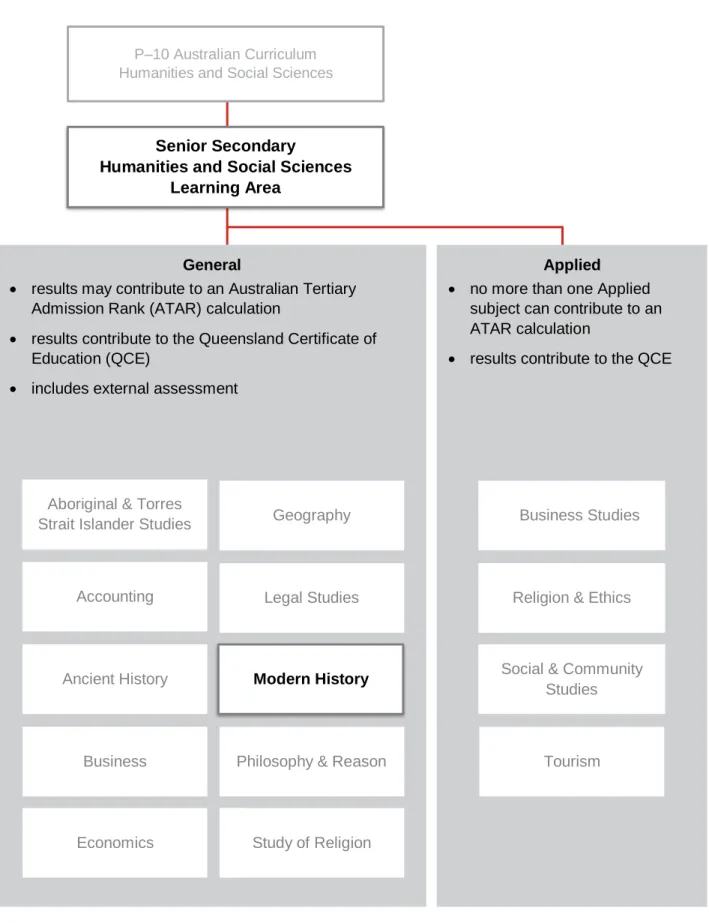
Learning area structure
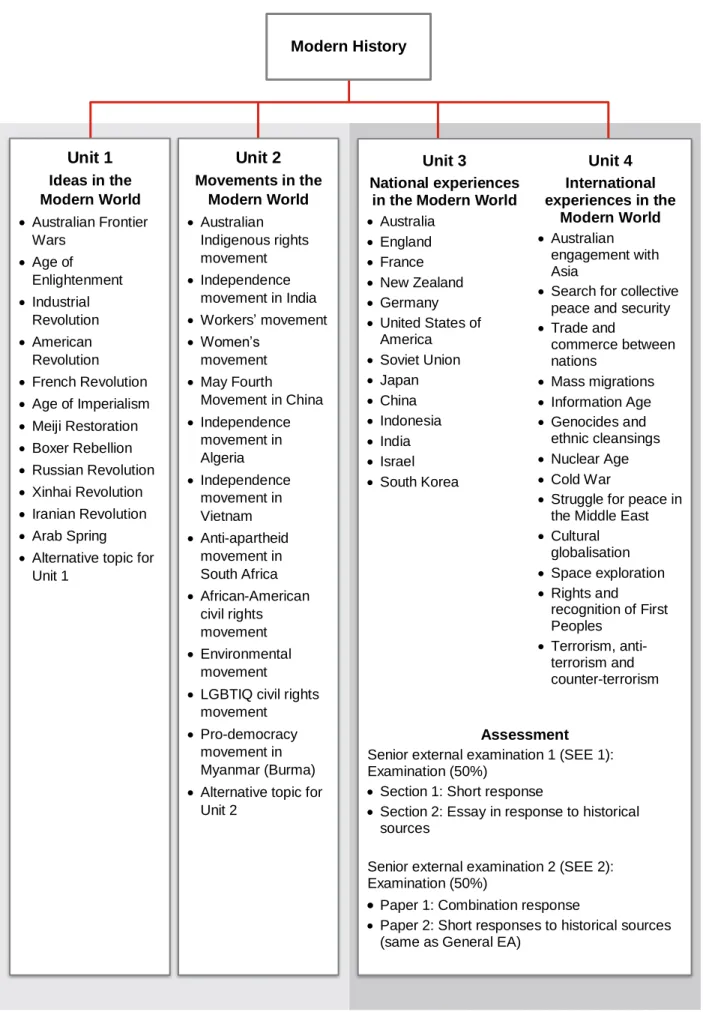
Course structure
Teaching and learning
- Syllabus objectives
- Underpinning factors
- Aboriginal perspectives and Torres Strait Islander perspectives
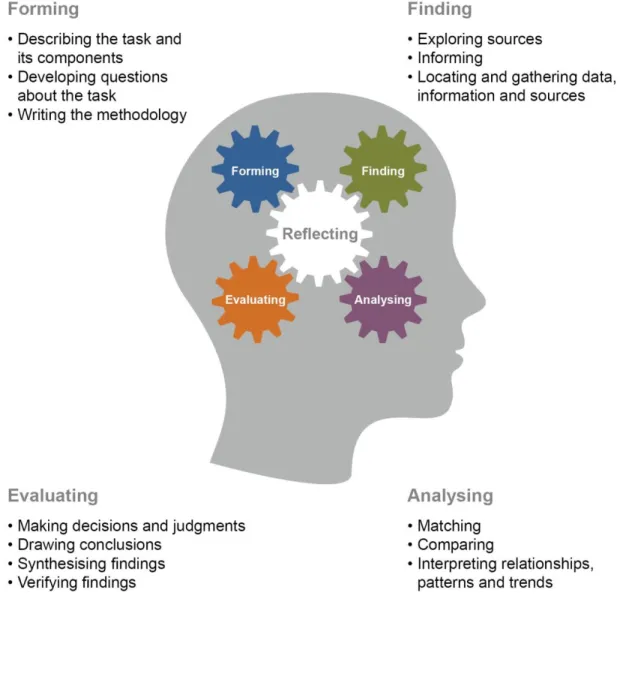
- Pedagogical and conceptual frameworks
- Subject matter
They cover the knowledge, skills, abilities, behaviors and dispositions that will help candidates live and work successfully in the 21st century. These aspects of literacy knowledge and skills are included in the curriculum objectives, unit objectives and the Modern History course. The 21st century skills identified in the following table reflect a common agreement, both in Australia and internationally, about the skills and attributes that candidates need to prepare for higher education, work and engagement in a complex and rapidly changing world.
Where appropriate, Aboriginal and Torres Strait Islander perspectives are embedded in the subject matter. Learning in the 21st century is dynamic and enhanced by an inquiry approach that applies discipline knowledge and skills to real-world situations and contemporary events (Masters 2016). It is specific to each unit in the study and forms the basis for candidates' learning experiences.
In modern history, the course consists of the historical concepts, skills, knowledge and understanding described in the unit objectives. When it precedes a list, 'including' refers to the aspects, elements or contexts to be covered when teaching the topics in the units; additional aspects, elements or contexts may be used at the teacher's discretion.
Assessment — general information
Formative assessments — Units 1 and 2
Summative assessments — Units 3 and 4
Reporting standards
The candidate demonstrates partial understanding of terms, concepts and issues to develop some understanding of the past. Some use of research is done by formulating a key question to select evidence from sources that provide a perspective. The candidate identifies and examines evidence from historical sources to show partial understanding of features of evidence.
Synthesis of evidence from sources is used to form a cursory historical argument and partial conclusions. The candidate demonstrates fragmented understanding of terms, concepts and issues to develop a superficial understanding of the past. The candidate identifies evidence from historical sources to show a superficial understanding of characteristics of evidence.
Synthesis of evidence from sources is used to form a rudimentary historical argument and fragmentary decisions. The candidate sporadically evaluates evidence from sources to make statements that are vague or superficial.
Unit objectives
The subject provides the context through which the historical concepts, skills, knowledge and understandings described in the unit objectives are developed. In Modern History, the subject matter covered in each topic focuses on one aspect of the topic. A subject aspect is a specific or targeted area of study related to the subject.
Topic 1: Australian Frontier Wars, 1788–1930s (First Fleet arrives in
Topic 2: Age of Enlightenment, 1750s–1789 (Encyclopédie
Topic 3: Industrial Revolution, 1760s–1890s (Spinning Jenny
Topic 4: American Revolution, 1763–1783 (French and Indian War
Topic 5: French Revolution, 1789–1799 (Estates General meets —
Topic 6: Age of Imperialism, 1848–1914 (Second Anglo-Sikh War
Topic 7: Meiji Restoration, 1868–1912 (Meiji Government
Topic 8: Boxer Rebellion, 1900–1901 (Boxer militancy in Pingyuan
Topic 11: Iranian Revolution, 1977–1979 (anti-Shah demonstrations
Topic 12: Arab Spring since 2010 (Tunisian Revolution begins)
Topic 13: Alternative topic for Unit 1
Assessment guidance
In the 2nd unit, candidates develop their own knowledge and understanding of movements that have appeared in the modern world. The movements studied include actions or activities at the local, national or international level that are directed towards a specific social purpose. The social purpose was often to make the world more inclusive, liberal, fair, equal or accessible by eliminating discrimination and exploitation based on some form of prejudice, e.g.
Candidates apply historical concepts and historical skills to explore the nature, origins, development, legacy and contemporary relevance of these movements within selected historical contexts, e.g. When, why and how did individuals, groups, events or other factors contribute to these movements. How have historians or other commentators interpreted the contested and historical features associated with these movements.
Two topics are studied in this unit - one of which must be Topic 1 if Topic 1 in Unit 1 (Australian Frontier Wars, 1788-1930s) has not been previously studied. The order and weight of these goals should be used by teachers to improve the process of historical inquiry and adapt to the specified assessment.
Unit objectives
Topic 1: Australian Indigenous rights movement since 1967
Topic 2: Independence movement in India, 1857–1947 (Sepoy
Topic 3: Workers’ movement since the 1860s (Great Shoemakers
Topic 4: Women’s movement since 1893 (Women’s suffrage in New
Topic 5: May Fourth Movement in China, 1919 (candidate protests
Topic 6: Independence movement in Algeria, 1945–1962
Topic 7: Independence movement in Vietnam, 1945–1975
Topic 8: Anti-apartheid movement in South Africa, 1948–1991
Topic 9: African-American civil rights movement, 1954–1968
Topic 10: Environmental movement since the 1960s (Silent Spring
Topic 11: LGBTIQ civil rights movement since 1969 (Stonewall
The unit objectives are drawn from the syllabus objectives and are contextualized to the subject and requirements of the unit. In preparation for the exam, candidates have independently researched an area related to the nominated topic, and the aspect of the topic that has also been nominated. The invisible question will be developed from Unit 3, using the topic from Topics 1–13, and the aspect of the topic nominated for study by the QCAA.
One topic will be the basis for paper 1 of the exam and another topic will be the basis for paper 2. This topic and aspect of the topic will be different from that nominated for paper 2. In preparation for the exam, candidates are expected to have carried out an independent historical investigation into the topic and aspect of the topic nominated for Paper 1.
Changes refer to aspects of the past that have varied over certain periods of time. For example, discussions can focus on: the purpose of history; the importance of historical thinking in the modern world; the philosophical assumptions that underpin the study of history; the reasons for and the extent to which a study of the past is contestable; the personal, administrative and other challenges associated with creating knowledge and. It was called the Kerner Report because the chairman of the National Advisory Commission on Civil Disorder was named Otto Kerner.
Meiji government initially formed in the 1860s by politicians from the Satsuma Domain and the Choshu Domain. Anderson, F 2005, The War that Made America: A Short History of the French and Indian War, Viking, New York.