SEPTEMBER 2018
Climate Change and Pacific Health
21
IN THIS VOLUME
The Nexus between Climate Change, Mental Health, Wellbeing and Pacific Peoples
Climate change – transitions, tipping points and typhoons
The Health Impacts of Climate Change Identifying what healthier lives means to Pacific peoples Health literacy of Pacific mothers in New Zealand is associated with non-
communicable disease risk factors.
Mental health and wellbeing of Pacific students starting University in New Zealand
The impact of living with type 2
diabetes: a descriptive qualitative case study with four Pacific participants.
Engaging Dunedin New Zealand Pacific People in Falls Prevention
Rethinking and Establishing a Dental Collaboration in the Pacific Region Cytisine as an alternative smoking cessation product for Pacific smokers in New Zealand.
Short history of the post-graduate surgical training in Fiji - where to from here?
02 02
ISSN 2422-8656
E sui faiga ae tumau fa’avae (Samoan) The form changes, but the underlying
principles remain
Dua ga na siga ni cola qele (Fijian) Be super productive every day
45
Contents
VOLUME 21, ISSUE 2, SEPTEMBER 2018 EDITORIALS Page NumberThe Nexus between Climate Change, Mental Health, Wellbeing and Pacific Peoples 47-49 Jemaima TIATIA-SEATH, Yvonne UNDERHILL-SEM, Alistair WOODWARD
Climate change – transitions, tipping points and typhoons 50-51 Alistair WOODWARD
The Health Impacts of Climate Change 52-53
Colin TUKUITONGA ORIGINAL RESEARCH
Identifying and overcoming barriers to healthier lives 54-66 Ridvan FIRESTONE, Tevita FUNAKI, Sally DALHOUSIE, Akarere HENRY, Mereaumate VANO,
Jacqui GREY, Andrew JULL, Robyn WHITTAKER, Lisa TE MORENGA, Cliona Ni MHURCHU
Health literacy of Pacific mothers in New Zealand is associated with sociodemographic 67-70 factors and non-communicable disease risk factors: surveys, focus group, interviews.
Losi SA’ULILO, El-Shadan TAUTOLO,Victoria EGLI, Melody SMITH
Mental health and wellbeing of Pacific students starting University in New Zealand 71-79 Faafetai SOPOAGA, Jacques VAN DER MEER, Shyamala NADA-RAJA, Tim WILKINSON,
Sarah JUTEL
Engaging Dunedin New Zealand Pacific People in Falls Prevention 80-88 Troy RUHE, Debra L WATERS, Rose RICHARDS
SHORT REPORT
Cytisine as an alternative smoking cessation product for Pacific smokers 89-95 in New Zealand.
Vili NOSA, Kotalo LEAU, Natalie WALKER
The impact of living with type 2 diabetes: a descriptive qualitative case study with 96-102 four Pacific participants
Kirsten COPPELL, Trudy SULLIVAN,Darlene PUPI
PERSPECTIVE
Short history of the post-graduate surgical training in Fiji - where to from here? 103-107 Jitoko K. CAMA, Sonal NAGRA
Rethinking and Establishing a Dental Collaboration in the Pacific Region 108-110 Le’Roy TATUI, Judith MCCOOL, Vili NOSA
About the Pacific Health Dialog 111-112 Cover picture: Children amongst damaged house in Tonga after Cyclone Gita.
Acknowledge: Agence France Presse
Tiatia-Seath J, et al. Pacific Health Dialog 2018; 21(2):47-49. DOI: 10.26635/phd.2018.911
47
Editorial OPEN ACCESS
The Nexus between Climate Change, Mental Health and Wellbeing and Pacific Peoples
Jemaima TIATIA-SEATH,
1Yvonne UNDERHILL-SEM,
2Alistair WOODWARD
31Senior Lecturer, Co-Head of School. Te Wānanga o Waipapa, School of Māori Studies and Pacific Studies, University of Auckland.
[email protected] 2Director, New Zealand Institute of Pacific Research, University of Auckland, 3Head of Department, Epidemiology and Biostatistics, University of Auckland
Very few people in the Pacific region will be unmarked by climate change, particularly as half the population live within 1.5 kilometres of the ocean.1 Noticeable rises in sea-level, more frequent cyclones and floods, and changes to seasonal weather are attributable to climate change in the area.2 Extreme weather has significant implications for Pacific peoples’ health outcomes.1 For example, Niue’s only hospital was devastated by cyclone Heta in 2004, extreme flooding in Papua New Guinea in 2008 destroyed vital hospital equipment1 and rises in temperature have contributed to the increasing prevalence of malaria and dengue fever across the Pacific region.3
Much of the health research on climate change in the Pacific is dominated by the vulnerability of ecosystems and only recently have mental health impacts of climate change been recognised by public health experts.4 Although the research is still limited, it is projected that disruption resulting from climate change will have serious damaging effects on mental health worldwide.5 Impoverishment, political and cultural rigidities, economic dependency and environmental degradation create particular vulnerabilities, which are compounded by the effects of climate change. These five characteristics are variously shared throughout the Pacific, and individually they exacerbate emerging mental health and wellbeing issues related to climate change.6 The fact that the Pacific is commonly affected by natural disasters, even before the onset effects of anthropogenic global warming, provides further rationale to investigate further the interconnection between climate change and mental health risks.
Climate change has direct and indirect effects on mental health risks for Pacific peoples.5 A direct impact occurs via the increased frequency and severity of natural disasters.7 This may be a compounding effect; little is known about the impact of natural disasters upon those with a pre-
existing mental health disorder.6 Natural disasters disrupt access to public health services and may obstruct access to appropriate medication and care. Indirect effects of climate change include population movements, as a result of urbanisation, economic collapse, and the degradation of coastal cities.5 Additionally, post- disaster devastation to the physical environment, in turn, may affect social, community and economic factors related to place, which may induce stress, anxiety and displacement.7
Albrecht’s ‘solastalgia,’ is the feeling of distress caused by an environmental transformation affecting a home environment.8 It may be considered a ‘pyschoterratic’ illness, whereby peoples’ mental wellbeing is threatened by the severing of ‘healthy’ connections to their homeland.8 It also draws on the concept of nostalgia where instead of a longing for home when away, it is a longing for a particular ‘state’
or idea of home while living at home. This is caused by changes in the natural environment of one’s home like floodings, droughts, land erosion, or mining. Solastalgia occurs when there is the lived experience of the physical ruin of home.8 It may be a particularly useful concept in describing the nexus between mental health and wellbeing and climate change. As migration is often seen as a ‘last resort,’ it is likely that many will experience solastalgia in the Pacific region, as the effects of climate change continue to increase. The question remains, how do Pacific peoples themselves define this type of distress?
In an i-Kiribati study, McIver et al. concluded that climate change poses a threat to i-Kiribati livelihood, their country’s sovereignty and the national identity of its inhabitants. This is further exacerbated because little is known about mental health in Kiribati, which makes it more difficult to understand the magnitude and nature of the impacts of climate change on mental health and wellbeing. This may very well be a recurring theme throughout the Pacific as there is little research and data to draw from.9
48 As mentioned, migration is an indirect impact. An
estimated 75 million people from the Asia-Pacific region will be forced to migrate by 2050 as a result of climate change.1 Moreover, New Zealand and Australia will become a potential relocation destination for many Pacific peoples. New Zealand was the first country globally to be tested by ‘climate refugees’ seeking protection and resettlement in another country. In particular, in response to a number of cases from Tuvalu and Kiribati. This call to action is timely as the current government proposes to provide climate migration visas for Pacific peoples displaced by rising sea levels.
New Zealand’s 2006 national Mental Health Survey - Te Rau Hinengaro, indicated that Pacific peoples have higher 12 month prevalence rates of mental disorder (25%) in comparison to the general New Zealand population (20.7%).10 Pacific adults had the highest rates of anxiety or depressive disorder (12.9 %) when compared with Māori (10.8 %), Asian (7.7 %) and European/Other (6.1 %) ethnic groups.11 Moreover, Pacific peoples reported suicide attempts that were three times the rate of the general population.10 Evidence suggests that Pacific peoples living in New Zealand suffer from high rates of mental illness, yet are less likely than the remainder of the population to access mental health services.12-18 Reasons vary, depending on age, gender identity, cultural identity, socio- economic position, religion and spirituality, language capabilities, sexual orientation and stigma. However, the motif amongst this evidence is that Pacific peoples need better-equipped culturally competent and specific services.
It is believed that those who will be forced to relocate will be at higher risk of mental disorders, due to the cultural loss and stress of climate induced migration.19 An understanding of this by the mental health and wider public health sector in New Zealand is crucial, particularly with regard to service readiness.
Mental health and wellbeing services will need to cater to Pacific climate migrants in culturally inclusive and relevant ways, taking in to consideration the distinct reasoning for migration, and forced relocation as a result of climate change and recognising that this will bring new challenges to the already visible barriers to mental health access and appropriateness of services. As is commonly agreed, the post-migration experience of recent migrants is important in the resettlement process. The sociocultural conditions of a host country can have powerful influence on mental health.20
If cultural dimensions of climate change are disregarded, one can expect that both adaptation
and mitigation responses will fail to be effective as they will not resonate with Pacific.21 Whilst questions around the types of adaption strategies are largely unanswered, the planning starts now.5 REFERENCES
1. Oxfam. Oxfam briefing paper, the future is here: Climate change in the Pacific. 2009, Australia and New Zealand: Oxfam Australia
and Oxfam New Zealand.
https://www.oxfam.org.nz/sites/default/fil es/reports/The%20future%20is%20here- Oxfam%20report-July09.pdf
2. Secretariat of the Pacific Community. SPC climate change and disaster risk management support activities in Pacific Island countries and territories: Noumea: Secretariat of the
Pacific Community. 2013
http://www.spc.int/sites/default/files/wor dpresscontent/wp-
content/uploads/2017/01/SPC-climate- change-support-activities-in-Pacific-Island- countries-and-territories.pdf
3. Costello A, Abbas M, Akken A, Ball S, Bell S, Bellamy R. Managing the health effects of climate change. The Lancet, 2009, 373(9676):1693-1733.
4. Rice SM, McIver LJ. Letter to editor. climate change and mental health: rationale for research and intervnetion planning. Asian Journal of Psychiatry, 2016:16:1-2.
5. Page LA, Howard LM. The impact of climate change on mental health (but will mental health be discussed at Copenhagen?).
Psychological Medicine, 2010;(40):177– 180.
6. Woodward A, Hales S, Weinstein P. Climate change and human health in the Asia Pacific region: Who will be most vulnerable? Climate Research.1998; 11:31-38.
7. Berry H. Pearl in the oyster: climate change as a mental health opportunity. Australasian Psychiatry, 2009;17(6):453-456.
8. Albrecht G, Sartore G-M, Connor L, et al.
Solastalgia: the distress caused by environmental change. Australian Psychiatry, 2007:15:95-98.
9. McIver L, Woodward A, Davies S, Tibwe T, Iddings S. Assessment of the health impacts of climate change in Kiribati. International Journal of Environmental Research and Public Health, 2014;(11):5224-5240.
10. Oakley Browne M, Wells JE, Scott KM, eds. Te rau hinengaro: The New Zealand mental
Tiatia-Seath J, et al. Pacific Health Dialog 2018; 21(2):47-49. DOI: 10.26635/phd.2018.911
49 health survey. Wellington: Ministry of Health.
2006.
https://www.health.govt.nz/system/files/d ocuments/publications/mental-health- survey-summary.pdf
11. Mental Health Commission. National indicators: Measuring mental health and addiction in New Zealand Wellington: Mental
Health Commission, 2012.
https://www.hdc.org.nz/media/2769/natio nal-indicators-2012.pdf
12. Tiatia J. Reasons to live: NZ-born Samoan young people's responses to suicidal behaviours [Doctor of Philosophy]. Auckland:
Community Health, The University of
Auckland; 2003
https://www.researchgate.net/publication/
232607900_Reasons_to_live_NZ-
born_Samoan_young_people%27s_response s_to_suicidal_behaviours
13. Tiatia J. New Zealand-born Samoan young people, suicidal behaviors, and the positive impact of spirituality. In: Culbertson P, Nelson Agee M, Ofa Makasiale C, eds. Penina Uliuli: Contemporary Challenges in Mental Health for Pacific Peoples. Honolulu: The University of Hawaii Press.. 2007 ISBN 0824831942
14. Tiatia J. Commentary on 'cultural diversity across the Pacific': Samoan cultural constructs of emotion, New-Zealand born Samoan youth suicidal behaviours, and culturally competent human services.
Journal of Pacific Rim Psychology: 2012: 1-5.
15. Tiatia-Seath J. Pacific peoples, mental health service engagement and suicide prevention in Aotearoa New Zealand. Ethnicity and
Inequalities in Health and Social Care, 2014:(3):111-121.
16. Mila-Schaaf K, Hudson M. (2009). The interface between cultural understandings:
Negotiating new spaces for Pacific mental health Pacific Health Dialog, 2009:15(1):113- 119.
17. Tamasese K, Peteru C, Waldergrave C, Bush A.. Ole taeao - the morning: A qualitative investigation into Samoan perspectives on mental health and culturally appropriate services. Aust NZ J Psych, 2005;9:300-309.
18. Tiatia J. Pacific cultural competencies: A Literature review. Wellington: Ministry of Health;
2008.https://www.health.govt.nz/system/fi les/documents/publications/pacific-
cultural-competencies-may08-2.pdf
19. Howard-Chapman P, Chapman R, Hales S, Britton E, Wilson N. Climate change and human health: Impact and adaptation issues for New Zealand. In: R. A. C.Nottage, D. S.
Wratt, J. F. Bornman, K. Jones, eds. New Zealand: Future scenarios and some sectorial perspectives. Wellington: New Zealand Climate Change Centre, 2010:112-121.
http://www.climatecloud.co.nz/CloudLibra ry/Climate%20change%20adaptation%20i n%20New%20Zealand%20(NZCCC)%20(A 4%20low).pdf
20. Pernice R, Brook J. Refugees’ and immigrants’
mental health: association of demographic and post-immigration factors. The Journal of Psychology, 1996:136(4):511-519.
21. Adger WN, Barnett J, Brown K, Marshal N, O’Brien K. Cultural dimension of climate change impacts and adaptation. Nature Climate Change, 2013;(3):112-117.
50
Editorial OPEN ACCESS
Climate change – transitions, tipping points and typhoons
Alistair WOODWARD
Professor, Head of Department, Epidemiology and Biostatistics, University of Auckland. [email protected]
As I write Hurricane Florence is approaching the east coast of the US. Here is a storm out of the ordinary. It is most uncommon for such a powerful hurricane to reach so far north. The projected rainfall (up to 1.2 meters) is unprecedented. The tidal surge, which may be as high as 5.5 metres, has been experienced only twice since 1851. On no other occasion has a hurricane combined all these features.1
Florence may turn out to be less severe than forecast. But it is a sign of the new times, an era in which climate change is super-charging familiar threats and delivering novel risks. On the other side of the continent, there are wildfires burning in the northern forests, hotter and wider and more prolonged than previously. The smoke from the fires caused Vancouver authorities to issue air alerts throughout July and August and cancel outdoor events because of health concerns. But it is not just the immediate effects that are important. The extensive fires that now occur in the far north each year might trip a switch. The enormous boreal forests may flip from being a net carbon sink to being a net carbon source. In this setting the greenhouse emissions from combustion exceed the capacity of a disrupted biome to take up carbon, accelerating warming and further promoting fire risk.
This is the theme of what may be the most important scientific paper of the year, by Will Steffen from the Australian National University and colleagues.2 Published in July, this paper describes the ways in which human activities now overwhelm the planet’s natural systems, and the prospect of “self-reinforcing feedbacks” that drive the Earth onto unexpected and dangerous trajectories. They identify fires in the far north as one possible “tipping cascade”. Other examples include the die off of ocean coral, melting of ice sheets in the Antarctic and Greenland, and de- stabilisation of the El Nino Southern Oscillation.
Just when these tipping points will occur is uncertain. Steffen et al refer to climate models, paleo-climate data and recent experience of the impacts of climate variability, and they conclude that a potential planetary threshold could be crossed at around 2 degrees Centigrade of global
average warming above pre-industrial. In this case, the world might move abruptly to a zone that was never experienced before and is profoundly hostile to human well-being.
Here is one more reason to increase our ambition with climate change mitigation, and to take seriously the goal of holding global warming to no more than 1.5 degrees. The small island states, including Pacific nations, were instrumental in the negotations for the Paris climate accord, when a 1.5 degrees goal was added to the final document. Signatories agreed it was necessary to
“keep a global temperature rise this century well below 2 degrees Celsius above pre-industrial levels and to pursue efforts to limit the temperature increase even further to 1.5 degrees”.3
The 1.5 degrees goal is important for the Pacific because those who live in this region are in many respects highly vulnerable to even moderate shifts in global climate. Small low islands, especially those in the tropical cyclone belt, which rely on local food sources, with limited supplies of fresh water, are amongst the first to be affected by increased storm activity, rising sea levels, changing rainfall patterns and the damaging effects on local ecosystems of warmer, more acid oceans. If the world moves onto a “Hothouse Earth” pathway, as Steffen et al outline, then the impacts on communities across the Pacific could be devastating.
We saw an example of the impacts on health of extreme weather events in last year’s hurricane season in the northern hemisphere. Hurricane Maria was a category 5 storm (the most severe category) that caused severe damage to Puerto Rico and the Dominican Republic. Estimates of the excess deaths in Puerto Rico related to the hurricane are in the order of 3000-4500.4,5 Most of the deaths were not immediate, but occurred in the weeks and months after the hurricane. They resulted from the breakdown of essential services such as power, transport and health care, and the very slow recovery of normal operating conditions. Most at risk were the elderly and
Woodward. Pacific Health Dialog 2018; 21(2):50-51. DOI: 10.26635/phd.2018.912
51 people with chronic life-threatening conditions
such as diabetes and cardiovascular diseases.
Every super-destructive hurricane sends a message to the high consumption countries that bear the heaviest responsibility for climate change. Mitigation, primary prevention in public health terms, is essential, and while the Paris Accord points in the right direction, its goals and time-scale are too modest.
In the Pacific the threat of climate change is a very good reason to invest more heavily in health systems and public health. Disaster preparedness, secure supply chains, safe location of hospitals and health clinics, robust vector control programmes, information systems that are backed up and accessible in all conditions, these are just some of the elements of resilience in the face of natural disasters. But improvements of this nature have an immediate pay off also.
Appreciating the new world of climate change, and making changes necessary to limit casualties, will strengthen health care and deliver co- benefits immediately.
REFERENCES
1. Climate change washing away the world we once knew. NZ Herald 14 September 2018 2. Steffen W, Rockstrom J, Richardson K et al.
Trajectories of the Earth System in the Anthropocene. PNAS 2018;115:8252-8259 3. https://unfccc.int/process-and-
meetings/the-paris-agreement/the-paris- agreement
4. Kishore N, Marques D, Mahmud A et al.
Mortality in Puerto Rico after Hurricane Maria. NEJM 2018;379:162-170 5. https://gwtoday.gwu.edu/gw-researchers-
2975-excess-deaths-linked-hurricane-maria
52
Editorial OPEN ACCESS
The Health Impacts of Climate Change
Colin TUKUITONGA
Director General, Pacific Community, Noumea, New Caledonia. [email protected]
Climate change is having significant and damaging effects on communities and economies of the Pacific nations and projected to get worse over the coming decades. The World Health Organization (WHO) estimates an additional 250, 000 deaths annually between 2030 and 2050 due to malnutrition, malaria, diarrhea and heat stress, and over USD two trillion in lost productivity globally.1
While climate change estimates are usually forward looking, here in the Pacific the impact is already being felt. Over the last 10 years, our region has lost countless lives and more than USD two billion due to disasters such as cyclones, tsunamis, flooding and droughts. In Fiji alone, annual losses due to extreme weather events could reach 6.5 per cent of GDP by 2050, with more than 32,000 people pushed into hardship every year. Today, our region is in the unenviable situation of having five of the top 15 nations considered most vulnerable to climate change impact.2 While debate over the existence of climate change continues in some parts of the world, here in the Pacific it has become a fact of life, and mitigating its effects is no longer a matter of politics, but rather one of survival.
The health impacts of climate change come about as a result of direct and indirect exposures as well as social and economic disruption and environmental decline. Adverse weather events cause significant damage to critical infrastructure, including health care facilities and critical public health services.3 Climate change acts as a health risk ‘multiplier’ by affecting the social and environmental determinants of health, including safe drinking water, clean air, sufficient food and safe shelter. The effects of climate change on natural and physical systems, that, in turn, alter the number of people at risk of malnutrition, the geographic range and incidence of vector-borne, zoonotic, and food- and water- borne diseases, and the prevalence of diseases associated with air pollutants. Ocean acidification will have negative impact on the health of coral reefs, a critical source of nutrients for fish and other sea life. This in turn will compromise the most important source of protein for Pacific
communities given the heavy reliance on fish and seafood.
Adverse impacts of climate change on Pacific economies and human health is compounded by the high prevalence of non-communicable diseases (NCDs) such as diabetes, heart disease and certain cancers. As with climate change, NCDs are having a disproportionate impact in the Pacific region. NCDs are now the leading cause of death, disease and disability in the region. Eight of the 10 most obese nations globally are Pacific Islands, and diabetes prevalence is three to four times higher than elsewhere in the world. Left unchecked, NCDs will cause serious health and social problems for individuals and their families, overwhelm national health systems, and severely limit the development potential of the entire Pacific region.4
At first glance, climate change and NCDs may appear to be serious, but separate challenges.
However, many of the causes and solutions to these challenges are interconnected. Climate change fundamentally changes the social, economic, cultural and commercial determinants of health. These changes, in turn, negatively impact the environment in which people live and work, which increases the risk of NCDs among the most vulnerable populations. Conversely, interventions to combat climate change present key opportunities to effectively address NCDs, and actions to reduce the burden of NCDs may have a positive impact on climate change mitigation.
For example, shifting to an increased use of renewable energy and investment in active transport systems would not only reduce greenhouse gas (GHG) emissions and air pollution, but would also promote physical activity, contributing to a reduction in NCD incidence.
Or consider how food production is managed.
Investing in a sustainable food system, based on locally sourced, unprocessed foods, reduces reliance on imported, highly processed food items, and has clear co-benefits in reducing NCDs and mitigating climate change.
Tukuitonga C. Pacific Health Dialog 2018; 21(2):52-53. DOI: 10.26635/ phd.2018.920
53 While many evidence-based, globally agreed
interventions have been adopted to reduce the burden of NCDs, up until now these agreements have been weakly implemented. Similarly, international agreements to counteract the effects of climate change, such as the landmark Paris Agreement, are now under pressure, which threatens to reverse both the health gains from economic development and health benefits that accrue from sustainable development. A public health perspective has the potential to unite all actors behind a common cause. Simply put, by combining the research, expertise and political will behind each of these areas, we can create a stronger voice for positive and sustainable change and help to achieve the common goals of both challenges.
As a region currently suffering some of the greatest impacts of both climate change and NCDs, the Pacific is well positioned to take the global lead in bringing these issues together and ensuring a more coordinated approach is taken to finding solutions.
Climate change and NCDs are key challenges for the global community, and our ability to mitigate these challenges will go a long way in determining if we are able to meet national development objectives and international targets, such as the
Sustainable Development Goals. In the Pacific we are already integrating our work in these areas and showing how a combined approach can help build understanding and create consensus across nations, and dramatically increase the impact of mitigation work. If the same approach can be adopted globally we have a real chance of creating a cleaner, safer, more sustainable and healthier world.
REFERENCES
1. World Health Organization. Climate Change and Health Fact Sheet Feb 2018
2. Lee D. Zhang H. Nguyen C. The Economic Impact of Natural Disasters in Pacific Island Countries: Adaptation and Preparedness. IMF Working Paper WP/18/108
3. Climate change and human health – risks and responses. International consensus on the science of climate and health: the IPCC Third Assessment Report. WMO and UNEP
4. Kessaram T et al. Noncommunicable diseases and risk factors in adult populations of several Pacific islands: results from the WHO STEPwise approach to surveillance. Aust NZ J Public Health 2015 Aug; 39(4):336-343
54
Original Research OPEN ACCESS
Identifying and overcoming barriers to healthier lives
Ridvan FIRESTONE,
1*Tevita FUNAKI,
2Sally Dalhousie,
2Akarere HENRY,
3Mereaumate VANO,
3Jacqui GREY,
4Andrew JULL,
4Robyn WHITTAKER,
4Lisa TE MORENGA,
5Cliona NI MHURCHU
4ABSTRACT
Understanding the key determinants of health from a community perspective is essential to address and improve the health and wellbeing of its members. This qualitative study aimed to explore and better understand New Zealand-based Pasifika communities’ sociocultural experiences and knowledge of health and wellbeing. Fifty-seven participants were involved in six separate focus groups. Community coordinators co-facilitated and transcribed the discussions and conducted thematic analysis. The findings suggested two overarching themes: (1) ‘Pasifika experiences on poor health and well- being’: were based on sub-themes: (i) ‘recognisable issues’ (e.g., poor diet and lifestyle behaviours); (ii)
‘systemic issues’ that support the perpetual health issues (e.g., lack of knowledge and education) and;
(iii) ‘profound issues’ that are often unspoken of and create long-term barriers (e.g., cultural lifestyle and responsibilities). (2) ‘Hopes and dreams’ to improve health and well-being requires: (i) a family-centric approach to health; (ii) tackling systemic barriers; and (iii) addressing community social justice issues. This study provides deepened insights on Pasifika communities’ understanding healthier living in the context of their cultural environment and family responsibilities. If we are to develop effective, sustainable programmes that prioritises health and well-being based on the needs of Pasifika communities, the findings from this study highlight their needs as step forward in overcoming barriers to healthier lives.
KEY WORDS: Pacific Islander health, co-design, culture and health, non-communicable diseases
INTRODUCTION
When Pacific peoples migrated to New Zealand (NZ) in the 1960-70s, it was for a better start in life, as well as, meeting the NZ labour needs post- world war two. However, adaptions and changes to their lifestyles associated with urbanisation and modernisation had significant implications on the traditional Pacific lifestyle (e.g., living and operating communally as a village), which conflicts with the mainstream western lifestyles in NZ (e.g., living as an independent family unit in a neighbourhood). A key difference was notably in the area of health and well-being perspectives, and the determinants of health.
For example, the role food plays in family and community socialisation, and perspectives on body size in relation to health (e.g., being thin was associated with being unwell), differs to that of westernised viewpoints, particularly when they are measured as poor health indicators.
Having a large body size in relation to obesity (i.e., body mass index (BMI)>30kg/m2) has been shown to have major health implications such as
*1Corresponding author: Ridvan Firestone, Senior Research Officer, Centre for Public Health Research, Massey University, PO Box 756, Wellington 6140, New Zealand
2 The Fono, Level 2, 33 Wyndham Street, Auckland City 1010, New Zealand
3 South Waikato Pacific Islands Community Services, 1 Maraetai Road, Tokoroa 3444, New Zealand
4. National Institute for Health Innovation, School of Population Health, The University of Auckland, Private Bag 92019, Auckland 1142, New Zealand
5 Department of Human Nutrition, University of Otago, PO Box 56, Dunedin, New Zealand
Received: 03.05.2018; Published: 30.09.2018
Citation: Firestone R, et al. Identifying what healthier lives mean to means to Pacific peoples. Pacific Health Dialog 2018;21(2):54-66. DOI: 10.26635/phd.2018.913.
Copyright: © 2018 Firestone R, et al. This is an open-access article distributed under the terms of the Creative Commons Attribution License, which permits unrestricted use, distribution, and reproduction in any medium, provided the original author and source are credited.
Firestone R, et al. Pacific Health Dialog 2018; 21(2):54-66. DOI: 10.26635/phd.2018.913
55 developing; type two diabetes and, other long
term conditions, like cardiovascular diseases, for urbanised Pacific peoples1-6 Also, the meaning of health in Pacific families encompasses a holistic understanding with the well-being of the family being a high priority7. Social-cultural perspectives are important factors to consider when examining the determinants of health conditions (e.g., obesity) in Pacific peoples. The current assumption is that Pacific peoples do not share the same view of body image as Westerners7-9, and thus may not view obesity as a health problem. The prevailing issue is the clash of definitions for, and understanding health from, a Pacific perspective.
Migration, colonisation, and westernisation have weakened the Pacific family structure over many decades4 10 11. Regaining and strengthening family connectedness is important to enhance Pacific family dynamics and health and wellbeing, in a westernised environment12 13. It is well established that Pacific people experience barriers to accessing health care services14, and they under-utilise primary health care services15. However, cultural lifestyle factors, values and preferences influence how Pacific peoples view health status and health care1 16 17. Pacific people account for approximately 7.8% of the total population in NZ, with the largest Pacific ethnic group comprised of Samoans (3.6%), Tongans (1.5%) and Cook Islanders and Rarotongans (2.5%) intermediary18. Understanding the reasons and the complex interactions of determinants for poor health is important to delineate better preventative strategies and solutions to preventing chronic disease in Pacific peoples, which have been shown to be successful in previous studies in NZ19-21 and in other countries22-24. The aim of this paper is to describe health and well-being from a Pasifika (i.e., Pan-Pacific) worldview from rural and urban communities, in order to understand how we might collaboratively support communities to lead healthier lives, using co-design as the primary methodological approach to enhance health and wellbeing for indigenous people. For this study, we will be using the term Pasifika peoples, defined as a collective group of people representing different Pacific Island nations predominately from the South Pacific region, recognising that they are not of a homogenous group, but have similar values and protocols.
METHODS
As part of an overarching study25 we present qualitative data obtained from the focus groups of the Pacific arm of that study. The umbrella project which employed co-design as the
methodology to plan, build, test, and implement an healthy lifestyle support mobile health (mHealth) tool with Māori and Pacific community partners. Co-design differs to Community-Based Participatory Research (CBPR), although the latter approach brings together communities and researchers to improve health collaboratively in the community. CBPR actively engages the community in all aspects of the research process26, builds upon existing community strengths27, and may hold significant promise for implementing effective and sustainable public health strategies28. By promoting long-term, equitable partnerships between researchers and communities, CBPR approaches can create a balance between the science of researcher- driven studies and the rigour associated with specialised indigenous knowledge alongside access to key, relevant local networks. CBPR has been endorsed as vital for increasing relevance and sustainability of multilevel interventions29-36, because it allows community members to be equal partners in research activities, and identify aspects of inquiry that are outside of the expertise of many ‘Western-trained’ theorists and researchers. Co-design, is described as
“harnessing the knowledge and creativity of citizens and staff in identifying problems and generating and implementing solutions – it offers the opportunity to uncover the real barriers to, and accelerants of, progress”37. It is a relatively new method in public health, yet it has considerable potential for the development of novel and relevant intervention programmes.
Co-design is a participatory action process that involves engagement with end-users to develop an intervention (or product) that is relevant to the needs, and takes into account the aspirations and desires of the target group, in our case, Pacific peoples living in NZ.
Participant recruitment
The participants were recruited by our community research partners in Auckland and South Waikato regions, New Zealand. We used a combination of purposive sampling and nominative process, to ensure a wide representation from the community of interest and age groups among Pacific peoples participated in the focus groups (e.g., health experiences, educational and socio-economic backgrounds). Four community co-ordinators were employed to recruit the participants through their community networks. The inclusion criteria included: self-identification of being Pacific38, aged 18 years and older, and with an interest in healthy lifestyles and, or the health of their family and community. The participants
56 were informed of the overall purpose of the
study, and they understood the nature of their voluntary participation. Written consent were obtained from all participants. A one-page questionnaire was administered at the initial focus group meeting to collect demographic data on participants. Ethical approval for the overall research project was received on 19/04/2016 from the New Zealand Northern A Health and Disability Ethics Committees (reference 16/NTA/29).
Data collection and analyses
A total of six separate focus groups were undertaken with members from our Pacific community partner networks, to better understand what is meant by ‘healthier lives’ by examining their ‘health experiences’, ‘the meaning of wellbeing’, and ‘hopes and dreams’ of healthier lives at an individual and community level. A Pacific model of health (Fonofale)39 was used to guide the study framework and inform the data analyses to ensure that the process of engagement with the participants was aligned to a Pasifika world-view. The Fonofale model was considered to be appropriate for this research as it encompasses beliefs and values in relation to family, culture, and spirituality that many Pacific nations (Samoa, Cook Islands, Tonga, Niue, Tokelau, and Fiji) uphold, particularly in relation to mental health and well-being40.
The focus group sessions were facilitated by two community coordinators (one facilitator, one note-taker), and hosted at a local venue that was convenient and known to the participants. One focus group was facilitated in Cook Island language to enable better consultation with the older participants in their native language. Each session lasted up to 120 minutes, and they were audio-recorded, transcribed and re-checked by the co-facilitators. The transcriber from each community conducted initial summary analyses per focus group discussion highlighting key themes. These themes were later verified by an independent analysis and interpretation of the overall transcripts by the first named author.
Thematic data analysis involved grouping, indexing, interpretation and consensus of the key themes (saturation). Verification of the thematic analyses was checked by presenting the overall summary of themes to the community partners to validate the findings. The facilitators conducted additional analyses of the data by way of providing ‘point of view’ (POV) analytics. An adapted co-design approach which personifies the key themes according to functional themes such as: (i) identifying the key users; (ii) primary needs [of the users]; (iii) insights gained (e.g., how societal structures impact on Pacific people, and social positioning); and (iv) pragmatic use of
the idea (i.e., turning the idea into a good and/or service). Collectively, the thematic and POV analyses ensured the convergence of the key findings.
FINDINGS
The focus group participants represented a diverse range of Pacific ethnicities including Samoan, Tongan, Cook Islander, Tokelauan, and Fijian, living in the Auckland and Waikato regions of the North Island of New Zealand. The majority were Samoan or Cook Islander. Due to the variety of Pacific Island nations being represented in this study, we will refer to Pacific peoples as ‘Pasifika peoples’, because the term recognises the diversity of Pacific nations and their inherent cultural practices, languages and history that underscore each ethnic group. A total of 57 Pasifika participants took part in the focus groups, 61% (n=37) were female, and the remainder were male (n=20). The age ranged from 18 to over 65 years old.
The focus group data were collected over a seven month from June to December in 2016, and no repeat focus groups were conducted, as the broad areas of health and wellbeing had been sufficiently explored by each group. Of note, a fourth focus group was conducted that included representatives from each focus group to consult in-depth on the mobile intervention tool, but this data had not been included in this paper, as it focused primarily on co-designing an intervention and thus it will be published elsewhere.
There were two major overarching themes (Figures 1 and 2), each with sub-themes, that emerged from the thematic analyses on identifying and understanding the meaning of health and well-being (Figure 1), and Pasifika peoples’ hopes and dreams of leading healthier lives (Figure 2). For overarching theme one:
health and well-being must be family centred – this major theme emerged from the main aim of understanding the participants’ experiences of health and identifying what health aspects are important to Pacific people. For overarching theme two: a desire to live longer and be healthier, highlights potential issues that need to be addressed in order to achieve the desire to live longer and be healthier.
Firestone R, et al. Pacific Health Dialog 2018; 21(2):54-66. DOI: 10.26635/phd.2018.913
57 Figure 1: Knowledge integration approach to
identifying and understanding health and well-being for Pacific peoples
Underpinning the first major theme of health and well-being is a very strong focus on the health of family. Sub-themes have been grouped according to three levels, as depicted in Figure 1. We have used a knowledge integration approach41 to analyse these themes, as it is well-placed to examine different levels of health and wellbeing in relation to personal experiences and inferences. This approach also links personal perspectives and experiences to actionable knowledge (i.e., what can we do with this knowledge), by way of design thinking42. The analogy of a tree was used to categorise each sub-theme41. Sub-theme one is characterised as the ‘obvious and recognisable issues’ (i.e., tree leaves), such as diet, lifestyle behaviours, the conditions of work-life balance that may affect health and well-being of the family, and attaining a healthy attitude. Some examples from our focus group discussions highlight the impact of their lifestyle behaviours on the health of individual:
…the holistic things means the whole of the person so if that person doesn’t have all of that it means they’re unwell they can be unwell physically, mentally, spiritually. So if that person’s unwell then the rest are unwell in the family because if you can’t cope, the rest see that, so they don’t have that support to make that person well unless they
get help…” [Participant 1, Female, Focus Group 1, Auckland]
… I’m bias toward the nutrition and physical activity part of wellbeing and … my focus … is on the nutritional side and the physical wellbeing side and … I want that for my family … I’m always pushing them to do more activity, eat better foods but … it’s not for me personally, but for my family.
It is for that whole mental stability side that mental wellbeing side, I know that they can’t do the physical and the nutrition unless that’s got sorted, [and] they got that cultural side sorted … being in dual culture... [Participant 1, Male, Focus Group 3, South Waikato]
Holistic health for Pasifika people encompasses more than just the World Health Organization broad definition of health: “a state of complete physical, mental, and social-wellbeing and not merely the absence of disease or infirmity”43, it pertains to the well-being of the individual and their relationship with the family. Pasifika people in this study rarely referred to body size and weight, as these measures are not key health markers, from a Pasifika perspective, rather there was an inherent desire to live longer in order to look after the younger and older generations, and keep them disease free. Work- life-balance was considered essential to the health and longevity of Pasifika families and generations.
… What motivates me to live to a healthier life? To be able to work, cos I want to help my family that are growing up. There’s nothing more [for] me really to enjoy. I have done my part in enjoying my life in the past so I am just looking to give to the younger generation. The intention is to work until I die. I want to be healthy to be able to do that...
[Participant 1, male, Focus Group 1, Auckland]
…to have a healthy lifestyle, peaceful home … financial was mentioned, healthy lifestyle, my children need to be educated … to live a healthy lifestyle, eat healthy. Stay away from drugs and alcohol. This is the road to wellbeing, these things [drugs and alcohol] are coming in and it is going to get worse. [Participant 4, Female, Focus Group 1, South Waikato]
Sub-theme two (of Figure 1) of this theme is characterised by the participants’ views as being the supporting and ongoing issues or the
‘systemic factors’ (i.e., tree trunk) which were encountered by individuals and families, but may not align with their customs or traditions. There may also be other systemic issues such as environmental factors (e.g., no access to fruit and vegetable market, only a corner-shop store), that inhibit their ability to attain health and wellbeing. The majority of participants recognised that individual choice to be healthy is
58 a basic human right, although making an
informed lifestyle choice largely depends on having a degree of knowledge, even if it was based on prior experience. Some examples from our focus groups corroborate these points:
…Pretty much the basic human rights really, a warm house for her kids, that’s like a human right and when we’re not even meeting the human rights of people like that. It’s quite questionable.
[Participant 9, Female, Focus Group 1, Auckland]
… Education is the key because we experience all the bad things that we did for ourselves in the past, and affects us, our health now. So we know … and we can show that to the young generation what to avoid. We know now that eating a lot of bad food, sugar and stuff is bad so that’s a
message that we can give to our young generation and try to make them see. I remember when growing up I heard that smoking is bad for you. I didn’t stop, keep on smoking for different reasons, peer pressure and other. So until it affect me and affect my singing ability and stuff, I finally stopped. The doctor told me if you smoke another cigarette you will die and so that’s when it
stopped. … We want to give our young generation
… a better way to understand and to stop before they get into trouble. [Participant 3, Male, Focus Group 1, Auckland]
The above example also links education to having a more positive outlook on lifestyle, by increasing capacity and capability of individual members to provide for the family. For instance, if people were able to secure better jobs, then they would be in a better position (financially) to provide for their family. For Pasifika families, a
‘healthy family’ was typically judged by way of family practices – as a ‘state of doing’. For example, how actively involved is the family in church affairs. This differs to ‘family well-being’, which could be viewed as (a ‘state of being’).
Health was perceived by the participants by way of what they ‘can do’ or ‘provide’ for their families. Furthermore, overcoming poverty relates to this nuance of education and maintaining job security.
…Being able to provide the needs and the
necessities of the family. Putting food on the table and providing a warm home. You know being able to care for their needs, like an education,… it’s really sad when I think of everybody that’s
needing a warm home which we can’t afford. If the money that they are earning won’t be able to afford that home … a roof [over] their heads ….
Seeing a lot of what is happening around in Auckland … people are living in cars and it is their right to live in a home. [Participant 6, Female, ##
years old, Focus Group 1, Auckland]
The third sub-theme relates to environmental influences. The participants’ interpretation of the environment has a strong connection with the initial sub-theme particularly with the holistic understanding of wellbeing and that of spiritual dimensions. Notions of: ‘love’ and ‘caring for others’; relying on their ‘faith’ to ensure a balanced spiritual health; having a ‘warm home’, and ‘better access to food choices, health services, and good information’, were all deemed important drivers of good health and wellbeing.
The home context was especially important as it was perceived as a setting that promotes health and wellbeing, family and community, and feeling safe and respected, within the home environment.
…Good relationships, good family, good happy church. Vibrant community. [Participant 3, Male, Focus Group 1, Auckland]
… You’ve got the family at the bottom then you’ve got the pillars of spiritual, mental, physical, emotional, and at the top of that you’ve got your culture and then you’ve got your environment context as well. [Participant 8, Female, Focus Group 1, Auckland]
The third sub-theme (in Figure 1) includes cross- cutting themes of sub-themes one and two (i.e., holistic wellbeing, balanced health and lifestyle, and cultural lifestyle and responsibilities).
However, they were characterised as the issues that have been well established in custom and tradition, which are often ‘unspoken about or difficult to modify due to their deep-rooted nature’
of the issues (i.e., tree roots). These themes were consistently and frequently discussed across all the focus groups (a safe environment), which makes them important challenges for Pasifika peoples. The challenge of how these issues be addressed from a public health perspective will be no easy task, as it requires researchers and communities to work collectively. This approach is often time consuming, particularly in trying to understand and address the needs and benefits of both parties, and then to work in a genuine partnership to fulfil each partners’ needs.
Holistic well-being is strongly associated with spiritual wellbeing for Pasifika people, because the health and wellbeing of an individual is often perceived as how well they serve their community, church, and pastor/minister. Many Pasifika people follow a religion and view themselves as created in the image of god44, and thus, health and well-being must also address spiritual health, however that be measured (e.g., tithes, services to the pastor/minister). One participant summarised this theme:
Firestone R, et al. Pacific Health Dialog 2018; 21(2):54-66. DOI: 10.26635/phd.2018.913
59
…I think it has to be holistic. … If we balance all those three [mental, physical, spiritual], that’s what we call health. Some people they [are]
healthy physically but mentally they [are] not healthy –spiritual and physical. So if those are balanced, then I think … that’s what we call healthy. Not people health physically, but mentally they not really good up there. … start from your family only … mum and Dad care by their children, the whole family to be healthy. Then it will come to society and then to the whole nation. And then come to Maori, Pacific communities. If they [think]
holistically … it has to be in there those three. It can’t be individualised. [Participant 3, Male, Focus Group 1, Auckland]
Cultural lifestyle was also similar to the holistic- spiritual well-being notion described above.
However, it was viewed as a barrier to progressing health and well-being, because some cultural practices were deemed to limit material and financial resources of Pasifika families who were already in an impoverished position. One participant aligned it to that of an oppression:
… to see people under less oppressive religious and cultural practices. So like, fa’alavelave [i.e., in Samoan culture this means ‘anything that interferes with normal life’, and it refers to important events such as funerals, weddings, special birthdays, dedications, and Matai title ceremonies] … I talked to families and it’s just killing them you know. I’m not saying ‘not’ do it, but maybe some freedom in the area of spirituality and culture [is needed]. I don’t know if you can do that, but it’s probably one of my hopes that people have plenty more choice in how they express their culture or their religion. [Participant 2, Female, Focus Group 1, Auckland]
This was supported by another comment:
…Yes, I also say those … things [are] affecting your health. Because if those things come into you, the cost of those things as well. It affects the cost of you to see the doctor and the cost of your family to buy good food and healthy food. [Participant 3, Male, Focus Group 1, Auckland]
… often people struggle with this cultural stuff like when they look at fa’alavelave. I heard a Samoan talk on fa’alavelave, it actually means a lot of love, but people often over-do it. So in terms of health and well-being and what we need to aspire to…What does it look like … often when I look at the kids … [how] does [it] with my kids.
[Participant, Male, Focus Group 1, Auckland]
In summary, Pacific communities want the family to have better health for the future and this requires a family lifestyle that has a spiritual-physical-mental and work-family balance. Health and wellbeing starts from the
family unit and ripples out to the community.
When financial security becomes affected due to cultural practices, this impacts poorly on the family’s ability to be and to live in a healthy lifestyle.
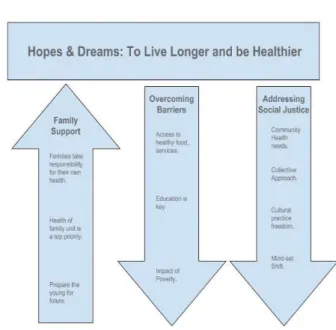
Figure 2 illustrates the second major overarching theme: ‘hopes and dreams – to live longer and be healthier’. This was the most common theme that was highly discussed across all focus groups. Three sub-themes underpin this major theme: (i) Family support (positive theme); (ii) overcoming barriers; and (iii) addressing social justice within the community.
Figure 2: Overcoming barriers to lead healthier lives in Pacific peoples
Family support is about prioritising the needs of the family as the highest priority (upward arrow) which must take on a balanced health and wellbeing approach. In particular, enabling the future provisions for the younger generation was paramount to ensure that their health and wellbeing is planned and sustainable. A line of conversation demonstrates this point:
…For myself we are looking at my mother’s land and living off the grid. Family gardens, connecting with nature and using land and resource for Rongoa (Maori medicine so getting back and connecting with nature again). As we are aging my family we are looking at living together especially as our children are moving out. Our future is to live together, share and take care of one another. [Participant 2, Female, Focus Group 2, South Waikato]
60 ,,,For the community. I mean it’s the same I think
that I try and push on my family which is still the physical and the nutrition part but I also realise that, that can’t work solely by itself. It needs the whole support around it in terms of the spiritual, cultural and mental wellbeing around it and as much as I want to push my physical and nutrition side … I would want them [community] to be fitter and healthier in terms of nutrition, … I can keep pushing what I can, but until they’re ready within themselves then changes aren’t going to happen.
[Participant 1, Focus Group 3, South Waikato]
Overcoming barriers is essential to understand how to attain the hopes and dreams of health and wellbeing. It is a downward facing arrow, because the barriers are not entirely controlled by the family, but related to systemic issues (described earlier). For Pasifika people, it includes having access to all materials, such as healthy food and services. The cost of these resources and the lack of availability were predominant factors for this sub-theme. This theme also relates to individual choices (sub- theme one described above for overarching theme one), in particular, with any given knowledge and information, we need to understand how to make the right choices, in order to live well.
…My hope and my dream would be that doctor visits would be free. That they would be accessed at reasonable times. [Participant 1, Focus Group 2, South Waikato].
…I think one of my aspirations is that people have a choice to be healthy. In South Auckland where we have our youth, um we run a youth space, and I was thinking that I can go and buy healthy food cos we’ve got the money to go and buy healthy food. But a lot of our kids … they don’t. They choose really unhealthy things because it’s cheap and maybe cos they like the taste now. … I feel bad that I eat healthily and then when we are at youth we get a whole lot of cheap stuff because of the money available to us. So I’ve been thinking about how I want to give my kids healthy food at a reasonable price, so I don’t know if you can make something out of that, but just that it’s accessible to everybody [Participant 2, Female, Focus Group 1, Auckland].
The final sub-theme is addressing social justice issues, which is defined as ‘achieving equitable distribution across a range of factors of wealth, opportunities, and privileges within society’45. Similar to the above sub-theme, it is a downward arrow, because the barriers are less likely to be controlled by the family or at an individual level, and the nature of these issues are embedded from the systemic and deep-rooted issues, as highlighted by the first overarching theme. For
the participants of this study, to address social issues at a community-based level by
‘understanding their needs’ which includes shifting their mind-set from understanding health and wellbeing in order to address the different lifestyles, across the generations. Most participants expressed their desire to change their mind-set with the evolution of culture, because they are living within a dual-culture, and this requires a collective approach based on fairness, justice, taking on a posture of learning to identify and understanding the community needs, and to achieve a sense of belonging and ownership in the change-process. Examples of commentary included:
…I think it could be looked at from the other angle as well. … just with the living in a low socio- economic area the amount of takeaways and bad food available is because of legislation it’s because they’ve allowed it to be, so our environment has been dictated to us because of legislation. If they start to tax and take away that kind of stuff it could be looked at from a different angle.
[Participant 7, Female, Focus Group 2, South Waikato].
DISCUSSION
This is the first community-based study that has employed a co-design approach with a Pasifika peoples, particularly where the participatory process includes a partnership between the research team and stakeholders, whom both parties are actively involved in working collaboratively towards a common purpose, which is absent in the literature42. This paper will be an important guide for future researchers considering using this method.
Several important findings emerged from this qualitative study. Underpinning the first overarching theme of Pasifika health and wellbeing. It was clear from the focus groups that these concepts were strongly dependent on the wellbeing of the family unit, and not merely the individual state of being sick, diseased or suffering from illness. Furthermore, family- centred health was also described as being holistic in nature and including physical, mental, and spiritual wellbeing. It should be noted that wellbeing was not to be perceived as having an illness or disease, but rather the holistic and family-centred viewpoint considers ‘wellbeing’
to be a state of ‘being’ (e.g., feeling motivated to lead a healthier life), and ‘health’ was considered to be the state of ‘doing’ (e.g., having a work-life balance to lead a healthier life). Attaining this state of being and doing was considered essential elements of an environment that supports not just the family, but the community
Firestone R, et al. Pacific Health Dialog 2018; 21(2):54-66. DOI: 10.26635/phd.2018.913
61 as well to lead healthier lifestyles. Our finding
aligns well with other established models of health that are Pacific-based21 39 46 47. Even with the increase in the Pacific population who are New Zealand born (50%)48 49 and who may not be living a traditional Island lifestyle, it still remains evident that a holistic and family- oriented approach to enhancing health and wellbeing is necessary for Pasifika communities in this current day and age. Moreover, Pasifika concepts of health and wellbeing that are family- centric and preventive measures that address a variety of environmental impacts (e.g., information environment, urban environment)50, could achieve positive health changes17, which differs from the typical biomedical model that focuses only on the physical nature of health and disease17. Pasifika peoples’ views lean more towards traditional and indigenous paradigms that include spirituality, and a connection with their natural resources (e.g., land and agriculture)51. However, what is needed are initiatives that require research partnerships with Pasifika communities, and these partnerships must work within or align with indigenous paradigms to meet the needs and ideals of Pasifika people.
Further resultant themes were attaining and consolidating knowledge and information, being educated and maintaining job security, which were perceived as basic human rights necessary to lead healthier lives. Recent work has highlighted that non-communicable disease causes, their determinants and outcomes ‘can be framed around human rights principles, norms, and standards emphasizing equality, and non- discrimination’52. Therefore, by harnessing the
‘power of human rights’ by addressing the social justice issues, action can be strengthened to build prevention and control of non- communicable diseases such as obesity. Pasifika peoples report ‘more unmet need for health care’, with cost being the most commonly identified barrier to accessing treatment6. Thus, empowering Pasifika communities to develop and lead community-based programmes at a local level could be effective, even essential, to supporting Pasifika populations to understand, identify, and support change in their behaviours and mind-set for better health and wellbeing.
Previous work have shown to systematic models of working with and empowering Pasifika communities, in particular utilising the church context for health promotion delivery19. However, there is little knowledge or evidence in how these models have effected behavioural change to improve health and wellbeing, or reduce the high rates of hospita