The systematic review details the origins of the concept of social license and its current use. Conditions for social permission to change corporate behavior or regulations in industries dependent on natural resources.
Introduction
- Context
- Social licence concept
- Conceptualisation of social licence
- Social licence as an economic problem
- Research objectives and approach
- Case study industries
- Thesis structure
It has been suggested that the social license concept represents a possible alternative regulatory scheme (Lynch-Wood and Williamson, 2007). This is done by means of a systematic review of the social license literature and a qualitative comparative analysis of social license outcomes.
Statement of Authorship
Is social licence a response to government and market failures? Evidence
- Introduction
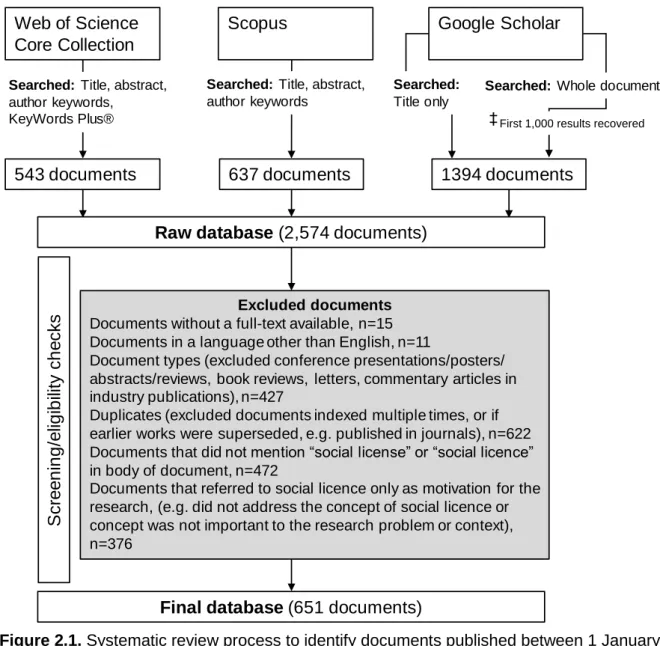
- Methods
- Data
- Limitations
- Results and discussion
- Emergence and growth of social licence
- Industries and activities attracting social licence attention
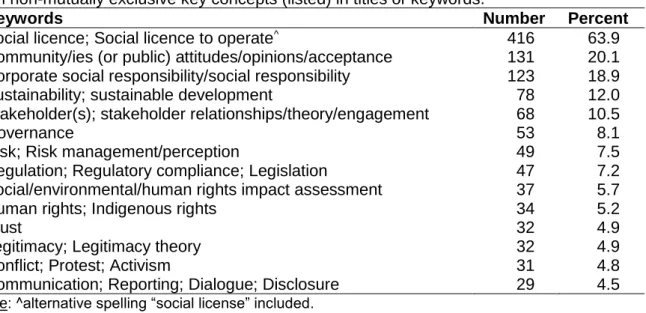
- Conceptual themes in the social licence literature
- Future research agenda
- Conclusion
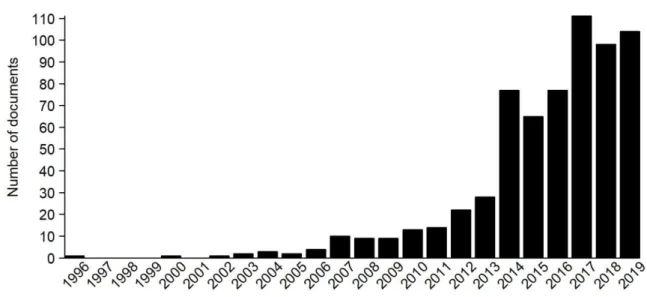
To date, the literature on social licensing has been underpinned by concepts such as legitimacy, trust, (corporate) social responsibility, sustainable development and stakeholder management (Prno, 2013; Thomson and Boutilier, 2011). Key reasons for the growth of the concept of social license covered in this review included:
Statement of Authorship
How do natural resource dependent firms gain and lose a social licence? 30
Introduction
With increasing reliance on social license as a form of governance, research has sought to identify: (1) how and why affected stakeholders withdraw or withhold social license; and (2) how projects, firms or industries can obtain a social license (Cooney, 2017; Thomson and Boutilier, 2011). This is the first analysis to identify the necessary and/or sufficient conditions for social license outcomes and firm behavior change across contexts.
Conditions associated with social licence outcomes
Identified social license conditions being tested (left column) and key phrases used to describe these conditions in the existing literature with key references and hypothetical social license outcomes (right column) (continued). Development and Human Rights (Saenz and Ostos, 2021): The more stakeholders are empowered to interact with projects/companies and management organizations in partnerships (rather than paternalistic relationships), the more likely social license will be granted.
Methods
- Case study selection
- Fuzzy-set QCA calibration methodology
- Defining conditions and outcomes
- Data analysis
0 Health/safety effects of project/business activity are not perceived as a problem for the stakeholders involved. 1 Corruption is perceived as widespread in the country where the project/company is active (index score of <30).
Results
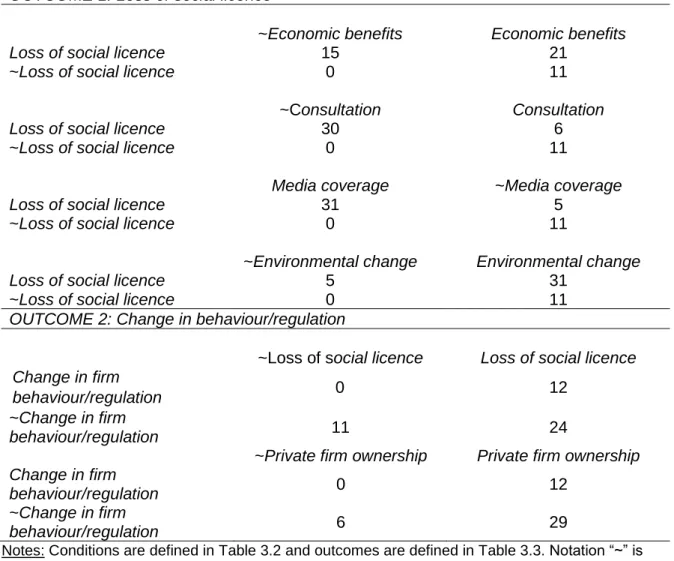
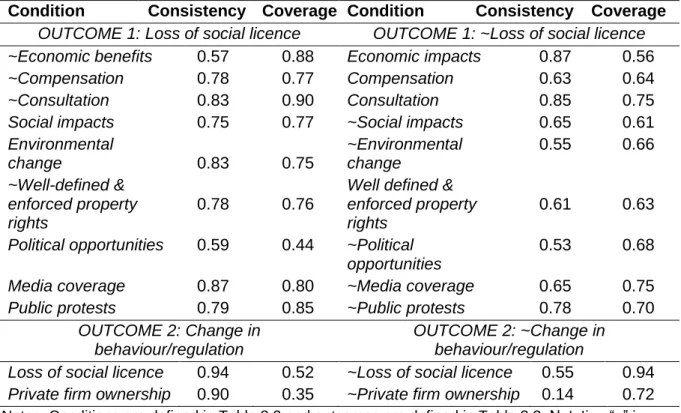
The compensation condition was embodied in the loss of social license condition when the second outcome change in behavior/regulation was examined in the main analysis. Economic benefits*Consultation*~Media coverage*(~Public protests + ~Well defined & . enforced property rights) → ~Loss of social license Solution Consistency 0.91.
Discussion
This result is likely a reflection of issues being labeled as social license issues. In addition to the results discussed above, the loss of a social license (or threats to it) was also found to be necessary but not sufficient to induce firms to voluntarily change behavior or.
Conclusion
Survey design and implementation
- Introduction
- Survey design
- Implementation
- Mode of survey
- Sampling plan
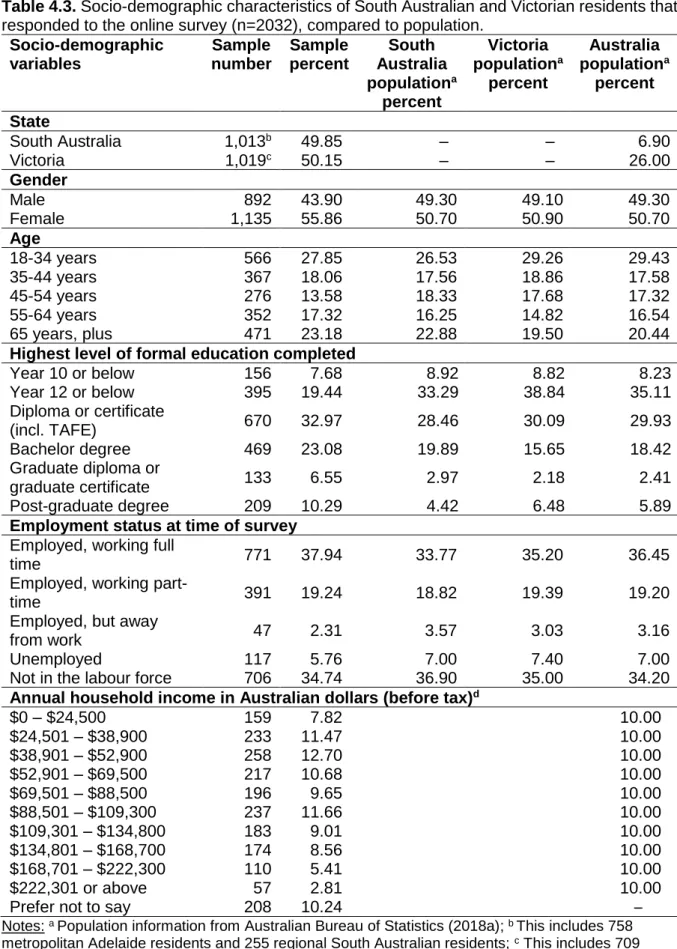
- Sample size and sample representativeness
- Survey timeframe
- Pipeline survey
- Summary
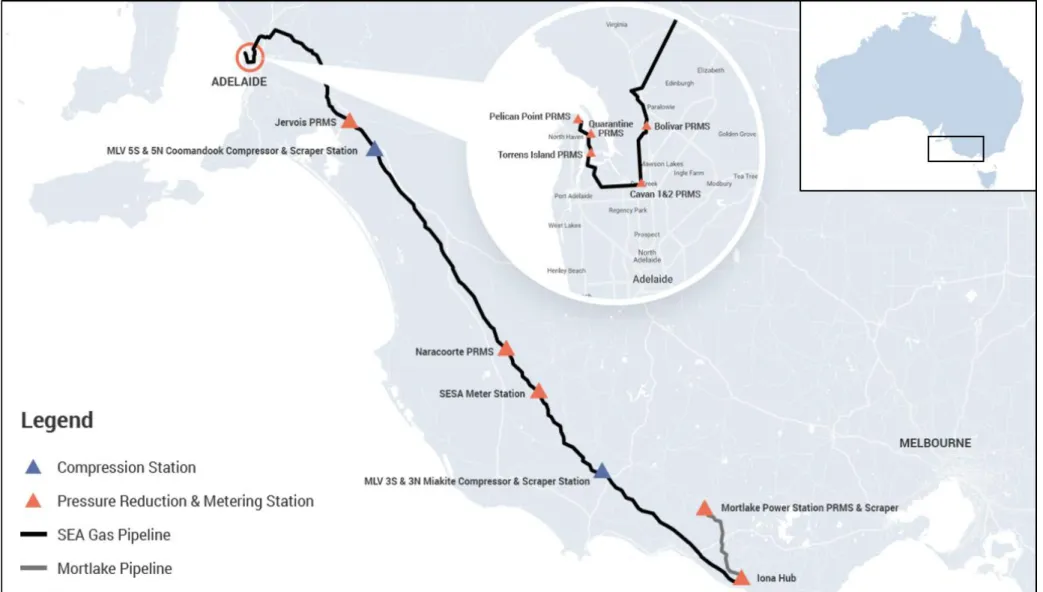
A simple breakdown of experiences and companies represented in the farmer interviews is in table 4.1. The third component of the survey was designed to understand respondents' awareness of efforts to establish a hydrogen industry in Australia and then understand the factors likely to support a social license for a hydrogen industry. The focus on these states was a consequence of the research objectives and interest of SEA Gas (the company that owns and operates the main high-pressure natural gas transmission pipeline in the area) to measure their social license.
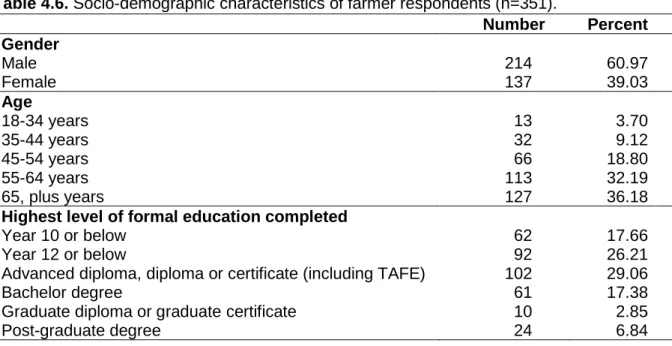
However, the business classifications were not based on the company's primary business type. The median age of farmers who completed the survey was 59 years, and in 2016 the median age of South Australian and Victorian farmers was 49 years (Australian Bureau of Statistics, 2018a). The pipeline survey data is analyzed to measure the pipeline's social license in Chapter 5.
The surveys were implemented between October 2020 and June 2021 and the samples were considered representative of the populations (public and farmers in South Australia and Victoria) sampled.
Measuring a social licence: Landholders’ assessment of a high-pressure
- Introduction
- Methods
- Case study pipeline
- Data
- Data analysis
- Results
- Discussion and conclusions
To answer this question, this study uses Thomson and Boutilier's (2011) hierarchical model of social license. A confirmatory factor analysis was used to test whether the data fit the hypothesized four-level model of social license. The mean score across the 15 statements designed to measure social license was 3.40 out of 5 (Table 5.2).
Based on classifications defined by Boutilier (2017), the pipeline can be classified as having a high acceptance/tolerance level of social license. An exploratory factor analysis revealed that 12 of the 15 statements designed to measure social license loaded on two factors (Table 5.3). The higher the scores for these social license measures, the higher the level of social license.
The claim that the results indicate a high acceptance/tolerance level of social license is based on Thomson and Boutilier (2011) and Boutilier (2017) classifications of the hierarchical model of social license.
Statement of Authorship
Comparing public and farmer views on agriculture’s social licence
- Introduction
- Background
- Methods
- Survey design and implementation
- Survey sample overview
- Principal component and regression analysis
- Results
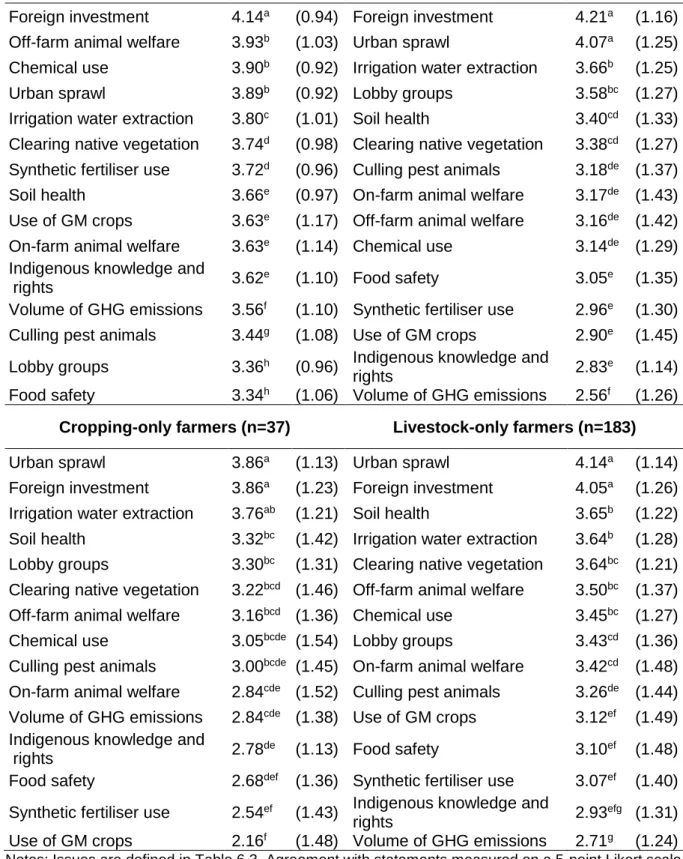
- Stakeholder concerns about issues in the agricultural industry
- Grouping stakeholders’ concerns about agricultural issues
- Linking respondent characteristics and concerns about agricultural issues
- Discussion and conclusion
Vanhonacker et al., 2008; Verbeke, 2009) and to a lesser extent environmental conservation (Howley et al., 2014; Tienhaara et al., 2020). As per Dumbrell et al. 2020) the issues identified as the foundation of agriculture's social license reflect concerns about: (1) an undersupply or threats to public goods; (2) negative externalities; and (3) the use of socially valuable assets for private gain. A second set of issues relates to the use of chemicals, synthetic fertilizers and genetically modified crops, where the main concerns are biosafety externalities affecting human health and the environment (Beckie et al., 2020; Roth, 2011).
PCA was used to determine whether responses to different statements on agricultural issues would be strongly influenced by certain components (Mooi et al., 2018). This result reflects comparisons of public and farmer attitudes towards more specific issues such as animal welfare (Vanhonacker et al., 2008). But this result contradicts the findings reported by Howley et al. 2014) of similar levels of concern about environmental issues between the two groups.
The findings support the argument presented by Dumbrell et al. 2020) that concerns about social license can be categorized as responses to market and government failures, namely concerns about: (1) insufficient supply or threats to public goods; (2) negative externalities; and (3) using public property for private gain.
Statement of Authorship
Public willingness to make trade-offs in the development of a hydrogen
- Introduction
- Examining stakeholders’ preferences for various characteristics of a hydrogen
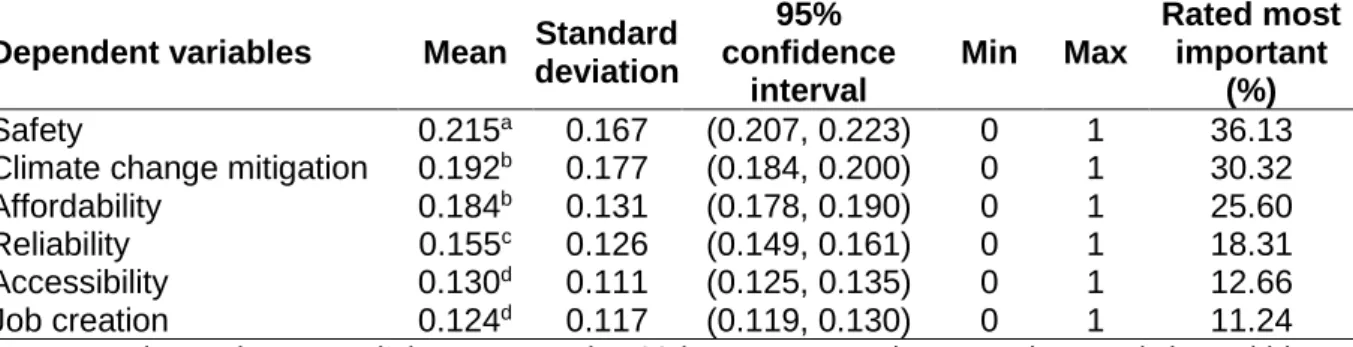
- Safety issues
- Climate change mitigation benefits
- Affordability issues
- Reliability issues
- Accessibility issues
- Job creation benefits
- Methods
- Data and case study area
- Model specification
- Summary statistics
- Results and discussion
- Socio-demographic and attitudinal characteristics
- Knowledge characteristics and safety weighting
- Environmental attitudes and climate change mitigation
- Job and regional economy characteristics
- Overall findings
- Conclusions and policy implications
The same consequences face the hydrogen industry if it does not get a social license (Beck et al., 2019). International research has shown that psychological, attitudinal and socio-demographic determinants are associated with public acceptance of hydrogen (e.g. Huijts and van Wee, 2015; O'Garra et al., 2008). For example, trust and confidence in government and regulatory institutions have been positively associated with public acceptance of hydrogen energy and infrastructure (O'Garra et al., 2008).
In particular, this research follows Martin et al.'s (2021) broad exploration of Australian public attitudes towards a hydrogen economy. This research also frames hydrogen industry characteristics of interest as conditions that contribute to social licensing outcomes (Dumbrell et al. Climate change mitigation was also noted as an important benefit of hydrogen energy in recent Australian studies (Lambert and Ashworth, 2018; Martin et al., 2021).
Likewise, partner countries, particularly trading partners, can create (dis)incentives to influence the direction of hydrogen policy and investment in Australia (e.g. Muller et al., 2021).
Summary, conclusions and implications
- Thesis overview
- Summary of main findings
- Key contributions
- Implications
- Limitations and future research
- Concluding remarks
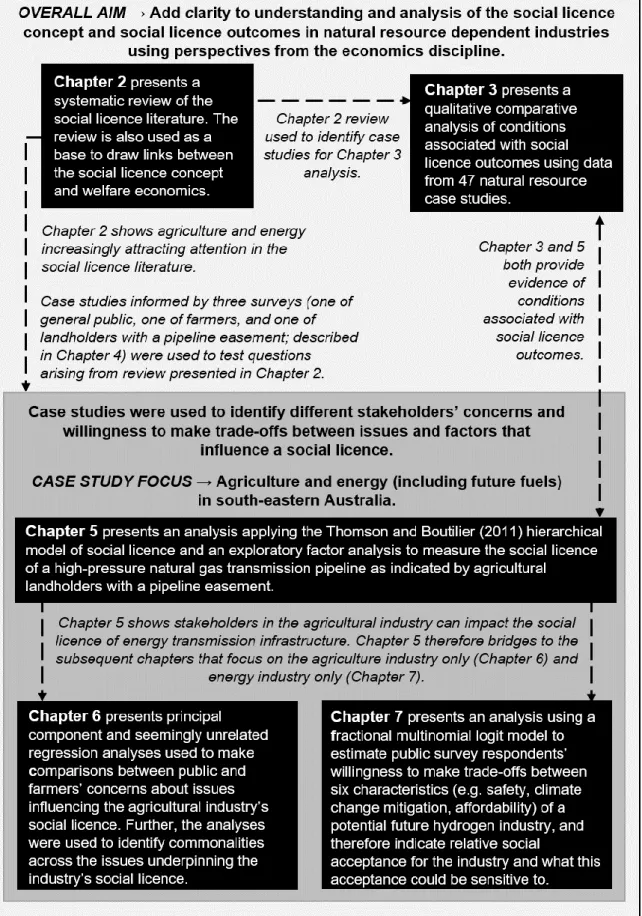
It is argued that this contribution sheds light on managers' understanding of social license issues. It is argued that this contribution brings more clarity to the understanding of the social license concept and the drivers of social license issues. This research has improved understanding of the social license concept and described a number of conditions associated with social license outcomes.
Likewise, this thesis shows that any policy developed to manage social license outcomes in the agricultural industry must recognize diversity in. This research has contributed to a better understanding of the social license concept and associated impacts in natural resource dependent industries. This thesis has contributed further clarity to the understanding and analysis of the social license concept and social license outcomes using perspectives from the economic discipline.
Consequently, this thesis has advanced the theoretical and applied understanding of the concept of social license and how it operates in natural resource dependent sectors.
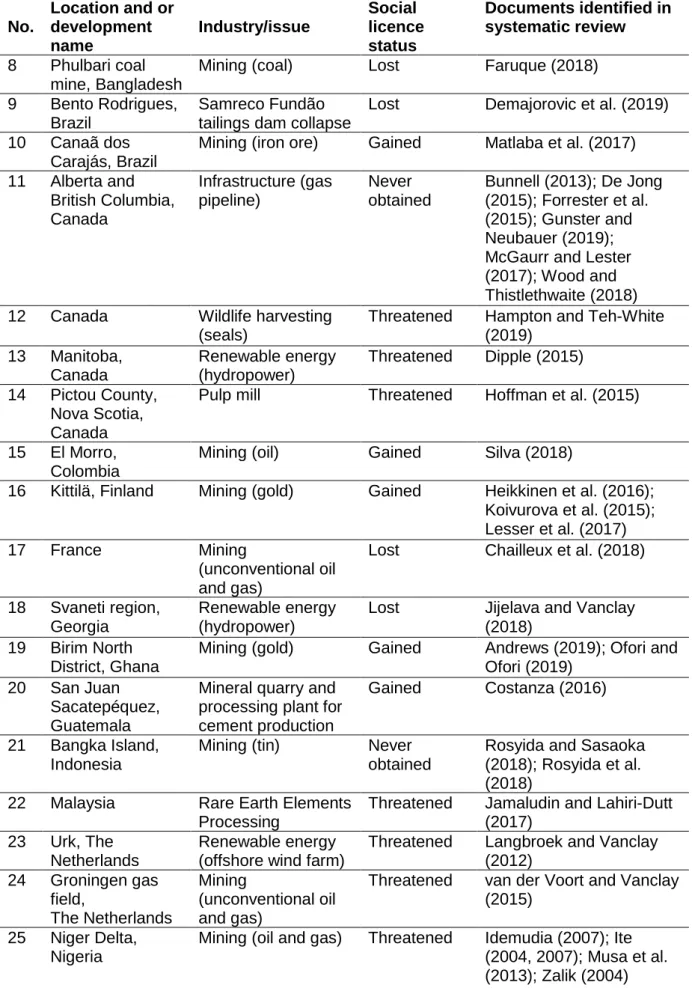
Information recorded in systematic review
Case study and supplementary information for Chapter 3
1 Project/firm activity is crucial for economic development for local community and/or other stakeholders. 0 Project/firm activity will have minimal to no impact on daily life and valued assets/activities for affected stakeholders. Complaints to the Environmental Protection Authorities (EPA) are a good indicator of the absence of strong community dissatisfaction with industry performance.
0 Assets affected by project/business activity that have already been developed and will be used for a similar or known purpose. 1 Project/business activity takes place on and affects properties subject to well-defined and enforced private property rights. Members of the opposition parties, the environmental movement, NGOs and some villagers have jointly demonstrated in various places.
1 Regulatory change occurred such that the project/firm activity was no longer permitted or the firm/s stopped the project/activity.
Interview procedure and survey questions
V8. Please indicate the extent to which you agree that governments should do all of the following to address issues that threaten the social license status of the agricultural industry. raise awareness among the general public about agriculture, including through school programs. Q25 When thinking about yourself, indicate the extent to which you agree with each of the six statements below. Q2 Considering this definition, have you ever heard of the term "social license to operate".
Ok, now we will move on to some questions about the coexistence of the agricultural industry with energy. The following questions relate to the coexistence of the agricultural industry with energy. Q22 Which of the following categories best describes the highest level of education you completed.
Q24 Which of the following categories best describes your farm's net income or gross margin (income or cash receipts, minus variable costs) in the 2018-19 financial year.
Supplementary information for Chapter 6
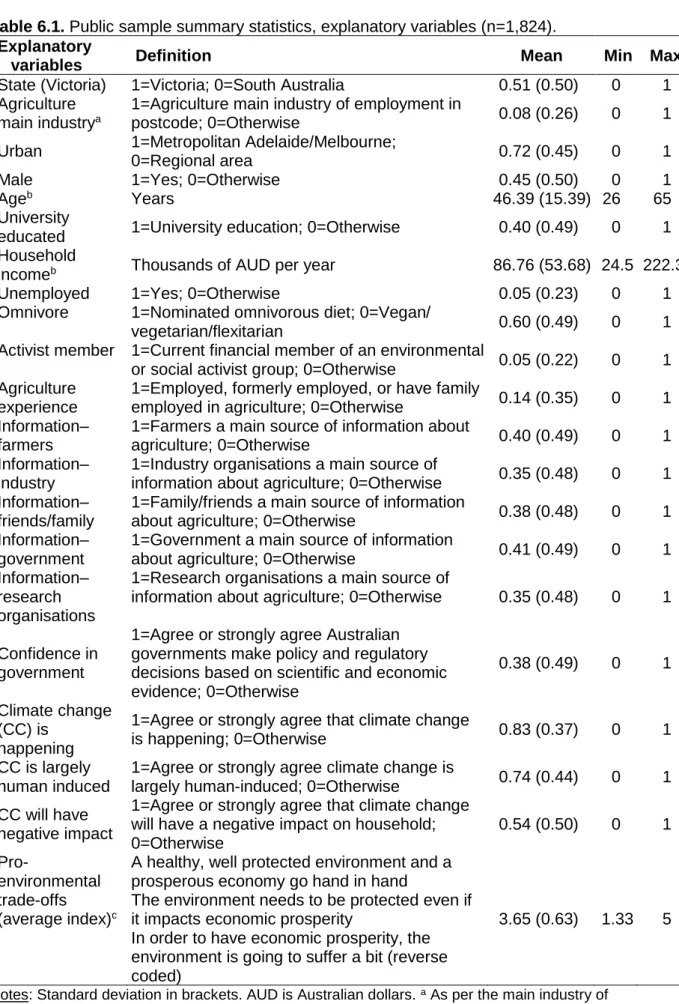
Percentage of respondents with different component scores for Component 1 – undersupply of public goods; Component 2 – negative externalities; and Component 3 – use of socially valuable assets, for the public (n=2,032) and farmer samples (n=351). Results of the ordinary least squares model based on the sample of citizens (n=1,824) and farmers (n=351) are consistent with all statements on agricultural issues. State (Victoria) Ag main industry Urban Male Age University educated Household income Unemployed Omnivore Activist member Ag experience Info – farmers Info – industry Info – friends/family Info – government Info – research organizations Trust in government Climate change (CC) is happening CC is largely man-made CC will have a negative effect. Pro-ecological considerations.
State (Victoria) Ag main industry Male Age University educated Farm area Crop-only farm Livestock-only farm Organic Irrigator Off-farm income Farm productivity trend Member of group Succession plan CC happens CC happens CC happens CC happens Pro-environmental considerations . Thousands of AUD per year, median household income for postcodes used when income information is missing (n=208). Alternative forms of socio-demographic and farm variables tested but not used in the farmer's apparently unrelated regression model (n=351).
1=I agree or strongly agree that a healthy, well-protected environment and a successful economy go hand in hand; 0=Otherwise.
Supplementary information for Chapter 7
Additional publications