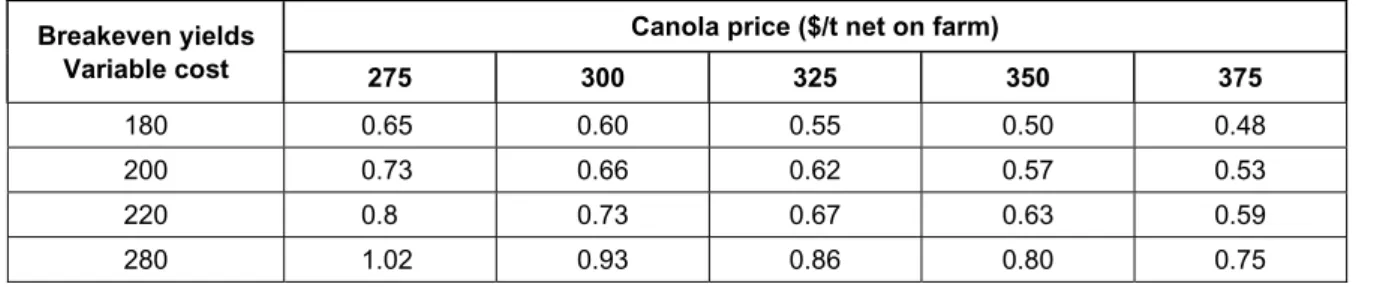
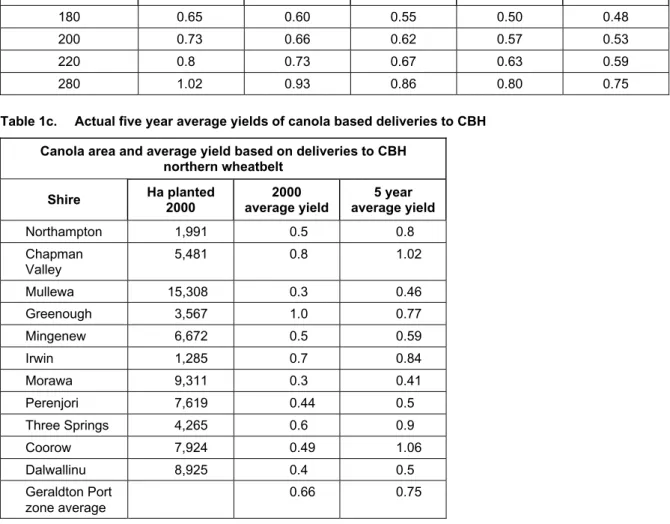
Rapeseed in the northern agricultural region is relatively easy to grow if a few simple rules are followed. The most limiting factor for canola in the northern grain belt is the timing of the onset of rainfall and high temperature during pod filling. Most canola in the northern agricultural region is planted on wheat stubble that has been in a continuous wheat/lube bean rotation.
Dry seeding of canola has been a successful adoption to the farming system in the NAR.
![Table 1a. Gross margin of canola ($/ha) [input cost = $285/ha] grown in the high (450-750 mm) and medium (325-450 mm) rainfall zones (42% oil)](https://thumb-ap.123doks.com/thumbv2/5docco/10322167.0/7.892.83.747.352.519/table-gross-margin-canola-input-grown-medium-rainfall.webp)
Canola varieties
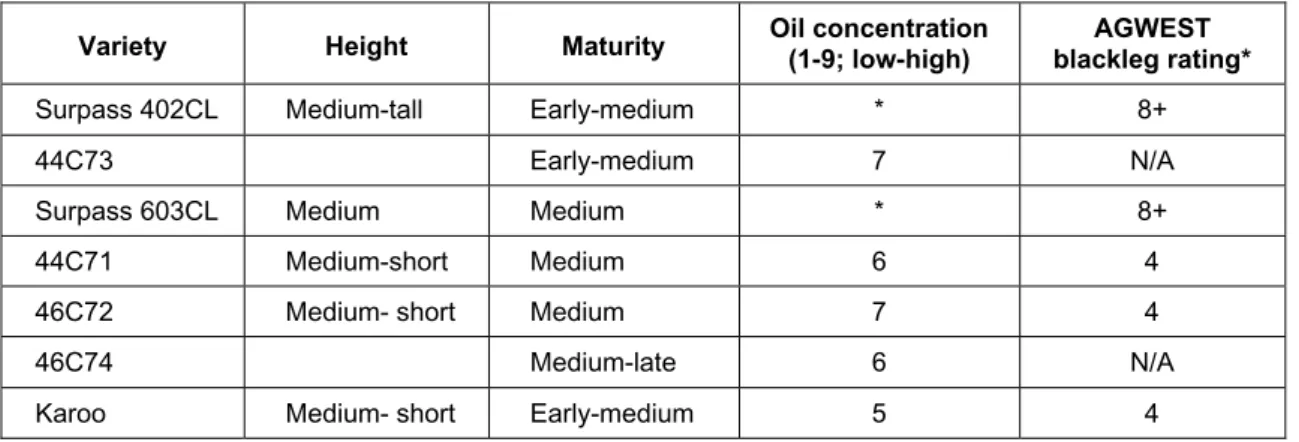
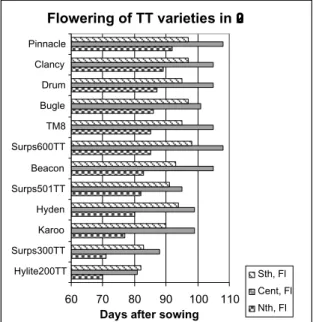
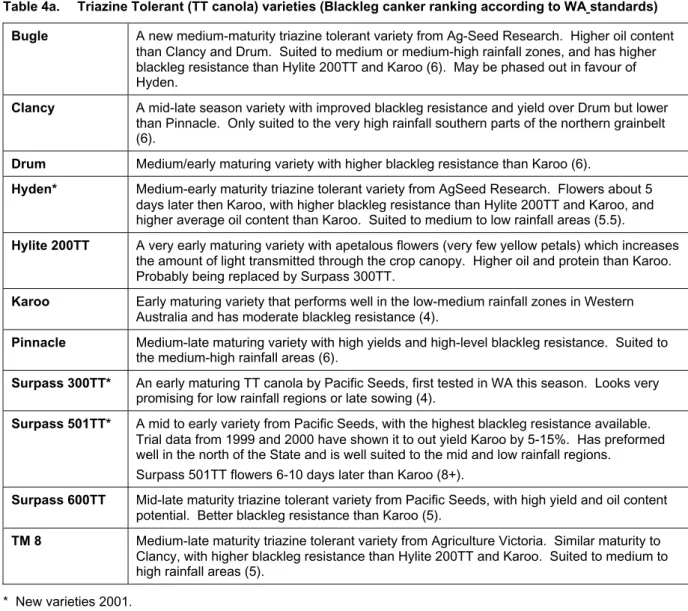
Triazine tolerant (TT canola) varieties (Blackleg canker ranking according to WA standards) Bugle A new medium-mature triazine tolerant variety from Ag-Seed Research. Suitable for medium or medium rainfall zones and has higher blackleg resistance than Hylite 200TT and Karoo (6). Surpass 501TT* A mid-early variety from Pacific Seeds, with the highest black leg resistance available.
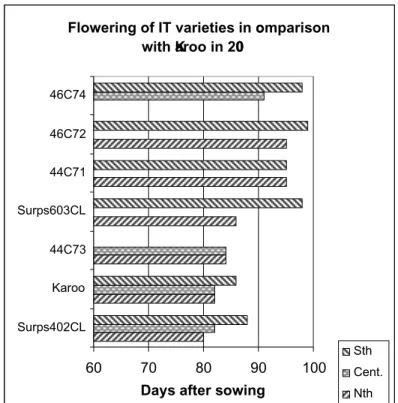
Has performed well in the northern part of the state and is suitable for medium to low rainfall. Surpass 600TT Medium-late maturing triazine tolerant variety from Pacific Seeds, with high yield and oil potential. Surpass 402CL* Early maturing mid-season CLEARFIELD variety from Pacific Seeds, available from CLEARFIELD accredited outlets.
Exceeds 603CL* Mid-late maturity CLEARFIELD variety from Pacific Seeds, available from CLEARFIELD accredited outlets. The Surpass lines were bred by Pacific Seeds and appear to be well suited to the warmer, faster growing region of the NAR. Various trials show the performance of the Surpass lines is better in the more northern regions of the state.
Choosing a variety in the Northern region
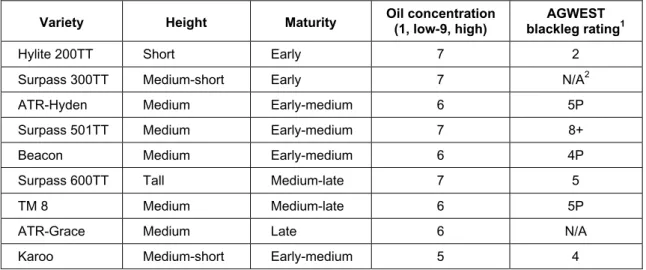
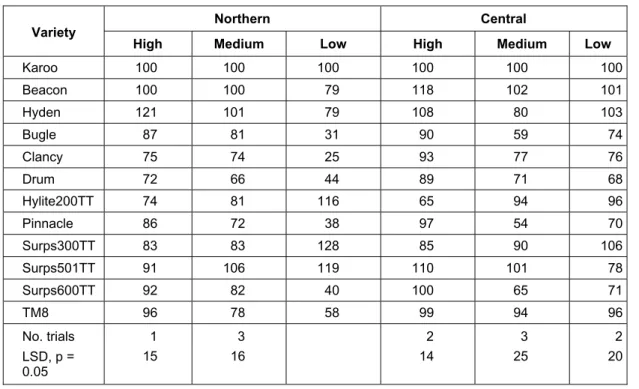
Central trials in Badgingarra, York, Wongan Hills, Meckering, Kunjin (sowed between May 8 and June 15) and Merredin and Karlgarin (sowed between May 18 and 31). Trials in the north at Coorow and Mullewa (sowed May 15 and June 15), central at Meckering, Kunjin, Avondale and Wongan Hills (sown May 31 and June 7), south at Katanning and Wittenoom Hills (sown 14 June and May 10). NOTE: The comparison of varieties in these trials was performed without the use of the triazine or imidazolinone herbicide systems.
In the NAR Surpass 402CL is clearly superior to the Karoo and on good fertile soils in the high to medium rainfall areas of the northern agricultural zone will out perform all other varieties. Weed control consideration of the Clearfield system should be considered due to levels of group B resistance in both ryegrass and wild radish. In the northern and central regions, the early to medium maturing varieties of Mystic, Monty and Surpass 400 performed well.
In general, the Non-TT canola varieties are not suitable for the northern grain belt due to the inability to control wild radish and other broadleaf weeds. CANOLA VARIETY GROSS MARGIN COMPARISON - CHAPMAN VALLEY SANDPLAIN Prepared by Craig Topham, Agrarian Management, Geraldton. For an explanation of the gross margin/ha calculations, costs are shown in Appendix II.
Economic evaluation of Yuna 2000 trial
Managing canola yield and oil
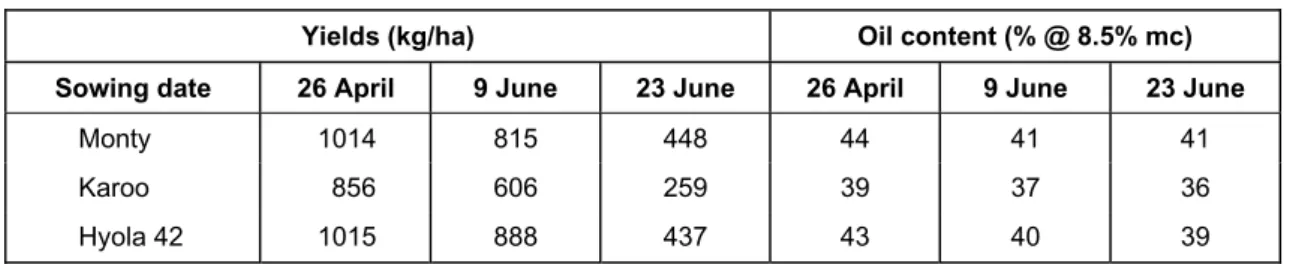
Canola yield response to sowing date, Wongan Hills
Diseases
Canola yield response to sowing date, urea rate, Mullewa
When sowing a variety with a resistance less than 6 (Karoo) in the area of medium and high rainfall that has had canola seeded less than 1 km away in the last three years. Trials have not shown significant results in NAR with cultivars rated above 5. Inspect poor seedlings for possible tapering of the young root at soil level (Rhizoctonia attacks below the soil surface).
Blackleg infection levels have increased and may be responsible for some of the weaker canola performances in recent seasons. This disease is thought to be more prevalent in the northern region due to large areas of lupine, however losses are generally not severe. To control the disease, leave canola out of the rotation for as long as possible - up to three years.
Cape weed control, crop rotation with litter management are currently the best strategies for its control in the region. Beet Western Yellows virus symptoms are difficult to see in infected canola plants in the paddock. Some symptoms are mild dwarfing of plants, distortion of leaves and reddening or pallor of the lower leaves.
Weed management in canola
See "Growing Golden Canola Manual": Fungal Diseases of Canola in Western Australia and Bulletin no. TwoViruses, beetroot virus (BWY) and cauliflower mosaic virus are insidious diseases of oilseed rape crops in Western Australia. Research is still ongoing to determine the effect of these viruses on canola yields in WA, but European work has shown that seed yield losses of 10-15 per cent are associated with this canola virus disease.
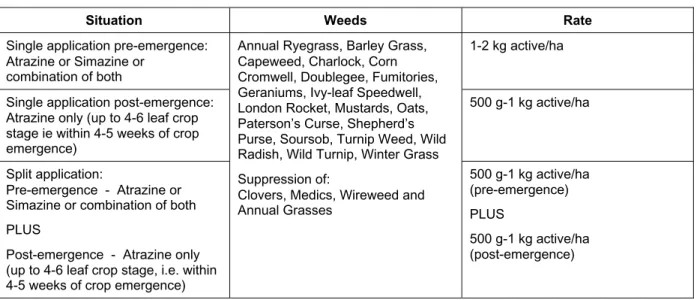
The maximum amount of active substance (Atrazin, Simazine or a combination of both) that may be applied to a crop during the growing season is 2 kg per ha. Individuals must follow the guidelines and principles outlined in the Generic Integrated Weed Management Strategy for Triazine Tolerant Canola when using chemicals in a manner covered by this label. This strategy was developed with the help of the Canola Association of Australia, which also has copies of the strategy available.
Full label details can be obtained from the Syngenta (formerly Novartis) website www.Syngenta.com.au. Most of the Atrazine sprayed on stubble will be retained for some time. In the presence of heavy stubble, spraying pre- or post-sowing during rain will ensure that most chemicals are washed onto the soil.
Best practice for TT canola - overview
If a knockdown herbicide application has created a weed-free environment for seeding, delay the Atrazine application until the first weed seedlings appear. Apply a second application of Atrazine (plus oil) six to eight weeks after the first application if a second weed appears. The paddock should be kept free of weeds as the canola makes overhangs and suppresses further germination.
For cottages that have a heavy thatch cover, delay the second application until sufficient weed growth appears over the thatch to allow good foliar uptake. In years of heavy rain, enough residual Atrazine can be carried over into the next season to affect wheat growth. Also, volunteer canola in next year's pulse production, being triazine tolerant, can be very difficult to eradicate.
On acidic soils (pH below 6.5) - The maximum amount of GESAPRIM or GESATOP or a combination of the two products that may be applied to the crop during the growing season is 4 L/ha. On alkaline soils (pH above 6.5) - The maximum amount of GESAPRIM or GESATOP or a combination of the two products that may be applied to the crop during the growing season is 2 L/ha. Weed management section: 'Growing Golden Canola' (www.agric.wa.gov.au/canola/ggc) Weed control in triazine tolerant canola - Farmnote - 52/96.
Practicalities of TT canola in NAR
Post-emergent use - It is recommended that GESAPRIM is only used, and at rates of 2 L/ha or less, on both acid and alkaline soils. Glyphosate and Atrazine together with insecticides and spray oils leave little room for water when the spray volume is 30 L/ha or less. Larger amounts of 50 L/ha are needed and will also generally increase the effectiveness of the herbicides used.
After using the above herbicides, hands, tanks and pipes should be cleaned and soaked in chlorine overnight. Some rods are more difficult to clean than others, so check with your dealer which rods are best to avoid these problems.
Management of insect pests
The damage compared to RLEM is quite obvious, RLEM leaves a silvering effect on the surface of the leaves which is not as harmful as Bryobia. Loopers are sometimes only present around the edge of the crop, and are more common in canola that has been sown to grass. This is especially true when summer rains in the pastoral areas encourage the build-up of moths throughout the region.
The native budworm can be distinguished from both the diamondback moth (Plutella xylostella) and the cabbage white moth in the larval stage by its distinctive body stripes. In these situations, a follow-up spray is needed 10-14 days later to control the next stage of the population. The proportion of larvae it collects varies between crops and between different stands of the same crop.
The experiments conducted measured the collection efficiency of the sweep net and determined whether all larval sizes were equally represented in the sample. The timing of the first major flights can vary considerably between seasons; therefore, growers can use trap net moth collections throughout their growing area to determine when to begin monitoring their crops. Sample aphids by measuring the length of the dense colonies that form on the flower head. Rainfall area (average annual rainfall).

Nutrient management of canola
Calculating a crop nutrient budget by determining nutrient removal and what we estimate is available to the plant in the soil is the best technique we currently have in WA to determine how much fertilizer we need to add to realize our crop potential. It is important in the production of many compounds in the plant, including proteins and chlorophyll. In lower rainfall areas, more nitrogen can be added if the crop appears to have high yield potential.
Most of the sulfur in the soil is contained in organic matter as proteins, amino acids and other compounds available to plants. This can result in the plants not being able to access sufficient sulphur, resulting in temporary deficiency symptoms appearing in patches. If sulfur deficiency persists, apply sulfur in the sulphate form, at approximately 10 kg S/ha.
Canola crops take up large amounts of potassium (K) during growth, but only a small fraction of it is removed in the seed. Deficiencies are more likely to occur in high rainfall areas on sandy surface soils where the depth of gravel or clay is greater than 40-50 cm and the soil potassium test is below 50 ppm (data from Brennan and Edward, Agriculture Western Australia). Canola has higher sulfur requirements than cereals due to the higher protein content of the seed.

Harvest management
Marketing
CASE STUDY 1: Wongan Hills
CASE STUDY 2: Tenindewa
APPENDIX
GROSS MARGIN COMPARISON TRIAZINE TOLERANT vs IMIDAZOLINONE TOLERANT CANOLA
CASE STUDY OF ACTUAL COSTS AND RETURNS LOW TO MEDIUM (YUNA) AND HIGH RAINFALL (MINGENEW) ZONES OF THE NORTHERNAND HIGH RAINFALL (MINGENEW) ZONES OF THE NORTHERN
Further reading and research