http://researchcommons.waikato.ac.nz/
Research Commons at the University of Waikato
Copyright Statement:
The digital copy of this thesis is protected by the Copyright Act 1994 (New Zealand).
The thesis may be consulted by you, provided you comply with the provisions of the Act and the following conditions of use:
Any use you make of these documents or images must be for research or private study purposes only, and you may not make them available to any other person.
Authors control the copyright of their thesis. You will recognise the author’s right to be identified as the author of the thesis, and due acknowledgement will be made to the author where appropriate.
You will obtain the author’s permission before publishing any material from the thesis.
Rural and remote communities:
Health needs and aspirations of Pacific peoples
A thesis
submitted in fulfilment of the requirements for the degree
of
MASTER OF HEALTH, SPORT AND HUMAN PERFORMANCE at
The University of Waikato by
Janina’ofa Galewski
2022
Abstract
In Aotearoa New Zealand, Pacific peoples have worse health status and substantially limited access to healthcare, particularly in remote and rural communities, when compared to the general population. In addition, Pacific peoples are underrepresented in the Aotearoa health workforce, including within the medical workforce. There is a need for a fit-for-purpose health workforce with the skills and commitment to care for Pacific peoples living in remote and rural communities. In the context of the University of Waikato’s preparations to establish the Aotearoa Graduate Entry Medical School, this Masters study explores the perspectives and aspirations of rural Pacific peoples with the aim of understanding their health needs and their expectations of healthcare, particularly medical care.
This qualitative study is underpinned by the Pacific-valued and respect-based Pacific Post- Development Research Framework. The study design includes survey questionnaires, semi- structured interview and focus groups within a talanoa – a Pacific form of discussion/dialogue – space. Research participants will be Pacific peoples (n=9) over the age of 18 years and living in rural Te Rohe Pōtae (South/West Waikato region). The research data was explored using thematic analysis and focused coding.
The study suggest rural Pacific peoples want more healthcare services options with better
accessibility, and that caters to their cultural differences. They aspire to see more Pacific doctors in their rural communities, as well as a health workforce that is responsive to their cultural needs.
Keywords: Pacific peoples, rural, remote, health, inequities.
Fa’afeta’i: Acknowledgements
Lūsia ki Taulanga
Ko ha taha ne fepaki mo ha ngaahi faingata’a kae tutui pē ke a’u ki he feitu’u pe taumu’a na’e fai ki ai ‘ene feinga.
Pursuing Haven
A Tongan proverb which explains the struggle by seafarers to reach land during stormy weather. The proverb refers to someone who is trying hard to achieve their goal despite the challenges in life. It reflects the journey I encompassed to complete this thesis.
This journey has undoubtedly tested me in so many ways, but thanks to the individuals listed below, who helped steer and row the vaka (boat), I was able to complete the voyage.
First and foremost, I would like to thank God. He has given me the strength and courage to push through to the end of this thesis. I am very blessed, thanks to Him.
I would like to acknowledge and show my gratitude to my supervisor Dr Apo Aporosa, for his expertise, mentoring and guidance throughout this journey. Thank you for challenging, pushing and believing in me, even when I never believed in myself. I will never be able to thank you enough for your patience, the time spent reviewing my work and providing me with valuable feedback. You’ve opened many doors for me, and I am eternally grateful. ‘Ofa lahi ‘atu kia koe mo Jan.
I also extend my gratitude to the members of the wider project. My thanks first goes to Emeritus Professor Roger Strasser, Lead Investigator and Co-Manager of the project for not only generously funding this thesis, but also for your continued support and help throughout its duration. To Nikki Barrett, Project Co-Manager, thank you for your advice, organisation, and ensuring I meet important deadlines. I wish to thank Dr Gloria Clarke, Research Advisor and the Māori Masters Student
Supervisor for offering your unique insights and Māori perspective.
Appreciation must also be given to Marie-Christine Wells (Kitty), Learning Developer and Study Advisor who gave me critical feedback on my writing style in my first chapter, which helped guide me for the rest of my thesis. I extend my appreciation to Genevieve Bishop who undertook the difficult task of proofreading, and provided me with typographical, grammatical, spelling, formatting and other suggestions for my writing.
I owe a special thanks to my Masters partner Victoria Maikuku, who conducted the Māori version of this study or, as we like to call it, the ‘sister’ project. Thank you for being you. I genuinely appreciate you for trusting and welcoming me into your community, and making it possible for me to recruit participants for this thesis. Despite our complaints throughout the voyage (especially nearing the end), it was a joy to travel with you at my side.
To my participants, I would like to express my utmost gratitude for putting your faith in me and sharing your aspirations with me. I hope this thesis provides the platform for your voices to be heard, and make the issues that affect your communities known. The thesis would not have been possible without your invaluable input, I give you my most sincere thank you.
Acknowledgement must also be given to Heleine, for her wisdom and helping me choose the Tongan proverb that encapsulated my journey.
I am especially thankful for my inner circle. To ‘Ana and Koula, thank you for going above and beyond for me always. For going through the struggle with me, the late nights/early mornings, the feeds, the rants and the tears. I also want to thank Amelia leka, for being my second mum, coming all the way from Auckland to feed me. Appreciate the food and laughs we shared. To Tevita, my muggle, thank you for all the support you’ve given me. For putting up with my stress, my mood swings and my sooks throughout this journey. For funding my needs and food cravings during my long hours of study both on campus and at home. I am so grateful to you. Thank you to all my other friends who are not mentioned here, I appreciate you all, and I am thankful for the words of
encouragement you have given me. Thank you for understanding why I went on full ghost-mode and missed events.
Can’t forget to express my appreciation for my li’l sister, Kala. Thank you for doing all our chores at home while I camped at my office to get writing done, for tagging along with your blanket in my office for my late-night endeavours, for the Tongan-style back massages you offered to give me after sitting at the desk for hours, and also keeping me awake with the most random questions after midnight. Love you li’l sissy.
Finally, my biggest fakamālo, ‘ofa and appreciation must go to my parents. Their love, their sacrifices and their unfailing support is what helped me pull this off. It is because of them that I have pursued this higher degree and will continue with my PhD next year.
Table of contents
ABSTRACT ... II FA’AFETA’I: ACKNOWLEDGEMENTS ...III TABLE OF CONTENTS ... V GLOSSARY ... VII LIST OF ABBREVIATIONS ... IX LIST OF FIGURES ... X LIST OF TABLES ... X
CHAPTER ONE: INTRODUCTION AND METHODOLOGY ... 1
1.1 UNDERSERVED AND UNDERREPRESENTED:PACIFIC PEOPLES IN RURAL AOTEAROA NEW ZEALAND ... 1
1.1.1 Research question ... 2
1.1.2 Definitions and Terminology ... 2
1.2 METHODOLOGY ... 3
1.2.1 Research Site ... 4
1.2.2 The challenge of COVID-19 ... 4
1.2.3 Methods ... 5
1.2.4 Positionality: Wanting desperately to be ‘white’ or hybrid identity?... 7
1.2.5 Ethics ... 9
1.2.6 Recruitment ... 9
1.3 THESIS STRUCTURE ... 10
CHAPTER TWO: LITERATURE REVIEW ... 12
2.1 INTRODUCTION ... 12
2.2 PACIFIC PEOPLES IN AOTEAROA:HOW ARE WE FARING IN TERMS OF HEALTH? ... 12
2.2.1 Demography ... 13
2.2.2 Realm VS non-Realm ... 14
2.3 THE HEALTH OF PACIFIC PEOPLES IN THE WAIKATO DHB ... 15
2.4 ‘THE BOUNDARY OF THE HAT’ ... 16
2.5 MO’UI LELEI:PACIFIC WELLBEING ... 19
2.5.1 Fonua Model ... 20
2.6 SPATIAL EQUITY ... 21
2.7 THE OBSTACLES TO QUALITY HEALTHCARE... 22
2.7.1 Costs ... 22
2.7.2 Communication ... 22
2.7.3 Location and transport ... 23
2.7.4 Appointment times ... 23
2.7.5 Cultural ... 24
2.8 UNDER-REPRESENTED PACIFIC HEALTH WORKFORCE ... 24
2.9 POSITIVE DEVELOPMENTS IN THE PACIFIC HEALTH WORKFORCE ... 26
2.10 THE PACIFIC PROVIDER WORKFORCE DEVELOPMENT FUND ... 27
2.11 WHAT THE DATA ‘DOESN’T’ TELLS US ABOUT RURAL PACIFIC HEALTH ... 28
2.12 HOW DID PACIFIC PEOPLES DO DURING COVID-19? ... 29
2.13 FIT-FOR-PURPOSE RURALITY CLASSIFICATION ... 30
2.14 SNAPSHOT OF THE HEALTH OF THE ’INVISIBLE’ RURAL PEOPLES OF ANZ ... 31
2.15 SUMMARY ... 32
2.16 GOOD MEDICAL PRACTICE ... 33
CHAPTER THREE: DATA ANALYSIS, RESULTS, AND DISCUSSION ... 35
3.1 THOSE AT THE COAL-FACE: MY PARTICIPANTS ... 35
3.2 OBSERVATIONS (DATA GATHERING) ... 36
3.3 HEALTH AND WELLBEING ... 36
3.4 RURAL AND REMOTE ... 42
3.5 HEALTHCARE NEEDS ... 46
3.5.1 Healthcare services ... 46
3.5.2 Healthcare workers ... 48
3.6 SUMMARY ... 51
CONCLUSION: THE FUTURE OF PACIFIC RURAL HEALTH ... 52
4.1 RURAL PACIFIC PERSPECTIVES ON HEALTH AND WELLBEING ... 53
4.2 ENHANCING RURAL PACIFIC PEOPLES’ HEALTHCARE EXPERIENCES ... 54
4.3 CONTRIBUTIONS TO THE LITERATURE ... 56
4.4 SUGGESTIONS FOR FURTHER RESEARCH ... 57
4.5 LIMITATIONS ... 59
4.6 CONCLUDING STATEMENTS ... 60
REFERENCES ... 62
APPENDICES... 72
6.1 APPENDIX A:PARTICIPANT SURVEY FORM ... 73
6.2 APPENDIX B:DRAFT PARTICIPANT SEMI-STRUCTURED INTERVIEW SCHEDULE ... 74
6.3 APPENDIX C:ETHICS APPROVAL,UNIVERSITY OF WAIKATO ... 75
6.4 APPENDIX D:PARTICIPANT INFORMATION SHEET ... 76
6.5 APPENDIX E:PARTICIPANT RECRUITMENT POSTER ... 77
6.6 APPENDIX:F:PARTICIPANT CONSENT FORM ... 78
6.7 APPENDIX G:ADOPTED SOURCES FOR RESEARCH SITES TABLE ... 79
6.8 APPENDIX H:THE FONUA MODEL ... 80
6.9 APPENDIX I:GEOGRAPHICAL CLASSIFICATION FOR HEALTH (NORTH ISLAND,ANZ) ... 81
Glossary
Anga fakaTonga: Is the Tongan way or Tongan custom.
‘Atakai: Enviromental
‘Atamai: Mind or mental.
Biomedical viewpoint: Focuses on biological factors and is utilised in most western healthcare contexts.
Bu ni Ovalau: Coconut tree
Fa’aSamoa: Refers to the traditional Samoan lifestyle, identity, or way of life (Anae, 2022) Faikava: Refers to venues used for kava drinking. Tongan literal meaning ‘to do kava’.
Fetuutuunai: Navigation Foaki ‘ofa: Giving
Fonofale: Holistic house Hafakasi: Mixed Tongan
Iwi: The largest political grouping in Māori society before European contact; a group of people connected by a common ancestor or ancestors; literally: bone; modern meaning: tribe (Taonui, 2005).
Kainga: Community
Kaupapa Māori: A Māori way. Connected to philosophies and principles.
Kava: A crop of the Pacific Islands also known as Piper methysticum King Country: Colonially (Government) imposed name for Te Rohe Pōtae
Laumalie: Spiritual
Māori Health Authority: An independent Public Health agency in Aotearoa responsible to enhance tino rangatiratanga and strengthen mana motuhake for hauora Māori and ensure greater influence throughout the entire health system to support whānau to take control of their own health and wellbeing (Māori Health Authority, 2022, para. 10).
Māori peoples: Indigenous people of Aotearoa New Zealand Me’a ‘ofa: A gift or donation.
Moana: Oceania
Ngāti Maniapoto: The main iwi of Te Rohe Pōtae
Pacific Peoples: Refers to seventeen diverse ethnic groups (StatsNZ, 2019b) who have settled in ANZ and have ties to the Pacific islands (HQSC, 2021, p. 17).
Pacific Post-development Methodological Framework: A combination of the Fijian Vanua Research methodology with post-development theory (Aporosa, 2014).
Pākehā: Māori term of a person of European ancestry
Palangi: Pacific term for a person of European ancestry
Primary care: Considered the first point of contact in the community of healthcare. Primary care is often seen as general practice. The term primary care also relates to first points of contact but is considered wider than general practice and includes and health services in community settings, such as pharmacies (WDHB, 2019, p. 68).
Sino: Physical or body.
Talanoa: A conversation, chat, sharing of ideas and talking with someone (Tecun et al. 2018).
Talanoa fakataautaha: One on one talanoa
Tangata whenua: The people/original inhabitants of the land Te Reo Māori: The language of Māori
Te Rohe Pōtae: A region in the west of the North Island, between Waikato and Taranaki. It is an area of gently sloping hills and valleys, with limestone landscapes that include caves and sinkholes. The highest peak on the North Island [of ANZ] is Mt Ruapehu, an active volcano. The harbour at Kāwhia has a sizable estuary (Pollock, 2015b, para. 1).
Te Tiriti o Waitangi: The document that is in Te Reo Māori (Te Tiriti as its shorter form). Not the same English version of The Treaty of Waitangi document.
Tikanga: Correct Māori procedure or custom (Moorfield, 2022).
Tivaevae: Patchwork
Vā/Va: The sacred, spiritual, and social spaces of human relationships between researcher and researched that Pacific peoples place at the centre of all
human/environment/cosmos/ancestors and animate/inanimate interactions (Anae, 2019, p. 1).
Vakaturaga: Regarded as a person who regularly displays respect (of a chiefly manner).
Vanua: Land, culture and people
Whānau: Family
List of abbreviations
ANZ: Aotearoa New Zealand DHB: District Health Board
GCH: The geographical classification of health GP: General practitioner
HWAC: Health Workforce advisory committee
HQSC: Health Quality and Safety Commission of New Zealand MoH: Ministry of Health
PPdMF: Pacific Post-development Methodological Framework PRE: Pacific relational ethics
WDHB: Waikato District Health Board
List of figures
FIGURE 1:TE ROHE PŌTAE REGION MAP ... 17 FIGURE 2:WAIKATO DHB’S POPULATION ... 18
List of tables
TABLE 1.TOWNS VISITED DURING THE DATA COLLECTION PERIOD:APRIL-JULY 2022 ... 19 TABLE 2.PARTICIPANT CHARACTERISTICS ... 35
Chapter One: Introduction and Methodology
1.1 Underserved and underrepresented: Pacific peoples in rural Aotearoa New Zealand
The Aotearoa New Zealand [ANZ] Government’s (2021) recent health reform outlines significant structural changes to health delivery services. This includes the establishment of a new Māori Health Authority to drive health development for the indigenous population.
The health reform entails “a greater emphasis on primary healthcare and ensuring fairer access” (New Zealand Government, 2021, para. 2), with this aimed at addressing service delivery inequities to underserved communities (Pae Ora (Healthy Futures) Bill 2022 (85-3)).
A key driver to that reform is the Health and Disability System Review, commonly referred to as The Simpson Report (2020). This reports that although New Zealand life expectancy at birth compares favourably with Organisation for Economic Co-operation and Development’s [OECD] indicators, “outcomes are not equitable across populations and life course,
particularly for Māori, Pacific peoples …”, with those negative outcomes increasing for ANZers living in rural environments (Simpson, 2020, p. 14).
The Simpson Report (2020) is not alone in highlighting this rural urban health concern divide, with earlier health documents observing similar correlations (Ministry of Health, 2020; Pacific Perspectives Limited, 2019; Simpson, 2019). Moreover, while the Simpson Report (2020) details the “longstanding inequities in health outcomes between Pacific and non-Māori non-Pacific peoplesin New Zealand” (p.21), data about Pacific peoples who live rurally and remotely are either absent or underrepresented. This is due to a partial reliance on international evidence and data to inform the ANZ health and disability system. The Simpson Report cites an urgent need for “good local evidence, research and evaluation”, particularly research focused on the health of Pacific peoples in rural and remote ANZ, to fill the knowledge gap (Simpson, 2020, p. 52). Additionally, this report acknowledges Pacific underrepresentation in the ANZ health workforce, and in the medical workforce, stating that increasing the proportion of Pacific peoples in the workforce is crucial (ibid, 2020, p.
195). It is anticipated that the meeting of these priorities will make a substantial difference to the persistent disparities in the health outcomes for Pacific peoples in rural and remote communities (ibid, 2020, p. 29).
This study, which is part of a larger project that includes a Māori focus, will inform the knowledge gap, by exploring the health aspirations of Pacific family groups living in rural Te Rohe Pōtae. The ‘sister’ project, which explores the perspectives and aspirations of rural Māori in Te Rohe Pōtae, was undertaken by my colleague Victoria Maikuku. The term
“rural” will be defined in the following chapter as part of the literature review.
In their recent vision and strategy document, the Waikato District Health Board (WDHB) warned that they would “not be able to provide the health service our people need unless
we do things a different way” (2020, para. 2). The findings from this study will not only advise the Pacific health aspirations knowledge gap but also assist that “different way” by also informing the curriculum of the nursing degree programme at the University of
Waikato. It will also support the development of the proposed medical school dedicated to graduating doctors who will have the knowledge and skills to deliver high-quality culturally safe healthcare to Pacific peoples in rural communities. This aligns with the Health
Workforce advisory committee’s (HWAC) statement that “a major culture change (or paradigm shift) is required” (2003, p. 2).
Driving this study is the research question and methodology, which will now be explained.
1.1.1 Research question
This study aims to answer the following overarching research question: What are the health aspirations and perspectives of Pacific peoples’ living in the rural and remote community of Te Rohe Pōtae (South/West of Waikato)? The investigation of this question is underpinned by a modern cultural friendly methodology that is embedded throughout all phases of the study, and inclusive of selected methods.
1.1.2 Definitions and Terminology
Prior to discussion of their aspirations and perspectives, I will define some important terms that are used throughout this thesis and provide an explanation of my reasoning for
selecting them.
1.1.2.1 Pacific peoples
The umbrella term ‘Pacific peoples’ is used in ANZ to refer to seventeen diverse ethnic groups (StatsNZ, 2019b) who have settled in ANZ and have ties to the Pacific islands (HQSC, 2021, p. 17). This is also inclusive of those from Realm countries, a term I will engage with in Chapter Two. When I use ‘Pacific peoples’ in this thesis, I also refer to them as “indigenous peoples of the Pacific, wider whānau [family] of tangata whenua [people of the land] of Aotearoa, and current partners in a reciprocal relationship with the government” (Heath Quality Safety Commission [HQSC], 2021, pp. 11-12). Additionally, using the term ‘Pacific peoples’ is endorsed by both the Health Research Council of New Zealand [HRC] and the Ministry of Pacific Islands Affairs [MPPA] (HRC, 2014, p. 2). Not only is the term ‘Pacific peoples’ inclusive, it is also very broad. There is an assumption that ‘Pacific peoples’ are homogenous. This is not the case; each Pacific ethnic group culturally differ from one another. Thus, it is crucial to understand that a one-size-fits-all strategy is not ideal as this thesis develops.
1.1.2.2 Aotearoa/New Zealand
In this thesis, Aotearoa and the combination of “Aotearoa New Zealand” (ANZ) will be used interchangeably. Aotearoa refers to the Te Reo Māori (indigenous language) name for the land, and has recently been pushed via petition request to officially change the country’s name back to it (New Zealand Parliament, 2022, para. 2). Prime minister, Jacinda Ardern made a comment saying “I hear more and more often the use of Aotearoa interchangeably with New Zealand and that is a positive thing” (TVNZ, 2020, para. 2). The combined
“Aotearoa New Zealand” recognises the societal change that numerous people in the nation, including the Prime Minister as noted in the preceding quotation, have embraced. It acknowledges unification between tangata whenua (indigenous peoples of the land) and government, as well as the shift to honouring Te Tiriti o Waitangi (Te Reo Māori version of
‘the Treaty’). When referring to the government or, as it shows up in the text, New Zealand will be used.
1.2 METHODOLOGY
This study is guided by the Pacific Post-development Methodological Framework (PPdMF).
Developed by Aporosa (2014, p. 175), this approach is informed by the respect-based ethos of vakaturaga (Fiji), anga fakaTonga (Tonga), fa’aSamoa (Samoa), and tikanga (Māori). It provides a Pacific framework to ensure a high level of culturally appropriate ethical practice, focused on the dignity and care of others over oneself (Aporosa et al, 2021). PPdMF
combines post-development theory with Nabobo-Baba’s (2006) Vanua research framework.
Post-development is described by Aporosa (2014) as an “evolving ideology founded upon culture, traditional knowledge and self-determination aimed at eliminating external hegemony” (p. 165), whereas the Vanua research framework provides a Pacific-specific application of post-development by “encouraging the use of local systems, self-
determination … practices and models of culture” and behaviour (Aporosa, 2014, pp. 86-87).
The PPdMF was chosen as it has pan-Pacific application (Aporosa, 2014).
It is important to note that by choosing to adopt Aporosa’s (2014) PPdMF over other Pacific methodologies in my research, this is not intended to undermine or diminish the value of other Pacific methodologies. Rather, I seek to respectfully show how my knowledge has evolved through considerations of crucial key post-development challenges that eliminate Western-Northern hegemony, by accentuating local systems, knowledge and empowerment (Aporosa, 2014, p. 165).
The Health Research Council of New Zealand (HRC) (2014) urges researchers working with Pacific peoples to not simply acknowledge, but also familiarise themselves with, Pacific cultural values as these influence ethical factors (p. 6-10). Pacific values are included within cultural identity, spirituality, healthy relationships, family support, communication and strength of participation in social activity (Kapeli et al, 2021, p. 532). These factors also support culturally friendly environments. I strived to ensure my data collection spaces
reflected a Pacific culturally friendly environment and included culturally valued elements such as the provision refreshments and/or me’a ‘ofa (gifts) for participants (HRC, 2014).
Me’a ‘ofa aids reciprocity, culturally remunerating research participants for their knowledge and time. Curry (2003) points out that reciprocity aligns with post-development concept and is fundamental to creating social ties and identity formation, together with being a
significant determinant of quality of life (p. 418).
During one of the nine data collection sessions, a second methodology, faikava, was also used. This methodology utilises a traditional kava-use space inclusive of talanoa (which will be explained shortly). Kava (botanical name Piper methysticum), is an indigenous plant of the Pacific Islands and a drink made from the ground rhizome of the shrub (Aporosa, 2021, p. 76). Faikava is the process of preparing kava for consumption at a gathering and typically involves groups of people either from the same church, region, or those who share the similar interests (Vaioleti, 2013, p. 200). The faikava methodology has been guiding Pacific- focused research data collection for more than 20 years and is endorsed by the Health Research Council of New Zealand (Aporosa et al, 2021, p. 82-83).
Before discussing the methods employed in this study, the next section will explain the research community and why they were selected.
1.2.1 Research Site
This study concentrated on three rural research sites in Te Rohe Pōtae (‘King Country’, South/West of Waikato) in ANZ. They are Ōtorohanga, Kāwhia and Te Kūiti . An explanation of these sites, including challenges in obtaining accurate demographic data for Te Rohe Pōtae, will be explained in Chapter Two. Ōtorohanga served as the main research location and it included seven of the nine participants. One participant came from Kāwhia, while another came from Te Kūiti. Details about the lower number of participants at these research sites will be addressed in the following section, The challenge of COVID-19. Five one-on-one interviews were done at the participants’ preferred café in their town. Four people participated in the group interview, which was held in one of the participants’
homes.
1.2.2 The challenge of COVID-19
Te Kūiti was originally selected as the main research site during the project’s planning phase starting March 2021 due to its larger proportion of Pacific peoples (see table 1, Chapter 2).
Data collection was planned to start in October 2021; however, this was disrupted following the August 2021 COVID-19 outbreak, which had an immediate, and then repeated, waves of infection, in Te Kūiti. As a result, participant recruitment and data collection were
continually postponed. Doing interviews with Pacific peoples via video or phone call is not an ideal as it opposed Pacific values, particularly values linked with vā. The concept of vā will be explained in the following section under the heading, Talanoa.
Continual disruptions in access to Te Kūiti led to a research site change to the Ōtorohanga and Waitomo districts as explained earlier, with data collection being done between April and July 2022. However, COVID-19 continued to impede participant recruitment, and together with time constraints, limited research participant numbers from the intended thirty individuals to nine. A demographic breakdown for the nine participants is presented in Chapter Three.
Three methods were used to gather data from the nine research participants. These, together with the data analysis, my positionality as the researcher, and ethical
considerations used as part of the PPdMF and faikava methodology, will now be explained.
1.2.3 Methods 1.2.3.1 Talanoa
Talanoa as a method is critical to the collection of the research data. Tongan researchers Doctors Timote Vaioleti and Sitiveni Halapua were the first to introduce and develop talanoa as a Pacific methodology within educational research (Anae, 2019; Baice, 2021;
Fa’avae et al, 2016; Halapua, 2000; Tecun et al, 2018; Vaioleti, 2006). Halapua (2002) explains that,
Talanoa comes from two words tala, “to tell” and noa, “zero or without
concealment”, and… involves frank expression without concealment in face-to-face dialogue. It embodies our understanding of inner feeling and experience of who we are, what we want, and what we do as members of a shared community. (p. 1) Talanoa simply means talking, but it alludes to Pacific cultural forms of talking (Vaka et el., 2016, p. 538). Talanoa, as a method, takes place in groups (or at least two individuals) that involves the sharing of stories about a topic that are looked into to unravel meanings and connotations of the subject and hopefully come to an agreement on the idea (Vaka et el., 2016, p. 538).
Anae (2019) lists the Pacific research methodologies of vanua (land); kakala (flower);
Kaupapa Māori (land, community land family considerations); fonofale (holistic house), tivaevae (patchwork); fetuutuunai (navigation); bu ni Ovalau (coconut tree), explaining that a key component of these approaches is talanoa, or face to face dialogue. She adds that it is the “context of the relational social and sacred vā between the researcher and the
researched and how Pacific Relational Ethics (PRE) is embodied and enacted throughout their interactions” (p. 8). A key claim made by Anae (2019) is that vā (Tonga)/va (Samoa) is a symbolic concept critically linked to connection between people, places, and ideas (p. 5) that trace back to Polynesia through its languages (Baice et al, 2021, p. 77). According to Fa’avae et al (2021), the combination of talanoa and vā is “a core life force inherent in our collective Moana (Oceania) peoples’ relational sense–making and meaning–making” (pp. 6- 7). Therefore, indigenous people perceive their existence holistically, where all things are
interrelated (HRC, 2014; Kapeli et al, 2021; Meyer, 2001; Mika, 2017), and in which talanoa linked to vā is their dominant means of communication and understanding. This means talanoa is an essential tool when doing research by, for, and with Pacific peoples (Havea et al, 2020, pp. 139-140).
It is also important to mention the link between talanoa, vā and proximity, space and intimacy. Depth of vā is critically associated with trust (Fa’avae, Jones & Manu’atu, 2016, p.
140). Trust is essential to ethnographic research data quality (Anae et al., 2001, pp. 40-1).
Consequently, disrupting vā can unintentionally cause some pushback from Pacific communities and ultimately compromise the objectives of the study. To aid trust and vā, which is likely to increase accuracy, I commenced each of the talanoa sessions by
welcoming and thanking my participants for agreeing to participate in my research. It was important to establish vā through casual talanoa since it was the first time we had met, thus, inviting them to initially share a little about themselves and vice versa helped break the ice. By building trust between my participants and myself through talanoa, there were able to speak comfortably and honestly. Therefore, it was important that the research data was collected face-to-face to provide the creates opportunity for the creation and
maintenance of vā and in turn research data accuracy. This was challenging, particularly with COVID-19 as explained in the previous chapter.
To further contribute to vā and cater for a culturally friendly environment, refreshments were provided during the talanoa sessions, or a me’a ‘ofa (gift) was given to participants to thank them for their time and contribution afterwards (HRC, 2014).
1.2.3.2 Survey forms
To gather demographic data from the participants, I used survey forms (Appendix A). These were given to participants at the end of each of the talanoa session, and allowed for the gathering of background information and socioeconomic data.
1.2.3.3 Semi-structured interviews
A series of semi-structured interview questions were developed and grouped into themes to assist this study. These are attached at Appendix B. The delivery of the questions were regulated by whether I was doing a ‘talanoa fakataautaha’ session (one on one talanoa), or a family faikava session. Using semi-structured interviews allowed for collection of open- ended data and flexibility to explore the health aspirations of the participants, which often meant delving deeply into personal and sensitive issues (Dejonckheere & Vaughn, 2019, pp.
2-3). The questions were essentially used as a guide and was typically follow-up with ‘why’
to allow for further explanation.
The survey and interview data collected through talanoa was analysed with the aim of understanding the health experiences and aspirations of my Pacific participants. That analysis process will now be explained.
1.2.3.4 Data analysis
To analyse the data, an inductive thematic analysis was adopted (Braun et al, 2015, pp. 12- 13). I started by listening to the audio recordings to manually create a verbatim
transcription. The next step of thematic analysis required me to immerse myself in the data.
Maher and colleagues (2018) explained this immersion as exploring “all the possible nuances and relationships, to view data from a variety of perspectives, and to move from micro- to macro view, in order to support analytic imagination necessary for understanding and theory generation” (p. 12). This aided the initial coding of the data which was done in Microsoft Word, highlighting areas deemed relevant, then using the comments function to assign an initial code to it. Once coded under dominant themes, I then organised the codes with their excerpts into an excel sheet where I searched, reviewed and named themes. Kiger and Varpio (2020) described themes as patterns or meanings that are actively constructed and “derived from a data set that answer a research question, as opposed to mere
summaries or categorizations of codes” (p. 846). The findings were informed by the
interpretive reflections on my meaning of these patterns (Goodall, 2000, as cited in Saldana, 2009, p. 116) from the talanoa sessions. The themes were further amended and refined through talanoa with my thesis supervisor.
My interpretive reflection of the data was done through an ANZ-born Pacific lens.
Therefore, my positionality as a Pacific person born in ANZ influenced that interpretation, which I will now explain.
1.2.4 Positionality: Wanting desperately to be ‘white’ or hybrid identity?
Research is never neutral or apolitical (Halse & Honey, 2005; Lather, 1991). Through the research process, my inherent characteristics such as my ideas, values, beliefs and social background, accompany me, influencing every methodological and analytical choice I make (Fasavalu & Reynolds, 2019, p. 12; Holmes, 2020, p. 1; Vanner, 2015, p. 3). According to Fasavalu and Reynold (2019), this is one’s positionality in relation to the social political environment of the research, also referred to as 'insider/outsider’ (p. 11). I am a Tongan- Polish woman, who was born, raised and schooled in Kirikiriroa (Hamilton), ANZ.
I have experienced the best of both worlds by growing up in ANZ and interweaving that with my Tongan household upbringing. Marrying the two cultures has aided in framing my
relationality to place and people, as well as shaped the way I understand and value things.
The phrase “the canoe never retraces the same path” is well-known among Pacific seafarers (Palaita, 2015, p. 35). My understanding of this saying is the canoe in the ocean
metaphorically depicts our voyage in life—how we are not confined to travelling in parallel paths—and that, like the occasionally unforeseen conditions of the ocean, different
situations arising on our journey through life may alter our courses.
I’m still continually learning what my immigrant parents find to be effective, and also what the Westernised system has shown to be effective for me. I am aware that this can be perceived by more traditional Tongans as fie palangi (wanting desperately to be ‘white’), especially as I pursue higher education which calls for me to be more critical, and challenge not only Eurocentric norms, but also traditional ways of thinking and being. The term fie palangi, however, can be culturally offensive and can imply a disregard for traditional values.
My mindset echoes that of my ancestors, who were canoe builders and navigators who left their lands, or as Hau’ofa (1994) describes as going “into the unknown, to discover and populate all the habitable islands east” (p. 155), in quest of different ways to live life.
Without subjugating my Tongan culture to Eurocentric ideas, I am currently navigating the waters of academia as a novice Pacific researcher at the University of Waikato, with ambitions to serve my Pacific community and foaki ‘ofa (giving) through my research. This creates a tension as my academic investigator places me in both an ‘insider’ and an
‘outsider’ role, which will now be explained.
1.2.4.1 ‘Insider/Outsider’ and power relations
Living outside of the Pacific community I was investigating, and meeting most for the first time, participants likely perceived me as an ‘outsider’. However, as I previously explained, a member of the research team came from the community, introducing me and bridging aspects of the ‘outsider’ divide and giving me, albeit, a small level of ‘insider’ status, particularly as Pacific peoples tend to be very welcoming of other Pacific peoples.
Conversely, being born in ANZ, rather than Tonga, contributes in a small way to ‘outsider’
status. Added to this, my ancestry on my paternal side, which I have never interacted, is Polish. Further, I have only visited Tonga once. On the other hand, my mother who is full Tongan, raised me anga faka-Tonga (‘the Tongan way’) by taking me to a Tongan church and speaking Tongan at home, giving me ‘insider’ status. Although I am only hafakasi (mixed Tongan), and my complexion is lighter than my mother’s, I nevertheless identify and
consider myself to be Tongan. These are the tensions and challenges of ‘insider’ and
‘outsider’ status, which can also create power imbalances.
Knowing how to appropriately handle the bias of power relationships with participants is a crucial factor when negotiating the complex and nuanced engagements associated with positionality (Kohl & McCutcheon, 2015, p. 752). Methodological problems can result from power dynamics that develop during the research process in which institutional privilege as researchers divides researchers from participants (Britton, 2020, pp. 1-3). I sought to embrace Flavell and Cunningham’s (2022) advice and put the needs of my participants first, avoiding “the power structures that already weighed in favour of the dominant culture” (p.
6). This is also a critical aspect of the PPdMF associated with Pacific respect-based values and anti-hegemonic practice within the theory of post-development. By giving my
participants the chance to actively participate, whether it be by working with them to assist my own self-reflection or the co-construction of themes and ideas, I felt I was able to minimise negative power dynamics (Flavell & Cunningham, 2022, p. 5).
Power relations and positionality, when not outworked correctly, have the potential to compromise ethical standards. Ethical considerations integrated throughout this study is the focus of the next section.
1.2.5 Ethics
As an enrolled post-graduate student at the University of Waikato, there are rigorous research ethics and guidelines to adhere to when conducting your own research. However, as an academic researcher working with Pacific communities, ethical elements should be self-determined by Pacific communities, as entailed by the PPdMF ideology. Within the Waikato University’s Human Research Ethics Committee (WUHREC) (2019) Human Research Ethic’s Application is a section entitled “Cultural safety” which states, "researchers are required to respect the cultural, social and language preferences and sensitivities of participants” (p.6). While I see value in this, the statement is nevertheless open to the interpretation of the researcher as 'respect' is subjective to each individual. In the case of Pacific peoples, respect values are highly prescribed and defined. I would argue that Pacific values hold researchers to higher account than the written 'standards' of ethics committees.
Therefore, while ethics approval was sought and gained, this was more so a formality as my study and participant interaction were guided by Pacific values and the PPdMF.
Ethics to undertake this study was awarded by WUHREC in June 2021 (HREC[Health]
2021#40). That approval is attached at Appendix C. I was then permitted to begin the recruitment process after ethics were authorised. The following information pertains to the recruitment process.
1.2.6 Recruitment
The combination of purposeful sampling and snowball sampling was used when recruiting participants. Purposeful sampling is described by Patton (2002) as,
The logic and power of purposeful sampling lie in selecting information-rich cases for study in depth. Information-rich cases are those from which one can learn a great deal about issues of central importance to the purpose of the inquiry thus the term purposeful sampling. (p. 230)
My colleague who conducted the ‘twin’ or Māori version of this study, as a member of Te Rohe Pōtae, initiated most of the recruitment through purposeful sampling. After I had attracted a few participants, snowballing was used. As noted earlier, I am not from the community where the intended participants belong to, therefore, snowballing made it easier for me to acquire individuals that fit the criteria (Naderifar, 2017, p.2). It is commonly
a lengthy process that lasts until data saturation, and it relies on current participants to find new participants (Naderifar, 2017, p. 2). As was previously indicated, COVID-19 made things more challenging, particularly with snowballing. This was especially true given that
participants were in lockdown and had their own priorities to worry about other than looking for additional people to recruit for the study. This was another reason why it was difficult to get the desired 30 participants.
Primary methods of initial communication with my participants were email, phone call, text or Facebook messenger, when information sheets (Appendix D) were distributed or
explained. A participant recruitment poster (Appendix E) was uploaded on the STEM Māori and Pacific students email pānui [update or announcement], which is a weekly email that gets sent to Pacific students in the School of Science, Health and Engineering at the
University of Waikato. If verbal consent was not obtained over the phone during the initial interaction, written consent (Appendix F) and information about the study was reiterated before the talanoa sessions started.
1.3 Thesis Structure
Chapter Two opens by evaluating important publications that deal with Pacific health in order to show how the health of Pacific peoples compares to that of other ethnic groups in ANZ. I then discuss Pacific demographics on a national level, before focusing on rural Pacific demographics, and finally the district health board (DHB) region where Te Rohe Pōtae is situated. The topic then shifts to a brief description of Realm Countries and their rights, as well as how this influenced the selection of the research sites. The discussion then returns to regional health disparities, followed by priority areas in the Waikato DHB (WDHB) region.
Identifying Te Rohe Pōtae’s demographic information is challenging due to historical factors associated with colonial systems. The issue will be addressed, along with an elaboration of Te Rohe Pōtae.
Following an explanation of spatial equity, which is important since it connects to some of the difficulties Pacific peoples face, comes an exploration of possible barriers for the inequities that will already be highlighted. The focus of the discussion then switches to a general description of the Pacific health workforce and how, in order to achieve fair results for Pacific health, it is currently substantially behind where it should be. Then, I provide a short outline of the Pacific Provider Development Fund [PPDF], and its present
repercussions on the study’s research locations. Following this description, I argue how the PPDF has potential to better support rural Pacific peoples.
The topic then turns to highlight the knowledge gap regarding rural Pacific peoples’ health across influential Pacific reports. I make the claim that a lack of precise definition of what is meant by ‘rural’ contributes to the issue throughout Pacific reports. The Geographical Classification of Health [GCH] will then be used to illustrate rurality and the classification’s potential future application.
Given the information gap regarding Pacific peoples’ health in a rural context, it is beneficial to then investigate the literature on rural health in ANZ to gain some of understanding of health within a rural setting. The chapter ends with a summary and an explanation of the attributes of a doctor, which will serve as discussion points for Chapter Three and Chapter Four.
Chapter Three commences by introducing my research participants as well as a number of observations made while collecting the research data. The focus of this chapter is the findings and analysis based on data collected during the field research to address the research’s aim: what are the health aspirations and perspectives of Pacific peoples’ living in the rural and remote community of Te Rohe Pōtae (South/West of Waikato)? My analysis elaborates on the semi-structured questions that I categorise into three main groups, namely, ‘health and wellbeing’, ‘rural and remote’, and ‘healthcare needs’. Where appropriate, I will also refer to the material from Chapter Two to reflect on ideas or statements made by participants.
Chapter Four summarises the key ideas of the thesis and ties everything together. The knowledge gap, the fundamental discoveries, and how these discoveries inform the
research question are all reviewed in this chapter. The chapter concludes with a summary of how I’ve contributed to the topic, a concluding statement, and the limitations of the study.
Chapter Two: Literature review
2.1 Introduction
“It’s very difficult to navigate the health system”
Pacific community participant from Hastings, ANZ
This quote from a 2020 report (Ministry of Health [MoH], 2020, p. 13) serves to illustrate the feelings of a Pacific person regarding the healthcare they receive in Aotearoa. In comparison to their European counterparts, Pacific peoples in ANZ experience, on average, have higher rates of unmet need for care, with 33 percent of them acknowledging not going to see their primary-care practitioner when they should have (Pacific Perspectives, 2019, p. 6). But why do Pacific peoples feel this way? And what can be done to change this? This study will attempt to answer these questions. To aid that investigation, this chapter reviews selected publications that address Pacific health in ANZ.
2.2 Pacific peoples in Aotearoa: How are we faring in terms of health?
As mentioned in Chapter 1, The Simpson Report, cited as “the most comprehensive
integrated look at the New Zealand Health and Disability System in a generation” (Simpson, 2020, p. 1), states that Pacific peoples’ health outcomes in ANZ are inequitable (p. 14).
When compared with the average ANZer of European ancestry, Pacific peoples have shorter life expectancy by 6.3 years, a higher mortality rate of 619.5 (per 100,000 population), a higher likelihood of hospitalisation (43.6 percent for those aged 0-4 years and 34.6 percent for those aged 45-64 years), and a higher prevalence of risk factors such as daily smoking, current smokers, obesity in adults and children (Simpson, 2020, p. 20). Notably, Pacific adults and children have the highest obesity in ANZ (Ministry of Health [MoH], 2020, p. 13).
In a comparison with non-Pacific adults, Pacific adults are 2.5 times more likely to be obese (MoH, 2020, p. 13), whereas Pacific children are 3.3 times more likely to be obese when compared with non-Pacific children (MoH, 2020, p. 13). Additional comparisons between Pacific adults and non-Pacific peoples include: Pacific adults are three times as likely to have diabetes; Pacific adults are 1.2 as likely to experience psychological distress; Pacific adults are twice as likely to have had teeth removed due to tooth decay, an abscess or gum disease; and 24.3 percent of Pacific adults are identified as hazardous drinkers (Ministry for Pacific Peoples [MPP], 2020, pp. 97-103).
In the interim report to the 2020 ANZ Health and Disability System Review, completed just prior to COVID-19, it says:
Of all ethnic groups in New Zealand, Pacific peoples are among those most affected by inequities in the socioeconomic determinants of health, including living in areas of high socioeconomic deprivation, being unemployed and having low weekly earnings.
These factors can affect health directly (for example, through damp, cold, and overcrowded conditions, which increase the transmission of infectious diseases) and indirectly (for example, by limiting opportunities to engage in health-promoting behaviours). (Simpson, 2019, p. 25).
Furthermore, the MoH (2014, 2020), a government body, and the health and education consultancy group Pacific Perspectives (2019) have issued reports summarising Pacific peoples' health in ANZ, which informed the Pacific dimensions in the Simpson Report (2020). Collectively these earlier reports show that there has been steady improvement in health and service outcomes for Pacific peoples over the years since the first national strategy, known as Pacific Health and Disability Action Plan (MoH, 2002). Despite the reports suggesting some progress in primary healthcare for Pacific peoples, such as improvement in access to services (MoH, 2020, p. 4), and improved life expectancy at birth (improvement is slower and lower than other ANZers) (Pacific Perspectives, 2019, p. 16). The health disparities for Pacific peoples, however, are not reducing (MPP, 2022, p. 25; MoH, 2014, p. 24; MoH, 2020, p. 4; Pacific Perspectives, 2019, p. 5). Before delving into variables that contribute to these heath discrepancies for Pacific peoples, I will first discuss the Pacific demographics in ANZ and the WDHB region.
2.2.1 Demography
Almost one in ten ANZers are Pacific people (StatsNZ, 2019b). The 2018 census results showed that the Pacific population (381,642) increased their percentage of the overall population from 7.4 percent in 2013 to 8.1 percent in 2018 (StatsNZ, 2019b). The 10 largest Pacific populations are Samoan (47.9 percent), Tongan (21.6 percent), Cook Islands Māori (21.1 percent), Niuean (8.1 percent), Fijian (5.2 percent), Tokelauan (2.3 percent), Tuvaluan (1.2 percent), i-Kiribati (0.8 percent), Tahitian (0.5 percent), and Papua New Guinean (0.3 percent) (StatsNZ, 2019c). This diverse population is young and growing, with projected population growth rate of 1.9 percent (0.49-0.54 million) for Pacific peoples in 2028 (StatsNZ, 2022). In addition, 66.4% of Pacific peoples are ANZ- born (StatsNZ, 2019b).
Urbanisation is widespread among Pacific peoples. More than 85 percent of Pacific peoples reside in seven DHB catchment regions (StatsNZ, 2019a). These consist of the three DHBs of Auckland and Wellington, as well as Canterbury and Waikato DHBs. The Auckland region is home to two thirds of ANZ’s Pacific population, with more than half residing in the Counties Manukau DHB (StatsNZ, 2019a). Smaller DHBs with a lower number of Pacific peoples, on the other hand, have seen the most rise in their numbers
of Pacific peoples and are anticipated to see even more growth in the future (HQSC, 2021, p. 21).
Simpson (2020) estimates that although only two percent of Pacific peoples reside in rural areas (p. 15), ANZ will have a significant rural population in 20 years (Simpson, 2019, p. 21). According to projections, rural areas will expand at a 14 percent quicker rate than other major urban regions (a 100,000-person increase over current figures) (ibid, 2019, p. 21). From a healthcare perspective, this has come concerns. As Pacific peoples are concentrated in distinct areas, there are opportunities for locally-based initiatives and specialised health programmes for these larger Pacific communities (Pacific Perspectives, 2019, p. 11). Consequently, this results in less Pacific-specific services being delivered in the regions with fewer Pacific people of which are projected to experience greater growth (Pacific perspectives, 2019, p. 11). A dilemma explored later in the chapter.
Pacific peoples make up 4.5 percent (20,619) of the population in the Waikato region (StatsNZ, 2018g). The districts in the WDHB that the most Pacific peoples live in are Hamilton City (Greater Hamilton) (9815, 6.1 percent), South Waikato District (3077, 12.8 percent), and Waikato District (North Waikato) (3175, 4.2 percent) (StatsNZ, 2018a;
StatsNZ, 2018c; StatsNZ, 2018f). However, the highest concentration of Pacific peoples live in South Waikato (12.8 percent of the population of South Waikato 24,042)
(StatsNZ, 2018c). Interestingly, I made the effort to move the focus away from South Waikato due to the dense concentration of Pacific people from Realm Countries in Tokoroa. Outside of the 15 Pacific islands that make up the Cook Islands (with those 15 islands represented as ‘stars’ on the flag of the Cook Islands nation), Tokoroa historically has the biggest Cook Islands Māori population in ANZ, or as locals refer Tokoroa to as
“Cook Island’s 16th star” (Kirkeby, 2021, para. 2).
The following will provide a quick explanation of Realm Countries and their entitlements, and why this caused the attention to shift away from this area.
2.2.2 Realm VS non-Realm
The Realm countries, sometimes referred to simply as ‘the Realm’, are described by Quentin-Baxter (2021) as “a way of referring to all, or to any one or more, of the five countries or territories in respect of which the Sovereign in right of New Zealand is the head of state” (p. 586). Three of the Pacific nations that comprise the Realm are Tokelau, Cook Islands and Niue (Government House, 2022, para. 2; Quentin-Baxter, 2021, p. 586). Everyone who currently resides in any area of the Realm has the status of a New Zealand citizen by right, as a result of colonisation and other historical factors (see Quentin-Baxter, 2021, pp. 580-586 for details). Thus, Pacific peoples from Tokelau,
the Cook Islands and Niue have Realm country entitlement, meaning they have automatic access to healthcare.
Those from Fiji, Samoa and Tonga, among other Pacific nations that are not part of the Realm, are not automatically granted these advantages. Instead, non-Realm countries need to first go through the lengthy process of obtaining either permanent residency or citizenship, or they must be a work visa holder who is qualified to stay in ANZ for at least two years to get the same healthcare accessibility (New Zealand Government, 2021, para. 6; New Zealand Immigration, 2022). If Pacific peoples do not meet any one of the previously mentioned visa criteria, they must acquire travel and health insurance or pay hefty international fees for public health (MoH, 2012, para. 3; New Zealand Immigration Concepts, 2022, para. 6).
This was, and continues to be, more difficult for non-Realm countries to access healthcare in ANZ, than it is for Realm countries. The intention is not to imply that Realm countries have no hurdles to getting healthcare, rather, this thesis recognises that both Realm and non-Realm Pacific countries face several challenges to healthcare access. However, because there were more Cook Island Māori at Tokoroa, which is in South Waikato, the focus of this study was shifted away to other research sites with a more balanced distribution of Pacific peoples from both Realm and non-Realm
countries. They already have a Pacific-specific organisation established there in South Waikato, which is another factor; this topic will be covered in more detail later in the chapter. I have covered the distribution of Pacific peoples in the WDHB region, I now present a brief discussion of the state of Pacific peoples’ health in the area.
2.3 The health of Pacific peoples in the Waikato DHB
The WDHB’s strategy to enhance the health and wellbeing of Waikato residents is outlined in the Waikato District Health Board 2021-22 Annual Plan [the plan] (2021b).
The report found that “there are persistent equity gaps for Māori and Pacific peoples in the Waikato DHB catchment” (Waikato District Health Board [WDHB], 2021b, p. 26).
One of the key documents that guided the direction of the plan is Te Korowai Waiora Waikato Health System Plan (Waikato District Health Board [WDHB], 2019). According to their report, Pacific peoples in the Waikato had shorter life expectancy (74 years for males and 78 years for females) than the non-Pacific non-Māori (80 years for males and 84 years for females) (WDHB, 2019, p. 13). Particularly, it was found that South Waikato and North Ruapehu, which includes my research site of Te Rohe Pōtae, which I will explain shortly, had much shorter life expectancies than the rest of Waikato (WDHB, 2019, p. 13). Pacific mortality rates were almost double that of non-Pacific non-Māori rates (WDHB, 2019, p. 13). They also report a rise in preventable diseases, such as diabetes, which affects one in twelve Pacific adults; 19 percent of Pacific children had
asthma; excessive cholesterol in 10 percent of Pacific people; and high blood pressure in 15 percent of Pacific people (WDHB, 2019, p. 15). Overall, it would appear that, similar to the overall condition of Pacific health on a national level, there are significant health inequities among Pacific peoples in the WDHB. North Ruapehu is part of the designated rural area of Te Rohe Pōtae that was chosen for investigation in this study. The focus was moved to other places of the Te Rohe Pōtae area, as described in Chapter One, even though North Ruapehu itself was an area that needed to be concentrated on. That area, Te Rohe Pōtae, will now be explained.
2.4 ‘The boundary of the hat’
In the previous chapter, within the methodology section, it was explained that this study concentrated on three rural sites in Te Rohe Pōtae. Historical aspects linked to colonial structures make it difficult to accurately identify demographic data for this area. This difficulty, together with an explanation of Te Rohe Pōtae, will now be presented.
The identification of demographic profile data specifically for Te Rohe Pōtae is challenging due to a discrepancy that exists between how local Māori understand their regional boundaries ̶ and, in-turn, my research sites ̶ and how the New Zealand government, particularly the Waikato District Health Board, views these areas. That discrepancy has its origins in events starting in the 1860s, when Ngāti Maniapoto, the main iwi of Te Rohe Pōtae, supported by affiliate tribes from Taranaki and Waikato, fought against the British colonial government in the Māori Land Wars. This was followed by a lengthy period (1864 to the early 1880s) in which Ngāti Maniapoto sheltered the exiled Māori King Tāwhiao from Waikato, leading Te Rohe Pōtae being given the name, ‘King Country’ [Government imposed] (King & Ritchie, 2015a, p. 84-85; Pollock, 2015b, para. 7). Europeans and the colonial government were prohibited from entering the territory.
‘Te Rohe Pōtae’, loosely translated as ‘the boundary of the hat’, acquired this name after the exiled King Tāwhiao marked local boundaries on a map by throwing his hat down (King
& Ritchie, 2015a, p. 84-85; Pollock, 2015b, para. 7). European settlement was negotiated in the 1870s (Pollock, 2015b, para. 8). Although there have been several adaptations to the boundary lines since they were established by King Tāwhiao (see King & Ritchie, 2015b, pp.
90-91 for details), Te Rohe Pōtae primarily consists of three districts, Ōtorohanga, Waitomo and the northern two-thirds of Ruapehu district. However, Te Rohe Pōtae is not officially recognised as a region by Government, regardless that a regional identity and defined boundary exists for Ngāti Maniapoto (see Figure 1) (Pollock, 2015a, para. 7).
Figure 1: Te Rohe Pōtae region map
Note. This map shows the region’s major towns and settlements, district boundaries, highways and rivers. Adapted from
“Story: King Country Region”, by Te Ara- The Encyclopaedia of New Zealand, 2015
(https://teara.govt.nz/en/interactive/34819/king-country-region-map). Adapted with permission 2022.
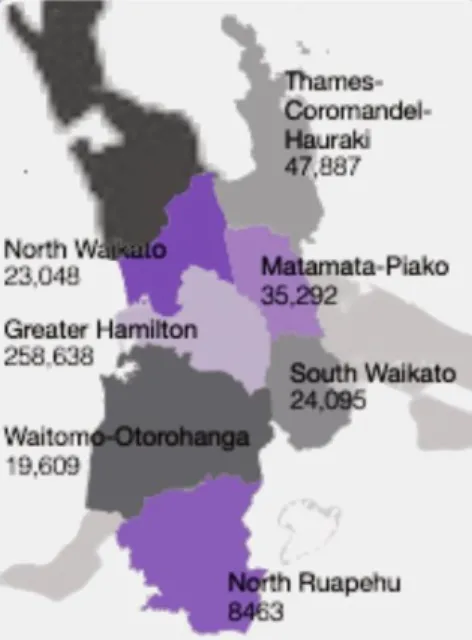
Figure 1 shows the geographic position of Te Rohe Pōtae [Waitomo, Ōtorohanga and North Ruapehu] as recognised by Ngāti Maniapoto. This sits within the WDHB region as shown in Figure 2. The WDHB is one of 20 district health boards in ANZ. These health boards are charged with delivering or funding health services within their designated district (Waikato District Health Board [DHB], n.d., para. 1). The three districts of Te Rohe Pōtae have a combined land area of 12.268.43km² (StatsNZ, n.d.), making them the largest territorial local authority within the WDHB boundary in terms of landmass.
Figure 2: Waikato DHB’s Population
Note. This map shows the territorial local authorities within Waikato DHB boundaries. Adapted from “Waikato Health System Plan Te Korowai Waiora”, by Waikato DHB, 2019 (https://www.waikatodhb.health.nz/assets/Docs/About-Us/Key- Publications/Plans/7bf3d1e7ca/Waikato-Health-System-Plan-Te-Korowai-Waiora.pdf). In public domain.
By comparing Figure 1 and Figure 2, this shows the discrepancy between how the WDHB interprets its territorial local authorities within the WDHB boundaries in comparison to that of Te Rohe Pōtae (DHB, 2019, p. 13). Furthermore, rather than two autonomous districts, WDHB combines the two as Waitomo-Ōtorohanga (see Figure 2). Although these
discrepancies between how Māori and the New Zealand Government view boundaries may appear minor, this, nevertheless, leads to inaccuracies in demographic data understandings, the generalising of health system design, planning and investment priorities across the vast territory. This is particularly important considering the Waikato Health System Plan Te Korowai (WDHB, 2019) report informs the ANZ government on recommendations for improving health outcomes and equity in the Waikato.
Despite the fact that the region is not officially recognised by the ANZ government, Te Rohe Pōtae and, particularly, the Ōtorohanga district, was the focus data collection site for this thesis. Due to the time, resources and scope of this research, covering the entirety of Te Rohe Pōtae would be challenging, therefore, the focus was narrowed down to the
Ōtorohanga district. Table 1 lists the rural towns visited during data collection. Ōtorohanga and Kāwhia are situated in the Ōtorohanga District, while Te Kūiti is located in the Waitomo District (see Figure 1). Given that each of the three towns were categorised as being within one of the ‘rural’ category levels (see Table 1 and Appendix I), they were chosen as research sites as they had Pacific peoples living in the town and, therefore, provided representation of rural Pacific peoples.
Ōtorohanga is situated 56.6km from the nearest urban city, Hamilton, and has a population of 3,027, 2.7 percent of whom are Pacific (see Table 1). Te Kūiti, located a little farther south