Master of Profession Practice (MProfPrac)
A sustainability strategy implementation for a software development company:
A comprehensive framework.
Tree breaking through the paving
©Brandon Berry 2022. Used with permission. All rights reserved.
Word Count: 27 917
Student ID:
Due Date: 2 September 2022 Mentor: Henk Roodt Facilitator: Jeremy Taylor Student: Venessa Darroll
Student: Venessa Darroll
2
Student: Venessa Darroll
3
Executive Summary
This work introduces a comprehensive sustainability program as a tool for business sustainability implementation. Developed during a sustainability implementation at a software development company, it formed the basis of my work research project - the aim of which was to contribute something of value to the work practice. As well as facilitate my transition into a new career as a sustainability professional.
This body of work is valuable because sustainability is a global concern. The New Zealand Government encourage businesses to adopt more sustainable practices – including carbon
emission reductions (Ministry for the Environment, 2022). I believe that this project may help further that work. In addition, there is a lack of sustainability professionals in New Zealand (Sustainable Business Network, 2022) so work like this that can potentially improve practitioner confidence could be helpful.
This work's major discovery was that implementing a genuine and impactful sustainability strategy is severely hindered by conflicting trade-offs between fundamental business principles and
sustainability objectives. It seems that if businesses, leaders, and their performance indicators are solely profit-focused, they are not likely to achieve true sustainability despite making steady progress on their sustainability plan. In this case, in business-as-usual situations, even ethical loyalties to pro-sustainability values are often insufficient to drive companies to compromise on their profit margins for the sake of sustainability. One then must guard against selectively implementing ideas –picking the low-hanging fruit and achieving low-impact results (this is what I refer to as the tick-box exercise).
It is in response to this, among other issues, that the comprehensive sustainability program defined in this work was developed. One of the components included is an open and transparent arena for business leaders and sustainability professionals to confront and explore the tensions between profit and values - guided by the practicality of ideas. This mechanism involves a managed process of reflection, action, and feedback to enable growth. As the business reflects and attempts to balance the effect of business principles and sustainability values on activities - the depth of the conversation and impact will increase as sustainability becomes more embedded in the culture.
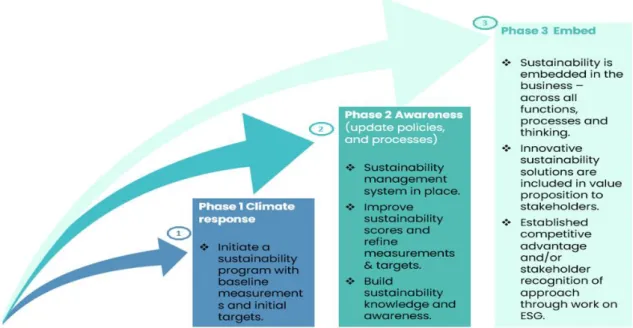
This sustainability program evolved over the duration of the work research project, and I suspect it will continue to evolve with continuing sustainability implementation activities (and ideally, test feedback from other companies). For now, it culminates in a sustainability program that comprises a conceptual framework, an implementation model, a leadership model, and a responsibilities matrix. I have also included a process, various templates, and sample decision-making tools. I believe these elements make up a comprehensive business sustainability strategy (or program).
The main benefit of this simple, ready-to-use, comprehensive sustainability program is the ability for companies to be self-reliant and autonomous in their pursuit of sustainability and quickly move past the tick-box stage of sustainability implementation - to the point of real impact readiness. It is envisioned that with a true commitment and the proposed action-feedback process, sustainability professionals and leaders can expand the company’s sustainability awareness, pro-sustainability values and culture in business-practical ways, thereby incrementally growing their appetite and abilities to generate realistic and beneficial genuine sustainability innovation over time.
This work also defines my professional practice framework in terms of a conceptual model that describes the integration of new skills and knowledge and iterative growth and development. The model considers the internal tension created by my pro-sustainability values and business values which it mitigates with a pragmatic approach and guiding principles. This process has helped me to achieve my professional goals, and this work ushered me into a career as a sustainability
professional.
Student: Venessa Darroll
4
Table of Contents
1. Introduction ... 5
2. Background ... 7
3. 3iterature Review ... 10
4. Methods & Methodology... 20
5. Work Research Project... 25
5.1 Data Gathering ... 25
5.2 Data Analysis ... 27
5.3 Process... 39
6. Discussion... 48
7. Professional Framework of practice ... 58
8. Conclusion ... 61
9. Reflective Summary ... 65
10. References ... 77
Appendix 1: Phase 1 - Participant Survey: Additional Information ... 86
Appendix 2: Phase 2 – Sustainability Strategy Implementation ... 92
Student: Venessa Darroll
5
1. Introduction
In this practitioner thesis, I describe the dual development of a work research project defining a sustainability approach for my employer - a software development and digital trading platform provider company- and my professional framework of practice as a sustainability professional. In this first chapter, I first state my argument, which has three contributions for each: the articulation of the framework of practice, the change in practice associated with developing and adopting that framework and the impact of that change programme.
My Work Research Project
Articulation of a framework of practice.
In this work, I define and demonstrate a sustainability framework of practice that I believe encompasses the various elements necessary for comprehensive and practical business implementation.
The change in practice associated with developing and adopting that framework.
In my literature review, I discuss how most sustainability frameworks address specific environmental impacts, assessments, tracking and reporting or focus on a small area of business. As far as I can tell from the literature, there are currently no fully comprehensive sustainability implementation frameworks available to facilitate business adoption. Some sustainability implementation
frameworks are more helpful (Hitchcock et al., 2008; EFQM, n.d.; BCorp, n.d.), but the coverage is still not comprehensive. That is, they do not address the full range of issues a business might experience when implementing a sustainability strategy, nor do they offer a model for addressing such complexities—for example, allowing for tick-box progress whilst facilitating longer-term change.
The action-oriented approach to this work research project enabled organic growth of the idea as my understanding deepened. The bulk of this document describes the journey and outcomes associated with this process of identifying issues, teasing out practical steps for action, and trying, testing, and correcting. This iterative process resulted in the compilation of a collection of potentially valuable tools that I hope will contribute to a comprehensive and practical sustainability
implementation framework.
Impact of that change programme.
I will discuss how the sustainability issue is complex; there is so much information and many contradictory opinions. All of which hinder the adoption of sustainability across the board. I believe that a clear and comprehensive framework will assist with sustainability implementations in
business.
My Professional Development
Articulation of a framework of practice.
In this work, I will reflect on the processes and practices I deploy and attempt to define the professional practice framework that represents my authentic professional development journey.
The change in practice associated with developing and adopting that framework.
The change in practice I wish to achieve by adopting this new framework is to actively engage and direct my learning in order to define myself as a competent sustainability professional. By applying new knowledge and techniques and integrating learning from deep reflection on the issues, I hope
Student: Venessa Darroll
6
to build confidence in my abilities as a sustainability professional and make these skills evident to my stakeholders.
Impact of that change programme.
My aim with the professional development leg of this journey is for a career change, to move into the sustainability field, and to generate credibility as a sustainability professional.
The flow of this work research project starts with a description of my motivations for this work in the Background chapter; the Literature Review and Methods & Methodology chapters follow this chapter. Particular focus is placed on the processes linking my work project and learning journey in the Work Research Project chapter. The undertaking of the work research project is discussed in the Discussion chapter; this informs and illustrates my Professional Framework of Practice
articulation and my Conclusions in the following chapters. Then finally, in the last chapter, I tell the story of my reflections throughout this journey.
Student: Venessa Darroll
7
2. Background
In this chapter, I describe my motivation for this work. This section describes the context of the work and summarises the events that lead to the work research project and my learning journey. It concludes with a review of my professional practice framework and its intended evolution over this time.
My professional background is as a senior business analyst with 30 years of experience in business - including management, project and change management, and consulting in various contexts, roles, projects, industries, companies, and countries (see Appendix 3 for a copy of my CV).
It has been for several years now that I find myself disquieted by an internal drive for a deeper meaning in my work. This disquiet became a quest for meaning connected to a growing concern about the issues facing the world today. I decided to pursue a professional avenue that would allow me to use my skills in the service of sustainability. However, I am also very pragmatic and realised that starting as a junior with zero credibility at age fifty would frustrate me. At this point, I decided to embark on this Master of Professional Practice (MPP) journey. I hoped to use my thirty years of experience gained as a business professional to springboard a pivot into a new, more fulfilling profession. I aim to position myself as credible, competent, and knowledgeable with the skills necessary to perform as a senior professional in a sustainability context.
My initial focus in this sustainability research project was on the consumer or end customer. I surveyed a subset of the general New Zealand population to determine the relative importance of various factors in a sustainable purchase – from the customers' point of view. The learnings from this phase appealed to the environmental warrior in me as I determined that customers cannot solve the problems of sustainability on their own and concluded that obviously, the onus is on businesses to initiate sustainability changes. My focus shifted from a customer-centric view when suddenly I was presented with an opportunity to take on sustainability as an additional responsibility within my role as a Senior Business Analyst at my company. I was granted permission from my Capable NZ Mentor, Facilitator, and the Ethics Committee to expand my research project and align it with the new trajectory of my professional development. So, in phase two of this research project, I focused on business operations to consider how sustainability might be implemented from within a business.
My employer is a software development business that provides a digital commodity trading platform (software technology) to various industries and players worldwide. [Please note that to protect the company's intellectual capital and the privacy of individuals, all identifiable information related to the company and individuals has been anonymised in this document.] The company – referred to as
‘TheCompany’ in this document – had been mandated by the board of directors to focus on sustainability. To better understand the scope of this mandate, I worked with the Chief Operations Officer (COO) to refine the business case. Essentially, TheCompany must secure its future amidst the climate of growing industry-related sustainability governance requirements and increasing demand from customers and investors for sustainability. And thus began this work research project;
I remember at the time; I was inspired by the potential for the platform to influence the interaction between buyers and sellers and potentially introduce some system parameters to enforce
sustainability standards. I have drawn up Figure 2.1 to demonstrate the complexity of the
stakeholder environment. It shows the various considerations involved in product development and illustrates the relationship between sellers and buyers that is mediated via the platform.
Figure 2.1. Diagram describing TheCompany’s ecosystem, product delivery responsibilities and span of influence – relevant to the trading platform (software product).
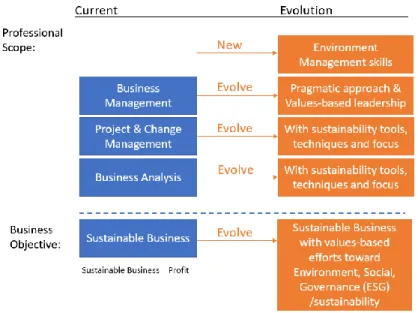
I understood from the start of this work research project that the framework for my professional development journey would integrate my current professional knowledge, skills, techniques, and business attitude as well as integrate the new sustainability knowledge, skills, techniques, and sustainability attitude. In summary, I intended to build on foundational business knowledge with new knowledge about sustainability while applying a pragmatic approach to decision-making and
evolving my sustainability understanding to include the other sustainability goals. I created the model in Figure 2.2. below to illustrate this. Approaching my professional development in this way allowed for an evolution of my current skills through the practical application, testing and feedback process deployed in a real-life business context. This idea is explored and developed further in chapter 7 (Professional Framework of practice).
Figure 2.2. My Professional Practice Framework (initial model).
In this chapter, I have described the motivations for this work. It has explored the background of this work - personally, professionally, and organisationally. The opportunity presented in this work research project is to develop a business sustainability approach and represent that in a practical framework that can benefit people beyond my specific work context. It is my goal that this
endeavour will help me to establish myself in the position of a credible senior sustainability professional, which I will articulate in a professional framework of practice.
Student: Venessa Darroll
10
3. Literature Review
This chapter has been structured to provide a summary of relevant literature supporting sustainability concepts and the complex landscape, exploring the problem of sustainability drivers in business, pro- sustainability values and pragmatism as an approach. These sections have been labelled accordingly.
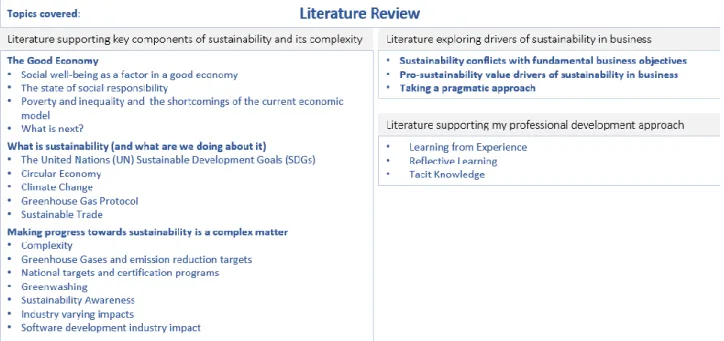
I also review the literature that supports my professional development approach. The topics covered in each section are summarised in figure 3.1 below.
Figure 3.1: Structure of topics covered in this literature review
Literature supporting key components of sustainability and its complexity
The Good Economy
Based on the Greek origins of the word economy, which means "household management", we can assume that economy, in principle, should serve the well-being of people. It thus seems reasonable to assess a good economy against the efficiencies and financial benefits gained but also against the non-financial benefits to society (Asdal et al., 2021). The situation globally suggests that the verdict for the current economic model is not really that 'good' (Elliott, 2022).
The world economy is six times (Kose & Ozturk, 2014) larger than it was in the 1970s when Milton Friedman ringfenced the social responsibility of businesses. Freidman said companies' only social duty is to increase shareholders' profits. Despite Friedman's views, social responsibility was a primary consideration in business up to the 1980s when Reagan and Thatcher reduced the regulatory responsibilities on business (Latapí Agudelo, et al., 2019). Then with the onset of
globalisation, the concept of social responsibility became blurry until 2000, when the United Nations issued its Global Compact on Corporate Social Responsibility (CSR) which has been taken up to varying degrees in some countries since then (Latapí Agudelo, et al., 2019). One might take this to mean that there is government and corporate commitment (at least in some countries) towards social responsibility. However, a recent study by Kühne, et al. (2022) exposes the planned installation of 170 new fossil fuel projects globally that directly contradict the goals of the Paris Agreement and promises made at COP26 (European Commission, 2021; Danaher, 2021).
Sumner et al. (2021) (who also argue that the World Bank's global poverty statistics are over- optimistic) inform us that before the pandemic, 681 million people were living under the $1.90 per
Student: Venessa Darroll
11
day threshold. Rising to between 30-60% post-pandemic and this will now no doubt be further impacted by the situation with the Ukraine-Russia war (World Bank, 2022). While twenty-million Americans became jobless during the pandemic, the net worth of a select group of about 650 increased from a billion to more than $4 trillion (Peterson-Withorn, 2021). The shortcoming of our current global economic model lies in its failure to meet the needs of all populations (Rice, 2008), manage resource limitations (Kilvert, 2019), waste (World Bank, 2022), and environmental damage (World Economic Forum, 2019) and inequality (Inequality.Org.,n.d; Sharrocks et al., 2021).
In 1998 Alain Lipietz laid out his argument to the Organisation for Economic Co-operation and Development (OECD). He argued that economic prosperity is constrained by ecological viability and necessitates a new paradigm for technological advancement grounded in concerns for the
environment, more precisely, energy and environmental efficiency (P160). As much as I'd like to share in the World Economic Forum's optimism about green growth (2021), the reality is that today, twenty-four years hence, we are no closer to establishing Lipietz's new paradigm for technical progress or adjusting economic principles towards sustainability. According to Howes (2017), we're failing because unsustainable practices still yield profits and attract customers and Governments are not making commitments or enforcing them. The simple fact of it is that the status quo is
sufficiently financially rewarding to put off any impetus for change based on social or environmental values (Söderholm, 2020; Howes, 2017) – and that's not surprising. It is a value principle inherent in the intrinsic theory of value (Wikipedia, n.d.), and remedying this - if possible - will consequently change the economic model even if changing it was not an intended outcome.
What is sustainability
Sustainability is the principle of striving to meet the current generation's resource needs without impacting future generations' ability to meet their needs. In 2015, the United Nations (n.d.)
announced seventeen sustainable development goals (SDGs) and set out a universal global plan to achieve sustainable development, known as Agenda 2030. These goals bring together the three dimensions of sustainable development: environment, social and economic. The SDGs apply to all countries (New Zealand Ministry of Foreign Affairs and Trade, n.d.). They are passed on to
organisations in some countries via Environmental, Social & Corporate Governance (ESG) – obligations and reporting requirements. The ESG obligations and requirements provide a range of targets for businesses to improve sustainability across areas like inclusion, diversity, climate change, human rights and more (Winters, 2021). New Zealand does not yet regulate ESG
sustainability reporting obligations, standards, or requirements (Ministry of Business, Innovation &
Employment, 2021). In 2024, certain financial institutions will be required to provide environmental reporting (Ministry of Business, Innovation & Employment, 2021).
Human-caused climate change due to the warming effect of trapped greenhouse gasses is widely accepted as a legitimate and relevant concern. The evidence for this spans many areas, including science, global politics, national policy, the legal system, mainstream media, and weather trends.
For example, among biophysical scientists, Doran & Zimmerman (2009) and Carlton et al. (2015) report a consensus about climate change's occurrence and its human cause. The UN Sustainable Development Goals feature specific climate action goals, and the recent worldwide COP26
conference country commitments (and widespread demonstrations) attest to shared climate concerns (European Commission, 2021). There is also evidence of support from the legal system;
for example, in a landmark case on climate change and human rights, the Dutch Supreme Court ordered the government to slash greenhouse gas emissions by 25 per cent by 2020 (Lantz, 2019).
In New Zealand, the average temperature has risen over the last century (Menne et al.,2018) and correlatively, so have the number of natural disasters (List of natural disasters in New Zealand, 2022). In response, many governments like New Zealand (Minister for Primary Industries, 2021) are currently looking at carbon emission reduction plans to combat climate change. Now, government
Student: Venessa Darroll
12
policies toward carbon emission reductions are being drafted in several countries (Ministry for the Environment, 2022).
The Greenhouse Gas Protocol was established and adopted worldwide to help everyone track and reduce their carbon emissions. Greenhouse gases (GHGs) are measured in terms of Carbon Dioxide emissions (CO₂-e). According to the protocol, greenhouse gases are calculated in metric tons: GHG emission = 0.001 * Fuel Usage * High heat value *Emission factor (US EPA, 2015). New Zealand pledged to cut emissions by 50% by 2030; however, our emissions increased by 2% in 2018-19 (The Guardian, 2021); to 82.3 million tonnes of CO₂-e, 0.2 percent lower than 2005 and 26.4 percent higher than 1990 (Ministry for the Environment, 2021). GHGs are categorised into different scopes or levels of impact based on their causal relationship; scope 1 is for emissions directly caused by that company, while scopes 2 and 3 are indirect. Some organisations offer
programs and certifications to perform an audited measurement exercise (also called footprinting) to measure and reduce GHG emissions. However, climate change and emission reduction are only a subset of the sustainability goals being addressed by the United Nations SDGs.
The inevitable question echoed in Tim Jackson's (2016) 'Prosperity without Growth' debate is whether sustainable consumption and our current economic model are adequate to achieve global environmental goals. In New Zealand, the Circular Economy approach was adopted to address the SDG for responsible production and consumption. A circular economy is a system that uses all by- products as recycled material so that it does not exit the system as waste (Ministry for the
Environment, 2021). The circular or green economy concept requires the least change and
disruption to our current economic model and systems (Deloitte, 2022). However, there is still little consensus on the approach (Kalmykova et al., 2018). Many issues need to be addressed before the circular economy is a complete and effective sustainability solution (Corvellec et al., 2021), for instance, soaring consumption (Kharas, 2017) and the cost of waste reduction versus recycling (Moss, 2019). The New Zealand Government has attempted to address some of these
inadequacies, for example, committing to emission reduction targets by 2030 (Ministry for the
Environment, 2021) and have moved to ban some plastic packaging by 2023-2025 (McClure, 2021).
Juliet Schor, a sociologist at Boston College and author of several books on consumerism, supports the idea that we should be talking about consumerism more in terms of saving the planet – in other words consuming differently and not consuming so much (Stewart, 2021).
Some experts believe we cannot positively impact sustainability without a shift from our relentless focus on growth and an enormous reduction in unsustainable consumption and production (Brown &
Vergragt, 2016). Ideas and proposals for alternative economic models, like Doughnut Economics (Raworth, 2019), degrowth (Hickel, 2021), Ecological Economics (Jackson, 2009), and Socialist Economy (Albert, 2022) – have been circulating. Sustainable Trade is one response that aims to address responsible sustainability by embedding sustainability principles and net-zero targets in cross-border and company-wide activities. These sustainability principles are also called ESG principles and represent the environment, social and governance aspects of sustainability.
Commodities trading involves facilitating the sale, purchase, and distribution of large volumes of products globally. Sustainable Trade encourages Trade that generates social and environmental benefits, going beyond the mere creation of economic value and includes concepts like 'fair trade'.
Commodities investors are encouraged by the United Nations to seek sustainably responsible opportunities. However, the "evaluation of commodity-related ESG risks is not yet standard practice in the market, so it can be challenging for investors to steer multi-asset portfolios towards positive ESG outcomes" (ISS Insights, 2021).
Making progress towards sustainability is a complex matter
Sustainability fits the definition of a wicked problem as defined by (Rittle & Webber (1973). It is an ambiguous and complex matter (Jollands et al., 2015). Our inability to reach an absolute consensus
Student: Venessa Darroll
13
on sustainability means that many different nuances, intricacies, and often contradictory opinions complicate the discussions on how to solve the issues. For instance, the science of climate change is based on natural systems that we still do not fully understand (New Scientist, n.d.). Also, it relies on complex social systems, like the impact on human health, well-being, and safety (Popovic &
Kraslawski, 2015). There are also many sustainability stakeholders, that is, individual, social, environmental, economic, and technical (Penzenstadler et al., 2013). Stakeholders and social groups with different opinions can hinder the progress of sustainable initiatives (Sianes & Vela- Jiménez, 2020).
One aspect of sustainability that gets much attention thanks to media coverage is greenhouse gases (GHG) and related emission reduction targets. GHGs are gases in the atmosphere that trap and absorb radiant energy causing increasing temperatures through the greenhouse effect. This effect is part of a natural cycle that regulates the earth's climate. Four main greenhouse gases are carbon dioxide (CO₂), methane, nitrous oxide, and fluorine gases. Carbon dioxide is considered the primary GHG emitted through human activity – which has increased over the last century throwing this natural process off balance and creating a warming effect that threatens life on earth. [Actually, water vapour is the main greenhouse gas and effectively doubles the planet's sensitivity to CO₂ (Soden & Held, 2006). The problem of increased water vapour in the atmosphere as a consequence of human-caused global warming (Buis, 2022; The Guardian, 2011) is a detail that is sometimes ignored in mainstream sources.]
Some countries have set national targets by industry to help them reach their 2030 climate and sustainability targets. Governments mandate some action or require a preferred sustainable business practice to be implemented by a specified date—for example, phasing out coal-based energy sources (UNFCCC, 2022) or phasing out hard-to-recycle and single-use plastic by mid-2025 in New Zealand (The Beehive, n.d.). National certification programs provide voluntary guidelines for some of these industries; for example, Brazil has a federal Certificate of Efficient Biofuel Production (BSBIOS, n.d.). In this vein, national, international, and private carbon offset programs allow
institutions to claim net-zero emissions through an audited process of reducing and offsetting their carbon emissions. To offset, companies buy offsets (traded as carbon credits) from climate-positive projects and resign them, thereby writing off the net effect (- and + emissions). However, some of these programs have proven to be problematic, like with the recent scandal about Australia's carbon credit scheme (Morton, 2022), the industry as a whole was criticised by Stapczynski et al. (2021) as unsubstantiated and inconsistent
Trust is essential for social change and education (Cerna, 2014). Sustainability awareness or education is essential so individuals can take responsible action (Abbasi & Nawaz, 2020) to identify false information. When information about a product or company is deliberately misleading or gives a false impression about its sustainability impact, such as changing the name of a product to sound more green or eco-friendly, it violates trust. Greenwashing is a term used to describe another type of fraudulent claim; it refers to activities (usually used in marketing, packaging, or labelling) that frame normal business activities regarding a sustainability objective (de Freitas et al., 2020; Hansen et al. 2002). The main problem with greenwashing (or bluewashing for social issues) is that it
breaches expectations of transparency and dynamic communication required for educating awareness. Similarly, deceptive, or emotive marketing messages designed by organisations pursuing a specific agenda to generate attention (also known as clickbait) or deliver propaganda (Altheide, 1997) - whether by social media or advertising, erode trust and further complicate the sustainability message.
Certain industries and products have a bigger footprint or negative environmental (or social or governance) impact than others. These impacts are primarily dependent on the business practices and processes adopted. Other than the apparent culprits like fossil fuels and coal-burning – it is not accurate to make assumptions about the generalised impact of a specific industry or product on the environment. The worst industries (Kamprad, n.d.) account for most of the global pollution we see today and have a substantial effect on the environment; these include Energy, Agriculture (crops but also includes meat and dairy), Fashion, Transport, Food Retail, Construction, Technology, and
Student: Venessa Darroll
14
Forestry. The environmental impacts come from many areas, including chopping down the rainforest, fertilisers and pollutants contaminating the soil and water supply, waste, plastic, air pollution and greenhouse gasses, and harm to plant and animal life. Approaches like organic farming - where the farm functions without synthetic chemicals or pesticides, for example, Organics Aotearoa New Zealand (Organics Aotearoa New Zealand, n.d.), is one of the ways the agricultural sector attempts to curb their impact. Many other such techniques are being researched, tested, and implement throughout the various sectors – see some of them here: carbon sequestration (CLEAR Center,2019), alternative feeds (New Zealand Agricultural Greenhouse Gas Research Centre, 2021), biofuel (Lehman, n.d.), Algae (Sudhakar & Viswanaathan, 2019), mycelium (Seedlip, n.d.).
When it comes to sustainability context matters (Camponovo et al., 2005), at the end of the day, a company can only be assessed against their business practices; the particular techniques and such that they deploy in the environmental context of that company.
In the context of software development specifically, whilst designers and customers agree on the traits of effective software, this efficiency can come at a high cost to the environment. Data centres consume around 200 terawatt-hours of energy each year to provide a service that is easy to use, performant, reliable, secured, scalable, testable, maintainable, available all time and interoperable.
Lami et al. (2013) introduced a bi-dimensional methodology for software development projects that consider project success factors and direct effects on the environment. Focusing on the direct impact of software is known as green software. The Green Software Foundation (Green Software Foundation, n.d.) was established in late 2021 to define the principles (Principles Green, n.d.), standards and best practices for building green software. However, software providers are also responsible for their indirect environmental, social or governance impacts. For example, one of the things Facebook is under investigation for is the negative social impact of user behaviour facilitated by the platform (Waterson & Milmo, 2021). Context is important when assessing the sustainability impact, specifically for software providers like TheCompany, who enable large volumes of Trade and growth in production or consumption of the worst industries, products, or players through their software efficiency. I, therefore, propose a multi-dimensional extension to the methodology
introduced by Lami et al (2013). to include the indirect effects on the environment, expanding on the direct/indirect scope of TheCompany’s overall impact.
In regard to sustainability models, generally, businesses and sustainability professionals need to pay membership fees for access to support, but they can consolidate a number of them to create a comprehensive action list. Many models exist for sustainability, starting with the organisations like the United Nations (n.d.), UNEP (2017) and the Ministry for the Environment (2022), which provide generic goals and guidance on specific environmental issues. Then others (Kalmykova et al., 2018;
Winters, 2021; EFQM, n.d.; IEMA, n.d.; BCorp, n.d.) expand on these with frameworks, standards and processes like environmental assessment, measurements, and controls. Models and
frameworks tend to focus on a particular subject or industry or a small part of the business
implementation, like the business case (Cote, 2012; IFC, 2012; Senge, 1990) or approach (Forum for the Future, n.d.) or workforce(Deloitte, 2022; IEMA, 2022). Some of the more helpful
sustainability implementation frameworks, like the step-by-step guide published by Hitchcock et al.
(2008), provide an extensive approach for businesses. Even so, this coverage is not complete. For example, the process supplied by Hitchcock et al. (2008) does not seem to generate an awareness of the contradictory principles of business versus sustainability. Similarly, the BCorp (n.d.)
assessment tool provides a very detailed guide for ESG categories but no framework for leadership values or organisational change adoption. As such, no solution is presented for managing that tension – or using it to create practical and sustainable solutions. As far as I can tell from my investigations into the literature, there are no readily available comprehensive sustainability implementation frameworks available to support, inspire or simplify business adoption of sustainability.
Student: Venessa Darroll
15
Literature exploring drivers of sustainability in business
Sustainability conflicts with fundamental business objectives
The business imperative of return on investment (ROI) drives the business toward performance improving or profit-seeking imperatives (The AIC, 2021), pursuing activities like cost reduction, price increase, and productivity improvement. Sustainability (as defined by the UN's SDGs) encourages more restrained and mindful use of resources in production and consumption. Contrast this against the primary goal of business to meet shareholders/investors' expectations for a return on their investment, which means scalability and growth (Friedman,1970; Manning, 2003). Suggesting that standard businesses are unlikely to compromise on profit to make real impactful progress in terms of sustainability.
For a sustainable business, leaders need to understand the company’s end-to-end impact via lifecycle thinking (UNEP, 2017) and find more sustainable alternatives to damaging practices. They also need to guard against using the benefits gained via sustainable business practices to increase profits. Dairy intensification (Hughey, n.d.) is an example of the benefits of sustainable farming techniques (or improved energy efficiency) are fed back into the farm as increased productivity (milk production) which nullifies gains made via previous environmental/ climate solutions (Dumont et al.,2014). Some sustainable business practices, like agroecology or organic farming, offer radical food system transformation but are predicated on substantial political-economic change (Clay et al.,2020). My experience over more than 30 years in business is that, unless mandated to do otherwise, executives and managers will not invest in ideas that cost the bottom line. Unless the costs are justified (by, for example, meeting regulation requirements) or can be passed on to the customer, sustainability progress will remain slow (ISS Insights, 2021; Ministry of Business, Innovation & Employment, 2021).
Efficiency is a principle of business that can justify spending, for example, when the benefits gained by outsourcing a specific action are deemed more efficient than doing it themselves or taking on more challenging tasks. Carbon trading is a good example of this in principle. Carbon Trading is the practice of purchasing carbon offsets to counter carbon emissions. Carbon Trading does achieve some sustainability objectives as funding goes to various sustainability projects, but it has not achieved the objective of reducing overall emissions (United Nations, n.d.). Still, it is a sustainability initiative as not all businesses opt to participate even at this level. There has been a renewed focus on reductions recently (ISO, 2015), but the progress is not good enough as even the EU is unable to meet its coal reduction targets (Ainger, 2022). Emissions must peak soon to limit global warming to 1.5C (McGrath, 2022).
One way the United Nations (UNDP, 2015) is addressing this issue and attempting to engage business is by introducing the principles of ethical / sustainable development / investing, which encourages Investors to take ESG into account when making investment decisions (Kölbel et al., 2020). Sustainable investing makes sustainability a factor in investor expectation, which encourages businesses seeking investment to take some action in the direction of sustainability. However sustainable investing does not guarantee return on investment (Braun, 2021) and as such is
considered alongside the other business indicators. Figure 3.2 below describes sustainable investor interests - this points to the level of commitment required for businesses to invest in sustainable initiatives.
Student: Venessa Darroll
16
Figure: 3.2 – What Investors are looking for (IIGCC - The Institutional Investor Group on Climate Change, 2020).
Governance/
Management
Describe how you manage the physical impacts of climate change Risk analysis
process
Describe your process for assessing the risk/opportunities associated with the physical impacts of climate change Risk Management
and Engagement
Describe major actions you are taking to respond to the physical impacts of climate change and improve asset resilience.
Are you engaged with your suppliers + customers on the impacts of climate change on their business?
Monitoring and Review
Describe how you are monitoring the implications of climate risks for your investments
Reporting Describe info you provide to your investors, clients and other stakeholders
Pro-sustainability value drivers of sustainability in business
Pragmatic philosophy posits that a worldview that defines success as the accumulation of material wealth is self-defeating if it simultaneously destroys the environment on which wealth accumulation depends (Reitan,1998). Therefore, it is pragmatic to suggest that a change in worldview must drive any solution to the situation. Whilst the Modern view of success and happiness is dependent on product consumption (Stavrakakis, 2006), the current environmental crisis creates an urgency to reassess how we address sustainability issues in our personal lives and business. However, we cannot just change the prevailing worldview. Achieving positive environmental (and social) benefits in business requires a values-based judgment (Martin, 2015). Pro-sustainability values and the
connections and interplays between technological and social systems will determine the outcome of a transition to sustainability (Kenter et al., 2019). In other words, sustainability requires a
fundamental moral orientation that is reasonably concerned with the common good and self-interest (McCuddy, 2008).
One such moral orientation, or pro-sustainability value, is taking responsibility for environmental aspects, as is encapsulated in the concept of stewardship (McCuddy, 2008). Customers, investors, and companies act as stewards/guardians of nature by considering the end-to-end picture from raw materials to services and product end-of-life to ensure minimal environmental impact. For example, businesses that act as stewards choose suppliers who are transparent about the processes, ensure that components can be accurately traced (SGS, 2018; Crowther & Aras, 2008), and enforce the Principles of ESG in day-to-day business (Winters, 2021).
Aligned with stewardship is Kaitiakitanga, a concept included in the New Zealand Resource Management Act of 1991 that means to guard or protect (Te Ara - the Encyclopaedia of New Zealand, n.d). The key focus of Kaitiakitanga is to manage the environment following the Māori belief of kinship between humans and nature. Wise organisations incorporate the ethics of connectedness into business practices and practice fundamental values in pursuit of wellness of earth and the human spirit (Spiller et al.,2011). They treat the environment as a stakeholder 'with a voice', aware of a bigger picture and willing to trade short-term profit for long-term viability (Spiller et al.,2011).
A key mechanism for managing pro-sustainability values is Values-based Leadership (VBL). VBL is the management of a business following values that convey a shared perspective and intent within the organisation (Simons, 1994). VBL in sustainability is where managers focus on guiding,
inspiring, and promoting change that considers one's own needs and constrains self-interest (McCuddy, 2008). Jollands et al. (2015) illustrate the potential for VBL to influence sustainability objectives when managers find ways to drive actions that are not profit-based and begin to appreciate aspects like planetary boundaries and intra- and inter-generational equity.
Student: Venessa Darroll
17
Business excellence is another mechanism that can help businesses find business value in more than just profitability and shareholder value – by reinforcing the idea that a company's success is influenced by its social, ethical, and environmental contributions (Jankalová, 2020). In this case, the business excellence model would use a framework to demonstrate and measure business
performance excellence as a vehicle for embedding pro-sustainability values and values-based leadership. Just like, for example, programs like EFQM set standards and reward exceptional business practices (EFQM, n.d.).
Another mechanism for engaging pro-sustainability values is to establish values-based collaborations between actors in multi-stakeholder partnerships to navigate the complexity and interrelationship of social systems (Sianes & Vela-Jiménez, 2020; Iverson, 2016). Providing a trustworthy and
transparent means to integrate disparate information is also helpful, especially in settings with various stakeholders who value different outcomes (Martin, 2015).
Taking a pragmatic approach
A pragmatic approach to management emphasises practical knowledge in the solving of daily problems and finding cost-effective solutions more effectively than other management approaches (Mumford & Van Doorn, 2001). By investigating the root causes of issues and agreeing to solutions based on current facts and reasoning (Jain et al., 2018), Pragmatism helps improve ethical
decision-making while not falling into the ethical relativism trap (Drašček et al., 2021). The principles that guide a pragmatic approach to sustainability in business are dialogue-based approaches that stimulate partnerships and collaboration between workers, local governments, and other
stakeholders (Wicks & Freeman, 1998; Knoll & Jastram, 2019).
Literature supporting my professional development approach
It is also necessary to review the following literature relevant to my professional development approach. Namely, experiential learning, reflective learning, and tacit knowledge, as these have been essential to this project and my professional development.
Experiential learning is a cyclical process of learning experiences where the learner must go through each stage – experiencing, reflecting, thinking, and acting for effective learning to be achieved (McCarthy, 2016). Reflection is a key factor in the experiential learning process (Boyd &
Fales, 1983). I used McCarthy's model in figure 3.3 to interpret my experience through the lens of reflection. Examining issues of concern has changed my conceptual perspective, as is evident in my Reflective Summary.
Figure: 3.3 McCarthy's interpretation of Kolb's experiential learning cycle and basic learning Styles (McCarthy, 2016).
This work is licensed under a Creative
Commons copyright license policy, CC-BY 3.0 US. It is attributed to McCarthy and the original version can be found here.
Student: Venessa Darroll
18
Learners with a Converger profile prefer to deal with problems rather than interpersonal or social issues, and our strength lies in problem-solving, decision-making, and practical application of ideas (Kolb & Kolb, 2011; Kolb et al., 1999; Geiger, 1992). Since I am a Converger (McCarthy, 2016) or a tactile learner (Education Planner.Org., 2022), my innate learning style is to obtain some basic understanding and then jump in; I am motivated (Song & Bonk, 2016) to learn from action and direct and indirect feedback. I have learned to adapt my style to suit the circumstances, and I have built an awareness of my learning patterns and have used them deliberately to bring about learning for myself.
Iverson (2016) advocates for expanding sustainability competence through initiatives that deepen the learner's capacity to think and act systematically. Specifically, he references the need to
improve social consciousness and skills for negotiating collective action. In reflecting on this, I felt it was necessary to consider and account for the context of my work practice learning, specifically the interactions and interconnections encountered at TheCompany.
Thirty-plus years of working experience have given me a business insight born out of practical working intelligence. Asher & Popper (2019) describe how it is that 'we know more than we can tell' in their 'onion model', which consists of layers of tacit knowledge: 1) Hidden Practical knowledge (HPK) gained through work experience; 2) Reflective tacit knowledge (RTK) resulting in 'rules of thumb' formulated as a result of multiple similar experiences; 3)Demonstrated tacit knowledge (DTK) which are the techniques put in place to address the 'rules of thumb' scenarios. To describe simply how these layers might apply to me, it is, for example, having a sense of how to define a business problem (HPK) in a way that gets a common picture of that problem across to others (RTK) and knowing what tools to use to do that effectively (DTK). After 30 years of experience, this tacit knowledge is unavoidable. Recognising that judgment and gut feelings can be biased
(Maqsood et al., n.d.), I employed mechanisms to emphasise the context in each situation, set up discussions and build feedback loops.
In creating my own professional practice framework, I was influenced by the Head, Hands and Heart model of transformative sustainability learning (TSL). This model was designed by Sipos et al.
(2008), and it describes the integration of sustainability pedagogies in terms of study (head), skills (hand) and values (heart). This model is simple and practical, and as such, it appealed to me on an all-all-encompassing and holistic level. See Figure 3.4.
Student: Venessa Darroll
19
Figure 3.4 A Venn diagram depicting constituents (combinations of head, hands, and heart) and synergies (in spheres) of the TSL pedagogy wherein the principle of head, hands and heart engages and enables participants to enact sustainability (Sipos et al., 2008).
This image can be found here.
The question of how to achieve real-world results in sustainability is currently at the forefront of practical issues facing business today (and the world). This chapter has explored the theoretical and practical basis of implementing sustainability in business. While the initial questions were focused on sustainability as an idealistic theoretical imperative, positioning these questions in the context of business practice has enabled me to recast these questions in light of a pragmatic, realistic
business solution. The link between theory and practice is being explored by businesses worldwide, so my work-based research is particularly pertinent.
Student: Venessa Darroll
20
4. Methods & Methodology
In the previous chapter, I explored the theoretical and practical basis of implementing sustainability in business. There are significant questions related to the wholehearted (genuine commitment) uptake of sustainability in business, and little is understood of how this applies in practice. The background (motivation) chapter described how my work practice acts as a driver for change. My personal framework of practice aims to develop skills in practical sustainability implementation. In this chapter, I describe the underlying methodology and the detailed method that have enabled me to undertake this work-based development aligned with my personal development.
My research approach is guided by the philosophy of Pragmatism which provides a framework anchored in practicality (Kelly & Cordeiro, 2020). I adopted the organised, structured (Rittel &
Webber, 1973) and iterative (Susman & Evered, 1978) process of action-orientated inquiry and mindful application of Insider Research (Coghlan et al., 2014) and interpretive power of
Autoethnography (Baumeister & Newman, 1994). This study also drew heavily on my tacit knowledge; knowledge gained based on my experience in business, projects, and technology (Asher & Popper, 2019).
Figure: 4.1 Research Approach
Pragmatism focuses on practice, emphasising applying principles of 'Actionable Knowledge',
'Interconnectedness of experience' and 'Inquiry as an experiential process (Kelly & Cordeiro, 2020).
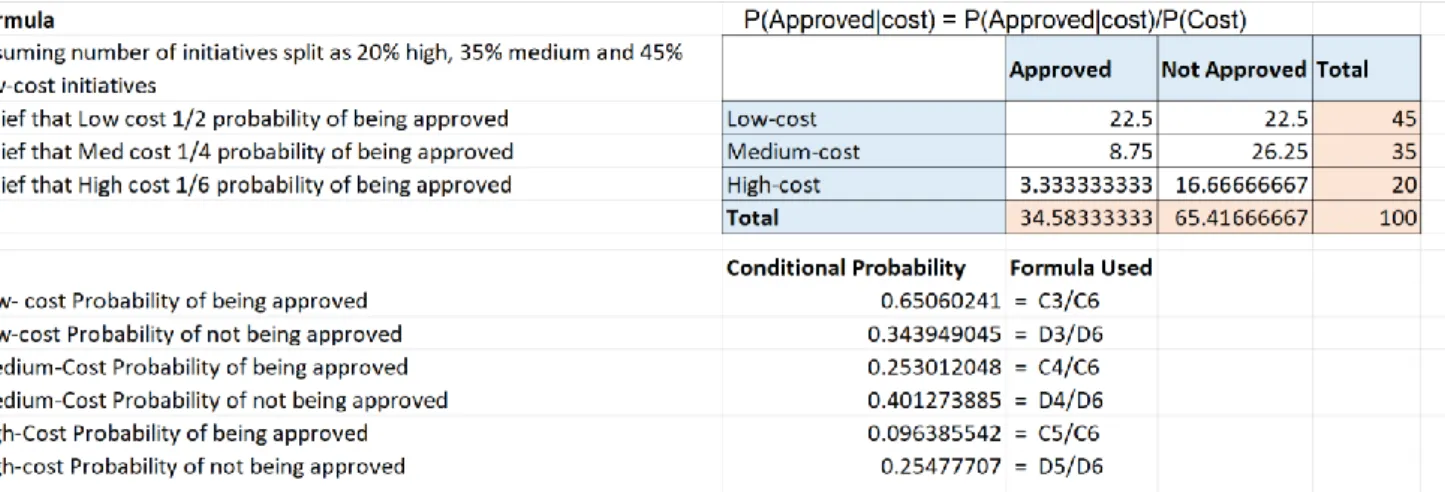
Using the instruments or our learnings, I defined the elements of practice-based evidence into a model for understanding the attributes important to and the likelihood of an approved outcome from executive and board members. By pooling old and new experiences and applying understanding pragmatically in the relevant context, I defined a coherent strategy for rolling out sustainability in the company.
Autoethnography is a systematic analysis of experience to improve understanding through critical reflection. According to Baumeister & Newman (1994), autoethnography starts with constructing a narrative account of an event as a basis for critical reflection. Ellis et al. (2011) describe
autoethnography as a socially conscious act involving both science and art in its application. I agree with Wall (2008) that autoethnography is not a straightforward method as it raises many questions and internal conflicts. During this work research project, I moved through periods of narration and reflection – managing a constant tension between my personal story and practical business objectives. This is shown in my reflective summary.
I chose Action Research as a research method because it is an iterative or cyclical (Susman &
Evered, 1978) process of analysing/understanding, acting, and learning. They describe five phases in action research's cyclical process: Diagnosing, Action Planning, Action Taking, Evaluating and Learning. Action Research provides a strategy for taking action using methods and instruments to
Student: Venessa Darroll
21
gather information and implement change. Insider action is a method that could trigger and enhance my personal development and TheCompany's performance around sustainability (Coghlan et al., 2014) simultaneously. Action research is collaborative and continuously invites the opinion of all stakeholders; it is grounded in action, agnostic and situational (Susman & Evered, 1978). The iterative spiral process of the action research model encourages learning and incremental
improvements on top of prior knowledge whilst mitigating risks and protecting against big mistakes.
See Figure 4.2 below.
Figure: 4.2 The cyclical process of action research (Susman & Evered, 1978)
This image can be found here in the Administrative Science Quarterly, 23(4), 582 - Assessment of the Scientific Merits of Action Research.
Susman & Evered (1978) addressed the positivist science argument against the scientific merits of Action Research based on legitimacy as science in philosophical traditions. Action research is valuable in terms of an organisational science - because understanding the behaviour of a group or persons requires knowing their values and norms. With action research, the researcher is invested in the outcome and engaged in the process; it is action-oriented; requires that researchers check actions and make corrections; the knowledge gained develops the capacity of the organisation to solve its problems (Susman & Evered, 1978).
Insider researchers undertake research in and on their organisations (Brannick & Coghlan 2007); I believe this first-hand perspective will provide valid, helpful, and important knowledge about the company that traditional approaches may not uncover. Insider Research is typically disqualified because it is perceived not to conform to standards of intellectual rigour (Brannick & Coghlan,2007).
This distinction is inaccurate as insiders and outsiders must contend with identity issues and the situational knowledge they possess (Fleming, 2018). In my view, the extended business knowledge acquired using insider action research provides "added value" to the development of the knowledge in the organisation to "design, facilitate and lead change" (Coghlan et al. 2014). A key advantage is the "pre-understandings" that an insider brings to the process (Brannick & Coghlan 2007). Still, Insider Researchers need to be mindful of 'researcher biases' to prevent personal values and experience from influencing the research (Fleming, 2018; Maqsood et al., n.d.).
To develop a sustainability strategy, I drew on the ideas of Manning (2001), who defines strategy as a dynamic, living experiment and outlines these five steps for strategy development, and includes change management as an essential part of the strategy. Step 1, Define your purpose. Step 2, Define your business model. Step 3, Clarify your organisation's context. Step 4, Define goals, priorities, and actions. Step 5, Craft the conversation.
Then, I used various tools and instruments to address the critical aspects of project management, change management and leadership.
1. The Sustainability Maturity Matrix (KPMG, 2018) - as recommended by the Sustainable Business Council in New Zealand - was used to determine TheCompany’s sustainability maturity level (see figure 4.3).
2. The ADKAR process (Prosci, n.d.) -a widely accepted approach in change management practice - was used to describe and plan for the various stages of change: Awareness, Desire, Knowledge, Ability and Reinforcement.
3. Covin& Kilmann’s (1990) advice to ensure visible and consistent management commitment, taking action and leadership. Also, conducting informal talks and ensuring inclusion (Rogers, 2007) to diffuse power differentials.
4. An amended role of Project Management was used, including the following: Navigating the tension between the economic, administrative (governance), social and environmental effects of projects and activities (APM, 2021; Martens & Carvalho, 2017).
Student: Venessa Darroll
22
It was also necessary to incorporate sustainability-specific methods such as the sustainability assessment (self-audit) central to our process. It provides a baseline for the current state and a departure point for determining goals and identifying initiatives to begin TheCompany's sustainability journey. There is no agreed standard or format for sustainability assessments. Sustainability
assessments must synthesise the relevant 'complex environmental information and consider the parts' interconnectedness' as well as be auditable and regularly reviewed (Munn, 2015). I believe I have built these considerations into the sustainability assessment and process. Other such
sustainability methods used are summarised below.
• Life cycle thinking is a sustainability practice that encourages businesses to find innovative ways to make profits and, simultaneously, consider the environmental and social dimensions, a
process known as Life Cycle & Environment Management. (UNEP, 2017). Some sustainability factors considered in a life cycle and environment management are Data, Carbon, or Water Footprinting, Life Cycle or Sustainability Assessment/Audit and so forth.
• The Sustainability Assessment or Audit is an evaluation of the environmental impact of the end- to-end operations or the end-to-end life cycle of a product (Ridoutt. et al., 2016). One of the sustainability assessment or audit components is the carbon footprint. For TheCompany's purposes, the sustainability assessments will be conducted using transparent internal/self- assessment and an agreed rating scale.
• Carbon Footprinting is the evaluation and calculation of the number of carbon emissions created in the end-to-end life cycle of various products and business operations. Standards for carbon footprinting have been defined and documented (Ridoutt. et al., 2016) and online carbon emission calculators are widely available. TheCompany chose to use a company called EKOS (n.d.) as the Net Zero certification and audit provider.
• Certification Programs charge a fee to provide an independent sustainability audit in exchange for a certification. These providers have standards, usually ISO (2015) and conditions that must be met for the certification to be granted. Some providers in the Carbon offsets space have recently come under criticism for creating a market that does not reduce emissions (Stapczynski et al., 2021). TheCompany chose to use a company called EKOS (n.d.) as the Net Zero
certification and audit provider.
Figure: 4.3 Sustainability Maturity Matrix (KPMG, 2018). Free resource available here from sbc.org.nz website.
• Carbon Credits, Offsets and Reductions. Carbon credits programs offer credits to projects with climate-positive results. Organisations can then purchase these to offset (cancel out or Net Zero) their emissions Wikipedia (2022). TheCompany chose to use a company called EKOS (n.d.) from among New Zealand offset providers.
• Targets, Measurement & Reporting. There are currently no clear regulatory guidelines for compliance and reporting sustainability/ ESG measurements (Ridoutt et Al., 2016), goals and initiatives in the software development / ICT industry, nor specifically for New Zealand-based software companies. TheCompany decided to do a quarterly sustainability report to the board.
• Sustainability or ESG body of knowledge. I consolidated audit data from various auditing models (KPMG, 2021; Brightest, n.d.) and assessment templates (Leboucq, 2017; BCorp, n.d.) to create a list of sustainability criteria. I used multiple models to get a good representation of all factors and combined them all for potential use at TheCompany. I believe these are credible as KPMG is actively consulting and auditing many international organisations on sustainability issues, including the Sustainability Business Council (SBC) in New Zealand, which released a maturity matrix authored by KPMG (2018). BCorp is a not-for-profit organisation dedicated to
sustainability. They are well accepted in sustainability circles for redefining what it means to be a successful business (Addiss, 2018) and meeting the highest standards of ESG (Harvey, 2019).
Other tools I used to simplify decision-making are Conjoint analysis and Bayesian statistics. I used these techniques to build models that helped limit the team's exposure to adverse outcomes. The Conjoint Analysis is often used in marketing to determine customer trade-offs between product features. Using various models to infer buyers' part-worths for attribute levels, marketers use buyer- choice simulators to predict buyer choices (Green & Hall, 2001). I used the conjoint decision model to indicate the importance of various factors (like cost and impact) in the decision-making process.
Bayesian statistics is a way to represent a current problem mathematically and then use reasoning to solve it; It is a method to accurately describe what I believe about a scenario – based on the information I have (Kurt, 2019). By calculating the probability of my hypothesis given the available data, Bayesian statistics showed me clear answers to how confidently I should believe (Buchinsky &
Chadha, 2017) in the likelihood positive outcome.
This thesis tells the story of a work-based project – implementing a sustainability approach for a digital trading platform provider - and developing my personal, professional framework of practice to become a credible senior sustainability professional. These two threads are closely interwoven, and this chapter has described the nature of this interweaving. The work's methodology is based on pragmatism and guided by pro-sustainability values. In this chapter, I reviewed the relevant tools and techniques used to formulate the business's sustainability approach and effective rollout. Each of the work project stages is explored in terms of the change in work practice and the impact of that practice. This review is done in the context of a digital trading platform provider company. It
examines the extent to which a pragmatic and values-based leadership approach to sustainability can advance the theory and practice and the limitations of those findings. This approach and revisiting the original motivations for the work lead to suggestions for further research. The detailed method for the work-based change - my work practice is described in the following chapters. In this chapter, I have described in detail my methods in approaching this task that provide the means of development of my professional framework of practice
Student: Venessa Darroll
25
5. Work Research Project
In earlier chapters, I have described the overall objective of making a change in my work context and being recognised as a credible sustainability professional. In the previous chapter, I described my methodology for undertaking this work research project. This chapter describes the major tasks through the lens of data gathering, data analysis, and the process followed. The data gathering and analysis sections have been split into phases one and two to reflect the information applicable for each phase - as described in the background chapter. The process section describes the steps followed and outcomes of phase two in detail. Finally, the work is considered in terms of the contribution to the overall work-based change process and in terms of my emergent professional framework of practice.
Data Gathering
I initially chose to do a customer survey to determine trade-offs and the barriers to sustainable product choices. I had intended to source feedback from industry experts via Action Research (Rittel, 1973) to define our outputs for phase two. However, I shifted focus to align with a new strategic role and opportunity I had accepted to implement a company-wide sustainability strategy.
The insights gained from the initial customer survey (referred to as phase one) thus became prior knowledge (Asher & Popper, 2019) – which was beneficial to the Action research and Insider research performed in the rest of the work (phase two), the main focus of this study.
Phase One
Data was collected in the format of a shopping survey to customers. Data were anonymously collected and complied with using the secure 1000Minds software.
• The survey data was collected and used (by 1000Minds software) to compute via conjoint analysis the attribute relative importance results across participants (1000minds, n.d.).
• All data will be safely stored via a secure password-protected database and destroyed after seven years.
• The 1000Minds Data Security (1000minds, n.d.) and Privacy (1000minds,n.d.) policies are displayed on their website.
Survey participants were volunteers from the local New Zealand community, sourced from LinkedIn contacts.
Anonymous data was collected (participants were allocated a participant number) in the survey – no interviews were conducted. Data collected was primarily food shopping behaviour based but
included demographic data like location, age, gender, location, ethnicity, income range, and role in the household (for example, Primary shopper).
All research data was recorded on a secure database and available for review. Conjoint analysis is being done by reputable external software. 1000Minds is a reputable, award-winning software that uses the PAPRIKA method. The PAPRIKA method involves the decision-maker (Participant A) answering a series of simple questions based on their expert knowledge and subjective judgment.
Each question is based on choosing between two hypothetical alternatives defined on just two criteria or attributes at a time and involving a trade-off (in effect, the other criteria/attributes are the same).
All personal data will be securely stored, and password protected on an Otago Polytechnic OneDrive student account. Confidentiality is ensured using the anonymity of information. This is achieved by allocating a participant number that is shared with 3rd parties instead of personal details (name and/or email address); working primarily with the participant number maintains participant anonymity throughout the process. Confidentiality is ensured using the anonymity of information. I
Student: Venessa Darroll
26
created the diagrams in Figures 5.1 and 5.2 below to help illustrate the process that will be followed to ensure confidentiality (of personal details) is maintained. Confidentiality was maintained by 1) keeping personal information in secure databases and 2) allocating a participant number that is shared with 3rd parties instead of personal details (name/email address), and 3) working primarily with the participant number to maintain participant anonymity throughout the process.
Figure: 5.1 Maintaining Confidentiality
Figure: 5.2 Data Storage Model – Internal secure storage versus 3rd party data
Phase Two
For phase two, company data was gathered by means of a Sustainability Assessment that was completed with the help of TheCompany employees. Data was collected by means of interviews.
Participants were those individuals identified as owners of specific functions – based on the role and
Student: Venessa Darroll
27
designation at TheCompany. All research data was recorded on a secure database and available for internal employee comment and review.
Before data could be collected, I researched the components applicable to a sustainability assessment for a software development company to create the assessment templates for the interview. To do this, I gathered and consolidated data from various sustainability certification and auditing models (KPMG, 2021; Brightest, n.d.) and assessment templates (Leboucq, 2017; BCorp, n.d.).
Then using the Lifecycle thinking technique, I interviewed TheCompany employees. Data was compiled – captured onto the sustainability assessment form and saved on a company database.
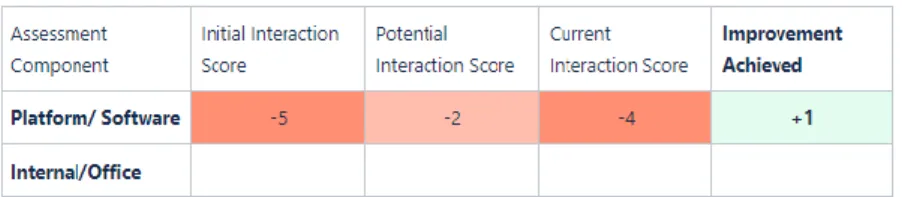
The scores allocated are based on a defined rating scale. The scores indicate areas for
improvement across the various components; the relevant enhancements are incorporated into the action plan. For example, using the key factors criteria for project management as defined by Martens & Carvalho (2017) to set the criteria for the project management assessment, I captured the findings accordingly. Please see Figures 5.6 and 5.5 below for examples of the Sustainability Assessment form and the Rating scale. The Action Plan is available in Appendix 2.
My process followed a spiral trajectory along with Susman & Evered’s (1978) cyclical action research process - see Figure 4.2. The iterative results from the steps of, Diagnosing, Action planning, Action Taking, Evaluating & Learning became more nuanced over time. I instituted a rating scale to indicate each business component's current and potential improvement sustainability impact level. I used the data collected in these interviews to establish a baseline for the start of TheCompany’s sustainability journey. I then set about researching the sustainability impact and available responses in each relevant scenario. I also set us a Sustainability forum to gather further data from a wider audience and disseminate sustainability information for awareness and change management purposes.
All risk of untrustworthiness is mitigated through a logical, traceable, and documented process (Fleming, 2018). All assessment results were shared openly for internal comment to mitigate the criticism or risk of bias (Fleming, 2018). The sustainability process is auditable and credible because all internal communications and documentation are open and transparent.
Privacy, confidentiality, and institutional anonymity (Fleming, 2018) will be maintained by referring to the company in terms of an alias, thereby protecting against access to privileged information and protecting the privacy of the company, the staff, and their customers. Due to the size and context of the company in New Zealand, any references to individuals (even using aliases) could compromise their anonymity by the nature of the comment. I will hide the company’s identity using a pseudonym to respect anonymity and protect the company's intellectual property. The permission letter to use this company in my study is available with my mentor Henk Roodt – for secure download.
Data Analysis
Phase one
In phase one, I analysed data collected from the customer survey to determine trade-offs and barriers to sustainable product choices. We elected to use the Conjoint analysis (Green & Hall, 2001) for data analysis via 1000Minds (n.d.) software. Data Analysis revealed the following two significant outcomes.
• The overall attribute preference ranking indicates that 'Quality' outranks the other attributes.
Trusted Label and Product choice outranking 'Fair Price' and 'Convenience'. See figure 5.3.
• Barriers to sustainable purchases largely relate to poor choice, high price, and poor quality. See figure