Economic analysis of crossbreeding of dairy cattle in Anwara upazila of Chattogram district. Professor Meherunnesa Chowdhury Sumy) Head of the Institute. The study was undertaken to analyze the socio-economic status, profitability and existing problems of dairy farming in Anwara upazila of Chattogram district, Bangladesh. A pre-tested questionnaire was used to collect data from the farmers in February to May 2022.
The study reveals that the average milk production of crossbred dairy cattle was 13.125 liters and the total return was Tk 202683.22 per year per cattle where milk sale contributed 89.36% of the total return. The study also highlights some major problems faced by farmers such as lack of capital, adverse effect of COVID-19 on dairy farming, high cost of concentrate feed, insufficient pasture land and green fodder.
Introduction
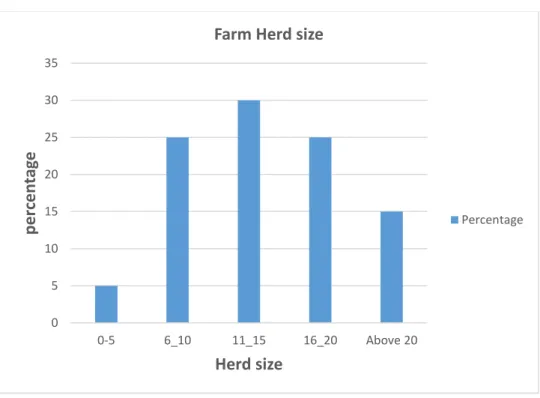
2 | Page to increase the productivity of crossbred dairy cattle, various factors like management, reproduction, disease control, etc. need to be improved. A number of studies have been conducted to evaluate the production, reproduction and profitability analysis of crossbred cattle at research centers and some government farms, but no such studies have been conducted in the rural areas of Anwara upazila known as milk pocket of Chattogram city. Based on the above literature review, there is scope for socio-economic analysis along with economic analysis in Anwara upazila.
Materials and Methods
- Selection of sample size
- Preparation of questionnaire
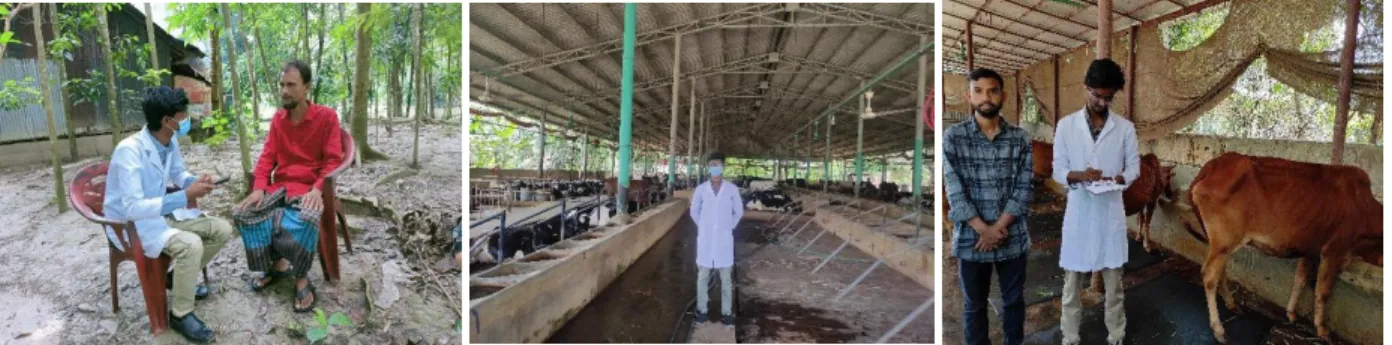
- Collection of data
- Data coding, entry and cleaning
- Statistical Analysis
Variable Costs: Variable costs include the costs related to production such as feed costs, veterinary costs, labor costs, transport costs and miscellaneous costs. Feed costs: Feed costs include the total amount of feed (concentrate + roughage) consumed by the cattle and multiplied by the market value of the feed. Transport costs: This includes carrying costs of feed and marketing costs of milk for sale.
Income in a cattle dairy is generated by the sale of milk, calves and cow excrement. Milk sales: Milk sales were calculated by the total amount of milk produced by cattle per day and multiplied by the market value per liter of milk. In dairy farming, male calves are sold to the market as they cannot produce milk.
Cow dung serves as fertilizer for agricultural crops and plants and has a greater demand in the market.
Results and Discussion
Cost and Return analysis of cross bred dairy cattle
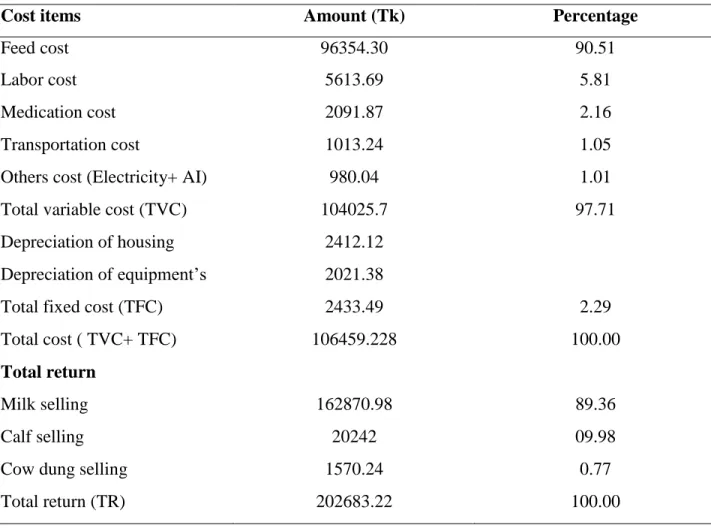
For profitability analysis, both variable costs (feed costs, labor costs, transport costs, AI costs, veterinary costs, etc.) and fixed costs (depreciation of housing and equipment) were calculated as total costs. In dairy farming, farmers generate income either from the sale of farm products and by-products also through the sale of surplus animals. Costs in dairy farming include feed costs, labor costs, medication costs, transport costs and miscellaneous costs.
Among the costs, feed costs are the largest costs and comprise about 91% of the total costs in milk production as shown in Table 2. Dairy farming creates employment opportunities as it requires both family labor and hired labor, with labor costs accounting for about 5.81% of the total costs and is ranked as the second most expensive in milk production. Medicine costs in crossbred dairy cattle are relatively high because crossbred cattle are more susceptible to various diseases than local breed (Barua et al., 2018).
Variable costs are those costs related to production such as feed cost, labor cost, veterinary cost, transportation cost and other costs. Datta et al., 2019) also found a similar type of result where feed cost accounts for about 83.7% of total cost in crossbred dairy cattle. Cattle that produce more milk result in greater returns and make the farm more economical.
Table 2 shows that the total revenue from the farm was Tk 202683.22, while milk sales accounted for almost 89.36% of the total revenue. The sale of calves contributed 9.98% to the total return and the sale of cow manure contributed 0.77% to the total return. The average milk production per cattle per day was 13,125 liters. A similar result was found in (Begum et al., 2017) where the milk production of crossbred cattle was 13.11 liters per cattle per day in Bangladesh climatic conditions.
Profitability analysis of cross bred dairy cattle
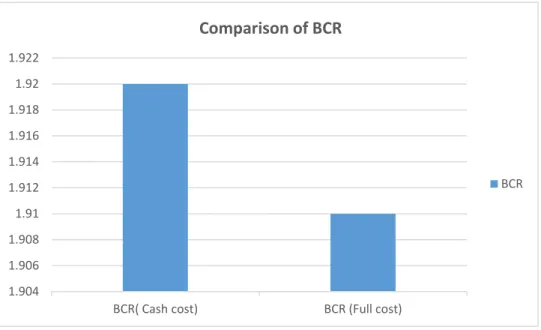
Benefit Cost Ratio Analysis (BCR)
Problems faces by the farmers
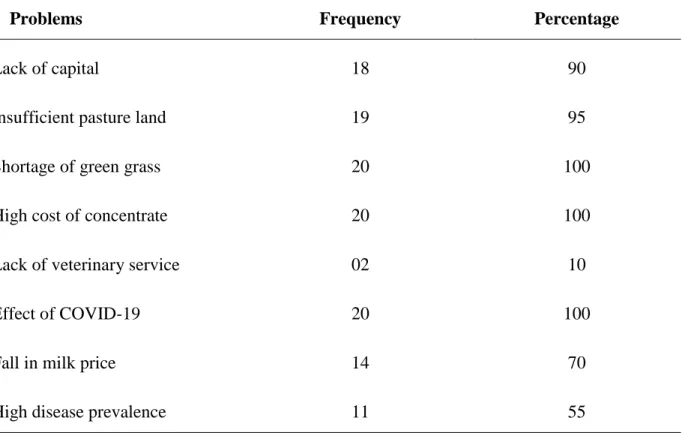
But there is a severe lack of green grass and pastures in the study area. As a result, milk quality decreased along with milk production and makes the farm less profitable. According to (Mohammed et al., 2014) farmers have no knowledge or very poor knowledge of high quality fodder cultivation resulting in insufficient supply of fodder.
Different types of training programs on cultivation of high quality fodder should be organized to educate the farmers so that they understand the importance of green grass in dairy farming. Concentrates are energy-rich feeds offered to cattle for higher milk production (Senbeta k. et al., 2019). In recent years the price of concentrate feed had increased significantly and made dairy farming unprofitable for a large number of small scale dairy farmers.
Table 4 shows that 100% of farmers had a high price of concentrate feed. Global pandemics and supply shortages are the main reason for the increase in cattle feed prices, as mentioned by (Sahidur et al., 2021). In order to reduce the price of fodder, the government should provide a subsidy for fodder concentrate and a short-term bank loan.
The study found that 100% of all farmers in the study area had been affected by COVID-19. The majority of dairy farmers in our country breed cross-bred dairy cattle for higher milk production than indigenous cattle (Islam et al., 2017) . These crossbred cattle are more susceptible to diseases than cattle from local breeds (Barua et al., 2018).
Good management and strong biosecurity should be maintained to reduce disease prevalence on the farm. As a result, there is mostly an unstable milk price in the market. An organized and stable milk marketing system should be created to make the milk price stable throughout the year.
Conclusion
Problems faced by small-scale dairy farmers in receiving veterinary services in selected areas of Chittagong. Productive and reproductive performance of dairy cattle of different breeds and crossbreeds in central livestock and dairy farming, Savar, Dhaka, Bangladesh. Prevalence of various dairy cattle diseases in selected dairy areas and farms of Bangladesh.
21 | Dairy traits page focusing on repeated breeding losses in selected dairy areas in Bangladesh. I would like to express my gratitude to the farmers who participated in the study for their hospitality and kind support throughout the data collection period.