Thesis title: Effects of cooking on the stability and analysis of the physicochemical properties of commercial canned fish. This is to report that as per the check …….% of the content of the above thesis is stated to be plagiarized and is covered/not covered as per plagiarism policy and institutions issued by CASR, Chattogram Veterinary and Animal Sciences University. Ashraf Ali Biswas, Dean of the Faculty of Food Science and Technology at CVASU, for providing the time and resources necessary to complete the assignment throughout the period.
Shamsul Morshed, Associate Professor and Head of the Department of Applied Chemistry and Chemical Technology, for his invaluable guidance. Canned fish is available throughout the year, regardless of season or location, and is not affected by fluctuations in supply and demand, making it a more reliable source of fish for consumers.
Fish as food
Chemical composition of fish
Canning of fish
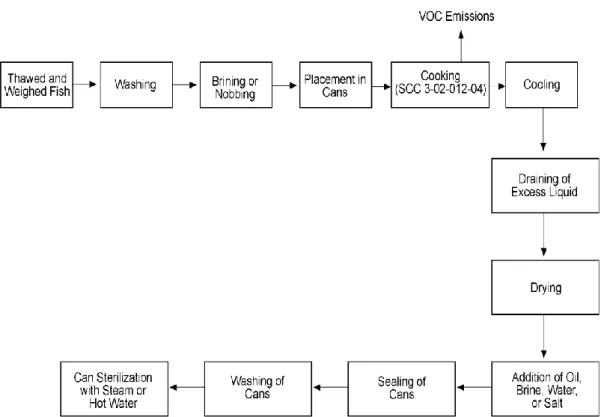
Process description of canning fish
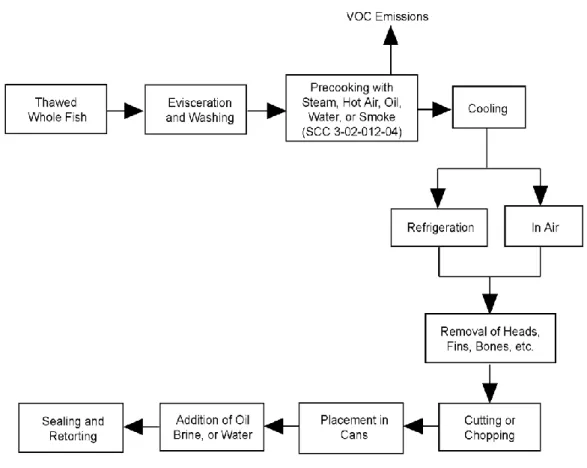
This awareness facilitates the evaluation of the value of fish protein in relation to other food items, the possibility of increasing it during product development and the enrichment of its nutritional composition to adapt to dietary requirements, industry standards and optimal use. The head, fins, bones, and unwanted flesh are removed after cooling, and the remaining fish is then sliced or diced into smaller pieces for preservation. The cans are filled with oil, brine and/or water before being sealed and pressure-cooked for transport.
Thawing and weighing the fish are the first steps in the raw pack preservation method (Figure 2.4.1). After drying, you can add oil, brine, water, sauce or other liquids to the cans.
Changes in fish due to reheating
Changes in quality of canned fish during storage
Heavy metal aspect in fish
Currently, the presence of some metals such as Cd, Pb, Hg and Cr constitutes the highest level of concern and their impact on all ecosystems is considerable. Heavy industry, metallurgy and agriculture are the main contributors to environmental pollution, with the agricultural sector having a particularly significant impact on aquatic ecosystems (Dercová et al., 2005). The initial aspect concerns the health and hygiene considerations associated with the consumption of fish as a food source.
The second dimension includes bioindication arising from the role and integration of fish in the ecological and energy transfer networks of aquatic ecosystems. Heavy metals accumulate in different organs of fish in different amounts, with the highest concentrations in the kidneys, liver and gills. Among these organs, muscles represent the most important concern in terms of consuming fish as food.
Canned fish prospect in Bangladesh
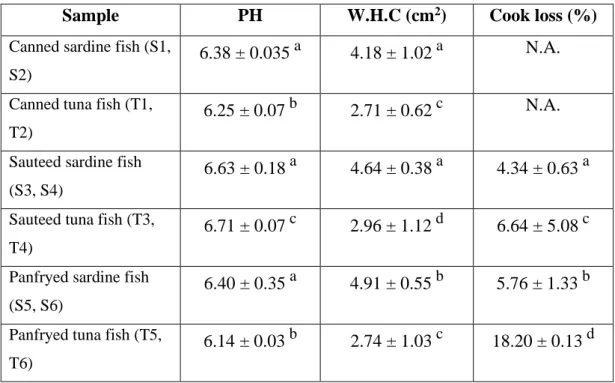
In the present study, the effects of cooking or reheating on the physicochemical properties of canned fish were assessed. A possible explanation for the observed differences in the physicochemical properties of the canned fish samples after cooking or reheating could be due to the thermal degradation of various components. The filter press method revealed that the water holding capacity was highest in the baked samples and lowest in the baked samples, which is consistent with the higher cooking loss found in the baked samples. The gentle cooking process of frying causes the fish to retain more of the fried samples. the natural moisture content, resulting in a higher water holding capacity.
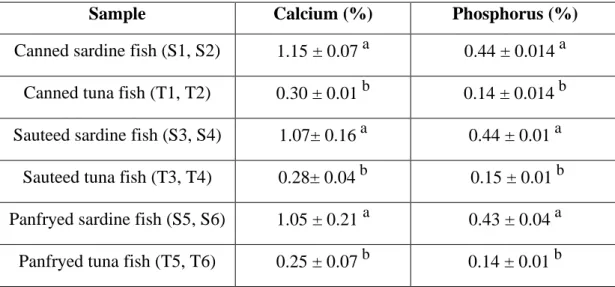
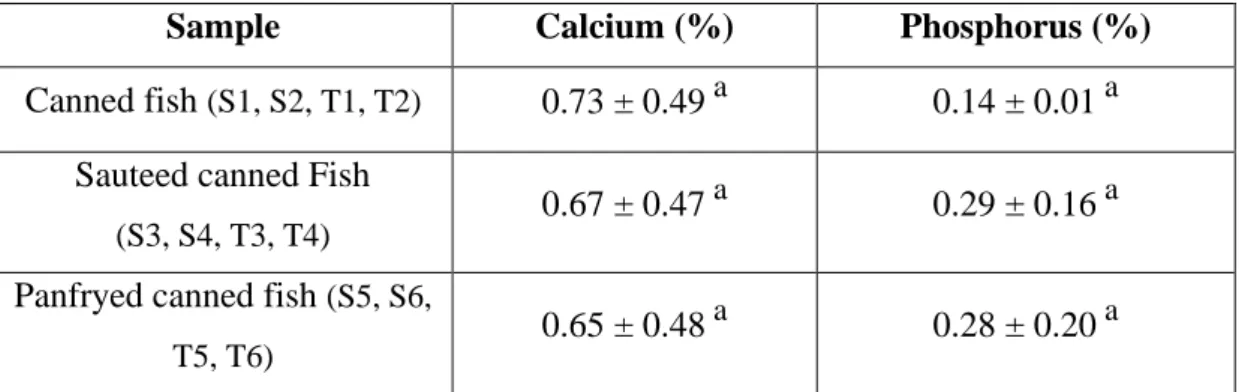
This suggests that cooking and heating processes may not significantly affect the amount of minerals in canned fish. This may be due to the fact that thermal degradation of minerals is less important compared to other components such as proteins and fats. The stability of Minerals during cooking can be attributed to their relatively low susceptibility to thermal degradation compared to other components such as proteins and fats. In Official Methods of Analysis of the Association of Official Analytical Chemists (13th ed., p. 397). In Official Methods of Analysis of the Association of Official Analytical Chemists (13th ed., pp. 124–125).
In Official Methods of Analysis of the Association of Official Analytical Chemists (13th Edition, p. In Official Methods of Analysis of the Association of Official Analytical Chemists (13th Edition, pp. 132-133). In Official Methods of Analysis of the Association of Official Analytical Chemists (13th Edition, p. 136–137).
In Official Analytical Methods of the Association of Official Analytical Chemists (13th ed., pp. 285-289).
Materials and Methods………………………………………………… 10-16
Collection of samples
To measure the proximate analysis and other physical properties, four different brands of canned fish samples were collected from the local supermarkets.
Preparation for reheating canned samples
Proximate composition of canned fish samples
- Determination of moisture content
- Determination of crude protein content
- Determination of crude fat content
- Determination of ash content
Here, w1 = weight (g) of the sample before drying, w2 = weight (g) of the sample after drying. 3.4.2 Determination of crude protein content. In this technique, a measured amount of sample is decomposed with sulfuric acid (H2SO4) in the presence of a decomposition mixture containing copper sulfate (CuSO4) and potassium sulfate (K2SO4) in a ratio of 1:20. To start the determination of protein content, add 1 g of the protein-containing sample to 12-15 ml of strong sulfuric acid in a volumetric flask containing the sample.
The acid/ammonia lock solution was spiked with an indicator dye to detect the presence of a significant amount of the original lock acid. The volume of sodium hydroxide solution needed to reach the endpoint is measured and calculations performed (Horwitz, 1980). The extraction process continued for approximately 6 hours before removing the condensing unit and allowing the sample to cool.
The sample was dried in an oven, and the weight was recorded to obtain a defatted sample (Horwitz, 1980). Protective equipment such as tongs, gloves and safety glasses were used due to the elevated temperature of the muffle furnace. The desiccator was then closed, and the crucibles were covered and allowed to cool before being weighed (Horwitz, 1980).
Here, w1= weight of jar + sample (before ashing), w2= weight of empty crucible w= weight of crucible + dry matter.
Physical test of canned fish samples
- Determination of pH
- Determination of water holding capacity
- Determination of cooking loss
Determination of mineral content
- Determination of calcium
- Determination of phosphorus
Then 25 ml of a clear liquid was pipetted into a beaker, diluted to 100 ml and 2 drops of methyl red were added. Waited overnight for the precipitate to settle, filtered the supernatant using a fine pyrex filter, then washed the precipitate thoroughly with NH 4 OH (1 + 50). A mixture of 125 mL water and 5 mL H 2 SO 4 was added to the paper or crucible containing the precipitate in the original beaker.
To facilitate the precipitation process, NH4OH was used as a neutralization test, ensuring that the solution became slightly alkaline according to litmus paper when NH4OH was added, and slightly acidic when HNO3 (1+3) was added. For samples with a P205 content greater than 20%, enough acidified molybdate solution was added to ensure complete precipitation. After mechanically stirring the precipitate for 30 minutes at room temperature, the precipitate was washed twice by pouring off amounts of water of 25 to 30 ml each, stirring it thoroughly and letting it settle.
The precipitate was transferred to a filter and washed with cold water until the filtrate from two filter charges gave a pink color when one drop of standard alkali. The precipitate and filter were then transferred to a beaker or other precipitation vessel, where they were dissolved in a small amount of standard alkali, phenolphthalein was added, and then the solution was titrated with standard acid.
Determination of heavy metal presence
- Determination of mercury
- Determination of lead
For each gram of dry sample, 15 ml of ternary acid mixture was added and the mixture was allowed to stand for 2 hours. The flask was then heated under a hood or in a H2O vacuum manifold system until only H2SO4 and inorganic salts remained. It was then left to cool for a minute and washed while still hot in a 40-50 ml tapered bottom centrifuge tube and spun.
After allowing to cool, the mixture was centrifuged for 10 minutes and the liquid was decanted into a waste beaker. The precipitate was then removed by vigorous stirring using an eccentric stirrer. To ensure complete transfer, 20 mL of water and 1 mL of 0.5 M H2SO4 were added to the original flask and heated.
To remove the precipitate, continue vigorous stirring by adding 25 mL of saturated (NH4)2CO3 solution and stirring until all the precipitate is dispersed.
Statistical analysis
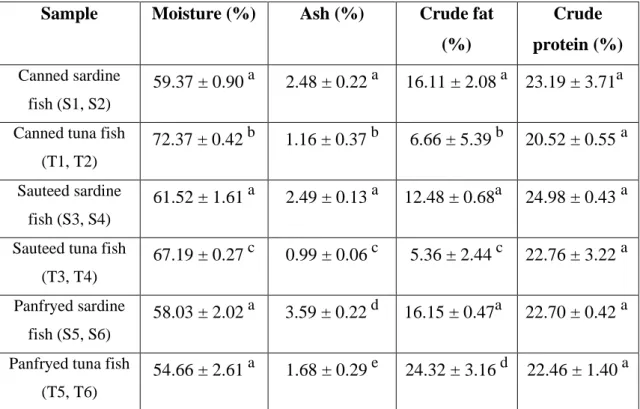
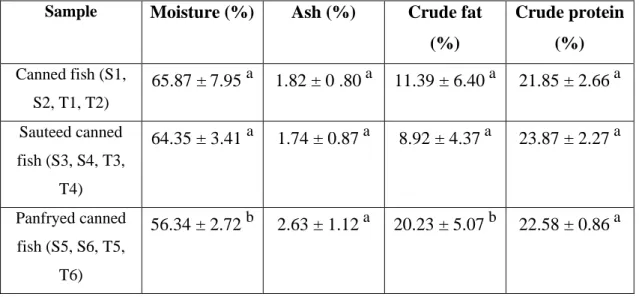
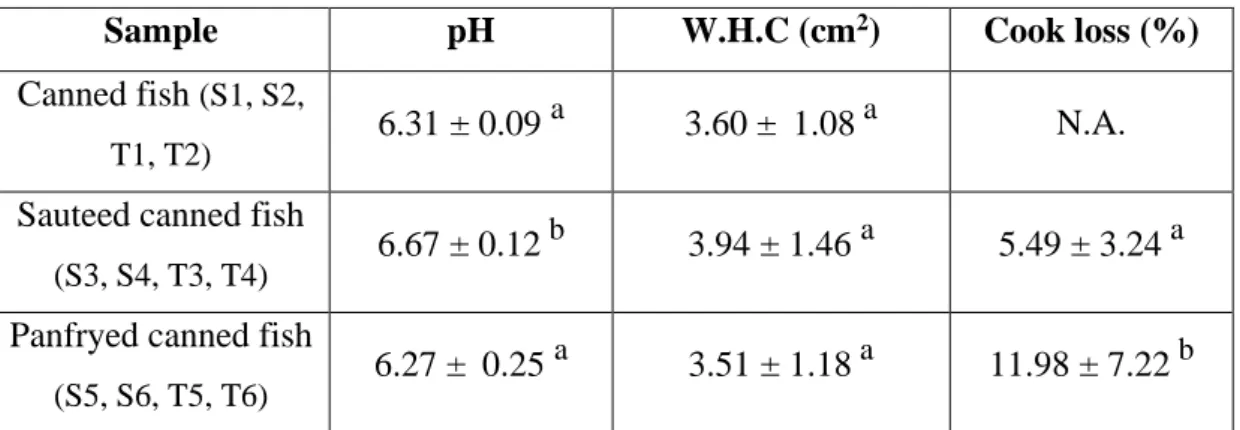
The results and findings of the studies on commercial canned fish are reported in this part, including information on the proximate composition, mineral content, physical test and heavy metal analysis of canned tuna, sardines and comparison made with its reheated sample. The fat content was found to be highest in pan-fried canned fish (20.23%) compared to sautéed canned fish (8.92%). In addition to proximate analysis, several physical tests were performed to evaluate the effects of pan-frying and sautéing on the canned fish and the result was presented in Table 4.2, 4.2.1.
It was observed that the pH of salted canned fish (6.67) was higher than that of pan-fried canned fish (pH 6.27). The water holding capacity of salted canned fish was found to be higher compared to that of pan-fried canned fish, their values were 3.94 cm2, 3.51 cm2. Compared to sautéed canned fish, pan-fried canned fish was shown to have a higher cooking loss, which was 11.98% compared to 5.49%.
The results of the data analysis indicated that the p-values for the reheated (pan-fried and salted) and canned fish samples were not less than 0.05 (p<0.05). These study results indicate that the stability and physicochemical properties of canned fish can be affected by cooking and reheating methods, but not to a significant extent. Furthermore, the physical tests showed that salted canned fish has a higher pH and water holding capacity compared to the canned and pan-fried samples.
The fact that these harmful substances were not detectable in the canned fish samples reinforces the idea that canned fish can be considered a safe food option. This supports previous research showing that canned fish often contains minimal amounts of heavy metals. From this study it can be concluded that cooking and reheating methods have minimal impact on the stability and physicochemical properties of canned fish.