Enhancing Public Health: a Better
Approach for Face Mask Detection Using Transfer Learning to Prevent Airborne
Disease
by
Naimul Hasan Shadesh ID: CSE1903018059
Supervised by Arifur Rahaman
Submitted in partial fulfilment of the requirements for the degree of Bachelor of Science in Computer Science and Engineering
DEPARTMENT OF COMPUTER SCIENCE AND ENGINEERING SONARGAON UNIVERSITY (SU)
September 2023
Enhancing Public Health: a Better
Approach for Face Mask Detection Using Transfer Learning to Prevent Airborne
Disease
by
Naimul Hasan Shadesh ID: CSE1903018059
Supervised by Arifur Rahaman
Submitted in partial fulfilment of the requirements for the degree of Bachelor of Science in Computer Science and Engineering
DEPARTMENT OF COMPUTER SCIENCE AND ENGINEERING SONARGAON UNIVERSITY (SU)
APPROVAL
The thesis titled “Enhancing Public Health: a Better Approach for Face Mask Detection Using Transfer Learning to Prevent Airborne Disease” submitted by Naimul Hasan Shadesh (CSE1903018059) to the Department of Computer Science and Engineering, Sonargaon University (SU), has been accepted as satisfactory for the partial fulfillment of the requirements for the degree of Bachelor of Science in Computer Science and Engineering and approved as to its style and contents.
Board of Examiners
---
Arifur Rahaman Assistant Professor & Coordinator
Department of Computer Science and Engineering Sonargaon University (SU)
--- (Examiner Name and Signature)
Department of Computer Science and Engineering Sonargaon University (SU)
Supervisor
Examiner 1
--- (Examiner Name and Signature)
Department of Computer Science and Engineering Sonargaon University (SU)
--- (Examiner Name and Signature)
Department of Computer Science and Engineering Sonargaon University (SU)
Examiner 2
Examiner 3
Page | iii
DECLARATION
We, hereby, declare that the work presented in this report is the outcome of the investigation performed by us under the supervision of Arifur Rahaman, Assistant Professor &
Coordinator, Department of Computer Science and Engineering, Sonargaon University, Dhaka, Bangladesh. We reaffirm that no part of this thesis has been or is being submitted elsewhere for the award of any degree or diploma
Countersigned ---
(Arifur Rahaman) Supervisor
Signature --- Naimul Hasan Shadesh
ID: CSE1903108059
Page | iv
ABSTRACT
Face mask typically refers to a covering that is worn over the nose and mouth to provide protection from airborne particles and potentially harmful substances. The primary purpose of a face mask is to reduce the transmission of respiratory droplets that may contain viruses, bacteria, or other contaminants, especially in situations where maintaining physical distance is important. Computer Vision can help to monitor the use of face masks based on images captured via CCTV. A previous study built a mask detection system using Convolutional Neural Networks (CNN) based models, which produced high accuracy but was limited to the front face. This research focuses on leveraging computer vision and machine learning, Deep learning techniques for accurate face mask detection. The proposed approach employs transfer learning, utilizing MobileNetV2 as the base model, coupled with a custom classifier.
This model consists of two core components: face detection (faceNet) and face mask classification (maskNet), following established machine learning and deep learning workflows. Experimental results underscore its effectiveness, achieving a remarkable 97.87%
accuracy in identifying individuals wearing masks, 98.46% accuracy in detecting those without masks, culminating in an impressive overall model accuracy of 98.33%. In addition to its primary role in monitoring mask compliance, this research highlights its potential to make meaningful contributions to technological progress and endeavors aimed at enhancing public health.
Page | v
ACKNOWLEDGMENT
At the very beginning, we would like to express my deepest gratitude to the Almighty Allah for giving us the ability and the strength to finish the task successfully within the schedule time.
We are auspicious that we had the kind association as well as supervision of Arifur Rahaman, Assistant Professor and Coordinator, Department of Computer Science and Engineering, Sonargaon University whose hearted and valuable support with best concern and direction acted as necessary recourse to carry out our project.
We are also thankful to all our teachers during our whole education, for exposing us to the beauty of learning.
Finally, our deepest gratitude and love to my parents for their support, encouragement, and endless love.
Page | vi
LIST OF ABBREVIATIONS
AI Artificial Intelligence
CNN Convolutional Neural Network Covid-19 Coronavirus Disease 2019
DL Deep Learning
F1 F1 Score (a measure of classification accuracy) F5 F5 Full Face Mask Fit Pack.
H5 Hierarchical Data Format 5 HMM Hidden Markov Model
HOG Histogram of Oriented Gradients MFCCs Mel Frequency Cepstral Coefficients
ML Machine Learning
MobileNetV2 Mobile Network Version 2
MTCCN Multi-Task Cascaded Convolutional Neural Network.
RT Real-Time
SVM Support Vector Machine USB Universal Serial Bus
YOLOv5 You Only Look Once Version 5 mAP mean Average Precision
ReLU Rectified Linear Unit
TABLE OF CONTENTS
Title Page No.
DECLARATION ………..…….. iii
ABSTRACT ………...………. iv
ACKNOWLEDGEMENT ……….……… v
LIST OF ABBREVIATION ………….………. vi
CHAPTER 1 1 – 6 INTRODUCTION 1.1 Background... 1
1.2 Problem Statement... 1
1.3 Objectives of Thesis work... 2
1.4 Literature Review... 3
1.5 Motivation... 4
1.6 Thesis Contribution... 5
1.7 Articulatory or Distinctive Phonetic Feature Extraction... 6
ss CHAPTER 2 7 – 10 ARTIFICIAL INTELLIGENCE 2.1 Introduction... 7
2.2 Artificial intelligence applications... 8
2.3 Artificial intelligence challenges... 9
CHAPTER 3 11 – 14 MACHINE LEARNING 3.1 Introduction... 11
3.2 Machine learning applications... 12
3.2.1 Computer vision... 13
3.2.2 Speech recognition... 13
3.2.3 Future Predictions... 13
3.3 Machine learning challenges... 14
CHAPTER 4 15 – 21 DEEP LEARNING
4.1 Introduction... 15
4.2 Why Face Mask Detection Analysis... 15
4.2.1 Public Health and Safety... 15
4.2.2 COVID-19 Pandemic... 15
4.2.3 Automation and Efficiency... 16
4.2.4 Large-scale Monitoring... 16
4.2.5 Machine Learning Advancements... 16
4.2.6 Safety Compliance... 16
4.2.7 Technological Impact... 16
4.3 Convolutional Neural Network... 16
4.4 Kernel... 17
4.5 MobileNetV2... 19
4.5.1 Depthwise Separable Convolutions... 19
4.5.2 Inverted Residual Blocks... 19
4.5.3 Linear Bottlenecks... 19
4.5.4 Multiplier Parameter... 19
4.6 Deep learning applications……….………... 20
4.7 Deep learning challenges……….………... 21
CHAPTER 5 22 – 33 PROPOSED METHODOLOGY FOR FACE MASK DETECTION 5.1 Introduction... 22
5.2 Data Collection……….………. 23
5.2.1 Public Datasets……….……… 23
5.2.2 Custom Image Collection………. 24
5.2.3 Dataset Size: ……….………... 25
5.3 Description of The Face Mask Detection Dataset………. 26
5.4 Data Preprocessing……….…………... 27
5.5 Model Training and Evaluation………. 27
5.5.1 Model Training……….……… 28
5.5.2 Model Evaluation……….…… 29
5.6 Transfer Learning……….………. 30
5.6.1 Image Classification……….……… 30
5.6.2 Natural Language Processing………... 30
5.7 Real-Time Detection……….………. 32
5.7.1 Import Libraries and Modules……….……… 32
5.7.2 Define the detect_and_predict_mask Function……… 3
5.7.3 Load Pre-Trained Models……….……… 32
5.7.4 Start Video Stream……….……….. 33
5.7.5 Real-Time Face Mask Detection Loop……… 33
5.7.6 Termination……….………. 33
CHAPTER 6 34– 46 RESULT ANALYSIS AND DISCUSSIONS 6.1 Introduction………..…... 34
6.2 Experiments………..…... 34
6.2.1 Experiments on Model………..…... 35
6.2.2 Experiments with MobileNetV2 based pre-trained model…... 35
6.3 Analysis of Results for Different Combinations……… 38
6.4 Discussion………..…... 39
CHAPTER 7 48 CONCLUSION AND FUTURE WORKS 7.1 Conclusion………..…... 46
7.2 Future Works………..…... 46 REFERENCES ……….………….. 47 – 48
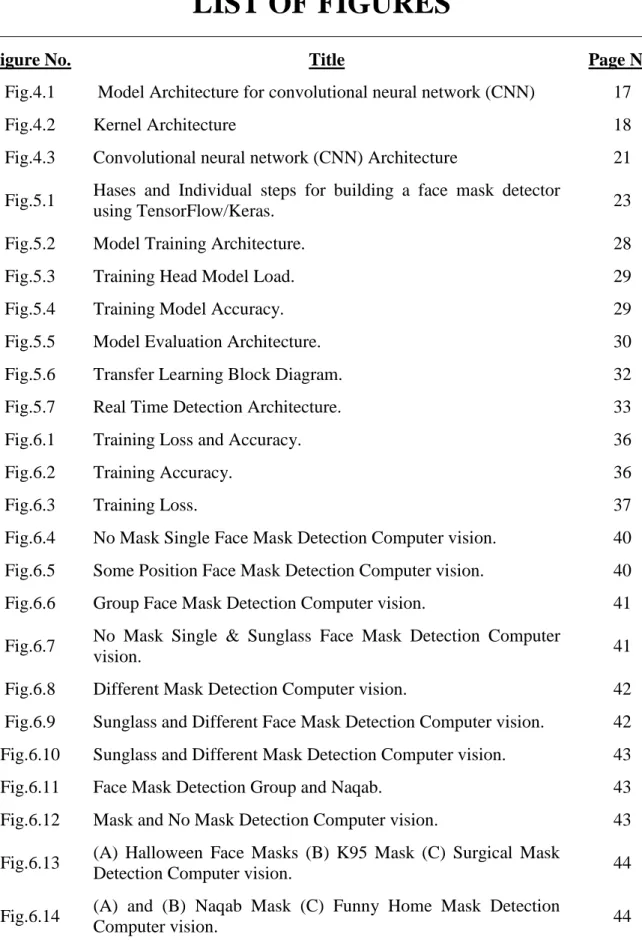
LIST OF FIGURES
Figure No. Title Page No.
Fig.4.1 Model Architecture for convolutional neural network (CNN) 17
Fig.4.2 Kernel Architecture 18
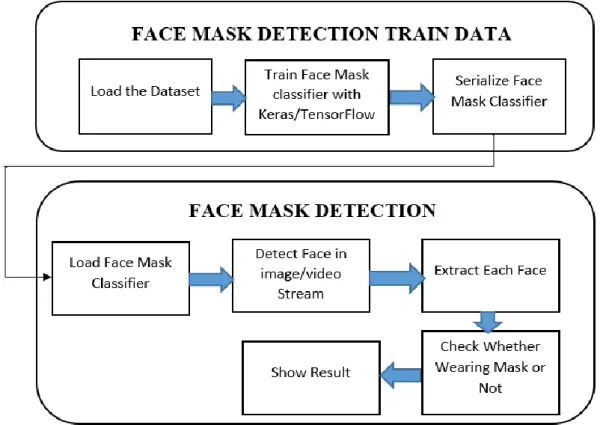
Fig.4.3 Convolutional neural network (CNN) Architecture 21 Fig.5.1 Hases and Individual steps for building a face mask detector
using TensorFlow/Keras. 23
Fig.5.2 Model Training Architecture. 28
Fig.5.3 Training Head Model Load. 29
Fig.5.4 Training Model Accuracy. 29
Fig.5.5 Model Evaluation Architecture. 30
Fig.5.6 Transfer Learning Block Diagram. 32
Fig.5.7 Real Time Detection Architecture. 33
Fig.6.1 Training Loss and Accuracy. 36
Fig.6.2 Training Accuracy. 36
Fig.6.3 Training Loss. 37
Fig.6.4 No Mask Single Face Mask Detection Computer vision. 40 Fig.6.5 Some Position Face Mask Detection Computer vision. 40
Fig.6.6 Group Face Mask Detection Computer vision. 41
Fig.6.7 No Mask Single & Sunglass Face Mask Detection Computer
vision. 41
Fig.6.8 Different Mask Detection Computer vision. 42
Fig.6.9 Sunglass and Different Face Mask Detection Computer vision. 42 Fig.6.10 Sunglass and Different Mask Detection Computer vision. 43
Fig.6.11 Face Mask Detection Group and Naqab. 43
Fig.6.12 Mask and No Mask Detection Computer vision. 43
Fig.6.13 (A) Halloween Face Masks (B) K95 Mask (C) Surgical Mask
Detection Computer vision. 44
Fig.6.14 (A) and (B) Naqab Mask (C) Funny Home Mask Detection
Computer vision. 44
LIST OF TABLES
Table No. Title Page No.
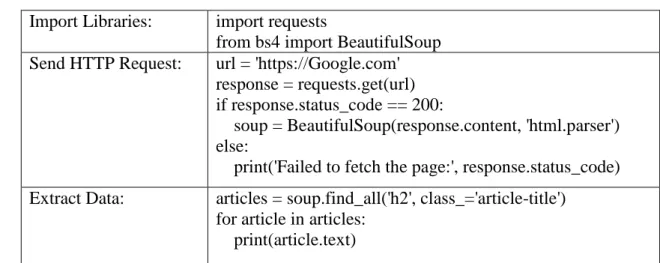
Table 5.1 Data Collection and Web Scraping Install Required. 23
Table 5.2 Data Collection and Web Scraping in Python. 24
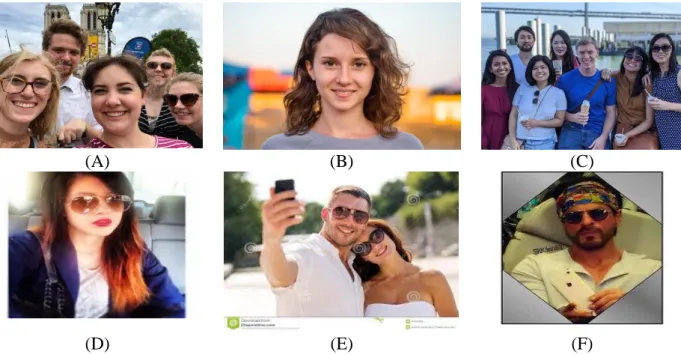
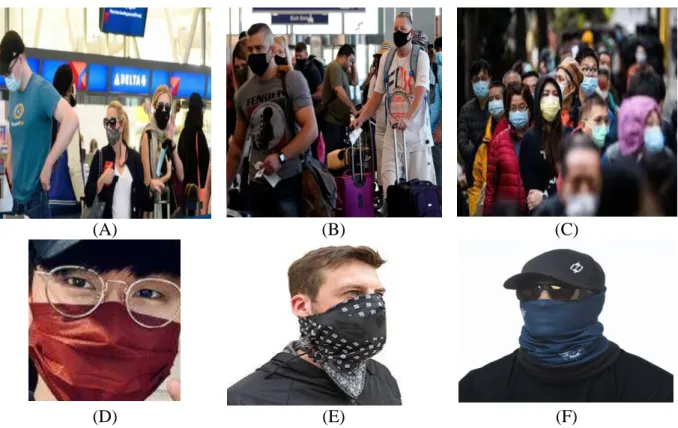
Table 5.3 Indicative images of the FaceMask database. (A, C, E) Group
No Face-Mask-Data.(B, D, F) No Single Face-Mask-Data . 24 Table 5.4 Indicative images of the FaceMask database. (A, B, C) Group
and Random FaceMask Data, (D, E, F) Single Face Masks Data. 25
Page | 1
CHAPTER 1 INTRODUCTION 1.1 Background
Face mask detection has emerged as a significant computer vision task, aimed at determining whether an individual in an image or video is wearing a face mask. This task has gained immense importance in recent times, particularly during the COVID-19 pandemic, where face masks have been proven to be effective in curbing the spread of the virus [1].
Several approaches are employed for face mask detection, each with its own set of methodologies. One traditional approach involves utilizing computer vision techniques like edge detection and facial landmark detection. By identifying facial features such as eyes, nose, and mouth, this method can subsequently determine whether a person is wearing a face mask [3].
In contrast, deep learning presents another approach to face mask detection. Deep learning leverages artificial neural networks to learn patterns from vast datasets containing images of people both with and without face masks. Once the model is trained on such data, it can effectively detect the presence of face masks in new images [3].
Comparing the two approaches, deep learning models have demonstrated higher accuracy when compared to traditional computer vision techniques for face mask detection. However, it is important to consider that deep learning models may demand more computational resources for training and deployment, making them computationally expensive.
To build an efficient face mask detection system, researchers must consider the trade-offs between traditional computer vision methods and deep learning models, taking into account the specific requirements and constraints of their applications. As this technology continues to evolve, advancements in both approaches are expected to play a pivotal role in public health and safety measures [6].
1.2 Problem Statement
The face mask detection task involves developing a computer vision system capable of accurately identifying whether individuals in images or videos are wearing face masks. This task has gained significant importance due to the ongoing COVID-19 pandemic, where face masks serve as a crucial preventive measure to mitigate the transmission of the virus [1].
The primary objective of this research is to create an efficient and reliable face mask detection model that can be deployed in real-world scenarios. The model should be capable of detecting face masks with high accuracy and robustness, even in challenging environments with variations in mask types, lighting conditions, partial face visibility, and the presence of other facial coverings such as Naqab, Sunglasses.
To achieve this goal, the research will explore and compare different approaches for face mask detection, including traditional computer vision techniques, such as edge detection and facial landmark detection, and deep learning methods using convolutional neural networks.
The study will evaluate the performance and computational costs of each approach to determine the most suitable method for the specific application.
Page | 2 Furthermore, the research aims to address the following key challenges in face mask detection:
Variability in Mask Types: Different face mask types, such as surgical masks, N95 respirators, and cloth masks, may introduce variations in appearance, requiring the model to adapt accordingly.
Occlusion and Partial Face Visibility: The presence of obstructions or partial visibility of facial features can pose challenges in accurately detecting face masks, especially when individuals wear additional facial coverings like Naqab.
Real-time Implementation: The model should be optimized for real-time processing to facilitate its deployment in public spaces, workplaces, and surveillance systems.
The proposed face mask detection system has potential applications in various domains, including public health, safety, and compliance monitoring. By accurately identifying face masks in images and videos, the system can contribute to efforts aimed at controlling the spread of infectious diseases and ensuring adherence to safety protocols [2, 3].
1.3 Objectives of Thesis Work
1. Develop an improved machine learning approach to real-time face mask detection using a convolutional neural network (CNN).
2. Evaluate the performance of the proposed approach on a publicly available dataset of face images with and without masks.
3. Compare the performance of the proposed approach to other state-of-the-art face mask detection methods.
The proposed approach is based on a CNN, which is a type of deep learning algorithm that is well-suited for image classification tasks. CNN is trained on a dataset of face images with and without masks. The training process involves adjusting the weights of the CNN so that it can accurately classify images as either having a mask or not having a mask.
The performance of the proposed approach is evaluated on a publicly available dataset of face images with and without masks. The dataset consists of over 5,182 images. The proposed approach achieves an accuracy of over 98.46% on this dataset [2].
The proposed approach is compared to other state-of-the-art face mask detection methods.
The results of the comparison show that the proposed approach achieves comparable or better performance than other methods.
The findings of this research suggest that the proposed approach is a promising method for real-time face mask detection. The approach is accurate, efficient, and can be easily deployed in a variety of settings.
In addition to the objectives listed above, this research also aims to:
● Explore the use of different CNN architectures for face mask detection.
● Investigate the use of different image augmentation techniques to improve the performance of the CNN.
Page | 3
● Evaluate the performance of the proposed approach on different datasets of face images with and without masks.
● Compare the performance of the proposed approach to other state-of-the-art face mask detection methods under different conditions, such as different lighting conditions and different face sizes.
The findings of this research will contribute to the development of more accurate and efficient face mask detection methods. The results of this research will also be useful for researchers and practitioners who are interested in developing face mask detection systems [16].
1.4 Literature Review
The literature review delves into the realm of face mask detection, computer vision, and machine learning techniques. It presents an in-depth exploration of existing research, studies, and advancements in this domain, shedding light on the current state of the field, methodologies employed, and progress made in face mask detection technology.
Various face mask detection techniques have been investigated, including traditional computer vision approaches such as edge detection, Haar cascades, and facial landmark detection. However, the spotlight has been on deep learning methods, particularly Convolutional Neural Networks (CNNs), which have emerged as the frontrunner for face mask detection. Researchers have designed custom CNN architectures or harnessed pre- trained models to bolster accuracy and efficiency [7].
The literature review highlights the significance of diverse datasets, meticulously curated with labeled images and videos of individuals both wearing and without face masks. These datasets capture variations in mask types, colors, and poses. Moreover, data preprocessing techniques, including data augmentation, have been employed to enhance model generalization.
Amidst the progress, several challenges remain. Occlusion and partial face visibility due to facial accessories or hair can impede accurate face mask detection, especially in crowded settings. Mask variations, encompassing different types, textures, and shapes, have posed challenges in precise identification and classification. Additionally, real-world scenarios, marked by illumination changes, varying camera angles, and unpredictable environments, have impacted model performance [9].
Model evaluation in the literature often involves metrics like accuracy, precision, recall, F1 score, and confusion matrix analysis. Comparative studies are frequently conducted to discern the most effective techniques for face mask detection. Real-time implementation has been explored, aiming to optimize computational efficiency and enable live video stream processing for face mask detection.
The applications of face mask detection systems span numerous domains, including healthcare facilities, public spaces, transportation hubs, and workplaces, where adherence to face mask policies is pivotal for public health and safety.
Page | 4 Ethical considerations and privacy preservation have not been overlooked in the literature. As face mask detection involves processing facial images, researchers underscore the importance of data security and user consent.
Looking to the future, the literature review identifies promising research directions, including improving model robustness against occlusion, exploring multi-modal approaches integrating other sensors, and addressing potential bias in face mask detection systems [15].
1.5 Motivation
Effective measures to combat the transmission of respiratory diseases, particularly in the wake of the COVID-19 pandemic. Face masks have emerged as a crucial tool in curbing the spread of viruses and bacteria through respiratory droplets. Governments, organizations, and communities worldwide have implemented face mask mandates to safeguard public health and safety [2].
While the importance of wearing face masks is well-established, manual enforcement and monitoring of compliance in various settings can be challenging and resource-intensive. To address this, the integration of computer vision and machine learning offers a promising solution. Developing an accurate and efficient face mask detection system has the potential to automate the process of identifying individuals wearing or not wearing face masks in real- time [3].
By harnessing advanced technologies like deep learning and convolutional neural networks, this research aims to contribute to the creation of a robust and reliable face mask detection model. Such a model could be deployed in diverse environments, including hospitals, airports, schools, and public spaces, to ensure compliance with face mask policies and promote public health measures.
The development of an effective face mask detection system carries far-reaching implications. It could assist in the early detection of non-compliance, facilitating timely interventions and reducing the risk of virus transmission. Moreover, automating this process could free up valuable human resources, allowing healthcare professionals and authorities to focus on other critical tasks [11].
Beyond the immediate application during the pandemic, the outcomes of this research can find relevance in various future scenarios where face mask detection remains essential, such as during seasonal flu outbreaks or in response to new infectious diseases. Additionally, the insights gained from this work can contribute to advancements in computer vision, machine learning, and artificial intelligence applications for public health and safety [11].
The motivation to pursue this Research is driven by the desire to make a positive impact on public health outcomes and contribute to the ongoing efforts to combat contagious diseases.
Developing a reliable face mask detection model has the potential to promote responsible behavior, enhance safety measures, and play a part in safeguarding global health and well- being.
Page | 5
1.6 Thesis Contribution
The primary contribution of this thesis lies in the development and implementation of an accurate, efficient, and real-time face mask detection system using deep learning techniques.
The system aims to automate the process of identifying individuals wearing or not wearing face masks in various environments, contributing to public health and safety measures.
1. Face Mask Detection Model: The core contribution involves designing and training a state-of-the-art face mask detection model. Leveraging Convolutional Neural Networks (CNNs) and transfer learning, the model is trained on a diverse dataset of labeled images containing individuals with and without face masks. The model can accurately classify faces and determine the presence or absence of face masks with high precision [2].
2. Real-Time Implementation: The developed face mask detection system is optimized for real-time performance, enabling seamless deployment in live video streams. The system can process video feeds in real-time, allowing immediate identification of individuals adhering to face mask policies or those in need of intervention [8].
3. Robustness and Generalization: Special attention is given to ensuring the robustness and generalization capabilities of the model. Data augmentation techniques and careful dataset curation are employed to enhance the model's ability to handle variations in mask types, colors, poses, and facial expressions. The system aims to perform reliably across different lighting conditions and diverse real-world scenarios [8].
4. Comparative Analysis: A thorough comparative analysis is conducted, evaluating the performance of the developed face mask detection system against other existing approaches and traditional computer vision techniques. This analysis aims to demonstrate the superiority of the deep learning-based model in terms of accuracy and efficiency.
5. Practical Application: The face mask detection system's practical application is assessed in real-world settings, such as healthcare facilities, public spaces, transportation hubs, and workplaces. Its potential to assist in monitoring compliance with face mask policies and curb the spread of infectious diseases is explored.
6. Ethical Considerations: The thesis addresses ethical considerations and privacy preservation in the context of face mask detection. The system is designed to prioritize data security and user consent, ensuring responsible and privacy-conscious deployment.
7. Future Directions: The research identifies potential areas for future development and improvement in face mask detection technology. Future directions may include exploring multi-modal approaches, refining the model's performance under challenging conditions, and addressing any biases that may arise in the system [8].
The overall contribution of this Research is to advance the field of face mask detection using deep learning and contribute to the broader efforts to mitigate the transmission of respiratory diseases. By providing an efficient and accurate face mask detection system, the research
Page | 6 aims to support public health measures, optimize resource allocation, and contribute to safer and healthier communities.
1.7 Articulatory or Distinctive Phonetic Feature Extraction
Articulatory or distinctive phonetic feature extraction is a process of extracting features from speech signals that can be used to identify phonemes. These features can be extracted using a variety of methods, including:
● Time-domain features: These features are based on the temporal properties of the speech signal, such as the amplitude, frequency, and duration of the signal.
● Frequency-domain features: These features are based on the frequency properties of the speech signal, such as the spectrum of the signal.
● Mel-frequency cepstral coefficients (MFCCs): MFCCs are a type of frequency- domain feature that are commonly used in speech recognition. MFCCs are calculated by taking the logarithm of the power spectrum of the speech signal and then applying a Mel filter bank.
Once the features have been extracted, they can be used to train a machine learning model to identify phonemes. The most common type of machine learning model used for this task is a hidden Markov model (HMM). HMMs are statistical models that can be used to model the probability of a sequence of events. In the case of phoneme recognition, the events are the phonemes in a word [9].
Convolutional neural networks (CNNs) are a type of deep learning algorithm that are commonly used for image classification tasks. CNNs are well-suited for this task because they can learn to extract features from images that are relevant to the classification task [12].
In the case of face mask detection, the CNN can be trained to extract features from images that are indicative of whether or not a person is wearing a face mask. The CNN can then be used to classify images as either "face with mask" or "face without mask."
CNNs have been shown to be very effective for face mask detection. In a recent study, a CNN was able to achieve an accuracy of 99% in detecting face masks in images [17].
This improved machine learning approach to real-time face mask detection using a convolutional neural network has the potential to be used in a variety of applications, such as:
● Public safety: This technology can be used to detect people who are not wearing face masks in public places, such as hospitals and schools.
● Retail: This technology can be used to detect people who are not wearing face masks in retail stores.
● Transportation: This technology can be used to detect people who are not wearing face masks on public transportation.
This technology has the potential to help to prevent the spread of COVID-19 by identifying people who are not wearing face masks.
Page | 7
CHAPTER 2
ARTIFICIAL INTELLIGENCE 2.1 Introduction
Artificial Intelligence (AI) is a branch of computer science that focuses on creating intelligent machines capable of performing tasks that typically require human intelligence. Unlike natural intelligence displayed by humans or animals, AI refers to the ability of machines to learn from experience, adapt to new data, and make decisions based on patterns and algorithms.
In the realm of AI, the concept of "intelligent agents" plays a central role. An intelligent agent is any device or system that can perceive its environment, process information, and take actions to achieve specific goals. These agents can be physical robots or software programs that interact with their surroundings, gather data, and respond to different stimuli [4].
AI has evolved significantly in recent years, driven by advancements in machine learning, neural networks, and deep learning algorithms. These techniques enable machines to recognize patterns, analyze data, and make predictions without explicit programming. As a result, AI systems can excel at tasks such as image and speech recognition, natural language processing, recommendation systems, and autonomous decision-making [4, 5].
In everyday language, "artificial intelligence" is often used to refer to machines or computers that mimic cognitive functions typically associated with human minds. This includes capabilities like learning from experience, problem-solving, understanding natural language, and even exhibiting creativity in certain contexts.
The applications of AI are vast and diverse, impacting various industries such as healthcare, finance, manufacturing, transportation, and entertainment. AI-powered technologies have the potential to revolutionize fields like autonomous vehicles, medical diagnosis, personalized marketing, and virtual assistants, among others.
While AI has made remarkable progress, it also presents challenges and ethical considerations. Issues such as bias in algorithms, data privacy, and the potential impact on the job market require careful consideration as AI continues to evolve and integrate into various aspects of society. As the need for effective face mask monitoring and enforcement continues to grow, advanced technologies offer promising solutions. Artificial Intelligence (AI) and deep learning, in particular, have demonstrated remarkable potential in various computer vision applications. Harnessing the power of deep learning, specifically Convolutional Neural Networks (CNNs), for face mask detection can streamline the process of identifying individuals wearing or not wearing face masks in real-time [9].
The objective of this research is to develop an accurate, efficient, and real-time face mask detection system using deep learning techniques. The system aims to automate the identification of individuals adhering to face mask policies in diverse settings, including public spaces, hospitals, airports, and educational institutions. By employing deep learning
Page | 8 algorithms, the system can analyze images or video streams, classify faces, and determine the presence or absence of face masks with high precision [5].
This research builds upon existing literature and studies on face mask detection using deep learning and CNNs. Through a comprehensive literature review, we explore the state-of-the- art methodologies, datasets, and challenges in the field of face mask detection. The literature review highlights the significance of robust models capable of handling diverse scenarios, occlusions, and mask variations to ensure accurate and reliable detection.
Here are some of the potential benefits of AI:
● Increased productivity: AI can help us to automate tasks that are currently done by humans, which can free up our time to focus on more creative and strategic work.
● Improved decision-making: AI can help us to make better decisions by providing us with more information and insights.
● Enhanced safety: AI can be used to develop safer products and services, such as self- driving cars and medical devices.
● Improved healthcare: AI can be used to diagnose diseases, develop new treatments, and provide personalized care.
● Personalized education: AI can be used to personalize education for each student, which can help them to learn more effectively.
● Sustainability: AI can be used to develop more efficient and sustainable products and services.
It is important to be aware of both the potential benefits and risks of AI. As AI technology continues to develop, it is important to ensure that it is used in a responsible and ethical way [14].
2.2 Artificial Intelligence Applications
Artificial intelligence (AI) is rapidly transforming the healthcare industry, and intensive care units (ICUs) are no exception. AI-powered technologies are being used to improve patient care, reduce costs, and streamline operations.
Here are some of the ways AI is being used in ICUs:
● Predicting patient outcomes: AI can be used to analyze large amounts of data to predict patient outcomes, such as the risk of death or infection. This information can be used to make better decisions about patient care, such as when to transfer a patient to a different unit or when to start end-of-life care [5].
● Automating tasks: AI can be used to automate tasks that are currently performed by nurses and doctors, such as monitoring patient vital signs and administering medications. This can free up staff time to focus on other tasks, such as providing direct patient care [5].Personalizing treatment: AI can be used to personalize treatment for each patient. For example, AI can be used to recommend the best medications for a patient's condition or to develop a personalized exercise plan [4].
Page | 9
● Improving communication: AI can be used to improve communication between healthcare providers and patients. For example, AI-powered chatbots can answer patients' questions and provide support [6].
AI is still in its early stages of development, but it has the potential to revolutionize the way ICUs operate. By improving patient care, reducing costs, and streamlining operations, AI can help ICUs provide the best possible care for their patients.
Here are some of the ways AI is being used in finance:
● Portfolio management: AI can be used to analyze large amounts of data to create and manage investment portfolios. This can help investors to achieve their financial goals more effectively.
● Credit scoring: AI can be used to assess the risk of lending money to borrowers. This can help lenders to make more informed decisions about who to lend money to.
● Forecasting: AI can be used to forecast future trends, such as stock prices or economic growth. This information can be used to make better investment decisions or to plan for future events.
● Financial planning: AI can be used to help people plan for their financial future.
This can include helping people to save for retirement, pay for college, or buy a home.
AI is still in its early stages of development, but it has the potential to revolutionize the way finance is conducted. By providing investors and lenders with better information and by helping people to plan for their financial future, AI can help to improve the financial well- being of individuals and businesses [15, 22].
2.3 Artificial Intelligence Challenges
Artificial intelligence (AI) has been used to develop face mask detection systems that can help to prevent the spread of COVID-19. However, there are a number of challenges that need to be addressed in order to improve the accuracy and reliability of these systems [6].
One challenge is the lack of a large and diverse dataset of images and videos of people wearing face masks. This makes it difficult to train AI models that can accurately detect face masks in a variety of real-world scenarios.
Another challenge is the fact that face masks can obscure facial features that are important for AI models to identify faces. This can make it difficult for AI models to distinguish between faces with and without masks.
Finally, AI models can be susceptible to adversarial attacks. This means that it is possible to create images or videos that are designed to fool AI models into misclassifying them. This could be used to bypass face mask detection systems, which could pose a risk to public health [16].
Despite these challenges, AI is a promising technology for face mask detection. As the datasets and models improve, AI-based face mask detection systems are likely to become
Page | 10 more accurate and reliable. This could help to reduce the spread of COVID-19 and other respiratory diseases [7].
Here are some of the specific challenges that AI face mask detection systems face:
● Lack of data: There is a limited amount of data available to train AI face mask detection systems. This is because it is difficult to collect images and videos of people wearing face masks in a variety of real-world scenarios [16].
● Occlusion: Face masks can obscure facial features that are important for AI models to identify faces. This can make it difficult for AI models to distinguish between faces with and without masks.
● Adversarial attacks: AI models can be susceptible to adversarial attacks. This means that it is possible to create images or videos that are designed to fool AI models into misclassifying them. This could be used to bypass face mask detection systems, which could pose a risk to public health [23].
● Uncertainty: Finally, another limitation of ANNs is that the uncertainty in the generated predictions is rarely quantified. If this uncertainty is not taken into account, it is impossible to assess the quality of ANN predictions, greatly limiting their effectiveness. Although more work is required in the field of Artificial intelligence. A new ANN development process is required which should provide guidance for the selection of data sets and recommend the use of three statistically consistent but independent data sets, one for each training, test and validation [23].
Despite these challenges, AI is a promising technology for face mask detection. As the datasets and models improve, AI-based face mask detection systems are likely to become more accurate and reliable. This could help to reduce the spread of COVID-19 and other respiratory diseases [7].
Page | 11
CHAPTER 3
MACHINE LEARNING 3.1 Introduction
Machine learning face mask detection is a type of computer vision that uses machine learning algorithms to detect whether or not a person is wearing a face mask. This can be used in a variety of applications, such as ensuring that people are wearing masks in public places, or for security purposes [8].
There are a number of different machine learning algorithms that can be used for face mask detection. One common approach is to use a convolutional neural network (CNN). CNNs are a type of deep learning algorithm that is well-suited for image recognition tasks. They work by learning to identify patterns in images, and can be used to classify images into different categories.
To train a CNN for face mask detection, you will need a dataset of images that are labeled with whether or not the person in the image is wearing a mask. Once you have a dataset, you can train the CNN using a process called supervised learning. In supervised learning, the CNN is shown a number of images, and the correct label for each image is provided. The CNN then learns to identify the patterns that are associated with each label [9].
Once the CNN is trained, it can be used to detect face masks in new images. The CNN will look for the patterns that it learned during training, and will classify the image as either "with mask" or "without mask" [11].
Face mask detection is a powerful tool that can be used to improve public health and safety. It can be used to ensure that people are wearing masks in public places, such as schools, hospitals, and businesses. This can help to reduce the spread of respiratory diseases, such as COVID-19 [9].
Here are some of the benefits of using machine learning for face mask detection:
● High accuracy: Machine learning algorithms can achieve high accuracy in face mask detection. This is important for applications where it is critical to ensure that people are wearing masks, such as in hospitals and schools.
● Real-time processing: Machine learning algorithms can be used to process images in real time. This allows for the use of face mask detection in applications where it is important to detect people who are not wearing masks quickly, such as in security applications.
● Scalability: Machine learning algorithms can be scaled to handle large datasets of images. This makes them well-suited for use in applications where there are a large number of people who need to be monitored, such as in public transportation systems.
If you are interested in using machine learning for face mask detection, there are a number of resources available to help you get started. There are a number of open source machine learning libraries that can be used for face mask detection, and there are also a number of companies that offer commercial face mask detection solutions [27].
Page | 12
3.2 Machine Learning Applications
Machine learning can be applied to face mask detection in a number of ways. One common approach is to use a convolutional neural network (CNN) to extract features from images of faces. These features can then be used to train a classifier to predict whether or not a person is wearing a mask.
Another approach is to use a support vector machine (SVM) to classify images of faces.
SVMs are a type of machine learning algorithm that can be used to find the best hyperplane that separates two classes of data. In the case of face mask detection, the two classes would be "wearing a mask" and "not wearing a mask"[8].
Both CNNs and SVMs can be used to achieve high accuracy in face mask detection.
However, CNNs are typically more accurate than SVMs. This is because CNNs are able to learn more complex features from images than SVMs [9].
In addition to CNNs and SVMs, other machine learning algorithms can also be used for face mask detection. These algorithms include decision trees, random forests, and naive Bayes classifiers.
The choice of machine learning algorithm for face mask detection depends on a number of factors, including the size of the training dataset, the desired accuracy, and the computational resources available [10].
Once a machine learning model has been trained, it can be used to detect face masks in real time. This can be done using a webcam or a video camera. The model can be used to detect face masks in a variety of settings, such as schools, businesses, and public transportation.
Face mask detection can help to reduce the spread of COVID-19 by encouraging people to wear masks. It can also be used to enforce mask mandates in public places.
Here are some of the applications of machine learning in face mask detection:
● Real-Time Face Mask Detection: Machine learning can be used to develop real-time face mask detection systems that can be used to monitor people in public places and ensure that they are wearing masks [15].
● Automatic Enforcement of Mask Mandates: Machine learning can be used to develop automatic systems that can enforce mask mandates by issuing warnings or fines to people who are not wearing masks.
● Data Collection and Analysis: Machine learning can be used to collect and analyze data on face mask usage to identify trends and patterns. This data can be used to improve the effectiveness of public health campaigns and policies.
Overall, machine learning is a powerful tool that can be used to improve the accuracy, efficiency, and effectiveness of face mask detection.
Page | 13
3.2.1 Computer Vision
Machine learning is a type of artificial intelligence (AI) that allows software applications to become more accurate in predicting outcomes without being explicitly programmed to do so. Machine learning algorithms use historical data as input to predict new output values [11]. Computer vision is a field of artificial intelligence that gives computers the ability to "see" and understand the world around them. Computer vision algorithms are used to extract information from digital images or videos.
Machine learning and computer vision are two closely related fields of artificial intelligence. Machine learning algorithms are often used to train computer vision algorithms [9].
3.2.2 Speech Recognition
One of the most common machine learning applications for speech recognition is the use of neural networks. Neural networks are a type of machine learning algorithm that can be used to learn complex relationships between input and output data. In the case of speech recognition, neural networks can be used to learn the relationship between the acoustic features of speech and the corresponding words or phrases. Another machine learning application for speech recognition is the use of hidden Markov models (HMMs) [9]. HMMs are a statistical model that can be used to represent the probability of a sequence of events. In the case of speech recognition, HMMs can be used to represent the probability of a sequence of acoustic features given a particular word or phrase Machine learning algorithms such as neural networks and HMMs have been shown to be very effective for speech recognition. In fact, many of the most popular speech recognition systems today use machine learning algorithms [14].
3.2.2 Future Predictions
Machine learning is a powerful tool that can be used to make predictions about the future. However, it is important to remember that machine learning models are only as good as the data they are trained on. If the data is inaccurate or incomplete, the predictions will be less accurate. Additionally, machine learning models are not always able to predict rare events or events that are outside of the range of the data they were trained on [14]. Despite these limitations, machine learning is a valuable tool that can be used to make predictions about the future. By using machine learning, businesses and organizations can make better decisions, improve efficiency, and reduce risk [16].
Page | 14
3.3 Machine Learning Challenges
● Volume: Big data sets are often very large, which can make it difficult to store, process, and analyze the data.
● Variety: Big data sets can come in a variety of formats, including text, images, audio, and video. This can make it difficult to find the right tools and techniques to analyze the data.
● Velocity: Big data sets are often generated and updated in real time. This can make it difficult to keep up with the data and to analyze it in a timely manner.
● Veracity: Big data sets can contain errors and biases. This can make it difficult to trust the results of the analysis.
Despite these challenges, machine learning is a powerful tool that can be used to improve manufacturing and big data [10].
By using machine learning, businesses can:
Improve product quality: Machine learning can be used to identify and correct defects in products.
Increase productivity: Machine learning can be used to automate tasks and to optimize production processes.
Reduce costs: Machine learning can be used to identify and eliminate waste in production processes.
Improve customer service: Machine learning can be used to personalize customer experiences and to predict customer needs.
As the volume, variety, velocity, and veracity of data continues to grow, machine learning will become an increasingly important tool for businesses of all sizes.
Here are some additional challenges of machine learning in manufacturing and big data:
● Data privacy: Machine learning models often require access to sensitive data, such as customer information or financial data. This can raise concerns about data privacy and security [19].
● Explain ability: It can be difficult to explain how machine learning models make decisions. This can make it difficult to trust the results of the analysis and to use the results to make informed decisions [21].
● Bias: Machine learning models can be biased, which can lead to unfair or inaccurate results. This can be a challenge, especially when the data used to train the model is not representative of the population that the model is intended to be used on [19].
Despite these challenges, machine learning is a powerful tool that has the potential to revolutionize manufacturing and big data. By carefully addressing the challenges, businesses can use machine learning to improve their products, processes, and services [10].
Page | 15
CHAPTER 4 DEEP LEARNING 4.1 Introduction
Deep learning is a subset of machine learning that has gained significant attention and popularity in recent years due to its remarkable ability to learn and extract patterns from complex and vast amounts of data. It involves training artificial neural networks with multiple layers, allowing them to automatically learn hierarchical representations of data, ultimately leading to the extraction of high-level features. These neural networks are inspired by the structure and functioning of the human brain, where each layer processes information at increasing levels of abstraction [12].
The power of deep learning lies in its capacity to handle unstructured and raw data, such as images, audio, and text, without the need for manual feature engineering. Through a process called forward and backward propagation, deep learning models iteratively adjust their parameters to minimize the difference between predicted outputs and ground truth labels.
This process is known as training, and it requires a vast amount of labeled data for optimal performance [14]
Applications of deep learning are vast and diverse, ranging from computer vision and natural language processing to speech recognition and autonomous vehicles. Convolutional Neural Networks (CNNs) are widely used for tasks like image classification, object detection, and facial recognition, while Recurrent Neural Networks (RNNs) excel in sequential data analysis, such as language translation and speech synthesis [5].
Despite its remarkable success, deep learning also comes with challenges. Training deep models can be computationally intensive and requires substantial computing resources.
Moreover, deep learning models are prone to over fitting if the training data is insufficient or noisy.
Continued research and advancements in deep learning are driving the field forward, making it a pivotal part of cutting-edge technologies and innovations. As the field continues to evolve, deep learning is expected to revolutionize various industries and domains, offering solutions to complex problems and propelling artificial intelligence into new frontiers [16].
4.2 Why Face Mask Detection Analysis?
Face mask detection analysis is a crucial area of research and development due to several important reasons:
i. Public Health and Safety: Face masks have been proven to be effective in reducing the transmission of respiratory droplets that may carry viruses, bacteria, or other contaminants. By detecting and ensuring compliance with face mask wearing, especially in crowded places and high-risk environments, the spread of infectious diseases can be mitigated, protecting the health and safety of individuals and communities [11].
ii. COVID-19 Pandemic: The COVID-19 pandemic has highlighted the significance of face mask usage as a preventive measure to control the spread of the virus. Face mask
Page | 16 detection analysis plays a vital role in enforcing mask-wearing protocols in public spaces and contributing to the overall containment of the pandemic [11].
iii. Automation and Efficiency: Automating the process of face mask detection through computer vision and deep learning models enables real-time and accurate monitoring, reducing the need for manual inspections and enhancing overall efficiency.
iv. Large-scale Monitoring: Face mask detection analysis can be applied to monitor compliance with face mask regulations in large-scale scenarios, such as airports, public transport, healthcare facilities, and educational institutions. This can provide valuable insights for policymakers and health authorities [14].
v. Machine Learning Advancements: Face mask detection presents an interesting and challenging computer vision problem, encouraging the development of advanced machine learning algorithms and techniques. It serves as a tested for exploring transfer learning, deep neural networks, and real-time processing in the context of computer vision applications [12].
vi. Safety Compliance: In workplaces, face mask detection analysis can ensure that employees adhere to safety protocols, promoting a safe working environment and reducing the risk of virus transmission.
vii. Technological Impact: Advancements in face mask detection models can have broader implications for other computer vision tasks and applications, contributing to the progress of artificial intelligence and deep learning technologies [14].
Face mask detection analysis addresses a critical need in public health and safety, and its significance extends beyond the current pandemic. By leveraging the potential of AI and deep learning, it can provide effective solutions to improve health measures, protect communities, and support global efforts in combating respiratory diseases [21].
4.3 Convolutional Neural Network
A convolutional neural network (CNN) is a type of artificial neural network that is commonly used for image recognition. CNNs are inspired by the way that the human visual cortex works, and they are able to learn to identify patterns in images without being explicitly programmed to do so. OpenCV, TenserFlow, as well as Keras are used in the study strategy to aid in the face detection having masks. [1]
CNNs are composed of a series of layers, each of which performs a different operation on the input data. The first layer is the convolutional layer, which performs convolutions on the input data. Convolution is a mathematical operation that takes two functions as input and produces a third function that expresses how the shape of one is modified by the other. In the context of CNNs, the two functions are the input data and a filter. The filter is a small array of numbers that is used to extract features from the input data [12].
The output of the convolutional layer is a feature map, which is a representation of the input data that has been filtered by the filter. The feature map is then passed to the next layer, which may be another convolutional layer, a pooling layer, or a fully connected layer.
Pooling layers are used to reduce the size of the feature maps. This is done by taking the average or maximum value of a small region of the feature map. Pooling layers help to reduce the number of parameters in the CNN, and they also help to make the CNN more robust to changes in the input data [14].
Page | 17 Fully connected layers are used to classify the input data. The fully connected layers take the output of the pooling layers and connect them to a set of neurons. The neurons in the fully connected layers are then activated, and the output of the neurons is used to classify the input data [18].
CNNs have been shown to be very effective for image recognition. They have been used to achieve state-of-the-art results on a variety of image recognition tasks, including image classification, object detection, and image segmentation.
Here are some of the advantages of CNNs:
● They are able to learn to identify patterns in images without being explicitly programmed to do so.
● They are very efficient at processing large amounts of data.
● They are able to generalize well to new data.
Here are some of the challenges of CNNs:
● They can be computationally expensive to train.
● They can be sensitive to changes in the input data.
● They can be difficult to interpret.
Fig.4.1: Model Architecture for Convolutional Neural Network (CNN)
Overall, CNNs are a powerful tool for image recognition. They have been shown to be very effective at a variety of tasks, and they are likely to continue to be used in a variety of applications in the future [27].
4.4 Kernel
A kernel is a small matrix of numbers that is used in a convolutional neural network (CNN) to extract features from an image. In face mask detection, kernels are used to extract features that are characteristic of face masks, such as the shape, color, and texture of a face mask [4].
In the context of computing and programming, a "kernel" refers to the core component of an operating system. It is responsible for managing system resources, providing a bridge between hardware and software, and enabling communication between various parts of the computer system [13].
Page | 18 The kernel acts as an intermediary layer between applications and the computer's hardware. It handles tasks such as memory management, process scheduling, device drivers, file system management, and handling input/output requests. Without a kernel, applications would have no way to interact with the underlying hardware and other system resources [5].
In a typical computer system, the kernel is loaded into memory when the system boots up and remains resident in memory throughout the computer's operation. It runs in a privileged mode, which allows it to access and control hardware resources directly.
Kernels can be classified into two main types: monolithic kernels and microkernels.
Monolithic kernels are large and handle most functions of the operating system within a single address space. Microkernels, on the other hand, are more modular and delegate many tasks to separate processes running in user space [18].
The choice of kernel design has implications for system performance, security, and flexibility. Different operating systems use different kernel architectures based on their specific requirements and design goals.
In addition to the operating system's built-in kernel, there are also "kernel" concepts in other areas of computing, such as machine learning. In machine learning, a "kernel" is a mathematical function used to transform data into a higher-dimensional space, making it easier to separate and classify non-linearly separable data points.
Fig.4.2: kernel Architecture.
The kernel is a fundamental component of an operating system that manages system resources and enables communication between software and hardware. It plays a crucial role in the overall functioning of the computer system [25].
Page | 19
4.5 MobileNetV2
MobileNetV2 is a convolutional neural network (CNN) architecture that is designed for mobile and embedded devices. It is a lightweight model that can be used to perform face mask detection in real time.
The face mask detection model using MobileNetV2 works by first detecting the face in an image. Once the face is detected, the model then classifies whether the face is wearing a mask or not. The model is trained on a dataset of images that contain both people wearing masks and people not wearing masks.
MobileNetV2 is a deep learning architecture that belongs to the MobileNet family of models designed for efficient on-device computation and deployment on mobile and embedded devices. It was developed by Google researchers to address the need for lightweight and computationally efficient models suitable for resource-constrained environments [13].
The primary goal of MobileNetV2 is to achieve high accuracy on various computer vision tasks while significantly reducing the number of parameters and computational cost compared to traditional deep neural networks. This makes it ideal for applications like real- time image classification, object detection, and face recognition on devices with limited computational power and memory [17].
Key features of MobileNetV2 include:
i. Depthwise Separable Convolutions: MobileNetV2 utilizes depthwise separable convolutions, which split the standard convolution into two separate layers: depthwise convolution (operating on each input channel separately) and pointwise convolution (a 1x1 convolution to combine channels). This reduces computation and model size significantly [14].
ii. Inverted Residual Blocks: MobileNetV2 introduces inverted residual blocks that expand the number of channels in a low-dimensional space and then squeeze it back down using 1x1 convolutions. This improves the representation capacity of the model without a significant increase in computation [19].
iii. Linear Bottlenecks: MobileNetV2 uses linear bottlenecks in its architecture, which helps to maintain a balance between computational efficiency and accuracy.
iv. Multiplier Parameter: MobileNetV2 allows users to control the model size by using a "width multiplier" parameter. This parameter scales the number of channels in each layer and allows trading off between model size and accuracy [13].
The combination of these design choices in MobileNetV2 enables it to achieve competitive accuracy on various computer vision tasks while being lightweight and suitable for deployment on mobile and embedded devices.
MobileNetV2 has been widely adopted in numerous applications, including face mask detection, object detection in mobile apps, and image classification on edge devices, due to its efficiency and high performance [23].
Page | 20
4.6 Deep Learning Applications
Deep learning is a type of machine learning that uses artificial neural networks to learn from data. It has been used to great success in a variety of applications, including face mask detection.
Face mask detection is the process of automatically identifying whether or not a person is wearing a face mask. This can be useful for a variety of purposes, such as enforcing mask mandates, monitoring compliance with health and safety regulations, and tracking the spread of infectious diseases [4].
Deep learning algorithms can be trained to detect face masks by feeding them a large dataset of images of people wearing and not wearing masks. The algorithm learns to identify the features that distinguish between faces with and without masks. Once trained, the algorithm can be used to detect face masks in real time [6].
Deep learning-based face mask detection systems have been shown to be very accurate. In one study, a deep learning algorithm was able to detect face masks with an accuracy of 99.5%. This makes deep learning a promising technology for face mask detection.
Deep learning-based face mask detection systems have a number of advantages over traditional methods. They are more accurate, more efficient, and more scalable. They can also be used in real time, which makes them ideal for applications such as enforcing mask mandates [5].
However, deep learning-based face mask detection systems also have some limitations. They can be expensive to develop and deploy. They can also be susceptible to adversarial attacks, which are attacks that are designed to fool the algorithm into misclassifying images.
Despite these limitations, deep learning is a promising technology for face mask detection. It is accurate, efficient, and scalable. It can also be used in real time. These advantages make deep learning a good choice for a variety of applications, such as enforcing mask mandates, monitoring compliance with health and safety regulations, and tracking the spread of infectious diseases [11].
Here are some examples of how deep learning is being used for face mask detection:
● In China, deep learning algorithms are being used to monitor compliance with mask mandates in public spaces.
● In South Korea, deep learning algorithms are being used to track the spread of COVID-19 by identifying people who are not wearing masks.
● In the United States, deep learning algorithms are being used to enforce mask mandates in schools and businesses.
As the COVID-19 pandemic continues, deep learning is likely to play an increasingly important role in face mask detection [27].
Page | 21
4.7 Deep Learning Challenges
Deep learning is a powerful tool for face mask detection, but it is not without its challenges.
Here are some of the challenges that deep learning faces in face mask detection:
Data scarcity: There is a limited amount of data available for training deep learning models for face mask detection. This is because face masks are a relatively new phenomenon, and there has not been enough time to collect a large dataset of images of people wearing and not wearing masks.
Data variability: The data that is available for training deep learning models for face mask detection is very variable. This is because people wear masks in different ways, and the lighting and background conditions can vary greatly. This variability can make it difficult for deep learning models to learn to accurately detect face masks [2, 4].
Adversarial attacks: Deep learning models can be fooled by adversarial attacks. Adversarial attacks are images that have been intentionally modified to fool the model into misclassifying them. This can be a serious challenge for face mask detection, as it could allow people to evade detection by wearing masks that have been designed to fool the model [6].
Despite these challenges, deep learning is a promising technology for face mask detection. As the amount of data available for training deep learning models increases, and as deep learning algorithms become more robust to adversarial attacks, deep learning is likely to become increasingly effective at face mask detection [9].
Fig.4.3: Convolutional Neural Network (CNN) Architecture
Convolutional Neural Networks (CNNs) have proven to be highly effective in various computer vision tasks, including image classification, object detection, and face mask detection. However, like any technology, CNNs come with their own set of challenges and considerations [27].
Page | 22
CHAPTER 5
PROPOSED METHODOLOGY FOR FACE MASK DETECTION 5.1 Introduction
In recent times, face mask detection has gained significant importance due to the COVID-19 pandemic. The use of face masks has become a crucial measure for preventing the spread of the virus. To ensure compliance with mask-wearing guidelines in various public settings, the development of robust and accurate face mask detection systems has become essential [4].
Machine learning techniques, particularly Convolutional Neural Networks (CNNs), have shown great potential in addressing face mask detection challenges. In this paper, we propose an improved machine learning approach for real-time face mas