Institute of Biological Sciences (IBSc) MPhil Thesis
2013
Factors Affecting the Semen
Production and Semen Quality of Bulls Used for Artificial Insemination
Dina, Mafruza Sultana
University of Rajshahi
http://rulrepository.ru.ac.bd/handle/123456789/704
Copyright to the University of Rajshahi. All rights reserved. Downloaded from RUCL Institutional Repository.
SEMEN QUALITY OF BULLS USED FOR ARTIFICIAL INSEMINATION
THESIS SUBMITTED FOR THE DEGREE OF
MASTER OF PHILOSOPHY (M. PHIL) IN THE
INSTITUTE OF BIOLOGICAL SCIENCES UNIVERSITY OF RAJSHAHI, RAJSHAHI-6205
BANGLADESH
SUBMITTED BY
MAFRUZA SULTANA DINA
September, 2013 INSTITUTE OF BIOLOGICAL SCIENCES UNIVERSITY OF RAJSHAHI
RAJSHAHI-6205, BANGLADESH.
`
I hereby declare that the thesis entitled "Factors Affecting the Semen Production and Semen Quality of Bulls used for Artificial Insemination” is the results of my own and original investigation in the Institute of Biological Sciences, Rajshahi University, Rajshahi, Bangladesh under the supervision of Professor Dr. Md. Jalal Uddin Sarder, & Co-supervisor Dr. Shah Md. Abdur Rauf, Associate Professor &
Chairman, Department of Animal Husbandry and Veterinary Science, Rajshahi University, Rajshahi, Bangladesh in fulfillment of the requirement for the degree of Master of Philosophy (M. Phil).
I further declare that this research work has not been submitted in part or in full previously for any academic degree in this university or any university.
September, 2003 Rajshahi (MAFRUZA SULTANA DINA)
Candidate
We have the pleasure in certifying the thesis entitled "Factors Affecting the Semen Production and Semen Quality of Bulls used for Artificial Insemination" to the Institute of Biological Sciences, Rajshahi University for the Degree of Master of Philosophy.
We hereby certify that i) the candidate has fulfilled the residential requirement.
ii) the research work embodied in the thesis were carried out by the candidate and iii) the data to the best of our knowledge is genuine and original. No part of the research work has been submitted in substance for any degree else.
Supervisor
(Professor Dr. Md. Jalal Uddin Sarder)
Department of Animal Husbandry and Veterinary Science University of Rajshahi, Rajshahi-6205, Bangladesh.
Co-Supervisor
(Dr. Shah Md. Abdur Rauf) Associate Professor & Chairman
Department of Animal Husbandry and Veterinary Science University of Rajshahi, Rajshahi-6205, Bangladesh.
i
All praises and compliments to the supreme ruler of the universe Almighty Allah who deserves all credits without whose desire I could not have materialized my dream for the degree of Master of Philosophy (M. Phil).
The author feels proud to express his deepest sense of gratitude and profound appreciation to his beloved and reverend teacher and research supervisor Professor Dr. Md. Jalal Uddin Sarder, Department of Animal Husbandry and Veterinary Science, Faculty of Agriculture, University of Rajshahi, Rajshahi-6205 for his constant supervision, scholastic guidance, valuable suggestions, constructive criticisms and kind help throughout this research work and in preparing the manuscript of this thesis. I am highly grateful to Dr. Shah Md. Abdur Rauf, Associate Professor and honorable Chairman of the Department of Animal Husbandry and Veterinary Science, Faculty of Agriculture, University of Rajshahi, Bangladesh for his encouragement, valuable suggestions and inspiration to take this research. I wish to extend my gratitude and indebtedness to Professor Dr. Tanzima Yeasmin, Director of Institute of Biological Sciences, University of Rajshahi; and my heart-felt appreciation to my reverend teachers Professor Dr. Md. Khelequzaman, Ex-Director of Institute of Biological Sciences, University of Rajshahi. The author wishes to express her heartfelt gratitude and immense indebtedness to Dr. Md. Hemaytul Islam, Senior Veterinary Surgeon, Veterinary Clinic and AI Center, Narikalbaria, Department of Animal Husbandry and Veterinary Science, University of Rajshahi, Rajshahi-6205 for his sincere co-operation to prepare whole thesis. I would like to thank Md. Mizanur Rahman, DLO & Manager of Rajshahi Dairy and Cattle Improvement Farm, Rajabarihat, Rajshahi for allowing me to work in the farm and all the staff of Dairy and Cattle Improvement Farm, Rajabarihat, Rajshahi.
I am very grateful to Dr. Md. Zulfikar Akter Hossain, ADLO, District Livestock Office, Rajshahi. Kb. Fazlur Rahman, Assistant Director, Md. Enam Ahmed, Scientific Officer, and all staff of District AI center, Rajshahi. I also highly indebted and expressing my gratification and sincere appreciation to all of my teachers of the Institute of Biological Sciences and Department of Animal Husbandry and Veterinary Sciences for their valuable suggestions and help during the entire period of my study. I would also like to thanks the officials of IBSC, for their nice cooperation.
Finally, I wish to convey deepest and most sincere gratitude to my parents, father in law, mother in law, brother in law, brother Md. Mahmudul Hassan, Agriculture Extension Officer and relatives for their sacrifice, endless love, encouragement and blessing to complete my higher education. I would like to thank the Authority of BAU Library, Mymensingh and Mrs. Ranu, Computer Operator, M. E. Computer Center, RU Stadium Market, Rajshahi for their support and cooperation.
Last but in no way the least, I express my deepest sense of gratitude and heart felt thanks and love to my husband Mahabur Rahman for his encouragement and sincere cooperation, who sacrificed lot of his precious hours to my higher studies completed.
The Author September 2013
ii
Dina, MS 2013. Factors Affecting the Semen Production and Semen Quality of Bulls used for Artificial Insemination M.Phil Thesis, Institute of Biological Sciences,
University of Rajshahi, Rajshahi-6205, Bangladesh, pages. 1-196
The present study was to evaluate the semen production and semen quality in relation to bull ID, breed, age, body weight, body condition, libido, testicular circumference, season and Artificial Insemination (AI) centres from 16 bulls used for AI programme in Bangladesh. The study was conducted at District AI Centres (DAIC), Rajshahi and Rajshahi Dairy & Cattle Improvement Farm (RDCIF) Rajabarihat, Rajshahi, AI sub centres / points under the Rajshahi district and Dept. of Animal Husbandry and Veterinary Science, University of Rajshahi duration from July, 2011 to June, 2013.
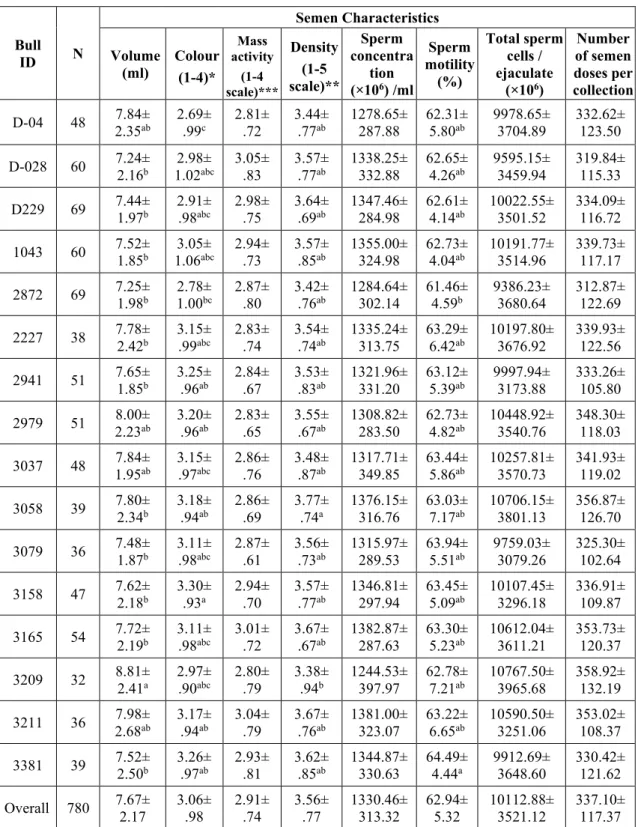
The average values of semen production such as volume of ejaculate, colour, mass activity, density, sperm concentration, sperm motility, total number of sperm cells /ejaculate, number of semen doses per collection were 7.67±2.17ml, 3.06±0.98 (scale:1-4), 2.91±0.74 (scale:1-5), 3.56±0.77 (scale:1-4), 1330.46±313.32 million/ml, 62.94±5.32%, 10112.88±3521.12 million/ejaculate 337.10±117.37 respectively.
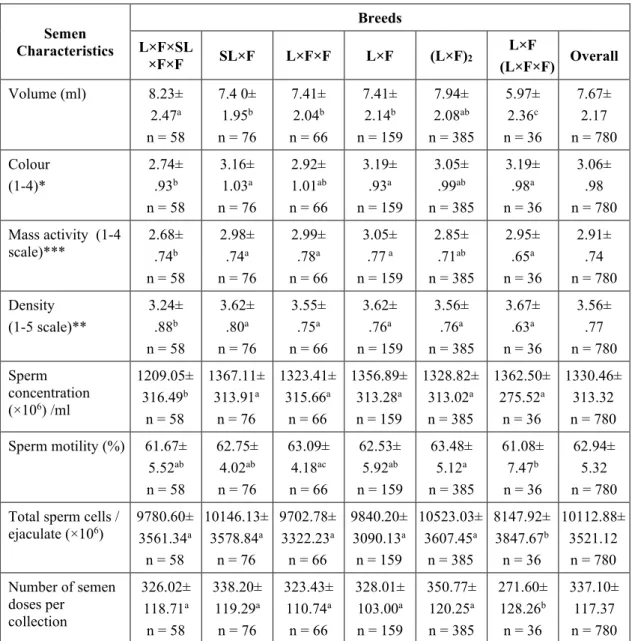
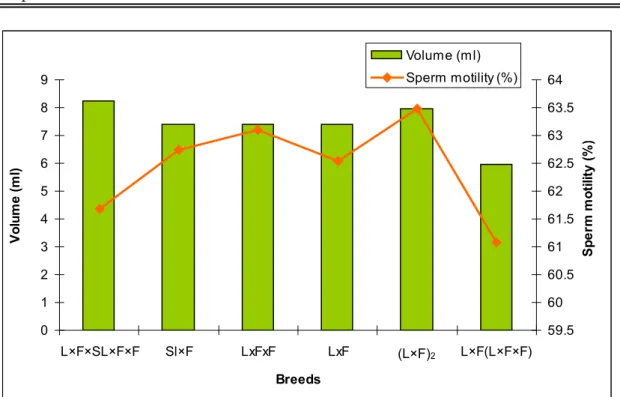
Individual bull had significant effect (P<0.05) on only volume of ejaculate and colour of semen. Six breeds of the bull such as L×F×SL×F×F, SL×F, L×F×F, L×F, (L×F)2, L×F(L×F×F) had significant (P<0.05) effect on all the semen characteristics. The significant (P<0.05) highest volume (8.23±2.47 ml) was found in L×F×SL×F×F breed and lowest (5.97±2.36 ml) in L× F×(L×F×F) breed. Significantly (P<0.05) highest values of sperm motility (63.48±5.12%), total number of sperm cells/ejaculate (10523.03±3607.45million/ml) and the number of semen doses (350.70±120.25) were found in (L×F)2 breed of bull.
The semen quality was tested by using three type of extenders to evaluate sperm motility %, various duration of preservation of semen in relation to conception rate of cows. A total 189 cows were artificial inseminated in different AI sub centre/points of District AI centre and average conception rate was observed 50.77%. The three extenders of Egg Yolk Citrate (EYC), Cornell University Extender (CUE) and Coconut Milk Extender (CME) had significant effect (P<0.05) on sperm motility % and conception rate. The highest conception rate was found at EYC (57.82±7.00%) and lowest in CME (43.71±3.59%).
A total 64 semen sample was studied for the determination of sperm abnormalities in association to non return rate (NRR). The average head and tail abnormalities were obtained 4.29% and 13.90% respectively and total sperm abnormalities was observed 18.13 ±6.78%. A total of 1600 cows inseminated by that 16 bull semen were observed for NNR within 60 days. The overall NRR was obtained 78.50±11.95%. Bull ID, breed, testicular circumference, libido had significant effect (P<0.05) on sperm abnormalities and NR%.
It was concluded that the overall semen production performance was found better in (L×F)2 breed, young age, 500-<600 body weight, very good body condition, >38 cm testicular circumference, good libido, spring season and AI centres of RDCIF. Semen quality was suitable in the EYC extender for chilled semen preservation under field condition as well as L×F×F breed had shown satisfactory performance of sperm morphology and NR%.
iii
% = Percentage
< = Less than
> = Greater than
° = Degree
µ = Microns (s)
AI = Artificial Insemination ANOVA = Analysis of Variance
AV = Artificial Vagina
BCS = Body Condition Score
BW = Body Weight
C = Celsius
CCBSDF = Central Cattle Breeding Station and Dairy Farm
cm = Centimeter (s)
CME = Coconut Milk Extender
conc. = Concentration
CR = Conception Rate
CUE = Cornell University Extender
d = Day (s)
DAIC = District Artificial Insemination Center
DF = Degree of Freedom
DLS = Directorate of Livestock Services DMRT = Duncan’s Multiple Range Test
eja. = Ejaculate
et al = Et alia
EYC = Egg yolk Citrate
F = Friesian
FA(AI) = Field Assistant (Artificial Inseminator)
Fig. = Figure
gm = Gram (s)
i.u = International Unit
Id = Identification
Kg = Kilogram (s)
L = Local
l = Litre (s)
m = Month (s)
mg = Milligram (s)
iv
ml = Millilitre
mmol = Millimole
n or N = Number of Observation
no. = Number
NRR = Non-return Rate
P = Probability
RDCIF = Rajshahi Dairy and Cattle Improvement Farm
S/C = Service per Conception
S/N = Serial Number
SD = Standard Deviation (s)
SL = Sahiwal
SPSS = Statistical Package for the Social Sciences TC = Testicular Circumference
v/v = Volume by Volume
yrs = Years
v
Page no.
List of Tables ... ix-xii List of Figures ... xiii-xv CHAPTER 1: INTRODUCTION ... 1-21
1.1 Protein Situation in Bangladesh ... 3
1.2 Breeds of Cattle in Bangladesh ... 3
1.3 Cattle Development Programme in Bangladesh ... 5
1.4 Characteristics of Cattle in Bangladesh ... 6
1.5 Up-grading System of Cattle ... 7
1.6 Cattle Breeding Policy in Bangladesh ... 7
1.7 Artificial Insemination (AI) programme in Bangladesh ... 9
1.8 Government Activities of AI in Bangladesh ... 10
1.9 AI Delivary System ... 11
1.10 On-going Programme by Government ... 12
1.11 Breed Upgradation through Progeny Testing Project ... 12
1.12 Beef Breed Development Programme in Bangladesh ... 13
1.13 The Bangladesh Rural Advancement Committee (BRAC) ... 14
1.14 AI Programme of Dairy Cooperative ... 14
1.15 Objectives ... 21
CHAPTER 2: REVIEW OF LITERATURE ... 22-67 2.1 Factors Affecting the Variation in Semen Production and the Quality of Semen ... 22
2.2 Growth and Sexual Development of Bull ... 23
2.3 Spermatogenesis of Bulls ... 25
2.4 Process of Spermatogenesis ... 25
2.5 Constituents of Bull Semen ... 28
2.6 Properties of Normal Semen in Dairy Bulls ... 28
2.7 Bulls as Donor of Semen ... 29
2.8 Breed of AI Bulls ... 31
2.9 Age of Bull ... 35
vi
2.12 Libido and Mating Behaviour ... 45
2.13 Season ... 47
2.14 Artificial Vagina ... 51
2.15 Semen Processing for Preservation ... 51
2.16 Semen Extender or Diluents ... 52
2.17 Preservation, Storage and Transportation of Semen ... 53
2.18 Motility of Spermatozoa ... 54
2.19 Morphology of Spermatozoa ... 55
2.20 Examination on Morphological Abnormalities of Spermatozoa ... 56
2.21 Methods used for Semen Fertility ... 61
2.22 Evaluation of Semen Fertility (Non-return Rate and Conception Rate) of AI Bulls ... 63
CHAPTER 3: MATERIALS AND METHODS ... 68-89 3.1 Procedure of Selection of AI Bulls ... 68
3.1.1 Dam’s performance ... 68
3.1.2 Individual performance of bull ... 69
3.1.3 Semen quality ... 70
3.2 Factors Included in the Analysis ... 70
3.2.1 Individual bull ... 71
3.2.2 Breeds of bull ... 72
3.2.3 Age of bulls ... 72
3.2.4 Body weight of bulls ... 72
3.2.5 Body condition of bulls ... 72
3.2.6 Testicular circumference (TC) of bulls ... 72
3.2.7 Libido of bulls ... 73
3.2.8 Season ... 73
3.2.9 AI centres /stations ... 73
3.3 Preparation of Bulls before Semen Collection ... 73
3.4 Preparation of the Artificial Vagina (AV)... 74
3.5 Collection of Semen ... 75
3.6 Semen Transportation and Distributions ... 77
vii
3.9 Method ... 78
3.10 Semen Processing and Preservation Procedure in Different Extenders ... 81
3.11 Insemination of Cows and Pregnancy Diagnosis ... 83
3.12 Morphological Examination of Spermatozoa and non return rate (NRR) ... 84
3.12.1 Composition of William stain ... 84
3.12.2 Staining procedure ... 85
3.12.3 Formol saline composition ... 86
3.12.4 Procedures ... 86
3.13 Oestrus Detection and Insemination of Cows ... 87
3.14 Statistical Analysis ... 88
CHAPTER 4: RESULTS ... 90-149 4.1 Factors Affecting the Semen Production of Bulls ... 90
4.1.1 Breeds of bull ... 91
4.1.2 Age of the AI bulls ... 97
4.1.3 Body weight of AI bulls ... 101
4.1.4 Body condition score of bull ... 101
4.1.5 Testicular circumferences (TC) of AI bulls ... 108
4.1.6 Libido of AI bulls ... 108
4.1.7 Season ... 115
4.1.8 AI centres or stations ... 115
4.2 Influence of Extender on Semen Quality on the Basis of Duration of Preservation ... 121
4.3 Factors Affecting Sperm Abnormalities in Relations to NRR ... 132
4.3.1 Individual bulls ... 132
4.3.2 Breed effect ... 138
4.3.3 Age effect ... 138
4.3.4 Body weight effect ... 138
4.3.5 Body condition effect ... 138
4.3.6 Testicular circumference (TC) effect ... 138
viii
4.3.9 AI centres / stations effect ... 143
CHAPTER 5: DISCUSSION ... 150-162 5.1 Factors Affecting the Semen Production of Bulls ... 150
5.2 Influence of Extender on Semen Quality on the Basis of Duration of Preservation ... 157
5.3 Factors Affecting Sperm Abnormalities in Relations to NRR ... 159
CHAPTER 6: CONCLUSION AND RECOMMENDATION ... 163-166 6.1 Conclusions ... 163
6.2 Constraints of AI Programme in Bangladesh ... 165
6.3 Recommendation ... 166
6.3.1 National animal breeding development priorities ... 166
6.3.2 Farmers need ... 166 CHAPTER 7: REFERENCES ... 167-196
ix
Table No. Title Page no.
Table 1.1. Livestock Population in Bangladesh. 1
Table-1.2. Contribution of Livestock in National Economy of
Bangladesh 2
Table 1.3. Production, Requirement and Deficits of Livestock
Products in Bangladesh 2
Table 1.4. Scenario of consumption of Livestock products in
Southern Asian countries. 3
Table 1.5: Semen production, achievement of Artificial Insemination (AI) and progenies production in
lakh of Bangladesh. 11
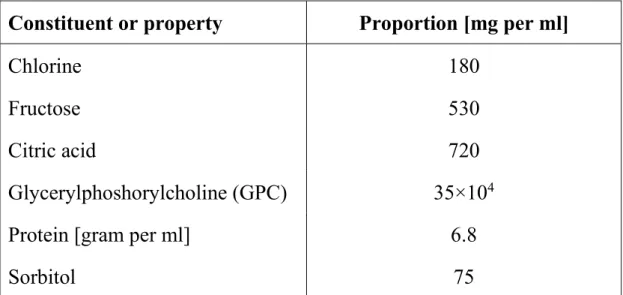
Table 2.1. Average chemical composition of fresh bull semen
(Bearden & Fuquay, 1997) 28
Table 2.2. Characteristics of fresh semen in dairy bulls
(LSM±SE) (Serrenson, 1984) 29
Table 2.3 Classification of sperm morphology according to major and minor defects in bulls (Salisbury et al.,
1978). 62
Table 4.1. Semen characteristics of individual bull used for
AI programme. 92
Table 4.2: Analysis of variance of semen characteristics
individual AI bulls. 93
Table 4.3. Effect of breeds on semen characteristics of
Artificial Insemination (AI) bulls. 94
Table 4.4: Analysis of variance of semen characteristics of different breeds of bulls used for Artificial
Insemination (AI) in Bangladesh. 95
Table 4.5. Effect of age on semen characteristics of bulls used
for AI programme in Bangladesh. 98
x
Table 4.6. Analysis of variance for the semen parameters of various age groups of bulls used for AI programme
in Bangladesh. 99
Table 4.7. Body weight effects on semen characteristics of AI
bulls used in Bangladesh. 101
Table 4.8. Analysis of variance for the semen characteristics of different body weight groups of bulls used for
AI in Bangladesh. 103
Table 4.9. Effect of body condition score on semen characteristics of bulls used for AI programme in
Bangladesh. 105
Table 4.10. Analysis of variance of body condition score on semen characteristics of bulls used for AI
programme in Bangladesh. 106
Table 4.11. Comparison of semen characteristics of testicular circumference (TC) of bulls used AI for
programme. 109
Table 4.12. Analysis of variance of semen characteristics of testicular circumference of bulls used for AI
programme. 110
Table 4.13. Comparison of semen characteristics of libido
score of bulls used for AI programme. 112
Table 4.14. Analysis of variance of semen characteristics of
libido score of bulls used for AI programme. 113 Table 4.15. Comparison of semen characteristics in different
season of bulls used for AI programme. 116 Table 4.16. Analysis of variance of semen characteristics in
different season of bulls used for AI programme. 117 Table 4.17. Comparison of semen characteristics in different
AI centres of bulls used for AI programme. 119 Table 4.19. Effect of extender in relation with sperm motility
and conception rate 122
xi
Table 4.20. Analysis of variance of effect of extender in
relation with sperm motility and conception rate. 122 Table 4.21. Effect of duration of semen collection on motility
and conception rate. 124
Table 4.22: Analysis of variance preservation quality and conception rate at different bulls used for AI
programme. 125
Table 4.23. Effect of breed on sperm motility and conception
rate of AI bull. 126
Table 4.24. Analysis of variance effect of breed on sperm
motility and conception rate of AI bull. 126 Table 4.25. Influence of age of bull on semen motility and
conception rate. 128
Table 4.26. Effect of body weight on motility and conception
rate of AI bull. 129
Table 4.27. Analysis of variance effect of body weight on motility
and conception rate of AI bull. 129
Table 4.28. Bull libido relation with motility of spermatozoa
and their conception rate 130
Table 4.29. Seasonal effect on sperm motility and conception
rate of AI bull. 130
Table 4.30. Sperm abnormalities in relation to non-return rate
of individual bulls used for AI programme. 133 Table 4.31. Analysis of variance sperm abnormalities in
relation to non-return rate of individual bulls used
for AI programme. 134
Table 4.32. Influence of breed on sperm abnormalities and non
return rate of various breeds of AI bulls 135 Table 4.33. Analysis of variance influence of breed on Sperm
abnormalities and non return rate of various breeds
of AI bulls. 136
xii
Table 4.34. Age association with semen quality of bull. 139 Table 4.35. Influence of body weight on semen quality of bull. 139 Table 4.36. Influence of body condition score on semen
quality of bull. 141
Table 4.37. Effects of testicular circumference (TC) on semen
quality of bull. 141
Table 4.38. Analysis of variance effects of testicular
circumference (TC) on semen quality of bull. 142 Table 4.39. Influence of libido with bull with semen quality. 144 Table 4.40. Analysis of variance influence of libido with bull
with semen quality. 144
Table 4.41. Seasonal variation of semen quality of bull. 145 Table 4.42. Analysis of variance seasonal variation of semen
quality of bull. 145
Table 4.43. Analysis of variance influence of breed on sperm abnormalities and non return rate of various breeds
of AI bulls. 147
xiii
Fig. No. Title Page No.
Fig. 2.1. Process of spermatogenesis in domestic animal
(Bearden & Fuquay, 1997) 26
Fig. 3.1. Different types of breeds of bull used for artificial
insemination (AI) programme in Bangladesh. 71 Fig. 3.2. Correct methods for measurement of testicular
circumference 72
Fig. 3.3. Breeding bulls of RDCIF used for artificial
insemination (AI) in Bangladesh 74
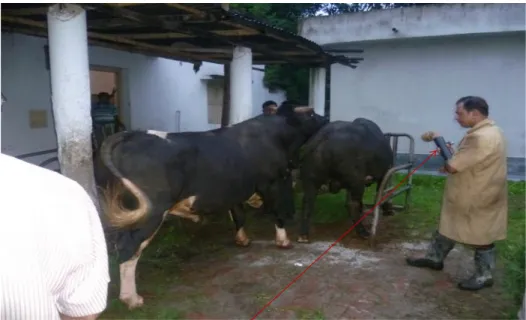
Fig. 3.4. Artificial vagina (AV) and bull preparation for semen
collection 76
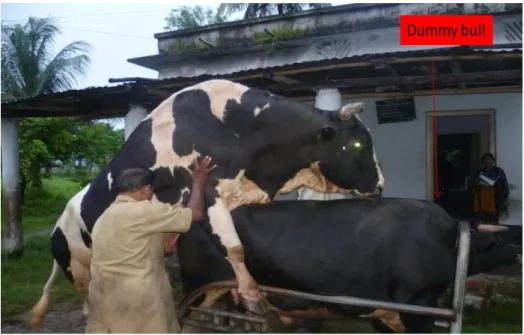
Fig. 3.5. Bull jump on dummy bull and AV used for semen
collection 76
Fig. 3.6. Dilution of semen 83
Fig. 3.7. Examination of sperm motility and mass activity 83
Fig. 3.8. Sperm head study by William’s stain 86
Fig. 4.1. Graph showing average volume and sperm motility
influenced by breed of bulls. 96
Fig. 4.2. Graph showing average sperm concentration (×106) /ml, total sperm cells / ejaculate (×106) and number of semen doses per collection influenced by breed of
bulls. 96
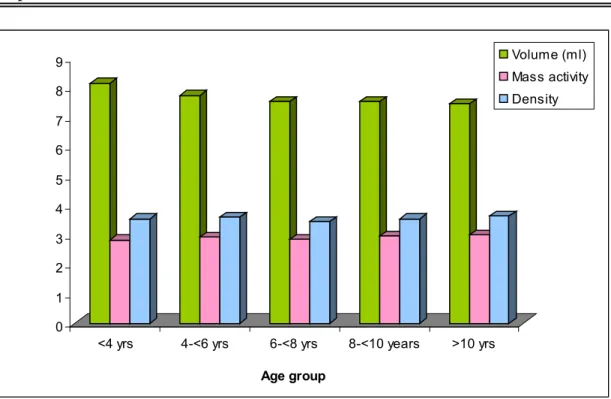
Fig. 4.3. Graph representing average volume (ml), mass activity (1-4 scale)*** and density (1-5 scale)**
influenced by age group of bulls. 100
Fig. 4.4. Graph representing average sperm concentration (×106) /ml, sperm motility (%), number of semen doses per collection and total sperm cells / ejaculate
(×106) influenced by age group of bulls. 100 Fig. 4.5. Graph representing average volume (ml), mass activity
(1-4 scale)***, density (1-5 scale)** and sperm motility
influenced by body weight (kg) of bulls. 104
xiv
Fig. 4.6. Graph representing average sperm concentration (×106) /ml, total sperm cells / ejaculate (×106) and number of semen doses per collection influenced by
body weight (kg) of bulls. 104
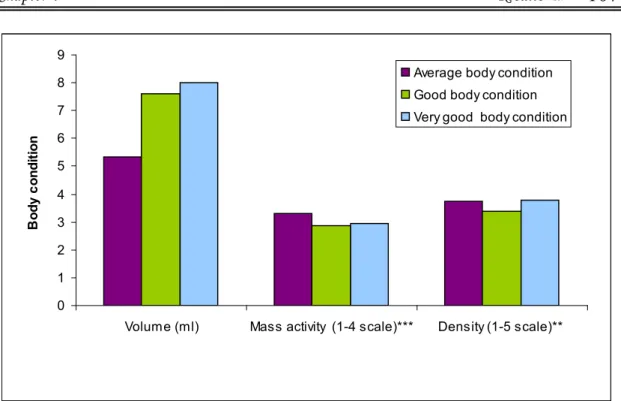
Fig. 4.7. Graph showing average, good and very good body
condition influenced by bulls. 107
Fig. 4.8. Graph showing average sperm concentration (×106) /ml, total sperm cells / ejaculate (×106) influenced by
body condition of bulls. 107
Fig. 4.9. Graph showing average volume (ml), mass activity (1-4 scale)***, density (1-5 scale)**, sperm concentration (×106) /ml, sperm motility (%), number of semen doses per collection influenced by testicular
circumference of bulls. 111
Fig. 4.10. Graph showing average poor, good and very good
influenced by libido score of bulls. 114
Fig. 4.11. Graph showing average sperm concentration (×106) /ml, total sperm cells / ejaculate (×106), number of semen doses per collection influenced by libido score
of bulls. 114
Fig. 4.12. Graph showing average volume (ml), mass activity (1-4 scale)***, density (1-5 scale)**, sperm concentration (×106) /ml, total sperm cells / ejaculate (×106) and number of semen doses per collection
influenced by libido score of bulls. 118
Fig. 4.13. Graph showing average volume (ml), mass activity (1- 4 scale)*** and density (1-5 scale)** influenced by ai
centre of bulls. 120
Fig. 4.14. Graph showing average sperm concentration (×106) /ml and total sperm cells / ejaculate (×106) influenced
by ai centre of bulls. 120
Fig. 4.15. Graph showing effect of various extender on sperm
motility. 123
Fig. 4.16. Graph representing the influence of breed on
conception rate of cows. 127
xv
Fig. 4.17. Graph showing the influence of age group on
conception rate of cows. 128
Fig. 4.18. Graph representing the influence of body weight on
conception rate of cows. 131
Fig. 4.19. Graph showing the influence of libido score on
conception rate of cows. 131
Fig. 4.20. Graph showing the influence of breed on total
abnormalities in relation with NR(%). 137
Fig. 4.21. Graph showing the effect of age on total abnormalities
in relation with NR(%). 140
Fig. 4.22. Graph showing the effect of body weight on total
abnormalities in relation with NR(%). 140
Fig. 4.23. Graph showing the effect of testicular circumference
on total abnormalities in relation with NR(%). 142 Fig. 4.24. Graph showing the influence of libido on total
abnormalities in relation with NR(%). 146
Fig. 4.25. Graph showing seasonal effect on total abnormalities
in relation with NR(%). 146
Fig. 4.26. Graph showing influence of AI centres on
abnormalities in relation with NRR (%). 147
Fig. 4.27. Normal sperm head (William’s stain 1000x) 148
Fig. 4.28. Big sperm head (William’s stain 1000x) 148
Fig. 4.29. Narrow sperm head (William’s stain 1000x) 148 Fig. 4.30. Undeveloped sperm head (William’s stain 1000x) 148 Fig. 4.31. Round sperm head (William’s stain 1000x) 149 Fig. 4.32. Coil tail sperm (Phase contrast optics, 1000x) 149 Fig. 4.33. Sperm head detached from mid-piece (Phase contrast
optics, 1000x). 149
Fig. 4.34. Simple bent tail (Phase contrast optics, 1000x). 149
INTRODUCTION
Bangladesh is a densely populated and agro-based developing country.
Poverty alleviation is one of the most important challenges of the twenty century in Bangladesh. Agricultural development is the main key to alleviate poverty from the country. Cultivated lands of the country are reducing @1% annually due to urbanization and other economic activities of the country (BBS, 2006). Due to lack of cultivated land a large number of people are interested to rearing livestock farm specially dairy and beef sector for animal protein, income generation, employment opportunity, poverty alleviation and foreign currency. Cattle is an important species of livestock and a member of genus Bos, under the family Bovidae.
Table 1.1. Livestock Population in Bangladesh.
Species Number in million
Cattle 23.40
Buffalo 1.21
Goat 33.50
Sheep 2.57
Chicken 206.89
Ducks 39.08
The presently, livestock population contribution of livestock in national economy and production, requirement and deficits situation are given below:
Table 1.2. Contribution of Livestock in National Economy of Bangladesh
Items 1997-1998 1999-2000 2000-2001
GDP 6.5 % 3.86 % 3.12 %
Agricultural product - 12.90 % 16.13 %
Land cultivation 95 % 95 % 75 %
Self employment (full time) 20 % 20 % 20 % Foreign exchange earning 13 % 4.31 % 3.46 %*
Rural transport 50 % 50 % 50 %
Protein source 20 % 25 % 25 %
Fuel 20 % 25 % 25 %
Table 1.3. Production, Requirement and Deficits of Livestock Products in Bangladesh
Products Per capita need Per capita1 availability
Total need2 (year)
Total production
% of total
production Total deficit3
Total deficit3 (%)
Milk 250
(ml /d)
44.06 (ml / d)
13.15
MMT 2.29
MMT
17.40 10.86 (MMT /
year)
82.60
Meat 120
(g / d)
20.60 (g / d)
6.31
MMT 1.08 MMT 17.17 5.23
(MMT / year)
82.83
Eggs 104
(no. / Year)
33 (no. / Yr)
14997 M 4696 M 37. 8645 M 62.02
The consumption of livestock product is shown below:
Table 1.4. Scenario of consumption of Livestock products in Southern Asian countries.
Countries Products
Milk (ml/h/d) Meat(g/h/d) Eggs (no./h/year)
Bangladesh 44 21 33
India 227 25 50
Nepal 140 38 30
Pakistan 520 45 55
Srilanka 142 27 75
Maldives 188 31.5 33
Asian countries per capita consumption of milk, meat and eggs are high in Pakistan followed by India. The position of Bangladesh are well below except the case of eggs for Maldives.
1.1 Protein Situation in Bangladesh:
Human population in Bangladesh is now approximately 160 million.
Human growth rate is 1.6% and 19.65 million will be end of the 2025.
Milk and meat will be deficit in 2013, 15.65 and 13.60 MMT respectively. Egg will be deficit 1099 million. Every year government spend a huge expenditure for export of milk, milk product, cattle and eggs which bed effect our economy. Sometimes, many animal and human diseases are outbreak in our country.
1.2 Breeds of Cattle in Bangladesh:
Inspire of huge population size, unfortunately there is no specific cattle and buffalo breed still now but Red Chittagong. All cattle are indigenous type and their productivity is very low average 0.75-1.5 litre per lactation.
Although, a few regions of BD particularly, Faridpur, Pabna, Munsigong, Manikgong, Chittagong having high producing cattle. Bangladesh consists a lot of cattle, buffalo, goat, sheep, chicken and ducks etc but their productivity is very low due to poor genetic potentials of native breed. Artificial insemination (AI) is a basic tool for rapid improvement of cattle in the world. So, AI may be alternative source of milk and meat to supply the increasing demand for milk/meat for this nation.
The majority of the rural households in Bangladesh have 2-3 dairy cows.
Livestock are important to the food security of millions of people today.
It will be important to the food security of millions more in the coming decades. Livestock source food is not essential to human nutrition but it is highly beneficial. In livestock systems that primarily consume roughage and agro-industrial waste products, livestock add to the food supply beyond what can be provided by crops. The role that livestock play in feeding the future will be shaped by three distinct human populations, each with its own particular needs, namely: urban dwellers, small-scale mixed farmers and livestock-dependent populations. The primary selection objective in dairy cattle breeding has been milk production.
Milk, fat, and protein yields and fat and protein percentages are the main economic traits for selection in dairy cattle. Profitability of dairy cattle does not only depend on milk production but also on non-production characteristics such as fertility and health traits.
Cattle of Bangladesh is an inseparable and integrated part of agricultural operation and it ranks twelfth in cattle population in the world and in the Asian countries its position is third, but it yields only 21% of the world milk production and 34% of the beef production (Alam et al., 1994;
Rahman, 1992). Among the Asian countries, the condition of livestock in
Bangladesh is probably the worst. In the last decades, livestock sector has undergone a process of biotechnology incorporation with the main goal of enhancing productivity and improving the genetic makeup. In this sense, artificial insemination (AI) is considered as the most important biotechnology incorporated into livestock production systems because it implies the use and/or globalization of proven bulls, which represent a key tool in obtaining animals with higher genetic merit. The wide use of bovine AI was mainly attributed to the development of methods that ensured cell viability after storage for long periods by reducing sperm metabolism, due to important progresses in studies involving cryoprotectants. Nowadays, AI is considered as the most worldwide used reproductive biotechnology with an extremely interesting benefit-cost relationship. Despite the unquestionable role of this biotechnology in improving productivity, many causes have accounted for the range in results and/or some unsatisfactory indices of bovine AI programs, highlighting several factors inherent to female physiology and/or farm management. Nevertheless, another factor positively correlated with the AI outcomes that require appropriate attention, correspond to quality of semen samples used in the programs.
1.3 Cattle Development Programme in Bangladesh:
Most of the cattle originated from Bos taurus as hump-less cattle and Bos taurus as hump cattle, from the wild cattle of South East Asia. Hump less Longhorn cattle were first found in South Turkey. They were focous in Mesopotamia about 5000 BC and later in the Indus Valley (Pakistan).
The small hump-less short horn cattle, originated some 2000 year later than the Longhorn, are the ancestors of the present dairy short-horn cattle found through out the Middle East and the North African-countries. The
Zebu probably originated in Western Asia (Udo, 1994). Mason and Buvanendran (1982) have suggested that the hump and pendulous dewlap, two of the distinguishing features of Zebu cattle, were originally selected by man to emphasize the appearance of size and strength in his bull and thus render them more suitable for religious and social rituals (Mason and Buvanendran, 1982). Zebu is believed to have been brought to India between 2200 and 1500 BC. From India they spread into South East Asia and Western Asia inter bred (Udo, 1994).
The cattle in Bangladesh are mostly non-descript indigenous types, believed to be originating from Indian cattle belonging to the genus Bos indicus. Sultana (1995) reported that only about 0.25 million cattle are pure breed and their crosses and rest are indigenous low producing Zebu type. In the hilly areas of Bangladesh the cattle species Gayal (Bos frontalis) and their crosses with local cattle are also available.
1.4 Characteristics of Cattle in Bangladesh:
The indigenous of cattle of Bangladesh come from primitive breeds. The characteristics are stunned growth, small size, late sexual maturity and poor production even under the good dietary and management condition.
But they often exhibit remarkable heat tolerance, the ability to maintain body condition on poor quality feed stuff and to a good degree of resistance to local diseases. On the other hand, exotic breeds from Temperate zone are thought more productive in favorable environmental conditions but cannot adjust to our hot and humid condition (Taneja and Bhat, 1986). According to Taneja and Bhat (1986) the performance of temperate genotypes in tropical environment is 30-40% lower than that of the countries of their origin. Livestock performance depends mainly on genetic potential of the animal. Again optimum nutrition, disease control
and management practices permit full expression of this genetic potential.
Climatic stress in the form of high temperature, high humidity and erratic or inadequate rainfall affect the productivity of dairy cattle in tropical countries (Matin, 1993).
1.5 Up-grading System of Cattle:
In order to increase the productive efficiency of indigenous cattle, specially at the small-holder level, for developing countries like Bangladesh is aiming to rapid improvement of production potentials. The breeders has two alternatives, either by introducing high performing Bos taurus cattle from the temperate zones or by grading up the indigenous low performing Bos indicus stock with high yielding breeds. Although, there are opinions that selection from within the indicus stock is preferable for sustainable improvement, but this method is too slow for the urgent and growing need for increased production. It has been estimated that in selection within indigenous stock, 2% increase achieved in milk yield per generation. This is of course compare unfavorably with productivity increase that can be achieved by upgrading with high yielding stock and selective breeding within the native cattle is necessary.
Grading is the practice by which rapid changes in gene frequencies in the offspring and consequently rapid improvement of the whole stock is possible.
1.6 Cattle Breeding Policy in Bangladesh:
At first a scientific cattle breeding programme was undertaken by the Lord Linlithgow (British Viceroy for India) in 1935-36 to upgrade the small sized Zebu cattle of undivided Bengal by naturally mating the cows with Hariana bulls (Ali et al., 1998). The cattle-upgrading project included Dhaka, Faridpur, Rajshahi, Pabna, Mursidabad and Midanapur-
Birbhum districts. With about one thousand pure Hariana stud bulls from Northern India the project was implemented and each district was given 100 bulls for natural service and for each bull a subsidy of Tk. 15.00 was allocated per month at the disposal of union board. Before Lord Linlithgow under took up-grading cattle development programme; two diary farm were established one in Syhlet in 1930 and other at Tejgoan with objectives to undertaken cattle breeding and milk supply programme. In the Syhlet farm initially Sahiwal breed was maintained.
After partition of India in 1947 the programme for distribution of Hariana bull was not continued. But instead Sindhi and Sahiwal were brought to upgrade the local stock. Thus genetic improvement of the cattle with a definite blood line was not possible owing to the absence of real political will. With the introduction of Sindhi and Sahiwal breed in this Eastern Bengal the artificial insemination (AI) programme was launched during later part of the 50th decade with the objectives like i) better utilization of superior proven bulls ii) control of reproductive disease and iii) up- grading the local breeds with ease. The artificial insemination programme was later on extended to 21 district with Sub-centre at thana level with following objectives i) genetic improvement of local non-descript cattle (cows) through infusion of exotic blood in term of draught power, milk and beef ii) production of breeding bulls as per national breeding policy.
In the meantime Savar dairy farm was established in 1960 to carry out fundamental research in cattle breeding problems to evolve on or to cattle breed suitable for the country, to supply milk to Dhaka city. Ahmed and Islam (1987) mentioned that cross-breeding performance with Sindhi and Shahiwal breed did not bring about satisfactory results either in Government farm or private sectors. Thence in 1973, 125 heads of Friesian and Jersey cattle were imported in Savar farm as gift from
Australian Society for these who have less’. Availability of these Bos taurus cattle is found ushered a new dimension in the cattle breeding programme. The performances of those animal F1 generations both by crossing with local and pure breeding gave satisfactory results. Mean while the Savar Dairy and Cattle Improvement Farm has been converted into Central Cattle Breeding Station (CCBS) to evolve a breed suitable for Bangladesh. The existing breeding policy envisages that the cattle of urban and milk potential area will be upgraded by using bull produced out of crossing between pure Friesian bulls and pure Sahiwal cows. The bulls having 50% Friesian blood and 50% Local blood will be put into breeding operation for up grading cattle of rural area. Deep frozen semen production has been planed at Central AI laboratory, at CCBS, Savar, Dhaka from 1992 and Deep frozen semen production laboratory, started from 1997 at Rajshahi dairy cattle improvement farm (RDCIF), Rajabarihat, Rajshahi. From that time there are commendable upgrading programme undertaken using various exotic breed with the same objectives to improve the productivity of local cattle (Ahmed and Islam, 1987; Ali et al., 1998; Hoque et al., 1997).
1.7 Artificial Insemination (AI) Programme in Bangladesh:
For grading up of indigenous stock, the technique of Artificial Insemination (AI) will surely play a vital role. AI is the best successful biotechnology for the improvement of cattle. To improve the cattle breed, AI method is used popularly around the world. The better characteristics are transmitted into the offspring if the cows are artificially inseminated with high yielding verities of bull semen. Now it is under practice continuing in our country. The artificial insemination technique was introduced in Bangladesh in 1958. For this purposes, first AI activities
started from 1958 at limited area with Sindhi and Sahiwal breed in Bangladesh. Actually, AI has expended during 1976-1977 all over the country. Currently a programme of artificial insemination has been operating through 24 A.I. centres and 3200 sub-centres points covering all the 64 districts of the country present. So, our dairy cows are increasing their productively (milk) day by day. During recent years thousands of organized private sector livestock farms with improved breeds have been established for commercial purposes. According to DLS, 1998 statistics, at present there are 29,649 cross-bred dairy farm in the country. As a result, the foreign expenditure has decreased up to 125 crore taka for importing the powder milk and milk products per year in our country. However, it was 500 crore taka a few years ago.
1.8 Government Activities of AI in Bangladesh:
AI breeding Station 02 AI Breeding centre 22
Breeding Bull 170
Frozen semen production cost $1.6 Chilled semen production cost $1.3 Liquid nitrogen cost per year $221951 AI Sub center/Point 3200
Breeds of cattle used Friesian, Shiwal, Jersey, Brahman, Red Chittagong and Local
Breed able cow 70,00,000
AI coverage 45%
Conception Rate 48-52%
1.9 AI Delivary System:
• Govt. provides AI service only for cattle
• BRAC provides AI service for cattle
• BRAC has recently started AI service for goat
• No breeding service for buffalo and sheep
• Farmers take their cows to the AI Point for insemination (Govt.)
• AI technicians extend door to door service (NGO and Cooperative)
• Farmers take their cow / does to private bull / buck keepers Price of breeding service:
Govt. bull semen dose : Taka 30/= (Highly subsidized) BRAC bull semen dose : Taka 70/=
BRAC buck semen dose : Taka 35/=
Private natural service : Taka 200/= (Bull)
Table 1.5. Semen production, achievement of Artificial Insemination (AI) and progenies production in lakh of Bangladesh.
Fiscal year Total semen production (Lakh dose)
Artificial insemination
(lakh)
Crossbred progeny production (Lakh)
2007-2008 23.11 18.11 6.10
2008-2009 25.10 19.99 6.29
2009-2010 26.10 22.71 6.83
2010-2011 29.66 28.44 7.53
2011-2012 34.36 26.89 7.96
1.10 On-going Programme by Government in Bangladesh:
Artificial Insemination (AI) and Embryo Transfer (ET) Project Objectives :
1. Production of high productive animals
2. Increase the number of quality breeding bulls as well as quantity of semen
3. Familiarize and encourage AI activities at grass root level
4. Practice embryo transfer technology in the nucleus herd at CCBS
5. To establish a nucleus herd at CCBS First phase : Period 2002 to 2007
• Training of more 1000 artificial inseminators (volunteers)
• DLS plans to cover the entire country with AI services
• MOET calves are being continually produced at the govt. CCBS Second Phase: 2008-2013:
• Objective: Training of more 1000 artificial inseminators (volunteers).
• Selected 80 breeding bulls used for AI programme.
• Semen production target from 25 lakh dose to 40 lakh doses.
• To achieve this target, so a modern Artificial Insemination Laboratory has been established at Rajabarihat, Rajshahi.
1.11 Breed Upgradation through Progeny Testing Project
• The first phase project started from 2002 and end at 2007;
• The second phase project run among the 22 district artificial insemination centre.
• Main objective this project:
• Superior proven bull production
• Identification for the high yielding cows and heifers.
• Increase genetic potentially and production through plan breeding.
• Increase production of milk and meat.
1.12 Beef Breed Development Programme in Bangladesh Research objectives:
• To develop a meat type cattle (Local x Brahman) for increasing meat production.
• To increase the meat production and fulfill the demand of protein.
• To study meat production and meat quality of Local x Brahman crossbred.
• For this purpose, a total 1400 doses semen of Brahman breed bull from America.
Study I: 200 local cows were inseminated at CCBDF to obtain 50%Local x 50% Brahman crossbred bulls calves.
• To evaluate the productive and reproductive performances, feed conversion efficiency, health status and meat production and quality of crossbred progeny of Brahman bulls upto 18-24 months.
• Semen quality of male progeny will be evaluated in Central AI Lab.
Study-II: a total 700 locals were inseminated among 10 districts covering 11 upazilla for production of crossbred offspring.
• To rear under the semi-intensive system at farmer level.
• Best bull calves will be brought to Central AI Lab. For testing semen quality.
1.13 The Bangladesh Rural Advancement Committee (BRAC):
• Providing cattle AI service since 1985
• Established own bull station
• Semen production from November, 2000
• Production capacity of 5, 00,000 doses of straw per annum
• Trained 1279 AI technicians
• Operating nationwide AI services through 89 points
• AI technicians extend door to door service
• The cost for single dose of home to home BRAC semen is TK. 70 = 1 $ 1.14 AI Programme of Dairy Cooperative:
• Bangladesh Milk Producers’ Cooperative Union Ltd. (Milk Vita)
• Have their own bull centre
• Different exotic cattle AnGRs (Sahiwal, Holstein Friesian, Jersey)
• Produce and distribute semen to their member farmers
• Free of cost for their member farmers
• AI technicians extend door to door service
Artificial insemination (AI) of cattle in Bangladesh is expanding day by day. Therefore, for improving the production potential and genetic merit of our nondescript indigenous cows, superior germ plasms have been introduced all over Bangladesh. Three AI centres /station (CCBSDF, Savar, Dhaka, RDCIF, Rajabarihat, Rajshahi and DAIC, Rajshahi) have been established in different region with the artificial insemination (AI) services. The success of Artificial Insemination Program mainly depends on the successful selection of properly fertile bulls. It is expected that the superior sire can only produce best quality semen. There are many factors that may affect the effectiveness of A.I in field condition. The semen characteristics are the major factors influence conception in cattle and
therefore, a determinant of efficiency of reproduction. Among the factors, quality of semen is an important consideration. The bulls used for AI at two centres or stations are mostly cross-bred (L×F, L×F×F, SL×F) and pure Sahiwal, Friesian and Local. The adaptability of such exotic and cross-bred bulls in hot and humid climate as prevailing in Dhaka and Rajshahi are not known. Some breeds like Holstein - Friesian and Sahiwal found to suitable for climatic condition of Bangladesh. In general, bulls having 50% exotic blood are used artificially on indigenous cows. This is because half bred bulls are found much suitable and treated as the best types for the most tropical region for improving indigenous animals (Nagarcenkar, 1982). Studies have reported that factors like genetic group, season and age of bull influence the semen quality (Hussain et al., 1985; Stalhammar et al., 1989 and Bhosrekar et al., 1988). However, breed and season have been shown to have effects on semen production and its quality (Vincent, 1972; Meyerhoeffer et al., 1976, Parkinson, 1987, Sekoni and Gustafsson, 1987). The general tendency was as the European inheritance increase, total sperm output, initial motility and freezability of semen increase (Abraham et al., 1982).
Raju and Rao (1982) also reported significant differences among Jersey, Brown Swiss and 50% Brown Swiss and 50% Ongole breed in terms of ejaculate volume, sperm motility and concentration of spermatozoa.
Contracting the above finding Hussain et al. (1985) did not find any difference between 50% Local× 50% Friesian and 50%Sahiwal
×50%Friesian attributable to genetic constitution. Age of the bull affects semen volume and sperm concentration (Amann and Almquist, 1976;
Fuente et al., 1984; Siratskii, 1987; Siratskii, 1990). Tomar et al. (1966) reported that there was no seasonal trend in any semen characteristics of Hariana bulls. Seasonal variations in semen production have been
observed (Ibrahim et al., 1983; Schwab et al., 1987; Graffer et al., 1988), but specific causes are not understood. As the seasons of our country varies markedly, special attention should be given to the fertility of crossbred bulls all the year round. Information are not available of the semen production characteristics such as volume, colour, density, mass activity, sperm concentration, motility, total number of sperm cells/ejaculates and total number of semen doses /ejaculate as influenced by breed, age, body weight, body condition, testicular circumference, libido season and District Artificial Insemination (AI) Centre, Rajshahi, and RDCIF, Rajabarihat, Rajshahi. A better knowledge of the influence of breed of the bull as well as age, body weight, body condition, testicular circumference (TC), as well as season of the year on semen characteristics of the two AI centres / stations will help the AI industry to adapt a standard management of bulls to improve semen output.
Retrieval of reliable fertility data in an artificial insemination programme serving smallholder cattle is extremely difficult. It is therefore important to ensure that high quality semen from high fertility bulls is used. In this way variation in pregnancy rates due to bull and semen factors (Soderquist, 1991) can be eliminated or at least be reduced as a contribution toward the success of the programme. No single test of semen has been found suitable for the prediction of fertilising capacity.
Therefore, seeking for a test or combination to tests to predict accurately the fertilising capacity of semen has been the subject of continuous research in this field (Linford et al., 1976; Budworth et al., 1988;
Sodrquist, 1991). The sperm characteristics evaluated for prediction of fertilising capacity should be relevant to the chance of oocyte penetration in the female genital tract (Den Daas, 1992). This can only be ensured by
deposition of optimum number of morphologically and functionally normal spermatozoa into the female genital trait in right time of the oestrous cycle (Saacke et al., 1991). Irrespective of causes, morphologically abnormal spermatozoa are unable to fertilize the oocyte (Shamsuddin and Rodriguez-Martnez, 1994). The conception rate after insemination with frozen semen were slightly lower than those achieved with chilled semen (Foote, 1986; Shamsuddin et al., 1987; Coulter, 1992). On the contrary, significantly higher conception rate have been reported after insemination with frozen semen in straws than with chilled semen (Howlader et al., 1997; Shamsuddin et al., 1997). Considering the facts the present study was conducted to compare the semen production characterstics, semen quality on the basis of conception rate and NRR in field condition of various AI Sub-centres or points under District Artificial Insemination Centre (DAIC), Rajshahi.
Fertility in dairy bulls is a complex trait that is made up of several physiological processes such as the development of the reproductive system from birth to puberty, spermatogenesis, ejaculation and mating behaviour (which involves libido and copulation). For optimum semen quality, all these physiological processes should be coordinated.
Sperm morphology, motility, sperm concentration and volume per ejaculate are common criteria for evaluating semen quality at most AI stations (Den Daas, 1992; Colenbrander et al, 1993; Bearden & Fuquay 1997). Sperm morphology, expressed as a percentage of normal sperm cells (Serrenson, 1979) plays an important role in fertilisation in humans (Kruger et al., 1986; De Yi lui & Baker, 1982) and it also seems logical that the same will be true for domestic animals (Reinecke et al, 1995).
Morrow (1980) defined the relationship between spermatozoa
morphology and the reproduction potential and indicated that when more than 30% of the ejaculated spermatozoa have structural defects, reduced fertility may occur in domestic animals.
Many structural abnormalities occur in the development of spermatozoa as a result of faulty spermatogenesis and also as due to semen handling both during and after collection (Salisbury et al., 1978). Major factors that affect semen quality are also those related to the underdevelopment of the testis (King, 1993). All factors related to testicular degeneration, including hereditary and pathological conditions should be carefully considered as they may seriously affect semen quality via testicular development. Hoogenboezem & Swanepoel (2000) reported that testicular degeneration might be due to exposure to heat stress, nutritional deficiencies and management-related factors such as fat deposition in the scrotum and poor body condition.
The major contribution to the semen variation is environment (Curtis, 1983; Cupps, 1991; King, 1993; Bearden & Fuquay, 1997). To comprehend the impact of environment on semen quality, it is necessary to understand the biological significance of the term ‘environment’, which could be defined as all factors surrounding the animal (Bonsma, 1980), which include factors such as environmental temperature, nutrition, humidity, seasonal changes and management of the animal.
The frequency of abnormal sperm cells has been found to increase with factors such as extreme in temperature and heat stress (Rathore, 1970) and malnutrition (Brown, 1984), occurring mainly in the hot seasons (Anderson, 1941). This has been observed to result in a lower ejaculate volume and sperm motility, increase in the percentage of abnormal sperm
and a decrease in the total live sperm (Rathore, 1970). Malnutrition includes under-feeding and over-feeding, deficiencies of a specific nutrient and included amongst these may be the ingestion of toxic substances, which occurs largely as a consequence of poor management.
The latter depresses appetite, and hence lowers feed intake. Lower feed intake is likely to result in impaired reproductive capability of bull in terms of libido and mating behaviour and semen production and quality (McDowell, 1972).
Mathevon et al. (1998) reported that season significantly affected semen morphological characteristics in young bulls but did not significantly affect ejaculate volume and sperm motility in mature bulls. Significant seasonal variation occurred in the incidence of sperm head abnormalities and total sperm abnormalities. Kumi-Diaka et al., (1981) reported no significant seasonal variation in sperm cell concentration, percentage of live spermatozoa and sperm cell abnormalities in the indigenous breeds, while exotic breeds showed significant seasonal fluctuation, with regard to high sperm cell abnormalities, low percentage live sperm and lower sperm cell concentration during the hot season.
The food security is burning subject, according to FAO food security exists when all people, at all time, have access to sufficient, safe and nutritious food for healthy life. The issue of food security is now not only the concern of southern Asian countries but also the matter of whole world. Every man has fundamental right to get safety and nutritious food as per WFC at Rome, 1996. The food security position of Bangladesh is 81st out of 105 courtiers in the Global food security index-2012 published by the economist intelligence unit of Britain. Whatever, the Bangladesh is the lowest position in Food security among the southern Asian countries.