University of Rajshahi Rajshahi-6205 Bangladesh.
RUCL Institutional Repository http://rulrepository.ru.ac.bd
Institute of Education and Research (IER) PhD Thesis
2015
Impact of Special Education on
Children with Autism in Bangladesh
Nazneen, Afroza
University of Rajshahi
http://rulrepository.ru.ac.bd/handle/123456789/652
Copyright to the University of Rajshahi. All rights reserved. Downloaded from RUCL Institutional Repository.
IMPACT OF SPECIAL EDUCATION ON CHILDREN WITH AUTISM IN BANGLADESH
A Thesis Submitted in Partial Fulfillment of the Requirements for the Degree of Doctor of Philosophy in Education.
PhD Thesis Session: July 2011-2012
Submitted by Afroza Nazneen Assistant Professor Teachers’ Training College
Rajshahi Bangladesh
Supervisor Dr. Akter Banu Associate professor
Institute of Education and Research (IER) University of Rajshahi
Bangladesh
Dedicated
To
My Dearest Daughters Fatina Rashed (Tammeen)
And
Rubaba Rashed (Nuha)
Declaration
I do hereby declare that the thesis entitled “Impact of Special Education on Children with Autism in Bangladesh” submitted to the Institute of Education and Research (IER), University of Rajshahi, Bangladesh, for the Degree of Doctor of Philosophy in Education is an original work. No part of this thesis, in any form, has been submitted to any other university or institution for other degree or diploma.
(Afroza Nazneen)
The Author
Institute of Education and Research (IER) University of Rajshahi
Bangladesh.
Certificate
Certified that the thesis entitled “Impact of Special Education on Children with Autism in Bangladesh” submitted by Afroza Nazneen to the Institute of Education and Research (IER), University of Rajshahi, Bangladesh, for the Degree of Doctor of Philosophy in Education has been done under my supervision. I recommend its submission for examination.
November 2015
Supervisor
(Dr. Akter Banu ) Associate professor
Institute of Education and Research University of Rajshahi
Bangladesh
Acknowledgement
The researcher likes to acknowledge the co-operation of all those who have directly or indirectly assisted in this research and in the preparation of this thesis.
The researcher is very thankful to her research Supervisor Dr.Akter Banu, Associate Professor at IER, RU, for her invaluable co-operation, guidance, encouragement and all other supports related to the research work.
She is also thankful to Dr. Anwarul Hasan Sufi, Professor of Psychology at RU for his invaluable co-operation, guidance, encouragement and all other supports related to her study.
She expresses her thanks to Mr. Mohammad Nafiz, Associate Professor of English at Rajshahi College, Rajshahi, for his sincere co-operation and proofreading of the draft thesis.
She is also very thankful to Ms. Rayhan Ara Zaman Shilu, Lecturer at IER, RU, for her active support, creative suggestions and sincere co-operation in data analysis and encouragement in all phases of the research work. She is very thankful to the schools of special education in Rajshahi Division for their invaluable co-operation during data collection.
The researcher expresses her thanks, love and affection to all the children with autism and she is especially indebted to all the parents and teachers of children with autism of different districts in Rajshahi Division who gave their time for this study.
The researcher is thankful to the University Grants Commission (UGC) authority for the PhD Research Fellowship and other supports to complete the research.
Finally, her heartfelt gratitude goes to her husband, daughters and all members of her family for their moral and mental supports to complete this work.
Abstract
The present study is an empirical investigation on the impact of special education on children with autism in Bangladesh. The researcher investigates the existing study contents of special education for children with autism and compares the effect of special education on life status of children with autism and their pair groups. Five schools of Rajshahi Division were selected purposively. Three schools were within the Rajshahi City Corporation area, one school was in Sirajgang and the other one was in Bogra district. For the purpose of the study, the researcher selected two groups as respondents. One of them has taken special education at least for three years and the other one has never taken special education. Both groups were selected purposively. Then each group of children was divided as borderline, mild and moderate. Forty respondents who have been enrolled for receiving special education and forty respondents who have never been enrolled for receiving special education, all the parents of those children and all the teachers of these schools were the respondents. Data were collected through interview schedule, interview checklist, observation checklist and FGD questionnaires. As an exploratory research, a sequential mixed method design was applied for data collection and analysis. The study found that there is no unified curriculum, screening tool and intelligence scale for children with autism and other disabilities. So, different schools followed their self- developed study contents. It is essential to make a unified special education curriculum, screening tool and intelligence scale and to bring major changes in the teaching techniques to ensure quality education for them. The findings also showed that those who have taken special education they are benefitted from it but progress rate is very slow. Parents’ and teachers’ collaboration is very essential for their development. So, it is a team effort with parents and teachers for them. The conclusion includes a suggestion regarding the relevance of children with autism.
Contents
Declaration Certification
Acknowledgements Abstract
Table of Contents
List of Tables ………..53-157 Table 01: Research co-ordination matrix ………53 Table 02: Special schools in Rajshahi division and number of the respondents……57
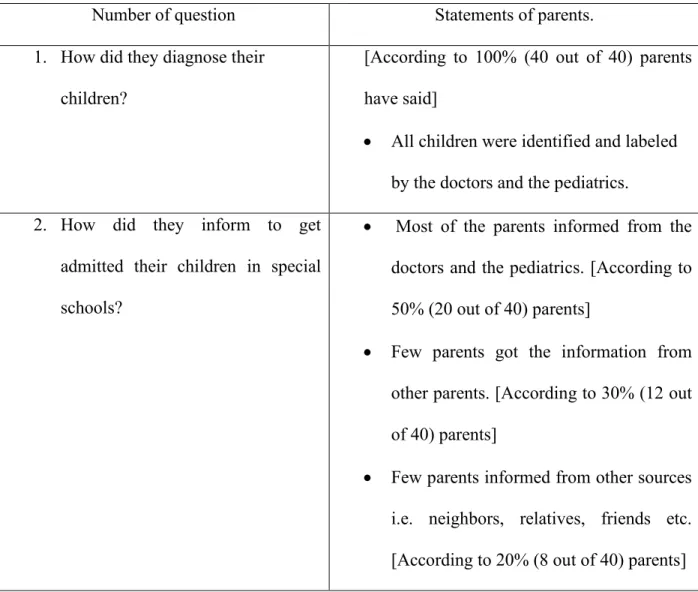
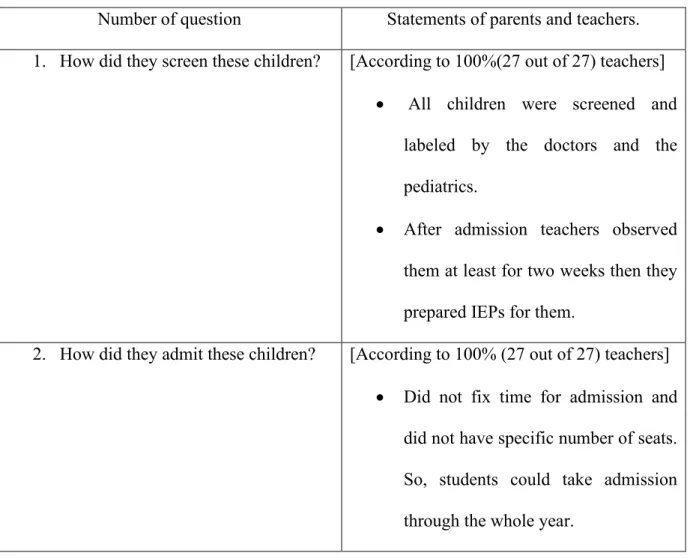
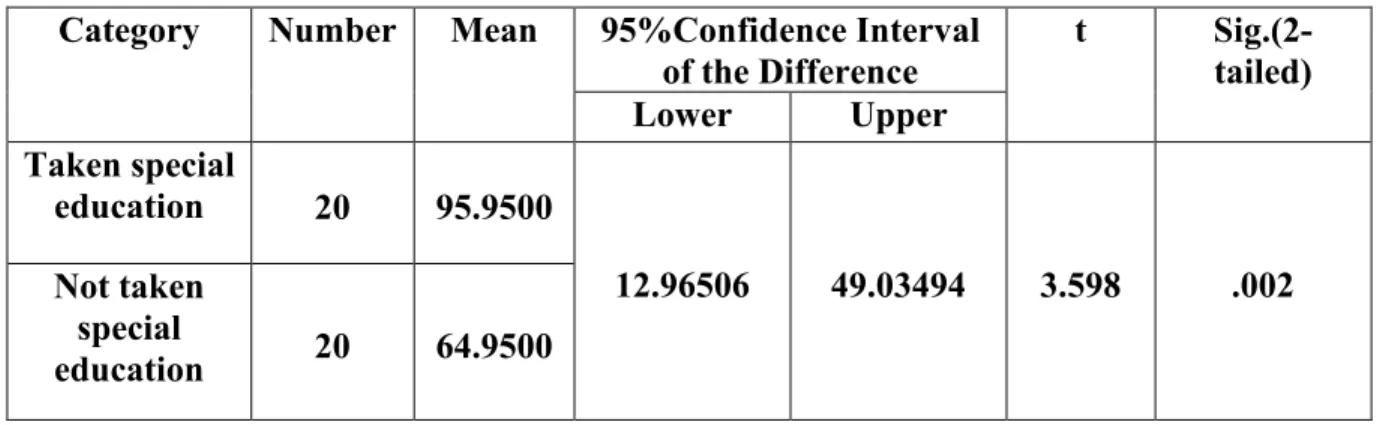
Table 03: Number of respondents according to the group ……… 58 Table 04: School environmental checklist … ……… 63 Table 05: Parents’ response on diagnostic procedure and school admission………..65 Table 06: Teachers’ response on diagnostic procedure and school admission………66 Table 07: Scores of behavior and communicative skills according to the age (6 to 13th+) years’ old children. ………68 Table 08: Mean and t- test of behavior and communicative skills for (6 to 12th) years’ old children .………69 Table 09: Mean and t- test of behavior and communicative skills for (13 to 13th+) years’ old children………….………….….70 Table 10: Mean and t- test of behavioral and communicative skills for (6 to 13th+) years’ old children…………70 Table 11: Scores of life management skills according to the age (6 to 13th+) years’
old children…………..72
Table 12: Mean and t- test of life management skills for (6 to 12th) years’ old children…………73 Table 13: Mean and t- test of life management skills for (13 to 13th+) years’ old children…………74 Table14: Mean and t- test of life management skills for (6 to 13th+) years’ old children…………74 Table 15: Scores of gross motor skills according to the age 6 to 13th+ years’ old children…………76 Table 16: Mean and t- test of gross motor skills for (6 to 12th) years’ old
children…………77 Table 17: Mean and t- test of gross motor skills for (13 to 13th+) years’ old
children…………78 Table 18: Mean and t- test of gross motor skills for (6 to 13th+) years’ old
children…………78 Table 19: Scores of social skills according to the age 6 to 13th+ years’ old
children…………80 Table 20: Mean and t- test of social skills for (6 to 12th) years’ old
children…………81 Table 21: Mean and t- test of social skills for (13 to 13th+) years’ old
children…………82 Table 22: Mean and t- test of social skills for (6 to 13th+) years’ old
children…………82
Table 23: Scores of academic skills according to the age 6 to 13th+ years’ old children…………84 Table 24: Mean and t- test of academic skills for (6 to 12th) years’ old
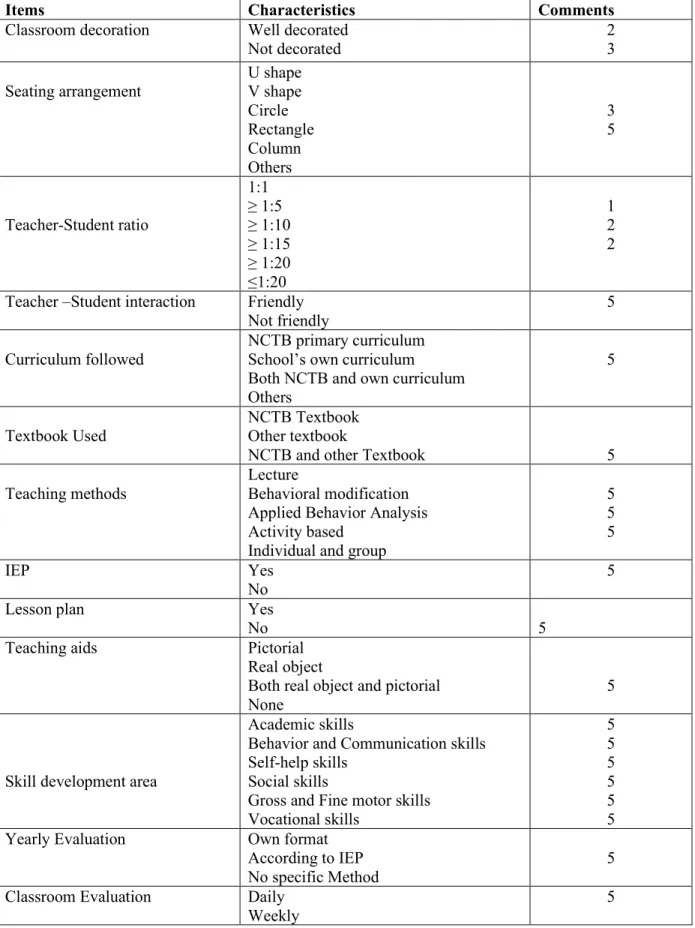
children…………85 Table 25: Mean and t- test of academic skills for (13 to 13th+) years’ old
children…………86 Table 26: Mean and t- test of academic skills for (6 to 13th+) years’ old
children…………86 Table 27: Scores of fine motor skills according to the age 6 to 13th+ years’ old children…………88 Table 28: Mean and t- test of fine motor skills for (6 to 12th) years’ old
children…………89 Table 29: Mean and t- test of fine motor skills for (13 to 13th+) years’ old
children…………90 Table 30: Mean and t- test of fine motor skills for (6 to 13th+) years’ old
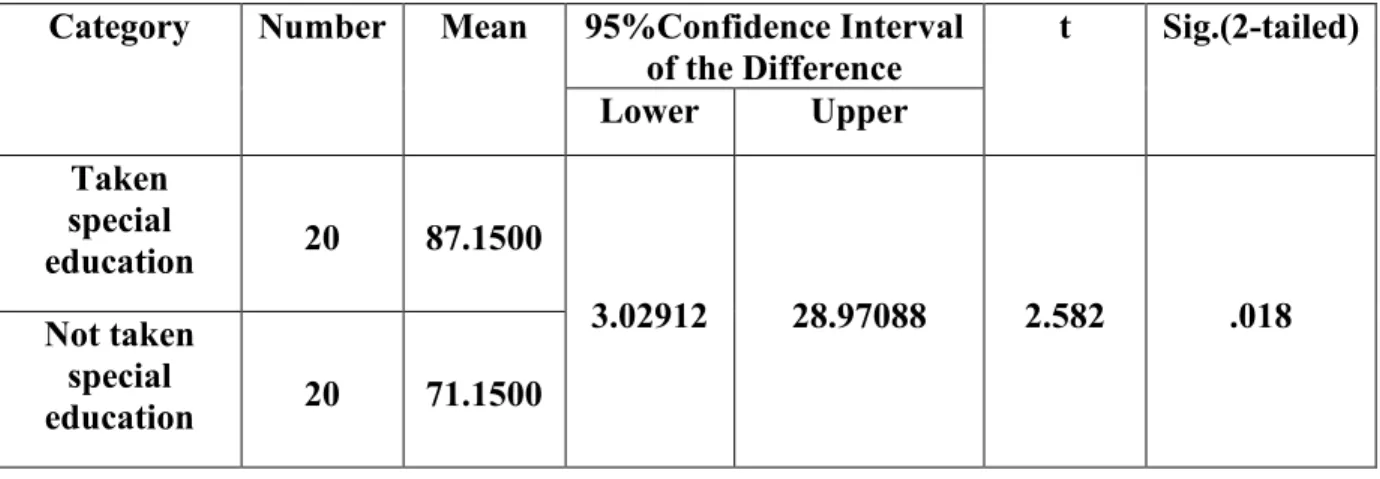
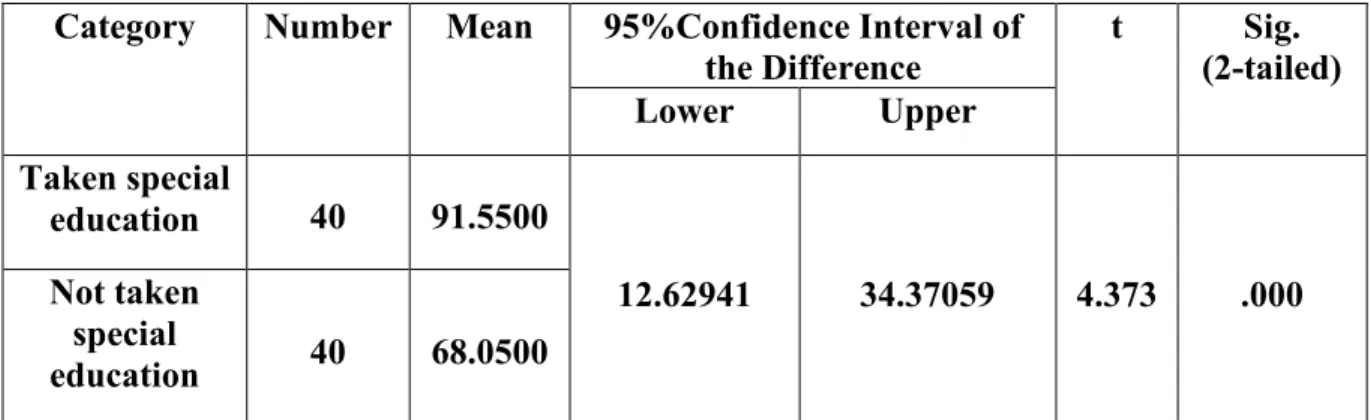
children…………90 Table 31: Performance of vocational skills……….91 Table32: Assessment of the severity levels on children with autism…………...91 Table 33: Parents’ response of their children before and after taking special
education…………92-97 Table -34: Teachers’ response of special education on autistic
children………….97-107
Table-35: Findings of study contents used in different special schools for children
with autism in Bangladesh………116
Table 36: Findings of the effect of special education on children with autism by making a comparison between special education taken and not taken groups.135-137 Table- 37: Case Study - (01) …………141
Table-38: Case Study - (02) …………144
Table- 39: Case Study - (03) …………146
Table- 40: Case Study - (04) …………149
Table-41: Case Study - (05) …………151
Table- 42: Case Study - (06) …………153
Table 43: Findings of the role of special education on daily, social and school life of children with autism in Rajshahi………..……...…….156
Table- 44: Similarities between two groups………..157
Table-45: Dissimilarities between two groups………..157
List of Figures………..110 - 164 Figure 1: Average distribution of items of study content used in special schools.… 110 Figure 2: Changes of developmental areas between two groups of children with autism………….132
Figure 3: Assessing the severity levels of children with autism……….….134
Figure 4: Present chronology of the taught skills…………163
Figure 5: Proposed chronology for the taught skills………164 Chapter 1: Introduction………....1 - 23 1.1. Introduction ………....1- 8
1.2. Statement of the Problem……….8-9 1.3. Definition of the key concept……….…9-20 1.4 Research Questions .……….21 1.5. Objectives of the Study……….….21 1.6. Rationale of the Study……….….22-23 1.7. Limitation of the Study………23 Chapter 2: Review of Related Literature………24-51
Chapter 3: Methodology………52-61 3.1. Nature of the Study ………..….52 3.2 Framework of the research………..…..54 3.3 Study area and Sampling Techniques………54-58 3.4 Data collection tools and procedures………58-61 Chapter 4: Analysis and Interpretation………62-107 Chapter 5: Findings and Discussion………..108-158 5.1. Study contents used in special education for autistic children……..….108-113 5.1.1. School Environment of Autistic Students……….109-110 5.1.2. Study contents ………...110-113 5.1.3. Diagnosis procedure of Autistic students. ………114 5.1.4 Admission procedure of School ………114-115 5.1.5. System of Exam evaluation………..…..115 5.1.6. Teaching Techniques ………..…..115 5.2. Effectiveness of Special Education………117-123 5.2.1. Daily life skills………..……….117
5.2.1. a. Behavior and Communicative Skills………117-121 5.2.1. b. Life-management Skills………118-119 5.2.1. c. Gross motor skills………..……119-120 5.2.2. Social skills………..………..……120-121 5.2.3. Academic skills………..………..122-125 5.2.3. a. Literacy skills………..…………122 5.2.3. b. Fine Motor skills………..……….123 5.2.3. c. Vocational Skill ……….124-125
5.3. Comparing Developmental Skills between Taken and Not Taken Special Education Groups………125-128 5.3.1. Behavior and Communicative Skills……….125-126 5.3.2. Life Management Skills………..….126-127 5.3.3. Gross Motor Skills………..….….…127-128 5.3.4. Social skills………..….……….……..128-129 5.3.5. Literacy Skills………..…...…..…129-130 5.3.6. Fine Motor Skills………130-131 5.3.7. Vocational Skill ………131-133 5.4.1. Severity Levels of Autistic Children………134-137 5.4.2. Comparing Severity Level between Taken and Not Taken Special
Education Groups………..………..……134-137
5.4. Case study……….…...137-158 Recommendations………158-159 Future scope of research……….……..160-161 Implication………..161-164 Conclusion………...164-165 References ………..166-174 Appendix A: School Environment Observation Checklist for Resrarcher…175-176 Appendix B: Case Study for parents and teachers………177-178 Appendix C: Interview Checklist for parents……….179-184 Appendix D: Interview Schedule for Parents ………..…..185 Appendix E: FGD Questionnaire for Teachers………..186 Appendix F: Behavior Checklist for parents………..187 Appendix G: Solution of Behavior Checklist………..188-192 Curriculum Vitae………..193
1 Chapter 1
Introduction 1.1. Introduction
Bangladesh is one of the developing countries of the South Asian region. The government of Bangladesh recognizes the need and importance of regional co operation on disability issues.
According to World Health Organization, there are approximately 15 million disabled people living in Bangladesh. The government of Bangladesh has signed many national and international Resolutions concerning disabilities. This research paper is about the impact of special education on children with autism in Bangladesh. To build up an autism-friendly society, we need a positive attitude from others towards autistic people. We need to know the number of autistic children and how special education can play an effective role for them.
According to the World Health Organization (WHO) and World Bank (WB) report, 2011 the number of disabled people is 15% of the total population in the world.
Current prevalence rates of Autism are 1 in 160 children in Australia, 1 in 100 in United Kingdom and 1 in 91 in the United States. In India the estimated prevalence rate is 1 in 250. We do not know the prevalence rate of Bangladesh. There will be around 76,000 children with ASD (Autism Spectrum Disorder) under the age of five in Bangladesh. If we consider prevalence rate of India, the number is quite large (Nusrat, 2013, p.8).
In 2002, the Center for Disease Control (CDC) estimated that autism affected about 1 in 150 children. By 2012 the CDC estimate had increased to 1 in 88.
Now, according to the latest revision of the estimate recently released, autism affects 1 in 50 children. That’s a phenomenal 300 percent increase in 11 years. It is estimated by the Ministry of
2 Social Welfare that the total number of persons with Autism Spectrum Disorders (ASDs) that one child in 5oo in Bangladesh has autism, meaning that the approximate number of children with ASDs in Bangladesh is no less than 280,000 (Hossain,2013,p.27 -28).
In 2011, the Mental Health Institute, Dhaka and WHO estimated that autism affected children in Bangladesh are among per thousands of eight children have autism who have special needs children. This ratio is near to the developed countries. Autistic children face much discrimination in our society. Their facilities are very limited here (Mental Health Institute, Dhaka and WHO, 2011 .p.5).
The government of Bangladesh is conscious about the need for appropriate policy, laws and plans for the education, training and rehabilitation of the autistic children. Over the decades the government has taken a number of steps. Of late, the Non-Government Organizations have demonstrated their keen interest in the cause of education, training and rehabilitation needs of the children with autism. The autism issue is highlighted both by the Government and by NGOs working in the sector of disability through different means of communications for creating positive awareness towards the autism issue. The government of Bangladesh has included issue of special education of the people with disabilities (PWDs) in the National Education Policy- 2010. Bangladesh Government is supporting financially the educational programs of SWID and other NGOs. However, NGOs working for education program for people with disabilities have successfully demonstrated integrated education program and the Ministry of Social Welfare has also expanded its program in the same direction. The Ministry runs National Center for Special Education (NCSE) for human resource development. The government of Bangladesh attaches great significance to international cooperation and exchange of views. The government participates at every level of international conferences, seminars, workshops; and NGOs working
3 in the sector. Bangladesh Govt. has ratified the Child Rights Convention and UN Disability Declaration and signed disability declaration of Asia-Pacific Region of ESCAP and Universal Human Rights Convention.
In Bangladesh, autism was visually reflected in 1990 in Dhaka Shishu Hospital and other hospitals. Subsequently many other organizations like the Society for the Welfare of Autistic Children (SWAC), Autism Welfare Foundation (AWF), PROYASH and others came forward with their activities for autistic children from the year 2000 and onward. With the establishment of the centre for Neurodevelopment and Autism in Children in the Bangabandhu Sheikh Mujib Medical University awareness for Autism was boosted in Bangladesh. The conference of Dhaka declaration on Autism Spectrum Disorder (ASD) and development obstacles unveils secret health problems of children and creates combined world opinion to prevent it. The Autism resolution - contained enhancement of healthcare, education and training for the autism-affected children in the national and international level. The resolution will play an effective role to create positive social outlook and eradicate disparity towards the children. The objectives of the resolution are to enhance capacity building of autistic affected in healthcare by providing training to parents, professionals and healthcare service providers and innovation of effective treatment, making policy and its implementation and lifelong treatment system through social research. The governments of other countries and international organizations could play a pivotal role to provide treatment to autistic children and improve their standard of living.
In Bangladesh treatment facilities for autistic children are working in child flourishing centers in ten hospitals while more 35 child flourishing centers will be set up in the medical college hospitals and district level hospitals. The South East Asia Autism Network (SAAN) has been formed. The objectives of the SAAN are to identify the regional challenges and increase various
4 facilities through partnership. In Bangladesh a national steering committee headed by the Senior Secretary of Health and Family Welfare Ministry on Neurodevelopment and Autism has been formed in 2011 (Hasina, 2013, p.1).
These steps have given a new direction to the awareness research and services for autistic children. Now the National Advisory Committee on Autism has been formed and four Task Forces are working under leadership and activities on Autism have gained momentum in Bangladesh. Bangladesh can make a big impact on autism over the globe.
There is a lack of knowledge about ASDs even among doctors. Very often, children are misdiagnosed and given antipsychotic drugs by psychiatrists (Azam et. al., 2012,p.89). In Bangladesh, there are only a few schools for disabled children; all of them are situated in the capital city of Dhaka. According to the MDGs, every child has a right to education. However, the general education system in Bangladesh does not meet the needs of disabled children, especially the ones with autism.
In June 2010, the Center for Neurodevelopment and Autism in Children (CNAC) was inaugurated. It is the first government initiative that is linked to a medical university. In partnership with the Bangabandhu Sheikh Mujib Medical University (BSMMU) it aims not only to provide training to parents, teachers, therapists and all medical professionals, but also to engage in the comprehensive management of services and research on autism and other Neuro Developmental Disorders.
In Bangladesh, only few special education schools are working exclusively with the children with ASDs. These are SWAC (the Society for the Welfare of Autistic Children), AWF (Autistic Welfare Foundation) and PROYASH. All of them are situated in the capital city of Dhaka.
Society for the welfare of Autistic Children (SWAC) is the first special school for the children
5 with autism established in 2000 and later on it has taken steps to make another separate school with other services named ‘Autism Welfare Foundation’ (AWF).The other schools only for Autistic children are Applied Behavior Analysis (ABA) in Dhaka. Moreover, there are some institutions providing education for children with autism along with intellectual impaired namely Caring Glory, Orchid School, School for Gifted Children, Bangladesh Protibondhi Foundation and Society for the Welfare of the Intellectually Disabled (SWID) Bangladesh. Autism is a fairly recent discovery in Bangladesh. At the beginning of this decade autistic children are 40 screened and identified with autism by the few trained parents of autistic child who learnt to deal with their child in western countries. Yet medical based some diagnosis systems have introduced in the country still many parents do not feel free to screen out their children. Former trained parents and teachers who have training on special education are now operating the special schools.
Medical based diagnosis system in Bangladesh has started to identify autistic children by the child development centre of government child hospitals since 2001-2002. It was the only diagnosis centre for the last few years.
Meanwhile ‘National Economic Council’ (ECNEC), the highest government body has approved to introducing autism diagnosis system into eight government medical college hospitals.
Moreover private child hospital and child involved centre of Bangladesh Protibondhi Foundation has the service to identify the children with Autism. Government has taken initiatives to build up awareness about autism throughout the country (Hossain, 2012, p.2-6).
At present, 55 special schools are running by the National Foundation for Development of the Disabled Persons (NFDDP) through two separate Non-Governmental Organizations (NGOs).
Among these 48 special schools who are offering special education for children with special needs and autistic children, are running by SWID-Bangladesh (Society for Welfare of the
6 Intellectually Disabled-Bangladesh) and 7 schools are based on an inclusive model, including the children with special needs in regular classes. All schools under BPF (Bangladesh Protibondhi Foundation) are being financed by the government of Bangladesh through Jatiyo Protibondhi Unnayan Foundation (JPUF). Total number of students is about 8000 of whom about 1500 children are Children with autism.
In these schools assessments of autistic babies, different therapeutic services and training in Activities of Daily Living (ADL), picture exchange communication system, educational and vocational training facilities have been made available (Begum,2012,p.5-6).
Free School for Autistic Children:
Poor families having autistic babies can hardly afford the expenses of education for the autistic children. Considering this the government has opened a free school for autistic children in the campus of Jatiyo Protibondhi Unnayan Foundation (JPUF). In 2011, this school was inaugurated.
Number of students of this school is 20 at present. The coverage will be increased in future.
Autism Resource Center:
An autism resource center has been established in the campus of Jatiyo Protibondhi Unnayan Foundation (JPUF), Mirpur-14, Dhaka with a view to rendering assessment, therapeutic services, counseling, training to autistic people including parental group. This center is manned by psychologist, occupational therapist and other relevant professionals.
Centre for Neurodevelopment and Autism in Children:
Centre for Neurodevelopment and Autism in Children’ (CNAC) is the first government initiative to establish a nationwide Pediatric Neurodevelopment and Autism related management, training, and research centre in Bangladesh. The centre is located on the premises of Bangabandhu Sheikh Mujib Medical University (BSMMU), where a multi-disciplinary and multi-agency team
7 provides comprehensive and tertiary level services to children with disability and their families under one roof. In addition to that, it has also established a ‘Day Care Centre’ in a ‘healing and autism friendly environment’. Continuous high quality training, both for the doctors and therapists, is an integral part of this centre. It helps these children to achieve their full potential and to enjoy equal opportunities in all aspects of their lives. CNAC’s aim is to incorporate disability and autism issues into the mainstream national agenda (Begum, 2012, p. 5-6).
Autistic children have difficulties in entering normal schools, even if they are intellectually capable and have relatively “good” behavior; most schools are reluctant to have autistic students as they face many difficulties in handling and teaching autistic children.
There is no curriculum for special schools about special education for children with special needs and children with autism, training for teachers of autistic children by the government and private institutions. Even there is no facility for short – term training for teachers of autistic children.
Even many doctors have poor awareness regarding autism, even doctors who are screening children with autism, many of them do not know to whom to refer their patients. The case is more acute for the under – privileged autistic children.
Now, many adolescents who have ASDs that who are not going to school; there is no available occupational training for them. So most of them stay at home and live with their parents which create a big stress for the family. New babies are still being born with autism who get a diagnosis of autism lately. Without knowing the possible causes of autism we cannot stop the autism broom (Tabib, 2011, p.9).
At present, The Government of Bangladesh has composed The Disabled People’s Rights and Protection Act, 2013' and ‘The Neuro Developmental Disabled Protection Act, 2013’. The laws highlighted the issues related to providing assistance to autistics, their nurture, security and
8 rehabilitation. Even, 73 service and help centres have been set up in 64 districts of the country for providing “one stop” services to the disabled and autistic people. An autism corner has been launched at every centre; the construction work of a multipurpose complex for the disabled people has started at Mirpur in the capital. There will be arrangements for shelter homes with education and medicare facilities for 275 disabled and autistic people of different classes.
Since, the parents of the autistic and intellectually-challenged children always remain worried about the future of their children, So, the government has taken initiatives for running a trust through the 'Autistic and Neuro-Developmental Disabled Protection Trust Act, 2013’ under which some organizations would be set up to ensure life-long accommodation for the autistic persons. In addition, Social Service Department is conducting a survey to identify the persons with disability. They work on registration and providing identity cards to the disabled (Karim, 2013, p.8). These are the new hope and directions to make a friendly environment for them.
1.2. Statement of the Problem
At present, the number of children with special needs is increasing day by day in Bangladesh.
According to the World Health Organization (WHO) and World Bank (WB) report, 2011 the number of disabled people is 15% of the total population in the world. It is estimated by the Ministry of Social Welfare that the total number of persons with Autism Spectrum Disorders (ASDs) that one child in 500 in Bangladesh has autism, i.e. the approximate number of children with ASDs in Bangladesh is not less than 280,000 (Hossain,2013,p.27 -28). This statistics may vary in different considerations.
Autistic children who are in the borderline, few of them are going to mainstream education.
Special education is essential for enhancing the capability of self dependency of those who are
9 not able to go to the mainstream education. In Bangladesh, special education program for children with special needs started in 1977 through private initiatives (Zulfiqar, 2010, p.1) and autism was visually reflected in 1990 in Dhaka Shishu Hospital (Hossain, 2013, p.27 -28). At present, it is run by both government and private initiatives. Children who are identified at early age as autistic, their guardians are aware of the necessity of early identification and importance of special education. So those children are going to special schools at early age and they are improving gradually. In contrast, children who are not diagnosed at early age, their guardians do not know where they should go first for diagnosis; those children are coming late in special schools. So, the improvements of these children are lower than those who start school at early age. On the other hand, children who are not getting special education, they are not self-reliant. It creates a huge mental stress on their guardians. If the guardians were aware of the symptoms of autism and other disabilities, importance of early detection and the importance of special education, they might have noticed the abnormality of their children and might have gone to doctors or pediatricians and special schools to admit their children. If they are identified at early age and take special education in proper time, they can become self dependent. The present study tries to investigate the impact of special education on children with autism in Bangladesh. As, autistic children are given better chance of having appropriate help, support and better will be the prognosis.
1.3. Definition of the key concept Definition of Special Education
Special education is direct instructional activities or special learning experiences designed primarily for students identified as having certain disabling exceptionalities in one or more aspects of the cognitive process or as being underachievers in relation to general level or model
10 of their overall abilities. (Warnock, 1985, as cited in Williams, 1991, p.387) Special education programs are designed and implemented for the children with the following conditions:
• Down Syndrome
• Cerebral Palsy
• Autism
• Attention Deficit Hyperactivity Disorder (ADHD).
• Fragile X
• Tuberous sclerosis
• Cretinism
• Mentally challenged
• Physically handicapped
• Visually impaired
• Hearing and speech impaired
• Behavior disorders
• Multiple handicapped
Education of the gifted children is also included in special education.
All of the points are included in the definition of special education: Classroom instruction;
Instruction in physical education; Instructional services such as preprimary, teacher consultant, speech and language, home based and hospitalized, and juvenile detention facilities. Ancillary and other related services such as occupational, physical, recreational, music, art or other therapy, mobility and orientation, school psychological and school social work services are also included in special education.
11 Special education programs are designed to meet special learning needs of the students with disabilities. Specially designed instructions are given to meet the unique needs of individual students with disabilities. Thereafter, in special education programs children with physically or mentally handicapped whose needs cannot be fulfilled in an ordinary classroom are given special attention.
Under integrated special education programs, also known as special education refers to the teaching of students with learning disabilities. Services such as speech and language therapy, occupational therapy, physical therapy, etc are provided within the mainstream class (i.e.
inclusion) or in a separate classroom if this is decided appropriately for the given situation.
Students receive individualized services to meet their goals, and these services are outlined in each child’s Individualized Education Plan (IEP).The IEP is a detailed description of the educational goals, assessment methods, behavioral management plan and educational performance of a student requiring special education services. It only addresses those educational needs resulting from the child’s disabilities. If a child needs special education support throughout the school day, for all activities, the IEP will cover all these needs (Zulfiquar, 2006, p.3-7).
With the help of special education, the children with special needs to acquire the following skills:
• Literacy skills
• Behavior skills and communicative skills
• Life management skills/activity of daily living skills/self – help skills/independent work skills
• Motor ( gross and fine moter) skills
• Social skills
• Vocational skills
12 Focus is given in literacy skills like how to identify, read and write alphabet, word, number, joint words as well as how to read and write paragraphs of books, paragraphs without books, letters and short compositions. In mathematics, children with special needs learn how to identify, read and write number, measurement, counting and mathematical solution. Hence, they learn about the name of week, months, seasons, years, period of day, how to see calendar and watch, values of money, calculate or estimate of money and shopping etc.
In behavior and communicative skills emphasis on the children with special needs learn how to respond with stimulus of vision, hear and physical, call his/her name, exchange greeting, joy and sorrow, play others etc. Teachers try to change the problematic behavior of the child by rewarding verbal prompt.
In the highlight on the life management skills of children with special needs learn about how to express the need of food, toileting, washing face and hands, brushing one’s teeth and hair, self - feeding, wearing on and off clothes, bathing, cleaning and arranging table – chair, bed, room, clothes and utensils, cooking food, dressing and serving food, using instruments of switch, lock, television etc.
In motor ( gross and fine) skills, impress on the children with special needs learn about how to move parts of the body, running and jumping, how to read and write with chalk and pencil, cutting with scissor, sewing etc.
In social skills draw attention to the children with special needs learn about how to interact with socially, playing with others, exchanging opinion, view and greeting , how to make phone call , shopping, counting money, behaving on the vehicles/transports etc.
In vocational skills children with special needs learn the following activities:
• Making handicraft (handiwork).
13
• Working in any cafeteria as a service man, management and cooking etc.
• Making envelope, packet etc.
• Photo copying.
• Laminating.
• Packaging.
• Making things with wood and wax.
• Ironing clothes.
• Sewing, doing embroidery, block and batik printing.
• Working as an assistant of office or a shop.
• Working as a computer operator etc.
Autism
Autism is a life-long brain disorder that is normally diagnosed in early childhood. Autism is also known as a complex developmental disability. People with autism have difficulties in communicating, forming relationships with others and find it hard to make sense of the world around them. Autism is not an illness or a disease. Autism is a spectrum disorder varying in severity and impact from individual to individual, ranging from those with no speech and severe learning disabilities to people with IQs in the average range who are able to hold down a job or start a family. People with autism may also have unusual patterns of language development, narrow interests and engage in repetitive and sometimes challenging behaviors. Autism spectrum disorder includes Autism, Asperger’s syndrome is a form of autism in which speech development and IQ are normal, but in which disability can be compounded by depression and mental health problems. Some people with autism demonstrate significantly challenging
14 behavior; most need specialist support and care. Autism affects people of all racial, ethnic and socio- economic backgrounds.
Autism is the most common of the Pervasive Developmental Disorders, affecting an estimated 1 in 100 births (Autism Society of America, 2009). Due to the dramatic increase in cases of autism in recent years amplified attention has been given to the disorder. Research has found that children with autism typically display problems with communication and social skills. Due to the variability in severity of those problems as well as the variety of other issues that can accompany these deficits autism can look very different from person to person (Tabib,2011,p.9) .
Now autism is more commonly referred to as an autism spectrum disorder (ASD) to include people who display deficits in communication and social skills to varying degrees (Zager, 2006, p. 240). People with autism often display symptoms in addition to the impaired social skills and interpersonal relations. These can include problems in behavioral, affective, adaptive and cognitive development such as aggression, stereotypic behaviors, mood instability and learning disabilities (Zager, 2006, 249). Parents can recognize symptoms of ASD in their children at an early age because kids typically begin showing these behaviors between birth and three years of age. Indicators of ASD include lack of eye contact, difficulty expressing needs, resistance to change and sustained odd play, among others (Autism Society of America, 2009). If parents or family doctors notice these symptoms in a child the next step is to get them into a program that implements effective evidence based interventions, in hopes of helping the child overcome difficulties in communication, social and play skills.
Definition of Autism Spectrum Disorder (ASD):
The term autism spectrum disorder (ASD) is a common term nowadays because of the wide range of symptoms and levels of severity presented by individuals with autism. Autism spectrum
15 disorder is an increasingly popular term that refers to a broad definition of autism and includes the following conditions (Zager, 2006, p.240)
• Autism: The classic, often severe, form of autism.
• Asperger’s Syndrome: A form of autism is characterized by difficulty with social interactions, sensory integration processing, pragmatic language and motor skills.
• Pervasive Developmental Disorder-Not Otherwise Specified (PDD – NOS): A collection of features that resemble autism, but may not be as severe or extensive.
• Rett’s Syndrome: A genetic disorder with hard neurological signs, including seizures that become more apparent with age and that affects only girls.
• Childhood Disintegrative Disorder: A disorder found in children whose development appears normal for the first few years, but then regresses with the loss of speech and other skills until the characteristics of autism are conspicuous.
Autism is a lifelong developmental disability that is best described as a collection of behavioral systems that affect verbal communication, non-verbal communication, and social interaction. It is generally evident before age 3, and autism adversely affects educational performance.
Characteristics that often are associated with autism include
• Engagement in repetitive activities and stereotyped movements.
• resistance to environmental change or daily routines, and
• Unusual responses to sensory experiences (klin,Lang,Cicchetti,& Volkmar,2000).p.30,163- 167.
Autism was first identified as a category of disability in the federal legislation, IDEA, in 1990.Before 1990; autism was included in the category of other health impaired and before that in the category of emotional disturbance. Autism is also identified in the DSM-IV- TR
16 (American Psychiatric Association, 2000).The forms of autism range from severe to mild. In severe autism, the difficulty appears during the first 3 years of a child’s life.( Lerner,J.,&John, B.,2009,p.240)
Causes of Autism
ASD stands for Autism Spectrum Disorder and can sometimes be referred to as Autistic Spectrum Disorder. In this text Autism and ASD mean the same. It is a wide spectrum disorder.
This means that two people with autism will not have exactly the same symptoms as well as experiencing varying combinations of symptoms; some people will have mild symptoms while others will have severe ones. Below is a list of the most commonly found characteristics identified among people with an ASD.
Social skills
The way in which a person with an ASD interacts with another individual is quite different compared to how the rest of the population behaves.
If the symptoms are not severe, the person with ASD may seen socially clumsy, sometimes offensive in his/her comments, or out of synch with everyone else. If the symptoms are more severe, the person may seem not to be interested in other people at all.
It is common for relatives, friends and people who interact with someone with an ASD to comment that the ASD sufferer makes very little eye contact. However, as health care professionals, teachers and others are improving their ability to detect signs of autism at an earlier age than before eye contact among people with autism is improving.
In many cases, if the symptoms are not severe, the person can be taught that eye contact is important for most people and he /she will remember to look at people in the eye. A person with autism may often miss the cues we give each other when we want to catch somebody’s attention.
17 The person with ASD might not know that somebody is trying to talk to them. They are also being very interested in talking to a particular person or group of people, but do not have the same skills as others to become fully involved. To put in more simply, they lack the necessary playing and talking skills.
Empathy
Understanding and being aware of the feelings of others, a person with autism will find it much harder to understand the feelings of other people. His/her ability to instinctively empathic with others is much weaker than other people’s. However, if they are frequently remind of this, the ability to take other people’s feelings into account improves tremendously. In same case- as a result of frequent practice- empathy does improve, and some of it becomes natural rather than intellectual. Even so, empathy never comes as naturally for a person with autism as it does to others.
Having a conversation with a person with autism may feel very much like a one way trip. The person with ASD might give the impression that he is talking with people, rather than with or to them. He may love a theme, and talk about it a lot. However, there will be much less exchanging of ideas, thoughts, and feelings than there might be in a conversation with a person who does not have autism.
Almost everybody on this planet prefers talking about himself/herself more to other people; it is human nature. The person with autism will usually do so even more.
Physical contact
A number of children with an ASD do not like cuddling or being touched like other children do.
It is wrong to say that all children with autism are like that. Many will hug a relatives- usually the mother, father, grandmother, grandfather, teacher, and or sibling(s) and enjoy it greatly.
18 Often it is a question of practice and anticipating that physical contact is going to happen. For example, if a child suddenly tickles another child’s feet, he will most likely giggle and become excited and happy. If that child were to tickle the feet of a child with autism, without that child anticipating the contact, the result might be completely different.
Loud noises, some smells, and lights: A person with autism usually finds sudden
loud noises unpleasant and quite shocking. The same can happen with some smells and sudden changes in the intensity of lighting and ambient temperature. Many believe that it is not so much the actual noise, smell or light, but rather the surprising physical contact. If the person with autism knows something is going to happen, he can cope with much better. Even that knowing something ‘might’ happen and being reminded of it, helps a lot.
Speech
The higher the severity of the autism is more affected the person’s speaking skills. Many children with an ASD do not speak at all. People with autism will often repeat words or phrases they hear an event called echolalia. The speech of a person with ASD may sound much more formal and woody, compared to other people’s speech. Teenagers with Asperger’s Syndrome can sometimes sound like young professors. Their intonation may sound flat.
Repetitive behaviors
A person with autism likes predictability. Routine is his/her best friend. Going through the motions again and again is very much part of his/her life. To others, these repetitive behaviors may seem like bizarre rites. The repetitive behavior could be a simple hop-skip-jump from one end of the room to the other, repeated again and again, page after page. People without autism are much more adaptable to changes in procedure.
19 A child without autism may be quite happy to first have a bath, then brush his teeth, and then put on his pajamas before going to bed- even though he usually brushes his teeth first. For a child with autism this change, bath first and then teeth, could completely put him/her out, and they may become very upset. Some people believe that helping a child with autism learn how to cope better with change is a good thing, however, forcing them to accept change like others do could adversely affect their quality of life.
A child with autism develops differently
While a child without autism will develop in many areas at a relatively harmonious rate, this may not be the case for a child with autism. His/her cognitive skills may develop fast, while their social and language skills trail behind. On the other hand, his/her language skills may develop rapidly while their motor skills don’t. They may not be able to catch a ball as well as the other children, but could have a much larger vocabulary. Nonetheless, the social skills of a person with autism will not develop at the same pace as other people.
Learning may be unpredictable
How quickly a child with autism learns things can be unpredictable. They may learn something much faster than other children, such as how to read long words, only to forget them completely later on. They may learn how to do something the hard way before they learn how to do it the easy way. Although, some regarded autistic children as potentially of normal intelligence, this view has been challenged by a number of investigators who consider most of these children to be intellectually impaired. About three- fourths of autistic children were intellectually impaired.
(Prior and wherry,1986,p.156-210).Autistic children are significantly impaired on memory task when compared with both normal and retarded children (Bennetto, Pennington et al.,1996,p.1816-35). The cognitive impairment in autistic children is reflected in greater
20 impairment in adaptive behaviors than in intellectually impairment children without autism.
Whether the frequency observed cognitive impairment in autism is the result of actual organic brain damage or of motivational deficits has not been clearly established (Carpentieri and Morgan 1996, p.611-20). The possibility have raised that the deficits result at least partly from motivational difference; they found that autistic children can learn and perform tasks at a higher level if motivation for a task is found and appropriate reinforcement is provided. (Koegel and Mentis, 1985, p.185-91)
Physical tics and stimming
It is not uncommon for people with autism to have tics. These are usually physical movements that can be jerky. Some ticks can be quite complicated and can go on for a very long time. A number of people with autism are able to control when they happen, others are not. People with ASD who have tics often say that they have to be expressed, otherwise the urge does not stop.
For many, going through the tics is enjoyable, and they have a preferred spot where they do them- usually somewhere private and spacious. When parents first see these tics, especially the convoluted ories, they may experience shock and worry.
Obsessions
People with autism often have obsessions. A person with autism feels love, happiness, sadness and pain just like everyone else. Just because some of them may not express their feelings in the same way others do, it does not mean at all that they do not have feelings- THEY DO‼ It is crucial that the Myth – Autistic people have no feelings- is destroyed. The myth is a result to ignorance, not some conspiracy.
Therefore, it is important that you educate people who carry this myth in a helpful and informative way. (Medicalnesstoday, 2011,p.12-14)
21 1.4. Research Questions
The aims of the study are to identify the answers of the following questions - i (a) . Does the existing study contents used in special schools are effective?
i (b). Does special education help to improve developmental skills of children with autism?
ii. Is there any change can be seen in daily, social and school life of children with autism after receiving special education?
iii (a). Does special education play an effective role for children with autism?
iii (b). What are the differences between two groups of children with autism; who have taken special education and who did not take special education?
iii (c). What are the challenges autism children facing in daily, social and school life without taking special education?
1.5. Objectives of the Study
The general objective of the study is to identify the impact of special education on children with autism in Bangladesh.
The specific objectives of the study are
i. Assessing the study contents used in different special schools for children with autism in Bangladesh.
ii. Identifying the role of special education on daily, social and school life of children with autism in Rajshahi.
iii. Assessing the effect of special education for children with autism by making a comparison between special education taken and not taken groups.
22 1.6. Rationale of the Study
The word ‘Autism’ is newly introduced and it is flourishing in Bangladesh which is differentiated from the other disabilities as spectrum disorder with multiple characteristics of behavior and neurological mechanism.
In Bangladesh, just a few years ago, people were merely aware about disability with autism.
Only the parents were mainly concerned about their children with autism. At present, the situation is improving gradually throughout the country. Electronic and print Media plays an important role to build up the awareness on this issue. Non Government Organizations (NGOs) and Foreign Agencies are also working for awareness building on this regard.
Now, the Government of Bangladesh is planning to uplift special education and different social welfare programs including the services for the persons with disabilities (PWDs) such as children with autism. It will be wise to avoid the trails and errors done in the western countries with the persons with disabilities (PWDs) and to introduce such special education programs which will suit the culture, customs, actual needs, and meet the existing resources of the government and other agencies.
At this time, the Government of Bangladesh is preparing a course curriculum for the persons with disabilities (PWDs) including children with autism in accordance with module of WHO.
(Suman, Badruddoza, 2012, p.2)
The goals of Education For All (EFA) are currently concerned with equality. Bangladesh is committed to EFA and eliminating all educational discrimination. So, it is important to analyze the role of special education whether its activities are truly effective for children with autism and other children with special needs. A number of researches have already been done on “Special Education” and “Persons with Disabilities (PWDs)” issues separately, but no research has done
23 on children with autism issue. So, in this study the researcher focused on special education and how special education can play an effective role for children with autism.
The justification for choosing this study was, it is an unexplored area of research in Bangladesh.
The researcher wanted to justify the impact of special education on children with autism in Bangladesh. The study reveals, after receiving special education, which skills improve and which types of impact happens on life status of children with autism. Therefore, the opinion of the parents and teachers about special education for children with autism were important to consider for the proposed study.
The findings of the proposed study will help the government to plan and implement suitable special education programs for children with autism in Bangladesh and will also be helpful for other researchers, social workers, policy makers and those who will be interested in working on this issue.
1.7. Limitation of the Study
This study area was only Rajshahi division and sample sizes were not very large. So, it is not possible to generalize the findings for Bangladesh as the study area was only a division. But it can give an idea of the actual scenario.
Autistic children were unable to answer the questions included in the data collection tools. So, respondents of the study were parents and teachers of them. Therefore, it is not impossible to find a gap between the findings and actual situation.
In this study, the researcher compared the effect of special education on children with autism and their peer groups; i.e. one was those who had been enrolled for receiving special education and another was those who had never been enrolled for receiving special education. As, children with autism is a very sensitive issue, so all parents of autistic children were not interested to talk about it.
24 Chapter 2
Review of Related Literature
Education helps a person to be sophisticated, social and self- reliant. It is also one of most the important fundamental rights. The Constitution of the People’s Republic of Bangladesh explains few fundamental principles of state policy, Article 17of the Constitution is on free and compulsory education, Article 19 of our Constitution stated that the state shall endeavour to ensure equality of opportunity to all citizens, Article 28(3) clearly spelled that every citizen can take admission to any educational institution and Article 29(2) of our Constitution, determines that discrimination should not be shown to any citizen due to caste, creed, colour, gender or birth place and Article 44 is on enforcement of fundamental rights.(Constitution of Bangladesh,2008,p.5,7,8,13) The aims and objectives of the National Educational Policy 2010 is
“to ensure the education of the physically and mentally challenged learners”. (National Educational Policy, 2010, no.24, p.2) Even, according to the signature of the agreement of MDG, to ensure Education For All (EFA) before 2015 and to fulfill the declaration, the government of Bangladesh has taken few steps in education sector i.e. all groups of people have to be included in education, emphasis on inclusive education and emphasis on special education for impaired children who are not coming in mainstream education. In Bangladesh, special education program of children with special needs started in 1977 through private initiatives (Zulfiqar, 2010, p.1) and at present, it is run by both government and private initiatives. Those who are achieving special education of them, who are in borderline, it is possible that they may come in mainstream education. For admitting them, the government has taken initiatives and a part of them are getting chance in mainstream schools. But who are not going to mainstream education for enhancing their capability special education is an essential element.
25 Nowadays in Bangladesh autism is a burning issue. In other countries, huge numbers of research works have already been done and still such researches are being conducted on autism but in Bangladesh, it is comparatively a new field of study. Recently, Bangladesh has started research works on autism issue.
2.1Challenges Faced by Autistic Children in Bangladesh
In Bangladesh, autistic children and their parents are facing many challenges in every step. Tabib (2013) discussed that due to the lack of trained professionals we are unable to reach the target to help the autistic children. They don’t have easy access to a tertiary hospital. Not all doctors at Upazila and district levels are trained on autism. So, misdiagnosis and mistreatment still occur.
Education facility is another challenge for the autistic children. Autistic children have difficulties in entering normal schools; even they are capable intellectually and have relatively “good”
behavior. Most of the schools are reluctant to have autistic students; they foresee many difficulties in handling and teaching autistic children. Bangladesh has no national curriculum for autistic children and other special needs children; even there is no facility for short- term training for teachers of autistic children. Late diagnosis of autism in children occurs due to poor awareness regarding autism among many doctors and even of those doctors screening children with autism, many of them don’t know where to refer their parents. The case is more acute for under- privileged autistic children. Even, many adolescents on the spectrum who are not going to school, there is no occupational training for them. So, most of them stay at home and live with their parents, which create a big stress for the family. It can be said that employment or self- employment generation activities are essential for the economic self- reliance of people with disabilities. Islam (2013) expressed that most of the disabled people are now leading an inhuman life due to the lack of scope of education, vocational training and employment. Zannat (2011)
26 focused on training for parents of children with autism; where the parents will learn how to handle and teach their child then they can improve their child’s proficiency. Banergee(2013) argued:
“Autism may occur in conjunction with mental retardation. Intellectual disability with autism has been found among 65 percent to 75 percent of autistic children. In fact, the figures vary from time to time”(p.11).
Individuals with only mental retardation show relatively even skill development, while persons affected with autism typically display uneven skill development with deficits in certain areas.
Nusrat (2012) explained that mental health issue is a major problem for children with autism.
Children with autism have emotions like any other person but not express it properly. According to research findings, 30-35% children with autism, after getting early intervention, can integrate with typically developing peer group with or without support. Bringing a child to this level needs relentless work by the family and the special schools or centers providing intervention to these children. When the child is ready to go with his typically developing peer group, he/she goes to the mainstream setup with the diagnosis of autism.
Anything different from his/her peer group is labeled as problematic, and parents often receive complaints about the different behavior of their children. The child can feel that what he/she is doing not accepted by others. Moreover, there is a chance of being bullied by his peer group as children are often very good at picking up on the differences in their friends. As a result, the child may develop associated social anxiety.
This is a real challenge faced by these special children who are developing mental health problems due to lack of proper integration. Many children who only had one diagnosis while leaving their special setups can later develop dual problems like autism with social anxiety
27 and/or depression. Autism Spectrum Disorder (ASD) is a big spectrum, and children who are on the edge can often survive independently if they get proper support at an early stage. But the associated anxiety may create obstacle in integrating independently into the society.
They can be encouraged to play with others about what they can do in fearful situations. Then parents and teachers can help them to get the exposure in peer groups in a gradual way, which will sensitize them over time. Mainstream schools can also educate the typically developing peer group about how to behave with their special friend.
Schools can play an important role in desensitization. Schools and parents may help rather than teaching, the child to get over her/his emotions, can encourage her/him to express her/his thoughts and emotions. Instead of assuming what is happening in her/his mind, they can be actually asked what situations are difficult for her/him and why. These open discussions about feelings and thoughts can minimize the fears a lot. Regular rating of her/his emotions can reflect her/his improvement and help to build up her/his confidence.
2.2 Importance and necessities of early detection
Identification is the first requirement for obeying rapid improvement of autistic children. It is important for creating public awareness about autism and which types of traits are present in the child how he or she is different from a normal child and where their guardians take them for diagnosing and protection. It is important to note that, early detection provides the best opportunity for early intervention. Nafia (2012) discussed that many parents do not know where to go first with their children. For proper diagnosis, a psychiatrist can help. There is no specific investigation that can confirm autism. Managing children with autism is a multi disciplinary teamwork including psychiatrist, child neurologist, pediatrician, nutritionist, special education teacher, clinical psychologist and the school with special education. Roberts (2004 as cited in
28 Azam et. al., 2012) added that there is a need to identify strategies that will help families through the experience of diagnosis and assessment and to find the most effective means to provide information about available treatments. Webster and Fieler (2002) addressed that there is no program that will suit all children with autism alike and their families. Research suggests that there are substantial short and long term benefits from early, intensive, family based treatment programs, whatever their theoretical basis, so long as there are appropriately adapted to the child’s pattern of strengths and weaknesses and take account of family circumstances. Nusrat (2013) stressed that early detection provides the best opportunity for early intervention, which can maximize the outcomes of affected children and their families. Early intervention can also prevent the loss of skills if the child gets the intervention before losing the skills.
Training of these primary health care workers on typical and atypical development can help in early screening, which will lead to referral for proper diagnosis. Regular visits until age three will increase the contact of the children with primary health care workers, and with training on the early warning signs these professionals can help to pick out the children with signs of autism.
Therefore, compulsory and regular visit by a healthy child and the training of primary health care workers can serve as the first step towards early detection of autism in Bangladesh. It will result in getting early interventions. Ultimately, this approach will play a significant role in increasing the functionality of the individuals with autism and thereby decreasing the psychosocial stresses of the individuals and the families. Azam et al. (2013) explained that parental participation in screening and designing intervention programs for children with autism can help to deal with the challenge effectively. Parents seem to be still confused to choose between biological and behavioral approaches as they are tempted to get some medicine for the relief from autism. Most of the people who are involved in teaching and learning process of children with autism in a
29 dilemma for what therapies or methodologies are effective for better intervention of this kind of children. Even after having much training from different experts, this dilemma getting more complicated as different experts talked about different strategies and most of them claim that their strategies are far better than others which make the parents and educators confused with these theoretical strategies which exert a lot of stress on them in real practice. Mannan (2013) addressed that-
“There are no miracle cures for autism but it is treatable. Above all, early diagnosis and intensive intervention can have a significant, positive and lasting impact on children with autism.”(P.6-9)
2.3 Medication is an important component for reducing some associated characteristic of autism but not main component
Sometimes, guardians discuss the matter with different people and they are hopeful that their children may be cured by the medication. So, they are misled and misguided by false pharmacological agents and expend huge amount of money for treatment but do not get proper cure of autism. Roberts (2003 as cited in Azam et. al., 2012) described that in some characteristics of autism like anxiety and biological nature, medication could be a suitable treatment and even cure autism. Howline (1997) stressed that in case of severe behavior disturbance like aggression, self-injuring behavior, anxiety, sleeping disorder, hyper- activity, medication might be useful. Pfeiffer et.al (1995) explored that some studies reported a favorable response to vitamin treatment although these studies had limited samples; therefore out comings need to be tempered. Azam et al. (2012) concluded that medication can be helpful in reduction of some associated characteristics of autism like aggression, compulsive behavior or self- injuring behavior etc. but cannot cure autism completely. They also described that while the researchers