IMPROVEMENT OF TOMATO (Lycopersicon esculentum) YIELD AND SOIL PROPERTIES BY USING CHITOSAN RAW
MATERIAL POWDER
MD. TANJILUR RAHMAN KHAN
DEPARTMENT OF SOIL SCIENCE
SHER-E-BANGLA AGRICULTURAL UNIVERSITY DHAKA-1207
DECEMBER, 2020
IMPROVEMENT OF TOMATO (Lycopersicon esculentum) YIELD AND SOIL PROPERTIES BY USING CHITOSAN RAW
MATERIAL POWDER
By
MD. TANJILUR RAHMAN KHAN REG. NO. : 18-09290
A Thesis
Submitted to the Faculty of Agriculture Sher-e-Bangla Agricultural University, Dhaka In partial fulfillment of the requirements for the degree
Of
MASTER OF SCIENCE (MS) IN
SOIL SCIENCE
SEMESTER: JULY-DECEMBER, 2018
Approved By:
______________________
Dr. Mohammad Issak Supervisor
________________________
Dr. Md. Asaduzzaman Khan Co-Supervisor
_________________________________
Prof. A.T.M. Shamsuddoha Chairman
Examination Committee
g„wËKv weÁvb wefvM
‡k‡ievsjv K…wl wek¦we`¨vjq, XvKv|
W. †gvnv¤§` BQvK
Aa¨vcK
g„wËKv weÁvb wefvM
†k‡ievsjv K…wl wek¦we`¨vjq
‡k‡ievsjv bMi, XvKv-1207
Mobile : 01716-238645 Email: [email protected]
CERTIFIACATE
This is to certify that thesis entitled, “Improvement of Tomato (Lycopersicon esculentum) Yield and Soil Properties by using Chitosan raw material Powder” submitted to the Faculty of Agriculture, Sher-e-Bangla Agricultural University, in partial fulfillment of the requirements for the degree of MASTER OF SCIENCE in SOIL SCIENCE, embodies the result of a piece of bona fide research work carried out by MD. TANJILUR RAHMAN KHAN, Registration No. 18-09290 under my supervision and guidance. No part of the thesis has been submitted for any other degree or diploma.
I further certify that such help or source of information, as has been availed of during the course of this investigation has been duly acknowledged.
Date:
Place: Dhaka, Bangladesh
………
Dr. Mohammad Issak Professor
Department of Soil Science
Sher-e-Bangla Agricultural University Supervisor
DEDICATED TO MY
BELOVED PARENTS
ACKNOWLEDGMENT
All praises to the Almighty God who enable me to complete a piece of research work and prepare this thesis for the degree of Master of Science (M.S.) in Soil Science. I feel honored to express my gratitude, sincere appreciation and heartfelt indebtedness to my reverend research Supervisor Prof. Dr. Mohammad Issak, Department of Soil Science, Sher-e-Bangla Agricultural University (SAU), Dhaka-1207, Bangladesh for his erudite guidance, support, encouragement and valuable suggestions throughout the study.
I also express my gratefulness to respected Co-supervisor, Prof.
Md. Asaduzzaman Khan, Professor, Department of Soil Science, Sher-e-Bangla Agricultural University, for his constant inspiration, valuable suggestions, cordial help, heartiest co- operation, providing all facilities and supports which were required to accomplish the study.
I would like to express my sincere gratitude to my respectable teacher Prof. A.T.M. Shamsuddoha, Chairman, Department of Soil Science, Sher-e-Bangla Agricultural University (SAU), Dhaka-1207 for her valuable advice and providing necessary facilities to conduct the research work.
I would like to express my deepest respect and thanks to all my honorable teachers of the Department of Soil Science, Sher-e- Bangla Agricultural University (SAU) for their valuable suggestions, directions, cordial help and encouragement.
Finally, I express my deepest sense of gratitude to my beloved parents, brothers, sisters, other family members, relatives, well- wishers and friends for their inspiration, help and encouragement throughout the study.
The Author
iii CONTENTS
SL. NO. TITLE PAGE
NO.
ACKNOWLEDGEMENT I
CONTENTS II-IV
LIST OF TABLES V
LIST OF FIGURES VI
LIST OF APPENDICES VII
ABSTRACT VIII
SOME ABBREVIATION IX
1 INTRODUCTION 1
2 REVIEW OF LITERATURE 6
2.1 Effect of chitosan raw material powder application on morphological attributes of tomato
6
2.1.1 Plant height 6
2.2 Effect of chitosan raw material powder application on yield attributes of tomato
9
2.2.1 Number of fruit clusters/plant 9
2.2.2 Number of fruits/plant 10
2.2.3 Individual fruit weight (g) 12
2.2.4 Fruit yield 13
2.3 Effect of chitosan raw material powder on chemical properties of soil
17
2.3.1 Soil pH 17
2.3.2 Soil organic carbon content (%) 18
3 MATERIALS AND METHODS 20
3.1 Experimental site and description 20
3.2 Agro Ecological Region 20
3.3 Climate and weather 22
iv
SL. NO. TITLE PAGE
NO.
3.4 Experimental design and layout 22
3.5 Planting materials 24
3.6 Raising of seedlings 24
3.7 Treatment doses of the experiments 24
3.8 Land preparation 25
3.9 Chitosan raw material powder 25
3.10 Analytical component of chitosan raw material powder 25
3.11 Transplanting of seedlings 27
3.12 Intercultural Operations 27
3.12.1 Gap Filling 27
3.12.2 Weeding 27
3.12.3 Irrigation 27
3.12.4 Plant Protection Measure 28
3.13 Harvesting of Fruits 28
3.14 Collection of Data 28
3.14.1 Morphological parameters 28
3.14.2 Yield and yield contributing characters 29
3.14.3 Collection and analysis of post-harvest soil 30
3.15 Statistical Analysis 31
4 RESULT AND DISCUSSIONS 32
4.1 Effect of chitosan raw powder on morphological characters of tomato
32
4.1.1 Plant Height 32
4.2 Effect of chitosan raw material powder on yield and yield contributing characters of tomato
34
4.2.1 Number of clusters/plant 34
4.2.2 Number of Fruits/Plant 36
4.2.3 Individual fruit weight (g) 37
v
SL. NO. TITLE PAGE
NO.
4.2.4 Fruit yield 39
4.3 Effect of Chitosan raw material powder on soil chemical properties (OC, OM, soil pH) of post-harvest soil
42 4.3.1 Effect of chitosan raw material powder on soil organic carbon
content (%)
42 4.3.2 Effect of chitosan raw material powder on soil organic matter
content (%)
46
4.3.3 Effect of chitosan raw material powder on soil pH 48
5 SUMMARY AND CONCLUSION 50
REFERENCES 54
APPENDICES 61
vi
LIST OF TABLES
SL.
NO.
TITLE PAGE
NO.
1. Morphological characteristics of the experimental soil 21 2. Physical and chemical properties of initial soil 21 3. Treatment doses of chitosan raw material powder 25
vii
LIST OF FIGURES
SL.
NO.
TITLE PAGE
NO.
1. Layout of the experimental field 23
2. Effect of chitosan raw material powder on plant height of tomato at 45 DAT
33
3. Effect of chitosan raw material powder on plant height of tomato at 90 DAT
34
4. Effect of chitosan raw material powder on number of fruit clusters/plant of tomato
35
5. Effect of chitosan raw material powder on number of fruits/plant of tomato
37
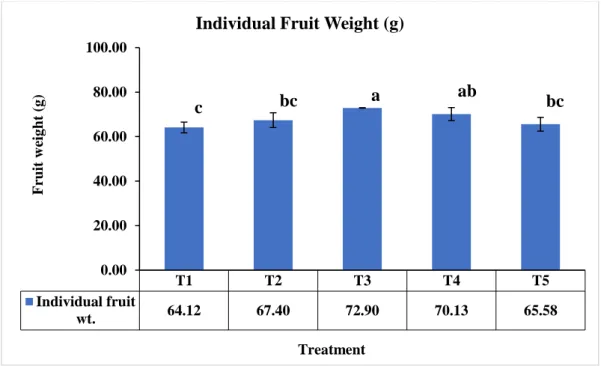
6. Effect of chitosan raw material powder on individual fruit weight (g) of tomato
38
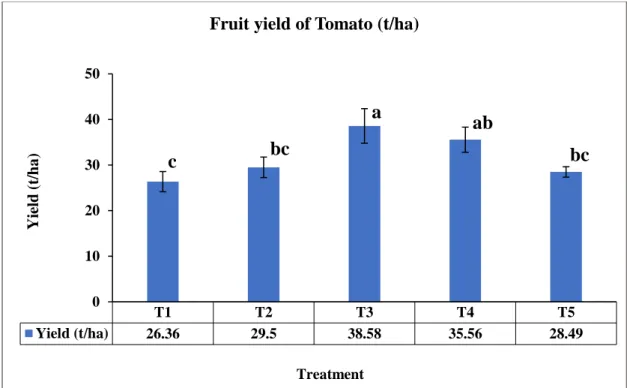
7. Effect of chitosan raw material powder on fruit yield (t/ha) of tomato
40
8. Effect of chitosan raw material powder on increment of tomato yield over control
41
9. Effect of chitosan raw material powder on soil organic carbon (%) content
44
10 Effect of chitosan raw material powder on increment of soil organic carbon content over control
45
11. Effect of chitosan raw material powder on soil organic matter (%) content
48
12. Effect of chitosan raw material powder on soil pH 49
viii
LIST OF APPENDICES
Sl.
NO.
TITLE PAGE
NO.
I. Map of AEZ and experiment under study 61
II. Monthly average of air temperature, relative humidity and total rainfall from November 2018 to March 2019 in Dhaka
62
III. ANOVA Table 1 62
IV. ANOVA Table 2 63
V ANOVA Table 3 63
LIST OF PLATES
SL. NO. TITLE PAGE NO.
1 Harvested tomato from the field 63
2 Making soil suspension for pH measurement 64
3 Solutions picture of titration for the determination of soil organic carbon
65
4 Titration for soil organic carbon determination 66
ix
Improvement of Tomato (Lycopersicon esculentum) Yield and Soil Properties by Using Chitosan Raw Material Powder
ABSTRACT
Chitosan raw material powder has many uses to plant nutrient supply and modifies growth, yield and yield attributes of plants. An experiment was conducted at the research farm of Sher-e-Bangla Agricultural University, Dhaka, during the period from November 2018 to March 2019 to study improvement of tomato yield and soil properties using chitosan raw material powder. The test crop was BARI Tomato-15.
Five levels of chitosan raw material powder were used in the experiment viz.T1: 0 t/ha, T2: 0.5 t/ha, T3: 1.0 t/ha: T4: 1.5 t/ha and T5:2.0 t/ha. The experiment was conducted using Randomized Complete Block Design (RCBD) with four replications. The results of the experiment revealed that plant height (cm), number of fruit clusters/plant, number of fruits/plant, Individual fruit weight (g), fruit yield (t/ha) were significantly influenced by the effect of chitosan raw material powder. Most of the morphological and yield attributes were increased with increasing doses of chitosan raw material powder, whereas control plants showed the lowest value of the above parameters. Maximum fruit yield, number of fruits/plant, number of fruit clusters/plant and individual fruit weight were found in the T3 treatment; whereas the minimum result of those parameter were obtained in the control, T1, treatment. Among the parameters plant height was recorded highest in the T5 treatment, lowest was in the control treatment, T1. The results also showed that soil organic carbon content was increased significantly with the application of chitosan raw material powder. The chitosan raw material powder was alkaline in nature and increased pH of the post-harvest soil. Taken together, our results indicate that application of chitosan raw material have positive role on the improvement of tomato yield, yield parameters and SOC content. The results might be due to the supply of some essential plant nutrients and growth promoting hormones.
x
Some Commonly Used Abbreviations
Full Word Abbreviation
At the rate @
Agro Ecological Zones AEZ
Analysis of Variance ANOVA
And Others et al.
Bangladesh Agricultural Research Institute BARI Bangladesh Bureau of Statistics BBS
Centimeter cm
Cultivar cv.
Degree Celsius 0C
Degree of Freedom d. f.
Days after Transplanting DAT
Etcetera Etc.
Food and Agriculture Organization FAO Forum for Nuclear Cooperation in Asia FNCA
Gram g
Id est (means That is) i.e.
Kilo electron volt KeV
Least Significant Difference LSD
Milligram per Liter mg/L
Namely viz.
Nitrogen, Phosphorus, Potassium N, P, K
Organic Carbon OC
Organic Matter OM
Parts per Millions ppm
Percentage %
Plant Growth Promoter PGP
Plant Growth Regulator PGR
Potassium dichromate K2Cr2O7
Potential of Hydrogen pH
Sulfuric Acid H2SO4
Tons per Hectare t/ha
CHAPTER 1 INTRODUCTION
Bangladesh is an agriculture based country. Many fruits and vegetables are being cultivated here at the present time. Tomato (Solanum lycopersicum L.) is among the most popular and consumed vegetables globally after potatoes (Sucharita et al. 2018).
Tomato (Solanum lycopersicum L.) belonging to the family Solanaceae, is one of the important, popular and nutritious vegetables grown in Bangladesh during winter season and cultivated in all parts of the country (Haque et al., 2017). The estimated annual production of tomato in Bangladesh was 388 thousand metric tons from 70 thousand acre field in 2018 - 2019 fiscal year (BBS, 2020). Among different vegetables, tomato production has reached 177042 thousand tons in 2017 that occupies 60% of total fresh vegetable production in the world (Mitra and Prodhan, 2018). Immense production of tomato and its nutritional importance is the blessing for a developing country like Bangladesh. Bangladesh has experienced about 6.5 times increase in tomato production (FAO, 2016).
Nutritionally, tomato is a rich source of antioxidant compounds such as vitamin C, lycopene and phenolic contents that support many health benefits. Tomato is rich in vitamin A (42 µg/100 g), vitamin C (12.7 mg/100 g), Calcium (10 mg/100 g) and lycopene (5 mg/100 g). Intake of these exogenous antioxidants through daily diets can reduce the risk of heart disease (Liu et al. 2018), cancer (Forni et al. 2019), oxidative stress (Jing et al. 2019) and cardiovascular diseases. Even though significant annual increase in fertilizer use, its yield has stagnated and even declined in some cases.
Vegetables are plenty in winter but are in short in summer. Abundance of vegetables in Bangladesh is primarily concentrated in the winter season. Due to lower production the
2
shortage of vegetables be prevalent from June to September (rainy season). Around 70% of vegetable is produced during Rabi season and the rest 30% in Kharif season of the total vegetable production (Haque et al., 1999).
The most logical way to increase the total production at the national level from our limited land resources is to increase yield per unit area. Application of plant growth promoter (PGP) seems to be one of the important practices in view of convenience, cost and labor efficiency. Recently, there has been global realization of the important role of PGP in agriculture for better growth and yield of crops and vegetables. Developed countries like Japan, China, Poland, South Korea etc. have long been using PGPs to increase crop yield. But use of synthetic PGPs are not good for the consumers and recently peoples intended to avoid those products. So, many specialist are recommend using organic product. On the contrary, chitosan is fully natural and safe for human consumption, which stimulates vital processes of plants through physiological and biochemical processes and bring changes on the molecular level related to expression of genes (Hadwiger, 2013; Nguyen Van et al., 2013).
Chitosan is a natural biopolymer which stimulates growth and increases yield of plants as well as induces the immune system of plants (Pongprayoon et al., 2013, Sultana et al. 2019). Chitosan, the deacetylated form of one of the most abundant polymers in nature, namely chitin (Muxika et al. 2017), has been proposed to be a potential alternatives to synthetic cytokinin and jasmonic acid in tissue cultures of plants. It can be extracted from the marine crustacean like prawn, shrimps and crab or from the exoskeletons of most insects. They are inherent to have specific properties of being environmentally friendly and easily degradable (Boonlertnirun et al., 2008).
3
Chitosan is an active molecule that observed many possible applications in agriculture with the aim of reducing or replacing more environmentally damaging chemical pesticides. Chitosan raw material powder applications would find interesting opportunities particularly in organic farming because it is a good alternative even in conventional farming. Chitosan has been a bio-fungicide, bio-bactericide and bio- virucide, which spurs plant defense system against the pathogen, thus inducing the immune system of plants, fruits and vegetables (Kaya et al. 2017). The traditional systems for commercial preparation of chitosan from various sources may lead to some drawbacks and many disadvantages since they are not cheap or environmentally friendly and have inconsistent molecular weight and degree of acetylation (Goratari, 2013; Kaur, 2015). A promising economical method for innumerable application and the production of highly viscous chitosan is the use of biotechnology fermentation processes, such as deprotonation and demineralization by organic acid bacteria, protease and deacetylation by chitin deacetylase (Brar et al., 2014).
Chitosan can be promoted as a green product and chitosan from crustacean as a food industry waste is economically feasible (Sachindra, 2010; Benhabiles et al., 2013;
Sachindra, 2005). Although chitosan is mainly obtained from crustacean shells rather than from insect and fungal sources, the commercialization of chitosan extraction from insect and fungal sources has increased in recent years. Bangladesh is a world-leading exporter of frozen shrimps. Therefore, there are abundant raw material for chitosan powder production. Chitosan has a wide scope of application. With high affinity and non-toxicity, it does no harm to human and livestock (Hamed et al., 2016)
Chitosan is prepared from crustacean by-products through the deacetylation process.
Whereas, Chitosan raw material powder is prepared from the sea shell by-products
4
through sun drying, oven drying, milling, sieving and finally used powder as the acetylated form having less than two millimeter in size and use the material directly in the main field. For chitosan production from chitin, One gram of crustacean chitin was treated with 30-70% NaOH solution in 1:50 weight/volume ratio. Then the sample was deacetylated at 15 psi pressure at 121 oC for 30 min using an autoclave. After this the sample was harvested, the resulting chitosan was separated from the reaction medium containing sodium hydroxide solution by filtration using sieve. The separated chitosan was washed several times with distilled water until its pH becomes neutral. The product is obtained through washing with acetone twice for the removal of pigments and any other impurities. The washed and neutralized chitosan was oven dried for attainment of finished product (Agarwal et al., 2018).
Application of chitosan in agriculture, even without chemical fertilizer can increase the microbial population by large numbers and transforms organic nutrient into inorganic nutrient which is easily absorbed by the plant roots (Choi et al., 2016). Nowadays, consumers demand for more natural, safe food, with high quality and a prolonged shelf life, and without any chemical preservatives (Gol et al., 2013). Worldwide chitosan is treated not only as a promising and economic source for efficient and versatile crop protection material, but also as an environmental friendly, biocompatible and biodegradable polymer with various applications (Zhang et al., 2012; Geisberger et al., 2013). Therefore, chitosan has a wide scope of use in different field of agriculture viz.
crop production and protection, storage, nutritional quality etc.
Chitosan raw material powder regulates the immune system of plants and induces the excretion of resistant enzymes. It has strong effects on agriculture such as the carbon source for microbes by accelerating the transformation process of organic matter to
5
organic nutrients (Ibrahim et al., 2015) and act as a nitrogen source also for plants because it contains high percentage of organic carbon (17-18 %) and organic nitrogen (7-13%). It has alkaline nature (higher pH). So, it can be used in acidic soil management. Chitosan raw material powder also supply macro and micro nutrient to soil like Phosphorus (P), Potassium (K), Calcium (Ca), Magnesium (Mg), Zinc (Zn) and Boron (B).
So, we can tell, Chitosan raw material powder is a safe material that has antifungal activity against many plant pathogens. Moreover, it also was reported to induce resistance against soil borne fungi. In recent years, applications of chitosan in the fields of medicine, food, chemical engineering, pharmaceuticals, nutrition, environmental protection and agriculture have received considerable attention. Chitosan raw material powder was able to enhance the growth of many crops.
The objectives of the above study are as follows –
To examine effect of chitosan raw material powder on growth, yield and yield contributing characters of Tomato.
To examine the effect of chitosan raw material powder on the improvement of soil properties.
6 CHAPTER 2
REVIEW OF LITERATURE
Plant growth regulators are the substances that regulate the growth of plants in a miraculous form. Many scientists are now studying the pattern of growth and development of plant treated with different plant growth regulators. Chitosan is an important growth regulator which has many different influences on growth, yield and yield contributing characteristics of Solanaceous crops. Extensive studies of the regulatory effects of chitin, chitosan, oligo-chitosan and chitosan raw material powder on various crops have been carried out worldwide by different workers. Some of the related reports are reviewed below:
2.1 Effect of Chitosan Raw material powder on morphological attributes of tomato
2.1.1 Plant height
Parvin et al. (2019); reported that different application method and concentrations of chitosan of tomato (Lycopersicon esculentum) at different days after transplanting (DAT) has significant effect on plant height at different days after transplanting than the control plant. Plant height increases with different method and concentration.
Sultana et al. (2017); reported that foliar application of different concentration (60 and 100 ppm) of Oligo-chitosan has positive effect on plant height of tomato at different days after sowing. Plant height was increased with the increment of chitosan concentration.
7
Issak and Sultana (2017), conducted an experiment on BRRI Dhan29 using chitosan powder. Seedling height of BRRI Dhan29 was found to be statistically significant in all the treatments used in the experiment. All the treatments produce higher seedlings height than the control experiment. The highest seedling height was recorded in a T4
treatment using 400 g/m2, whereas the lowest was recorded in control having no chitosan powder.
Mondal et al. (2016); reported that the effects of different concentrations of chitosan on morpho-physiological characters such as plant height was significant. The foliar application of chitosan (25, 30, 75, 100 mg/L) at early growth stages of Tomato plants can increase the plant height on summer tomato (Solanum lycopersicum L.). Results showed that plant height increased with increasing concentration of chitosan till 75 mg/L followed by a slide decline.
Sultana et al. (2015); reported that plant heights were influenced by varying methods of application. Seed soaking in chitosan solution before planting tended to stimulate plant height and also increase the plant height with increasing the concentration of oligo-chitosan. Plant height of spinach on control 24.2 cm, whereas with increasing the concentration of oligo-chitosan 50, 75, 100 ppm the plant height were 31.4 cm, 34.3 cm and 43.1 cm respectively.
Algam et al. (2010); found that application of chitosan resulted in plant growth promotion compared to the corresponding non-treated control, regardless of the application method. Chitosan applied as a soil drench or seed treatment significantly increased plant height by 56% and 38%, plant fresh weight by 101% and 91% and plant dry weight by 86% and 66% compared to control.
8
Liu Chang-min et al. (2009); reported that the tomato seed were soaked in different concentration of chitosan solution which had impact on tomato seed germination and the growth of seedlings. The results showed that the tomato plant main root length and root activity were higher than the control that treated with water.
Sultana et al. (2015); conducted an experiment on rice with foliar application of oligo- chitosan with different concentration. There were 4 concentration (0, 40, 80 and 100 ppm) and four times of foliar application after germination. Plant height of rice does not show any significant difference between control and 40 ppm oligo-chitosan sprayed plants. But for 80 and 100 ppm oligo-chitosan sprayed plants show significant difference compare to control.
Ouyang and Xu (2003), studied the Chinese cabbage (Brassica campestris) cv. Dwarf hybrid No. 1, reported that seed dressing with 0.4-0.6 mg/g chitosan and leaf spraying 20-40 µg/ml of chitosan increased plant height and leaf area of Chinese cabbage.
Wanichpongpan et al. (2001); observed a positive effect of chitosan on the growth of roots, shoots and leaves of various plants including gerbera and several crop plants.
9
2.2 Effect of Chitosan raw material powder on yield attributes of tomato 2.2.1 Number of fruit clusters/plant
Parvin et al. (2019); reported that different application methods and concentration of chitosan showed significant effect on number of fruit clusters/plant of tomato. Results revealed of the experiment that different application method of chitosan had significant positive effect to increase number of fruit clusters/plant of tomato.
Sultana et al. (2017); reported that foliar application of oligo-chitosan with different concentration (60 and 100 ppm) has positive effect on number of fruit Clusters/plant of tomato than the control plants at different days after sowing.
Mondal et al. (2016); reported that the foliar application of chitosan (25, 50, 75, 100 mg/L) at early growth stages of tomato plants can increase the number of fruit clusters/plant on summer tomato. The cluster number increases with the increasing concentration of chitosan application than control plant. The best result found from 75, 50,100 mg/L respectively than the control (0 mg/L) treatment.
Ahmed (2015), found that the effect of different treatments of modified chitosan on seedbed and main field of T. Aman rice (BRRI dhan49) has statistically significant on total tillers/hill. The maximum result was obtained from the modified chitosan treated treatment (seedbed and field) than the control treatment.
Rahman (2015), reported that the effect of different doses of modified chitosan on number of clusters/plant of tomato has no significant pairwise difference among treatments. However, modified chitosan treated tomato seedlings produced more number of clusters/plant compare to the control treatment. Minimum number of
10
clusters/plant found in control treatment having non treated seedlings with modified chitosan. Number of cluster increases with the increasing amount of modified chitosan.
Sultana et al. (2015); conducted a field experiment on rice plant using different concentration of oligomeric chitosan application. There were four different concentration (0, 40, 80 and 100 ppm) and four time foliar spray after germination.
From the experiment it was found out that, the number of tillers/plant show significant differences in case of foliar spray.
Boonlertnirun (2012), reported that different application methods of chitosan combination with mixed chemical fertilizer significantly affect the tiller numbers.
Maximum tiller number was obtained from the combination of chitosan with mixed chemical fertilizer. The lowest data was record from the control i.e. no application of chitosan and mixed chemical fertilizer.
El-Mougy et al. (2006); reported that four concentration of chitin or chitosan treatments, i.e. 0, 2, 4 and 6 g/kg soil as single treatment in addition to combined treatment between chitin plus chitosan @ 6 g/Kg soil increased tomato yield. The highest effect was observed in combined treatment chitin and chitosan, which increase tomato yield more than 66.7%, whereas the moderate increase was obtained with individual treatments of chitin/chitosan (6 g/kg soil) recorded more than 40.0% increase as compared with untreated plants.
Ohta et al. (2001); also reported that the application of a soil mix of chitosan 1% w/w at sowing remarkably increased flower number of Eustoma grandiflorum.
11
Utsunomiya et al. (1998); reported that the number of fruits harvested from purple passion fruit plant increased due to soil treated with oligomeric chitosan under high nitrogen conditions.
2.2.2 Number of fruits/plant
Sultana et al. (2017); experimented on tomato with foliar application of oligo-chitosan.
They found out that, different concentration of (60 and 100 ppm) oligo-chitosan has significant effect on number of fruits/plant. The highest number of fruits/plant was observed when treated with 60 ppm of oligo-chitosan as compare to control. They also found positive results in Eggplant with the foliar application of oligo-chitosan on the same experiment. The number of fruits/plant was increased with the increase in concentration.
Mondal et al. (2016); conducted an experiment on foliar application of chitosan on tomato. They found out, effect of foliar application has significant variation on number of fruits/plant of tomato. There were different concentration of chitosan (0, 25, 50, 75 and 100 mg/L). The number of fruits/plant increased with the increasing concentration of chitosan till 75 mg/L followed by decline.
Rahman (2015), reported that modified chitosan treated seedling show a significant variation among the number of fruits/plant of tomato. The maximum number of fruits/plant was found in treatments having modified chitosan treated seedlings compare to control (no chitosan). Among the modified chitosan treated seedlings fruits number/plant were increased in dose dependent manner. The result indicates that modified chitosan treated seedlings of tomato produced more number of fruits/plant.
12
Sultana et al. (2015); reported that different concentration and foliar spray of oligomeric chitosan (0, 40, 80 and 100 ppm) has significant effect on grains/panicle of rice over the control treatment. Grains/panicle increases with the increasing concentration of oligomeric chitosan.
Ahmed (2015), reported that the filled grains/panicle was significant due to the application of modified chitosan in soil. Filled grains/panicle was increased with the increasing amount of modified chitosan application in soil. The highest number of filled grains/panicle was observed in one of the treatment whereas the control produce the lowest number.
Mondal et al. (2012); found that number of pods/plant in okra was significantly increased with increasing concentration of chitosan up to 50 ppm followed by some decline. The highest number of pods/plant both in pot and field condition was in 50 ppm concentration of chitosan application. Pod number/plant was increased in chitosan treated plant over the control plant.
Vasudevan et al. (2002); advised that application of chitosan formulations or derivatives can serve as an increment in root and shoot length, and grain yield. It also rises in the growth of nursery raised plants such as cucumber, pepper and tomato among others.
2.2.3 Individual fruit weight (g)
Mondal et al. (2016); observed a slight change in the single fruit weight of tomato due to the different level of foliar application of chitosan on tomato. Among the four
13
concentration (0, 25, 50, 75 and 100 mg/L), highest weight was observed in 75 mg/L containing treatment.
Rahman (2015), reported that individual fruit weight of tomato was varied significantly due to application of modified chitosan powder. The effect of different doses of modified chitosan powder on individual fruit weight increase with a dose dependent manner. The highest weight was found in treatment having 100 g modified chitosan powder in seedbed, while the lowest was observed in control. These result indicate that seedlings produced by using modified chitosan powder could increase tomato yield.
Mondal et al. (2012); experimented on the effect of foliar application of chitosan on growth and yield of Okra. They found out the significant variation of individual fruit weight of okra due to the foliar application of chitosan. Single fruit weight were higher in chitosan treated plants than control. Result shows weight increased with the increasing concentration of chitosan up to 100 ppm.
Yang et al. (2004); considered that chitosan could improve the quality and the yield of tomato. Its 1/500 dilution could increase the weight of fruit by 11.1% and the yield by 21.7%. It could also improve the resistance to various diseases. After applying 3 times, 1/500 dilutions efficacy against Phytophthora infestans.
2.2.4 Fruit yield
Parvin et al. (2019); reported that, the effect of different application method and concentration of chitosan on fruit yield of tomato was statistically significant at 5%
level of probability. The highest yield was obtained from the treatment containing soil and foliar application of chitosan @ 80 and 60 ppm. On the other hand, the lowest yield
14
of tomato was obtained from the control treatment. This result is at par with the research work done by Sultana et al., (2017).
Mondal et al. (2016); experimented on tomato with foliar application of chitosan of different concentration. They stated that foliar spraying of chitosan with different concentration has positive effect on tomato fruit yield. There were several concentration for foliar application viz. 0, 25, 50, 75 and 100 mg/L. The highest yield was observed in 75 mg/L containing treatment. The lowest was recorded in control.
Sultana et al. (2015); experimented on foliar application of oligo-chitosan on improvement of rice yield. They found significant difference between the treatment and control plants. The plants sprayed with 80 and 100 ppm oligo-chitosan show significant difference compare to control. The yield increases with the increasing concentration of oligo-chitosan.
Rahman (2015), found significant influence on tomato yield by the modified chitosan treated tomato seedlings. Fruit yield was increased due to the modified chitosan treated seedlings compare to the control treatment. The highest yield was recorded on treatment using 200 g modified chitosan treated seedlings. The lowest was in the control carrying no chitosan.
Sathiyabama et al. (2015); reported that the foliar application of the chitosan isolated from Fusarium oxysporum to tomato plant not only delay wilt disease but also enhanced yield.
FNCA (2010), presented reports and detailing their activities for 2010 and research plans for 2011-2012 where, Dr. Darmawan Darwis, National Nuclear Energy Agency (BATAN) delivered a lead speech on summary results of field tests of PGRs. Oligo-
15
chitosan Plant Growth Regulator was produced by illuminating chitosan using gamma radiation at 75-100 keV. Field trials were conducted on Oligo-chitosan application to soybean plant. The result showed that soybean productivity increase 40% of both varieties treated with Oligo-chitosan is upper than the control. Parameters such as total N, P uptake by plant, yield will be measured. Dr. Naotsugu Nagasawa from Japan Atomic Energy Agency (JAEA) presented a speech for all the participants where he said that it is essential on planting and harvesting management and Oligo-chitosan affected on crop yield, length, weight etc. of sprayed and control.
Salma Sultana (2010), from BAEC, Bangladesh stated that the oligo-chitosan was applied for its potential use as plant growth promoter. Effects of oligo-chitosan on growth and productivity of maize (Zea mays L.) plants were investigated as a lab-scale.
The morphological characters of maize were studied randomly in different pots. The foliar spraying of oligo-chitosan (molecular weight 7,000 Da) with the concentration of 25, 50 and 75 ppm was applied. The growth and productivity of these oligo-chitosan treated maize plants were compared with those of control maize plants. The effects of oligo-chitosan on maize plant’s growth and productivity were investigated in terms of plant height, weight of cob and weight of seeds. The results showed that the application of oligo-chitosan, at the concentration of 75 ppm, plays a significant role in terms of plant height, weight of cob and weight of seeds/maize. These results propose its potential use in agriculture purpose as a growth promoter.
Asghari-Zakaria et al. (2009); examined the effects of soluble chitosan on plantlets were subsequently relocated to the greenhouse and mini tuber yield parameters were evaluated. At the concentrations of 75 and 100 mg/L of chitosan the culture medium failed to solidify. Application of 50 mg/L of soluble chitosan increased the shoot fresh
16
weight, but its lower concentrations did not significantly affect this trait (P ≤ 0.05). The 5 and 15 mg/L of soluble chitosan led to a significant increase in root’s fresh and dry weight whereas, higher concentrations, especially 50 mg/L, significantly decreased root fresh weight of plantlets. Application of 50 mg/L chitosan resulted in improved acclimatization of plantlets in the greenhouse as expressed by significant (P ≤ 0.05) increase in mini tuber number and yield, compared to the control.
Boonlertnirun et al. (2006); stated that rice yield cultivar Suphan Buri 1 was significantly increased over the control (no chitosan) after application of polymeric chitosan at the concentration of 20 ppm. Nevertheless, the exact mechanism(s) of chitosan effects on plant growth and production is not yet determined. On the other hand, the positive effects of dry yeast application has been repeatedly reported on many vegetable crops.
Moreover, Gomaa et al. (2005); stated that foliar treatment with yeast significantly increased vegetative growth and tuber yield of potato plants.
Synowiecki and Nadia (2003), observed that high Chitin or derivatives chitosan enzyme level improves the durability and resistance of the plant, makes it hard to infect by germs, not proliferate even infected, and cures the disease by itself. It increases the yield.
Hong et al. (1998); also stated that using chitosan in agriculture with less use of chemical fertilizer increases the production, in different kinds of plant, by 15-20%.
17
2.3 Effect of Chitosan raw material powder on chemical properties of soil
2.3.1 Soil pH
Sultana et al. (2020); stated that the pH status of the post-harvest soil was affected by the different treatments of chitosan raw material powder. It was found statistically significant. The pH ranges from 6.3 to 7.01. The highest pH was found in T4 treatment containing chitosan raw material powder whereas the lowest was observed in control treatment.
Rahman (2015), found a significant variation in the tomato seedbed soil pH at 25 days after sowing due to the different treatment combination of modified chitosan powder.
The highest pH value was recorded in T4 treatment having 150 g modified chitosan powder. The lowest value was observed in control (T1). Application of modified chitosan powder might neutralize the seedbed soils. Improvement of seedbed soil environment may be caused by modified chitosan in seedbed soil.
Kananont et al. (2015); carried out an experiment with Fermented chitin waste (FCW) with three levels of FCW @ [0.25%, 0.50% and 1.0% (w/w)] along with CF = soil supplemented with chemical fertilizer and CMF = soil supplemented with chicken manure fertilizer. The results revealed that @ 1% FCW the pH differ significantly from 0.5% FCW, 0.25% FCW and the rest of the treatment. The pH ranges from 5.01 to 5.93 among the treatment. The highest pH was obtained (5.93) in level contain @ 1% FCW and lowest pH was obtained (5.01) with CF = soil supplemented with chemical fertilizer. The study shows the increased level of pH for FCW application.
18
Mahmoud et al. (2007); reported that the raw material of chitosan powder affects the soil pH; it might be due to the shrimp shells contents like most abundantly carbonates of Ca and Mg. Beaney et al. (2005); also found similar results.
2.3.2 Organic carbon content (%) in soil
Issak and Sultana (2017), conducted an experiment on chitosan powder effect on BRRI Dhan29 and found out application of chitosan in the seedbed soil tends to increasing the level of organic carbon content in seedbed soils. The highest organic carbon content was found in a treatment containing 500 g/m2 of chitosan powder in the seedbed soil.
The minimum was found in the control treatment. The organic carbon content was increased in a dose dependent manner, it might be because of the higher amount of organic carbon level in chitosan.
Rahman (2015), found out modified chitosan powder application in seedbed soils tends to increment the organic carbon. The organic carbon content was increased with the increasing level of modified chitosan application in seedbed soil. The highest was recorded in a treatment containing 200 gm of modified chitosan powder whereas the minimum was observed in the control treatment containing no chitosan.
Kananont et al. (2015); conducted an experiment with the fermented chitin waste with three levels of fermented chitin waste @ [0.25%, 0.50% and 1% (w/w)] along with soil supplemented with chemical fertilizer and soil supplemented with chicken manure fertilizer. The result found that application of fermented chitin waste to the soil led to increase soil organic carbon level.
Oka and Pivonia (2003), stated that many of these chitinolytic organisms establish beneficial symbiotic interactions with plants, as mycorrhiza and Rhizobium spp., 16
19
supporting vegetal absorption of certain nutrients and especially nitrogen fixation. For example, amendments of chitin together with fertilizers as urea have been used to improve soil microbiota, to control pathogenic organisms and to strengthen plant nutrition, all these showing better results than the controls in tomato, carnation and grazing. As organic carbon improved, thus improved the organic matter.
20 CHAPTER 3
MATERIALS AND METHODS
The experiment was accomplished at the research field of Sher-e-Bangla Agricultural University, Dhaka-1207 during the period from November 2018 to March 2019. This chapter deals with a brief description on experimental site, preparation of chitosan raw material powder, transplanting, intercultural operations, data recording and statistical analysis.
3.1 Experiment site and description
The experiment was carried on the field of Sher-e-Bangla Agricultural University. A plot experiment was conducted at the research field of Sher-e-Bangla Agricultural University, Dhaka, during the period of November 2018 to March 2019.
Geographically the experimental site was at 90°22" E longitudes and 23°41" N latitudes at an altitude of 8.6 meters above the sea level.
3.2 Agro Ecological Region
The collected soil belonging to the agro ecological zone of ‘The Madhupur Tract’, AEZ-28 (FAO, 1988). Top soil was clay Loam in texture, olive-gray with common fine to medium distinct dark yellowish brown mottles. The experimental site was shown in the map of AEZ of Bangladesh in Appendix I.
21
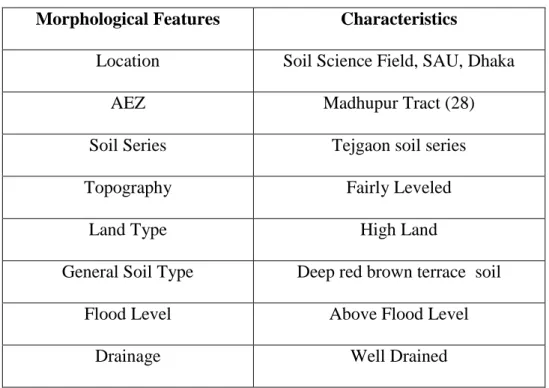
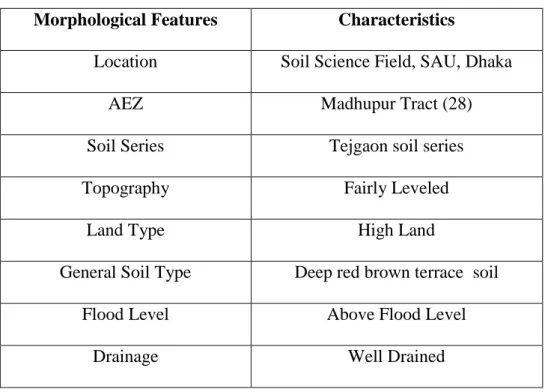
Table 1. Morphological characteristics of the site soil Morphological Features Characteristics
Location Soil Science Field, SAU, Dhaka
AEZ Madhupur Tract (28)
Soil Series Tejgaon soil series
Topography Fairly Leveled
Land Type High Land
General Soil Type Deep red brown terrace soil
Flood Level Above Flood Level
Drainage Well Drained
Table 2: Physical and chemical characteristics of initial soil
Characteristics Value Methods
Sand (%) 27(Marshal triangle) Marshal textural triangle Silt (%) 43(Marshal triangle) Marshal textural triangle Clay (%) 30(Marshal triangle) Marshal textural triangle Textural Class Clay loam Marshal textural triangle
PH 6.2 Glass electrode pH meter
Organic matter (%) 1.20 Wet Oxidation method
Organic Carbon (%) 0.70 Wet Oxidation method
22 3.3 Climate and weather
The experimental area situated in the tropical wet and dry climate under Köppen climatic classification, which characterized by medium to heavy rainfall during the month of April to September and light rainfall during the rest period of the year from October to March. Average temperature of the experimental period from November, 2018 to March, 2019 was 20 0C. The highest temperature was 32 0C in March 2019 and the lowest was 12 0C in December 2018. The climate data (temperature, rainfall, relative humidity) was shown in Appendix I.
3.4 Experimental design and layout
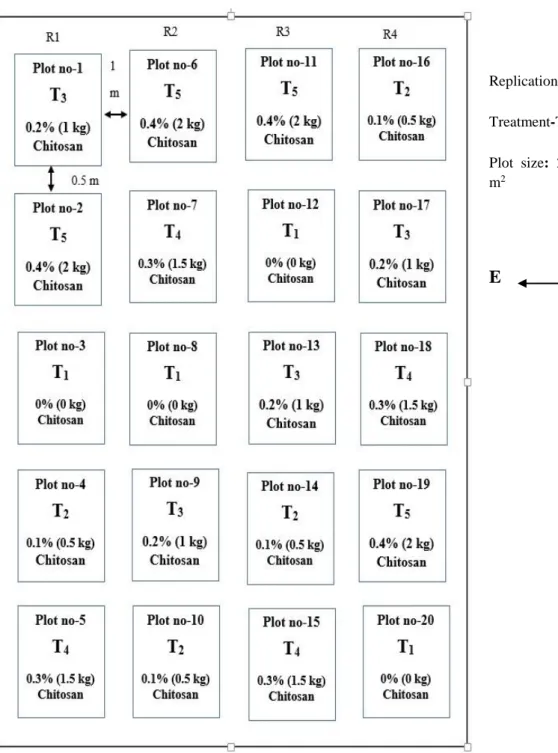
The two factors experiment was laid out in a Randomized Complete Block Design (RCBD) with four replications. There were five treatments in the field. The area of the plot was 2.5 m2 (2 m × 1.25 m). Total plots in the experimental field were 20. The treatments were randomly distributed to each block. The distance between two nearby replications (block) was 1m and row-to-row distance was 0.5 m. The inter block and inter row spaces were used as footpath and irrigation or drainage channel. The layout was arranged in randomized complete block design. The treatment was set using the different doses of chitosan raw material powder. There is a layout of the field as follows:
23
Figure 1. Layout of the Experimental Field
Replication-Replication: 1m Treatment-Treatment: 0.5 m Plot size: 2 m×1.25 m=2.5 m2
S
E
W
N
24 3.5 Planting materials
Tomato cv. BARI Tomato-15 was used as the plant materials for this study which were collected from Bangladesh Agricultural Research Institute (BARI), Gazipur. BARI Tomato-15 is a high yielding winter variety. It has thick skin and edible flesh having very good shelf-life. Fruit oval shape, less seeded fruits with 65-75 g in weight, attractive fresh red color.
3.6 Raising of seedlings
Seeds were sown on 19 November, 2018 in the seedbed. Sowing was done thinly in lines spaced at 3 cm distance. Seeds were sown at a depth of 2 cm and covered with a fine layer of soil followed by light watering by watering can. After there the beds were covered with dry straw to maintain required temperature and moisture. When the seeds were germinated, shade by net was provided to protect the young seedlings from scorching sunshine and rain. Light watering and weeding were done several times. No chemical fertilizers were applied for raising of seedlings. Seedlings were not attacked by any kind of insect or disease. Seeds were sprouted and visible after 4 days of sowing.
Healthy and 12 days old seedlings were transplanted into the experimental field on 1 Dec, 2018.
3.7 Treatment Doses of the Experiment
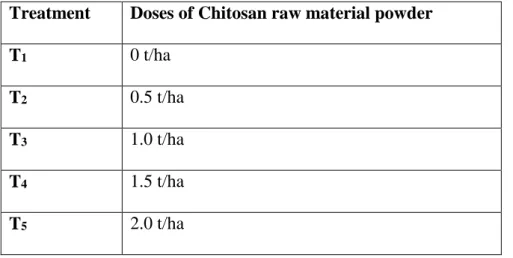
In the experiment, there were 5 treatments with distinctive doses. The single factor experiment was compared with five concentrations of chitosan raw material powder viz. 0% or 0 t/ha chitosan raw material powder (T1), 0.1% or 0.5 t/ha chitosan raw
25
material powder (T2), 0.2% or 1 t/ha chitosan raw material powder (T3), 0.3% or 1.5 t/ha chitosan raw material powder (T4) and 0.4% or 2 t/ha chitosan raw material powder (T5).
Table 3: Treatments doses of Chitosan raw material powder
Treatment Doses of Chitosan raw material powder
T1 0 t/ha
T2 0.5 t/ha
T3 1.0 t/ha
T4 1.5 t/ha
T5 2.0 t/ha
3.8 Land preparation
In the research land there were 20 plot. The plots were 2 m × 1.25 m in area, thus the area of the plot was 2.5 m2. The plot soil was opened with spade. The soil was well tilled and converted into loose friable and dried masses to obtain good tilt. Weeds, stubbles and dead roots were removed from the seedbed. Chitosan raw material powder was applied to per plot as treatment wise.
3.9 Chitosan raw material powder
The raw material (Shrimp shell byproduct) of the modified chitosan was collected from the Khulna region of Bangladesh. Chitosan raw material powder is prepared from the
26
sea shell by-products through sun drying, oven drying and milling. The final step is sieving through a 30 mesh or 2 mm in diameter sieve and finally used powder as the acetylated form having less than two millimeter in size and use the material directly in the main field.
3.10 Analytical component of Chitosan raw material powder
In order to find out the chemical properties of the modified chitosan raw material powder, the sample from chitosan raw material powder was analyzed. The analytical results show that the chitosan raw material powder was contained with many macro and micro nutrients. Chitosan raw material powder supplied N, P, K, S, Ca, Mg, Zn and B to the soil in 11.61%, 0.67 ppm, 0.14 meq/100g soil, 0.10 ppm, 2.43%, 0.0036%, 0.012% and 26.21 ppm respectively (Issak, 2016). The chitosan raw material powder was alkaline in nature and the pH level was 8.05. Analytical results of Chitosan raw material powder and chito-compost showed the supplementation of a group of essential elements will be available due to the application of the powder in soil (Issak, 2015;
2017). Many factors could be involved in super growth, development and yield increment of tomato plants. The mentioned information showed that nutritional supplements and some other growth promoting hormones could be involved in the mechanisms.
27 3.11 Transplanting of tomato seedlings
Healthy and uniform seedlings of BARI tomato-15 were collected from the seedbed and were transplanted in the experimental plots in the afternoon of 1 December, 2018.
The seedbed was watered before uprooting the seedlings from the seedbed so as to minimize damage to the roots. Two seedlings were sown. Finally, they were thinned to one seedling after 20 days of transplanting.
3.12 Intercultural operation
3.12.1 Gap Filling
Very few seedlings were damaged after transplanting and new seedlings from the same stock replaced these. Gap filling was done only one time. Then it was not that necessary for the field. The transplanted seedling were strong enough to survive.
3.12.2 Weeding
The plants were kept under careful observation. Three times weeding were done during cropping period on the date 20th December, 1st January and 30th January for proper growth and development of the plants. Besides this, minor weeding was done when necessary.
3.12.3 Irrigation
Irrigation was given by observing the soil moisture condition. Irrigation was done during crop period when needed. Irrigation water was added to each plot as and when required. As it was in Rabi season, the water requirement was less.
28 3.12.4 Plant Protection Measure
Very few insect and pest attacked the field as it was in the shed with covering net around the plots but mouse disturbed the most. They cut some plants, fruits and leaves. That’s why measures was taken to capture mouse by mouse trap. There were some soil hole created by mouse which was also filled by additional soil. The field looked nice with normal tomato plants.
3.13 Harvesting of fruit
Harvesting was done when the tomato becomes red in color. It was harvested in ripen stage. First harvest was done 12th March, 2019. The last harvesting was done 21st April, 2019. Tomato was harvested at 5-7 days interval.
3.14 Collection of data
The data was collected from every plot. Every plot consist of 6 plants. There were total 120 plants as plot number were 20. It is difficult to record data for all the 120 plants, because of this sample plant was taken from every plot. There were 4 plots of every treatment. Two sample plants was selected from every plot for some parameters. Then, it was calculated according to the parameter.
29 3.14.1 Morphological Parameters
Plant Height
Plant height was taken to be the length between the bases of the plant to the tip of the main stem before harvesting. There were 40 sample plant from 5 treatments. Every plant was measured for height (cm). Plant height was recorded 45 DAT and 90 DAT.
The plant height was recorded and averaged for each treatment. The height was measured with a tape and calculated in centimeter.
3.14.2 Yield and yield contributing characters
Number of fruit clusters/plant
The number of fruit clusters was counted from the sample plants from each plot and average number was calculated. Then, single treatment sample plants (4 plots×2 plants=
8 plants) data was taken. The average number of clusters born per plant was recorded at the time of final harvest. The effective cluster was taken into account if it bears at least two fruits.
Number of fruits/plant
In case of number of fruits/plant, the data of total number of fruits harvested from each plot till the final harvesting was collected. Then, total fruit number was divided by the total plant number of each plot. Thus, number of fruits/plant is calculated.
Total number of fruits/plot till final harvesting Number of fruits/plant =
Total number of plants/plot
30 Single fruit weight (g)
Total number of harvested fruits from every single treatment during the period of first to final harvest from the plants were recorded. Then, total weight (g) of fruits harvested from every treatment during first to final harvesting was calculated. Then, the total weight of fruits was divided by total number of fruits of a single treatment.
Total weight (g) of fruits from single treatment Individual fruit weight (g) =
Total number of fruits from single treatment
Fruit yield
The fruit yield was recorded. Firstly, from every plot harvesting data of every treatment was collected and then summation of those data from first harvest to last harvest was calculated. The total data was converted into kg and then ton (1 ton=1000 kg) and the area of the experimental field was in m2. Then, yield was finally calculated in t/ha (1ha
= 10000 m2). Yield of different treatment was calculated.
Fruit yield/plot × 10000 Fruit yield (t/ha) =
Area of the plot × 1000
3.14.3 Collection and analysis of post-harvest soils
Post-harvest soils were collected from the three layers. The layers were 0-30 cm, 30-60 cm, 60-90 cm depth. These soils were examined for soil pH, soil organic carbon and soil organic matter. These soil samples were analyzed for chemical properties in the
31
laboratory of Department of Soil Science of Sher-e-Bangla Agricultural University, Dhaka-1207.
Soil pH was measured with the help of a glass electrode pH meter using soil suspension of 1:2.5 as described by Jackson (1962).
Organic carbon in soil was determined by wet oxidation method of Walkley and Black (1934). The underlying principle is to oxidize the organic carbon with an excess of 1N K2Cr2O7 in presence of conc. H2SO4 and to titrate the residual K2Cr2O7 solution with 1N FeSO4 solution. To obtain the organic matter content, the amount of organic carbon was multiplied by the Van Bemmelen factor, 1.73. The result was expressed in percentage.
3.15 Statistical analysis
The collected data in respect of growth, yield contributing characters and yield were analyzed statistically following the analysis of variance (ANOVA) technique. The mean differences were adjudged by LSD test using the statistical computer package program, Statistix 10.
32 CHAPTER 4
RESULTS AND DISCUSSION
This chapter comprises the presentation and discussion of the results obtained from the study on tomato production through chitosan raw material powder application. The results are presented in data tables and figures. The discussion have been made to strengthen the result under the following sub-headings.
4.1 Effect of chitosan raw material powder on morphological characters of tomato
4.1.1 Plant height (cm)
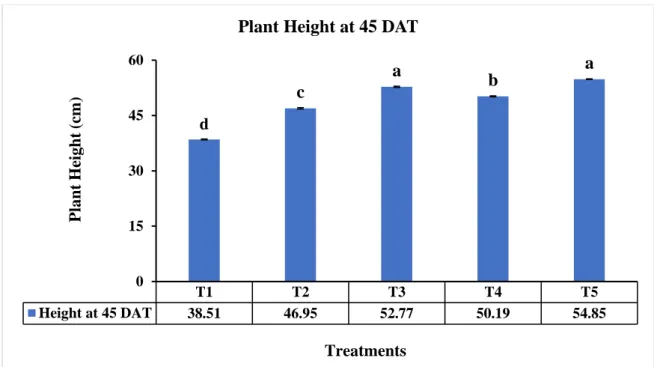
A remarkable effect was observed on tomato plants height using chitosan raw material powder. Tomato plant height was significantly varied with the application of chitosan raw material powder. The highest height (54.85 cm) was obtained in treatment T5 at 45 DAT having chitosan raw material powder @ 0.4% (2 t/ha). The second highest plant height (52.77 cm) found in T3 which was statistically similar to T5 treatment. T4 (50.19 cm) treatment and T2 (46.95 cm) was significantly different from the control treatment.
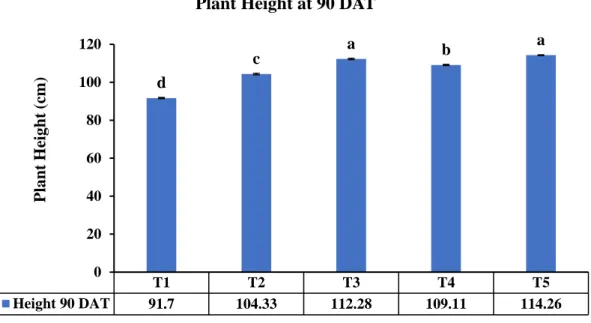
The lowest height (38.51 cm) was recorded on control treatment or T1 at 45 DAT. The highest height (114.26 cm) at 90 DAT was recorded in T5 treatment which was statistically similar to T3 (112.28 cm) treatment. The lowest plant height (91.7 cm) was recorded on T1 i.e. control treatment having no chitosan raw material powder applied.
Treatment T4 (109.11 cm) and T2 (104.33 cm) treatment showed significant difference than the control treatment. T4 and T2 treatment was given @ 0.3% (1.5 t/ha) and 0.1%
(0.5 t/ha) doses of chitosan raw material powder respectively. All the treatments produced higher plant height than the control treatment. The different levels of chitosan
33
raw material powder application showed significant difference on plant height. Similar results was also reported by Sultana et al. (2017), who observed significant difference in rice seedling height due to the application of chitosan powder. Mondal et al. (2016);
reported foliar application of chitosan increase plant height in summer tomato. El- Tantawy (2009), also reported plant height increment in tomato with application of chitosan. Rahman (2015), reported that application of chitosan powder on seedbed soil has positive effect on tomato seedling height.
Now, Plant height at 45 DAT (cm) and 90 DAT (cm) due to application of chitosan raw material powder presented in figure 2 and figure 3.
Bars having similar letter (s) do not differ significantly at p ≤ 0.05
Treatments:
T1= 0% Chitosan raw material powder (0 kg/plot); Control T2= 0.1% Chitosan raw material powder (0.5 kg/ plot) T3= 0.2% Chitosan material powder (1 kg/ plot) T4= 0.3% Chitosan raw material powder (1.5 kg/ plot) T5= 0.4% Chitosan raw material powder (2 kg/ plot)
Figure 2: Effect of chitosan raw material powder on Plant height (cm) at 45 DAT
T1 T2 T3 T4 T5
Height at 45 DAT 38.51 46.95 52.77 50.19 54.85
d
c
a b
a
0 15 30 45 60
Plant Height (cm)
Treatments Plant Height at 45 DAT
34
Bar’s having similar letter (s) do not differ significantly at p≤0.05
Treatments:
T1= 0% Chitosan raw material powder (0 kg/plot); Control T2= 0.1% Chitosan raw material powder (0.5 kg/plot) T3= 0.2% Chitosan material powder (1 kg/plot) T4= 0.3% Chitosan raw material powder (1.5 kg/plot) T5= 0.4% Chitosan raw material powder (2 kg/plot)
Figure 3: Effect of chitosan raw material powder on plant height (cm) at 90 DAT
4.2 Effect of chitosan raw material powder on yield and yield attributing character of tomato
4.2.1 Number of fruit clusters/plant
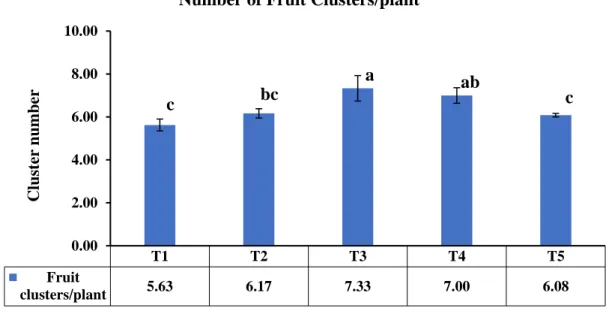
There was significant difference on fruit clusters/plant due to the application of chitosan raw material powder. Highest number of fruit clusters/plant (7.33) was recorded in T3
treatment which was statistically similar to T4 (7.00) treatment. T3 and T4 treatment showed significance difference than the control treatment, T1. T3 and T4 treatment
T1 T2 T3 T4 T5
Height 90 DAT 91.7 104.33 112.28 109.11 114.26
d
c a b a
0 20 40 60 80 100 120
Plant Height (cm)
Treatments Plant Height at 90 DAT
35
received chitosan raw material powder @ 0.2% (1 t/ha) and 0.3% (1.5 t/ha) respectively. Then, T2 (6.17) and T5 (6.08) was statistically similar to control treatment.
The lowest number of fruit clusters/plant was recorded in control, T1 treatment (5.63) having no chitosan raw material powder application. The data is graphically presented in Figure 4. Similar result was also reported by Mondal et al. (2016), who reported that foliar application of chitosan increase the cluster in summer tomato. Parvin et al. (2019) and Sultana et al. (2017) also found positive effect in increasing clusters in tomato plant due to the application of chitosan and oligo-chitosan application.
Bar’s having similar letter (s) do not differ significantly at p≤0.05
Treatments:
T1= 0% Chitosan raw material powder (0 kg/plot); Control T2= 0.1% Chitosan raw material powder (0.5 kg/plot) T3= 0.2% Chitosan material powder (1 kg/plot) T4= 0.3% Chitosan raw material powder (1.5 kg/plot) T5= 0.4% Chitosan raw material powder (2 kg/plot)
Figure 4: Effect of chitosan raw material powder application on number of Clusters/plant.
T1 T2 T3 T4 T5
Fruit
clusters/plant 5.63 6.17 7.33 7.00 6.08
c bc
a ab
c
0.00 2.00 4.00 6.00 8.00 10.00
Cluster number
Treatment Number of Fruit Clusters/plant
36 4.2.2 Number of Fruits/plant
A significant variation was observed in the number of fruits/plant among the treatments.
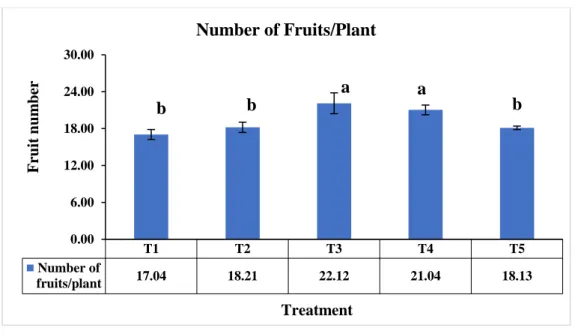
Treatment T3 showed the maximum result (22.12) for average number of fruits/plant having chitosan raw material powder @ 0.2% (1 t/ha). The second highest number of fruits/plant (21.04) found in T4 which is statistically similar to T3 treatment. Both T3
and T4 have significant difference than control treatment. T2 (18.21) and T5 (18.13) treatments are statistically similar. The lowest number of fruits/plant (17.04) was recorded in T1 treatment having no chitosan raw material powder application. The result indicates the chitosan raw material powder application helps plants to produce more number of flower buds that could be the important message to increase the number of fruits/plant. The data is represented graphically in figure 5. Similar results found by Mondal et al. (2016), who observed significant variation in number of fruits/plant of tomato due to different levels of foliar application of chitosan. Rahman (2015), also found significant difference in case of number of fruits/plant due to the application of chitosan powder in a dose dependent manner. Sultana et al. (2017); found foliar spraying of chitosan has positive significant effect on number of fruits/plant of tomato.
Mondal et al. (2012); reported a significant variation on number of fruits/plant in case of okra due to the application of chitosan.