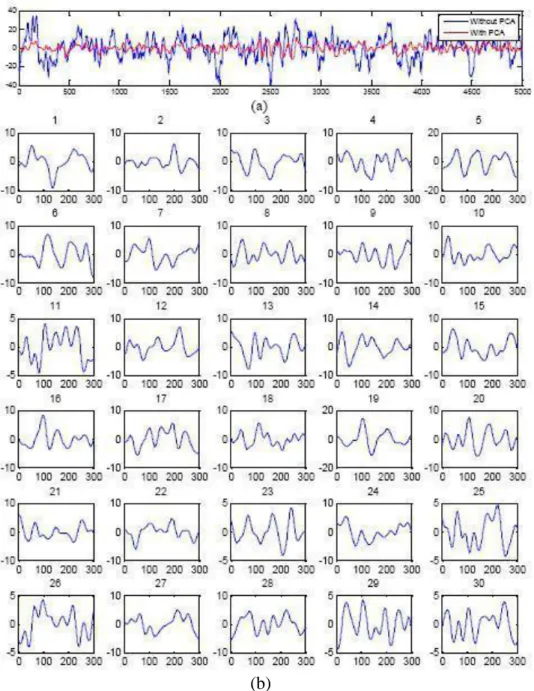
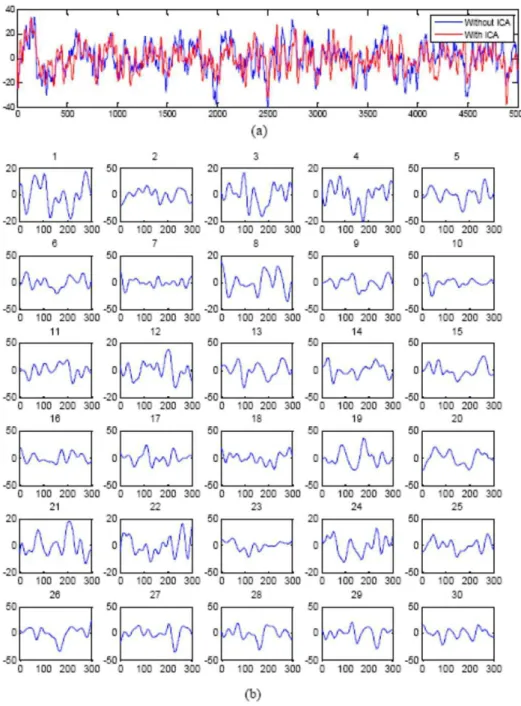
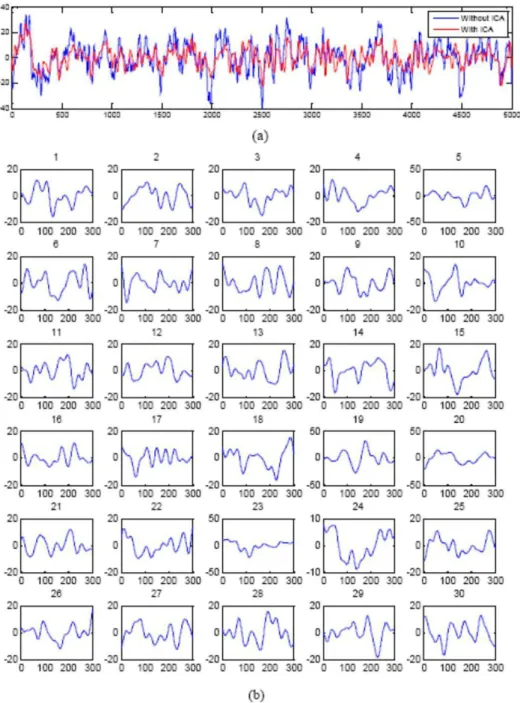
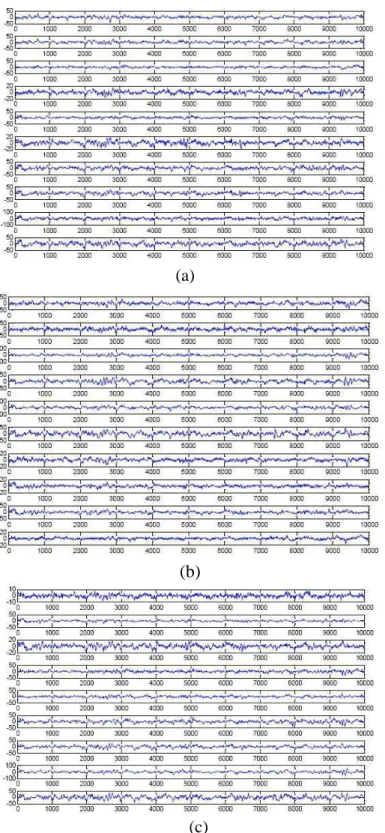
Analysis of EEG signals and extraction of visual evoked potential from the EEG signals: comparative study. ANALYSIS OF EEG SIGNALS AND EXTRACTION OF VISUAL EVOKED POTENTIALS FROM THE EEG SIGNALS: COMPARATIVE STUDY.
Discussion and Conclusions
Lee [4][5], Kuan [6], Frost[7] are the most important adaptive filters for removing speckle noise from US image. Perona-Malik[8] and Anisotropic Speckle Reduction Diffusion (SRAD) are the most important diffusion filters to remove speckle noise from US image.
Speckle Reducing Anisotropic Diffusion (SRAD)
Anisotropic diffusion with speckle reduction (SRAD) is a new and widely used method to reduce speckle noise from ultrasound images. Two important and commonly used methods to reduce speckle noise [] from an ultrasound image are adaptive and diffusion techniques.
Savitzky- Golay Filter
The Proposed Model
For each filter the mask coefficients are constant and they affect the entire image. The results clearly show that the proposed model edge detection capability is more robust than the state of the art SRAD.
Experimental Analysis 1 Qualitative analysis
The quantitative analysis of the conventional SRAD and the proposed SRAD based on the Savitzky Golay filter are given in the following tables.
Conclusion
Electronic voting is often seen as a tool to streamline the electoral process and increase confidence in its management. In this paper, we have developed an algorithm for electronic voting system, which is applicable to know the status of a country's election system.
Introduction
Methodology
Related Works
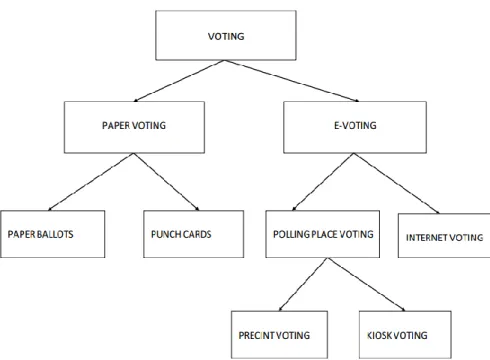
Important issues in electronic voting are therefore the openness of a system for public examination by external experts, the creation of an authentic paper record of the votes cast and a chain of control of the files [Kobie, TC-J, 2015]. However, electronic voting has yet to be implemented nationwide in Bangladesh, despite successful pilots [Meftaul, 2011].
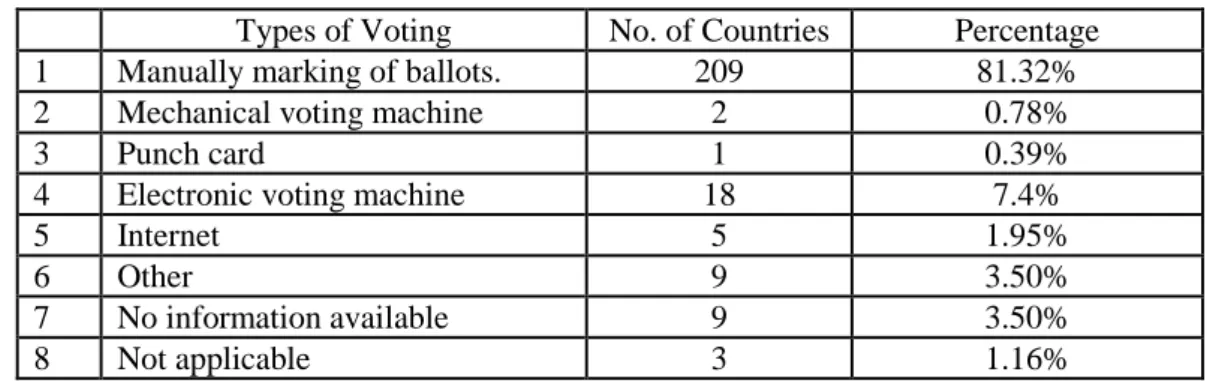
Worldwide Voting Process: Some Statistics
But listed the following countries where electoral commissions have implemented electronic voting as the first user. Table-4: World's First Electronic Voting User Country Type of Voting Year Purpose/Event Australia CyberVote;.
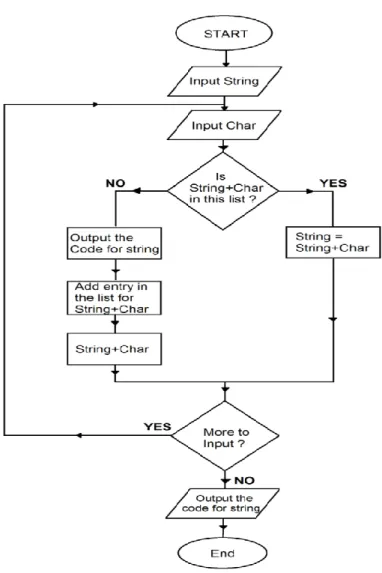
Proposed Algorithm and Flowchart 1. Start
Country list with different electoral process
INT:Armenia, Australia, Canada, Switzerland, Estonia
Belarus, Belize, Kanada, Congo (Kinshasa), Demokratiko a Republika, Republika ti Tengnga nga Aprika, Kongo (Brazzaville), Suisa, Baybay Marfil, Is-isla Cook, Chile, Cameroon, Tsina, Colombia, Costa Rica, Kuba, Cape Verde, Chipre, Tseko Republika, Alemania, Djibouti, Dinamarka, Dominica, Republika Dominikano, Algeria, Ecuador, Estonia, Egipto, Eritrea, Espania, Etiopia, Finlandia, Fiji, Is-isla ti Falkland (Is-isla ti Falkland), Mikronesia, Pransia, Gabon, Nagkaykaysa a Pagarian ti Gran Britania ken Amianan nga Irlanda, Granada, Georgia , Pranses a Guiana, Ghana, Gibraltar, Groenlandia, Guinea, Guadelupe, Gresia, Guatemala, Guam, Guinea-Bissau, Guyana, Hong Kong, Honduras, Kroasia, Haiti, Hungaria, Indonesia, Irlanda, Israel, India , Irak, Iran, Islandia , Italia, Jamaica, Jordan, Hapon, Kenya, Kyrgyzstan, Cambodia, Kiribati, Comoros, Saint Kitts ken Nevis, Korea, Demokratiko a Republika ti Tattao ti, Korea, Republika ti, Kosovo, Kuwait , Is-isla ti Cayman, Kazakhstan , Demokratiko a Republika ti Laos, Libano, Santa Lucia , Liechtenstein, Sri Lanka, Liberia, Lesotho, Lituania, Luxembourg, Letonia, Libya, Morocco, Monaco, Moldova, Republika ti Montenegro, Madagascar, Is-isla Marshall, Macedonia, Ti Dati a Republika ti Yugoslavia ti, Mali, Burma, (Myanmar), Mongolia, Martinique, Mauritania, Malta, Mauritius, Maldives, Malawi, Mehiko, Malaysia, Mozambique, Namibia, Niger, Nigeria, Nicaragua, Olanda, Norway, Nepal, Nauru, Niue, Baro a Selanda, Oman , Panama, Peru, Papua Baro a Guinea, Filipinas, Pakistan , Polonia, Puerto Rico, Palestina, Portugal, Palau, Paraguay, Reunion, Romania, Serbia, Rusia, Rwanda, Is-isla Solomon, Seychelles, Sudan, Suecia , Singapur, Santa Helena, Eslovenia, Eslovakia, Sierra Leone, San Marino, Senegal, Suriname , Abagatan a Sudan, Sao Tome ken Prinsipe, El Salvador, Siria, Swaziland, Isla ti Turko ken Caicos, Chad, Togo, Tailandia, Tajikistan, Timor-Leste, Turkmenistan, Tunisia, Tonga, Turkia, Trinidad ken Tobago, Tuvalu, Taiwan, Tanzania, Ukrania, Uganda, Uruguay, Uzbekistan, San Vicente ken dagiti Grenadina, Bietnam, Samoa, Yemen, Abagatan nga Aprika, Zambia, Zimbabwe, Zanzibar.
MVM:Bulgaria, United States of America
NOVOTE:Saudi Arabia, Brunei Darussalam, Qatar
PC:United States of America
Simulation
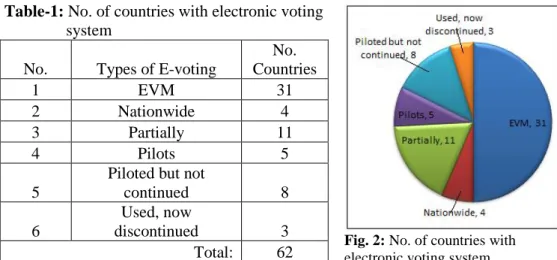
COUNTRIES HAVE ELECTRONIC VOTING SYSTEM
Arhentina, Belhika, Brasil, Butan, Ecuador, Pransia, Guam, India, Mongolia, Baro a Caledonia Peru, Filipinas, Portugal, Paraguay, Singapur, Estados Unidos ti Amerika, Venezuela, Wallis, Futuna.
COUNTRIES HAVE INTERNET VOTING SYSTEM Armenia, Australia, Canada, Switzerland, Estonia
Conclusion and Future Work
NUMERICAL SIMULATION OF MHD FREE CONVECTIVE FLOW PAST A VERTICAL CONE IN THE PRESENCE OF HEAT GENERATION. Free magnetohydrodynamic (MHD) convective flow from a vertical circular cone maintained in variable surface heat flux in the presence of heat generation is considered. Free fluid convection flows in the presence of magnetic field and heat generation have received much attention from many fluid mechanics researchers.
The effect of heat generation on the free flow of convection from a vertical circular cone with variable surface heat flux in the presence of MHD has not been studied yet. In the present study, it is proposed to investigate the MHD free convection flow from a vertical circular cone with non-uniform heat flux in the presence of heat generation.
Governing Equations
Numerical simulation of MHD free convective flow behind a vertical cone.. 4) where 𝑢, 𝜗 are the fluid velocity components in 𝑥 and 𝑦 directions, respectively, 𝜈 kinematic viscosity, 𝑔 is velocity gravity, acceleration coefficient. of volume expansion, 𝛼 is the thermal diffusivity, 𝛾 is the semi-angle of the top of the cone, 𝜌 is the density, 𝛼0 is the electrical conductivity, 𝛽0 is the magnetic field strength, 𝑐𝑝 is the specific heat at constant pressure, 𝑇 is the fluid temperature and T∞ is the ambient fluid temperature. The amount of heat generated or absorbed per unit volume is 𝑄0(𝑇 − 𝑇∞), 𝑄0 is a constant, which can be positive or negative. The source term represents heat generation when ❑0 > 0 and heat absorption when ❑0< 0. V represents the rate of fluid transpiration across the cone surface, which is positive for absorption and negative for fluid injection across the cone surface. .
In the present paper we will only consider the suction case and V is considered positive throughout. Using the transformation (5) in the above expression (10) and (11), we can calculate the values of the local skin friction coefficient and Nusselt number from the following relations:.
Numerical Methods
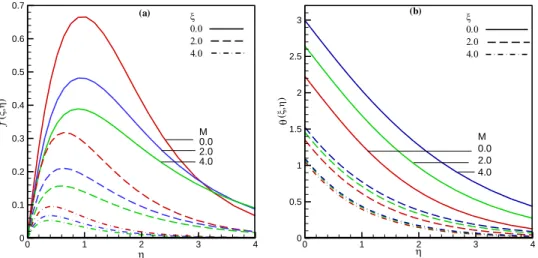
We approximate the quantities (f , u ,v ,𝜃, p) at points (𝜉𝑛, 𝜂𝑗) of the net by (𝑓𝑗𝑛, 𝑢𝑗𝑛, 𝑣𝑗𝑛𝑛, 𝑛, 𝑛), 𝑛 which we call the net function. It is also used the notation 𝑔𝑗𝑛 for any net function quantities halfway between net points shown in Figure 2 as follows. Now we write the difference equations that must approximate equations (14) to (17) by considering one mesh rectangle. We begin by writing the finite difference approximation of the equations (14) using backward difference quotients and averaging around the center (𝜉𝑛, 𝜂𝑗−1.
Similarly, equations (15)–(17) can be expressed in finite difference form by approximating functions and their derivatives with central differences around the midpoints (𝜉𝑛−12, 𝜂𝑗−1. These nonlinear systems of algebraic equations must be linearized by Newton's quasilinearization method and very efficiently solved using the Keller-box method (Keller and Cebeci [19], Cebeci and Bradshaw [20]).
Results and Discussions
- Velocity and temperature profile
- Skin friction and Nusselt Number The variation of the local skin friction, 1
From figure 6(a) we observe that the value of local skin friction increases with the increase in the value of heat generation parameterQ. On the other hand, if the suction parameter 𝜉 increases, the value of skin friction decreases to the asymptotic value. From figure 6(b) it is seen that the value of local Nusselt number decreases as the value of heat generation parameterQ increases.
The value of local skin friction and local Nusselt number decreases with increasing magnetic parameter. The local skin friction value increases while the local Nusselt number decreases as the heat generation parameter increases.
MEANS CLUSTERING MANIFESTED PROTEIN MOTIFS SHARE SIMILAR CHEMICAL PROPERTIES
- Introduction
- Methodology Data Collection
However, most previous research on protein motif has focused on protein classification and finding new motifs. There are many motif search methods and developed databases such as EXTREME [3], kmerHMM [4], PMS, eMotif, PROSITE [5], MEME [6], etc. There are many online applications for finding motifs, e.g. like BLOCK-maker, ELM [7], MEME SUITE [6], SCOPE [8], RSAT, ScanProsite [9], etc.
PROSITE is a database of protein families and protein domains built on a large number of proteins grouped based on sequence similarity [5], It currently consists of hundreds of protein motif patterns and profiles (matrix) specific for more than a thousand protein families or domains from different life forms such as viruses, bacteria, archaea and eukaryotes. We have included motif patterns from viruses, bacteria and eukaryotes (including protists, fungi, plants and animals).
- Results and Discussion
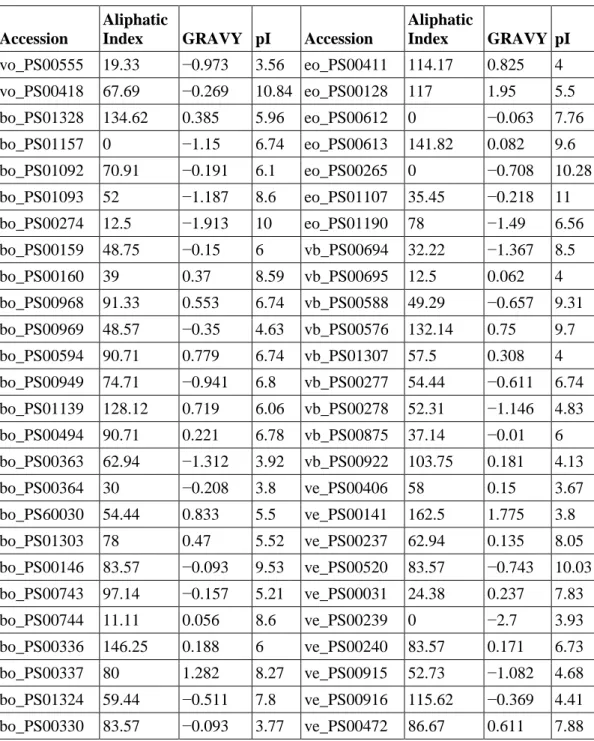
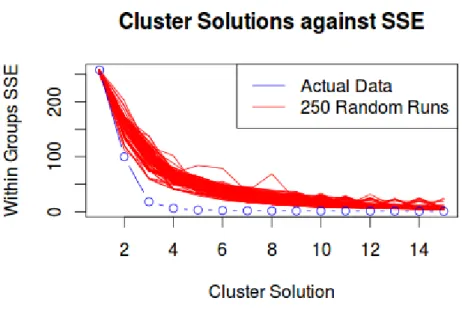
We used an R (statistical software) implementation of this algorithm called "kmeans" built into R. We collected motif samples from PROSITE and tabulated the collected data in a Microsoft Excel file and then transferred to a spreadsheet (see Supplementary Table 3). . We developed a Python script to convert the sample sequence to a standard single-letter amino acid sequence.
It takes input of a pattern from the user and gives an amino acid sequence in output. In this table, we have added an additional two-letter identifier before each accession number.
- Conclusion
- Background
- Simulation of DC and UB Responses From Different Regions
- Conclusion
- Fundamental Frequency Detection Algorithms (FFDAs)
- Proposed Method
- Experimental Results
- Proposed Method
The paper finds that the variations in response time depend on the physical location of the data center and the UB distance from the data center [16]. Finally, this autocorrelation function is weighted by the reciprocal of the YIN for fundamental frequency detection. The performance of the proposed fundamental frequency detection method is compared with the other related methods in terms of gross pitch error and fine pitch error.
Fundamental frequency detection is one of the oldest unresolved topics among speech signal researchers [1,2]. The outcome of the proposed method is evaluated using ACF, YIN and the weighted autocorrelation method, WACF [8,18,20]. These simulation results indicate that the proposed method outperforms the ACF, YIN and WACF methods in most cases.
It is worth noting that the proposed method is about seven times faster than the state-of-the-art method considered in the experiments.
Generating Suggestions
Experimental Results and Discussion
Dataset Description
In this section, we first introduce the datasets we use for evaluation purposes, followed by the description of the evaluation metrics. To calculate the prior probabilities, we use a dataset obtained from crawling news websites (ex-ProthomAlo), literature (ex-RabindraRochonaboli) and others, which resulted in approximately 4.2 million words, with 127,000 unique words.
Implementation Details
- Solution procedure
- Comparison of Results
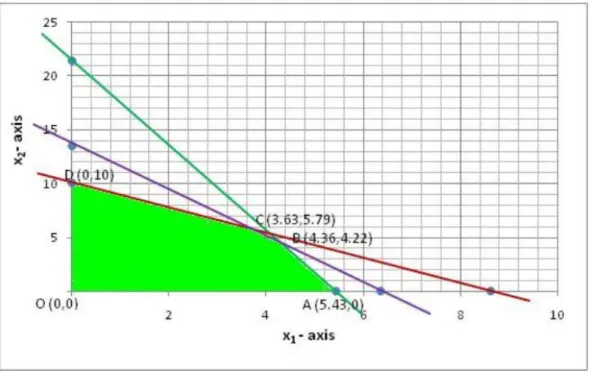
Users generally like to see the correct word at the top of the suggestion list. ERPP offers better accuracy, improved efficiency in terms of time, and more relevant suggestions at the top of the list. First, we select one of the variables whose current value at the optimum LP0 solution violates the integer requirements.
You will notice that the two spaces contain the same integer possible points in the ILP model. This means that from the point of view of the original ILP problem, dealing with LP1 and LP2 is the same as dealing with the original LP0. The main difference is that the choice of the new delimitation restrictions.