The work presented in this thesis is entirely my own and I hereby declare that I am the sole author of the thesis titled "Identification and characterization of uterine microorganisms and selection of treatment strategy in repeated breeding cows to increase conception rate in dairy farms in Chattogram" . Anwer Parvez, Associate Professor, Department of Medicine and Surgery for their valuable advice and support. It was a good opportunity for me to extend special thanks to the staff, employees, laboratory technicians and laboratory staff working in the Department of Medicine and Surgery and Department of Microbiology, Chattogram Veterinary and Animal Sciences University (CVASU), Bangladesh for their help in perform laboratory tests on samples.
Abstract
Chapter-1 Introduction
GnRH has been used at the time of AI in repeated breeding cows to increase conception rate (Hossain, 2002). Intrauterine infusion of antibiotics during AI is the rational treatment for repeat breeding cows (Huber, 1982). Antibiotic sensitivity testing showed moderate to high sensitivity to amoxicillin, oxytetracycline and ciprofloxacin in repeated breeding cows (Gani et al., 2008).
Chapter-2 Review of literature
- Definition of Repeat Breeder
- Prevalence of Repeat Breeding
- Etiology of Repeat Breeding
- Noninfectious causes 1 Nutrition
- Infectious Causes of Repeat Breeding
- Season
- Herd size
- Pathogenesis of reproductive tract diseases
- Detection rpoB gene in Staphylococcus spp
- Treatment of repeat breeding
Early embryonic mortality leading to repeated breeding syndrome may be due to reduced response to circulating LH (Shelton et al., 1990). Acquired uterine changes, such as metritis, are critical for the resumption of normal cyclicity during the postpartum period, triggering repeated breeding (Shresta et al., 2004). Uterine infections (specific and non-specific) will adversely affect reproductive indices by increasing uterine and cervical postpartum involution, by altering follicular development (Lewis, 1997) and by increased embryo mortality and repeated estrus rates (Santana et al. , 1998).
Materials and Methods
- Selection of farm and animals
- Management of cows
- Sterilization of glasswares and plasticwares
- Media, reagents and stains used for microbiological work Solid media
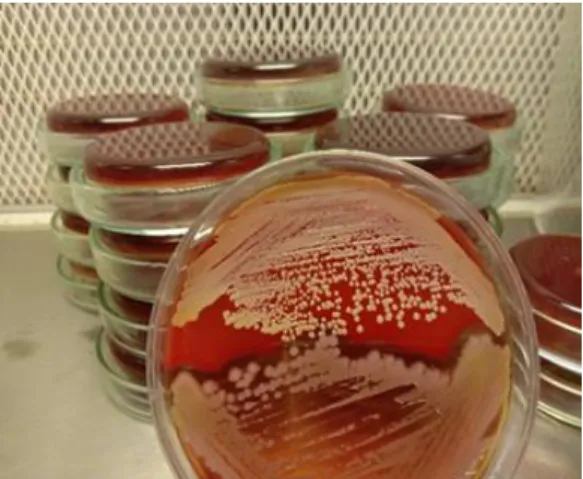
- Isolation of bacteria by culture method
- Hemolytic activity
- Gram’s staining
- Biochemical tests
- Isolation and identification of Staphylococcus spp
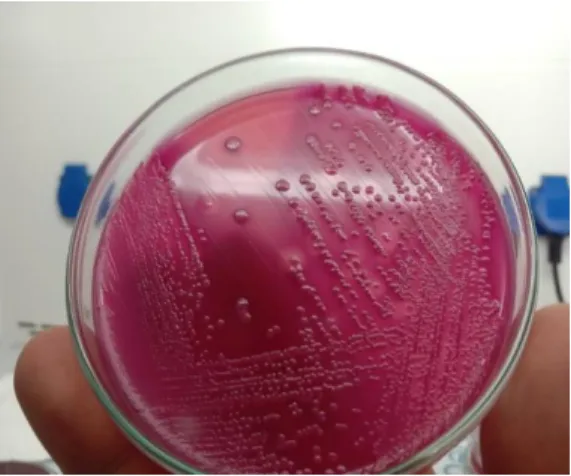
- Isolation and identification of Escherichia coli
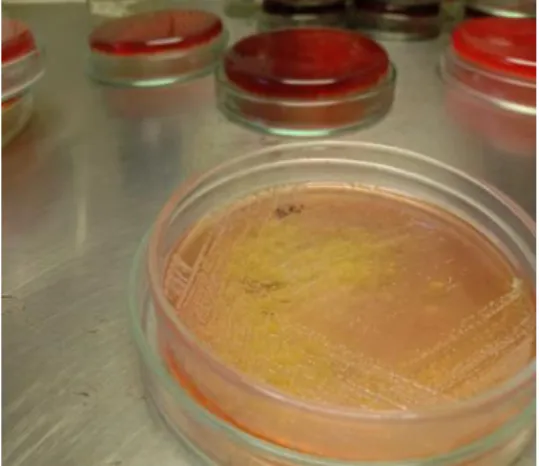
- Isolation and identification of Pseudomonas spp
- Isolation and identification of Bacillus spp
- In-vitro antibiotic sensitivity test
- Treatment of Repeat Breeders
- Hormones and antibiotics
- Treatment protocols
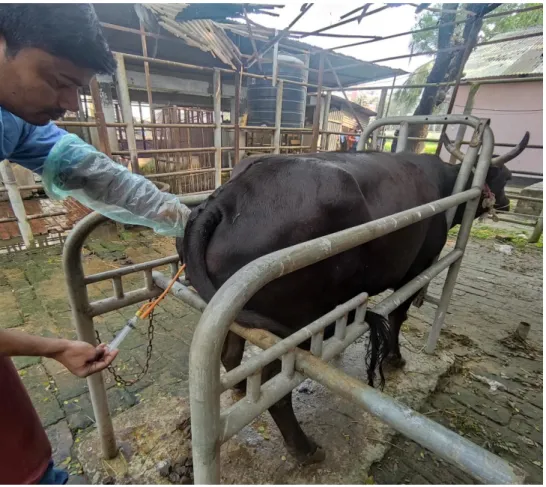
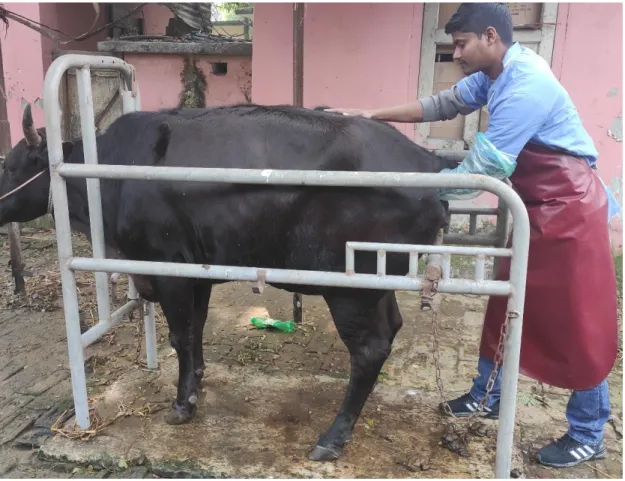
To confirm the absence of clinical abnormalities, uterine horns and ovaries of cows were examined by rectal palpation. Both horns were then examined from base to tip for size and symmetry, tone, and wall thickness. Vaginal discharges of cows were scored manually with gloves and only animals with clear mucosa were selected for this study.
The other end of the catheter was connected to a piece of rubber to facilitate the infusion of saline with a 50 ml syringe. After growth of the organisms, 1 ml of 50.0% glycerin was added and finally stored at - 20 °C for further studies. After presumptive identification of bacteria based on microscopic growth characteristics, colony morphology and staining of isolates and their biochemical characteristics were determined.
Peptone water (2 ml) was inoculated with 5 ml of bacterial culture and incubated at 37°C for 48 h. The test was performed by inoculating a colony of the organism in 0.5 ml of sterile glucose phosphate broth. The coagulase test was performed to identify pathogenic Staphylococcus aureus from non-pathogenic ones.
To isolate Escherichia coli, the samples were first inoculated onto MC agar and incubated for 24 hours at 37°C. The line of treatment varies in both categories and also according to the diagnosis of the specific cause of re-breeding. Each ml vial contains gonadorelin acetate equivalent to 100 μg in a 20 ml vial marketed by Renata Pvt.
Results and Discussion
Occurrence of repeat breeding in cows with respect to breed
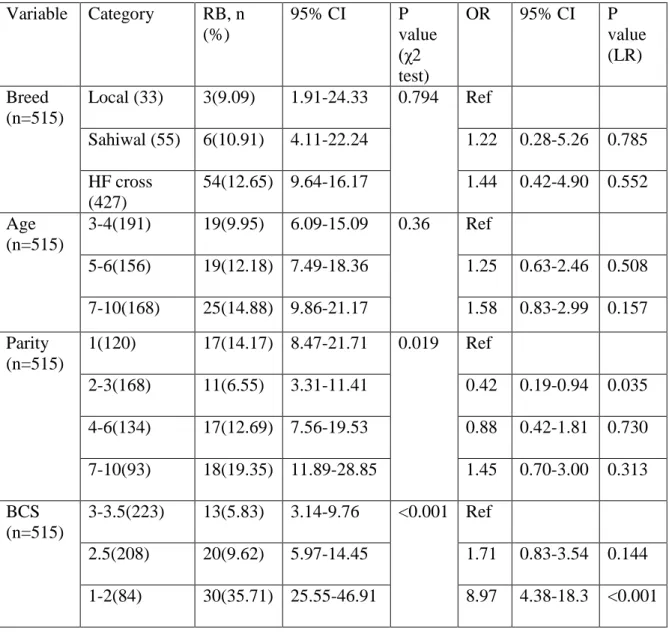
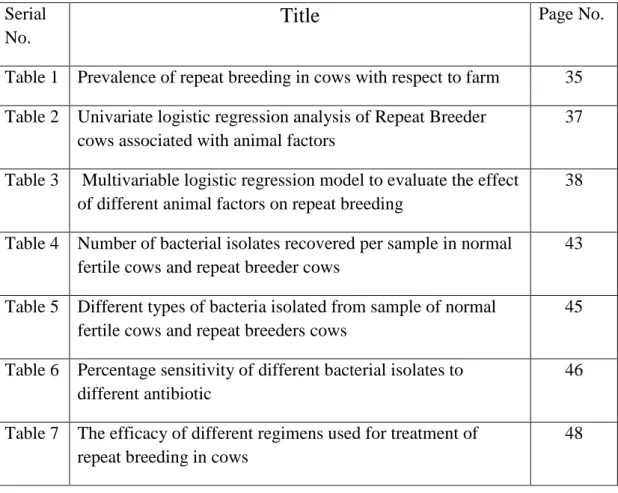
The prevalence of repeated breeding in cows with respect to breed is shown in (Table 2). The lowest repeat breeding rate was observed in local cows (9.09%) and the highest occurrence in Friesian crossbreeding cows (12.65%). This study failed to identify a significant effect among breed group with repeat breeder prevalence (P>0.05).
Contrary to the findings of Singh et al. 1983) reported that Holstein, Sahiwal and their crossbred cows are highly prone to rebreeding. 39 A higher prevalence of rebreeding was also reported in crossbred cows than in local breed cows (Mandefro and Negash found a 32.11% incidence of reproductive disorders in cattle and also reported the incidence of rebreeding as 21.9% in crossbred cows , which is less than In contrast to the findings, Sahiwal breeds have the highest (21.7%) rebreeding incidence (Karwani and Sharma, 2003 and Saxena et al. 2004) found the rebreeding incidence to be 20.4% in Sahiwal breeds. The reasons for the lower incidence of rebreeding in local cows can be explained by the fact that local cows are more resistant to the environment of Bangladesh than Friesian crosses.
Effects of age on occurrence of RB cows
Effects of parity on occurrence of RB cows
The higher incidence may be due to the use of Sahiwal in breeding programs with frozen semen, which on thawing has lower motility (Karwani and Sharma, 2003). In contrast, Coleman et al. 1985) reported a higher conception rate in multiparous cows than in primiparous cows. Boyd and Reed (1961) reported an increased conception rate with increasing parity from 2 to 6, then decreased at parity 7 and 8.
This can be explained by the fact that cows with first parity may suffer from a more negative energy balance than those of other parities, leading to a high incidence of repeated breeding. Because first parity cows need more energy supplementation for milk production and growth, and usually the farmers provide equal amount of feed supplementation to all parous cows.
Effects of BCS on occurrence of RB cows
Isolation, identification and molecular confirmation of predominant bacteria from uterine samples
- Molecular identification of nuc gene for confirmation of S. aureus
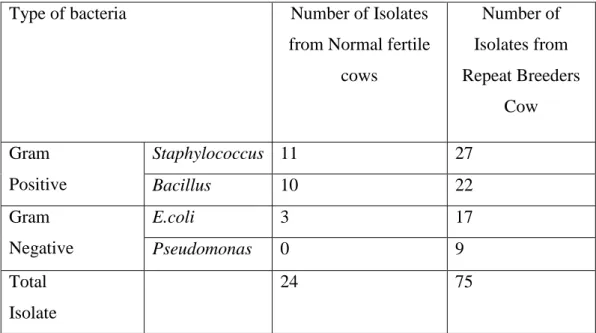
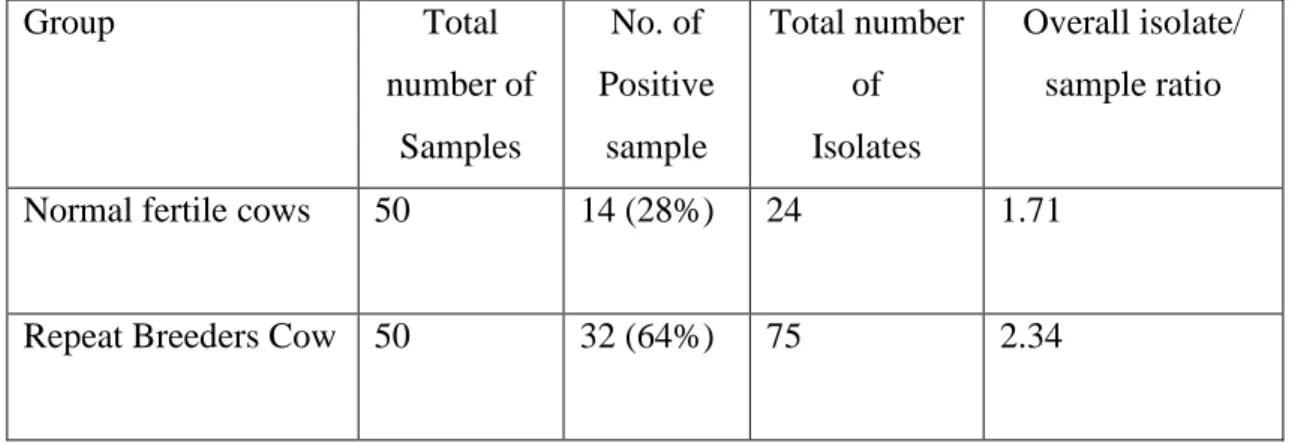
This finding is consistent with (Gani et al., 2008) who reported (69.6%) bacteria isolated from the repeat breeder cows and (30.4%) from normal fertile cow's uterine samples. However, a higher percentage of such bacterial infections of the repeat breeder cows was reported by Dholakia et al. In this present study, Pseudomonas spp was found 12% in RB cows which is slightly lower with the findings of Das et al. 2013) also reported the isolation of these organisms from cervico vaginal sample of cows suffering from repeated breeding endometritis.
Similar to the present findings, Panangala et al. 2010) has reported that the most frequent bacteria isolated from fertile and non-fertile cows were E. coli, Staphylococci, Proteus, Pseudomonas and Bacillus spp. 2000) reported the isolation of Escherichia coli, Staphylococcus aureus, Proteus spp., Streptococci, Bacillus spp., Staphylococcus epidermis, Klebsiella pneumonia, Pseudomonas aeruginosa and Corynebacterium pyogenes from reproducibles. Therefore, frequent bacterial screening of vaginal cervical mucus has been suggested for effective control of reproductive health in dairy cows (Dholakia et al., 1987). 45 It has been reported that about 60% of bacteria identified from normal uteri were also found in repeat breeders as well as from cows with endometritis and the frequency of isolation was much higher than that of normal cows (Panangala et al., 1978; Singh and Pant, 1999; Gani et al., 2008 and Azizunnesa et al., 2011).
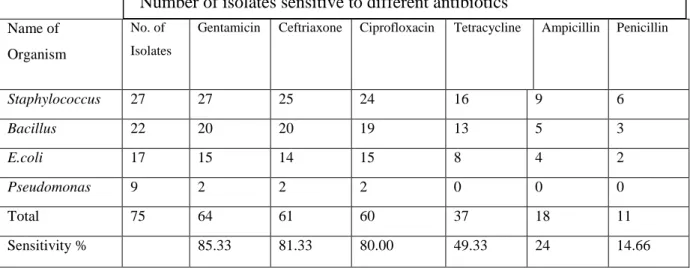
The various bacterial isolates recovered from endometrial repeat breeding cows are widespread in nature and have been reported to be associated with a wide range of non-specific infections in the genital tract of cows and buffaloes, leading to reduced fertility (Chandrakar et al., 2002). Similar findings were reported by Sadig et al. 2010), who observed that gentamicin was the highly sensitive antimicrobial drug against Gram-negative bacteria. In another study, it has been observed that gentamicin and cephalexin were highly sensitive (93 and 77%, respectively) against aerobic bacteria, while oxytetracycline (42%) and amoxicillin (26%) were found to be resistant (Takamtha et al. , 2013) ).
On the other hand, Singh et al. 1998) also observed maximum susceptibility of the isolates to gentamicin, tetracycline and chloramphenicol and recommended the antibiotics for the treatment of repeated breeding cows, but in this study tetracycline was not found as an effective drug and the resistance to tetracycline is (49.33%).
Different treatment protocol
The efficacy of sulfonamides and aminoglycosides may be decreased due to the presence of necrotic debris and purulent materials (Smith and Risco, 2002). The variation in sensitivity may be related to geographic variation and injudicious use of antibiotics in a specific area. The present study clearly shows that the repeated breeding cows can be controlled by treating with a single dose of GnRH as the conception rate was (60%) (Table 7) at the time of AI.
The improvement in conception rate after GnRH treatment in the present study is consistent with the study of Patel et al. 2010) who studied the efficacy of GnRH in 18 crossbred cows and found the conception rate to the conclusion that cows with Dalmarel (GnRH analogue) at the time of AI improved 68.75% conceptions against 37.50% in the control group, which is almost at our level. the findings. In the present study, GnRH was not found to be effective in improving the conception rate when administered on day 6 and day 12 of insemination. In the present study, conception rate in breeding cows was also improved (50%) after treatment with intrauterine infusion of gentamicin. 2009) reported that breeding animals treated with gentamicin sulfate had 44.44 % conception rate which is close to our findings. 2005) recorded higher percentage conception rates in the gentamicin-treated groups.
These findings indicate that the physiochemical properties of gentamycin are superior compared to enrofloxacin in these repeat breeding cows (Warriach et al., 2008). This means that few cases of repeat breeding cows can be recovered without treatment with antibiotics or hormones. This can be explained in another way, namely that cows can sometimes be inseminated leading RB sooner or later.
It is concluded that GnRH and Gentamicin can be used as the most effective drug for the treatment of animal reproduction in field conditions compared to other preparations.
Conclusions
Prevalence of repeat breeding and its effective management in cows in selected areas of Bangladesh. Repeat breeding in dairy heifers: follicular dynamics and estrous cycle characteristics in relation to sexual hormone patterns. Milk progesterone levels in relation to conception, repeated breeding and factors affecting acyclicity in dairy cows.
Comparative study on serum macro and micro mineral profiles during estrus in repeated breeding crossbreed cattle with defective and normal ovulation. Incidence and epidemiology of abortion and repeated breeding in cattle on dairy farms in Punjab, India. Reproduction management under field conditions using hormonal and non-hormonal drugs in cows.
Physical properties of estrous cervical mucus in repeat breeding crossbred cows (Holstein-Friesian) with reference to fertility. Bacteriological studies of uterine biopsy and conception rate after treatment in repeated breeding crossbred cows. Effect of antibiotic treatment on the pregnancy rate of repeat breeder dairy crossbred cows with subclinical uterine infection.
Identification and characterization of in utero microorganisms and selection of treatment strategy in repeat breeding cows to increase conception rate in Chattogram dairy farms.