12
A thesis submitted to the Department of Mathematics and Natural Sciences in partial fulfillment of the requirements for the degree of
Bachelor of Science in Biotechnology
REGULATION OF GENETICALLY MODIFIED ORGANISMS IN INDIA AND THE INFLUENCE OF CARTAGENA
PROTOCOL ON ITS BIOSAFETY FRAMEWORK
By
Maher Jibran Kafi ID: 17236017
Department of Mathematics and Natural Sciences (MNS) Brac University
May 2022
© 2022. Brac University All rights reserved.
2
Declaration
It is hereby declared that
1. The thesis submitted is my own original work while completing a degree at Brac University.
2. The thesis does not contain material previously published or written by a third party, except where this is appropriately cited through full and accurate referencing.
3. The thesis does not contain material which has been accepted, or submitted, for any other degree or diploma at a university or other institution.
4. I have acknowledged all main sources of help.
Maher Jibran Kafi 17236017
3
Approval
The thesis titled “Regulation of Genetically Modified Organisms in India and the Influence of Cartagena Protocol on its biosafety framework.” submitted by
Maher Jibran Kafi (ID:17236017)
of Fall, 2017 has been accepted as satisfactory in partial fulfillment of the requirement for the degree of Bachelor of Science in Biotechnology on 26th May 2022.
Examining Committee:
Supervisor:
(Member)
_______________________________
Aparna Islam Professor
Biotechnology Program, MNS Department Brac University
Program Coordinator:
(Member) _______________________________
Iftekhar Bin Naser
Assistant Professor, MNS Department Brac University
Departmental Head:
(Chair) _______________________________
A F M Yusuf Haider Professor, MNS Department
Brac University
4
Ethics Statement
No damage was caused to human beings, animals, and the environment while carrying out this project.
5
Abstract/ Executive Summary
Genetically modified organisms (GMOs) are the products of modern-day biotechnology techniques. One prominent example which highlights just how popular GMOs have become, is that of genetically engineered (GE) plants. As per the International Service for the
Acquisition of Agri-biotech Applications (ISAAA) report for the year 2019, 190.4 million hectares of land across 29 different countries is used for growing these crops. The specific country selected for this study is India. Considering GMOs at large, a vast number of
regulations have been laid down by different organizations in this nation, with the motive of maintaining biosafety. One of the main pillars of this system is the Cartagena Protocol on Biosafety (CPB) to the Convention on Biological Diversity. In this study, the extent to which regulation regarding GMOs has changed over the years has been analyzed. The influence of the CPB on those changes has been noted, as this can help to assess how much of an impact the Protocol has made to the regulatory framework for GMOs.
Keywords: The Cartagena Protocol on Biosafety; GE Plant; Biosafety; Agriculture; Risk assessment; GMO regulation
6
Dedicated to my parents
7
Acknowledgement
Firstly, I’m extremely thankful to Almighty Allah for giving me the required strength to fulfill the thesis requirement.
My sincere gratitude goes to my supervisor Dr. Aparna Islam, PhD, Professor, Department of Mathematics and Natural Sciences, Brac University. Without her invaluable supervision, helpful suggestions and guidance, none of this project would have been possible. Moreover, she dedicated many hours every day just to ensure that my troubles would be reduced. For all that, I will remain eternally in debt to her.
I would like to express my utmost gratitude to Professor A F M Yusuf Haider, Chairperson, Department of Mathematics and Natural Sciences, for creating an environment conducive to healthy learning.
I would also like to express my gratitude to Dr. Iftekhar Bin Naser, PhD, Assistant Professor, Department of Mathematics and Natural Sciences, as his cooperation and sound advice helped me tremendously throughout my journey.
Finally, my most sincere thanks go to my friend, Kazi Toqi Yasir. His optimism, impeccable suggestions and constant support made a world of difference for me.
-Maher Jibran Kafi -May 2022
8
Table of Contents
Declaration... 2
Approval ... 3
Ethics Statement... 4
Abstract/ Executive Summary ... 5
Acknowledgement ... 7
List of Tables ... 9
List of Figures ... 10
List of Acronyms ... 11
Chapter 1: Introduction ... 12
Chapter 2: Materials and Method ... 18
2.1 Materials: ... 18
2.1.1 India: ... 19
2.2 Method ... 20
Chapter 3: Results and Discussion ... 21
3.1 India ... 21
References ... 38
9
List of Tables
Table 1: List of several relevant guidelines/regulations in India for biosafety purposes ... 21 Table 2: Information required for safety assessment of a GMO ... 25 Table 3: Features of Risk assessments compared across Pre Cartagena era and Post Cartagena era ... 29 Table 4: Summary of Biosafety levels for infectious agents (reproduce from Guidelines and Safety handbook for institutional biosafety committees, 2011) ... 31 Table 5: Containment measures related to biosafety compared across Pre Cartagena era and Post Cartagena era ... 32 Table 6: Comparison of risk description and calculation across Pre Cartagena era and Post Cartagena era ... 35
10
List of Figures
Figure 1: Top 5 countries that planted biotech crops in 2019 (ISAAA, 2019) ... 14
Figure 2: The method and steps of the study ... 20
Figure 3: Competent authority in India ... 22
Figure 4: Guidelines and Safety handbook for institutional biosafety committees (IBSCs) addressing non compliance ... 24
Figure 5: General guidance for applicants ... 26
Figure 6: Executive summary of risk assessment of Event name MON 531, Source: Biosafety Clearing House (BCH) ... 28
Figure 7: Plan for greenhouse structure ... 31
Figure 8: Risk evaluation matrix... 34
Figure 9: Risk assessment process ... 35
11
List of Acronyms
ISAAA International Service for the Acquisition of Agri-biotech Applications GM Genetically modified
CPB Cartagena Protocol on Biosafety GMO Genetically Modified Organism LMO Living Modified Organism rDNA Recombinant DNA
ERA Environmental Risk Assessment BCH Biosafety Clearing House
RDAC Recombinant DNA Advisory Committee IBSC Institutional Biosafety Committee
RCGM Review Committee on Genetic Manipulation GEAC Genetic Engineering Approval Committee SBCC State Biotechnology Coordination Committee DLC District Level Committee
122
Chapter 1: Introduction
According to the United Nations, 2020 saw about 800 million people hungry. This was due to the combined effect of people's financial capacity to buy food and the increase in food price.
Although this was thought to be due to the effect of COVID-19 pandemic, the same report also points out that the crop production did not increase at the same pace as the increase in world population. This resulted in the increase in price of grains and countries limiting the quantity of grains that they would export (United Nations, n.d.). Furthermore, the effect of climate change has also had an adverse impact on agriculture. These climate impacts include rise in global temperature, increase in extreme weather conditions, increase in pests and diseases in plants thus lowered yields in plants (United Nations, n.d.; "Biotechnology and climate change,"
n.d.). All these imply that unless more efficient ways of growing crops are being developed, people would suffer from food insecurity and malnutrition. The traditional crop improvement methods, such as selective breeding are not good enough to tackle the problems and it seems that modern biotechnology that is genetic modification for improving crops could be the key to making plants more resilient to the effects of climate change and increasing their productivity ("Biotechnology and climate change," n.d.; Ahmar et al., 2020).
Agricultural biotechnology has progressed by leaps and bounds throughout the course of the last four decades. In fact, the first transgenic crop plant was tobacco, reported in 1983.
("Genetically modified organisms in food--production, detection and risks," n.d.). The use of recombinant DNA technology or genetic modification has resulted in the production of transgenic crops, whereby the genetic constitution of the plant has been altered by modern biotechnology. Genetic modification through modern biotechnology involves transferring a specific gene containing a desired trait from one organism into another. In this case the target organism is a crop. This has led to an abundance of beneficial qualities being imparted onto
13
crops, such as enhanced crop yields and increased resistance to pests, herbicides, environmental stresses and even viruses ("Applications of Biotechnology in Agriculture," n.d.). Furthermore, genetic modification can also be used to improve nutritional traits and reduce dependency on pesticides or fertilizers etc ("Applications of Biotechnology in Agriculture," n.d.). This method of crop improvement is not only faster and very precise, but also allows the incorporation of characters that would have otherwise not have been possible by traditional breeding methods ("Crop improvement methods," n.d.; Pillay, 2022)
The International Service for the Acquisition of Agri-biotech Applications (ISAAA) is an organization which produces data annually informing about the progress made in agricultural biotechnology, across a pool of various countries. As per the ISAAA executive summary of 2019, ever since the inception of biotech crops in 1996, the area worldwide dedicated to such crops has increased significantly from 1.7 million hectares in 1996 to 190.4 million hectares in 2019 ("ISAAA brief 55-2019: Executive summary," n.d.). Furthermore, according to ISAAA, GM crops have been seen to help improve global food security and have helped countries to become independent in terms of meeting domestic crop demands. GM crops have also had a positive impact on countries’ economy and health. It is thus, not surprising, given the numerous benefits which have been derived from biotech crops, that they are being adopted more frequently than ever before, across many different countries, As per the ISAAA executive summary of 2019, there are 19 so called “mega countries”, which are responsible for the production of 50,000 hectares or more of such crops. Among the major players in this field, five countries alone were behind the planting of 91% of the global crops ("ISAAA brief 55- 2019: Executive summary," n.d.). This exclusive list is shown below:
14
Figure 1: Top 5 countries that planted biotech crops in 2019 (ISAAA, 2019)
The ISAAA executive summary of 2019 contains a list of 29 countries where a total of 190.4 million hectares of biotech crops were grown. The list displays a very interesting trend, as it contains an overwhelming number of developing countries (24) compared to developed countries (5). Furthermore, it is important to note that the percentage of the biotech crop area worldwide accounted for by the developing countries is 56%, compared to 44% for the developed countries ("ISAAA brief 55-2019: Executive summary," n.d.). Thus it can be safely assumed that developing countries are playing a prominent role in the planting of biotech crops.
Although producing transgenic crops sounds promising, there are concerns regarding the growing of such crops in agricultural lands and using their harvested products. Concerns include the possible health risks of consuming food containing transgenic genes and /or their products. Environmental concerns include the persistence of the gene even after harvesting the product, harmful effect on non-target organisms and the transgenic gene being transferred to wild populations and having adverse consequences on the biodiversity (Weale, 2010). As a result, a noble GM crop should undergo certain assessments and should be grown under regulations before it can be considered fit for commercial production or for trading. This has been reflected in every GM crop producing country and all countries have certain laws for regulating and using genetically modified crops irrespective of their status as Party to the Cartagena Protocol on Biosafety (CPB). Due to this fact, it is essential to take a keen glance at the decision-making process involved for the planting and growing of these crops in the environment for trial and commercial cultivation. Member countries of the Protocol, which are bound legally by its provisions, are referred to as “Parties” to the CPB. It is worth noting that only Parties to the Convention on Biological Diversity may become Parties to the CPB
15
(Cartagena Protocol on Biosafety: An overview, 2015). Currently, the CPB has 173 Parties, which have been entered into force. ("Parties to the Cartagena protocol and its supplementary protocol on liability and redress," n.d.) .
Since the first commercial release of GM crops in the mid-1990s, the understanding of GM crops has improved and keeping in pace with that, the regulations for the release of a GM crop has also changed. Countries have been seen to amend legislation in response to their better understanding of GMOs. Although the role of the legal framework in a country was primarily to ensure the safety of animals, humans and the environment, the evolution of the legislation gradually focused on points that are more of the concerns of biodiversity also keeping in mind the human health. In this regard, the Cartagena Protocol on Biosafety (CPB) to the convention on Biological Diversity, which was adopted on January 29, 2000 seems to have influence on many countries particularly the ones who signed it. CPB is an international agreement designed to control the movement of living modified organisms (LMOs) or genetically modified organisms (GMOs) which have been produced by using present day biotechnology methods.
The intention of the Protocol is to act as a reaction to the legitimate concerns people may have towards LMOs introduced in the environment.
The CPB necessitates Parties to take decisions regarding the import of LMOs for deliberate release into the environment through the use of scientifically accepted risk assessments. The purpose of these risk assessments is to allow identification and estimation of the possible negative effects which can be attributed to LMOs. Additionally, the Protocol employs specific principles and methodology, which highlight how the risk assessment procedure should be conducted. (Secretariat of the Convention on Biological Diversity, 2000)
Article 15 of the CPB summarizes the basic obligations for any risk assessments carried out according to the Protocol. It states that any such assessment must be conducted in a
“scientifically sound manner”, based on “recognized risk assessment techniques.” (Secretariat of the Convention on Biological Diversity, 2000, p. 11) Furthermore, it mentions Annex III for
16
more information regarding risk assessments. Annex III of the CPB elaborates on Article 15, by clearly identifying objectives, uses, principles, methodology and including points worthy of consideration, when it comes to risk assessment. Among the principles, one interesting fact to note is that an absence of scientific comprehension should not be used as an indicator of risk level. Additionally, the risks attached to LMOs must be evaluated contextually, based on the extent of risk presented by the non- modified counterpart of the LMO in the environment where release is being contemplated. Finally, the risk assessment needs to be performed on a case-by- case basis. The methodology of the risk assessment entails the identification of any traits related to the LMO, which may potentially have an undesirable effect on the environment intended for release, as well as human health. The overall risk assigned to the LMO is projected based on the combined evaluation of the probability and the ramifications of the unfavorable effects, once they occur. (Secretariat of the Convention on Biological Diversity, 2000).
Different countries have different guidelines and approaches towards LMOs, and thus the members of the CPB often have regulations geared towards satisfying these requirements, which vary from each other (Understanding Cartagena Protocol on Biosafety: A Guide, 2017).
This document takes a glimpse at India’s stance on the aspects of CPB and how it handles the process, and what changes, if any have taken place, over the years since the Protocol was first signed, and how the decision-making process has evolved. This would enable us to understand the evolution of assessment criteria regarding potential risk of environment ever since genetically modified organisms first gained approval in these countries before and after the adoption of CPB.
As Figure 1 shows, India is one of the mega countries in the world, at 5th place when it comes to biotech crop production, with 11.9 million hectares planted and a 94% adoption rate, as of the year 2019. Moreover, among developing countries, it sits at 3rd place behind the South American duo of Brazil and Argentina. The intriguing fact that distinguishes India from the countries present in the list (Figure 1) is that it produces one kind of biotech crop, Bt cotton.
17
On the other hand, the likes of the United States of America, Brazil, Argentina and Canada have a much wider pool of biotech crops, including soybeans, maize, cotton, canola, among many others. Another aspect which can separate some of these nations is their commitment towards the Cartagena Protocol on Biosafety. Currently, only two of the top 5 countries have signed the protocol, namely India and Brazil, while Argentina, Canada and the United States have not done so, as of yet ("Parties to the Cartagena protocol and its supplementary protocol on liability and redress," 2018).
Looking at how India’s laws changed over time can help new countries, especially the developing countries to make decisions and in setting up their legal framework for biotech crops. With that thought in mind, this study will be emphasizing on the principal laws that governs the biosafety of the Republic of India and how the laws of the countries for GMOs have changed over time and to what extent the CPB have had influence in the changes.
18
Chapter 2: Materials and Method
2.1 Materials:
This comparative study considers developing countries, India. The bulk of the research has been performed by referring to different websites, which contain the required information regarding the state of genetically modified crops in India. The most notable among these is the Biosafety Clearing House (BCH) (link: https://bch.cbd.int/en/), which is “an international mechanism that exchanges information about the movement of genetically modified
organisms, established under the Cartagena Protocol on Biosafety.” The regulatory data which is needed is compared across different eras, the pre-Cartagena era and the post- Cartagena era. The regulation of genetically modified crops in these two regions is in accordance with relevant guidelines and acts which have been collected and scrutinized thoroughly to make the comparison process easier. Considering the post Cartagena era in particular, essential documents, such as those relating to environmental risk assessment (ERA) of genetically modified plants have been collected. The guidelines pertaining to the ERA of genetically modified plants have also been gathered. On the other hand, acts which may be of valuable importance have been analyzed and key features have been noted down.
Since comparison considers the evolution of the regulatory mechanism for the genetically modified plants, a number of documents have been assembled, covering both eras which are of importance here.
Certain documents, guidelines or acts relevant to the GMO situation in India and South Africa are not available in the BCH website, or simply inaccessible. Thus, in India’s case the Genetic Engineering Appraisal Committee (GEAC) website (https://geacindia.gov.in/) is utilized, as it contains all required acts, guidelines and protocols. Moreover, it contains resource documents, such as those detailing India’s relationship with the CPB and describing
19
its regulatory framework for GE plants, both of which have aided significantly in the making of this study.
The websites of some organizations, such as ISAAA (https://www.isaaa.org/) which share the country wise data and trends regarding progress in crop biotechnology annually, have been accessed. These have provided a further understanding about the development of agricultural biotechnology as a field in these areas, and also provided an insight as to what kind of crops are cultivated in different places. Moreover, the use of statistics to highlight the percentage change in a product’s cultivation for example, and the presence of data on a country wise basis, has helped in the making of this study.
Regulation procedure in India occurs as follows:
2.1.1 India:
The regulation of GMOs in India occurs through the means of six competent
authorities, as per the “Rules 1989”. These authorities have very clearly defined roles and functions according to the rules. These rules are executed by the Ministry of Environment, Forest and Climate Change (MoEF and CC), Department of
Biotechnology (DBT), Ministry of Science and Technology, Government of India and State governments. The progression of the competent authority system has been analyzed in this study in elaborate detail (Regulatory Framework for GE Plants in India, 2015).
20 2.2 Method
The method employed in this study is fairly straightforward, however it may seem overwhelming due to the sheer volume of documents in the form of mostly websites, guidelines and regulation which had to be examined. The step-by-step process utilized is shown below:
Figure 2: The method and steps of the study
21
Chapter 3: Results and Discussion
3.1 India
With the arrival of GMOs into the world’s consciousness, and India’s subsequent entry into the Cartagena Protocol, a new era of biotechnology was ushered into the nation. This opened up the potential for major changes in legislation targeted towards GMOs in particular as it signaled a significant leap in the nation’s attitudes towards DNA recombinant technology, thus modern biotechnology and its products. So has the difference in regulation of GMOs in India been profound with the implementation of the Cartagena Protocol? This fascinating thought was at the forefront of this study, and serves as the critical question which requires an answer.
To find the solution to this intriguing query, several different angles or approaches have been considered.
Since the investigation concerns the evolution of the regulatory process, documents from several different decades have been analyzed, namely the 80s, 90s, 2000s and 2010s. As per the point of view of India, a particular level of scrutiny has been given to how the regulation takes place through means of competent authorities. The interaction of various authorities to create a sustainable, and well-coordinated method to cope with GMO related issues has been taken into account. More specific requirements, such as, the need to carry out risk assessments or the availability of containment measures have been given close inspection. Finally, the adherence to different guidelines for describing biosafety risks which have occurred across the Pre Cartagena era and the Post Cartagena era has been contrasted, and the nature of the guidelines have been noted. In this results section, no food feed has been considered among the GMOs as these require additional regulation as per the Codex Alimentarius guidelines, which is far beyond the scope of this study. Thus, only genetically modified products developed for cultivation in the environment have been considered fit for the comparison.
In this paper, many guidelines and acts will be referred to. These are listed down below in the table:
Table 1: List of several relevant guidelines/regulations in India for biosafety purposes Year of
release Name of guidelines/regulations
1989 Rules for the Manufacture, Use, Import, Export and Storage of Hazardous Microorganisms/Genetically Engineered Organisms or Cells 1989 (known as ‘Rules, 1989’)
1990 Recombinant DNA Safety Guidelines
1994 Revised Guidelines for Safety in Biotechnology
22
1998 Revised Guidelines for Research in Transgenic Plants
2011 Guidelines and Safety Handbook for Institutional Biosafety Committees (IBSCs) 2016 Guidelines for the Environmental Risk Assessment of Genetically Engineered Plants
As can be observed from the table, there are six essential guidelines or regulations which are being considered for this study. Four of these were issued in the 20th century, and the remaining two in the current millennium. It is worth noting that India became a member of the Cartagena protocol on biosafety in the 21st century. Because of this fact, the time periods at hand for this investigation have been differentiated into the “Pre Cartagena era” and the “Post Cartagena era” to allow for a valid comparison to be made.
Concept of competent authority
In India, a six-part competent authority system was established as per the 1989 Rules (Regulatory Framework for GE Plants in India, 2015). Bearing in mind, this occurred in the pre-Cartagena period, and the act was revolutionary for its time and cemented India’s mechanism for dealing with GMOs. The figure shows the setup:
Figure 3: Competent authority in India
Source: Regulatory Framework for Genetically Engineered (GE) Plants in India, 2015 The individual components of this system are discussed below:
● Recombinant DNA Advisory Committee (RDAC)- The RDAC is constituted by the Department of Biotechnology (DBT). The committee conducts analysis of the progress made in the biotechnology sector, on both a national and international scale. Moreover, the RDAC provides recommendations for proper and effective safety regulations in
23
India for carrying out recombinant DNA research (Rules for the manufacture, use/import/export and storage of hazardous microorganisms/ genetically engineered organisms or cells, 1989).
● Institutional Biosafety Committee (IBSC)- The IBSC is compulsory for all individuals who take part in GMO related research activities. It has many different roles and purposes to serve in the Indian biotechnology field. Firstly, the committee ensures that all recombinant DNA safety guidelines are being followed, and any experiments which need to be performed are carried out at the appropriate location, according to pre- existing protocols. Also, the IBSC is essential in developing emergency plans at these locations as per the literature of the Review Committee on Genetic Manipulation (RCGM). Furthermore, it serves as the central point for interfacing with the other committees involved in the competent authority system, particularly considering research. Finally, the committee also conducts evaluation of experiments in higher risk categories, and then gives recommendations to the RCGM based on the results (Regulatory framework for GE plants in India, 2015).
● Review Committee on Genetic Manipulation (RCGM)- The RCGM operates in the Department of Biotechnology (DBT), and is responsible for keeping an eye on safety features of research projects which are in progress. Furthermore, the committee issues manuals of guidelines incorporating various procedures important in GMO research, use and application. The goal of the committee is to maintain environmental safety in the processes. Considering this point, it also has the power to limit or stop sale or production of GMO. The RCGM also scrutinizes higher risk experiments and gives approval to the manufacture and transport of GMOs, provided that adequate containment measures have been followed and safety standards have not been compromised (Rules for the manufacture, use/import/export and storage of hazardous microorganisms/ genetically engineered organisms or cells, 1989).
• Genetic Engineering Approval Committee (GEAC)- The GEAC is a regulatory body operating in the Ministry of Environment, Forest and Climate Change. The committee is in charge of large-scale use of GMOs in research work, industry-related manufacture and production. It is also responsible for conducting reviews, overlooking and monitoring activities connected to the use of genetically altered organisms, and the evaluation is provided from an environmental perspective. The GEAC also performs the task of assessing, observing and providing final approval to proposals regarding the release of GMOs and their products into the environment, such as experimental field trials ("Committees for dealing with GMOs in India | India," 2016).
• State Biotechnology Coordination Committee (SBCC)- The SBCC is a regulatory body present in each state of India, where research work with GMOs is envisioned. The committee has the authority to carry out inspections, perform investigations and take
24
punitive actions, in case statutory provisions have been violated ("Committees for dealing with GMOs in India | India," 2016).
• District Level Committee (DLC)- The DLC is a regulatory body setup in each district of India, where research work with GMOs is contemplated. The committee is responsible for monitoring safety regulations in installations, associated with the use of GMOs and their products. It also functions as a central point in terms of district level, for the harmonization of GMO related activities as per the GEAC and SBCC, while at the same time, enforcing conditions proposed by RCGM (Regulatory framework for GE plants in India, 2015).
Over the years, the above mentioned competent authority system has become the standard widely accepted mechanism for governing GMOs in India. The Rules of 1989, which dictate this system, are frequently referred to since they are so broad ranging in scope and cover all relevant GMO activity, including sale, storage, import, export and production etc. The six competent authorities have remained the same ever since being introduced all those decades ago. As the Cartagena era rolled on, it would be reasonable to assume some degree of change would occur to the established system. However, aside from minor adjustments, things have stayed the same across both eras.
Figure 4: Guidelines and Safety handbook for institutional biosafety committees (IBSCs) addressing non compliance
25
Source: The Guidelines and Safety handbook for institutional biosafety committees (IBSCs),2011
Aside from guidelines, the Guidelines and Safety handbook for institutional biosafety committees (IBSCs) also contains checklists for use. These checklists cover salient features associated with IBSCs, such as scientific considerations, containment facilities, and general considerations. The purpose of such a checklist is to help IBSC members to evaluate research proposals from scientists (Guidelines and Handbook for Institutional Biosafety Committees (IBSCs), 2011).
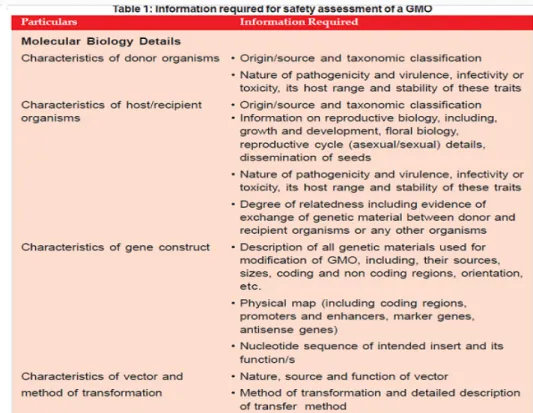
Among the scientific considerations included in the handbook, particular attention is given to the information required for the safety assessment of GMOs. Various properties related to microbiology, human health implications and environmental effects are considered in this sort of assessment. These characteristics have been presented in a table form for convenience, before being discussed in further detail individually. The table below displays the requirements as presented in the handbook (Guidelines and Handbook for Institutional Biosafety Committees (IBSCs), 2011).
Table 2: Information required for safety assessment of a GMO
Source: The Guidelines and Safety handbook for institutional biosafety committees (IBSCs),2011
The handbook also contains information to make it easier for applicants to the RCGM. These general guidelines assist applicants for compliance with their applications and enable them to be processed in an appropriate amount of time. Different application forms are also available to prospective applicants for various activities (Guidelines and Handbook for Institutional
26
Biosafety Committees (IBSCs), 2011). Some of the guidance included for applicants in the document is shown below:
Figure 5: General guidance for applicants
Source: The Guidelines and Safety handbook for institutional biosafety committees (IBSCs),2011
From a comparison standpoint, the competent authority has remained a key feature defining India’s approaches towards GMOs and GM products. The pre-Cartagena era “Rules 1989” set the benchmark for this to occur. Since then, little has changed in the Cartagena era with regards to the way in which the various committees included in the competent authority function.
However, the recent 2011 handbook on IBSCs shed some light on the more intricate aspects of one of the six committees which constitute one of the competent authority in the system. The presence of this document makes for a more structured way of understanding the way in which IBSCs operate, their roles and functions, and compliance with the Rules of 1989. Moreover, the safety aspects pertaining to the use of GMOs are considered in great detail. A checklist is provided, which enables members of the committee to review research proposals from investigators. At the same time, valuable information is present to help applicants with their submissions to the RCGM, and a number of application forms are available for different activities to help in this regard. India has only built from the knowledge acquired in the transition from the pre-Cartagena to the modern-day post-Cartagena era, and this reflects in the way that the document has been prepared by the Department of Biotechnology.
27 Nature of risk assessments
Risk assessments are one of the defining concepts for ensuring biosafety. It is defined as “the process used to identify the hazardous characteristics of an infectious organism, the activities that could lead to exposure, the chances of contracting a disease after an exposure and the consequences of an infection” (UAB - Universitat Autònoma de Barcelona, n.d.). It turns out that the principle of risk assessment has existed as part of the regulatory mechanism for GMOs in India, for a long time. This section examines the historical presence of risk assessments in the context of India, thus giving an insight into how the approach has changed in their policy for risk assessments with the passage of time.
The 1990 Recombinant DNA (rDNA) Safety guidelines Act is one of the first instances of risk assessment becoming a prominent part of the biosafety protocols in India. Overall, the act analyses research work associated with GMOs. It also incorporates important aspects such as rDNA technology, genetic transformation, and intentional/ unintentional release of organisms produced by rDNA into the environment etc. ("Recombinant DNA safety guidelines, 1990,"
n.d.). In this guideline reference is made to “basic scientific considerations that may be relevant in assessing the possible risks associated with the use of rDNA organisms.” Furthermore, for the risk assessment purpose, this criterion is fluid and changes on a case-by-case basis. The degree of detail involved in the risk assessment depends on the specific proposal for the rDNA organism. However, in general, few major categories are considered under the risk assessment features. These include characteristics of donor and recipient organisms, character of the modified organism and expression and properties of gene products. These broader characteristics are further divided to provide more information which should be checked by means of risk assessment. The guidelines also contain a list of factors which must be taken into account for environmental release of GMOs. All these factors are determined as per the international; standard of assessment of any GMOs intended for environmental release. A checklist is given to qualitatively assess several processes being carried out("Recombinant DNA safety guidelines, 1990," n.d.).
The 1994 Revised Guidelines for Safety in Biotechnology, built on the aforementioned 1990 guidelines. It establishes the biosafety measures which must be followed in India for research purposes and environmental release of GMOs. In accordance with the previous guidelines, here risk assessment factors have been clearly identified and presented in a 19-point list. It is mentioned that this information, along with other useful protocols, must be presented to the GEAC (Revised Guidelines for Safety in Biotechnology, 1994). A slight difference from this norm is noticed in the 1998 revised guidelines for research in transgenic plants. The document is intended for researchers involved in rDNA research on plants in India. Since it focuses on plants, the risk assessment information present in the guideline emphasizes biological aspects of transgenic plants and strategies to minimize associated risks are also included as a part of
28
this protocol. It must be noted that risk assessment criteria must be documented as part of a registration document, according to the guideline (Revised Guidelines for Research in Transgenic plants & Guidelines for Toxicity and Allergenicity evaluation of transgenic seeds, plants and plant parts , 1998).
So, having looked at historical perspectives in India, how does the modern-day version of risk assessment deviate from that established many years ago? Firstly, it must be noted that the inception of the Cartagena era has heralded a change in the way risk assessments are accessed, with a set of requirements becoming commonplace and important documents relating to risk assessments a necessity. For every genetically modified crop that is being produced, an executive summary format has been devised as part of risk assessment. Here, a set of specific criteria is looked at and evaluated, in order to verify the quality of the GMO. A snapshot of the executive summary of a particular form of genetically modified cotton from the event MON 531 is shown below. The curious fact is that the executive summary evaluates the same particular things, regardless of the product in question. Since this has been so extensively repeated over many variations and types of genetically modified crops over the years, it can be said that regulations targeting the aspect of executive summary report has borne fruitful results many a time.
Figure 6: Executive summary of risk assessment of Event name MON 531, Source: Biosafety Clearing House (BCH)
29
One of the main components integrated into the Cartagena Protocol is the need or requirement for an Environmental Risk Assessment (ERA). In terms of guidelines, it must be mentioned that the 2016 ‘Guidelines for the Environmental Risk Assessment of Genetically Modified Plants’ epitomized India’s new way of coping with the risk assessment feature. Here, all relevant aspects of the risk assessment process have been described, such as laying out the foundation for problem formulation of the risk assessment and considering the information requirements for the risk assessment process. Moreover, the guidelines contain a checklist of information for the risk assessment, which details out particular characteristics which require the greatest attention (Guidelines for the Environmental Risk Assessment of Genetically Engineered Plants, 2016).
Countries handle the risk assessment in differing ways. In India’s case for example, there are clearly defined guidelines for the risk assessment protocol, and there is an executive summary report, which details some of the more important features regarding the risk assessment of the particular GMO at hand. The information required to satisfy the guidelines are present in the BCH website, in the organism and LMO records, and also in additional documents. The 2016 guidelines for genetically modified plants are much more thorough, detailed and elaborate compared to those of the pre-Cartagena era, and also follow a certain format which has been provided, and a checklist of all critical factors which have to be evaluated while making the environmental risk assessment is provided for applicants and risk assessors to refer to (Guidelines for the Environmental Risk Assessment of Genetically Engineered Plants, 2016).
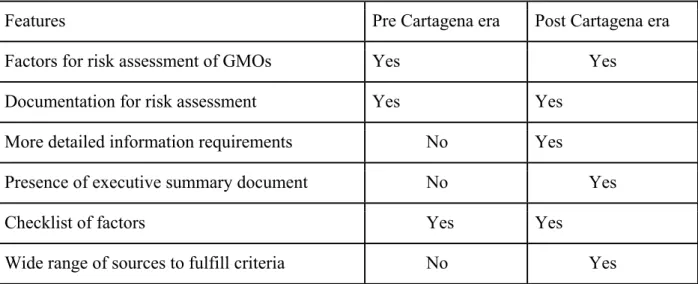
Table 3: Features of Risk assessments compared across Pre Cartagena era and Post Cartagena era
Features Pre Cartagena era Post Cartagena era
Factors for risk assessment of GMOs Yes Yes
Documentation for risk assessment Yes Yes
More detailed information requirements No Yes
Presence of executive summary document No Yes
Checklist of factors Yes Yes
Wide range of sources to fulfill criteria No Yes
The comparison of risk assessment between the Cartagena era and the pre- Cartagena era is given above. It can be observed that there are several similarities across these times. The contrast really lies in the recent changes to risk assessment, such as the requirement of having
30
an executive summary, or having an elaborate information requirement for the risk assessment itself. With the Internet being such a useful tool these days, the sources of information needed to fill the demands of the risk assessment are wide ranging, with various helpful websites such as BCH aiding in this regard. Moreover, many additional documents are available which help satisfy the risk assessment criteria in the modern day and age. In comparison, the executive summary report itself is quite lacking in depth knowledge, so it can be suggested that the Indian biotechnology industry seeks to improve on this front, by incorporating more information into the executive summary report, as per the requirements of existing guidelines.
Requirement for containment measures
Containment is one of the integral aspects of biosafety. In simple terms, it refers to the various practices, procedures, techniques and use of appropriate machinery in order to work with hazardous materials. Containment is intended to significantly reduce the risk posed by these biological hazards to either people or the environment ("Biosafety: Containment," 2017). The degree to which containment measures are highlighted for GMOs in India has evolved over the years, and this is the subject of this particular section.
The 1998 Revised guidelines for research in transgenic plants provides an insight into the containment methods of the Pre Cartagena era. According to this guideline, experiments for transgenic plants are divided into separate risk categories, and the higher the category, the greater the level of risk involved in performing the experiment. The containment measures proposed by the guidelines differ depending on the risk category of the individual experiment.
Category I experiments, for example, are required to be done while maintaining standard good laboratory practices. On the other hand, the category II experiments must be performed in greenhouses, and have to follow a design pattern for the contained facility. The facility itself has to abide by specifications, in order for the investigations to be carried out, in order to considerably decrease the chances of transgenes entering the environment. Finally, category III experiments must be carried out in greenhouses as well, and care is taken to reduce environmental impact or potential damage to human health, by having a mandate which requires the contained facility to be in absolute isolation from the open environment. Moreover, a plan is included in the guidelines showcasing the specifications for the greenhouse structure (Revised Guidelines for Research in Transgenic plants & Guidelines for Toxicity and Allergenicity evaluation of transgenic seeds, plants and plant parts, 1998). One of the plans is shown below:
31
Figure 7: Plan for greenhouse structure Source: Revised Guidelines for Research in Transgenic plants, 1998
The 2011 Guidelines and Safety handbook for institutional biosafety committees contains information pertaining to containment measures of this day and age. The guidelines provide a checklist where containment facilities are given particular attention. A specific detail, which is included is the implementation of both biological and physical containment measures, as a viable strategy to counteract the difficulty of physical containment measures for hazardous microbes. A table is included to highlight the biosafety levels which need to be maintained, along with the corresponding containment level which needs to be required in order to make the facility functional (Guidelines and Handbook for Institutional Biosafety Committees (IBSCs), 2011). This is shown below:
Table 4: Summary of Biosafety levels for infectious agents (reproduce from Guidelines and Safety handbook for institutional biosafety committees, 2011)
32
Moreover, key features involved in upholding biosafety are also mentioned in this guideline.
Basic laboratory etiquette, such as maintaining proper hygiene has been referred to. Also, the need for emergency planning in case of an unintended event or accident has been emphasized.
The equipment available must be properly calibrated and validated before use. A few standard requirements also have been set for animal facilities and the environment. A careful review must be produced based on the experiments planned, and the variety of organisms being used, before the experiment can be approved. (Guidelines and Handbook for Institutional Biosafety Committees (IBSCs), 2011)
Table 5: Containment measures related to biosafety compared across Pre Cartagena era and Post Cartagena era
Feature Pre Cartagena
era Post Cartagena
era
Basic laboratory guidelines/ good laboratory practice Yes No
Model plan for construction of a greenhouse Yes No
Containment according to category of experiment Yes No
33
Methods to minimize risk arising from use of rDNA
technology Yes Yes
As far as containment measures go, the table above illustrates some of the key differences and similarities across the two passages of time from India’s perspective. Documents in both periods point out relevant ways to decrease the threat offered by biological hazards, by achieving higher containment measures or through different laboratory practices. It is worth noting that during the Pre Cartagena era, a section of the guidelines was dedicated to ensuring good laboratory practices. However, this has been overlooked in the Post Cartagena landscape, probably to do with the fact that such practices are very standard procedure and require no mention. A code of practice has been mentioned in these guidelines, rather than a detailed explanation of good laboratory practices. In the new age, a combination of biological and physical containment measures has been a preferred plan to cope with the threat posed by microbes. One of the notable differences is the need for a comprehensive plan to build a greenhouse in the pre-Cartagena era, which has since been eliminated from the present-day guidelines. In the past, containment strategies were designed based on the risk category of the experiment at hand. However, in the Post Cartagena era the containment level is determined based on the biosafety level instead.
Classification of risk
One of the key components analyzed in the 1990 rDNA safety guidelines are the different safety considerations introduced for ensuring safety when recombinant DNA experiments are being performed. A description is provided of all the ingredients needed for such experiments to take place, including the donor DNA sequence, vector and the host. The guideline advocates that the donor microorganisms pose the biggest threat. Thus, it proposes that these microorganisms be categorized according to their respective risk levels and thus containment measures can be designed for it properly. This way of thinking led to the development of risk groups for microorganisms, based on the level of risk they provide to human beings and to the environment. Since the guidelines portray India’s situation, the level of risk attributed to each microorganism depends on the popularity of the harm caused by it in the country. Risk groups have been made to cover various strains of bacteria, fungi, parasites and viruses etc (India.
Department of Biotechnology, 1990).
The 2016 Guidelines for Environmental Risk Assessment of Genetically Engineered Plants look at the matter slightly differently. Firstly, it differs from the previous guideline, as it emphasizes the potential risks of genetically modified plants, rather than covering biosafety guidelines related to the use of many different organisms. The risk assessment process for genetically engineered plants allows regulators to identify likely adverse effects caused by these plants, obtain scientific evidence of the probability and damage of the adverse effects, and critically evaluate the risk level posed by the plants. Utilizing problem formulation, regulators can identify protection goals, create risk hypotheses to inspect relationships between growing these plants and the protection goals, and ultimately deduce the data required to test
34
the hypotheses. Consequently, the regulators can use this information to determine the danger and probability of the potential harm, leading to an evaluation of the risk arising from the cultivation of the proposed genetically engineered plant (Guidelines for the Environmental Risk Assessment of Genetically Engineered Plants, 2016). The relationship between exposure and hazard is used to give rise to the risk as shown in the figure:
Figure 8: Risk evaluation matrix
Source: Guidelines for Environmental Risk Assessment of Genetically engineered plants, 2016
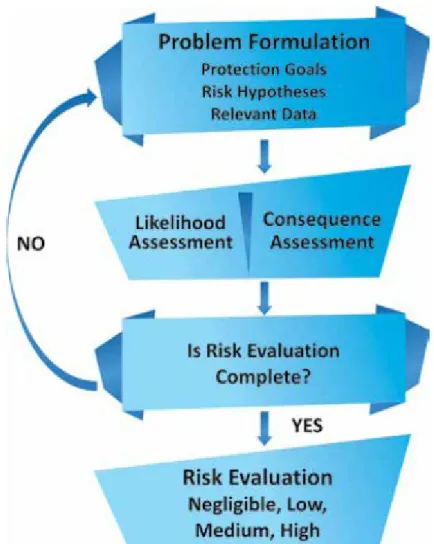
Once the respective risk hypotheses have been tested, the risk assessors may determine the overall risk in order to find if the genetically engineered plant can impact the environment in a much more different manner to the non-genetically modified counterpart. When all the risks have been considered, risk assessors can publish a risk assessment report (Guidelines for the Environmental Risk Assessment of Genetically Engineered Plants, 2016). The entire process is illustrated below:
35
Figure 9: Risk assessment process
Source: Guidelines for Environmental Risk Assessment of Genetically engineered plants, 2016
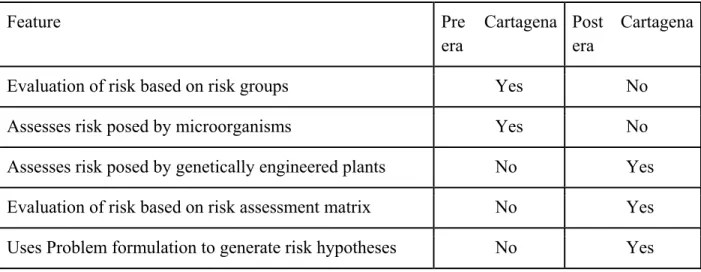
Table 6: Comparison of risk description and calculation across Pre Cartagena era and Post Cartagena era
Feature Pre Cartagena
era Post Cartagena
era
Evaluation of risk based on risk groups Yes No
Assesses risk posed by microorganisms Yes No
Assesses risk posed by genetically engineered plants No Yes Evaluation of risk based on risk assessment matrix No Yes Uses Problem formulation to generate risk hypotheses No Yes
36
Coordination of risk assessors and regulators to determine
overall risk No Yes
The table above displays some ways by which risk is evaluated across both eras. It can be seen that the organism under consideration is different, for example microorganisms are emphasized in the Pre Cartagena era while genetically engineered plants are evaluated in recent times. The risk is evaluated by means of risk groups for different microorganisms in the 1990 guidelines, however in 2016, genetically engineered plants are evaluated according to a risk evaluation matrix. Moreover, in the Post Cartagena era tools such as problem formulation enabled the Indian authority to test out risk hypotheses for determining the risk. Also, the interdependence of risk assessors and regulators helps determine the overall risk in the Post Cartagena era.
Influence of CPB
In this paper, different aspects of regulation for GMOs in India have been analyzed, and their evolution considered across periods of time. However, it is imperative to ascertain the contribution of the CPB to the way in which the government of GMOs has changed, as this forms one of the cornerstones of our hypothesis. Having an understanding of this relationship will provide credence to the extent to which the implementation of a biosafety protocol like the CPB has fundamentally changed the regulatory procedure, or on the flip side, even insignificantly affected it. Thus, it will allow one to assess the impact of the CPB, not in terms of its effectiveness overall, but rather in terms of its involvement in shaping up the way in which modern biotechnology, and any products derived from it, are administered, from the context of the mega country India.
Firstly, one of the heavily emphasized aspects of GMO regulation in India is the composition of a six-part competent authority system, who perform individual roles to ensure the biosafety guidelines and rules are implemented. It must be taken into account that, rather than emphasizing for a six-part competent authority system, Article 19 of the CPB, includes provisions for a Party to have a single or multiple competent national authorities for carrying out the administrative functions as per the Protocol and also a national focal point with the role of acting as a liaison to the Secretariat. Furthermore, the CPB mentions that a Party may assign a single entity for performing the dual role of both these positions (Secretariat of the Convention on Biological Diversity, 2000). This is exactly what takes place in India, with the Ministry of Environment, Forest and Climate Change (MoEFCC) functioning as both the competent national authority and the national focal point ("Competent National Authority,"
2019;"National Focal Point," 2021). Thus, it can be said that the effect of the CPB with regards to the establishment of competent national authority and national focal point, has clearly been instrumental.
One of the pivotal characteristics described by the CPB is the requirement for risk assessments when it comes to GMOs. As already mentioned, risk assessments have always been a part of
37
the regulatory process in India, even dating back to the days where the CPB was not yet in existence. Though several features of the process have remained the same, one of the key additions to the risk assessment procedure in modern day biotechnology is the necessity for an executive summary which details several risk assessment criteria. According to the risk assessment reports for GM crops approved for cultivation in India, preserved in the website BCH, these criteria are the same, regardless of the type of event. If there would have been any noteworthy overhaul to the way in which risk assessments were perceived, it would be reasonable to expect the influence of the CPB towards such a change. In this case, however, the opposite is true. As can be seen by the presence of the same criteria for risk assessment reports of GM products, it is fair to assume that, with respect to the executive summary reports of risk assessments, the CPB has had no effect. This is observed when comparing the risk assessment reports for event MON 531, which is dated to 2002, before the CPB was entered into force, and event MON15985, which is dated to 2006, when the CPB was operating. It is seen that the criteria used in the executive summary reports of risk assessments is identical for each event. (Approval for environmental release of three Bt cotton hybrids containing Cry 1Ac gene(MON 531 event) developed by Maharashtra Hybrid Seeds Company (MAHYCO), 2002;
Approval for environmental release of Bt cotton hybrids (Bollguard II) containing stacked genes cry1Ac and cry2Ab2 genes (MON 15985) developed by M/s Maharashtra Hybrid Seeds Company Limited, 2006).
A key facet of biosafety is the requirement for containment measures. As per the comparison demonstrated in Table 5, we can see that this particular feature has changed somewhat through the passage of time, across eras. It can be seen that many of these measures have not stood the test of time, such as the need for a greenhouse plan for genetically modified plants or a section dedicated specifically to ensuring good laboratory practices. This could be interpreted as gradual acceptance of GMOs such that these containment measures are not referred to anymore. This is not to say that containment has been completely neglected in this new era, existing guidelines of today definitely reflect some of these, such as including a code of practice, basic laboratory etiquette and mandating an extensive review of any experiments in question. It is difficult to say whether the new system is an effect of a changing attitude towards GMOs or the impact of the CPB towards creating a much more modern plan to deal with such products. So, it is fair to attribute disparity in containment measures to a combination of both factors.
The critical point of any biosafety guideline is to provide or determine the risk which can be expected with a GMO, when released to the environment or to human health. It is fascinating to see the way in which risk deduction has evolved over the years, with the introduction of so many regulations targeted at GMOs. In the modern era, we observe that the overall risk posed by a GMO can be determined in a comprehensive manner. The fashion in which the risk is calculated is in line with the CPB literature. According to the methodology section of risk assessment, in Annex III of the CPB, the overall risk has to be valued based on the probability and eventual consequence of the risk coming into fruition (Secretariat of the Convention on Biological Diversity, 2000). The regulatory process in place today, in India, uses the Risk Evaluation matrix to find out the relationship between the likelihood of exposure and the severity of risk, to eventually produce a risk evaluation. Thus, the CPB has had the desired effect on the regulation procedure, with regards to risk determination, and moreover this
38
technique advocated by the Protocol has been accepted by India’s biotechnology sector to further augment their existing guidelines, with new and effective tools such as the Risk Evaluation matrix to obtain risk evaluation.
References
Ahmar, S., Gill, R. A., Jung, K., Faheem, A., Qasim, M. U., Mubeen, M., & Zhou, W.
(2020). Conventional and molecular techniques from simple breeding to speed
breeding in crop plants: Recent advances and future outlook. International Journal of Molecular Sciences, 21(7), 2590. https://doi.org/10.3390/ijms21072590
Applications of Biotechnology in Agriculture. (n.d.). CK-12 Foundation.
https://www.ck12.org/book/cbse_biology_book_class_xii/section/15.2/
Biotechnology and climate change. (n.d.). USDA. Retrieved April 4, 2022, from https://www.usda.gov/topics/biotechnology/climate-change
Crop improvement methods. (n.d.). Learn.Genetics. Retrieved April 3, 2022, from https://learn.genetics.utah.edu/content/cotton/crop/
ISAAA brief 55-2019: Executive summary. (n.d.). International Service for the Acquisition of Agri-biotech Applications - ISAAA.org.
https://www.isaaa.org/resources/publications/briefs/55/executivesummary/default.asp Parties to the Cartagena protocol and its supplementary protocol on liability and redress.
(n.d.). The Biosafety Clearing-House (BCH). Retrieved February 11, 2022, from https://bch.cbd.int/protocol/parties/
Secretariat of the Convention on Biological Diversity. (2000). Cartagena Protocol on Biosafety to the Convention on Biological Diversity. Convention on Biological Diversity. https://www.cbd.int/doc/legal/cartagena-protocol-en.pdf
39
Understanding Cartagena Protocol on Biosafety: A Guide. (2017). Ministry of Environment, Forest and Climate Change. https://www.geacindia.gov.in/resource-documents/14- Understanding_Cartagena_Protocol_on_Biosafety_A_Guide.pdf
United Nations. (n.d.). Food. Retrieved April 4, 2022, from https://www.un.org/en/global- issues/food
Weale, A. (2010). Ethical arguments relevant to the use of GM crops. New Biotechnology, 27(5), 582-587. https://doi.org/10.1016/j.nbt.2010.08.013
Regulatory Framework for GE Plants in India. (2015). Ministry of Environment, Forest and Climate Change. https://www.geacindia.gov.in/resource-documents/13_2-
Regulatory_Framework_for_GE_Plants_in_India.pdf
RULES FOR THE MANUFACTURE, USE/IMPORT/EXPORT AND STORAGE OF HAZARDOUS MICROORGANISMS/ GENETICALLY ENGINEERED ORGANISMS OR CELLS. (1989). MINISTRY OF ENVIRONMENT & FORESTS.
https://www.geacindia.gov.in/resource-documents/biosafety-regulations/acts-and- rules/Rules-for-the-manufacture-use-import-export-and-storage-1989.pdf
Committees for dealing with gmos in India: India. Biology Discussion. (2016, December 12). Retrieved March 9, 2022, from
https://www.biologydiscussion.com/biotechnology/committees-for-dealing-with-gmos-in- india-india/68392
Guidelines and Handbook for Institutional Biosafety Committees (IBSCs). (2011).
https://geacindia.gov.in/resource-documents/biosafety-regulations/guidelines-and- protocols/Handbook_2011.pdf
UAB - Universitat Autònoma de Barcelona. (n.d.). Biological risk assessment. Biological risk assessment - Institutional Biosafety Committee - UAB Barcelona. Retrieved March 18, 2022, from https://www.uab.cat/web/risk-management/biological-risk-assessment- 1345767875229.html#:~:text=Introduction,the%20consequences%20of%20an%20infecti on
Kaushik, A. S. (2016, April 12). Recombinant DNA safety guidelines, 1990. ICAR Biosafety Portal. Retrieved March 18, 2022, from
https://biosafety.icar.gov.in/recombinant-dna-safety-guidelines-1990-2/
40
India. Department of Biotechnology. (1990). Recombinant DNA safety guidelines and regulations.
Revised Guidelines for Safety in Biotechnology. (1994). Department of Biotechnology.
https://biochem.du.ac.in/web/uploads/30%20Guidelines%20for%20Safety%20in%20Biot echnology.pdf
REVISED GUIDELINES FOR RESEARCH IN TRANSGENIC PLANTS & GUIDELINES FOR TOXICITY AND ALLERGENICITY EVALUATION OF TRANSGENIC SEEDS, PLANTS AND PLANT PARTS. (1998). Department of Biotechnology.
https://biosafety.icar.gov.in/wp-
content/uploads/2015/11/Rev_Guidelines_Research1998.pdf
Guidelines for the Environmental Risk Assessment of Genetically Engineered Plants.
(2016). Government of India.
https://ibkp.dbtindia.gov.in/DBT_Content_Test/CMS/Guidelines/20181115134854330_G uidelines%20for%20the%20Environmental%20Risk%20Assessment%20of%20Genetical ly%20Engineered%20Plants,%202016.pdf
Biosafety: Containment. (n.d.). Retrieved March 24, 2022, from
https://blink.ucsd.edu/safety/research-lab/biosafety/containment/index.html
Revised guidelines for research in ... - icar biosafety portal. (n.d.). Retrieved March 24, 2022, from https://biosafety.icar.gov.in/wp-
content/uploads/2015/11/Rev_Guidelines_Research1998.pdf
Cartagena Protocol - Convention on Biological Diversity. (n.d.). Retrieved April 10, 2022, from https://www.cbd.int/doc/legal/cartagena-protocol-en.pdf
National focal point. Convention on Biological Diversity. (n.d.). Retrieved April 10, 2022, from https://www.cbd.int/kb/record/focalPoint/7665
India | BCH-CNA-in-114476 | Competent National Authority ... (n.d.). Retrieved April 10, 2022, from https://bch.cbd.int/database/record.shtml?documentid=114476
Secretariat of the Convention on Biological Diversity. (2000). Cartagena Protocol on Biosafety to the Convention on Biological Diversity. Convention on Biological Diversity.
https://www.cbd.int/doc/legal/cartagena-protocol-en.pdf
Approval for environmental release of three Bt cotton hybrids containing Cry 1Ac gene(MON 531 event) developed by Maharashtra Hybrid Seeds Company (MAHYCO).
(2002). https://bch.cbd.int/en/pdf/documents/nationalRiskAssessment/BCH-RA-IN- 103020/2
41
Approval for environmental release of Bt cotton hybrids (Bollguard II) containing stacked genes cry1Ac and cry2Ab2 genes (MON 15985) developed by M/s Maharashtra Hybrid Seeds Company Limited.
(2006). https://bch.cbd.int/en/pdf/documents/nationalRiskAssessment/BCH-RA-IN- 103089/4