Raw Material handling & Physical
Separation
Mixtures can be same phase...
Mixtures
Solid + Solid
Liquid + Liquid
Gas + Gas
3/28/2022 2
Or Mixtures can be mixed-phase
Mixtures
Solid + Liquid
Solid +
Gas Liquid + Gas
3/28/2022 3
. Separation of Substances (Pure Substances and Mixtures)
A pure Substance consists of only one kind of particles.(e.g: Water)
A mixture…..
o consists of two or more different substances that are mixed but not chemically combined.
o they do not have well defined specific properties.
o can be separated into its components by physical means.
Examples of Mixtures
Types of Mixture: Two types
A homogeneous mixture is that which has the same composition throughout, that is, its components are
uniformly distributed and cannot be distinguished from each other.
A heterogeneous mixture is that which does not have the
same composition throughout, that is, its components are not uniformly distributed and can be distinguished from each
other.
• Corn oil
• White vinegar
• A sugar solution
• A salt solution
3/28/2022 Prepared by JGL
8
Homogeneous Mixtures
Solid + Solid
• Alloys – mixtures of metals
• Example : brass (Cu/Zn)
Liquid + Liquid
• Example: gasoline (a mixture of hydrocarbon compounds)
Gas + Gas
• Example: Air ( N2, O2 , Ar, CO2 , other gases)
Gas + Liquid
• Example:
Carbonated
beverages (CO2 in water)
Solid + Liquid
• Example: Sea water ( NaCl and other salts in water)
Solid + Gas
• Example: H2 in platinum or palladium
3/28/2022 Prepared by JGL
9
Heterogeneous Mixtures Solid + Solid
• Example : Gravel (sand, clay and small rocks)
Liquid + Liquid
• EMULSION
• Example: milk
Solid + Liquid
• SUSPENSION: Examples:
Tomato juice, jelly, blood
• COLLOIDS: Example: glue, paint
Solid + Gas
• Example: Smoke
(Air and carbon
particles)
Liquid-Liquid solutions
Immiscible Partially
miscible Miscible
3/28/2022 10
Example:
Oil and water
Example:
Ethanol and water Example:
Phenol and water
Increasing mix ability
Heterogeneous mixtures
Emulsions Colloids
Suspensions
3/28/2022 Prepared by JGL
11
Solute does not fully dissolve in solvent Solute particles are clearly visible
Solute particles settle out upon standing
Liquid + liquid
Will separate into immiscible liquids ONLY if no stabiliser added
Solution <Solute particle size<
Suspension
Solute particles do not settle out on standing
Solute particles can pass through filter paper
Increasing solute particle size
Definition of solute, solvent and solutions
3/28/2022 Prepared by JGL
12
Solute Solvent Solution
homogeneous mixture The substance
which is being dissolved
substance in which the
solute is dissolved
3/28/2022 Prepared by JGL
13
DECREASING SOLUBILITY
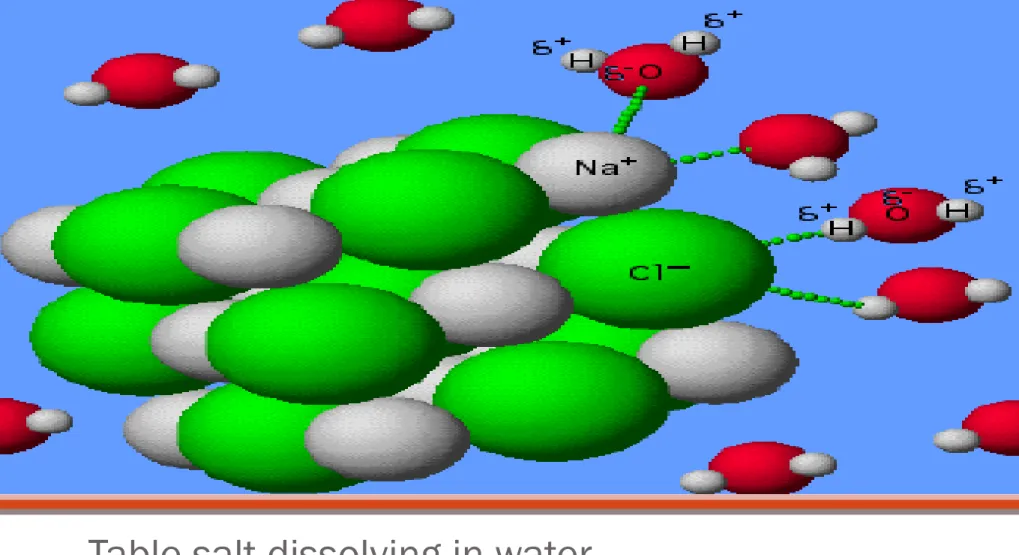
Table salt dissolving in water
Dissolving.
When a solute dissolves in a solvent, the particles of the solute fit in between the particles of the solvent.
There is no chemical reaction. The change is reversible and the essential components of the mixture remains the same.
3/28/2022 14
Methods of Separation
3/28/2022 Prepared by JGL
15
Physical method
No new substance formed No Change in chemical nature
Using physical properties
Vs
CHEMICAL METHOD New substance(s) formed Change in chemical nature
Using chemical properties
A mixture of different types of atoms and molecules
3/28/2022 Prepared by JGL17
Separate atoms and molecules
O O
N N
O O
O O
N N
N N
Can be separated
by PHYSICAL
MEANS into
Types of separation techniques
3/28/2022 Prepared by JGL
18
Separation of mixtures
S
Identify the different ways of separating mixtures.
Determine how the different ways are used to separate mixtures.
Identify the ways in which Hand Picking, Threshing, Winnowing, Sieving, Magnetic Attraction, Sublimation,
Evaporation, Crystallization, Sedimentation & Decantation,
Loading, Filtration, Distillation, Centrifugation, and Paper
Chromatography can be used in daily life.
Different ways of separating mixtures:
Hand Picking
Threshing
Winnowing
Sieving
Magnetic Attraction
Sublimation
Evaporation
Crystallization
Sedimentation & Decantation
Loading
Filtration
Distillation
Centrifugation
Paper Chromatography
The components of a solid-solid mixture can be separated by hand picking.
This is only useful when the particles are large enough to be seen clearly.
For example
separating pebbles from rice or dal, separating grass from mint leaves, and separating parts of a salad
Hand Picking
Threshing
Threshing is the method that generally used by the farmers to separate the grains from the stalks after harvesting.
The dried stalks are beaten or threshed to separate the grains.
However, in large farms threshing is done by using threshing machines
Winnowing
In Winnowing the mixture is allowed to fall from a height.
The lighten components get separated from the heavier ones because of wind or air blow.
This method is used to separate lighter husk from heavier Grains like wheat.
Sieving
Sieving is used to separate a dry mixture which contains substances of different sizes by passing it through a sieve.
A sieve is a device containing tiny holes and separates wanted elements from unwanted material.
Magnetic separation
Magnetism is a process in which magnetically susceptible material is
extracted from a mixture using a magnetic force.
Solid + solid mixtures
SUBLIMATION
• One substance sublimes, the other does not
• Example: Ammonium chloride + sodium chloride
SOLVENT
EXTRACTION
• Differing solubilities in a particular solvent
• Example: Iodine + sodium chloride
3/28/2022 Prepared by JGL
27
Liquid + liquid mixtures
FRACTIONAL DISTILLATION
• Miscible
• Slightly differing boiling points
• Example: Ethanol + water
SEPARATING FUNNEL
• Immiscible
• Differing densities
• Example: Oil + water
3/28/2022 Prepared by JGL
28
Solid + Liquid mixtures
SUSPENSION
• DECANTATION.
• Different particle size.
• Example – chalk + water
• FILTRATION.
• Different particle sizes.
SOLUTIONS
• EVAPORATION/ CRYSTALLIZATION
• Widely differing boiling points
• Example: Copper sulphate + water
• SIMPLE DISTILLATION
• Widely differing boiling points
COLLOIDS
• CHROMATOGRAPHY
• Differing solubilities in a particular solvent leading to differing speeds of movement on chromatogram
• Example: screened methyl orange
3/28/2022 Prepared by JGL
29
Sublimation
The process in which a solid changes directly into gaseous
state on heating is called sublimation.
Evaporation is a process in which a liquid changes into gaseous form on heating. Allowing the liquid to evaporate, leaving the soluble solid behind.
Crystallization
Crystallization is a process which separates a pure solid in
the form of its crystals from a saturated solution.
Sedimentation and Decantation
Sedimentation is the process by which the insoluble, heavy solid particles
settle down their own in a solution. In order to separate the two, the liquid has
to be gently poured into another container without disturbing the sediments.
Decantation
This process of obtaining clear liquid by pouring a solution from a
container in order to leave the sediments in the bottom of the original
container is called decantation.
Loading
Loading is a process which speeds up the sedimentation. In fact, loading is a faster process as compared to
sedimentation.
Filtration
Filtration is commonly the mechanical or physical operation which is used
for the separation of solids from fluids (liquids or gases) by interposing a
medium through which only the fluid can pass.
Distillation
Distillation is the process by which a mixture is separated by heating a solution and condensing using a cooling tube.
The liquid collected is the distillate. Example: Gasoline, kerosene, fuel oil, and lubricating oil are produced from petroleum by distillation.
Centrifugation
Spin sample very rapidly: denser materials go to bottom (outside)
Separate blood into serum and plasma
-Plasma = less dense
-Erythrocytes = red blood cells
-Check for anemia (lack of iron)
Paper Chromatography
Paper Chromatography used to separate out one color from a mixture of colors.