18 Table-3.8 Distribution of the respondents according to their dental decay 20 Table-3.9 Distribution of the respondents according to the knowledge on mouth. 24 Table-3.14 Heard of bad effects of SLT and its source 25 Table-3.15 Distribution of the respondents according to their opinion about health.
Introduction and Background
- Introduction
- Problem statement
- Rationale of the research
- Objectives of the study
- General Objective
- Specific objectives
- Study Design
- Eligibility of Respondents
- Survey Instruments
- Data analysis plan
- Ethical Issues
- Operational Definitions
- Response Rate
Bangladesh is one of the largest producers of tobacco in the world, smokeless tobacco products are used by men, women, adolescents and children. The purpose of the research is to investigate the use of smokeless tobacco and related risk factors.
Quantitative outcomes
Socio Demographic Information
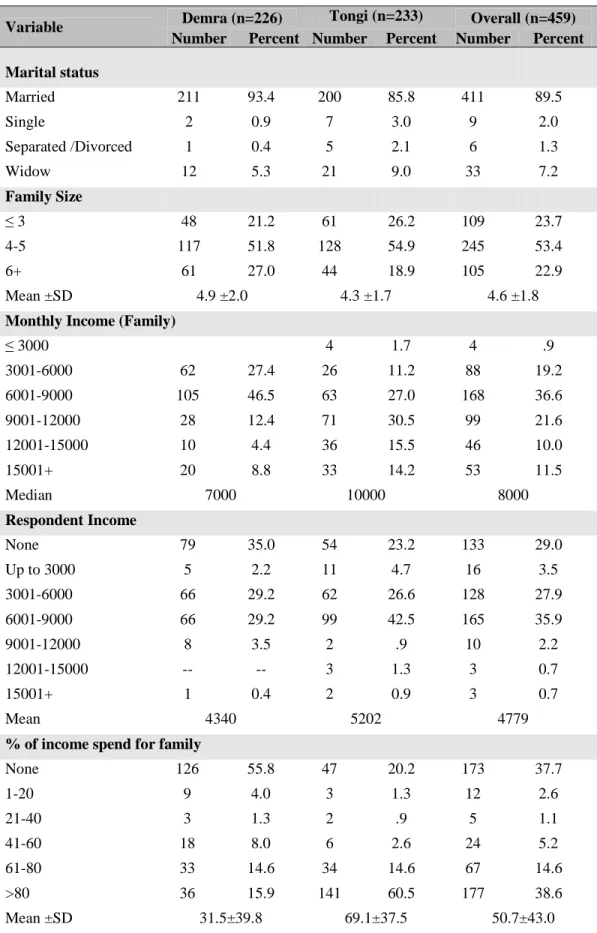
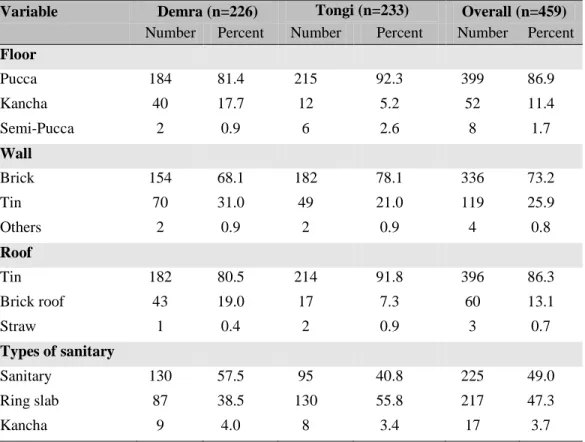
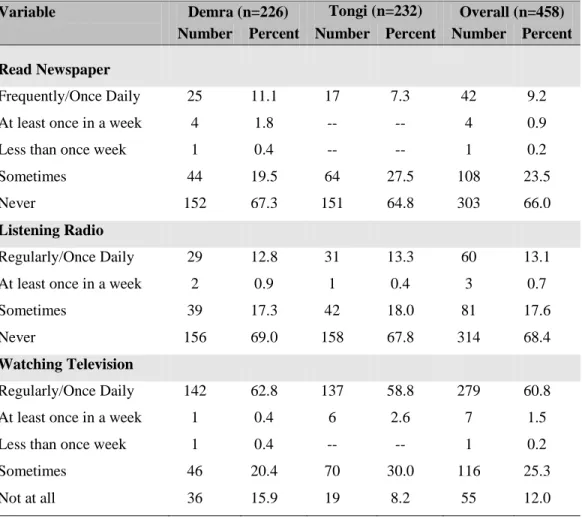
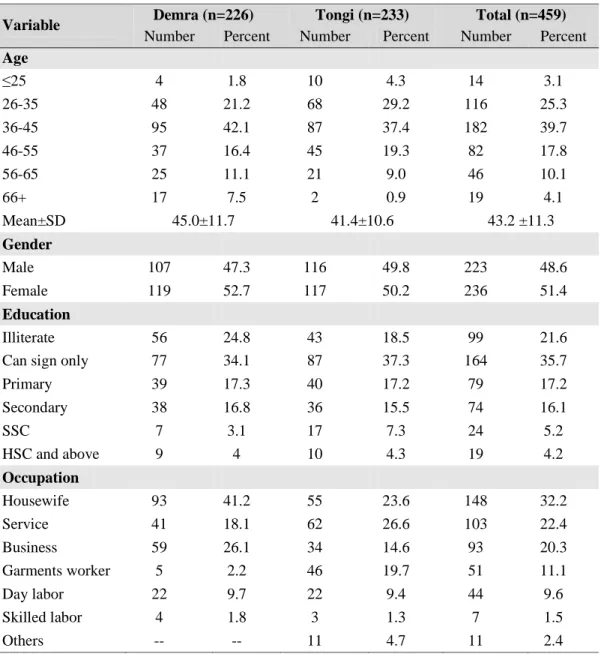
The finding showed that 49 percent had sanitary latrines and 4 percent of respondents used pit toilets. Just over 13 percent of respondents reported listening to the radio regularly, and 61 percent watched TV at least once a day.
Smokeless Tobacco Usage
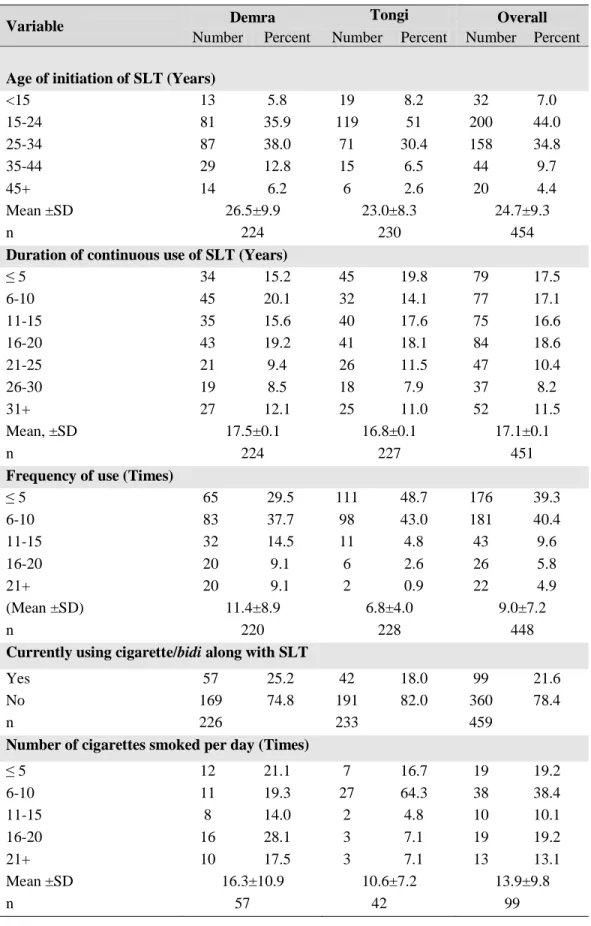
The reach of mass media was assessed by calculating the percentage of respondents who were told that they read, heard, and viewed messages through newspapers, radio, and television, respectively. Nearly half of users started at ages 15-24 and another third started at ages 25-34. The overall mean duration of SLT use was 17 (± 0.1) years and a similar picture was observed in both study areas.
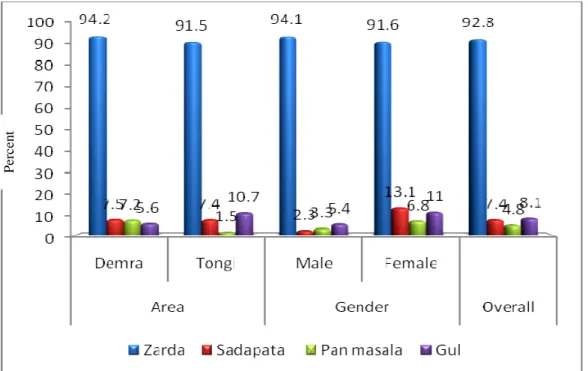
The average frequency of SLT use per day was 9.0 times, which is significantly higher in Demra (11.4 times) than in Tongi (6.8 times). The SLT users mostly use zarda, which is 94 percent in Demra and 92 percent in Tongi. The use of sadapata and gul is higher among women (13.1 percent and 11.0 percent, respectively) compared to that among men (2.3 percent and 5.4 percent, respectively), as found in the study.
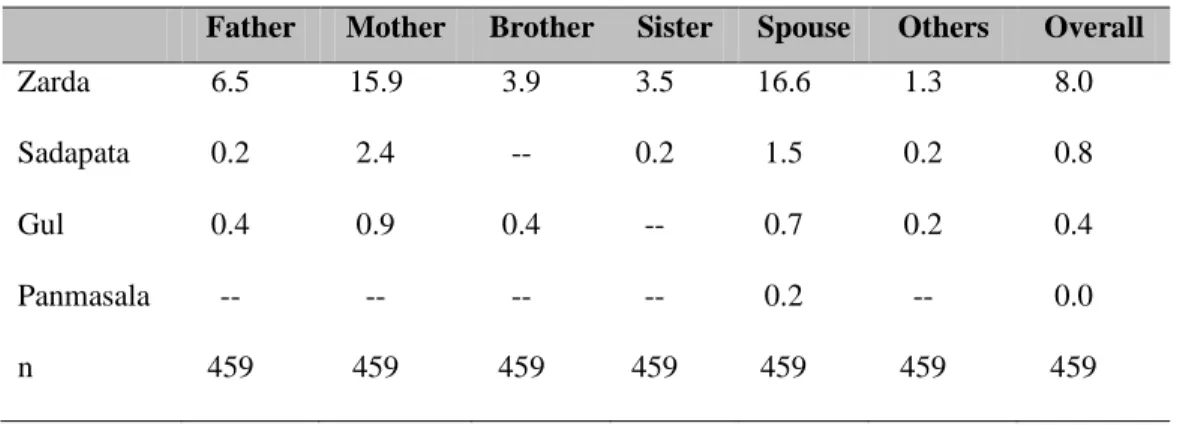
It is clear that the relatives of the SLT users mostly take Zarda (8.0 percent), followed by Sadapata (0.8 percent) and Gul (0.4 percent). It is also observed that mainly the spouse of the SLT users take the same product 17 as about percent of them use Zarda, about 2 percent use Sadapata and almost about 1 percent take SLT in the form of Gul.
Risk Factors with use of Smokeless Tobacco
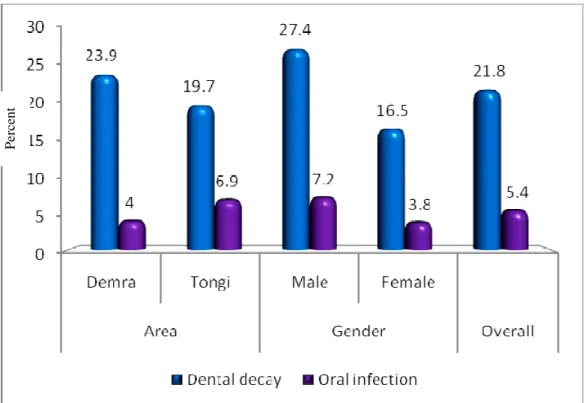
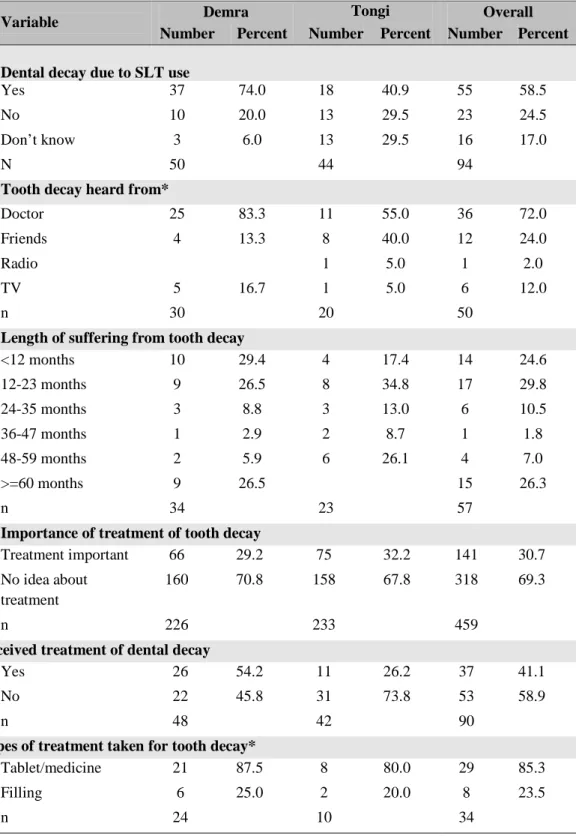
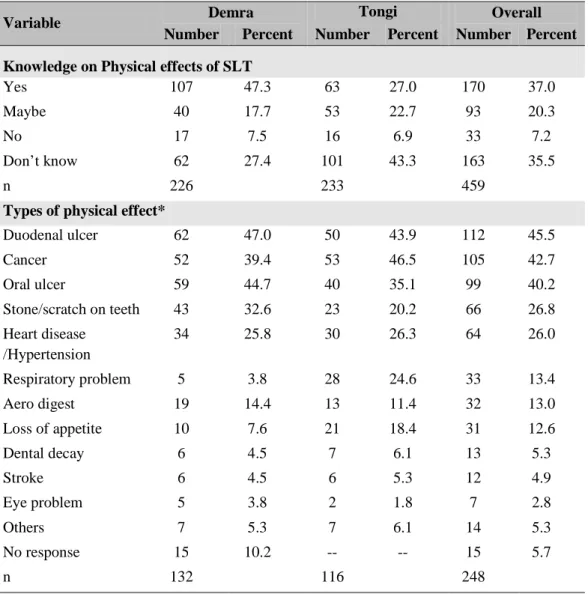
Overall, 37 percent of respondents had knowledge of the physical and harmful effects of SLT use. Chi-square analysis showed that a significantly higher percentage of Demra respondents knew about the negative health effects of SLT use than Tongi (p<0.001). Of the respondents suffering from tooth decay, 59 percent reported that SLT use is the cause of tooth decay.
About half of the respondents with an oral infection said that the use of SLT could be the cause. The study showed that 4 percent of respondents had suffered from heart disease and all received treatment from doctors. About two percent of respondents reported having suffered a stroke in the past.
Most of the affected respondents suspected that SLT use was responsible for the disease and heard about it from the doctor or friends, as shown in Table 3.11. About six percent of the respondents suffered from peptic ulcers at the time of the interview, and most of them suspected of using SLT are responsible for the disease. Table 3.15: Distribution of the respondents according to their opinion about the health hazard of using SLT during pregnancy.
Factors influencing use of Smokeless Tobacco
The survey found that 61 percent women have used SLT during their pregnancy and the rate is higher in Demra (68 percent) than Tongi (52 percent) and is shown in Figure 3.4. A wide range of variation was found in the influencing factors associated with SLT use among the areas, with 59 percent of Demra and 46 percent of Tongi respondents citing peer influence, 50 percent of Demra and 26 percent of Tongi citing easy availability of SLT, 49 percent of Demra and 19 percent of Tongi mentioned removing bad breath, 37 percent of Demra and 25 percent of Tongi mentioned parental influence, 28 percent of Demra and 34 percent of Tongi mentioned influence of older people in the family. The respondents from Demra show higher response rate in all factors compared to Tongi area.
To investigate the effect of SLT use per day among regular SLT users, a chi-square analysis was conducted, which found a significant association with gender (p<0.05) and duration of SLT use (p<0.001) . To investigate the effect on the duration of regular SLT use, a chi-square analysis was conducted to examine the association. A significant association was found with age (p<0.001), education level (p<0.001), including a moderate association with suffering from any condition. disease (p<0.045). Respondents suffering from SLT-related diseases have 3.7 times more knowledge than respondents without diseases (p<0.001).
The analysis suggests that the age of the respondent is related to suffering from any of the selected diseases (p<0.033).

Qualitative outcomes
- SLT use and Perception
- Types of health effects from SLT use
- SLT use during pregnancy and perceptions of related risks
- Intention of shifting of SLT selling to other business
- Suggestions related to reducing SLT users in the community
- Conclusion
From the discussion, it revealed that most of the informants had heard about the adverse health effects of SLT use. One of SLT users said, "We use SLT by chewing it directly, so it is more harmful than cigarette. I have informed all the health risks and health effects of SLT use, but still she Another respondent said,.
Few informants mentioned that SLT eaters may lose all sense of food taste perception due to their eating habits of SLT. Some of SLT users opined that they saw their parents eating zarda and then they started using SLT and became addicted. Health risks of SLT use should be included in the textbooks at school level.
They should take the initiative to raise public awareness through media campaign about the negative health effects of SLT use. Imam of Mosque can play important roles to reduce the number of SLT users as most of them do not use SLT with betel quid. During Friday prayers they can highlight the serious health effects of SLT in their speech.
Discussion and Conclusion
Discussion
Another study in Bangladesh showed that the mean age at initiation of SLT use was 31.5 years (Hossain et al., 2014). A study in Alaska also showed that age was related to SLT use; those under 45 had a higher incidence (7 percent) than those over 45 (3 percent). The age at initiation of SLT use was 25 years and 86 percent of current users reported using Jorda or Sadapata.
A study in Pakistan found that 27 percent of men smoked cigarettes, while 4 percent also used other forms of tobacco (Sara Ijaz Gilani et al., 2012). A study in Dhaka concluded that tobacco consumption – either through chewing or smoking – was a crucial factor in the development of oral cancer (Mehta et al., 1969). In the current study, a significantly higher proportion of respondents from Demra were aware of the adverse health effects of SLT use than those from Tongi (p<0.001).
Consumption of smokeless tobacco during pregnancy is associated with low birth weight infants (Gupta et al., 2004). One in four respondents reported having tried to stop using SLT in the past, and approximately 29 percent of respondents did not feel any need to give up SLT use. Twenty-six percent of respondents have a future plan to stop using SLT, according to the survey.
Conclusion
Logistic regression analysis was performed considering whether the respondents knew the adverse effects of using SLT as the dependent variable and age, sex, family member using SLT, suffering from any of the selected diseases and access to media as the independent variables . The analysis indicates that male respondents are 2.7 times more knowledgeable compared to females (p<0.001); respondents suffering from SLT-related diseases are 3.7 times more knowledgeable than the respondents without selected diseases (p<0.001).
Recommendations
Chandrashekhar T Sreeramareddy et al., Smoking and smokeless tobacco use in nine South and Southeast Asian countries: prevalence estimates and social determinants from the Demographic and Health Surveys, Population Health Metrics 2014, p-2. Ernster VL, Grady DS, Greene JC, et al.: Smokeless tobacco use and health effects among baseball players. Gilani SI, Leon DA Prevalence and socio-demographic determinants of tobacco use among adults in Pakistan: findings from a nationwide survey conducted in 2012.
Kalaiselvi S, Dhanasekar G, Jeevithan S prevalence and socio-economic markers of tobacco use in rural area of Salem district: focus towards smokeless tobacco. Mathur C, Stigler MH, Perry CL, Arora M, Reddy KS: Differences in the prevalence of tobacco use among urban Indian youth: the role of socioeconomic status. Morris GSD, Vo AN, Bassin S, Savaglio D, Wong ND Prevalence and sociobehavioral correlates of tobacco use among Hispanic children: the Tobacco Resistance Activity Program.
Palipudi KM, Gupta PC, Sinha DN, Andes LJ, Asma S, McAfee T: Social determinants of health and tobacco use in thirteen low- and middle-income countries: evidence from the Global Adult Tobacco Survey. Rani M, Bonu S, Jha P, Nguyen SN, Jamjoum L: Tobacco use in India: prevalence and predictors of smoking and chewing in a national cross-sectional household survey. Prevalence and socio-demographic determinants of tobacco use among adults in Pakistan: findings from a 2012 nationwide survey.
ANNEXURE-A
QUESTIONNAIRE
Use of Smokeless Tobacco by Low Socio-economic Populations and Risk Factors Associated with It
Daffodil International University (DIU)
Title of study: Use of smokeless tobacco by low socioeconomic populations and risk factors associated with it. We are conducting a study on behalf of the Department of Public Health under Daffodil International University (DIU). Smokeless tobacco (SLT) is consumed orally and has been in use for as long as other forms of tobacco consumption and their use have increased (Rogozinski, 1990).
Smokeless tobacco users are at an increased risk for certain types of cancer, especially cancer of the oral cavity, including cancer of the cheeks, gums, lips, tongue, and floor and roof of the mouth. One of the main goals of this research is to identify the risk factors associated with it. What percentage (%) of money do you spend yourself from your income on family expenses.
Have you ever been examined? from the doctor because of this problem. you get because of this problem. Do you plan to quit smoking smokeless tobacco in the future? want to stop chewing smokeless tobacco. negative effects of smokeless tobacco use. What types of risks do you think are inherent in using smokeless tobacco during pregnancy?
ANNEXURE-B
FGD Guidelines
Participants Information
ANNEXURE-C
Enumeration Survey Form
ANNEXURE-D
Pictures