University of Rajshahi Rajshahi-6205 Bangladesh.
RUCL Institutional Repository http://rulrepository.ru.ac.bd
Institute of Bangladesh Studies (IBS) PhD thesis
2015
Strategic Management Practices and Organizational Performance of the
Listed Pharmaceutical Companies in Bangladesh
Alam, Md. Noor
University of Rajshahi
http://rulrepository.ru.ac.bd/handle/123456789/387
Copyright to the University of Rajshahi. All rights reserved. Downloaded from RUCL Institutional Repository.
Strategic Management Practices and Organizational Performance of the Listed Pharmaceutical
Companies in Bangladesh
Ph.D. DISSERTATION
By
Md. Noor Alam
Institute of Bangladesh Studies
Rajshahi University Rajshahi
December 2015
Strategic Management Practices and Organizational Performance of the Listed Pharmaceutical
Companies in Bangladesh
Ph.D. DISSERTATION
BY
Md. Noor Alam Ph.D. Fellow
Session: 2011-12
Institute of Bangladesh Studies Rajshahi University
Supervisor
Professor Dr. Abhinaya Chandra Saha Department of Accounting and Information Systems
University of Rajshahi Rajshahi
Institute of Bangladesh Studies
Rajshahi University Rajshahi
December 2015
Strategic Management Practices and Organizational Performance of the Listed Pharmaceutical
Companies in Bangladesh
By
Md. Noor Alam
A Dissertation
Submitted to the Institute of Bangladesh Studies, Rajshahi University in Partial Fulfillment of the Requirements for the Degree of
Doctor of Philosophy in
Management
Institute of Bangladesh Studies
Rajshahi University, Rajshahi
Bangladesh
DECLARATION
I do hereby declare that the dissertation entitled “Strategic Management Practices and Organizational Performance of the Listed Pharmaceutical Companies in Bangladesh” submitted to the Institute of Bangladesh Studies, University of Rajshahi, as part of the requirements for the degree of Doctor of Philosophy in management is my original work. No part of it, in any form, has been submitted to any other University or Institute for any degree, diploma, or for other similar purposes. All the information derived from the published and unpublished works of other authors have been acknowledged, and references have been cited.
Rajshahi
December 2015
Md. Noor Alam Ph.D. Fellow 2011-12 Session
Institute of Bangladesh Studies University of Rajshahi
Bangladesh
CERTIFICATE
I have the pleasure to certify that the dissertation entitled “Strategic Management Practices and Organizational Performance of the Listed Pharmaceutical Companies in Bangladesh” is an original work of Md. Noor Alam. The research has been conducted under my academic guidance and supervision. He has made distinct contribution to the field of Management through this fundamental work. To the best of my knowledge, this dissertation or any part of it has not been submitted to any other university for any degree. I have gone through the draft and final version of the dissertation and found it satisfactory for submission to the Institute of Bangladesh Studies, University of Rajshahi, in partial fulfillment of the requirements for the degree of Doctor of Philosophy in Management.
Rajshahi
December 2015
Professor Dr. Abhinaya Chandra Saha Department of Accounting and Information
Systems
University of Rajshahi, Rajshahi
ACKNOWLEDGEMENT
It is indeed a matter of great satisfaction that I have completed the dissertation within the stipulated time. At the outset, I express my deep sense of gratitude to almighty Allah, who has given me patience, ability and opportunity. I received unbelievable support and encouragement from a number of academicians while writing this dissertation. I am grateful to all of them.
First, I would like to express my heartiest gratitude to Professor Dr. Abhinaya Chandra Saha, Department of Accounting and Information Systems and Ex-Director, Institute of Business Administration (IBA), Department of Accounting and Information System, University of Rajshahi, Rajshahi, who has supervised my study for the past three years. His scholarly supervision, untiring guidance, easy-going attitude and sympathetic co-operation at all stages of this study made the research and writing of dissertation pleasant and easy. No amount of words can express my gratitude to him.
Specially, I express my indebtness to Professor Dr. Swarochis Sarker, Director of IBS, Dr. M. Zainul Abedin, Professor of Economics, Professor Dr. M. Zakir Hossain, Dr. Mustafa Kamal, Dr. Mohammad Nazimul Hoq, Dr. M. Kamruzzaman who took classes in course work and helped me in enriching my knowledge and changing my attitudes towards proper ways of doing research. I am grateful to all of my teachers of this University, who lectured in course work.
For my field survey, I am indebted to Dr. Golam Sadik, Professor, Department of Pharmacy, University of Rajshahi, Rajshahi who has extended his sincere cooperation to contact with the senior executives of the selected pharmaceutical companies. I also thank all the respondents who participated in my field survey.
Without their help this study might not have been completed.
I like to express gratitude to the Institute of Bangladesh Studies (IBS), Rajshahi University, for providing me with all kinds of academic support and financial assistance for the work, without which this research work would not have been possible. I feel grateful to The Government of the Peoples’ Republic of Bangladesh for granting me deputation without which this research work would have been simply
impossible. For the same I am indebted to the Directorate of Secondary and Higher Education and Ministry of Education, Bangladesh.
I am thankful to the officers and other staff of IBS Library, Central Library, Rajshahi University. I am also thankful to the fellows of different batches particularly session-2011/12 of IBS for supporting and inspiring me.
I have no word to express my deep sense of gratitude to my mother Mrs.
Raufunnessa for her inspiration, encouragement, and sacrifice. I am indebted to my wife, Nafruma Irtiza, who suffered a lot during my long period of deep engagement with this study but offered me all kinds of help, co-operation and inspiration. I am also indebted to my brothers, sisters, father-in-law, mother-in-law whose love and affection inspired me to complete the study. I cannot forget thanking my son Jayed Ariyan who sacrificed paternal caress during my study. With all my heart, I dedicate this dissertation to my family.
Rajshahi
December 2015
(Md. Noor Alam)
ABSTRACT
Strategic management helps the organizations to undertake appropriate policy or strategy which will best fit its resources and capabilities. It mainly focuses on the question of why some organizations succeed and others fail. Research in the field of strategic management is rare in developing and less developed countries, though this field is increasing rapidly in developed countries. This research attempts to study strategic management practices with special reference to Pharmaceutical industry in Bangladesh.
Pharmaceutical sector is one of the most developed hi-tech manufacturing industries in Bangladesh. Although, Bangladesh has achieved remarkable success in pharmaceutical industry in the last several years, this sector has been facing many internal and external challenges. The huge size of the companies, generic drug manufacturers, health-care organizations, the cost of Active Pharmaceutical Ingredients (API), Research and Developments (R&D), aggressive marketing of competitors, quality issues and compliance with the national and international regulations present many organizational and managerial challenges. To successfully proceed in this competitive market, every organization must take proper policy and strategy among the alternatives which ultimately best impact the organizational performance. Therefore, this study aims at exploring how strategic management is being practiced in pharmaceutical companies and to what extent such practices influence the organizational performance.
The specific objectives of this research are to assess the growth and development of Pharmaceutical Industries in Bangladesh; to explore the major characteristics of formulation of strategies at different levels of the listed pharmaceutical companies in Bangladesh; to identify the nature of internal factors like strengths and weaknesses and external factors like threats and opportunities that influence the strategic management practices; to identify the nature and extent of implementing the strategies followed by pharmaceutical companies in Bangladesh; and to analyze the impact of strategic management practices on the organizational performance of the listed pharmaceutical companies.
Total five companies have been selected for this study among the ten listed companies.
Both quantitative and qualitative data have been used for this study. Required data have been collected from both the primary and secondary sources. Primary data were collected through questionnaire survey method and secondary data were gathered from the annual reports and Dhaka Stock Exchange (DSE), Bangladesh Association of Pharmaceutical Industry (BAPI) and Directorate of Drug Authority (DDA).
This research found that growth rate of pharmaceutical industry was 14.6% in last ten years. The Growth of this sector accelerates employment creation, government revenue and helps to provide a better standard of living to the local people. Pharmaceutical market was dominated by MNCs. - now it shifted to local companies which enjoy about 90% of market share. The country is now almost a self-sufficient in its pharmaceuticals products as 97% of the total drug demand is met by local manufacturers.
All the sample companies have formal corporate, business and functional level plans. It is revealed that Board of Directors is involved in formulation of vision and mission statement of all the sample companies. Besides this, corporate level management, Business level manager, corporate planning department and Functional level manager also are involved in different extent to make the organizational strategy. It is found that all types of plan update yearly. Among the analytical tools/techniques, this research found that PEST and SWOT analysis had higher influence on the formulation of company strategies.
The strength factors which influence the formulation of company strategies are brand name, good manufacturing process, delivery system, working environment and use of up-to-date technology, total quality management, product innovations, corporate leadership, professional skill of the employee and research and development. Among the weakness factors, it revealed that the lack of Active Pharmaceutical Ingredients (API) facilities is highly significant for the pharmaceutical companies. Increase of income of people, health awareness of people, modern technology, increasing of private hospital, current economic growth, increase of literacy of people, member of LDC and Current WTO-TRIPS Agreement, govt. drug rules and policy, present export/import policy and govt. industrial policy were most reported opportunities factors for sample companies. The threat factors which influence the pharmaceutical activities are
unethical marketing of competitor, political instability, high rate of interest, lack of power supply, high corporate tax, price of raw materials, govt. drug rules and policy, WTOTRIPS agreement after 2015, lack of API park, local competitors, lack of modern technology and new entrants.
No company has been merged with another company and has made turnarounds, divestiture or elimination of any important operation during last ten years. Only one company has made joint venture business and another company had made acquisitions during last ten years. All the companies considered management of quality as a strategic issue to a great extent. The business and functional level strategies such as product/market growth strategies, R & D strategies, marketing strategies, Human Resource Strategies have been assessed in this study.
Among the product/market growth strategies, introducing existing products in new markets was found as the highest level of consideration followed by new products in existing markets, existing products in current markets and new products in new markets. Health awareness programs, free sample distribution to doctors, ethical marketing, regular contact with the doctor, corporate social responsibility and special reward for employee were identified important marketing strategies for the sample companies. The Human Resource Strategies which were found as important factor in this study were- appropriately sized workforce, skilled employee, formal job duties, closely monitoring system, attractive wage system, using performance appraisals, training programmed and the promotion system of the company.
This study focuses on organizational performance of the pharmaceutical companies which includes the liquidity determinants, activity focus, profitability indicators, leverage and growth output. Overall, all the financial performance ratios of the sample companies are satisfactory but statistically significant variations were found in all the ratios over the years. This research examined the correlation between the strategic management factors and organizational performance of the sample companies. The result found that the strength factors, opportunity factors, product/market growth strategies, R & D strategies, marketing strategies, human resource strategies are positively correlated with organizational performance. On the other hand, quality
management strategies, weakness factors and threat factors are negatively correlated with organizational performance.
This study has several implications to the strategic management practices. Firstly, this study has discussed the overall strategic management characteristics of the pharmaceutical industry in Bangladesh and will allow all level managers (corporate, business and functional) to compare their strategic management characteristics with other organization. Secondly, this study examined the internal and external factors environmental factors which may impact on the strategic management practices and performances of the organization. Finally, this study finding can be useful for professionals others who want to expand their business into pharmaceutical industry by helping them understand different aspects of this industry.
LIST OF ABBREVIATIONS
API Active Pharmaceutical Ingredients
BBS Bangladesh Bureau of Statistics
BCG Boston Consulting Group
BPC Bangladesh Pharmacy Council
BPL Beximco Pharmaceuticals Limited
CV Co-efficient of Variation
DSE Dhaka Stock Exchange
GDP Gross Domestic Products
GSKB GlaxoSmithKline, Bangladesh
IMS International Marketing Services
IPIL IBN Sina Pharmaceutical Industry Limited
LDC Least Developed Country
PEST Political Economic Social and Technological
R&D Research and Development
RL Reneta Limited
SD Standard Deviation
SPL Square Pharmaceuticals Limited
SPSS Statistical Package for the Social Science
SWOT Strength Weakness Opportunity and Threat
TRIPS Trade Related Aspects of Intellectual Property Rights
WTO World Trade Organization
TABLE OF CONTENTS
DECLARATION... i
CERTIFICATE ... ii
ACKNOWLEDGEMENT ... iii
ABSTRACT...v
LIST OF ABBREVIATIONS ...ix
TABLE OF CONTENTS...x
LIST OF TABLES ...xxii
LIST OF FIGURES ...xxviii
CHAPTER ONE: INTRODUCTION ...1
1.1 Introduction...1
1.2 Statement of the Problem...2
1.3 Research Objectives ...4
1.4 Review of the Related Literature ...4
1.5 Research Questions ...13
1.6 Justification of the Study ...14
1.7 Conceptual Framework...14
1.8 Research Methodology ...15
1.8.1 Nature of the Study...15
1.8.2 Types and Sources of Data ...15
1.8.3 Sampling Size and Sampling Method ...15
1.8.4 Procedures of Data Collection ...17
1.8.4.1 Primary Data ...17
1.8.4.2 Secondary Data ...17
1.8.5 Questionnaire Development...17
1.8.6 Pre-test of the Questionnaire and the Final Questionnaire ...17
1.8.7 Data processing, Analysis and Presentation ...18
1.9 Scope of the study ...18
1.10 Chapter Outline ...19
1.11 Conclusion ...19
CHAPTER TWO: THEORETICAL FRAMEWORK ...20
2.1 Introduction...20
2.2 Definition of Strategy ...20
2.3 The Evolution of Strategic Management...21
2.4 Strategic Management ...22
2.5 Strategic Management Process ...23
2.6 Pattern of Strategy...25
2.7 Strategy Formulation System...25
2.8 Strategic Planning ...26
2.8.1 Vision and Mission...26
2.8.2 Objectives and Goals ...26
2.9 Strategic Thinking ...27
2.10 Levels of Strategy...27
2.11 Environment Scanning ...28
2.11.1 External Environments ...29
2.11.1.1 General Environment ...29
2.11.1.2 Industry Environment...32
2.11.2 Internal Environment ...33
2.11.2.1 Organizational Ownership ...33
2.11.2.2 Organizational Culture ...33
2.11.2.3 Management Style...33
2.11.2.4 Stakeholder Expectations ...34
2.11.2.5 Resource Base View of the Company (Resources, Capabilities) ....34
2.12 Planning Tools and Techniques ...34
2.12.1 SWOT Analysis...35
2.12.2 PEST Analysis ...35
2.12.3 Five Forces Analysis ...35
2.12.4 Key Success Factors Analysis...36
2.12.5 Product Life Cycle Analysis ...36
2.12.6 Benchmarking Analysis...37
2.12.7 BCG Product Portfolio Matrix ...37
2.13 Corporate, Business and Functional Level Strategy ...38
2.13.1 Diversification Strategies...38
2.13.2 Research and Development Strategies (R&D)...38
2.13.3 Turnaround Strategies...39
2.13.4 Divestment Strategy ...39
2.13.5 Retrenchment Strategy...39
2.13.6 International strategy ...40
2.13.7 Acquisitions, merger and joint venture strategies ...40
2.13.8 Quality Management Strategy ...41
2.13.9 Marketing Strategy ...41
2.13.10 Human Resource Strategy...41
2.14 Corporate Strategy Implementation ...42
2.15 Evaluating Corporate Strategy ...42
2.16 Organizational Performance ...43
2.16.1 Liquidity Determinants...44
2.16.2 Activity Focus ...44
2.16.3 Profitability Indicators...44
2.16.4 Leverage Output ...45
2.17 Chapter Summary...45
CHAPTER THREE: GROWTH AND DEVELOPMENT OF PHARMACEUTICAL INDUSTRIES IN BANGLADESH ...46
3.1 Introduction...46
3.2 A Brief Review of Bangladesh Economy...46
3.3 Historical Overview of Pharmaceutical Industries...47
3.3.1 Pre-Liberation Period ...47
3.3.2 Post Liberation Period ...50
3.4 Pharmaceutical Industry Structure ...50
3.4.1 Private Sector ...50
3.4.2 Public Sector ...52
3.5 Pharmaceutical Products in Bangladesh...52
3.6 Distribution of Pharmaceutical Products...53
3.7 Association of Pharmaceutical Industries...54
3.8 Registration of Allopathic Drugs ...54
3.9 Quality Control System of Pharmaceuticals ...56
3.9.1 Drug Directorate Administration ...56
3.9.2 Drug Testing Laboratories ...56
3.9.3 Bioequivalence Laboratories...57
3.9.4 International Certification...57
3.10 Pricing system of Drug ...58
3.11 Active Pharmaceutical Ingredients (API) Industrial Park ...58
3.12 Market of Pharmaceutical Products ...59
3.12.1 Market size and Growth...59
3.12.2 Factors behind Market Growth ...59
3.12.3 Market Share of Local and Multinational Companies ...60
3.12.4 International Market of Pharmaceutical Products...61
3.12.5 Geographic Location of Pharmaceutical Companies ...63
3.12.6 Division wise Sales Growth Scenario ...64
3.13 Major Players of Pharmaceutical sector ...65
3.14 Contribution of Pharmaceutical Industries ...66
3.14.1 Healthcare ...66
3.14.2 Employment Generation ...66
3.14.3 Linkage with other industries...67
3.14.4 Contribution to national exchequer ...67
3.14.5 Export Earnings...67
3.14.6 Import Trends of Pharmaceutical Products and Raw Materials...68
3.14.6.1 Import trends of Finished Drugs ...68
3.14.6.2 Import Trends of Raw Materials...70
3.15 Potentialities of Pharmaceutical Industries...71
3.15.1 TRIPS Waiver and Opportunity for Bangladesh ...71
3.15.2 Low Production Cost ...71
3.15.3 Opportunity of Contact and Joint-venture Manufacturing ...71
3.15.4 Health Indicator and Potentials of Future Growth ...72
3.15.5 Other Factors...72
3.16 Chapter Summary...72
CHAPTER FOUR: PRESENT SCENARIO OF FORMULATING THE STRATEGIES OF THE SELECTED PHARMACEUTICAL COMPANIES ...74
4.1 Introduction...74
4.2 Mission and Vision Statement of the Sample Companies...74
4.2.1 Mission Statement ...74
4.2.2 Vision Statement ...75
4.2.3 Personnel Involvement in Formulation of Vision and Mission ...75
4.3 Corporate Level Plan of the Sample Companies ...76
4.3.1 Formulation of Corporate Level Plan...76
4.3.2 Duration of Corporate Level Plans...77
4.3.3 Personnel Involvement in the Formulation of Corporate Level Plans ...77
4.4 Business Level Plans of the Sample Companies ...78
4.4.1 Formulation of Business Level Plans ...78
4.4.2 Duration of Business Level Plans ...79
4.4.3 Personnel Involvement in the Formulation of Business Level Plans...79
4.5 Functional Level Plans of the Sample Companies...80
4.5.1 Formulation of Functional Level Plans ...80
4.5.2 Duration of Functional Level Plans...81
4.5.3 Personnel Involvement in the Formulation of Functional Level Plans ..81
4.6 Organization Culture of the Sample Companies...82
4.6.1 The Major Characteristics of Company Culture ...82
4.6.2 The Influence of Company Culture on Company Strategies ...82
4.7 Management Styles of the Companies ...83
4.7.1 Key Characteristics of Management Styles ...83
4.7.2 The Influence of Management Style on Company Strategies ...84
4.7.3 Significant Problems Faced by the Companies with its Management Style ...85
4.8 The Influence of Stakeholder Expectations on Company Strategies ...86
4.9 Analytical Tools and Techniques Influencing the Formulation of Strategies.86 4.9.1 Influence of PEST (Political, Economic, Social, Technological) Analysis on Formulation of Strategies...87
4.9.2 Influence of Five Forces (Supplier, Buyer, Competitor, New Entrant,
Substitute) Analysis on Formulation of Strategies...87
4.9.3 Influence of SWOT (Strengths, Weaknesses, Opportunities, Threats) Analysis on Formulation of Strategies ...88
4.9.4 Influence of Key Success Factors on Formulation of Strategies ...89
4.9.5 Influence of Benchmarking on Formulation of Strategies ...90
4.9.6 Influence of BCG Service Portfolio Matrix on Formulation of Strategies .90 4.9.7 Influence of General Electric Matrix on Formulation of Strategies...91
4.9.8 Influence of Product Life Cycle on Formulation of Strategies...92
4.10 Comparative Analysis of Influence of Analytical Tools on Formulation of Company Strategies...93
4.11 Chapter Summary...93
CHAPTER FIVE: INFLUENCE OF INTERNAL AND EXTERNAL FACTORS ON STRATEGIC MANAGEMENT PRACTICES ...95
5.1 Introduction...95
5.2 Internal Environmental Factors of Pharmaceutical Companies...95
5.2.1 Strength Factors Influencing Pharmaceutical Companies ...95
5.2.1.1 Brand Name as the Strength of Company ...96
5.2.1.2 Good Manufacturing Process as the Strength of Company...96
5.2.1.3 Delivery System as the Strength of Company ...97
5.2.1.4 Research and Development as the Strength of Company ...98
5.2.1.5 Work Environments as the Strength of Company ...98
5.2.1.6 Use of Up-to-date Technology as the Strength of Company...99
5.2.1.7 Product Innovation as the Strength of Company ...100
5.2.1.8 Own Manufactured Raw materials as the Strength of Company...100
5.2.1.9 Total Quality Management as the Strength of Company ...101
5.2.1.10 Corporate Leadership as the Strength of Company ...102
5.2.1.11 Professional Skill of the Employee as the Strength of Company ..102
5.2.2 Weakness Factors Influencing Pharmaceutical Companies ...103
5.2.2.1 Lack of Good Manufacturing Process (GMP) as the Weakness of Company...103
5.2.2.2 Lack of Research &Development (R & D) as the Weakness of Company...104
5.2.2.3 Lack of Professional Skill as the Weakness of Company ...105
5.2.2.4 Lack of Managerial Leadership as the Weakness of Company...106
5.2.2.5 Lack of Modern Technology as the Weakness of Company...106
5.2.2.6 Lack of Good Pharmacist as the Weakness of Company...107
5.2.2.7 Lack of Ethical Marketing of Competitors as the Weakness of Company...108
5.2.2.8 Lack of Awareness of the Stakeholders as the Weakness of Company...108
5.2.2.9 Lack of Active Pharmaceutical Ingredients (API) as the Weakness
of Company ...109
5.2.2.10 Lack of Capacity Utilization as the Weakness of Company ...110
5.2.2.11 Lack of Wide Distribution Network as the Weakness of Company..110
5.3 External Environmental Factors of Pharmaceutical Companies...111
5.3.1 Opportunity Factors Influencing Pharmaceutical Industry...111
5.3.1.1 Govt. Industrial Policy as an Opportunity for Company's Operation ..112
5.3.1.2 Present Export/Import policy as Opportunity for Company's Operation ...112
5.3.1.3 Current WTO-TRIPS Agreement as Opportunity for Company's operation ...113
5.3.1.4 Increase of Literacy of People as Opportunity for company's Operation ...114
5.3.1.5 Increase of Income of People as an Opportunity for Company's Operation ...115
5.3.1.6 Current Economic Growths as an Opportunity for Company's Operation ...115
5.3.1.7 Modern Technologies as an Opportunity for Company's Operation .116 5.3.1.8 Health Awareness of People as an Opportunity for Company's Operation ...117
5.3.1.9 Increasing of Private Hospital as an Opportunity for Company's Operation ...118
5.3.1.10 Member of Least Developed Country (LDC) as an Opportunity for Company's Operation ...118
5.3.1.11 Govt. Drug rules and Policy as an Opportunity for Company's Operation ...119
5.3.2 Threat Factors Influencing Pharmaceutical Companies...120
5.3.2.1 New Entrants as a Threat for Company's Operation...120
5.3.2.2 Local Competitors as a Threat for Company's Operation ...121
5.3.2.3 Lack of Active Pharmaceutical Ingredients (API) Park as a Threat for Company's Operation...122
5.3.2.4 WTOTRIPS Agreement after 2015 as a Threat for Company's Operation ...123
5.3.2.5 High Rate of Corporate Tax as a Threat for Company's Operation...123
5.3.2.6 Political Instability as a Threat for Company's Operation ...124
5.3.2.7 High rate of Interest as a Threat for Company's Operation...125
5.3.2.8 Lack of Power Supply as a Threat for Company's Operation ...126
5.3.2.9 Price of Raw Materials as a Threat for Company's Operation ...126
5.3.2.10 Govt. Drug rules and Policy as a Threat for Company's Operation...127 5.3.2.11 Lack of Modern Technology as a Threat for Company's Operation .128
5.3.2.12 Unethical Marketing of Competitor as a Threat for Company's
Operation ...128
5.4 Impact of External Environment on Company’s Operations...129
5.4.1 Impact of Political Environment on Company’s Operations...129
5.4.2 Impact of Economic Environment on Company’s Operations ...130
5.4.3 Impact of Bangladeshi Social/Cultural Environment on Company’s Operations ...131
5.4.4 Impact of Technological Environment on Company’s Operations...132
5.5 Overall SWOT Analysis of Sample Pharmaceutical Companies ...133
5.5.1 Strength Analysis of the Pharmaceutical Companies...133
5.5.2 Correlation Analysis of Strength Factors of Pharmaceutical Companies.134 5.5.3 Weakness Analysis of the Pharmaceutical Companies ...135
5.5.4 Correlation Analysis of Weakness Factors of Pharmaceutical Companies 136 5.5.5 Opportunity Analysis of Pharmaceutical Companies...137
5.5.6 Correlation Analysis of Opportunities Factors of Pharmaceutical Companies...138
5.5.7 Threat Analysis of the Pharmaceutical Companies...140
5.5.8 Correlation Analysis of Threats Factors of Pharmaceutical Companies ..141
5.6 Chapter Summary...142
CHAPTER SIX : IMPLEMETATION OF STRATEGIES AT DIFFERENT LEVELS OF THE SELECTED PHARMACEUTICAL COMPANIES ...143
6.1 Introduction...143
6.2 Product/Market Growth Strategies of the Selected Pharmaceutical Companies ...143
6.2.1 Seeking Growth through Introducing Existing Products in Current Markets ...143
6.2.2 Seeking Growth through Introducing Existing Products into New Markets ...144
6.2.3 Seeking Growth through Introducing New Products into Existing Markets ...145
6.2.4 Seeking Growth through Introducing New Products into New Markets..146
6.3 Research and Development (R & D) Strategies of Pharmaceutical Companies ...146
6.3.1 Company’s Consideration to be Highly Technology Innovative...147
6.3.2 Seeking Growth via Acquisitions rather than Internal R & D ...147
6.3.3 The Emphasis of R & D Expenditures is Highly Applied...148
6.3.4 R & D Effort Tends to Avoid High Risk Activity ...149
6.4 Marketing Strategies of the Selected Pharmaceutical Companies...149
6.4.1 Involvement of Health Awareness Programs as Marketing Strategy...150
6.4.2 Free Sample Distribution to Doctors as Marketing Strategy...150
6.4.3 Ethical Marketing as Marketing Strategy ...151
6.4.4 Regular Contact with the Doctor as Marketing Strategy...152
6.4.5 Corporate Social Responsibility as Marketing Strategy...153
6.4.6 Low Price Compared to Competitor’s Price Rates ...153
6.4.7 Special Reward for Employees ...154
6.5 Human Resource Strategies of the Selected Pharmaceutical Companies 155 6.5.1 Appropriate Sized Workforce for the Companies...155
6.5.2 Employees with the Right Knowledge and Skill ...156
6.5.3 Formal Job Duties of the Employees...157
6.5.4 Monitoring the Daily Activities of the Employees ...158
6.5.5 Attracting and Retaining the Employees by Paying a Higher Wage ...158
6.5.6 Using Performance Appraisals to Identify New Skills...159
6.5.7 Arranging Training Programs ...160
6.5.8 Promotion System of the Sample Companies...161
6.6 International Strategies of the Sample Pharmaceutical Companies...161
6.6.1 Do you have any international operations?...162
6.6.2 Corporate planning is conducted on a worldwide...162
6.6.3 Marketing strategies are developed on a worldwide basis ...163
6.6.4 Company seeks foreign markets of existing products...163
6.7 Acquisition Strategy of the Sample Companies ...164
6.8 Merger Strategy of the Sample Companies ...164
6.9 Divestment Strategy of the Sample Companies...165
6.10 Turnarounds Strategy of the Sample Companies...165
6.11 Joint Venture Strategy of the Sample Companies...166
6.12 Quality Management of the Sample Companies...166
6.12.1 Importance of Quality Management for the Company...167
6.12.2 Responsibility of Employees for the Quality Improvements...167
6.12.3 Role of the Senior Management for Quality Improvements...168
6.12.4 Special Rewards to Employees for Quality Improvements ...169
6.12.5 Role of Employee’s Training on Quality Improvements ...170
6.12.6 Assessment of the Quality of Product Manufacturing Processes...170
6.13 Chapter Summary...171
CHAPTER SEVEN: IMPACT OF STRATEGIC MANAGEMENT PRACTICES ON ORGANIZATIONAL PERFORMANCE ...173
7.1 Introduction...173
7.2 Liquidity Determinants of the Sample Companies ...173
7.2.1 Current Ratio Analysis ...173
7.2.2 Quick Ratio Analysis...175
7.2.3 Net Working Capital Ratio ...176
7.3 Activity Focus of the Sample Pharmaceutical Companies...177
7.3.1 Inventory Turnover Ratio ...177
7.3.2 Total Asset Turnover Ratio...179 7.3.3 Fixed Asset Turnover Ratio ...180 7.3.4 Accounts Receivable Turnover ...181 7.3.5 Working Capital Turnover Ratio...182 7.4 Profitability Indicators of Sample Companies ...183 7.4.1 Gross Profit Margin Ratio...183 7.4.2 Net Profit Margin Ratio ...185 7.4.3 Return on Total Asset ...186 7.4.4 Return on Capital Employed...187 7.4.5 Return on Equity ...188 7.4.6 Operating Profit Margin Ratio ...189 7.5 Leverage Output of the Sample Companies ...190 7.5.1 Debt to Equity Ratio ...190 7.5.2 Debt to Asset Ratio...191 7.5.3 Time Interest Earned Ratio ...193 7.6 Correlation between the Strategic Management Factors and Organizational
Performance of the Sample Companies...194 7.6.1 Correlation between the Strength Factors and Different Profitability
Indicators of the Sample Companies ...194 7.6.2 Correlation between the Weakness Factors and Different Profitability
Indicators of the Sample Companies ...195 7.6.3 Correlation between the Opportunity Factors and Different Profitability
Indicators ...196 7.6.4 Correlation between the Threat Factors and Different Profitability
Indicators ...197 7.6.5 Correlation between the Product/market Growth Strategies and Different Profitability Indicators...198 7.6.6 Correlation between the Research and Development (R & D) Strategies
and Different Profitability Indicators ...199 7.6.7 Correlation between the Marketing Strategies and Different Profitability
Indicators ...200 7.6.8 Correlation between the Human Resource Strategies and Different
Profitability Indicators...201 7.6.9 Correlation between the Quality Management Strategies and Different
Profitability Indicators...202 7.7 Chapter Summary...203 CHAPTER EIGHT: MAJOR FINDINGS, CONCLUSION,
RECOMMENDATIONS AND DIRECTIONS FOR
FURTHER RESEARCH...205 8.1 Introduction...205 8.2 Major Findings of the Research ...205
8.2.1 Research question 1: Growth and Development of Pharmaceutical Industries in Bangladesh...205 8.2.1.1 Pharmaceutical Industry Structure ...205 8.2.1.2 Pharmaceutical Products in Bangladesh...206 8.2.1.3 Distribution of Pharmaceutical Products...206 8.2.1.4 Quality Control Systems of Pharmaceuticals ...206 8.2.1.5 Pricing system of Drug...207 8.2.1.6 Active Pharmaceutical Ingredients (API) Industrial Park...207 8.2.1.7 Markets of Pharmaceutical Products...207 8.2.1.7.1 Market size and Growth ...207 8.2.1.7.2 Market Share of Local and Multinational Companies ...208 8.2.1.7.3 International Market of Pharmaceutical Products...208 8.2.1.7.4 Geographic Location of Pharmaceutical Companies ...208 8.2.1.7.5 Division wise Sales Growth Scenario ...208 8.2.1.8 Contribution of Pharmaceutical Industry ...209 8.2.1.8.1 Export Earnings...209 8.2.1.8.2 Import Trends of Pharmaceutical Products and Raw Materials....209 8.2.2 Research Question 2: The major characteristics of formulating the
strategies of the listed Pharmaceutical companies of Bangladesh? ...209 8.2.2.1 Mission and Vision Statement of the Sample Companies...209 8.2.2.2 Corporate Level Plan...210 8.2.2.3 Business Level Plan ...210 8.2.2.4 Functional Level Plan...210 8.2.2.5 Organizational Culture of the Sample Companies...211 8.2.2.6 Management Styles of the Sample Companies...211 8.2.2.7 Influence of Analytical Tools and Techniques on Formulating the
Strategies ...211 8.2.3 Research question 3: Internal Factors which Influence the Strategic
Management Practices of the Selected Pharmaceutical Companies. ...212 8.2.3.1 Strength Factors Influencing Pharmaceutical Companies...212 8.2.3.2 Weakness Factors Influencing Pharmaceutical Companies ...212 8.2.4 Research question 4: External Factors which Influence the Strategic
Management Practices of Selected Pharmaceutical Companies...212 8.2.4.1 Opportunity Factors Influencing Pharmaceutical Companies ...212 8.2.4.2 Threat Factors Influencing Pharmaceutical Companies...213 8.2.4.3 Impact of External Environment on Company’s Operation...214 8.2.4.3.1 Impact of Political Environment on Company’s Operation ....214 8.2.4.3.2 Impact of Economic Environment on Company’s Operation .214 8.2.4.3.3 Impact of Bangladeshi Social/Cultural Environment on
Company’s Operation...214 8.2.4.3.4 Impact of Technological Environment on Company’s Operation 214
8.2.5 Research question 5: Nature and Extent of Implementing the Strategies Followed by the Listed Pharmaceutical Companies ...215 8.2.5.1 Product/Market Growth Strategies of the Sample Companies ...215 8.2.5.2 Research and Development (R & D) Strategies of the Sample
Companies ...215 8.2.5.3 Marketing Strategies of the Sample Companies ...215 8.2.5.4 Human Resource Strategies of the Sample Companies ...216 8.2.5.5 International Strategies of the Sample Companies ...216 8.2.5.6 Acquisition, Merger, Divested Or Eliminated, Turnarounds and
Joint Venture Strategy of the Sample Companies ...216 8.2.5.7 Quality Management of the Sample Companies ...217 8.2.6 Research Question 6: Impact of Strategic Management Practices on
Organizational Performance ...217 8.2.6.1 Liquidity Determinant of the Sample Companies...217 8.2.6.1.1 Current Ratio Analysis ...217 8.2.6.1.2 Quick Ratio Analysis...217 8.2.6.1.3 Net Working Capital Ratio ...218 8.2.6.2 Activity Focus of Sample Companies ...218 8.2.6.2.1 Inventory Turnover Ratio ...218 8.2.6.2.2 Total Asset Turnover Ratio ...218 8.2.6.2.3 Fixed Asset Turnover Ratio...219 8.2.6.2.4 Accounts Receivable Turnover...219 8.2.6.2.5 Working Capital Turnover Ratio ...220 8.2.6.3 Profitability Indicators of Sample Companies...220 8.2.6.3.1 Gross Profit Margin Ratio ...220 8.2.6.3.2 Net Profit Margin Ratio...220 8.2.6.3.3 Return on Total Asset...220 8.2.6.3.4 Return on Capital Employed...221 8.2.6.3.5 Return on Equity ...221 8.2.6.3.6 Operating Profit Margin Ratio ...221 8.2.6.4 Leverage Output of the Sample Companies ...221 8.2.6.4.1 Debt to Equity Ratio...221 8.2.6.4.2 Debt to Asset Ratio ...222 8.2.6.4.3 Time Interest Earned Ratio...222 8.2.6.5 Correlation between the Strategic Management Factors and
Organizational Performance of the Sample Companies...222 8.2.6.5.1 Correlation between the Strength Factors and Different
Profitability Indicators...222 8.2.6.5.2 Correlation between the Weakness Factors and Different
Profitability Indicators...223
8.2.6.5.3 Correlation between the Opportunity Factors and Different Profitability Indicators...223 8.2.6.5.4 Correlation between the Threat Factors and Different
Profitability Indicators...223 8.2.6.5.5 Correlation between the Product/Market Growth Strategies and
Different Profitability Indicators...223 8.2.6.5.6 Correlation between the Research and Development (R & D)
Strategies and Different Profitability Indicators...224 8.2.6.5.7 Correlation between the Marketing Strategies and Different
Profitability Indicators...224 8.2.6.5.8 Correlation between the Human Resource Strategies and
Different Profitability Indicators...224 8.2.6.5.9 Correlation between the Quality Management Strategies and
Different Profitability Indicators...224 8.3 Conclusion ...225 8.4 Recommendations ...227 8.4.1 Formulation of Proper Strategies for Sample Companies ...227 8.4.2 Raising Ethical Training ...227 8.4.3 Implementation of API Park ...227 8.4.4 Checking Unethical Marketing for Pharmaceutical Companies...227 8.4.5 Strengthening the Directorate of Drug Administration (DDA) ...228 8.4.6 Strengthening the Drug Testing Laboratories...228 8.4.7 Establishing Bioequivalence Testing Laboratory ...228 8.5 Implications of the Study...229 8.6 Limitations of the Study ...229 8.7 Directions for Further Research ...229 REFERENCES...230 APPENDICES...242
LIST OF TABLES
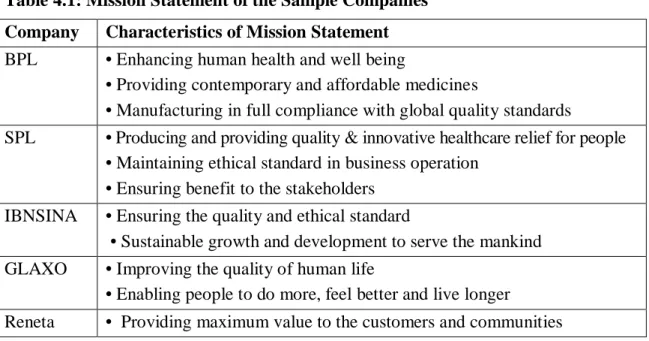
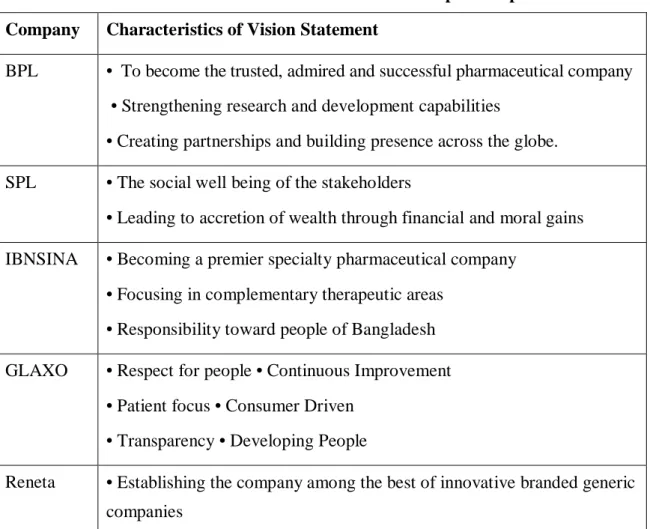
Table 1.1 : Selection of Sample Company...16 Table 1.2 : Selection of Respondents ...16 Table 3.1 : Trend of Structural Transformation of Broad Sectoral Shares in GDP ....46 Table 3.2 : Healthcare Activities during the British and Pakistani Period ...49 Table 3.3 : Different Types of Drug Manufacturers...51 Table 3.4 : Distribution of Pharmaceutical Companies on the Basis of Ownership ...51 Table 3.5 : Wholesale and Retail Licensed Drug Holders of 2002 and 2012...54 Table 3.6 : Market Size and Growth...59 Table 3.7 : Selected Health Indicators for Bangladesh...60 Table 3.8 : Market Share of Local and Multinational Companies ...61 Table 3.9 : Number of Exporting Country of last 12 Years...62 Table 3.10 : List of Exporting Countries ...63 Table 3.11 : Geographic Location of Pharmaceutical Companies...63 Table 3.12 : Market Share of Six divisions...65 Table 3.13 : Major Players in the retail market...65 Table 3.14 : Export of Pharmaceutical Products...68 Table 3.15 : Import trend of Finished Drugs ...69 Table 3.16 : Import of Raw/Packaging Materials ...70 Table 3.17 : Comparison of Health Indicators with other Regions (2011)...72 Table 4.1 : Mission Statement of the Sample Companies ...74 Table 4.2 : Characteristics of Vision Statement of the Sample Companies ...75 Table 4.3 : Personnel Involvement in Formulation of Vision and Mission...76 Table 4.4 : Does your company have formal corporate level plan?...76 Table 4.5 : How often do you update corporate plans? ...77 Table 4.6 : Personnel Involvement in the Formulation of Corporate Long term-Plans ..78 Table 4.7 : Does your company prepare Business level long term plan...78 Table 4.8 : How often do you update Business level plans?...79 Table 4.9 : Personnel Involvement in the Formulation of Business Level Plans...80 Table 4.10 : Does your company prepare Functional level plans? ...80 Table 4.11 : How often do you update Business level plans?...81 Table 4.12 : Personnel Involvement in the Formulation of Functional Level Plans...81 Table 4.13 : The Major Characteristics of Company Culture...82
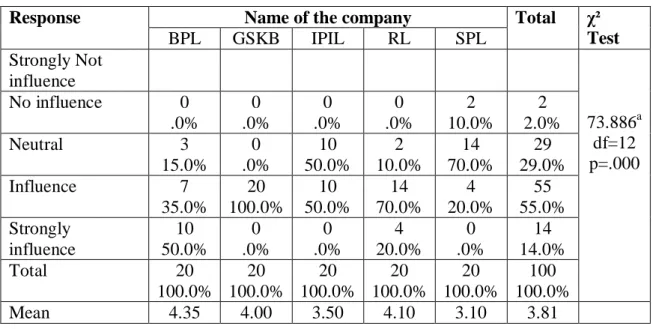
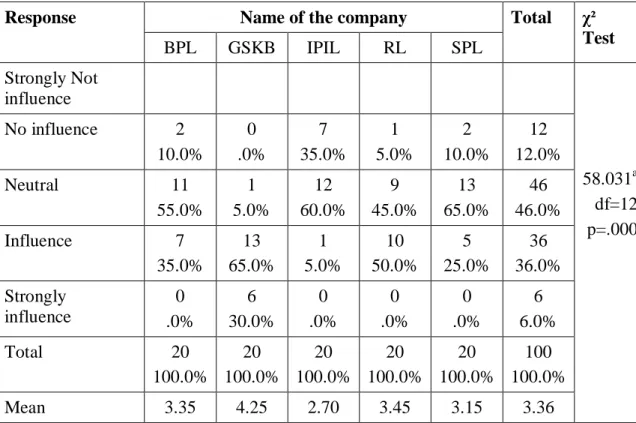
Table 4.14 : The Influence of Company Culture on Company Strategies...83 Table 4.15 : Key Characteristics of Management Styles...84 Table 4.16 : The Influence of Management Style on Company Strategies ...85 Table 4.17 : Significant Problems Faced by the Companies with its Management Style....85 Table 4.18 : The Stakeholder Expectations Influence on Company Strategies ...86 Table 4.19 : Influence of PEST Analysis on Formulation of Strategies ...87 Table 4.20 : Influence of Five Forces Analysis on Formulation of Strategies ...88 Table 4.21 : Influence of SWOT Analysis on Formulation of Strategies ...89 Table 4.22 : Influence of Key Success Factors on Formulation of Strategies ...89 Table 4.23 : Influence of Benchmarking on Formulation of Strategies ...90 Table 4.24 : Influence of BCG Portfolio Matrix on Formulation of Strategies...91 Table 4.25 : Influence of General Electric Matrix on Formulation of Strategies ...92 Table 4.26 : Influence of Product Life Cycle on Formulation of Strategies ...92 Table 4.27 : Comparative Analysis of Influence of Analytical Tools on Company
Strategies ...93 Table 5.1 : Brand Name as the Strength of Company ...96 Table 5.2 : Good Manufacturing Process as the Strength of Company...97 Table 5.3 : Delivery System as the Strength of Company...97 Table 5.4 : Research and Development as the Strength of Company ...98 Table 5.5 : Work Environments as the Strength of Company ...99 Table 5.6 : Use of Up-to-date Technology as the Strength of Company ...99 Table 5.7 : Product Innovation as the Strength of Company ...100 Table 5.8 : Own Manufactured Raw Materials as the Strength of Company ...101 Table 5.9 : Total Quality Management as the Strength of Company...101 Table 5.10 : Corporate Leadership as the Strength of Company ...102 Table 5.11 : Professional Skill of the Employee as the Strength of Company...103 Table 5.12 : Lack of Good Manufacturing Process (GMP) as the Weakness of
Company...104 Table 5.13 : Lack of Research &Development (R & D) as the Weakness of Company.105 Table 5.14 : Lack of Professional Skill as the Weakness of Company...105 Table 5.15 : Lack of Managerial Leadership as the Weakness of Company...106 Table 5.16 : Lack of Modern Technology as the Weakness of Company...107 Table 5.17 : Lack of Good Pharmacist as the Weakness of Company...107 Table 5.18 : Lack of Ethical Marketing of Competitors as the Weakness of Company .108 Table 5.19: Lack of Awareness of the Stakeholders as the Weakness of Company....109
Table 5.20 : Lack of Active Pharmaceutical Ingredients (API) as the Weakness of Company...109 Table 5.21 : Lack of Capacity Utilization as the Weakness of Company ...110 Table 5.22 : Lack of Wide Distribution Network as the Weakness of Company...111 Table 5.23 : Govt. Industrial Policy as an Opportunity for Company's Operation...112 Table 5.24 : Present Export/Import policy as Opportunity for Company's Operation113 Table 5.25 : Current WTO-TRIPS Agreement as Opportunity for Company's
Operation ...114 Table 5.26 : Increase of Literacy of People as an Opportunity for company's Operation..114 Table 5.27 : Increase of Income of People as an Opportunity for Company's Operation..115 Table 5.28 : Current Economic Growths as an Opportunity for Company's Operation..116 Table 5.29 : Modern Technologies as an Opportunity for Company's Operation ...117 Table 5.30 : Health Awareness of People as Opportunity for Company's Operation .117 Table 5.31 : Increasing of Private Hospital as an Opportunity for Company's Operation.118 Table 5.32 : Member of Least Developed Country (LDC) as an Opportunity for
Company's Operation ...119 Table 5.33 : Govt. Drug rules and Policy as an Opportunity for Company's Operation .120 Table 5.34 : New Entrants as a Threat for Company's Operation...121 Table 5.35 : Local Competitors as a Threat for Company's Operation ...122 Table 5.36 : Lack of Active Pharmaceutical Ingredients (API) Park as a Threat for
Company's Operation ...122 Table 5.37 : WTOTRIPS Agreement after 2015 as a Threat for Company's Operation.123 Table 5.38 : High Rate of Corporate Tax as a Threat for Company's Operation...124 Table 5.39 : Political Instability as a Threat for Company's Operation ...125 Table 5.40 : High rate of Interest as a Threat for Company's Operation...125 Table 5.41 : Lack of Power Supply as a Threat for Company's Operation ...126 Table 5.42 : Price of Raw Materials as a Threat for Company's Operation ...127 Table 5.43 : Govt. Drug rules and Policy as a Threat for Company's Operation ...127 Table 5.44 : Lack of Modern Technology as a Threat for Company's Operation ...128 Table 5.45 : Unethical Marketing of Competitor as a Threat for Company's operation .129 Table 5.46 : Impact of Political Environment on Company’s Operations ...130 Table 5.47 : Impact of Economic Environment on Company’s Operations...131 Table 5.48 : Impact of Bangladeshi Social/Cultural Environment on Company’s
Operation ...132 Table 5.49 : Impact of Technological Environment on Company’s Operations ...133 Table 5.50 : Strength Analysis of the Pharmaceutical Companies ...134
Table 5.51 : Correlation Analysis of Strength Factors ...135 Table 5.52 : Weakness Analysis of the Pharmaceutical Companies...136 Table 5.53 : Correlation Analysis of Weakness Factors...137 Table 5.54 : Opportunity Analysis of Pharmaceutical Companies ...138 Table 5.55 : Correlation Analysis of Opportunities Factors...139 Table 5.56 : Threat Analysis of the Pharmaceutical Companies ...140 Table 5.57 : Correlation Analysis of Threats Factors of Pharmaceutical Companies 141 Table 6.1 : Seeking Growth through Introducing Existing Products in Current
Markets...144 Table 6.2 : Seeking Growth through Introducing Existing Products into New Markets .145 Table 6.3 : Seeking Growth through Introducing New Products into Existing Markets.145 Table 6.4 : Seeking Growth through Introducing New Products into New Markets 146 Table 6.5 : Company’s Consideration to be Highly Technology Innovative ...147 Table 6.6 : Seeking Growth via Acquisitions rather than Internal R & D...148 Table 6.7 : The Emphasis of R& D Expenditures is Highly Applied ...148 Table 6.8 : R & D Effort Tends to Avoid High Risk Activity...149 Table 6.9 : Involvement of Health Awareness Programs as Marketing Strategy ...150 Table 6.10 : Free sample distribution to Doctors as Marketing Strategy ...151 Table 6.11 : Ethical Marketing as Marketing Strategy...152 Table 6.12 : Regular Contact with the Doctor as Marketing Strategy ...152 Table 6.13 : Corporate Social Responsibility as Marketing Strategy ...153 Table 6.14 : Low Price Compared to Competitor’s Price Rates ...154 Table 6.15 : Special Reward for Employees...155 Table 6.16 : Appropriate Sized Workforce for the Companies ...156 Table 6.17 : Employees with the Right Knowledge and Skill ...157 Table 6.18 : Formal Job Duties of the Employees ...157 Table 6.19 : Monitoring the Daily Activities of the Employees ...158 Table 6.20 : Attracting and Retaining the Employees by Paying a Higher Wage ...159 Table 6.21 : Using Performance Appraisals to Identify New Skills ...160 Table 6.22 : Arranging Training Programs...160 Table 6.23 : The Promotion System of the Sample Companies ...161 Table 6.24 : Do you have any international operations? ...162 Table 6.25 : Corporate planning is conducted on a worldwide ...162 Table 6.26 : Marketing strategies are developed on a worldwide basis ...163 Table 6.27 : Company seeks foreign markets of existing products...164
Table 6.28 : Has your company made any significant acquisition in last ten years?..164 Table 6.29 : Has your company merged with another company in last ten years?...165 Table 6.30: Has your company divested or eliminated any important operation in last
ten years? ...165 Table 6.31 : Has your company made any significant turnarounds in last ten years? 166 Table 6.32 : Has your company made any joint venture business in last ten years? ..166 Table 6.33 : Importance of Quality Management for the Company ...167 Table 6.34 : Responsibility of Employees for the Quality Improvements ...168 Table 6.35 : Role of the Senior Management for Quality Improvements ...169 Table 6.36 : Special Rewards to Employees for Quality Improvements...169 Table 6.37 : Role of Employee’s Training on Quality Improvements ...170 Table 6.38 : Assessment of the Quality of Product Manufacturing Processes ...171 Table 7.1 : Current Ratios of the Selected Pharmaceutical Companies ...174 Table 7.2 : Quick Ratios of the Selected Pharmaceutical Companies...175 Table 7.3 : Net Working Capital Ratio of the Selected Pharmaceutical Companies 176 Table 7.4 : Inventory Turnover Ratio of the Selected Pharmaceutical Companies ..178 Table 7.5 : Total Asset Turnover Ratio ...179 Table 7.6 : Fixed Asset Turnover ...180 Table 7.7 : Accounts Receivable Turnover...181 Table 7.8 : Working Capital Turnover Ratio ...182 Table 7.9 : Gross Profit Margin Ratio ...184 Table 7.10 : Net Profit Margin Ratios of the Selected Pharmaceutical Companies ...185 Table 7.11 : Return on Total Asset of the Selected Pharmaceutical Companies...186 Table 7.12 : Return on Capital Employed of the Selected Companies ...187 Table 7.13 : Return on Equity of the Selected Pharmaceutical Companies ...188 Table 7.14 : Operating Profit Margin Ratios of the Selected Pharmaceutical
Companies ...189 Table 7.15 : Debt to Equity Ratios of the Selected Pharmaceutical Companies ...191 Table 7.16 : Debt to Asset Ratios of the Selected Pharmaceutical Companies...192 Table 7.17 : Time Interest Earned Ratios of the Selected Pharmaceutical Companies...193 Table 7.18 : Correlation Matrix of the Strength Factors and Different Profitability
Indicators ...195 Table 7.19 : Correlation Matrix of the Weakness Factors and Different Profitability
Indicators ...196 Table 7.20 : Correlation Matrix of the Opportunity Factors and Different Profitability
Indicators ...197
Table 7.21 : Correlation Matrix of the Threat Factors and Different Profitability
indicators of the Sample Companies...198 Table 7.22 : Correlation Matrix of the Product/market Growth Strategies and Different
Profitability Ratios of the Sample Companies...199 Table 7.23 : Correlation Matrix of the Research and Development (R & D) Strategies
and Different Profitability Indicators...200 Table 7.24 : Correlation Matrix of the Marketing Strategies and Different Profitability
Indicators ...201 Table 7.25 : Correlation Matrix of the Human Resource Strategies and Different
Profitability Ratios ...202 Table 7.26 : Correlation Matrix of the Quality Management Strategies and Different
Profitability Indicators...203
LIST OF FIGURES
Figure 1.1 : Conceptual Framework ...14 Figure 2.1 : The Five Tasks of Strategic Management ...23 Figure 2.2 : Strategic Management Model...24 Figure 2.3 : Forms of strategy ...25 Figure 2.4 : Strategy- Making Pyramid ...28 Figure 2.5 : Important Factors in the General Environment ...31 Figure 2.6 : Porter’s Five Forces Model ...32 Figure 2.7 : Product Lifecycle ...36 Figure 2.8 : BCG Product Portfolio Matrix...37 Figure 3.1 : Market Size of Pharmaceuticals ...59 Figure 3.2 : Market Share...61 Figure 3.3 : Location of Companies ...64
Chapter One INTRODUCTION
1.1 Introduction
Business environment is becoming more challenging and competitive than before in the globalization integration era. Organizations of all types and sizes are acutely facing this changing situation externally and internally. Furthermore, how to cope with these ambiguities environment and how to achieve competitiveness and desired level of performance is a vital challenge for every organization. Companies have to take appropriate policy and actions to cope with these challenges. Strategic management is such a crucial element that helps the organizations to undertake proper policy or strategy which will best fit its resources and capabilities. Strategic management generally addresses the question of why some organizations succeed or fail, and it covers the causes for company’s success or failure (Porter, 1991). Research in the field of strategic management is increasing rapidly in developed country. But research in this field in developing and less developed countries particularly in Bangladesh is very limited. This research attempts to study strategic management practices with special reference to Pharmaceutical industry in Bangladesh.
Pharmaceutical sector is one of the most developed hi-tech manufacturing industries in Bangladesh. This industry has gone through a transformation in the last 30 years.
Professional knowledge, expertise and innovative ideas of the pharmacists working in this sector have been the key factors for such transformation. Beginning in the 1950s, a few multinationals and local entrepreneurs set up manufacturing facilities in the then East-Pakistan. Now over 245 registered companies produce medicines in Bangladesh out of which 164 are truly operational (Abdullah and Shamsher, 2011).The pharmaceutical industry started growing in the country with the adoption of the 1982 drug policy. In the following years, the industry received generous policy support and financial assistance in the form of subsidy to ensure its steady growth. Taking advantage of the favorable government patronage and later the World Trade Organization's (WTO) waiver of patent rights under Agreement on Trade Related Aspects of Intellectual Property Rights (TRIPS) on generic drugs, as a Least Developed
Country (LDC), the country's pharmaceutical sector achieved phenomenal growth in the last two decades. The industry transformed itself from an import based to an export based one (Habib and Alam, 2011).The industry contributes about 1% of the total Gross Domestic Production (GDP). The domestic market of pharmaceutical products has shown a tremendous growth over the last three years. According to International Marketing Service (IMS) report, the retail sales of this sector in the domestic market achieved 23.6% growth in 2011 following 23.8% and 16.8% growth in 2010 and 2009 respectively (IMS, 2011). About 97% of the total requirement of medicines is produced by the local companies and the rest 3% is imported. The imported drugs mainly comprise of the cancer drugs, vaccines for viral diseases and hormones etc.
(Bangladesh Pharmacy Council, 2011).
1.2 Statement of the Problem
The development of the field of strategic management within the last two decades has been dramatic (Hoskisson et al, 1999) and it is growing every day. Strategic management has been treated as one of the effective management tools to strengthen organization performance through effective decision making and systematic strategic formulation and implementation. The success of the organization normally concerns the organization’s senior management and strategic management process such as how they choose their strategies and what are the processes that allow organizations to establish themselves successfully in business. Organizations succeed if their strategies are appropriate for the circumstances they face (Wheelen and Hunger, 2000). The application of strategic management in business for various sectors has long been adopted as a response to market demand and changing of technology.
However, Strategic management is especially important in the pharmaceutical industry on two counts. Firstly, the pharmaceutical companies tend to be market oriented and proactive by emphasizing the advantage of their pharmaceutical products and they try to build strong brand names and create long-term loyalty to final customers (Corstjens, 1991). Secondly, strategic management is necessary to adapt to the increasingly competitive business environment. Pharmaceutical companies have to face many internal and external challenges to ensure effective business operation. The external challenges come from competitors, generic drug manufacturers and health-care organizations. In addition to that there are internal challenges to decrease the cost of
sales, Research and Developments (R&D), marketing, and to ensure compliance with the national and international regulations (Kesic, 2009).
Although, Bangladesh has achieved remarkable success in pharmaceutical industry in the last several years, this sector has been facing many challenges in fact. The huge size of the companies, complexities of their processes and technologies used for this industry present many organizational and managerial challenges. Since Bangladeshi pharmaceutical companies have already entered into international market they have to compete with the world leading companies. The world pharmaceutical market is very much competitive. Pharmaceutical sector’s international competitiveness can be determined by four factors: manufacturing costs, workforce, business environment, and market. Considering, these factors Bangladeshi firms have obstacles to overcome to become globally competitive (The World Bank, 2008). Some manufacturing costs are less than world averages, but some are higher since the local pharmaceutical industry is not backward-integrated. About 80% of the Active Pharmaceutical Ingredients (API) are to be imported. This results in higher manufacturer cost. The workforce significantly lags global averages and pharmaceuticals are a “brain-intensive industry.”
At the same time, the quality of drugs available domestically varies significantly.
Some firms are producing world class quality drugs while others are producing drugs of a lower quality (Habib and Alam, 2011). The government and regulatory environment do not appear to be conducive to producing the safest, most effective and accessible drugs. Some macro factors favor success while others are less decisive. To successfully proceed into the local and global marketplace in this competitive market, every organization must plan strategically. Since no organization has unlimited resources, strategists must decide which strategy benefit the firm most among the alternative (Fred, 1997).
One important thing is that Local demand of pharmaceutical products is rising very fast because of increasing awareness of healthcare, per capita income, growing government’s expenditure in this sector and emergence of private healthcare service. In five years time, the domestic demand for pharmaceutical products is projected to increase to at least US $1.88 billion from existing US$ 585 million (Ala, 2010). The industry will have to meet this local demand and cope with the challenges facing in changing environment and also maintain the current growth, and even improve its
position in the international market. It can be done by proper application of strategic management practices in the firm since it is based on the belief that an organization should continually monitor internal and external events and shape the strategy as needed. Strategic management gives the organization strong influence towards firms’
success. The importance of strategic management in a firm can be found by looking at the relationship between strategic management and organizational performance as it gives positive influence, especially in its earnings to the large firms (David, 2003).
Against the backdrop of the above stated issues, problems and importance of strategic management in organizations, this study aims at exploring how strategic management is being practiced in pharmaceutical companies and to what extent such practices influence the organizational performance.
1.3 Research Objectives
Core Objective: The main objective of the study is to explore the strategic management practices at different levels of organization and the impact of such practices on organizational performance of the listed pharmaceutical companies in Bangladesh.
Specific Objectives:
To attain the main objective the following specific objectives are formulated:
1. To assess the growth and development of pharmaceutical industries in Bangladesh;
2. To explore the major characteristics of formulating the strategies at different levels of the listed pharmaceutical companies in Bangladesh;
3. To identify the nature of internal factors like strengths and weaknesses and external factors like threats and opportunities that influence the strategic management practices;
4. To identify the nature and extent of implementing the strategies followed by the listed pharmaceutical companies in Bangladesh;
5. To evaluate the impact of strategic management practices on the organizational performance of the listed pharmaceutical companies.
1.4 Review of the Related Literature
In order to understand the implications of the different concepts and also to identify the areas already explored and to find out the areas unexplored so far and to make an in depth study, a review of related literature is of paramount importance. The relevant
studies are reviewed here focusing their objectives, methodology followed, hypothesis tested, concluding remarks, and limitations thereon.
Abdullah and Shamsher (2011) studied on “A Study on the Impact of PEST Analysis on the Pharmaceutical Sector: The Bangladesh Context”. They had an endeavor to analyze the pharmaceutical sector of Bangladesh using the framework of PEST (Political, Economic, Social, and Technological). PEST analysis of any industry sector investigates the important factors that are affecting the industry and influencing the companies operating in that sector. Both the primary and secondary information were used to conduct this research. This study brought to light the current state of the sector its progress and its problems. This report analyzed the existing laws, legislations, and government policies which stand to affect the sector directly and indirectly.
Habib and Alam (2011), in their paper titled “Business Analysis of Pharmaceutical Firms in Bangladesh: Problems and Prospects” attempted to investigate the scenario of pharmaceutical industry and to identify the major problems of marketing, exporting, production and operations, quality control in the pharmaceutical sector. They proposed some recommendations to overcome these problems. They also identified the prospects of pharmaceutical industry in Bangladesh. The study was conducted by both primary and secondary data on ten leading pharmaceutical in Bangladesh. They highlighted marketing problems such as insufficient incentives, high cost of marketing unstable political situation and different types of violence. They also mentioned that foreign competitors with more equipment, technology and plant facilities are threat for local owned firms. But managerial problem like how to develop strategic factors in competitive environment is not explored in this study.
Mahajan and Sharma (2011) studied on “Strategic management aspects of Indian pharmaceutical industry” and analyzed the Pharmaceutical Industry and the strategic alliances in the recent past and what drives these alliances. The objective of this paper was to find out whether marketing strategy changes have taken place in the Indian pharmaceutical industry. The paper also tried to find out the changes by the pharmaceutical companies regarding the 'product' and tries to find out if there was any significant preference towards the marketing strategy changes of the Pharma companies post WTO product patent regime. The study found that majority of Pharma companies surveyed
accepted that changes in marketing strategy had taken place. Introduction of new molecules is the most preferred marketing strategy being pursued by Indian Pharmaceutical companies. A value chain framework had been proposed that analyses the critical capabilities needed along the value chain in the Pharmaceutical Industry, the existing capabilities of the firms and how these alliances are supposed to bridge the capability gap.
The authors recommended that advanced strategic management with a strong market orientation focus should be the most important strategic priority of a company that wants to be a successful business performer, to maintain its long-term sustainable growth, competitiveness and assure its long-term development and competitive market position.
Kasapi and Mihiotis (2011) in their study named “Management as applied to New Products Penetration in the Competitive Environment of Pharmaceutical Industry” fulfilled to analyze, based on M. Porter’s five forces model (FFM), what kind of strategies were to be followed regarding the introduction and penetration of new products in the pharmaceutical market taking into consideration the extremely competitive and challenging environment existing around the pharmaceutical industry. In this article, the authors discussed the importance of strategic management practices for new products introduction
& growth assessed the competition in the pharmaceutical industry's environment. They developed the history and the characteristics of the World Pharmaceutical Industry, by focusing on the strategic management in the Pharmaceutical Industry. They analyzed how Porter’s FFM and SMP can be applied in that sector and focused on the industry’s revenues. This study provides a detailed analysis on new pharmaceutical products”
lifecycle i.e. drug discovery, development, introduction and subsequently their growth, maturity and decline phase. Finally, the paper concluded by giving advice for all interested managers to overcome old mental models and apply change management taking into consideration that we live in the age of uncertainty and turbulence.
Ala (2010), in his article on “SWOT Analysis of the Pharmaceutical Industry: A Study of selected firms in Bangladesh”, evaluated the strength, weakness, opportunities and threats (SWOT) of pharmaceutical industry in Bangladesh. In this paper the researcher tried to find out what types of strength, weakness, opportunities and threats pharmaceuticals face in Bangladesh. He emphasized on the trends of this industries.
Both the primary and secondary data were used in this study from five leading pharmaceutical firms. This study also concentrated on identifying the ways to
overcome the challenges weakness of this industry. It also provided some suggestions and recommendations for development of the pharmaceutical industry.
Bishwas (2009) conducted a study on “Corporate Governance of Pharmaceutical Industry in Bangladesh: Issues and Challenges” and examined and evaluated the status of corporate governance in Bangladesh with special emphasis on pharmaceutical industry. The study was conducted on four listed pharmaceutical companies in DSE to explore corporate governance concerned with board issue, shareholders issue, community issue, regulators issue and others stakeholders issue. The researcher identified some set of variables to measure t