Faculty of Engineering
Department of Textile Engineering Title:
Study on Cutting and Sewing defects in Knit Garments.
REPORT ON
Course Title: Project (Thesis) Course Code: TE-4214
Submitted By
Md. Salman khan Fahim ID:182-23-507 Md.Mahamudul Hasan
ID: 182-23-477
Supervised By
Mst. Murshida khatun Assistant Professor
This Project Presented in partial fulfillment of the Requirement for The Degree of Bachelor of Science in Textile Engineering
Advance in Apparel Manufacturing Technology
DECLARATION
Thus, we proclaim that the work introduced in this proposal is named "Study on Sewing and cutting Faults. "We have finished it under the management of Mst. Murshida Khatun
It has not been introduced for a level of some other college, and all the asset of materials utilizes for this proposition has been appropriately recognized.
This is to affirm that the above affirmation made by us is suitable to the best of my knowledge and concern.
Submitted By:
Md. Salman khan Fahim ID:182-23-507
Signature
Md.Mahamudul Hasan ID: 182-23-477
Signature
LETTER OF APPROVAL
This venture report arranged by Md. Salman khan Fahim bearing Id: 182-23-507 and Md. Mahamudul Hasan bearing Id: 182-23-477, is endorsed in Partial Fulfillment of the necessity for the Degree of BACHELOR OF SCIENCE IN TEXTILE ENGINEERING.
The said understudies have finished their task work under my watch. During the examination time frame, I discovered them genuine, dedicated, and excited.
Mst.Murshida Khatun
Assistant Professor
Department of Textile Engineering Faculty of Engineering
Daffodil International University
ACKNOWLEDGEMENT
At First, we express our heartiest thanks and thankfulness to God-like Allah for His approval makes us conceivable to finish this task effectively.
We finished the complete theory work at GMS composite sewing Ind. Ltd.
We feel thankful to our Supervisor, Mohammad Abdul Baste, Daffodil International University, Dhaka, Bangladesh. Profound knowledge and unmistakable fascination of our administrator in the field advancement impacted us to do this venture. His perpetual tolerance, academic direction, continuous and vigorous oversight, significant guidance, and adjusting them at all stages have made it conceivable to finish this undertaking. We might want to offer our heartiest thanks to other employees of the TE division of Daffodil International University. Particularly much gratitude goes to one of our senior brothers Md. Rafizfrom to gather the example and data.
We might want to thank our whole coursemate in Daffodil International University, Who took part in this talk while finishing the course work.
At last, we should recognize with due regard to our folks who were the principal wellspring of our energy.
ABSTRACT
I have visited a few Garments Industry and realized that sewing and cutting are vital to making a Garment. Sewing and cutting issues have a very follow the impact on Garments quality. A few flaws show significant imperfections, and a few show minor. So controlling the flaws during cutting and sewing is vital. I need to dispose of those flaws however much as could be expected. However, it is practically difficult to kill all flaws like a minor shortcoming.
I found the greater part of the minor flaws during our Internship period contrast with Major blames such as(Missing yarn, thick dainty line, Slub , open crease, size botch, texture opening, texture conceal, down fasten, without tack ) Cutting Major blames, for example, (Crease mark, oil sport, missing yarn, opening, thick yarn, uneven coloring, running shade). Minor issues can be dispensed with by various cycles after sewing or cutting. Two or three minor deficiencies get punishment as Major shortcomings by the 4 Inspection framework. At the long following, seven days end line assessment auditor investigated all out 10813 computers of articles of clothing 9031pcs quality pass 50 laptops reject 1450 computers surrender and adjust 1348 laptops. Here QC passed rate 87%, deformity rate 13%, Reject rate 0.43%. We discover diverse kinds of imperfections found in the sewing and cutting area, for example, Skip join, Broken line, oil marks, open crease, name skewed. The most extreme number of shortcomings are skipped join 30%; broken fasten 8%, needle cut 9%, uncut string 25%, and others 30% imperfection
.
Contents
DECLARATION ... ii
LETTER OF APPROVAL ... iii
Mohammad Abdul Baset ... iii
ACKNOWLEDGEMENT ... iv
ABSTRACT ... v
1.0 INTRODUCTION ... 1
1.1 Objective ... 2
1.2 Methodology ... 2
2.0 Literature review ...... 3
2.1 What is cutting? ...... 4
2.1.1 Flow chart of Cutting section: ... 4
2.1.2 Types of Cutting knife: ... 5
2.1.3 Marker Making ... 5
2.1.4 Fabric cutting ... 5
2.1.5 Numbering ... 5
2.1.6 100% checking and replacing if needed: ... 5
2.1.7 Cutting faults ... 5
2.1.8 Quality cut panel: ... 6
2.1.9 Replacement ... 7
2.1.10 Different types of Cutting Faults Picture: ... 7
2.2.0 What is sewing?...... 9
2.2.1 Flow Chart of Sewing Section: ... 9
2.2.2 Generally Using Sewing Machine: ... 10
2.2.3 Machine Brand: ... 10
2.2.4 Types of sewing needle: ... 10
2.2.5 Sewing faults, causes and their remedies: ... 10
2.2.6 Different Types of Sewing Faults Picture: ... 12
3.0
Inspection in cutting section ...... 183.1
Experiment Data- marker lay chart cutting ...... 183.4
Experimental Data-Daily Cut Panel Rejection Monitoring List ...... 253.5
Experimental Data- In-Line Sewing Inspection Report... 283.6
Experimental Data-Hourly QC Pass Production Report –Sewing ...... 314.2 Analysis Report from Data ...... 33
4.3 Cutting Section Inspection ...... 35
4.3 Cut panel Inspection Report Analysis: ...... 35
4.4 Sewing Inspection Report Analysis: ...... 36
Conclusion ...... 41
Reference……….………42
List of Figure
Figure Number Figure Name Page
Number
2.1 Different Type of Cutting Faults 07
2.2 Different Type of Cutting Faults 08
2.3 Dirty Mark 13
2.4 Skipped Stitch 13
2.5 Armhole Point Updown 14
2.6 Raw edge 14
2.7 Pleat 15
2.8 Size Mistake 15
2.9 Armhole Shade Off 16
2.10 Slub 16
3.1 Marker lay chart cutting Report. 19
3.2 Cutting Quality inspection Report 21
3.3 Cutting Quality Control 23
3.4 Daily Cut Panel monitoring List 25
3.5 In-Line Sewing Inspection Report 28
3.6 Hourly QC Pass Production Report –Sewing 31
3.7 After 1 hour inspection 34
3.8 Cutting Section Inspection 35
3.10 Defect Measurement 36
List of Figure
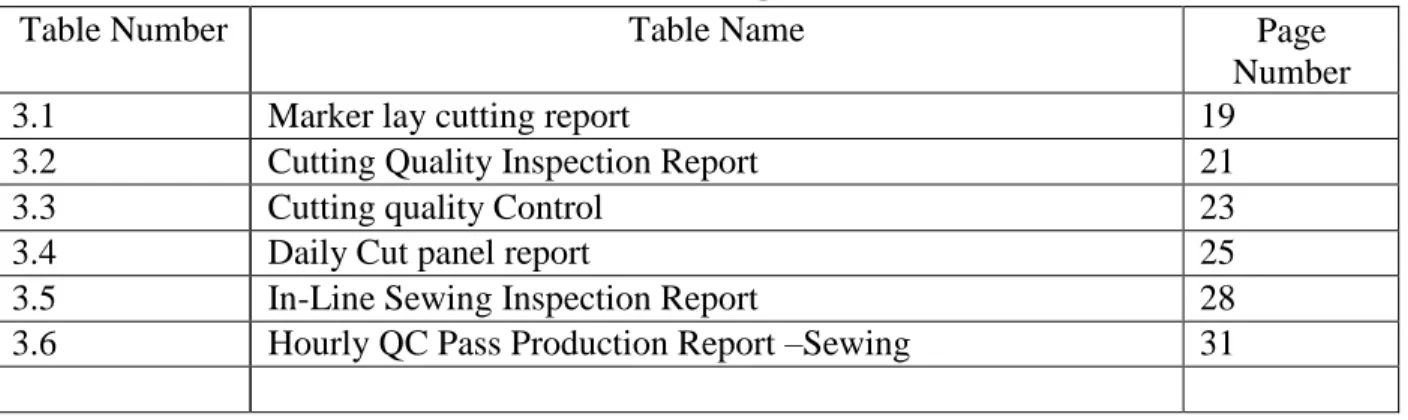
Table Number Table Name Page
Number
3.1 Marker lay cutting report 19
3.2 Cutting Quality Inspection Report 21
3.3 Cutting quality Control 23
3.4 Daily Cut panel report 25
3.5 In-Line Sewing Inspection Report 28
3.6 Hourly QC Pass Production Report –Sewing 31
CHAPTER-1
INTRODUCTION
1.0 INTRODUCTION:
Material is a word that comes from the Latin word surface, which signifies "to weave'', "to mesh'', or "to development'' the least complicated material craftsmanship is felting in which creature filaments are tangled together utilizing that and dampness. The most significant number of material expressions being with winding or turning and employing strands to make yarn. The Most of time, yarn interlaced, circled, tied, or woven to make a dress. The entirety of this time bombed yarn, texture, and completed items.
1.1 Objective:
To think about the articles of the clothing production line To think about the articles of clothing wastage
To think about the functioning system to increment profitability.
1.2 Methodology
Textile industry Internet
Book
Teacher lecture sheet Garments factory
CHAPTER-2
LITERATURE REVIEW
2.0 Literature review:
2.1 What is cutting?
The primary job of a slicing interaction is to cut a piece of clothing parts from texture rolls or texture than according to style details and send slice segments to the sewing office in a pack
. 2.1.1 Flow chart of Cutting section:
FLOW SEQUENCE OF CUTTING
Fabric Receive from dyeing section.
Fabric Relax Original sample receive
Marker Making Fabric spreading
Placing marker paper onto the lay Fabric cutting
Numbering
100% checking and replacing if needed Storing and bundling
Print and embroidery send if needed.
Print and embroidery receive Sewing input
2.1.2 Types of Cutting knife:
Die cutter Drill cutter
Straight knife cutter Round knife
2.1.3
Marker Making:
During clothing-producing measures, marker making is the most valuable interaction to draw the example pieces over a thin marker paper. This marker paper is put on the texture layer to limit texture wastage.
2.1.4
Fabric cutting:
Texture lay is cutting by straight blade cutting machine at that point isolated cutting part.
2.1.5 Numbering:
In this stage, a sticker is appended with all pieces of cutting part for conceal coordinating. The sticker number keeps up cutting number, size number, chronic number.
2.1.6 100% checking and replacing if needed:
After cutting, the lay of the texture assessment is finished. Assuming any piece of the cutting texture gets deformity or needs a substitution, supplanting is finished.
2.1.7 Cutting faults:
Crease mark Contamination Oil spot
Snagging Missing yarn Un-even dyeing Running shade Thick yarn
Dirty sport SLUB NEPS Spoilsport Thin yarn Needle mark Knot
PATTA Missing line Needle line Miss print
Shinning mark
2.1.9 Quality cut panel:
Quality imperfection,
If the amount of clothing parts is missing, the amount (assume +1, - 1) the amount then substitution by quality or move those control board.
Hole
Join
2.1.10 Replacement:
After the quality check, if parts are a botch, then a substitution of value manual cutting framework.
2.1.11 Different types of Cutting Faults Picture:
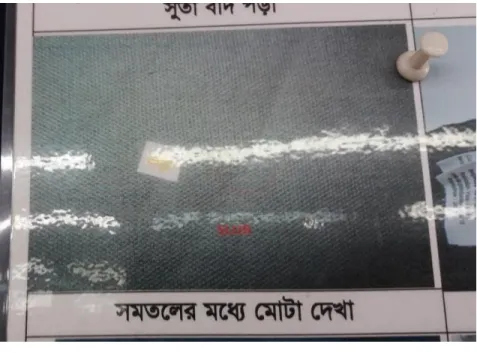
Figure: 2.1 Different Type of Cutting Faults
Figure:2. 2 Different Type of Cutting Faults
2.2.0 What is sewing?
Sewing is the specialty of affixing or connecting objects utilizing join made with a needle and string.
2.2.1 Flow Chart of Sewing Section:
Cutting dept. Will PO, size, and shading (with %) shrewd info.
Yield will be just thinking about QC pass(PO, Size, and Color)
Change should be amended day by day; No modify at the day end.
Dismissal PO, Size, and shading shrewd should be recorded and told the cutting dept. So they can supplant likewise.
Sewing dept. Is mindful of telling cutting both sewing and Finishing dismissals.
Sewing to completing development should be gone through by actual checking, and both gatherings should sign in the register book.
Completing modify development will likewise be gone through with the register book, and both gatherings should sign.
When sewing, got to cut the board from cutting and marked any missing pieces of clothing, Sewing dept. Will be capable.
When completing got QC passed products from sewing and marked, any lost of articles of clothing, Finishing dept. I will be mindful.
Floor PM should screen register book each day.
AGM should arbitrarily review the register book week by week.
2.2.2 Generally Using Sewing Machine:
Overlock
• Flat Lock
• Plain M/C
• Bartack M/C
• Button Hole M/C
• Punch M/C
• Eyelet M/C A feed of the arm
• Button join M/C
• Fusing M/C
• Piping M/C
• Iron M/C
• Logo join M/C
2.2.3 Machine Brand:
Pegasus Juki
Brothers Kansai
2.2.4 Types of sewing needle:
Sharps Short darners Long darners Yarn darners Curved repair Leather needle Cross stitch
Variable stitch density: variable fasten thickness should have a similar measure of join per unit length. It is not. Then, it is called variable fasten thickness.
Causes:
Twisting of string in the string guide.
More pressure in the string.
Twisting of needle string in the lower part of the string bundle.
Fraying of string in the needle.
Snarling of string before pressure plate.
Remedies:
circle.
Proper stringing of sewing string during sewing.
The strain of string ought to be less or utilization of high strength string.
Check spring to be changed.
Winding of more strings in the string guide and to be held less strain to the tensioning The edge should be smooth, and the needle should be changed depending on the situation.
High-quality needles should be utilized.
Frequent thread breakage: Continuous string breakage of string again during sewing, and there needs an additional time and unsafe for creation. When there needs to open out sewing to take care of the issue.
Causes:
Wrong fitting of the bobbin case.
Wrong twisting of string onto the bobbin.
More pressure to the bobbin string or more pivoting of the bobbin.
Remedies
:Proper twisting of string onto the bobbin.
pre-wound bobbin might be utilized The edge to be smooth.
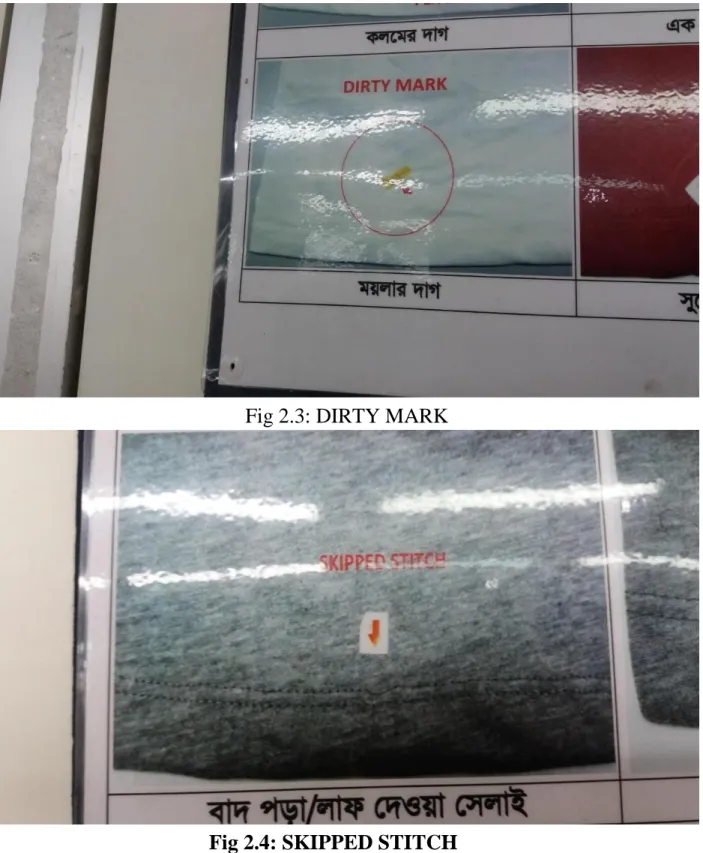
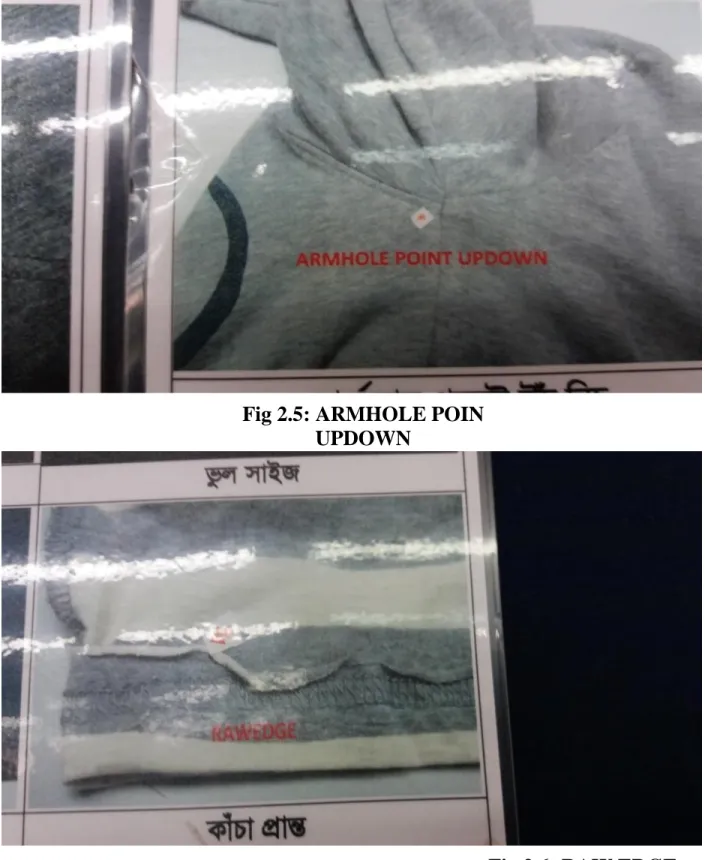
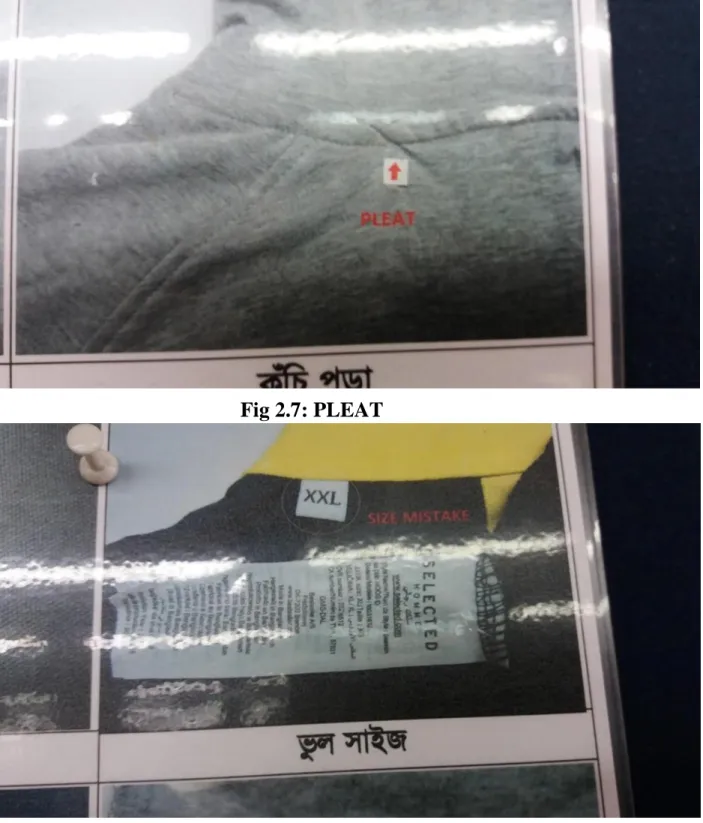
2.2.6 Different Types of Sewing Faults Picture:
Fig 2.3: DIRTY MARK
Fig 2.4: SKIPPED STITCH
Fig 2.5: ARMHOLE POIN UPDOWN
Fig 2.6: RAW EDGE
Fig 2.7: PLEAT
Fig 2.8: SIZE MISTAKE
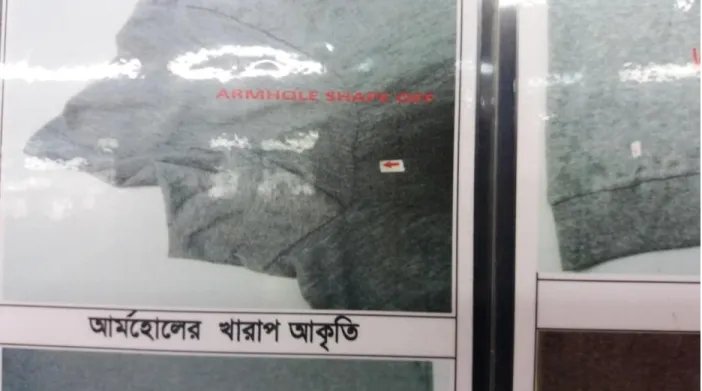
Fig 2.9: ARMHOLE SHADE OFF
Fig 2.10: SLUB
CHAPTER-3
EXPRIMENTAL DETAILS
3.0 Inspection in cutting section:
This interaction texture is being cut into parts. In large-scale manufacturing, numerous layers of texture are praises on the table, and an enormous number of articles of clothing being cut at a time. The cutting cycle incorporates several sub-interaction, and the stream of the interaction is an after.
3.1 Experiment Data- marker lay chart cutting:
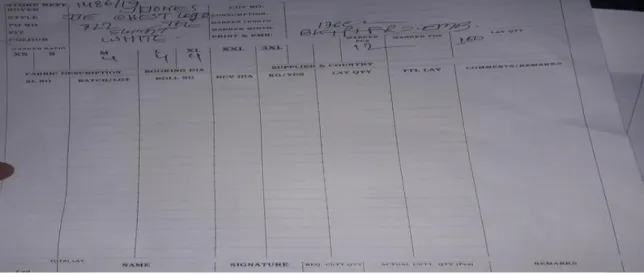
Marker lay chart cutting report of GMS Composite knitting Ind. Ltd.
Buyer Name: jack and jones Style No: JJE CHEST logo P.O/NO: 722
Fig No 3.1: Marker lay chart cutting Report.
GMS COMPOSITE KNITTING IND.LTD.
Sardagonj, Kashimpur, Gazipur-1346 QUALITY DEPARTMENT
Marker Lay chart cutting STORE REFF 1486/19
BUYER NAME J/JONESS CUT NO
STYLE NO JJE CHEST LOGO CONSUMPTION
PO NO 722 TG MARKER
LENGTH
FIT SLEMFIT MARKER WIDTH 176C
COLOR WHITE PRINT AND EMB BK+P+RR=EMB
MARKER RATIO
MARKER PCS
MARKER YDS
LAY QTY
XS S M L XL XXL 3XL
4 4 4 12 100
FABRIC DESCRIPTIO N
BOOKIN G
DIA
SUUPPLIE R
AND COUNTR Y
SL NO BATCH LOT
ROL L NO
RCV DIA KG/YD LA Y QT Y
TT L LA Y
COMMENT S
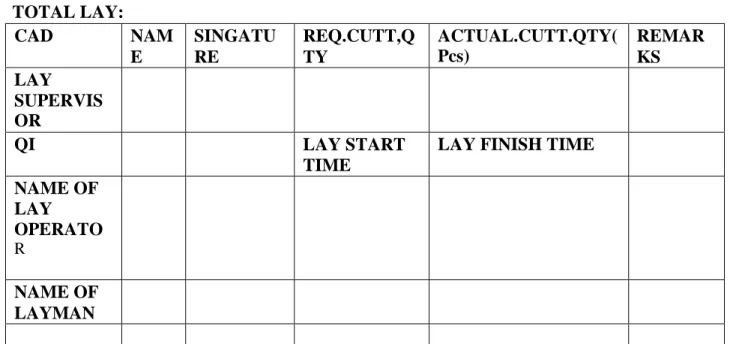
TOTAL LAY:
CAD NAM
E
SINGATU RE
REQ.CUTT,Q TY
ACTUAL.CUTT.QTY(
Pcs)
REMAR KS LAY
SUPERVIS OR
QI LAY START
TIME
LAY FINISH TIME NAME OF
LAY
OPERATO R
NAME OF LAYMAN
Table No 3.1: Marker lay cutting report
Marker type: 1. One waymarker 2. Tow waymarker
3. Group marker 4. Block marker
3.2 Experiment Data-Cutting Quality Inspection Report:
Cutting Quality Inspection report of GMS Composite knitting Ind. Ltd.
Buyer Name: Jules Style No: 7/3824 S/R: 1109 C/No: 2
Fabric Type: SJ Color: D-Red
Fig 3.2: Cutting Quality inspection Report
GMS COMPOSITE KNITTING IND.LTD.
Sardagonj, Kashimpur, Gazipur-1346 QUALITY DEPARTMENT Cutting Quality Inspection Report
Buyer: Jules, Style No: 713824 Buy
er
Style No
S/
R C/
No Fab Ric type
Colo r
GS M
DI A
LO T No
L ay Qt y
Lay length CM
La y high C M
Rat io
Tot al Pcs
Cu tti ng pc s Jule
s
7138 24
11 09
2 SJ D- Red
160 - 165
17 017 5
513 67
13 2
5.55 6.6 6
S/1 9
Ors ay
Only dsv
65 9
7 Ly.S .J
Whit e
’’ ’’ 609 67
51 3.92 2.5 S/2 12 J/J Basi
c
10 75
1 S.J Blac k
’’ ’’ 553 9
13 6
5/78 6.8 S/2 9 J/J ’’ ’’ 2 SJ ’’ ’’ ’’ 553
9
14 0
5.92 7 S/2 9 J/J ’’ ’’ 3 SJ ’’ ’’ ’’ 556
9
13 8
5.78 6.9 S/1 9 J/J ’’ ’’ 4 SJ ’’ ’’ ’’ ’’ 14
0
5.90 6 S/1 9 J/J ’’ ’’ 4 SJ ’’ ’’ ’’ 553
6
13 8
5.74 7.3 S/2 9 Ra
me
kana 20 2
10 Ly.S .J
G.G Ab
’’ ’’ 457 1
12 0
4.14 6.9 56/
2
16
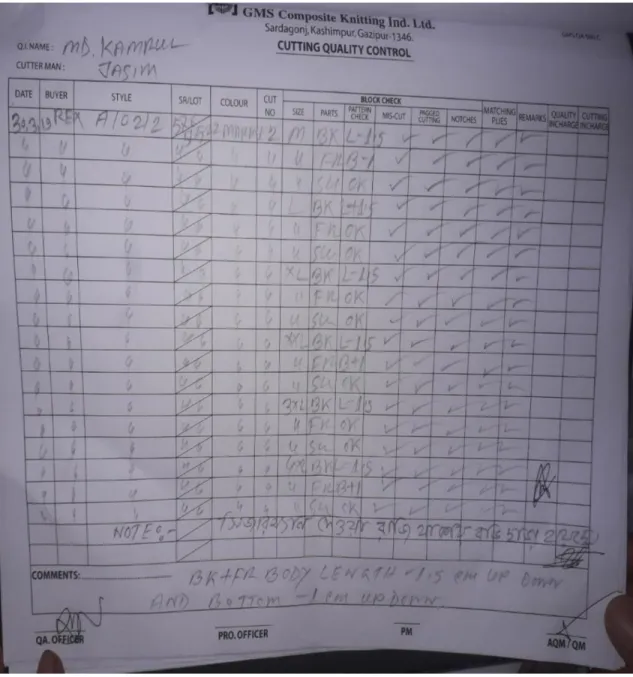
3.3 Experiment Data-Cutting Quality Control:
Cutting Quality control report of GMS Composite knitting Ind. Ltd.
Buyer Name: REX Style No: A/0212
Fig 3.3: Cutting Quality Control
GMS COMPOSITE KNITTING IND.LTD.
Sardagonj, Kashimpur, Gazipur-1346 QUALITY DEPARTMENT
Cutting Quality Control Bu
yer Styl e No
SR/
LOT Col or
C ut N o
Si ze
Pa rts
Patt ern chec k
Mi sscut
Pag ged cutt ing
Notc hes
Pli es
Rema reks
Qual ity inch arge
Cutti ng inch arge RE
X
A/0 212
576/
515
Mar ine
2 M 3K L- 1.5
Ok Ok Ok O k
Ok
A/0 212
576/
515
Mar ine
2 M FX 3-1 Ok Ok Ok O k
Ok
A/0 212
576/
515
Mar ine
2 M 3k Ok Ok Ok Ok O k
Ok
A/0 212
576/
515
Mar ine
2 M Fx L+1 .5
Ok Ok Ok O k
Ok
A/0 212
576/
515
Mar ine
2 M 3k Ok Ok Ok Ok O k
Ok
A/0 212
576/
515
Mar ine
2 M Su Ok Ok Ok Ok O k
Ok
A/0 212
576/
515
Mar ine
2 M 3k 1.5 Ok Ok Ok O k
Ok
NOTE: Bk + Fx body Length-1.5 cm up Downand bottom -1 cm up Down.
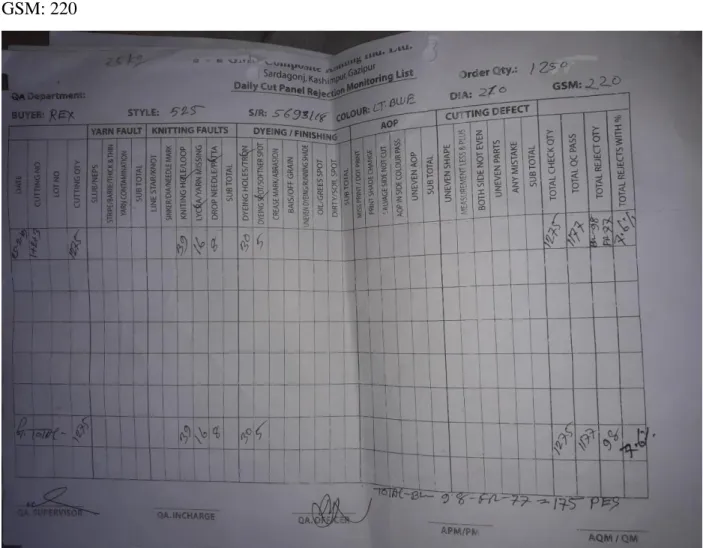
3.4Experimental Data-Daily Cut Panel Rejection Monitoring List:
Daily cut panel rejection monitoring List of GMS Composite knitting Ind. Ltd.
Buyer Name: REX Style No: 525 Color: LT-Blue DIA: 210 GSM: 220
Fig 3. 4: Daily Cut Panel monitoring List
GMS COMPOSITE KNITTING IND.LTD.
Sardagonj, Kashimpur, Gazipur-1346 QUALITY DEPARTMENT Daily Cut Panel Monitoring List Buyer Name: REX
Style No: 525 Color: LT-Blue GSM: 220
Date
Cutting No 1+2+3 Lot No
Cutting QTY 1275 SLUB /NEPS
THICK and THIN YARN
CONTAMINATION SUBTOTAL
LINE STAR/KNOT NEEDLE MARK
KNITTING HOLE 39 39
LYCRA MISSING 16 16
PATTA 8 8
SUB TOTAL
TRON 30 30
DYING SPOT 5 5
UNEVEN SHAPE MEASUREMENT LESS
BOTH SIDE NOT EVEN
UNEVEN PARTS ANY MISTAKE SUBTOTAL TOTAL CHECK QTY
1275 1275
TOTAL QC PASS 1177 1177
TOTAL REJECT QTY
BX- 98 FX- 77
98
TOTAL REJECT WITH %
7.6 7.6
Table 3.4: Daily Cut panel report
TOTAC-BX 9.8-FX-77=175 PCE
Sewing section Inspection:
In measure quality control in sewing segment examination.
Sewing is the most significant in articles of the clothing industry. In measure quality control in wrapped up by the line QC through 9 computers assessment system. For fundamental
undertaking, 100% cycle assessment are finished. Checked around there, texture pressure, SPI checking, needle checking investigation checking.
3.5Experimental Data- In-Line Sewing Inspection Report:
Inline Sewing Inspection Report of GMS Composite Knitting Ind. Ltd.
Buyer Name: ORSAY Style No: JULE 5540 Order QTY:2300 pcs Styling: MAIN LABEL
Fabrication: 95% cotton,5%Elastic
GMS COMPOSITE KNITTING IND.LTD.
Sardagonj, Kashimpur, Gazipur-1346 Sewing Department
In-line Sewing Inspection Report
LOT SIZE: 1000, SAMPLE SIZE: 32, AQL: 1.5.
TOPS BOTTOMS XS S
CHES WAIST RELAX 42 42 +8 +1 48 +1 +8 +1
WAIST WAIST EXT 40.5 +5 +8 +1 41.5 +5 +5 +1
HIP WAIST BAND
HT
BOTTOM HIP-LOW 42 42 42 +5 48 48 +1 +5
SHOULDER HIP HIGH 7.5 +4 +4 +4 8.5 +5 65 +1 ACROSS SHLDR CALLF
F.LENGTH HPS KNEE 4.8 +1 +1 +5 65 +1 +8 +8 LENGTH LPS R.RISE 14.5 14.5 +5 +5 61.5 61.5 +5 +8 LENGTH CB LEG OPENING
LENGTH CF SIDE LENGTH 58.5 58.5 +5 +2 61.5 61.5 61.5 +8 SLV OPENING SIDE LENGTH
SLV LENGTH INSEAM LENGTH ARM HOLE
Table 3.5: In-Line Sewing Inspection Report
Description:
We found and streaming issue underneath.
Fabric shading some deferent from our unique Swatch fixing Sample.
Print is looking sparkly less.
Dirty sport Hole
Neck rib free
Crease sign of the front
NECK WIDTH 21.2 +1 +5 +8 22 +1 +2 +8
NECK DROP 31.5 31.5 +8 +1 24.5 +5 +5 +5
B.NECK DROP 32.5 +1 +1 +5 35.5 35.5 35.5 +5
DEFECTS CRITICAL MAJOR MINOR
HOLE 01
WAVY AT FACHING
03
LYCUT 04
TOTAL DEFECT 08pcs
3.6Experimental Data-Hourly QC Pass Production Report –Sewing:
Hourly QC Pass Production Report of GMS Composite Knitting Ind. Ltd.
Buyer Name: ORSAY Style No: JULESSHO
Fig 3.6: - Hourly QC Pass Production Report –Sewing
GMS COMPOSITE KNITTING IND.LTD.
Sardagonj, Kashimpur, Gazipur-1346 Sewing Department
Hourly QC Pass Production Report
Saturday Sunday Monda y
Tuesda y
Wednes day
Thursd ay Bu
yer
ORSA Y
Bu yer
ORSA Y
Bu yer
ORSA Y
Bu yer
ORSA Y
Bu yer
ORSA Y
Bu yer
ORSA Y Styl
e
JULES SHO
Styl e
JULES SHO
Styl e
JULES SHO
Styl e
JULES SHO
Styl e
JULES SHO
Styl e
JULES SHO
PO PO PO PO PO PO
Ho ur
Ch eck Qt y
Q c pa ss Q ty
Ho ur
Ch eck Qt y
Q c pa ss Q ty
Ho ur
Ch eck Qt y
Q c pa ss Q ty
H ou r
Ch eck Qt y
Q c pa ss Q ty
Ho ur
Ch eck Qt y
Q c pa ss Q ty
H ou r
Ch eck Qt y
Q c pa ss Q ty 8-9 85 8
0
8-9 85 8 0
8-9 85 8 0
8- 9
85 8 0
8-9 85 8 0
8- 9
85 8 0 9-
10 10 8
1 0 0
9- 10
10 8
1 0 0
9- 10
10 8
1 0 0
9- 10
10 8
1 0 0
9- 10
10 8
1 0 0
9- 10
10 8
1 0 0
10- 11
11 7
1 1 0
10- 11
11 7
1 1 0
10- 11
11 7
1 1 0
10 11
11 7
1 1 0
10- 11
11 7
1 1 0
10 11
11 7
1 1 0
Table 3.6: Hourly QC Pass Production Report –Sewing
11- 12 1 11- 12 1 11- 12 1 11 12 1 11- 12 1 11 12 1 12 6 2
0
12 6 2
0
12 6 2
0 - 12
6 2 0
12 6 2
0 - 12
6 2 0 12- 11 1 12- 11 1 12- 11 1 12 11 1 12- 11 1 12 11 1
01 9 1 01 9 1 01 9 1 01 9 1 01 9 1 01 9 1
0 0 0 0 0 0
Lu n
Lun Lun Lun
ch Int e ri m
ch Interim
ch Interim
ch Interim
Graph No: 3.7 After 1-hour inspection
13%
87%
1st Qtr 2nd Qtr
4th Qtr
Graph No: 3.8 Cutting Section Inspection
Cutting Section inspection
73
% 27
% 27
%
2nd Qtr
Figure 3.10 Defect Measurement MEASUREM
CATEGORY 1 CATEGORY 2 CATEGORY 3 CATEGORY 4 CATEGORY 5
CHAPTER-4
DISCUSSION OF RESULT
4.1 After 1-hour inspection
Following a 1-hour cutting example examination, the final 100 laptops pieces of clothing design 87 of them quality passed.
Reject 13 of them—absolute checked computers in rate 87% and all-out deformity 13%.
In the beginning, my industry got order 1000 clothing design of laptops. Then started work on it.
After one hour industry completed 100 pieces of them.87% or pieces of them are quality passed and other 13 pieces are rejected. This 13% or pieces are rejected during manufacturing the garments. And due to few reasons such as skip stitch, broken stitch, puckering, raw edge and other factor. This rejection can be reduced by taking some steps. Industry have to be very careful during sewing the garments. Expert operator is required to sewing the garments.
4.2Cut panel Inspection Report Analysis:
Cut board’s examination report from GMS Composite Knitting Ind. Ltd. It appeared in figure 3. This is an output duplicate of their unique cut board. In this report production line taken care of the job for the cut board group chronic number. All out assessment 450 example laptops. Absolute oddball 18 laptops. QC supplant the imperfection segment from the part from the equilibrium texture. Which texture QC records the number of layers that have total from one another roll. Here discover three imperfection at three packs and recuperation this deformity. They showed deformity in this report.
4.3 Sewing Inspection Report Analysis:
Sewing investigation report from GMS Composite Knitting Ind. Ltd. As shown this figure 5 is a sweep duplicate of their examination report. In this report. This report appeared and
4.4
Reason of Rejection in cutting sectionThere are very reasons are responsible behind the cut panel rejection. Those are reject for knitting hole, AOP problem, reject for the needle hole, reject for the yarn contamination, reject for spot, GSM cut, cutting problem. In cutting panel rejection is nearly 2%. Most rejection have occurred for GSM cut and knitting hole problem. Basically we are not able to reduce all this problem. But taking some important steps we can minimize this problems then the wastage percentage will be lower. So company will can earn much profit.
4.5 Discussion of reduce fabric rejection in cutting section
-
If we make a good marker fabric then wastage can be reduce.-If we can able to reduce the amount of defect which came from dyeing section then automatically fabric wastage will reduce.
-By using well fabric spreading and well marker placement then automatically fabric wastage will be reduce.
There are another important thing we have to maintain that after bring the fabric from store to cutting section fabric should have relax 2 or 3 day. For this fabric become prepare properly for cut. After giving relax fabric then it should cut it by skilled cutter man. It is much important to get a good result.
Following 10 hours end line examination assessor investigator review the absolute 124 imperfections found.
Here, the first most elevated deformity is Neck Shape 19 imperfections found.
Second most elevated Oil Mark 9 deformities found.
The third highest deformity is concealing 22 imperfections found.
CHAPTER-5
CONCLUSION
Conclusion:
We finished our undertaking by gathered by the examination from GMS Composite Knitting Ltd.
This undertaking is vital for us, it additionally assists us to know the assessment technique, and we likewise know the sewing and cutting flaws. We take in numerous sorts of data from this project; it will assist us with fostering our vocation .so from the start to fulfill the audit technique of the surface. Regarding the appraisals in the surface, trims, and additional territories, the surface is the principal material in the creation, so its surface is extraordinary and made incredible quality pieces of clothing. The cutting region made model in adjust shrinkage at the point made marker from the plan from the outset. Handling plant takes offer acceptable unmistakable audits in review sections here buyer gave everyday thing, so all thing takes after this standard worth. Five driver examinations give insights into this report. Presently we can guarantee our efficiency and discover our serious issues, sewing and cutting shortcomings.
However, it is a critical issue for the pieces of the clothing industry; that is the reason it additionally gives insights about esteem. Here all things keep up the standard necessities of things. Along these lines here modern office keeps as pieces of clothing examination report and last QA computation report.
Reference
• http://www.garmentsmerchandising.com/8-sewing -faults-with-causes-and- remedies/
• http://www.google.com
• http://www.fashion.com
• http://www.wikipedia.com
• www.gmsbd.com