FIVE TRENDS IN SUPPLY CHAIN MANAGEMENT THAT CAN MAKE SMEs and F-COMMERCE MORE COMPETITIVE:
A PERSPECTIVE OF FASHION TUNNEL
By
Fabiha Farzin Ahmed ID: 19282016
A thesis submitted to Brac Institute of Governance and Development (BIGD), Brac University in partial fulfillment of the requirements for the degree of Masters in Procurement and Supply
Management (MPSM)
Brac Institute of Governance and Development (BIGD) Brac University
May 2022
© 2022. Fabiha Farzin Ahmed All rights reserved
1
Declaration
It is hereby declared that
1. The thesis submitted is my own original work while completing degree at Brac University.
2. The thesis does not contain material previously published or written by a third party, except where this is appropriately cited through full and accurate referencing.
3. The thesis does not contain material which has been accepted, or submitted, for any other degree or diploma at a university or other institution.
4. I have acknowledged all main sources of help.
________________________________________
Fabiha Farzin Ahmed 19282016
2
Approval
The thesis titled “FIVE Trends in Supply Chain Management that can make SMEs and F- Commerce More Competitive: A Perspective of Fashion Tunnel” submitted by Fabiha Farzin Ahmed, Student ID: 19282016 of Spring 2022 has been accepted as satisfactory in partial fulfillment of the requirement for the degree of Masters in Procurement and Supply Chain Management.
Examining Committee:
Supervisor:
(Member) _______________________________
Shah Eyamin Ul Islam Senior Trainer BIGD, Brac University
Program Coordinator:
(Member) _______________________________
Mohammad Sirajul Islam
Coordinator (Academic and Training Programs) BIGD, Brac University
External Expert Examiner:
(Member) _______________________________
Mohammad Sirajul Islam
Coordinator (Academic and Training Programs) BIGD, Brac University
Departmental Head:
(Chair) _______________________________
Dr. Imran Matin Executive Director BIGD, Brac University
2
Contents
Declaration 1
Approval 2
Ethics Statement 3
Abstract: 4
Acknowledgement 5
Chapter 1 6
Introduction 6
Chapter 2 8
Literature Review 8
2.1 Five trends in the Global Supply Chain Management 8
2.2 Challenges of implementing the new SCM trends in Bangladesh 13
Chapter 3 16
Study Objectives & Methodology 16
3.1 Study objectives 16
3.2 Data collection methods 16
3.3 Limitations 18
Chapter 4 19
Findings of the Study 19
4.1 Automation of CS 19
4.2 Automation of Delivery Cards 26
4.3 Smart contracts for suppliers 31
4.4 Implementing RFID for inventory management 32
Chapter 5 36
Conclusion 36
References: 38
3
Ethics Statement
In order to ensure the research was conducted with honesty and transparency; as well as to avoid harming any participants, the thesis was regulated by the following ethical considerations:
● Participants could withdraw from participating at any given time
● Participants were briefed regarding the nature of the research and questionnaire and their full consent were obtained before the study
● Respondents’ identities have been kept confidential
● Works of other authors used in the dissertation have been acknowledged with the use of APA referencing system
● Misinterpretation regarding the objective of the paper has been avoided
● All possible sources of conflict, affiliations and sources of funding has been declared
● All type of bias in the primary data findings has been avoided as best to the researcher’s abilities
● All research related communication was conducted with honesty, integrity and transparency
4
Abstract:
As the world changes rapidly and embraces new processes and technologies, businesses must ensure proper supply chain management. Agile supply chain management enables businesses to be highly responsive to a rapidly changing environment, flexible enough to accommodate sudden variables and ensure that just the right amount of inventory is available. Since there are multiple stakeholders in a supply chain, the existence of smart contracts can make operations smoother.
With the use of the internet, e-commerce and f commerce platforms can gain more efficiency as they will be able to track their supply chain of production and inventory management as well as forecast future needs. A sustainable supply chain is one that ensures the right balance of economic, social, and environmental performances. For SMEs to incorporate all the aspect of a modern supply chain can be quite difficult; however, if some of the new trends or technology are implemented, the business can increase efficiency to compete with the global businesses. Using qualitative research, this paper aims to study recent trends and methods in the supply chain. It is certain that the implementation certainly creates competitive advantage for business. Further data and studies are required to identify to which extent technologies should be implemented for Bangladeshi companies to be able to compete in the global industry.
5
Acknowledgement
It would be outright unfair if I take credit for this dissertation by myself.
First and foremost, I would like to express my sincere gratitude to my supervisors Mr. Shah Eyamin-Ul Islam and Mohammad Sirajul Islam for the constant support and timely feedbacks on my paper.
I would like to thank my parents for always believing that I am capable of attaining a Master’s degree and funding it. This paper is just as much theirs as it is mine. I would like to express my gratitude to Aurgha, for being my biggest fan, accommodating my research needs in her company and always pushing me to strive for the best. I am grateful for Jawwad’s continuous support in all my endeavors and the help with data collection, organizing and formatting the paper. To Nini, I am truly appreciative of the constant supply of coffee, no matter when I asked for it and always reminding me everything turns out fine in the end. I would also like to thank my former lead Mardia for helping me find appropriate data using the correct variables and taking the time out to respond to any questions or surveys I needed for the paper. Lastly, I am thankful to Luna; for her constant excitement for everything, which made me excited to work on this dissertation.
6
Chapter 1
Introduction
Bangladesh has been enjoying tremendous technological progress over the past couple of years.
Tech startups such as Pathao, bKash, ME SOLshare and Sheba have taken the business arena by storm and made unparalleled progress and with significant contribution to the society. E-commerce platforms such as foodpanda, bikroy and chaldal, combined with F-commerce have opened new horizons of business opportunities and have created a gateway to start a business. Thanks to F- commerce, SMEs now have access to more customers and can market their services and products to previously untapped markets. There are over six million SMEs actively performing in Bangladesh that employ around 30 million people. This results in the household income of around 75 percent (Alauddin & Manir Chowdhury, 2015)
Brick and mortar stores along with physical offices came to a standstill when the Corona pandemic hit. As people got locked up in their houses; dependency quickly turned on the E commerce and F commerce businesses. SMEs that were able to incorporate with E and F commerce also thrived.
To unlock the success of a business, there are many keys required, but what the pandemic has shown us is that when it comes to keeping a business running, there is no alternative to proper supply chain management.
It is important for Bangladeshi companies to keep up with the latest trends and developments in supply chain management. This thesis intends to explore the impacts of the new trends on Bangladeshi businesses. Every business environment is different, so there are some trends that are more beneficial for Bangladeshi SMEs. The paper also wants to address the challenges companies
7 might face while implementing new SCM processes or technology. The goals of the study are explored based on five trends of supply chain management namely, agile supply chain; smart contracts; automation through AI, AR & VR; implementing IoT; and focus on sustainable supply chain.
8
Chapter 2
Literature Review
2.1 Five trends in the Global Supply Chain Management
As stated, there are five trends of supply chain management namely, agile supply chain; smart contracts; automation through AI, AR & VR; implementing IoT; and focus on sustainable supply chain. Brief descriptions of these trends are presented below.
2.1.1 Agile Supply Chain
Along with many disruptions like climate change, tariff wars, COVID-19 has served as a revelation for businesses about the importance of a flexible supply chain. During the pandemic, companies have seen exponential demands rising and shortage of supply simultaneously. 45% of supply chain executives believe that improving the supply chain’s business agility is their top priority. (Send, 2021) Without an adaptable and quick to respond supply chain, businesses are most likely to face disruption at the fluctuations in the market demand and supply. A supply chain that can expand or scale down with the market can create stable, efficient, and responsive businesses.
In recent times, customers expect a personalized experience with businesses. With bulk manufacturing and shipping process customization can be difficult to introduce. Facebook Business Manager’s assigning option is a great example of introducing customization. Companies can assign different customers to different customer service providers. This way, one person deals with the client throughout and is able to offer a customized service for each individual. As the end user is gaining more authority, flexibility in supply chain is seen as not only as a brand value but a necessity for the business to survive. Companies need to build infrastructure that allows
9 customization of orders within the supply chain, without adding to the cost; or at least keeping the additional cost at the minimum. (Weinberger, 2020)
2.1.2 Smart Contracts
A smart contract is a mutual agreement between two or more parties that is automatable, although some parts may require human input and control, and where enforceability is achieved either by legal enforcement of rights and obligations or by tamper-proof execution of computer code. (Clack et al., 2016) It eliminates the need of a third-party arbitrator and makes the process much faster.
The conclusion of a contract triggers activities along the supply chain. Contractual disputes resulting from incidents like misunderstandings, fraud, or lack of performance can harm supply chain partnerships and disrupt necessary supply chain activities (Min, 2019). A good example of smart contracts can be auto generated invoice when advance payment is made for pre order items.
The customer can instantly know their payment has been and the business does not have to cross check every payment and inform the clients. Smart contracts are more transparent, traceable and efficient. It gives all stakeholders equal access to information which helps build trust for the company.
Along with the demand for transparency of different sources, in the post COVID-19 era, smart contracts can fast track the verification process of ledger transactions for steeply demanded items.
In the post COVID industry it is essential for businesses to cut costs in any way that is available.
2.1.3Automation through AI, AR & VR
10 Artificial Intelligence, Augmented Reality and Virtual Reality can facilitate demand forecast, maintenance, shipping and many more processes. It is estimated that by 2024, more than 60% of G2000 manufacturing organizations will rely on AI platforms to drive digital transformation across the supply chain, leading to over 20% productivity gain. Specifically, in consumer goods, supply- chain management is the key function that could benefit from AI deployment, according to McKinsey. Forecasting based on underlying causal drivers of demand rather than prior outcomes can improve forecasting accuracy by 10-20% in SCM, which translates to a potential 5% reduction in inventory costs and a 2-3% increase in revenue. (Send, 2021) These technologies can optimize the supply chain flow by reducing error rates and decreasing operational costs. Automation and machine learning can make improvements in assembly line and many more. Companies can find out tasks that are time consuming and complicated; then automate the tasks via AI. This way, the company’s human resource can spend time on projects that need precise human expertise. For example, a manufacturing company like Square Food & Beverage LTD can automate storing the finished goods with AI and AR. A computer can read when a shipment arrives; an automated crane can store the products in the warehouse. The entire process can be monitored through AR.
Automating the entire storing process; the company can reduce work time, increase efficiency and assign staff to more important projects. Augmented reality (AR) and virtual reality (VR) have been proven to improve the effectiveness of supply chains. For example, AR devices allow employees to multitask more efficiently. Organizations can also use these devices to boost product development efforts by forecasting potential product uses in a realistic setting. (Dynamics, 2019) AR can also help businesses attain a sustainable supply chain. According to PwC and Microsoft, AI can help reduce global greenhouse gas emissions by 4 percent in 2030 – equivalent to 2.4 billion tonnes of CO2 emissions. (Tao, 2021)
11 In the post pandemic industry with social distancing and lockdowns are still prevalent;
implementing AI and machine learning can leverage the companies in ways never considered before. Self-checkout grocery stores that have been established in different cities are a fitting example of AI, AR and machine learning. With social distancing in place, customers can go to the self-checkout stores, choose products and pay with their respective cards without any human contact. Keeping track of inventory, refill order quantity, daily sales etc have been efficiently automated. Supply Chain systems integrated with AR devices could allow a buyer to point their smartphone at a product and receive instance information about its availability, pricing options, delivery time, lead time and more. AR could possibly become a way on how business can order their stocks, finding alternatives for out-of-stock items, and download the information pack and datasheets. (Ahmed, 2021)
2.1.4 Implementing IoT
The Internet of Things is the industrial application of a network of physical objects that contain embedded technology to communicate and sense or interact with their internal states or the external environment. (Ahmed, 2021). With diverse implementation, the IoT can become more significant in the supply chain, particularly in logistics. DHL and Cisco estimate that IoT technologies such as asset tracking solutions could have an impact of more than $1.9 trillion in the supply chain and logistics sector. (Send, 2021) Implementing IoT can improve visibility in production, inventory management and forecasts. This will help businesses optimize their assets more efficiently and increase profitability. For example, online delivery companies like FoodPanda or Chaldal can implement GPS sensors on their vehicles for live tracking the delivery as well providing real time information to customers. During Covid-19 real time updates have become even more important.
12 In the post pandemic industry, this trend is likely to continue. Companies can use real-time data to anticipate customer needs, reduce downtime, and improve supply chain efficiency. The best aspect of implementing IoT is that it can be used within the supply chain from the beginning to end. The IoT is expected, in addition to offering more oversight in operations and transportation, to improve the managing process of warehouses, tracking fleet, inventory control, and even technological and mechanical maintenance. It can be used to create smart warehouses, fleets, and even entire supply chains within the supply chain itself. Companies can leverage the IoT by pairing with different technologies for better sourcing of data, which can help automate other processes. As the supply chain grows more digital, the high level of integration will become even more important.
2.1.5 Focus on Sustainable Supply Chain
In general, a sustainable supply chain is one that ensures to balance the economic, social, and environmental performances – such as better assurance of human rights, ethical work practices, carbon footprint reduction, waste management, and resource efficiency. (Tao, 2021) Companies that employ climate-smart supply chains can gain more from these resources, which can help the company increase profits and customer loyalty. Focusing on sustainability can yield greater profits as 70% of consumers say they are willing to pay a 5% price premium for products produced by more sustainable means, in a study conducted by the Boston Consulting Group. (Send, 2021) Most of the Facebook based small businesses are discarding multi-layered plastic packaging to cardboard boxes that can be recycled or reduced. The demand for environmentally conscious companies is leading to consumption of less energy such as gas, water, electricity, etc which can directly benefit the environment. By leveraging technology – such as automation and robotics, tracing and mapping technologies, and transportation innovations like electric vehicles –
13 businesses can achieve transparency, energy efficiency, and waste minimization across the entire supply chain operation. (Tao, 2021)
In the post pandemic industry, businesses need even more extreme steps for introducing sustainability within the supply chain. However, the changes have to start small and then scaled later. Big changes like sourcing and transportation all at once might not be sustainable for the business in the long run. The best way to sustainability is to gradually find each improvement area and work on one at a time. Most of the international shipping regulations regarding shipping emissions and other potential environmental risks are making sustainability a major concern.
Climate change has an impact on the availability of commodities and resources, posing a risk of supply chain disruption. Considering all these factors, companies must focus on sustainability of the supply chain; as climate-smart companies will take the center stage of the upcoming years.
2.2 Challenges of implementing the new SCM trends in Bangladesh
Managing the supply chain seems to be confusing for most Bangladeshi managers as it works both ways-horizontally as well as vertically. One of the main disadvantages for Bangladeshi companies’
supply chain management is the lack of vertical integration. This is due to the low availability of raw materials which in turn results in a longer lead time. Lack of awareness and knowledge regarding current trends and technologies among managers is another drawback within the different industries. This leads to inefficient operation processes and the Bangladeshi companies lose their competitive advantage in the global market. Aside from a general lack of knowledge, Bangladesh also lacks proper infrastructure to support the implementation of new processes or technology. The facilities are not sufficient with the rising competitiveness of the global market.
As a result, our businesses are always lagging behind in terms of lead time or efficiency.
14 Bureaucratic delays are also an issue that hampers quick implementation of a new process or technology. Business culture also impacts the management of supply chain in Bangladesh. Here, there is a culture of not sharing relevant information within the stakeholders of the same company.
Flow of information or lack thereof, also tends to affect the supply chain management in Bangladeshi businesses.
Government and the bureaucracy can present different sorts of challenges while implementing new technologies or trends in the supply chain. Bureaucracy can lengthen the time for legislation and permits. If the government does not create an environment by investment efforts and regulation, businesses will face problems and will fail to realize competitive advantage. One of the major problems in this area is the lack of regulation. The use of internet and technology is increasing at such exponential rates that the government and the policy makers cannot keep up. This is leading to security breach and resulting in decreasing efficiency.
One of the first challenges to implement the modern trends within the supply chain is the technology required for implementing the process at an early stage as of now. To create a seamless collaboration among stakeholders and yield higher benefits the IT system and technology has to improve leaps and bounds. For example, if delivery companies like Ecourier have different operation processes in Dhaka and outside Dhaka, the difference will disrupt data collection, analysis as well as hinder the overall integration of different platforms of the supply chain.
Besides updating the technology, there is a need for specialists with knowledge to use data. The lack of knowledge and specialists for the new systems like AI and big data is another barrier to implement the new supply chain. The lack of data specialists as well as the lack of information regarding the potential of the technology is also prevalent in Bangladeshi industries. Other than
15 the technological challenges, implementing the new trends in the supply chain faces financial, environmental and legal barriers as well.
However, all of these trends might not be feasible in the business environment of Bangladesh.
Robotics is one of the prime examples. Despite being one of the most invested technologies globally, implementing robots for routine, low skilled jobs in Bangladesh are not a suitable option.
The unemployment rate here is 5.3%, according to the World Bank. Investing in the unskilled labor force is a more viable, cost effective and humane option for Bangladeshi businesses as opposed to robotics. Therefore, the new trends or processes must be analyzed and if needed modified to suit our business, social and economic environment.
Empirical data on the current process and methodology of industry standard supply chain practices were scarce for comparing the level of efficiency. Since the pandemic, most of the companies have been downsizing their businesses to survive. In this situation, the companies are not interested to invest in new technology or methods. Their perspective is somewhat just to survive the post pandemic period and then reinvest in different aspects of business.
16
Chapter 3
Study Objectives & Methodology
3.1 Study objectives
The aim of this thesis is to examine how different trends and technology can impact the SMEs and F-commerce of Bangladesh. The detailed objectives of the study are:
● understand the concepts and their implications of the new trends in the supply chain in the Bangladeshi business environment
● measure the change in competitiveness/efficiency in supply chain if the new trends are successfully implemented
● investigate the challenges faced by companies for implementing new supply chain management models
3.2 Data collection methods
For the nature of the research, a qualitative approach is best suited for this paper. The main methods of data collection for this paper are as follows:
Document analysis: Analyzing documents have provided insights and background information which helped to formulate different concepts which can be analyzed to understand the different problems better. The documents also acted as an additional knowledge base to collect data. By analyzing different documents, the recent changes in technology and process could be taken into account for the research. It also helped to verify data and findings from different sources.
17
Qualitative interviewing: The qualitative interviews were carried out with one respondent at a time. This method helped get details in depth from the respondents. The interviews provided great opportunity to gather precise data about the perspective of different people in different designation regarding supply chain management, the new technology, the threats it poses as well as where the Bangladeshi business environment stands in comparison to the global movement of supply chain.
The interviews were conducted over the phone with semi structured questions; which prompted different follow-up questions based on the respondents’ answers. The respondents are a customer service manager at startup, Government project director, professor, and supply chain executive, associate for procurement and few peers as well as colleagues.
Observations: Under this method the currently prevailing structure, process, technology and people’s perspective are observed to gather even more in-depth data than conducting interviews.
Observing current challenges, motivation and process helped understand the natural state of the supply chain in the Bangladeshi industry.
Survey: The data were obtained through standardized open-ended questions. All of the questionnaires sent out were online surveys. Due to the pandemic, reaching people online was more convenient. It was also faster as multiple questionnaires could be sent out at once. Since all the responses were registered online, it was also straightforward to analyze the data in real-time.
The responses were ready to draw inferences the time participants submitted the questionnaire.
For this paper, non-probability sampling has been used which does not use random sample. The surveys sent out are feedback forms for the new process that were implemented. The participants were the clients, suppliers and the employees of Fashion Tunnel who were affected by the changes in the system. Random sampling would not be appropriate for this paper as the participants' perspective would not generate data which are aligned with the aim of the report.
18 Feedback Survey: After implementing the new processes and technology feedback surveys were
sent out to the employees, suppliers and customers of Fashion Tunnel. All of the survey was conducted through Google forms, using the internet.
3.3 Limitations
Data is scarce in Bangladesh. The data that was available was mostly found as blogs or internet articles, as research papers. Most of the trends analyzed in the paper are very new; some of them are just beginning to come to the limelight after the pandemic. Previous research is the base of the literature review of any paper. Although studies on the general trends were found, studies focusing on increasing efficiency using this technology, especially from a Bangladesh perspective were scarce. The paper has used qualitative research methodology to analyze and come to conclusions regarding the information. This method uses a lot of self-reported data. Self-reported data can have biases. The deadline to submit this paper was four months. Therefore, the time available to study the trends and measure change was limited. The time available to investigate a research problem and to measure change or stability over time was constrained by the due date of the paper. The research was conducted while the second wave of COVID-19 was rampant in Bangladesh. The pandemic limited the researcher’s access to various companies, factory, and office visits etc.
Interviews had to be conducted over phone or via the internet. The researcher could not interpret body languages and had to rely on what was said directly or what the respondents wrote. During the pandemic, a lot of businesses focused on simply surviving and limited their investments and activities to a bare minimum. A lot of projects were shelved; this was one of the reasons the researcher had a difficult time finding secondary data to support the paper.
19
Chapter 4
Findings of the Study
The primary objective of this dissertation is to examine the implementation of different technologies and processes in order to increase efficiency. Automated customer service may account for reduced wait time and increase goodwill for the company. Smart contracts have the potential for streamlining vendor management and creating a supply chain that is more transparent.
By implementing IoT and RFID for inventory management, Fashion Tunnel aimed to increase their product turnover rate and have better data regarding finished products, raw materials etc.
For automating customer service, the main variables were conversion rates, unique account impressions and efficiency level within the company. For automating delivery preparation, the main variable was the time needed for a moderator to dispatch a parcel. As for the smart contracts created for the suppliers the aim was to increase transparency in transactions. Implementing RFID technology was aimed to create a more seamless inventory tracking and a smooth management of the inventory.
4.1 Automation of CS
Facebook pages are good for reaching the targeted audience. Facebook pages can be indexed by Google, which makes it easier for people to find businesses or brands. People can message the Facebook page directly from their profile. For customer management, Facebook itself provides few automated options like auto generated messages, inbox suggestions etc. However, as a designer boutique, Fashion Tunnel requires automation for CS not just for the order process but
20 also to answer different types of queries. One of the major downsides of Facebook’s Messenger platform is that it does not allow first in first served process.. The queue cannot be maintained properly. For example, if a person messages the page at 8.01 am then another person messages at 10.00 am the message that has been sent later will be the first in the queue. This poses a problem for the brand as customers expect to be answered on the first come first serve basis. Maintaining the queue is more important when there are complaints or defects in the product. Dissatisfied customers want to be served as soon as they message the page.
The company decided to use Software as Service or SAAS to make interaction with customers faster and more efficient. SaaS is a software distribution model in which a cloud provider hosts programs and makes them available to end customers via the internet. (Chai & Casey, 2021) Fashion Tunnel tried to implement three different SAAS platforms; Live Agent, Freshdesk and Many Chat.
Freshdesk, according to its website, allows businesses to respond to client communications in one place, regardless of where they originate - in-app chat, website chat, WhatsApp, Facebook Messenger, iMessage, and more. Chatbots are also available to answer queries, direct clients to a solution, and escalate to a human agent. (Alex Bookless, Head of Managed Services, Waterstons et al., n.d.)
Live Agent, on the other hand, is a chat widget service that, according to their website, delivers personalized real-time help and invites clients to chat based on the amount of time they spend on the page. A chat widget is a window that allows visitors to engage in real-time conversation with a representative. A live chat widget can be integrated into Facebook pages, albeit it's most typically found on websites. (Alex Bookless, Head of Managed Services, Waterstons et al., n.d.) With the help of the chat widget, Fashion Tunnel hoped to respond to customers in real-time instead of them
21 sending a message and waiting for a representative to reply. A widget could also track customer activities on the page and provide instant assistance from anywhere within the page instead of the customer choosing the messenger option and messaging the company.
Chat bots are a modern, efficient way of handling customer queries and complaints. Bots free representatives for more in depth customer service like return products, partially delivered products or damaged products. Fashion Tunnel attempted to install chat bots through Many Chat to make customer service faster and more automated than the current process. According to their website, ManyChat’s visual drag-and-drop bot builder makes it easy and simple to set up the Facebook Messenger bot. It requires no programming knowledge to implement the bot service.
(ManyChat, n.d.) Many Chat can also convert users to messenger ad targets if they engage in any specific post. The service also helps segment customers and understand from which platform or post they tried to contact the brand.
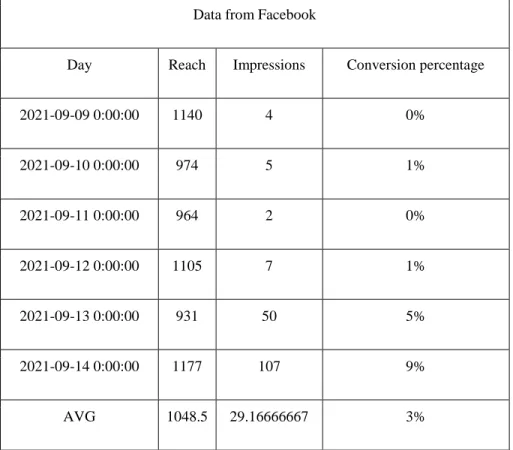
Fashion Tunnel used Freshdesk from July to August 2021. The company had to quickly discard the SAAS platform due to the fact that Freshdesk counts each interaction as one ticket. For example, if person A asked the price of a saree and after getting a reply from the page, A asked about the order process. Freshdesk labeled this conversation as two tickets. Counting each interaction as a ticket raised the number of tickets that had to be solved. This process yielded wrong data regarding the traffic of the page and the engagement numbers. Table 1 shows the average and unique accounts from July 24 to August 24 2021. From Table 1, it can be seen that the average reach was 1048 in this time period. While the actual reach with unique accounts on average was 29. The data yield by using Freshdesk showed that the average reach was 21 and the average impressions was 5200. The freshdesk data differed from actual Facebook data by 19% This is a
22 significant difference which cannot be ignored. Alongside the distorted data, the page moderators also mentioned, the extra tickets that showed up on the platform caused unnecessary pressure to resolve queries which lead to an unpleasant work environment occasionally.
Data from Facebook
Day Reach Impressions Conversion percentage
2021-09-09 0:00:00 1140 4 0%
2021-09-10 0:00:00 974 5 1%
2021-09-11 0:00:00 964 2 0%
2021-09-12 0:00:00 1105 7 1%
2021-09-13 0:00:00 931 50 5%
2021-09-14 0:00:00 1177 107 9%
AVG 1048.5 29.16666667 3%
Table 1 Avg & unique reach data from Facebook
23 Data from Freshdesk
Day Reach Impressions Conversion percentage
2021-10-09 0:00:00 113188 30179 27%
2021-10-10 0:00:00 2803 199 7%
2021-10-11 0:00:00 2535 12 0%
2021-10-12 0:00:00 5149 568 11%
2021-10-13 0:00:00 2984 176 6%
2021-10-14 0:00:00 2776 128 5%
AVG 21572.5 5210.333333 9%
Table 2 Avg & unique reach from Freshdesk
From August to September, Fashion Tunnel used Live Agent to interact with their customers. Live Agent does not provide automated answers or bots. However, using this SAAS platform, a moderator could log in and handle queries from Facebook, Instagram and email all at once.
Previously, they had to login to each account. Sometimes the notification would go unnoticed and delay replies. Live Agent also considers each person or account as a ticket. For example, no matter how many interactions person A had with Fashion Tunnel, person A would be one single ticket.
Moderators could put tags on the ticket accordingly and choose to solve it or keep the ticket open.
Once the ticket was solved, if person A contacted again, that ticket would be reopened. Then, the agents could add tags depending on the type of query A had. The tags helped to create targeted ads in messenger. According to one of the moderators, Live Agent made handling queues more efficient; enabled replying on multiple social media platforms at the same time; however, it did
24 not automate the process of interacting with the clients. The moderators were not able to focus on other aspects of the job.
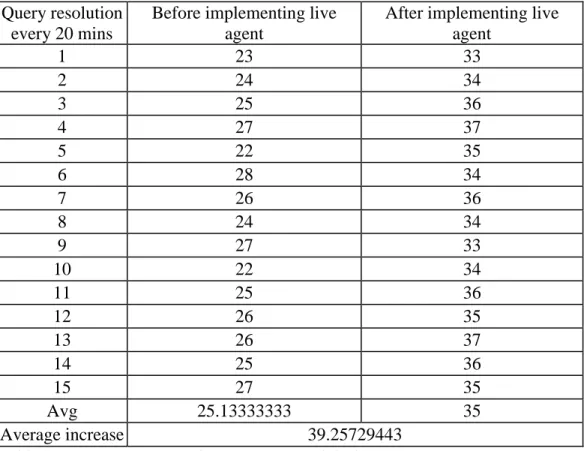
Query resolution every 20 mins
Before implementing live agent
After implementing live agent
1 23 33
2 24 34
3 25 36
4 27 37
5 22 35
6 28 34
7 26 36
8 24 34
9 27 33
10 22 34
11 25 36
12 26 35
13 26 37
14 25 36
15 27 35
Avg 25.13333333 35
Average increase 39.25729443
Table 3 Average query resolution using Freshdesk
By syncing the platforms in one account, Fashion Tunnel could reply to 35 queries per hour on average, as is shown in table 3. Before implementing Live Agent, the agents could cater to 25 queries in an hour on average. In other words, efficiency has increased by 40%. One of the agents however mentioned that the photos that clients send through their messenger did not load on Live Agent. So, for most cases they had to log onto all the social media platforms as well as the Live Agent chat platform.
From September to October Fashion Tunnel installed and used Many Chat. It is a chatbot service that automated the interaction with the clients. Based on previously entered keywords, the bot
25 identified the customer's query and sent an automated response. One of the drawbacks of using automated chat bot in the Bangladeshi market is the fact that the service does not recognize Bangla or Bangla written in English alphabets. This leads to the system misdiagnosing what the customer is saying and sending the wrong message. For example, a lot of people write the word price as প্রাইজin Bangla. The word input was written as প্রাইস in the system. The bot could not identify
the word and sent a generic message and solved the ticket. The agents had to double check each solved ticket to confirm there were not any query that was left out. This decreased the efficiency of the customer service team. Another issue with using Many Chat is the customers do not want to interact with a bot. 75% of the customers said that they would prefer if an agent handled their query instead of bots (Figure 4). According to them, bots just delay the process which could be solved by an agent instantly.
Figure 1: Customer preference for query handling (Fashion Tunnel, 2021)
If all inputs are identified and used properly, Many Chat makes the process smoother and enables the agents to focus on content strategy, posting schedules etc. Bots are useful when handling queries; especially when a boost or promotion is underway. Bots help track and reply to all the
26 accounts that have query. However, when there are complaints, bots can be more of a liability than an asset. When customers have any complaint, they are impatient and want a solution instantly.
65% of the customers said when they were contacting regarding any defect or delivery issue, they want an agent available for their concerns, as can be interpreted from figure 5.
Figure 2:Customer preference for problem solving (Fashion Tunnel, 2021)
One of the most extreme cases of customers preferring human interaction over a bot was when a client ordered two kameez sets and did not get the delivery on time. She sent messages for a week on the page but the bot flagged her ticket as a regular ticket and resolved it. She waited for more than two weeks and posted negative reviews on Fashion Tunnel as well as other girls groups. The co-founder Amanna Huq intervened and talked to the client for damage control. The client thought the brand was ignoring her complaints and would not take any accountability for the delay in delivery. The optimum way to use Many Chat would be to identify tickets with complaints and forward them to agents available right away. Otherwise, the brand will lose its goodwill if complaints are not adhered to immediately.
27
4.2 Automation of Delivery Cards
For online delivery, each parcel requires the customer’s name, address, contact number and for cash on delivery parcels the total amount that has to be paid. Ecourier, Fashion Tunnel’s delivery partner, requires having their ECR number on the parcels as well. ECR number is a tracking number automatically assigned by the delivery company once a parcel has been signed up for shipping. Currently, Fashion Tunnel uses handwritten delivery cards for each parcel. This process is relatively slower and can take up a lot of time on days there are bulk dispatches. Automating the process of making delivery cards can significantly improve the company’s efficiency. It will free up the office assistant's time to ensure proper packaging, cross check orders and so forth.
Automating the process can also eliminate many mistakes like address misspelling, wrong products sent, mislabeling the parcel weight etc. Customers’ experiences, from purchasing to delivery and beyond, are currently what distinguishes firms. Automated delivery techniques will eliminate human errors, saving time and enhancing brand loyalty with each shipment. (Council, 2020)
Ecourier’s website does allow printing delivery slips directly from their website. However, their slips have their name exclusively printed. Packaging and delivery cards are important branding tools, especially for a boutique store. So, Fashion Tunnel hoped to find an automated process that can identify the customer’s delivery details as well as the total amount the customer has to pay upon delivery.
Registering for shipment in Ecourier is done digitally. There is even an option to register multiple parcels in bulk. However, the entries have to be made manually; either directly from their website
28 or uploading an excel sheet which has to be filled in the format given by Ecourier. Fashion Tunnel tried to provide the customers with a Google form to be filled in the format given by Ecourier.
Other than that, the F-bot service from Ecourier can help achieve Fashion Tunnel the automation they are looking for. According to their website, F-Bot is a Facebook Messenger Service by which an online seller can easily manage their orders, inventory and automated delivery management system which will help them to track end to end order process systems. Installing F-BOT can help with product promotion, automated order collection, inventory tracking, automated delivery management and real-time replies to customers during a live session. (ECourier, n.d.)
To implement automated delivery card, Fashion Tunnel started providing the customers with a Google form in the format provided by Ecourier for their bulk upload for delivery. However, customers were not interested to fill up forms to confirm orders. According to figure 6, 85%
customers said they preferred to place their orders during the conversation, 5% customers said they were indifferent and 10% customers said they would not order if they had to fill out a separate form. After the feedback, the company was quick to discard the form for bulk uploads.
Figure 3: Customer preference for order placement (Fashion Tunnel, 2021)
29 They implemented F-bot service from Ecourier for BDT 500/month. This process, among all other SAAS platforms that were implemented, was the optimum technology to use. F-bot automated interaction with the customers. As Bangladeshi software it bypassed the problem the company was facing with Many Chat regarding conversations in Bangla. Tickets were being assigned correctly and handled accordingly. It also improved the targeted advertisements as well. Previously, only 3% customers would open Fashion Tunnel’s messenger ad, after implementing F-bot the conversion rate for target ad increased to 9%.
The agents handled 45 tickets on average with the implementation of the F-bot technology. The service has an added facility; the bots reply to comments on Facebook live while it is streaming.
Previously, live comments had to be attended after the live was over. For instant replies, someone had to be present just to answer queries. It was not feasible as live sessions are usually conducted around 11pm-12am. The F-bot reduced the lag of an hour to a few seconds.
The F-bot also helped to automate the delivery card. When a customer places an order, the F-bot recognizes and updates it in Ecourier’s server. This process eliminated registering for parcels to be picked up. Now the company does not need an allocated time to register parcels for shipment.
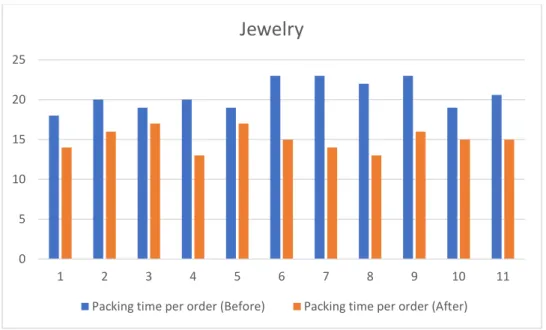
Once an order is placed, Fashion Tunnel has to pack it and dispatch it while Ecourier automatically gets pick-up requests and arrives in due time. The delivery cards are now generated automatically as well. When the F-bot recognizes and logs the order, it generates a delivery card as well. The agent just has to print it out and attach the correct delivery card with each parcel. Before automating the process of generating a delivery card the average time to pack a jewelry order was 20 minutes and clothing order was 10 minutes, as shown in figure 9. After automating the order log and
30 delivery card generating process the average time to pack a jewelry order was reduced by 5 minutes and clothing order by 7 minutes, according to figure 10.
Figure 4 Packaging time before and after implementing F-Bot (Fashion Tunnel, 2021), Jewelry
Figure 5 Packing time before and after implementing F-Bot (Fashion Tunnel, 2021), Clothing
0 5 10 15 20 25
1 2 3 4 5 6 7 8 9 10 11
Jewelry
Packing time per order (Before) Packing time per order (After)
0 2 4 6 8 10 12 14
1 2 3 4 5 6 7 8 9 10 11
Clothing
Packing time per order (Before) Packing time per order (After)
31
4.3 Smart contracts for suppliers
In any smart contracts, the terms of transaction are written as a protocol that is an agreement between two parties. The contract is implemented through a decentralized blockchain network system. The main difference between smart contracts and traditional contracts is that smart contracts are computer coded and uses blockchain technology for compliance. The contracts are automatically validated when the contract terms are completed. By implementing smart contracts Fashion Tunnel aims to:
● Ensure compliance without involving any other party
● Autonomous sourcing of data and verification
● Make transactions and handle sensitive information more secured
● Increase transparency
Fashion Tunnel could not find a SAAS platform that would help create smart contracts for the company. So, they created Google forms incorporating if-when-then conditions. In most cases, Fashion Tunnel creates contracts spanning across two weeks with each supplier. For example, when launching a new collection of jewelry, the company will make contracts with stone, metal and accessory suppliers. The bank was given standing orders for each supplier to initiate the payment. Previously the company was maintaining the process mostly via phone calls and hand written notes regarding which items have been delivered and which needs to be paid for and so forth. This process had the risks of creating a lot of problems. For example, a supplier could agree to a rate on the phone and deny that s/he agreed to it; there was no written proof of terms being agreed to. After getting the products, if they were not recorded accordingly, there was no way to
32 cross check the number of products or in case of human error the amount to be paid or to whom it should be paid could be recorded wrong.
According to the owner, Amanna Huq, the pseudo smart contract as Google forms reduced her workload by a lot. Previously the process was very scattered and often times the agreement would not be recorded on time. It sometimes posed problems with the suppliers regarding what was agreed upon. She also had to be in constant contact with the bank to ensure the right amount of cash dispersed to the right suppliers. With this form, once an agreement has been made the suppliers fill up the form themselves. The form also works as a pro forma invoice as it also has the amount Fashion Tunnel has to pay the suppliers. A copy of the entry is sent to the suppliers as well. So, they are also updated on their payment and the agreement. The owner has to cross check and verify the contract file once a week and send it to the bank for disbursing payments. All the suppliers said they appreciate this method of record keeping. Previously, many were not keeping any records at all; they were dependent on Fashion Tunnel’s records.
4.4 Implementing RFID for inventory management
Radio Frequency Identification or RFID technology is one of the most notable uses of IoT. It can be seen across all industries. For a fashion brand like Fashion Tunnel, implementing RFID poses huge potential for their inventory management. It can also help with customer service, lead time and increasing the overall efficiency of the company.
By making RFID a part of their inventory management process, Fashion Tunnel aims to:
● Track inventory efficiently
● Realize reorder point more efficiently
33
● Manage customer queries regarding availability of products more efficiently
● Avoid overstocking and dead stock
According to Fashion Tunnel’s requirement, they need a high frequency with an average of 13.56 MHz. Each of these tags can cost from BDT17 to BDT 1700. (atlasRFIDstore, n.d.) RFID readers are devices that transmit and receive radio waves in order to communicate with RFID tags.
(atlasRFIDstore, n.d.) Each reader can cost from BDT 34000- BDT 255000. RFID Antennas convert the RFID reader’s signal into RF waves that can be picked up by RFID tags. Each antenna can cost from BDT 4250 to BDT 25500. (atlasRFIDstore, n.d.)
Considering the fixed and recurring costs of implementing an RFID system, the management of Fashion Tunnel decided to implement RFID using android phones. At the same time, they decided to buy a system second hand if any opportunity came up. According to one of the founding partners, Dr. Amanna Huq, “Installing a new system is expensive. First there should be a pilot run, if it is indeed cost effective and increases inventory visibility we can invest further.”
To implement RFID through android phones, Fashion Tunnel needed the code to run an RFID system on android application. The management tried to implement it with a code snippet available online. It did not work. Consultants said they must build a code from scratch to run a program on android that can be used as an RFID reader.
The management was not willing to invest in the RFID technology without a trial run. The company bought a secondhand barcode scanner from a local restaurant. Barcode scanner and the RFID system have similar ideas behind them, so this scanner was used as the trial that management asked.
Once the barcode was implemented data entry errors significantly decreased. A barcode reader is much more accurate than entering or reading data manually. The technology also enabled
34 employees to track data more accurately which led to better decision making and increase in overall decision making. The office assistant did not have to manually look for an item if there was a query. She could just check the database for availability or color or size options. This saved a lot of time and made the overall process more efficient. The barcode reader made it easier for the inventory control so precisely. Whenever scanned, the information was passed onto a computer instantly so that they were calculated through stock inventory. As a result, it was possible to provide inventory status about individual items as well as company's overall inventory.
Setting up the barcode system was time consuming. Fashion Tunnel has a lot of diversified products. For example, there are six categories for only earrings-silver, golden, dice based, multani inspired, pearl based, and stone based. Each of the items had to be categorized accordingly and made separate codes for each item. Categorizing and coding available items took three weeks. The employees were frustrated with the tedious job of labelling and entering data for each item. Even after the categorization, a generalized code would not always work. For example, if a customer asked for the availability of a particular Jamdani saree, the database would show the available number of sarees under ‘thread count Jamdani saree’ but not if the said saree was available. The office assistant had to manually look for items even if they were categorized and coded. However, all the employees agreed that despite the time it took to set up and occasional manual work, installing the barcode system made the process much more efficient than they thought it would be.
35
Chapter 5
Conclusion
If a small f - commerce company like Fashion Tunnel can achieve an average 40% increase in efficiency with the implementation of the current SCM trends and technologies, large and established companies can scale efficiency at a much faster rate. These trends are not only limited to manufacturing companies to e - commerce and f - commerce as well. In the case of SMEs, it is very important that these companies start implementing the recent trends of supply chain management right from the start so that the growth is not hindered. Bangladesh as a country is enjoying unparalleled growth in terms of technological advancements as it is evident through the growth of technological startups and foreign investment. Even though there are companies that are implementing new trends and adapting new technology in their systems, Bangladesh has ways to go until we can claim that Bangladesh has a proper supply chain management system in place. If all the trends mentioned in this paper can be properly implemented to all the supply chain relevant companies in Bangladesh the country can be claimed to be going in the right direction in terms of productivity efficiency, transparency and technological adaptability. As we have seen most of the companies during the pandemic faced this difficulty of not having a scalable supply chain process, this was because the companies were not adapting to the latest supply chain trends and practices.
If companies as big as Uniliver or Marico implemented smart contracts in their supply chain process, or even companies like Coats or Palmal, the increase in operational efficiency would be phenomenal as there will be very little manual interventions resulting in lower errors as well as timely disbursements of all orders and financial transactions. With the attachment and introduction of automating tools in the supply chain comes the Internet of Things. For example, in a
36 manufacturing company the Internet of things starts right from receiving the raw materials to molding them into a final product and then transporting them to the end customers. All of this can be brought into the Internet of Things. The Internet of Things has also given rise to blockchain technology being used in supply chain management. Implementing these technologies into existing supply chain processes or building up the supply chain process of a company from the ground up is bound to give those companies the competitive edge and advantage over other companies and result in sustainability, Increased efficiency and decrease in process loss.
37
References:
Advanced Mobile Group. (2016, November 22). Best Practices for RFID
Implementation. https://www.advancedmobilegroup.com/blog/best-practices-for-rfid- implementation
Ahmed, M. (2021, April 20). 7 Powerful Supply Chain Trends You Should Not Ignore.
SCMDOJO. Retrieved August 10, 2021, from http://www.scmdojo.com/7-powerful-supply- chain-trends/
Alauddin, M., & Manir Chowdhury, M. (2015). Small and Medium Enterprise in Bangladesh- Prospects and Challenges (No. 2249–4588). Global Journal of Management and Business Research: C Finance. https://globaljournals.org/GJMBR_Volume15/1-Small-and-Medium- Enterprise.pdf
Alex Bookless, Head of Managed Services, Waterstons, Gupta, V. H. O. P., &Freshworks.
(n.d.). Freshworks | Modern and Easy Customer and Employee Experience Software.
Freshworks. Retrieved October 19, 2021, from https://www.freshworks.com/
Ali, I., &Aboelmaged, M. G. S. (2021, February). Implementation of supply chain 4.0 in the food and beverage industry: perceived drivers and barriers (No. 1741–0401). International Journal of Productivity and Performance
Management. https://www.emerald.com/insight/content/doi/10.1108/IJPPM-07-2020- 0393/full/html
All Answers Ltd. (2021, June 1). Brand Building Process of a Luxury Fashion Brand:
Methodology. Retrieved October 18, 2021, from https://ukdiss.com/method/luxury-fashion- brand-building-3965.php#citethis
38 atlasRFIDstore. (n.d.). What is RFID? | The Beginner’s Guide to How RFID Systems Work.
Retrieved October 23, 2021, from https://www.atlasrfidstore.com/rfid-beginners-guide/
Bajwa, R. (2021, June 17). Top 7 Supply Chain Trends to Optimize in 2021. Global Trade Magazine. https://www.globaltrademag.com/top-7-supply-chain-trends-to-optimize-in-2021/
Basak, A., Seddiqe, M. M. I. S., Islam, M. R., & Faruk, M. O. A. (2014). Supply Chain Management in Garments Industry (No. 2249–4588). Global Journal of Management and Business Research: A Administration and
Management. https://globaljournals.org/GJMBR_Volume14/4-Supply-Chain-Management-in- Garments.pdf
Bhandari, P. (2020, July 30). An introduction to qualitative research.
Scribbr. https://www.scribbr.com/methodology/qualitative-research/
Bhat, A. (2021a, July 21). What is a Survey – Definition, templates, methods, characteristics, and examples. QuestionPro. Retrieved October 18, 2021,
from https://www.questionpro.com/blog/surveys/
Bhat, A. (2021b, September 13). Qualitative Research: Definition, Types, Methods and Examples. QuestionPro. Retrieved October 18, 2021,
from https://www.questionpro.com/blog/qualitative-research-methods/
Biswas, S., & Sen, J. (2016, March). A Proposed Framework of Next Generation Supply Chain Management Using Big Data Analytics. National Conference on Emerging Trends in Business and Management. https://doi.org/10.13140/RG.2.1.2183.4487
Bottoni, P., Gessa, N., Massa, G., Pareschi, R., Selim, H., & Arcuri, E. (2020, November). Intelligent Smart Contracts for Innovative Supply Chain
Management. https://doi.org/10.3389/fbloc.2020.535787
39 Chai, W., & Casey, K. (2021, February 10). Software as a Service (SaaS).
SearchCloudComputing. Retrieved October 19, 2021,
from https://searchcloudcomputing.techtarget.com/definition/Software-as-a-Service Council, F. C. (2020, June 5). 12 Ways Automated Deliveries Can Impact The Business World. Forbes. https://www.forbes.com/sites/forbescommunicationscouncil/2020/06/05/12- ways-automated-deliveries-can-impact-the-business-world/?sh=6a591dd1379b
Crane, W. (2016, June 20). Supply Chain as a Service: The Promise of a Virtual Supply Chain.
IndustryStar Solutions. Retrieved September 5, 2021,
from https://www.industrystar.com/blog/2016/06/case-supply-chain-service/
Dynamics, S. (2019, December 6). 7 Supply Chain Trends for 2020 and beyond. Skilldynamics.
Retrieved August 10, 2021, from https://skilldynamics.com/7-supply-chain-trends-for-2020-and- beyond/
eCourier. (n.d.). Ecourier. Retrieved October 21, 2021, from https://backoffice.ecourier.com.bd/admin/auth/login
Evans, C. (2021, April 15). 10 Trends Shaping the Future of Supply Chain Management. Fictiv.
Retrieved August 24, 2021, from https://www.fictiv.com/articles/10-trends-shaping-the-future- of-supply-chain-management
Fashion Tunnel. (2021, August 24). Facebook Page Reach [Graph]. Fashion
Tunnel. https://business.facebook.com/latest/insights/results?asset_id=358861164261897&nav_r ef=pages_classic_isolated_section_inbox_diode&time_range=%257B%2522end%2522%253A
%25222021-08-24%2522%252C%2522start%2522%253A%25222021-07-24%2522%257D Felipe De Campos Martins, Alexandre Tadeu Simon, & Renan Stenico De Campos. (2020, March). Supply chain 4.0 challenges. https://doi.org/10.1590/0104-530x5427-20
40 Ferrantino, M. J., & Koten, E. E. (2018). Understanding Supply Chain 4.0 and its potential impact on global value chains. World Bank
Group. https://www.wto.org/english/res_e/booksp_e/gvc_dev_report_2019_e_ch5.pdf Fioravanti, R., Kraiselburd, S., & Laporte, L. M. (2019, April). Monitoring and assesing the impact of Supply Chain 4.0 in Latin A merica (IDB-DP-0664). Inter-American Development Bank. https://publications.iadb.org/publications/english/document/Monitoring_and_Assessing_th e_Impact_of_Supply_Chain_4.0_in_Latin_America_Framework_Application_to_Agribusiness_
and_Policy_Discussions_en.pdf
Flint, D., & Flint, D. (2010, November 12). The Service Side of Supply Chain Management.
Supply Chain Management
Review. https://www.scmr.com/article/the_service_side_of_supply_chain_management?__cf_ch l_managed_tk__=pmd_ESZM_3.gCcwVWCTva9baYNimkw70Ug_ZcdN8Xe4xfpI-
1630839648-0-gqNtZGzNAvujcnBszQh9
Goñi, M. C. S. (2019, August 1). Smart Contracts for Small Business Explained.
LinkedIn. https://www.linkedin.com/pulse/smart-contracts-small-business-explained-carolina- sanchiz-go%C3%B1i
Gravier, M. (2019, April 3). The Fourth Industrial Revolution: Some Supply Chain Managers Just Don’t Get It. Supply Chain Management
Review. https://www.scmr.com/article/some_supply_chain_managers_just_dont_get_it?__cf_chl _managed_tk__=pmd_DvDlIGZiKBqLF6ZXb0CjDDXCEd7Y0HaVk1K1nV9V28Q-
1631734642-0-gqNtZGzNAvujcnBszQgl
41 Griffin, D. (2019, March 27). Supply Chain Management In The Service Industry. Griffin & Co.
Strategic Marketing Methods. https://griffinandco.marketing/blog/2018/8/16/supply-chain- management-in-the-service-industry
Groschopf, W., Dobrovnik, M., & Herneth, C. (2021). Smart Contracts for Sustainable Supply Chain Management: Conceptual Frameworks for Supply Chain Maturity Evaluation and Smart Contract Sustainability Assessment. Frontiers in
Blockchain, 4. https://doi.org/10.3389/fbloc.2021.506436
GS1 US. (n.d.). 3 Steps to RFID Success. https://site.gs1us.org/RFID-success.html How to implement RFID features in our Android Application? (2012, February 2). Stack
Overflow. https://stackoverflow.com/questions/9118285/how-to-implement-rfid-features-in-our- android-application
Indeed Editorial Team. (2021, March 27). How To Write a Methodology (With Tips and FAQs).
Indeed Career Guide. https://www.indeed.com/career-advice/career-development/how-to-write- a-methodology
Kumar, M. (2019, September 22). Smart Contract Applications That SMEs Are Using For Their Expansion. Blockchain.Oodles. https://blockchain.oodles.io/blog/smart-contract-applications- smes-blockchain/
Law, A. (2017, September). Smart Contracts and their Application in Supply Chain Management. Massachusetts Institute of
Technology. https://dspace.mit.edu/handle/1721.1/114082
Lehmann, F., & Cordon, C. (2020, October 8). Business supply chain strategies are evolving, can poor countries benefit? IMD Business School. Retrieved September 10, 2021,
42 from https://www.imd.org/research-knowledge/articles/business-supply-chain-strategies-
evolving-can-poor-countries-benefit/
LibGuides: Research Support: Research Methodology. (n.d.). University of the Witwatersrand.
Retrieved October 17, 2021, from https://libguides.wits.ac.za/c.php?g=693518&p=4914913 Mahmud, S. M., Shahriar, T., Adila, F. F., Mir, S., & Uddin, M. R. (2017, November). Review on Supply Chain Management of Coats Bangladesh. Bangladesh University of
Professionals. https://www.scribd.com/document/402230827/Review-on-Supply-Chain- Management-of-Coats-Bangladesh-pdf
Management School of Management, Royal Holloway University of London. (2021,
February). The Impact Of Internet Of Things On The Fashion Retail Sector. Royal Holloway University of London. https://doi.org/10.13140/RG.2.2.32135.04008
ManyChat. (n.d.). Chat Marketing Made Easy with ManyChat. Manychat.Com. Retrieved October 20, 2021, from https://manychat.com/
Martins, F. D. C., Simon, A. T., & Campos, R. S. D. (2020). Supply Chain 4.0 challenges. Gestão&Produção, 27(3). https://doi.org/10.1590/0104-530x5427-20 NI Business Info. (n.d.). Using RFID for inventory control, stock security and quality management | nibusinessinfo.co.uk. https://www.nibusinessinfo.co.uk/content/using-rfid- inventory-control-stock-security-and-quality-management
Princes, E. (2020). Facing Disruptive Challenges in Supply Chain 4.0. International Journal of Supply Chain Management, 09(04), 52–56. https://doi.org/10.1590/0104-530x5427-20
Royal Holloway University of London. (2019, February). The Impact Of Internet Of Things On The Fashion Retail