IMPROVING THE SEVENTH GRADE STUDENTS’ VOCABULARY ACHIEVEMENT BY USING CROSSWORD PUZZLES
AT SMP NEGERI 3 LUMAJANG
THESIS
By
NUR SYAFIYAH
NIM 080210401015
ENGLISH LANGUAGE EDUCATION STUDY PROGRAM
LANGUAGE AND ARTS DEPARTMENT
THE FACULTY OF TEACHER TRAINING AND EDUCATION
JEMBER UNIVERSITY
i
IMPROVING THE SEVENTH GRADE STUDENTS’ VOCABULARY ACHIEVEMENT BY USING CROSSWORD PUZZLES
AT SMP NEGERI 3 LUMAJANG
THESIS
Presented as one of the Requirements to Obtain S1 Degree of the English Education Program of the Language and Arts Education Department
Faculty of Teacher Training and Education Jember University
By
NUR SYAFIYAH
NIM 080210401015
ENGLISH LANGUAGE EDUCATION STUDY PROGRAM
LANGUAGE AND ARTS DEPARTMENT
THE FACULTY OF TEACHER TRAINING AND EDUCATION
JEMBER UNIVERSITY
ii
STATEMENT OF THESIS AUNTHENTICITY
I certify that this thesis represents my own work, that no one has written it for me, that I have not copied the work of another person, and that all sources that I have used have been properly and clearly acknowledge documented.
I further certify that if I have used the ideas, words, or passages of an outsides source, I have quoted those words or paraphrased them and have provided clear and appropriate documentation of the source of that material, both what I have quoted and I have paraphrased.
I am aware of the potential consequences of any breach of the procedures and guidelines, e.g. cancellation of my academic award.
I hereby grant to the University of Jember the right to achieve and to reproduce and communicate to the public my thesis or project in whole or in part in the University/Faculty libraries in all forms of media, now or hereafter known.
Signature :
iii
CONSULTANT APPROVAL
IMPROVING THE SEVENTH GRADE STUDENTS’ VOCABULARY ACHIEVEMENT BY USING CROSSWORD PUZZLES
AT SMP NEGERI 3 LUMAJANG
THESIS
Proposed to Fulfill One of Requirements to Obtain the Degree of S1 at the English Education Program of Language and Arts Education Department Faculty of Teacher
Training and Education Jember University
Name : Nur Syafiyah
Identification Number : 080210401015
Level : 2008
Place and Date of Birth : Gresik, November 15th, 1989 Study program : English Education
Approved by:
Consultant I : Drs. Bambang Suharjito, M. Ed.
iv
APPROVAL OF THE EXAMINATION COMMITTEE
This thesis is approved and accepted by the Examination Committee of The Faculty of Teacher Training and Education, Jember University.
Day : Tuesday
Date : October 22nd 2013
Place : Faculty of Teacher Training and Education
The Examiner Team: The Chairperson,
Dra. Made Adi Andayani T, M. Ed NIP. 19630323 198902 2 001
The Secretary,
Drs. Sugeng Ariyanto, Dip.TESOL M. A NIP. 19590412 198702 1 001
The members:
1. Dra. Siti Sundari, M. A NIP. 19581216 198802 2 001
2. Drs. Bambang Suharjito, M. Ed. NIP. 19611025 198902 1 004
1. ………..
2. ………..
The Dean
Faculty of Teacher Training and Education Jember University
v
DEDICATION
This thesis is honorably dedicated to :
1. My beloved parents, H. Muhammad Nasich and Hj. Khoirul Ulumi
2. My beloved brother, Muhammad Ainul Yaqin,
vi MOTTO
The nice thing about doing a crossword puzzle is, you know there is a solution.
vii
ACKNOWLEDGEMENT
First and foremost, I would like to express my greatest gratitude to Allah SWT for blessing me and giving me strength so that I can finish writing the thesis entitled “Improving the Seventh Grade Students’ Vocabulary Achievement by Using Crossword Puzzles at SMP Negeri 3 Lumajang”. In relation to the writing and finishing of this thesis, I would like to express the deepest and sincerest thanks to:
1. The Dean of Faculty of Teacher Training and Education, Jember University. 2. The Chairperson of the Language and Arts Education Department
3. The Chairperson of English Education Programs.
4. The first and second consultants, Drs. Bambang Suharjito, M. Ed., and Drs. Sugeng Ariyanto, Dip. TESOL, M. A., for spending their time and giving me suggestions and ideas to make my thesis better.
5. The Examination Committee
6. My Academic Consultant, Dra. Made Adi Andayani T. M. Ed.
7. The lectures of the English Education Program who have given me moral supports to work harder in my attempt to complete this thesis.
8. The Principal and the English teacher of SMP Negeri 3 Lumajang for giving me an opportunity, help, and support to conduct this research.
9. The seventh grade students of SMP Negeri 3 Lumajang in 2013/2014 academic year especially class VII A.
I believe that this thesis might have some weaknesses. Therefore, any criticism from those who really want to improve the thesis will be wisely appreciated.
Jember, October 2013
viii
TABLE OF CONTENTS
Page TITLE PAGE………...
STATEMENT OF THESIS AUTHENTICIY………. CONSULTANTS’ APPROVAL……… APPROVAL OF THE EXAMINATION COMMITTEE……… DEDICATION………. MOTTO……… ACKNOWLEDGEMENT……….. TABLE OF CONTENT……….………. THE LIST OF APPENDICES……… THE LIST OF TABLES……….. THE LIST OF GRAPHICS………. SUMMARY………..
CHATER 1 INTRODUCTION………
1.1Background of the Research……….
1.2Problem of the Research………
1.3Objectives of the Research……….
1.4Significances of the research………..
CHAPTER 2 REVIEW OF RELATED LITERATURE……….. 2.1 The Definition of Vocabulary……… 2.2 Classification of Vocabulary………..
2.2.1 Nouns……….
2.2.2 Verbs………..
2.2.3 Adjectives………..
2.2.4 Adverbs………..
ix
2.3 Vocabulary Achievement………... 2.4 Crossword Puzzle………
2.4.1 The Definition of Crossword Puzzle……….
2.4.2 Kind of Crossword Puzzles………...
2.5 Characteristic of Crossword Puzzle……….. 2.6 Crossword Puzzles in Teaching Vocabulary………
2.6.1 Choosing Vocabulary………
2.6.2 Crossword Puzzles in Teaching Vocabulary……….
2.7 The Advantages and Disadvantages of Using Crossword Puzzles in
Teaching .Vocabulary………...
2.8 The Procedure of Using Crossword Puzzles in Classroom……….
2.9 Students’ Active Participation………...
2.10 Hypothesis……….
CHAPTER 3 RESEARCH METHOD………... 3.1 Research Design……….. 3.2 Area Determination Method……….. 3.3 Subject Determination Method………. 3.4 Operational Definition of the Terms……….
3.4.1 Crossword Puzzles……….
3.4.2 Vocabulary Achievement………..
3.4.3 The Students’ Active Participation……… 3.5 Data Collection Method……….
3.5.1 Vocabulary Achievement Test………..
3.5.2 Observation……… 3.5.3 Interview………
3.5.4 Documentation………...
x
3.6 Research Procedure………..
3.6.1 Planning of the Action………...
3.6.2 The Implementation of the Action……….
3.6.3 Classroom Observation and Evaluation………...
3.6.4 Data Analysis and Reflection of the Action………..
CHAPTER 4 RESULTS AND DISCUSSION………...
4.1 The Results of the Action in Cycle 1……….
4.1.1 Implementation of the Action in Cycle 1……….. 4.1.2 The Results of Observations………..
4.1.3 The Results of Vocabulary Test in Cycle 1………...
4.1.4 The Results of Reflection in Cycle 1……….
4.2 The Result of the Action in Cycle 2………...
4.2.1 Implementation of the Action in Cycle 2………..
4.2.2 The Results of Observations………..
4.2.3 The Results of Vocabulary Test in Cycle 2………...
4.2.4 The Results of Reflection in Cycle 2……….
4.3 The Result of Supporting Data………..
4.3.1 The Result of Interview……….. 4.3.2 The Result of Documentation………. 4.4 Discussion………
xi
THE LIST OF APPENDICES
List of Appendices Page
Appendix A. Research Matrix……… 53
Appendix B. Supporting Data Instruments……… 55
Appendix C. Students’ Names List……… 56
Appendix D. The Students’ Pervious Score………... 57
Appendix E. Lesson Plan 1 Cycle 1………... 58
Appendix F. Lesson Plan 2 Cycle 1………... 72
Appendix G. Vocabulary Achievement Test Cycle 1……… 86
Appendix H. Answer Key of Vocabulary Test Cycle 1………. 89
Appendix I. The Distribution of Vocabulary Test Cycle 1……… 90
Appendix J. Lesson Plan 1 Cycle 2……… 91
Appendix K. Lesson Plan 2 Cycle 2……….. 104
Appendix L. Vocabulary Achievement Test Cycle 2……… 117
Appendix M. Answer Key of Vocabulary Test Cycle 2……… 121
Appendix N. The Distribution of Vocabulary Test Cycle 2……….. 122
Appendix O. Table of Vocabulary Achievement Test Scores Cycle 1….. 123
Appendix P. Table of Vocabulary Achievement Test Score Cycle 2…… 124
Appendix Q. Table of the Result of Observation Meeting 1 Cycle 1…… 125
Appendix R. Table of the Result of Observation Meeting 2 Cycle 1…… 126
Appendix S. Table of the Result of Observation Meeting 1 Cycle 2……. 127
xii
THE LIST OF TABLES
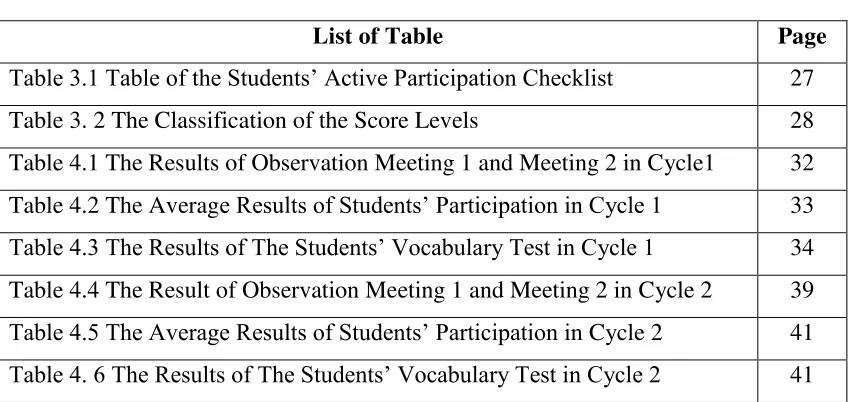
[image:13.612.109.533.134.335.2]List of Table Page
Table 3.1 Table of the Students’ Active Participation Checklist 27
Table 3. 2 The Classification of the Score Levels 28
Table 4.1 The Results of Observation Meeting 1 and Meeting 2 in Cycle1 32 Table 4.2 The Average Results of Students’ Participation in Cycle 1 33
Table 4.3 The Results of The Students’ Vocabulary Test in Cycle 1 34
Table 4.4 The Result of Observation Meeting 1 and Meeting 2 in Cycle 2 39
Table 4.5 The Average Results of Students’ Participation in Cycle 2 41
xiii
THE LIST OF GRAPHICS
List of Graphics Page
Graphic 4.1 The Students’ Active Participation in Vocabulary Teaching Learning Process in Cycle 1 and Cycle 2
45
Graphic 4.2 The Results of Students’ Vocabulary Achievement Test in Cycle 1 and Cycle 2
xiv SUMMARY
Improving The Seventh Grade Students Vocabulary Achievement by Using
Crossword Puzzles at SMP Negeri 3 Lumajang ; Nur Syafiyah: 080210401015;
2013; 49 pages; English Education Program; Language and Arts Education Department; the faculty of Teacher Training and Education; Jember University Consultant : 1. Drs. Bambang Suharjito, M.Ed.
2. Drs. Sugeng Ariyanto, Dip. TESOL, M.A Key words: Vocabulary Achievement, Crossword Puzzles
Based on the preliminary study that was held on 27th March 2013, most of class VII students of SMP Negeri 3 Lumajang, especially VII A faced difficulties in learning vocabulary. Besides, they also had a problem dealing with their participation in joining the vocabulary class. That things happened because they do not have enough knowledge of English, lacked of background knowledge, and lacked of vocabulary. They also had low motivation in learning English and only few students were enthusiastic in the teaching learning process of vocabulary.
The classroom action research with cycle model was applied in this research because this research was intended to improve class VII A students’ vocabulary achievement and their active participation in the teaching learning process of vocabulary. This research was done collaboratively with the English teacher of class VII of SMP Negeri 3 Lumajang. It was conducted in Class VII A of SMP Negeri 3 Lumajang that consisted of 32 students. The observation and the vocabulary test were the methods that were used in collecting the data. The data were analyzed quantitatively.
xv
students active involvement in the vocabulary teaching learning process. It showed that there was improvement of the students’ active participation from meeting I to meeting II, but it did not achieve the objective of the research that was 75% of the students were active in the vocabulary teaching learning process by using crossword puzzles. Besides, the result of vocabulary test in Cycle 1 also did not achieve the target of the research that was 75% of the students got 73 or more in the vocabulary test. The percentage of the students who got ≥73 was only 71.875%.
There were some factors that influenced the results of the observation and the vocabulary test in Cycle 1. They were (1) most of the students didn’t know how to complete the crossword puzzles correctly, (2) The teacher and the researcher often used English in explaining the materials and giving the instruction to the students, (3) some students did not bring the dictionary, and (4) Some students did not pay attention to the lesson, so they couldn’t answer the teacher’s oral questions.
For those reasons, Cycle 2 was necessary to be continued to solve the problems found in Cycle 1 by revising some problems found in Cycle 1. The process and product evaluation in Cycle 2 showed an improvement. The observation of the students’ participation revealed there was 78.125% of th students categorized as active students in meeting I and 81.25% of the students in meeting II who actively participated in the vocabulary teaching learning process. So, the results of the observation both in meeting I and meeting II had achieved the goal of this research. In product evaluation, the percentage of the students who got score ≥ 73 in the vocabulary test was 81.25% of the students. Based on those results, it could be concluded that the action in Cycle 2 was successful because the results of process and product evaluation achieved the objectives of the research.