PROCEEDINGS
5
th
International Seminar on Science Education
“
trengthening Science Education through
Co ti ui g Teacher Professio al Develop e t
ISBN 979-979-99232-4-0
Bandung, November 12
th2011
Published by:
Science Education Program
School of Post Graduate Studies
Indonesia University of Education
5
thInternational Seminar on Science Education
Strengthening Science Education through Continuing Teaching
Professional Development
Steering Committee:
Prof.Dr.Sunaryo Kartadinata, M.Pd (Rector UPI)
Prof.Dr.Didi Suryadi
Prof.Dr.Anna Permanasari, M.Si
Prof.Dr.Liliasari, M.Pd
Dr.Sumar Hendayana, M.Sc
Reviewer:
Prof. Dr. Anna Permanasari, M.Si.
Dr. Ari Widodo, M.Ed.
Dr. Agus Setiawan, M.Si.
Editors of Proceedings:
Kusnadi - Yanti Herlanti
–
Wiji - Jayus Riyadi Sholihin - Ismail Fikri N
–
Husni
–
Sudirman - Siti
Mutiara Ningsih Asshagab - Renia Debi Lestari
Layout & Cover Design:
Yanti Herlanti
Jayus Riyadi Sholihin
Published by
Science Education Program
School of Post Graduate Study
Indonesia University of Education
Jl. Dr. Setiabudi 229 Bandung
Frist Edition, November 12
th2011
Second Edition, November 25
th2011
PERPUSTAKAAN NASIONAL: KATALOG DALAM TERBITAN (KDT)
Editors: Kusnadi, dkk
Proceedings 5
thInternational Seminar on Science Education: Strengthening Science
Education through Continuing Teaching Professional Development.
Science Education Program, School of Post Graduate School, Indonesia University of
Education, Publishing, 2011
ISBN 978-979-99232-4-0
CONTENT
Page
Preface
i
Content
ii
Peter Aubusson
A Nationalcurriculum: Competition, Advances And Retreats
1.1
Anna Permanasari
Improving student science literacy between policy and implementation
2.1
Liliasari, Agus Setiawan and Ari Widodo
The Development of Generic Science Skill of Prospective Science Teachers
Using Interactive Multimedia
3.1
Nuryani Y. Rustaman
“tudy o Assess e t Fo Basi “ ie tifi I ui y: Futu e T e d of
Assessment in Science Instruction
4.1
Adi Rahmat
Connected Teaching Through Concept Tracing and Questioning Helps
Student Toward Better Understanding on Plant Development Concepts
5.1
Hayat Sholihin
Development of The Chemistry Education International Class to Produce
Chemistry Teachers Toward Global Competition
6.1
Jamil Suprihatiningrum, Liana Aisyah, Matkli Dimas Astrianto Saputro,
& Istiyarto Damarhati
Local Content-Based Science Curriculum: Potentials and Barriers
(Case Study Of Embedding
Salak Pondoh
in Middle School Science
Curriculum in Sleman, Yogyakarta)
7.1
Madlazim
Tsunami Education: What's Physical Parameter That Can Be Used For
Tsunami Early Warning System Accurately?
8.1
A.A. Istri Agung Rai Sudiatmika
The Development of Local Science Items to Measure Students Ability in
Higher Order Cognitive
9.1
Nancy Susianna and Milana Fitriani Walujo
Using A Concept Map to Increase The Ability of The Students to Mastery
The Concept And Retention in The Properties of Electrolytes and Non
Electrolytes Solution with Redox Reaction Grade X
10.1
I Gede Rasagama
Analysis of Test Instruments as Measurer The Ability to Analyze and
Create of
“tude t’s
11.1
Sondang R Manurung, Nuryani Y. Rustaman, Aloysius Rusli, Nelson P
Siregar
Analysis of Teks Representation about Kinematic Topics Based on Toulmin
Argumentation Approach
12.1
I Ketut Mahardika
Analysis of Teaching Material to Enhance Multiple
Presentation Capabilities of Pre-Service Physics Teacher
13.1
Oka Mariska, Muslim, & Irma Rahma
Application of Modified Inquiry Learning Model to Improve Student
Learning Outcomes in Physics Learning in Senior High School
14.1
Yanti Herlanti, Rita Zahara, & Muarif Sam
The Effect of Thematic Teaching and Learning Approach on The First Grade
“tude ts of MI ’“ Natu al “ ie e A hie e e t
15.1
Leni Marlina
Development of Teaching Materials Thermodynamics Using Educational
Reconstruction Model
16.1
Indrawati
Implementation of OBSIM Model for Improving Learning Objective
Formulating Skill to Physics Teacher Candidate Students
17.1
Judyanto Sirait, Syukran Mursyid
Multiple Representation Skills of Senior High School about Kinematics In
Kalimantan Barat
18.1
Ida Sriyanti
The Development of e-Learning Based Media for Solid State Physics
Subject
19.1
Erwina Oktavianty
“tude t’s Co eptio a out Ea th a d “pa e o Physi s Edu atio of
UNTAN
20.1
Adun Rusyana
Critical And Creative Thinking to Improve The Inovative Teaching of
Precervice Teacher
21.1
Sutopo
The Need of Representation Approach to Provide Prospective Physics
Teacher with Better Reasoning Ability and Conceptual Understanding
22.1
Supardiono
P Wave Velocity Model for The Earthquake Education Program in High
School
23.1
Demitra, Sarjoko, & Saritha Kittie Uda
Development of
Handep
Cooperative Learning Model Through Small
Group Test In Biology Learning
24.1
Sukardiyono, Nuryani Y. Rustaman, Agus Setiawan, and Achmad A.
Hinduan
Development and Validation Physics Concept Understanding Assessments
of Biology Edu atio a d Che ist y Edu atio “tude ts’
25.1
Herlina Fitrihidajati, Endang Susantini and Novita Kartika Indah
Implementation of Biology Material Resources Based nn Cooperative
Learning
Student Teams Achievement Division
(STAD) Type to Improve
Critical Thinking Skills in Sejahtera High School of Surabaya
26.1
Amprasto & Tina Safaria
Implementation of Peer Assessment in Plant Ecology Practice
27.1
Irfani Fitriani, Soesy Asiah Soesilawaty, and Rita Shintawati
Communication Skills and Students Learning Outcomes on The Concept of
Reproductive System Using Learning of Tournament
28.1
Mariana, Ari Widodo & Topik Hidayat
Comparison of Three Variations of Multimedia: An Effort to Enhance
Critical Thinking Skills of Pre-Service Biology Teachers
29.1
Suratno
Implementing
Reciprocal
Teaching
(RT) on Biology Learning Toward
Metacognition Skill The Upper and Lower Ability Senior High School
Student in Jember
30.1
Meilinda & Mgs.M.Tibrani
Ide tifi atio of “ ie e Tea he ’s Mis o eptio s i Biology “u je t of
Junior High School of Palembang
31.1
Agus Muji Santoso, Elly Setyowati, Mumun Nurmilawati, and Sulistiono
E ha i g “tude ts’
Science Literacy at Protista Topic by Inquiry Approach
Through Lesson Study
32.1
Kusnadi and Yanti Kartika L
Implementation of Project Based Learning (PJBL) Model to Improve
“tude t’s Lea i g Out o es a d Moti atio
of Junior High School on
The Diversity of Life Concept
33.1
Wiwit Artika
“ ie e Tea he s’ Pe eptio A out The Use of ICT at I
n-Service Training
P og a to I p o e Tea he ’s P ofessio a
l Development
34.1
Budhi Utami & Agus Muji Santoso
Team Teaching Can Enhance Student Literacy at Evolution Topic by
Observation in The Site Sangiran Ancient Human
35.1
Sigit Saptono & Nuryani Y. Rustaman
U de g aduate “tude ts’ Reaso i g a d A alyti al Thi ki g “kills i Cell
Biology
36.1
Suciati Sudarisman
Using Variation of Learners on Microteaching to Improve Teaching Skills of
Biology Student Teachers Toward Teaching Professional Development
37.1
Baiq Fatmawati & Nuryani Y. Rustaman
The Ability Design Project for Improvment Creative Thinking Skills Through
Project Based Learning
38.1
Ermayanti
The Efectiveness Teams Games Tournaments to Improving The Quality of
Learning Process and Result In Biology at SMA Srijaya Negara Palembang
39.1
Reza Taufik Maulana, Arif Hidayat
Optimizing Advance Students Through ICT Based Project: Video Analysis on
Water Rocket Project
40.1
Hafnati Rahmatan & Liliasari
Biochemistry Concept Level of Difficulty Profile on Prospective Biology
Teachers Perception
41.1
Rudy Hidana, Nuryani Y. Rustaman, I. Nyoman P. Aryantha, & Anny
Fitriani
Effectiveness of Competency-Based Assessment Tools for Health Analyst
on Field Work
Ramlawati, Liliasari, and Ana Ratna Wulan
Improving Generic Science Skills of Chemistry Prospective Teachers
Through Implementation of Electronic Portfolio Assessment (APFE)
43.1
Retno Dwi Suyanti and Dessi Rismayanti
Influence of The Implementation of Inquiry Learning Strategy with Mind
Mappi g To a d “tude ts’ A hie e e ts i The o he ist y
44.1
Erman and Liliasari
Model of Sport Cases Analysis
i Bio he i al Class to I p o e “tude ts’
Literacy on Sport Biochemistry
45.1
Wiji and Liliasari
The Development of A Mental Model Diagnostic Test in Chemistry
46.1
Solfarina, Liliasari, Agus Setiabudi
The Development of Subject Matter Chemical Bond For Prospective
Chemistry Teachers
47.1
Rafiuddin and Liliasari
The Development of Test to Reveal Biochemistry Generic Skills (BGS) For
Chemistry Pre-Service Teachers
48.1
Muhammad Rifqi Rofiuddin, Arif Hidayat
Concept
–
Mapping of Pre-Service Science Teacher on Video Modeling
Demonstration Learning Through C-Map Tools
49.1
Annisa Silmi Nurjannah
Levels of Inquiry on Pre Service Science Teacher Learning: Whiteboarding
on Water Rocket Lesson Plan
50.1
Yanti Fitria, Anna Permanasari, & Wahyu Sopandi
Tracking Study of Knowledge on Chemistry For PGSD Students in Deal with
Quality Improvement of Science Learning
51.1
Chandra Ertikanto, Ari Widodo, Andi Suhandi, & Bayong Tjasyono HK
The Po t ait of Tea he s’ Co pete y i Tea hi g “ ie e Th ough
Inquiry
Approach at Elementary School
52.1
Sariwulan Diana, Nuryani Rustaman, Sri Redjeki, & Iriawati
Peer Assisted Learning
(Pal) Program on Plant Morphology and Physiology
in Empowering Future Biology Teacher-Students-Assistant
53.1
v
Published by:
5th International Seminar on Science Education 17.1
Indonesia University of Education Bandung, Nov 12th 2011
ISBN 979-979-99232-4-0
IMPLEMENTATION OF OBSIM MODEL FOR IMPROVING LEARNING OBJECTIVE
FORMULATING SKILL TO PHYSICS TEACHER CANDIDATE STUDENTS
Indrawati
Pendidikan Fisika FKIP Universitas Jember
Abstract
This paper presents the results of research on the implementation Obsim model in enhancing the skill of physics teacher candidate students in formulating learning objectives. The aim of research was to assess the influence of the model in improving high school physics teacher prospective students in formulating learning objectives. The study was conducted on students who took a course in subject of Physics Instructional Planning, Odd Semester academic year 2009/2010. This type of study was an experiment research, by one group pretest post-test design. The techniques used to collect data were observation, tests, and interviews. Data Analytical technique used to determine the increase in the skill of students to formulate learning objectives was wilcoxon-test. Results showed that the model can significant influence to the improvement of stude ts’ skill in formulating learning objectives. The results can be seen that students can skilled determine operational verb, condition, and degree in physics learning objective formulations.
Keywords: Obsim model, learning objective formulation, and skill
INTRODUCTION
Faculty of Teacher Training and Education Jember University is one of the Institute of Education that produces Teachers and Educators. The faculty as an institusion producing teacher graduates should develop the competence of its graduates. Based on Badan Nasional Standar Pendidikan (BNSP) (2006), there are four main teacher competency standards are developed, namely competence: (1) pedagogical, (2) personality, (3) social, and (4) professional. Of the four core competencies, pedagogical competeny is one of competencies that called as characteristic of teacher profession. Therefore, need to be addressed seriously by the faculty to the quality of its graduates, at least achieves the standard.
17.2 5th International Seminar on Science Education Indonesia University of Education
Bandung, Nov 12th 2011
ISBN 979-979-99232-4-0
of pedagogical content knowledge and in implementing it in practice in classroom, although by microteaching or peer teaching.
The course of Physics Learning Plan, there are three main target student competencies to be mastered, in order to students have the ability to teach well, namely the ability and skills to plan learning objectives, to plan a learning strategy, to plan for evaluation of learning (Farmer & Farrell, 1980; Cole & Chan, 1994 ; Indrawati, 2008). According to the syllabus of Physics Learning Planning course, the ability to formulate objectives is an ability which is first given in the lecture
(Indrawati, 2008). Even this material is also given on the previous course, as in the course of
Physics Assessment (Indrawati, 2007). Although the material has been given, it in reality does
not guarantee a student has understood very well.
Based on a review of documentation of research reports on Physics Education Program
students in the last five years, study of Learning Implementation of lesson plan (RPP) on students
who took the Field Experience Program (PPL) the last three years, and interviews on several
students who had to take a course Physics Learning Planning and Field Experience Practice is
being followed (Indrawati & Sutarto, 2008) it can be concluded that most of them are less skilled
in formulating learning goals or objectives. It can be seen on: how to choose the verb operation,
how to determine the conditions (condition), and how to specify the criteria (degree).
There are several factors that cause less skilled students formulate learning objectives,
namely: (1) there are less examples of course, (2) Students lack practice, (3) if the student
practice, the results of student work is not discussed; (4) there is no teaching materials
as enrichment, and (5) feedback is rarely done. Examples should be given to students so that
students can learn and imitate how the process of formulating goals or objectives. This is similar
to the National Science Education Standards (NRC, 1996) which states that the teaching methods
will be successful when presented with real examples. According to Hudgins (Indrawati, 2005),
giving examples of teaching (modeling) will be successful if its effectiveness is discussed. Through
discussion, students can reveal or reflect on what they have received and linked with teaching
and learning experiences they have had before. In addition, the modeler (by course builder) can
also observe how much the level of understanding student learning in receiving messages that
were modeled (demonstrated).
Formulating objectives or goals is a form of skill and skill can be trained (Carr, 2003;
Hinduan, 2001) and this exercise should be well planned so that students skilled (Romiszowski,
1984). By plenty of frequently practice, students will be skilled or proficient in formulating
learning objectives or goals. Furthermore, Tillema and Veenman (Indrawati, 2005) stated that
this exercise will be an experience for students when there is immediate feedback. This feedback
provided by the instructor and/or friends to determine whether student learning goals are
formulated is correct or still wrong (Farmer & Farrell, 1980). Thus, it can be said that the students
5th International Seminar on Science Education 17.3
Indonesia University of Education Bandung, Nov 12th 2011
ISBN 979-979-99232-4-0
a lot of experience about the right to formulate learning objectives and expected after
completion of their preservice proficient or skilled in formulating learning objectives/goals.
Based on these underlying factors, it is necessary to formulate a learning model that can
accommodate learning objectives/goals: there are real examples from the lecturer, there is an
opportunity to discuss an example, teaching materials are provided for reference in formulating
student learning objectives/goals, enhanced the frequency of student exercises, examples and
results of the exercise students discussed and ada feedback. One model that can accommodate
the above requirements are Obsim model.
Obsim model is a model that has been developed to teach teaching skills to physics
teacher candidate students. This model includes five stages (sintax), namely: (1) modeling (giving
examples), (2) discussion (discussing examples), (3) enrichment (provision of teaching materials),
(4) exercises (simulation), and (5 ) feedback and stabilization. The advantages of this model is the
student can learn by example through observation, discussion, and literature studies. In addition,
students can also develop skills through training and exercise as often as possible given the
feedback, so students' understanding of the material learned to settle. Of the five stages and the
excess, it can be said that the model can be used for learning Obsim formulate learning goals. To
that end, the research questions to be answered is: Does the model Obsim significant influence
on increasing the ability of students to formulate learning objectives? To answer this question, it
is necessary experimental study design, by using one group pre-test and post-test design.
RESEARCH METHOD
Research design used in this study is a one group pre test-post test. This research was
conducted on students who took a course of Physics Learning Planning on physics education
students odd semester of the academic year 2009-2010. The technique used to collect data is an
essay test, observation, and interviews. The instrument essay tests used for testing the ability to
formulate learning objectives, assessment rubric to formulate learning objectives, observation
sheet to assess students' ability during the process of discussion, and interview sheet (a list of
interview questions).
Before instruments were used, it was validated. The design of instruction was tested
through microteaching in the presence of experts. There were a few suggestions from the
experts about obsim model, namely the examples given should be contextual with the syllabus
for high school physics lessons and need to be completed a list of operational and not
operational verbs to facilitate students to formulate learning objectives when learning process.
For validation of the content (content) and a rubric to assess the skills of learning
o je tives’ for ulatio , observation sheets, interview questions and conducted by two experts
to see the match between the indicator determined by the instruments that have been
17.4 5th International Seminar on Science Education Indonesia University of Education
Bandung, Nov 12th 2011
ISBN 979-979-99232-4-0
students of semester V Physics Education Program Jember University academic year
2009/2010. Trial results were analyzed using Pearson Bivariate correlation and reliability of test
used to test is Crombach Alpha.
To determine the influence of obsim model of students' skills in formulating learning
goals/objectives used Wilcoxon statistical tests. This test is used to see the differences between
pre-test and post-test scores or the influence of obsim model in improving student skills to
formulate learning objectives/goals.
RESULTS AND DISCUSSION
Base on the aim of this research and the method that used in this study, so data that
must be collected were: test score of skills to formulate learning objectives, description data that
observed during process discussion, and a description of the interview data on student responses
to implementation Obsim learning model. All three kinds of data can be described as follows.
To determine the skills of learning objectives formulation, the target that used to
formulate learning objectives are complete, meaning that the objectives contain elements of
audience, behavior, condition, and degree (ABCD). The rubric used to assess students' ability to
formulate goals include six indicators, namely: the determination of the audience, the
determination of behavior, the determination of said operational work, determination of
material, determination of conditions, and determination of criteria.
Based on the analysis of skill scores to formulate learning objectives for the six indicators
above is obtained by using a test Wilcoxcon. Result of computing Zhitung = 2.4. Because of Zhitung >
1.96 it can be concluded that no significant differences between pre-test scores with the
post-test score students' skills in formulating learning objectives/goals.These results illustrate that the
Obsim model significant influence on increasing students' skills in formulating learning
objectives/goals.
The number of students who took a course in planning as many as 66 people. Of the 66
people were grouped into 10 groups, so that each group of six people. This group used to
determine the ability of students in formulating objectives and at the same time arguing can get
information about student difficulties during the process of discussion. Of the six groups of
students when presenting the results of the task of formulating learning goals, based on analysis
5th International Seminar on Science Education 17.5
Indonesia University of Education Bandung, Nov 12th 2011
[image:13.595.131.493.101.322.2]ISBN 979-979-99232-4-0
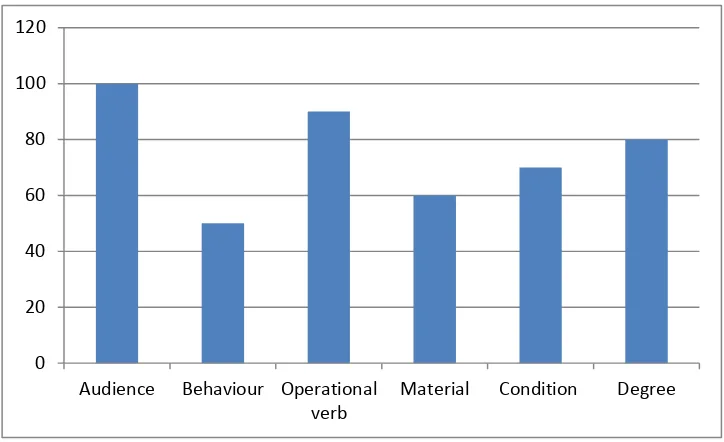
Figure 1. Graph of indicators of skills to formulate learning objectives
Figure 1 shows that of 10 groups of students they had no difficulty in determining the
audience. To determine the operational verb is good or 90% correct. This is happened since
students are guided by a list of operational verbs that has been distributed to students. To
determine the degree or the criteria and also condition are 80% and 70% respectively. However,
for material and component behavior are still relatively poor, 60% and 50%. On average they still
confusion in distinguishing between behavior and verbs.
Based on analysis of each indicator, almost all students can not distinguish between
behavior with a verb. They said that the behavior in the formulation of learning objectives is
same as a verb. Each behavior consists of verb and object (material). In addition, most of them
also do not understand that in every subject matter includes learning objectives. For example:
Through demonstration, students can give examples of vector quantities of at least three
correctly. In this example the intended behavior is to give examples of a vector quantity, not
give or provide examples. On the behavior, there are two components: a verb (give) and
material (eg a vector). At least three examples correctly called degree or criterion. Through
demonstration called conditions.
Examples of the formulation of other objectives that formulated by the student is:
Student should be able to formulate electrical current correctly. In this example, the student
does not list the condition, that is what conditions can make the students able to formulate an
electric current. After being interviewed, they still confusion in determining condition. Some
students say that the condition is referred to the condition when students take tests.This
statement is incorrect. The conditions referred to the formulation of learning objectives is a
0 20 40 60 80 100 120
Audience Behaviour Operational verb
17.6 5th International Seminar on Science Education Indonesia University of Education
Bandung, Nov 12th 2011
ISBN 979-979-99232-4-0
situation that was created in order students can formulate electric current. In addition, some of
the students are still incorrect too in determining the behavior and material. Some student
responses to the interview after learning formulate learning objectives with Obsim model are:
students were happy because many of the examples given by the lecturer. In addition, students
were also given the opportunity to practice the exercises in groups and discussed in class, and
given feedback. With practice and present the task for all groups and given feedback, students
can learn from false and true examples of groups or other friends. According to Indrawati (2008),
learning by example and non-examples can reinforce the concept of a person's level of
understanding. If students given examples, he would imitate the example correctly and he will
practice. Thus, generally, students felt happy and they said that the model suit for learning to
formulate learning objectives.
CONCLUSION
Based on the analysis and discussion of the data above, it can be concluded that Obsim
model can have a significant effect on improving students' skills in formulating learning goals at
the course of Physics Learning Planning in Physics Education Study Program, Faculty of Teacher
Training and Education Jember University.
References
BSNP .(2006). Panduan penyusunan Kurikulum Tingkat satuan Pendidikan jenjang pendidikan Dasar dan Menengah. Jakarta: BNSP.
Carr, D. (2003). Is Teaching a Skill? [Online]. Tersedia:
http://www.pantaneto.co.uk/issue8/Carr.htm [5 Desember 2003]
Cole P. G. & Chan K. S. (1994). Teaching Principles and Practice. Second edition. New York: Prentice Hall.
Cruickshank, D. R. & Metcalf, K. K. (1990). Training within teacher preparation. In W. R. Houston (Ed.). Handbook of research on teacher education (pp. 469-497). New York: Macmillan. Depdiknas. (2001). Kurikulum Pendidikan Bidang Studi Mata Kuliah Proses Belajar Mengajar
Program S-1 Pendidikan Matematika dan Ilmu Pengethuan Alam. Proyek PGSM IBRD Loan 3979-IND. Jakarta: Depdiknas.
Farmer, W. A. & Farrel, M. A. (1980). Systematic Instruction in Science For the Middle and High School Years, Albany, New York: Addison-Wesley Publishing Company.
5th International Seminar on Science Education 17.7
Indonesia University of Education Bandung, Nov 12th 2011
ISBN 979-979-99232-4-0 Indrawati. (2005). Implementasi Model Observasi dan Simulasi (Obsim) untuk Meningkatkan Kemampuan Mengajar Awal Mahasiswa Pendidikan Guru Fisika Sekolah Menengah. Disertasi. Bandung: PPS UPI (Tidak diterbitkan).
---. (2005). Modeling komponen kemampuan mengajar pada perkuliahan MKPBM mahasiswa calon guru fisika. Jurnal Pendidikan dan Kebudayaan. No. 057 tahun ke 11. 106-125.
---. (2008). Silabus Matakuliah Perencanaan Pembelajaran Fisika Prodi Pendidikan Fisika FKIP Universitas Jember. Jember: Tidak diterbitkan.
---. (2008). Silabus Mata Kuliah Evaluasi Hasil Belajar Fisika Prodi Pendidikan Fisika FKIP Universitas Jember. Jember: tidak diterbitkan.
Indrawati & Sutarto (2008). Studi tentang Kemampuan Mahasiswa Pendidikan Fisika Mengimplementasikan Model Pembelajaran ke dalam RPP. FKIP Universitas Jember: Tidak diterbitkan.
National Research Council (NRC). (1996). National Science Education Standards. Washington, DC: National Academy Press.