• Tidak ada hasil yang ditemukan

Review Annals of Internal Medicine Whole

N/A
N/A
Protected

Academic year: 2018

Membagikan "Review Annals of Internal Medicine Whole"

Copied!
16
0
0

Teks penuh

(1)

Whole-Body Vibration Therapy for Osteoporosis: State of the Science

Andrea Wysocki, MPP; Mary Butler, MBA, PhD; Tatyana Shamliyan, MD, MS; and Robert L. Kane, MD

Clinical guidelines for osteoporosis recommend dietary and phar-macologic interventions and weight-bearing exercise to prevent bone fractures. These interventions sometimes have low adherence and can cause adverse effects. A proposed alternative or adjunctive treatment is whole-body vibration therapy (WBV), in which energy produced by a forced oscillation is transferred to an individual from a mechanical vibration platform. Whole-body vibration platforms are not approved by the U.S. Food and Drug Administration for medical purposes. This review provides a broad overview of impor-tant issues related to WBV therapy for prevention and treatment of osteoporosis. Relying on key informants and a search of the gray and published literature from January 2000 to August 2011, the

investigators found that the designs of WBV platforms and proto-cols for their use vary widely. The optimal target population for the therapy is not defined. Although WBV has some theoretical advan-tages, key informants have voiced several concerns, including un-certain safety and potential consumer confusion between low-intensity vibration platforms intended for osteoporosis therapy and high-intensity platforms intended for exercise. Finally, the scant literature did not establish whether WBV therapy leads to clinically important increases in bone mineral density or reduces risk for fracture.

Ann Intern Med.2011;155:680-686. www.annals.org For author affiliations, see end of text.

O

steoporosis contributes to risk for fracture, especially of the wrist, hip, and spine (1). It affects 2% of men and 10% of women older than 50 years in the United States (2). In addition, 49% of older women and 30% of older men in the United States have low bone density or osteopenia (2). Clinical guidelines for osteoporosis recom-mend dietary and pharmacologic interventions (3–7). De-spite their proven effectiveness, these treatments have poor long-term adherence. In addition, drug treatments can have adverse effects, including esophageal irritation, mini-mal trauma atypical fractures, renal toxicity, and osteone-crosis of the jaw (8 –14). Alternative therapies, including weight-bearing exercise, may be safer than drugs and may increase bone mineral density (BMD) (15, 16). Yet, not all older people can undertake high-intensity or weight-bearing exercise. Furthermore, although exercise may im-prove certain outcomes related to bones and fracture risk, it has never been shown to prevent fractures in randomized, controlled trials (17–20). The U.S. Preventive Services Task Force encourages research on alternative osteoporosis interventions that may have better adherence and fewer side effects than available treatments (14, 21).

One proposed alternative is whole-body vibration (WBV) therapy (see Glossary) (22–26), which, like weight-bearing exercise, stimulates muscles and bones (2). In ani-mal studies, vibration increases the anabolic (bone-building) activity of bone tissue, as well as bone area and

density (27–30); however, the mechanism is not well-understood (31, 32). One hypothesis suggests that vibra-tion signals directly activate mechanosensors in bone cells (33). Whole-body vibration, like weight-bearing exercise (34, 35), may improve muscle strength and power by in-creasing neuromuscular activation (36 – 41). In human studies of healthy volunteers, the effects of vibration ther-apy on muscle strength and performance were similar to those of short-term resistance exercise (34, 35). Whole-body vibration therapy might also improve muscle and bone blood circulation and increase the supply of nutrients needed to build bones (23, 42– 46).

This report, commissioned as a technical brief by the Agency for Healthcare Research and Quality (AHRQ) Ef-fective Health Care Program, provides an overview of WBV therapy for the prevention and treatment of os-teoporosis. It describes available technology, identifies potential benefits and harms of the therapy, and sum-marizes published literature relevant to bone outcomes.

M

ETHODS

Key Informants

We conducted semistructured interviews with 12 key informants via telephone or in person during De-cember 2010. Key informants included osteoporosis ex-perts, WBV exex-perts, practicing clinicians who use WBV, consumer advocates, potential consumers, and representa-tives from manufacturers of WBV platforms. We identified key informants via frequently listed and cited authors of relevant literature, Internet searches for persons with po-tentially relevant viewpoints, and nominations by other key informants. The informants contributed information about the technology, the context in which it is used, and important issues about it that are worth considering. Literature Scan

We searched several databases for published literature from January 2000 to August 2011: MEDLINE via Ovid and PubMed, the Cochrane Library, the Allied and

Con-See also:

Print

Key Summary Points . . . 681 Glossary . . . 681 Related article. . . 668

Web-Only

Appendix Tables

Conversion of graphics into slides

Annals of Internal Medicine

Review

(2)

temporary Medicine Database, CINAHL, the CSA Physi-cal Education Index, Web of Science, the Physiotherapy Evidence Database, and Academic Search Premier. We based our search strategy on relevant Medical Subject Heading terms, text words, and a weighted word-frequency algorithm to identify related articles (Appendix Table 1, available at www.annals.org). We also conducted a gray literature search of federal government Web sites, the U.S. Food and Drug Administration (FDA) Web site, Clinical-Trials.gov, the CSA Physical Education Index, the Web of Science database, Medscape database, and the Internet by using different engines (including Google Scholar, Scirus, and LexisNexis).

Two individuals were involved in the literature review; one served as the primary reviewer, and one provided a quality check. We screened abstracts and full-text articles to identify studies published in English of any sample size and design that involved humans and reported any bone outcome, such as BMD or fracture. We excluded studies that involved children or healthy adults without low BMD or risk for osteoporosis, or patients with primary condi-tions, such as cerebral palsy, Parkinson disease, multiple sclerosis, cystic fibrosis, and spinal cord injuries. We also excluded studies that examined WBV as an exercise mo-dality without reporting clinical bone measures, as well as market evaluations of vibration platforms. The reviewers read the full text of selected articles and used a standardized data extraction form to collect reported information about study populations, treatment protocols, and outcomes.

Role of the Funding Source

The Minnesota Evidence-based Practice Center pre-pared this technical brief with funding from AHRQ. The Evidence-based Practice Center collaborated with AHRQ to develop the research protocol. Staff at AHRQ helped formulate questions and reviewed the draft report, but they were not involved in the study selection, data extraction, or drafting of the manuscript for publication. The full report is available at www.effectivehealthcare.ahrq.gov/.

R

ESULTS

WBV Platform Technology

In WBV therapy, forced oscillations produced by mo-tors beneath a mechanical platform transfer energy to a human body on the machine (32). Available platforms pro-duce sinusoidal-shaped oscillations (32). The International Society of Musculoskeletal and Neuronal Interactions has developed consensus criteria for describing sinusoidal vi-brations, including the frequency, amplitude, peak-to-peak displacement, acceleration, and vibration platforms (syn-chronous, side-alternating, or triplanar) (see Glossary for definitions of the preceding terms) (47). Whole-body vi-bration platforms are meant to produce sinusoidal oscilla-tions, but the actual oscillations may diverge from a pure sinusoidal shape. The vibrations transmitted to an individ-ual may depend not only on the vibration variables but also on the individual’s position on the platform and the rigid-ity of the platform plates (47).

Acceleration distinguishes acceptable vibration levels from those defined as hazardous by the International Or-ganization for Standardization (ISO). Acceleration also de-termines whether WBV platforms are considered high-Key Summary Points

Whole-body vibration therapy is a proposed intervention for preventing and treating osteoporosis that is not ap-proved by the U.S Food and Drug Administration.

The therapy involves a forced oscillation that transfers energy from a vibration platform to the person on the machine.

The mechanism by which whole-body vibration therapy may increase bone density is not well-understood.

Designs of whole-body vibration platforms and protocols for their use vary widely.

Neither the optimal target population nor the optimal treatment protocol is defined.

Although whole-body vibration therapy has some theoreti-cal advantages and benefits, its efficacy and safety are unknown.

More research is needed to understand the role of this investigational therapy in preventing and treating osteoporosis.

Glossary

Acceleration:Maximal rate of change in velocity during an oscillation cycle. It is a function of the frequency and peak-to-peak displacement (expressed as m/s2) and is often expressed as multiples of Earth’s gravity

(9.80665 m/s2), denoted by the symbolg.

Amplitude:Maximal displacement from equilibrium position (expressed as mm).

Frequency:Repetition rate of the cycles of oscillation (expressed as Hz). High-intensity vibration platforms:Platforms that provide acceleration

greater than 1g.

Low-intensity vibration platforms:Platforms that provide acceleration less than 1g.

Peak-to-peak displacement:Displacement from the lowest to the highest point of the vibrating platform position (expressed as mm).

Side-alternating whole-body vibration platforms:Platforms that use a reciprocating vertical displacement on the left and right sides of a fulcrum. Synchronous whole-body vibration platforms:Platforms on which the left

and right feet move up and down simultaneously.

Triplanar whole-body vibration platforms:Platforms that oscillate in 3 planes. These platforms may also be described as⬙elliptical.⬙ Whole-body vibration therapy:The mechanical repetitive movement, or

oscillatory motion, around an equilibrium point. Whole-body vibration therapy involves a forced oscillation in which vibrations generated by motors beneath a platform are transmitted to the person on the machine. Currently available whole-body vibration platforms are intended to produce sinusoidal-shaped oscillations.

Review

Whole-Body Vibration Therapy for Osteoporosis: State of the Science

(3)

intensity (see Glossary) or low-intensity (see Glossary); acceleration is less than 1gfor the former and more than 1g

for the latter.

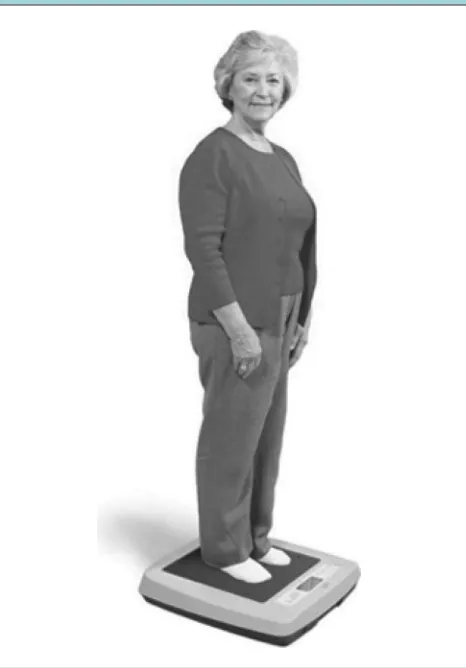
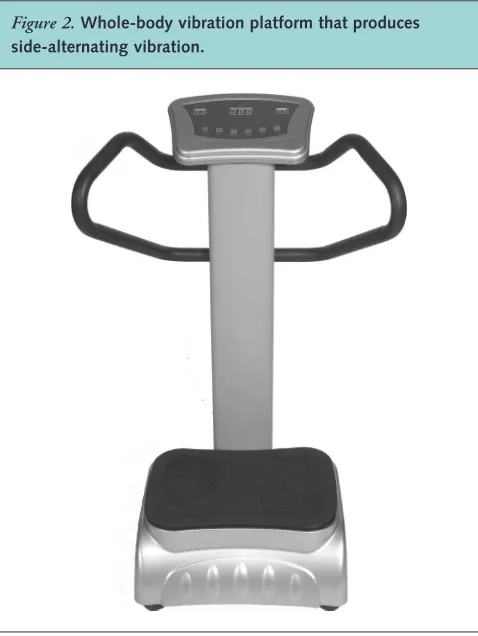
The FDA has not approved WBV platforms for med-ical purposes: No FDA standards regulate their manufac-ture, and designs of platforms vary widely.Figures 1and2 show two examples. Some low-intensity platforms resem-ble bathroom scales in size and shape, except that they are raised several inches off the ground, whereas some larger high-intensity platforms resemble typical exercise ma-chines. Some platforms have safety features, such as a handrail for balance.

Low-intensity vibration platforms for home use are currently marketed at a retail price of approximately $1600. Some of these platforms automatically calibrate the treatment to each user’s weight and body mass index. Sug-gested treatment sessions involve standing on the platform for 10 minutes daily. Manufacturers report that home use requires no direct supervision. Newer models are very low in height and offer an optional wheelchair mount (for ex-ample, see www.livtherapy.com/products/index.html). Ad-vancements will soon allow individuals with mobility prob-lems to use vibration platforms in a seated or supine

position (for example, see http://vibetechglobal.com /prototype.aspx).

High-intensity vibration platforms produce a gravi-tational force greater than 1g regardless of frequency. Although they are marketed as exercise equipment, these platforms are used in clinical physical therapy or reha-bilitation settings, exercise facilities, and the home. No organization provides accreditation or training for vibra-tion therapy use in professional settings. Some exercise facilities provide proprietary training to personal train-ers (for example, Power Plate [Irvine, California; www .powerplate.com]). Such training is specific to proper use of the platform in exercise programs, not to osteo-porosis prevention or treatment.

Potential Benefits and Harms

Whole-body vibration therapy may offer advantages to individuals who cannot or do not want to continue or initiate pharmacologic treatment to increase BMD and those who cannot perform high-impact exercise. In addi-tion, the relative ease of use of vibration therapy may result in better adherence.

Therapeutic and occupational vibration exposure pres-ents safety concerns. Vibration has been recognized as an occupational hazard associated with low back pain (48, 49), musculoskeletal problems (50), cardiovascular disor-ders (51), neurovestibular disordisor-ders (52), and the Raynaud syndrome (53). The ISO has defined vibration limits for comfort, performance proficiency, and safety on the basis of their known occupational hazards, and ISO 2631-1 de-fined high-intensity vibrations (those that produce force greater than 1g) as hazardous regardless of their frequency (54). Safety concerns for vibration as a therapeutic inter-vention include the possibility of an individual losing con-tact with the vibration platform and becoming airborne when acceleration exceeds 1g. The resulting impact as the feet return to the platform may be harmful for individuals with fragile bones (32). Vibration may also be harmful to the soft-tissue organs of the head and chest. Furthermore, knee flexion and posture can alter the transmissibility of vibrations to the head and trunk. Thus, an individual’s shifting of position on the platform may complicate accu-rate measurement of vibration in different body parts (32). Key informants indicated that harms of WBV therapy may include plantar fasciitis, itchy legs, blurred vision, tin-nitus, white-finger disease (a secondary form of the Ray-naud syndrome), orthostatic hypertension, and aggravation of soft-tissue and joint injuries. Dislocation of an intraoc-ular lens after cataract surgery also raises concerns, partic-ularly because the population using whole-body vibration for osteoporosis prevention and treatment is at greater risk for cataracts (55). In addition, various parts of the body can resonate at different and highly individual frequencies. Inadequate understanding of optimal vibration dosage and transmission to different parts of the body could lead to injuries. Other concerns expressed by key informants in-Figure 1.Low-intensity whole-body vibration platform.

The Juvent 1000 platform. Photograph courtesy of Juvent, Dynamic Motion Therapy, Somerset, New Jersey.

Review

Whole-Body Vibration Therapy for Osteoporosis: State of the Science

(4)

cluded loss of balance and falls during platform use and lack of clear distinction between platforms intended for powered exercise and those intended for osteoporosis therapy.

Contexts in Which WBV Is Used

Whole-body vibration platforms are used in the home, physical therapy or rehabilitation clinics, and exercise facil-ities. High-intensity platforms are marketed as powered exercise equipment. Although they may be used for medi-cal purposes, such as muscle or joint rehabilitation, these high-intensity platforms are exempt from FDA premarket notification procedures (56). Manufacturers marketing low-intensity WBV platforms for treatment of osteoporosis or improvement of BMD include disclaimers on their Web sites, specifying that their devices are investigational and that they make no medical claims for osteoporosis (for example, see www.juvent.com and www.marodyne.com /technology). Many of these Web sites summarize or pro-vide links to scientific research for potential consumers to review. Key informants expressed no awareness that any third-party payers cover the costs of WBV therapy; thus, individuals pay out of pocket for clinic sessions or to pur-chase platforms for home use.

Current Evidence

Of the 345 citations screened, 12 studies met the in-clusion criteria (22, 37, 42, 57– 65); these are summarized inAppendix Tables 2 to 7 (available at www.annals.org). The patient populations were individuals who were diag-nosed with osteoporosis, had low BMD, or were at risk for low BMD or osteoporosis. Two studies focused on post-menopausal women diagnosed with osteoporosis (57, 63), and 3 focused on children and adolescents with low BMD (37, 58, 64). The remaining 7 studies evaluated individuals at risk for low BMD or osteoporosis; all but one of these evaluated postmenopausal women (22, 42, 59 – 62). The remaining study included 1 older male participant (65).

Six studies were randomized, controlled trials (22, 42, 60 – 63); 3 were nonrandomized, controlled trials (37, 57, 59); and 3 were case series (58, 64, 65). Control groups in the trials received no intervention, walking, resistance training or exercise, bisphosphonates, or a placebo device. The WBV interventions in the studies involved syn-chronous, side-alternating, or triplanar platforms. Vibra-tion frequencies ranged from 12 to 40 Hz across 11 stud-ies; 1 study did not report frequency (65). Five studies had frequency settings that changed, during either individual sessions or the study period (42, 58 – 61). The amplitude ranged from 0.7 to 5 mm across the 7 studies that reported it (22, 57– 61, 63); the amplitude setting changed during the intervention period in 1 study (60). Acceleration ranged from 0.1g to 10g across 6 studies that reported it (37, 42, 59, 60, 62, 64); 3 had levels less than 1g(37, 62, 64), whereas 3 had levels greater than 1g(42, 59, 60).

Vibration sessions ranged from 15 seconds to 30 min-utes and took place 1 to 7 days per week. Studies with

acceleration levels less than 1ghad more frequent and gen-erally longer sessions than studies with acceleration levels greater than 1g. The duration of the vibration intervention and follow-up ranged from 8 to 72 weeks.

In some studies, participants were instructed to do certain things while on the platform. In 4 studies, partici-pants performed dynamic exercises or extended their lower extremities (58 – 61); in 4 studies, participants flexed their knees (22, 42, 58, 63); and in 3 studies, participants flexed their knees while performing exercises (59 – 61). Only 3 studies reported the type of footwear used during sessions (22, 59, 60), and 5 studies stated or illustrated that a sup-port device was available on the platform (57, 58, 62, 64, 65).

Three studies evaluated WBV as an adjunctive ther-apy; 2 examined it as an adjunct to an exercise program (59, 61), and 1 as an adjunct to drug therapy (63). Two studies required participants to have adequate nutritional intake (22, 61), and 5 studies either provided or advised participants on appropriate levels of vitamin D or calcium (or both) (37, 42, 59, 61, 63).

Of the 11 studies that measured BMD (22, 37, 42, 57, 59 – 65), 8 did so only with dual-energy x-ray absorptiom-etry (DXA) (22, 57, 59 – 63, 65), 2 did so only with com-puted tomography (42, 64), and 1 used both DXA and computed tomography (37). Location of the BMD

mea-Figure 2.Whole-body vibration platform that produces side-alternating vibration.

The Osci Health platform. Image courtesy of Health Mark, Acworth, Georgia.

Review

Whole-Body Vibration Therapy for Osteoporosis: State of the Science

(5)

surements included the femoral neck, lumbar spine (L1 to L4), total body, total hip, trochanter, forearm, and tibia. Overall, the trials found statistically nonsignificant or small increases in BMD of 1.5% to 4.3% at specific sites in treatment groups compared with controls. Statistically sig-nificant increases in BMD were found at the femoral neck in 2 studies (22, 57), total hip in 1 study (60), and lumbar spine in 1 study (57). One study found statistically non-significant increases in BMD for treatment participants compared with controls in an intention-to-treat analysis, but it also found that participants in the 3 highest quartiles of treatment adherence had statistically significant increases in BMD of the lumbar spine compared with controls or those in the lowest quartile of adherence (37). One study reported a statistically significant decrease in BMD at the forearm (radius, 33%) for treatment participants compared with controls (59).

Two studies reported data on fractures (58, 63). One of these found no new thoracic or lumbar vertebral frac-tures or nonvertebral osteoporotic fracfrac-tures of the hip, wrist, or shoulder in any treatment or control participant over the 12 months of the intervention (63). Two studies reported minor harms from vibration (42, 58). Eleven studies evaluated other outcomes, including bone mineral content; bone turnover markers; falls; balance; mobility; back pain; postural control; bone area; muscle force, strength, power, mass, and area; fat mass; adherence to the study protocol; and efficacy of device use (22, 37, 42, 57– 64).

D

ISCUSSION

We found scant evidence on the benefits and harms of WBV for the prevention and treatment of osteoporosis. Key informants unanimously urged caution in making claims about this intervention because of inadequate evi-dence and knowledge about the appropriate target popula-tion, optimal protocol features, safety of platforms, and long-term beneficial or harmful effects. Several key infor-mants indicated that WBV therapy should not replace os-teoporosis therapies but warrants evaluation as a possible adjunctive therapy.

We are not certain which groups might benefit from or be more susceptible to harms from WBV. Neither the literature nor our key informants offered clear guidance on the optimal target population. Also lacking was evi-dence for how this therapy might affect individuals with different levels of risk for or severity of osteoporosis. Potential harms are unknown for individuals with health issues, such as heart or musculoskeletal problems, because most published studies excluded them.

The 12 published studies that we reviewed included diverse treatment protocols, reflecting uncertainty about the most efficacious platform type and settings (fre-quency, amplitude, and acceleration), and session length and frequency. Few studies systematically assessed

po-tential harms or clinically important outcomes, such as fractures. Trials had small samples and short follow-up, and they generally reported statistically nonsignificant or small increases in BMD that were of uncertain clin-ical significance.

Several key informants indicated that bone outcomes, including fractures, are of the most interest for future stud-ies that evaluate the effectiveness of WBV therapy. Because fractures are rare outcomes, and changes in bone outcomes occur slowly, measuring these would require a large num-ber of participants and long follow-up. Measurement tech-niques also influence the detectability of changes in bone outcomes. For instance, peripheral quantitative computed tomography measures volumetric BMD, whereas DXA measures areal BMD, and the former technique may offer better accuracy and diagnostic information than DXA (66). Many key informants also suggested muscle strength and balance as potentially valuable intermediate outcomes, because improvements in these functions might prevent fractures and falls. Finally, quality-of-life measures could provide valuable information, but like fracture, these would require long-term studies.

Informants noted adherence and access as additional key considerations. Both the site (clinic or home) and the frequency of sessions may affect long-term adherence. The 8 studies that measured adherence found a wide range, raising questions about long-term adherence for various treatment protocols (22, 37, 42, 58, 59, 61, 62, 64). Site and frequency of sessions may also affect treatment access. Currently, third-party payers do not cover WBV devices, so consumers must pay out of pocket for sessions in a clinical setting or to purchase a platform. Out-of-pocket costs may affect whether, where, and how often a con-sumer uses a WBV platform.

Finally, safety features must be considered. Individuals using WBV platforms may be at risk for falls because of balance problems or disorientation. Decreased blood pres-sure may occur during platform use. Not all platforms pro-vide safety features, such as handrails, to address these is-sues. Direct-to-consumer marketing also causes problems; consumers may not be able to clearly distinguish low-intensity platforms intended for osteoporosis therapy from platforms intended for high-intensity exercise.

Our review has limitations. We relied on a limited number of key informants. We included only studies pub-lished in English that reported a bone outcome and that involved participants with either risk for or diagnosed os-teoporosis or low BMD. Finally, we did not formally eval-uate each study’s quality or risk of bias.

In summary, WBV therapy for the prevention and treatment of osteoporosis is an investigational therapy. We know little about its benefits and harms. Although several clinical trials of this therapy are completed or ongoing (67– 69), much additional research is needed to fully under-stand the role of this therapy.

Review

Whole-Body Vibration Therapy for Osteoporosis: State of the Science

(6)

From Minnesota Evidence-based Practice Center, Minneapolis, Minnesota.

Disclaimer:The findings and conclusions of this report are those of the authors, who are responsible for its contents; the findings and conclu-sions do not necessarily represent the view of AHRQ. Therefore, no statement in this report should be construed as an official position of AHRQ or of the U.S. Department of Health and Human Services.

Financial Support: This project was conducted by the Minnesota Evidence-based Practice Center under contract to AHRQ (contract HHSA 2 902 007 100 641).

Potential Conflicts of Interest: Disclosures can be viewed at www .acponline.org/authors/icmje/ConflictOfInterestForms.do?msNum⫽M11 -1686.

Requests for Single Reprints: Robert L. Kane, MD, Minnesota Evidence-based Practice Center, University of Minnesota School of Pub-lic Health, 420 Delaware Street SE, MMC 197 Mayo, Minneapolis, MN 55455; e-mail, [email protected].

Current author addresses and author contributions are available at www .annals.org.

References

1.U.S. Department of Health and Human Services, Public Health Office of the Surgeon General.Bone Health and Osteoporosis: A Report of the Surgeon General. Rockville, MD: U.S. Department of Health and Human Services; 2004. 2.Looker AC, Melton LJ 3rd, Harris TB, Borrud LG, Shepherd JA.Prevalence and trends in low femur bone density among older US adults: NHANES 2005-2006 compared with NHANES III. J Bone Miner Res. 2010;25:64-71. [PMID: 19580459]

3.Compston J, Cooper A, Cooper C, Francis R, Kanis JA, Marsh D, et al; National Osteoporosis Guideline Group (NOGG).Guidelines for the diagnosis and management of osteoporosis in postmenopausal women and men from the age of 50 years in the UK. Maturitas. 2009;62:105-8. [PMID: 19135323] 4.Qaseem A, Snow V, Shekelle P, Hopkins R Jr, Forciea MA, Owens DK; Clinical Efficacy Assessment Subcommittee of the American College of Physi-cians.Pharmacologic treatment of low bone density or osteoporosis to prevent fractures: a clinical practice guideline from the American College of Physicians. Ann Intern Med. 2008;149:404-15. [PMID: 18794560]

5.Watts NB, Lewiecki EM, Miller PD, Baim S.National Osteoporosis Foun-dation 2008 Clinician’s Guide to Prevention and Treatment of Osteoporosis and the World Health Organization Fracture Risk Assessment Tool (FRAX): what they mean to the bone densitometrist and bone technologist [Editorial]. J Clin Densitom. 2008;11:473-7. [PMID: 18562228]

6.Kanis JA, Burlet N, Cooper C, Delmas PD, Reginster JY, Borgstrom F, et al; European Society for Clinical and Economic Aspects of Osteoporosis and Os-teoarthritis (ESCEO).European guidance for the diagnosis and management of osteoporosis in postmenopausal women. Osteoporos Int. 2008;19:399-428. [PMID: 18266020]

7.Hamdy RC, Baim S, Broy SB, Lewiecki EM, Morgan SL, Tanner SB, et al.

Algorithm for the management of osteoporosis. South Med J. 2010;103:1009-15. [PMID: 20818296]

8.Shane E, Burr D, Ebeling PR, Abrahamsen B, Adler RA, Brown TD, et al; American Society for Bone and Mineral Research.Atypical subtrochanteric and diaphyseal femoral fractures: report of a task force of the American Society for Bone and Mineral Research. J Bone Miner Res. 2010;25:2267-94. [PMID: 20842676]

9.van Duijnhoven NT, Thijssen DH, Green DJ, Felsenberg D, Belavy DL, Hopman MT.Resistive exercise versus resistive vibration exercise to counteract vascular adaptations to bed rest. J Appl Physiol. 2010;108:28-33. [PMID: 19875710]

10.Bruye`re O, Burlet N, Delmas PD, Rizzoli R, Cooper C, Reginster JY.

Evaluation of symptomatic slow-acting drugs in osteoarthritis using the GRADE

system. BMC Musculoskelet Disord. 2008;9:165. [PMID: 19087296] 11.Taggart H, Bolognese MA, Lindsay R, Ettinger MP, Mulder H, Josse RG, et al.Upper gastrointestinal tract safety of risedronate: a pooled analysis of 9 clinical trials. Mayo Clin Proc. 2002;77:262-70. [PMID: 11888030] 12.Kim SY, Kim MJ, Cadarette SM, Solomon DH.Bisphosphonates and risk of atrial fibrillation: a meta-analysis. Arthritis Res Ther. 2010;12:R30. [PMID: 20170505]

13.Green J, Czanner G, Reeves G, Watson J, Wise L, Beral V.Oral bisphos-phonates and risk of cancer of oesophagus, stomach, and colorectum: case-control analysis within a UK primary care cohort. BMJ. 2010;341:c4444. [PMID: 20813820]

14.U.S. Preventive Services Task Force.Screening for osteoporosis: U.S. Pre-ventive Services Task Force recommendation statement. Ann Intern Med. 2011; 154:356-64. [PMID: 21242341]

15.Lewis RD, Modlesky CM.Nutrition, physical activity, and bone health in women. Int J Sport Nutr. 1998;8:250-84. [PMID: 9738135]

16.Rizzoli R, Bianchi ML, Garabe´dian M, McKay HA, Moreno LA. Maximiz-ing bone mineral mass gain durMaximiz-ing growth for the prevention of fractures in the adolescents and the elderly. Bone. 2010;46:294-305. [PMID: 19840876] 17.Park H, Kim KJ, Komatsu T, Park SK, Mutoh Y.Effect of combined exercise training on bone, body balance, and gait ability: a randomized controlled study in community-dwelling elderly women. J Bone Miner Metab. 2008;26: 254-9. [PMID: 18470666]

18.Hourigan SR, Nitz JC, Brauer SG, O’Neill S, Wong J, Richardson CA.

Positive effects of exercise on falls and fracture risk in osteopenic women. Osteo-poros Int. 2008;19:1077-86. [PMID: 18188658]

19.Korpelainen R, Keina¨nen-Kiukaanniemi S, Heikkinen J, Va¨a¨na¨nen K, Kor-pelainen J.Effect of exercise on extraskeletal risk factors for hip fractures in elderly women with low BMD: a population-based randomized controlled trial. J Bone Miner Res. 2006;21:772-9. [PMID: 16734393]

20.Lord SR, Ward JA, Williams P, Zivanovic E.The effects of a community exercise program on fracture risk factors in older women. Osteoporos Int. 1996; 6:361-7. [PMID: 8931030]

21.Lim LS, Hoeksema LJ, Sherin K; ACPM Prevention Practice Committee.

Screening for osteoporosis in the adult U.S. population: ACPM position state-ment on preventive practice. Am J Prev Med. 2009;36:366-75. [PMID: 19285200]

22.Gusi N, Raimundo A, Leal A.Low-frequency vibratory exercise reduces the risk of bone fracture more than walking: a randomized controlled trial. BMC Musculoskelet Disord. 2006;7:92. [PMID: 17137514]

23.Cardinale M, Pope MH.The effects of whole body vibration on humans: dangerous or advantageous? Acta Physiol Hung. 2003;90:195-206. [PMID: 14594190]

24.Cardinale M, Rittweger J.Vibration exercise makes your muscles and bones stronger: fact or fiction? J Br Menopause Soc. 2006;12:12-8. [PMID: 16513017] 25.Cardinale M, Wakeling J.Whole body vibration exercise: are vibrations good for you? Br J Sports Med. 2005;39:585-9. [PMID: 16118292]

26.Eisman JA.Good, good, good . . . good vibrations: the best option for better bones? Lancet. 2001;358:1924-5. [PMID: 11747912]

27.Rubin C, Xu G, Judex S.The anabolic activity of bone tissue, suppressed by disuse, is normalized by brief exposure to extremely low-magnitude mechanical stimuli. FASEB J. 2001;15:2225-9. [PMID: 11641249]

28.Xie L, Jacobson JM, Choi ES, Busa B, Donahue LR, Miller LM, et al.

Low-level mechanical vibrations can influence bone resorption and bone forma-tion in the growing skeleton. Bone. 2006;39:1059-66. [PMID: 16824816] 29.Judex S, Lei X, Han D, Rubin C.Low-magnitude mechanical signals that stimulate bone formation in the ovariectomized rat are dependent on the applied frequency but not on the strain magnitude. J Biomech. 2007;40:1333-9. [PMID: 16814792]

30.Xie L, Rubin C, Judex S.Enhancement of the adolescent murine musculo-skeletal system using low-level mechanical vibrations. J Appl Physiol. 2008;104: 1056-62. [PMID: 18258802]

31.Flinn ED.Subtle shake-up in bone-loss research. Aerosp Am. 2002;40:16-8. [PMID: 11898823]

32.Rittweger J.Vibration as an exercise modality: how it may work, and what its potential might be. Eur J Appl Physiol. 2010;108:877-904. [PMID: 20012646] 33.Rubin C, Pope M, Fritton JC, Magnusson M, Hansson T, McLeod K.

Transmissibility of 15-hertz to 35-hertz vibrations to the human hip and lumbar spine: determining the physiologic feasibility of delivering low-level anabolic me-chanical stimuli to skeletal regions at greatest risk of fracture because of

osteopo-Review

Whole-Body Vibration Therapy for Osteoporosis: State of the Science

(7)

rosis. Spine (Phila Pa 1976). 2003;28:2621-7. [PMID: 14652479]

34.Bosco C, Iacovelli M, Tsarpela O, Cardinale M, Bonifazi M, Tihanyi J, et al.Hormonal responses to whole-body vibration in men. Eur J Appl Physiol. 2000;81:449-54. [PMID: 10774867]

35.Erskine J, Smillie I, Leiper J, Ball D, Cardinale M.Neuromuscular and hormonal responses to a single session of whole body vibration exercise in healthy young men. Clin Physiol Funct Imaging. 2007;27:242-8. [PMID: 17564674] 36.Fritton JC, Rubin CT, Qin YX, McLeod KJ.Whole-body vibration in the skeleton: development of a resonance-based testing device. Ann Biomed Eng. 1997;25:831-9. [PMID: 9300107]

37.Gilsanz V, Wren TA, Sanchez M, Dorey F, Judex S, Rubin C.Low-level, high-frequency mechanical signals enhance musculoskeletal development of young women with low BMD. J Bone Miner Res. 2006;21:1464-74. [PMID: 16939405]

38.Cardinale M, Lim J.Electromyography activity of vastus lateralis muscle during whole-body vibrations of different frequencies. J Strength Cond Res. 2003;17:621-4. [PMID: 12930196]

39.Hazell TJ, Kenno KA, Jakobi JM.Evaluation of muscle activity for loaded and unloaded dynamic squats during vertical whole-body vibration. J Strength Cond Res. 2010;24:1860-5. [PMID: 20543737]

40.Roelants M, Verschueren SM, Delecluse C, Levin O, Stijnen V. Whole-body-vibration-induced increase in leg muscle activity during different squat ex-ercises. J Strength Cond Res. 2006;20:124-9. [PMID: 16503671]

41.Pollack R, Woledge R, Mills K, Martin F, Newham D.Muscle activity and acceleration during whole body vibration: Effect of frequency and amplitude. Clin Biomech. 2010;25:840-6.

42.Russo CR, Lauretani F, Bandinelli S, Bartali B, Cavazzini C, Guralnik JM, et al.High-frequency vibration training increases muscle power in postmeno-pausal women. Arch Phys Med Rehabil. 2003;84:1854-7. [PMID: 14669194] 43.Torvinen S, Kannu P, Sieva¨nen H, Ja¨rvinen TA, Pasanen M, Kontulainen S, et al.Effect of a vibration exposure on muscular performance and body bal-ance. Randomized cross-over study. Clin Physiol Funct Imaging. 2002;22:145-52. [PMID: 12005157]

44.Ward K, Alsop C, Caulton J, Rubin C, Adams J, Mughal Z.Low magni-tude mechanical loading is osteogenic in children with disabling conditions. J Bone Miner Res. 2004;19:360-9. [PMID: 15040823]

45.Tanaka SM, Alam IM, Turner CH. Stochastic resonance in osteogenic response to mechanical loading. FASEB J. 2003;17:313-4. [PMID: 12475888] 46.Kerschan-Schindl K, Grampp S, Henk C, Resch H, Preisinger E, Fialka-Moser V, et al.Whole-body vibration exercise leads to alterations in muscle blood volume. Clin Physiol. 2001;21:377-82. [PMID: 11380538]

47.Rauch F, Sievanen H, Boonen S, Cardinale M, Degens H, Felsenberg D, et al; International Society of Musculoskeletal and Neuronal Interactions. Re-porting whole-body vibration intervention studies: recommendations of the In-ternational Society of Musculoskeletal and Neuronal Interactions. J Musculosk-elet Neuronal Interact. 2010;10:193-8. [PMID: 20811143]

48.Lings S, Leboeuf-Yde C.Whole-body vibration and low back pain: a sys-tematic, critical review of the epidemiological literature 1992-1999. Int Arch Occup Environ Health. 2000;73:290-7. [PMID: 10963411]

49.Tiemessen IJ, Hulshof CT, Frings-Dresen MH.Low back pain in drivers exposed to whole body vibration: analysis of a dose-response pattern. Occup Environ Med. 2008;65:667-75. [PMID: 18216125]

50.Walker-Bone K, Palmer KT.Musculoskeletal disorders in farmers and farm workers. Occup Med (Lond). 2002;52:441-50. [PMID: 12488514]

51.Matoba T.Cardiovascular reactions to vibration stress. J UOEH. 1989;11 Suppl:96-105. [PMID: 2664959]

52.Seidel H, Harazin B, Pavlas K, Sroka C, Richter J, Blu¨thner R, et al.

Isolated and combined effects of prolonged exposures to noise and whole-body vibration on hearing, vision and strain. Int Arch Occup Environ Health. 1988; 61:95-106. [PMID: 3198289]

53.Dandanell R, Engstro¨m K.Vibration from riveting tools in the frequency range 6 Hz-10 MHz and Raynaud’s phenomenon. Scand J Work Environ Health. 1986;12:338-42. [PMID: 3775319]

54.International Organization for Standardization.Mechanical vibration and shock— evaluation of human exposure to whole-body vibration. Part 1: general requirements. Geneva: International Organization for Standardization; 1997. 55.Vela JI, Andreu D, Dı´az-Cascajosa J, Buil JA.Intraocular lens dislocation after whole-body vibration. J Cataract Refract Surg. 2010;36:1790-1. [PMID: 20870128]

56. U.S. Food and Drug Administration, Department of Health and Human Services: Physical Medicine Therapeutic Devices, 21 C.F.R. § 890.5380 (2010). Accessed at www.accessdata.fda.gov/scripts/cdrh/cfdocs/cfCFR/CFRSearch.cfm on 13 September 2011.

57.Ruan XY, Jin FY, Liu YL, Peng ZL, Sun YG.Effects of vibration therapy on bone mineral density in postmenopausal women with osteoporosis. Chin Med J (Engl). 2008;121:1155-8. [PMID: 18710630]

58.Semler O, Fricke O, Vezyroglou K, Stark C, Stabrey A, Schoenau E.Results of a prospective pilot trial on mobility after whole body vibration in children and adolescents with osteogenesis imperfecta. Clin Rehabil. 2008;22:387-94. [PMID: 18441035]

59.Bemben DA, Palmer IJ, Bemben MG, Knehans AW. Effects of combined whole-body vibration and resistance training on muscular strength and bone metabolism in postmenopausal women. Bone. 2010; 47:650-6. [PMID: 20601282]

60.Verschueren SM, Roelants M, Delecluse C, Swinnen S, Vanderschueren D, Boonen S.Effect of 6-month whole body vibration training on hip density, muscle strength, and postural control in postmenopausal women: a randomized controlled pilot study. J Bone Miner Res. 2004;19:352-9. [PMID: 15040822] 61.von Stengel S, Kemmler W, Engelke K, Kalender WA.Effects of whole body vibration on bone mineral density and falls: results of the randomized controlled ELVIS study with postmenopausal women. Osteoporos Int. 2011;22: 317-25. [PMID: 20306017]

62.Rubin C, Recker R, Cullen D, Ryaby J, McCabe J, McLeod K.Prevention of postmenopausal bone loss by a low-magnitude, high-frequency mechanical stimuli: a clinical trial assessing compliance, efficacy, and safety. J Bone Miner Res. 2004;19:343-51. [PMID: 15040821]

63.Iwamoto J, Takeda T, Sato Y, Uzawa M.Effect of whole-body vibration exercise on lumbar bone mineral density, bone turnover, and chronic back pain in post-menopausal osteoporotic women treated with alendronate. Aging Clin Exp Res. 2005;17:157-63. [PMID: 15977465]

64.Pitukcheewanont P, Safani D.Extremely low-level, short-term mechanical stimulation increases cancellous and cortical bone density and muscle mass of children with low bone density: a pilot study. Endocrinologist. 2006;16:128-32. 65.Ezenwa B, Burns E, Wilson C.Multiple vibration intensities and frequencies for bone mineral density improvement. Conf Proc IEEE Eng Med Biol Soc. 2008;2008:4186-9. [PMID: 19163635]

66.Ito M, Tsurusaki K, Hayashi K.Peripheral QCT for the diagnosis of osteo-porosis. Osteoporos Int. 1997;7 Suppl 3:S120-7. [PMID: 9536317]

67. The influence of vibration on bone mineral density in women who have weak bones after menopause. ClinicalTrials.gov registration number: NCT00420940. Accessed at www.clinicaltrials.gov/ct2/show/NCT00420940?term⫽NCT00420940 &rank⫽1 on 13 September 2011.

68. “VIBES”—low magnitude mechanical stimulation to improve bone mineral density. ClinicalTrials.gov registration number: NCT00396994. Accessed at www.clinicaltrials.gov/ct2/show/NCT00396994?term⫽NCT00396994&rank⫽1 on 13 September 2011.

69. Effects of whole body vibration on postmenopausal risk-factors in elderly women. ClinicalTrials.gov registration number: NCT00667667. Accessed at www.clinicaltrials.gov/ct2/show/NCT00667667?term⫽NCT00667667&rank

⫽1 on 13 September 2011.

Review

Whole-Body Vibration Therapy for Osteoporosis: State of the Science

(8)

Current Author Addresses:Ms. Wysocki and Drs. Butler, Shamliyan, and Kane: Minnesota Evidence-based Practice Center, University of Minnesota School of Public Health, 420 Delaware Street SE, MMC 197 Mayo, Minneapolis, MN 55455.

Author Contributions:Conception and design: A. Wysocki, M. Butler, R.L. Kane.

Analysis and interpretation of the data: A. Wysocki, M. Butler, R.L. Kane.

Drafting of the article: A. Wysocki, M. Butler, T. Shamliyan. Critical revision of the article for important intellectual content: A. Wysocki, M. Butler, T. Shamliyan.

Final approval of the article: A. Wysocki, M. Butler, T. Shamliyan, R.L. Kane.

Obtaining of funding: R.L. Kane.

Administrative, technical, or logistic support: A. Wysocki, R.L. Kane. Collection and assembly of data: A. Wysocki, M. Butler.

Appendix Table 1. Search Strategy

Preliminary literature search

MEDLINE, Cochrane Library, CINAHL, CSA Physical Education Index, Web of Science, PEDro, and Academic Search Premier databases using the keywords “whole body vibration,” “vibration,” and “osteoporosis.” Ovid Technologies Email Service, 1950 to week 4 of August 2010

Search for: 18 not 19 Results: 120

Ovid MEDLINE Citations

Retrieved,n

1. exp Vibration/tu [Therapeutic Use] 511

2. whole body.mp. 39 402

3. 1 and 2 71

4. exp Muscle Strength/ 10 075

5. exp⬙Recovery of Function⬙/ 19 156

6. 4 or 5 28 640

7. 1 and 6 27

8. 3 or 7 85

9. wbv.mp 309

10. 1 and 9 36

11. 8 or 10 85

12. exp Muscle, Skeletal/ 165 830

13. 1 and 12 65

14. 11 or 13 114

15. exp Physical Therapy Modalities/ 99 346

16. 1 and 15 206

17. 14 or 16 278

18. limit 17 to (English language and humans and yr⫽“2000-Current”)

127 19. limit 18 to (case reports or editorial) 7

20. 18 not 19 120

21. exp Osteoporosis/rh, th [Rehabilitation, Therapy] 2609

22. 1 and 21 14

PubMed search strings

Search “Vibration/therapeutic use”[MAJR] Limits: Humans, Randomized Controlled Trial, English

68 Search “Vibration/therapeutic use”[MAJR] Limits:

Humans, Journal Article, English

1287 Search “Vibration”[Mesh] Limits: Humans, Journal

Article, English

6541 Search vibration AND osteoporosis Limits: Humans,

Journal Article, English

71

Search vibration AND osteoporosis 119

Cochrane Library

Whole body vibration for preventing and treating osteoporosis (Protocol) CINAHL

212 references retrieved

Annals of Internal Medicine

(9)

Appendix Table 2. Studies of Whole-Body Vibration for Osteoporosis: Inclusion Criteria, Study Sample Characteristics, and Receipt of Previous Osteoporosis Therapy

Study, Year (Reference)

Country; Study Design

Patient Inclusion Criteria Patient Exclusion Criteria Men Included

Spain; RCT Women;ⱖ5 y from last menstruation; adequate nutritional status according to World Health Organization (determined by questionnaire); nonsmoker; consumedⱕ4 alcoholic beverages per week; could follow the protocol; no disease or medication known to affect bone metabolism or muscle strength

Acute hernia; thrombosis; any pharmacologic intervention for osteopenia in the previous 6 mo; any history of severe musculoskeletal problems; engaged in high-impact activity at least twice a week (any weight-bearing activity or exercise more intense than brisk walking)

No NR NR No; diet/calcium intake unknown menopausal symptoms; ageⱕ80 y; willing to participate as volunteers

Blood pressure⬎160/110 mm Hg despite medical therapy; systolic blood pressure⬍90 mm Hg; heart disease or cerebrovascular disease; epilepsy; thrombosis or a history of thrombosis in the past 6 mo; body implants or heart stents; lumbar disc herniation or spondylolisthesis; spinal nerve canal stenosis or oppression; poor health and symptoms of imbalance or vertigo; treatment with drugs for osteoporosis or other agents affecting bone metabolism; not recovered from surgery; not recovered from joint injuries, fractures, or muscle strain

No NR NR No; prior physical

activity and

NA Yes NR NR Yes—bisphosphonates;

diet/calcium intake

Healthy women volunteers aged 55–75 y;ⱖ5 y postmenopausal; not taking HRT; previous HRT users had not received it for at least 1 y; had not participated in a weight-training program for at least 1 y; medically stable, ambulatory, and capable of undergoing physical strength testing and training; were able to give written informed consent and adhere to the protocols

Diagnosed osteoporosis or a BMD site with a T-score less than –2.5; physical disabilities that prevented persons from being strength-tested and -trained, including orthopedic or arthritic problems; heart problems (e.g., congestive heart failure and arrhythmias), chronic high blood pressure, or receipt of␤-blockers; current smokers or past smokers in the previous 15 y; current diagnosis or a history of renal disease, chronic digestive or eating disorders, rheumatoid arthritis, or uncontrolled thyroid disease; use of medications that affect bone density (e.g., steroid hormones, calcitonin, or corticosteroids); use of medications for osteoporosis treatment, including bisphosphonates, SERMs, or parathyroid hormone

No NR NR No; baseline calcium

and physical activity recorded

Verschueren et al, 2004 (60)

Belgium; RCT Women aged 60–70 y;

noninstitutionalized; free of diseases or medications known to affect bone metabolism or muscle strength

Total body BMD T-score less than –2.5 No NR NR No; prior physical activity and diet/calcium intake unknown von Stengel et al,

2011 (61)

Germany; RCT Postmenopausal women agedⱖ65 y living independently in the community were contacted by mail (mailing lists were obtained from the Siemans Health Insurance Company database)

Diseases or medication affecting bone metabolism; diseases or medication affecting neuromuscular performance and falls; implants of the lower extremity or of the spine; eye diseases affecting the retina; low physical capacity (⬍50 W)

No NR NR No; baseline calcium, vitamin D, and physical activity recorded

Continued on following page

(10)

Appendix Table 2—Continued

Study, Year (Reference)

Country; Study Design

Patient Inclusion Criteria Patient Exclusion Criteria Men Included

Normal nutritional status as determined by questionnaire; stable weight maintenance (no elective weight loss or diet); estimated daily calcium intakeⱖ500 mg; could follow the protocol for daily use of the device and understand and provide informed consent; body mass⬎45 kg and⬍84 kg (owing to design constraints of the oscillating device)

Any pharmacologic intervention for osteopenia in the previous 6 mo; any use of steroids; current smoker; excessive alcohol consumption (⬎2 drinks/d), evidence of osteomalacia; Paget disease; osteogenesis imperfecta; gastrointestinal disease; history of cancer; prolonged immobilization of the axial or appendicular skeleton in the past 3 y; evidence of spondyloarthrosis, thyrotoxicosis, psychomotor disturbances, hyperparathyroidism, renal or hepatic disease, and chronic diseases known to affect the musculoskeletal system, or engaged in high-impact activity at least 3 times/wk

No NR NR No; minimum calcium

intake

Russo et al, 2003 (42)

Italy; RCT Women belonging to a hospital volunteers association;ⱖ1 y postmenopausal; not affected by conditions that contraindicated the vibration training; still eligible if receiving HRT

Women with metabolic bone disorders No NR NR NR; minimum calcium and vitamin D intake

Iwamoto et al, 2005 (63)

Japan; RCT Hospitalized postmenopausal women aged 55–88 y with osteoporosis (BMD T-score⬍70% or 70%–80% with a history of osteoporotic fractures); chronic back pain that did not require bed rest treatment; no history of HRT or receipt of medication that affects bone metabolism; no receipt of such medication as NSAIDs to relieve chronic back pain; instructed to take 800 mg of calcium daily in food

Osteoarthritis of the knee; moderate to severe spondylosis or degenerative disc disease of the thoracic and lumbar spine; musculoskeletal diseases other than osteoporosis that cause back pain; arthroplasty of the knee or hip joint

No NR NR No; all participants had low physical activity;

Healthy white females aged 15–20 y who had previously had at least 1 fracture; completed puberty (Tanner stage V of sexual development); of the 150 potential candidates, the 50 females with the lowest CT values for vertebral cancellous BMD (⬃1 SD below mean peak BMD values) were invited to participate in the intervention phase

Any underlying disease or chronic illness; had been ill for

⬎2 wk in the previous 6 mo; had been admitted to the hospital at any time in the previous 3 y; receipt of any medications, including oral contraceptives; pregnant, had ever been pregnant, or had had menses for⬎4 consecutive mo or 2 cycle lengths after establishing regular cycles; epiphyses of the phalanges and the metacarpels had not fused completely

No No No No; baseline physical activity and calcium

Girls diagnosed with endocrine disorders of various causes and low bone density; Tanner stage I or II of sexual development

Any medication known to affect bone density No NR NR No; physical activity and diet/calcium standing without assistance; walk up and down 3 steps; ambulate 50 ft with or without a cane and without shortness of breath or chest pain

Any medical condition that might affect BMD (e.g., bone cancer, ESRD, long-term steroid use); other neurologic conditions affecting balance and strength (e.g., history of stroke, Parkinson disease, vertigo)

Yes NR NR NR

BMD⫽bone mineral density; CT⫽computed tomography; ESRD⫽end-stage renal disease; HRT⫽hormone replacement therapy; NA⫽not available; NR⫽not reported; NSAID⫽nonsteroidal anti-inflammatory drug; RCT⫽randomized, controlled trial; SERM⫽selective estrogen receptor modulator.

(11)

Appendix Table 3. Studies of WBV for Osteoporosis: Setting, Participants’ Living Arrangements, and WBV Platforms and Manufacturers

Study, Year (Reference) Setting of Intervention

Living Arrangement of Participants

WBV Platform Type

WBV Platform Model and Manufacturer

Gusi et al, 2006 (22) Clinic (assumed) Community Side-alternating Galileo 2000, Novotec, Pforzheim, Germany Ruan et al, 2008 (57) Clinic Community (campus of Beijing

Institute of Technology)

Synchronous ZD-10, Beijing Maidakang Medical Equipment Company, Beijing, China

Semler et al, 2008 (58) Home Community Side-alternating Cologne Standing and Walking Trainer System, Galileo (modified tilt-table combined with the Galileo WBV system)

Bemben et al, 2010 (59) Clinic Community Triplanar Power Plate North America, Northbrook, Illinois Verschueren et al, 2004 (60) Clinic Community Not reported Power Plate, Amsterdam, the Netherlands von Stengel et al, 2011 (61) Clinic and home Community Synchronous Vibrafit, Solms, Germany

Rubin et al, 2004 (62) Home Community Synchronous Model LA18-18, BEI, San Marcos, California

Russo et al, 2003 (42) Clinic Community Side-alternating Galileo 2000

Iwamoto et al, 2005 (63) Clinic Community Side-alternating Galileo

Gilsanz et al, 2006 (37) Home Community Synchronous Not reported explicitly

Pitukcheewanont and Safani, 2006 (64)

Clinic Community Synchronous Model LA18-18, BEI

Ezenwa et al, 2008 (65) Clinic Community Not reported Developed for study

WBV⫽whole-body vibration.

(12)

Appendix Table 4. Studies of WBV for Osteoporosis: WBV Characteristics and Special Instructions for Participants

Study, Year (Reference)

WBV Intervention Characteristics Changes in Platform Settings Flex Knees While on Frequency Amplitude Acceleration Session Length Session Rest Periods During

Session

During

Intervention Period

Gusi et al, 2006 (22)

12.6 Hz 3 mm (vertical amplitude)

NR First 2 wk, 3

min; last 6 wk, 6 min

1-min vibration, 1-min rest No No Yes No

Ruan et al,

3-min vibration, 3-min rest Yes: changes in frequency

15-s rest between sets No Yes: changes in

frequency,

35–40 Hz 1.7–2.5 mm (amplitude)

Yes No Yes: changes in duration

of session, number of series of 1 exercise, number of different

von Stengel et al, 2011 (61)

25–35 Hz 1.7 mm (amplitude)

NR 6 min 1-min break with stretching

between exercises

No Yes: changes in

frequency and exercise

At least 10 h between 2 daily sessions

1- or 2-min vibration (3 sets), 1-min rest between

No Yes: change in frequency

and session length

NR Yes: change in

frequency

No NR NR

NR⫽not reported; WBV⫽whole-body vibration.

(13)

Appendix Table 5. Studies of WBV for Osteoporosis: Further Platform and Intervention Characteristics, and Duration of Follow-up

32 No, but WBV program

included warm-up with 5 min of bicycling and 5 min of stretching

No medications at start

No 32

Ruan et al, 2008 (57) NR Yes 5 times/wk 24 No No bone medications

at start

No 24

Semler et al, 2008 (58)

NR Yes: patients were

strapped to the tilt-table

7 d/wk 24 No Yes: medications and

physiotherapy also sat on platform

NR 3 d/wk 32 Yes: WBV (which intake if less than 1500 mg/d

24 No, but WBV program

included exercise on

von Stengel et al, 2011 (61)

NR NR 2 clinical, 2 home 72 Yes: WBV and training No bone medications

at start

Yes, for participants who needed it to ensure 1500 mg of calcium and 400 IU of vitamin D daily

72

Rubin et al, 2004 (62) NR Yes 7 d/wk 48 No No bone medications

at start

No 48

Russo et al, 2003 (42) NR NR 2 d/wk 24 No NR if medications

taken

Yes: all participants received 1 g of calcium and 0.25

Yes: medication No, but participants were instructed to

NR NR 7 d/wk 48 No No medications at

start

NR Yes 3 d/wk 8 No No bone medications

at start

No 8

Ezenwa et al, 2008 (65)

NR Yes 3 times/wk 20 No NR if medications

taken

No 20

NR⫽not reported; WBV⫽whole-body vibration.

(14)

Appendix Table 6. Studies of Whole-Body Vibration for Osteoporosis: Adherence to Therapy and Comparator and BMD Characteristics

Study, Year (Reference)

Adherence Measured Type of Comparator Number of Comparators BMD Measured

BMD Measurement Characteristics

Intention-to-Treat Analysis

Completed Technique Site

Gusi et al, 2006 (22) Yes: reported rate Walking program training group

18 14 Yes DXA Right proximal femur (femoral

neck, trochanter, and Ward triangle); lumbar spine

Ruan et al, 2008 (57) NR Control group (no

program)

50 43 Yes Dual-energy bone

densitometers

Lumbar L2–L4; femoral neck

Semler et al, 2008 (58)

Reported high adherence but did not report specific rate (may have been self-report)

NA NA NA No NA NA

Bemben et al, 2010 (59)

Yes: reported rate Resistance training group and control group (no program)

Unknown 22 and 12 Yes DXA Total body; AP lumbar spine

L1–L4; dual proximal femur (femoral neck, trochanter, total hip); 33% radius of forearm

Verschueren et al, 2004 (60)

NR Resistance training

group and control group (no program)

22 and 23 22 and 23 Yes DXA Total hip; total body; lumbar

spine

von Stengel et al, 2011 (61)

Yes: reported rate Exercise training group and wellness program control group

50 and 51 47 and 48 Yes DXA Lumbar spine L1–L4; proximal

femur

Rubin et al, 2004 (62) Yes: reported rate and assessed outcomes by adherence

Placebo device control group

37 28 Yes DXA Proximal right and left

femora: neck, trochanter; lumbar spine, distal one third of nondominant radius Russo et al, 2003 (42) Yes: reported rate Control group (no

program)

17 14 Yes pQCT Tibia: trabecular and cortical

Iwamoto et al, 2005 (63)

NR Alendronate only

(bisphosphonate) control group

25 25 Yes DXA Lumbar spine L1–L4

Gilsanz et al, 2006 (37)

Yes: reported rate and assessed outcomes by adherence

Control group (no program)

25 24 Yes CT; DXA Lumbar spine L1–L3; total

body

Pitukcheewanont and Safani, 2006 (64)

Yes: reported all participants completed study

NA NA NA Yes CT L1–L3 of lower axial spine

(cancellous); femurs (cortical)

Ezenwa et al, 2008 (65)

NR NA NA NA Yes DXA Lumbar spine L1–L4; total hip;

femoral neck; trochanter; forearm

AP⫽anteroposterior; BMD⫽bone mineral density; CT⫽computed tomography; DXA⫽dual-energy x-ray absorptiometry; NA⫽not applicable; NR⫽not reported; pQCT⫽peripheral quantitative computed tomography.

W-212

15

November

2011

Annals

of

Internal

Medicine

Volume

155

Number

10

(15)

Appendix Table 7. Studies of Whole-Body Vibration for Osteoporosis: Bone Mineral Content, Fractures, Quality of Life, Harms, and Other Outcomes

Study, Year (Reference)

Bone Mineral Content

Bone Mineral Content Measures

Fractures Measure of Fracture

Quality of Life

Quality of Life Measures

Harms Other Outcomes

Gusi et al, 2006 (22)

No NA No NA No NA None reported Balance; BMI

Ruan et al, 2008 (57)

No NA No NA No NA None reported Chronic back pain

Semler et al, 2008 (58)

No NA Yes Count No NA Yes: some patients reported itching after

vibration session; 1 patient reported localized pain at the end of an intramedullary rod that had been dislocated before the vibration intervention; 1 patient withdrew from the study after dislocation of a telescopic rod (which had happened before in this patient)

Mobility (with Brief Assessment of Motor Function); tilting angle to calculate ground reaction force and measure improvement in muscle force

Bemben et al, 2010 (59)

No NA No NA No NA None reported Bone turnover markers from blood

samples (CTX for bone resorption and bone ALP for bone formation); muscle strength

Verschueren et al, 2004 (60)

No NA No NA No NA None reported Bone turnover markers from blood

samples (serum osteocalcin for bone formation and CTX for bone resorption); muscle strength (isometric, dynamic); fat mass and muscle mass; postural control

von Stengel et al, 2011 (61)

No NA No NA No NA None reported Falls

Rubin et al, 2004 (62)

No NA No NA No NA None reported Adherence; efficacy of device use; bone

formation and resorption through serum and urine samples Russo et al,

2003 (42)

No NA No NA No NA Yes: transient lower-leg itching and

erythema in 6 of 17 patients; moderate knee pain in 2 overweight participants with preexisting knee osteoarthritis

Muscle power

Iwamoto et al, 2005 (63)

No NA Yes Radiography No NA None reported Back pain; urinary NTX, serum ALP,

calcium, and phosphorus; falls Gilsanz et al,

2006 (37)

Yes DXA No NA No NA None reported Muscle area

Pitukcheewanont and Safani, 2006 (64)

No NA No NA No NA None reported Fat mass; femoral muscle mass; bone

area; bone-specific ALP

Ezenwa et al, 2008 (65)

No NA No NA No NA None reported NA

ALP⫽alkaline phosphatase; BMI⫽body mass index; CTX⫽C-terminal tetopeptide of type I collagen; DXA⫽dual-energy x-ray absorptiometry; NA⫽not applicable; NTX⫽N-terminal telopeptide of type I collagen.

www.annals.org

15

November

2011

Annals

of

Internal

Medicine

Volume

155

Number

10

(16)

Gambar

Figure 1. Low-intensity whole-body vibration platform.
Figure 2. Whole-body vibration platform that produces

Referensi

Dokumen terkait