LEARNING & TEACHING
WITH TECHNOLOGY
principles and practices
Edited by Som Naidu
This edition published in the Taylor & Francis e-Library, 2005.
“To purchase your own copy of this or any of Taylor & Francis or Routledge’s collection of thousands of eBooks please go to www.eBookstore.tandf.co.uk.”
Apart from any fair dealing for the purposes of research or private study, or criticism or review, as permitted under the Copyright, Designs and Patents Act 1988, this publication may only be reproduced, stored or transmitted, in any form or by any means, with the prior permission in writing of the publishers, or in the case of reprographic reproduction in
accordance with
the terms and licences issued by the CLA. Enquiries concerning reproduction outside these terms should be sent to the publishers at the undermentioned addresses:
120 Pentonville Road London N1 9JN UK www.kogan-page.co.uk 22883 Quicksilver Drive SterlingVA 20166–2012 USA © Individual contributors, 2003
The right of the individual contributors to be identified as the authors of this work has been asserted by them in accordance with the Copyright, Designs and Patents Act 1988.
ISBN 0-203-41689-9 Master e-book ISBN
ISBN 0-203-44291-1 (Adobe eReader Format) ISBN 0 7494 3776 6 (Print Edition)
British Library Cataloguing in Publication Data
A CIP record for this book is available from the British Library.
Library of Congress Cataloging in Publication Data
Learning and teaching with technology: principles and practices/ edited by Som Naidu.
p. cm.—(Open and distance learning series) Includes bibliographical references and index.
ISBN 0-7494-3776-6
1. Telecommunication in higher education. 2. Education, Higher—Effect of technological innovations on. 3. Learning, Psychology
of. I. Naidu, Som, 1952– II. Series. LB2342.75 .L43 2003
Contents
Notes on contributors vii
Series editor’s foreword xiii
Acknowledgements xv
Introduction
Som Naidu
1
Part I. Content representation
1. Model facilitated learning
Marcelo Milrad, Michael Spector and Pål Davidsen
11
2. Implicit theories of learning and change: their role in the development of e-learning environments for higher education
Peter Goodyear and Chris Jones
25
3. Designing graphical, interactive simulations to model scientific problem solving
Laurie Ruberg and John Baro
38
4. Optimizing domain knowledge representation with multimedia objects
Kinshuk and Ashok Patel
50
Part II. Activation of learning
5. Using interactive video-based multimedia to scaffold learning in teacher education
John Baird
64
6. Using authentic patient encounters to engage medical students in a problem-based learning curriculum
Mike Keppell, Kristine Elliott, Gregor Kennedy, Susan Elliott and Peter Harris
7. Virtual learning in cultural studies: matching subject content and instructional delivery
Lee Wallace, Annamarie Jagose and Cathy Gunn
90
9. Technology and second language learning through socialization
Robert Debski
120
10. Developing social presence in online course discussions
Karen Swan
136
11. Socialization through CMC in differently structured environments
Peter Smith and Elizabeth Stacey
154
12. Collaboration and community through simulation/role-play
Karen Murphy and Yakut Gazi
166
Part IV. Assessment of learning outcomes
13. Broadening assessment strategies with information technology
Catherine McLoughlin
181
14. Applying assessment principles and expanding the focus of assessment to enhance learning online
Alex Radloff and Barbara de la Harpe
195
15. The use of online assessment in stimulating a deeper approach to learning
Carol Johnston
206
16. Cognitive apprenticeship learning—ensuring far transfer of knowledge through computer-based assessment
Ashok Patel, Kinshuk and David Russell
217
Part V. Providing feedback
17. A feedback model and successful e-learning
Yiping Lou, Helena Dedic and Steven Rosenfield
18. Interactivity and feedback as determinants of engagement and meaning in e-learning environments
Rod Sims
243
19. Fundamentals for structuring feedback in an online learning environment
Christopher K Morgan
258
Commentary. On learning and teaching with technology: principles and practices
Andrew Higgins
270
John Baird is from the Faculty of Education at the University of Melbourne. His research interests are in the use of interactive, video-based multimedia to stimulate teacher learning using metacognition, guided reflection, and situated cognition. Address: Faculty of Education, University of Melbourne, Parkville, 3010, Australia. E-mail: [email protected].
John Baro is from NASA Classroom of the Future Program, Wheeling Jesuit University, USA. He develops multimedia instructional material for elementary through high school math, science, and social studies curriculum.
Address: NASA Classroom of the Future Program, Center for Educational Technologies, Wheeling Jesuit University, USA. E-mail: [email protected]. Pål Davidsen is from the Department of Information Science, University of Bergen, Norway. He will be acting as president (effective 2003) of the System Dynamics Society. His current areas of research include System Dynamics (SD) and SD-based Interactive Learning Environments (ILEs). Address:
Department of Information Science, University of Bergen, Norway. E-mail: [email protected].
Robert Debski is from the Horwood Language Center at the University of Melbourne, where he coordinates and teaches courses, supervises postgraduate students, and conducts research in computer-assisted language learning (CALL). His research is currently focused on the methodology and directions of inquiry in CALL, reading and writing hypertext by second language students, and the significance of technology for the maintenance of indigenous and community languages. Address: Horwood Language Centre, University of Melbourne, E-mail: [email protected].
Helena Dedic is from the Department of Physics, Vanier College, Canada. Her current research interests include: physics education, mathematics education, computer-mediated learning, and the effectiveness of simulations in post-secondary mathematics and science education. Address: Vanier College, 821 Avenue Ste-Croix, St-Laurent, Canada. E-mail: [email protected].
conceptualization and development of triggers for medical problems, reflects a research focus on the use and design of visual media for educational purposes.
Address: Faculty IT Unit, University of Melbourne, Australia. E-mail: [email protected].
Susan Elliott is from the Faculty of Medicine, Dentistry & Health Sciences, the University of Melbourne, Australia. Sue has overall responsibility for the transformation of the medical curriculum into a problem-based learning curriculum. Address: Faculty Education Unit, University of Melbourne, Australia. E-mail:[email protected].
Stuart Evans is from the Department of Social Work, University of Melbourne, Australia. He has extensive practice and educational experience, particularly in relation to the use of technology in the teaching of interpersonal practice skills. Address: Department of Social Work, University of
Melbourne, Australia, 3010. E-mail: [email protected].
Yakut Gazi is from the College of Education at Texas A&M University. Her research interests are in the construction of identity in online environments, computer-mediated communication, and Web-based instruction. Address:
Texas A&M University, 703 Harrington Tower, College Station, TX 77843– 4225, USA. E-mail: [email protected].
Peter Goodyear is from the Centre for Studies in Advanced Learning Technology, Lancaster University, UK. Peter’s current research focuses on understanding the design of complex learning environments, teaching with the aid of new technology and technology-supported continuing professional development, seen as the collaborative construction of ‘working knowledge’.
Address: Centre for Studies in Advanced Learning Technology, Lancaster University, Lancaster LA1 4YL, UK. E-mail: [email protected]. Cathy Gunn is Educational Technology Program Leader at the Center for Professional Development, University of Auckland. Her current research interests in educational technology include quality assurance, staff development, gender issues and organizational change management. Address:
Center for Professional Development, University of Auckland, Private Bag 92019, Auckland, New Zealand. E-mail: [email protected].
Barbara de la Harpe is from the Faculty of Education, Languages and Community Services, RMIT University. Her research focus is on student learning and creating powerful learning environments that support learning, writing and generic skill development and assessment online. Address: Faculty of Education, Language and Community Services, RMIT University, Building 220, Bundoora Campus, Plenty Road, Bundoora, PO Box 71, Bundoora, Victoria 3083, Australia. E-mail: [email protected].
physiology and is also active in experimental research in physiology and hypertension and in the development of digital imaging systems for microscopy. Address: Faculty IT Unit, the University of Melbourne, Australia. E-mail: [email protected].
Andrew Higgins is from the Flexible Learning Section ofThe Higher Education Development Center, University of Otago. Address: 75 Union Place, PO Box 56, Dunedin, New Zealand. E-mail: [email protected].
Annamarie Jagose teaches in the English Department with Cultural Studies at the University of Melbourne. She combines her interests in computer-assisted learning with research in contemporary culture, media and everyday life. Address: English with Cultural Studies, the University of Melbourne.
E-mail: [email protected].
Chris Jones is from the Centre for Studies in Advanced Learning Technology, Lancaster University, UK. Chris is interested in the connections between technology and social life and his recent research focused on understanding the roles and experiences of students and tutors in networked learning environments. Chris is also interested in the politics of networked learning understood as both the formal politics expressed by government in policy initiatives and the micro politics involved in day-to-day interactions.
Address: Centre for Studies in Advanced Learning Technology (CSALT), Department of Educational Research, Lancaster University, Lancaster LA1 4YL, UK. E-mail: [email protected].
Carol Johnston is from the Faculty of Economics and Commerce at the University of Melbourne. Her research interests are in the areas of online assessment and feedback. Address: Teaching and Learning Unit, Faculty of Economics and Commerce, the University of Melbourne, Parkville, Victoria 3010, Australia. E-mail: [email protected].
Gregor Kennedy is from the Faculty of Medicine, Dentistry & Health Sciences, the University of Melbourne, Australia. His particular interest is in educational technology research and evaluation. His research interests include students’ problem-based and self-directed learning and the role motivation plays in students’ learning processes. Address: Biomedical Multimedia Unit,
Kinshuk is from the Information Systems Department at Massey University, New Zealand. His research interests include learning technologies, distance learning and adaptive interfaces, with particular focus on Web-based learning systems. Address: Information Systems Department, Massey University, Private Bag 11–222, Palmerston North, New Zealand. E-mail: [email protected].
Yiping Lou is from the Department of Educational Leadership, Research, and Counseling at Louisiana State University, United States. Her current research interests include small group and individual learning with technology, technology-mediated learning processes, feedback design and interactive distance learning. Address: Department of Educational Leadership, Research, and Counseling at Louisiana State University, 111 Peabody Hall, Baton Rouge, LA 70803, USA. E-mail: [email protected].
Catherine McLoughlin is from the School of Education at the Australian Catholic University in Canberra Australia. Her background combines instructional technology, curriculum design and staff development in higher education. Catherine has published and researched a range of issues surrounding the use and evaluation of informational and communications technologies to support learning. Address: Australian Catholic University, PO
Box 256, Dickson, ACT 2602, Australia. E-mail: [email protected].
Marcelo Milrad is from the School of Mathematics and Systems Engineering, at Växjö University in Sweden. He is also responsible for the Center for Learning Technologies (CLT), a multidisciplinary research center at Växjö University. His current research interests include the design of learning environments to support learning about complex domains, collaborative discovery learning and the development of mobile and wireless applications to support collaborative learning. Address: Växjö University, SE-351 95 Växjö, Sweden. E-mail: [email protected].
Christopher Morgan is from the Faculty of Rural Management of the University of Sydney located at the Orange campus. He has a particular research interest in making effective use of information and communications technology for support ing students at a distance. A focus of his research is approaches to the use of technology to influence educational participation and persistence. Address: Faculty of Rural Management, the University of Sydney, P.O.Box 883 Orange, NSW 2800, Australia. E-mail: [email protected].
Texas A&M University, 703 Harrington Tower, College Station, TX 77843– 4225, USA. E-mail: [email protected].
Ashok Patel is from De Montfort University, Leicester, United Kingdom. His research interests include Human Cognition, Intelligent Tutoring Systems and Human Computer Interaction. Address: CAL Research and Software Engineering Centre, Bosworth House, De Montfort University, The Gateway, Leicester LE1 9BH, UK. E-mail: [email protected].
Alex Radloff is from the Faculty of Life Sciences, RMIT University, Australia. Her research focus is on the development of self-regulation of student learning, academic and generic skills and their learning and assessment online. Address: Faculty of Life Sciences, RMIT University,
Bundoora Campus, PO Box 71, Bundoora, Victoria 3083, Australia. E-mail: [email protected].
Steven Rosenfield is from the Department of Mathematics, Vanier College, St Laurent, Canada. His current research interests include mathematics education, physics education, computer-mediated learning, and the effectiveness of simulations in post-secondary mathematics and science education. Address: Department of Mathematics, Vanier College, 821 Avenue Ste-Croix, St-Laurent, Canada. E-mail: [email protected].
Laurie Ruberg is from NASA Classroom of the Future Program, Center for Educational Technologies, Wheeling Jesuit University, USA. She designs and develops curriculum elements for multimedia instructional products and establishes collaborations with research and development organizations.
Address: NASA Classroom of the Future Program, Center for Educational Technologies, Wheeling Jesuit University, USA. E-mail: [email protected]. David Russell is from the Graduate School of Business, De Montfort University, Leicester, United Kingdom. His research interests include Environmental Accounting and ICT based systems, and pedagogic aspects of Teaching & Learning systems. Address: Graduate School of Business, Bede
Island Building, De Montfort University, The Gateway, Leicester LE1 9BH, UK. E-mail: [email protected].
Rod Sims is from the Educational Design and Research group at Deakin University, Australia. He has worked in the broad field of computers and education for the past twenty years and his research interests are in the different ways in which learners interact with content in the context of computer-based learning environments. Address: Learning Services, Deakin University (Waterfront Campus), Geelong, Victoria 3217, Australia. E-mail: [email protected].
Address: Faculty of Education, Deakin University, Victoria, Australia. E-mail: [email protected].
Michael Spector is from the Instructional Design, Development and Evaluation Program, Syracuse University, USA. He is also the executive vice president and treasurer of the International Board of Standards for Training, Performance and Instruction. His current research interests include: Intelligent support for instructional design and development, cost-effective use of technology in online teaching, learning in and about complex systems, system dynamics based learning environments, technology integration in learning and working environments. Address: Department Instructional Design, Development and Evaluation. Syracuse University, USA, E-mail: [email protected].
Elizabeth Stacey is from the Faculty of Education at Deakin University in Australia. Her current research focus is the development of collaborative learning through computer-mediated communication among undergraduate and postgraduate distance education students. Address: Faculty of Education,
Deakin University,Victoria 3217, Australia. E-mail: [email protected]. Phillip Swain is from the Department of Social Work, the University of Melbourne, Australia. His principal teaching focus is the legal content of social work practice. Address: Department of Social Work, the University of Melbourne, Australia, 3010. E-mail: [email protected].
Karen Swan is from the Department of Educational Theory and Practice at the University of Albany, where she is also the Director of the Learning Technologies Laboratory and the Summer Technology Institute. Her current research interests focus on interactivity and presence in asynchronous Web-based course environments and their effects on learning. Address: 114A, SUNY, Albany, NY 12222, USA. E-mail: [email protected]. Lee Wallace teaches in the Women’s Studies Program at the University of Auckland and has research interests in computer-assisted learning, film theory and cultural studies. Address: Women’s Studies Program, University of
Those of us involved in teaching and training are facing unprecedented challenges —challenges that are both self-imposed and posed by governments and funding agencies. We are being asked, not unreasonably, to continually monitor the academic quality and teaching effectiveness of our courses, identifying and disseminating good practice, making learning more learner focused, fostering lifelong learning and independent learning—and to do this more efficiently. In this context the contribution to be made by information and communication technologies (ICT) is evident—as Tony Bates realized several years ago in his book, Technology, Open and Distance Education: ‘Those countries that harness the power of the new communication and information technologies will be the powerhouses of the twenty first century’ (Routledge, 1995, p 249).
This edited collection by Som Naidu makes a significant contribution to meeting the challenge facing us. Som has not only assembled an international team with considerable experience, but has succeeded in focusing their energy and expertise on the core learning and teaching issues that confront those who are attempting to address this challenge (ie, subject matter representation, activation of learning, supporting interaction and socialization, assessing learning outcomes and providing feedback).
I am sure, like me, you will find the discussion on the principles and practices in many of the chapters reassuring—others will challenge our current thinking and practice. Without doubt the ideas and findings will contribute to the ongoing debate about learning, teaching and technology; it can only benefit our teaching and our students’ learning.
Several people have contributed to the successful completion of this book project. My thanks are due foremost to all the authors of the chapters in this book for their commitment to excellence and rigor in the reporting of their work. It has been a pleasure working with you all. A large part of the credit goes to Professor Fred Lockwood, the Series Editor, for his initial impetus and encouragement to embark on such a project, and then for the pivotal support that he continued to provide throughout the project. I am very grateful to Dr Angela Bridgland, Director of the Department of Teaching, Learning and Research Support at the University of Melbourne for supporting this project and allowing me the time to work on it. Thanks are due also to Kogan Page, for undertaking the publication of this work and seeing it through its publication process.
Thank you all.
Introduction
The use of information and communications technology (ICT) in education is transforming learning and teaching practices in significant ways. For instance, the integration of computer-mediated communication with multimedia courseware, electronic libraries and databases has led to the emergence of a whole new kind of educational experience, namely e-learning or networked learning (Rosenberg, 2001; Steeples and Jones, 2002). Affordances and opportunities offered by ICT are also causing educators and educational providers to rethink and reengineer the nature of their educational practices (Gibson, 1977; Turvey, 1992). A significant product of this reengineering includes a shift in the roles of teachers from being ‘providers and deliverers of subject matter content’ to becoming ‘moderators and facilitators of learning’ within student-centred models of learning and teaching. Some of these models of learning and teaching include ‘computer-supported collaborative learning’ (Koschmann, 1996; McConnell, 2000), ‘computer-supported problem based learning’ (Koschmann et al, 1996), and ‘distributed problem based learning’ (Koschmann, 2002).
These models of learning and teaching are closely associated with a growing interest among educators and educational technologists in the capabilities of ICT for leveraging the learning and teaching transaction. Educators are enthusiastic about how they can use ICT to improve their teaching activities, which include the engagement of students with subject matter content, activation of learning, assessment of learning outcomes and provision of feedback to their students. Educational technology researchers are inquisitive about the influences of ICT on the achievement of content-specific as well as generic learning outcomes and the processes of learning, including students’ approaches to study, their motivation for learning and engagement with the subject matter content.
environments. The contributions in this book are organized around the core processes of learning and teaching namely:
• subject matter representation;
• activation of learning and engagement of students with that subject matter content;
• encouragement of socialization and interaction between and among students; • assessment of learning outcomes; and
• provision of feedback to students.
Together, these contributions demonstrate how the opportunities that ICT affords can be used creatively to leverage the entire learning and teaching transaction, and individually they show how these opportunities can be used to leverage particular activities in the learning and teaching transaction.
The contributions in this book will be of interest to educators and courseware developers in all sectors of education and training who are either using or planning on integrating ICT into their teaching activities. However, due to the selection of material in the book, it will be of particular use to teachers in the higher education sector who have an interest in the opportunities afforded by ICT for leveraging the learning and teaching transaction.
The four chapters in this part articulate key principles in the representation of subject matter content with the help of notable experiences with ICT. In the first chapter, Milrad, Spector and Davidsen develop a very powerful and convincing argument for the use of a theoretically grounded instructional design framework they call ‘model-facilitated learning’, which incorporates the use of modelling tools, construction kits and system dynamics simulations to provide multiple representations to help students develop an understanding of problem scenarios that are complex and dynamic. The concept of model-facilitated learning comprises a significant advancement to instructional design practice as it adds to the corpus of existing knowledge on perspectives on instructional design such as learning by designing’ (Kolodner et al, 1998), case-based reasoning (Schank and Cleary, 1995), problem-based learning (Barrows andTamblyn, 1980), and role-play simulation (Naidu et al, 2000). The approach distinguishes ‘learning by modelling’ from ‘learning using models’.
In Chapter 2 Goodyear and Jones draw on the formative evaluation of a major learning technology development programme to illustrate the value of uncovering implicit, informal theories about learning, and also about educational change that can be found embedded in the work of courseware development teams. Ruberg and Baro show how such a team comprising curriculum developers, instructional designers, software engineers, scientists, researchers and practising teachers set about to employ graphical, interactive simulations to model problem solving and promote scientific inquiry. Capping the topic of subject matter content representation, Kinshuk and Patel also propose something along those lines, which they call the ‘multiple representation’ approach and which articulates a set of guidelines for presenting domain knowledge by guiding the process of multimedia objects selection, navigational objects selection and integration of multimedia objects to suit different learner needs.
Part II in the book focuses attention on activation of learning and engagement of students with the subject matter content. This involves selective use of learning strategies to advance learning and enhance learning capability. Technology-enhanced student-centred learning environments do not necessarily lead to learning efficiency or effectiveness. Indeed for some learners such open-ended learning environments can be quite daunting, posing a real threat to their success and motivation to learn. While creating opportunities for learning, these open-ended learning environments also create demands on learners for new skills in managing complex information and higher order cognitive processes. Being successful in such learning environments requires learners to possess the ability to organize, evaluate and monitor the progress of their learning. Not all learners possess these skills, and have to be taught how to take advantage of the opportunities that technology-enhanced and open-ended learning environments afford (see Jonassen, 1988; Weinstein and Mayer, 1986).
engaged in live and authentic classroom activities can be employed to scaffold learning in professional teacher education. In the following chapter, Keppell, Elliott, Kennedy, Elliot and Harris describe a similar strategy that uses multimedia-based authentic patient encounters to engage medical students in a problem-based learning curriculum. These simulated patient encounters are called ‘medical triggers’ and they involve the use of photographs, shockwave movies and QuickTime video clips to produce powerful learning materials. In the next chapter Wallace, Jagose and Gunn describe powerful applications of animation along with photographs, shockwave movies and QuickTime video clips to engage students in the study of new and evolving subject matter domains such as Cultural Studies. Rounding off this part, the final chapter by Evans and Swain shows how simulated case encounters of authentic practice situations can be cleverly used to address the challenges posed in the study of practice-based subject matter such as Social Work, which requires the integration of theoretical knowledge, practice wisdom and organizational contexts.
Part III in the book focuses attention on supporting interaction and
socialization between and among students. There is evidence that social climate and the influence of peers is positively correlated with a range of learning outcomes (see Slavin, 1990; 1994). However, unstructured social contact and communication alone are not enough. Formal mechanisms such as cooperative and collaborative learning practices have to be integrated into the teaching and learning transaction to benefit student learning in any significant way. The four chapters in this part focus attention on how ICT is used to integrate such processes into educational practice and how these practices are influencing teachers’ approaches to teaching and students’ approaches to learning. In the first chapter Debski explores how computer-mediated communications technology can support the role of project-based work and social interaction in second language learning. The critical ingredient is the careful orchestration and moderation of that social interaction, because interaction alone, with or without technology, is not going to be sufficient. In the following chapter, Swan shows how social presence can be engendered in asynchronous computer-mediated conferencing, which can be rather alienating in the absence of vocal and non-verbal interactions. Swan raises issues surrounding the development of feelings of presence and notions of immediacy, and suggests categories of verbal immediacy behaviours to account for the development of presence in the absence of vocal and non-verbal interactions in asynchronous online discussions.
collaboration and community building can be supported in a computer-mediated collaborative learning environment with scenario-based role-play designs that can also support multiple role representation for participants (ie, students-as-facilitators and students-as-participants) within the technology infrastructure.
Part IV focuses attention on assessing learning outcomes, as learning and learner performance have to be appropriately assessed. A wide range of strategies may be applied as part of this process, and the choice of strategy will vary according to the intended learning outcomes and the learning tasks that have been prescribed. Assessing learning outcomes is concerned with determining whether or not learners have acquired the desired type or level of capability, and whether learners have benefited from the educational experience (ie, if they have achieved the intended learning outcomes, and if their performance has changed in any way). A measure of learning outcomes requires learners to complete tasks that demonstrate the extent to which they have achieved the standards specified in the learning outcomes. In order to ascertain the most realistic and valid assessment of performance, these tasks have to be as authentic as possible, or similar to on-the-job conditions. Methods of assessment can be classified as either criterion- or norm-referenced (Grondlund, 1985). A criterion-referenced measure is targeted at the criteria specified in the learning outcome. Criterion-referenced measures require learners to demonstrate presence of learned capabilities at specific criterion levels. A norm-referenced measure on the other hand, compares a learner’s performance with that of other learners in the cohort.
The four chapters in this part focus attention on how ICT affordances can be used to leverage approaches to the assessment of learning outcomes. In the first chapter McLoughlin suggests that traditional models of assessment do not readily transfer to the online learning environment, as they are often ‘one-shot’ quantitative measures of student performance. She suggests that newer models of authentic forms of online assessment are needed to utilize the rich communicative resources of ICT and offer expanded opportunities for assessing learning outcomes. In this chapter she discusses design guidelines for how creative uses of ICT can help extend the range of assessment strategies. Some of these strategies include digital portfolios, team-based assessment and online problem-solving tasks for self and peer assessment.
higher education. In the following chapter, Patel, Kinshuk and Russell show how formative computer-based assessment has been used in the ‘Byzantium’ intelligent tutoring system to achieve far transfer of knowledge. Byzantium was produced by a consortium of six universities under the Teaching and Learning Technology Program (TLTP) of the UK Higher Education Funding Councils.
Part V in the book focuses attention on providing feedback to students. Any learning and teaching transaction that views learning as a process of mutual influence between learners and their instructional resources must involve feedback, for without it any meaningful mutual influence is impossible. From a review of research on the effects of feedback more generally, Kulhavy (1977) described four conditions of feedback:
1. Feedback is most potent when it corrects errors.
2. The error-correcting action of feedback is more effective when it follows a response about which the student felt relatively certain.
3. The effectiveness of feedback is enhanced if it is delivered after the learner has made a response
4. Feedback is more effective when its availability in advance of learner response is controlled.
Furthermore, as suggested by Kulhavy, feedback is also distinguishable according to its content, which is identifiable by:
• load (ie, the amount of information given in the feedback from simple correct-incorrect responses to fuller explanations);
• form (ie, the structural similarity between information in the feedback compared to that in the instructional presentation); and
• type of information (ie, whether the feedback restated information from the original task, referred to information given elsewhere in the instruction, or provided new information).
tasks and whether they are correctly applying the learned principles and procedures (Schimmel, 1983).
The three chapters in this part of the book focus attention on how these fundamental principles of feedback can be leveraged with clever use of ICT. In the first chapter Lou, Dedic and Rosenfield posit that effective feedback requires careful design and orchestration. Based on their experience in science and social science classes, these authors discuss a model of effective feedback, which they argue can be used to support student learning in computer-mediated learning environments. Their model portrays learners and teachers as actors who provide and receive feedback in interlocking loops during learning activities. In the following chapter Sims argues that successful and effective feedback is brought about by focusing on principles of good communication, the specific roles of learners and teachers, the interactions between people and content, and the impact of cognitive, social, and teaching presence. Furthermore, he suggests that appropriate implementation of these factors will enable informative, timely and individual feedback for the learner that will support consistent communication, engagement with content, and meaningful construction of knowledge. In the third and final chapter, Morgan draws attention to the problems of providing feedback to learners where geographical isolation or other circumstances diminish the potential for learners to receive formative feedback from their instructors or their peers in a timely fashion. He argues that effective feedback strategies lie at the core of educational success for such students, that these strategies are fundamental to a rich educational experience, and their absence will negatively influence course completion rates. He reviews several such strategies to overcome this disadvantage and form bridges with and among students in such difficult circumstances, with astute use of ICT.
We hope that you find the contributions in this volume inspiring and useful. Your reflections on this material and reactions to the ideas presented here will be most welcome. Please direct all such correspondence to the editor of the book at [email protected].
References
Bangert-Drowns, R L, Kulik, C-L C, Kulik, J A and Morgan, M T (1991) The instructional effects of feedback in test-like events , Review of Educational Research, 61, pp 213–8
Barrows, H S and Tamblyn, R (1980) Problem-based Learning: An approach to medical education, Springer, New York
Brown, J S, Collins, A and Duguid, P (1989) Situated cognition and the culture of learning, Educational Researcher, 18 (1), pp 32–42
Cognition and Technology Group at Vanderbuilt (1993) Designing learning environments that support thinking, in Designing Environments for Constructivist Learning, eds T M Duffy, J Lowyck and D H Jonassen, pp 9–36, Springer-Verlag, New York Dewey, J (1933) How We Think: A restatement of the relation of reflective thinking to the
educative process, Heath, Boston MA
Gibson, J J (1977) The theory of affordances, in Perceiving, Acting, and Knowing: Toward an ecological psychology, eds R Shaw and J Bransford, Lawrence Erlbaum, Hillsdale, NJ
Grondlund, N E (1985) Measurement and Evaluation in Teaching, 5th edn, Macmillan, New York
Hannafin, M J and Land, S M (1997) The foundations and assumptions of technology-enhanced student-centred learning environments, Instructional Science, 25, pp 167– 202
Jonassen, D H (1988) Integrating learning strategies into courseware to facilitate deeper processing, in Instructional Designs for Microcomputer Courseware, ed D H Jonassen, pp 151–81, Lawrence Erlbaum, Hillsdale, NJ
Kolodner, J L, Crismond, D, Gray, J, Holbrook, J and Puntambekar, S (1998) Learning by design: from theory to practice, in Proceedings of the International Conference of the Learning Sciences 1998, eds A S Bruckman, M Guzdial, J L Kolodner and A Ram, pp 16–22, Association for the Advancement of Computing in Education, Charlottesville, VA
Koschmann, T (ed) (1996) CSCL: Theory and practice of an emerging paradigm, Lawrence Erlbaum, Mawah, NJ
Koschmann, T (2002) Introduction to special issue on studying collaboration in distributed problem based learning environments, Distance Education, 23 (1), pp 5–9 Koschmann, T, Kelson, A C, Feltovich, P J and Barrows, H S (1996) Computer-supported problem-based learning: a principled approach to the use of computers in collaborative learning, in CSCL: Theory and practice of an emerging paradigm, ed T Koschmann, pp 83–124, Lawrence Erlbaum, Mawah, NJ
Kulhavy, R W (1977) Feedback in written instruction, Review of Educational Research,
47, pp 211–32
McConnell, D (2000) Implementing Computer Supported Cooperative Learning, Kogan Page, London
Naidu, S, Ip, A and Linser, R (2000) Dynamic goal-based role-play simulation on the Web: a case study, Educational Technology and Society: Journal of International Forum of Educational Technology and Society and IEEE Learning Technology Task Force http://ifets.ieee.org/periodical/vol_3_2000/b05.html Special Issue on ‘Online Collaborative Learning Environments’ (Guest Editor: Roger Hartley), Educational Technology and Society, 3 (3), 2000 http://ifets.ieee.org/periodical/ vol_3_2000/ v_3_2000.html
Papert, S (1993) Mindstorms, 2nd edn, Basic Books, New York
Piaget, J (1952) The Origins of Intelligence in Children, International University Press, New York
Rosenberg, M J (2001) E-Learning: Strategies for delivering knowledge in the digital age, McGraw-Hill, New York
Schank, R C and Cleary, C (1995) Engines for Education, Lawrence Erlbaum, Hillsdale, NJ
Schimmel, B J (1983) A meta-analysis of feedback to learners in computerized and programmed instruction, Paper presented at the annual meeting of the American Educational Research Association, April, Montreal (ERIC document Reproduction Service No 233 708)
Slavin, R E (1990) Cooperative Learning: Theory, research and practice, Prentice-Hall, Englewood Cliffs, NJ
Slavin, R E (1994) Student teams-achievement divisions, in Handbook of Cooperative Learning, ed S Sharan, pp 3–19, Greenwood Press, Westport, CT
Steeples, C and Jones, J (2002) Networked Learning: Perspectives and issues, Springer-Verlag, London
Turvey, M T (1992) Affordances and prospective control: an outline of ontology, Ecological Psychology, 4, pp 173–87
Chapter 1
Model facilitated learning
Marcelo Milrad, Michael Spector and Pål Davidsen
Introduction
Technology changes what we do and what we can do. People change on account of technology. Technology in support of learning and instruction is no different. Instructional technology changes what teachers and learners do and can do. This is especially true when the Internet and distributed technologies are taken into consideration. Learning research has also evolved and increased our understanding of how people learn different things in different situations. There has been a trend to apply emerging instructional technologies to support learning and instruction in ever more challenging and complex domains (Spector and Anderson, 2000). Such a trend is quite natural. Once it is understood how to use technology to support mastery of simple skills, it makes good sense to explore more advanced uses of technology. We support this trend and believe, along with many others, that technology can be effectively used in distributed learning environments to support learning in and about complex systems, which is the focus of the discussion in this chapter (Spector and Anderson, 2000).
Modelling and simulation tools are gaining importance as a means to explore, comprehend, learn and communicate complex ideas, especially in distributed learning and work environments (Maier and Größler, 2000). Students are building and using simulations in both guided discovery and expository learning environments (Alessi, 2000). Of particular interest is whether and when one learns by building simulations or by interacting with existing simulations (Spector, 2000). To explore this interest, we provide a framework for the integration of modelling and simulations deployable in collaborative tele-learning environments. We focus on a particular modelling and simulation approach called ‘system dynamics’ (Forrester, 1985).
understanding of complex, dynamic systems (Davidsen, 1996; Forrester, 1985; Sterman, 1994). This general commitment allows for both learning with models and learning by modelling.
The ability to model complex systems requires being able to define a model and use it to understand some complex phenomena—to make connections between and among parts and to analyse the model’s ability to represent relevant aspects of the perceived world (Jackson et al, 2000). In the construction of models using systems dynamics tools, learners engage in cognitive and social processes that appear to promote understanding. However, it seems unreasonable to conclude that deep understanding in a complex domain always requires one to become an expert system dynamics modeller (Spector, 2000).
Considerable research has documented a variety of difficulties with learning concepts relevant to understanding complex systems in a variety of disciplines (Dörner, 1996; Kozma, 2000). For example, many people have difficulty with the following:
• understanding the effects of non-linear relationships over time;
• keeping the entire system in mind when trying to resolve an apparently localized problem;
• appreciating the full range of control and influence possible within a complex system; and
• generalizing lessons learnt from a particular problem context to a different problem situation.
How can learners acquire and maintain deep understanding about difficult-to-understand subject matter? How can modelling and simulation in complex domains be best used to facilitate learning? Understanding complex system behaviour involves the ability to provide causal and structural explanations as well as the ability to anticipate and explain changes in underlying causes and structures. This kind of understanding is not acquired easily nor is it likely to be acquired from observations of either real or simulated behaviour (Dörner, 1996). However, an appropriate methodology linked with collaborative and distributed technologies can significantly enhance such learning.
Our motivating concern is to help learners manage complexity in ways that contribute to improved learning and deep understanding. To achieve this goal, learning theory (socio-constructivism), methodology (system dynamics) and technology (collaborative tele-learning) should be suitably integrated (Spector and Anderson, 2000). We call this integration Model Facilitated Learning (MFL) (Spector and Davidsen, 2000).
A theoretically grounded framework
Vygotsky and others suggests that recognizing the need for learners to engage peers in dialogue concerning challenging new concepts and to work in collaboration with colleagues on difficult tasks produces desirable and persisting improvements in understanding (Jonassen et al, 2000; Rouwette et al, 2000; Spector et al, 1999; Wells, 1999). Distributed technologies (eg, networked learning communities) are well suited to support such collaboration.
Learning in complex and ill-structured domains places significant cognitive demands on learners, as appropriately recognized by the medical community. Feltovich et al (1996) note that one of the difficulties involves the misunderstanding of situations in which there are multiple, co-occurring processes or dimensions of interaction. In these kinds of situations, learners often confine their understanding to one or a small number of the operative dimensions rather than the many that are pertinent (see also Dörner, 1996). Technology that depicts dynamic interactions can be of particular help in this area. The learning perspective we find most appropriate is based on notions derived from situated and problem-based learning (Lave and Wenger, 1990), especially as informed by cognitive flexibility theory (Spiro et al, 1988). Instructional design methods and principles consistent with this learning perspective can be derived from elaboration theory (Reigeluth and Stein, 1983) and from cognitive apprenticeship (Collins et al, 1989). MFL is derived from these learning and instructional theories. That these theories are reasonably well established but not embraced by the system dynamics learning community is somewhat disturbing.
Situated learning (Lave and Wenger, 1990) is a general theory of knowledge acquisition based on the notion that learning (stable, persisting changes in knowledge, skills and behaviour) occurs in the context of activities that typically involve a problem, others, and a culture. This perspective is based on observations indicating that learners gradually move from newcomer status (operating on the periphery of a community of practitioners) to more advanced status (operating at the centre of the community of practitioners). As learners become more advanced in a domain, they typically become more engaged with the central and challenging problems that occupy a particular group of practitioners.
learning (Feltovich et al, 1996; Kozma, 2000). As knowledge is used and represented in many ways it becomes more meaningful and more powerful. Towards this end, CFT advocates multiple types of models, multiple representations, alternative conceptualizations, varying levels of representational granularity, and so on. Additionally, CFT places particular emphasis on the importance of learner-constructed and learner-modifiable representations.
MFL, as a realization of CFT through system dynamics and distributed technology, provides learners with the opportunity and challenge to become model builders, to exchange and discuss models with peers, and to experiment with models to test hypotheses and explore alternative explanations for various phenomena. We believe that such modelling activities are often appropriate activity for advanced learners, but model building is not always required in order to understand some aspects of a complex and dynamic system. Moreover, we believe that other activities, including interacting with existing models and simulations, are often appropriate precursors to model building activities. MFL advocates a sequence of learning activities that begins with some kind of concrete operation, manipulating tangible objects in order to solve specific problems (Milrad et al, 2000). As these operations are mastered, learners can then progress to more abstract representations and solve increasingly complex problems. A set of principles to guide a MFL elaboration sequence is:
1. Situate the learning experience. Provide an opening scenario or a concrete case to familiarize learners with the complexity of the domain and with typical problems encountered in that domain.
2. Present problems and challenges of increasing complexity related to the opening scenario. For instance, suppose the initial situation involves managing a production plant. A problem sequence might be to determine existing inventory, predict future orders and provide a plan for maintaining a stable inventory. As participants gain expertise, other aspects of the enterprise can be brought into consideration, such as the effect of overtime on workers as they try to keep up with orders or the effect of backlogged orders on future orders and so on.
3. Involve learners in responding to a set of increasingly complex inquiries about the problem situation. For example, suppose that the sales force has predicted a seasonal increase in orders. A number of inquiries about the effect on existing inventories can be constructed and used to stimulate individual and small group discussion and experimentation in order to provide answers about predicted system behaviour.
To summarize, we accept the notion that complex concepts are best learnt in context—a problem setting in which the learner must apply and use the relevant concepts and knowledge to solve meaningful problems. Such learning should improve both retention (by providing a relevant context) and transfer (by providing multiple representations). The principle of graduated complexity (Spector and Davidsen, 2000) is used to guide the design of learning sequences. In addition, the notion of socially-situated learning experiences threads throughout such a sequence. Such learning principles suggest that the coupling of system dynamics with collaborative and distributed technologies has strong potential. Next we examine the role of models in learning.
The potentials of models in learning
In this section we illustrate how models can be used to represent complex subject matter. It is worth emphasizing that the steps in a graduated complexity model should not be considered fixed or rigid. The model we advocate recognizes individual and group differences and supports the notion of iterative development of learning, understanding and expertise.
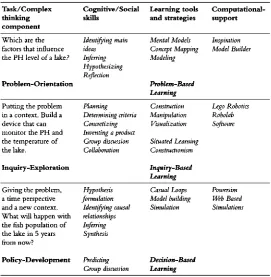
Learning with models and learning by modelling are discussed separately here, but in a learning or problem-solving environment it is conceivable that both might be involved (albeit for different purposes and in different ways). In MFL, there are three stages of learner development with associated instructional approaches (Spector and Davidsen, 2000):
1.problem-orientation (problem confronting and problem solving), in which learners are presented with typical problem situations and asked to solve relatively simple problems;
2.inquiry-exploration (hypothesis formulation and experimentation), in which learners are challenged to explore a complex domain and asked to identify and elaborate causal relationships and dominant underlying structures; and 3.policy-development (decision-making rule and global system elaboration), in
which learners are immersed in the full complex system and asked to develop rules and heuristics to guide decision making in order to create stability or avoid undesirable situations.
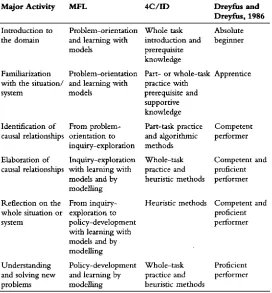
The stages and principles of MFL correspond with major components of van Merriënboer’s (1997) 4C/ID model and Dreyfus and Dreyfus (1986) (see Table 1.1). Interestingly, the methods in the 4C/ID model are primarily focused on an analysis of the subject domain whereas Dreyfus and Dreyfus focus primarily on the learner. Naturally, both are important considerations for an instructional designer.
1. Challenge learners to characterize the standard behaviour of the complex system (how the system behaves over time with an indication of how components are interrelated).
2. Challenge learners to identify key variables and points of leverage with respect to a desired outcome.
3. Challenge learners to identify and explain the causes for observed system behaviour, especially in terms of key influence factors that might be subject to control and manipulation.
4. Challenge learners to reflect on the dynamic aspects of the system in the context of decision and policy guides to achieve desired outcomes.
5. Challenge learners to encapsulate learning in terms of a rationale for system structure, decision-making guidelines, and an elaborated strategy for policy formulation.
an underlying structure similar to a problem situation already resolved by the learner.)
Throughout the various stages learners are challenged to start meaningful discussions with peers about problems, models and proposed solutions, all of which are well supported by available Web-based technologies. Such discussions help learners reflect about the subject matter and encourage peer-peer learning and group collaboration.
Next we shall provide examples. We follow Alessi (2000) in distinguishing learning with models from learning by modelling. We believe that learning with models is generally well suited for the earlier learning stages that often involve simple procedural tasks and simpler conceptual foundations (similar to algorithmic-based learning in 4C/ID), whereas learning by modelling is generally better suited to more advanced stages of development targeted at causal understanding and mastery of complex procedures not amenable to formulaic or standard solution (similar to heuristic-based learning in 4C/ID).
MFL emphasizes socially-situated learning processes. A suggestion of how to support collaboration with modelling tools in a discovery setting has been made by van Joolingen (2000). In the construction of models using systems dynamics tools, learners engage in cognitive and social processes that promote collaborative knowledge building. Rouwette et al (2000) argue that a collaborative approach to model and policy design is effective for learning and understanding. In these cases, we see theory, methodology and technology all coming together.
Learning with models
Model facilitated learning advocates learning with models as an instructional approach to introduce learners to a new domain or problem situation and to promote learning simpler procedures and associated concepts. Causal loop diagrams (also called causal influence diagrams) are quite good at providing a representation of an entire system. Such diagrams can be used to support an elaboration of a problem scenario, knowledge elicitation and assessment of understanding (Davidsen et al, 1999).
A meaningful learning activity consistent with MFL is to present learners with a problem scenario and ask them to construct an annotated causal loop diagram. Such an activity serves to centre thinking around meaningful problems and is typically effective in facilitating small group collaboration. This activity can also be used to assess progress of learning and predict how well a learner will perform in future complex situations (Christensen et al, 2000). Here is a sample scenario that we have used in our research:
all hunting of deer from the area. By 1918 the deer population increased tenfold, and by 1924 the herd had reached 100,000. Then it started to decrease and by 1936 to 1940 it was around 10,000. The deer feed on grass. Their natural predators in the region are primarily cougars (mountain lions).
Causal loop diagrams can be used to represent the problem situation and help facilitate problem solving. A simple problem might be to indicate how a hunting policy affects the deer population over time. A more complex problem is to develop a hunting policy that achieves a particular goal over a sustained period of time. Causal loop diagrams can also be used to initially determine how people think about a complex domain in comparison with domain experts and then for assessment of progress through a sequence of learning activities.
For example, learners discuss how an increase in deer created by a restrictive hunting policy might lead to competition for a limited source of food (grass) and eventually result in overgrazing and elimination of that source of food. This could then lead to starvation of a significant portion of the deer population in spite of well-intentioned attempts to help deer thrive. It is useful in the early stages of learning development to challenge learners to identify what they believe to be the most influential factor, perturb the system with a slight change and then predict the outcome. This technique is especially effective when the outcome is counter-intuitive as this begins to instil in learners an appreciation of the complexity of the situation, generates much discussion, and initiates a search for an explanation. Such cognitive dissonance can promote learning. In the terminology of MFL, learner-recognized and learner-generated knowledge gaps in the problem-orientation stage provide an effective stepping stone for the inquiry-exploration stage of learner development.
presented by van Joolingen (2000) that discovery behaviour displayed by learners may improve under the influence of collaboration.
The disadvantage is that without access to the underlying simulation model, learners are unable to develop deep causal understanding of a complex system. As learners become more proficient in using the simulation, they require access to the underlying simulation model in order to advance their understanding (Davidsen and Spector, 1997; Spector and Davidsen, 1997).
Learning by modelling
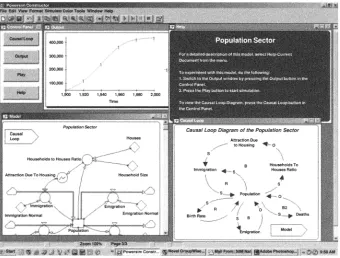
As learners gain confidence in a complex system, it is appropriate and productive to provide opportunities to modify existing simulation models and to create alternative representations. There are two principles that provide a foundation for making the transition from learning with models to learning by modelling. First, learners need to appreciate that there exist connections between underlying system structure and observed outcomes (system behaviour). There are a number of ways to support this transition requirement. Including multiple representations (eg, causal loop diagrams, stock and flow diagrams and behavioural diagrams) appears to be an effective technique based on the earlier discussion of cognitive flexibility theory (Spiro et al, 1988); see Figure 1.1.
The second principle that lays the foundation for learning by modelling is a direct application of graduated complexity. The notion is that the learner should first establish the ability to fill in parts of an existing model in a way that is consistent with observed system behaviour. This principle is closely linked with the previous principle and contributes to the learner’s understanding of structure (cause) and behaviour (effect). Davidsen (1996) suggests that linking structure to behaviour and creating structures to account for behaviour are important building blocks of deep understanding. In a more general sense, hypothesizing about potential causal relationships and then testing those hypotheses is important to building up understanding in a complex domain.
An interesting technique used by Davidsen (1996) to facilitate progress in the policy-development stage is to start with what might be characterized as simpler complex system behaviour and ask learners to create models that account for system behaviour. Learners are then given a goal (eg, stabilize the deer population in the Kaibab Plateau) and asked to develop a decision-making guideline to achieve that goal. The policy is then tested in an arbitrarily wide variety of situations that might conceivably arise with regard to such a system (eg, drought conditions, diseases among the predator population, etc). Learners are asked to reflect on their understanding of the situation along the way.
decision making with regard to those factors subject to human control, and so on. These in fact represent patterns of expert behaviour that are generally desirable to engender in advanced learners.
Learning by modelling and learning with models
In this particular section we will illustrate how these two approaches can be combined for the design of meaningful learning activities to support complex learning. An example used in our research consists of giving learners the opportunity to understand the behaviour and underlying structure of a complex problem in an ecological system (Ford, 1999). Learners should also be able to understand the dynamics of the decision-making process with regard to a complex system; in this case it is in the domain of water quality.
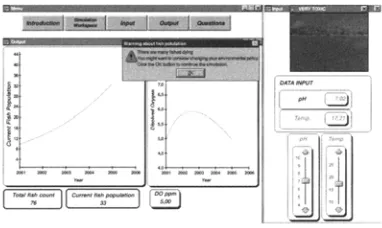
simulation environment, all of which are open for student use and manipulation. The specific tools provided to learners are Model Builder, the LEGO-DACTA Robotics System, the ROBOLAB programming language, and Powersim. Following the design principles of MFL, learners are challenged to solve a variety of complex problems (see Table 1.2) according to the three stages of learner development: 1) problem-orientation; 2) inquiry-exploration; and 3) policy-development. Figure 1.2 shows results obtained while learners used the system dynamics simulation to explore the impact of acid rain on the fish population of the lake during a five-year period.
In this particular example, we see theory, methodology and technology all coming together. Preliminary results suggest that the MFL approach is effective in the sense that this learning environment engages learners in solving complex problems through collaborative knowledge building and through interactive modelling, design and construction of system dynamics simulations (Milrad, 2001).
Conclusions
We conclude with a few comments about evaluating MFL and recommendations for future development and exploration. MFL should be held to established instructional design principles. Merrill (2001) provides a set of first principles for instruction:
1.Principle of Problem Centeredness: Learning is effective when learners are engaged in solving real-world problems.
5.Principle of Integration: Learning is effective when new knowledge and skills are integrated into the learner’s world.
Does MFL satisfy these principles? The MFL problem-orientation stage satisfies Merrill’s principle of problem centeredness, and the inquiry-exploration stage satisfies Merrill’s principle of application. We accept all of Merrill’s principles and believe that MFL provides an appropriate guide for application of these principles in complex domains using models and simulations.
Our work suggests that the following deserve further exploration:
• support for representing multiple perspectives of complex, dynamic problems;
• technology support for learning as a shared, collaborative activity, particularly in the context of bridging multiple perspectives in distributed settings; • simulation and model-centred support in terms of interactions, collaborations
and reflections ‘around the simulation’ and ‘beyond the simulation’.
References
Alessi, S (2000) Building versus using simulations, in Integrated and Holistic Perspectives on Learning, Instruction and Technology: Understanding complexity, eds J M Spector and T M Anderson, pp 175–96, Kluwer, Dordrecht
Christensen, D L, Spector, J M, Sioutine, A and McCormack, D (2000) Evaluating the impact of system dynamics based learning environments: preliminary study. Paper presented at the 18th International Conference of the System Dynamics Society, August, Bergen, Norway
Collins, A, Brown, J S and Newman, S E (1989) Cognitive apprenticeship: teaching the crafts of reading, writing, and mathematics, in Knowing, Learning, and Instruction: Essays in honor of Robert Glaser, ed L B Resnick, pp 453–94, Lawrence Erlbaum, Hillsdale, NJ
Davidsen, P I (1996) Educational features of the system dynamics approach to modelling and simulation, Journal of Structural Learning, 12 (4), pp 269–90
Figure 1.2 Using system dynamics simulation
2. Principle of Learner Activation: Learning is effective when existing learner knowledge is activated as a foundation for new knowledge and skills. 3. Principle of Demonstration: Learning is effective when desired knowledge applications and skills are demonstrated for learners.
Davidsen, P I and Spector, J M (1997) Cognitive complexity in system dynamics based learning environments, in Systems Dynamics Proceedings: Systems approach to learning and education in the 21st century, eds Y Barlas, V G Diker and S Polat, Vol. 2, pp 757–60, Bogaziçi University, Istanbul
Davidsen, P I, Spector, J M and Milrad, M (1999) Learning in and about simple systems, in Proceedings of the 17th International Conference of the Systems Dynamics Society and 5th Australian and New Zealand Systems Conference, eds R Y Cavana, J A Vennix, E Rouwette, M Stevenson-Wright and J Cavendish, Webrights, Wellington, NZ
Dörner, D (1996) The Logic of Failure: Why things go wrong and what we can do to make them right, trans R Kimber and R Kimber, Holt, New York
Dreyfus, H L and Dreyfus, S E (1986) Mind Over Machine: The power of human intuition and expertise in the era of the computer, Macmillan, New York
Feltovich, P, Spiro, R, Coulson, R and Feltovich, J (1996) Collaboration with and among minds: mastering complexity, individually and in groups, in CSCL: Theory and practice of an emerging paradigm, ed T Koschman, pp 25–44, Lawrence Erlbaum, Mahwah, NJ
Ford, A (1999) Modelling the Environment: An introduction to system dynamics modelling of environmental systems,Island Press, Washington, DC
Forrester, J (1985) The ‘model’ versus a modelling ‘process’, System Dynamics Review, 1
(1), pp 133–4
Gibbons, A S (2001) Model-centered instruction, Journal of Structural Learning, 14–15,
pp 511–40
Jackson, S, Krajcik, J and Soloway, E (2000) Model-IT: a design retrospective, in Innovations in Science and Mathematics Education: Advanced designs for technologies of learning, eds M J Jacobson and R B Kozma, pp 77–115, Lawrence Erlbaum, Mahwah, NJ
Jonassen, D H, Hernandez-Serrano, J and Choi, I (2000) Integrating constructivism and learning technologies, in Integrated and Holistic Perspectives on Learning, Instruction and Technology: Understanding complexity, eds J M Spector and T M Anderson, pp 103–28, Kluwer, Dordrecht
Kozma, R B (2000) The use of multiple representations and the social construction of understanding in chemistry, in Innovations in Science and Mathematics Education: Advanced designs for technologies of learning, eds M J Jacobson and R B Kozma, pp 11–46, Lawrence Erlbaum, Mahwah, NJ
Lave, J and Wenger, E (1990) Situated Learning: Legitimate peripheral participation, Cambridge University Press, Cambridge
Maier, F and Größler, A (2000) What are we talking about? A taxonomy of computer simulations to support learning, System Dynamics Review, 16 (2), pp 135–48 Merrill, M D (2001) First principles of instruction, Journal of Structural Learning, 14–15,
pp 459–68
Milrad, M (2001) Supporting collaborative knowledge building through interactive modelling, design and construction. Paper presented at the 2nd Nordic Baltic Conference on Activity Theory and Sociocultural Research, September, Ronneby, Sweden
Proceedings, ed R Robson, pp 304–8, Association for the Advancement of Computing in Education (AACE), Charlottesville, VA
Reigeluth, C M and Stein, F S (1983) The elaboration theory of instruction, in Instructional-design Theories and Models: An overview of their current status, ed C M Reigeluth, pp 335–82, Lawrence Erlbaum, Mahwah, NJ
Rouwette, E A J A, Vennix, J A M and Thijssen, C M (2000) Group model building: a decision room approach, Simulation and Gaming, 31 (3), pp 359–79
Spector, J M (2000) System dynamics and interactive learning environments: lessons learnt and implications for the future, Simulation and Gaming, 31 (4), pp 528–35 Spector, J M and Anderson, T M (eds) (2000) Integrated and Holistic Perspectives on
Learning, Instruction and Technology: Understanding complexity, Kluwer, Dordrecht
Spector, J M and Davidsen, P I (1997) Creating engaging courseware using systems dynamics, Computers in Human Behaviour, 13 (2), pp 127–56
Spector, J M and Davidsen, P I (2000) Designing technology enhanced learning environments, in Instructional and Cognitive Impacts of Web-based Education, ed B Abbey, Idea Group, Hershey, PA
Spector, J M, Guriby, F, Wasson, B and Lindström, B (1999) Theoretical foundations for the design of collaborative distance learning. Paper presented at the 8th European Conference for Research on Learning and Instruction, August, Göteborg, Sweden Spiro, R J, Coulson, R L, Feltovich, P J and Anderson, D (1988) Cognitive flexibility
theory: advanced knowledge acquisition in ill-structured domains, in Proceedings of the 10th Annual Conference of the Cognitive Science Society, ed V Patel, pp 375– 83, Lawrence Erlbaum, Mahwah, NJ
Sterman, J D (1988) People Express Management Flight Simulator, Sloan School of Management, Cambridge, MA
Sterman, J (1994) Learning in and about complex systems, Systems Dynamics Review, 10
(2–3), pp 291–330
van Joolingen, W R (2000) Designing for collaborative discovery learning, in Intelligent tutoring systems, eds G Gauthier, C Frasson and K VanLehn, Springer, Berlin van Merriënboer, J J G (1997) Training Complex Cognitive Skills: A four-component
instructional design model for technical training, Educational Technology Publications, Englewood Cliffs, NJ
Chapter 2
Implicit theories of
learning and change:
their
role in the development of
e-learning
environments
for higher education
Peter Goodyear and Chris Jones
Introduction
This chapter addresses the twin issues of content and educational design. Neither term can be read unproblematically. In this chapter, we take ‘content’ to mean electronic information resources, which students may (or may not) use in their work as learners. By ‘educational design’ we mean the set of processes entailed in planning the creation of good learning tasks, good learning resources and the conditions in which convivial learning communities may grow and prosper.
This perspective on design places learning, not content, at the centre of the educational design problem space. It stresses the importance of the learner’s