CYCLIZATION AND HYDROGENATION OF (+)-CITRONELLAL TO MENTHOLS
OVER ZnBr
2AND Ni CATALYSTS SUPPORTED ON γ
-Al
2O
3Elvina Dhiaul Iftitah
1.*, M. Muchalal
2, Wega Trisunaryanti
2, and Ria Armunanto
2 1Department of Chemistry, University of Brawijaya, Jl. Veteran, Malang
2
Department of Chemistry, Faculty of Mathematics and Natural Sciences, Universitas Gadjah Mada, Jl. Sekip Utara, Jogjakarta
Received March 10, 2010; Accepted June 4, 2010
ABSTRACT
Two steps transformation of (+)-citronellal, cyclization and hydrogenation, on ZnBr2/γ-Al2O3 and Ni/γ-Al2O3 catalyst have been realized with the selectivity to cyclization products (isopulegols) was very high (yield up to ~92.58%) over ZnBr2/γ-Al2O3 under mild condition (90 °C and 1 atm nitrogen atmosphere) with high Brønsted acid concentration, while at the same time very low cyclization rates were achieved over Ni/γ-Al2O3 with low or no Brønsted acidity, respectively. The highest cyclization rates were observed over Ni/ZnBr2/γ-Al2O3 under mild condition (90 °C and 1 atm hydrogen atmosphere). The second step transformation towards cyclization products,
hydrogenation to menthols, was performed with Ni/γ-Al2O3 under hydrogen atmosphere. Surprisingly the one-step transformation of (+)-citronellal into menthols was investigated over Ni/γ-Al2O3 with yield ~84% under hydrogen atmosphere (90 °C, 1 atm) by exploiting the presence of acidic and hydrogenation sites on the catalyst surface. On
the Ni/γ-Al2O3 catalyst it was found that the cyclization of (+)-citronellal to isopulegols occurs on the surface of the support. In the presence of the noble metal, the isopulegols are further hydrogenated to the menthols.
Keywords:cyclization, hydrogenation, citronellal, isopulegol, menthol
INTRODUCTION
Citronella (Cymbopogon winterianusJowitt, family: Poaceae) is a multi-harvested, high-demand, aromatic crop cultivated in a number of countries. The essential oil isolated from freshly harvested or partially dried shoot biomass is extensively used in the fragrance industry and for extraction of the aroma chemicals citronellal, citronellol and geraniol.
Citronellal (3,7-dimethyl-6-octen-1-al)1, represents a raw material of great interest for the preparation of several fine chemicals. The chemoselective hydrogenation of the carbonyl group of citronellal leads to the unsaturated alcohol, citronellol, 5 which is widely employed in perfumery [1]. Moreover, from the isomerisation of citronellal on acid catalysts, the unsaturated cyclic alcohols (isopulegols) 2, can be obtained [2-10]. The isopulegol are useful intermediates for the synthesis of the corresponding saturated alcohols (menthols),3.
Menthols 3, are generally obtained in two step through the isomerisation of citronellal to isopulegols on acid catalysts [2-10] followed by their hydrogenation (Scheme 1). In the industrial process for (-)-menthol,3a, production (Tagasako process), the isomerisation of (+)-citronellal is carried out in the presence of ZnBr2. Under these conditions, (-)-isopulegol, 2a, yields up to 92% have been reported [11]. The cyclic alcohol is then separated from the reaction mixture and hydrogenated
to the corresponding saturated alcohol (-)-menthol,3a. It is reported that the acid catalyst ZnBr2 is employed as aqueous solution [11], however, powdered anhydrous ZnBr2 has been found to be very selective towards the formation of (-)-isopulegol [12]. One of the main drawbacks in the use of solid ZnBr2 is the difficulty to maintain the salt under anhydrous conditions being highly hygroscopic; hence, precautions are required in the storage and handling ZnBr2if it is used in the solid state.
Therefore, the synthesis of heterogeneous catalysts that combine high stereoselectivity to (-)-isopulegol and easy of handling can be a strategic tool for the optimization of the (-)-menthol synthetic process.
Cyclisation of citronellal on several solid acid catalysts has been investigated [2-10], but few studies deal with the distribution of the stereoisomers formed
during the reaction on γ-Al2O3 and γ-Al2O3 supported catalysts. A main goal of this research is to develop a catalytic system which is able to synthesize menthols from citronellal in one single step by carrying out the reaction in the presence of isomerisation and hydrogenation sites onγ-Al2O3as a supported catalyst.
Study that concern on γ-Al2O3 as a supported catalysts have investigated [13], during the hydrogenation of very low value mints oils, namely, dementholized oil. Among the different Cu catalysts,
they reported that Cu/γ-Al2O3 showed the best activity and selectivity towards a mixture of menthols, 3, while stereoselectivity towards the valuable isomer (-)-menthol, 3a can be improved by selectively dehydrogenating the products mixture. In the hydrogenation of pulegone and pennyroyal oil,
Cu/γ-Al2O3 catalyst also showed an unprecedented activity allowing complete transformation of the substrate into menthols under very mild experimental conditions (1 atm H2, 90 °C).
Study the isomerisation of (+)-citronellal with very high stereoselectivity value to (-)-isopulegol also investigated with Lewis acid such as ZnBr2, ZnCl2, Zn(NO3)2, FeCl3 and SnCl2 supported on SiO2 [9]. Among the salts investigated, ZnBr2 was the most effective in terms of catalytic activity and selectivity to (-)-isopulegol, 2a. The catalytic activity and the selectivity to (-)-isopulegol, 2a was found to increase with the Zn loading and the temperature of calcinations. The maximum selectivity of (-)-isopulegol, 2a obtained on ZnBr2supported catalysts was 86% [9].
Here we wish to report our investigation on the catalytic activity of ZnBr2/γ-Al2O3, Ni/γ-Al2O3 and Ni/ZnBr2/γ-Al2O3 catalysts in the isomerisation and hydrogenation of (+)-citronellal. We have also decided to elucidate the influence of the morphology of the catalysts in order to get information on the nature of the catalytic active sites.
EXPERIMENTAL SECTION
Materials
General remarks: γ-Al2O3 (BET=190 m2/g,
PV=1.214 cm3/g), ZnBr2, Ni (NO3)2.6H2O, and methanol, was purchased from MERCK, (R)-(+)-Citronellal (>90%) was obtained from fractional distilation under reduced
pressure towards Citronella Oil that purchased from Cilacap, Central of Java.
Instrumentation
X-Ray Diffractometer (Philips X’Pert), BET Surface Area Analyzer (Quantachrome NovaWin2), Transmission Electron Microscope (EF-TEM Leo912AB), FTIR Spectrometer (Shimadzu, FTIR-8201 PC), Gas Chromatography (GC-Agilent 7890).
Procedure
Catalyst preparation
The ZnBr2/γ-Al2O3 catalyst was prepared by
adding the support γ-alumina to a methanol solution containing the proper amount of the Zn salt. The solvent was slowly removed by rotary evaporation at 35 °C for 1 h. Catalyst was dried at 120 °C for 2 h, then calcined at 400 °C for 3 h, unless otherwise specified [1,4].
The Ni/γ-alumina catalyst was prepared by adding
the support γ-Al2O3 to a methanol solution containing the proper amount of the Ni(NO3)2.6H2O salt. The solvent was slowly removed by rotary evaporation at 35 °C for 1 h. Catalyst was dried at 120 °C for 2 h, then calcined at 500 °C for 3 h. Before hydrogenation
activity measurements the Ni/ γ-alumina catalyst were reduced for 3 h at 500 °C.
The Ni/ZnBr2/γ-Al2O3 catalyst was prepared by adding the ZnBr2/γ-Al2O3 catalyst to a methanol solution containing the proper amount of the Ni(NO3)2.6H2O salt. The solvent was slowly removed by rotary evaporation at 35 °C for 1 h. Catalyst was dried at 120 °C for 2 h, then calcined at 500 °C for 3 h. Before hydrogenation activity measurements the
Ni/ γ-alumina catalyst was reduced for 3 h at 500 °C.
Catalyst characterization
X-ray diffraction patterns were recorded by using a Philips X’Pert, operated at 40 kV and 30 mA using Ni-filtered Cu Kαradiation at a step scan mode (2ө step, 0.02°; acquisition time, 1 sec. per step) with a 1° divergence and scatter slit and a 0.1 mm receiving slit. Powder sampling were mounted on Plexiglas holders.
Specific surface area and porosity data were determined by adsorption-desorption of di-nitrogen at 77 K using Quantachrome NovaWin2. Pore size distribution and pore volume were derived from the desorption isotherm atP/Po≥0.3
Table 1. Morphological properties of γ-Al2O3support and catalysts
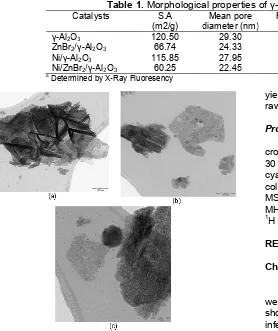
Fig 1. (a). Micrograph picture of ZnBr2/γ-Al2O3, (b).
Micrograph picture of Ni/γ-Al2O3, (c). Micrograph picture
of Ni/ZnBr2/γ-Al2O3
suspension has been deposited on the carbon grid which, after solvent evaporation under vacuum, has been inserted in the column of the Transmission Electron Microscope. Pictures have been taken at 14.000-50.000x magnifications, spanning wide regions of several support grains in order to provide a well representative map of the catalyst system.
The quantitative determination of Brønsted and Lewis acid sites in catalysts was performed using infrared spectroscopy with pyridine as a probe molecule.
Experimental setup
The bare supports were treated at 270 °C for 20 min in air and for 20 min under reduced pressure at the same temperature; the catalysts underwent a further treatment of reduction at 270 °C with H2. The substrate (0.1 g) were dissolved in toluene dehydrated (8 mL) and the solution transferred under N2 into glass reaction vessel where the catalyst (0.1 g) had been previously treated. Reactions were carried out at 90 °C with magnetic stirring under N2or H2. Product distribution and
yields were determined by GC and by H1NMR of the raw reaction mixture.
Product characterization
Reaction mixture was analyzed by GC using a crosslinked 5% phenyl methyl silicone (HP 5 M.S., 30 m) or a nonbonded, poly (80% biscyanopropyl/20% cyanopropylphenyl siloxane; SP2330, 60 m) capillary column. Reaction products were identified through their MS (HP 5971 series) and 1H NMR spectra (Bruker 300 MHz); stereoselectivities were evaluated by GC and 1
H NMR.
RESULT AND DISCUSSION
Characterization of the catalysts
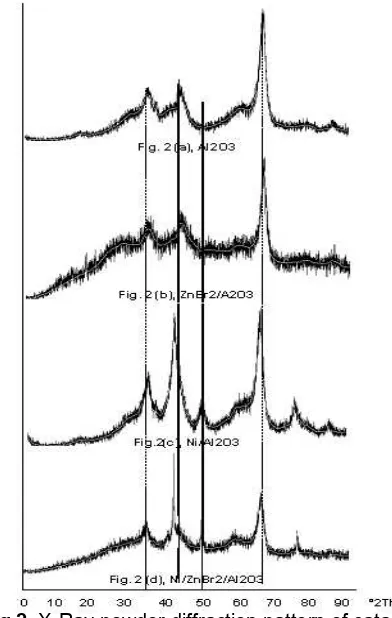
The X-ray powder diffraction patterns of catalysts were similar to those reported in the literature and have shown the absence of resolved reflections. It was inferred from the XRD data that the all catalysts were
highly phase pure having structures of γ-Al2O3with the precursor is present in a high amount. It must be assumed that amorphous ZnBr2 and Ni noble metal is present on the surface of the support in the form of mono or multilayer [13]. The XRD patterns of all catalysts are given in Fig. 1.
The specific surface areas of the catalysts measured by nitrogen adsorption are shown in Table 1. The catalysts used show aSBETranging between 60.25 and 120.50 m2/g and a pore-size distribution varying between 22.45 and 29.30 nm. The highest specific surface area was observed for γ-Al2O3 support and after which the specific surface areas decreased in the
following order: Ni/γ-Al2O3 > ZnBr2/γ-Al2O3 > Ni/ZnBr2/γ-Al2O3. The addition of ZnBr2and/or Ni leads to a slight decrease of the surface area and pore volume. The Zn and Ni loading determined by X-Ray Fluoresency, ranges between 7.4 and 10.7 wt.%. The decrease of the surface area and pore volume of the ZnBr2 and Ni supported γ-Al2O3 can be attributed to ZnBr2and Ni filling up the pores of the support [11]
Fig 3.FTIR spectra with pyridine adsorbed for (a). ZnBr2/γ-Al2O3, (b). Ni/γ-Al2O3, (c). Ni/ZnBr2/γ-Al2O3
Fig 2.X-Ray powder diffraction pattern of catalysts
ZnBr2is widespread onto the surface. TEM micrograph
pictures of Ni/γ-Al2O3 have been performed by single
thin of γ-Al2O3 crystal with oriented mesopores (pore size: 16 nm) which occupied with Ni metal particles (size: 7 nm) inside the pores (Fig. 2b). Then, thin section of Ni/ZnBr2/γ-Al2O3 catalyst have shown that
almost all of pores on the surface of γ-Al2O3 crystal covered by small Zn particles and occurred the enlargement (agglomeration) of Ni metal particles (size: 59 nm) (Fig. 2c)
The amount of Brønsted and Lewis acid sites was measured by FTIR with pyridine as a probe molecule. The adsorption bands of pyridinium ion of adsorbed pyridine corresponding Brønsted acidity is at 1543-1545 cm-1, whereas the adsorbed pyridine is on Lewis acid sites at 1452-1458 cm-1 [14]. It should be pointed out that in case of Ni/ZnBr2/γ-Al2O3 catalysts, two peaks appeared corresponding to Lewis acidity, i.e., the peaks at 1452 and 1458 cm-1(Fig. 3)
Catalytic activity
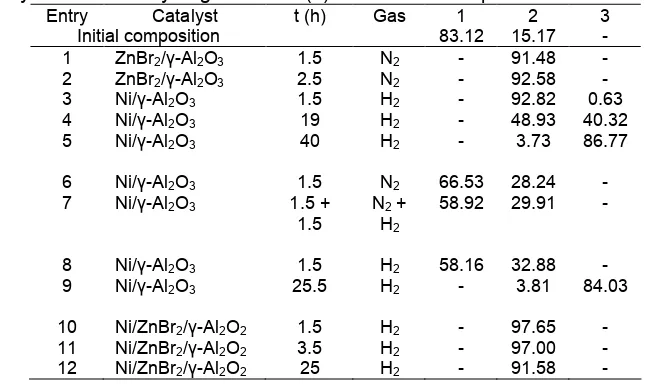
Table 2.Cyclization and Hydrogenation of (+)-citronellal in the presence of different catalysts
Entry Catalyst t (h) Gas 1 2 3
Initial composition 83.12 15.17
-1 ZnBr2/γ-Al2O3 1.5 N2 - 91.48
-On the acidified supports, the only reaction products were isopulegols due the lack of hydrogenation sites.
A further step of reaction was continued by using
the Ni/γ-Al2O3 catalysts to hydrogenation of the C=C bonds (entry 3-5). Reaction mixture product of isopulegol isomers firstly separated from residue of ZnBr2/γ-Al2O3
catalyst and changed by Ni/γ-Al2O3 catalysts. Next reaction carried out under H2. The best product as function of hydrogenation C=C bonds on isopulegol obtained in very mild condition (1 atm, 90 °C) with the menthol toward 86.77%.
In contrast, when Ni/γ-Al2O3catalysts used are only slightly active for the isomerisation of (+)-citronellal when reaction carried out under N2, (yield only 28.24%) (entry 6). The presence of H2 leads only slightly enhancement of the catalytic activity, towards isopulegol isomers (entry 7). To clarify this point, the next investigated catalysts (entry 8-9), have been used in reaction carried out directly under H2. Reaction carried out under H2 can be isomerised to the unsaturated cyclic products, isopulegols. These results indicate that the morphological parameters of the solids do not influence the activity and selectivity of the reaction. Mechanism of the reaction is unclear and probably both Lewis and Bronsted acidic sites play a role in the catalytic pathway. Isopulegol exists as four different stereoisomers. In this work, we have not been separated and therefore we are indicated as “isopulegols”. As further reduction step, the isopulegols are quite difficult to convert into the corresponding saturated cyclic alcohols, menthols (entry 8). These results are a confirmation that the contribution of the strongly adsorbed H2 to the catalytic activity is very important.
The reaction has to show an isomerisation rate higher than hydrogenation rate in order to carry out first quantitative isomerisation of citronellal to isopulegol (entry 8), then the hydrogenation of the latter to the
corresponding menthols up to 84.03% (entry 9). Formation of open chain hydrogenation of the C=C and C=O bonds of (+)-citronellal to produce citronellol, 5
and 3,7-dimethyl octanal,6was avoided. The reduction of the carbon-carbon double bond is quite unusual; thus, it is well known that nickel catalysts exhibit very high chemoselectivity towards reduction of carbonyl groups in the presence of olefinic bonds and those only carbon-carbon double bonds conjugated with a carbonyl group are easily hydrogenated even in the presence of isolated double bonds. Best activities were obtained with the menthols up to 84.03% (entry 9).
On the basis of these previous results, the next step was develop a catalytic system that able to synthesis menthols from (+)-citronellal in one single step, by carrying out the reaction in the presence of stereoselective isomerisation and hydrogenation sites (entry 10-12). The results obtained have shown that bifunctional catalyst Ni/ZnBr2/γ-Al2O3just only effective with higher rate on isomerisation of citronellal to isopulegol than the hydrogenation of the latter to corresponding menthols. The yield to isopulegols was about 97.65% (entry 10). At present the mechanism through which the Lewis acid sites favour the selective synthesis of isopulegol is not understood and further work is necessary to clarify this point.
CONCLUSION
The results reported in this study have pointed out that it is possible to modify the course of the cyclization and hydrogenation of (+)-citronellal over ZnBr2 and Ni supported catalysts. On more acid catalysts, ZnBr2/γ-Al2O3 and Ni/ZnBr2/γ-Al2O3, isopulegols are
condition. Its use allows producing menthols with fairly good stereoselectivity.
ACKNOWLEDGEMENT
This work is part of the activities at the Laboratory of Chimica Inorganica, Metallorganica e Analitica, Dipartimento “Lamberta Malatesta”, (c/o ISTM-CNR), via Venezian 21, Milano, ITALY. The authors gratefully acknowledge DIKTI for financial support through the Sandwich-like 2009 program. Dr. Nicoletta Ravasio, and Dr. Laura is acknowledged for the TEM analysis.
REFERENCES
1. Milone, C., Gangemi, C., Ingoglia, R., Neri, G., and Galvagno, S., 1999,Appl. Catal., A,184, 89-94. 2. Yongzhong, Z., Yuntong, N., Jaenicke, S., and
Chuah, G.K., 2005,J. Catal., 229, 404-413.
3. Arvela, P.M., Kumar, N., Nieminen, V., Sjoholm, R., Salmi, T., and Murzin, D.Y., 2004, J. Catal., 225, 155-169.
4. Milone, C., Perri, A., Pistone, A., Neri, G., and Galvagno, S., 2002,Appl. Catal., A, 233, 151-157. 5. Chuah, G.K., Liu, S.H., Jaenicke, S., and Harrison,
L.J., 2001,J. Catal., 200, 352-359.
6. Nie, Y., Chuah, G.K., and Jaenicke, S., 2006, Chem.Commun., 790-792.
7. Yadav, G.D., and Nair, J.J., 2000, Langmuir, 16, 4072-4079.
8. Iosif, F., Coman, S., Parvulescu, V., Grange, P., Delsarte, S., Devos, D., and Jacobs, P., 2004, Chem. Commun., 1292-1293.
9. Milone, C., Gangemi, C., Neri, G., Pistone, A., and Galvagno, S., 2000,Appl. Catal., A, 199, 239-244. 10. Neatu, F., Coman, S., Parvulescu, V.I., Poncelet,
G., De Vos, D., and Jacobs, P., 2009, Top. Catal. 52, 1292-1300.
11. Misono, M., and Noijri, N., 1990,Appl. Catal. 64, 1. 12. Nakatani, Y., and Kawashima, K., 1978,Synthesis,
147.
13. Ravasio, N., Zaccheria, F., Fusi, A., and Psaro, R., 2006,Appl. Catal. A,315, 114-119.