International Conference on
Bioscience and Biotechnology (ICBB) 2011
October 11
th-12
th, 2011, Yogyakarta, Indonesia
P R O C E E D I N G
State Islamic University Sunan Kalijaga Yogyakarta Faculty of Science and Technology
International Conference on Bioscience and Biotechnology (ICBB) 2011
PREFACE
Assalamu’alaikum Wr.Wb.
First, let us express our gratitude to Allah SWT for His blessings so that the International Conference on Bioscience & Biotechnology (ICBB) 2011 can successfully be held on 11-12 October 2011 in Yogyakarta, Indonesia.
The event was organized by Department of Biology, State Islamic University Sunan Kalijaga which supported by Indonesian Society for Biodiversity and Universiti Kebangsaan Malaysia.
More than 140 well-known experts, researchers, lecturers, and students have been invited and attend this conference. The high enthusiasm to this conference was in line with one of the ICBB objectives, i.e. to provide an international forum for students, researchers, academics and practicioners to share the most recent research, theory and practice. We further hope that the network built through this conference can be a good foundation for future collaboration research among ICBB 2011 participants.
Ladies and Gentlemen, A large proportion of the world’s biodiversity is found in tropical countries, with comprises of more than 70% of world biodiversity. Among them, many have been recognized as the important sources for food, medicine, timbers, and as material supporting for everyday life. The chemical and biological diversity have interrelationship and interdependence as a whole system. Each species, each dimension of the planet, makes its unique contribution to the good of the whole. Our survival is intimately connected to the survival of the other species of the planet.
Finally, I would like to extend my sincere thanks and appreciation to the invited speakers, reviewers, editors, sponsors, people in the Department of Biology, Faculty of Science & Technology, State Islamic University Sunan Kalijaga as organizers, who have dedicated their time and efforts to this conference.
See you in next ICBB conference!
Wassalamu’alaikum Wr. Wb.
Conference Chair
International Conference on Bioscience and Biotechnology (ICBB) 2011
ii
Committees
Steering committee
Prof. Dr. Musa Asy’arieRector of State Islamic University Sunan Kalijaga Yogyakarta
Prof. Drs. H. Akh. Minhaji, M.A., Ph.D. Dean of Faculty of Science and Technology
Dra Hj. Khurul Wardati Vice Dean of Faculty of Science and Technology
Arifah Khusnuryani, M.Si. Head of Biology Department
Scientific committee
Dr. Emily Jane McCallum Institute of Plant Sciences, Zurich, Switzerland
Dr. Huahong Wang Institute of Plant Sciences, Zurich, Switzerland
Dr. Agniezka Mudge The University of Queensland
Prof. Drs. Sutarno, M.Sc., Ph.D. Universitas Negeri Sebelas Maret
Prof. Dr. Ir. Bambang H. Saharjo, M.Agr. Institut Pertanian Bogor
Prof. Dr. Sarjan Universitas Mataram
Prof. Dr. Nyoman Puniawati Soesilo Gadjah Mada University
Dr. Ir. Endang Tri Margawati, M.Agr.Sc Indonesian Institute of Science
Dr. Marini Malaysian Agricultural Research and Developmental Institute
Dr. Kifayah Amar State Islamic University Sunan Kalijaga Yogyakarta
Dr. M. Jafar Luthfi State Islamic University Sunan Kalijaga Yogyakarta
Dr. Sahabudin Tadulako University
Organizing committee
Dr. M. Jafar Luthfi Arifah Khusnuryani Maizer Said Nahdi Anti Damayanti Siti Aisah
Runtut Prih Utami Erny Qurotul Aini Sulistyawati
Jumailatus Solihah Lela Susilawati Ika Nugraheni Dias Idha Pramesti Najda Rifqiyati Dian Noviar
Widodo
Editorial and Publisher
Biology Department, Faculty of Science and Technology,
State Islamic University Sunan Kalijaga Yogyakarta Address Laksda Adisucipto Street No.
International Conference on Bioscience and Biotechnology (ICBB) 2011
Contents
Preface ... i
Committees ... ii
Abstract from Keynote Speech ... xi
O
RAL
P
APER
C
LUSTER
1
Analysis Interaction of Glucosyltransferase Inhibitor of
Caries from Fatty Acid by Molecular Docking Simulation
Alfred Pakpahan, Fadilah ...A1-5
Effect of Nanocomposite-based Packaging on Postharvest Quality
of Water Content-treated Coffee Beans during Storage
Erdawati, Riskiono ...A6-15
The Modification of Coffee Leaves Beverage (Air Kawa)
Processing Through Enzymatic Oxidation
P. Darmadji, E.L.D.Permatasari, U. Santoso ...A16-21
Utilization of Ligninolityc Enzyme in Biobleaching of Pulp from
Empty Fruit Bunches of Oil Palm
Happy Widiastuti, Suharyanto, Siswanto ...A22-27
Nutritional Profile of Freeze-dried Red Seaweeds from Semporna,
Sabah
Mansoor Abdul Hamid, Patricia Matanjun & Tiang Ming Chee ...A28-33
Comparison of Seed Nutmeg Oleoresin Extraction (Myrictica Houtt
fragrans) Origin of North Maluku and Maceration Method Using
Combined Distillation
–
Maceration
Muhammad Assagaf, Pudji Hastuti, Chusnul Hidayat, Supriyadi, Sri Yuliani ...A34-37
Development Process of Frying Distillation in Capturing Flavor
that Formed During Deep Frying
P. Darmadji, Y. M. Rahmadewi, H. Firdaus, A. Sausania and Supriyanto ...A38-43
Effect Roasting of Indonesian Sesame Seed (
Sesamum indicum L
.)
on Odour Profil and Degree of Liking of The Oil
International Conference on Bioscience and Biotechnology (ICBB) 2011
iv ISSN:2088-9771 | Vol 1 No 1 October 2011
Antioxidant Activity and Compounds of Indonesian Sesame
(
Sesamum indicum
L
.
) Oil
Pudji Hastuti, Lukita Purnamayati, Siswanti, Supriyanto ...A50-54
Application of Liquid Smoke and Smoke Powder for Process
Development Instant Seasoning of Indonesian Traditional Food
Purnama Darmadji, Mutiara Anindita, and Sri Suparyati ...
A55-74
A Novel Process to Prepare Chemoselectively Protected
N-Phthaloyl- Chitosan without Drying of Solvent and Purging of
Water Vapor
Radna Nurmasari, Uripto Trisno Santoso, Dewi Umaningrum ...A75-78
Encapsulation of Phenolic Compound from Star Fruit with
Chitosan Nanoparticle
Riskiono Slamet and Erdawati ...A79-87
Transition State Analysis of HMM for DNA Exon Controlling
Using Bioinformatic Simulation
Suhartati Agoes, Alfred Pakpahan, Binti Solihah ...A88-92
Synthesis of a Series of Calix[6]arenePolymers from
p
-
ter
-butylphenol
Susy Yunita Prabawati, Jumina, Sri Juari Santosa, Mustofa ...A93-100
Study of Thermal Stability of Riboflavin Synthase of
Eremothecium gossypii
through Molecular Dynamics Approach
Syarifuddin Idrus and Usman S.F. Tambunan A101-106
Tosylation of
N
-Phthaloyl-Chitosan without Drying of
Solvents and Purging of Water Vapor
Uripto Trisno Santoso, Radna Nurmasari, Dewi Umaningrum ...A107-111
O
RAL
P
APER
C
LUSTER
2
Associations between Blood Lead Level and Blood Pressure among
City Minibus Drivers in Purwokerto City, Indonesia
Agung Saprasetya Dwi Laksana, Endo Dardjito ...B1-6
Rat Sperm Proteomic Analysis: Effect of the Antifertility
Agent
Centellaasiatica
L.
International Conference on Bioscience and Biotechnology (ICBB) 2011
Tapak Liman (
Elephantopus scaber L
) as Imunostimulator and Its
Effect on Lymphocyte Differentiation in Mice BALB/C
Marmi Kelik ... B17-21
Sugar Residues and Their Variations of Distribution on Ovarian
Follicles of Timor Deer (
Cervus timorensis
)
N. Rifqiyati ...B22-28
Cholesterol Levels, High-Density Lipopolysaccharide and
Triglyceride of Civet (Paradoxurushermaphroditus)
Sarmin ... B29-33
Preview Kidney Function in Civet (Paradoxurus hermaphroditus):
Especially Preview of Urea Nitrogen and Creatinin
Sarmin ...B34-38
Feeding Ecology of Mentawai langur (
Presbytis potenziani
)
in Siberut, Mentawai Islands
Susilo Hadi ...B39-43
Green Tea Extract Protects Endothelial Progenitor Cells from
Oxidative Damage through Reduction of Intracellular Reactive
Oxygen Species Activity
Wahyu Widowati, Rahma Micho Widyanto, Dian Ratih Laksmitawati, Winsa Husin, Hana
Ratnawati, Indra Bachtiar ...B44-55
Potential Cytotoxic on Breast Cancer Cells Line and Antioxidant of
Water Extract of
Catharanthus roseus
[L] G.Don.,
Dendropthoe
petandra
L.,
Curcuma mangga
Val.,
Piper betle
L.
Wahyu Widowati, Tjandrawati Mozef, Chandra Risdian, Hana Ratnawati, Susy Tjahjani,
Ferry Sandra, Lusiana Darsono, Sri Utami Sugeng ...B56-64
Preference of
Apis cerana
to Six Pollen Substitutes
R. Widowati, W. Sjamsuridzal, A. Basukriadi, A. Oetari, E. Anwar, V. Enfinali,
E.A. Rismawanti, B.A. Luhur ...B65
Cytotoxic Activity Prescreen of Leaves of Primate Consumed
Plants Subclassis
dilleniidae
and
hamamelididae
Using Brine
Shrimp Lethality Test
A. Zuhrotun, A. Diantini, A. Subarnas, R. Abdullah, M. Thamrin ...B66
O
RAL
P
APER
C
LUSTER
3
Tree Species Diversity of Kerinci-Seblat National Park and Its
Potentials for Natural Substances-Based Medicines
International Conference on Bioscience and Biotechnology (ICBB) 2011
vi ISSN:2088-9771 | Vol 1 No 1 October 2011
Morphological Variation and Phenetic Relationship of Hyacinth
Bean (
Lablab purpureus
(L.) Sweet) in Lombok, West Nusa
Tenggara
Ervina Titi Jayanti, Rina S. Kasiamdari, and Budi S. Daryono ...C9-15
Diversity of Birds in Tepus Village of Gunung Kidul District of
Yogyakarta
Faradlina Mufti, Siti Diniarsih, Mas Untung, Joko Setyono, Mustafid Amna,
Nurdin Setyobudi ...C16-23
Detection of Immunoglobulin Geneheavy Chain Binding Protein in
Eimeria tenella
Collected from Yogyakarta Using One Step Reverse
Transcriptase PCR
G.Tresnani, J.Prastowo, W.Nurcahyo, B.S.Daryono ...C24-28
Amplification and Sequencing Growth Hormone Genes in the
Nurseri Center for PO Cattle on Balai Besar Inseminasi Buatan
(BBIB) Singosari and Unit Perusahaan Aliansi (UPA) Pasuruan
Mariana Rengkuan, Aloysius Duran Corebima, Sutiman Bambang Sumitro,Mohamad Amin ...C29-34
Isolation, Characterisation and Identification of Sea
Urchin-Associated
Bacillus
in Mentigi Beach, West Lombok
Novi Febrianti, Bambang Fajar Suryadi ...C35-38
Isolation and Identification of
Rhizoctonia
Associated with
Phalaenopsis amabilis
(L.) Blume Roots
Khaterine, Nurbaity Situmorang, Rina Sri Kasiamdari ...C39-44
The Variation of Diversity of Cave Bats Dweller in Tuban and
Menoreh Karstic Area Indonesia
Tatag Bagus Putra Prakarsa, Satino, Muhammad Fajri Rohmad ...C45
Identification of Pheromone Binding Protein Gene of Yellow Rice
Stem Borer
Scirpophaga incertulas
(Walker) (Lepidoptera:
Crambidae)
Jazirotul Fitriyati, Rika Raffiudin and I Made Samudra ... C46
O
RAL
P
APER
C
LUSTER
4
Banana (
Musa paradisiaca
L.) and Corn (
Zea mays
L.) Waste as a
Biosorbent for Cu Metals from Wastewater of Textile Industry
International Conference on Bioscience and Biotechnology (ICBB) 2011
Effects of Chitosan/Montmorillonite Nanocomposites Films on the
Growth of Bacteria in Laboratory Media
Alvika Metasari ...D10-18
Effect of Growth Substances on
in vitro
Callus Induction and
Shoots Elongation of Cashew Nut (
Anacardium occidentale
L.)
Christiani Tumilisar,. Rossa Yunita, Febrina Ariyanti I.,. Avianingtyas ...D19-27
Screening and Identification of
p,p'
-DDT Degrading Bacteria from
Agricultural Soil
J. Darma Jaya, V. Subhon and S. Maneerat ...D28-35
Antibacterial Activity Test and Phytochemical Screening of
Smilax
celebica
Tuber
Muhamad Agil, Arifah Khusnuryani ...D36-40
Antimicrobial Activity of Leaves, Stems, and Barks of Palasu
(
Mangiferra Caesia
Jack) Against Microorganisms Associated with
Fish Spoilage
Puji Ardiningsih, Risa Nofianiand Afgani Jayuska ... D41-49
Effort to Build Environmental Care Attitude with Environmental
Education through Integrated Biology Learning Based on Science
Process Skills to Support Character Education Development in
Indonesia
Suciati Sudarisman ...D50-59
Comfort Level in the District Sleman
Sugiyanto, Sri Utami Zuliana, Winarti ...D60-68
The Bacterial Growth and “Crude” β
-Galactosidase Characteristics
of
Klebsiella pneumonia
and
Lactobacillus bulgaricus
Tatik Khusniati, Evindika Tri Padarikand Rini Handayani...D69-74
In Vitro
Antagonism Test between
Fusarium solani
Caused
Fusarium Wilt
on Orchid
Phalenopsis
Taida Salu by Using
Endophytic Fungi
Yuli Setianiand Rina Sri Kasiamdari ...D75-80
Improving the Environmental Awareness and Creative Thinking
Students Through the Application Problem Based Learning Model
International Conference on Bioscience and Biotechnology (ICBB) 2011
viii ISSN:2088-9771 | Vol 1 No 1 October 2011
P
OSTER
P
APER
The Effect of Repeated Exposure of Formalin-Containing Fish
Against Liver Cell of Mice Based on the Ratio of SGOT/SGPT
A. A. Maramis, M. Amin, Sumarno and A. D. Corebima ...P1-4
Determination of Rhodamine B in Cosmetics and Food by Using
Spectrophotometry UV Visible and TLC
Aliya Nur Hasanah, Ida Musfiroh, Nyi Mekar Saptarini, Driyanti Rahayu ... P5-12
Conversion of Sugarcane Bagasse to Bioethanol Using Different
Acids Pretreatment and Commercial Yeast
Anastasia W. Indrianingsih, Vita T. Rosyida, Cici Darsih, Khadijah Jaka ... P13-18
Analysis
of
Cocofoam
Microstructure
and
Mechanical
Characteristics from the Mixture of Coconut Fiber and Latex
Compound
I D.K. Anom, Bambang Setiaji, Wega Trisunaryanti, Triyono ...P19-27
Genetic Diversity on Goffin’s Cockatoo Bird (
Cacatua goffini
)
Inferred from Cytochrome B Gene Sequences
Dwi Astuti ...P28-36
Genetic Diversity of Stevia (
Stevia rebaudiana
(Bertoni) Bertoni)
Based on Molecular Characters
Dyah Subositi, Rina Sri K.and Budi S. Daryono ... P37-41
Isolation, Fermentation and Antidiabetic Endophytic Fungi
A.AP.3F of the Stem Sambiloto Plant
(Andrographys paniculata
Ness)
Edward J.Dompeipen, Wahyudi Priyono Suharso, Herry Cahyana,
Partomuan Simanjuntak ...P42-48
Identification of Genetic Markers Associated with Twinning Birth
Trait in Cattle
Endang Tri Margawati, Syahruddin Said and Indriawati...P49-56
Effect of Arbuscular Mycorrhizal Fungi and
Trichoderma
Inoculation on Growth of Oil Palm Seedling Inoculated with
Ganoderma
sp.
International Conference on Bioscience and Biotechnology (ICBB) 2011
Phenotypic and Genotypic Identification of Lactic Acid Bacteria
Isolated From an Indonesian Traditional Fermented Fish
”Bakasang”
Helen J. Lawalata, Langkah Sembiring, Endang S. Rahayu ...P62-67
Antibacterial Activity Assay of Mahkota Dewa (
Phaleria
macrocarpa
) Fruit Against Pathogenic Bacteria
Iffa Izza, Lela Susilawati ...P68-69
Development of a Web-based Software for Microbial Culture
Collection Data Management
Imam Cartealy ...P70-72
The Characteristic of Polyvinyl Alcohol-Carbon from Coconut
Shell Carbon
Meytij Jeanne Rampe, Bambang Setiaji, Wega Trisunaryantiand Triyono ... P73-78
Flow Cytometric Analysis of MCF-7 Cell Line in Its Treatment
with Leaves Extract of
Eugenia uniflora
L
Nita Supriyati, Subagus Wahyuono, Esti Wahyu Widowati ...P79-85
Petroleum Ether, Ethyl Acetate and Methanol Extracts of
Pseudocalymma alliceum
(Lam.) Sandwith Leaves and Their
Antiviral Activities Against Newcastle Disease Virus
Nuning Rahmawatiand Ratna Asmah Susidarti ...P86-88
The Test Effect of “Genjah Salak” Coconut (
Cocos nucifera
L)
Water on the Heart Rate of Male Wistar Mice
Rini Syafriani, Elin Yulinah Sukandar, Tommy Apriantono, Joseph Iskendiarso Sigit ...P89-93
Identification on Indonesian Accessions of
Curcuma xanthorrhiza
Roxb. Using AFLP Markers
T. Tajuddin, I. C. Cartealy, A. Safarrida, D. Purwoko, S. Zulaeha and M. Ardiyani ...P94-101
Optimization studies on Alkali Pretreatment of Biomass Waste of
Oil Palm Empty Fruit Bunch Fiber for Production of Glucose
Yanni Sudiyani, Dyah Styarini, Sudiyarmanto, Haznan Abimanyu ...P102-107
Screening of Pediocin Gene Encoding Bacteriocin Isolated from
Indigenous Indonesian Traditional Fermented Food
International Conference on Bioscience and Biotechnology (ICBB) 2011
x ISSN:2088-9771 | Vol 1 No 1 October 2011
Isolation and Cloning
Stearoyl
-
ACP Desaturase
(SAD) form
Mesokarpoil Palm (
Elaeisguineensis
Jacq.) var. Tenera
DriyaShintia D.A, Imam C. Cartealy, Anna Safarrida, Siti Zulaeha,Agus Masduki, Wahyu
Purbowasito ... P109
TAPS and TTE Buffer as Mobile Phase in DNA Sequencing Using
ABI Prism 310 Genetic Analyzer
Festy Auliyaur Rahmah, Jumailatus Solihah, Ethik Susiawati Purnomo ...P110
The Quality of
Spermatozoa
and Histological Figure of
Tubulus
Seminiferus
of White Rat (
Rattus norvegicus
, L.) Testis After
Supplemented by Green Pea Sprout Juice (
Phaseolus radiatus
, L.)
Imam Fuad Zamzami ...P111
Application
of
ISSR
Molecular
Marker
for
Detecting
Polimorphisme among 21 Accessions of Sambiloto (
Andrographis
paniculata
(Burm.f.) Wallich Ex Ness) from North Sumatera, Jambi
and West Nusa Tenggara
Juwartina Ida Royani, Dudi Hardianto, Siti Zulaeha, Dwi Rizkyanto, Suparjo, Nurjaya,
Wahyu Purbowasito and Bambang Marwoto ...P112
Cytochrome c Oxidase
1 (COI) Mitochondria Gene Haplotype
Variations of
Scirpophaga incertulas
Rika Raffiudin, I Made Samudra,Ruth Martha Winnie, Jazirotul Fitriyati,
Idham Sakti Harahap ...P113
Plant Parameters that Contribute to Reduce of Noise Levels
Siti Aisah ...P114
Developing Locally-Made Laboratory Equipment by Modification
Using TRIZ Method
Taufiq Aji, M. Ja’far Luthfi, Irhason ...P115
Antibacterial Activity on Singawalang (
Petiveria alliace
) Leaf to
Mycobacterium Tuberculosis Sensitive Strain H37Rv and
Multi-Resistant Strains Labkes Eh & Sr
Yani Mulyani, Elin Yulinah Sukandar, Ketut Adnyana ...P116
Effect the Variation Kascing Fertilizer on Growth Plant of Green
Mustard (
Brassica juncea
L.)
International Conference on
Bioscience and Biotechnology (ICBB) 2011
October 11
th-12
th, 2011, Yogyakarta, Indonesia
Abstract
from
International Conference on Bioscience and Biotechnology (ICBB) 2011
Synergy Research: Approaching a New Generation of
Phytopharmaceuticals
Prof. H. Wagner
Center of Pharma Research, Department of Pharmacy, University of Munich, Germany e-mail: [email protected]
The successful use of herbal drug combinations in Traditional Medicine e.g. in European
phytotherapy, traditional Chinese medicine or medicines of Ayurveda makes it necessary to find a rational for the pharmacological and therapeutic superiority of many of them in comparison to single constituents.
Which mechanisms my underlying this therapeutic superiority? A first approach towards rationalizing this synergy effect was made by Berenbaum [1]. He developed the isobol method as pharmacological tool to differentiate between real synergistic and additional
effects of a mixture of two plant constituents or two plant extracts. Among the possible mechanisms underlying these synergy effects, the multitarget effect seems to be the most
important and interesting one. Since recently molecular biological support for this hypothesis can be obtained from the new genomic microchip array method.
Meanwhile pharmacological evidence for synergy effects has been documented of monoextracts such as Ginkgo biloba [2], Hypericum perforatum [3], Cannabis sativa along
with many other herbal extracts and also their combinations [4]. Recently in many publications very effective synergy effects were reported when antibiotics are combined with natural products or plant extracts (essential oils, polyphenols, terpenoids) to combat the worldwide increasing bacterial multiresistance (MBR) [5]. Here polyphenols e.g. Epigallocatechingallate of green tea or the curcuminoids of Curcuma spec. have found
great attention at present as pure compounds or enriched in standardized extracts alone or in combinations with chemotherapeutics.
These polyphenols as monomers or oligomers are able to induce apoptosis, arrest the cell cycle of tumor cells, inhibit insulin – like growth factors, detoxify some enzymes and delay as antioxidants the appearance of several markers of aging and oxidative stress – to offer only a few examples. In combination with anticancer drugs they can inhibit ABC-cassette transporter proteins in tumor cells and thereby enhance the efficacy of anticancer drugs.
International Conference on Bioscience and Biotechnology (ICBB) 2011
xii ISSN:2088-9771 | Vol 1 No 1 October 2011
Natural Products: Chemical and Biological Potential of
the Rain Forest
Geoffrey A. Cordell
Department of Pharmaceutics, College of Pharmacy, University of Florida, Gainesville, FL 326010,
and Natural Products Inc. Evanston, Illinois 60203 USA
Abstract – “Why didn’t they develop natural product drugs in a sustainable manner at the beginning of this century?” In 2035, when the Earth has a population of at least 10.0 billion, will this be our legacy as the world contemplates the costs and availability of synthetic and gene-based products for primary health care? Acknowledging the recent history of the relationship between humankind and the Earth, it is essential that we consider the health care issues that we are leaving our descendants.
There is a vast health care “gap” in the world, particularly in the area of access to
quality drugs, and a vast gap in the development of drugs for major global diseases. For most people in the world, plants, in their various forms, remain a primary source of health care. In the developed countries, natural products derived from plants assume a very minor role as prescription and over-the-counter products, even with the widespread use of phytotherapeutical preparations. Pharmaceutical companies have retrenched significantly on the disease areas of focus. These research areas do not include the prevalent diseases of the middle- and lower-income countries. Natural product extracts from plants are also not a part of large scale, ultrahigh-throughput screening programs in pharmaceutical industry.
What then is the vision for natural product research to maintain the choices of drug discovery and pharmaceutical development for future generations? In this presentation we will examine some facets of how natural products must be involved globally, in a sustainable manner, for improving health care. We will discuss access to the biome, the acquisition, analysis and dissemination of plant knowledge, natural product structure diversification, biotechnology development, strategies for natural product drug discovery, and aspects of multitarget therapy and synergy research. Options for the future are presented which may be significant as countries decide how to approach their own disease burden and the needs of their population for improved access to medicinal agents.
Keywords: natural products; sustainable drug discovery; biotechnology; structure
International Conference on Bioscience and Biotechnology (ICBB) 2011
Vertebrate Biodiversity and Conservation in Peninsular Malaysia
Shukor Md Nor
School of Environment and Natural Resources Faculty of Science and Technology
Universiti Kebangsaan Malaysia
ABSTRACT
This presentation aims to highlight the research trends on vertebrate (or wildlife) ecology, biodiversity and conservation in Peninsular Malaysia. Wildlife management and conservation issues in Peninsular Malaysia have changed tremendously in the last 100 years primarily due to changes in land use. Rapid land conversion to plantations, housing areas and other
activities since the beginning of 1960’s has sacrificed large track of forest areas in Peninsular
Malaysia. At present, rapid loss of forest habitat in the past has threatened the survival of many wildlife species (such as rhino) that are sensitive to changing environment (habitat size and quality). As these species have reduced chances to propagate and survive in the wild, they could be at the brink of extinction. Some species (such as monkeys) can easily adapt to the changing environment, propagating and inhabiting the urban setting. Other species may not increase their populations (such as elephant and tapir) but they are displaced outside their normal habitats. Both groups can cause conflicts to human which could result in economic loss and sometime loss of life. Similarly, the vertebrate or wildlife studies have also changed from solely to document the number of wildlife species (diversity), population and
International Conference on Bioscience and Biotechnology (ICBB) 2011
xiv ISSN:2088-9771 | Vol 1 No 1 October 2011
Male Fertility Regulation: Research in Malaysia
Mahanem Mat Noor
School of Biosciences and Biotechnology, Faculty of Science and Technology Universiti Kebangsaan Malaysia.
ABSTRACT
Population explosion in some countries gave significant impacts on socio-economy and health in family and the society. Family planning has been promoted to overcome such conditions. The development of antifertility or contraceptive agents from medicinal plants which are safe and effective with minimum side effects is important but remains a big challenge in research. The importance of drugs of plant origin in the pursuit of fertility regulating agents for the male from natural products has long been recognized. Pharmacological data from previous reports showed that some compounds in plants are capable of interfering the production of androgen hormones, affected spermatogenesis process, abortifacients as well as the spermicidal activity. This review includes studies on several plants such Centella asiatica L., Andrographis paniculata and Carica papaya seeds
International Conference on
Bioscience and Biotechnology (ICBB) 2011
October 11
th-12
th, 2011, Yogyakarta, Indonesia
Analysis Interaction of Glucosyltransferase Inhibitor of
Caries from Fatty Acid by Molecular Docking Simulation
Alfred PakpahanA, FadilahB
AFaculty of Dentistry, Trisakti University, Jakarta 11440, Indonesia
BFadilah, Departement of Chemistry, Faculty of Medicine, University of Indonesia, Jakarta 10340,
Indonesia
Email address: [email protected]; [email protected]B
The most common human oral disease is the oral infection dental caries. Dental caries mostly caused by Streptococcus mutans that produces extracellular glucosyltransferases
(GTFs) that synthesized glucan from sucrose. These glucan is important in determining the permeability properties and adhesiveness of dental plaque. In order to prevent synthesis of glucan formation, inhibitor substances is needed to block the activity of enzyme glucosyltransferase. Nowdays the enzyme inhibitors are used to prevent dental plaque formation are not optimally effective, so the new emerge natural substances is need to develop. In this research, we have conducted in- silico study to analysis of Oleic acid,
Palmitic acid, linoleic acid and linolenic acid from coconut oil, which has a role as GTFs inhibitor of dental caries. The docking result identified that oleic acid have greater affinity and ability to inhibit of GTFs, this affinity oleic acid complexs is 7.262 µM and energy minimized is -5.6863 Kcal/mol . They have residues contact of OH binding to GTFs are 2 formed hydrogen binding in catalytic site lys228 with score 28.7 % and H distance 2.61 Ao , gly315 with score 35.8 % and H distance 2.77 Ao. The docking result showed that oleic acid has better binding energy and affinity than other bioactive compounds.
Keywords: Glucosyltransferase(GTF), Fatty acid, Caries, Docking simulation
Introduction
Dental caries is the medical term for tooth decay or cavities. It is caused by specific types of bacteria. They produce acid that destroys the tooth's enamel and the layer under it, the dentin. Streptococcus mutans has been strongly implicated as a causative organisms of
dental caries. The ability of this bacteria to bind to high-molecular-mass glucans synthesized from sucrose is recognized as an important determinant in the formation of dental plaque and tooth decay (Hamada & Slade, 1980)a. This organism synthesizes water-insoluble glucan from sucrose with its cell-free and cell-bound glucosyltransferases (GTFs) (Montville, et al.
1978). De novo synthesis of glucan is essential for the adherence of S. Mutans to tooth
surface (Hamada & Slade, 1980)b. Many chemical and enzymatic procedures for eliminating
S. Mutans from tooth surfaces have been explored. However, there are few reports concerning
substances that inhibit GTFs activity. Thus, the protein that enable bacteria to bind glucans have attracted interest as potential targets for inhibition of the caries process. Using GTF inhibitors is considered to be a useful means of preventing glucan formation without disturbing the balanced of helpful oral bacteria. In the present study, we developed an agent that can be used either as food or a medicine for safely treating decaying teeth by docking simulation of several fatty acids In silico.
In silico is used in the screening process of bioactive compounds or molecular simulation as a
drug (Kitchen, et al. 2004). Analysis was based on Gibbs energy values, inhibition constants
(Gohlke, et al. 2000), conformation of the structure, affinity, and hydrogen bonding of
Analysis Interaction of Glucosyltransferase...Alfred P. ISSN: 2088-9771
Materials and Methods
Materials of this research such as: Protein structures may be downloaded from the site with specific keywords or a PDB alphanumeric filename. The ligands of fatty acid performed using ACD Lab software. MOE software: The docking experiments were performed using the docking software MOE 2008.
Enzyme used in this study is GTFs. GTFs sequences were obtained from complete sequences from Streptococcus mutans bacteria. Complete sequences were downloaded from
NCBI (http://www.ncbi.nlm.nih.gov/genomes/flu/). Multiple sequence alignment method was based on the ClustalW-program (www.ebi.ac.uk/Tools/clustalw2/index.html website). Homology modeling was performed using the Swiss model which can be accessed through
http://swissmodel.expasy.org/SWISS-MODEL.html. A three-dimensional structure was obtained that has the highest similarity with GTFs sequences from PDB (Protein Data Base) with code number 1YRO.
Ligand docking process performed on the fatty acid (linoleic acid, oleic acid, palmitic acid, linolenic acid, oleic methyl, and palmitic methyl) against the receptor. Docking process is performed only on all the amino acids of the receptor. In the process of docking receptors are rigid conditions while the ligand will be conditioned on the state of a flexible so that it can freely move and rotate. The parameters set in the docking process involve setting the scoring function using dG London. Scoring function to measure the biological activity by binding and interactions that occur between the ligand with the target protein (Nylander, 2007).
Molecular docking. For getting the ligands-receptor binding energy procedures of molecular
docking were followed. The detailing of the procedure is as follows.
Preparing the ligand and macromolecule files for MOE we prepared the files as follows:
(a) The Macromolecule file: The downloaded PDB files were first read in MOE, added waters
removed and polar hydrogens were added. And Geometry optimization and minimization receptor Geometry optimization and energy minimization of three-dimensional receptor structures performed using MOE software running on a single computer Intel Pentium Dual Core. The algorithm used is the alpha sphere with a maximum RMS gradient convergence 0.01 kcal / mol Å and molecular mechanics force field parameters AMBER2
(b) The Ligand file: In a similar procedure, the ligand files were read in MOL, all hydrogens
added, charges added and non-polar hydrogens merged and saved with .mol extension. Geometry optimization and energy minimization of three-dimensional structure fatty acid using ACD Lab software running on a single computer Intel Pentium Dual Core. The algorithm used is the alpha sphere with a maximum RMS gradient convergence 0.01 kcal / mol Å and molecular mechanics force field parameters MMFFx
(c) Preparing the docking parameter file: The docking parameter file, which instructs MOE
about the ligand to move. The process begins with preparation docking files are done using a docking program contained in the MOE software. All the molecules fatty acid (to then called ligands) and the enzyme, hydrogen is added to both polar and charge while the hydrogen nonpolarnya MMFX in merge. File ligand and the enzyme is stored in the format Mole for later use in the preparation parameters. Docking calculation algorithm is run with the parameter Alpha sphere with population size 150, as many as 10 million energy evaluations and repetitions (search runs) as much as 100 times. This parameter is saved in Mdb format as a file that will be used to run the docking process.
Analysis Interaction of Glucosyltransferase...Alfred P. ISSN: 2088-9771
Results
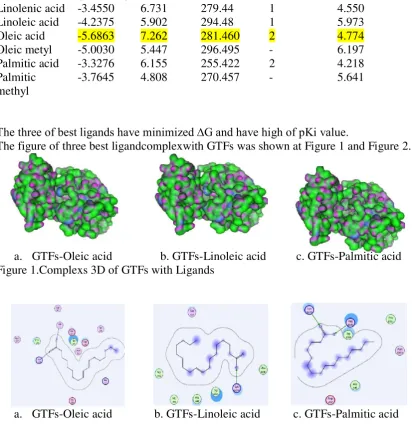
The docking results of the fatty acid ligands result 3 best ligands. Screening based on ∆G and Lipinski’s Rule of Five were employed from 3 ligands were resulted 1 of best ligand (Table 1).
Table 1. Docking results of GTFs and ligands
Ligands ∆G
(kcal/mol)
pKi (μM) MR H bonds Log P
Linolenic acid -3.4550 6.731 279.44 1 4.550
Linoleic acid -4.2375 5.902 294.48 1 5.973
Oleic acid -5.6863 7.262 281.460 2 4.774
Oleic metyl -5.0030 5.447 296.495 - 6.197
Palmitic acid -3.3276 6.155 255.422 2 4.218
Palmitic
methyl -3.7645 4.808 270.457 - 5.641
The three of best ligands have minimized ∆G and have high of pKi value.
The figure of three best ligandcomplexwith GTFs was shown at Figure 1 and Figure 2.
a. GTFs-Oleic acid b. GTFs-Linoleic acid c. GTFs-Palmitic acid Figure 1.Complexs 3D of GTFs with Ligands
a. GTFs-Oleic acid b. GTFs-Linoleic acid c. GTFs-Palmitic acid
Figure 2. Complexs 2D of GTFs with Ligands
One of the best ligands were selected based on the number of hydrogen bond as the
Analysis Interaction of Glucosyltransferase...Alfred P. ISSN: 2088-9771
Tabel 2. Score and distance complex GTFs-Ligands of Hydrogen bond
Ligand Hydrogen Bond Score (%) Distance (Å)
The docking result of oleic acid has pKi 7.262 μM, this value indicate that the oleic
acid has stronger affinity and interaction to form complex compounds with glucosyltransferases (GTFs) compare to another fatty acids. The value of pKi of oleic acid ligand is effective and interact strongly with GTFs (table 1). This means that the larger the value of the pKi, the smaller the Ki of the ligand. So the value of pKi can be used to determine the level of effectiveness in forming the complex enzyme with ligand.
Hydrophobic molecules show better log P (table 1). The ligand oleic acid (4.774), palmitic
acid (4.218), and linoleic acid (5.973). Lipinski’s rule of five mention that the poor absorption
or permeation are more likely when the log P is over 5. Hydrophobic nature is shown green color, hydrogen binding is shown by cyan color and mid polar is shown by blue color (figure 1).
Hydrogen bonding of 3 best docking fatty acid was identified by MOE 2008.10 software on Lig X interaction program. The result of identification of hydrogen bonds between amino acid residues with GTFs ligand can be seen in table 2. Oleic acid has two H-bonds, linoleic acid has one H-bond while palmitic acid has two H-bonds. Hydrogen bonding contribute to the affinity of the ligand in forming the complex with GTF enzyme, which is due to electrostatic interaction between hydrogen atom of oxygen or hydrogen atom of ligand with a residues vice versa. Oleic acid ligand bind to catalytic site into the site of Lys228 and Gly315 which formed hydrogen bond with the active site of two bonds with score Lys (28.7 %) and H distance 2.61 (Å), Gly (35.8 %) and H distance 2.77 (Å). Linoleic acid bind to catalytic site into the site of Lys 351 with the active site of one bond with score (32.9 %) and H distance 2.53 (Å). Palmitic acid bind to catalytic site into the site of Lys 229 and Arg 349 at the active site of the two bonds with Lys (14.8 %) and Arg (30.9 %) and the H distance is 2.42 (Å) and 2.49 (Å).
Conclusion from this study we found the best ligand for docking glucosyltransferase is oleic acid and further study can be performed experiment in laboratory by using natural substances to inhibit glucan forming and prevent dental caries.
References
Datta, D. (2002). Protein-Ligand Interactions: Docking, Design and Protein Conformational Change. Thesis. California Institute of Technology. Pasadena. California. USA.
Gohlke, H., Hendlich, M. and Klebe, G. (2000) Knowledge-based Scoring Function to Predict Protein-Ligand Interactions. J. Mol. Biol. 295, 337-356
Analysis Interaction of Glucosyltransferase...Alfred P. ISSN: 2088-9771
Hamada, S., and H. D. Slade. (1980)a. Biology, immunology, and cariogenicity of
Streptococus mutans. Microbiol. Rev. 44:331-384.
Hamada, S., and H. D. Slade. (1980)b. Mechanisms of adherence of Streptococus mutans to
smooth surfaces in vitro, p. 107-135. In E.H. Beachey (ed.), Bacterial adherence. Chapman
and Hall, London.
Kitchen, Douglas, B., Docornez, H., Furr, J.R and Bojarath, J. (2004). Docking scoring in virtual screening for drug discovery: methods and application. Nature review. Drug Discovery, 3, 935–949.
Montville, T.J., C. L. Cooney, and A. J. Sinskey. (1978). Streptococus mutans dextransucrase:
a review. Adv. Appl. Microbiol. 24:55-84.
A-6 ICBB2011 Proceeding| Vol. 1 No. 1 October 2011
Effect of Nanocomposite-based Packaging on Postharvest Quality
of Water Content-treated Coffee Beans during Storage
Erdawati, Riskiono
Dept of chemistry, State University of Jakarta
Abstract
The objective of this study was to evaluate the physical, chemical, and sensory qualities of green coffeebeans (Coffea arabica L.) during storage in nanopackaging packaging. A novel nanocomposite-based packaging (NCP) was prepared by blending polyethylene (PE) with nano-Ag,chitosan nanoparticle and montmorillonite. The effects of NCP on the quality parameters of water content tretaed coffee beans were investigated during the 21 d of storage at 25 °C. The results showed that adding nanoparticles to the PE significantly decreased the oxygen, water vapor permeability and longitudinal strength . The weight loss, water content , color variation and proximate content of coffee bean were significantly inhibited by 22.67%, 124.84%, 23.46% and 14.42% The results of this analysis demonstrated that this NCP can potentially increase the effectiveness of methods used to preserve and maintain quality in coffe beans during postharvest storage.
key word : NCP, coffe bean, water content 1. Introduction
Coffee is one of the most widely consumed beverages in the world because it contains a wide range of aroma compounds, which is a very important factor in food quality [1].Coffee beans are obtained from the plants Coffea arabica and Coffea canephora (mainly variety robusta). The former is more valuable because its beans produce a better tasting beverage, which is therefore more expensive than the robusta coffee [2] .
Coffee is an agricultural product with a quality-based price. The value of coffee increases significantly with improvements in quality, which are necessary to obtain new markets. During roasting,the taste and aroma of coffee develop from ingredients originall present in raw beans. Taste and aroma are the principal factors affecting beverage quality Storage is one of the stages following production that strongly influences the commercialization of coffee beans. Storage is therefore considered one of the most important factors for maintaining final product quality, meeting between-harvest demand, and securing the best market price for the producer.
Effect of Nanocomposite-based Packaging on Postharvest...Erdawati, et al. ISSN: 2088-9771
rapid deterioration in quality when the beans are stored in warehouses without ambient air control. Containers called “big bags” represent another form of storage used in Brazilian warehouses. The ease of mechanized handling, along with operational economies of scale, represent the principal advantages offered by this method of storage. However, big bags, like jute sacks, have the disadvantage of being permeable to water vapor and to gases present in ambient air, affecting the color and the organoleptic properties of the beans[3], and Nobre et al. [4] have stated that storage in hermetically sealed systems that permit atmospheric modification or control represents a viable alternative for preserving coffee bean quality. Certain additional costs are acceptable for the preservation of quality in select coffees of higher value.
Recently, the application of the nanocomposite concept has been proven to be a promising option in order to improve above mentioned properties conveniently [5] It is worth emphasizing many diverse characteristics existed in nanocomposites including composite reinforcement, barrier properties, flame resistance, electro-optical properties, cosmetic applications and bactericidal properties.
Relatively little research has been conducted to the food packaging involving in nanotechnology, such as material development of biodegradable starch/clay [6] whey protein isolate/ clay[7] polylactides/nanoclay composite films [8] and their application in Chinese jujube [9] green asparagus [10], orange juice [11] and Chinese bayberries [12]. Microbial growth rate inorange juice were significantly reduced as a result of using packaging material containing Ag and ZnO nanoparticles, which prolonged the shelf life of fresh orange juice up to 28 days without any negative effects on sensorial parameters [11]. Our previous study also showed that the nano-packing had quite beneficial effect on sensory, physicochemical, and physiological quality of fresh strawberry than polyethylene bags [13] .To the best of our knowledge, there are no published reports on the effect of nanocomposite-based packaging on preservation of kiwifruit. Therefore, the objective of the present work was to develop a preferable nanocomposite-based packaging to preserve coffee bean and to investigate the effect of NCP on maturity of coffe bean induced by watwr vapour during cold storage. To well understand the effect of this novel nanocomposite-based packaging material, the morphological characterization, physical properties and antibacterial effect of the nanocomposite were conducted as well.
Effect of Nanocomposite-based Packaging on Postharvest...Erdawati, et al. ISSN: 2088-9771
A-8 ICBB2011 Proceeding| Vol. 1 No. 1 October 2011
secures a longer sales period for growers and guarantees better prices. To achieve these goals, the present study proposes and evaluates a new storage system that preserves the physical, chemical, and sensory qualities of stored green coffee beans on a commercial scale using nanopackaging.To reduce these effects of microbiological, chemical and physical events, it is possible to act on food processing or, more usually, on packaging. However, toughness and other properties such as thermal stability, medium gas barrier, low solvent resistance (e.g., against water) and antibacterial properties of pure polymer are often insufficient for food packing applications [14]
2. Materials and methods
material The low-density polyethylene (PE) was used as matrix material (Translucency, Melt
flow index 2.2 g/10 min, density 0.92 kg/m3, softening point 95 °C, A. The nanopowders (35 wt.% of nano-silver, 40 wt.% of nanoparticle chitosan and 25 wt.% of Na+ montmorillonite) in the range of 40–80 nm were obtained from a analytical chemistry laboratory, state universiti of Jakarta.
2.1. Preparation and characterization of nanocomposite based packaging
Firstly a PE-nanocomposite masterbatch containing 30 wt.% of the nano-powder, 56 wt.% of PE granule and 14 wt.% of cross-link reagent KH-570 were immingled in uniformity through a high-speed mixer for 1 h. After air cooling, they were extruded to PE nanocomposite masterbatch using a twin-screw extruder with a screw diameter of 22 mm, a screw length/diameter ratio of 42 and a screw speed of 600 rpm.
In the second extrusion step, 0.15 kg of masterbatch and 3.85 kg of PE granule were immingled for 30 min. Subsequently the compounds were blown into a film of 50 μm
thickness via a plastic extruder After cooling, films of 50 μm thickness were used to make
bags of 20×22 cm2 using a heat sealer (Polyethylene bags of the same thickness and size without nanocomposite masterbatch nano-powder served as controls.
2.2 Surface area analysis
The specific surface area and average pore size of the nanopackaging film were determined by nitrogen adsorption at 77 K (Quantachrome Autosorb 1).The nanopackaging film were outgassed at 300 °C for 12 h and 150 °C for 8 h, respectively. The BET method was used for the corresponding calculation.
2.3. Physical properties analysis of NCP
Effect of Nanocomposite-based Packaging on Postharvest...Erdawati, et al. ISSN: 2088-9771
and mechanical determination respectively according to National Standard of Indonesia(SNI . The test film was sealed to a permeation cell with a 50% relative humidity gradient across the film at 23 °C. Five measurements were performed for each sample.
2.4. Plant material
The experiment was conducted in a warehouse of the Coffe Society PT in Sukmajaya Bogor, Eas Java, Indonesia. The coffee used in the experiment was obtained from a lot taken from the 2008 (Coffea arabica L.) crop and passed through 17 and 18 screens. The beverage made from this lot had a minimum score of 80 points, classifying it as good-quality coffeeon the Specialty Coffee Association of America (SCAA) scale. Coffee was bagged in 1 kg quantities in nanopackaging pastic sack and LDPE plastic.
2.5. Treatment
The coffee samples were randomly collected using a grain sampler in the nanopackaging For all package, 500 g of coffee beans were collected at 3-months intervals at 0, 1, 2, 3 and 4 months of storage. The samples were analyzed to determine water content, color, and content of sugars. Sensory analysis was also performed at these sampling times. The analyses were performed at the Laboratory of Agricultural Products, Department of Food and Technology, Institute of Agiculture Bogor. All analyses were made using bean samples passed through 17 and 18 screens to guarantee uniformity during roasting.
2. 6. water content
Water content was determined by oven-heating at 1050C for 16 h. Bean color was determined on a Minolta model CR300 colorimeter by direct reading of the coordinates (L), (a), (b) and according to the method described by Nobre (2005).
2.7. Color measurement
Effect of Nanocomposite-based Packaging on Postharvest...Erdawati, et al. ISSN: 2088-9771
A-10 ICBB2011 Proceeding| Vol. 1 No. 1 October 2011
point were obtained from the Info Palette. The total color difference
(ΔE=[(ΔL)2+(Δa)2+(Δb)2)]1/2) was determined in duplicate using CIE L, a, and b values .
2.8. total sugars and reducing sugars
Tissue (50 g) from twenty coffe bean was immediately homogenized using a blender (HR2864, Philip) for the determination of total soluble sugar and reducing sugars. Twenty-five gram aliquots of the homogenates were transferred to a beaker and 150 ml of distilledwater were added. The mixture was heated in a water bath of80 _C for 0.5 h and then filtered into a 250 ml volumetric flask. The contents were made up to 250 ml with distilled water after the addition of about 3 ml of 1 M zinc acetate and 0.25 M potassium ferrocyanide mixture. Aliquots of 10 ml were titrated to measure the contents of total soluble sugars and
redureducing sugars by the Fehling’s method, using glucose as reference. 2.9. Sensory evaluation
A sensorial test was run to determine packed fruit star whole quality as determined by its appearance. A panel of seven judges assessed the sensory characteristics of the investigated fresh-cut produce during the entire observation period, according to the procedure reported in the literature. Freshcut produce was used as control (score=5). The products were presented on coded plastic dishes. The intensity of the evaluated general appearance was indicated on a scale from 1 to 5, where 1–2=very poor, 3–4=fair, and 5=excellent. The sensory evaluation was used to determine the shelf life of packed produce. Scores below 3 for any of the attributes assessedwere considered as an indication of food product unacceptability. During the test sessions, the sample presentation order was randomized.
3.Result and discussion 3.1 Surface area analysis
Fig. 1 shows the nitrogen adsorption–desorption isotherms measured on nanopackaging and PE samples. The specific BETsurface areas of PE packaging and nanopackaging were 49 m2/g and 24 m2/g, respectively. The lower surface area of nanopackaging was attributed to the compact packing of the chitosan molecules in the interlayer space, resulting in pore blocking that inhibited the passage of nitrogen molecules. The average pore diameter of nanopackaging was 15.6 nm compared to 14.8 nm of PE..
3.2. Physical properties analysis of nanopackaging
Effect of Nanocomposite-based Packaging on Postharvest...Erdawati, et al. ISSN: 2088-9771
Table 1 Physical properties of nano packaging and normal packaging films.
Films Oxygen permeability
cm3m-2 24 h-1 (0.1 MPa)-1
Water vapor permeability gm-2 (24 h)-1
Longitudinal strength (MPa)
nanopackaging 6.85 2768.35 29.68
PE packaging 4.98 1802.13 31.96
Longitudinal strength of NCP film was 31.69% higher than the normal film. Recently the application of the nanocomposite concept had been proven to be a promising option in order to improve mechanical and barrier properties [6]. It could be inferred that the nanoparticles could affect the WVP, OP and longitudinal strength of films by the exfoliated montmorillonite which could yield significant mechanical property advantages as a modification of polymeric systems.Generally, this layered filled polymer composites exhibited extraordinary enhancement of mechanical and physicochemical properties at a low level of filler concentration in comparison to pure polymer.
3.3 water content
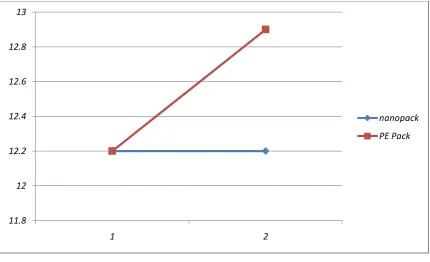
Coffee beans in jute sacks showed an elevated water content until the sixth month of storage. The value of water content increased, on average, between 9.80% and 11.40%. The water content remained in equilibrium with the temperature and the humidity, relative to the ambient air. The water content in the impermeable packaging remained stable at approximately 10% throughout the storage period (Fig. 2).According to Harris and Miller (2008) the water content required for secure storage is between 10% and 11%. These authors have verified that coffee beans stored in GrainPro effectively maintained a stablewater content level for four months. The results of the present study demonstrate that a stable water content level can be maintained in hermetic big bags or GrainPro for 12 months. An elevation of water content in processed beans in jute sacks can compromise quality. According to
Effect of Nanocomposite-based Packaging on Postharvest...Erdawati, et al. ISSN: 2088-9771
A-12 ICBB2011 Proceeding| Vol. 1 No. 1 October 2011
Storage time (month)
Fig. 2. Average values of water content for storage of green coffee. Experimental treatments: nanopackaging and Pepacaking film
3.4 Colour
Colour parameters for crude beans are presented in Table 2. Table 2 shows the changes in total color differences (ΔE=[(ΔL)2+(Δa)2+(Δb)2)]1/2) for nanpackaging compared with pure LDPE. Statistical results show significant differences (p<0.05) in ΔE after 7 days of
storage, indicating that storage time is an important factor influencing color value and ΔE It
can be observed all the nanopackages tested had a significant difference in their ΔE values
after 28 days compared with pure LDPE. It is clear that ΔE values are lower for nanopackages.
Table 2 Effect of packaging on total color differences (ΔE) during 21 days storage at 25 °C.
No Storage time
(day) ∆nanopackaging LDPE packaging E
1 0 0 0
2 7 5.62 4.62
3 14 6.14 5.12
4 21 7.93 6.88
3.4. Total soluble sugars and reducing sugars
The sugar content was related to flavour quality for a variety of fruits and it determines the optimum time for harvesting. As shown in Fig. 3a, the total soluble sugars of Coffe bean
11.8 12 12.2 12.4 12.6 12.8 13
1 2
nanopack
Effect of Nanocomposite-based Packaging on Postharvest...Erdawati, et al. ISSN: 2088-9771 temperature. Nano-packing could significantly inhibitthe increase of total soluble sugar content compared with the control. On day 21, the total soluble sugars of the nano-packinggroup reached 28.4%, which was significantly lower than the controlof 30.0% (P < 0.05).Compared with the total soluble sugar content, similar trends inthe reducing sugars content were observed during room temperaturestorage (Fig. 3b). The reducing sugars content of the nanopacking group was lower than that of the control, suggesting that the coffe bean with nano-packing synthesized reducing sugars at alower rate than did the control. These results indicated that theapplication of nano-packing might be able to slow the metabolismto give prolonged storage life to the fruit.
3.7 Sensory
Fig. 5 shows the change of sensory attributes of star fruit packed in different packages. The high similarity observed in color attribute scores of the packages after 28 days of cold storage (p<0.05) indicates that the change in the color of the samples is still invisible.
These results correlated well with the values of browning index. Odor attribute is greatly influenced by microbial growth and may lead to fermentation in orange juice during storageAfter 15 days of storage, a significant difference is observed between the odor of star fruit packed in the test packages and that in pure package except for the onecontaining 1% nanoZnO. Changes in the taste of packed star fruit during 15 days of storage show the positive effect of nanoantimicrobial packaging. It is obvious that there is a significant difference between nano-packaging and HDPE.The sensory panelists recognized as the best packaging material in terms of overall acceptability. It is noteworthy that changing orange juice flavor during storage is not only due to
thegrowth of microorganisms but also to heating, storage time, and the common chemical interactions that occur in stored juices Souza et al. [14] reported that lower storage temperatures of unpasteurized orange juice gave rise to a higher sensory acceptance than the higher temperatures for 72 h. Leizerson and Shimoni[13] reported
Effect of Nanocomposite-based Packaging on Postharvest...Erdawati, et al. ISSN: 2088-9771
A-14 ICBB2011 Proceeding| Vol. 1 No. 1 October 2011
Conclusion
In this study, a novel nano-packing material with higher barrier and mechanical properties was successfully synthesized and then applied to the preservation of star fruit during room temperature storage. The results showed that the nano-packing material had quite beneficial effects on physicochemical and physiological quality compared with normal packing material. Furthermore, these nano-packing materials have the advantages of simple processing and industrial feasibility in contrast with other storages, some of which are time-consuming, costly and alter colour and flavour.
Therefore, the nano-packing may provide an attractive alternative to improve the preservation qualities of star fruit during extended storage. Moreover, further research will be needed to explore the exact nano-packing mechanism during storage to facilitate the application of nano-technology over a broader range in the future.
Reference
1.Kumazawa, K., & Masuda, H. (2003). Investigation of the change in the flavor of acoffee drink during heat processing. Journal of Agricultural Food and Chemistry, 51, 2674–
2678.
2.Zambonin, C. G., Balest, L., De Benedetto, G. E., & Palmisano, F. (2005). Solid-phasemicroextraction-gas chromatography–mass spectrometry and multivariate analysis or the characterization of roasted coffee. Talanta, 66, 261–265.
3. Borém, F.M., Nobre, G.W., Fernandes, S.M., Pereira, R.G.F.A., Oliveira, P.D., 2008b. Avaliação sensorial do café cereja descascado, armazenado sob atmosfera artificial e convencional. Ciência e Agrotecnologia 32, 1724e1729
4.Nobre, G.W., Borém, F.M., Fernandes, S.M., Pereira, R.G.F.A., 2007. Alterações químicas do café-cereja descascado durante o armazenamento. Coffee Science 2,1-9.
5. Azeredo, H. M. C. d. (2009). Nanocomposites for food packaging applications. Food Research International, 42(9), 1240–1253.
6. Avella, M., De Vlieger, J. J., Errico, M. E., Fischer, S., Vacca, P., & Volpe, M. G. (2005). Biodegradable starch/clay nanocomposite films for food packaging applications.
Food Chemistry, 93(3), 467–474.
7. Sothornvit, R., Rhim, J. W., & Hong, S. I. (2009). Effect of nano-clay type on the physical and antimicrobial properties of whey protein isolate/clay composite films. Journal of Food Engineering, 91(3), 468–473.
8. Zhou, N. l., Liu, Y., Li, L., Meng, N., Huang, Y. X., Zhang, J., et al. (2007). A new nanocomposite biomedical material of polymer/Clay–Cts–Ag nanocomposites.
Effect of Nanocomposite-based Packaging on Postharvest...Erdawati, et al. ISSN: 2088-9771
9. Li, H. M., Li, F., Wang, L., Sheng, J. C., Xin, Z. H., Zhao, L. Y., et al. (2009). Effect of nanopacking on preservation quality of Chinese jujube (Ziziphus jujuba Mill. var. inermis(Bunge) Rehd). Food Chemistry, 114(2), 547–552.
10. An, J., Zhang, M., Wang, S., & Tang, J. (2008). Physical, chemical and microbiological changes in stored green asparagus spears as affected by coating of silver nanoparticles-PVP. LWT Food Science and Technology, 41(6), 1100–110
11.Emamifar, A., Kadivar, M., Shahedi, M., & Soleimanian-Zad, S. (2010). Evaluation of nanocomposite packaging containing Ag and ZnO on shelf life of fresh orange juice.
Innovative Food Science & Emerging Technologies, 11(4), 742–748.
12. Wang, K. T., Jin, P., Shang, H. T., Li, H. M., Xu, F., Hu, Q. H., et al. (2010). A combination of hot air treatment and nano-packing reduces fruit decay and maintains quality in postharvest Chinese bayberries. Journal of the Science of Food and Agriculture, 90(14), 2427–2432.
13. Yang, F. M., Li, H. M., Li, F., Xin, Z. H., Zhao, L. Y., Zheng, Y. H., et al. (2010). Effect of nanopacking on preservation quality of fresh strawberry (Fragaria ananassa Duch. cvFengxiang) during storage at 4 degrees C. Journal of Food Science, 75(3), C236–
C240.7.
14. Rhim, J. W., Hong, S. I., & Ha, C. S. (2009). Tensile, water vapor barrier and antimicrobial properties of PLA/nanoclay composite films. LWT Food Science and Technology, 42(2), 612–617.
A-16 ICBB2011 Proceeding| Vol. 1 No. 1 October 2011
The Modification of Coffee Leaves Beverage (Air Kawa) Processing
Through Enzymatic Oxidation
P. Darmadji A , E.L.D.Permatasari B , U. Santoso A
A Department of Agriculture and Food Technology, University of Gadjah Mada, Yogyakarta, 55281, Indonesia B Department of Agriculture and Food Technology, University of Gadjah Mada, Jl. Flora No.1 Bulaksumur
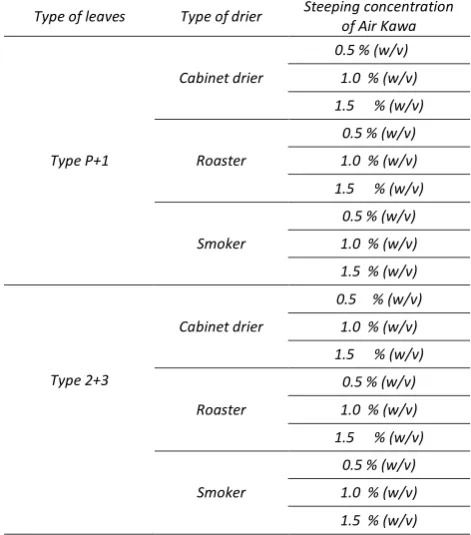
Air kawa is a traditional beverage from coffee leaves in West Sumatera. Processed by dried and boiled the leaves. One method of processing to improved beverage flavor by performing enzymatic oxidation coffee leaves. Coffee leaves were processed by modification method to get Air Kawa beverage by oxidation enzymatic. The process includes the series of withering, milling / rolling, enzymatic oxidation, drying and brewing. In the process, coffee leaves were divided to two types, leaves in the top and first leaves from the top (p+1) and the second and third of leaves from the top (2+3). The dryer were divided to three types are cabinet dryer, roaster, and cabinet smoker. And brewed was performed with varied the drink to three concentrations, 0.5%, 1.0% and 1.5% (w/v). This study also determined the effect of type of leaves, type of dryer, and variation of concentrations to consumer acceptance. And also to evaluate tannin content in astringent taste and brown color, caffeine content in bitter taste, and pH in flavor of Air Kawa beverage that most favored by consumer. Air kawa most favored by consumers with high intensity of flavor, brown color and freshness and with low intensity of bitter and astringent taste. Leaves p + 1 are a leaves that can be accepted by consumers in the manufacture Air kawa. Roaster is a most acceptable to consumers. Concentration 0.5% (w/v) is acceptable consumers. Intensity the astringent taste and brown color is not only influenced by the tannin content. Intensity the bitter taste is not only influenced by caffeine content. Intensity of flavor is not only influenced by pH. PH ranged from 5.08 – 5.47. Caffeine content ranged from 94.50 – 139.22 ppm, tannins content of Air Kawa ranged from 106.80 – 385.73 ppm.
(Key words: Air Kawa, Coffee Leaves, Enzymatic Oxidation)
1. Introduction
Air Kawa is a beverage of coffee leaves. The drink is most popular in West Sumatera, Indonesia, as a traditional beverage. Made by drying the leaves over an open flame up to twelve hour and then boiled for two hours. According to the anonymous (2011), the color of Air Kawa is more similar to tea, but still has a coffee flavor with slightly astringent –
bitter taste.
Bioactive compounds in water and ethanol extract of coffee leaves form of phenolics and tannins group. Whereas in the chloroform extract form of phenol and alkaloid group especially caffeine. Coffee leaves contain of alkaloids, saponins, flavonoids and polyphenols. Phenolic chlorogenic, caffeic acid, caffeine alkaloid, and some derivates are present in coffee leaves (magalhaes, et al, 2008). While the caffeine content in the C. canephora is 1417.32