101
97
SUSTAINABLE
DEVELOPMENT
REPORT
PUBLISHED BY : PT Kaltim Prima Coal
PATRON : Endang Ruchijat, Chief Executive Officer
ADVISORS : KPC EXECUTIVES, R. Utoro (Chief Operating Officer); Ashok Mitra (Chief Financial Officer); Frank Sinatra (Mining Operation); Shane Bennett (Mining Development); M. Sumali (Processing & Infrastructure); Richard Schloss (Mining Support); Pratikto (Supply Chain); Herlan Siagian (Marketing); Yulianti Subian (Finance); Tulus Siregar (Human Resources); Khudori (Health, Safety & Environment); M.Rudy (Contract Mining); Dasril (Business & Performance Improvement); Bartley Hopkins (Expansion Project)
EDITORIAL
ACCOUNTABILITY : Harry Miarsono, GM External Affairs & Sustainable Development
EDITORS : Louise G. Pessireron, Manager Project Management & Evaluation; Wijayono Sarosa, Manager Community Empowerment; Ricky Santana, Specialist Reporting and Data Management
DESIGN•LAYOUT : Parjo, Specialist Desktop Publishing
CONTRIBUTORS : Satya Putra (Man. Business Analyst), Rio Supin (Man. Accounting and Tax), Danny K. Wardhana (Supt. Project Monitoring and Control), Wawan Setiawan (Supt. Community Support), Nurul Karim (Supt. Agribusiness and Conservation), Pramono Triwahyudi (Supt. Local Business Development), Yuliana Datu Bua (Supt. Community Health and Education), Nadira Defy (Supv. Project Admin), Denny Riezki Pratama (GDP Community Empowerment), Beryanti Aritya Putri (Specialist External Liaison), Kusuma Sari (Supt. HSE Technical Affair), Rusdiansyah (Field officer), Andriyanto Soehadji (Supv. Project Admin), Silvester Pantur (Officer Media Publication), Hendy Ferdian (Senior Business Analyst), Djoko Soelistiono (Supt. Export Marketing), Jamik Yulianto (Specialist Marketing Administration), Heru Mashudi (Supv. Purchasing), Sumarno Hadi (Supv. Purchasing), Haryadi Wardhono (Man. Occupational Health and Safety), Ikhsan Yuzarly (Safety Statistician), Imanuel Manege (Man. Environment), Elistyandari (Senior Engineer Environment), Posman Sirait (Man. Learning and Development Service), Makin Perdana Kusuma (Man. Human Resources), Suriadi (Supt. Employee Communication), Bangun Nuswanto (Supt. HR Strategic Plan), Erwin Susanto (Supt. Salaries and Wages), Shauman Shaladin (Supt. Mine Control Dispatch), Tanzilullah (Supt. Coordination and Cost Control), Anton Suprajogi (Man. Procurement Expansion Project).
INTERNAL AUDITOR : KPC Internal Auditor Team
TRANSLATOR : Peter Markey, PT. PMI (Penulis Maju Indonesia)
EXTERNAL AUDITOR : SGS Indonesia
EDITORIAL ADDRESS : External Affairs & Sustainable Development
PT Kaltim Prima Coal
M2 Building, Mine Site
Sengata, East Kutai, East Kalimantan
INDONESIA
Tel. 62 549 52 1451
Fax. 62 549 52 1701
PRINTED BY : Subur Printing Network, Jakarta
94
SUSTAINABLE
DEVELOPMENT REPORT 2008
TABLE OF CONTENTS
Page
From The Editor ...
Chief Executive Officer’s Statement ...
About This Report ... Reporting Objectives... Approach to Reporting System ... Reporting Assessment ... Basic Guidelines ... Reporting Scope ... Independent Verification ...
Awards 2008...
About KPC ... Board of Directors and Board of Commissioners Selection and Evaluation ... Management of KPC ... Sustainable Development Strategy and Approach... Stakeholders’ Role ... Our Mining Process ... Our Mining Operation... Our Coal Production ... Coal Market ... Occupational Health and Safety... Employees’ Benefits ... Land Preparation and Monitoring ... Post Mining Plan ...
Our Product Quality ... Responsibility for the Product ... Customer Satisfaction ... Marketing Communication Program ... Customer Privacy Breach ...
Code of Conduct ... Sustainable Development Accountability ... Monthly Board Meeting ... Executive Committee ... HSE Forum ... HRCH Forum & HR Network ... Health, Safety, and Environment Management System ... MSH-CSR (Multi-Stakeholder for Corporate Social Responsibility) Forum...
Economic Performance ... Our Contribution to National Economic Development ... Influence of Rainfall on Production ... Supplier Involvement ... KPC’s Effect on the East Kutai Economy ...
Social Performance ... Community Empowerment Policy ... Agribusiness Development ... Community Health... Education and Training ... Cooperative, Small and Medium Business Development (KUKM) ... Community Infrastructure Development ... Nature and Culture Conservation ...
Environment Performance ... Environment Policy ... Environment Management Responsibility ... Training ... Monitoring and Follow Up ... Environmental Indicators ... Fuel Efficiency Program ... Oil Efficiency Program ... Water Requirements for Production and Drinking Water... Land Opening and Ex-Mining Area Rehabilitation ... Biodiversity Project for Rehabilitation Area ... Orangutan Relocation ... Rock Acid Water Management... Material Used Based on Volume ... Emission, Effluent & Waste ... Management of Greenhouse Gases and Ozone Destroying Gases... Biomass Production Role for CO2 Absorption in Reclamation Area ... Water Discharge Impact ... Total Settling Points of Mine Water Effluent ... Oil Spill Management ... Hydrocarbon Spill Management ... Hazardous Waste ... Total Cost of Environment Management...
Labor Performance ... Human Resources ... Industrial Relationship ... Training and Development ... Career Opportunities... Employee Performance Assessment ... Employee Retention Program ... Attract Potential Employees ...
Human Rights Performance... Discriminative Attitude ... Child Workers ... Forced Labor ... Security Practice ... Local Inhabitants ... Occupational Health and Safety...
GRI Cross Reference ...
List of abbreviations...
TABLE OF CONTENTS
FROM THE EDITORS
In performing the mine operations, PT Kaltim Prima Coal can not be independent from the stakeholders who stay around the mine area. In developing the interaction with the stakeholders, our company has a strong commitment to carry out sustainable development as the form of company responsibility toward human resources, nature, and environment.
This report constitutes a form of our company’s transparency and openness in carrying out sustainable development. More than that, this report is also exhibits the accountability of our company for our company stakeholders.
To improve the trust, to answer the information needs about our company, and also to strengthen the dialogue with the stakeholders, we use the GRI (Global Reporting Initiative) standard in structuring this report. We have been using the GRI standard since 2003 and from year to year the standard has been improved. For the sustainable development report 2008 we use the newest version that is 3.0.
In producing this report, we also conducted an external review that was performed by PA CSR consultants and also an external audit by the verification and independent certification group SGS Indonesia. It was conducted to maintain the level of accuracy, accountability, and transparency of this report. Some input from SGS about the previous annual report has been conducted by our company to improve the quality of the report.
The good mining practice activity that is conducted by our company can be seen clearly in this report. We are not only conducting a mining activity but also other activities in economic, social, and environmental sectors. Our company considers that the mining activity must give the benefit to the communities around the mine area. The benefit can be achieved directly through the communities’ development activity and indirectly resulting from the multiplier effect of the mining activity such as tax revenue, domestic purchasing, employee’s salary, etc. Because of that, the theme that we use as the title for this year’s report is “Become a Good Neighbor”.
We say thank you to all stakeholders who supported all of KPC’s sustainable development programs and also to the contributors who worked remarkably for the realization of this sustainable development report.
Criticism, suggestions and questions about the data and information we present, please convey this to:
External Affairs & Sustainable Development Division PT Kaltim Prima Coal
M2 Building – Mine Site Sengata, East Kutai, East Kalimantan 75611 INDONESIA
Phone +62 549 521451 Fax. +62 549 521701
Website: www.kaltimprimacoal.co.id
Enjoy the reading,
CHIEF EXECUTIVE OFFICER’S
STATEMENT
Dear PT Kaltim Prima Coal Stakeholder,
Together with the development of our company, in 2008 PT Kaltim Prima Coal (PT KPC) continuously made serious efforts to balance and fulfill the stakeholders’ needs starting from the shareholder, customer, employee, community leader, religion leader to the supplier and contractor and also the next generation.
We also try to involve the stakeholder in our business, because we realize that cooperation with the stakeholder and their support that will bring about the development of this company. For that, we offer our biggest most hearty thanks for their support during this period.
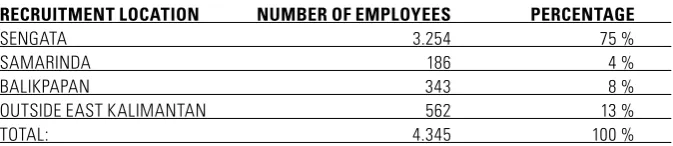
The business that we are performing has brought direct and indirect impacts for many parties. The coal that we produce, the technology that we use and the management and quality of the company that we put in operation has produced energy that is needed for the sake of industry and also improves the local economy by recruiting workers amounting to 4,334 people. This number of workers is has increased more than 15% from the previous year. Of the number about 75% of the workers that are recruited are from Sengata.
We realize that our mining operation causes other impacts that influence the environment around our operation area. For that, we always conduct efforts to reduce the environmental and social effects through the corporate social responsibility program that we have conducted.
In this year 2008, our efforts in the environmental sector have received special acknowledgement
PT KPC ALWAYS WANTS TO BE FOREMOST TO PARTICIPATE IN
COMMUNITY DEVELOPMENT. BESIDES AS THE GOVERNMENT
PARTNER IN DEVELOPMENT IMPLEMENTATION, OUR COMPANY IS
ALSO CONCERNED ABOUT SPECIAL ATTENTION TO INTERNATIONAL
ISSUES. ONE EXAMPLE OF EVIDENCE OF OUR PARTICIPATION IS
THE SIGNING OF THE UNITED NATIONS GLOBAL COMPACT (UNGC) IN
JAKARTA. UNGC IS AN INITIATIVE FROM THE UNITED NATION THAT
URGES COMPANY COMMUNITIES IN THE WHOLE WORLD TO ADOPT
A SUSTAINABLE SOCIAL POLICY AND PROMOTE IT BY MAKING THE
REPORT ABOUT THE POLICY.
from environmental observers. We have received a number of awards for example “The Best Mining Company for Environmental Program” from Tambang Magazine; Aditama award from the Department of Energy and Mineral Resources Directorate of General Mineral Coal and Geothermal; Proper Hijau Certificate for Bengalon Site and Proper Emas Certificate for Sengata Site from the Governor of East Kalimantan.
Besides in the environmental sector, we have received some awards in the social sector such as Corporate World Award for Participation and Support Toward Housing Development from the State Minister of Public Housing; Indonesian
Sustainability Reporting Award from Indonesian Institute of Accountants; Corporate Social Responsibility Award from SGS; and “The Best Mining Company for Community Development” from Tambang Magazine.
In the Occupational Health and Safety sector, some accomplishments that we attained were the reduction of the incident frequency level that causes Lost Time Injury Frequency Rate (LTIFR) in the amount of 15% from 0.27 in 2007 to 0.23 in 2008. We also established a new achievement namely 24,353,202 safe work hours which is equivalent to 175 days (9 April–29 September 2008). More than that, in 2008, the PT Kaltim Prima Coal fireman received first place in the Water Rescue Competition in the Indonesian Fire and Rescue Challenge Championship. These achievements represent illustrations of our hard work to keep on striving for the employees’ safety that is the backbone of our mining operation.
The hard work that we continuously strive to maintain and develop work safety up to now is not enough. One fatal incident that caused us to lose one of our best employees in 2008 made us conscious to always work hard to attain sustainable job safety. To reach that, we always conduct training concerning Occupational Health and Safety of the employees, and also continuously campaign for Occupational Health and Safety.
In the same manner as other companies in the world, global warming and unfavorable climate changes to a degree bring impacts for our company operations. Heavy rainfall is one of the factors that caused the removal of overburden is 19% under plan. Besides that, the stopping of mining activity in the Thiess pit area, PAMA and PT. Darma Henwa in Bengalon during August until the first week in September 2008 also impacted on the coal production performance that failed to meet the required target. From the planned target of 46,107 kt, only 37,466 kt could be achieved.
As proof of our participation in reducing global warming which also is included in AMDAL activity implementation, we also conducted continuously various efforts of environmental management with a total cost of environmental management reaching more than US$18 million. This amount decreased about 1.5% from the previous year.
Dealing with the global crisis that has faced by all companies in the world that brought about a significant impact, then a strategic step needed to be carried out, one of them was through the establishment of a new division namely the Business and Performance Improvement Division. This division was established with the objective to overcome the escalation of operational costs such as fuel, explosives, tires and maintenance costs. Besides that, this division also aims to identify and implement opportunity improvement in PT KPC operations so that it will make PT KPC operations sustainable in the long term, effective and efficient in all aspects.
In 2008, PT KPC also established a division, the Expansion Project, which aimed to prepare the increase of coal production in 2010 from 48 Mtpa into 70 Mtpa. With this increasing production, we expect to give more effort toward the local economy in West Kutai in particular and Indonesia in general.
From the plan of 43 million tons, sales reached 35.77 million tons in 2008. From the sales, PT KPC handed over royalties in the amount of USD349.15 million to the central government. Although this accomplishment was less than what we achieved in 2007 in the amount of 39.72 million tons, nevertheless it is expected with the increasing production in the future, PT KPC can give a higher royalty to Indonesia so that it can increase the national income. For 2009, PT KPC is planning the coal production will reach 41 million tons.
PT KPC always wants to be foremost to participate in community development. Besides as the government partner in development implementation, our company is also concerned about special attention to international issues. One example of evidence of our participation is the signing of the United Nations Global Compact (UNGC) in Jakarta. UNGC is an initiative from the United Nation that urges company communities in the whole world to adopt a sustainable social policy and promote it by making the report about the policy.
PT KPC’s sustainable development program in the social sector is still focused on seven programs, namely agribusiness development, education and training, community health and sanitation, the development of KUKM (Cooperatives and Small and Medium Enterprises), the development of community infrastructure, nature and culture conservation, and the development of institutional
CHIEF EXECUTIVE OFFICER’S
STATEMENT
capacity. The sustainable development program has given direct benefit to 2,718 farmers, 847 teachers and 242 scholarship students, 282 small industries and cooperatives, 7,762 people in the development of health and the environment, and the thousands of people who get indirect benefit.
One of our community health programs, namely PERGIZI was chosen as the MDGs nominee in 2008. The PERGIZI is a program of mother and child health development. KPC is also keeps on trying to supply the availability of clean water by giving the assistance of clean water management place in the East Kutai community environment and assistance for PDAM (Regional Drinking Water Company). Besides that, in the middle of year 2008, the renovation of the Ranta Pulung-Sengata road started to be done. With the renovation of this road, it is expected the speed and independence of the community’s economy can be enhanced. It is in line with the short term program of PT KPC sustainable development until 2010. It is expected by the end of 2010, the dependence of the communities with regard to the mining sector can be reduced until 35%.
Until 2010, PT KPC will carry out the identification of farmland and regional planning and also an appraisal of agriculture and fishery development in the former mining areas and also outside mine area. This appraisal and study is carried out to maintain the ability of the environmental bearing capacity and look for the newest development potency of natural resources.
With well thought out planning that has been structured properly, human resources owned by the company, and with the company’s commitment to keep on carrying out sustainable development, it is expected at the closing of mine the dependence of communities with regards to the mining sector will reduce until 5%.
Sustainable development not only becomes just the expression for now. PT KPC has already become a company showing real evidence that it not only works in mining. Cooperation with all stakeholders is the main key for the successes of our company’s sustainable development. For that, we are hoping for the support and involvement from the stakeholders in the sustainable development implementation for the next year.
To give to the world the energy of our coal without putting aside the needs of the next generation, and also keeping on carrying out sustainable development is the challenge that we take for the development of PT KPC.
Thank you,
Endang Ruchijat Chief Executive Officer
CHIEF EXECUTIVE OFFICER’S
ABOUT THIS REPORT
This Sustainable Development Report of PT Kaltim Prima Coal not only explains the commitment and performance of the company in coal mining operations, but also how the company has given social, economic and environmental benefits through the partnership with the community and other stakeholders.
The operational performance is reflected through the application of good corporate governance principles and also the mining operational practice that consistently refers to the high Occupational Health and Safety standards. Besides that, the company also holds the commitment to carry out the sustainable community development program by effectively performing the activity based on planning.
The activity programs are not only in compliance of 2005 AMDAL (environmental impact analysis) requirements in social and economic sectors, but also as the proactive effort of PT Kaltim Prima Coal Corporate Social Responsibility. This is reflected the efforts of PT Kaltim Prima Coal to bring on sustainable development. More than that, its implementation is adjusted with long term strategic planning for the survival of communities around mine area prior to the planned mine closure in 2021.
Three fundamental sustainable keys are the benefit of economic activity that is considered as the consequence of the social relationship and the environmental impact that might appear; second, in using the resources, the company must consider the needs and hope of the next generation; and third, the government, the industry performer and all community members must participate together in order to synchronize the needs.
By continuously applying high standards for Occupational Health and Safety, environment, and community health and also in partnership with the government and the local community, KPC is trying to create long term of economic and social development.
This report is the 6th Sustainable Development Report of PT Kaltim Prima Coal. Every year, PT KPC reported the sustainable development activity since 2003 by referring to the Global Reporting Initiative standard. The usage of this standard greatly assists the reporting which complies with transparency principles, sustainability, and clarity for every activity’s aspects undertaken by PT KPC in economic, environment, and social fields.
SDR 2003, GRI 2002, Level 1
The sustainable report of PT KPC 2008 is refers to GRI standard 2006 (G3) where the level of attainment continuously is being raised. It proves that PT Kaltim Prima Coal is continuing to make a serious effort to increase quality of its sustainable development report.
REPORTING OBJECTIVES
This report aims to communicate the company’s commitment and economical, environment, and social performance of the company to managers as well as the community transparently. With the existence of this report, it is expected the stakeholders can get a clearer description about all activities of sustainable development in PT Kaltim Prima Coal.
This report also presents the developments that occurred during 2008. The principles of Accuracy, Completeness, and Reliability are the principles that we use to explain the information in this report. Through the process of internal and external audits that we have performed, give assurance that the third principle is included in this report.
Fulfillment of the important parts required in the Report Parameter Indicators found in GRI G-3 has been achieved in this report. Designated company staff who got training concerning the GRI Standards participated in the compilation of this report. This strengthened the editorial team of the Sustainable Development Report 2008 PT Kaltim Prima Coal and gained a high level of support from the company management.
In order to enable this report to provide accurate and reliable data, as with the previous year, we have asked an independent party to examine the validity of this report.
APPROACH TO REPORTING SYSTEM
This sustainable development report is focused on the reporting of program performances in achieving sustainable development and stakeholders’ participation in this development. Data that is required in the GRI indicators will be described statistically.
The stage in this report arrangement is a little different with the 2007 report. The external review stage that was conducted in 2007 we didn’t do in 2008. This relates to the existence of the “Specialist Reporting” person who possessed a certificate as an assuror of NCSR (National Centre for Sustainability Reporting). This Specialist Reporting person lead the internal audit to ensure the Sustainable report conformed to the GRI indicators.
Sustainable Report Structure
This sustainable development report is structured with the following stages:
• Dataisgatheredonthe2008performances
• DatagatheredistobeverifiedbytheManagertoensuretheaccuracyofthedata • Editorialteamanalyzesthedataandstructureofthereportdraft
• ReportdraftiseditedbytheChiefEditor • TheeditedReportissentbacktothecontributors • Finaleditingisdone
• InternalauditisconductedledbyacertifiedReportingSpecialistasanassurorfromNCSR
(National Centre for Sustainability Reporting)
• Findingsfromtheinternalauditaresanctionedasthematterofthefinalreport • Thereportissubmittedtoanindependentassurortobeaudited
Report writing
Report Editing
Final Editing
Final Draft Internal Audit
Checking for accuracy
External Audit
Final Report Relevant departments
provide data of production, environmental, social
and finance performance
REPORTING ASSESSMENT
This year’s report is audited based on the 2nd level report assessment by the independent party to improve the reliability of our report. This 2nd level report assessment includes:
1. Evaluation of the report accuracy 2. Gap analysis with regard to the GRI scope
3. Assessment by means of a scoring system and its percentage in relation to the GRI requirements.
We are also reporting the remedial actions requested by the auditor team in the previous year. These include the completeness of all GRI indicators, the stakeholders’ performance and their input, and also the focus on global issues.
We believe that this report is in GRI 2006 at level A+.
BASIC GUIDELINES
This report is formulated based on the Global Reporting Initiative (GRI) 2006 version 3.0 or more recognized with the G3 Reporting Standards and Mining and Metal Sector Supplement Pilot Version 1.0. Reference to the fulfillment of the GRI guidelines compliance can be seen on pages 87–91.
REPORTING SCOPE
This report informs of all aspects of our operational performance in KPC’s mining areas and the changes that we have experienced during 2008, including the changes of company shares ownership, the financial condition and the products. As what we reported before that this report is based on the Global Reporting Initiative (GRI) 2006 version 3.0 (G3) and Mining and Metal Sector Supplement Pilot Version 1.0.
INDEPENDENT VERIFICATION
The content of this report has been verified by SGS Indonesia, an international company that especially handles the certification and verification of environmental reports, social and report continuity. SGS Group is a company that works in the inspection, examination and verification sector that operates in 140 countries.
In this report, their verification statement of the accuracy and transparency of this report we mention on the last page.
What we report is:
• Economic,socialandenvironmentalperformancesasrequiredintheGRIindicator.Thisyear’s
report is trying to present all indicators in GRI standards.
• Thechangesthathappenedduring2008. • OperationalactivitiesasrequiredinGRIindicator.
• Operationalactivitiesthatfulfillthecompliancetoregulationsorotherrequirements. • AdditionalindicatorsinGRI.
• IndicatorsinGRIMiningandMetalSectorSupplementVersion1.0.
KPC Objectives
& Targets
Monthly Report
Quarterly Report GRI
indicator
KPC Sustainable Development
Report
Internal External
(Limited)
External (stakeholder) Scale of issues
related to KPC Operation
Graphic 1. Approach to Reporting System
ABOUT THIS REPORT
AWARDS 2008
ENVIRONMENTAL ASPECT
• Aditama,BackfillingOverburdenRockManagementAwardandotherrelatedcoalmining
activities from the Department of Energy and Mineral Resources, Directorate General of Mineral, Coal and Geothermal. (December 2008)
• “TheBestMiningCompanyforEnvironmentalProgram”,fromTambangMagazine.(April
2008)
• Green Proper Certificate for Site Bengalon from the East Kalimantan Governor. (June
2008)
• GoldProperCertificateforSiteSengatafromtheEastKalimantanGovernor.(June2008)
OCCUPATIONAL HEALTH AND SAFETY ASPECTS
• First Place Water Rescue Competition in the Indonesian Fire and Rescue Challenge
Championship. (November 2008)
COMMUNITY DEVELOPMENT ASPECT
• AwardforBusinessSectorforParticipationandSupporttowardsHousingDevelopmentfrom
the State Minister of Public Housing. (October 2008)
• IndonesianSustainabilityReportingAwardfromtheIndonesianAccountantsUnion.(November
2008)
• CorporateSocialResponsibilityAwardfromSGS.(February2008)
• “The Best Mining Company for Community Development”, from Tambang Magazine. (April
2008)
AWARDS 2008
ABOUT KPC
KPC is a Coal Mining Company located in the East Kutai Regency that was established with Deed Number 28 dated 9 March 1982 and approved by the Minister of Justice of the Republic of Indonesia according to Decision Letter Number Y.A.5/208/25 dated 16 March 1982 and it was published within the State Gazette of the Republic of Indonesia dated 30 July 1982 Number 61 addendum Number 967. Since the commencement of operations in 1992, KPC was a Foreign Investment Company owned by British Petroleum International Ltd (BP) and Conzinc Rio Tinto of Australia Ltd. (Rio Tinto) where each company owned a 50% in KPC. Based on Deed No. 9 dated 6 August 2003 and Reporting Document of the Minister of Justice and Human Rights of the Republic of Indonesia No. C-UM. 02 01.12927 dated 11 August 2003, the stock of KPC owned by BP and Rio Tinto was been sold to Kalimantan Coal Ltd. and Sengata Holding Ltd and furthermore on 18 October 2005, according to Notary Deed No. 3 dated 18 October 2005, PT Bumi Resources acquired the stocks owned by Kalimantan Coal Ltd and Sengata Holding Ltd. Based on Notary Deed No. 34 dated 4 May 2007, Shareholders of PT Kaltim Prima Coal sold 30% of its stocks to Tata Power (Mauritius) Ltd.
Under the terms of the Coal Agreement (Perjanjian Kontrak Karya Pengusahaan Pertambangan Batubara - PKP2B) signed on 8 April 1982, the Government gave KPC license to explore, produce and market coal from its agreement area until 2021. The agreement area covers 90,938 ha in East Kutai Regency, East Kalimantan Province.
BOARD OF DIRECTORS AND BOARD OF COMMISSIONERS SELECTION AND
EVALUATION
BoD and BoC selections are determined at the Shareholders General Meeting (Rapat Umum Pemegang Saham (RUPS)). In general, the criteria applied to select BoD and BoC are seniority, educational background, and working experience as well.
The evaluation of BoD and BoC is conducted in the Shareholders General Meeting (RUPS) by reviewing the performance towards the company involvement in economic, social, environmental and also Occupational Health and Safety aspects.
Within the BoD, BoC and Shareholders, KPC does not have any independent parties who have no financial interest with regard to the company.
MANAGEMENT OF KPC
Our mining operation is supported by a management team that consists of skilled professionals and very competent in each of their fields and also they have more than ten years experience. There is no management team member representing an independent group. The structure of our management team is as follows:
ABOUT KPC
2007 2008
Chief Executive Officer Endang Ruchijat Endang Ruchijat
Chief Operating Officer R. Utoro R. Utoro
Chief Financial Officer Ashok Mitra Ashok Mitra
GM Mining Development Division Chris Lauritzen/Shane Bennet Shane Bennet
GM Human Resources Division Sam Alwie Alkaaf Tulus Siregar (act)
GM External Affairs & Sustainable Development Div. Harry Miarsono Harry Miarsono
GM Contract Mining Division Ilda Harmyn M. Rudy
GM Marketing Division Herlan Siagian Herlan Siagian
GM Finance Division Yulianti Subian Yulianti Subian
GM Mining Operation Division Rod Bridges/Bambang Saptono Frank Sinatra
GM Health, Safety & Environment Division Khudori Khudori
GM Mining Support Division Richard Schloss Richard Schloss
GM Processing and Infrastructure Division M. Sumali M. Sumali
GM Supply Chain Division Simon Scott/Pratikto Pratikto
Head of Project Expansion Team - Bartley Hopkins
GM Business & Performance Improvement - Dasril
From left to right : Shane Bennet, Pratikto, Harry Miarsono, M. Sumali, R. Utoro, Endang Ruchijat, Ashok Mitra, Makin Perdana Kusuma, Richard Schloss, Dasril, Frank Sinatra
In 2008, changes occurred within our organizational structure. The addition of 2 new divisions occurred namely Expansion Project Division (EPD) in May and Business and Performance Improvement Division (BPID) in June this year.
ABOUT KPC
Manager Business Analyst
SATYA PUTRA Chief Operating Officer
R. UTORO
BOARD OF COMMISSIONERS
BOARD OF
DIRECTORS AUDIT COMMITTEE
Secretary to CEO MEYANTI DJOKO
Chief Executive Officer
ENDANG RUCHIJAT
Chief Financial Officer
ASHOK MITRA
General Manager Finance
YULIANTI SUBIAN
Manager Accounting & Tax
RIO SUPIN
Manager Treasury
WIWIN ANTARINI
Manager Risk & Asset Management HARLYN SIANTURI General Manager MARKETING HERLAN SIAGIAN Manager Marketing DARWIN MANURUNG Manager Sales Operations NYOMAN OKA Manager Coal Technology CHRIS STANFORD Socio Political Advisor HUSEIN AKMA General Manager Mining Development SHANE BENNETT Manager Geology ARYO SUSATYONO Manager Mine Planning (Acting) ARIF RUSMIN Manager Legal ADRI KURNIA Manager Strategic Planning MICHAEL BUCKLEY General Manager Health, Safety & Environmental KHUDORI Manager Environment IMANUEL MANEGE Manager Occupational, Health & Safety
HARYADI WARDONO General Manager Contract Mining M. RUDY Manager Contract Mining (PT DH-Bengalon) RETNO NARTANI Manager Contract Mining
Pama & FBS
ADE SYARIFUDIN Manager Contract Mining TCI BINA SEMBIRING Manager Audit General Manager Human Resources (Acting) TULUS SIREGAR Manager Human Resources
MAKIN P. KUSUMA
Manager Compensation & Benefit TULUS SIREGAR Manager Learning & Dev. Services POSMAN SIRAIT Manager Industrial Relations M. NISPALAH General Manager External Affairs & Sustainable Dev.
HARRY MIARSONO Manager Community Empowerment WIJAYONO SAROSA Manager Land Management KEMAL NAZAR Manager External Relations HASRUL SANI Manager Project Management & Evaluation LOUISE PESSIRERON Manager Government Relations GESANG BUDIARSO General Manager Mining Operations FRANK SINATRA Manager Mining Services EVAN SALEHUDIN Manager Pit Bintang RIDWAN SINULINGGA Manager Pit Hatari HENDRO ICHWANTO Manager Pit J ALOYSIUS PRANANTO Manager Coal Mining RICHARD SITOHANG Manager Mine Optimisation IQBAL MUZAMMIL General Manager Mining Support RICHARD SCHLOSS Manager Heavy Equipment Maintenance SUPANGAT Manager Haul Truck Maintenance UNTUNG PRIHARDIYANTO Manager Maintenance System (Acting) ARIS RIZA Manager Contract Maintenance ANDI SIREGAR Manager Maintenance Services HENDRAWAN General Manager Supply Chain PRATIKTO Manager Logistics AGUNG PRIBADI Manager Supply HILDA BASAR General Manager Processing & Infrastructure Manager Coal Processing Plant ASMIT ABDULLAH Manager Coal Terminal OLC & Power
AUGUSTINUS SAGALA
M. SUMALI
Head of Project Expansion Team Manager Equipment and Workshop facilities Expansion AZNITA WILASARI Manager Infrastructure Support Project RUPA MAHA Manager Civil and Bengalon
Development ANTON HARUNSJAH Manager OLC-Stock Pile Ship Loader Duplication Projects POLTAK SINAGA Manager Procurement Expansion ANTON SUPRAJOGI Manager in Pit OLC & Crushers Projects
SUPRIS RUDIANTO
Manager Power Station Projects & Electrical
Support (Acting)
EKO HADI CAHYONO
BARTLEY HOPKINS General Manager Business & Performance Improvement DASRIL RAMA INDRAYANA Manager Operation Analysis ADIKA NURAGA
In less than 6 months KPC has saved more than USD9.9 million through 2 of its 6 improvement projects: Fuel efficiency improvement project and Fuel quality improvement project. These projects involve 41 members from 8 different divisions and 3 main contractors as well.
Using the PDCA method (Plan, Do, Check, Action) which was developed by Prof W.E Deming, BPID leads the changing of work habit where everyone in this organization are involved in continuous improvement and take part in maintaining the continuity of the KPC operation. By becoming an innovation centre and with continuous improvement that facilitates the development of employees in business improvement, BPID is ready to support KPC to be the most innovative, the safest, the biggest, and the most profitable coal company.
The organizational structure of PT Kaltim Prima Coal is as follows:
Company’s Profile up to 31st December 2008
Types of license Contract of Work Agreement for Coal Mining Exploitation (PKP2B contract No.J2/Ji.D4/16/82)
Date of signing 8 April 1982
Stage of Activity Production Operation (Decision Letter for Reducing Production No. 940.K/20.01/DJP/1999 dated 24 December 1989)
Excavation material Coal
Active period 30 years since production stage was approved (January 1st 1992)
Width 90,938 ha (D4KW 96PB0363)
Site/Head Office address PT Kaltim Prima Coal, Mine Site Building, Sengata, East Kutai Regency, East Kalimantan
Shareholders 65% PT BUMI Resources, 30% Tata Power Company, 5% Kutai Timur Energy
Manpower Permanent Employees (3,817), Fixed Term Employees (515)
Sold Coal 35,772,323 tons (Prima: 1.36 %, Pinang: 65.73 %, Melawan: 32.91%
Net sales USD 1,766.58 million
Royalty paid in 2008 USD 349.15 million
Community expenditure commitment USD 5,000,000
Environmental Cost USD 18,771,896
SUSTAINABLE DEVELOPMENT STRATEGY AND APPROACH
The motto “More than Mining” is an inspiration for the sustainable community development program in PT Kaltim Prima Coal that is sketched in up to the post mining activity. This motto also becomes the approach in social, economic and environmental aspects conducted by the company. It proves that KPC mine operations are not only exploiting non-renewable resources but also conducting environmental mitigation and also increasing renewable resources by maintaining a good partnership with the stakeholders. It is done by improving the ability of the community, community institutions and government as well, moreover establishing a better business climate and work culture for the community around KPC’s mining operation area.
Dependency of East Kutai Community towards the coal mining sector is still high (84.23%) representing a problem that becomes KPC’s concern. It makes KPC’s vision to become a major world class thermal coal supplier not only limited to coal production for the world’s request fulfillment but also the active implementation of social responsibility in the cases of environmental conservation and improving local economic independence.
As real proof of the implementation of the social responsibility, KPC initiates programs that support local economic independence in line with the mine closure program. With implementation of a controlled program, the community is expected to be more independent in 2025 and not to depend on the mining sector only. Therefore, the concept of local economic development is directed to the
ABOUT KPC
Mining 65%
Non Mining 35%
Mining 50%
Non Mining 50%
Mining 35%
Non Mining 65%
Mining 5%
Non Mining 95%
2005-2010 2010-2015 2015-2020 2021-2025
Agricultural Development Study
Intensive Training
Fisheries Study
Land Use Identification
Spatial Mapping Study
Potential Analysis Implementation Study Agriculture Development Land Usage Rehabilitation Agricultural Development Agricultural Development Fisheries Industry Services Industry Development Of Agribusiness Technology Development Of Agriculture Industry Services Industry Development Of Agribusiness Export
Graphic 2. Long-term Strategic Plan for Implementation of KPC Sustainable Development
Until 2010, KPC will carry out land identification and area settlement (spatial mapping) and also agribusiness and fishery development studies both in the ex-mining area and the out of mining area. These appraisals and studies are conducted to sound out the bearing capacity of environment and to identify the potential of developing renewable resources.
On 8 August 2008, KPC issued a letter No. L093/CEO-ESD5.4/VII/08 containing KPC’s proposal to become a UNGC (UN Global Compact) participant. This step was continued with the Global Compact Pledge signing in Sinar Mas Auditorium BII Plaza Tower, Jakarta. It is one form of KPC’s involvement in global issues. In addition, to become a supporter of development for the community and government, KPC, through available public organizations, participates in determining public policies. The organizations involved are The Indonesian Farmers’ Union (Himpunan Kelompok Tani Indonesia - HKTI), Indonesian National Sports Council (Komite Olahraga Nasional Indonesia - KONI), Indonesian National Youth Council (Komite Nasional Pemuda Indonesia – KNPI), Indonesian Chamber of Commerce and Industry (Kamar Dagang dan Industri – KADIN), Local Research Council (Dewan Riset Daerah – DRD), Local Movement for Agribusiness Development (Gerakan Daerah Pembangunan Agribisnis – GERDABANGAGRI) and Multi-stakeholder Forum on Corporate Social Responsibility (MSH-CR) In addition KPC is an active member of Corporate Forum on Community Development (CFCD), Indonesian Business Link (IBL), Indonesian Mining Association (Asosiasi Pertambangan Indonesia – API) and also Indonesian Coal Miner’s Association (Asosiasi Pertambangan Batu Bara Indonesia - APBI)
As the world class coal supplier, KPC continues to make all sorts of environmental conservation efforts to minimize the environmental impact of the mine operation. It is similar with the previous year, environmental conservation programs are conducted in an integrated manner by applying the Environmental Management System in accordance with ISO 14001. All potential impacts are identified so as to allow operational control from planning to mine closure. In addition to focusing on minimizing the environmental impact around the mine area, KPC also has made conservation efforts on a broader scale namely partnership programs with Kutai National Park. In addition, KPC also made an MoU with Wehea National Park which had the substance of KPC’s commitment towards conservation efforts of Wehea National Park located in Muara Wahau, East Kutai.
STAKEHOLDERS’ ROLE
In running its operation, KPC makes serious efforts to live harmoniously with the company’s stakeholders. KPC is very aware that its success in the meantime can not be separated from the stakeholders both directly and indirectly. It is not separated from KPC’s desire to become a good neighbor around the operations area of KPC.
ABOUT KPC
HEALTH, SAFETY, ENVIRONMENTAL
AND SUSTAINABLE DEVELOPMENT POLICY
NALIN RATHOD
President Director 01 September 2008
ENDANG RUCHIJAT
Chief Executive Officer 01 September 2008
PT Kaltim Prima Coal’s management and employees are committed to achieving excellent performance and continual improvement in the areas of Occupational Health, Safety, Environment (HSE) and Sustainable Development (SD).
In doing this, Kaltim Prima Coal (KPC) commits to:
t $PNQMZXJUIBMMBQQMJDBCMF(PWFSONFOUMFHJTMBUJPOBOEPUIFSSFRVJSFNFOUT
t .FFUUIFSFRVJSFNFOUTPGBMMTUBLFIPMEFSTJODMVEJOHFNQMPZFFTUIFMPDBMDPNNVOJUZ(PWFSONFOUTIBSFIPMEFSTBOEDVTUPNFST t 1MBONFBTVSFBOESFQPSUPO)4&PCKFDUJWFTBOEUBSHFUT
t 3FWJFXBOEVQEBUF)4&UBSHFUTPOBSFHVMBSCBTJT
t $PNNJTTJPOSFHVMBSJOEFQFOEFOUBVEJUTPG)4&QFSGPSNBODF t "DIJFWFDPOUJOVBMJNQSPWFNFOUJOBMMBTQFDUTPG)4&NBOBHFNFOU t *NQMFNFOU4%DPODFQUTUISPVHIJUTJOWPMWFNFOUXJUIUIFMPDBMDPNNVOJUJFT
t $POUJOVFUPTVQQPSUDPSQPSBUFTPDJBMSFTQPOTJCJMJUZFĊPSUTCBTFEPOJOUFSEFQFOEFODZBOETVTUBJOBCJMJUZ
t &TUBCMJTI BOE NBJOUBJO HPPE SFMBUJPOTIJQT XJUI UIF MPDBM DPNNVOJUJFT BOE HPWFSONFOU CBTFE PO USBOTQBSFODZ NVUVBM USVTU BOE
mutual respect.
HEALTH AND SAFETY MANAGEMENT
,1$DPNNJUTUPQSPWJEFBXPSLJOHFOWJSPONFOUJOXIJDI,1$BOEDPOUSBDUPSFNQMPZFFTDBOQFSGPSNUIFJSXPSLGSFFGSPNTFSJPVTJOKVSZ BOEJMMOFTT.BOBHFNFOUXJMMJNQMFNFOUBTBGFUZNBOBHFNFOUTZTUFNUIBUQSPWJEFTUIFNFBOTUPDPOUJOVBMMZJEFOUJGZDPOUSPMBOESFEVDF UIFSJTLPGTFSJPVTJOKVSZPSJMMOFTTGSPNXPSLSFMBUFEUBTLT
4BGFUZNVTUCFHJWFOQSJPSJUZJOBMMBTQFDUTPGUIFDPNQBOZTPQFSBUJPOT"MMQBSUJFTJODMVEJOH,1$BOEDPOUSBDUPSFNQMPZFFTIBWFB TIBSFESFTQPOTJCJMJUZUPXPSLJOBTBGFNBOOFSJOBDDPSEBODFXJUI,1$PDDVQBUJPOBMIFBMUIBOETBGFUZTUBOEBSETBOEQSPDFEVSFTЅFZ
also have a responsibility to develop and motivate safe behavior.
ENVIRONMENTAL MANAGEMENT
,1$DPNNJUTUPFĊFDUJWFMZNBOBHFUIFFOWJSPONFOUBMJNQBDUTSFTVMUJOHGSPNJUTPQFSBUJPOTЅJTJODMVEFT t 1SFWFOUJOHQPMMVUJPO
t 3FUVSOJOHBMMNJOFEBSFBTUPBTBGFTUBCMFBOEQSPEVDUJWFTUBUF t .BJOUBJOJOHCJPEJWFSTJUZ
Environmental impacts must be considered in all aspects of the company’s operations, and all KPC and contractor employees must act in
BOFOWJSPONFOUBMMZSFTQPOTJCMFNBOOFS5PBDIJFWFUIFTFPVUDPNFT,1$XJMMJNQMFNFOUBOFOWJSPONFOUBMNBOBHFNFOUTZTUFNUIBU JODMVEFTNBOBHFNFOUQMBOTTUBOEBSETBOEQSPDFEVSFTUIBUBQQMZFRVBMMZUP,1$BOEJUTDPOUSBDUPST
4645"*/"#-&%&7&-01.&/510-*$:
,1$ BDUJWFMZ QBSUJDJQBUFT JO TVTUBJOBCMF EFWFMPQNFOU JOJUJBUJWFT XIJDI BSF CBTFE PO UIF JOUFHSBUJPO BOE CBMBODF PG FDPOPNJD FOWJSPONFOUBMBOETPDJBMQSJPSJUJFT5PBDIJFWFUIJT,1$XJMM
t 3FNBJOUIFTVQQMJFSPGBĊPSEBCMFFOFSHZBOEBDPOUSJCVUPSUPUIFBMMFWJBUJPOPGQPWFSUZJNQSPWFEIFBMUIBOECFUUFSRVBMJUZPGMJGF t 1FSGPSNDPNNVOJUZFNQPXFSNFOUQSPHSBNTUPFODPVSBHFSFHJPOBMFDPOPNJDEFWFMPQNFOUCBTFEPOMPDBMQPUFOUJBM
t #VJMEBOENBJOUBJOQBSUOFSTIJQTXJUIMPDBMDPNNVOJUJFTHPWFSONFOUTBOEPUIFSTUBLFIPMEFSTVTJOHNVUVBMUSVTUBOENVUVBMSFTQFDU
principles.
ЅFNBOBHFNFOUPG,1$DPNNJUTUPQSPWJEJOHUIFMFBEFSTIJQSFTPVSDFTBOETVQQPSUUPBDIJFWFUIFTF)4&BOE4VTUBJOBCMF%FWFMPQNFOU
outcomes.
Becoming a good neighbor is defined as an expectation where KPC is able to be a partner that is capable and ready to help communities in finding answers to the problems related to the fulfillment of the needs of communities around the mining operations area both for now and for the next generation, so that the local communities’ independence and also their decent quality of life become a reality. This strong commitment is manifested in its Health, Safety and Environmental and Sustainable Development Policy which has been signed by the President Director of KPC. The establishment of cooperation is performed by applying different approaches which are adjusted to the interest of the company and stakeholders.
The policy has been in effect since 2007 and has not had any changes until now. Some global issues were not explicitly written because of the efforts in the field that are still in the form of concepts based on global issues such as CDM (Clean Development Mechanism). However, some other global issues like MDGs and global warming have been an indivisible part of the implementation of the CSR environment and health sectors.
ABOUT KPC
In 2008, the involvement of the community increased much more through CSR community based programs such as Gerak Bersemi. In addition, KPC which joined the Bakrie Business Group (KUB - Kelompok Usaha Bakrie), and also conducted a series of activities to celebrate the 66th KUB anniversary. The activity held on 20 February–15 March 2008 included donors giving blood, village and ditch cleaning, tree planting as well. The program involved the community widely, KPC’s contractors, the government, employees and management of PT KPC.
Graphic 4. Cleaning program in Singa Gembara Village which involved the community, contractors, and PT KPC
Graphic 5. More than 100 people from various society levels registered themselves to join the blood donor program.
Interaction with the stakeholders is conducted for each other to grasp economic, social, environmental problems that have impact with regard to the mining process. KPC always tries to interact with them by some means. Local Communities (religious/community/and youth figures): conduct social mapping, studies of socio-economical and environmental impact, consultation forums, and local manpower development. Local Business People: Training, business consultation with KADIN, Indonesian Young Entrepreneurs’ Union (Himpunan Pengusaha Muda Indonesia – HIPMI), and local contractors. Academia: Department of Anesthesiology and Reanimation Faculty of Medicine UNAIR, Research/study, seminar/discussion, consultation with University 17 Agustus 1945 (UNTAG) Samarinda, Mulawarman University (UNMUL), Bandung Technology Institute (ITB), Gajah Mada University (UGM), Bogor Agricultural University (IPB) and Australian National University (ANU). Research Institutes: Research activity and consultation in agriculture development with Research Institute for Citrus Fruit Plants and Subtropical Fruits (Balai Penelitian Tanaman Jeruk dan Buah Subtropika – Balitjestro), Research Center for Coffee and Cocoa (Pusat Penelitian Kopi and
Kakao – Puslit Koka), Research Institute for Medicine and Aromatic Plants (Balai Penelitian Tanaman Obat dan Aromatik – Balitro). Non-Government Organizations (local, national and international): Cooperation in community development, health services such as with Indonesian Red Cross (Palang Merah Indonesia – PMI), Center of Urban Community Empowerment (Pusat Pemberdayaan Masyarakat Kota – PUSDAKOTA), Indonesian Business Link, GTZ, Wawasan, Australian and New Zealand Interplasts, Uplift International, Association for the Advancement of Small Businesses (Perkumpulan untuk Peningkatan Usaha Kecil – PUPUK) Bandung. InternationalDonor Institutes: Cooperation in regional development with Ford Foundation, British Council, Unicef, World Bank, International Chamber of Commerce, and AusAID. Government (Regent, Provincial and Central Government): Centre for Research and Development of Nutrient and Food, Republic of Indonesia Department of Health, Sub-directorate for the Eradication of Infectious Diseases, Republic of Indonesia, consultation with related Offices in the Regency and Provincial Government, related departments such as Energy and Mineral Resources Department (Departemen Energi dan Sumber Daya Mineral – ESDM), and Ministry of the Environment (Kementerian Lingkungan Hidup – KLH). Contractor/supplier: Tender and contract process, performance review with custodians, HSE introduction, ISO 14001 audit, OHSAS 18001, consultations and discussions. Customers: Site visit requests for proposal/RFP, coal qualification, tender process, market analysis. Employees: Performance evaluation, Good Corporate Governance (GCG) socialization, communication of ISO 14001, OHSAS 18001, social and sport events, education and health programs, consultations with worker/labor unions. Investor: Invitations for site visit and performance of road shows in customers’ countries.
Table 1. The Stakeholders of PT Kaltim Prima Coal and their role
ABOUT KPC
No 1 2 3 4 5 6 StakeholdersProminent local, religious and community figures from around the mining operation Local Government Central Government Mining Contractors Workers’ unions Customers Communication Approach
Religious and Community leaders’ forums and participation Partnership team
Informal meetings
KPC-Contractor HRCR (Human Resources & Community Relations) Forums
Bipartite Cooperative Body
Coaltrans Forums
Frequency
Every four months or if necessary.
Every four months or if necessary.
Depending on need
Every two months
Depending on need
Annually
Outcomes
Visiting relatives, socialization of CSR program, local labor, socialization of water management in the mining area
Formulation of Comdev 2005 program, formulation of activity operational mechanism, monitoring system, evaluation and reporting, arrangement of sustainable development program, and cooperation combination amongst services in the regency government to help running the arranged programs.
•Centralgovernmentapprovalaboutlicenses •Constitutionregulations
•Apprenticeprogram
•StandardRecruitmentProcedure
•Programsynergycommunityempowerment
House subsidy, food subsidy, and years of service award changes
Get the latest information about the world coal market and also conducting sales activities
Being aware of the importance of the stakeholders’ involvement is a concern within KPC’s operation, hence various formal and informal communication forums are regularly established and performed together. Through those meetings, communication of effective and efficient information occurs, so that strategic vision and mission of KPC in the case of sustainable community development is expected to be able to reach the target. Communication forums with the stakeholders can be seen in Table 1.
ABOUT KPC
community figures, local government, central government, mining contractors, associations of labor and buyers. Stakeholders have a significant influence on the continuity of KPC operation. That is why, with each group, KPC holds meetings and communication that is then increased so that there will be a better and synergic relationship quality with continuing issues for the benefit of all parties.
OUR MINING PROCESS
Mining operations in PT KPC are started from the stage of exploration surveying. After passing through the exploration surveying stage, geology modeling is conducted from the gained exploration data using Minex software to calculate the reserves. After the coal reserves data is identified, then the mine plan is drafted. A detailed reserves calculation involving economic analysis makes use of Minex software to make the pit design, the extent of overburden, mine roads and an optimal drainage system for planning the mine stage will yield the amount of overburden soil that will be removed and coal obtained. In this stage, the amount of top soil that will be removed, the rehabilitation area plan and the number of mining equipment required are also calculated.
The next stage is production. The production stage is commenced with hewing and cutting up trees and the removal of top soil. The top soil will be removed to the prepared storage area or immediately used for rehabilitation of a permanent dump area. After passing through the stage of hewing and removal of top soil, drilling and blasting is then conducted. The blasted overburden is then loaded by shovel and backhoe and then will be transported by truck to be dumped in the designated dump area. Slightly acidic overburden/Potential Acid Forming (PAF) and non-acidic overburden/Non-Acid Forming (NAF) will be separately dumped in the designated area. The overburden with the NAF category will be dumped in the permanent dump area for rehabilitation. Meanwhile the overburden with the PAF category will be dumped in a temporary dump area. This process is conducted using an electronic system control (Dispatch System) to monitor and control the allocation of each type of overburden (PAF and NAF).
After the overburden is removed, the exposed coal will be picked up by some equipment specific for loading coal. Blasting is conducted in advance for coal with a thickness more than 2 meters. The coal is then transported by truck to the crusher area or temporarily dumped in the coal stockpile area. In the crusher, the coal will be crushed as per determined size. In this stage, the washing process for the impure coal is also conducted. The coal which has already undergone a reduction process and is ready for direct sale will be transported using a conveyor belt to the coal stacking location at the harbor in Tanjung Bara (Coal terminal). Together with the product growth, the coal transportation also uses coal trucking from the coal stockpile at the Coal Processing Plant (CPP) to the coal stockpile in the Port stockpile with limited quantity. Coal ready for direct sale is then loaded into the ship to be sent to the customers.
NAF PAF
MINE PREPARATION M I N I N G P O S T M I N I N G
OVERBURDEN DUMPING & SEDIMENT CONTROL REVEGETATION OVERBURDEN
MANAGEMENT COAL MINING COAL PROCESSING LAND CLEARING TOP SOIL MANAGEMENT
EXPLORATION COAL MINING DRILLING DRILL PAD PREPARATION LAND CLEARING TOPSOIL REMOVAL TOPSOIL DUMPING DRILLING & BLASTING COAL DRILLING AND BLASTING COAL PROCESSING PLANT CONVEYOR PORT STOCKPILES
SHIP LOAD OUT OVERBURDEN REMOVAL SEDIMENT POND SEDIMENT POND SEDIMENT POND RIVER
FAST GROWTH AND DIPTEROCARPACEAE TREE SEDIMENT POND RIVER OVERBURDEN DUMPING DUMP
REHASPING SOIL SPREADING
SOIL RIPPINGEROSION CONTROL CONSTRUCTION/DUMP
COVER CROP
SEDIMENT POND
Graphic 6. Diagram for the operation of PT Kaltim Prima Coal
WEST KALIMANTAN
MIDDLE KALIMANTAN
SOUTH
KALIMANTAN EAST KUTAI
REGENCY EAST KALIMANTAN PROVINCE
PT Kaltim Prima Coal Contract Area = 90,938 Ha
EAST KUTAI
Bontang Samarinda
Balikpapan
ABOUT KPC
OUR MINING OPERATION
The coal mining business of PT Kaltim Prima Coal in 2008 was solely operated by KPC, in this case by the MOD division and contractors. Several pit areas that were directly operated by KPC in 2008 were: Pit Bendili, Pit J and Pit Big AB. The pits that were operated by contractors were Pit A Bengalon by PT Darma Henwa, Pit Pelikan and Kangguru by PT Pama Persada, Pit Melawan, Belut Keruang and Khayal by PT Thiess and also Pit Arkit by PT Fajar Bumi Sakti. In the operational process, KPC was never involved with artisanal and small scale mining (ASM).
Based on the Coal Contract of Works/PKP2B, the Government gives KPC a license to explore, produce and market coal in an area of 90,938 ha until 2021 in East Kutai Regency, East Kalimantan Province (see Graphic 7)
Graphic 7. Map of the area under the control of PT Kaltim Prima Coal mine
The removal of KPC’s overburden in 2008 was 366,779 Kbcm which was under the production plan that was 400,709 Kbcm. The decrease of the overburden production was caused by the delay of equipment appearing that impacted on the number of trucks that would be used to load the overburden were not according to plan in 2008. In addition, burnt coal was not identified in the geology model (Pit Pelikan), the halt of mining activity in the pit area of THIESS, PAMA, and PT. Darma Henwa in Bengaklon during August until the first week of September 2008 and also the high intensity of rainfall caused the utilization hours of the equipment to decrease and the physical availability of equipment was lower than planned.
ABOUT KPC
The overburden removal output that was 19% lower than the 2008 plan certainly influenced the coal profitability of the year. The coal’s profitability plan of PT KPC in 2008 was 46,107 kt while the actual result is 37,466 kt. The decrease in production was caused by some factors such as the high intensity of rainfall that caused the productivity of the production equipment to decrease because the equipment could not be optimally used. The second factor was the landslide which resulted in the exposed coal not being immediately picked up but increased the overburden’s covering due to the landslide. It caused the postponement of production. Meanwhile, another factor which caused the production plan not to be reached was the geology modeling approach that could not identify the actual condition of the coal. Another matter that was previously mentioned was the halt of KPC’s operation in the pit area operated by PT Thiess, PT. Pama Persada and PT. Darma Henwa for a few weeks that sufficiently contributed for the decreasing of coal production in 2008.
OUR COAL PRODUCTION
The coal produced by PT KPC is classified into several classes based on its quality. The sale worthy coal is divided into Prima, Pinang and Melawan. The Prima coal is the best high quality coal. The next class of coal is Pinang that is divided into some specifications in regard to the calorie percentage. The third class of coal is Melawan that is divided again with different specifications into 2 types namely Melawan A and Melawan B.
Prima coal is one of the highest quality internationally traded fuel coals. It is a high volatile bituminous coal with high calorific value, very low ash, moderate sulfur, and relatively low total moisture. Prima coal is also a bright and lustrous coal with high vitrinite content.
Pinang coal is similar to Prima coal but with higher moisture and lower energy. Melawan coal is an ultra clean sub-bituminous coal with ultra low ash / sulfur content. Prima and Melawan coal is produced from Sengata pits, and Pinang coal is produced in both Sengata and Bengalon pits.
To see the typical quality of each type can be seen in following tables
Table 2. Quality of Prima Coal
PRIMA INDICATIVE COAL QUALITY Tipical
TOTAL MOISTURE % as received 10.5
PROXIMATE ANALYSIS % air dried basis
Moisture 5.0
Ash 5.0
Volatile Matter 41.0
Fixed Carbon 49.0
CALORIFIC VALUE kcal/kg
Air dried 7,100
Gross as received 6,689
Net as received 6,389
HGI 46
ULTIMATE ANALYSIS (daf) %
Carbon 80.0
Hydrogen 5.50
Nitrogen 1.60
Sulfur 0.67
Oxygen 12.2
SULFUR (adb) % 0.60
CHLORINE (adb) % <0.01
PHOSPHORUS (db in coal) % 0.009
ASH FUSION TEMPERATURE 0C Reducing
Initial Deformation 1,200
Hemispherical 1,300
Flow 1,350
ASH ANALYSIS (% in ash)
SiO2 56.0
Al2O3 24.5
Fe2O3 9.5
CaO 1.70
MgO 2.00
TiO2 1.10
Na2O 0.50
K2O 2.20
P2O5 0.40
SO3 + others 2.10
SIZING
Above 50mm 2.0
Under 2mm maximum 15.0
According to ISO methods, except HGI to ASTM standard method *) updated in 2008, source: www.kaltimprimacoal.co.id
ABOUT KPC
Table 3. Quality of Pinang Coal
PINANG 6150 GAR INDICATIVE COAL QUALITY Tipical
TOTAL MOISTURE % as received 14.5
PROXIMATE ANALYSIS % air dried basis
Moisture 9.0
Ash 5.5
Volatile Matter 40.0
Fixed Carbon 45.5
CALORIFIC VALUE kcal/kg
Air dried 6,546
Gross as received 6,150
Net as received 5,850
HGI 45
ULTIMATE ANALYSIS (daf) %
Carbon 78.5
Hydrogen 5.50
Nitrogen 1.60
Sulfur 0.70
Oxygen 13.7
SULFUR (adb) % 0.60
CHLORINE (adb) % <0.01
PHOSPHORUS (db in coal) % 0.009
ASH FUSION TEMPERATURE 0C Reducing
Initial Deformation 1150
Hemispherical 1250
Flow 1300
ASH ANALYSIS (% in ash)
SiO2 53.0
Al2O3 23.5
Fe2O3 9.0
CaO 3.10
MgO 2.70
TiO2 1.00
Na2O 0.60
K2O 2.10
P2O5 0.36
SO3 + others 4.6
SIZING
Above 50mm 2.0
Under 2mm maximum 15.0
According to ISO methods, except HGI to ASTM standard method *) updated in 2008, source: www.kaltimprimacoal.co.id
ABOUT KPC
Table 4. Quality of Melawan Coal
MELAWAN A INDICATIVE COAL QUALITY Tipical
TOTAL MOISTURE % as received 23.5
PROXIMATE ANALYSIS % air dried basis
Moisture 18.0
Ash 3.0
Volatile Matter 38.0
Fixed Carbon 41.0
CALORIFIC VALUE kcal/kg
Air dried 5,735
Gross as received 5,350
Net as received 5,009
HGI 42
ULTIMATE ANALYSIS (daf) %
Carbon 75.6
Hydrogen 5.40
Nitrogen 1.51
Sulfur 0.25
Oxygen 17.3
SULFUR (adb) % 0.20
CHLORINE (adb) % <0.01
PHOSPHORUS (db in coal) % 0.003
ASH FUSION TEMPERATURE 0C Reducing
Initial Deformation 1,150
Hemispherical 1,200
Flow 1,230
ASH ANALYSIS (% in ash)
SiO2 36.0
Al2O3 13.9
Fe2O3 14.8
CaO 12.70
MgO 8.60
TiO2 0.80
Na2O 0.70
K2O 1.70
P2O5 0.20
SO3 + others 10.6
SIZING
Above 50mm 2.0
Under 2mm maximum 15.0
ABOUT KPC
COAL MARKET
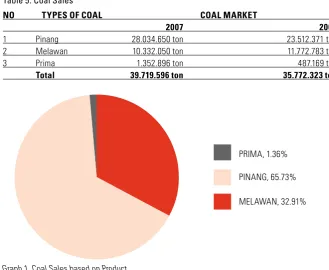
[image:30.595.51.381.157.427.2]KPC’s Coal Sales in 2008 reached 35,772,323 tons.
Table 5. Coal Sales
NO TYPES OF COAL COAL MARKET
2007 2008
1 Pinang 28.034.650 ton 23.512.371 ton
2 Melawan 10.332.050 ton 11.772.783 ton
3 Prima 1.352.896 ton 487.169 ton
Total 39.719.596 ton 35.772.323 ton
PRIMA, 1.36%
PINANG, 65.73%
MELAWAN, 32.91%
[image:30.595.54.389.482.724.2]Graph 1. Coal Sales based on Product
Table 6. Coal Sales based on Region
NO SALES AREA COAL SALES
2007 2008
1 Japan 9.051.926 ton 10.033.998 ton
2 Europe 2.278.692 ton 5.529.058 ton
3 Taiwan 7.553.598 ton 4.972.814 ton
4 India 2.932.631 ton 3.842.868 ton
5 Indonesia 2.726.875 ton 3.332.973 ton
6 Korea 3.292.536 ton 1.863.617 ton
7 China 1.691.242 ton 127.561 ton
8 Malaysia 1.077.975 ton 1.700.578 ton
9 Thailand 710.474 ton 1.291.308 ton
10 Filipine 1.124.927 ton 842.617 ton
11 Chili 1.133.491 ton 430.418 ton
12 Pakistan 85.002 ton 176.315 ton
13 Hong Kong 2.190.946 ton 1.628.198 ton
14 UK 200.854 ton -
15 USA 474.912 ton -
16 Brazil 216.569 ton -
17 Mediterranean 2.976.946 ton -
Total 39.719.596 ton 35.772.323 ton
ABOUT KPC
TAIWAN, 13.90% EUROPE, 15.46% JAPAN, 28.05% OTHERS, 22.53% INDONESIA, 9.32% INDIA, 10.74% KOREA, 5.21% CHINA, 0.36% PAKISTAN, 0.49% CHILI, 1.20% PHILIPPINES, 2.36% THAILAND, 3.61% HONG KONG, 4.55%39
36 35 35
25 23 22 19 18 29 20 12 12 2.86 2.59 2.43 2.31 1.51 1.36 1.11 0.93 0.76 0.75
0.45 0.27 0.23
5 10 15 20 25 30 35 40 45 N o . o f L T I 0.5 1 1.5 2 2.5 3 3.5 LT I ( p e r 1 ,0 0 0 ,0 0 0 M a n h o u rs ) LTI LTIFR
Graph 2. Coal Sales based on Region
OCCUPATIONAL HEALTH AND SAFETY
KPC is committed to always keep the health and safety of its employees. Various regulations have been implemented to achieve that goal. 11 (eleven) types of potentially fatal jobs were identified and reviewed either in standards, performance procedures, audit criterion and training based on OHSAS 18001. Occupational Safety standard regulations which are known as “Golden Rules” have been implemented as of the last few years.
In implementation in the field, a number of employees every day undertake to directly handle issues of employees’ Occupational Health and Safety. 306 employees registered as HSE coordinators and officers or 1.6% of 18,578 of KPC’s employees and contractors are involved in this mission. In addition, 121 employees of KPC work as representatives of Occupational Health and Safety who are spread out in each division and the Mining Operations Department. HSE management is a part of the responsibility of this management’s staff.
The performance of KPC’s Occupational Health and Safety (K3) program in 2008 was blemished with the fatal incident of one of KPC’s employees. Meanwhile, 2008 was marked with a number of satisfying achievements such as the reduction in level of the Lost Time Incident Frequency Rate of around 15% from 0.27 in 2007 becoming to become 0.23 in 2008. This achievement is better if it is compared with the incident frequency that caused the Lost Time Incident Frequency Rate (LTIFR) in Rio Rinto Group coal mining that reached 2.5 in 2008 (data gathered from Rio Tinto plc - Annual Report and Financial Statement - Safety). This achievement is also better than if it is compared with broad surface coal mining in USA that reached 3.30 in 2008, that the figure was derived from 23 coal companies in which every company on the average employed 9,448 people (data from US Department of Labor and MSHA). The level of malignancy incidents which caused work time loss decreased from 7.76 (2007) to 6.54 (2008) and was accompanied by a reduction in the number of days lost because of accidents from 342 days (2007) to 335 days (2008). The trends of the number and level of Lost Time Incident Frequency Rate are shown in the following graphic.
ABOUT KPC
Another achievement was the creation of a new record 24,353,202 safe man hours of KPC and its contractors without a lost time accident or equivalent with 175 days (9 April–29 September 2008). The previous record was 14,012,673 man hours or equivalent with 116 days (31 May–22 September 2007)
Of the lost time incidents, 25% happened to KPC’s employees (including 1 fatal), while 75% occurred to the contractors’ employees. The causes of the accidents varied but the most of them were job procedure or job safety analysis noncompliance.
Any existing serious work accident or lost time accident encourages KPC to conduct several training programs related to Occupational Health and Safety issues. It is conducted to help the employees along with their family to prevent the accident occurring. The types of conducted training are HSE Induction, Job Safety Analysis, Human Element (Fatigue Management for the employees), Fatigue Management for Spouses, Change Management, Accident Investigation (Basic and Advanced), Safety Risk Assessment, Safety Inspection, CPR (Cardio Pulmonary Resuscitation), First Aid, Conducting Safety Talks, Awareness for Working at Heights, Working Near Water, Electrical Safety and Confined Space, Escort Training, Working at Height for Workers, Fire Extinguishers, Fire Warden, Safety Behavioral Observation Program (Prinasa), and Safety System Database (Prinutama). Besides training, KPC also conducts various HSE campaigns such as daily safety messages through Radi