• Tidak ada hasil yang ditemukan

Jurnal Ilmiah Peuradeun | Copyright © 2018 SCAD Independent, All Rights Reserved JURNAL ILMIAH PEURADEUN The International Journal of Social Sciences

N/A
N/A
Protected

Academic year: 2019

Membagikan "Jurnal Ilmiah Peuradeun | Copyright © 2018 SCAD Independent, All Rights Reserved JURNAL ILMIAH PEURADEUN The International Journal of Social Sciences"

Copied!
21
0
0

Teks penuh

(1)

The Development of Management Model Program of Smart Productivity Teacher Partnership with Business World and Industrial World (DUDI)

Romi Siswanto; Sugiyono; Lantif Diat Prasojo

Educational Revitalization of the Children with Special Needs at an Inclusive School

Made Kerta Adhi & Ni Putu Seniwati

Project-Based Learning Evaluation from Students’and Supervisors’ Perspectives: A Qualitative Research at Polytechnic Malaysia

Ramlee Mustapha; M. Ichsan M. Nasir; Sadrina

Learning Local Wisdom for Character Education: an Insight from Choblong Sundanese Village in Indonesia

Ira Miranti; Nurjanah; Nina Dwiastuty

Cultural Traditions of Khanduri Blang in Reubee Village Aceh, Indonesia

Muhammad Arifin& Abdul Manan

Higher Education Transformation: To what Direction?

(A Look at the transformation of Ar-Raniry State Islamic University) Safrul Muluk& Habiburrahim

The Implementation of Village Fund Policy in Improving Economy ofVillage Society

(Case Study at Kuala Sub-district of Nagan Raya District) Ar Royyan Ramly; Wahyuddin; Julli Mursyida; Mawardati

The Teacher Movement in Indonesia in Post Soeharto Era: Between Democratic Citizenship and Civic Engagement

Rakhmat Hidayat

The Attitude of the Language of Ex- Combatans and the Victims of Armed Conflict of Aceh Post-MoU Helsinki

Sanusi; Azwardi; Rusli Yusuf;Muhammad Iqbal

The Actor Domination in the Collaborative Governance in the Lampung Province Central Government Displacement Policy: An Ambivalent

Maulana Mukhlis; Nasrullah Nazsir; Mudiyati Rahmatunnisa; Neneng Yani Yuningsih

Cultural Activities, Legal and Public Policy of Bali On Desa Pakraman and the Response of Prajuru the Traditional Village Management Kuta

I Wayan Wesna Astara

An Analysis of the Implementation of Islamic Brotherhood Value on the Students of MTsN Jeurela Sukamakmur

(2)

The International Journal of Social Sciences p-ISSN: 2338-8617/ e-ISSN: 2443-2067

www.journal.scadindependent.org

JIP published by SCAD Independent. All articles published in this journal are protected by copyright, licensed under a CC-BY-SA or an equivalent license as the optimal license for the publication, distribution, use, and reuse of scholarly works. Any views expressed in this publication are the views of the authors and not of Editorial Board Jurnal Ilmiah Peuradeun (JIP) or SCAD Independent. JIP or SCAD Independent cannot be held responsible for views, opinions and written statements of authors or researchers published in this journal. The publisher shall not be liable for any loss, actions, claims, proceedings, demand, or costs or damages whatsoever or howsoever caused arising directly or indirectly in connection with or arising out of the use of the research material. Authors alone are responsible for the contents of their articles.

JIP indexed/ included in MAS, Index Copernicus International, Google Scholar, OAJI, Crossref, BASE, DRJI, CiteFactor, DAIJ, ISJD, IPI, Sinta, INFOBASE INDEX, GIF, Advanced Science Index, IISS, ISI, SIS, ESJI, ASI, SSRN, Academia.Edu, ResearchGate, Academic Key, PSI and others. JIP Impact Factor ICR by ISI: 0.479, Impact Factor ICV by Copernicus: 100:00, and Global Imfact Factor 0.543.

Jurnal Ilmiah Peuradeun (Media Kajian Ilmiah Sosial, Politik, Hukum, Agama dan Budaya), the International Journal of Social Sciences, is a leading peer-reviewed and open-access journal, which publishes scholarly work, and specializes in the Social Sciences, consolidates fundamental and applied research activities with a very wide ranging coverage. This can include studies and reviews conducted by multidisciplinary teams, as well as research that evaluates or reports on the results of scientific teams. JIP published 3 times per year (January, May, and September) with p-ISSN: 2338-8617 and e-ISSN: 2443-2067. Jurnal Ilmiah Peuradeun has become a CrossRef Member. Therefore, all articles published will have unique DOI number, and JIP also has been accredited by the Ministry of Research Technology and Higher Education Republic of Indonesia (SK Dirjen PRP RistekDikti No. 48a/KPT/2017). This accreditation is effective from October 30, 2017 until October 30, 2022.

Vol. 6, No. 3, September 2018

Page: 507-524

The Actor Domination in the Collaborative Governance in the Lampung Province Central Government Displacement Policy: An Ambivalent

Maulana Mukhlis1; Nasrullah Nazsir2; Mudiyati Rahmatunnisa3;

Neneng Yani Yuningsih4

1 Faculty of Social and Political Sciences, University of Lampung, Bandar Lampung, Indonesia 2,3,4Faculty of Social and Political Sciences, University of Padjadjaran, Bandung, Indonesia

Article in Jurnal Ilmiah Peuradeun

(3)

Published by: SCAD Independent SCAD Independent is an independent research institute on democracy in Aceh, established in 2010 with the Notary Deed No. 01, dated 29 October 2012.

Editorial Address:

SCAD Independent, Aff. Gadjah Mada University, Yogyakarta, Indonesia Managing Editor:

Amrullah

SCAD Independent, Aff. Ar-Raniry State Islamic University, Banda Aceh, Indonesia Regional Managing Editor for Asia-Pacific:

Miftachul Huda

Universiti Teknologi Malaysia, Skudai, Johor, Malaysia Associate Editors:

Tabrani. ZA

SCAD Independent. Aff. Islamic University of Indonesia, Indonesia Zulfadli

SCAD Independent, Aff. Serambi Mekkah University, Banda Aceh, Indonesia Syahril el-Vhanthuny

SCAD Independent, Aff. Serambi Mekkah University, Banda Aceh, Indonesia Istiqamatunnisa

SCAD Independent, Aff. Ar-Raniry State Islamic University, Banda Aceh, Indonesia Hijjatul Qamariah

SCAD Independent, Aff. Deakin University, Melbourne, Australia Executive Editors:

Jason K. Ritter

School of Education, Duquesne University, USA Andriansyah

SCAD Independent, Aff. Western Oregon University, USA Fauza Andriyadi

SCAD Independent, Aff. Sunan Kalijaga State Islamic University, Yogyakarta Khairul Halim

SCAD Independent, Aff. Ar-Raniry State Islamic University, Banda Aceh, Indonesia Paul de Lacy

Linguistics Department, Rutgers University, United States Kamaruzzaman Bustamam-Ahmad Ar-Raniry State Islamic University, Indonesia

Romi Siswanto

The Ministry of Education and Culture of the Republic of Indonesia, Indonesia Fikri Sulaiman Ismail

Indiana University of Pennsylvania, USA Wang Yean Sung

(4)

THE ACTOR DOMINATION IN THE COLLABORATIVE GOVERNANCE IN THE LAMPUNG PROVINCE CENTRAL GOVERNMENT

DISPLACEMENT POLICY: AN AMBIVALENT

Maulana Mukhlis1; Nasrullah Nazsir2; Mudiyati Rahmatunnisa3; Neneng Yani Yuningsih4

1Faculty of Social and Political Sciences, University of Lampung, Bandar Lampung, Indonesia 2,3,4Faculty of Social and Political Sciences, University of Padjadjaran, Bandung, Indonesia

Email: [email protected]

Received: Apr 12, 2018 Accepted: Aug 25, 2018 Published: Sept 28, 2018

Article Url: http://journal.scadindependent.org/index.php/jipeuradeun/article/view/272

Abstract

The objective of this article is to explain the ambivalent existence related to actor domination in the collaborative governance. As a precondition for the collaborative governance process, domination is a factor which must be prevented to maintain equality and mutual trust between actors. Therefore, the core question of this article is that is it true that the actor domination has negative effects to the collaboration sustainability? This article was written by using qualitative method. Data were collected with deep interviews, document studies, and literary studies and data were analyzed by using descriptive technique. The case of Lampung province central government displacement in 2004-2016 was made to be a research basis to answer the core question. The research finding showed that actor domination was dilemmatic. The collaboration

process was in fact very dependent on the main actor who “control” the collaboration process, both in the planning stage (through Planning Coordination Team) and in implementation stage (through forum of Region Management Agency). This finding was very important because in spite of violating equality between actors, the actor domination in this policy case was beneficial. The inequality which was assumed to produce mutual untruths was not proven. In conclusion, actor domination is an ambivalent; something that must be prevented, but it then becomes a key factor. In what situation this actor domination gives a meaning? This article tries to answer it.

Keywords: Actor Domination, Collaborative Governance, Ambivalent, Lampung Province

Copyright © 2018 SCAD Independent Jurnal Ilmiah Peuradeun

All Rights Reserved Vol. 6, No. 3, September 2018

(5)

A. Introduction

Collaborative governance in the last two decades has emerged as an

important and ideal approach in the process of government governance

and public policy. Sorensen and Torfing (2012) takes the collaborative

governance as a new idea and practical innovation for a strength in the

public sector and a trigger for better decision making process. Kallis,

Kiparsky & Norgaard (2009) suggest that collaborative governance is an

adaptive management to ensure the implementation and sustainability of a program.

The process of government governance and public policy is called using the collaborative governance when it is characterized with six elements; the initial role of the government, the entering of non-state actors, mutual decision making, formal organizing, obtaining consensus, there is an issue to collaborate both concerning policy and public service (Ansell and Gash, 2007). These six

characteristics in the collaborative governance also become parts of good

governance principles, so that collaborative governance is an empiric practice of the

good governance concept. According to Davis and Keating (2000), the good

governance concept explains about how the government governance system

runs with wider role scopes, not only including the government alone, but also including non-government organizations and civilian. It means that the interactions between actors (government and non-government organizations) in collaboration will contribute the good governance realization.

Empirically, the collaborative governance implementation in varying

countries and in Indonesia regions has been widely conducted to produce

policies. The majority cases show that collaborative governance is an

approach which provides positive implications to better outputs and

outcomes. Collaborative governance is able to recover varying pathology of

policies, from the sides of regulation politicization, over budgeting or limited budgeting, and policy implementation failures (Achinike & Ogbonna, 2016).

(6)

district of South Lampung district. Even though not directly proclaiming using collaborative governance, this policy is an example of activity referring

to collaborative governance criteria according to Ansell and Gash’s (2007).

This policy was characterized by the role or initial idea from the Lampung governor, there were private parties and public involvements, mutual decision making through role sharing between actors, formal organizing through official forum for Planning Coordination Team and Region Management Agency, obtaining mutual consensus between parties by the issuance of Regional Regulation Number 2 in 2003 concerning Lampung New City Development, and there was an issue of Lampung province central government displacement policy to collaborate.

However, beside the collaborative governance popularity, Ansell and Gash (2007) suggests important notes for the challenges arising in the collaborative governance; it takes a long time, the equality and trust issues, and interdependence between actors. Meanwhile Plotnikof (2015) in the perspective of public manager role emphasizes the existence of challenges

implied in the collaborative governance; the social dynamics concerning

ambiguity and complexity of membership, relationship tension between stakeholders, and domination of formal power structure.

One of important challenges according to Ansell and Gash as well as Plotnikof is about domination or inequality; between actors or by formal power structure to other actors. Domination results in inequality and inequality produce distrust. In a long term, distrust may produce seeds of conflicts. Thompson (in Rahim, 2001:1) suggests that a conflict arises because of perceptions between people interests which cannot be mediated as a result of mutual distrust in a cooperation.

The correlation between conflict, distrust and inequality in a collaboration begins from an actor domination. This statement became an ontology in this research, because the policy to displace Lampung province central government in one side was called as empirical practice

of collaborative governance and in another side was assumed to be the

anticipatory government from the regional head, and in 2014 it was stopped

(7)

governance was not proven. Was there because of the actor domination in stopping the Lampung province central government displacement policy? The answer of that question will be disclosed.

B. Literary Review

1. Collaborative Governance rationality in a policy

The central government displacement policy is very relevant to do and it is based on the facts of the urban inability (physical environment) in fulfilling its citizen needs and the regional government ability in serving public is not optimal. According to Sadyohutomo (2009), the location of offices in an integrated area will be influential to the public to be easily accessing public services and this is one of good government administration benchmarks.

Related to reinventing government concept, the regional central

government displacement policy is one of government anticipations to reduce problem pressures before a town is growing bigger and bigger and

more critical in the future. This is in accordance with anticipatory

government concept (prevention rather than cure) from Osborne and Ted

Gaebler (1996). Therefore in the agenda setting perspective, the Lampung

province central government displacement is a rational policy to do. The facts of limited capabilities, resources, and networks which

become supporting factors were truly realized by the agenda setter. This

limitedness awareness encouraged the regional government to cooperate with various parties; other governments, privates, public and civilian communities. The outputs of cooperation in an institutionalized forum produced collaborative cooperation and it contributed positively to obtain the objectives of the program or policy (Purwati, 2016). Therefore, using

collaborative governance approach in the Lampung province central

government displacement policy was a proper selection.

2. The domination challenges in Collaborative Governance

Literary studies show that collaborative governance is potential to

(8)

and even to create public innovations and values. However, the collaborative governance process also has opportunities to be obstructed and its results may not produce expected positive outcomes.

Ansell and Gash (2008) suggest notes about the possibilities of emerging challenges in the collaborative governance; concerning time, trust, and interdependence. Concerning trust and interdependence Ansell and

Gash (2008) suggest that collaborative governance should consider the

interaction effects which are built during collaboration process, such as distrust and interdependence between actors. If one of actors threats to desert from the collaboration, then commitments of the rest of actors may shift, and this will make difficulties to develop sense of belonging, understanding or trust in the next process.

Along with the risk of tension that may arise in the social dynamic, power is also seen as an important challenge in the collaborative governance. It means that formal power structure in the hierarchy should not dominate, but there is togetherness with dynamic strength and ongoing social communication. A power with formal authority, resources, and discursive legitimation, can be a challenge when it dominates from defining roles, meanings, practices, and results of the collaboration.

Domination of formal power structure is characterized by: 1) maintained top-down hierarchy by government when building collaboration with other parties, 2) government still dominates in controlling processes and results, and 3) consensus is not implemented based on cooperation and egalitarian mentalities. Collaboration may fail if participations from groups of interests and other stakeholders are neglected and not needed, so that there is still domination from one actor to other actors (Sarboini, 2016).

3. Consensus: an effort to minimize domination effect

In the collaborative governance, power imbalance problem may

(9)

a common concern about collaborative governance is that, the decision

process may still be dominated by the most powerful actors and interest

pertinent to the situation being addressed”.

This imbalance problem results in difficulties in decision making. To overcome this imbalance problem, the key is by developing the effective collaborative governance, by how facilitating the decision making between different stakeholders. Choi and Robertson (in Susanti, 2016) state that:

“As the size of the forum increase, however, participants are likely to face

greater difficulty making collective decision. A key question for those interested in developing effective collaborative governance systems is how to facilitate decision-making dynamics among diverse stakeholders

confronting complex problems”.

Furthermore, Choi and Robertson (2011) state that consensus can help balancing power between stakeholders. However, by having more resources, information, legitimation, and/or prestige, there will be enough

capacity to build consensus development process for stakeholders’

interests. Choi and Robertson (in Susanti, 2016) exerts:

“The goal of achieving consensus among participants can help to balance

their power, but those with more resources, information, legitimacy, and/or prestige have considerable capacity to shape the

consensus-building process in a direction that favors their interests”.

Based on those two concepts, it can be concluded that collaborative

governance is a complex structure where there is an imbalance possibility

that may occur between stakeholders. Therefore, to obtain consensus in decision making, the roles of facilitators or public managers in balancing power between stakeholders are required. In fact in this point the role of power in the collaboration is debated, concerning where one actor cannot dominate, the role of balancer, and varying interests of other actors.

B. Method

(10)

triangulation and external auditors were asked to review the whole research results.

The qualitative data analysis was started by collecting data with interviewing collaborators and by studying varying documents related to research object, by interpreting, and reporting research results simultaneously. Any information obtained by informants either in oral or written forms were studied comprehensively. This research was not only to uncover the truth, but also to understand that truth. The final step was providing explanation whether there was actor domination during the collaborative governance in the Lampung province central government displacement policy. Answers to that research focus would be the explanatory base whether there was actor domination, its effects, and its relationship to that policy stopping.

C. Research Finding

There were two major findings in this research. Both of them

showed ambivalence toward the actor domination in the collaborative

governance. In one side, the actor domination should be avoided, but in another side it in fact contributed positively the collaboration process sustainability. Therefore, domination from one actor cannot be forever interpreted as an intervention to other actors, but it can be seen as a bigger role than other actors. This utility aspect can be reached when the consensus which has been agreed before is still becoming a common goal.

D. Result and Discussion

1. Consensus: results of Collaborative Governance

(11)

Output of that collaboration process was mutual agreement or consensus. In the context of collaboration done by Planning Coordination Team, the resulted consensus was final planning document and all complementary technical planning documents for provincial central government development. Meanwhile the consensus produced by Region Management Agency was the implementation of provincial central government displacement policy, which in one side the provincial central government should have been displaced in 2014, and in another side there were funding involvements of non-government actors in building non-government office facilities besides funding by the regional government itself.

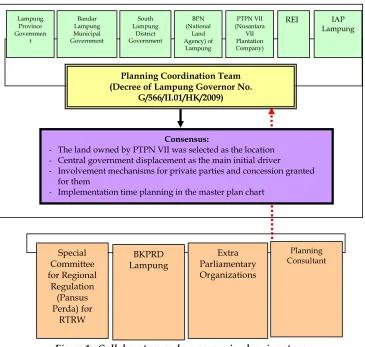
Figure 1: Collaborators and consensus in planning stage Lampung

- The land owned by PTPN VII was selected as the location

- Central government displacement as the main initial driver

- Involvement mechanisms for private parties and concession granted for them

- Implementation time planning in the master plan chart

(12)

Figure 1 shows the Planning Coordination Team as a formal forum in planning stage and it contains of varying actors which produce four

consensuses as the intermediate outcomes. However, there are actors

beyond the collaborators where during collaboration process they also have influences to the consensuses produced by the team.

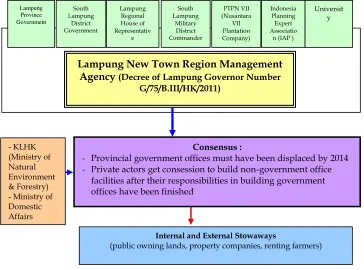
Figure 2 below shows the Region Management Agency as a formal forum in the implementation stage which contains of varying actors and it

produces two consensuses as intermediate outcomes. However, there are

actors beyond collaborators who are politically and administratively having significant influences so that they must be considered in the policy implementation process. There are even stowaways getting benefit from the policy implementation.

Figure 2: Collaborators and consensuses in implementation stage

In these intermediate outcomes there are small wins in the agreement

and acceptance of planning results and progress of policy implementation. In Internal and External Stowaways

(public owning lands, property companies, renting farmers) Consensus :

- Provincial government offices must have been displaced by 2014

- Private actors get consession to build non-government office facilities after their responsibilities in building government offices have been finished Agency (Decree of Lampung Governor Number

(13)

one side, these agreement and acceptance become a capital to improve trust levels between collaborators. In another side, these little wins will be feed backs for collaboration process and encouraging better cycles to build trusts and commitments between collaborators provided there is consistency in the implementation for the emerging collaboration in other aspects.

2. Interdependence and mutual trust between actors

According to Ansell and Gash (2007: 53) collaborative governance

will work optimally to obtain the collaborated goals when the collaborators consider themselves mutually interdependence. Therefore, ideally the collaboration condition in the planning and implementation stages relies on the interdependence. However, some opinion differences and disappointments may arise, but collaboration process will still be able to continue. In this perspective, disappointment, trust, interdependence and motive (interest) are interesting to relate.

Trust between actors in collaboration becomes the requirement for

collaboration success, and actors’ disappointments will reduce trust level.

However, reduced trust level will not immediately become the sole factor of the collaboration failure provided that there is still interdependence between actors to continue collaboration and this interdependence will be maintained by the collaborators for their motives (interests) to obtain.

Trust is very required in the collaboration process, and this refers to Vangen and Huxam (2003) who emphasize that trust is understood as

an expectation of other parties’ behaviors in the future related to the goals.

(14)

Raising mutual trust can be done by carefully assessing the parties from experiences or working histories and their activities in the past. This becomes important because Ansell and Gash (2007: 54) exerts that the history or experiences which is either antagonistic (conflict history) or cooperation can be either inhibiting or facilitating the collaboration. In this historical perspective, there are four considerations to determine the actors must be involved in Lampung province central government displacement policy collaboration, that; 1) the organization should be directly related to authorities in regional development planning, 2) the organization should be assumed being affected by the policy, 3) the organization becomes a prerequisite for the planning success, and 4) the organization possesses competence to design planning.

There were few little conflicts which arose during collaboration process, and this can be seen as latent distrust situation. The actors had different arguments and interests to keep.

In the planning stage, for instance, even though all members of the Planning Coordination Team agreed consensuses that the land owned by Nusantara VII Plantation Company (PTPN VII Persero) was selected for the location, central government displacement as initial driver, there were mechanism for private enrolments and concessions granted for them, and implementation time planning was agreed, but the design problems were interesting to discuss by the team. Provincial government and Regional House of Representative (DPRD) exerted argument that central government development model which was done by Putra Jaya Malaysia

without cut and fill should be made as an exemplary model, so that the

implementation would still maintain the existing land contours in the plantation land owned by PTPN VII (Persero). Meanwhile, Indonesia Planning Expert Association (IAP) and MTI of Lampung argued that

using without cut and fill model could not be immediately implemented

(15)

In the implementation stage, conflict situation between collaborators was intangible. The situation in Region Management Agency was fairly coordinated, so that members of forum were in a common agreement when

they dealt with other parties’ interests beyond the team. Some debates occurred such as when the Malaysian investor’s demand was too big for

asking land concession outside areas which had been agreed as the location for central of offices for their commercial investment in the future.

At the beginning, Malaysian investor was not open to explain types of investments they would enter into, even though finally they disclosed that would use land concession for palm oil plantation investment. This kind of investment was rejected by members of Region Management Agency and Lampung provincial government, because this investment did not have any clear support and relevance to the long term goals of the provincial central government displacement policy.

This fact showed that the conflict that came from different perspectives between collaborators could be overcome by dialogue in the

forum. Differences of actors’ interests beyond the forum were done by not

involving them anymore in the policy implementation. However, a collaboration is a cycle that is very dependent on the previous cycle. Conflict coming from perspective or even interest differences of the parties could be a pre-condition for building a collaboration, if each party feels interdependency to other parties to obtain their respective interest. Ansel and Gash (2007: 553) exerts that if there is any previous antagonistic history between collaborators, then the collaboration will not be successful unless there are high interdependences between collaborators and there are positive steps to do to restore lower trust levels between collaborators.

(16)

2. Actor domination: advantage or disadvantage

The story in sub chapter 1 illustrates that the collaboration process

will be much determined by whether there is a major actor who “controls”

the collaboration process. Furthermore, even though there were Planning Coordination Team and Region Management Agency as official forums for the collaboration, in fact the Lampung province government as an institution or the governor as the individual became the major actor in maintaining the collaboration sustainability. Furthermore, even though there were Planning Coordination Team and Region Management Agency as formal forum for collaboration, in fact the Lampung province government as the institution or its governor as individual was the major factor in maintaining the collaboration process sustainability.

This finding is important to discuss, because it implicitly violates the necessity of equality between actors and no interdependence between the actors in the collaboration. In domination of one of actors and dependence of other actors to that actor is very big. There is a theory that the interdependence levels between actors will determine the collaboration success, but in the case of Lampung province central government displacement policy, this was not proven.

The role of governor Sjachroedin ZP as the major actor showed his

big domination – even his rush – since that idea was delivered through

(17)

During planning process, another domination was from planner consultant. The dynamics of many interests in planning required communication process. This emphasized the planner role as communicator of planning products. Planner listened, accommodated, conducted mediation, and finally conducted socialization concerning planning products both in parliamentary and extra-parliamentary environments. Any perspective that the planner selected, when it came into complex political processes and situations, the planner function as a communicator took important roles to overcome interest differences. Because information was the source of power for each actor which could improve political position and capacity of each actor, planner had a strategic position when planner played

role to provide information because planner’s scientific abilities and

arguments that he/ she could provide.

That role was played by the planner with authority granted by Lampung province government to design New Town Development Master Plan. The story above proves that the role of planner in drafting master plan document is very big. This is understandable because the planner knows substantially about the plan documents he/she makes and detailed policy contents to implement.

Related to Forester theory (1989, in Mukhlis, 2009), it provides five

perspectives which explain the planner’s role in a planning with many political nuances, so that the planner’s position in the context of Lampung

new town development policy can be seen. First, the planner as a technician, where the power lies on the technical information related to data sources and used analysis method. This perspective uses the most traditional idea from planning, where the planner acts as a problem solver and the planner is not directly involved in the politic.

Second, the planner as an increment list who sees information as

the source of power because information answers the organization’s need,

(18)

as the source of information enables the planner to select information that the planner wants to deliver.

Third, the planner as liberal advocate who sees information as the

source of power because responding varying needs from a political system. Information can be used by the unrepresented or unorganized groups to improve participation capacities in planning process. The planner has a role as an assistant for unrepresented public groups to provide technical recommendation and considerations to strengthen capacities and participation levels.

Fourth, the planner as a structuralist, where information become a media and device to obtain or to strengthen legitimation of existing power structure and to increase public attention to an issue. A planner does not have power, but the planner can maintain the existing power and provides a quo-status in the existing political system. The last, the planner as a progressive power where information is used as a tool to improve public participation and the avoid legitimation which is made by the existing structure. The planner has a function to organize public action to obtain existing power by organizing existing information to prevent misinformation and information manipulation which are conducted by groups with bigger political capacities.

The planner position is in fact becoming an analyst (technician role) which exists and only provides technical analysis for the rulers to strengthen arguments for issued policies. In this position, the planner acts as a problem solver and acts not to be directly involved with politic. However, the fact is that there is a too big domination from one actor, who is merely a supporting actor, that is the planner, where previously he/she serves only as an analyst who provide technical assistant (technician), but then becoming the most dominating actor in the plan substances by answering all needs and supporting bureaucracy function, so that the planner goes beyond his/her authority limit and he/she can be said as an increment list; the ruler of the policy.

(19)

efforts of maintaining collaboration sustainability. Domination from one party to another will also provide benefit when this domination is in accordance with the possessed power and resources or specialties that are not possessed by other actors, so that domination can mean a strategy to cover a shortfall of collective actions in the collaboration.

E. Conclusion

The story about collaborative governance in the Lampung province

central government displacement policy shows that there is an actor domination in it. This actor domination is categorized into function domination perspective and structure domination. The function domination is defined by the control of substances and rationalities of the policy contents from planning actor, so that other actors will come to agreement and understanding that the rationality of the policy goals is

“binding” them in the collaboration. The structure domination means

control of actors or government formal power structure in order to facilitate transfer of resources and incentives upon the authorities possessed by the government power structure.

There are two conclusions in this research. First, the relation between actor domination and trust level, conflict, and the policy success or failure is actually confirmed but it is not immediately having negative effects. Second, domination of one of actors is still needed in the collaboration process to ensure that the collaboration process can keep going on, because domination is different with intervention. The question is that in which limit this domination occurs? Consensuses produced in a

collaboration are truly the “binder”. Therefore, consensuses should not

only be about “common goals to reach”, but they should also be about “in which limits that respective collaborators should take roles” with their

own respective power and resources.

In this context, the actor domination factor as a challenge in

collaborative governance finds it’s ambivalent. Theoretically, the domination

(20)

collaboration inhibition. However, factually the actor domination in contrary provides benefits when this actor domination is not defined as intervention, but as a bigger role by ability and resource than other actors for the sake of collaboration process sustainability.

Bibliography

Achinike, H., & Ogbonna, S. (2016). Federalism Critical Arguments as The

Transfigurations of Nigerian Federalism. Jurnal Ilmiah

Peuradeun, 4(3), 369-382.

Ansell dan Gash. (2007). Collaborative Governance in Theory and

Practice. Journal of Public Administration Research and Theory.

Published by Oxford University Press. JPART 18, 543-571.

Creswell, John W. (2010). Research Desigin, Pendekatan Kualitatif, Kuantitatif, dan Mixed (Edisi Ketiga). Terjemahan Akhmad Fawaid. Yogyakarta: Pustaka Pelajar.

Davis, G, & Keating, M,. (2000). The Future of Governance Theory. NSW

Australia: Allen n Unwin.

Kallis, Giorgos, dkk. (2009). Collaborative Governance and Adaptive

Management. Journal of Enviromental Science and Policy. Published

by Elsevier. Vol 12(2009), 631-643.

Mukhlis, Maulana. (2009). Analisis Kebijakan dalam Perencanaan Kota Baru Lampung di Natar. Tesis Magister Ilmu Pemerintahan Universitas Lampung. Bandar Lampung: Program Pascasarjana Universitas Lampung.

Plotnikof, Mie. (2015). Challenges of Collaborative Governance: An

Organizational Discourse Study of Public Managers’ Struggles with

Collaboration Across the Daycare Area. PhD Series 26.2015. Copenhagen, Denmark: Copenhegen Business School.

Purwanti, Nurul D. (2016). Collaborative Governance (Kebijakan Publik dan

Pemerintahan Kolaboratif, Isu-Isu Kontemporer). Yogyakarta: Center for Policy & Management Studies FISIPOL Universitas Gadjah Mada.

Rahim, Afzalur. (2001). Managing Conflict in Organizations. London:

(21)

Sadyohutomo, Mulyono. (2009). Manajemen Kota dan Wilayah, Realita & Tantangan (Edisi 2). Jakarta: Bumi Aksara.

Sarboini, S. (2016). Performance of Employees and Impact on Promotion of Position. Jurnal Ilmiah Peuradeun, 4(1), 103-114.

Sorensen, Eva, & Torfing, Jakob. (2012). Collaborative Innovation in The Public Sector. The Public Sector Innovation Journal. Vol 17(1) 2012, 1-14.

Vangen, Siv & Huxam, Chris. (2003). Nurturing Collaborative Relations: Building Trust in Interorganizational Collaboration. Journal of Applied Behavioral Science. Vol. (39) 2003, 35-49.

Gambar

Figure 1:  Collaborators and consensus in planning stage
Figure 2: Collaborators and consensuses in implementation stage

Referensi

Dokumen terkait