Key Knowledge Generation
Publication details, including instructions for author and Subscription information:
http://kkgpublications.com/social-sciences/
Model of Hope: Leading Learning among the
Indigenous Orang Asli Students
MISNATON RABAHI 1, HAMIDAH YUSOF 2, MARINAH AWANG 3
1, 2, 3 Sultan Idris Education University, Malaysia
Published online: 29 February 2016
PLEASE SCROLL DOWN FOR ARTICLE
This article was downloaded by:
Publisher: KKG Publications
Registered office: 18, Jalan Kenanga SD 9/7 Bandar Sri Damansara, 52200 Malaysia
To cite this article: Rabahi, M., Yusof, H., & Awang, M. (2016). Model of Hope: Leading Learning among the Indigenous Orang Asli Students. International Journal of Humanities, Arts and Social Sciences, 2(1), 1-12.
DOI: https://dx.doi.org/10.20469/ijhss.2.20001-1
To link to this article: http://kkgpublications.com/wp-content/uploads/2016/2/Volume2/IJHSS-20001-1.pdf
KKG Publications makes every effort to ascertain the precision of all the information (the “Content”) contained in the
publications on our platform. However, KKG Publications, our agents, and our licensors make no representations or warranties whatsoever as to the accuracy, completeness, or suitability for any purpose of the content. All opinions and views stated in this publication are not endorsed by KKG Publications. These are purely the opinions and views of authors. The accuracy of the content should not be relied upon and primary sources of information should be considered for any verification. KKG Publications shall not be liable for any costs, expenses, proceedings, loss, actions, demands, damages, expenses and other liabilities directly or indirectly caused in connection with given content.
2016, 2(1), 1-12
MODEL OF HOPE: LEADING LEARNING AMONG THE
INDIGENOUS ORANG ASLI STUDENTS
MISNATON RABAHI 1*, HAMIDAH YUSOF 2, MARINAH AWANG 3
1, 2, 3 Sultan Idris Education University, Malaysia
Keywords:
Indigenous Orang Asli Education Leading Learning
Learning Disengagement Grounded Theory Benchmarking
Received: 2 October 2015 Accepted: 19 December 2015 Published: 29 February 2016
Abstract. Orang Asli is the name attributed to the indigenous population originating from the hinterland of Peninsular Malaysia. Previous researchers have indicated substantial learning disengagement among the Orang Asli students. Prevalent dropouts and absenteeism were attributed to issues related to school, teachers, learners, parents, and communities. Perspectives that have been forwarded are mainly those of school heads, teachers, parents, and head of the communities; few are those that represent learners. In contrast, this paper focuses on how some others among these students have been able to complete the schooling process and beyond, successfully, despite the oft cited challenges and barriers. This paper presents a research in-progress that
investigates the situation from a ‘hope’ perspective. The research is conducted qualitatively following the
Grounded Theory method. Sampling was purposeful, within the context of theoretical sampling following the Grounded Theory approach. To-date, data have been gathered through unstructured interviews with fourteen (14) participants who have reached tertiary level education. This paper however, present the initial data gathered from fieldwork and interviews with the first participant, which sets the scene for the subsequent research process. The final findings are expected to provide an in-depth knowledge of the leading learning process among the successful Orang Asli students; providing baseline and benchmarks for students, parents, teachers, schools, community, and policy makers to consider for the betterment indigenous education. Finally, the study will also contribute to the body of literature that supports hope and achievement despite the deficit, among minority, indigenous community.
© 2016 KKG Publications. All rights reserved.
INTRODUCTION
Educational achievement is an important element of a nation’s indicator of progress. OECD (2004) argues that, “the prosperity
of countries now derives to a large extent from their human capital, and to succeed in a rapidly changing world, individuals
need to advance their knowledge and skills throughout their lives”
(p.3). This implies the need for a nation to seriously ensure that its population has facilitated equal access to quality education. To
this end, the Malaysian Government is committed to “Education for All (EFA)” (KPM, 2008; Md. Nor, et al., 2011). Malaysia’s
achievement in basic education has been highlighted by Malaysia,
(2011) in its report on the country’s achievement as assessed against its millennium development goals (MDGs). In primary
education, Malaysia’s goal is to achieve universal primary
education and complete a full course of primary schooling by
2015. As at 2010, the MDGs Report indicates that at the nation’s
level, 99% pupils starting grade 1 reached last grade of primary schooling (Malaysia, 2011). The indicator provides evidence of national achievement in universal primary education; the country however needs to take into account the pockets of underachievers among the minority communities and the disadvantaged groups.
* Corresponding author: Misnaton Rabahi
E-mail: [email protected]
Background of the Study
students, guided by the following initial research questions: pioneering initiative. In this study, he narrated an interesting pass-it-on game, played out in the following scenario:
Pupil absenteeism is another obstacle to the implementation of the initiative. Throughout the site visit period, it was observed that about 5 to 6 pupils were absent during the morning roll call. Every day, the on-duty teacher would have to seek these pupils at their homes. Sometimes, the teacher would have to wake the pupils and wait for them to get ready to go to school. Teachers believe lack of interest among parents and pupils means it is impossible to maintain high standards at the school. The same lack of commitment was observed during English night classes and cultural performance training sessions. Some parents blame
their children’s attitude saying that they have tried everything to
make them go to school. While others, especially the parents of female pupils believe that education will not take them anywhere. Pupils, on the other hand, cite too much homework, strict teachers, uninteresting activities and tiredness as some of the reasons for staying away from school (Noora, 2012, p. 98). The above observation shows teachers attributing the cause of the problem to parents and pupils; parents to the children (pupils); and pupils back to their teachers. The scene of this vicious circle is sited at an Orang Asli school that was part of the CoEP
initiatives. The initiative was the Government’s effort to enable a
school to excel in a specific domain through comprehensive provisions that support its requirements. The complex nature of the situation warrants a more deliberate examination of how education as the nation envisioned can be accepted and adopted
as part of the community’s daily routine. The problem is despite support from the government and other agencies, why our Orang Asli students are still underachieving and remain disengaged from school.
This study explores a different route in order to understand the problem. We anticipate that underachievement and learning disengagement can be explored from the perspective of how learning is led. To initiate the research process, we will adopt a simple definition of leading learning as gleaned from the
Webster’s dictionary (Neufeldt & Guralnik, 1994). Webster
defines leading as the action of one that leads, whilst learning as the acquiring of knowledge or skill. Hence, for a start, leading learning in this study is defined as the action of one that leads the acquiring of knowledge or skill for self or for others
Purpose of the Study
The main purpose of the study is to explore, understand, and generate propositions on how the learning process is led among the Orang Asli students that contributes towards successful progress in primary and subsequent schooling. The initial intent is to study the process of leading learning among the Orang Asli
How Orang Asli students lead their own learning?
How Orang Asli parents lead their children in learning?
How teachers lead the learning of Orang Asli students?
How school heads lead the learning of Orang Asli students?
THEORETICAL CONSIDERATIONS
Theoretical considerations for this study are based upon review of the literature, summarized for the purpose of this paper under three key models: model of deficit, model of culturally responsive pedagogy of relations and a proposed model of hope.
Model of Deficit
Generally, the deficit model in education forwards the idea that problems of dropouts and learner disengagement are initially due
to the lack of many things from the student’s side of the divide
(Valencia, 2010). This model sees diversity in lifestyle, language, ways of learning, as problematic and views the deficiencies of poor, and minority group students, their families and communities
as the main causes of students’ school problems and academic
failure (Valencia, 1997; 2010).
Similarly, the deficit model also is reflected among Orang Asli students, in which past research on underachievement and dropouts have highlighted several reasons for the problems, mainly: fear of public examinations, lack of interest in schooling and attitude, poverty, implementation failure, logistic issues – location; accessibility, family mindset, parental involvement,
curriculum, teacher’s role and preparation; pedagogical skills,
school’s role, the quality of leadership of school administrators,
the school climate, and social cultural milieu of the Orang Asli society (Nicholas, 2009; Kamaruddin & Jusoh, 2008; Mahmud, Amat & Yaacob, 2009; Md Nor et al., 2011; Noora, 2012). To summarise, the literature indicates that, among others, lack of interest in schooling, attitude, family mindset, parental involvement the social cultural milie of the Orang Asli society have been identified in the continuing educational problems of Orang Asli students, reflecting a key feature in the deficit theory (model) of education. No doubt this perspective has triggered many initiatives for on-going improvement, but these reports also indicate that there are still plenty of challenges, hence offering us the opportunity to explore a new approach of looking at the situation.
theorizing as a way of explaining Maori students’ educational achievement levels,” and second, “to take an agentic position in
their theorizing about their practice,” (Bishop, et al., 2011b, p.13). In an agentic position, “teachers have more agency … meaning more freedom to act,” (Bishop, 2007) , in which the key issues
include how teachers identify and challenge existing belief about their students, embrace the opportunity to effect change, believe that they can and know how to make a difference, build relationship with and build self-belief in the students.
In brief, Bishop, et al. (2007: 2011a) forwarded a theory of a Culturally Responsive Pedagogy of Relations that emphasises power sharing, culture, interactive dialogic and spiral learning, commitment to common vision for excellence in educational outcomes (Cummins, 1995; Gay, 2000; Sidorkin, 2002; Villegas & Lucas, 2002; Bishop, et al., 2007). The Maori students showed improvement over the years as a result of the above approach. Although, their research focus was that of the secondary years (Year 9 and 10), this study provides key lessons learned and hope for the improvement of Orang Asli education in this country. Using benchmarking approach (Zairi & Leonard, 1994; Moreland, Jawaid & Dhillon, 2000; Jawaid, 2014), selected good practice from this Maori research has been considered for the present study.
A Multi-Disciplinary Perspective: A Model of Hope
School is an exciting place for some, a constraining place for others. There is no choice for the latter when school has become
‘the’ place for acquiring knowledge and skills. From an Orang
Asli perspective, Nicholas (2009) argues that, education to an Orang Asli is about being a good person; in contrast to the official focus of education as a human capital development tool, which is
to prepare students for “the challenges of 21st century economy”
(KPM, 2013), p. E-9). Thus, despite the many initiatives carried out by the Government; achievement remains a problem (Md Nor, et al., 2011; Noora, 2012, DPM, 2012).
The review on educational problems of Orang Asli children provides pertinent information on its contributing factors. However, past initiatives and programs have focused primarily on improving factors and provisions related to accessibility,
infrastructure, facilities and teachers’ teaching skill, along with
attempts to provide a more meaningful curriculum for indigenous children. Less focus is noted on the learning process of the children and the children as learners. Scholtes (1998) argues that education is about leading learning. Hence, the entire community of individuals associated with the education of Orang Asli children and students can be envisaged as comprising individuals leading own learning and that of others.
Thus, based upon the above review, the Orang Asli educational issue is a phenomenon that we intend to view and examine from
quality management perspective with broader considerations of other associated perspectives. This multi-disciplinary approach assists in the development of shared meanings of the concepts, approaches and practices across the various disciplines. Our model draws upon examination of the following theoretical perspectives: quality management, learning organization, and language learning and minority education.
First, the discipline of quality management is built upon the theory that everything can be better. Deming’s theory of management is rooted in the belief that everyone is educable (Deming, 1986; Tribus, 1994). Doherty (1994), UNICEF (2000), OECD (2004), Hallinger and Heck (2010), Leithwood, Louis, Wahlstrom and Anderson (2010), Tikly (2010) emphasise, that quality is about - customer focus, leadership, people involvement, understanding process, systems approach and continuous improvement. Taking our cue from this perspective, quality in learning must focus on continuous improvement, in which leadership is a major driver of quality education and management. Second, what makes the learning organization model relevant in this study is the systems approach to learning. From Senge (1990) and his mentors (Argyris, 1982; Argyris & Schon, 1978), it is clear that real learning is generative learning, beyond that of adaptive learning. And generative learning is only possible when
one learns how to learn, and lead one’s own learning. Thus, in the
context of this research, the systems approach will enable the researchers to see the problem of Orang Asli students in inter-related contexts - with the whole school and its community environment as a learning entity.
Third, models of educational best practices at primary level are effectively linked with language learning theories (Vygotsky, 1978, 2005; Mughal, 1998; Cummins, 2005; Richard-Amato & Snow, 2005; Jawaid, 2014). Moreover, the language learning process provides a fascinating view into how children can learn to manage and lead their own learning; and particularly interesting is how language learning is very much linked with minority
children’s learning and teaching process. Vygotsky (1978, 2005)
and Mughal (1998) argued that learning of the children is invariably linked to how the learning is scaffolded by the teachers, parents, schools and the community as whole. Desforges (2003) and Peters, Seeds, Goldstein and Coleman (2008)
provided perspective of parental involvement in children’s
education.
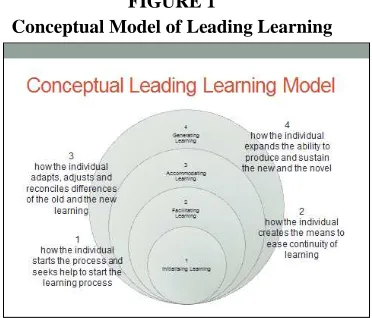
Thus, the initial conceptual model (illustrated in Figure 1) for the proposed study incorporates key concepts gleaned and developed from the review of various models pertaining to improvement process, systemic learning, good practice for better learning, and
good practice from indigenous research. A ‘model of hope’, this
preliminary leading learning model comprises the following:
Initiating learning: how the individual starts the process and
seeks help to start the learning process;
Facilitating learning: how the individual creates the means to
ease continuity of learning;
and reconciles differences of the old and the new, learning for survival or survival learning, and applying learning; and
Generating learning: how the individual expands the ability to
produce the results, he or she truly wants; learning for generating the new and the novel; the generative learning.
FIGURE 1
Conceptual Model of Leading Learning
At this juncture, it has to be emphasized that the above model is a preliminary tool for thinking about the process of leading learning with respect to Orang Asli children, whilst the indicators are based upon good practice that are gleaned from the literature, familiarisation case and fieldwork. Consistent within the grounded theory approach, we have used the literature as data towards a better understanding of the issue, a concept referred to as theoretical sensitivity (Glaser & Strauss, 1967; Corbin & Strauss, 2008).
METHODOLOGICAL CONSIDERATIONS
Methodological considerations to uncover a phenomenon include those forwarded by Cohen, Manion and Morrison (2007), Creswell (1998, 2009), Yin (2012), Merriam (2015), Glaser and Strauss (1967), Corbin and Strauss (2008), Charmaz (2006) and Berg (1998). They suggest that a qualitative research approach is the appropriate strategy for an empirical in-depth investigation into a singular phenomenon within its real life context. The research method follows the detailed interpretation of grounded theory methods initially founded by Glaser and Strauss (1967), and subsequently explicated by Charmaz (2006) and Corbin and Strauss (2008). The research is situated within the interpretive, constructive paradigm and will allow the researchers to examine
the complex process systemically, drawing upon the individuals’
multiple views of realities, through the use of open-ended interviews, visits, conversations and observations. These provide opportunities for co-constructing meaning in context. Birks and Mills (2011) also agree that grounded theory is indicated when little is known about the area of study.
Bishop, et al. (2007, 20011a) in their research on Maori students used the iterative research process in various phases, where each phase provided theoretical and methodological input to the next phase. The present research draws upon this practice in which an initial familiarization study will be used to inform subsequent
data collection process and study, within the context of grounded theory methodology.
Understanding Grounded Theory Method
According to Merriam (2015), Charmaz (2006); Creswell (2007; 2009), Cohen, Manion and Morrison (2007), and Suddaby (2006), grounded theory methodology was discovered and elaborated by Glaser and Strauss (1967). The methodology is one way of thinking about and studying social reality (Strauss & Corbin, 1998). In this methodology, the focus is on theory generation, in contrast to that of theory verification. However, Corbin & Strauss (2008) also suggest that a grounded theory research need not end with theory development; rather the researcher can finalise the research at in-depth analysis at thematic level.
The founders of grounded theory methodology, Glaser and Strauss defined a grounded theory as theory discovered from and grounded in data (Glaser & Strauss, 1967). They explained a
grounded theory as, “theory from data – systematically obtained and analysed in social research (Glaser & Strauss, 1967, p.1). They argue that substantive theory can be developed through constant comparison, in which data are collected and analysed simultaneously, and theoretical sampling in which decisions about which data should be collected next are determined by the theory that is being constructed (Suddaby, 2006). And, according
to Merriam, “What differentiates grounded theory from other
types of research is its focus on building theory,” (Merriam, 2015, p. 30). Thus, theory generated in this manner is referred to as substantive theory, because it arises from real life situations and interactions. Corbin and Strauss (2008), subsequently use grounded theory in a more generic sense to denote theoretical constructs derived from qualitative analysis of data.
position as constructivism - a social scientific perspective that assumes people, including researchers, construct the realities in which they participate; constructivists acknowledge that their interpretation of the studied phenomenon is itself a construction (Charmaz, 2006, p. 187).
Creswell (2007) summarises Strauss and Corbin’s position (1998) as, “Grounded theory is a qualitative research design in which the
enquirer generates a general explanation (a theory) of a process, action, or interaction shaped by the views of a large number of
participants,” (Creswell, 2007, p. 63). Grounded theory research procedures, canons and evaluative criteria were earlier elaborated by Corbin and Strauss (1990). They include aspects of: data collection and analysis, unit of analysis (concept), codes, concepts, categories and theory development, sampling, memoing, verifying, criteria for evaluating the research process and empirical grounding of findings. Simply stated:
Grounded theory is a strategy of inquiry in which the researcher derives a general, abstract theory of a process, action, or interaction grounded in the views of participants. This process involves using multiple stages of data collection and the refinement and interrelationship of categories of information (Charmaz, 2006; Strauss and Corbin, 1998). Two primary characteristics of this design are the constant comparison of data with emerging categories and theoretical sampling of different groups to maximise the similarities and the differences of information. (Creswell, 2009, p. 13)
It appears that grounded theory methodology provides an appropriate strategy to traverse a relatively uncharted research
area, as is the case with present researcher’s proposed study. Most
importantly, grounded theory enables us to make relevant predictions, explanations, interpretations and applications (Glaser & Strauss, 1967), in this context with respect to the leading learning process among the Orang Asli students.
Issues in Grounded Theory Methodology
There are also issues with grounded theory as a research
methodology. First, according to Creswell (2007), “Despite the
initial collaboration of Glaser and Strauss (1967) the two authors ultimately disagreed about the meaning and procedures of grounded theory” (p. 63). Glaser’s criticism is that Strauss’s approach to grounded theory is too prescribed and structured. Glaser himself celebrates and espouses the autonomy, originality, contribution and power of grounded theory methodology: such that a researcher can explore potentials and possibilities on her or his own pacing, give birth to originality of ideas and methods, contributes innovative solutions, and feels the power of
discovering and conceptualizing latent patterns in a substantive area (Glaser, 2006). Whilst Glaser emphasises immersion, induction and emergence, Strauss is concerned with systematic procedure of the methodology towards validity of the approach and the resulting theory (Corbin & Strauss, 1990).
Subsequent generation of leading researchers, such as Charmaz (2006) who was trained in grounded theory methodology by both Glaser and Strauss (1967), have moved onto a new conceptualisation of the grounded theory strategy. Charmaz argues for the constructivist grounded theory, in which she stressed that theory in grounded strategy is constructed rather than discovered. For Charmaz, neither data nor theory is discovered; rather both are constructed by the researcher and her or his research participants-informants during interactions, observations and fieldwork. Her worldview is that of social constructive which is meaning-making arising from social interaction and pragmatic - what works and relevant that best meet needs and purposes (Creswell, 2009).
Second, the issue of prior knowledge and concepts in grounded theory methodology. Glaser and Strauss (1967) has always maintained the need to avoid doing in-depth literature review in the substantive area, that is, the area where the process, problem or issue is to be studied. He argues for data-led theory generation, rather than literature led conceptualisation of theory. This issue has been eloquently discussed by McCallin (2003), in her paper,
“Grappling with the literature in a grounded theory study”. She
subsequently argues that, critical analysis of existing literature, regardless of timing, opens up the mind to the strengths and limitations in received writing, and for consideration in relation to
the developing theory” (McCallin 2006, p. 56). Birks and Mills
(2011) maintain that, “through the comparison of theoretical concepts with coded data, the literature can potentially become a source of data in itself, if it earns its way into the developing
grounded theory,” (p. 61).
The current researcher maintains that Glaser and Strauss (1967) clearly indicated that, “Of course, the researcher does not approach reality as a tabula rasa. He must have a perspective that will help him see relevant data and abstract significant categories
from his scrutiny of the data,” (p. 3). Glaser in fact recommended that the researcher reads vociferously in other areas and fields while doing grounded theory in order to increase theoretical sensitivity (Birks & Mills, 2011). Further elaboration by both Strauss and Glaser points to literature as one source of increasing theoretical sensitivity during the process of concept making and identifying core categories for theory generation. According to
Corbin and Strauss, “Sensitivity means having insight, being
tuned in to, being able to pick up relevant issues, events, and happenings in data,” (Corbin & Strauss, 2008, p. 32).
When we speak about what we bring to the research process, we are not talking about forcing our ideas on the data. Rather, what we are saying is that our backgrounds and past experiences
provide the mental capacity to respond to and receive the messages contained in data – all the while keeping in mind that our findings are a product of data plus what the researcher brings
to the analysis”. (Corbin & Strauss, 2008, p.33)
techniques for gathering and analysing data is referred to as grounded theory methods (p. 3), which they have elaborated in detailed in Corbin and Strauss (2008). Our present research takes its practical cues from them, along with that of Charmaz (2006) and Birks and Mills (2011). The original work of the founders (Glaser & Strauss, 1967) remained the text for our conceptual reference and elaboration; whilst the detailed GT method used in this research is adapted from Hoda (2011).
Sampling and Samples in Grounded Theory Research According to Strauss and Corbin (1998), where to sample, where to go to obtain the data necessary to further the development of the evolving theory is directed by theoretical sampling technique. This is a technique that differentiates grounded theory method from that of conventional sampling methods.
Theoretical sampling is defined as, “sampling on the basis of concepts derived from data,” (Corbin & Strauss, 2008, p.65). It is
the process of data collection for generating theory whereby the analyst jointly collects, codes, and analyses his data and decides what data to collect next, and where to find them, in order to develop his theory as it emerges (Glaser & Strauss, 1967, p.45). Data collections are based on concepts that appear to be relevant to the evolving story line (Corbin & Strauss, 2008). In theoretical sampling, the researcher is not sampling persons but concepts; the researcher is purposely looking for indicators of those concepts. Whilst, Charmaz (2006) explained it as a type of grounded theory sampling in which the researcher aims to develop the properties of his or her developing categories or theory; the researcher seeks people, events, or information to illuminate and define the boundaries and relevance of the categories (p.189). What it means, in grounded theory study, researchers sample theoretically; and as Corbin and Strauss (2008) said, they go to places, persons, and situations that will provide information about the concepts they want to learn more about (p.144). But how do we begin? Of course, the researcher begins a study with a general target population and continues to sample from that group (Corbin & Strauss, 2008, p.145).
Based upon this guideline, our present study takes Orang Asli students as our general target population. The initial issues of dropouts and learning disengagement led to the theoretical concepts of leading learning among them. The concepts arose from delving and analysing literature in quality, learning organisation, indigenous education, and language learning and minority education. This is in accord with Glaser and Straus (1967), who agreed that research can start with a partial framework of concepts representing the structure and processes in the situation in which the study will be conducted (p. 45). The
second step was exploratory fieldwork comprising visits and conversations with personnel in-charge of the Orang Asli affair and head teacher of an Orang Asli primary school, in order to get a glimpse of one context of an Orang Asli school. The third step was an attempt to understand how learning was led in the case of a student who has progressed successfully through the schooling system. At this stage we hope to be, sufficiently theoretically sensitive, so that we can conceptualize and formulate our next sampling groups.
When to stop? Theoretical sampling stops when we reach theoretical saturation. Theoretical saturation, also referred to as conceptual saturation, refers to the point at which gathering more data about a theoretical category reveals no new properties nor yields any further theoretical insights about the emerging grounded theory (Charmaz, 2006, p.189). Similarly, Corbin & Strauss (2008) who refer to this limiting stage as conceptual saturation, defined it as the process of acquiring sufficient data to develop each category or theme fully in terms of its properties and dimensions and to account for variation (Corbin & Strauss, 2008, p.195). In other words, theoretical sampling stops, when new data do not result in further elaboration of a concept, or category (theme).
To date, data has been collected from 14 in-depth interviews with students from the local institutes of higher education. Some students have since graduated. Each interview was about two hours, with breaks, and recorded with consent. However, this paper presents the initial findings from two in-depth interviews with the first research participant. The intention is to show how method of analysis that generates successively more abstract concepts and theories through inductive processes of comparing data with data, data with category, and category with concept (Charmaz, 2006, p.187). It is also referred to as comparative analysis defined as comparing incident against incident for similarities and differences. Incidents that are found to be conceptually similar to previously coded incidents are given the same conceptual label and put under the same code. Each new incident that is coded under a code adds to the general properties and dimensions of that code, elaborating it and bringing in variation (Corbin & Strauss, 2008, p.195).
The process of coding, both open and axial, happens during comparative analysis. Coding itself is the analytic processes through which data are fractured, conceptualized, and integrated
to form theory (Strauss & Corbin, 1998, p.3). And open coding involves breaking data apart and delineating concepts to stand for blocks of raw data; at the same time, one is qualifying those concepts in terms of their properties and dimensions (Corbin &
researcher has fractured them through line-by-line coding (Charmaz, 2006, p.186). Merriam (2015, p. 179) explains coding
and axial coding as follows: “Assigning codes to pieces of data is
the way you begin to construct categories. After working through the entire transcript in this manner, you go back over your
Finally, memoing or memo-writing in grounded theory method, is the pivotal intermediate step in grounded theory between data collection and writing drafts of paper; it is a crucial method in grounded theory because it prompts researchers to analyse their data and to develop their codes into categories early in the research process; and writing successive memos keeps researchers involved in the analysis and helps them to increase sometime illustrated with diagrams where necessary in order to illustrate connectivity and interaction. Memos also assist the researcher in maintaining systematic audit trail that support the validity and reliability of the grounded theory research.
Validity, Reliability and Generalizabilty
Corbin in Corbin and Strauss (2008), “does not feel comfortable using the terms validity and reliability” and prefer to use “credibility”, which indicates that “findings are trustworthy and
believable in that they reflect participants’, researchers’, and
readers’ experiences with a phenomenon, but at the same time the explanation is only one of many possible “plausible” interpretations possible from data” (p. 302); and a very important
condition for credibility is methodological consistency.
Morrow (2005) states “criteria for trustworthiness in qualitative
research are closely tied to the paradigmatic underpinnings of the particular discipline in which a particular investigation is
conducted” (p.251). Thus in accord with Morrow, in the present
study, this study adopts Glaser’s set of criteria to evaluate GT
research credibility: fit, work, relevant, modifiable, parsimony
and scope (Glaser, 1992, 2002; Flint, 2005). Glaser’s approach to
credibility and worthiness of the grounded theory is ‘grounded’ in the consistency of method, that is open to the evaluation of research participants, practitioners and researchers involved in the same area. Credibility and worthiness are achieved through the rigour of constant comparative method.
It is not the intent of a grounded theory research to claim generalizability of findings. Its findings are propositions that explain questions that started the research journey. This study focusses on learning and how it was led within the context of
In this study, data collection methods for the overall study cover two needs. First, the need of the key researcher to familiarise herself with, and understand the Orang Asli school learning environment, and the life of an Orang Asli student. Second is the need for leads, in theoretical sampling for further data collection. The initial familiarization with the Orang Asli school and life was through visits to state and the district level departments that manage the affairs of the Orang Asli community, and conversations with the head teacher and teachers of an Orang Asli primary school, an Orang Asli community liaison worker, who was from the same community as that of the primary school. A second familiarization exercise was done through two in-depth interviews with an Orang Asli student, who was in Year 4, the final semester of her Bachelor of Education programme at a Teacher Training Institute, Malaysia. She was invited to participate, through a personal contact. She was the only Orang Asli student from the Institute. The purpose of this interview was to explore and understand through, narratives of her life; how she has attained her current level of education, and the conditions as well as provisions availed to her throughout her school years (kindergarten, primary and secondary). Data and subsequently concepts from the initial fieldwork and case were used to refine the data collection and analytical framework for the next groups of participants. Subsequent data collection could include in-depth interviews, observation and document analysis.
The following section presents findings from two in-depth open interviews with the research participant (P1) described in the familiarisation study above, each about two (2) hours long. The research ethics considerations include that of a signed informed consent, explaining the purpose and the limitations of data use (Merriam, 2015). The interviews were in Bahasa Melayu, the official national language; conducted in an informal and relaxed environment, where conversations consisted of dialogues that were intended to stir the remembrance of time past. Conversations were recorded with the knowledge and agreement of the research participant.
DATA ANALYSIS AND FINDINGS
learning under these categories: Parents, Student, Kindergarten, Primary School and Significant Others. In this analysis, Parents comprised the entire family of Father, Mother, Grandfather, Grandmother and Elder Sister, who had impacted the
Participant’s learning achievement and engagement. Whilst,
Significant Others comprised other family members, other
students’ achievement from the area, and the government agencies’ provisions that facilitated the research participant’s
learning process.
Context
The scene of this narrative was in the state of Johor, Malaysia. There were five villages and one town whose communities were closely linked with each other. From the innermost to outermost Village 1 through Town 1, these villages and town are coded as: V1-V2-V3-V4-V5-T1. The distance from V1 to T1 is approximately 40 kilometres through gravel roads used by both the communities and the timber-carrying heavy vehicles. When it rained the road surface was usually eroded with plenty of potholes. The road was not waterlogged due its location in hilly area. Access to a bus route was just after Town T1, at a junction of a bus route connecting two main towns, T2 and T3. The nearest bus station was in Town T2 about 45 minute-drive from T1. In the initial years, the family of the research participant comprised Grandfather (GF), Grandmother (GM), Mother (46)(M), First Sibling-Brother (30)(B1), Second Sibling-Sister
(29)(S2), and Research Participant (24)(P1). Upon mother’s
remarriage, there was Step-Father (47) (F2), Fourth Sibling-Sister (17)(S4), Fifth Sibling-Brother (13)(B5), and Sixth Sibling-Sister (5)(S6). All ages given were ages at the time of the interviews. The Father (F1) died when P1 was two weeks old. M married F2 when P was 7 years old. In other words, M was a single parent since P1 was two weeks old through her kindergarten - first and second – years. The family lived in V2. They moved to V5 when P2 completed her Year 3 of Sekolah Rendah (SR) – the Primary School.
FINDINGS
Detailed thematic findings of leading learning process from this familiarization case are presented and discussed below. These initial findings are presented under each theme in the order of its appearance during the conversations. They are intended only as baseline for the subsequent research samples; to understand one context of an Orang Asli student, her family, community, and schools. Narratives containing the leading learning process at secondary level of schooling have not been included in this analysis.
Parents Leading Learning (Mother)
Mother, despite having no schooling opportunity herself, believed that education is an important vehicle to exit the hardship and poverty situation. She had high expectation of her child and despite the death of her husband two weeks after the birth of her child, P1, made effort to ensure that P1 did not miss the kindergarten and subsequent schooling years. She moved and worked as farm worker on her own, built hut for accommodation and shared the hut with other Orang Asli children who came from the far inland community. She attended the initial kindergarten weeks of her child to support and comfort her and in the process learned the basics of writing, which she used to help her child at home. She provided simple learning provisions for her child at The role of elder siblings in the leading learning process was not anticipated by the researcher initially. The case, however, showed how an elder sister supported the education of her siblings. The grandparents played a significant role in her initial education: GM as carer in the absence of mother, GF provided financial support in the absence of father. GM also provided traditional knowledge of Orang Asli to P1 during her early years. P1 showed pride in
her GF’s ability to make and play the violin.
Student Leading Learning (Participant)
Her seed of independence was sown at an early age. Prior to kindergarten (KG) she was left with GF when mother went to collect forest products. She was sent to live with an aunt before she was boarded at the school hostel in Year 3 of primary school (SR). She made friends easily, in KG and SR. She was excited about going to KG and did not cry because mother stayed with her in the classroom throughout her first week. She adapted quickly to the new learning environment in kindergarten, made friends within the week, and mother was no longer missed. She
enjoyed kindergarten and school because there were many friends. She said she had no best friend because she got along with everybody. In KG she enjoyed singing songs, playing musical instruments, tracing and writing the alphabet and Jawi script (there was no moral study then), and tracing and drawing
shapes. She became interested in the English Language when she watched an English cartoon programme on the television. The
television, in black and white, was at an uncle’s place, operated
river. She enjoyed playing many traditional games with friends after completing school work.
She was clear about her ambition – in Year 4 she wanted to be a teacher and in Year 6 she wanted to be a doctor, thinking that would enable her to go farther in education. During the conversation, P1 indicated that it was not about being a doctor, but about going farther in education, overseas probably, through the more challenging route to be a doctor. She was an avid reader
– she read story books almost daily during primary years, her daily routine included borrowing and returning books on daily basis. She completed her Year 6 and moved on to a Sekolah Menengah (SM) – the Secondary School – in Town T1.
Upon reflection she voiced her deep regrets that older sister was not able to attend further education after SPM due to financial constraint, that younger sister (S4) dropped out of school in Year 6 and did not sit the Ujian Pencapaian Sekolah Rendah (UPSR) – the Primary School Achievement Test - and that younger brother, B5 (now 13) dropped out of school in Form 1. This indicated her belief that education was important to her and her siblings. It was evident from the interview sessions that she had high confidence level and sense of direction, and good sense of humour.
Kindergarten Leading Learning
The concept of kindergarten leading learning here reflects the role of first kindergarten teacher (KT1), second kindergarten teacher (KT2), and the support and provisions provided by the KG in leading the learning of P1. First, KT1 was very caring (P1
emphasised “very, very caring”). She was from outside the
community. P1 remembered her by name. Primary School had teacher quarters where KT1 resided along with other female teachers. KT1 used to carry books and the action was imprinted in
the student’s memory because she loved books very much. KT2 carried on the duty when KT1 left after her marriage. The kindergarten facilitated learning by allowing mother to be with P1 throughout the first week of attending kindergarten. Other kindergarten provisions included writing and reading materials and stationery. Familiar faces helped P1 settled in the kindergarten: a female Teacher Assistant who was an older cousin of P1 and another male cousin enrolled in the same class with P1. The cousin subsequently dropped out of SR after Year 4. The kindergarten had combined mini sports day with SR, in which P1 remembered enjoying thoroughly. This event provided the kindergartners interactions with the primary school students, thus paving a future into the next primary schooling.
TABLE 1
Example of a Memo - Family Leading Learning THE LEARNING FAMILY-FAMILY LEADING LEARNING
MEMO: 27.01.15: Family Leading Learning – Initiating and Facilitating Learning - Home Learning Environment The concept of ‘home learning environment’ comprises a range of learning related provisions including, “reading, library visits,
playing with letters and numbers, painting and drawing, teaching (through play) the letters of the alphabet, playing with numbers and shapes, teaching nursery rhymes and singing,” (Desforges, 2003, p.23). Data shows that, within the limits of their socio -economic situation, that there existed practices that maintained a favourable home learning environment, which contributed to the
students’ initiation to learning, and provisions and activities that scaffold continuous learning engagement. For instance, P1 had a mother who provided coloured pencils and helped her with her writing skills; holding her hands to write and trace the alphabet. P5 had older siblings who taught him to recite the letters alphabet and celebrated his academic achievement with simple affordable rewards. P5 also had a mother who, while preparing him for school would constantly reminded him to study hard, not to follow the bad ways of others, to emulate the good of others, to acquire knowledge, because knowledge give one an advantage for better life. Due to distant and financial limitation, P2 did not have the opportunity to attend the kindergarten, but mother taught her at home such that when she entered the primary school she could understand what the teacher wrote on the board. There was pride in her voice when she related that at the end of her first primary year, she achieved the first position in class, despite not having kindergarten experience. See also Froiland, Peterson, and Davison (2012) and Carpentieri (2012).
Note: P1, P2 and P5 refer to First Participant, Second Participant and Fifth participant respectively.
Primary School Leading Learning
The concept of primary school leading learning in this case included the role of hostel in facilitating the environment and setting the routine for learning, a supportive male teacher who went out all the way, on a motorbike, to the hinterland isolated community to deliver the good news about financial assistance for P1, and memorable co-curriculum events to enliven the learning process.
Significant Others Leading Learning
‘Significant Others’ in this case is defined as people, agencies or
institutions that had direct or indirect impact on the student’s
education and learning process. In this instance, several concepts
appear to have influenced P1’s educational focus: achievement of
other community members in education, the village head, also
known as the ‘Tok Batin’, and his role in facilitating access to
kindergarten and schools, The Government’s provision such as
new development scheme that enabled P1 and family to move
closer to the schools and vehicle for the Tok Batin’s role in
ferrying the students, and the Department for Orang Asli Development (KKLW, 2011), and its role in the disbursement of aids and disseminating knowledge about education.
Int. J.Hum. Art. Soc. Sci.
conceptual model of Leading Learning – Initiating Learning, Facilitating Learning, Accommodating Learning and Generating Learning. Findings are used to identify and give structure to the key categories (or themes) and concepts (the extent of the categories) of the leading learning process among Orang Asli students, for further theoretical sampling. However, a sample resulting from the constant comparative analysis of existing
participants’ data to-date is illustrated in the following memo.
CONCLUSION
There are concerns that the Orang Asli students are not progressing in tandem with those of the mainstream, which according to many researchers are due to, among others, lack of
commitment, lack of interest and children’s attitude to education.
The present study, however, takes the position that the issue appears to be that of mismatch in expectations from all the stakeholders involved in the learning process – government, schools, teachers, parents, children and community. This paper describes our research approach within the grounded theory methodology. An initial conceptual understanding led to an exploratory study of an Orang Asli student that provided an opportunity to understand the case of one student that has gone through the compulsory years of schooling. Preliminary findings from the first research participant indicated that factors including
mother’s initial intense role in leading the learning process, student’s interest and inner motivation were among the reasons
for her current achievement. Familiar people around the student supported and comforted her initial entry and transition into formal schooling. Collaborative facilitation of learning from home, kindergartens, schools, community and the Government
(including Government’s provision to the community), provided
scaffold for the student’s continuous learning engagement and achievement. Seven categories of leading learning were discovered in this initial case. Finally, the study focusses on learning and how it was led within the context of Orang Asli
students’ experiences. Lessons learned can be used to illuminate similar learning situations among minority disadvantaged communities.
Acknowledgement
The first author acknowledges the continuous support, guidance and encouraging feedback of her supervisors in the research process. She also acknowledges the cooperation of the research participants for sharing their life stories in the learning journey. The authors thank Pusat Pengurusan dan Inovasi, Universiti Pendidikan Sultan Idris, for the Grant that partially support this study.
REFERENCES
Argyris, C. (1982). Reasoning, learning, and action: Individual and organizational (pp. 85-101). San Francisco, CA: Jossey-Bass. Argyris, C., & Schön, D. A. (1978). Organizational learning: A theory of action perspective (Vol. 173). Reading, MA:
Addison-Wesley.
Berg, B. (1998). Qualitative research methods for the social sciences. Massachusetts, MA: Allyn and Bacon. Birks, M., & Mills, J. (2011). Grounded theory: A practical guide. New York, NY: Sage publications.
Bishop, R., Berryman, M., Cavanagh, T., & Teddy, L. (2007). Te Kōtahitanga Phase 3 Whānaungatanga: Establishing a culturally
responsive pedagogy of relations in mainstream secondary school classrooms. Ministry of Education, New Zealand.
Retrieved from http://goo.gl/c6gSdS
Bishop, R., Berryman, M., Wearmouth, J., Peter, M. & Clapham, S. (2011b). Te kotahitanga: Maintaining, replicating and sustaining
change: Report for Phase 3 and 4 schools 2007-2010. Ministry of Education New Zealand. Retrieved from
http://goo.gl/jpdvnP
Bishop, R., Berryman, M., Wearmouth, J., Peter, M., & Clapham, S. (2011a). A summary of te kotahitanga: Maintaining, replicating
and sustaining change in Phase 3 and 4 schools 2007-2010. Ministry of Education New Zealand. Retrieved from
http://goo.gl/FaK3g3
Blueprint, M. E. (2015). Blueprint 2013-2025, preliminary report: Preschool to post-Secondary education. Ministry of Education Malaysia, Malaysia.
Carpentieri J. D. (2012). Family learning: A review of the research literature: A Report prepared for NIACE, national research and
development centre for adult literacy and numeracy, institute of education. University of London, UK. Retrieved from
http://goo.gl/LuoCGO
Charmaz, K. (2006). Constructing grounded theory: A practical guide through qualitative research. London, UK: Sage Publications. Cohen, L., Manion, L., & Morrison, K. (2007). Research methods in education (6th ed.). Milton Park, UK: Routledge.
Corbin, J. M., & Strauss, A. (1990). Grounded theory research: Procedures, canons, and evaluative criteria. Qualitative
Sociology, 13(1), 3-21.
Creswell, J. W. (1998). Qualitative inquiry and research design: Choosing among the five traditions. Thousand Oaks, CA: Sage. Creswell, J. W. (2007) Qualitative inquiry and research design: Choosing among the five traditions (2nd ed.). Thousand Oaks, CA:
Sage.
Creswell, J. W. (2009). Research design: Qualitative, quantitative and mixed methods approaches (3rd ed.). Thousand Oaks, CA: Sage.
Cummins, J. (1995). Power and pedagogy in the education of culturally diverse students. In J. Fredericskon, & A. F. Ada (Eds.),
Reclaiming our voices: Bilingual education, critical pedagogy, and praxis (pp. 139-162). Ontario, CA: California Association
for Bilingual Education.
Cummins, J. (2005). Language proficiency, bilingualism, and academic achievement. In P. A. Richard-Amato, & M. A. Snow (Eds.)
Academic success for English language learners (pp.76-86). New York, NY: Pearson.
Deming, W. E. (1986). Out of the crisis. Cambridge, MA: MIT Press.
Deming, W. E. (1994). The new economics: For industry, government and education (2nd ed.). Cambridge, MA: MIT Press.
Desforges, C., & Abouchaar, A. (2003). The impact of parental involvement, parental support and family education on pupil
achievements and adjustment: A literature review (Vol. 433). Research Report.
Doherty, G. D. (1994). Introduction: The concern for quality. In G. D. Doherty (Ed.), Developing quality systems in education (pp. 3-34).London, UK: Routledge.
DPM. (2012). Deputy Prime Minister: Speeches-21/06/2012-launch national education transformation. Aboriginal Education Ministry. Retrieved from http://goo.gl/8npCO4
Flint, N. (2005). Methodological conundrums: Confessions of a latent grounded theorist (Doctoral dissertation). Australian Association for Research in Education, Austraila.
Froiland, J. M., Peterson, A., & Davison, M. L. (2012). The long-term effects of early parent involvement and parent expectation in the USA. School Psychology International, 34, 33-50.
Gay, G. (2010). Culturally responsive teaching: Theory, research, and practice. New York, NY: Teachers College Press. Glaser, B. & Strauss, A. L. (1967). The discovery of grounded theory: Strategies for qualitative research. Chicago, IL: Aldine. Glaser, B. (1992). Basics of grounded theory analysis: Emergence vs forcing. Mill Valley, CA: The Sociology Press.
Glaser, B. (2002). Conceptualization: On theory and theorizing using grounded theory. International Journal of Qualitative
Methods, 1(2), 23-38.
Glaser, B. (2006). The roots of grounded theory. The Grounded Theory Review an International Journal, 5(2/3), 1-10.
Hallinger, P., & Heck, R. H. (2010). Leadership for learning: Does collaborative leadership make a difference in school improvement?
Educational Management Administration & Leadership, 38(6), 654-678.
Hoda, R. (2011). Self-organising agile teams: A grounded theory. (PhD thesis). Victoria University of Wellington, New Zealand. Horward, D. (1994). Culturally responsive classrooms. In S. Harris, & M. Malin (Eds.), Aboriginal kids in Urban Classroom
(pp.37-50).Australia: Social Science Press.
Jawaid, A. (2014). Benchmarking in TESOL: A study of the Malaysia education blueprint 2013. English Language Teaching, 7(8), 23-28.
Kamaruddin, K., & Jusoh, O. (2008). Educational policy and opportunities of Orang Asli: A study on indigenious people in Malaysia. Journal Human Resource Adult Learn, 4(1), 86-97.
KKLW. (2011). Official portal of orang asli development department, ministry of rural and regional development. Jabatan Kemajuan Orang Asli, Malaysia.
KPM. (2008). Education for all mid decade assessment report 2000-2007. Putrajaya: Kementerian Pelajaran Malaysia, Ministry of Education, Malaysia.
Ladson‐Billings, G. (1995). But that's just good teaching! The case for culturally relevant pedagogy. Theory into Practice, 34(3), 159-165.
Leithwood, K., Louis, K. S., Wahlstrom, K. L., & Anderson, S. E. (2010). Learning from leadership: Investigating the links to
improved student learning. Final Report on Research to the Wallace Foundation.
Mahmud, Z., Amat, S., & Yaacob, M. (2009). Educational issues of Orang Asli students in Malaysia. International Journal of
Diversity in Organisations, Communities & Nations, 8(6), 121-128.
Malaysia, E. P. U. (2011). Malaysia: The millenium development goals at 2010. Kuala Lumpur: United Nations Country Team, Malaysia.
McCallin, A. (2003). Grappling with the literature in a grounded theory study. Contemporary Nurse, 15(1-2), 61-69.
McCallin, A. M. (2006). Methodological Issues: Have we forgotten the place of thinking here? The Grounded Theory Review: An
Md Nor, S., Roslan, S., Mohamed, A., Hassan, A., Hj, K., Ali, M. A. M., & Manaf, J. A. (2011). Dropout prevention initiatives for Malaysian indigenous orang asli children. International Journal on School Disaffection, 8(1), 42-56.
Merriam, S. B., & Tisdell, E. J. (2015). Qualitative research: A guide to design and implementation. San Francisco, CA: John Wiley & Sons.
Moreland, N., Jawaid, A., & Dhillon, J. (2000). Quality improvement in the TESOL curriculum: A generic benchmarking approach. Quality Assurance in Education, 8(2), 57-62.
Morrow, S. L. (2005). Quality and trustworthiness in qualitative research in counseling psychology. Journal of Counseling
Psychology, 52(2), 250.
Mughal, A. J. (1998). A framework for the improvement of TESOL curriculum in Lahore, Pakistan, based upon a comparative analysis
of TESOL in Birmingham, UK (Doctoral dissertation). University of Wolverhampton, UK.
Nelson, S. (2002). Learn-Ed nations inventory-A tool for improving schools with American Indian and Alaska native students. Northwest Regional Educational Laboratory, USA. Retrieved from http://goo.gl/YZ9Bof
Neufeldt, V., & Guralnik, D. B. (1994). Webster's new world dictionary of American English. New York, NY: Prentice Hall.
Nicholas, C. (2009). The state of Orang Asli education and its root problems. Human Rights Commission of Malaysia (SUHAKAM), Malaysia.
Noora, M. A. M. (2012). Advancing the Orang Asli through Malaysia’s clusters of excellence policy.Journal of International and
Comparative Education, 1(2), 2232-1802.
OCDE. (2004). Learning for tomorrow's world: First results from PISA 2003. Organization for Economic Co-Operation and Development, France.
Peters, M., Seeds, K., Goldstein, A., & Coleman, N. (2008). Parental involvement in children's education. BMRB International Ltd., UK.
Richard-Amato, P. A., & Snow, M. A. (Eds.) (2005). Academic success for English language learners: Strategies for K-12 mainstream
teachers. New York, NY: Pearson.
Scholtes, P. R., (1998). The leader's handbook: Making things happen, getting things done. New York, NY: McGraw-Hill.
Seashore, K., Leithwood, K., Wahlstrom, K., & Anderson, S. (2010). Investigating the links to improved student learning: Final report
of research findings. University of Minnesota, Canada.
Senge, P. M. (1990). The fifth discipline: The art & practise of the learning organisation: Century business. New York, NY: Currency Doubleday.
Sidorkin, A. M. (2002). Learning relations: Impure education, deschooled schools, and dialogue with evil. New York, NY: Peter Lang.
Strauss, A., & Corbin, J. (1998). Basics of qualitative research: Grounded theory procedure and techniques (2nd ed.). Thousand Oaks, CA: Sage.
Suddaby, R. (2006). From the editors: What grounded theory is not. Academy of Management Journal, 49(4), 633-642. Tikly, L. (2010). Towards a framework for understanding the quality of education. Bristol, UK: University of Bristol.
Tribus, M. (1994). Total quality management in education, the theory and how to put it to work–Developing quality systems. In D. Geoffrey (Ed.), Developing quality systems in education (pp. 3-34). London, UK: Routledge.
UNICEF. (2000). Defining quality in education. Paper presented by UNICEF at the Meeting of the International Working Group on
Education, Florence, Italy. Retrieved from http://goo.gl/wIOGWM
Valencia, R. R. (2010). Dismantling contemporary deficit thinking: Educational thought and practice. New York, NY: Routledge. Valencia, R. R. (Ed.). (1997). The evolution of deficit thinking: Educational thought and practice. London, UK: Falmer Press.
Villegas, A. M., & Lucas, T. (2002). Educating culturally responsive teachers: A coherent approach. Albany, NY: State University of New York Press.
Vygotsky, L. (2005). Interaction between learning and development. In P. A. Richard-Amato, & M. A. Snow (Eds.), Academic success
for English language learners (pp.103-111). New York, NY: Pearson.
Vygotsky, L. S. (1978). Mind in society: The development of higher psychological processes. Cambridge, MA: Harvard University press.
Yin, R. K. (2012). Applications of case study research. Thousand Oaks, CA: Sage Publication.
Zairi, M., & Leonard, P. (1994). Practical benchmarking: The complete guide: A complete guide. Springer Science & Business Media.