WORKING PAPER SERIES 4: 2013
Cost–beneit analysis of
mangrove restoration in
Thi Nai Lagoon, Quy Nhon
City, Vietnam
Contents
List of tables and igures 4
Abstract 5 About the authors 6
Acknowledgements 7
1 Introduction 9
2 Background 10
2.1 Case study site: Thi Nai Lagoon, Binh Dinh Province 11
3 Conceptual framework and methodology 16
3.1 Valuation of non-use values of mangroves 16 3.2 Cost–beneit analysis of mangrove restoration 17
4 Data analysis and results: non-use values and cost–beneit analysis 22
4.1 About the respondents: demographic information 22
4.2 Local awareness about mangrove restoration in Thi Nai Lagoon 25
4.3 Non-use value of mangrove forest 28
5 Cost–beneit analysis of mangrove restoration 33
5.1 Option 1: Cost–beneit analysis of aquaculture development 33
5.2 Option 2: Cost–beneit analysis of mangrove restoration 36
5.3 Sensitivity analysis 39
5.4 Comparing cost–beneit of mangrove restoration with aquaculture development 40
6 Discussion and conclusion 42
6.1 Discussion 42
6.2 Conclusion and recommendations 43
References 46
Annex 1. The contingent valuation method (CVM) 49
Annex 2. The CVM questionnaire 51
Annex 3. Brief introduction to the consultancy report for CCCO Binh Dinh (Tuan et al. 2012) 58
List of tables and igures
Table 1. Population and number of households in Quy Nhon City and Tuy Phuoc District 12
Table 2. Classiication of the total economic value for mangrove forest 16 Table 3. Design of policy options for cost–beneit analysis 17
Table 4. Distribution of surveyed respondents by commune/wards 21 Table 5. Distribution of respondents by annual income 25
Table 6. Respondents rate the functions of Thi Nai mangroves in importance (per cent) 27 Table 7. Willingness to pay for non-use value of mangrove forest 28
Table 8. Description of variables used in the binary model 30 Table 9. Determinants of the willingness to pay (WTP) function 30 Table 10. Total cost–beneit analysis of 1ha aquaculture/year in Thi Nai lagoon 34
Table 11. Cost–beneit of 150 hectares of aquaculture over 22 years in Thi Nai 35 Table 12. Total cost of mangrove restoration 37
Table 13. Total beneit of mangrove restoration estimated with non-parametric method 38 Table 14. Total beneit of mangrove restoration estimated with parametric method 38
Table 15. Sensitivity analysis of mangrove restoration project 40 Table 16. Comparing beneits of mangrove restoration with aquaculture development 41
Figure 1. Map of Thi Nai Lagoon and surveyed sites 12 Figure 2. Economic contribution by sector in study site 13
Figure 3. Changes in temperature and rainfall in Quy Nhon at B2 Scenario (MONRE 2009) 15
Figure 4. Gender of respondents 22
Figure 5. Education level of respondents 23
Figure 6. Type of work of respondents 24
Figure 7. Respondents’ opinions on mangrove restoration in Thi Nai 26 Figure 8. Respondents rate the current mangrove management scenarios 27
Abstract
About the authors
Tran Huu Tuan
holds both MSc and PhD degrees in environmental and resource
economics. He completed his PhD at the Norwegian University of Life Sciences,
Norway. His specialities are disaster risk management, climate change adaptation,
assessing the economic impacts of natural disasters and economic valuation of natural
resources. Tuan has a number of papers published in international peer-reviewed
journals
and is a vice-dean at the Faculty of Economics and Development Studies,
College of Economics, Hue University, Vietnam. Email [email protected].
Tinh Bui Duc
is a lecturer and researcher at the Faculty of Economics and
Acknowledgements
The authors wish to thank the International Institute for Environment and Development
(IIED) for funding this research and especially for the support of Diane Archer, Hannah
Reid and Rodney Lunduka and for their valuable comments and suggestions on our
study proposal and analysis.
We would like to express our sincere appreciation to Phong Tran at the Institute for
Social and Environmental Transition (ISET) Vietnam; and to Nguyen Hoang Diem My,
Le Thi Quynh Anh, Nguyen Minh Tri and Vo Viet Hung from the College of Economics,
Hue University for their support in conducting the ieldwork.
1 Introduction
Climate change-induced impacts on human life have become a burning issue, attracting the concerns of different social actors; not only governments at different levels but also communities. Climate change has been accompanied by signiicant changes in precipitation, temperature and the increasing frequency and intensity of climate change-related disasters, which have already been widely experienced in many countries in the world. There is evidence that 85 per cent of all natural disasters and 75 per cent of economic losses due to natural disasters from 1980 to 2005 were in Asia (Fransisco 2008). These changes have caused adverse impacts on natural and human systems, independently or in combination with other determinants, to alter the productivity, diversity and functions of many ecosystems and livelihoods around the world. yet these impacts will not be distributed or felt uniformly, as those ‘with the least resources have the least capacity to adapt and are the most vulnerable’ (IPCC 2001). The impact of climate change on global GDP has caused losses of about 1.5 to 3.5 per cent, and developing countries are expected to suffer a larger percentage of damages (IPCC 2007). These losses are estimated to be even higher, about 11 per cent of global GDP, where greenhouse gases (GHG) are concerned (Stern 2007).
Vietnam is located on the tropical monsoon and typhoon centre of the East Sea, one of the biggest typhoon centres of the world. Vietnam is one of the ten countries most prone to, and ‘at risk’ from, the impacts of climate change (Francisco 2008). Examples of impacts felt in different provinces of Vietnam include a signiicant shift noted in the timings of the summer and winter rains, causing prolonged dry days as well as loods, with signiicant damages to local livelihoods. An increase in the frequency and intensity of annual extreme disasters are associated with increases in vulnerability and the need for local adaptation, especially in central provinces. In recent years, this has attracted considerable concern from governmental and non-governmental organisations and local communities in Vietnam.
Using a medium emission scenario A1F11, the central government developed a climate change scenario for the country and
a national mitigation and adaptation strategy. It projects an increase in storm and lood frequency and intensity coupled with sea-level rise. There have been great efforts made to adopt different adaptation measures in order to adapt to climate change at both national and community levels. Promoting the protection and rehabilitation of mangrove forest in coastal areas is one such activity that has been initiated. For example, the Vietnamese Red Cross Society implemented a 17-year project to plant and restore almost 9000 hectares of mangrove forest across eight coastal communes, with an emphasis on the potential offered by mangroves for disaster risk reduction (IFRC 2011). This aimed to mitigate the impact of sea-level rise and storm loods in coastal areas. It should be recognised, however, that in recent years, a rapid industrialisation and urbanisation process has been implemented in many coastal provinces, which has resulted in an imbalance between economic development efforts and environmental protection and social development, particularly in the context of climate change. The expansion of both urban and aquaculture development into low-lying coastal areas and lagoons has threatened the mangrove restoration and reduced the mangrove forest area. This has particularly affected the poor who do not have the resources to transcend the risks associated with this imbalance and climate change (Powell et al. 2012).
1 The Intergovernmental Panel on Climate Change (IPCC) Special Report on Emissions Scenarios (IPCC 2000) outlines a series of climate change scenarios dependant on various development paths. The A1 scenario family assumes rapid economic growth followed
by the rapid introduction of new and more eficient technologies. Within this family, A1F1 represents a fossil-fuel intensive path to
2 Background
Vietnam has a diverse wetland ecosystem, with over 10 million hectares throughout the country with different types of wetland such as lagoons, luvial bogs, mangrove forests and lakes. Mangrove forests are an important resource, providing direct use value and indirect value for many communities, including coastline protection and coastal storm and lood impact mitigation (Tang 2005; Hong et al. 2008).
It is stated that despite the important role of mangrove forests in socio-economic development and in mitigating the impacts of climate change, large areas of mangrove forest and wetland along the coastal provinces have been reduced by the expansion of economic activities such as agricultural production, aquaculture and urbanisation (UNEP-GEF 2003; Tuan 2002). It is estimated that about 180,000ha of mangrove forest has been converted for aquaculture, infrastructure construction and the expansion of urban projects (UNEP-GEF 2003). The quality of mangrove forests has been rapidly declining, due to environmental pollution from industrialisation processes, overuse of chemical components in agricultural production, and the weakness of government management systems (Torell et al. 2008).
A review of the current literature regarding the evaluation of mangrove forests and wetland ecosystem services points to the fact that there is only fragmented information or even a lack of information about the value of mangrove forests, particularly at local-government levels. This explains why many valuable mangrove forests such as in Tam Giang Lagoon and Thi Nai Lagoon have been privatised for economic use. Limited information about the total value of mangrove forests is available to government, even though some studies examine the direct use value for certain stakeholders rather the important role of mangrove forests for whole communities (Hong et al. 2008, UNEP-GEF 2003).
Government efforts to restore mangrove forests should be recognised, as the country was a signatory to the Ramsar Convention.2 In 2003, the Vietnamese Government issued Decree No. 109/2003/ND-CP to regulate the conservation
and sustainable development of mangrove forests and approved the national plan for the conservation and sustainable development for mangrove forests in the period 2004–2010 under the management of the Ministry of Natural Resource and Environment (MONRE) (Socialist Republic of Vietnam 2003). Central government has given priority to research projects which examine mangrove forests and integrate the results of these studies into management plans, in which the focus is on the evaluation of the total economic value of mangrove forests (MONRE 2004).
It is important to note that, in recent years, under a period of rapid economic development, a high demand for the use of natural resources and wetland resources in particular has emerged, leading to a decline in the availability of natural resources. The value of these natural resources has thus increased rapidly. This means that information about the value of resources for decision-making is increasingly important, particularly for policymakers. Some recent studies have addressed this. Nhuan et al. (2008) use contingent valuation methods (CVM) to estimate the direct use value of wetlands
in the Mekong Delta region of Vietnam and to provide important recommendations for policymakers. Hoa et al. (2006)
use market-based methods to calculate the economic value of shrimp aquaculture in the wetlands of Xuan Thuy National Park, in Nam Dinh Province. Tuan et al. (2009) use a market pricing method to value direct use values of Tam Giang-Cau
Hai Lagoon wetlands in Thua Thien Hue province.
2 The Convention on Wetlands (Ramsar, Iran, 1971) – called the ‘Ramsar Convention’ – is an intergovernmental treaty that embodies
the commitments of its member countries to maintain the ecological character of their wetlands of international importance and to
Mangrove forests are valuable ecosystems for environmental protection. They play an important role in disaster prevention and socio-economic development, particularly by providing important sources of income for poor communities. This study evaluated the non-use values of the mangrove forest in Thi Nai Lagoon and conducted a cost–beneit analysis of mangrove forest restoration.
2.1 Case study site: Thi Nai Lagoon, Binh Dinh
Province
Located on the south central coast, Binh Dinh is one of Vietnam’s coastal provinces. Binh Dinh Province includes 10 districts and Quy Nhon City, a young and rapidly developing city which is the capital of the province. In the last decades, Binh Dinh Province, particularly Quy Nhon, has been affected by many natural hazards, such as coastal storms, loods, sea-level rise and droughts. Emerging changes in climate have threatened the city with an increase in both the frequency and intensity of these disasters.
Located on the coastline of Binh Dinh Province, Thi Nai is one of the biggest brackish water lagoons in the south central coastal region of Vietnam. The total area of Thi Nai Lagoon is 5060ha, which used to include over 1000ha of diverse mangrove forest. The Thi Nai Lagoon area is spread over an area which includes Quy Nhon City and Tuy Phuoc District. Mangrove forest in Thi Nai is an important resource for socio-economic development for Quy Nhon and Tuy Phuoc as well as an important source of income-generation for local communities (Figure 1).
Figure 1. Map of Thi Nai Lagoon and surveyed sites
Blue stars denote sites selected. Red stars denote communes selected in Tuy Phuoc district
There are 281,513 people living in over 58,000 households in Quy Nhon and 254,847 people in Tuy Phuoc District, which is one of the districts surrounding the Thi Nai Lagoon in Binh Dinh province. Over 49 per cent of the population is female. Over 46 per cent of the total population are of working age, 63 per cent of the labour force works in the agricultural sector, and 54 per cent work in industry and services (see Table 1).
Table 1. Population and number of households in Quy
Nhon City and Tuy Phuoc District
2008 2009 2010
Population of Quy Nhon City 276,237 280,707 281,153 Number of households in Quy Nhon 57,549 58,481 58,574 Population of Tuy Phuoc District 252,654 253,563 254,847 Number of households in Tuy Phuoc 51,562 51,748 52,010
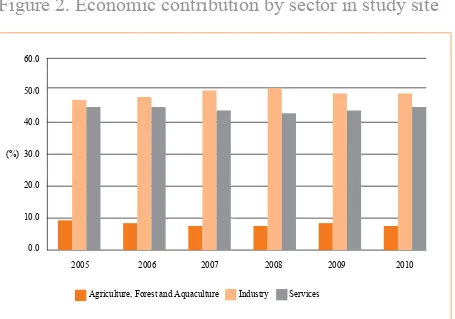
Figure 2. Economic contribution by sector in study site
It is important to note that despite about half of the labour force working in agricultural production, their contribution to GDP is low in comparison with the industrial and services sectors, about less than 10 per cent from the period 2005 to 2010 (Binh Dinh 2012) (see Figure 2). The industrial sector provides the most important contribution to economic development of Quy Nhon, providing about 50 per cent of total GDP. This explains why government has prioritised developing industry and urbanisation over the last decade. This is also a reason for the decline in the size and quality of the mangrove forest in Thi Nai Lagoon.
In the course of the study, discussions with local informants highlighted that a large area of coastal zone around Thi Nai Lagoon has been the site of both industrial and urban developments, which posed a risk to the mangrove forest. As one key informant explained,
… recognising the importance of the industrial sector, government planned to develop an economic strategy based on industry and service sectors with more industrial zone construction and urban construction too. More infrastructure has been built to support that strategy… however, you do not see many companies in the industrial zone, this has been seriously affected by the economic crisis...
Overall, this is consistent with the general situation of the industrial zone construction policy of the Vietnam Government, when almost all provinces and cities in Vietnam built industrial zones, but the coverage of enterprises in industrial zones is very low. It means that while many households have lost their livelihoods, the creation of new jobs in the industrial zones in Binh Dinh Province has also been very limited.
One of local isherfolk living in Nhon Phu Ward and participating in study reported that
… now areas around my house have been upgraded for industrial zone, even near my shrimp pond has been reclaimed for industrial zones… my son is now a worker in the Phu Tai industrial zone, but his salary is very low, while the cost of daily transportation and food is expensive…
2005 2006 2007 2008 2009 2010 60.0
50/0
40.0
(%) 30.0
20.0
10.0
0.0
The above statements pointed to the fact that the mangrove forest has been under threat of urbanisation and
industrialisation in Binh Dinh Province, which has developed despite the lack of information to policymakers from any systematic study examining the total economic value of mangrove forests or cost–beneit analysis of mangrove forest restoration.
The loss of mangrove forests along Thi Nai Lagoon’s shores and Quy Nhon City has taken place over the past 15–20 years, in part due to government policies that encouraged conversion to aquaculture ponds for export-oriented production and to the increased settlement and rapid expansion of urban services such as roads and dykes. Recently, due to
urbanisation, the rate of mangrove loss has increased and therefore the local community is more vulnerable to climate change, particularly in low-lying areas around Quy Nhon City. This area lies mostly outside the city’s current boundaries, but the city has been growing in both population and size due to migration and the annexation of adjacent rural communes. The city population was about 200,000 in 1990, and is now around 300,000. It is projected to increase to 500,000 by 2020.
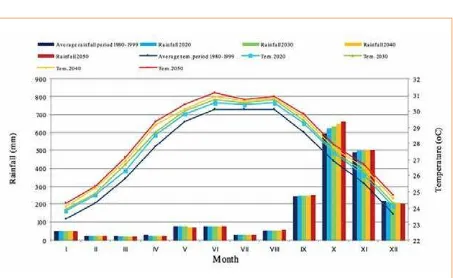
As a low-lying area, Thi Nai is recognised as prone to both loods and storms. Statistical data shows that a large proportion of the population is living around and has livelihoods depending on access to Thi Nai Lagoon. This means that they are highly exposed to hazards and vulnerable to climate change. Using a B2 climate change scenario (which is built upon an assumption of slower population growth and medium A1F1 emissions) the national scenarios of climate change show that central Vietnam will experience hotter weather with more severe droughts and typhoon (MONRE 2009). As shown in Figure 3, monthly temperature increases of about 0.7oc are expected by 2020 and 1.5oc by 2050. The rainfall during the
dry season (from May to September) will decrease by about 14.5mm while rainfall will increase in the looding season by 82.2mm (Michael and Van 2012). In combination with sea-level rise, this will cause serious damage and losses to local communities.
It is also projected that sea-level rise will increase during the storm season, which will lead to an increase in the frequency and intensity of loods and the salinisation of irrigation systems in paddy ields surrounding Thi Nai Lagoon. It is
estimated that in the context of climate change, the sea-level rise will possibly cover a large area of Binh Dinh, with a total area estimated about 1.4km2 by 2020 and 8.4km2 by 2100 (Michael and Van 2012). Given the role of mangroves
Figure 3. Changes in temperature and rainfall in Quy
Nhon at B2 Scenario (MONRE 2009)
Quy Nhon is one of three Vietnamese cities participating in the Asian Cities Climate Change Resilience Network
(ACCCRN), an eight-year initiative funded by the Rockefeller Foundation which seeks to increase the capacity of cities to plan for and respond to climate change impacts across six Asian countries. This includes funding city-level interventions, and in Quy Nhon one of these projects focuses on ecosystem services. The project is called Urban Mangrove Restoration for Storm Surge Protection and Resilient Land Use Practice.3 It aims to reduce the climate vulnerability of poor people
living on the edge of the expanding city of Quy Nhon by restoring the ecosystem of the mangrove forest in Thi Nai Lagoon and restoring 150 hectares of mangrove. The project recognised the risk of the expansion of urban development into vulnerable low-lying coastal sites along this lagoon, thus mangrove reforestation will make a signiicant contribution to ecologically sustainable and climate-resilient urban development for local communities living around Thi Nai lagoon.
This paper presents the indings of the valuation study on non-use values of the mangrove forest and conducts a cost– beneit analysis (CBA) of the mangrove restoration. Results from this CBA study would provide not only baseline information for justifying the continued protection and conservation of this mangrove forest in Quy Nhon, but would also make a signiicant contribution to the economic analysis of mangrove reforestation throughout Vietnam. The CBA of mangrove restoration is a key input (along with other considerations such as operational or administrative capacity, social acceptability, inancing feasibility) for decision makers on justifying public spending on restoration activities and mangrove management.
3 Conceptual framework and
methodology
3.1 Valuation of non-use values of mangroves
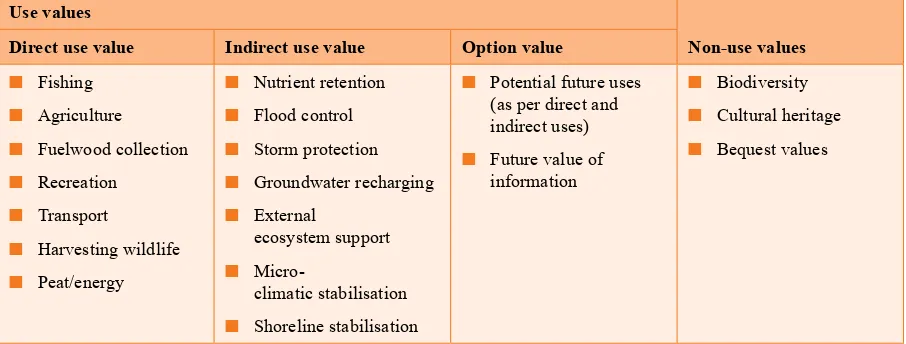
The concept of total economic value (TEV) of mangrove forests includes both use and non-use values. Use values can be derived from people’s direct or indirect uses of wetlands through wetland goods and services. Direct uses of mangrove forests could involve both commercial and non-commercial activities such as harvesting ish, collecting fuelwood and using the mangrove forest for recreation. Indirect use values refer to values provided by mangrove forests that maintain and protect natural and human systems through services such as maintenance of water quality and low, lood control and storm protection, and the production and consumption activities they support. A special category of use value is the option value, which is a premium placed on maintaining wetland resources for future possible use. Non-use values are associated with beneits derived from knowing that a resource is maintained. Non-use values include biodiversity, cultural heritage and bequest values. In general, use values involve some human interaction with the resource, whereas non-use values do not (Barbier et al. 1997). Table 2 presents a classiication of TEV for mangrove forest.
Table 2. Classiication of the total economic value for
mangrove forest
Use values
Non-use values Direct use value Indirect use value Option value
■
In this research, the non-market valuation method known as the Contingent Valuation Method (CVM) was used for valuing non-use values of mangrove forest. The use of CVM aims to assess the willingness to pay of people for the conservation and restoration of mangrove forests in Thi Nai Lagoon. CVM (Mitchell and Carson 1989) is a survey-based approach that involves developing a hypothetical market, which an individual uses to state his or her willingness to pay (WTP) for the conservation of an environmental service in a particular location. Over the past decades, the use of CVM for measuring WTP for social projects has been widely used in developing countries (VEPA-IUCN 2000; Thang and Bennett 2005; Hoa and Ly 2009; Do and Bennett 2009).
The theoretical explanation of the CVM can be found in Annex 1.
3.2 Cost–beneit analysis of mangrove restoration
3.2.1 Analytical framework
This cost–beneit analysis was carried out in ive steps, as described below.
Step 1: Design of policy options
The descriptions of these options are in Table 3.
Table 3. Design of policy options for cost–beneit
analysis
Options* Description of option
Option 1: Using Thi Nai wetlands for aquaculture development
Rapid aquaculture development has degraded the mangrove forest as
stakeholders convert wetland, with or without mangrove forest, into aquaculture ponds. It means that there is a trade-off in the use of wetland between
aquaculture development and mangrove forest restoration.
Option 2: Mangrove restoration Restoration of mangrove forest (as per ACCCRN City Resilience Strategy project).
* In the research proposal, we attempted to design three policy options: Option 1: The base case: aquaculture; Option 2: Urban development; and Option 3: Mangrove restoration. However, in reality, assessing costs and beneits of mangrove restoration under Option 2 (urban development – building infrastructure for urban development, including building basements for residential housing or industrial factories) is not feasible as there was only one pilot project on urban development planned, which was delayed. To date, the completion date remains uncertain and no products have reached the market. We made great efforts to collect secondary data and key informant interviews on this option, but unfortunately we could not ind enough information. In particular, key informants from this project rejected invitations to be interviewed due to dificulties relating to the real estate crisis in Vietnam (i.e. the market for real estate has dramatically declined). A lack of progress and clarity regarding their project meant it was not feasible to include it in this study. Thus, this option was
eliminated from this CBA analysis.
Step 2: Estimation of the costs and beneits of each option
capitalise on their own labour to reduce the costs of aquaculture. There are no additional beneits generated for society from aquaculture development.
Option 2: The costs include those relating to restoration and the costs of maintenance and protection of the mangrove forest. These can be derived from the current ACCCRN-supported mangroves restoration project entitled Ecosystem Services for Climate Resilience in Quy Nhon City. This project is being implemented over a period of four years (2012–2015), funded by the Rockefeller Foundation and implemented by the Binh Dinh Climate Change Coordination Ofice (CCCO) with support from the Institute for Social and Environmental Transition (ISET) Vietnam as the ACCCRN country coordinator. The beneits include those assessed by the valuation of non-use values, and those assessed under the consultation study conducted by the Hue team (Tuan et al. 2012), using market-based approaches to estimate use values of
the Thi Nai Lagoon wetlands.
Step 3: Calculation of net present value (NPV) of each option
Net present value (NPV) and present value were calculated using formulas (i) and (ii).
1
PV (X) = Xt(1 + r)t (i)
Where X is the present value of costs (C) or beneits (B) at time (t) at the interest rate (r)
NPV = SBt(1 + r)–t – SC t(1 + r)
–t (ii)
Step 4: Perform sensitivity analysis
The sensitivity analysis for the results of the CBA analysis is a very important step in this study, as the beneits and costs are largely dependent on a discount rate, which luctuates in accordance with economic development. Selection of the discount rate for the sensitivity analysis was considered very carefully, as according to information gathered from key informant interviews and the local community the lifecycle of a mangrove forest is 22 years. In order to relect the local perception of mangrove forests, it was decided to use 22 years as the time period over which to apply the discount rate. This means that small differences in the discount rate could possibly make signiicant changes to the net beneit of the project. There is on-going debate on using the discount rate to conduct an analysis of the sensitivity of CBA of a project for ecosystem services, which is mainly dependent on researchers, the prediction of well-being and the nature of project, but the range of discount rates should be from zero to 20 per cent. According to Weitzman (2007), a discount rate of 6 per cent is very reasonable. The details of the discount rate selection are described clearly in Section 4.2.
Internal rate of return(IRR) was used to measure and compare the proitability of investment. IRR refers to the fact that its calculation does not incorporate environmental factors, such as bank interest rates, inlation or delation. IRR calculations are commonly used to evaluate the desirability of investments or projects. The higher a project’s IRR, the more desirable it is to undertake the project.
Beneit and cost ratio(BCR): the BCR is calculated by dividing all beneits by all costs. If the resulting ratio exceeds 1.0, this means that beneits exceed costs, which suggests that, in economic terms, the proposed project should go ahead. This ratio is also used to compare and select the more proitable option of a project that should be put into operation.
Step 5: Make recommendation based on the NPV and sensitivity analysis
3.2.2 Data collection
Conducting a valuation of non-use value and a cost–beneit analysis of mangrove restoration requires a robust dataset for analysis. In this study, mixed methods were used to collect data, including secondary data collection, key informant interviews, focus group discussions, and household questionnaires.
a. Secondary data
Secondary data was collected from various agencies, which helps to contextualise the project site and to identify the target group for other methods. Secondary data (such as socio-economic data, population, disasters and damages, and about Thi Nai Lagoon) was collected from the Binh Dinh Climate Change Coordination Ofice, the Provincial Department of Statistics, from communes and wards of Quy Nhon city, and from other stakeholders.
b. Key informant interviews
Based on the literature review and secondary data collection, a list of important issues was developed, such as the current situation of the mangrove forest, planning for urbanisation and infrastructure development, the non-use value of the mangrove forest, the costs and beneits of mangrove forest restoration, climate change issues and the role of mangrove forests in Thi Nai Lagoon, Quy Nhon plans for adaptation to climate change, and action plans for mangrove conversion and development. Questions based on these were asked in key informant interviews. Twelve key informants were selected and interviewed from provincial to commune level, and from real estate companies.
c. Focus group discussions
Focus group discussions (FDGs) were the core method for collecting qualitative information for this study.Two FDGs were organised. In the irst FDG, participants were representatives of environmental management organisations including the Binh Dinh Department of Environment and Resources, Department of Agricultural and Rural Development, Department of Culture, Sport and Tourism, Department of Fisheries, Ofice for Aquatic Resources Exploitation and Protection, Binh Dinh Tourism Promotion Centre, the management board of ConChim-Thi Nai Lagoon,4 Tuy Phuoc
District’s Ofice of Agriculture, extension service staff from Phuoc Son, Phuoc Thuan and Nhon Binh communes/wards and the leader of the Con Chim Ward. In the second FDG, participants were representatives of leaders and households of selected communes and wards (see Table 4).
The main purpose of the FGDs was to tackle important issues such as local awareness about climate change and its risks, the mangrove and its beneits, current threats to the mangrove forest, and the current use and management of mangrove forests in Thi Nai Lagoon. This information was used to develop scenarios for the questionnaire surveys. Results of the FDGs were also used to develop materials for information-sharing meetings used while conducting the household surveys, which will be discussed in the next section.
d. Household questionnaire survey
Based on the literature review and focus group discussions, questionnaires were designed and pre-tested with 15
households in order to make sure that all questions raised were answerable and information was available to respond with. The questionnaire (Annex 2) included three main sections: the irst section was designed to collect information about the mangrove forest in Thi Nai Lagoon and local access to mangrove forests, and local awareness about current mangrove forest management. The second section was developed with questions relating to the current scenario applicable to the Thi Nai mangrove forest and future scenarios for mangrove forest restoration, as well as mechanisms relating to fee collection, the management of project implementation, and people’s willingness to pay either in cash (through bid levels) or
through the contribution of labour, as many households are cash poor. The third section was used to collect demographic information about respondents.
As mentioned previously, local awareness about mangrove forests and their use or non-use values as well as their role in addressing climate change impacts is very limited. The project recognised this research process as an important opportunity to raise local awareness about the project and its importance and about climate change issues in Binh Dinh Province, in particular related to the mangrove forest. In order to ensure that local communities and particularly respondents were fully informed before participating in the questionnaire, they were invited to information-sharing meetings on climate change and its impacts on local communities in correlation with the importance of mangrove protection. Eleven information-sharing meetings were held with households living in Quy Nhon City, particularly those surrounding Thi Nai Lagoon, with 271 households involved. Participants were provided with information about climate change, climate change-induced impacts and climate-related hazards, and current adaptation measures at both the government and household level, using the simplest terms and methods.
First, respondents were introduced to climate change, its causes, and how it affects both global and local communities. The meeting facilitators explained the relationship between the daily practices of local communities and climate change, such as raising livestock, transportation and felling timber in the forests. The beneits of mangrove forest to their lives in the context of climate change were also discussed. The meeting facilitators introduced some important impact mitigation practices, including a focus on what households are able to do to reduce the impact of climate change on their lives, including reforestation. However, researchers recognised that participants might over-value the beneits of mangrove restoration and so remained neutral when explaining the role of mangroves in relation to climate change mitigation, so as not to inluence their subsequent bids, but rather to ensure that respondents were fully aware of all possible use and non-use values of the mangrove.
The outcome of these information-sharing meetings was that local participants were better informed about the potential risks of climate change-induced impacts and particularly future risks associated with an increase in the frequency and intensity of hazards. It was also important because the local community recognised the importance of mangroves and understood how they might contribute to the mitigation of climate change impacts. The direct use and non-use values of mangrove forests were discussed in the information-sharing meetings, so that participants knew of the importance of the mangrove forests in Thi Nai Lagoon.
The researchers ensured that the respondents clearly understood the objectives of the study and its scenarios and the CVM methods used in order to mitigate any concerns that the study might have a negative impact on their households. The researchers explained that the research project aimed to provide policy recommendations for better management of mangrove forests in Thi Nai Lagoon. They also explained that bid levels should be given based on the importance of mangrove forest to the respondents’ lives, particularly in the context of future adaptation to climate change. Therefore the study should have no negative impacts, but instead may beneit their family in the future, such as maintaining a better environment. Therefore, attempts were made to ensure that strategic bias was minimised. Ethics were also considered carefully. While the research team ensured that information was delivered in a neutral way during the information-sharing meetings, it is nevertheless important to bear in mind that these sessions may have inluenced participants’ responses to the survey questionnaire.
To determine a statistically viable sample size for the CVM study, we used the following formula:
N
■ N = total number of households in the area, and
■
■ e = design margin of error.
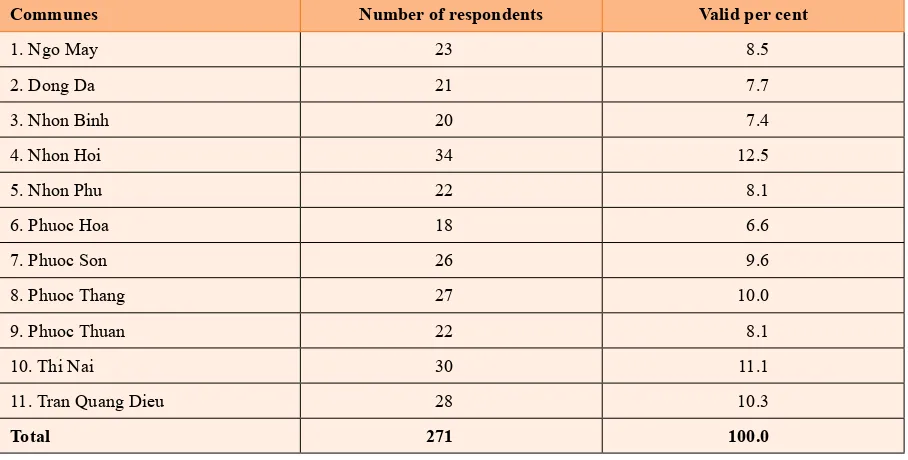
110,584 households. With a designed margin of error of 6 per cent, a total minimum sample size of 277 households was planned to be sampled in the survey. With an expected high rate of no-response and incomplete questionnaires due to its complexity, the total number of respondents to be targeted for an interview was about 300 households. These were proportionally allocated in each commune/ward in these two units, using the total number of households per commune/ ward as the basis of allocation. There were 271 questionnaires completed, checked and entered into a statistical package for the social sciences (SPSS) for analysis.
The distribution of sample size is presented in Table 4. Eleven communes/wards were selected randomly from Quy Nhon City and Tuy Phuoc District. Four of these are from Tuy Phuoc, including Phuoc Hoa, Phuoc Son, Phuoc Thang and Phuoc Thuan and seven are from Quy Nhon City.
Table 4. Distribution of surveyed respondents by
commune/wards
Communes Number of respondents Valid per cent
1. Ngo May 23 8.5
2. Dong Da 21 7.7
3. Nhon Binh 20 7.4
4. Nhon Hoi 34 12.5
5. Nhon Phu 22 8.1
6. Phuoc Hoa 18 6.6
7. Phuoc Son 26 9.6
8. Phuoc Thang 27 10.0
9. Phuoc Thuan 22 8.1
10. Thi Nai 30 11.1
11. Tran Quang Dieu 28 10.3
Total 271 100.0
4 Data analysis and results:
non-use values and cost–
beneit analysis
4.1 About the respondents: demographic information
4.1.1 Gender
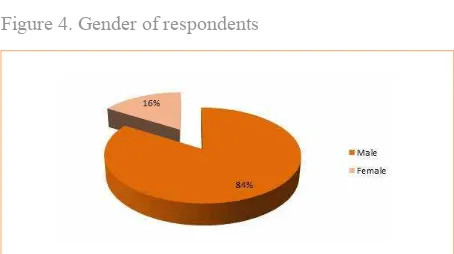
It is important to note that there are gender issues in rural areas, where the men are in charge of the physical labour and public relations for each household. Results from this study relect this. Although we considered gender issues for this study by sending invitations to both women and men equally, only 16 per cent of the 271 respondents were female and about 84 per cent were male (Figure 4). This may have skewed results, as men may have been willing to bid higher levels than women as they often generate more income for the family and are in charge of physical work related to the mangrove forest such as aquaculture, ishing and cultivation. They may also have a better awareness of the importance of the mangroves.
4.1.2 Education
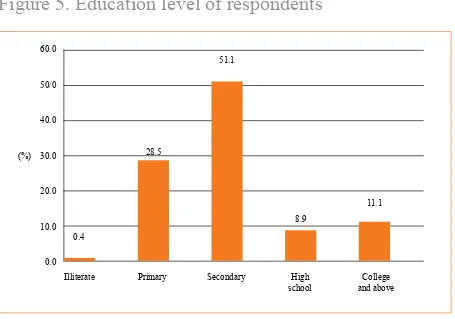
Regarding the education of respondents, it was expected that the education level would correlate positively with their bid level of mangrove forest restoration. Respondents with higher education levels may have opted to provide higher bid levels. The survey results show that respondents have low education levels, with over a quarter of respondents having completed only primary school and over a half of respondents having completed secondary school. Only 9 per cent of respondents had completed high school and 11 per cent hold college or university degrees (see Figure 5).5
Figure 5. Education level of respondents
4.1.3 Employment
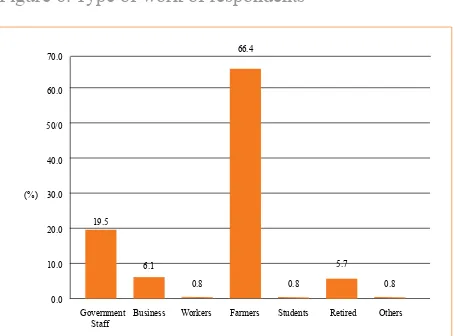
The jobs of respondents may have also affected their bid levels. Respondents with livelihoods more reliant on Thi Nai Lagoon could have provided higher bid levels. At 66 per cent, most respondents involved in this study were farmers. However, the term ‘farmers’ in the context of this study is a broad term including those who are working in agricultural production, such as ishermen, and those raising livestock, producing rice or working in aquaculture. About 19 per cent of respondents are from government ofices and agencies at town, district, ward and commune levels or state-sponsored mass membership social organisations. The distribution of respondents in the surveyed sample is consistent with the distribution of the labour force by sector in the statistical yearbook for Binh Dinh Province.
5 In Vietnam, the education system is as follows: primary (grades 1–5), secondary (grades 6–9) and high school (grades 10–12).
Illiterate Primary Secondary High College school and above 60.0
50/0
40.0
(%) 30.0
20.0
10.0
0.0
28.5
51.1
8.9
11.1
Figure 6. Type of work of respondents
4.1.4 Income
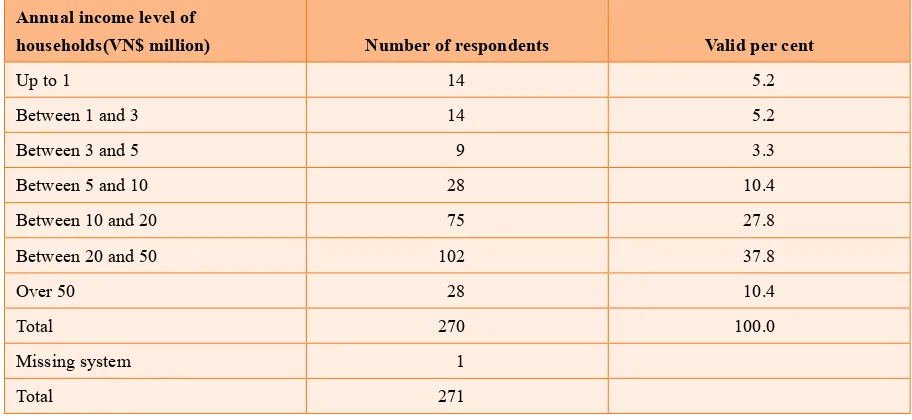
It was assumed that a respondent’s income would have a strong positive correlation with their bid level. In other words, respondents with a better income would bid at higher levels. The result of this study found that about 14 per cent of respondents had an annual income of less than VN$5 million (about US$250), while most respondents had an annual income of between VN$20–50 million (about US$1000–2500). About a quarter of respondents had an annual income of between VN$10–20 million/year (about US$500–1000). In other words, about 14 per cent of respondents are poor households, which is similar to the poverty rate for Binh Dinh (see Table 5).
When running the model, the type of house (permanent, semi-permanent or temporary) was used as a proxy for income in order to avoid endogeneity in the model, as income can be linked to other factors such as educational level, and inluence the bid level.
Government Business Workers Farmers Students Retired Others Staff
70.0
60.0
50/0
40.0
(%) 30.0
20.0
10.0
0.0
0.8 19.5
6.1
66.4
5.7
Table 5. Distribution of respondents by annual income
Annual income level of
households(VN$ million) Number of respondents Valid per cent
Up to 1 14 5.2
Source: surveyed for this study in 2012.
4.1.5 Household size
It is likely that the size of respondents’ households will correlate with the income and living costs of each household. Households with more family members may have more labour available to make a living for the family, while they will also spend more resources on each family with higher spending at the household level. In this study, the size of the family is expected to have negative impacts on bid levels. In other word, households with more family members will have lower bid levels. The result of survey shows that the average size of household in the study site is about 4.87 people per family, which is representative of the normal family size in Binh Dinh Province. The largest household is 10 people, and the smallest is 1 person.
4.2 Local awareness about mangrove restoration in Thi
Nai Lagoon
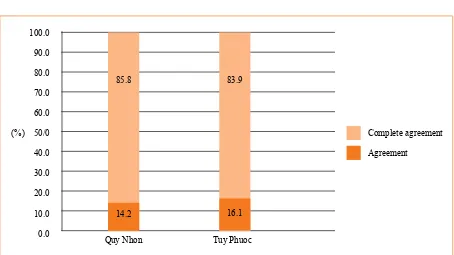
Respondents involved in this study were asked to choose an option relating to mangrove restoration in Thi Nai Lagoon, with ive options available (see below). Results show that almost all respondents (85 per cent) completely agreed with the need to restore the mangrove forest in Thi Nai Lagoon with about 15 per cent of respondents conirming their opinion at agreement level.
■
■ Completely agree with restoring mangroves in Thi Nai
■
■ Agree with restoring mangroves in Thi Nai
■
■ Neither agree nor disagree
■
■ Disagree with restoring mangroves in Thi Nai
■
A comparison of opinions between respondents in different districts and shows that there is no signiicant difference between respondents in Quy Nhon and Tuy Phuoc: a large proportion of respondents in all these districts are completely agreed with the need to restore the mangrove forest (see Figure 7).
Figure 7. Respondents’ opinions on mangrove
restoration in Thi Nai
Findings were similar when respondents were asked to rate the importance of functional and non-use values provided by the mangrove forest in Thi Nai. As explained above, they were irst invited to information-sharing meetings about climate change, the role of the mangrove forest in Thi Nai and its direct and indirect values, and where the study scenarios were also discussed. Results showed that over 80 per cent of respondents rated the direct and indirect functions of mangrove as ‘important’ and ‘very important’. Nearly 90 per cent of respondents rated mangroves and related livelihoods as extremely important, and their comments below demonstrate how the mangroves are essential to their ways of living. One interviewee engaged in aquaculture stated that:
…mangrove forest is a very important factor, helping us to gain proit from aquaculture. As you know in recent years, aquaculture households deal with many dificulties such as environmental pollution and diseases of aquaculture livestock, however our pond is still OK, which is thanks to mangrove planting on the dams of my pond. We use traditional shrimp farming and our pond is built in mangrove forest, thus environment is good. Furthermore, we do not have to reinforce our pond against wave damage…
Another isherman reported that:
…many households in this community get beneit from Thi Nai Lagoon and mangrove, we catch crab, collect clams and ish daily. Mangrove is the habitat of isheries… our lives are embedded in this lagoon, we understand the mangrove for our survival… we tried to restore it but just do it in our pond, we could not plant it in Thi Nai as we are poor…
Table 6 shows that providing recreational value is rated as less important compared with the potential for other functions, and mitigating the impacts of storms and loods (see Table 6).
Table 6. Respondents rate the functions of Thi Nai
Sustaining livelihoods 4.4 2.2 6.3 17.8 69.3 Providing recreation 2.6 4.8 10.0 38.7 43.9 Mitigating the impacts of storms and
loods
2.2 0.0 3.0 15.6 79.2
Conserving biodiversity 3.7 1.9 4.1 29.3 61.1 Potential for future uses 1.1 0.0 0.4 13.7 84.8
Source: surveyed for this study in 2012.
Respondents were provided with information describing the current situation of the mangrove forest in Thi Nai Lagoon, which has been rapidly declining due to aquaculture development, the expansion of urban areas, industrialisation and environmental pollution. The impact of climate change and sea-level rise were also provided. Respondents were then asked to rate the seriousness of the current situation. Nearly three quarters of respondents felt the situation would become extremely serious and almost all the remaining respondents felt these were serious issues. Only 3 per cent of respondents rated the issue as neutral or less serious (Figure 8).
Figure 8. Respondents rate the current mangrove
management scenarios
Extremely Serious Neutral Not serious
4.3 Non-use value of mangrove forest
4.3.1 Non-parametric estimation
Non-parametric methods were used to estimate the total non-use value of mangrove forest and showed that average willingness to pay (WTP) was around VN$131,670 per household (see Table 7). This average igure, multiplied by the total number of households in the study site, provides a total output of VN$14,633,320.000/year (equivalent to about US$700,000).6 The WTP estimate using the non-parametric method is lower than that of the parametric one, which is
consistent with the theory of the contingent method, as the non-parametric method uses a lower-bound value of bid ladders. The total non-use value of mangrove forest/ha is VN$9,755,466/ha.
Table 7. Willingness to pay for non-use value of
mangrove forest
Bid level
Total
respondents Yes Total Probability
Lower bound
(VN$)
10,000 54 45 0.83 0.09 879
50,000 55 41 0.75 0.13 6717
100,000 54 33 0.61 0.17 16,667
200,000 54 24 0.44 0.26 51,852
300,000 54 10 0.19 0.19 55,556
Total 271 153 131,670
Source: surveyed for this study in 2012.
The result of probability and its distribution show that the probability decreases when bid levels increase. This means that the lower the bid level, the higher the probability of a ‘yes’ response regarding the willingness to pay for non-use values.
Figure 9. Distribution of probability of WTP by
bid ladder
4.3.2 Parametric estimation
Whether or not to use logistic regression or probit methods to estimate the WPT of respondents is a subject of ongoing discussion among researchers. Probit regression is closely related to logistic regression; in fact, if the researchers choose the logistic transformation, this procedure will essentially compute a logistic regression with a small sample size and with observational studies. The probit analysis procedure will estimate the effective values for various rates of responses, while the logistic regression procedure does estimates of odd ratios for independent variables, which will be used to calculate the probability of an observation of ‘yes’ and to estimate willingness to pay for designed experiments. In this study, we have a sample of 271 observations. Thus, logistic regression using maximum likelihood methods to estimate each household’s WPT for the non-use value of mangrove forests further assessed correlations of different respondent characteristics (such as gender, age or education) with their bid level. The logistic model measures whether respondents respond with a ‘yes’ when asked whether they would pay for a non-use value (see Tables 8 and 9).
Prob (Yes) = intercept + b1 Gender + b2 Education + b3 Household size + b4 House type + B5 Age + b6 Livelihoods + b7 Attitudes + b8 Bid ladder.
10000 50000 100000 200000 300000 0.9
0.8
0.7
0.6
0.5
0.4
0.3
0.2
0.1
0
Proba
bi
lit
y
Table 8. Description of variables used in the binary
model
Variable Description Value
1 Odd ratio (yes) Probability of a respondent willing to pay for non-use value of mangrove
1 = yes WTP
0 = No WTP 2 Age Age of respondent Numeric variables 3 Male Gender of respondents: if the respondent is male 1 = Male
0 = Female
4 Education If respondents were educated to high-school level or above 1 = High school and above
0 = Otherwise 5 Household size Number of members of each households Numeric variables 6 House type Type of house: if the respondent’s house is permanent. This
is a proxy of income.
1 = Permanent house 0 = Otherwise 7 Livelihoods Livelihoods for each household: if the livelihoods are
related to the lagoon wetlands and mangroves
1 = yes 0 = No 8 Attitude Respondent’s attitude: if the current situation of the
mangroves is severe
1 = yes
0 = No
9 Bids Bid ladder (1000 VN$) 10, 50, 100, 200, 300
Table 9. Determinants of the willingness to pay (WTP)
function
Variables B S.E. Sig. Mean
Age 0.0037 0.0128 0.771 48.28
Male 0.7013 0.4489 0.118 0.84
Education 0.8249 0.5293 0.119 0.59
Household size 0.0654 0.1015 0.519 4.87
House type (*) 1.6892 0.3343 0.000 0.47
Livelihoods (*) 0.8029 0.3225 0.013 0.54
The results of this parametric assessment show that at least three variables affect a person’s willingness to pay for restoring the mangroves. These include the bid ladder, the type of house and livelihoods. The beta coeficient of bid ladder shows a negative relation, which is reasonable as when the bid ladder increases, the probability of saying ‘yes’ is decreased at 1 per cent signiicant level.
The livelihoods variable is signiicant at 5 per cent and has a positive sign, implying that if the householder’s livelihoods are related to the lagoon wetlands and mangroves he/she is likely to pay more for the restoration of the mangroves.
House type has a positive correlation with the willingness to pay for mangrove restoration of households, implying that households with permanent houses are likely to pay more (a permanent house in this case can be a proxy of the household’s wealth or income).
5 Cost–beneit analysis of
mangrove restoration
As mentioned previously, there are two options used in this cost–beneit analysis: using lagoon wetlands for aquaculture development or for mangrove restoration.
5.1 Option 1: Cost–beneit analysis of aquaculture
development
Aquaculture development currently takes place in Thi Nai Lagoon. The source of information to calculate the cost–beneit of aquaculture to households in Thi Nai Lagoon has been done and disseminated in the consultancy report of the Climate Change Coordination Ofice of Binh Dinh Province by Tran Huu Tuan and the research team from Hue College of Economics (Tuan et al. 2012) (see a brief introduction to this study in Annex 3).
5.1.1 Total cost of aquaculture
The average cost of 1 hectare of aquaculture development is about VN$64.6 million, in which pond preparation accounted for about 42 per cent of the total cost. The second largest cost item is feed (industrial feed and fresh feed) which is about 23 per cent of the total cost. Breeding costs are about 18.6 per cent of the total cost. The total revenue from 1ha of aquaculture is about VN$72.1million/year. Net beneits of aquaculture reached about VN$7.49 million/ha/year. The total cost–beneit analysis presented in Table 10 will be used to conduct CBA analysis in this study by multiplying 150ha by 22 years.
Table 10. Total cost–beneit analysis of 1ha aquaculture/
year in Thi Nai lagoon
Cost items Values (VN$1000) per cent of total cost
1 Pond preparation 27,000 41.8
2 Breeding 12,000 18.6
3 Industrial feed 4,300 6.7
4 Fresh feed 11,000 17.0
5 Labour 6800 10.5
6 Materials (lime, medicine) for ponds 1250 1.9
7 Other 2300 3.6
Total cost 64,650 100.0 Total revenue 72,140
Net beneit 7,490
(Sources: Tuan et al. 2012; consultancy report for CCCO Binh Dinh).
Table 11. Cost–beneit of 150 hectares of aquaculture
1 9,697,500 10,821,000 0.9091 9,837,371 8,815,997 1,021,374 2 9,697,500 10,821,000 0.8264 8,942,474 8,014,014 928,460 3 9,697,500 10,821,000 0.7513 8,129,817 7,285,732 844,086 4 9,697,500 10,821,000 0.683 7,390,743 6,623,393 767,351 5 9,697,500 10,821,000 0.6209 6,718,759 6,021,178 697,581 6 9,697,500 10,821,000 0.5645 6,108,455 5,474,239 634,216 7 9,697,500 10,821,000 0.5132 5,553,337 4,976,757 576,580 8 9,697,500 10,821,000 0.4665 5,047,997 4,523,884 524,113 9 9,697,500 10,821,000 0.4241 4,589,186 4,112,710 476,476 10 9,697,500 10,821,000 0.3855 4,171,496 3,738,386 433,109 11 9,697,500 10,821,000 0.3505 3,792,761 3,398,974 393,787 12 9,697,500 10,821,000 0.3186 3,447,571 3,089,624 357,947 13 9,697,500 10,821,000 0.2897 3,134,844 2,809,366 325,478 14 9,697,500 10,821,000 0.2633 2,849,169 2,553,352 295,818 15 9,697,500 10,821,000 0.2394 2,590,547 2,321,582 268,966 16 9,697,500 10,821,000 0.2176 2,354,650 2,110,176 244,474 17 9,697,500 10,821,000 0.1978 2,140,394 1,918,166 222,228 18 9,697,500 10,821,000 0.1799 1,946,698 1,744,580 202,118 19 9,697,500 10,821,000 0.1635 1,769,234 1,585,541 183,692 20 9,697,500 10,821,000 0.1486 1,608,001 1,441,049 166,952 21 9,697,500 10,821,000 0.1351 1,461,917 1,310,132 151,785 22 9,697,500 10,821,000 0.1228 1,328,819 1,190,853 137,966 94,914,237 85,059,682 9,854,556NPV 9,854,555
BCR 1.12
It is clearly evidenced that if we convert 150ha of mangrove in Thi Nai Lagoon into aquaculture development, the total cost would be roughly VN$85 billion and gain about VN$94 million over the next 22 years, without factoring in risks associated with climate change, environmental pollution and epidemic disease of shrimp (see Table 11). The total net present value reached about VN$9.8 billion, and the ratio of BCR is about 1.12 at a discount rate of 15 per cent, which is very low compared with mangrove restoration. Furthermore, aquaculture development only brings beneit to certain stakeholders, without any additional beneits for communities. In this study, the costs and beneits of aquaculture development do not factor in potential negative impacts on aquaculture development. It means that the beneit of aquaculture should be lower and is threatened by risks associated with climate change.
5.2 Option 2: Cost–beneit analysis of mangrove
restoration
The total beneit of mangrove reforestation was calculated using two sources of information: this project and another project called Ecosystem Services for Climate Resilience in Quy Nhon (Tuan et al. 2012). The total beneit of mangrove
restoration is the sum of the total non-use values and was estimated using the non-parametric method and parametric ones, and combining the total direct use value and indirect value for 150 hectares of mangrove. The result of key informant interviews and focus group discussions conirmed that the lifecycle of a mangrove forest is about 22 years after it is planted, after which the mangrove will decline and need to be replanted. This length of time will be used to estimate the total beneit and cost for this project. The total cost of restoration includes the restoration cost and costs for the maintenance and protection of the mangrove. A market-based approach was used to estimate the total cost.
5.2.1 Total cost of mangrove restoration
Table 12. Total cost of mangrove restoration
Table 13. Total beneit of mangrove restoration
Source: Tuan et al. 2012; consultancy report for CCCO Binh Dinh.
Table 14. Total beneit of mangrove restoration
estimated with parametric method
Source: Tuan et al. 2012; consultancy report for CCCO Binh Dinh.
5.2.3 Total economic value of mangrove restoration estimated with
non-parametric methods
As shown in Annex 4, the total present value cost of the mangrove restoration project with a discount rate of 10 per cent is VN$12.787 billion for the whole life of the project. The total beneit is a sum of non-parametric estimated non-use values, indirect use values and direct use values and comes to VN$32.963 billion. The internal rate of return (IRR) of the project reaches 17 per cent at this discount level, and the beneit/cost ratio is 2.58. It is thus reasonable to conclude that the mangrove restoration project would be a valuable investment, particularly in the context of economic crisis and climate change.
5.2.4 Total economic value of mangrove restoration estimated with
parametric methods
Estimates of the total economic value of mangrove restoration made using parametric methods come to VN$36.559 million/ha/year. This is higher than estimates from non-parametric methods. The same assumptions were used: that restoration costs would be incurred in the irst 4 years, and costs from year 5 to the inal year would be lower, as they would only include maintenance and protection costs. Beneits from mangrove restoration would also be accrued differentially, with 25 per cent of total beneits accruing in year 3 and 50 per cent of total beneits in year 4. The total beneit of mangrove restoration is accrued from year 5 to year 22. As shown in Annex 5, with a discount rate 10 per cent, the total present beneit of mangrove restoration is VN$33.6 billion; total costs are VN$12.8 billion (see Annex 5). The IRR reached 17 per cent, the beneit/cost ratio is 2.63, which represents a high potential for investment.
5.3 Sensitivity analysis
Given the merits of cost–beneit analysis, it is used widely as a decision-making tool by many organisations globally, including the World Bank, policymakers and investors. The traditional criteria for evaluation include the net present value (NPV), the beneits and costs ratio (BCR) and the internal rate of return (IRR). However, cautions must be taken into account when choosing a discount rate, as is extensively discussed (Dietz 2008 and Nordhause 2007). This is because even small changes in the discount rate for a long-term ecosystem restoration can result in a signiicant difference in the present value of new beneits, thus researchers conducting a CBA study should include present values of the sensitivity analysis. In this study, the sensitivity of NPV of a project with a lifetime of 22 years was analysed. Holding constant other factors, the project is not sensitive to changes in the discount rate.
In this study, with the purpose of ensuring the feasibility of NPV estimates for the project, discount rates of 5 per cent, 10 per cent and 15 per cent were compared for the sensitivity analysis. This is reasonable and acceptable considering the existing literature and the context of socio-economics in the study site. The discount rate of 5 per cent was used as the mangrove restoration is a social welfare development project, with its effect being mainly seen in the long term. The discount rate of 10 per cent is the common base for a CBA study, which is widely cited in the existing literature (Dietz 2008; Tuan et al. 2009; Thang and Bennett 2005; Truong 2011). The discount rate of 15 per cent is used to describe the
Table 15. Sensitivity analysis of mangrove restoration
project
Index
Unit Discount rate (%)
5% 10% 15%
IRR % 22.09 16.5 11.45
NPV (VN$1000) 40,272,997 20,176,756 9,973,002
BCR (Time) 3.72 2.58 1.88
The economic index shown in Table 15 related to the mangrove restoration project demonstrates potential for investors, with a range of changes in the discount rate from 5 per cent to 15 per cent. In other words, in the context of economic crisis where the real estate market and stock markets are dramatically in decline, the investment in mangrove restoration is still a high IRR and BCR which are valuable for investors. It would be even more valuable and meaningful when we consider the future context of climate change, with an increase in the frequency and intensity of hazards, particularly typhoons, sea-level rise and loods. Restoring the mangrove forest in Thi Nai will make a signiicant contribution in terms of reducing the impacts of climate change on communities living in Quy Nhon and around Thi Nai Lagoon. It is also an important intervention for climate change mitigation, by absorbing greenhouse gases.
5.4 Comparing cost–beneit of mangrove restoration
with aquaculture development
Table 16. Comparing beneits of mangrove restoration
with aquaculture development
Unit
Discount rate ( per cent)
5% 10% 15%
Option 2: Mangrove restoration
NPV VN$1000 40,272,997 20,176,756 9,973,002
BCR Time 3.72 2.58 1.88
Option 1: Aquaculture development
NPV VN$1000 14,788,293 9,854,556 7,143,887
BCR Time 1.33 1.12 1.11
Difference between Option 2 (Mangrove restoration) and Option 1 (Aquaculture)
NPV VN$1000 25,484,704 10,322,201 2,829,115
BCR Time 2.39 1.46 0.77
In terms of economic issues, however, Table 16 shows that with the large investment costs needed for aquaculture, the net present value of aquaculture at three discount rates from 5 per cent, 10 per cent and 15 per cent are all much lower than that for mangrove restoration. As shown in Table 16, there is a signiicant difference in both NPV of mangrove restoration and the BCR. For example, at a discount rate of 5 per cent, the difference in NPV is VN$25.4 billion and BCR is 2.39 times higher than that of aquaculture. At a discount rate of 15 per cent, the mangrove restoration still generates more, approximately VN$2.8 million in beneits than aquaculture development.
6 Discussion and conclusion
6.1 Discussion
The emerging desire to measure the costs and beneits of human activities and the beneits of environmental protection and restoration has challenged both government policymakers and communities. In reality, due to a lack of information and a desire to accrue short-term beneits, many areas of environmental resources have been used for private economic purposes such as aquaculture and agricultural production. Such decisions only beneit certain stakeholders, but do not sustain more equitable long-term economic, environmental and social development and resilience in the face of climate change. Meanwhile, the use of mangroves and wetlands is always controversial amongst policymakers and social stakeholders. A cost–beneit analysis of different options for the use of mangroves can play an important role in providing useful information to support improved mangrove and environmental decision-making (Barbier et al. 1997; De Groot et al.
2002).
CVM methods can be complex as their application may be subject to judgement, uncertainty and bias. However, CVM is mature and capable of providing useful information to support decision-making in the use and management of the environment (Glover 2003; Fisher 2000). The economic values of mangrove forests only materialise from economic transactions when stakeholders are willing to pay for the use of mangroves. The respondents involved in this study were also invited to information-sharing meetings where they were introduced to current and future scenarios for the mangroves in Thi Nai Lagoon. Climate change and its impacts and the role of mangroves in terms of supporting adaptation to climate change and sustaining local livelihoods were explained before respondents were asked to bid for the non-use value of mangroves. This study therefore demonstrates that communities place a high value on protecting their natural resources due to the ties to their livelihoods. Informing them about potential climate change-related beneits of restoring the mangroves will also affect their willingness to pay for the restoration and conservation.
The validity and reliability of CBA results are largely dependent on judgement and option deinition and local well-being (Jakobsson and Dragun 1996; Freeman 1993; Glover 2003). The study was originally designed with three options for the use of 150ha out of over 5000ha of mangroves in Thi Nai Lagoon: urban development, mangrove restoration and a base case of aquaculture development. However, due to a lack of information about and the delay in the urbanisation development project, the study conducted CBA analysis for only two options: mangrove restoration and aquaculture development. This possibly affects the output of the CBA analysis as the study could not cover the full number of options for possible wetland use. Additionally, the lower returns from aquaculture in the last few years also explain why beneits from aquaculture development are much lower than those from mangrove restoration as shown in the results above. This is a reasonable assumption as present trends in aquaculture, such as incidences of epidemic disease, combined with the projected risks of future climate change, mean that aquaculture development is projected to worsen as a development option. This is relected by the indings of this study, which can be used to inform decision-making by government and other stakeholders.
mangrove in Thi Nai Lagoon provides the main sources of income for a large proportion of the population, both in direct ways (such as aquaculture, ishing and agro-forestry) and indirect ways (such as nutrient retention, lood control, and storm protection). In the context of climate change impacts, indirect values and non-use values are being increasingly acknowledged by the respondents. These results are consistent with indings from Powell et al. (2012) who conirmed
that mangrove restoration is a valuable adaptation measure to climate change in Vietnam (UNEP-GEF 2003; VEPA-IUCN 2000).
The willingness to pay for the non-use value of mangroves in Thi Nai Lagoon is very much dependent on the
characteristics of respondents, and their willingness to pay for the non-use value of mangroves declined as the bid level increased. The indings of this study relect research conducted by Barbier et al. (1997), Hong et al. (2008), Powell et al. (2012) and Thang and Bennett (2005) who found that education levels, income and gender correlation inluence
the willingness to pay for the non-use values of mangroves: better-off households have a higher willingness to pay for non-use values; men are willing to pay more for non-use values and mangrove restoration than women, as men are often in charge of manual work related to mangrove access in Thi Nai and income-generation for the family. The well-being of respondents also has a positive correlation with the bid level: households with better incomes will bid higher levels, despite whether their homes are closer to or further away from Thi Nai lagoon.
The cost–beneit analysis of mangrove restoration provides important information for policymakers as it reveals potential returns with signiicant changes in discount rates from 5 per cent to 15 per cent. Investment in mangrove restoration should generate higher beneits in the long term than base-case aquaculture over a range of discount rates from 5 per cent to 15 per cent. With increases in the frequency and intensity of typhoons, loods and sea-level rise expected under climate change in Quy Nhon, mangrove restoration is likely to make an even bigger contribution to the local economy in the face of climate change. This should incentivise policymakers to give priority to mangrove restoration in Thi Nai Lagoon. In the context of climate change, mangrove restoration can be an effective measure to reduce its impacts, particularly in countries with long coastal lines like Vietnam, as reforestation is considered an effective mitigation solution to deal with climate change impacts. The importance of this should be recognised and given priority in the national strategy to prevent and mitigate the impacts of climate change (Hong et al. 2008; Reid 2011; Powell et al. 2012).
6.2 Conclusion and recommendations
6.2.1 Conclusion
Wetlands with mangroves are providing tangible and intangible beneits for human beings who have direct and even indirect interactions with them. Households involved in this study understand and recognise the importance of mangroves in Thi Nai Lagoon for their livelihoods. A large number of communities live around Thi Nai Lagoon whose livelihoods depend on access to wetlands and mangroves. Mangroves in Thi Nai Lagoon have signiicant economic value to local communities both through direct use, indirect use and non-use values.