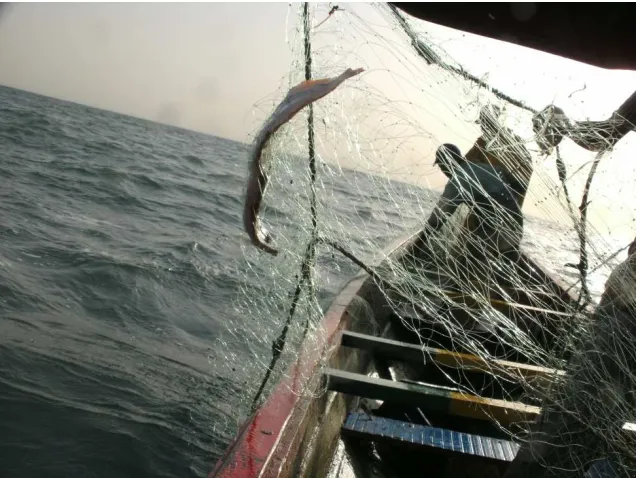
Guide for the Identification of Commonly
Caught Fish in the Bottom Set Gillnet
Fishery in the Gambia
Acknowledgements
The proper classification and identification of fish species is one of the most important components of data collection. This guide provides some species identification facts and hints for field agents and consumers.
This guide was produced by Gibril Gabis, Emily K. Nichols and Lina Kelpsaite from the USAID/Ba-Nafaa Project and Christopher Parkins, Kathleen Castro and Barbara Somers from the University of Rhode Island. Photos were provided by the aforementioned USAID/Ba-Nafaa and University of Rhode Island staff members, as well as sources listed in the reference section of the guide.
This guide could not have been completed without the help of the fishermen who have played a valuable role in creating a sustainable future for Gambian fisheries.
This publication is available electronically on the Coastal Resources Center’s website at http://www.crc.uri.edu. For more information contact: Coastal Resources Center, University of Rhode Island, Narragansett Bay Campus, South Ferry Road, Narragansett, Rhode Island 02882, USA. Tel: (401) 874-6224; Fax: (401) 789-4670; Email: [email protected]
Citation: Gibril Gabis, Emily Nichols, Lina Kelpsaite , Christopher Parkins, Kathleen Castro and Barbara Somers, 2012, Guide for the Identification of Commonly Caught Fish in the Bottom Set Gillnet Fishery in the Gambia, Coastal Resources Center, University of Rhode Island, pp.68
Disclaimer: This report was made possible by the generous support of the American people through the United States Agency for International Development (USAID). The contents are the responsibility of the authors and do not necessarily reflect the views of USAID or the United States Government. Cooperative Agreement # 624-A-00-09-00033-00.
Preface
These are photos of species captured in the bottom set gillnet fishery in Sanyang, Kartong, Brufut, and Gunjur in The
Gambia. This fishery captures sole destined for the export market but also catches many other species for market.
The species are listed in three tables following this preface. The tables are organized by the species common name, local name and scientific or Latin name respectively. Within each table the species are further organized into pelagic, benthic and invertebrate species.
The pages that follow the species list include a photo of each species with additional identification characteristics and references to similar species to further assist with identification.
Identification characteristics were obtained from the Guide to Sengalese Fish.
List of Species - Common Names
4
Pelagic Species Page Demersal Species Page Invertebrates Page
Madeiran sardinella 7 Dusky grouper 22 Duplex murex 58
Round sardinella 8 Dungat grouper 23 Pig's snout volute 59
Shad 9 White grouper 24 Elephant’s snout volute 60
West African Spanish mackerel 10 Sompat grunt 25 Neptune's volute 61 Great barracuda 11 Bastard grunt 26 Giant hairy melongena 62
Milk shark 12 Rubberlip grunt 27 Elegant cuttlefish 63
Atlantic bonito 13 Bigeye grunt 28 Pink shrimp 64
False scad 14 Angolan dentex 29 Tiger shrimp 65
Atlantic bumper 15 Gilthead seabream 30 Pink lady lobster 66
Frigate tuna 16 Cassava croaker 31
Alexandria pompano 17 Longneck croaker/Ladyfish 32
Butterfish 18 Law croaker 33
Bluespotted seabream 19 Bobo croaker 34 African sicklefish 20 Prickly puffer 35 Lusitanian cownose ray 21 Red pandora 36 West African red snapper 37 Monrovia doctorfish 38
Crevalle jack 39
West African goatfish 40 Giant African threadfin 41 Royal threadfin 42 Lesser African threadfin 43 Rough head sea catfish 44 Smooth mouth sea catfish 45
Guinean sea catfish 46
Round stingray 47
Common guitarfish 48
Flying gurnard 49
Bluespotted triggerfish 50 Guinean tonguesole 51 Senegalese tonguesole 52
Thickback sole 53
Black/Tiger sole 54 Spottail spiny turbot 55 Bearded brotula 56
List of Species- Local Name
5
Pelagic Species Page Demersal Species Page Invertebrates Page
Yaboye tass 7 Coacher 22 Red toufa 58
Ganarr-ri-gauge 49
Ndorr 50
Sole ngress/Ndedere 51
List of Species- Scientific Name
6
Pelagic Species Page Demersal Species Page Invertebrates Page Sardinella maderensis 7 Epinephelus guaza 22 Murex duplex 58 Sardinella aurita 8 Epinephelus goreensis 23 Cymbium cymbium 59 Ethmalosa fimbriata 9 Epinephelus aeneus 24 Cymbium glans 60 Scomberomorus tritor 10 Pomadasys jubelini 25 Cymbium pepo 61 Sphyraena barracuda 11 Pomadasys incisus 26 Pugelina morio 62 Rhizoprionodon acutus 12 Plectorhynchus mediterraneus 27 Sepia elegans 63 Sarda sarda 13 Brachydeuterus auritus 28 Penaeus notialis 64 Decapterus rhonchus 14 Dentex angolensis 29 Penaeus monodon 65 Chloroscombrus chrysurus 15 Sparus aurata 30 Palinurus mauritanicus 66 Auxis thazard 16 Pseudotolithus senegalensis 31
Alectis alexandrinus 17 Pseudotolithus typus 32 Stromateus fiatola 18 Pseudotolithus brachygnathus 33 Pagrus caeruleostictus 19 Pseudotolithus elongatus 34 Drepane africana 20 Ephippion guttifer 35 Rhinoptera marginata 21 Pagellus bellottii 36
Lutjanus agennes 37
Acanthurus monroviae 38
Caranx hippos 39
Pseudupeneus prayensis 40 Polydactylus quadrifilis 41 Pentanemus quinquarius 42 Galeoides decadactylus 43 Arius latisculatus 44
Arius heudelontii 45
Arius parkii 46
Taeniura grabata 47
Rhinobatos rhinobatos 48 Dactylopterus volitans 49 Balistes punctatus 50 Cynoglossus monodi 51 Cynoglossus senegalensis 52 Microchirus variegatus 53 Synaptura cadenati 54 Psettodes belcheri 55
Brotula barbata 56
Common Name:
Madeiran sardinella
Local Name: Yaboye tassScientific Name: Sardinella maderensis
The Madeiran sardinella is a pelagic, coastal zone, subtropical climate species that is found in
brackish and marine environments; usually at depths of 0 to 80-meters. It inhabits coastal waters and primarily feeds on small planktonic invertebrates, fish larvae, and phytoplankton. Breeding occurs from July to September; adults and juveniles show north-south migrations in their range, which correlates with the seasonal upwelling.
Common Length: 25 cm
Common Name:
Round sardinella
Local Name: Spanish sardine/Yaboe moroc Scientific Name: Sardinella aurita
The round sardinella is a coastal, pelagic species that prefers clear saline water. It ranges from inshore and near surface to the edge of shelf down to 350 m. Breeding occurs throughout the year with distinct peaks in mid-June through September. There are two principal spawning periods in areas linked with upwelling regimes. Juveniles stay in nursery areas (off
Senegal/Gambia) but upon maturity rejoin adult stocks in the colder offshore waters. Feeds mainly on zooplankton,
especially copepods, with phytoplankton being eaten by juveniles.
Common length: 25 cm
Common Name: Shad
Local Name: Bonga/Kobo/Chalow Scientific Name: Ethmalosa fimbriataThe shad is a pelagic, catadromous, tropical climate species that is found in marine, freshwater, and brackish environments; usually at depths of 0 to 50 meters. It inhabits in shore waters, lagoons, and upstream rivers (approximately 300 km). Breeding occurs throughout the year in waters with salinities up to 38 ppt with peaks at the mouth of the River Gambia in June/July and October/November. Spawning occurs in the sea, estuaries, and rivers. Feeds by filtering phytoplankton.
Common Length: 25 cm Maximum Length: 45 cm
Common Name: West African Spanish
mackerel
Local Name: Njuna
Scientific Name: Scomberomorus tritor
The West African Spanish mackerel is a pelagic, tropical climate species that is found in brackish and marine environments; usually at depths of 20 to 25 meters. It is found in warm waters and forms schools close to shore. It reproduces in July to August in Mauritania and April to October in Senegal. Eggs and larvae are pelagic. It enters coastal lagoons to feed and eats primarily clupeids,
particularly Shad.
Common Length: 75 cm Maximum Length: 100 cm
Common Name: Great barracuda
Local Name: SeddaScientific Name: Sphyraena barracuda
The great barracuda is a reef-associated subtropical climate species that is found in brackish and marine environments worldwide usually at depths of 3 to 30 meters. Adults are found near the water’s surface while juveniles inhabit mangroves, estuaries, and shallow inner reef areas. Reproduction patterns are unclear with
reports ranging from spawning associated with particular phases of the moon to spawning occurring year round with the exception of winter. Most likely, spawning patterns differ by region. They primarily feed on fish, cephalopods, and shrimp. Typical life span is 14 years.
Common Length: 180 cm
Common Name: Milk shark
Local Name: Gainde gaugeScientific Name: Rhizoprionodon acutus
The milk shark is a benthopelagic tropical climate species that is found in brackish, freshwater, and marine environments. It inhabits continental shelves, and occurs near the surface in shallow waters. They give birth to live young with
approximately 2-5 young per litter. They feed primarily on small pelagic and benthic bony fish, but also cephalopods and other invertebrates.
Common Length: 100 cm Maximum Length: 175 cm
Common Name: Atlantic bonito
Local Name: Woyain/WalassScientific Name: Sarda sarda
The Atlantic bonito is a pelagic subtropical climate species that is found in brackish and shallow marine environments; usually at depths of 80 to 200 meters. It is able to adapt to temperatures between 12° to 27° C, and salinities between 14 and 39 ppt.
Spawning occurs from December to June, including peaks in January and April, off Senegal and The Gambia. It primarily feeds on small schooling fish, squid, and shrimp; but is also known to be
cannibalistic.
Common Length: 50 cm Maximum Length: 90 cm
*Reports of ciguatera poisoning
Common Name: False scad
Local Name: JaiScientific Name: Decapterus rhonchus
The false scad is a subtropical species that is found in marine and brackish environments; usually at depths of 30 to 50 meters. It tends to form schools and occurs frequently near the bottom, but can also be pelagic and sometimes found near the surface. It spawns in shallow waters and the eggs are pelagic. It primarily feeds on invertebrates and small fish.
Common Length: 35 cm Maximum Length: 60 cm
Common Name: Atlantic bumper
Local Name: Lanya lanyaScientific Name: Chloroscombrus chrysurus
The Atlantic bumper is a pelagic, coastal zone, tropical species that is found in brackish and marine environments; usually at depths of 0 to 55 meters. It inhabits soft bottoms, but
sometimes forms schools near the surface. Juveniles are often found in more oceanic waters. It primarily feeds on fish,
cephalopods, and zooplankton.
Common Name: Frigate tuna
Local name: Kiri kiri
Scientific Name: Auxis thazard
The frigate tuna is a pelagic, coastal zone as well as oceanic species. Adults are coastal or near-coastal, while juveniles are more widely spread throughout the world's ocean. Spawning occurs in open water close to the surface where temperatures are greater than 24°C. Eggs are released by females in several batches. It feeds on small fish, squids, planktonic crustaceans, and stomatopod larvae.
Common Length : 30 cm Maximum Length: 55 cm
Photo courtesy of Google images: © Mads Scheibye & Claus Qvist Jessen
10 to 12 spines
7 anal finlets 15 or more dark
wavy lines in scaleless area
Short pectoral fins
Common Name: Alexandria pompano
Local Name: YawalScientific Name: Alectis alexandrinus
The alexandria pompano is a pelagic, coastal zone subtropical climate species that is found in marine environments; usually at depths up to 70 meters. Adults are solitary strong swimmers that inhabit coastal waters down to 70 m, while juveniles are usually
pelagic and drifting. Spawning occurs in summer
months and eggs are pelagic. It primarily feeds on squid and other fishes.
Common Length: 60 cm
Common Name: Butterfish
Local Name: HassawScientific Name: Stromateus fiatola
The Butterfish is a pelagic, subtropical climate species that is found in marine environments; usually at depths of 10 to 70 meters. It inhabits waters over continental shelves and juveniles are often associated with pelagic medusae. It feeds primarily on zooplankton ,small fishes, and sometimes medusae.
Common Length: 40 cm Maximum Length: 50 cm
Common Name: Bluespotted seabream
Local Name: Kibaro
Scientific Name: Pagrus caeruleostictus
The bluespotted seabream is a pelagic marine species with a depth range of 30-50 meters. It is generally found in hard bottoms (rocks and rubble), the older individuals in the deeper part of the range, the young in inshore areas. Sexual maturity at 2 years old. Spawning migration occurs parallel to the coast with intermittent spawning between spring and autumn over soft bottoms in shallow waters Feed mainly on bivalves and also on crustaceans and fish.
Common Length: 55 cm Maximum Length: 90 cm
Common Name: African sicklefish
Local Name: TapandarrScientific Name: Drepane africana
The African sicklefish is a pelagic tropical climate species that is found in brackish and marine environments; usually at depths of 10 to 75 meters. It inhabits sandy and muddy bottoms, and feeds on fish eggs, benthic invertebrates, and detritus.
Common Name: Lusitanian cownose ray
Local Name: Souki
Scientific Name: Rhinoptera marginata
The Lusitanian cownose ray is a subtropical pelagic species that is found in marine environments. It inhabits warm temperate coastal waters, and often swims near the surface in large groups. It primarily feeds on crustaceans, fishes, and bottom-living mollusks. It is
ovoviviparous with a gestation period of 1-year with 2 to 6 embryos.
Maximum Length: 200 cm
* IUCN listed as Near Threatened (NT)
Common Name: Dusky grouper
Local Name: Coacher
Scientific Name: Epinephelus guaza
The dusky grouper is a demersal marine species that is commonly associated with reef habitat. They prefer rocky bottom, in depth ranges of 8-300 meters, where they lead a solitary and territorial life. Juveniles
inhabit inshore waters. Juveniles diets include crabs and octopi; while larger individuals diets consist mostly of fish, the majority of which are reef-associated species.
Common Length: unknown Maximum Length: 150.0 cm
*IUCN listed as Endangered (EN)
Common Name: Dungat grouper
Local Name: DoyeScientific Name: Epinephelus goreensis
The dungat grouper is a demersal, tropical climate species that is found in marine environments; usually at depths of 80 to 300 meters (adults are found in deeper waters). It inhabits rocky, sandy, and muddy bottoms. Little is known about spawning habits of this species. It feeds primarily on crustaceans and fish.
Common Length: 50 cm Maximum Length: 140 cm
Can be confused with the White and Dusky grouper.
Common Name: White grouper
Local Name: ChoffScientific Name: Epinephelus aeneus
The white grouper is a demersal, tropical climate species that is found in brackish and marine environments; usually at depths of 20 to 200 meters. Adults inhabit rocky and mud-sand bottoms, and juveniles inhabit coastal lagoons and estuaries. Most groupers spawn between May and August and are protogynus hemaphrodites being females first and then males. It primarily feeds on fish, crabs, and cephalopods.
Common Length: 60 cm Maximum Length: 120 cm
Can be confused with the Dungat and Dusky groupers
*IUCN listed as Near Threatened (NT)
Common Name: Sompat grunt
Local Name: SompatScientific Name: Pomadasys jubelini
The sompat grunt is a demersal tropical climate species that is found in brackish and marine environments; usually at depths of 20 to 50 meters. It inhabits sandy and muddy bottoms of coastal waters and estuaries, and feeds on fish and benthic crustaceans.
Common Length: 45 cm Maximum Length: 60 cm
Common Name: Bastard grunt
Local Name: DahaScientific Name: Pomadasys incisus
The bastard grunt is a demersal tropical climate species that is found in brackish and marine environments; usually at depths of 10 to 100-meters. It inhabits rocky and sandy bottoms, and feeds primarily on bottom and near-bottom invertebrates.
Common Length: 25 cm Maximum Length: 50 cm
Common Name: Rubberlip grunt
Local Name: Banda
Scientific Name: Plectorhynchus mediterraneus
The rubberlip grunt is a demersal tropical climate species that is found in marine environments; usually at depths of 10 to 180-meters. It inhabits sandy and muddy bottoms, and primarily feeds on zoobenthos and zooplankton.
Common Length: 60-cm Maximum Length: 80-cm
Common Name: Bigeye grunt
Local Name: Hurr hurr
Scientific Name: Brachydeuterus auritus
The bigeye grunt is a benthopelagic tropical climate species that is found in brackish and marine
environments; usually at depths of 10 to 100-meters. It inhabits sandy and muddy bottoms, remaining near the bottom during the daytime and moving up to open water at night. It feeds primarily on invertebrates and small fish.
Common Length: 23-cm Maximum Length: 30-cm
Common Name: Angolan dentex
Local Name: Camara camara/Butterfish Scientific Name: Dentex angolensisThe angolan dentex is a demersal tropical climate species that is found in marine environments; usually at depths of 15 to 300 meters. It inhabits various types of bottoms on the continental shelf and slope. It is a protogynus
hermophrodite with most individuals beginning as
females and changing to males at a length of 18–23 cm. It feeds primarily on crustaceans, but also fish, mollusks and worms.
Common Length: 25 cm
Common Name: Gilthead seabream
Local Name: WarrangeScientific Name: Sparus aurata
The gilthead seabream is a demersal, subtropical climate species that is found in rocky and seaweed bottoms but is sometimes caught on sandy grounds. Young are usually at depths of 1 to 30 meters while adults can be up tp 150 meters. They are protandric hermaphrodite; (first males, then females). Spawning occurs from October to December. They are mainly carnivorous, (shellfish which they can easily crush, crustaceans and fish) but can sometimes be
herbivorous. They inhabit seagrass beds and sandy bottoms.
Common Length: 35 cm
Common Name: Cassava croaker
Local Name: Fotta
Scientific Name: Pseudotolithus senegalensis
The cassava croaker is a demersal tropical climate species that is found in brackish and marine
environments; usually at depths up to 70 meters. It inhabits muddy, sandy, and rocky bottoms. Smaller individuals are found in shallow waters, but rarely enter estuaries. It primarily feeds on fish, shrimp, and crabs. Spawning occurs from November to March.
Common Length: 50 cm Maximum Length: 114 cm
Can be confused with longneck, bobo, and law croakers.
Common Name: Longneck croaker/Ladyfish
Local Name: TononeScientific Name: Pseudotolithus typus
The longneck croaker, or ladyfish, is a demersal tropical climate species that is found in brackish and marine environments. It inhabits muddy and sandy bottoms at depths up to 150 meters, but is most abundant in waters less than 60 meters at temperatures above 18°C. It feeds primarily on small fishes and crustaceans. Spawning takes place from late spring to early fall.
Common Length: 50 cm Maximum Length: 140 cm
Can be confused with the cassava croaker, law croaker and bobo croaker.
Common Name: Law croaker
Local Name: NgukaScientific Name: Pseudotolithus brachygnathus
The law croaker is a demersal tropical climate species that is found in brackish and marine environments; usually at depths up to 150 meters. It inhabits muddy and sandy bottoms, and sometimes enters coastal lagoons and estuaries. It primarily feeds on small fish and cretaceans.
Common Length: 85 cm Maximum Length: 230 cm
Can be confused with the cassava, longneck, and bobo croaker.
Common Name: Bobo croaker
Local Name: JotorScientific Name: Pseudotolithus elongatus
The bobo croaker is a demersal tropical climate species that is found in brackish and marine environments; usually at depths of 50 to 100 meters. It inhabits muddy bottoms and also enters estuaries and coastal lagoons. Spawning occurs from December to February. It primarily feeds on fish and shrimp.
Common Length: 30 cm Maximum Length: 47 cm
Common Name: Prickly puffer
Local Name: KonkarehScientific Name: Ephippion guttifer
The prickly puffer is a demersal, subtropical climate species that is found in marine and
brackish environments; usually at depths of 10 to 100 meters. It inhabits hard substrate in shallow coastal waters, estuaries, bays, and lagoons. It feeds on crabs, echinoids, mollusks.
Common Length: 55 cm Maximum Length: 80 cm
Common Name: Red pandora
Local Name: Tiki
Scientific Name: Pagellus bellottii
The red pandora is a demersal subtropical climate species that is found in marine environments; usually at depths of 10 to 50 meters. It is a protogynic
hermaphrodite (female first, then changes to male) that occurs in schools over hard and sandy bottoms. It primarily feeds on crustaceans, cephalopods, and small fish.
Common Length: 25 cm Maximum Length: 42 cm
Similar Species: bluespotted seabream and West African red snapper
Common Name: West African red snapper
Local Name: YahkScientific Name: Lutjanus agennes
The West African red snapper is a reef-associated tropical climate species found in brackish, marine, environments. It Inhabits rocky bottoms and coral reefs, and is also common in brackish lagoons and rivers (particularly juveniles).
Common Length: 50 cm Maximum Length: 139 cm
Common Name: Monrovia doctorfish
Local Name: Doctour gaugeScientific Name: Acanthurus monroviae
The monrovia doctorfish is a demersal tropical climate species that is found in brackish and marine environments; usually at depths of 5 to 40 meters. It inhabits rocky and coral bottoms, and is sometimes found in mouths of rivers and lagoons. It primarily feeds on zooplankton,
phytoplankton, and detritus.
Common Length: 38 cm
Common Name: Crevalle jack
Local Name: SakaScientific Name: Caranx hippos
The crevalle jack is a reef-associated subtropical species that is found in brackish and marine environments; usually at depths of 1 to 200 meters. It inhabits coastal zone waters over
continental shelf; juveniles occur in brackish estuaries with muddy bottoms, near sandy beaches and on seagrass beds; Spawning occurs offshore and eggs are pelagic. It primarily feeds on small fish, shrimp, and other invertebrates, and is known to grunt or croak when caught.
Common Length: 60 cm Maximum Length: 105 cm
Common Name: West African goatfish
Local Name: RousserScientific Name: Pseudupeneus prayensis
The West African goatfish is a demersal tropical climate species that is found in marine
environments; usually at depths of 10 to 300 meters. It inhabits sandy and muddy bottoms in coastal
waters over the continental shelf. It feeds on benthic invertebrates.
Common Length: 35 cm Maximum Length: 50 cm
Common Name: Giant African threadfin
Local Name: KujaliScientific Name: Polydactylus quadrifilis
The giant African threadfin is a demersal tropical climate species that is found in brackish and marine environments; usually at depths of 15 to 55 meters. It inhabits sandy and muddy bottoms in shallow waters, and sometimes occurs in brackish habitats. It
primarily feeds on crustaceans and fishes.
Common Length: 150 cm Maximum Length: 200 cm
Common Name: Royal threadfin
Local Name: Ngorr sikimScientific Name: Pentanemus quinquarius
The royal threadfin is a demersal tropical species that is found in brackish and marine environments; usually at depths of 10 to 70 meters. It inhabits sandy and muddy bottoms in shallow waters and frequently occurs in brackish habitats. It primarily feeds on fish and shrimp.
Common Length: 25 cm Maximum Length: 35 cm
Common Name: Lesser African threadfin
Local Name: Chekem
Scientific Name: Galeoides decadactylus
The lesser African threadfin is a demersal subtropical climate species that is found in brackish and marine environments; usually at depths of 10 to 70 meters. It inhabits sandy and muddy bottoms in shallow
waters, and feeds primarily on benthic invertebrates.
Common Length is: 30 cm Maximum Length: 50 cm
9 to 10 Free rays
Dark spot present when alive
Short anal fin
Common Name: Rough-head sea catfish
Local Name: KongScientific Name: Arius latisculatus
The rough-head sea catfish is a demersal tropical climate species that is found in marine and brackish environments; usually at depths of 30 to 70 meters. It is frequently found in brackish estuaries and will
sometimes enter freshwater. It primarily feeds on fish, benthic invertebrates, zooplankton, and detritus.
Common Length: 40 cm Maximum Length: 70 cm
Check Dental Plates: Can be confused with smooth-mouth sea catfish and Guinean sea catfish
Dental plates on the arch of the mouth
Broad base of the supraoccipital process (dorsal view of the head)
45
Common Name: Smooth mouth sea catfish
Local Name: NgunjaScientific Name: Arius heudelontii
The smooth mouthed sea catfish is a demersal tropical climate species that is found in marine and brackish environments and along continental shelf . It has a red pectoral fin and a wide mouth.
The rays of the fins are venomous and the wound inflicted is extremely painful
Common Length: 35 cm Maximum Length: 85 cm
46
Common Name: Guinean sea catfish
Local Name: White KongScientific Name: Arius parkii
The Guinean sea catfish is a demersal tropical climate species that is found in marine and brackish environments and along continental shelf . It inhabits shallow coastal waters and river estuaries. It has a smaller mouth than the Black Kong
The rays of the fins are venomous and the wound inflicted is extremely painful
Common Length: 35 cm Maximum Length: 50 cm
Common Name: Round stingray
Local Name: Raiyentan
Scientific Name: Taeniura grabata
The round stringray is a demersal tropical species that is found in marine environments; usually at depths of 10 to 300 meters. It inhabits sandy and rocky bottoms, partially covered with sand or mud, and feeds on bottom-dwelling fish and crustaceans.
Maximum Length: 250 cm
Common Name: Common guitarfish
Local Name: DakounaScientific Name: Rhinobatos rhinobatos
The common guitarfish is a demersal subtropical species that is found in marine and brackish environments; usually at depths up to 100 meters. It inhabits sandy and muddy bottoms and sometimes rocky reefs. It swims slowly over the bottom or is partially buried. It is
ovoviviparous and has 1 to 2 litters per year of about 4 to 10 embryos. It primarily feeds on benthic invertebrates and fishes.
Common Name: Flying gurnard
Local Name: Ganarr-ri-gaugeScientific Name: Dactylopterus volitans
The flying gurnard is a reef-associated subtropical species that is found in marine and brackish
environments. It inhabits sandy, muddy, and rocky
bottoms and uses its pectoral fins to explore the bottom surface. It primarily feeds on benthic crustaceans.
Common Length: 38 cm Maximum Length: 50 cm
Common Name: Bluespotted triggerfish
Local Name: Ndorr
Scientific Name: Balistes punctatus
The bluespotted triggerfish is a demersal species. It is commonly found in the tropical marine
environment, in depth ranges from 0-200 meters. It inhabits sandy and rocky bottoms of coastal waters where it feeds on crabs and bivalves.
Common Length: 25.0 cm Maximum Length: 60.0 cm
Common Name: Guinean tonguesole
Local Name: Sole ngress/Ndedere Scientific Name: Cynoglossus monodi
The Guinean tonguesole is a demersal tropical species that can be found in both marine and brackish waters. It inhabits the sand and mud bottoms of coastal waters, in a depth range of 10-30 meters. Their diet consists mainly of mollusks.
Common Length: 30.0 cm Maximum Length: 40.0 cm
51
Elongated snout
12-14 Scales between two lateral lines
Common Name: Senegalese tonguesole
Local Name: Sole longue
Scientific Name: Cynoglossus senegalensis
The senegalese tonguesole is a demersal tropical species found in both marine and brackish water environments. This species is commonly found on the sand and mud bottoms of coastal waters, in a depth range of 10-110 meters . Their diet consists of mollusks, shrimps, crabs and fish .
Common Length: 25.0 cm Maximum Length: 66.0 cm
Common Name: Thickback sole
Local Name: Palpal
Scientific Name: Microchirus variegatus
The thickback sole is a demersal
subtropical species that lives in the marine environment. It inhabits mud or sand
bottoms in a depth range of 20-400 meters. Their diet consists of a wide range of small bottom-living organisms, mainly
crustaceans (amphipods, shrimps), also polychaete worms and bivalve mollusks .
Common Length: 14.0 cm Maximum Length: 35.0 cm
Common Name: Black/Tiger sole
Local Name: Sole teegirr
Scientific Name: Synaptura cadenati
The tiger sole is a demersal tropical species which lives in the marine environment. It is commonly found on sand and mud bottoms in depths up to 50 meters.
Common Length: unknown Maximum Length: 35.0 cm
Common Name: Spottail spiny turbot
Local Name: Trippo
Scientific Name: Psettodes belcheri
The spiny turbot is a demersal tropical species that lives in both marine and brackish waters. It can be found in depths of up to 150 meters. Though this species is considered a demersal fish, it can chase its prey by swimming off the bottom . Their diet consists of fish and shrimps .
Common Length: 45.0 cm Maximum Length: 80.0 cm
Common Name: Bearded brotula
Local Name: Loos
Scientific Name: Brotula barbata
The bearded brotula is a benthopelagic marine species commonly found around reef structure. It inhabits the continental shelf , on sandy and muddy bottoms out to depths of 650 meters . Juveniles common in reefs.
Common Length: 50.0 cm Maximum Length: 94.0 cm
56
12 Barbels One single
Canary drum
Local Name: Nyaw neeh
Scientific Name: Umbrina canariensis
The canary drum is a demersal subtropical
species which inhabits the marine environment. It is commonly found in mud and sand bottoms of the shelf and upper slope in depth ranges from 50-300 meters. Their diet consists of small
shrimps, worms and other bottom invertebrates .
Common Length: 40.0 cm Maximum Length:80.0 cm
Common Name: Saddled seabream
Local Name:
Scientific Name: Oblada melanura
The saddled seabream is a subtropical marine species that is known to be both
benthopelagic and oceanodromous. Tends to travel in large schools, forms aggregations over rocky bottoms or seagrass beds (Zostera and seaweeds), in a depths up to 30 meters. Omnivorous but their diet consists mainly of small invertebrates .
Common Name: Duplex murex
Local Name: Red toufaScientific Name: Murex duplex
The duplex murex is a demersal subtropical climate snail species that is found in marine environments.
Common Name: Pig’s snout volute
Local Name: WalarrScientific Name: Cymbium cymbium
The pig’s snout volute is a demersal subtropical snail species that is found in marine
environments.
Common Length: 15 cm
Common Name: Elephant’s snout volute
Local Name: Warr waranScientific Name: Cymbium glans
The elephant’s snout volute is a demersal subtropical snail species that is found in marine environments.
Common Length: 35 cm
Common Name: Neptune’s volute
Local Name: YeatScientific Name: Cymbium pepo
The neptune’s volute is a demersal subtropical climate snail species that is found in marine environments.
Common Length: 27 cm
Local Name: Bunyul toufa
Scientific Name: Pugelina morio
The giant hairy melongena is a demersal tropical snail species that is found in marine environments. It inhabits muddy bottoms, often near river estuaries. It primarily feeds on carrion.
Common Length: 16 cm
Light spiral bands
Dark brown color, light brown periostracum
Common Name: Elegant cuttlefish
Local Name: YeredehScientific Name: Sepia elegans
The elegant cuttlefish is a demersal tropical species that is found in marine environments; usually at depths of 150 m.
Female Maximum Length: 9 cm Male Maximum Length: 7 cm
Dorsal view
Common Name: Pink shrimp
Local Name: SipahScientific Name: Penaeus notialis
The pink shrimp is a demersal tropical climate species that is found in marine environments; usually at depths of 11 to 36-meters. It inhabits firm bottoms of sand, mud, silt, and shells. Juvenile Shrimp are able to thrive in waters with low salinities.
Maximum Length: 23 cm Male; 17 cm female
Common Name: Tiger shrimp
Local Name: Sipah/Tiger
Scientific Name: Penaeus monodon
The tiger shrimp is a demersal tropical climate species that is found in marine environments to depths of 90 meters. It inhabits muddy bottoms.
Maximum Length: 33.6 cm, 60-130 grams weight
May be confused with Peneaus kerathurus INTRODUCED SPECIES
Common Name: Pink spiny lobster
Local Name: SoumScientific Name: Palinurus mauritanicus
The pink spiny lobster is a demersal subtropical climate species that is found in marine environments. It
inhabits sandy, rocky, and coral bottoms of the continental shelf; usually at depths of 200 to 400 meters. Reproduction occurs in late summer and fall. Common Length: 45 cm
Maximum Length: 75 cm
References
FOOD AND AGRICULTURE ORGANIZATION OF THE UNITED NATIONS http://www.fao.org/fishery
FISHBASE http://www.fishbase.org
SEALIFEBASE http://www.sealifebase.org
NETHERLANDS BIODIVERSITY INFORMATION FACILITY http://www.nlbif.nl
HARDY’S INTERNET GUIDE TO MARINE GASTROPODS http://www.gastropods.com
WORMS-WORLD REGISTER OF MARINE SPECIES http://www.marinespecies.org