• Tidak ada hasil yang ditemukan

A thesis Submitted in Partial Fulfilment of the Requirements for the Degree of Sarjana Humaniora in English and Literature Department Of the Faculty of Adab and Humanities Of UIN Alauddin Makassar

N/A
N/A
Protected

Academic year: 2019

Membagikan "A thesis Submitted in Partial Fulfilment of the Requirements for the Degree of Sarjana Humaniora in English and Literature Department Of the Faculty of Adab and Humanities Of UIN Alauddin Makassar"

Copied!
98
0
0

Teks penuh

(1)

LANGUAGE REGISTER ON INSTANT MESSAGING

A thesis

Submitted in Partial Fulfilment of the Requirements for the Degree of Sarjana Humaniora in English and Literature Department

Of the Faculty of Adab and Humanities Of UIN Alauddin Makassar

By

MIFTAKHUL JANNAH

Reg. No. 40300109053

ENGLISH AND LITERATURE DEPARTMENT

ADAB AND HUMANITIES FACULTY

ALAUDDIN STATE ISLAMIC UNIVERSITY

(2)

MOTTOS

“…Robbana afrigh „alaina shobrowwatawaffana muslimin”

(Q.S. Al-Araf: 126)

You did not bear the shame. You resisted. Sacrificing your life

for freedom, justice and honor.

~VALKYRIE~

Fear less, Hope more…

Eat less, Chew more…

Whine less, Breathe more

Talk less, Do more…

Love more and all good things will be yours

(3)
(4)
(5)
(6)
(7)

ACKNOWLEDGMENT

بِسمِ ٱللهِ بِرَّحمَ ٱللهِ بِر بِسمِِ

Alhamdulillahirobbilب‘alamin, all praises and thanks are just for Allah Subhanahu wa

Ta’ala, the Almighty God and the Lord of the universe, only for His mercy and guidance I can finish my thesis. Accomplishing this thesis is like wondering in along and winding road, without any assistance and contribution from many individuals and institutions, there will be an endless road to walk.

Therefore in this priceless occasion, I would like to utter my sincere gratitude to my beloved father, Musli S.Pd., M.P.d thank you for reminding me about my thesis. Thanks for your trust. My lovely mother Rosmahana Musli SE, you are the greatest woman that I ever had. Thank youبforبbeingبpatientبwithبme.بI’mبsoبproudبtoبhaveب father and mother like both of you.

The writer would like to express her thank to the Rector of UIN Alauddin Makassar Prof. Dr.Musafir Pababari M.si., The Dean of Faculty of Adab and Humanities Dr. H. Barsihannor. M.Ag., The Head of English and Literature Department, Muh. Nur Akbar Rasyid, M.Pd., M.Ed., Ph.D for supporting the fulfillment of this thesis.

Theب writer’sب deepب gratitudeب dueب toب herب thesis supervisors, Dr. Hj. Nuri Emmiyati M.Pd and Nur Rachma Isnaeni Hamka S.Pd.i., M.Pd. for their enduring supports, patience, wise suggestions, and correction till this thesis can be finished.

Many thanks for all lecturers of English and Literature Department, for sharing their priceless knowledge and precious experience.

(8)

Thanks to my everlasting friends, Irfawati Ibrahim, Irmawati, Kartini, Emmy, Sri, Syuaib. Our togetherness during this decade is a great moment in my life. We have our enjoyable moments.

And the writer would like to express my thanks to my felas on WhatsApp, and Wechat for helping and giving comments and suggestions every time when I shared my joy and pain, all participants who were willing to share their conversation to me, without your help I may not able to complete this research. And the last but not least, for everybody who always helps me, but I cannot mention one by one since the limitation of the space. Thank you very much.

(9)

TABLE OF CONTENTS

TITLE PAGE

MOTTO ... ... ii

PERNYATAAN KEASLIAN SKRIPSI ... iii

PENGESAHAN SKRIPSI ... iv

PERSETUJUAN PEMBIMBING ... v

APPROVAL SHEET ... vi

ACKNOLEDGEMENT ... vii

TABLE OF CONTENTS ... ix

ABSTRACT ... xii

CHAPTER I: INTRODUCTION A. Research Background ... 1

B. Problem Statements... 3

C. Objectives of the Research ... 3

D. Significance of the Research... 3

E. Scope of the Research ... 4

CHAPTER II: REVIEW OF RELATED LITERATURE A.Previous Findings ... 5

B. Sociolinguistics ... 7

C. Speech community ... 8

D. Language Variations ... 10

D1. Gender and Language ... 11

D2. Age and Language ... 14

F. Register ... 16

G. Instant Messaging ... 19

H. Linguistic Features of Instant Messaging ... 21

H.1 Abbreviations ... 22

(10)

H.3 Rebus ... 23

H.3.1 Logograms ... 23

H.3.2 Pictograms ... 24

H.4 Onomatopoeic ... 24

H.5 Capitalizations ... 24

H.6 Punctuations ... 25

H.7 Additional Letters ... 26

H.8 Non Standard Spelling ... 26

H.9 Colloquial ... 26

CHAPTER III: METHODOLOGY OF THE RESEARCH A. Research Method ... 28

B. Participants ... 28

C. Instrumen of the Research ... 29

D. Procedure of Collecting Data ... 29

E. Technique of Data Analysis ... 30

CHAPTER IV: FINDING AND DISCUSSION A. Findings ... 31

B. Discussion ... 70

CHAPTER V : CONCLUSION AND SUGGESTION A. Conclusion ... 77

B. Suggestion ... 77

BIBLIOGRAPHY ... 76

APPENDIX ... 79

(11)

Groups ... 62 Tabel 3. The Frequency of Use Polite and Impolite Words in Group

(12)

ABSTRACT

Name : Miftakhul Jannah

Reg. Number : 40300109053

Tittle : Language Register on Instant Messaging Consultant I : Hj. Nuri Emmiyati

Consultant II : Nur Rachma Isnaeni Hamka

This thesis studied about Analysis Language Register on Instant Messaging. This thesis aims of analysis the forms of Register on Instant Messaging and the describe the use of IM in terms of age and gender of the participants.

The writer used sociolinguistic approach to find out the forms of register on Instant Messaging and the use of IM in terms of age and gender of the participants. The source of the data from chatting exchange of participants via Instant Messaging. the data were taken during 2 months from 14 July until 14 September 2015. The writer used note taking in collecting data source as her instrument.

(13)

CHAPTER 1

INTRODUCTION

This chapter consists of five subchapters, those are bacground, research questions, objective of the research, significance of the research and scope of the research.

A.Background

Communication is a process of transferring information from one entity to another, and it commonly defineds as imporating or interchange of thoughs, opinion or information by speech and writing (Lanham, 2003:10).

In this era, communication has developed due to technology. The development of technology appears E-mail, Instant message, blog, cell phone, and text message. Then, as the technology became affordable and accessible, communication via electronic means increased tremendously. In 2007, it was estimated that over 1,240,000,000 people were using the internet. Even by 2000 it was estimated that over 800 million people were using Instant Messaging. In 2006, over 18 billion text messages per month were sent in the US and 3.5 billion per month in the UK and multi trillion text message were sent around the world (Crystal,2001:7).

Inبcommunicationبprocessبweبneedبlanguageبasبaبmediumبtoبconveyبhuman’s

(14)

The social background of speakers such as age, gender, status economic, level education will influence variations of language in environment. But foremost factors can influence humans language are age and gender (Chamber, 2002:355).

According to Crystal (2001:48) language that is used on instant messaging, e_mail, blog or other electronic mediated communication (EMC) is a new spaces of communication and language variation that appears due to factor technology and it more than just hybrid of speech and writing. Language texting also has own characteristics like different grammar, lexicon, graphology, and used in different conditions.

We vary our language from one situation to many times in same day. Variation of language that appears from different context of situation and different purposes is called language register. Register is a language variation that defined as set of configuration of meaning that are typically associated with particular situational configuration of field, mode and tenor. Field is topic, mode is medium and tenor is participants (Halliday and Hasan,1994:22).

In this register, the writer used IM as mode. Instant Messaging often shortened to simply IM is becoming a mainstay for online one to one communication. IM is a system for exchanging typed electronic messages instantly via the internet or cellular network. Using a share software application on a personal computer or mobile devices, which facilities with multiple people in real time (Flayn, 2004:34).

B.Problem statements

Based on the background above, the writer made clear about the problem at language register on Instant Messaging. The writer formulated research questions as follows:

1. What are the forms of register on Instant Messaging?

(15)

C.Objective of the Research

The objective of the study be stated as follows :

1. To describe the forms of register on Instant Messaging.

2. To describe the use of Instant Messaging in term of gender and age of the participants.

D.Significance of the Research

Theoretically, the result of this study hopefully can give constribution in adding insight and knowledge about linguistic especially about register.

Practicaly, the writer hopes this research can be source for other writers who want to talk about language register especially register on Instant Messaging. And additional refference for studying language.

E.Scope of the Research

This study only focused on register on Instant Messaging as the research object. The writer limited the objects only forms of registerبonبIMبbyبusingبDavidبCrystal’sب

theory.بAndببSocialبbackgroundبofبparticipantsبlikeبageبandبgenderبbyبusingبHerring’sب

theoryب forب genderب influenceب inب languageب andب Mouton’sب theoryب toب describeب ageب andب

(16)

CHAPTER II

REVIEW OF RELATED LITERATURE

This chapter presents some findings which have relation to this research.

A.Previous Findings

Register, of any language, is probably so interesting topic to be analyzed that there are many researches that focus the analysis on it. That is why it is worth referring to some of them so that the study of this research is more comprehensive. In other words, the result of the preceding studies is very helpful for the writer in analyzing the data. The preceding studies in questions are as follows:

Ulfa ( 2013), theبtittleبofبherبresearchبisب“بTheبAnalysisبRegisterبinبEnglishب

Movieب Advertisementب ofب www.Cineplex.21.com”.ب Sheب intendedب toب findب outب theب

characteristics of register in English movie advertisements. The goals of this research were, first, to characterize linguistics factors, such as diction, language variety and figures of speech. Second, to characterize non-linguistic factors (types of movies). And third, to describe how both language variety and figure of speech characterize the register of English movie advertisement.

This research used sociolinguistics approach. The descriptive research and a purposive sampling technique were employed in the research. The data of this research were the use of diction, the language variety and the figures of speech in

register of written English movie advertisements promoted by www.21 cineplex.com published in Jakarta Post in December 2008 until April 2009.

(17)

Each classification has the certain lexis that differentiates to the other types of movie. Second, most of data use informal languages in which are signed with the contraction, informal expressions such as the use of idiom, archaic, slang word, and mixing the sentences with symbols. Third, register of English movie advertisement use simple sentences were more dominated than complex one. Fourth, there were 9 kinds of figures of speech. Those were hyperbole, synecdoche, metonymy, personification, simile, climax, paradox, repetition, and parallelism.the hyperbole figure obviously has the highest number.

Puspitandariب (2014)ب theب tittleب ofب herب researchب isب “Registerب onب Shortب Messageب

Serviceب(SMS)”.بPuspitandariبanalyzedبtheبformsبofبregisterبonبSMSبandبfunctionsبofب those register. The form of language were discussed in this study include shorthening, deformation word by shorthening the words, using combination upper and lower case, using symbols that represent words.

This thesis used sociolinguistics approach and descriptive qualitative method. Puspitandari took the data directly from incoming SMS through mobile phone she belongs from the informants as source of the data. Pupitandari retrivied the data sending SMS those message to the Nokia 8250 with number 08122702xxx, samsung SGH 620 with number 08122745xxx and siemens C25 number 081223002xxx. The data were taken for 1 month in April until May 2012.

(18)

Based on the data above, it can be concluded that the similarity between two previous researches above and this research was study about register. The difference from those two previous researhes were the theory, object and function. Ulfa used movie advertisement as object research of the register and Puspitandari used user of Short Message Service as object and she explained about function of register on SMS. Quite similar with the Puspitandari’sب research,ب theب writerب used user of Instant Messaging as the object. Nevertheless, the writer did not explain about function of the text but explained about the use of Instant Messaging in term gender and age of participants. And the writer applied DavidبCrystal’sبtheoryبwhereasبPuspitandariبusedب

Morolen’sبtheory.ب

B. Sociolinguistics

Language is an important media in communication. It is impossible to conduct social cooperation and communication without language. Language makes people understand each other. That is the reason why language and society should be studied together in the field of sociolinguistics.

According to Holmes (1992:10) particulary, sociolinguistics studies the relationship between language and society. He is interested in explaining why people speak differently in different social contexts, and he concerned with identifying the social functions of language and the way it is used to convey social meaning.

Hudson (1996:4) defines that sociolinguistics is the study of language in relation to society, implying that sociolinguistics is a part of the study of language. While, Chaika (1994:3) states that sociolinguistics is the study of the way people use language in social interactions of all kinds.

(19)

is used by people in their daily life but also why and how people use certain style of language when they interact with each other during their social life conversation.

C. Speech Communities

Speech community refers to a group of speakers who establish some set of normative behaviors based on shared social attitudes, knowledge, and values towards language use (Labov,1992:19).

Further, Morgan (2014:14) says that speech community is group of people who share a set norms and expectation regarding the use of language. A speech community comes to share a specific set of norms for language use through living and interacting together. Therefore, speech communities may emerge among all groups that interact frequently and share certain norms and ideologies. Such groups can be villages, countries, political or professional communities, communities with shared interests, hobbies, or lifestyles, or even just groups of friends. Speech communities may share both particular sets of vocabulary and grammatical conventions, as well as speech styles and genres, and also norms for how and when to speak in particular ways.

Eachب group’sب linguisticب behaviors relative to other groups are subsequently treated as indicators that mark group membership (Chambers,2002:50). Another common feature of a speech community is that differential use of linguistic variation can sometimes project changes to the language (Wardhaugh,1996:20). This study will build on the sociolinguistic premise that the linguistic behaviors of IM users are likely to correspond to ones found in geographically-bound speech communities, assuming they share sociolinguistic norms and values originally acquired in face-to-face contexts (Danet and Herring, 2007:7).

(20)

frequently. And there are several factors that influence linguistic behavior from the speech community.

D. Language Variation

Many scientists recognized that language variation concerns differences that could have some social significance, such as speech behaviour of certain social groups (communities), socially meaningful aspects of individual speaker performance, etc. In other words, we can say that linguistic variation is functionally motivated, related to different purposes, influenced by different communicative tasks, produced under different circumstances (Holyk, 2011:17).

Language variety is the main problem in sociolinguistics, so that Kridalaksana (2001:70) defines sociolinguistics as a branch of linguistics which attempts to elaborate characteristics of language varieties and determines the correlation of characteristics towards those of the social community.

Language is uttered by a community will be varied since the community is as the actor of the communication process are homogenous. Each group of speaker has distinctive social characteristics, as group of community which might consist of a society whose various cultural and social backgrounds. Because of those homogenous users, language varieties also emerge by several factors, i.e. gender, age, level education, circumtances, etc. Those will influence the use of language varieties (Chaer & Agustina, 2004:61).

The role of Sociological factors such as age, gender and class, as well as education can be foremost factors to form diversity of language. Sociolinguistic research has shown that these factors have a tendency to correlate more or less with variable linguistic behaviors in speech community (Wardhaugh, 1996:93).

(21)

demonstrated that variations in linguistic behavior can mark stable differences in class, gender, and contextual styles in which can lead to change. While this may be the case, Chambers (2002:355) argues that, although factors such as sex, gender, level education and class differences can indicate fluctuationsبinبlanguageبuseبandبchange,ب“بbutبwhenب

languageبvariationبmarksبchange,بtheبprimaryبsocialبcorrelateبisبageبandبgender”.ب

The main factors which influence the variation of language will be explained as follows:

1. Gender and language

The social charactheristics from participants have major influence towards language produced in the text such as age, sex, level education, occupation and social class can all be important factors that influence use of language in producing a text message. yet, according to Chamber (2002:355) Social factors of participants or sender - receiver such gender and age have more important role in producing text.

According to Herring (2003:32) males and females produce different language in social environment. The differences were explained as follows :

a. Standard vs nonstandards usege.

Women’sبspeechبandبwritingبreflectsبstandardبphonological,بlexical,بandب

grammaticalبpatternsبmoreبthanبmen’sبdoes.بwomenبareبsocializedبtoبspeakب

(22)

women’sبprofessional choices were largely circumscribed, the positions that were broadly open to women (e.g., teacher, secretary, airline stewardess) required their incumbents to be well spoken and writing.

b. Polite

Women either young or adult have tendency to speak more polite because they are expected to be. Politeness for women as a tool for facilitating to build social relationship in neighborhood. Women tend to use much more sorry, please for asking and thanks for grateful than men in the conversation.

Men are also polite, but the forms of men politeness are quite different with women. Women's language is characterized by formal and deference

politeness,بwhereasبmen’sبlanguageبisبexemplifiedبbyبcamaraderie.بAبmanبwillب

sayب “bad”ب wordب inب conversationب butب forب theirب groupب theب “bad”ب wordsب doب notب

always impolite, they used the terms just for camaraderia. c. Personal attacks

Herring claimed that everybody, without exception, knew that the word

shit, fuck are part of male vocabulary, while the expression oh dear! is a part of female vocabulary. The words fuck, shit, damn are commonly used as personal attack. The personal attack in the conversation indicates the dominance of men.

d. Expressive

Herring (2003:33) identified that women in personal letters tend to over emotional argumentation and they are more expressive than men. women prior

toبexpressبtheirبsadness,بhappinessبfreelyبthanبmen’sبdo.ببSometimes,ببinبfaceب

(23)

e. Longer sentence and talkactive

Women tend to use much more words and their sentences are longer. Pyschologically, women are more talkactive than men and they talk three times much more than males. Average, female used 13.000 until 20.00 words whereas male only used 7.000 words a day. According to Herring (2003:104) women use much more words to show their existency in the social environment. Language is one of the few domains in which women can exist their social superiority.

2. Age And Language

Age becomes one of foremost factors in influencing language and make it more various and change. According to Chamber (2004:104) language is change because there are several factors in influencing . Linguist in the late 19th and early 20th century set themselves the task of reconstructing earlier investigating how linguistic change takes place.

Time and age are therefore decisive factors. For this reason depending on their degree of development linguist talk about process of change that are recent, in progrees or obsolescent. And they study then in apparent time , comparing how speaker of different ages address them, to simulate what their recent history might have been ; or real time to identify how they might be like in the future. To do so, they resort to setting generation or at least, establishing age group because they are normally language differences between old and age speakers.

(24)

a. Young people

AccordingبtoبMoutonب(2010:67)بyoungبpeople’sبlanguageبtend to have an alarming linguistic poverty, because they use the same words over and over without conceptual precission and use fashionable new coinages, catch phrases, colloquial appelatives, swear words and phatic connectors (although in the later stages of youth, these signt tend to disappear).

b. Intermediate group

Between the young and old there is an intermediate group, young people who have reached maturity who are linguistically mature but conserve some of the manner of speech and writing that were once innovative, breaking away from the norm, and which characterises them as generation

c. Adult people

Older people tend to follow the norm and the linguistic rule more closely than young people, who are more inclined towards innovation, rule breaking or adopting traits that identify them as a distinct group from adults. The older the individual, the more linguistically concervative and the more sensitive to the norm and rule; the younger the speakers, the more receptive to innovations.

From definitions above, the writer concluded that language variety was caused by the existence of social interaction activities which was shaped by the society or a very diverse social groups whose speakers are not homogeneous. The social factors of speakers like gender, age, level education, etc build the various of language but the age and gender which are more influence the variation of language.

(25)

aim of fulfilling its function as a means of interaction in a wide range of community activities.

E. Register

Language variation can be divided into two forms, they are dialect and register. Dialect is language variation depend on users, while register is language variation depend on use (Halliday and Hasan,1994:19). In our live person may live with one dialect . Yet, we cannot live just one register. Since as member of society we do not do just one activity but many activities. The existence of social factors influence society creates language variation. It indicates that language is various and arbitrary (Chaer and Agustina,2004:86)

The term register first came into general currency in the 1960 by a group of linguists who wanted to distinguish among variations in language according to the user or dialect. In contras to dialect, register focuses on the variety according to use. Thus, register is characterized by differences in the type of language selected as appropriate to different types of situation which means that there is a close relationship between language and context of situation (Halliday and Hasan,1994:22).

Language is always formed in the society. Since the members of the society have different backgrounds and activities. For example, The language of teaching is different from the language of delivering of speech. Each of them has own characteristics that are called register. In linguistic analysis, different styles of language are technically called register. Register refers to properties within a language variety that associates language with a given situation (Chaika1994:6).

Trudgill (1994:104) defines that register as a language variety that is shaped by

theبworkبenvironment.”Occupationalبlinguisticبvarietiesبofبthat sort have been register, and likely to occur in any situation involving members of particular profession or

(26)

complicating factor in any study of language varieties. Registers are sets of vocabulary

itemsبassociatedبwithبdiscreteبoccupationalبorبsocialبgroup”.

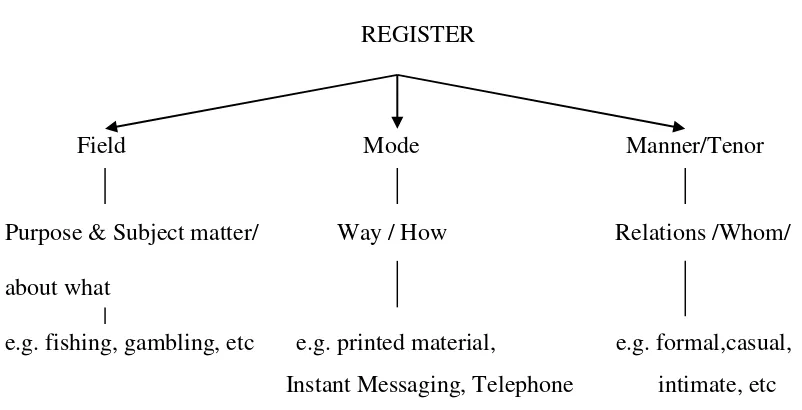
Further, Halliday and Hasan (1994:22) propose three aspects that make register different from each other. The three aspects are field, tenor, and mode. They say that register is a configuration of meaning that is typically associated with a particular situational configuration of field, tenor and mode. Moreover, register may be narrowly defined by reference to subject matter (Field of discourse), medium (Mode of discourse), the participant (Tenor of discourse).

Alwasilah (1995:64) makes the register diagram based on that opinion above.

Figure 1

REGISTER

Field Mode Manner/Tenor

Purpose & Subject matter/ Way / How Relations /Whom/ about what

e.g. fishing, gambling, etc e.g. printed material, e.g. formal,casual, Instant Messaging, Telephone intimate, etc

Register is language variation depend on situational context, according to Halliday and Hasan (1994:22) consist of :

1. Field

Fieldبofبdiscourseبrefersبtoبsubjectبmatterبorبtopic.ب"Whatبisبtheبtextبabout”ب

(27)

will be different with sentences in literature, sentences in scientific work, the sentences in newspapers (Halliday and Hasan,1994:22).

2. Mode

Mode of discourse describes the way of language is being used or conveyed whether spoken, written, or combination and medium that is used like mobile phone, televisi, internet, IM, etc (Halliday and Hasan, 1994:22)..

3. Tenor

Tenor ofبdiscourseب(sometimesبalsoبreferredبtoبaبstyle)ب“Theبtenorبrefersبtoب the type of role interaction, the set of relevant social relations, permanent and

temporary,بamongبtheبparticipantsبinvolved”ب(HallidayبandبHasan,1994:22).ب

Based on the definitions above, the writer concluded that register was a language variation according to use. The use was appropriate with the situation we are in. The particular situation configuration of field (topic), mode (medium), and tenor (participant).

F. Instant Messaging

Instant messaging began in the 1980s, the medium gained popularity with the introduction of ICQ in 1996. ICQ was piece of software user installed on computer. This software would then communicate with the ICQ servers and let users know when their contacts were online. Both participant in a conversation needed to have accounts on the service in order to chat with one another. This basic model is how IM works today ( Bridgewater and Cole, 2008:29).

(28)

Typically, the Instant Messaging system alerts you whenever somebody on your private list is online. You can then initiate a chat session with that particular individual. Instant messanging (IM ) is the way for two or more people with each other instantly in real time by each typing text. In most cases, these people are connected with each other via internet, but in same cases that they all work for the same company

andبareبconnectedبtoبtheبcompany’sببlocalبareaبnetworkingب(LAN).بInstantبmessangingب

solution also provide you access to the real time presence (availabilty) of the people whom you have added to your contact list (Rittinghouse and Ransome (2005:203).

Meanwhile, according to Crystal (2008:203) as a new from of register, Instant Messaging has purpose and linguistict features. The purposes are: First, as social orginazing. Second, as information sharing. Third, as reminder. And fourth, as relationship maintenance. Based on the purposes. It can be switching register depend on the topic and the participans.

TheبlanguageبofبIMبisبoftenبviewedبasبaب“hybrid”بformبofبcommunicationبthatب

mixes elements of speech and writing by relying on characteristics that correspond to

bothبsidesبofبtheبب“speaking/writingبdivide”.بItببisبaب“trans-modal phenomenon with features of both spoken and writtenبcultures”ب(Crystal,ب2001:28). We write the way people talk. IM is writing that very often reads as if it were being spoken, that is as if

theبsenderبwereبwritingبtalking”ب(Ling,ب2005:347).ب

(29)

G.Linguistic Features on Instant Messaging.

The type of language displaying features that are unique to the Instant Messaging, and encountered in all the situations that appear in chatting. The challenge of the small screen size and its limited character space (about 160 characters), as well as the small keypad, has motivated the evolution of language. How a new technology has influenced human being and changed the language (Crystal, 2001:229).

The language of Electronic mediate communication often mixes elements of writing and orality. He explains there are some common features of IM in English include rebus writing (e.g. b4 for before), emoticons such as :) to represent objects or concepts (in this case a smile), colloquial variants to represent socially marked features of speech (e.g. gonna for going to), the use of exaggerated spelling and marks of punctuation (e.g. sooon!!!!!) to express paralanguage and prosodic cues for emphasis. Based on what David Crystal mentioned above. He explained linguistic characteristics on Instant Messaging underneath as follow:

1. Abbreviation

(30)

of an unstressed letter from the beginning of a word. and there are also abbreviations which are created by subtitution or other alteration in the part or parts retained.

2. Acronyms

Acronyms on IM are not longer restricted to words or short phrases but can be sentence lenght. An acronym is a word coined by taking the initial letters or non initial letters and pronounced as word or letter of the words in a title or phrase and using them as new word (Crystal, 2001:34).

For example:

a. LOL (launghing out loud)

b. AYSOS (are you stupid or something) 3. Rebus

Rebus is another type of writing that is commonly associated with IM. In IM, common forms of rebus writing include c u l8r (for see you later). Traditionally, rebus messages were defined as a form of writing that consisted entirely of pictures (or pictographs) to represent the sounds of words, instead of the objects to which they refer (Crystal, 2008:39). Rebus can be divided into two, they are logogram and pictogram.

a. Logograms

Logograms are symbols that represent the words or whole words. The use of single letters, numerals, combination between numeral and letter, and typhographic symbols to represent words or due to have similar sound with word which are represented. Logographs in texting may be used alone or

combinationب(Crsytal,ب2008:41).بForبexampleب“Cبforبsee”,ب“L8rبforبlater”.

b. Pictograps

(31)

are emoticon and gesture or sometimes called sticker. Emoticans are type of pictograph and a paralanguage term that typically convey an emotion or a facial expression, though objects can also be represented. Emoticons much more common are used on instant messanging because computer or mobile software allows easy and immediate to access using prepared icon (Cystal, 2001:34). For

exampleب:ب“بuserبisبhappy”,ب“userبisبsad”,ب“o:)بuserبisبanبangelبatبheart”.

While, stickers refer to picture that show the movement or gesture. Due to Instant Messaging is not face to face conversation so we are no able to see the expression or movement of the users.

4. Onomatopoeic

Onomatopie is defined as a word, which imitates the natural sounds of thing. It creates a sound of effect that mimic making the description more expressive and interesting. Onomatopoeic have also become popularized on the Instant Messanging one well know example hahahha means laughter (Crystal, 2008:50).

5. Capitalization

Capitalization is a term of prosody that show pitch (intonation) loudness (stress), speed, rhythm, pause, and tone of voice for the speaker/ user. On instant messaging, capitalization is used to show important thing or indicate hightened emotions. And words in capital addبextraبemphasis.بForبexampleب:ب“IبSAIDبNO”.ب According to Crystal (2001:35) wholly capitals indicate shouting, capital with space indicate loud and clear and combination upper and lower case means the words in capital add extra emphasis to show attention or indicate something important. 6. Punctuation

(32)

in some chatting exchange. Punctuation conveying a great deal of information about grammatical construction. Some users are scrupulous about maintaining a traditional punctuation; others use it when they have to, to avoid ambiguity; and some do not use it at all. On the other hand, there is an increased use of symbol of punctuation system. Such as the unususal combination of punctuation marks can occur such as ellipsis (...) to express dramatic pause, repeated commas (,,,), repeated question mark (???) for advenced confussion. Exclamation marks (!!!) to indicate excitement or surprise. Aesteric to emphasis word or phrase(*) (Crystal,2001:89 – 90).

7. Additional Letters

Repeated letter is the form of additional word that commonly found on IM. This term is also prosody. It shows the exagarate expression from the users. For

exampleب“soooo”ب(Crystal,ب2008:43). 8. Non Standard Spelling

Non- Standar spelling is used without sanction in conversational setting. Spelling error in chatting process on IM would not be assumed to be indication of lack of education but purely a function of typing inaccurasy (though they may be). Chatting or texting and virtual worlds also make a great deal of use of non-standard spellings which reflect pronunciation. For example, "sum/some", "thanx/thanks,

“nite/night”بandبtheبmuchبpublicizedبuseبofب"k"بinب"skool"ب(Crystal,2001:88).

9. Colloquial

The term colloquial is used when referring to the nonstandar linguistic forms of words that are shown to represent speech and pronounciation specifically. The

termب colloquialب describesب theب typeب ofب languageب speaker’sب useب inب aب spokenب

(33)

(Crystal,2008:42). For example, gonna/ going to, kinda for kind of. There are several colloquil terms that appear in chatting process through Instant Messaging, these are:

a. Colloquial variants influenced assimilation

Assimilation refers to the influence one sound segment has on the articulation of another (usually adjacent) sound segment, so that the sounds become more similar, or identical. Consider the following colloquial variants that may be regarded as influenced by assimilation are hafta for have to, and gotcha for gotta or got you.

b. Colloquil variants influnced by elission

(34)

CHAPTER III

METHODOLOGY OF THE RESEARCH

This chapter focus on method, source of data, instrument of research, procedure of data collection, and technique of data analysis. This research is conducted, scientifically, systematically and logically.

A.Research Method

This research belong to qualitative research employing describtive method. Due to the fact that the purpose of this research was describing the fact or phenomena systematically and accurately. In line with this opinion, Nazir (1998:63) has suggested that descriptive research aims to describe facts, characteristics and the relationship among phenomena being observed systematically, factualt, and accurately.

Meanwhile, qualitative research is defined as a research that focus on note, which describes the real situation briefly in order to support the data. The collected data are derived especially in the forms of words, sentences or pictures (Sutopo, 2002:35).

B.Participants

To investigate this new e- register, the writer need volunteer as participants in this study, inasmuch as mostly people do not want to show or share their chatting conversations so they must willing to sharing their conversations. The amount of participants in this research were 30. These participants in this study were various they have different age and also different other social background yet, the writer only focused on age and gender of the each of them.

(35)

There were several excuses the writer chose the participants. First, they must

haveبInstantبMessaging’sبaccount.بSecond,بtheyبwereبanبactiveبuser.بThird,بtheyبusedب

English to communicate via Instant Messaging. And foremost, they would like to share or show their conversations to the writer because showing or fordward text messages with the one who is not acquinted or not know each other is uncomfortable and violate privacy (Biber and Conrad,2009:200).

C.Instrument of the Research

In this research, the writer used note taking as a instrument of the research. Note taking is a method in assembling data required by using note card to write down the data findings from source of data. In order to find the data easily, on the note cards are also completed by number and page where the data found (Ray, 2005:13).

D.Procedure of Collecting Data.

This research was conducted based on several steps as follow:

1. The writer must have requested permission from participants to save their conversations. Then screen their name were anonymous.

2. The writer requested to the participants to screenshoot their conversation then sent to the writer.

3. Collected the data that have been screenshoot by participants for 2 months from July until September.

E.Technique of Data Analysis

(36)

25ب andب more.ب Toب identifyب genderب andب languageب onب IMب theب writerب appliedب Herring’sب

theory.بWhile,بtoبdiscribeبtheبages’بfactorsبinبproducingبlanguage, the writer applied

Mouton’sبtheory.بEventually,بanalyseبandبinterpretبtheبdataبandبansweredبtheبquestionب

(37)

CHAPTER IV

FINDING AND DISCUSSION

This chapter present, the findings, analysis, and discussion of the research. Findings are divided into two points which explains the forms of register on Instant Messaging and the use of Instant Messaging in gender and age of the Participants.

A.Findings

This part focused on the findings to answer the research questions. But before the writer analyzed the data the writer must have given code data based on personal information of participants such as initialism the participants in this research due to conversation on Instant Messaging is personal message so must keep their personal information were spread and the writer also code the data based on gender of participants like F for female and M for male so the personal

initialism/age/gender.

1. Forms of register on Instant Messaging.

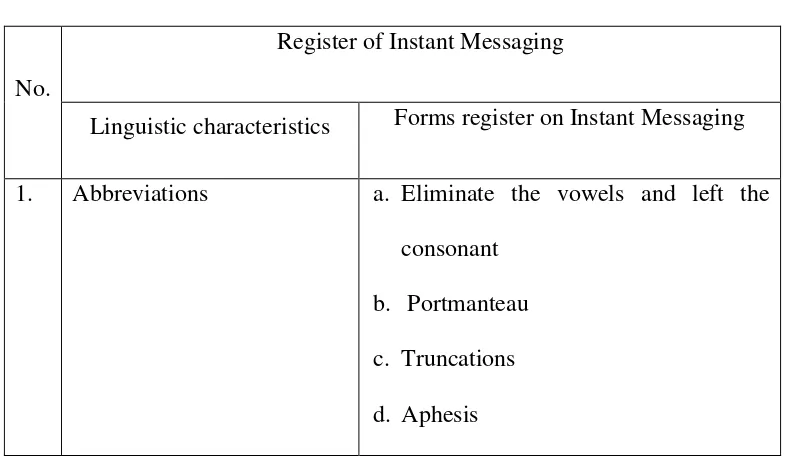
Tabel 1. Register forms on Instant Messaging

No.

Register of Instant Messaging

Linguistic characteristics Forms register on Instant Messaging

1. Abbreviations a. Eliminate the vowels and left the consonant

(38)

e. Abbreviations are created by substitution or other alteration in the part or parts retained

2. Acronyms a. Acronyms are pronounced as word and containing only initial letters. b. Acronyms are pronounced as a letter

and taking initial letters or non initial. 3. Rebus logogram a. use letter to represent the words

b. use number to represent words c. combinations letters and number d. typographical symbols

4. Rebus Pictogram a. facial expression b. gesture

5. Onomatopoeic a. onomatopoeic 6. Capitalizations a. wholly capital

b. capital and space

c. Combination upper and lower cases 7. Punctuations a. repeated question marks

b. elipsis

c. repeated exclamation marks d. eliminate the punctuations 8. Additional letters a. additional letters

(39)

From tabel above, the writer got several forms of registers on Instant Messaging, they would be explained underneath as follow:

a. abbreviations

1) Eliminate the vowels and left the consonants

The register forms of abbreviations that eliminate the vowels and left consonants as follows:

a) i’m not her frnd im her bf (Sy/18/M)

b) wht i dd wrng wth u (Z/23/M)

c) wht for we rmbr someoneبwhoبcan’tبweبget(K/21/F)

d) how many msgs u got for me since mrng (Rc/19/M)

e) Wht whom u chttng (A/24/F)

The data above would be explained as follow:

(1) In first sentence user used frnd for friend. It is an abbreviation which formed by eliminate the vowels /i/, and /e/ from the word friend. Eliminate the vowels to form abbreviation due to situation and limitation of space of phone or applications that caused the users have to create new form of word which are able to be understood by receivers or senders of IM in chatting conversations.

(2) Sometimes, in a sentence can be consist of several abbreviations that all are formed by omit the several vowels like wht forwhat which eliminate vowel /a/. dd for did was formed by eliminate vowel /i/. wrng for wrong formed by eliminate vowel /o/. And wth for with. An abbreviation was formed by eliminate vowel /i/.

(40)

And rmbr which eliminate 3 vowels /e/ from words remember. The elimination of vowels in chatting process due to informal situation and the consonants bring much more information of the word than vowel (4) In this sentence there are two abbreviationswhich formed by eliminate

vowels like msgs for messages and mrng for morning, each word eliminates vowels /e/ and /a/ for messages and vowels /o/ and /i/. (5) The last utterance above consist of two abbreviations that deliberate

omit the vowels /i/ for wth and vowels /a/ and /i/ for chttng. The ellimination of several words in chatting process due to it unnecessary.

Theبreceiverبalreadyبunderstoodبwithبhis/herبfriend’sبpurpose.

2) Portmanteau

Theب register’sب formsب ofب Portmanteauب onب Instantب Messagingب wouldب beب

served as follow:

a) Ill be ur friend (Sr/22/F)

b) We’ve already broke up (Ir/24/F)

These forms of register of portmanteau above would be explained as follow:

(1) Ill or i’ll is word which blend pronoun i and verb will and make it become one word ill orب i’llب (sometimesبaبcontraction is eliminated in instant messaging situation). Because rules of grammar do not exist on IM, thus people or users are creative to produce new words.

(41)

3) Truncation

Theبregisters’بformsبofبtruncationبwouldبbeبservedبunderneath:

a) I have 2 bro and 3 sis (M/23/F)

b) Send me ur pic (Rm/23/M)

c) Finish ur exam in nov iب don’tب wantب toب hearب theب wordب anymore

(Mg/30/M)

The examples above are register forms of truncation and will be explained by the writer underneath as follows :

(1) Bro and sis were truncated or shortened the end of the words brother and sister.

(2) Pic is a form of truncation which drop the end of the word like picture

dropping the end of the word ture.

(3) Truncation most often used when referring to proper titles such as months of the year like nov for november.

4) Aphesis

This term also found in chatting process and form register on IM. The example of aphesis will be served below as follow:

a) Cos u r always busy (V/20/M)

Cos for because. In this case, the user has dropped the unstressed vowel at the beginning of the word. This is often intentional and casually spoken versions of the words.

5) Abbreviations are created by substitution or other alteration in the part or parts retained (Crystal,2001:17), these forms will be explain as follows:

a) Forgive me plz (Ct/23/M)

(42)

c) Just nw u told ryt (Z/23/M)

These examples above are terms of register on IM and it will be explained by the writer as follows:

(1) Plz for please, the plz releases ease then subtitute the /z/. Please phonemically /pli:z/. The elimination of several words of please then alter it became /z/ since influenced by how we pronounced the word. (2) Bcz for because, because phonemicallyب/bi’kɒz/. The letter /z/ was used

to change /s/ in the end of the word due to pronounciation.

(3) The diphtong /ai/ in right is altered and subtitute y and become ryt. The alterations and variation of abbreviation to form register inusmuch style

andبcreativityبeveryبsingleبuserبtoبcreatبnewبorب“weird”styleبonبIM.ب

b. Acronyms

1) The acronyms that are pronounced as a word and containing only initial letters. The register forms of it will be served underneath:

a) Your joke is LMFAO (Sy/18/M)

b) LOL (Ds/20/F)

c) Hahaha ROTFL(R/24/F)

d) Plz, btw y did u text him huh (Ct/23/M)

e) Maybe ill open ur heart hahaha LMAO (A/24/F)

(43)

(1) LMFAO is one of variation of LOL. It is an acronym that taken initial letters from every word in a phrase laughing my fuck ass off, and it was pronounced as a word.

(2) LOL is an acronym most often appear in internet mediate communication or virtual world such as Instant Messaging. LOL is an acronym or internet slang which created from a phrase laugh out loud. It is a popular element of Internet slang. States that capitalization is important when people write LOL, and that "a user who types LOL may well be laughing louder than one who types lol. This acronym was used to express joke.

(3) Same with other acronyms before, which are taken from a phrase. ROTFL is also an acronym which taken from a phrase rolling on the floor laughing. It is a variation of LOL that is used to express joke.

(4) Btw is an acronym that are pronounced as a word which taken from a phrase by the way. Phrase by the way was used by participants to distruct an issue.

(5) LMAO is an acronym that pronounced as a word taken from a phrase

laughing my ass off. Actually, it is a bad word used to curse but sometimes male participants in this study used it to express joke or as term to camaraderia.

2) Acronyms are pronounced as a letter and taking initial letters or non initial letters.

a) Thy r good OMG (Ab/20/M)

b) Idk... but so much dear (E/19/F)

c) Jc and u (A/18/F)

d) Yeah!!! Wbu (Ct/23/M)

(44)

The register forms above would be explained by the writer below as follow: (a) OMG is an expression of disbelieve, it is an acronym for phrase oh my god and pronounced it as letter and take initial letter from the phrase of

oh my god.

(b) An acronym on IM are not longer restricted to word or short phrase but can be sentence or clause. Idk is an acronym that taken from clause i do not know.

(c) Jc is an acronym from short phrase just chat and pronounced as letter and taking initial letters from the phrase. Jc was used in informal situation and only used by receiver and sender whose quite close relationship because only several people who understand this term. It proved that Instant

Messaging’sبlanguageبfullبofبungrammaticalبwordsبandبsymbolبorبslangب

which used by users.

(d) Wbu is pronounced as letter and taking non initial letter from clause what about you. The informal situation on IM made users created new term of language unlimit that could be accepted and understood by either senders or receivers.

(e) Dp for display picture is an acronym from short phrase and pronounced as letter and taking initial letters from the phrase.

c. Rebus logogram

logogram are divided into 4 forms, they are use single letter, numeral, combination both letter and numeral, and typographic symbol to represent words. The following example of logogram such as:

1) Use letter to represent the words.

(45)

a) Ur picture so amazing (Ar/27/M)

b) N stop saying sorry (K/21/F)

c) If u love her u can take her heart (E/19/F) d) M single (An/24/M)

e) Nice to c utoo my friend (R/22/F)

f) Im not urs (M/23/F)

g) Thn y dnt u txt me (Ct/23/M)

These forms of register above will be explained further by the writer below as follows:

(1) The symbol Ur is used to represent your. It was taken by part of your that are considered to represent your. Your is phonemically as /jↄ:(r)/. The articulation palatal /j/ is practically very short and it become voiceless. So j is not used because it is voiceless but take u and r because both are voice. Mostly, use symbol in logogram due to have similar pronounciation or same sound.

(2) N with regards to and (phonemically transcribed as /ænd/), the form may be elided to [ən] or even [n], and, as the example provided by

Crstyalب(1997:133)بdemonstrates,ب“theبa and d are dropped in boys ‘n’

girls”.ب Commonب spellingب variantsب ofب and tend to represent the phonetically reduced forms with an or n, with or without an apostrophe.

(3) you is pronounced /ju:/ same with vowel u /ju:/ From the phonetic point of view the articulation palatal /j/ is practically very short and it become voiceless. So no wonder if users used u to represent pronount

(46)

(4) M is a symbol for i am. M is not used since have similar sound to i am but only to represent i am. M is not used broadly in internet chatting like Instant Messaging. Mostly users disagree use of M to represent i am, because m is not resemble pronounced i am.

(5) The use of logogram in a writing may potentially represent several words with different pronunciations, with a determinative to narrow down the meaning, and a phonetic component to specify the pronunciation like letter C is used as symbol to represent the word see. Due to their pronounced are same C is /si/ and see /si:/.

(6) Urs is symbol to yours, used to represent yours because the sound of both yours and urs are slightly similar. Yours transcribed phonemically

/jↄ:(r)z/ب sinceب articulationب ofب palatalب /j/ب isب veryب shortب orب sometimesب

voiceless.بSoبب/ↄ:/ب/r/ب/z/بareبrepresentedبbyبurs.ب

(7) Y is transcribed phonemically as /wai/ same with question word why

/wai/. So y is used as a symbol to represent word why. Because they have same sound, and pronounced it with same way.

2) Use number to represent word

Theبregister’sبformsبofبlogogramبonبIMبthatبuseبnumber to represent words would be served below :

a) I think u r 2 sensitive (A/18/F)

b) U r mature enough 2 resolve it (A/18/F) c) Thx 4 caring!!! (Ab/20/M)

(47)

These register’sب formsب ofب logogramsب aboveب would be explained further by the writer as follow:

(1) Number 2 in internet writing is used to represent to or too. The use number to symbolize the word due to they have similar pronounciation. Two phonemically as /tu:/ same with too and to

/tu:/.

(2) The number 4 was used to represent for. Since number 4 have same pronounciation with for. Four transcribed phonemically as /fↄ:(r)/ same like for. On internet situation the use of numbers to represent particular word are common thing because the limitation of space on IM and the creativity of users that made them creat terms that used in chatting process.

(3) In chatting process repeated number 5555 were used to denote

“hahaha”,ب sinceب theب numberب 5ب inب Thaiب languageب isب pronouncedب asب

“ha”.

3) Combination letter and number to represent words.

The register forms of the combination between letter and numeral would be showed below as follows:

a) Wasslm, f9 and u (A/18/F)

b) Oh...that is gr8 (Rz/23/M)

c) Ton8 im back (Rv/25/M)

d) 2morrw morning (Rv/25/M)

These utterances on IM above would be explained by the writer as follow:

(48)

nine (9) to subtitute ine in fine. The subtitution was occured due to the pronounciation.

(2) Gr8 for great, the use number eight in word great because eight transcribed phonemically /eit/ and eat in great also phonemically as /eit/.The use of number to subitute the part of the words because pnonemically they (letter and part of the words).

(3) Subtitute from letter to number due to the number that were used in the alteration have same letters or pronounciation that are slightly similar or with number that are used. The sequence ight in tonight and night was subtituted to 8 because eight has similar words and the slightly similar pronounciation..

(4) 2morrw for tomorrow. Number 2 was used to alter to in tomorrow. The subtitution letter becomes number due to the number was used has same pronounciaion where 2 transcribed phonemically /tu:/ same like to in tomorrow. So the alteration and the use combination of letter and number to form logogram because one of the part of the words has similar sound with number that are subtituted.

4) Typographical symbol

a) Hows everyone @ home (Ab/20/M)

b) Good morning xoxoxo (Kv/19/F)

These register forms of logogram will be explained by the writer below as follow:

(1) A similar ludic trend applies to the symbol @refersبtoبpreposition”at”.ب

(49)

stood out, with the bonus of having an appropriate meaning (of someone beingب“at”بsomewhere).

(2) XOXOXO is symbol for hug and kissing. The symbol X are used to represent kissing because similar to >< . It is considered as a lip

kissing.بWhileب“O”بifبweبseeبonبtopبitبwasبlikeبhandبisبhugging.بThisب

symbol was used when express the effection and used by users who have closed relation and quite intimate.

d. Pictogram

1) Facial expression

Facial expression or more popular we call it emoticon. Emoticon is a portmanteou of emotion and icon. It is a metacommunicative pictoral representation of a facial expression (Crystal,2008:41). This is one of forms register of pictogram which most often appear and most popular used broadly on Instant Messaging. We can find out easily in social media. Such as in datum below:

a) Say to her dont just shut up (A/18/F)

b) U r cute but (Ir/20/F)

c) Ill sleep all day long (M/23/F)

d) (Z/23/M)

e) Hmmmm (Rv/25/M)

f) (K/21/F)

These emoticon forms of register on IM will be explained by the writer as follows:

(50)

(2) In virtual worlds like Instant Messaging there are commands which allow people to express textually the emotion they feel, often with the addition of synthesized sounds and use visual effects like emoticon. To give dramatic effect as if alive in conversation that occure on IM users use emoticon to emphasize feeling amaze.

(3) Theبemoticon“crossبmouth”بindicateبtoبstopبtalking.ببTheبusersبmight include an emoticon as a reminder of the ongoing context of the

conversation,بtoبindicateبthatبyourبwordsبdon’tبstandبonبtheirبown.بAnب

emoticon can point out to the other participants of the conversation that they need to understand you and your personality in order to

understandبwhatبyou’veبsaid.ب

(4) Since Instant Messaging is not face to face conversation so we cannot see their expression directly, their expressions are absence but by using emoticon facial expression can be exist in conversation. Like in conversation above the use facial expression grin indicates joking. (5) To show our emotion as users Instant Messaging we used emoticon so

the receivers can understand what we feel, whether we are angry or happy just put emoticon appropriate to delive ur emotion like in data above, the red face to show anger. The use emoticon more than one in utterence it means add extra emphasize. Sentence above user used four red faces it means user were furious.

(51)

(7) These are emoticon cry to indicate sad, used emoticon more than one in utterence indicate there are strong emotion or feeling of users that want to be shown. Like in the utterence above the user was totally sad.

2) gesture/ Sticker

The example of sticker forms on IM would be shown below :

a) coming (Mg/30/M)

b) (Bl/26/M)

c) (M/23/F)

d) (D/20/F)

These forms of register of pictograms would be explained as follow (1) Stickers are also emoticon but do not focus on facial exression it more

focus on body movement. Stickers were not used to bring emotions or feeling of users but imitate the body movement in doing something.

Like in first utterance, emoticon to represent oaring, it is not facial expression that indicate emotion but a movement the on the way.

(2) The second sticker in the utterance above is thumbs up it was used to represent word okay or yes. Sometimes people do not need to mention something but show with the gesture that represent the words.

(3) Instant Messaging is full of expression. It provides many pictures to

(52)

(4) The development of technology also influence variation of pictograms especially the development of stickers on IM. The Sticker are not only just picture but nowdays these stickers can be move to indicate gesture

or non verbal comunication. Like represent clap hand. e. Onomatopoeic

The onomatopoeic’sبformsبonبIMبwouldبbeبshownبbelowب: a) Hmmm but u enjoy it (An/24/M)

b) Ill find a rich man also hahahaha (Rn/ 26/F)

c) How r the videos hohoho (M/23/F)

d) Hehehe thank you ( E/19/F)

e) Ahhh u make me confused ( M/23/F)

f) Missing u makes arggg very strong word (H/26/M)

The explanation from the utterance above will be served as follows: (1) Reaction signal hmmm may refer to different meaning in different

context situations, usually depending on the person that use

it.“hmmm”بfollowedب“but”بindicatesبdisagree.ب

(2) hahahah was used in mostly utterences on IM of the participants. The ortographic’sبrepresentationب ofب laughterب “hahaha”ب means you are joking, amused or joy something.

(3) The lexicon hohoho is a rendition of a particular type of deep throated laugh or chuckle, was used to represent the evil laughing to express joke or teasing.

(4) The lexicon hehehe imitate chuckle. It is a short of satisfying good point and nice moment shared.

(5) Theبinterjectionب“ahhh”بhasبseveralبmeaningsبbutبitبdependبonبtheب

(53)

confusing. In the sentence above Ahhh imitate sound exhale to indicate confusing.

(6) Missing u makes arrrggh very strong word. The word Argggh in the utterence above is used to indicate frustrating.

f. Capitalization

There were 3 register forms of capitalization, namely:

1) Wholly capital

a) BE PATIENCE (R/22/F)

b) STOP UNDERESTIMATE URSELF I REALLY HATE THAT (Mm/26/F)

c) I AM JOBLESS = DONT HAVE WORK = RESIGN (M/23/F)

These register forms on IM would be explained below as follows:

We are not able to read a gesture or mimic of users when we are chatting or sending online message. The thing can be understood and concluded only from the words and also the way they write the messages. There are several common things that are considered and users of IM believe that the message wholly capital is considered to be shouting.

2) Capital with space

a) N T H A N K S (R/22/F )

Capital with space indicate loud and clear. It is evidence that EMC users have adopted a wide range of devices to represent the dialogic spontaneity of spoken as well as nonverbal language in chatting exchange. The words above was written in full capitaly with space indicate the sender feel answer.

(54)

a) n once again DON’T BE LATE BACK HOME (D/20/F) b) ya i have many exams but i am BORED (K/21/F)

c) Dont u understand that I HATE U (Mm/26/F)

If capitalization is only used in one or two or more words in message of Instant Messaging it indicate that the words in capital add extra emphasize to show attention or indicate something important.

The use of capitalizations on IM are assumed that the words in capital means add extra emphasize or indicate something important. Inasmuch as Instant Messaging was written conversation so as users used capitalization is the one of the way to delive the emotion thus the receivers understand what we feel.

g. Punctuations

The linguistic characteristic of punctuation on IM formed several forms of register they were as follow:

1) Repeated question marks.

Theب exampleب ofب register’sب formsب of repeated punctuation were served below:

a) What, Marlin Josaph ??? (Z/23/M)

b) Atleast do u know who is prophet??? ?(Mm/26/F)

c) Why??? (Ds/20/F)

(55)

In the sentences users used repeated question marks to show disbelieve or distrust

andبconfused.ببSinceبInstantبMessaging’sبuserبdoبnotبseeigبeachبotherبandبonlyب

connect via internet, thus to import the emotion properly and understood by other users they had to put any any symbol like use repeated question mark in conversation to delieve their emotion.

2) Elipsis

The register forms of Elipsis on IM would be served below:

a) Dear...sometimes we must hide or keep our secret become a secret that nobody needs to know tht (Rk/27/F)

b) I told you many times... if i dont rply ur msgs it means im busy...(Bi/26/M)

c) His p...? (H/26/M)

The utterances above are examples of use elipsis (...) on IM. As Crystal says (2001:89) the use of elipsis convey emotion such as dramatic pause. But the elipsis did not only indicate pause but used broadly with multiple meaning such as in first and second utterances, the elipsis in the utterance were used to indicate pause to add dramatic effect in conversation. While, in third utterance the use of elipsis indicate unfinished though because there were several letters that were omitted intentionaly in the word to indicate something that the user did not want to be mentioned so this sentence is hang or unfinished.

3) Repeated exclamation marks

The terms of repeated exclamation marks would be served below as follow:

(56)

b) Excuse me !!! (Rc/19/F)

c) Hey!!! r u sleeping (Mg/30/M)

d) Tell me now!!! (R/22/F)

e) Wow great!!! (1r/24/F)

Repeated exclamation marks commonly used after interjection or imperative sentence to show feeling or high intonation and often mark the end of the sentence. Repeated exclamation marks on IM have purpose like used after statetement or phrase to show command, call, and also describe distrust, seriousness, or sense of strong emotion (Crystal,2001: 89 -90).

Use exclamation marks are used broadly on IM and brings several meaning that indicate emotions. Like in the first and fourth utterances, use exclamation marks indicate command or strong order, while in second utterance it shows sense of strong emotion of distrust.

Sometimes, repeated exclamation marks can also indicate call like in third utterance. Use of punctuation marks on IM have purpose, it brings emotional meaning. Since Instant Messaging is not face to face conversation we cannot see the expression of users directly. So, users use punctuation marks to delive their emotion.

Actually, without the repeated exclamation marks the fifth utterance can indicate excitement orبsurpriseبbecauseبprecededبbyبinterjectionب“wow”.بTheب use repeated exclamation marks in this sentence adds dramatic effect of excitement.

4) Eliminate the punctuation

Sometimes punctuation tend to be minimalist in most situations, and completely absent in some e-mail and chat exchange. Like in the utterances on IM as forms of register that are shown underneath :

(57)

b) Pls help me (Am/24/M)

The explanation from the examples of punctuation will be explained below as follow:

(1) This sentence is interogative sentence, ask an explanation but the user did not use question mark from his question. Grammaically, after interogative sentence the user must put guestion mark to sign it was a guestion. As crystal says (2001:89) punctuation tend to be omitted in internet chatting due to situation is informal that there is no rule that you must put any punctuation in your sentences. According to Baron (2004:56) eliminate the punctuation in the sentence that are intentionally omitted by participant indicate that the user use IM more resemble speech than writing. The elimination of punctuation on Instant Messaging since the receiver has understood that was a question which preceded by question word.

(2) The second utterance is imperative sentence. The user was asking some help. But the user did not use exclamation mark in this sentence. It indicate that use correct punctuation unnecessary in internet situation like IM. Despite, without punctuation such as exclamation mark the receiver of the message will be understanding due to sender put word please to ask help.

h. Additional letters

The register forms of additional letters would be shown as follow :

a) Nooooo (A/18/F)

b) Byeeeee...frnds tc (Sy/18/M)

Gambar

Figure 1
Tabel 1. Register forms on Instant Messaging
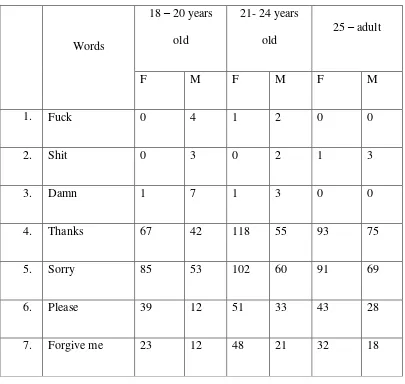
Table 4. The Distribution of Spending Words in Conversations in Group of Gender and Age  on Instant Messaging

Referensi

Dokumen terkait

Types of conflict: mental conflict, emotional conflict and moral conflict, those conflicts are conflict occurred in Beatrice soul because problem in inward life such as fear,

From the data and classification, the writer concluded that the Makassarese student in the second semester of English and Literature Department didn ’t know how

Skripsi yang berjudul “ The St udents’ Ability in distinguishing b etween Written American and British English at 6 th Semester of English Literature Department of

RomawiandYunaniandrescueone of their friends.. According to Genette Relationship between homodiegetic with story The Mark of Athena is all of figure or character

In this thesis, the writer found that the influence of postcolonial novel toward the reader’s reception in the seventh semester student of English and Literature

After following learning process with using skimming and scanning technique, I am not pushed to increase my reading ability with using this interesting way. It was supported with

discharge this agent Kruger permanently. Please return all weapons to the local embassy ”. Here is clearly seen there is conflict of role seen from a boss who sacked

This thesis studied about “ The Students’ Ability i n Learning English Preposition (A Case Study at The Fourth Semester Academic Year 2012-2013 Student of