Shaikh Abdullah Al-Salim Al-Sabah, 1895-1965
submitted by
Abdullah Ahmad Alnajdi
to the
University of Exeter
Institute of Arab and Islamic Studies
as a thesis for the degree ofDoctor of Philosophy
in Arab and Islamic Studies
July 2014
This thesis is available for library use on the understanding that it is copyright material and that no quotation from the thesis may be published without proper acknowledgement.
I certify that all material in this thesis which is not my own work has been identified and that no material has previously been submitted and approved for the award of a degree by this or any other University.
ABSTRACT
This is the first monograph-length academic study of Shaikh Abdullah al-Salim al-Sabah, Ruler of Kuwait between 1950 and 1965. It is based on British and US government records, interviews, and a wide range of secondary sources in Arabic and English. It traces the development of modern Kuwait from the mid-eighteenth century under the al-Sabah up to the accession of Shaikh Abdullah in 1950. It considers the succession question in Kuwait before 1950, and Abdullah’s lengthy period as a candidate for succession, which enabled him to develop and expand his ideas for his country before becoming ruler.
The study also examines the way that Abdullah transformed Kuwait into the first rentier state in Eastern Arabia and analyses his impact on the development of Kuwait’s administrative system. The influence of Arab nationalism and Britain on his decision-making and his relationship with Arab nationalists and the British Government, as well as his subtle handling of Kuwait’s border dispute with Iraq, are also investigated in detail.
This study focuses on the six major challenges that Abdullah overcame in order to transform Kuwait into a rentier state: (1) his political victories and defeats prior to his reign that shaped his political ideas, (2) his twenty-nine-year struggle to become ruler of Kuwait, (3) how he changed the direction of Kuwait’s development process by moving away from the politics of his predecessors, (4) his troubled relationship with the al-Sabah in Kuwait’s government administration, (5) how he dealt with the pressure exerted by Arab nationalists and the British Government on his political decisions, and (6) how he handled Kuwait’s troubled relationship with Iraq.
This thesis argues that Shaikh Abdullah al-Salim al-Sabah was an exceptional leader not only among the rulers of Kuwait (1752 to present), but also among the rulers of the Gulf Arab states in general. He was the first ruler to introduce a rentier state system that provided extensive welfare services for all of his country’s citizens, securing his family’s position in government in the process. He led Kuwait to independence in 1961 and oversaw the drafting of its constitution in 1962. He was a skilled politician and diplomat, who negotiated a delicate balance between the competing interests of the Kuwaitis, the ruling family (the al-Sabah), the Arab nationalists, the British Government, and the Iraqi government. As a result, he has enjoyed a popularity within Kuwait second only to the founder of modern Kuwait, Shaikh Mubarak al-Sabah (r.1896-1915).
TABLE OF CONTENTS
Abstract 1
Table of contents 3
Figures 6
Acknowledgments 7
Chapter One: Introduction
1.1 Introduction 8
1.2 Theoretical Framework: Rentier State Theory 16
1.3 Methodology 20
1.4 Literature Review 23
Chapter Two: Abdullah’s Early Life and Political Influences, 1895-1950
2.1 Introduction 34
2.2 Abdullah’s Genealogy 35
2.3 The Assassination of 1896 36
2.4 Abdullah’s Upbringing 39
2.5 Abdullah’s Education 42
2.6 Abdullah’s Financial Status 47
2.7 Abdullah’s Financial Struggle with Ahmad al-Jabir, 1921-23 49
2.8 Abdullah’s Withdrawal from Political Life, 1923-35 57
2.8.1 Abdullah in Kuwait 57
2.8.2 Abdullah Abroad 59
2.9 Abdullah’s Re-Engagement into Kuwait Politics in 1935 62
2.10Abdullah and the Legislative Council of 1938-39 and Thereafter 69
Chapter Three: Abdullah and the Succession Question, 1917-50
3.1 Introduction 81
3.2 Al-Sabah’s Legitimacy to Rule 81
3.3 Succession in Kuwait before 1921 90
3.4 Criteria for Succession 98
3.5 Abdullah’s Preparation for Succession, 1917-21 102
3.6 Abdullah’s Opportunity for Succession in 1921 106
3.7 Abdullah’s Position for Succession during the 1930s and 1940s 112
3.8 Abdullah’s Accession in 1950 116
3.9 Conclusion 118
Chapter Four: Abdullah and the Welfare State, 1950-65
4.1 Introduction 121
4.2 Abdullah’s Thoughts on a Welfare State in Kuwait 122
4.3 Kuwait’s Development in the 1940s 128
4.4 Abdullah Overcomes Obstacles for Development 131
4.5 Abdullah and the Welfare State 137
4.6 Approaches to the Welfare, Rentier State 154
4.6.1 Kuwait’s Acquisition of Land 155
4.6.2 Kuwait’s Education 156
4.6.3 Kuwait’s Healthcare 158
4.6.4 Kuwait’s Social Security and Employment 160
4.7 Conclusion 164
Chapter Five: Abdullah, the Ruling Family, and Britain’s Role in Kuwait, 1950-65
5.1 Introduction 168
5.2 The Ruling Family’s Authority before 1940s 169
5.3 Abdullah and the Ruling Family’s Authority in the 1940s 175
5.4 The British Threat to the Ruling Family’s Authority in Kuwait, 1944-54 183
5.4.1 British Intervention in Kuwait’s Internal Affairs, 1944-50 185
5.4.2 British Intervention in Kuwait’s Internal Affairs, 1950-54 187
5.5 The Ruling Family and Kuwaiti Demands for Reform, 1954-62 202
5.6 Conclusion 216
Chapter Six: Abdullah, Arab Nationalists, and Britain’s Role
6.1 Introduction 218
6.2 The Background of Arab Nationalism in Kuwait 219
6.3 The Arab Nationalists’ Movement, Kuwait and Abroad 224
6.4 The National Youth Movement in Kuwait in the 1950s 228
6.5 Abdullah and the National Youth Movement in Kuwait 231
6.6 Kuwait, Arab Unity, and the British, 1899-1950 237
6.7 Abdullah, Arab Unity, and the British, 1950-65 244
6.8 Conclusion 255
Chapter Seven: Abdullah and Relations with Iraq
7.1 Introduction 257
7.2 Britain’s Role in Kuwaiti-Iraqi Relations, 1752-1950 258
7.3 Ahmad al-Jabir’s Strategies, 1921-50 269
7.4 Abdullah’s Strategies, 1950-65 277
7.5 Conclusion 293
Chapter Eight: Conclusion 296
FIGURES
Figure 1: The direction/nature of the succession cases in al-Sabah House, 1766-1950 92
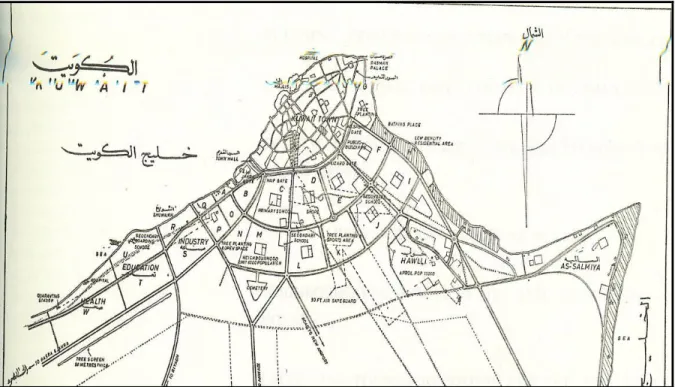
Figure 2: Minoprio, Spencely and Macfarlane’s plan 140
Figure 3: Minoprio Plan 142
Figure 4: Kuwaiti Development Board’s plan 147
Figure 5: Kuwait’s map of territorial authorities (inner red line and outer green line) as
defined in the 1913 Anglo-Ottoman convection 261
Figure 6: Map of Kuwait’s border with Iraq and Najd (Saudi Arabia) after Uqair
conference in 1923 271
Figure 7: Map showing Iraqi offer to lease Warba Island and a four Kilometre strip
ACKNOWLEDGMENTS
I would like to extend my warmest gratitude to my supervisor, Dr. James Onley, who guided me through the PhD process all the way to this moment of writing the acknowledgements section. I would also like to thank my second supervisor, Dr. Mark Valari, as well as Professor Christine Allison, for their advice.
I would like to thank all who supplied me with useful testimonies and information for this thesis, Dr. Abdullah Ghunaim, Mr. Yusuf Nssuf, Mr. Ahmad Khatib, Mr. Yacoub al-Ibraheem, Dr. Ghanim al-Najjar, Dr. Abdulmalik al-Tamimi, Mr. Ahmad al-Deyain, Mr. Abdullah Naybari, Dr. Naiyf Shmrookh, Dr. Maimona Sabah, Dr. Najat Abdulqader al-Jassim, Mr. Saif Marzooq al-Shamlan, the family of the late ‘Aqab Al-Khatib (who died in 2013), Mrs. Mai al-Jen’ai, and Mr. Ali al-Raeis.
This thesis is dedicated to my lovely wife, Nourah. Without her love, patience, sacrifice, prayers, and support, I would not have been able to finish this thesis. I would also like to dedicate this thesis to my son, Ahmad, who spent the first three years of his life in the United Kingdom with us while I wrote it. I would like to apologise to them for our time away from Kuwait, but soon we will return home.
I also extend my gratitude to my parents, Ahmad Abdurrahman Alnajdi and Fawziah Salim al-Salim, who always supported and prayed for the completion of my PhD. Finally, I would like to thank my wife’s parents, Fadel Bouresli and Maha Bohamdi, for their concern and support during the writing of my PhD.
CHAPTER ONE
Introduction
“Justice is the basis of rulership”
–– Abdullah al-Salim al-Sabah 1.1. Introduction
From the mid-eighteenth century, when the al-Sabah rose to prominence as the ruling family of Kuwait, up to the present (2014), there have been fifteen rulers from this family, although only a few of these have attracted the attention of historians. Chronologically, the first ruler of note was Sabah I (r. 1752-66), the first al-Sabah ruler of Kuwait, who was chosen by the ‘Utub tribal confederation.1 The second notable ruler was Mubarak al-Sabah (r.1896-1915), known as the founder of modern Kuwait. The third notable ruler, and the focus of this thesis, was Abdullah al-Salim al-Sabah (r.1950-65), Mubarak’s grandson. Abdullah is regarded as the architect of modern Kuwait: he pioneered the welfare state2 and rentier state in Eastern Arabia in the 1950s, transforming Kuwait in the process.3
1 ‘Utub is a tribal confederation of families that includes the al-Sabah (the ruling family of Kuwait) and the Al Khalifa (the ruling family of Bahrain), among many other families and tribes. The confederation originated from Najd in central Arabia, from where it migrated to Zubarra (on the northeast coast of Qatar) in the seventeenth century, then to Basra, then Kuwait in the early eighteenth-century, before splitting between Kuwait and Qatar in the 1760s.
2
Defined by the Oxford Dictionary as “a system whereby the state undertakes to protect the health and well-being of its citizens, especially those in financial or social need, by means of grants, pensions, and other benefits. The
foundations for the modern welfare state in the UK were laid by the Beveridge Report of 1942; proposals such as the establishment of a National Health Service and the National Insurance Scheme were implemented by the Labour administration in 1948.”
3 A rentier state is a state that derives all or a substantial portion of its national revenue from the “rent” of indigenous resources (particularly oil) to external clients. Hossein Mahdavy first postulated this theory in 1970: Hossein
Between 1896 and 1965, an era that encompassed the rulerships of Mubarak al-Sabah and Abdullah (the seventh and eleventh rulers respectively), Kuwait faced a number of difficult challenges: the era of Ottoman over-lordship (1871-1914) which threatened Kuwait’s autonomy, the struggle between Western colonial powers for supremacy in the Gulf (1890s-1914) that Kuwait found itself in the middle of, the First World War (1914-1918) on which Kuwait found itself on the front line, and the vacuum created after the collapse of the Ottoman Empire, the Suez Crisis of 1956 and the rise of Arab nationalism4 that threatened to undermine the al-Sabah’s position in Kuwait, and the Iraq-Kuwait Crisis of 1961 during which Kuwait risked being annexed by Iraq. Among all the rulers of Kuwait during this time –– namely: Mubarak (r.1896-1915), Jabir II al-Mubarak (r.1915-17), Salim al-Mubarak (r.1917-21), Ahmad al-Jabir (r. 1921-50), and Abdullah al-Salim (r.1950-65) –– it was Mubarak and Abdullah who struggled the most for the stability of Kuwait and the survival of the al-Sabah. Without their endeavours, Kuwait might not exist as an independent state today.
Despite the significance of the three most notable rulers –– Sabah I, Mubarak, and Abdullah –– in the history of Kuwait, only Mubarak has been studied at any length.5 There are no book-length academic studies in English of the other two rulers. The scarcity of documentation is the main obstacle to compiling a study of Sabah I, but it is not clear why there
Mahdavy, “the Patterns and Problems of Economic Development in Rentier States: the Case of Iran,” in Studies in Economic History of the Middle East, ed. M. A. Cook (Oxford: Oxford University Press, 1970).
4 Defined by Oxford index as a movement of “an anticolonial ethos and the glorification of origins and history in the face of Western dominance experienced by Arab countries in the nineteenth and twentieth centuries. Aims at political reunification of all Arabic-speaking states. Roots traced by some scholars to eighteenth-century reform movements or nineteenth-century anticolonial movements; others consider it a twentieth-century phenomenon based on Arabic language and culture. Manifested in the Arab revolt against the Ottoman Empire during World War I to protest its Turkification program, and in the short-lived United Arab Republic (merger between Egypt and Syria from 1958 to 1961). Invoked by Saddam Hussein during the Gulf War in a failed attempt to unite Arabs and Muslims against Western powers.”
5
Salwa Muhammad al-Ghanim, “The Reign of Mubarak Al Sabah: Shaikh of Kuwait, 1896-1915” (PhD thesis,
School of Oriental and African Studies, University of London, 1990); Sultan bin Muhammad al-Qasimi, Biyan al-Kuwaiyt: Siyrat Haiyat al-Shaiykh Mubarak al-Sabah (Lebanon: al-Mu’sasa al-’arabiya lil-nashsher, 2006); B. J. Slot, Mubarak al-Sabah: Founder of Modern Kuwait 1896-1915 (London: Arabian Publishing, 2005).
have been no book-length studies of Abdullah in English, since both the British Library and the UK National Archives have a vast quantity of material on his reign.
There are many reasons for undertaking research on the political life of Abdullah, who remains prominent among all the other rulers of Kuwait. He is known as the architect of modern Kuwait because of his pioneering role during the 1950s and 1960s in the modernization6 of Kuwait by transforming it from a tiny pre-oil proto-state into a modern welfare state. Kuwait out progressed all the Gulf Arab states during his rule, outpacing even Saudi Arabia in many respects. He led Kuwait successfully through this period of rapid change in a region characterised by tremendous domestic instability. With his strong character and political skills, Abdullah kept Kuwait politically stable and secure between 1950 until his death in 1965, despite the great stresses and strains associated with the country’s rapid transformation and march toward modernity.7
For example, H. R. P. Dickson and Ahmad al-Baghdadi both report that Abdullah was one of the strongest of Kuwait’s modern rulers, describing him as calm, frugal, modest man, a peacemaker, and a skilled politician who managed to transform Kuwait from a pre-modern proto-state into a modern welfare state.8
In fact, during Abdullah’s reign, Kuwait witnessed an unprecedented building and expansion of its infrastructure and government institutions, coupled with the establishment of governmental welfare, health, and education services that were provided to Kuwait’s entire
6 Modernization: “Adapt (something) to modern needs or habits, typically by installing modern equipment or adopting modern ideas or methods” (OED).
7
Modernity: “The quality or condition of being modern, also a modern way of thinking, working, etc.; contemporariness” (OED).
8 H. R. P. Dickson, Kuwait and her Neighbours (London: George Allen and Unwin, 1956); Ahmad al-Baghdadi,
citizenry. Abdullah designed and supervised these developments as the first of their kind in the Gulf Arab states; he was regarded much in the same way that Dubai’s most famous ruler, Shaikh Muhammad bin Rashid al-Maktoum (r.1958-90), is regarded today for his vision and transformation of Dubai during the 1960s-80s. Abdullah’s supervision of Kuwait’s development plans were founded on then uncommon belief that Kuwait’s oil wealth belonged to all Kuwaitis, not just the al-Sabah; he therefore distributed this wealth to his fellow citizens through an extensive programme of national development and the provision of social services. Abdullah used Kuwait’s oil wealth to good effect during a period of significant domestic instability and rapid regional change. He used Kuwait’s enormous increase in oil revenues at the beginning of the 1950s to establish national legal and constitutional institutions, which were necessary for the eventual independence of Kuwait in 1961. Also, he used some of Kuwait’s oil income to establish the Kuwait Fund for Arab Economic Development, which helped secure Kuwait’s place in the Arab League as a newly independent state. As one of the greatest figures in Kuwait’s history, a comprehensive study of his political life is long overdue.
This thesis analyses six challenges to Abdullah during his seventy-year life, from 1895 to 1965. It divides his political life into two stages: (1) before his ascendancy to power in 1950 and (2) during his rule of Kuwait, 1950-65. Chapter Two studies the influence of several events and conditions in Abdullah’s early life on his political thoughts. Chapter Three examines political succession in Kuwait before 1950, including Abdullah’s efforts to fulfil the traditional criteria for ascendancy. Chapter Four examines how Abdullah created a welfare, rentier state in Kuwait. Chapter Five analyses Abdullah’s influence on securing his family’s hold over the growing government administration. Chapter Six investigates the influence of Arab nationalists and
Britain on Abdullah’s decisions, while Chapter Seven explores the effects of the prevailing political problems between Kuwait and Iraq on Abdullah’s decisions.
This thesis argues that it was Abdullah as much as the oil wealth he commanded that was responsible for Kuwait’s transformation into a welfare, rentier state between 1950 and 1965. It examines how Abdullah was a pioneer in his decisions and reforms, not only among the rulers of Kuwait, but also among the rulers of the Gulf Arab states in general. It discusses Abdullah’s ability to establish and maintain mutually beneficial relationships with important members of Kuwaiti society: his own family, the wealthy merchant elite, and the educated middle class. His mutually beneficial relationships also extended to the British Government and important members of the Arab League, particularly Egypt.
Throughout his political career, Abdullah focused on achieving Kuwait’s full potential. He strengthened his family’s rulership of Kuwait, he introduced pioneering reforms, he achieved early independence for Kuwait (ten years before the other British-protected Gulf Arab states), and he oversaw the drafting of a popular constitution. He also promoted Kuwait’s solidarity with the Arab World, and maintained such strong links with Britain after Kuwait’s independence that it remained Kuwait’s protecting power, and came to Kuwait’s help soon after independence. Abdullah changed the direction of his country’s development from a relatively stagnant one inherited from his predecessors to one of a dynamic welfare, rentier state to be inherited by his successors. The pillars of the rentier state of Kuwait today owe more to him than to anyone else. Over the course of Abdullah’s political career, he faced six major challenges that he endeavoured to overcome.
The first of these challenges was the formation of his political ideas up to 1950 and his ability to remain open-minded and flexible in his thinking in the face of setbacks. These ideas were shaped by several events, most notably his grandfather’s seizure of power in 1896, his education, his financial difficulties, his years of self-imposed political exile between 1923-35, and the Majlis Movement of 1938-39. These events influenced Abdullah’s ideas, personality and relationships during the 1920s-40s, preparing him for his rulership of 1950-65.
The second of these challenges was Abdullah’s first attempt, in 1921, to assume the rulership of Kuwait. This was followed by a long period of dispute over the succession with Ahmad al-Jabir (r.1921-50), as well as other candidates for the succession, before he finally managed to achieve his goal of becoming ruler in 1950. Early in this period, Abdullah was forced to leave the political scene in Kuwait. Despite a political absence of twelve years (1923-35), Abdullah remained motivated by many factors, including the slow dawn of the oil era in the 1930s, to return to politics in 1935, eventually becoming de facto deputy ruler and heir apparent by the 1940s.
After Abdullah assumed power in 1950, he focused on overcoming a third challenge: to change the direction of Kuwait’s development by moving away from the politics of his predecessors. From his first days as a ruler, Abdullah began steering Kuwait towards a welfare state system. Although he faced many administrative and political problems, he succeeded in most of his efforts in the end. He faced strong opposition to his plans for reform, as well as corruption in the process of the country’s development, but overall, these and other problems did not stop him from achieving his final goal of transforming Kuwait from a pre-oil proto-state into
a modern welfare state. With the help of a younger generation of shaikhs and other elites, he managed to create the first welfare, rentier state in Eastern Arabia by the end of his reign.9
The fourth challenge that Abdullah faced was the role of the ruling family in Kuwait’s expanding government administration. Since the mid-eighteenth century, the ruling family had held a prominent position in the country’s administrative system with the tacit agreement between it and the people of Kuwait. However, Abdullah had to adjust this arrangement as soon as he became ruler. During the 1950s, he changed the state apparatus of Kuwait several times, a process that strengthened the role of the ruling family in Kuwait’s administrative system. However, after Kuwait’s independence in 1961, Abdullah had to create a more stabilised role for the ruling family in the administrative system, this time according to the regulations embodied in the new constitution in 1962. That year, Abdullah oversaw the process of delegating government powers to the ruling family and key members of Kuwaiti society. As the head of the country’s Executive, he appointed the most capable and experienced members of the ruling family to the highest government posts. In this way, he stabilised and reorganised the role of the ruling family in Kuwait’s government administration from one based on tradition to one based on law.
The fifth challenge Abdullah faced concerned the pressure of the struggle between Arab nationalists and the British on his political decisions. In this case, Abdullah had to deal carefully with the Arab nationalists’ influence on Kuwait’s domestic politics and foreign affairs because, from the mid-1950s, they formed the main front for the political opposition in Kuwait. But Abdullah was flexible in dealing with the Arab nationalists’ demands for reforms in Kuwait. For example, during the Suez Crisis in 1956, he managed to contain the Arab nationalist
9 For a summary of Abdullah’s achievements towards the end of his reign, see Ralph Hewins, A Golden Dream: The
demonstrators in Kuwait City against the attack on Egypt by Britain, France, and Israel without harming either Kuwait’s national security or his good relations with the British Government.
In foreign affairs, his successful policies during the Suez Crisis continued until 1959, when he had to change direction due to the Arab nationalists’ demands for reform. This time, Abdullah had to deal coercively with the Arab nationalist opposition in his country while showing his commitment to joining the Arab League. Abdullah ran the country autocratically to achieve the goals of rapprochement with the Arab World during a period of great change in the country’s ruling system and to ensure the national security of Kuwait’s neighbouring countries (the main factors for the disturbances in the region were the Iraq coup in 1958, and the Cold War). In the end, Abdullah achieved his goal by winning Kuwait’s independence from Britain in 1961, introducing a constitution in 1962, and establishing a national parliament in 1963. These events contributed to improving Kuwait’s relationship with the Arab nationalists at home and abroad, thus maintaining the country’s domestic stability and standing within the Arab World.
Kuwait’s troubled relationship with Iraq was the final challenge that Abdullah faced. This controversial issue had occupied the minds of all Kuwaitis since the Ottoman annexation of Kuwait in 1871 and especially since the establishment of the modern state of Iraq in 1921. Abdullah had to treat the matter carefully because of several factors, most importantly the demarcation of the border. During the 1950s, the Iraqi government used the border issue as a bargaining tool for concessions from Kuwait. By the end of the decade, Iraq’s efforts had accelerated to the point where it claimed that certain parts of Kuwait, and subsequently the whole of Kuwait, were an integral part of Iraq.
Iraq’s increasing claims over Kuwait’s territory developed into a serious threat to Kuwait’s very existence in June 1961, just a few days after it had achieved independence from Britain. This threat forced Abdullah to take an unpopular measure to safeguard his country’s national security by requesting British and then Arab military protection. He ultimately achieved a treaty with Iraq in 1963 that recognised Kuwait as an independent state. Although Abdullah had intended to do his best to solve the differences with Iraq during his reign, this issue later re-emerged as Kuwait’s most serious foreign affairs problem after his death in 1965, when a new Iraqi government subsequently renounced the 1963 treaty. The failure of the two countries to find a permanent solution to their differences had little to do with the nature of Abdullah’s decisions, it was the result of the Iraqi Baath Party’s refusal to accept the 1963 treaty after it seized power in Baghdad in 1968. This stance eventually led to the Iraqi invasion of Kuwait in August 1990 on the premise that Kuwait had historically formed part of Ottoman Iraq.
1.2. Theoretical framework: Rentier State Theory
Since the late 1980s, rentier state theory has been used extensively to explain socio-political developments in oil rich states, particularly in the Gulf Arab states –– known, since 1981, as the Gulf Cooperation Council (GCC) states. Hossein Mahdavy was the first to develop this theory in 1970, along with the term “external rent” (meaning external revenue), which he applied to the case study of Iran during the Pahlavi dynasty (1925-79).10 The theory was further developed in 1987 by Hazem al-Beblawi and Giacomo Luciani, who gave the theory its primary characteristics and factors and its implication for the Gulf Arab states.11
10 Mahdavy, “The Patterns and Problems.”
11 Hazem al-Beblawi and Giacomo Luciani suggested four characteristics that would determine whether or not a state could be identified as rentier: (1) if rent situations predominate, (2) if the economy relies on a substantial
In theory, a rentier state is politically autonomous from the society it governs. It does not levy tax from society; instead it allocates its external income to it. This greatly reduces the need for domestic support, as society is simply bought off, relinquishing its say in how government is run in exchange for a share in the external rental income or benefits from it. The rentier state is usually ready to deploy its repressive apparatus to silence critics and those who refuse to accept, or are excluded from, the “rentier bargain”,12
also known as the “grand bargain”. Many early rentierists came to the logical conclusion that the rentier state is inherently anti-democratic.13 They also concluded that rentier states were fairly stabile and secure, seemingly immune from disturbances elsewhere in the region during the 1950s-90s.14
In 1999, Michael Herb further developed the theory by arguing that external rent should be regarded as an “intervening variable”, since these states were later shown to have experienced political instability.15 In 2002, he argued that rentierism is merely a characteristic of politics rather than a model for the entire political structure.16 He came up with the factor of royal monarchies, where power is distributed among an entire ruling family, which occupies positions
external rent - and therefore does not require a strong domestic productive sector, (3) if only a small proportion of the working population is actually involved in the generation of the rent, and (4) perhaps most importantly, if the state’s government is the principal recipient of the external rent. The information is taken from Hazem al-Beblawi and Giacomo Luciani. “The Rentier State in the Arab World”, in the Arab State, ed. Giacomo Luciani (London: Routledge, 1990), 87-88.
12
Matthew Gray, A Theory of Late Rentierism in the Arab States of the Gulf, Occasional Paper No. 7 (Qatar: CIRS Georgetown University, 2011), 6.
13 See among others Giacomo Luciani, “Allocation vs. Production States: A Theoretical Framework,” in The Arab
State, ed. Giacomo Luciani (Berkeley: University of California Press, 1990), 76-77; Michael Ross, “Does Oil Hinder Democracy?,” World Politics 53, no. 3 (2001): 325-61; Jill Crystal, Oil and Politics in the Gulf: Rulers and Merchants in Kuwait and Qatar (Cambridge: Cambridge University Press, 1990); Camilla Sandbakken, “The Limits
to Democracy Posed by Oil Rentier States: The Cases of Algeria, Nigeria and Libya,” Democratization 13, no. 1 (2006): 135-152; implied in Robert J. Barro, “Determinants of Democracy,” Journal of Political Economy 107, no. S6 (1999): 158-83.
14 Ibid.
15 Michael Herb, All in the Family: Absolutism, Revolution, and Democracy in the Middle Eastern Monarchies (Albany: State University of New York, 1999).
16 Michael Herb, “Does Rentierism Prevent Democracy?” (paper presented at the annual meeting of the American Political Science Association, Boston Marriott Copley Place, Sheraton Boston & Hynes Convention Center, Boston, Massachusetts, August 28, 2002).
throughout government –– monopolising government, the police, and military at all levels. This, he believes, is the reason for the resilience of the ruling families and the rentier state.17
Most recently, in 2010, there have been debates in the field of Gulf Studies about the need to update rentier state theory since the old rentier state “grand bargain” has begun to break down in many GCC states owing to declining per capita revenue and the state’s inability to guarantee (well paid) government employment and other state benefits for all citizens. Increasing levels of corruption within the ruling families is typically cited as the reason for this. The renewed debate about rentierism focuses on the theory’s underestimation of certain political dynamics. Matthew Machowski argues that the theory must include, and account for, facets of political life such as the impact of religious legitimacy,18 customs of succession, coercive state apparatus, traditional allegiances, and the strong tradition of patronage.19 James Hollo has used the case of Qatar, where both the state and its citizens have attempted to craft a national narrative, as evidence for the need to reframe the theory.20
17 Ibid.
18 Islam’s political significance was not actively cultivated by any party in Kuwait before the 1970s. The question of religious legitimacy does not really apply to Abdullah’s reign therefore. Jamal Sanad and Mark Tessler argue that, in early 1970s, some young members of the Kuwaiti Muslim Brotherhood felt that Kuwait, as an Islamic state, had lost its way on the path to political development in the 1950s and 1960s, that there had been no advancements in democracy. They argued that ideologies imported from the West, such as Nationalism, Socialism, Marxism, and Capitalism, and the movements they inspired, such as Pan-Arabism and Ba’athism, were un-Islamic –– that they did more harm than good in the Middle East. Instead, the Middle East must look to its own traditions, especially to Islam, to find solutions to its problems. See Jamal Sanad and Mark Tessler, “Women and Religion in a Modern Islamic Society, the Case of Kuwait,” in Religious Resurgence and Politics in the Contemporary World, ed. Emile Sahliyeh (Albany: State University of New York Press, 1990), 195-218.
19 Matthew Machowski, “Rentier State’ Theory and the Survival of the Arabian Monarchies,” MidEast Journal, Sunday 17 July (2010), accessed February 20, 2014, www.matthewmachowski.com/2010/07/rentier-state-theory-and-gulf.html.
20 James Hollo, “Rethinking Rentier State Theory: Qatar and the Rise of Smart Money,” Fair Observer, October 11, 2013, accessed February 20 (2014), http://www.fairobserver.com/article/rethinking-rentier-state-theory-qatar-rise-smart-money.
Rentier state theory’s critique has three main weaknesses. Firstly, its focus on economics without a sufficient political context decreases its utility.21 Secondly, its explanations are oversimplified.22 Thirdly, it accounts for political activism in the Gulf Arab states, initially in Bahrain alone, but now in most GCC states as well.23
These three critiques have sparked the emergence of a second generation of rentierists, starting with Michael Herb in 1999. They approach rentier state theory along two different lines. The first is “specialized rentier state theory”, where rentier state theory is combined with other theories such as the modernisation theory and/or specific disciplinary approaches like economics or politics. The second is “conditional rentier state theory”, in which descriptive conditions, nuances, or individualized conditions are added to the theory to increase its applicability, utility, or validity”.24
This study follows the work of Herb and new rentierists25 in its use of rentier state theory, regarding rentierism as a characteristic of politics and intervening variable rather than as a model for the entire state. It covers the political and social history of Kuwait from 1752 to 1965.
Rentierism has influenced the development of Kuwait from 1946 (the year Kuwait began receiving external rent in the form of oil revenue) up to the present. Today, oil rent accounts for more than 95% of Kuwait’s revenue. This study examines the development of Kuwait and its
21 Andrew Rosser, “The Political Economy of the Resource Curse: A Literature Survey,” (Working Paper 268, Institute of Development Studies, University of Sussex, Brighton, April 2006): 7,
www2.ids.ac.uk/gdr/cfs/pdfs/wp268.pdf. 22
Sean Foley, The Arab Gulf States: Beyond Oil and Islam (Boulder: Lynne Rienner, 2010), 4-5.
23 Gray, A Theory of Late Rentierism, 5; Suzanne Maloney, “The Gulf’s Renewed Oil Wealth: Getting it Right This Time?,” Survival 50, no. 6 (2008): 129-50.
24
Gray, A Theory of Late Rentierism.
25 The other authors are: Marc Valari, Oman: Politics and Society in the Qaboos-State (London and New York, Hurst and Oxford University Press, 2009); and Toby Craig, Jones, Desert Kingdom: How Oil and Water Forged Modern Saudi Arabia (Cambridge, Massachusetts: Cambridge Mass., Harvard University Press, 2011).
institutions during its early years as a rentier state from 1950 to 1965, the period of Abdullah’s rulership.
In Kuwait, the rentier state model comprises the following. First and foremost, Abdullah established a welfare state system –– Kuwaitis were to be provided for from the cradle to the grave. Citizens received free land, interest-free loans to build houses on that land, free healthcare, and free education. Secondly, Kuwaitis were guaranteed government jobs with high salaries that both tied them to the state and made them a part of Kuwait’s transformation. Thirdly, Kuwaiti businessmen had their interests protected through the introduction of nationality laws requiring all businesses and business ventures in Kuwait to be 51% owned by nationals. The combined effect of these three things made Kuwaitis both dependent on the state and beholden to it. A clear understanding emerged, known as the “grand bargain”, in which Kuwaitis agreed to refrain from politics and support the government in return for these benefits.
1.3. Methodology
Information for this thesis was collected from three sources: (1) archives, (2) interviews with Kuwaitis, and (3) secondary sources. The archival information was collected in the United Kingdom, while interviews with Kuwaitis were conducted in Kuwait. The secondary material (published and unpublished) was collected in both countries, in Arabic and in English. Research for this thesis took place during the first year of studies. During this period, countless trips were made to the British Library, the National Archives of the UK, and the Exeter University Library to collect information. Field trips were also made to Kuwait to collect as many primary and secondary sources as possible, and to conduct interviews with eyewitnesses.
Throughout the thesis, British Government records were the main source of information. The reason for this heavy reliance on these sources is the richness of information in the memorandums, correspondence, reports, and letters about Kuwait produced by the British Political Agency in Kuwait, the British Political Residency in the Gulf, and the British Government of India, as well as the India Office and Foreign Office in London, because of their responsibility for Kuwait’s foreign affairs (1899-1961) and defence (1899-1971). These records are housed in the British Library and the National Archives of the UK in London. and the US These records were augmented by a smaller amount of US Government records from the US Consulate in Kuwait (opened in 1951). During the first stage of research, information for this study was collected from both these archives; more than 300 files and microfilms as well as thousands of documents and papers were consulted.
Due to the scarcity of Kuwaiti government records from 1895 to 1965, this thesis has had to depend heavily on British and US government records as its main primary sources. In fact, Kuwait still suffers from a shortage of government sources for information before 1990. Kuwait’s Amiri Court Archive (Arshif ad-Diwan al-Amiri), located in the Dasman area, lacks material due to the Iraqi invasion of Kuwait in August 1990, which resulted in the loss and destruction of most of the Kuwaiti government’s documents, including the rulers’ local and regional political correspondence. Although the Kuwaiti government claimed back its archives from Iraq through the United Nation’s intervention immediately after the liberation of Kuwait in 1991, few documents were in good condition and many more were missing. This situation forced the government to recreate the country’s archive, this time based on photocopies of British and American government records relevant to Kuwait history.
During my fieldwork in Kuwait, many endeavours were made to obtain information from Arshief ad-Diwan al-Amiri. These endeavours were unsuccessful primarily because of the disorganisation of the archive (it is not sorted by date or subject or class-mark but by the document’s main keywords), the absence of many relevant documents, the restricted access to the archive (special permission is required to access any record), and the restriction on copying the documents. Because of these obstacles, the thesis had to rely on alternative sources of information, mainly British and US government records.
The Arab World Documentation Unit (AWDU) at Exeter University provided information about Kuwait. It contains microfilmed copies of US government records from the US Consulate in Kuwait (opened in 1951). The US Consulate in Kuwait produced less important documents than those from the British Political Agency, due to the restrictions applied to the Consulate by the British Government (such as limited access to and contact with the ruler and the heads of Kuwait’s departments at that time); even so, these documents offer an alternative point of view on the development of Kuwait and the events of the period. To answer the research questions, two sets of microfilms kept in the AWDU were reviewed; between them they included more than one thousand documents.
The thesis also relied on interviews with notable Kuwaitis. During the first year of the research, at least ten interviews were conducted to collect information for this study. The interviewees were chosen from different categories: some from Abdullah’s relatives, others from the older generation of political activists, and some from the new generation of political activists. I had to overcome many obstacles when collecting information through the interviews. Many interviewees were hesitant about providing detailed information about Abdullah’s political life.
For example, I endeavoured to interview Shaikh Ali al-Salim, Abdullah’s last surviving son. He politely refused to be interviewed and referred me instead to the Centre of Research and Studies on Kuwait. I endeavoured to interview Shaikh Mohammad Sabah al-Salim, Kuwait’s former Minister of Foreign Affairs, but was unable to gain access to his office.
However, a second and third round of interviews provided very useful information for this thesis. The second round provided testimony from Kuwaiti activists who had participated in some of the political events during the time of the study. For example, Dr Ahmad al-Khatib (a famous Kuwaiti person who led the Arab nationalist opposition in the 1950s-60s) provided very good information based on his accounts of Abdullah’s reign. But although al-Khatib’s testimony was useful, the historical records do not corroborate it. Thus, the information collected during these interviews had to be interpreted with caution. The third round of interviews focused on Kuwaiti politicians, eyewitness, and academics. The main aim of the interviews was to reflect on and ascertain the extent of Abdullah’s legacy in the country. These interviews provided general information about Abdullah, with most agreeing that Abdullah was one of the greatest rulers in the history of Kuwait and the Gulf Arab states.
The study also drew upon information collected from hundreds of books, articles, and newpaper articles. These sources were collected from public libraries in Kuwait and the UK, private libraries in Kuwait, and the Centre of Research and Studies on Kuwait.
1.4. Literature Review
This section discusses the literature covering the six challenges Abdullah faced during his political career. Little has been written in English about Abdullah’s early political life, especially
the influences on his political ideas before 1950, and most of what has been recorded is scattered across several books and articles on Kuwait. Two exceptional works in English focus briefly on Abdullah’s political career as a whole, including his early life. The first is a book written by Alan Rush in 1987 entitled, Al-Sabah: History & Genealogy of Kuwait’s Ruling Family 1752-1987,26 which focuses on the general history and genealogy of the al-Sabah in Kuwait. In his work, Rush summarized Abdullah’s political life in a brief discussion based on British Government records from the 20th century: this text is considered to be the standard source for scholars on Abdullah and other members of the ruling family up to 1987. However, this work does not examine matters in detail and sheds no light on the early years of Abdullah’s life.
The second work is a chapter entitled, “Abdullah al-Salim al-Sabah” by Jill Crystal in Political Leaders of the Contemporary Middle East and North Africa (1990) edited by Bernard Reich.27 In this chapter, Crystal emphasised Abdullah’s role in the history of Kuwait by presenting him as the architect of Kuwait’s transformation in the 1950s-60s. Despite its brevity (one chapter), this is the only work that clearly summarises Abdullah’s early political career. Although this work is the most important work on Abdullah in English to date, Crystal did not apply rentier state theory to her study to elucidate the political motivations and strategies behind Abdullah’s creation of the first welfare state in the Gulf. It was this brief study that motivated me to flesh out the full story of Abdullah’s political life in greater detail.
Similarly, the literature in Arabic gives insufficient coverage of Abdullah’s early political life. The few existing works in Arabic amount to three books, all of which focus on Abdullah’s
26
Alan de Lacy Rush, Al-Sabah: History & Genealogy of Kuwait’s Ruling Family 1752-1987 (London, Ithaca Press, 1987).
27 Jill Crystal, “Abdullah al-Salim al-Sabah,” in Political Leaders of the Contemporary Middle East and North
legacy to Kuwait’s youth. Fatma al-Ali wrote the first political biography of Abdullah’s political life in 1984, entitled ‘Abd Allah as-Salim: Rajol ‘Asha wa-lm Yamut [Abdullah al-Salim: a Man who Lives and does not Die].28 In this book, she outlined Abdullah’s achievements in his reign, that is, his astute and intelligent political life which she thought was a reflection of his early childhood. Yosef al-Turki gave another account of Abdullah’s life in his book, Al-Shaikh ‘Abdullah as-Salim as-Sabah, 1950-1965 Hayatuh wa-A’amaluh [Abdullah al-Sabah, 1950-1965: His Life and Deeds]29 written in 1985. Al-Turki followed al-Ali’s aims by providing a descriptive biography that emphasised Abdullah’s reforms and achievements in the 1950s-60s. The third work by Ahmad al-Baghdadi, entitled al-Shaiykh ‘Abd-Allah as-Salim Ensan wa-Rajol Dawlah [Abdullah: Human Being and Statesman],30 aimed to show Abdullah’s high regard for humanity in treating all members of Kuwaiti society justly, including the poor, both before and after his ascendancy to the rulership. None of these books analysed Abdullah’s main political challenges in his reign or examined his political activities before he came to power in 1950, and as a result, many important parts of the man’s life in the history of Kuwait remain unknown to the readers such as the important influence on his reign of his travel to India. This thesis examines Abdullah’s political life in its entirety.
The second challenge Abdullah faced in his political career was his long struggle to become ruler during 1921-50. Many historians have discussed the chronicle of the succession cases in Kuwait, starting from its first case in 1766. For example, in his book, Tarikh al-Kuwait [Kuwait History], Abdulaziz Rasheed wrote about the continuity of succession among the
28
Fatma al-’Ali, ‘Abd-Allah as-Salim: Rajol ‘Asha wa-lm Yamut (al-Kuwaiyt: Matba’at hkwmat al-Kuwait, 1984). 29 Yosef Abdul-Muhsin al-Turki, Al-Shaikh ‘Abdullah as-Salim as-Sabah, 1950-1965 Hayatuh wa-a’Amaluh (al-Kuwaiyt: al-Turki lil-Nasher, 1985).
Sabah successors prior to 1928.31 Another important book is, Tarikh al-Kuwaiyt al Hadith [Modern History of Kuwait] written by Ahmad Mustafa Abu-Hakima, which provides a good account of the transfer of power in the ruling family of Kuwait until 1950 (only 15 pages were allocated for Abdullah’s reign).32
Moreover, in Yusuf bin Isa al-Jena’ai’s book, Safahat min Tarikh al-Kuwaiyt [Pages from the History of Kuwait], the author provided a brief account to show how the al-Sabah ruled the country in 1752 and subsequently organised the process of succession among its members.33 Furthermore, in his five volumes, Tarikh al-Kuwaiyt al-Siyasi [Kuwait’s Political History] Hussain Khalaf Khaz’al provided a very detailed study that describes the reigns of al-Sabah’s rulers in Kuwait before 1962.34 Finally, Fred Anscombe’s book, The Ottoman Gulf: The Creation of Kuwait, Saudi Arabia, and Qatar offered a good account of how and why Kuwait and other Gulf Arab states sought independence from the Ottoman Empire with ties with the British in the beginning of the twentieth century. He attributes the Ottoman Empire’s loss of power in the Gulf area to the combination of poor communication, scarce resources, and misplaced security.35
Concerning the efforts of previous authors, none of them explained in detail the system of choosing a ruler’s successor, which Abdullah sought through his birth right and acquired through political strategy, in order to assume power in 1950. Only one exceptional study came close to explaining the nature of the succession process and its main pillars in Kuwait before 1962 (the year of the ratification of the constitution which now orders the process of succession in the country). This study was Rooh al-Destour [Spirit of the Constitution] by Muhammad
31 Abdulaziz al-Rasheed, Tarikh al-Kuwaiyt (Kuwaiyt: Dar Quarts lil-Nasher, 1999).
32 Ahmad Mustafa Abu-Hakima, Tarikh al-Kuwaiyt al Hadith (Al-Kuwaiyt: Dar al-Salasil, 1965). 33
Yusuf bin Isa al-Jen’ai, Safahat min Tarikh al-Kuwaiyt. Fifth edition (Al-Kuwaiyt: Dar al-Salasil, 1988). 34 Shaiykh Hussain Khalaf Khaz’al, Tarikh al-Kuwaiyt al-Siyasi, vol.1-5 (Beirut: Maktabat al-Hilal, 1988). 35 Frederick F. Anscombe, The Ottoman Gulf: The Creation of Kuwait, Saudi Arabia, and Qatar (New York: Columbia University Press, 1997).
Abdulqader al-Jassim in 2007.36 Unfortunately, his study focused largely on discussing the articles of the Kuwait Constitution, and made little effort to analyse the succession process in detail, including Abdullah’s striving for succession. This thesis, therefore, offers a unique opportunity to examine and discuss a new subject in the field of constitutional study that would contribute to Abdullah’s experiment.
Because the third aspect in Abdullah’s political life is his achievement in transforming the country during the 1950s and 1960s, the context of the literature mentioned in this paragraph focuses on the discussions of historians of this important phase in the history of Kuwait. In this context, most historians have concentrated on the effect of oil on Kuwait and the ways in which Abdullah used it for the sake of his people; however, each author takes a slightly different approach to the others. Peter Mansfield tackled this subject in his book, Kuwait: Vanguard of the Gulf (1990), offering considerable information about Abdullah’s special role in transforming Kuwait into a centre of learning, research, and expertise, and a major financial centre in the Arab World.37 Jill Crystal added detailed information on the stages of the Kuwaiti transition in 1950s-60s in her book, Kuwait: The Transformation of an Oil State (1990), which shows that Abdullah steered Kuwait towards the modern era but this was based on the condition that the ruling family would control political power in the country.38 Finally, Rosemarie Said Zahlan contributed to the subject in her book, The Making of the Modern Gulf States (1989) by emphasising that Abdullah
36 Muhammad Abdulqader al-Jassim, Rooh al-Destour (Al-Kuwaiyt: Dar Quarts, 2007). 37 Peter Mansfield, Kuwait Vanguard of the Gulf (London: Hutchinson Publishing, 1990).
was dedicated to using the oil revenues for the socio-economic improvement of Kuwait because of his belief in the principle of democracy.39
Despite the efforts of previous historians and others to discuss Kuwait’s transformation era, there is a lack of detailed information regarding Abdullah’s political decisions that underpinned the rule of the country between 1950 and 1965. The historians have paid special attention to the possible incentives behind Abdullah’s decision to distribute wealth amongst Kuwaiti society (albeit sometimes, unequally), but although they covered Abdullah’s reign intensively because of its links to oil and the transformation of Kuwait, they have not focused in depth on the obstacles that he faced in managing the country’s development plan.40 In addition, they did not pay attention to Abdullah’s efforts in terms of transforming Kuwait into a welfare, rentier, state, which contributed to enhancing Abdullah’s reputation among all Kuwaitis. Therefore, this research contributes to the field by addressing these two important aspects in Abdullah’s political life.
The historians’ coverage of the fourth aspect in Abdullah’s political life, i.e., his influence on the ruling family’s position in Kuwait’s government administration, is another very important subject for discussion. In his book, All in the Family (1999) Michael Herb looked at the way the ruling family in Kuwait was the first in the Gulf area to become dominant in the administration of its country, just after the discovery of oil in 1938.41 He also discussed how and why the ruling family system in Kuwait survived during a period of massive changes in monarchical rule in the Middle East. In a similar effort, Jill Crystal’s book, Oil and Politics in
39
Rosemarie Said Zahlan, The Making of the Modern Gulf States: Kuwait, Bahrain, Qatar, the United Arab Emirates, and Oman (London: Unwin Hyman, 1989).
40 See Chapter Four for more explanation of how much power and wealth Abdullah shared with Kuwaiti society. 41 Herb, All in the Family.
the Gulf: Ruler and Merchants in Kuwait and Qatar (1995) pointed out that the ruling family had always looked for a prominent role in Kuwait’s government administration.42
She noted the ruling family’s strategies to minimize the infighting among its senior members for power and prestigious positions, and to prevent the merchants from affecting the political scene by securing their absence from decision-making, through the government’s adoption of a distribution plan for the oil revenues. Simon C. Smith’s book, Kuwait, 1950-1965: Britain, the al-Sabah, and Oil (1999), was written in the same context.43 It looked at the collaborative relations between the three components of political development in Kuwait during the 1950s and 1960s, noting that the al-Sabah had managed to overcome all the constraints on maintaining their prominent position in Kuwait and the region. The ability of the al-Sabah to survive eased the transition of Kuwait to a modern state.
The historians mentioned above have put considerable effort into discussing the effect of oil on the survival of the ruling family in Kuwait. However, not one of them focused specifically on Abdullah’s decisions during the 1950s and 1960s that resulted in the expansion of the prominent position of the ruling family in Kuwait’s government administration. While oil represents an important component in calculating the survival of the ruling family, Abdullah used it carefully for its benefit. The essential role played by Abdullah in Kuwait’s development, including the expansion of the ruling family’s position in Kuwait’s government administration, is also dealt with by the present research
The fifth important matter in the political life of Abdullah, that is his relationship with the Arab nationalists and Britain, is covered by three important books. The first is Ahmad
42 Crystal, Oil and Politics in the Gulf.
43 Simon C. Smith, Kuwait, 1950-1965: Britain, the al-Sabah, and Oil (Oxford; New York: Oxford University Press, 1999).
Khatib’s Al-Kuwaiyt: Min al-Emarah ila al-Dawlah, Dhkraiat al-’Amal al-Watani [Kuwait: from Emirate to State, Memories of the National Action], which reflects the author’s endeavour to record a valuable account of the political activities of the Arab nationalists in Kuwait from the beginning of the 1950s. This work is important because of the author’s own participation in previous activities as a leading figure of the Arab Nationalists’ Club in Kuwait. Al-Khatib provided detailed information on the relations between the Kuwaiti authorities and his group of Arab nationalists within and outside Kuwait’s government administration. The second work is a PhD thesis produced by Falah al-Mdairis in 1987 entitled, The Arab Nationalist Movement in Kuwait from its Origins to 1970.44 This academic study is one of the finest attempts to analyse the Arab nationalist movement in Kuwait during Abdullah’s reign. Finally, Riyad N. al-Rayyes wrote a well-researched chapter about the nationalist influence on the Gulf in the book, The Arab Gulf and the Arab World. His work focused in general on the Arab nationalists’ influence on Kuwait and other Gulf Arab states in 1950s-60s.45
Even though the influence of Arab nationalists on the stability of Kuwait in the 1950s-60s is a major subject for discussion by historians, none of these scholars analysed Abdullah’s role in containing the issue itself or its effect on his decisions. Since the intention of these historians was to show how monarchic rule in Kuwait survived the peak of Arab nationalism in the Middle East, they did not cover the strategies Abdullah deployed to improve his country’s relations with Arab nationalism and Britain in any particular detail. During the peak of the Suez Crisis and the increasing grievances among the Arab nationalists towards Britain’s imperialist policies in the Middle East, Abdullah tried his best to retain his alliances with the British and as well as the
44
Falah al-Mdairis, “The Arab Nationalist Movement in Kuwait from its Origins to 1970”(PhD thesis, University of Oxford, 1987).
45 Riyad N al-Rayyes, “Arab Nationalism and the Gulf,” in The Arab Gulf and the Arab World, ed. B. R. Pridham (London: Croom Helm, 1988), 67-94.
Arab nationalists. This thesis therefore provides a new account of an important aspect in Abdullah’s politics.
Three significant studies covered the sixth matter in Abdullah’s political life that concerned Kuwait’s political problems with Iraq. Details of all of these problems were published after the 1990 Iraqi invasion of Kuwait. In his book Kuwait and Iraq: Historical Claims and Territorial Disputes (1991) Richard Schofield clearly made the point that the Kuwaiti-Iraqi border dispute during the twentieth century was based on the beliefs of various Iraqi governments and their insistence that Kuwait was simply a province of their own country.46 However, David H. Finnie in, Shifting Lines in the Sand: Kuwait’s Elusive Frontier with Iraq (1992), added that, as a result of historical evidence, Kuwait under al-Sabah’s rule could not be considered simply to have been an integral part of Iraq.47 In the same context, and following the line taken by Finnie, Abdullah al-Ghunaim published, Tarsiym Hadud Kuwayityyah al-’Araqia: Al-Haq al-Tarikhiy wa al-Erada ad-Duwaliyya (1994) [The Demarcation of the Kuwaiti-Iraqi border: the Historical Right and the International Will], which was written with the aim of expanding Kuwait’s right to denounce all Iraqi claims to his country as an integral part of Iraq immediately following the invasion of 1990.48
Even though these three studies have done much to cover the main Kuwaiti-Iraqi political issues of the twentieth century, they failed to focus on Abdullah’s influence on these problems. In fact, most studies conducted in the 1990s were aimed specifically at investigating the origins of the problems between Iraq and Kuwait, which had led to the August 1990 events and Iraq’s
46 Richard Schofield, Kuwait and Iraq: Historical Claims and Territorial Disputes (London: Royal Institute of International Affairs, 1991).
47 David H. Finnie, Shifting Lines in the Sand: Kuwait’s Elusive Frontier with Iraq (London: I.B. Tauris, 1992). 48 Abdullah al-Ghunaim, Tarsiym al Hadud al Kuwayityyah al iraqia: al Haq al Tarikhiy wa al Erada al Dawliyya (al-Kuwaiyt: Markaz al-Buhuth wa al dirasat al Kuwayityyah, 1994).
incursion into Kuwait. At that time, historians were keen to evaluate the political position of the two countries and their long-standing disputes over the issue of the demarcation of the border. Their relentless pursuit of the issue of whether to defend Kuwait’s stand on the matter, or to look elsewhere for the origins of the problem has reduced the chance to focus on the effect of Abdullah’s decisions on the development of Kuwait’s case. Therefore, this study focuses on the effect of the decisions on this issue taken during his reign by one of Kuwait’s most important rulers.
It is important at this point to discuss one more study that contradicts the previous works. While most historians direct the reader’s attention to Abdullah’s rulership abilities, Miriam Joyce moved in the opposite direction. She offered a different explanation of the life of Abdullah, in the light of his relations with the British and American diplomatic corps in Kuwait.49 Her book, Kuwait 1945-1996: An Anglo-American Perspective (1998),described Abdullah as a mysterious man with contradictory qualities who, at some moments, escaped from political events by holidaying abroad or who retreated into isolation on the island of Failaka, and threatened to abdicate because of the difficulties he faced in getting to grips with his internal problems. At other times, she portrayed Abdullah as a statesman who had decided to accelerate progress towards achieving Kuwait’s independence, to strengthen his domestic front against the Iraqi claim to Kuwait in 1961, and to introduce democracy in 1963. Joyce barely accounts for Abdullah’s political career before 1950; she only mentioned that he was the president of the 1938 Majlis or the reasons behind his seemingly “strange” behaviour as a ruler.
The discussion of the literature on Abdullah has revealed six key aspects of his political life that require further investigation. This study endeavours to cover these aspects by offering
the first book-length academic study of his political career. Various challenges in Abdullah’s life are examined, based on British and US government accounts, relevant sources, and interviews with eyewitnesses. This effort begins with a discussion of how, early on in his political career, Abdullah strived to develop his political ideas, and to secure authority and power in Kuwait’s government administration.
CHAPTER TWO
Abdullah’s Early Life and Political Influences, 1895-1950
2.1. Introduction
This chapter examines Abdullah’s early life, between 1895 and 1950. It focuses on his political relationship with his family and the Kuwaitis. It discusses the influences of several events in these early years which affected Abdullah’s political thoughts and later life’s decisions as ruler in Kuwait from 1950 to 1965. The chapter is intended to establish a good understanding of how Abdullah’s personality shaped to create the first rentier state in the Gulf.
The chapter is divided into four main sections: (1) Abdullah’s genealogy, his childhood and its influences on him; (2) his financial status and struggle with Ahmad al-Jabir; (3) the withdrawal period from his political life and its influence on his political thoughts and relationships, (4) his re-engagement with Kuwait politics in 1935 including his participation in the 1938-39 Majlis Movement, and his domination of a large share of Kuwait’s administrative system from 1939 to 1950.
2.2. Abdullah’s Genealogy
Abdullah was the eldest son of Salim al-Mubarak (r. 1917-21), the ninth ruler from the al-Sabah. Abdullah’s grandfather was Mubarak al-Sabah (r. 1896-1915), the seventh ruler, and his uncle was Jabir II al-Mubarak (r. 1915-17), the eighth ruler. Abdullah’s turn to be the ruler came in
1950 when he assumed power after a long wait during the reign of his cousin, Ahmad al-Jabir (r. 1921-50). 50
Abdullah was born in Kuwait in 1895, and his mother was Mariam al-Jarrah, a cousin of his father, Salim al-Mubarak. During his life, Abdullah married more than once, the most important of these marriages were with Mariam al-Jabir, Bebe al-Nasser and Nassima al-Hamad (all of them were his first cousins). However, from other marriages, mostly from outside the ruling family, Abdullah had three sons, Saad al-Abdullah (r. 15 January – 24 January 2006), 51 the fourteenth ruler of Kuwait, Khalid al-Abdullah and Ali al-Abdullah. He also had two daughters, Hassa al-Abdullah and Luluwa al-Abdullah.52
Abdullah had three half-brothers, Ali al-Salim, who died in the al-Raq’ai battle in 1928, Sabah al-Salim (r. 1965-77), the twelfth ruler of Kuwait, and Fahad al-Salim, who died in 1959. He had one sister, Bebe Salim who was the wife of Ahmad Jabir and the mother of Jabir al-Ahmad (r. 1977-2006), the thirteenth ruler of Kuwait.
Abdullah’s genealogy describes his interfamilial link with the rest of al-Sabah in Kuwait; and this description indicates Abdullah’s place amongst the ruling family. Because of his important position in the family, Abdullah was able to engage with the rulership and social affairs of the al-Sabah from an early age.
50
Rush, Al-Sabah, 39-44.
51 His short reign was the result of a deterioration in his health, and to the ruling family and the National Assembly’s vote to bypass the rulership of Kuwait to Shaikh Sabah al-Ahmad (2006 to present).
2.3. The Assassination of 1896
A year after Abdullah’s birth, the system of rule in Kuwait and the relationship between Mubarak al-Sabah and his descendants, and the remainder of the ruling family and Kuwaitis changed greatly. This happened due to the fact that Mubarak al-Sabah, Jabir II al-Mubarak, and Salim al-Mubarak assassinated the sixth ruler of Kuwait Muhammad al-Sabah (r.1892-96) and Jarrah al-Sabah in 1896 (both brothers of Mubarak al-Sabah).53 This assassination is considered to be the first and only case to occur in the history of the ruling family in Kuwait; therefore, naturally, a change was expected.
The old system of rule in Kuwait shifted from the Islamic principle of Shura (consultation) between the ruler and the ruled to autocratic rule maintained and protected by Mubarak al-Sabah. The Kuwait system of rule changed completely after the assassination in 1896; Mubarak al-Sabah ruled autocratically by refusing to delegate any of his powers to his close relatives.54 He appointed only close and loyal followers, all of whom were from outside the ruling family and he placed them in important positions, such as: the Secretary to the ruler, in the Customs Department, and in the Business Headquarters in Iraq and India.55
Probably the obvious reason for Mubarak al-Sabah’s new adopted procedures was his fear that if he let any of the al-Sabah share part of his responsibility, it would create an opportunity to overthrow him. Based on this interpretation, Abdullah, Salim al- Mubarak and Jabir II al-Mubarak were consequently out of power and control as they were not
53
Al-Jen’ai, Safahat min Tarikh al-Kuwaiyt, 25-27.
54 Extract from notes on Kuwait prepared by Major J. C. More (PA, Kuwait), 1927, IOR: R/15/1/504 (British Library, London).
55
Mullah Salih was Mubarak al-Sabah, Jabir II al-Mubarak, Salim al-Mubarak, and Ahmad al-Jabir, who was the only commercial agent for the al-Sabah in Kuwait. Abdulaziz al-Bader was Mubarak al-Sabah’s agent in Basra. Abdullatiff al-AbdulJalil was Mubarak al-Sabah’s manager of Customs dues in Kuwait. Al-Qasimi, Biyan al-Kuwaiyt, 248-9; Khaz’al, Tarikh al-Kuwaiyt al-Siyasi, vol. 2, 297.