Globalization
and the
Digital Divide
Bolanle A. Olaniran
Kirk St.Amant
Amherst, New York
Copyright 2011 Kirk St.Amant and Bolanle A. Olaniran All rights reserved.
Printed in the United States of America
No part of this publication may be reproduced, stored in or introduced into a retrieval system, or transmitted, in any form, or by any means (electronic, mechanical, photocopying, recording, or otherwise), without the prior permission of the publisher.
Requests for permission should be directed to: [email protected], or mailed to: Cambria Press
20 Northpointe Parkway, Suite 188 Amherst, NY 14228
Library of Congress Cataloging-in-Publication Data
Globalization and the digital divide/edited by Kirk St. Amant and Bolanle Olaniran. p. cm.
Includes bibliographical references and index. ISBN 978-1-60497-770-7
1. Digital divide—Developing countries. 2. Information technology— Developing countries. 3. Economic development—Developing countries. 4. Globalization—Social aspects. I. St. Amant, Kirk, 1970-II. Olaniran, Bolanle, 1964- III. Title. HN981.I56G56 2011
For my daughters, Lily and Isabelle, who are a source of inspiration in all that I do; for my wife, Dori, whose continued patience and support were essential to this project; to Dr. Mark D. Hawthorne, and to the memory of Dr. Victoria Mikelonis—
the individuals who introduced me to the concept of computing in global contexts.
—Kirk St.Amant
First, I would like to give all honor and glory to the Lord. And I am deeply grateful to my wife, Adeline, who allows me to spend the necessary time on my research; her
undying love is essential in all that I do and accomplish. My mother, Alice, and my brothers, Dan and Sunday, I thank for their prayers, love, and support. My thanks go also to Gus Friedrich, my mentor and adviser, for believing in me. I am grateful to all who have found my work useful in the areas of globalization, technology, and
culture; I am humbled. Finally, I dedicate this work to the memory of my father, who helped instill in me the need to keep reaching for the stars.
Introduction
Globalization and the Digital Divide
Understanding the Connections between Technology and Communication in a Global
Context
Kirk St.Amant
Globalization as Communication
In essence, globalization is about integration at an international level. In many cases, this integration is economic and is driven by business practices and trade agreements. In other cases, it is ideological, occurring as different ideas and perspectives move back and forth across nations and regions. In every instance, however, globalization involves one central factor—communication. Effective communication provides individuals with the information they need to participate in today’s global society as consumers, workers, and citizens. It is only through the effective sharing of information on a global level that everything from policies on international trade to the diffusion of MP3 files can take on a truly international nature.
Within this communication framework, the concept of access is central. That is, only people with access to essential information can participate effectively in today’s global marketplace for goods, services, and ideas. Access, in turn, is often dependent on media or on the technologies used to present and exchange ideas. In the case of globalization, the media requisite for access are usually electronic or online in nature. What makes such media critical is the speed and directness with which they allow individuals to locate and exchange information on a global scale. E-mail, for example, allows a person in Boston to exchange information with someone in Beijing almost as quickly and directly as that person could convey the same information to a neighbor across the street.
Globalization and Online Access
As of this writing, almost 2 billion people around the world can connect to the online environment (Adair, 2010; “Internet Usage Statistics: The Internet Big Picture,” 2010). Although this number represents roughly one third of the world’s population, international online access continues to increase with amazing speed. The number of Internet users in Australia, for example, grew by almost 400,000 between June and August 2004 (“Active Internet Users,” 2004), and today Australians spend more time interacting via Web 2.0 media than any other culture (Marshall, 2010). In Japan almost 80% of the population has online access (“Internet Usage in Asia,” 2010), and in South Korea 39 million of the nation’s 48 million citizens can connect to the Internet. In addition, broadband access in South Korea has continued to grow rapidly—by almost 1 million individuals between 2008 and 2009 alone (“Internet Usage in Asia,” 2010; Whitney, 2009). This degree of online access has placed the connected, or the “wired,” nations of the world at the forefront of globalization as it relates to both international trade and the sharing of ideas, entertainment, and policies on a global scale.
the ultrawired Scandinavian countries (“Internet Usage in Europe,” 2010; Lau, 2010). Online access in China grew exponentially—by almost 2000%—during the last decade: Individuals with online access increased from 22.5 million to almost 420 million individuals in that time (“Internet Usage in Asia,” 2010). Furthermore, China’s mobile-phone markets—another source of potential online access —are expected to include some 1.3 billion subscribers by the middle of the next decade (Lau, 2010). Similarly, the number of individuals going online in Eastern Europe has grown markedly since the turn of the millennium. For example, Lithuania, Latvia, Poland, and Russia have all experienced increases in online access of over 500% during in the last decade (“Internet Usage in Europe,” 2010), and broadband use is rapidly increasing; Ukraine, for one, experienced more than 15% growth in broadband access in 2009 (Whitney, 2009).
Though this growth in online access seems remarkable, the ratio of such growth in comparison to the population of developing world paints a very different picture. In truth, the world’s emerging economies appear to be at a distinct disadvantage when it comes to participating in the global information economy. For example, whereas Asia is home to just over half of the world’s population, as of this writing only 22% of those living there have Internet access (Adair, 2010; “Internet Usage Statistics: The Internet Big Picture,” 2010). Likewise, only about 10% of the population of Africa—a continent with a population of just over 1 billion—has online access (Adair, 2010; “Internet Usage Statistics for Africa,” 2010). A similar situation obtains in many other less economically developed regions of the world, including South and Central America and parts of the former Communist Bloc.
Yet this situation is far from hopeless. Over the last decade, various projects have been undertaken with the goal of increasing online access in the world’s developing nations. In Africa, a mix of public- and private-sector ventures focuses on increasing online access across the continent (“High Speed Internet Access,” 2010; Kalia, 2001; Lister, Dovey, Giddings, Grant, & Kelly, 2003). In Latin America, similar public and private ventures have been proposed, and although less than half of South America’s population is currently online, impressive gains have been made in the nations of Brazil, Argentina, and Chile (Ballve, 2008; “Internet Usage And Populations in South America,” 2010; “Tying Latin America Together,” 2001). These developments, combined with some of the world’s lowest Wi-Fi costs and Latin America’s fast-growing markets for mobile phones, might assist with the spread of online access there (Ballve, 2008; Burger, 2004; “11 Trends,” 2004).
Globalization and the New World Paradigm
The interrelation of globalization, communication, and media has prompted many to view the world in terms of a new dichotomy: the global “wired” (nations with widespread online access) and the global “tired” (nations with very limited online access). These differing levels of online access have created an international rift—a global digital divide. The nature of this rift, its current status, and future projections about it have important implications for all of the world’s citizens. As Gili S. Drori and Yong Suk Jang (2003) noted,
To keep up with the rest of the world, a country is required not only to be “Internet ready” but mainly to be “Internet sophisticated.” In other words, the world of IT is no longer about making the initial connection; rather, it is currently all about intensity of e-use and sophistication of e-use. (p. 156)
These problems, however, are not intractable. Rather, with time, attention, and the correct level of understanding, public policies and private-sector practices can be developed or revised to close this divide and bring more of the world’s citizens to the global stage. Consider, for example, how the global war on HIV/AIDS has progressed as more organizations and nations have aligned their practices in order to treat a common problem for the good of all (Thomas & Weber, 2004). If an analogous degree of international cooperation and coordination—in combination with an understanding of the unique, local needs of different areas—can be achieved in relation to global Internet access, perhaps the digital divide might begin to disappear.
The first step in addressing such problems is understanding. That is, organizations and individuals must understand which factors contribute to this global digital divide in order to address such factors effectively. From this foundational understanding, organizations and individuals can take the focused, coordinated actions needed to successfully rectify international disparities in online access. In order to develop such an understanding, interested parties need to review the perspectives and practices of organizations and individuals located on both sides of the divide. Only through such a comprehensive examination can approaches be developed that address the specific needs and requisite conditions for establishing online access in different regions of the world.
A good deal has been written on globalization (e.g., Bhagwati’s In Defense of Globalization
and Cohen’s Globalization and Its Enemies) and on the global digital divide (e.g., Warschauer’s
Technology and Social Inclusion: Rethinking the Digital Divide and Norris’s Digital Divide: Civic
Engagement, Information Poverty, and the Internet Worldwide), but these texts tend to represent the
perspectives of the wired nations of the world. In order to gain the understanding needed to address the complex factors contributing to the global digital divide, one must also hear and consider perspectives from the other side.
Overview of this Collection
examine forces or programs that might affect online access and the uses of online media in these countries.
The collection begins with Tuğba Kalafatoğlu’s overview of culture and communication factors that can affect interactions—and participation—in international cyberspace. In her chapter, Kalafatoğlu discusses certain communication approaches individuals can apply so as to avoid problem areas commonly associated with interacting in global contexts. She also explains why individuals and organizations need to distinguish the economic, political, and social aspects of globalization in order to recognize the cultural factors that affect international interactions. Kalafatoğlu’s chapter thus provides a foundation for understanding how cultural preferences and expectations can affect international online exchanges and can contribute to the existence of the global digital divide.
In the book’s second chapter, Kehbuma Langmia examines globalization, information sharing, and communication from an African perspective. Langmia uses theoretical concepts of Africana critical theory and Afrocentricity to review the globalization experience through Internet-based communication technologies in Africa. He also focuses on the importance of bringing an appreciation of African cultures to communication technology design and whether that design should reflect the cultures that created the technologies or those that use them. Langmia then explains how design based on the culture of the designer can actually impede the use of such technologies and thus deepen the global digital divide.
In chapter 3, Victor van Reijswoud and Arjan de Jager review programs designed to close the information and knowledge gaps between developing and developed nations. The two note how the appropriate technology (AT) approach can facilitate the effective adoption of information communication technologies (ICTs) in emerging economies. Van Reijswoud and de Jager also propose a preliminary theory in which AT guides system development in order to create ICT scenarios that best address local needs. Through example cases, the authors illustrate how this AT approach can lead to improved online access and ICT use in developing nations.
The fourth chapter, by Anas Tawileh, explores the potential low-cost wireless networks have to bridge the global digital divide. Tawileh reviews two projects from different parts of Africa. The first is a community center in Tanzania that used wireless communication technologies to provide information services to a large, dispersed group of individuals; the second is an initiative involving wireless networking and open-source software that allowed a group of schools in South Africa to develop a network for e-learning. Tawileh identifies factors that contributed to success in both cases and suggests directions for future research.
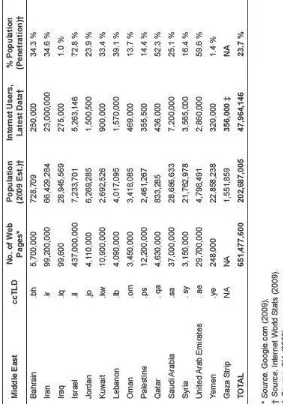
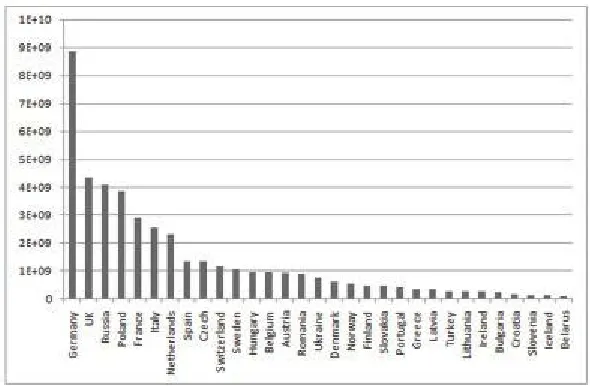
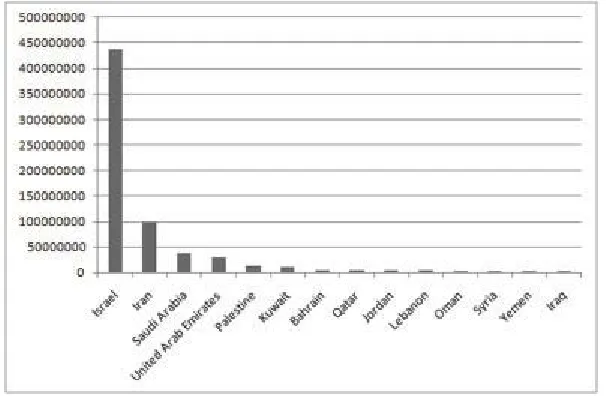
In many ways, the global digital divide is about presence—specifically, the extent of a nation’s or a culture’s presence in international cyberspace. In the book’s sixth chapter, Alireza Noruzi uses Google-related counts of Web pages from European and Middle Eastern countries to investigate the Web presence of countries in these regions. Noruzi focuses on how specific features (e.g., Internet access, language, and ICT literacy) influence a particular nation’s Web presence in global cyberspace, revealing that the global digital divide is not simply a matter of equal access to the Internet—rather, it also involves a nation’s and a culture’s ability to maintain significant online presence in order to share its national or cultural perspectives equally in global cyberspace.
The importance of equal access to information is a central issue for Yun Xia, who uses a study of socioeconomic and cultural factors to examine the nature of the digital divide in one particular nation: China. Xia explains that a range of factors—including age, gender, income, education, and employment—can affect digital divides within a nation as much as they can between nations. Such internal digital divides can affect a nation’s effective participation in international cyberspace. Xia also explains ways that understanding the internal digital divide in China could help researchers and policy makers better address issues that determine a nation’s position on either side of the global digital divide.
Yasmin Ibrahim’s “Globalization, Epidemics and Politics: Communicating Risk in the Digital Age” examines the idea of the Internet as a mechanism for collaboration and information sharing. In contrast to Xia’s chapter, Ibrahim’s piece reviews ways different national governments create policies that limit the flow of information across their borders—in both directions—selectively imposing information-based digital divides upon their citizens. Specifically, Ibrahim examines how online media have been used to address recent global crises in public health. She reveals that ICTs can effectively address such situations or further complicate them.
The collection concludes with Tatjana Takševa’s examination of how the commercialization of higher education can widen the global digital divide. Takševa examines global trends in higher education and examines the implications these trends have for developing nations—places where higher education is an important instrument for national development. She also reviews ways in which many current approaches to globalizing education actually contribute to the global digital divide and do not attempt to address it. Takševa concludes with strategies for creating more equitable approaches to the globalization of higher education—approaches that could address many of the factors currently contributing to the global digital divide.
Conclusion
By addressing this range of topics and cultures, and by doing so from a variety of perspectives, the authors who have contributed to this collection provide important insights into a particular cross section of the global digital divide. The chapters they have written can serve as a foundation for further research into a particular theory, approach, or region—whether that research is of an academic, public policy, or business-focused nature. In each of these cases, an enhanced understanding of the factors contributing to the global digital divide can help individuals make more informed decisions about media, communication, and globalization.
11 trends to watch in 2004. (2004). eMarketer. Retrieved May 15, 2004, from http://www.emarketer.com/news/article.php?
Beyond the digital divide. (2004, March 13). The Economist: Technology Quarterly Supplement,8. Bhagwati, J. N. (2004). In defense of globalization. New York, NY: Oxford University Press.
Burger, A. (2004, June 16). Broadband WiFi spreads in Latin America. E-Commerce Times. Retrieved October 1, 2010, from http://www.ecommercetimes.com/story/34517.html.
Cohen, D. (2006). Globalization and its enemies. Cambridge, MA: MIT Press.
Drori, G. S., & Jang, Y. S. (2003). The global digital divide: A sociological assessment of trends and causes. Social Science Computer Review, 21, 144–161.
High speed Internet access in Africa takes off. (2010, June 21). Stratsis incite: Current security, economic, and energy trends on the African continent (Weblog). Retrieved October 1, 2010, from http://stratsisincite.
wordpress.com/2010/06/21/high-speed-internet-access-in-africa-takes-off/.
Internet usage and populations in South America. (2010). Internet world stats. Retrieved October 1, 2010, from http://www.internetworldstats.com/stats15.htm.
Internet usage in Asia. (2010). Internet world stats. Retrieved October 1, 2010, from http://www.internetworldstats.com/stats3.htm. Internet usage in Europe. (2010). Internet world stats. Retrieved October 1, 2010, from http://www.internetworldstats.com/stats4.htm. Internet usage statistics for Africa. (2010). Internet world stats. Retrieved October 1, 2010, from
http://www.internetworldstats.com/stats1.htm.
Internet usage statistics: The Internet big picture. (2010). Internet World Stats. Retrieved October 1, 2010, from http://www.internetworldstats.com/stats.htm.
Kalia, K. (2001, July/August). Bridging global digital divides. Silicon Alley Reporter, 52–54.
Lau, A. (2010, June 28). Why Asia should matter to marketers. ClickZ. Retrieved September 10, 2010, from http://www.clickz.com/clickz/column/1721892/why-asia-should-matter-marketers.
Lister, M., Dovey, J., Giddings, S., Grant, I., & Kelly, K. (2003). New media: A critical introduction. New York, NY: Routledge. Marshall, J. (2010, January 29). Australians spend most time on social networks and blogs. ClickZ. Retrieved September 8, 2010, from
http://www.clickz.com/clickz/stats/1705913/australians-spend-most-time-social-networks-blogs.
Norris, P. (2001). Digital divide: Civic engagement, information poverty, and the Internet worldwide. Cambridge, UK: Cambridge University Press.
Open source’s local heroes. (2003, December 6). The Economist: Technology Quarterly Supplement,3–5.
Thomas, C., & Weber, M. (2004). The politics of global health governance: Whatever happened to “health for all by the year 2000”?
Global Governance, 10(2), 187–205.
Tying Latin American together. (2001, Summer). NYSE Magazine, 9.
van Reijswoud, V. E., & Mulo, E. (2007). Evaluating the potential of free and open source software in the developing world. In K. St. Amant & B. Still (Eds.), Handbook of research on open source software: Technological, economic and social perspectives
(pp. 79–92). Hershey, PA: IDEA Group Inc.
Vision. (n.d.). One laptop per child. Retrieved October 1, 2010, from http://laptop.org/en/vision/index.shtml.
Warschauer, M. (2003). Technology and social inclusion: Rethinking the digital divide. Cambridge, MA: MIT Press.
Chapter 1
The Spread of Culture under the Umbrella of Globalization
Tuğba Kalafatoğlu
New forms of technology are one of the hallmarks of contemporary globalization, and technological progress like that of the last three decades is a good indicator of profound social transformations. Within this framework, culture can be a key factor to understanding processes related to, affecting, and emerging from globalization. For these reasons, an understanding of cross-cultural communication is essential to an effective examination of globalization and its components. This chapter aims to avoid the problem of overgeneralization and to make the analytical and practical distinctions between aspects of economic, political, and social life easier to identify and comprehend. In essence, understanding culture is necessary to success in the modern environment of globalization; therefore this chapter examines whether globalization makes people around the world more similar or more different and examines the role globalization plays in the daily lives of individuals around the globe.
Introduction
Globalization is economically transforming the world as national borders become increasingly irrelevant to the global flow of money and goods. But globalization also has a great effect on cultures around the world in terms of products. Global brands—including Coca-Cola, Apple, Starbucks, and McDonald’s—and an increasing number of services are uniting nations in a global marketplace that makes each culture more interdependent with the others. Although many individuals point to globalization’s positive effects, others continue to debate the merits of globalization as both a process and an ideology. The spread of democratic governments, the liberalization of trade, the spread of new liberal economic reforms, the rise of technology, and the emergence of a truly global market for goods and services have resulted in a decline in the significance of national and other barriers to globalization. In fact, globalization has come to represent a growing interdependence among nations.
At the same time, tourism has become a leading global industry, and immigration is taking place on a massive scale. Radio and television have linked the world through a common grid of knowledge. Under the umbrella of globalization, the Internet, in particular, has neutralized distance as a major barrier to communication between people from different societies. All of these developments fundamentally transform the meanings of culture as people increasingly consider themselves members of a global “cultural supermarket” from which they can select their identities.
cultural globalization.
The process of globalization has many undesirable effects on the well-being of people, cultures, and political systems in developing countries around the world. During the last decade, globalization
became an internationally well-known word, and it that word represents one of the most highly charged issues of the day. It is ubiquitous in public discourse—found in TV sound bites and slogans on place cards, on Websites and in learned journals, in parliaments, in corporate boardrooms, and in labor meeting halls. For this reason, the better one understands globalization, the more effectively one can interact in the various arenas it encompasses.
Perspectives on Globalization
All over the world, different people hold different views of globalization. The following definitions represent some currently influential views on the topic:
[Globalization is] the inexorable integration of markets, nation-states, and technologies to a degree never witnessed before—in a way that is enabling individuals, corporations, and nation-states to reach around the world farther, faster, deeper, and cheaper than ever before … [it is] the spread of free-market capitalism to virtually every country in the world. (Friedman, 1999, pp. 7–8)
As experienced from below, the dominant form of globalization means a historical transformation: in the economy, of livelihoods and modes of existence; in politics, a loss in the degree of control exercised locally … and in culture, a devaluation of a collectivity’s achievements.… Globalization is emerging as a political response to the expansion of market power.… It is a domain of knowledge. (Mittelman, 2000, p. 6)
The historical transformation constituted by the sum of particular forms and instances of … making or being made global (i) by the active dissemination of practices, values, technology, and other human products throughout the globe (ii) when global practices and so on exercise an increasing influence over people’s lives (iii) when the globe serves as a focus for, or a premise in shaping, human activities. (Albrow, 1996, p. 88)
[Globalization represents] a social process in which the constraints of geography on social and cultural arrangements recede and in which people become increasingly aware that they are receding. (Waters, 1995, p. 3)
Amazingly, despite the term’s wide use, it does not appear to have any precise, widely agreed-upon definition. Indeed, the breadth of meanings attached to globalization seems to be increasing rather than narrowing over time. Moreover, with each passing year, the term takes on new cultural, political, and other connotations in addition to the economic ones previously associated with globalization.
Is Globalization New?
1700s. Thus, globalization represents change, but change has always been an integral feature of life.
What is the change today? Technology. New forms of technology are one of the hallmarks of contemporary globalization. Indeed, technological progress of the magnitude seen in the last three decades indicates profound social and cultural transformations. Today, technology breaks new ground in all corners of the globe. Whether in North America, the Asia Pacific region, Europe and Russia, or India and China, investment in technology research and technology development is paying dividends. The globalization of technology means that 20th-century economic advantages and powerbase structures are being rapidly removed. The Internet and the World Wide Web are great international knowledge levelers. Businesses large or small, long established or newly minted, are all equal in the cyber world of RSS feeds, electronic mail, e-commerce, Web portals, and Google hits.
Technology and globalization go hand in hand. Globalization unleashes technology, and technology drives firms to plan production and sales on a global basis. In nearly every case, technology also changes the work people do. The jobs created by globalization, for example, demand more education and training. Globalization also changes the way businesses operate by transforming relationships between suppliers, producers, retailers, and customers. Because of these interrelations, one cannot isolate technology from the world of business and commerce, law and contracts, culture and religion, language and literacy, or well-being and wealth.
The world thrives on change, and change usually reflects progress, perceived or otherwise. Technological advances now underpin change, regardless of the purpose of the endeavor. Today, the globalization of technology is a given. Moreover, technology’s evolution creates new facets of globalization with the potential to change the future’s course and open new possibilities.
The globalization of technology creates new opportunities as reactions to emerging demands arise from new possibilities. People around the world can now connect easily, quickly, and at a lower cost than ever before: In effect, online communication technologies have eliminated borders. The globalization of technology has already demonstrated that cross-border and intercontinental outsourcing, crossing several time zones, is a viable business model. Such practices are made possible by the leveling nature of common language skills, literacy, and intellectual abilities, which outweigh considerations of workers’ citizenship or location. Through the range of possibilities associated with the globalization of technology, people are now increasingly interconnected. Most important, in this new online global context, cultural unawareness or language difficulties accentuated by local dialects and accents can be overcome through innovative uses of technology.
Institutions, practices, and behaviors are, in turn, being changed by the technologies of the digital age. Taking the form of 3G phones, video reporting, and advanced techno gadgets, technology is part of daily life, and people have become part of an e-society. This e-society uses digital media in most relationships, including peer to peer (e.g., personal communications, business-to-business purchases), government to citizen (e.g., online mechanisms citizens use to interact with government), or individual to other (e.g., business to consumer).
The Effects of Globalization
Cultural Integration
One positive effect of globalization is the cultural exchange that it promotes around the world. The spread of culture is evident in several aspects of life in many countries. Globalization now allows (for example) Americans to eat Italian food, rural Vietnamese farmers to watch the daily news on television, the French to eat fast food, Germans to watch American movies, and the Japanese to listen to Scottish music. Today’s world is marked by globalization; almost no place or no one is so far away that connecting is entirely impossible. As a result, international interactions in today’s world contrast sharply with those presented in Jules Verne’s 1873 fantasy-adventure story Around the
World in Eighty Days. In fact, it is now possible to circle the globe in less than a day and to note
changes in the various cultures along the way.
Culture is a society’s conglomeration of its language, spiritual practices, social mores, and values that are transmitted from one generation to another. Global culturalization is a diffusion of cultural values and ideas across national borders. A specific example of such cultural integration is the way restaurants not only affect eating habits but also influence the traditions and values in countries where they are located. To illustrate these concepts, I consider the examples of Starbucks and McDonald’s, two brands recognized worldwide.
The Starbucks Corporation
Starbucks was founded in 1971 as a local roaster and retailer of whole-bean and ground coffee, tea, and spices; it was a single store in Pike Place Market, Seattle, in the state of Washington. Named after a character in the novel Moby Dick, Starbucks is now the largest coffeehouse company in the world, boasting some 16,000 outlets in over 40 countries (Starbucks Corporation, 2011).
The Starbucks phenomenon, however, causes cultural concerns in Italy. Whereas Americans commonly buy takeaway coffee and drink it in the street or at the office, Italians associate coffee with leisurely sidewalk cafés. Coffee in Italy is more than a drink; it is a lifestyle (“Why Starbucks is not present,” 2006). The fast-food culture born in the United States does not match Italian culture. Rather, in Italy eating is a part of life to be enjoyed with friends and family. Likewise, Italians drink coffee to relax and chat, not on the go as Americans often do. In this cultural context, Italian coffee shops offer a personal, friendly atmosphere many Italians believe a large chain could not provide. For them, Starbucks cannot supply the unique atmosphere of closeness and companionship that other coffee shops can.
The McDonald’s Corporation
independent local men and women” (McDonald’s Corporation, 2011, para. 1).
Consider McDonald’s effects on Chinese culture, for instance. In the past, festivities marking a child’s birth date were not celebrated in China. McDonald’s established a new tradition by successfully promoting American-style birthday parties as part of its marketing strategy (“The influence of U.S. corporations,” n.d.). This example might appear trivial, but it shows that the spread of U.S. companies in foreign countries can have unexpected consequences. And such influences are not limited to American companies; rather, in many sectors, globalization represents the important role companies from a variety of nations play in the daily lives of people around the world.
Some individuals might call the spread of culture via globalization “Americanization.” They might argue that culture—their native culture—is being lost to the American standard of life, and that globalization is thus detrimental to the preservation of those cultures. However, this argument simply does not explain the whole story. For example, because the Hindu religion proscribes the consumption of red meat, McDonald’s restaurants in India serve a certain kind of lamb patty (called a maharaja burger) instead of the original beef patties (Cooper, 1996). This menu item, unique to India, illustrates the multinational organization’s adaptation to a particular local culture. Although Indians might eat at McDonald’s, they need not compromise any of their traditional or religious values to do so. This is a prime case of globalization’s creating new mixtures of cultures as various cultural influences spread to all corners of the globe.
Understanding Other Cultures
Companies are expanding operations to other nations and are following the new trend of outsourcing to do so. “However, expanding operations to other nations means that organizations have to concurrently expand their communication capabilities so that they can interact efficiently with their foreign offices and markets” (“The importance of language,” 2010, para. 2). Moreover, “mobility, economic and political interdependence, and communication technology are three reasons to explain why intercultural communication has become an imperative in contemporary society” (“The importance of language,” 2010, para. 2). Because communication is so crucial, then, a key initial step to engaging effectively in cross-cultural communication is understanding and accepting the differences of other cultural groups.
Such acceptance, however, does not mean that individuals need to agree with the perspectives and practices of another culture. Rather, it means that people should try understand how they are viewed by the “other” culture in order to devise ways to best collaborate cross-culturally— particularly within the context of online exchanges (Varner & Beamer, 2006). Thus, effective interaction in the age of globalization, particularly via online media, requires individuals to understand the “other” culture. For this reason, individuals can benefit from a system or a framework that helps them identify and understand different cultural aspects that can affect communication practices in global contexts.
Communication across Cultures: What? Who? How?
particularly the global online marketing environment. Cultural diversity in such international contexts brings with it an immense richness that, if correctly addressed, can lead to high rates of international success. New cultures, for example, might offer a breeding ground for new product ideas; cultural exchanges might lead to new market opportunities in other nations. Thus, cultural differences can be an important resource for companies if the rights steps are taken to understand and address them.
If, in one’s homeland, both managers and workers can be taught to communicate more effectively with colleagues and customers—particularly in exchanges involving online media—global organizational successes can follow. Training, briefing, and adequate preparation for both online and on-site interactions with individuals in others cultures can make these exchanges positive and enlightening. However, someone who communicates effectively with American nationals in the United Sate might not necessarily be as effective when communicating with Japanese or Saudi Arabians in the United States, Japan, or Saudi Arabia. To better understand the global leader’s role as a communicator, it is vital that one comprehend what the complex process of communication involves: Communication is a dynamic exchange of energy, ideas, and information between and among people. It is verbal and nonverbal and occurs at different levels—informal and formal, intellectual and emotional. Most communication is manifest through symbols that globally differ in their meanings according to time, place, culture, and person. Human interaction, moreover, is characterized by a continual updating of these symbols’ meanings. The next section explores the nature of such interactions and symbols.
The Communication Process: One Planet, One Future?
Every individual communicates a unique perspective that reflects his or her own world and reality. Every culture, in turn, reflects its group’s worldview. Modern telecommunications, including television and the Internet, have forever changed human beings and their views. These technologies have created a new level of awareness about individuals’ actions and forced a review of notions about transparency and accountability. These same technologies confront humanity with the fundamental contradiction between unlimited economic growth and the resources required to maintain that growth. More than at any other time in history, in the 21st century, humankind faces rival and increasingly incompatible viewpoints and realities—delivered almost instantly and directly via online media—and the role of corporations is central to this conflict, representing globalization in a myriad of these situations.
Although the reality that “business as usual” cannot continue is broadlyrecognized, one can say that international business is different from national business because countries and societies are different. Societies vary because their cultures vary, exhibiting profound differences in social structure, religion, language, education, economic philosophy, and political philosophy. But by any definition, communication is a process of circular interaction that involves a sender, a receiver, and a message. In human interaction, the sender or receiver might be a person or a group of people. The message conveys meaning through the medium or symbol used to send it (the how) as well as in its content (the what).
field. Among the factors that comprise one’s field of experience are one’s family and one’s educational, cultural, religious, and social background. An individual’s perceptual field affects the way he or she receives and dispenses all new information. An individual’s self-image, needs, values, expectations, goals, standards, cultural norms, and perception have an effect on the way input is received and interpreted. All of these factors also affect how the members of a given culture perceive technology in terms of its uses and its implications. A sense of the similarities and dissimilarities between the sender and the receiver facilitates a successful communication—particularly in the age of the global Internet.
Global Communication
Klopf (1991) defined communication as a process individuals use to exchange ideas, information, and opinions through verbal and nonverbal channels. People working and communicating in a multicultural environment must “remember that the message that ultimately counts is the one that the other person gets or creates in their mind, not the one we send” (Simons, Vazquez, & Harris, 1993, pp. 45–50). Key to understanding this is that each person has been socialized in a unique environment, and such socialization creates a wide range of differences. These differences increase across cultures, and therefore the number of misunderstandings or miscommunications increases, as well.
Every person is simultaneously part of many different identity groups through which he or she learns and becomes part of his or her culture. For example, I am Turkish; I was born in Turkey and grew up there, but I have studied and worked in the United States. Thus the two cultures I know are combined in my personal and professional life. In the same way, each individual is culturally unique because each one adopts or adapts differently the attitudes, values, and beliefs of the groups to which one belongs. All communication becomes intercultural because of variations in the group identities of those communicating. What follows is a discussion of different items individuals should consider when addressing cultural differences in the various international contexts that arise through globalization.
High and Low Context
In the anthropological sense, culture refers to the cumulative deposit of knowledge, beliefs, values, religion, customs, and mores acquired by a group of people and that is then passed on from generation to generation. In examining the differences that arise between cultures, the anthropologist Edward T. Hall made a vital distinction between high- and low-context cultures (Hall, 1976; see table 1.1). He described the ways this matter of context influences communications—namely, information is either in the physical context or it is internalized in the person and little is communicated in the explicit words or message.
According to Hall, high-context communicators expect others to be able to interpret what they mean based on a knowledge of the cultural values that lie behind the words, what they are actually talking about at the time, the speaker’s tone of voice, and of course, eye and body language. People from Japan, Saudi Arabia, Spain, and China engage
Table 1.1. High-context and low-context cultures around the world.
Low-Context Cultures High-Context Cultures
Nordic and Germanic
North America
Australia and New Zealand Latin America Asia
Source. Adapted from Hall (1976) and from Hall and Hall (1987).
in high-context communications. For example, compare what the word difficult means for Japanese people and what it means to French people. In the Japanese cultural context, the word difficult means “absolutely out of the question, impossible.” But when the French say difficult,they mean “not easy, but not impossible either.” Another example is the different levels of directness used by Japanese and Americans. Japanese communicate by stating things indirectly, whereas Americans usually “spell it all out” (Herberger, 1980).
In contrast, in a low-context culture, most information is contained in explicit codes, such as words. Canada and the United States, as well as many European cultures, engage in low-context communication (Hall & Hall, 1987). In other words, low-context communicators tend to express themselves in explicit, concrete, and unequivocal terms. Little cultural baggage comes with it, and listeners can usually take what speakers say at face value. Such differences can affect how messages are presented and received when interlocutors use online media to interact across cultures.
with impatience and irritation because low-context communicators might provide more information than is necessary, whereas high-context communicators may not provide enough information (Hall, 1976). Such irritation might become even more acute when members of these two cultural groups interact through online media—because these media often remove
Table 1.3. Tips for overcoming the differences between high- and low-context cultures. • Keep an open mind
• Put yourself in other person’s position • Listen before speaking
• Ask open-ended questions (who, what, why, where, how)
• Answer calmly and reasonably • Be genuine
• Be yourself
the nonverbal cues (e.g., physical appearance, accent, and intonation) that can remind an interlocutor that he or she is interacting with someone from another culture. The characteristics of low- and high-context cultures as they affect communication are contrasted in table 1.2.
Unless global leaders are aware of subtle differences, communication misunderstandings between low- and high-context interlocutors can result, particularly when these individuals are communicating through Web-based media. Global leaders should prioritize intercultural communication and an understanding of the fundamental differences between high- and low-context cultures, for such differences will likely affect their business success throughout the global marketplace or their political success when dealing with others in the world. Table 1.3 provides an overview of different approaches individuals can take to interact more effectively in order to address differing communication expectations associated with high-context and low-context cultures.
Negotiating across Cultures in a Global World
One of the most difficult and important tasks associated with globalization is international negotiation. Negotiation is a process in which two or more entities come together to discuss common and conflicting interests in order to reach an agreement of mutual benefit. International negotiation is extremely complex and difficult, for it involves laws, regulations, standards, and business practices that differ from one society to the next. Most of the difficulties in international negotiations, however, arise because of cultural differences. Differences in the negotiation process from culture to culture include language, cultural conditioning, negotiating styles, approaches to problem solving, assumptions, gestures and facial expressions, and the role of ceremony and formality.
According to Lewis, there are over 200 national cultures in the world, and many other cultural layers, such as region, generation, gender, class, education, and profession (2006, p. 28). In a theoretical approach to analyzing the broad cultural differences, Lewis divided cultures into three main categories: linear-active, multi-active, and reactive (see table 1.4).
exchanges. Depending on the cultures involved, an overlap of values may occur in a specific area; in these cases, the problems related to transferring ideas will be minimal.
According to Graham (1996), there are four problematic areas in international negotiations: language, nonverbal behavior, values, and thinking and decision making. Many promising international deals fall through when problems arise between negotiators from informal cultures and their counterparts from more formal cultures. Armed with knowledge about various cultural perspectives on negotiation, however, international negotiators could take the following steps to reduce difficulties and increase the chance of success in cross-cultural negotiations.
First, negotiators must recognize that counterparts from other cultures differ in their perceptions, motivations, beliefs, and values. Those communicating need to identify, understand, and respect the other side’s culture before the negotiation opens. Each side should be prepared to communicate and operate on two discrete cultural wavelengths whether the exchange takes place in cyberspace or in physical space.
International negotiators should avoid assuming that behaviors acceptable in their own culture are also acceptable in all other cultures. This is particularly relevant in relation to cyberspace interactions; one might easily suppose, for example, that the more direct approach to online exchanges common in one’s own low-context culture is universal. (Such an assumption might conflict with the expectations of individuals from high-context cultures, in which a more indirect approach would be preferred.) Those involved in intercultural negotiations should adjust the pace of proceedings to that of the people with whom they are trying to do business. In online exchanges, such adjustments might require waiting what seems (to one partner) like an excessive amount of time for a response via a medium designed for speed (e.g., expecting a quick response to e-mails or a quick responding post in an online chat).
In any negotiations with anybody anywhere, any party involved has the option of declining a deal.
an overseas counterpart; often this is a more productive tactic than rapidly posting a quick and direct reply. Related to respect is the idea that negotiators must be culturally neutral; difference does not indicate either superiority or inferiority. Neither party should cast judgment on the other party’s cultural mores. The danger of such assumptions can be particularly acute in online exchanges, in which delays between the time a message is sent and the time a response is received could be mistakenly viewed as a negative reflection of the other party’s abilities (e.g., intellect) or character (e.g., honesty).
Those involved in international communications need to be sensitive to cultural norms and taboos. They must try to understand what these cultural particularities are and how their behavior relates to them even if abiding by these norms causes discomfort or emotional stress to the interlocutor. Such sensitivities might require a special degree of attention in online exchanges, in which the text-based nature of most media prevents one from viewing nonverbal reactions and responses—important feedback—to messages. Likewise, negotiators should demonstrate interest in, knowledge of, respect for, and appreciation of the other side’s culture. Failure to do so can easily be interpreted as reflective of cultural superiority and arrogance. Questions about culture, for example, carefully framed without criticism show that one finds the other side’s culture interesting, important, and worth learning about. Such sensitivity, again, can be challenging in cyberspace, where one’s impulse is often to provide quick and direct responses to questions or comments.
Finally, in order to reach to their audiences, negotiators should create a central message; even if one is dealing with other cultures, people around the world like to know what the presentation is about and what they will gain from listening to it (though different cultures might expect this factor to be addressed in different ways).
In applying the strategies listed here, individuals engaged in cross-cultural communication first need to determine whether the audience values abundant facts and background information or if such details are considered extraneous. For example, Turks are not inclined to value an amassment of facts; they consider the broader context rather than the minute details. Americans, in contrast, are extremely fact oriented. Evaluating one’s audience allows one to select only points that support the central message and that are relevant to the audience, thus increasing the effectiveness of the presentation. If, for example, one’s audience comprises Germans, Scandinavians, or Japanese, one should support what one says with plenty of relevant facts and statistics. But if the audience is British, one can present a broad topical overview that includes only the essential details.
distributive outcomes. In contrast, most Asians view negotiation as a long-term relationship and cooperative task.
Given the variant perspectives on negotiation held by Americans and by those of other nationalities, it is not surprising that international negotiations, both online and on-site, are marred by many difficulties, misunderstandings, and mistakes. Learning about the cultural perspectives of negotiation can reduce some of these problems. The first step toward improving intercultural negotiations is understanding the influence of cultural differences on negotiation styles. In any negotiation situation—be it online or on-site—it does not matter which side one is on; each party is there to win. Therefore the international negotiator should try to learn as much as possible about the other side’s culture. Negotiators should be tolerant and respectful of cultural differences. Once differences are understood, negotiators should seek ways of accommodating them.
Conclusion
The world has embarked on the most ambitious collective experiment in history: globalization, the long-term effort to integrate the global dimensions of life into each nation’s economy, politics, and culture. As a result, human beings now live in a world where the umbrella of globalization continues to expand, covering new cultures each day. Under this umbrella, cultural peculiarities (e.g., the national cultures of China and the United States, German economic practice, Italian fashion, French cuisine) are what they are because of their participation in a global system. Such differences cannot be understood beyond this global context.
In this scenario, the culturally distinct societies of the world are being overrun by globally available goods, media, ideas, and institutions. In a world where people from Vienna to Sydney eat Big Macs, wear H&M clothes, watch MTV or CNN, listen to music on their iPods, talk about human rights, and work on their IBM-Lenovo computers, characteristics that make cultures more distinctive from one another can become endangered. These internationally distributed commodities that create a kind of commonality across cultures have been used and ideas have been discussed daily around the world as a part of globalization.
This new global economic, political, and social order is made possible by computers and telecommunications. But equally important has been the spread of free-market capitalism, deregulation, global investment, privatization, the pursuit of human rights, and the recognition of the value of an open society. In combination with the dissemination of these values, globalization has created the need for international leaders to identify, study, and understand the worldviews, mindsets, and habits of their global publics in order to effectively communicate.
If globalization is economic, political, and social, it is also cultural. To say this, however, is only to raise the question of what such a phenomenon amounts to. As this chapter explains, there can be no doubt that culture plays important role in globalization and that communication is the key to success in a range of international activities—from business to political and social. Communication styles and meaning, as well as the realities perceived by individuals, are culturally constructed. Adequate knowledge of language and culture is needed for effective communication in any society.
practicing business abroad; fluency must be combined with knowledge of the culture of the native speakers. Words often do not have common meaning, especially between native and nonnative speakers of a language; English words are often associated with mental images, subtleties, and nuances closely tied to the speaker’s native language. According to Beeth (1997), one who learns a language and not the related culture is akin to an elephant attempting to move through a dainty chinaware shop: No matter how carefully the elephant tries to move, each step sends fragile dishes crashing to the floor.
A lack of cultural awareness can lead to communication devoid of essential emotional content, content that might be needed in order to effectively communicate in some societies. Recognition of one’s own culture and an awareness of how it differs from other cultures are needed to successfully carry out international business and political functions abroad.
The effects of globalization occur on a much broader scale today than they did in the past and have been most prominent in the last few decades. To survive the storm winds of globalization, those who participate in the modern global economy must carefully watch the rapid changes taking place and in order to successfully adapt to the times. There is no option but to face this “new world” challenge. Although many aspects of the new global reality are not yet fully understood, success in the face of these changes depends on a sound understanding of culture’s importance to effective communication and mutual understanding, principles on which the future depends.
References
Albrow, M. (1996). The global age: State and society beyond modernity. Stanford, CA: Stanford University Press. Beeth, G. (1997). Multicultural managers wanted. Management Review, 86(5), 17–21.
Cooper, K. J. (1996, November 4). It’s a lamb burger, not a hamburger at beefless McDonald’s in New Delhi. The Washington Post, p. A14.
Friedman, T. L. (1999). The Lexus and the olive tree. New York, NY: Farrar, Straus Giroux.
Graham, J. L. (1996). Vis-à-vis: International business negotiations. In P. N. Ghauri & J.-C. Usunier (Eds.), International business negotiations (pp. 69–90). Tarrytown, NY: Pergamon.
Hall, E. T. (1976). Beyond culture. Garden City, NY: Anchor Press.
Hall, E. T., & Hall, M. R. (1987). Hidden differences: Doing business with the Japanese. Garden City, NY: Anchor/Doubleday. Herberger, R. A. (1980). Some beliefs of Americans can lead to wrong conclusions. Nihon Keizai Shimbun/Japan Economic Times,
pp. 19–24.
The importance of the language in the intercultural business communication. (2010). Barackoli.com. Retrieved June 1, 2010, from http://barackoli.com/the-importance-of-the-language-in-the-intercultural-business-communication/.
The influence of U.S. corporations on local mores. (n.d.). Globalization101.org. Retrieved February 21, 2011, from http://www.globalization101.org/htmlsite/index%28385%29.htm.
Klopf, D. W. (1991). Internet encounters. Englewood, CO: Morton.
Lewis, R. D. (2006). When cultures collide: Leading across cultures (3rd ed.). Boston, MA: Nicholas Brealey.
McDonald’s Corporation. (2011). Our company. Retrieved February 21, 2011, from http://www.aboutmcdonalds.com/mcd/our_company.html.
Mittelman, J. H. (2000). The globalization syndrome: Transformation and resistance. Princeton, NJ: Princeton University Press. Ritzer, G. (1983). The McDonaldization of society. Journal of American Culture, 6, 100–107.
Simons, G. F., Vazquez, C., & Harris, P. R. (1993). Transcultural leadership. Houston, TX: Gulf.
Starbucks Corporation. (2009). Our company. Retrieved September 27, 2009, from http://www.starbucks.com/about-us/company-information.
Starbucks Corporation. (2011). Hoovers. Retrieved February 20, 2011, from http://www.hoovers.com/company/Starbucks_Corporation/rhkchi-1.html.
Varner, I., & Beamer, L. (2006). Intercultural communication in the global workplace (4th ed.). New York, NY: McGraw-Hill/Irwin.
Waters, M. (1995). Globalization. London, UK: Routledge.
Chapter 2
Traditional Cultures and their Effects on Globalization
An African Perspective
Kehbuma Langmia
Traditional cultures have defined and differentiated people over the years, and globalization has offset this diversity by creating confusion. Indigenous cultures, especially in the developing world, are gradually being eroded by the force of so-called global culture. This global culture is a whirlwind that is crushing development and threatening burgeoning traditional modes of expressions, particularly in Africa. For global culture to be considered a positive thing in Africa, the theoretical concepts of Africana critical theory and Afrocentricity should be the starting point. Eurocentrism, the dominant conceptual framework, is used repeatedly with respect to Africa, and this practice affects globalization and the digital divide as it relates to the continent. This chapter examines in detail the problems resulting from a Eurocentric view of Africa; it demonstrates the importance and value of local cultures in Africa, and specifically in Cameroon. The study examines how the related cultures have been ignored by global technology and how globalization can succeed in addressing issues of technology use.
Globalization … has become its own “meta-narrative,” implying an unrealistic degree of homogenization and inevitability. (Lister, Dovey, Giddings, Grant, & Kelly, 2003, p. 182)
The divide between the income rich and the income poor, the technology haves and the technology have-nots, the information rich and the information poor, has become the most serious political economic problem facing the world today. (Parayil, 2005, p. 42)
Introduction
The culture of a people is the hallmark of its human essence and identity. When this culture fuses with outside elements, change is bound to occur. Before the era of colonialism, African culture was unique. It was relatively untainted by outside forces that could destroy it. With the advent of colonization, the people of Africa witnessed something new, intrusive, and overbearing. Rodney (1972) observed that “because of the impact of colonialism and cultural imperialism, Europeans and Africans themselves in the colonial period lacked due regard for the unique features of African culture” (p. 34).
This lack of regard, which colonialism created in terms of how Africans and Europeans view African culture, has continued for almost half a century with the emergence of globalization. Rodney (1972) asserted that “in Africa, both the formal school system and the informal value system of colonialism destroyed social solidarity and promoted the worst form of alienated individualism without social responsibility” (pp. 254–255). This chapter seeks to answer the following question: In what way has globalization become another force stripping Africa of its culture?
has created the “global village” (Green, 2001; Perrons, 2004). Local peasants now use computers to sell their produce electronically in the international markets (Moodley, 2002); local artists in Africa now download rock-and-roll and hip-hop music and use QuickTime software on their computers to fashion their own songs’ beats. On the negative side, cellular phones now send bank account numbers via text messages from city youths in Africa to “potential investors” in some Western countries. Nyamnjoh (2004) described this reality in Africa succinctly:
Criminal rackets promising effortless immigration and work permits have sprung up to take advantage of the burning desire in ordinary people to succeed. Similarly, Nigerian 4-1-9 and Cameroonian Feymen fraudsters have equally used the Internet and cell phones creatively to access more people with their letter scams and fraudulent business deals that have brought some of them dazzling riches. (Nyamnjoh, 2004, p. 52)
Without heed for cultural diversity, therefore, so-called global technology has come to signify both the good and the ugly, especially in Africa. Only a few, mostly urban, youths are privy to some of the technological gadgets that globalization has brought to Africa. This chapter, using the scholarly literature, discusses whether globalization has ushered in new cultural systems that will work side by side with existing African cultural value systems in a symbiotic relationship—or overshadow them. If the digital cultural divide between Africa and the West is to be narrowed, the primary role and function of African cultural identity must be addressed. Africans cannot continue as passive consumers of foreign cultures in the name of globalization.
Background and Literature Review
Several attempts have been made by scholars from various academic disciplines to define globalization. These attempts have polluted the field, hindering a consensus definition. Though some have viewed globalization as a process of bringing people together through new means of communication and transport (Giddens, 2006; Richmond, 2002), others have labeled globalization “a process that encompasses the causes, course, and consequences of transnational and transcultural integration of human and non-human activities” (Al-Rodhan, 2006, p. 2).
Of all the definitions provided for globalization, the one that fits the purpose of this chapter is Sholte’s: “Globalization is a dynamic whereby the social structures of modernism (capitalism, rationalism, industrialism, bureaucratism, etc.) are spread the world over, normally destroying pre-existent cultures and local self-determination” (2000, p. 16). So modernism—the extended version of globalization—has affected preexistent cultures in Africa. It presupposes that the rest of the world is obliged to imitate economic, social, and cultural movements that are being spread by the dominant forces of Western ideology. These ideologies are diffused through modern media channels, such as the Internet, television, radio, and more recently, cell phones.
Today’s global culture has become the way of adopting Western modes of life and Western value systems at the expense of local oral and written cultures. As Ess and Sudweeks explained:
(especially US) cultural practices. Traditional dress has been replaced by suits in business settings in every country in the world; young people in urban areas everywhere watch films made in Hollywood, listen to Rock and Roll, play video games, talk on cell phones, wear jeans, drink
Coke, eat pizza (or McDonald’s hamburgers), speak English, and increasingly frequent cybercafés. Part of what makes the world “smaller” today is that one is more likely to encounter familiar symbols and practices in geographically distant places than was the case one hundred years or even fifty years ago. (Ess & Sudweeks, 2001, p. vii)
Nowhere in Europe or America does one notice a significantly large population of Westerners adopting the communal lifestyles of Africans as a sign of global togetherness. How many universities in Europe and America have language departments that teach African languages like Lingala, Hausa, Swahili, and Yoruba—or indeed, any languages from Africa at all? Only a handful of educational institutions offer these studies. But most universities in Africa have English, French, German,and Spanish departments. If the globalization of technology is really meant to be global, why are the aforementioned popular African languages not among the plethora of languages available on modern computer systems like PCs (personal computers), PCSs (personal communication services), and PDAs (personal digital assistants )? It is as if the West dictates the rhythm of life on earth. If that is the case, the very notion of making the world a global village is a painfully one-sided ideology.
This situation is unfortunate. When African youths dance and dress like Hollywood stars, the future of African culture appears very bleak indeed. The vexing issue is that these Western cultural styles are assimilated in young Africans’ ontological “culturescape.” The original cultural forms—for instance, folk tales, music, dance, rituals, divinations, incantations, and festivals—tend to lose their uniqueness and, in some cases, are called “uncivilized” practices. These youth are assimilated—not integrated—into the “acceptable” Western patterns.
Diversity has become the cliché, the catchphrase for—seemingly—integrating minority cultures
into the mainstream. The marriage between diversity and Westernization constitutes what should be a globalization of cultures. But the reality is that some cultural norms, particularly in Africa, have been dubbed primitive and uncivilized by pro-Western scholars and neocolonialists:
The combine and the gun originated in the sphere of Western or Christian civilization. Therefore, those who wish to give up hoe, machete, bow and arrow and to have combines and guns must also give up healing by witchcraft, polygamy, and superstition … how can primitive peoples survive contact with the scientific-technological age? (Jahn, 1990, p. 12– 13)
Therefore, if these traditions, customs, oral culture, and religious rites are to be transported into the international spheres to function alongside Western cultures and value systems, clash is eminent.