ANTIOXIDATIVE PEPTIDES OF TEMPE FROM INDONESIA
RUSDAH
GRADUATE SCHOOL
BOGOR AGRICULTURAL UNIVERSITY
BOGOR
DECLARATION OF THESIS AND INFORMATION SOURCES OF
INFORMATION AND PATENT
I, Rusdah, hereby stated that this thesis entitled
Antioxidative Peptides of Tempe from
Indonesia
is true of my own work under the supervisor advisory board and that is has not
been submitted before to any university. The content of this thesis has been examined by
the advising advisory board and external examiner. Sources of information which is
derived or cited either from published or unpublished scientific paper from other writers
have mentioned in the script and listed in the references at the end part of this thesis.
I hereby handed the copyright of my thesis to Bogor Agricultural University.
Bogor, May 2016
RINGKASAN
RUSDAH. Peptida antioksidan tempe Indonesia. Dibimbing oleh: MAGGY
THENAWIDJAYA SUHARTONO, NURHENI SRI PALUPI, dan MASAHIRO
OGAWA.
Tempe merupakan salah satu produk fermentasi kedelai yang berasal dari
Indonesia dan saat ini telah dikenal luas di dunia karena keunikan rasa dan kandungan
nutrisinya. Kedelai dan produk fermentasinya mempunyai kandungan protein tinggi dan
komponen bioaktif seperti isoflavones dan peptida. Fermentasi kedelai oleh
Rhizopus
sp
pada proses pembuatan tempe, meningkatkan nilai fungsionalnya diantaranya
peningkatan kandungan peptida bioaktif yang bisa berfungsi sebagai sumber antioksidan.
Proses ekstraksi peptida bioaktif bisa sangat beragam satu sama lain disebabkan oleh
keunikan karakter dari protein dan peptida sehingga dibutuhkan metode ekstraksi yang
tepat untuk masing-masing produk fermentasi kedelai. Tujuan dari penelitian ini adalah
untuk mengetahui jenis pelarut terbaik dalam melarutkan peptida pada produk fermentasi,
serta menganalisis aktivitas antioksidan menggunakan metode DPPH,
ferric reducing
capacity
(FRC) dan
oxygen radical absorbance capacity
(ORAC).
Dua jenis tempe yang digunakan dalam penelitian ini berasal dari dua jenis
kedelai dengan label
genetically modified organism
(GMO) dan non-GMO. Pengaruh
perebusan pada tempe selama 10 menit juga diamati untuk melihat aktivitas antioksidan
tempe setelah melalui proses pemasakan. Penelitian ini terdiri dari tiga bagian, (1)
penentuan pelarut terbaik yang memberikan tingkat kelarutan terbaik menggunakan 6
jenis pelarut organik (pelarut campuran acetonitril-air dalam 5 konsentrasi berbeda,
ethanol, dan trifluoroacetic acid) serta pelarut air, (2) analisis tingkat kelarutan peptida
dan aktivitas antioksidan dari tempe dengan label GM dan non-GM, (3) analisis pengaruh
perebusan (100
0C, 10 menit) terhadap kelarutan peptida dan aktivitas antioksidan
menggunakan tempe non-GM. Semua sampel yang digunakan terlebih dahulu difraksinasi
menggunakan membran dialisis (1.000; 3.500; 6.000
–
8.000 MWCO) dan dilakukan
proses penghilangan komponen fenol dengan
polivynilpirrolidone
(PVP). Hasil
menunjukkan pelarut organik terbaik dalam melarutkan peptida adalah pelarut
acetonitril(1): air(1): trifluoroacetic acid(0.02) (A1W1TF) (4.708 mmol Gly eq.) (p<0,05)
diikuti dengan acetonitril(1): air(3) (A1W3) (3.633 mmol Gly eq.) dan air (3.469 mmol
Gly eq.). A1W1TF dan air kemudian digunakan untuk analisis pada dua kelompok
perlakuan selanjutnya.
Tingkat kelarutan peptida dan aktivitas antioksidan dari tempe-GM menunjukkan
hasil yang lebih besar secara signifikan (p<0,05) dibanding dengan tempe non-GM pada
sebagian besar fraksi molekul. Proses perebusan juga menunjukkan kelarutan peptida
dengan berat molekul kecil yang lebih besar, baik dari ekstrak A1W1TF dan air, serta
menunjukkan aktivitas antioksidan yang lebih tinggi. Fraksi peptida terbanyak yang
terekstrak pada tempe berasal dari berat molekul ≤1 kDa dan >8 kDa, yang mana fraksi
ini juga menunjukkan aktivitas terbaik pada uji antioksidan.
SUMMARY
RUSDAH. Antioxidative peptide of tempe from Indonesia. Supervised by: MAGGY
THENAWIDJAYA SUHARTONO, NURHENI SRI PALUPI, and MASAHIRO
OGAWA.
Tempe is a traditional food originated from Indonesia and nowadays consumed
worldwide because of it good taste and high nutrition. Soybean and their fermented
product contain high protein and functional health subtances such as isoflavones and
bioactive peptides. Soybean fermentation by
Rhizopus
sp. in tempe provides desirable
effects on its functional properties, including the production of low molecular weight
peptide which can be a good source of antioxidative peptide. Extraction of bioactive
peptide from soy-fermented product is various due to its complexity of peptide and amino
acid substances, therefore specific extraction methods must be determined for each
product. The purpose of this study was to investigate the best solvent for peptide recovery
from tempe and their antioxidant activity using DPPH, ferric reducing capacity (FRC)
and oxygen radical absorbance capacity (ORAC).
Two types of tempe commercially produced using genetically modified organism
(GMO) and non-GMO soybean were used, and effects of boiling process (100
0C) for 10
minutes on tempe were also investigated. This study was classified into three parts, (1)
determination of the best solvent performance for peptide extraction using seven types of
organic solvent (acetonitrile-water mixtures in five various concentrations, ethanol, and
trifluoroacetic acid) and single water solvent, (2) study on peptide recovery and
antioxidant activities of GM and non-GM tempe, and (3) study on peptide recovery and
antioxidant activities of boiling and non-boiling (100
0C for 10 minutes) tempe (non-GM
type). All extracted samples from organic solvent (the best solvent from the first part of
this study) and water solvent were fractionated using dyalisis membrane (1,000; 3,500;
6,000-8,000 MWCO) before antioxidant and peptide analysis and treated with
polivynilpirrolidone (PVP) to remove all phenolic compounds. The results showed that
the best recovery was attributed to acetonitrile (1): water (1): trifluoroacetic acid (0.02)
(A1W1TF) (4.708 mmol of Gly eq.) (p<0.05) followed by acetonitrile (1): water (3)
(A1W3) (3.633 mmol of Gly eq.) and single water extraction (3.469 mmol of Gly eq.),
respectively. The A1W1TF and water were further used for peptide recoveries and
antioxidant activity for the two next parts of this study.
Peptide recovery and antioxidant activities of GM tempe was significantly higher
than that of non-GM tempe (p<0.05). Additionally, processed tempe demonstrated better
peptide recoveries and antioxidant activities for all measurements in comparison with
non-processed tempe. The A1W1TF showed better performance to extract tempe peptides
and also antioxidant activities. The highest fractions were attributed to <1 kDa and >8
kDa, and mostly showed higher antioxidant compared to other molecular weight
fractions.
©Copyright of Bogor Agricultural University, 2016
Protected by the laws
Any unauthorized quotation of all contents or any part thereof is strictly prohibited.
Citation is only for educational purpose, research, scientific writing, reports writing,
critique and problem analysis; and citations would not give any disadvantage on behalf
of Bogor Agricultural University.
ANTIOXIDATIVE PEPTIDES OF TEMPE FROM INDONESIA
RUSDAH
A Thesis
submitted for the Degree Programs of
Master of Science in Food Science
GRADUATE SCHOOL
BOGOR AGRICULTURAL UNIVERSITY
BOGOR
Research Title
: Antioxidative peptides of tempe from Indonesia
Name
: Rusdah
Student ID
: F251130031
Study Program
: Food Science
Approved by
Advisory Committee
Prof. Dr. Maggy Thenawidjaya Suhartono
Main Supervisor
Dr. Ir Nurheni Sri Palupi, MSi
Prof. Dr. Masahiro Ogawa
Co-Supervisor
Co-Supervisor
Acknowledged by
Head of Study Program
Food Science
Dean of Graduate School
Examination date : May 18
th, 2016
Graduation date :
FOREWORD
First and foremost, I would humbly distinguish the Most Gracious Allah SWT, all praises
to Allah for the gift and His blessing in completing this thesis with the title: Antioxidative
peptides of tempe from Indonesia. This thesis submitted for the Degree Programs of
Master of Science of Food Science.
I would like to sincerely deliver my gratitute to my advisor: Prof. Dr. Maggy T.
Suhartono, Dr. Ir. Nurheni S. Palupi, MSi, Prof. Dr. Masahiro Ogawa for their advice,
expertness, encouragement, and support.
My appreciations were also delivered to Lembaga Pengelola Dana Pendidikan-Republik
Indonesia (LPDP-RI) scholarship for the strong support during my study in Bogor
Agricultural University, and also for Japan Student Services Organization (JASSO)
Scholarship for granting scholarship under SUIJI-JDP (Six University Initiative
Japan-Indonesia Joint Degree Program) which allow me to spent a year in Kagawa University
for study and doing my master degree research. I would like to express my gratitute to:
Mr. Mulyana Hadipernata, Mr. Muh. Ali A., Mr. Hibi Koma, Mr. Ryo Maeda, Mr.
Takashi Akazawa, Mr. Tomoki Kusaka, Ms. Saika Iritani, Ms. Nurin and all members of
Food Science Laboratory of Kagawa University for their advices, and insightful
comments for my research.
I also adressed my gratitue to all lecturer, staff and class mate in Food Science, Graduate
School of Bogor Agricultural University 2013. The last but not least, I would like to send
my deeply thankful to my family who have been become the best supporter during my
life. I hope this thesis can give a good sight about bioactive peptide of tempe and give
better explanation about functional value scientifically of this product.
Bogor, May 2016
Rusdah
TABLE OF CONTENT
LIST OF TABLES
xii
LIST OF PICTURES
xii
LIST OF APPENDIXS
xii
1.
Introduction
1
Background
1
Objectives
1
2.
Materials and Methods
Time and place
2
Chemicals
2
Materials
2
Sample extraction
3
Protein and peptide recoveries method
3
SDS PAGE
4
Analysis of DPPH
5
Analysis of ferric reducing capacity (FRC)
5
Analysis of oxygen radical absorbance capacity (ORAC)
5
Statistical analysis
5
3. Result and Discussion
Effect of solvent on peptide recoveries
6
Comparison between GM and non-GM tempe
10
Peptide and protein recoveries
11
Antioxidant activities
13
Comparison between processed and non-processed tempe
16
Peptide and protein recoveries
16
Antioxidant activities
18
4.
Conclusions
22
5.
Recommendation
23
References
24
Appendixes
31
LIST OF TABLES
1
Different solvent used for soy-fermented product
7
2
Peptide recoveries from water and A1W1TF extract
8
3
Nutrition content of GM and non-GM tempe
13
4
Amino acid composition of soybean products
18
5
Antioxidant activity from different sources
21
LIST OF PICTURES
1
Tempe labelled as GMO and non-GMO
2
2
Flow chart of experiments
4
3
Recovery of peptide and protein from GMO type using 7 type of solvents
6
4
SDS-PAGE
9
5
Peptides recovery (OPA methods) of GM and non-GM tempe
12
6
Protein recovery (Lowry methods) of GM and non-GM tempe
12
7
Antioxidant activity (DPPH) of GM and non-GM tempe
14
8
Antioxidant activity (FRC) of GM and non-GM tempe
15
9
Antioxidant activity (ORAC) of GM and non-GM tempe
15
10
Peptide recovery (OPA methods) of processed and non-processed
17
11
Protein recovery (Lowry methods) of processed and non-processed
17
12
Antioxidant activity (DPPH) of processed and non-processed
19
13
Antioxidant activity (FRC) of processed and non-processed
19
14
Antioxidant activity (ORAC) of processed and non-processed
20
15
Total phenolic content of non-processed and processed tempe
22
LIST OF APPENDIXES
4
Post hoc analysis of DPPH from GM and non-GM tempe based on
solvent types
33
5
Post hoc analysis of DPPH from GM and non-GM tempe based on
molecular weight
34
6
Post hoc analysis of FRC from GM and non-GM tempe based on
solvent types
34
7
Post hoc analysis of FRC from GM and non-GM tempe based on
molecular weight
34
8
Post hoc analysis of ORAC from GM and non-GM tempe based on
solvent types
35
9
Post hoc analysis of ORAC from GM and non-GM tempe based on
molecular weight
35
10
Post hoc analysis of FRC from processed and non-processed tempe
based on solvent types
35
11
Post hoc analysis of FRC from processed and non-processed tempe
based on molecular weight
36
12
Post hoc analysis of ORAC from processed and non-processed tempe
based on solvent types
36
13
Post hoc analysis of ORAC from processed and non-processed tempe
1 INTRODUCTION
Background
Tempe is a traditional food product originated from Java, Indonesia, and nowadays is consumed world wide. Although tempe can be produced by various types of bean such as red bean, mungbean, cowpea, pigeon pea, and faba bean, soybean is the most popular since it has a good taste and high nutritional contents. Soybean is rich in proteins (20- 40% of its dry mass) and contains several bioactive compounds (phenolics, peptides, and so on) which can give a benefit to human health. In Indonesia, approximately 60% of the total national consumption of soybean processed become tempe, and national consumption of tempe reaches about 7 kg / capita/ year (Soim 2013).
In Indonesia, genetically modified organism (GMO) soybean is mainly used to produce tempe as raw materials. Safety, nutrition level, environment and economic issues for GMO products make tempe with GMO label still controversial in public perception. Many research trying to evaluate their safety and nutrition content compared with non-GMO especially for soybean as one of the highest non-GMO crops production in the world (Dumas et al. 2003; Wei et al. 2004; Aldrich et al. 2010; Lee et al. 2003; Olievera et al. 2013). Therefore, exploration about functional properties of soybean tempe is needed to fullfill consumer concern for GM products.
Reports on functional properties of soybean and its products so far had focused mainly on phenolic compounds (Malenčićet al. 2007; Riaz 1999; Mujic et al. 2011). On the otherhand, soy-fermented product is rich in amino acids and low molecular weight peptides with health benefits (Amadou et al. 2010; Fan et al. 2009; Mahmod et al. 2011; Wang & Saito 2003; Zhang et al. 2005). The abundance of bioactive peptides depends on various factors including soybean type and processing steps. Fermentation process in tempe production mainly using Rhizopus sp. as fermentor, which greatly increase amino acid and peptide content of soybean. Enzymes of Rhizopus sp. can degrade soybean proteins into simpler forms such as di-, and tri-peptides.
Tempe must be cooked before consumption and the popular cooking method is heat treatment such as boiling. Turkmen et al. (2005) and Huang et al. (2006) reported that heat treatment on food not only can improve flavor and palatability but also have possibility to enhance nutritional values. In some processed foods, including legumes, fermented soybean natto and tempe, heat treatment can increase the content of total phenolic, peptide and amino acid which show positive correlation with antioxidant activity (Xu et al. 2008; Gibbs et al. 2004).
2
from a t GM tem
Science
(Gly), a from S fluoresc ferricya decahyd (TFA), 99.8% (hydrox PAGE, in this s
The sam soybean labelled with bo type of treated samples The objec tempe (raw mpe), (2) to
This exper e Laboratory Chemicals albumin fro Sigma Aldr cene) 99.5% anide, amm drate were
1, 1-diphe (ACN), u xymethyl) a
2-mercapto study are an
All sample mples were n (Glycine m d as non-GM oiling proce f soybean u with boilin s were freez
F
ctives of thi w tempe of G
analyze the
2 M
T
riment was y, Faculty o
requared f m bovine s rich, potass %, 2,2-azobi monium pe purchased enyl-2-pycry urea, sodium aminometha oethanol we nalytical gra
s were purc obtained in max. L); ge MO was fur ss (100 0C) used on Tem
ng process ze-dryed, gr
(a)
igure 1 Tem
O
is study wer GM and non e peptide rec
MATERIA
Time and p
implement of Agricultu
C
for this stu erum Cohn sium ferryc is (2-amidin ersulfate (A from Wako ylhydrazyl m dodecyl ane, pre-sta ere purchase ade. M chased from n March 201 enetically m rther was d ) for 10 min mpe materia for 10 mi rinded to a f
mpe labelled
Objectives
re (1) to opt n-GM type; covery and
ALS AND M
place of exp
ted from Ju ure, Kagawa
Chemicals
udy includi n V fraction cianide, eth
nopropane) APS), iron
o Pure Che (DPPH), p l sulphate ained prote ed from Na
Materials
m local indu 15 and the te modified (G divided into
nutes and th als difided inutes and fine powder
d as (a) GM
timize extra ; processed
antioxidant
METHODS
periment
une 2015 t a University
ing O-pthal n (BSA), Tro
hanol 99.5% dihydrochl (III) chlo emicals Indu phenol reag (SDS), co ein markers acalai tesque
ustried in Bo empe produ GMO) and n 2 sub-grou he others w
into two gr the others r and kept a
MO and (b) n
action of bio and non pro t activity of
S
o February y, Japan.
laldehyde ( olox 97% w % (ET), ur loride (AAP oride, sodiu
ustries, trifl gents soluti omassie blu s (broad ra
e. All other
ogor, Indon uct made fro non-GMO s
ups: one gro as non-trea roups while
is non-trea at -200C unti
(b)
non-GMO
oactive pept ocessed of n f the peptide
y 2016 at F
(OPA), gly were purch ranine (sod PH), potass um tetrabo luoroacetic
on, acetoni ue R-250, ange) for S
rs reagents u
nesia (Figure om two type oybean. Te oup was tre ated group. e
3
Flow chart of experiment
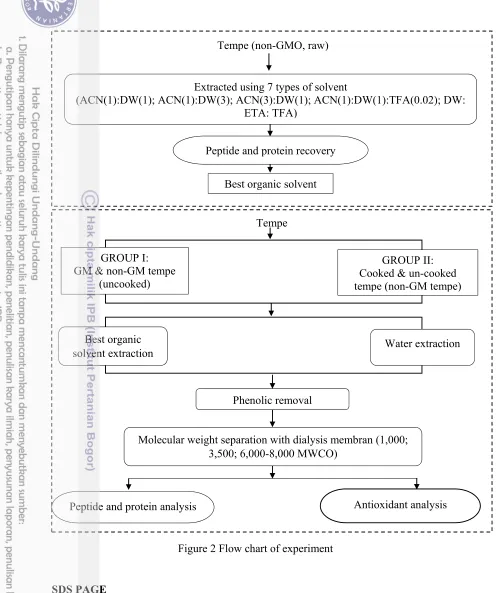
This experiment consist of four parts. First was extraction of the samples using 7 types of solvent to choose the best organic solvent to extract the protein and peptide of tempe, the second was extraction process (group I and II) using two types of solvent (organic and water) followed by molecular weight separation using membran filtration (1,000; 3,500-6,000; 8,000 MWCO) and phenolic removal using polivynilpirolidone (PVP), the third was analysis of peptide and protein content using OPA and Lowry, and the fourth was determination of antioxidant activity with three methods (DPPH, Ferric reducing capacity (FRC), and (ORAC). Different solvents were used to check both the peptides recovery and which compare their antioxidant activity (Figure 2).
Sample extraction
Two kind of solvents were used; single water extraction using distilled water and organic solvent. Dried powder of the samples (1 g) was mixed with 30 ml solvent and sonicated for 5 minutes then kept in shaker waterbath at 30 0C for 60 minutes. The solution was centrifuged at 10,000 xg for 45 minutes.
The filtrat was separated based on molecular weight to discard the high molecular weight peptide using dialysis membrane with 1,000; 3,500; and 6,000-8,000 MWCO. Sample was put in solvent solution for 12 hours and molecules which passed the membrane was further evaporated to concentrate the sample at 80 0C, for 3 hours in vacuum conditions. The molecules trapped inside the membrane than collected and used for the next filtration process in a higher value of MWCO (the first was 1,000 followed by 3,500; and 6,000-8,000 respectively). Further more, all filtrat was treated with polyvinylpyrrolidone (PVP) before analysed at 2% (w/v), vortexed, and centrifuge at 3000 xg for 30 minutes. Filtrat was then ready for analysis.
Protein recovery
Total protein recovery was measured using Lowry method (Lowry et al. 1951) which consist of three type of reagent A-B-C-D. Reagent A consist of sodium hydroxide (0.5%) and sodium carbonate (2%), reagent B consist of sodium citric acid (1%) and copper (II) sulphate. Reagent C was made by mix the reagent A : B (50: 1), and reagent D was Folin ciocalteau’s reagent diluted in distilled water (1:1).
About 0.3 ml sample solution or standard solution using BSA (0.005, 0.010, 0.015, 0.020, and 0.025 % (w/v)) was mixed with 3 ml of C solution, the solution was then incubated for 10 min at 300C, followed by adding 0.3 ml D solution and incubated for 30 min at the same temperature. The absorbance was measured spectrophotometrically using JASCO V-520-SR UV-vis spectrometer (JASCO Corp., Tokyo, Japan) at 750 nm. Distilled water was used as blank.
Peptide recovery
The peptide was determined according to the o-pthalaldehyde (OPA) method based in free amino groups measurements (Mahmod et al. 2011). OPA reagents was prepared by mixing 80 mg of O-phthalaldehyde, 2 mL of methanol, 50 mL of 0.1 M sodium tetraborate (Na2B4O7), 5 mL of 20% (w/v) SDS, and 0.2 mL of β
4
Figure 2 Flow chart of experiment
SDS PAGE
Tris SDS-PAGE was performed according to Fling and Gregerson (1986) with modification using 4% stacking gel and 12.5% separating gel. The protein extract (12.5 µL) was diluted to SDS sample buffer (50 µL) (contain 0.055 M Tris-HCl, pH 6.8, 2% SDS (wt/vol), 7% glycerol (wt/vol), 4.3% β-mercaptoethanol, 0.0025% (wt/vol) commassie blue), heated at 100 0C for 2 minutes, and cooled at room temperature. A 15 µL sample and 5 µL standard marker was loaded per well. The gels were run at 17 mA
Tempe (non-GMO, raw)
Best organic solvent
GROUP I: GM & non-GM tempe
(uncooked)
GROUP II: Cooked & un-cooked tempe (non-GM tempe)
Best organic
solvent extraction Water extraction
Phenolic removal Tempe
Peptide and protein analysis Antioxidant analysis Extracted using 7 types of solvent
(ACN(1):DW(1); ACN(1):DW(3); ACN(3):DW(1); ACN(1):DW(1):TFA(0.02); DW: ETA: TFA)
Peptide and protein recovery
5
for about 2 hours until completion. Gels were fixed and stained with Coomassie Blue R-25 (contain 3.9% (v/v) trifluoroacetic acid, 6% (v/v) acetic acid, and 17% methanol) for 30 minutes and destained with 10% acetic acid and 18% ethanol for 6 hours.
Analysis of DPPH free radical scavenging activity
The free radical scavenging activity of the samples and standard solution (Trolox) was determined using the DPPH (1, 1-diphenyl-2-picrylhydrazyl) radical scavenging method (Zhu et al. 2014). A volume of 0.75 ml of the test sample or the standard in different concentrations (50, 100, 150, 200, 250 uM) was mixed with 1.5 ml of 0.2 mM DPPH solution in ethanol. The reaction mixtures were vigorously mixed and incubated for 45 min in the dark at room temperature. The absorbance was measured with spectrophotometer at 517 nm. Trolox was used as a standard chemical. The DPPH capacity is expressed as a Trolox equivalent capacity based on the standard curve. Each sample was done in triplicate.
Ferric reducing capacity (FRC)
The reducing power was measured according to Girgih et al. (2011), about 0.5 ml samples solution or Trolox used as standard solution (0.0001, 0.0005, 0.001, 0.005, 0.01, 0.05, 0.1 mg/ml) mixed with 0.5 ml of 0.2 M sodium phosphate buffer (pH 6.6) and 0.5 ml 1% potassium ferricyanide solution in distilled water, then incubated for 20 min at 500C. After cooling down, 0.5 ml of 10% aqueous trifluoroacetic acid was added and centrifuged at 1,500 xg, 40C in 10 min, 1 ml of supernatant was combined with 1 ml distilled water and 0.2 ml of 0.1% aqueous ferric chloride (Iron (III) chloride) solution and set in dark condition for 10 min. The absorbance of the solution was measured at 700 nm.
Oxygen radical absorbance capacity (ORAC)
The ORAC assay was conducted to measure the peroxyl radical scavenging activity of samples according to Cao et al. (1993) with slight modifications. Briefly, the reagents were 200 mM AAPH and 81.6 nM uranine (diluted in potassium phosphate buffer (75 mM, pH 7). All reagent made fresh just right before used for analysis and wrape with aluminium foil to keep it from the light. The reaction was initiated by adding 25 uL of samples (diluted 20 times previously in phosphate buffer) and standard solution using Trolox (0.78; 6.25; 25; 40; 75 uM) dissolved in ethanol into 96 well-plate and immediately added 150 uL 81.6 nM uranine as a target of free radical. The mixture was incubated for 10 minutes in plate reader (CytoFluor-4000). The 25 uL AAPH was added. The automated ORAC assay was recorded every 60 seconds during 60 minutes at at 485 nm excitation and 520 emission. The results was expressed as absorbance change during analysis.
Statistical analysis
6
3 RESULT AND DISCUSSION
Effect of solvent types on peptide and protein recovery
Extractability of peptide depends on the physical and chemical properties of peptides is very unique (Pace et al. 2004). Many studies has reported that pH of solvent, temperature, and solvent type affects the extractability of peptides from soybean as shown in Table 1. Some types of organic solvents is well known can give higher extractability of peptides from soybean seed and soybean products such as acetonitrile and trifluoroacetic acid. On the otherhand, water is also a popular solvent widely used to extract neutral and basic peptides from soybean (Chertov et al. 2004; Gibbs et al. 2004; Handoyo and Morita 2006; Matsuo 2006; Wang et al. 2006; Zhu et al. 2008; Mahmod et al. 2011) due to its simplicity and environmental friendly. Many research for protein and peptide extraction in soybean and fermented soybean product still use single water extraction (Handoyo and Morita 2006; Matsuo 2006; Wang et al. 2007; Zhu et al. 2008) rather than organic solvent, although several research showed that organic solvent, like acetonitrile, can extract low molecular weight peptide more easily by depleting the high molecular protein (Natarajan et al. 2009).
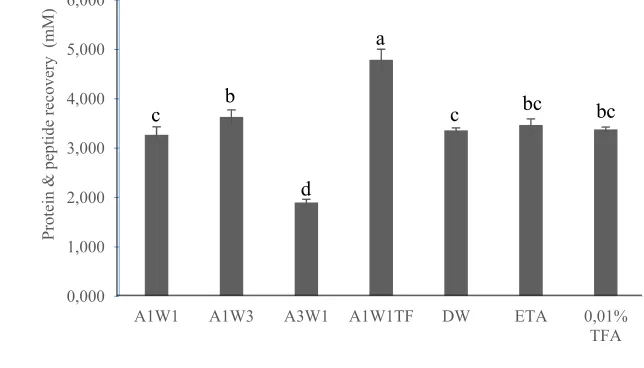
Figure 3 Recovery of peptide from GMO tempe using 7 type of solvents, data presents protein and peptide recovery based on free amino groups content (mM). Subscripts (a-d) present significant difference (p< 0.05). Solvents used were as follows; A1W1, acetonitrile (1): distilled water(1); A1W3, acetonitrile(1): distilled water(3); A3W1, acetonitrile(3): distilled water(1); A1W1TF, acetonitrile(1): distilled water(1): 10%TFA (0.02) (trifluoroacetic acid); DW, distilled water; ETA, ethanol; 0.01%TFA, 0.01% trifluoroacetic acid in distilled water
The first part of this study was conducted to find the best organic solvent for extraction of tempe peptides. Organic solvent, including acetonitrile, becomes one of the most popular solvents that have been used for peptide extraction. The best recovery from organic solvent were then selected as further step, together with water solvent for comparison, because each solvent possibly could extract different type of peptide.
0,000 1,000 2,000 3,000 4,000 5,000 6,000
A1W1 A1W3 A3W1 A1W1TF DW ETA 0,01% TFA
Pro
tein
& peptid
e recov
ery
(m
M
)
c b
d
a
7
Figure 3 shows protein and peptide recovery based on free amino groups content using o-phthalaldehyde (OPA) methods from seven types of solvent which is commonly used for extraction of peptide from soybean and soy fermented product. The results showed that A1W1, A1W3, A3W1, A1W1TF, and DW were significantly different (p< 0.05), while ET and 0.01% TFA were not statistically different (p> 0.05). The protein recovery ranged from 1.897 to 4.708 mM, which A1W1TF indicated the highest recovery followed by A1W3, ETA, 0.01% TFA, A1W1, DW, and A3W1. Similar result for peptide recovery was found in ethanol and acetonitrile-water solvent. The results suggested that acetonitrile-water mixtures may have similar characteristics to ethanol because only the OH group in methanol is replaced by the CN group in acetonitrile.
In acetonitrile-water solvent, an appropriate concentration of acetonitrile in water is a crucial point to give the best performance for peptide extraction. This study showed the increasing volume of acetonitrile in water was not correlated with increasing of protein and peptide recovery, otherwise the increasing of acetonitrile in water (A3W1) can decrease the peptide recovery capability compared with A1W1 and A1W3. The addition of trifluoroacetic acid (TFA) in low concentration (1%) in A1W1TF, significantly increase peptide recovery capability (1.43 mM increase) compared with A1W1. In acetonitrile-water mixture (A1W1, A1W3, A1W1TF), the recovery with A3W1 was much lower than recovery with A1W1 or A1W3, suggesting that lowering polarity extremely resulted in a decreasing of peptide recovery.
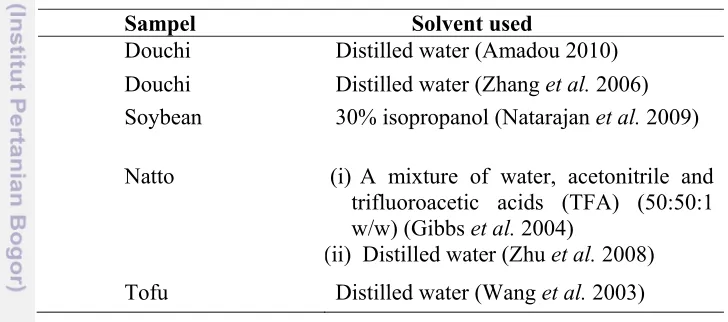
Table 1 Different solvent used for soy-fermented product
Sampel Solvent used
Douchi Distilled water (Amadou 2010) Douchi Distilled water (Zhang et al. 2006) Soybean 30% isopropanol (Natarajan et al. 2009)
Natto (i) A mixture of water, acetonitrile and trifluoroacetic acids (TFA) (50:50:1 w/w) (Gibbs et al. 2004)
(ii) Distilled water (Zhu et al. 2008)
Tofu Distilled water (Wang et al. 2003)
The high peptides recovery by A1W1TF is probably due to moderate hydrophobicity of acetonitrile (Du et al. 2014). Previous research noted that using 100% acetonitrile is appropiate to remove high molecular weight peptide due to their action in lowering internal hydrophobic interaction, thus enhancing the peptide-peptide hydrogen bond and leading the protein denaturation but peptide recovery was very poor. Thus, the addition of 50% or 75% water to acetonitrile improved the peptide extractability. Here, acetonitrile only shown good performance in diluting low molecular weight peptide when it used together with water as mixture solvent (Gekko et al. 1998; Tirumalai 2003; Chen et al. 2007; Kay et al. 2008; Kawashima et al. 2010).
8
several mechanism for acetonitrile-water solvent to precipitate high molecular protein such as increase the attraction between charged molecules and facilitates electrostatic protein interactions, displaces the ordered water molecules araound the hydrophobic regions on the protein surface and helps drive the proteins out of the solution to precipitate them. Trifluoroacetic acid (TFA) also take part to enhance peptide recovery. The addition of TFA at low concentration on acetonitrile-water mixture from previous research become one of the common solvents used to extract peptides and amino acids, it known to cause many peptides to dissociate from their carrier molecules, allowing it become more soluble in solvent solution (Chertov et al. 2004; Alpert and Shukla 2003).
During soybean fermentation, amino acid and low molecular weight peptide in soybean can be increased and also change amino acid characteristic due to both processing step (soaking and boiling of raw soybean) and microorganism activity (Chen et al. 2013). Further, cooking process of tempe, such as boiling, has possibility to denaturate the protein and decrease the hydrophilic peptide. The hydrophilic amino acid and peptide can easily leach to the boiling water, and keep the hydrophobic compound inside the product. Investigation related to the different characteristic of peptide solubility using two types of solvent (organic and water) is needed to obtain the comprehensive explanation about peptide extractability of tempe.
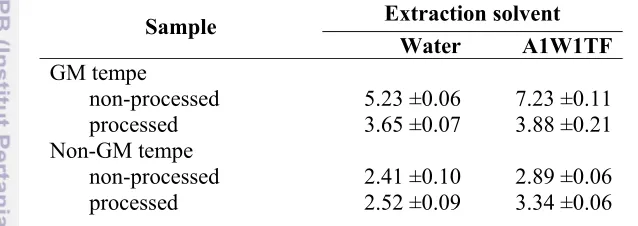
Table 2 Protein and peptide recovery *(mM) from GMO and non-GM tempe
Sample Extraction solvent Water A1W1TF GM tempe
non-processed 5.23 ±0.06 7.23 ±0.11 processed 3.65 ±0.07 3.88 ±0.21 Non-GM tempe
non-processed 2.41 ±0.10 2.89 ±0.06 processed 2.52 ±0.09 3.34 ±0.06
*Glycine equivalent (mM)
Figu proc AIW tem extr GM mor sugg The extr con 20 k ban A1W com 2). glyc Gly high this den show sign tem by met inte cont that
ure 4 SDS cessed, (c) WITF extrac mpe, non-pro
SDS P racted by th M and non-G re protein b gested has e higher mo ract while centration. kDa) of gly ds was foun W1TF has mpared with Major cinin (11S) ycinin and her thermal may sugge aturate or c wed that p nificant eff mperature an making sev thionine, w ermediate th tain higher t can posses
2 1 1 5 3 k S-PAGE, wa non-GM cts of (e) GM ocessed, (h)
PAGE was he solvent a GM tempe, band rather capability t olecular wei in A1W1T Water can ycinin sub u
nd in water possibility h water base
storage pro ) and β-con
β-conglycin l transition ested that in
change thei processing b fect on soy nd time is im veral amin while serin hat reacts w
low molec s as antioxid a 210 125 101 56.2 35.8 29 21 6.9 kDa ater extract tempe, no M tempe, n non-GM te
done to c as shows in a slight dif r than non to release lo
ight protein TF only sh
extract both unit (11S) r
r extract wh to contain ed on the hi
oteins of so nglycinin ( nin have d
point (92 0 normal hea ir structure,
below 100 ybean nutr mportant be no acids be , cystein with lysine cular weight dative agent
b c
ts of (a) GM on-processed non processe empe, proce
confirm the n Fig 4. Th fferent com n-processed ow molecul n (ranged fr own one l h acidic (31 rather than A
hile A1W1T n more low igher peptid
oybean refe (7S) that c different the C) than β-c ating tempe
while glyc
0
C for sh ritive value ecause exces ecome unav and cystei e to form l t peptide, in ts.
d
c e
M tempe, n d, (d) non ed, (f) GM t essed
e molecular here was no mes from pr tempe on lar weight p rom 29 to 5 line of 56.2 1 to 45 kDa
A1W1TF. T TF extract w molecula de recovery
erred globu constitute o ermal stabil conglycinin
rature of so cinin may n hort periods e. In anoth ssive heatin vailable suc in are con lysinoalanin nclude pept f g non process n-GM temp tempe, proc
r weight p o significant
rocessed tem GM temp protein (sho 56.2 kDa) w
2 kDa and a) and basic The SDS-PA
showed les ar weight p found in pr
ulins which over 70% o lity, glycin n (72 0C) ( oybean, only
not affected s of soy fo herhand, a ng could im ch as lysin nverted to ne. Process
tide and als h
ed, (b) GM pe, process
cessed, (g) n
eptide and t different b mpe which
e. Boiling own as <56
was found i d <29 kDa
polypeptid AGE showe s. It sugges peptide (<6
revious data
mainly co of soluble nin reported (Barac et al y β-conglyc d. Lokuruka
ood may n appropriate mpair nutritiv
ne, tryptoph a dehydro ed tempe p so free amin
9 M tempe, ed; and non-GM protein between showed process .2 kDa). in water in low de (18 to
ed more sted that .9 kDa) a (Table onsist of protein. d to has
10
Protein in hydrophobic solvents retain their native structure as a result of kinetic trapping, which results from stronger hydrogen bonding between the protein atoms and a more rigid structure in the absence of water. In hydrophobic water-immiscible solvents, any water that might be present will tend to stay at the protein surface because of the solvophobic and hydrophilic nature of the protein surface (Mattos and Ringe 2001).
Comparison between GM and non-GM tempe
Tempe labelled as non-genetically modified (GM) product has a spesific market in Indonesia due to consumer concern about GM product. Commonly, consumers have an oponion that GMO crop products are not safe and lack of nutrition. In tempe product, it’s necessary to explore about the comparison between GM and non-GM tempe for their protein and antioxidant activity. GMO definition based on World Health Organization (WHO) is food derived from organism whose genetic material (DNA) has been modified in a way that does not occur naturally, e.g through the introduction of a gene from a different organism. Currently available GM foods stem mostly from plants, but in the future foods derived from GM microorganisms or GM animals are likely to be introduced on the market. Most existing genetically modified crops have been developed to improve yield, through the introduction of resistance to plant diseases or of tolerance of herbicides. Genetic modification techniques allow novel traits to be introduced into animals, crops and microorganisms. These techniques can be used to improve livestock as well as their resistance to disease, some genetically modified plants can resistance for some kind of disease and also herbicide tolerance and improve appearance, taste, and nutritional quality (FAO 2005).
A non-GM tempe in used for this study was produced using imported soybean from Canada while GM tempe was using imported soybean from USA. Physically, non-GMO soybean show better performance by their rapid and consistent shape of individual soybean compared with GMO type. A non-GMO soybean from Canada has a standard used to verifying the non-GMO seed based on Product Verification Program (PVP). The PVP encompasses the thresholds for adventitious genetically modified material, including 0.25% for seed, 0.9% for food, and 1.5% for feed (The Non GMO Project 2016).
In Indonesia, mainly soybean found in the market was imported and classified as GMO soybean. The United states exported about $1420 billion of genetically engineered (GE) product to Indonesia in 2014, and the US soybean trade in Indonesia is about 92% of the market share. The Government of Indonesia (GOI) have a project in the future to stop the imported GE seed or locally developed commercial GE seed for planting in Indonesia. Nowadays, the GOI’s publish the regulation to accept any GE products with a precautionary approach, therefore it can protect the public from the possibility of negative effect comes from GE utilization. There are three types of GE soybean accepted in Indonesia; herbicide tolerance (Ht) soybean event GTS 40-3-2 and MON 89788, and insect tolerance soybean event MON 87701 (Rahayu 2015).
11
Nowadays, the consumers ask for more natural, and environmentally friendly for their food and start to concern about the chemical constituents inside their product. On the otherhand, lack of information about GM products make consumers are more hesitant if they know their food contain GM elements. Nonetheless, Indonesia have widely consumed GE soybean product including tempe for the last three decades.
Protein and peptide recovery
Public perception that non-GM food is healthier compared with genetically modified make tempe labelled as non-GM product has a special market in Indonesia, but this kind of product still only can accessed by medium-high economic class because of it higher price and it still has small production scale. Except risk assessment about a high pesticide (glyphosate residue) possibly occur in GMO soybean product, there are still no clear research explanation about the real differences in GM and non-GM type of tempe based on their protein and antioxidant activities.
The o-phthalaldehyde (OPA) used for measuring peptide and protein recovery based on the reaction of OPA and 2-mercaptoethanol that is specific for primary amines in peptides and proteins. The absorbing adduct is measured spectrometrically and related to the concentration of peptides in the solution. The method is a very sensitive fluoroscent for assaying amines in solution (Mahmod et al. 2011). The basis of the OPA assay is the reaction of the α-amino group of the peptide with the reagents OPA and a reducing agent, such as the β-mercaptoethanol, in an alkaline environment. The thio-substituted isoindole adduct produced by this reaction absorbs strongly at 340 nm (Church et al. 1983). The reaction of OPA with the primary amines is complete within 0.1 to two minute at room temperature and the peptide content can be linearly related to a peptide or amino acid solution of known concentration (Nielsen et al. 2001).
12
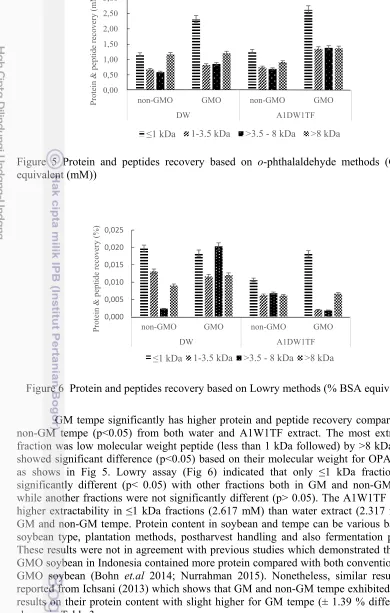
Figure 5 Protein and peptides recovery based on o-phthalaldehyde methods (Glycine equivalent (mM))
Figure 6 Protein and peptides recovery based on Lowry methods (% BSA equivalent)
GM tempe significantly has higher protein and peptide recovery compared with non-GM tempe (p<0.05) from both water and A1W1TF extract. The most extractable fraction was low molecular weight peptide (less than 1 kDa followed) by >8 kDa which showed significant difference (p<0.05) based on their molecular weight for OPA results as shows in Fig 5. Lowry assay (Fig 6) indicated that only ≤1 kDa fractions was significantly different (p< 0.05) with other fractions both in GM and non-GM tempe while another fractions were not significantly different (p> 0.05). The A1W1TF showed higher extractability in ≤1 kDa fractions (2.617 mM) than water extract (2.317 mM) in GM and non-GM tempe. Protein content in soybean and tempe can be various based on soybean type, plantation methods, postharvest handling and also fermentation process. These results were not in agreement with previous studies which demonstrated that non-GMO soybean in Indonesia contained more protein compared with both conventional and GMO soybean (Bohn et.al 2014; Nurrahman 2015). Nonetheless, similar results was reported from Ichsani (2013) which shows that GM and non-GM tempe exhibited similar results on their protein content with slight higher for GM tempe (± 1.39 % different) as shown in Table 3.
0,00 0,50 1,00 1,50 2,00 2,50 3,00
non-GMO GMO non-GMO GMO
DW A1DW1TF
Pro
tein
& peptid
e recov
ery
(m
M
)
≤1 kDa 1-3.5 kDa >3.5 - 8 kDa >8 kDa
0,000 0,005 0,010 0,015 0,020 0,025
non-GMO GMO non-GMO GMO
DW A1DW1TF
P
rotein
& pep
tide
recov
ery
(%
)
≤1 kDa 1-3.5 kDa >3.5 - 8 kDa >8 kDa
b a
b
b b
b b a
a
b b b
13
Table 3 Nutrition of GM and non-GM tempe
Type of tempe Proximate analysis (% dry mass)
Protein Total Fat Carbohydrate
Non-GMO 46.68 ±1.26 31.39 ±2.58 37.68 ±0.71
GMO 48.07 ±1.44 33.09 ±0.94 35.43 ±0.18
Source: Ichsani (2013)
Protein in hydrophobic solvents can retain their native structure as a result of kinetic trapping, which caused by stronger hydrogen bonding between the protein atoms and a more rigid structure in the absence of water. In hydrophobic water-immiscible solvents, any water that might be present will tend to stay at the protein surface because of the solvophobic and hydrophilic nature of the protein surface (Mattos and Ringe 2001). The A1W1TF and DW extracts have different results based on Lowry and OPA methods. In Lowry method, A1W1TF had lower protein recovery compared with DW extracts, while opposite results in OPA methods, A1W1TF showed higher peptide recovery. The Lowry method has been widely applied for determining protein content. It combines the Biuret reaction with the reduction of Folin-Ciocalteau phenol reagent (phosphomolybdic-phosphotungstic acid) by aromatic amino acids tyrosin and tryptophan residues. This method has very high sensitivity to the presence of peptides and amino acids (Baianu et al. 2012; Lucarini and Kilikian 1999), but it is susceptible to possible interaction with other compounds that which is many compounds can interferring the measurements, make under- or over-estimate result.
In A1W1TF, two types of organic solvent (acetonitrile and trifluoroacetic acid (TFA)) were used. TFA possibly promotes a negative effect during the measurements. Although the evaporation was performed to remove the solvent, it was still possible that some substances were trapped within the filtrat. TFA was attributed to the high polarity and high acidit. In Lowry method, a presence of acid could underestimate the final results (Niamke et al. 2005). TFA ions suggested still remained together with the sample after evaporation. TFA is much stronger than other organic acids such as acetic acid, therefore protein recovery of A1W1TF was lower than DW and the results was not linear with OPA.
Fermentation process of tempe dramatically increased free amino acids content. Murata et al. (1967) noted that the amount of free methionine in tempe (incubated for 48 hours) was 63 times higher compared with cooked, unfermented soybean. Lysine was 42 times higher, tryptophan 2 times, leucine 56 times, and valine 11 times. On the other hand, amino acid compositions found to stable and in some cases was decrease since it may be used by the mold to support its growth. Each free amino acid residue in peptide can show different solubility level, that cause different recovery level between A1W1TF and water extraction.
Antioxidant activities
Antioxidant activities were measured using three methods (DPPH, FRC, ORAC) with standarized sample to 0.5 mM based on OPA results. Phenolic was commonly a major substance for antioxidant studies from soy product (Mujic et al. 2011), but several researches also showed that low molecular weight peptide from soybean accounted for a good antioxidantive activity (Aloglu and Oner 2011; Singh et al. 2014).
14
antioxidants from outside the body (Aini 2007). Antioxidant activity in metabolism occur in many ways to control free radical substances. Generally, grouped into two mechanism; hydrogen atom transfer (HAT) and single electron transfer (SET), both produce a similar end result as a reflect of total antioxidant capacity (TAC). HAT basically measure the classical ability of an antioxidant to quench free radicals by hydrogen transfer and SET is detect the ability of a potential antioxidant to transfer one electron to reduce metals carboxyls and other radicals. In this study, three antioxidant assay were used to analyze antioxidant capacity of tempe (DPPH, ferric reducing capacity (FRC) and oxygen radical antioxidant capacity (ORAC)). DPPH is considered to follow both HAT and SET, while FRC represents SET reaction or reducing capacity and ORAC represents HAT reaction.
The results of DPPH, FRC and ORAC experiment was depicted in Fig 7, 8, 9 respectively. FRC and ORAC result suggested that GM tempe gave more desired antioxidant activity, while non-GM tempe indicated opposite effect by DPPH. The fraction with ≤1 kDa was the best antioxidant agent in DPPH and FRC compared with another fractions (p< 0.05), while ORAC results showed that >8 kDa was the best antioxidant agent followed with ≤1 kDa. The antioxidant activity based on solvent type showed that A1W1TF extract was correlated with higher antioxidant activity for FRC and ORAC compared with water extract. However, water extract only showed better antioxidant activity in DPPH method. These finding suggested that there was variation of scavenging activity and ferric reducing power between each sample in GM and non-GM tempe. GM tempe had tendency to have better direct antioxidant capacity (high DPPH and ORAC value) than reducing power capacity. It was also observed that low molecular weight fractions showed the highest direct antioxidant activity (DPPH) while the higher fractions could act as a good peroxy-radical-induced oxidation agent as representing in ORAC assay. Low molecular weight fractions constituted a good sources of antioxidant, as reported in previous studies (Ajibola et al. 2011; Wu et al. 2005; Chi et al. 2015). Hwang et al. (2010) also reported that antioxidantive peptide from 3 to 5 kDa fractions of peanut kernels had antioxidant activity 3 times higher than that of ascorbic acid.
Figure 7 Antioxidant activity of non-processed GM and non-GM tempe measured by DPPH
0 5 10 15 20 25 30
non-GMO GMO non-GMO GMO
DW A1DW1TF
Trolox equ
iv.
(m
mo
l)
≤1 kDa 1-3.5 kDa >3.5 - 8 kDa >8 kDa
a b c
c a b
c c
a
b c
c a
b c
15
Figure 8 Antioxidant activity of non-processed GM and non-GM tempe measured by FRC
Figure 9 Antioxidant activity of non-processed GM and non-GM tempe measured by ORAC
The DPPH (2,2-diphenyl-1-picryl-hydrazyl-hydrate) free radical method is an antioxidant assay based on electron-transfer that produces a violet solution in ethanol (Garcia et al. 2012) which is being the common method used to determine antioxidant activity of plant and food. The FRC assay represent the corresponding concentration of electron-donating antioxidants with the reduction in the ferric iron (Fe3+) to the ferrous ion (Fe2+) (Halvorsen et al. 2002). Compounds which have antioxidant activity will reacts with potassium ferricyanide (Fe3+) to form potassium ferrocyanide (Fe2+) by reduction, which then forms a complex react with FeCl3 to form complex with FeCl2 (Hemalatha et al. 2010). The third method used was ORAC to measures the degree of inhibition of peroxy-radical-induced oxidation by the compounds of interest in a chemical milieu. The assay has been used to measure the antioxidant activity of foods both hydrophilic (H-ORAC) and lypophilic (L-(H-ORAC) for water soluble and fat soluble antioxidant compounds respectively. The ORAC assay being the most common test used for antioxidant activity measurements because of it is biological relevance to the in vivo antioxidant efficacy, represented the hydrogen atom transfer mechanism, which is most relevant to human biology (Haytowitz and Bhagwat 2011).
0 2 4 6 8 10 12 14
non-GMO GMO non-GMO GMO
DW A1DW1TF T ro lo x e q ui v. (u g/ ml)
≤1 kDa 1-3.5 kDa >3.5 - 8 kDa >8 kDa
0 20 40 60 80 100 120 140
non-GMO GMO non-GMO GMO
DW A1DW1TF Trolox equ iv (µ m o l)
<1 kDa 3.5 - 6 kDa 6 - 8 kDa >8 kDa
a b c c
a
b c c
a
b c c a b c c a b
c d
16
Direct reaction of a substance is not the only mechanism by which the antioxidants may display their activity. Secondary antioxidants act through numerous possible mechanisms. One of the most important mechanisms of action of secondary antioxidants is chelation of prooxidant metals. Iron and other transition metals (copper, chromium, cobalt, vanadium, cadmium, arsenic, nickel) promote oxidation by acting as catalysts of free radical reactions. The chelating properties of peptide fractions can be evaluated by monitoring the formation of the complex between ferrozine and Fe2+ (ferrous) ion spectrophotometrically (Robinson 2010).
Furthermore, A1W1TF show higher antioxidant activity than water extract. Organic solvent indicated more desirable than water in extraction of hydrophobic peptides such as tryptophan, phenylalanin, leucine, isoleucine, methionine, valine, and tyrosin. Hydrophobic peptides were observed as good antioxidant agent as reported in previous research (Zhang et al. 2009; Ajibola et al. 2011). Therefore, based on peptide recovery data, A1W1TF promoted better peptides recovery compared with water, and had possibility to extract more hydrophobic peptide while single water extract was more basic and neutral peptides. A1W1TF suggested to contain hydrophobic peptide so the extract from organic solvent remain their antioxidant activity. Soybean is rich in lysine, tryptophan, threonin, isoleucine, and valine (Cromwell 2012) after fermentation process in tempe. Gibbs et al. (2004) noted that most of hydrophobic amino acid increased (Gly, Leu, Ile, Pro, Phe, Tryp) or tended to remain (Ala, Val) while polar (hydrophilic) amino acid (Ser, Asp, Glu, Tyr) tended to decrease.
Comparison between processed and non processed tempe
Soybean and soy-fermented product such as tempe, are widely acknowledged as sources of anti-oxidative agents with protective effects towards oxidative stress. However, tempe can not be consumed directly and have to be cooked to serve meat like texture and better flavor. Heat treatment in tempe suggested can improve nutritional value and release more peptide and low molecular weight protein due to protein hydrolysis during heating. Positive effect of heat treatment on food, depending on both internal and external factor such as food matrices, food composition, cooking methods, cooking time and both quantity and quallity of bioactive compounds inside the food (Chutipayaporn et al. 2014).
17
Protein and peptide recovery
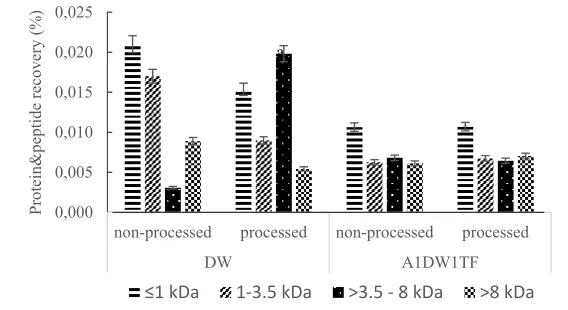
Processed tempe showed higher peptide and protein recovery in both two solvents, which the highest content was on ≤1 kDa and >8 kDa fraction as shown in Fig 10 and Fig 11. This is associated with the conformation of soy protein glycinin which is degraded by Rhizopus sp than followed by boiling process and it releases many low molecular weight peptides (Kim et al. 2004). The A1W1TF tends to give a higher value of peptide recovery compared with water as a result of different peptide characteristics. Boiled tempe possibly contains more hydrophobic peptide because polar / hydrophilic peptide can easily leaching to the water during boiling process. However, more hidrophobic peptide tends to remain inside the molecular structure of tempe. Fermentation process prior to soaking and boiling, induced several changes in protein and amino acids profile. In previous research, after tempe fermentation process, low molecular protein and peptide content were greater than unfermented soybean. Soaking and heating treatments degraded abundant protein and also microbial degradation, leading and increase in solubility and availability of protein. The different amino acid composition was also found in sample which was treated by different processing steps and hydrolisis as shown in Table 4.
Figure 10 Peptide and protein recovery of processed and non-processed tempe (Glycine equivalent (mM)) based on OPA methods
0,000 0,500 1,000 1,500 2,000 2,500
non-processed processed non-processed processed
DW A1W1TF
P
rotein
&pep
tide recov
ery
(m
M
)
≤1 kDa 1‐3.5 kDa >3.5 ‐ 8 kDa >8 kDa
a b c d
b
c d
a
c d b c
a
18
Figure 11 Peptide and protein recovery of processed and non-processed tempe (bovine serum albumin (BSA) equivalent (%)) based on Lowry methods
[image:32.612.170.454.72.227.2]Processed tempe showed higher peptide and protein recovery in comparison with non-processed tempe. The lowest molecular weight fraction showed the best antioxidant activity, while the bigger molecular weight showed lower antioxidant activity. Previous study noted that cooking methods (ordinary cooking and autoclaving) were responsible for a slight increase in protein content of soybean (Ramadan 2012) and also exhibited better antioxidant properties. They induced higher release of low molecular weight peptide after fermentation. Additionally, short heating process had no undesirable effects on nutritional value. Nevertheless, short heating process in tempe contributed to more desirable nutritional value.
Table 4 Amino acid composition (mol %) of different organic soybean products Amino
acid
Total amino acid Free amino acid of SPIH** Flour SPI* SPIH**
ASP 13.3 12.2 11.6 1.0
THR 4.7 4.2 2.2 1.5
GLU 21.1 1.0 17.9 1.7
PRO 4.7 4.6 4.2 1.2
GLY 4.6 4.3 4.6 3.5
ALA 4.5 4.5 5.4 4.5
VAL 4.7 5.4 6.2 7.0
MET 0.3 0.5 0.7 0.9
LEU 5.0 5.5 4.8 7.1
ILE 8.0 8.3 7.7 18.6
PHE 0.1 1.0 0.5 9.8
TYR 0.2 1.9 0.5 13.1
HIS 1.7 3.3 1.9 18.7
LYS 5.8 6.5 5.2 7.9
ARG 6.0 10.1 6.0 1.0
*SPI: Soy protein isolate, **SPIH: soy protein isolate hydrolisate Source: Abu-Salem et al. (2013)
0,000 0,005 0,010 0,015 0,020 0,025
non-processed processed non-processed processed
DW A1DW1TF
Pro
te
in&
p
ept
id
e
re
co
ve
ry
(%)
≤1 kDa 1‐3.5 kDa >3.5 ‐ 8 kDa >8 kDa
b b
b b
b
b b b b
b
b a a
a b
19
Antioxidant activity
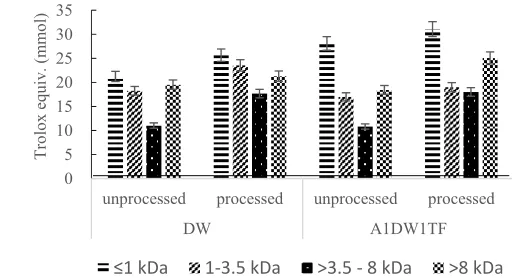
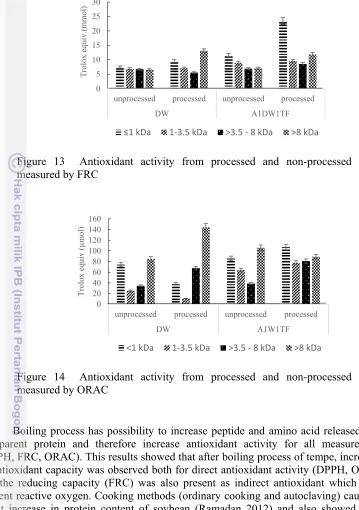
Fermentation process prior to soaking and boiling, promotes several changes in protein and amino acids profile. Peptide potentially acts as antioxidant that can be produced by various factors including processing step. Different process can obtain different properties of peptide although it comes from a single source of protein (Boboev et al. 2012). Fig 12,13,14 showed the results of antioxidant activity for DPPH, FRC and ORAC from non-processed and processed tempe during heating process at ±1000C for 10 minutes using two types of solvent system. Processed tempe from both A1W1TF and water extract showed better antioxidant activity compared with non-processing tempe (p < 0.05). The ≤1 kDa and >8 kDa were attributed to the highest antioxidant activity while other fractions also gave good antioxidant activity, but not significantly different (p> 0.05). ORAC assays showed that the best antioxidant activity was from >8 kDa followed with ≤1 kDa. This result gave new perspective that direct antioxidant was not only from ≤1 kDa but also from >8 kDa. It is noteworthly that ORAC is noted as the highest sensitivity of antioxidant compounds compared with DPPH and FRC methods.
Boiling process of tempe for 10 minutes also increased free amino groups content and protein and improved antioxidant activity. The ≤1 kDa gave the best antioxidant activity while the >1 – >8 kDa showed less for DPPH, while FRC result indicated that ≤1 kDa together with >8 kDa fractions gave good antioxidant activity. Based on ORAC assay, the highest antioxidant activity was from >8 kDa followed by ≤1 kDa fractions.
Thermal denaturation (Td) of soybean glycinin is around 920C (Damodaran
[image:33.612.198.454.459.598.2]2008). In tempe processing, boiling (about 30-60 minutes) is important step because it can help soybean become more susceptible to proteolysis during Rhizopus sp. fermentation. Negative effect of heating process can occur in excessive heat in long time, e.g. autoclaving at 130 0C for 24 hours or heating at 90-100 0C. Prolonged periods can cause cross-linking of peptide bonds by acylation of free amino groups (Ahren and Klibanov 1985).
Figure 12 Antioxidant activity from processed and non-processed tempe measured by DPPH
0 5 10 15 20 25 30 35
unprocessed processed unprocessed processed
DW A1DW1TF
Trolox
equ
iv
.
(m
m
o
l)
≤1 kDa 1‐3.5 kDa >3.5 ‐ 8 kDa >8 kDa
a
a a
a
b b
b b
b b b
b
c
c
c
20
[image:34.612.190.442.73.214.2]
Figure 13 Antioxidant activity from processed and non-processed tempe measured by FRC
Figure 14 Antioxidant activity from processed and non-processed tempe measured by ORAC
Boiling process has possibility to increase peptide and amino acid released from the parent protein and therefore increase antioxidant activity for all measurements (DPPH, FRC, ORAC). This results showed that after boiling process of tempe, increasing of antioxidant capacity was observed both for direct antioxidant activity (DPPH, ORAC) and the reducing capacity (FRC) was also present as indirect antioxidant which could prevent reactive oxygen. Cooking methods (ordinary cooking and autoclaving) caused a slight increase in protein content of soybean (Ramadan 2012) and also showed better antioxidant properties because it was able to release more low molecular weight peptide after fermentation. No adverse effect was observed on nutritional value due to short heating process. Interestingly, the treatment positively affected on nutritional value of tempe. The slight increase of antioxidant activity after heat treatment have also been reported in previous studies. Normal thermal processing step (not exceed 100 0C) may not adversely changes the nutritional value but clearly increase bioavailability of soy protein caused by globulins denaturation (Lokuruka 2011).
The hydrophobicity of peptides is considered to give a significant effect on antioxidant activities, since it can increase the accessibility of the antioxidant peptides to hydrophobic cellular targets like the polyunsaturated chain of fatty acids of biological
0 5 10 15 20 25 30
unprocessed processed unprocessed processed
DW A1DW1TF Trolox equ iv .(m m o l)
≤1 kDa 1‐3.5 kDa >3.5 ‐ 8 kDa >8 kDa
0 20 40 60 80 100 120 140 160
unprocessed processed unprocessed processed
DW A1W1TF T rol ox e q u iv (µmol )
<1 kDa 1‐3.5 kDa >3.5 ‐ 8 kDa >8 kDa
[image:34.612.115.474.76.586.2]21
[image:35.612.124.506.205.425.2]
membranes (Chen et al. 1998). High hydrophobic amino acid content in boiled tempe may correlate with migration of non-hydrophobic component facilitated by water. The 5-10 kDa fraction of soy peptides with the highest level of glutamic acid but the lowest levels of leucine, phenylalanine, and tryptophan were the most bitter while peptides with a molecular mass less than 1 kDa was much less bitter as reported by Cho et al. (2004). Heating process suggested to cause different chemical properties of peptide and therefore induced different solubility and antioxidant activity.
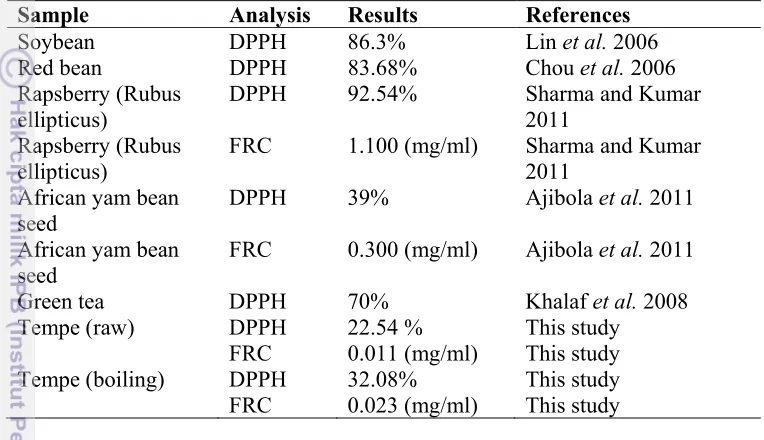
Table 5 Antioxidant activity from different sources
Sample Analysis Results References
Soybean DPPH 86.3% Lin et al. 2006
Red bean DPPH 83.68% Chou et al. 2006 Rapsberry (Rubus
ellipticus)
DPPH 92.54% Sharma and Kumar
2011 Rapsberry (Rubus
ellipticus)
FRC 1.100 (mg/ml) Sharma and Kumar 2011
African yam bean seed
DPPH 39% Ajibola et al. 2011
African yam bean seed
FRC 0.300 (mg/ml) Ajibola et al. 2011
Green tea DPPH 70% Khalaf et al. 2008
Tempe (raw) DPPH 22.54 % This study
FRC 0.011 (mg/ml) This study Tempe (boiling) DPPH 32.08% This study FRC 0.023 (mg/ml) This study
The presence of a ring structure in the peptide, such as the phenolic ring in tyrosine or theimidazole ring in histidine, is also quite common and has been theorized to help stabilize the structure of the peptide once the peptide has neutralized a free radical (Elias et al. 2008; Saito etal. 2003). Hernandez-Ledesma et al. (2007) credit the phenolic and indolic groups present tryptophan and tyrosine residues with the radical scavenging activity observed in milk hydrolysates. The phenolic ring in the tyrosine amino acid residue is a potent hydrogen donor and has been credited with contributing to the antioxidant potential of peptides derived from tuna cooking juices and other animal sources (Jao et al. 2002; Jun et al. 2004).
22
[image:36.612.181.407.72.185.2]
Figure 15 Total phenolic compounds of non-processed and processed tempe
It was suggested that shorter cooking time in boiling process was not decrease antioxidant activity of bioactive peptide of tempe. Boiling process for 10 minutes could preserve more anti-oxidative agents in tempe than those in un-cooked tempe. In previous research, heat process in short time can help to increase both antioxidant and total phenolic compounds (TPC) value. Heating process in same cases could increase antioxidant activity and TPC. Elevated antioxidant activity and TPC were found in steamed yellow soybean comparing to its counterpart, raw bean (Xu and Chang 2008), chickpea (Cicer arietinum) and green pea (Pisum sativum) also exhibit higher DPPH values after being heated (Nithiyanatham et al. 2012). This activity know to be varied according to the heating process and types of food. Increasing of antioxidant previously correlated to the presence of phenolic groups rather than peptide. In this research, TPC of cooked and non-cooked tempe also investigated and the results showed that TPC value was increased after 10 minutes boiling process (Fig 15). This phenolic compounds also widely known can act as a good sources of antioxidant for human body.
4 CONCLUSIONS
The acetonitrile-water-trifluoroacetic acid (A1W1TF) shown as the best solvent for protein and peptide recovery for soybean tempe. The GM tempe shown higher peptide and protein recovery compared with non-GM tempe and better antioxidant activity for FRC and ORAC results. However, DPPH showed that non-GM type of tempe gave higher antioxidant activity compared with GM type. Boiling process (100 0C) for 10 minutes, not only shown higher protein and peptide recovery but also better antioxidant activity for DPPH, FRC and ORAC analysis. Mostly, the high antioxidant activity comes from from ≤1 kDa and >8 kDa fractions. Tempe can serve as a good source of direct antioxidant based on the high antioxidant activity from DPPH and ORAC. Different results may be found from another tempe products due to the variance of production house standard operating procedure that affecting the protein degradation level and also peptide characteristics.
0 10 20 30 40 50 60
non‐processed processed
GA
equiv
(ug/
m
L)
23
5 RECOMMENDATION
24
REFERENCES
Abu-Salem FM, Mahmoud MH, Gibriel AY, Abou-Arab A. 2013. Characterization of antioxidant peptides of soybean protein hydrolysate. World Academy of Science, Engineering and Technology. 79: 249-253
Ahren TJ, Klibanov M. 1985. The mechanism of irreversible enzyme inactivation at 100
o
C. Science. 228: 1280-84
Aini N. 2007. Structure - antioxidant activities relationship analysis of isoeugenol, eugenol, vanilin and their derivatives. Indonesian Journal of Chemistry.7(1): 61-66
Ajibola CF, Fashakin JB, Fagbemi TN, Aluko RE. 2011. Effect of peptide size on antioxidant properties of African Yam bean seed (Sphenostylis stenocarpa) protein. International Journal Molecular Science.12: 6685-6702
Aldrich HT, Salandanan K, Kendall P, Bunning M,Stonaker F, Kulen O, Stushnoff C. 2010. Cultivar choice provides options for local production of organic and conventionally produced tomatoes with higher quality and antioxidant content. Journal of the Science of Food and Agriculture. 90: 2548-2555. doi:10.1002/jsfa.4116
Aloglu HS, Oner Z. 2011. Determination of antioxidant activity of bioactive peptide fractions obtained from yogurt. Journal of Dairy Science. 94(11): 5305-14
Alpert AJ, Shukla AK. 2003. Precipitation of large, high-abundance proteins from serum with organic solvents. The Association of Biomolecular Resource Facilities (ABRF) : Translating biology using proteomics and functional genomics. Poster no. P111-W
Amadou I, Yong-Hui S, Sun J, Guo-Wei L. 2009. Fermented soybean products: Some methods, antioxidants compound extraction and their scavenging activity. Asian Journal of Biochemistry. 4(3): 68-76. ISSN 1815-9923
Amadou I, Olasunkanmi SG, Yong- Hui S, Mohamed TK, Sun J, Guo-Wei Le. 2010. Identification of antioxidative peptides from lactobacillus plantarum Lp6 fermented soybean protein meal. Research Journal of Microbiology. 5: 372-380. doi: 10.3923/jm.2010.372.380
Baianu I, You T, Costescu D, Lozano P, Prisecaru V, Nelson RL. 2012. Determination of soybean oil, protein and amino acid residues in soybean seeds by high resolution nuclear magnetic resonance (NMRS) and near infrared (NIRS). National of Academi Proceedings. 1-62. doi: 10.1038/npre.2011.6201.3
Barac MB, Stanojevic SP, Jovanovic ST, Pesic MB. 2004. Soy protein modification – A review. APTEFF. 35: 1-280
Boboev A, Hasanov A, Yotova L, Hasanov H. 2012. Antioxidant activity of peptides obtained from wheat and cottonseed proteins. Bulgarian Journal of Agricultural Science. 18 (1): 103-111
Bøhn T, Cuhra M, Traavik T, Sanden M, Fagan J, Primicerio R. 2014. Compositional differences in soybeans on the market: glyphosate accumulates in roundup ready GM soybeans. Food Chemistry. 153: 207-215
25
Chou ST, Chao WW, Chung YC. 2006. Antioxidative activity and safety of 50% ethanolic red bean extract (Phaseolus radiatus L. var. Aurea). Journal of Food Science. 68(1): 21-25
Chen J, Anderson M, Misek DE, Simeone DM, Lubman DM. 2007. Characterization of apolipoprotein and apolipoprotein precursors in pancreatic cancer serum samples via two-dimensional liquid chromatography and mass spectrometry. Journal of Chromatography. A. 1162(2): 117–125
Chen L, Madl RL, Vadlani PV, Li L, Wang W. 2013. Value-added products from soybean: removal of anti-nutritional factors via bioprocessing, soybean-bio-active compounds, Prof Hany El-Shemy (Ed.), InTech. doi: 10.5772/52993. [available at] http://www.intechopen.com/books/soybean-bio-active-compounds/value-
added-products-from-soybean-removal-of-anti-nutritional-factors-via-bioprocessi