Ende Diabetes Study: diabetes and its characteristics in rural area of
East Nusa Tenggara
Sarwono Waspadji,1 Pradana Soewondo,1 Imam Subekti,1 Suharko Soebardi,1 Dante S. Harbuwono,1 Laurentius A. Pramono,1 Taniawati Supali2
1 Department of Internal Medicine, Faculty of Medicine, Universitas Indonesia, Jakarta, Indonesia
2 Center Research for Infectious Disease and Tropical Medicine, Faculty of Medicine, Universitas Indonesia, Jakarta, Indonesia
Abstrak
Latar belakang: Penelitian diabetes di daerah rural Indonesia masih sangat sedikit. Hasil suatu penelitian epidemiologi komunitas diperlukan untuk pengambilan kebijakan penanggulangan penyakit di suatu daerah. Penelitian ini bertujuan untuk mengetahui prevalensi diabetes serta pengetahuan masyarakat di Kecamatan Nangapanda, Kabupaten Ende, Nusa Tenggara Timur.
Metode: Penelitian potong lintang “Ende Diabetes Study” dilaksanakan di Kecamatan Nangapanda, Kabupaten Ende untuk memperoleh prevalensi diabetes dan pengetahuan masyarakat tentang diabetes. Penelitian ini menggunakan metode cluster random sampling terhadap total penduduk Kecamatan Nangapanda yang berjumlah 19,756 jiwa. Dari kerangka sampel sebanyak 1800 subjek dewasa yang diskrining pada tahun 2008 dan 2009, sebanyak 125 subjek terdiagnosis sebagai diabetes atau GDPT (glukosa darah puasa terganggu). Seluruh subjek yang terdiagnosis diabetes dan GDPT masuk dalam penelitian ini, ditambah 218 subjek yang pada skrining 2008 dan 2009 memiliki kadar glukosa darah normal. Setiap subjek penelitian menjalani anamnesis umum, wawancara (anamnesis) nutrisi, pemeriksaan isis lengkap, dan pemeriksaan laboratorium (darah dan urin). Data-data yang diperoleh dianalisis menggunakan SPSS 13.0. Hasil: Sebanyak 343 subjek terlibat dalam penelitian ini. Prevalensi diabetes menggunakan kriteria kadar glukosa darah puasa atau kadar GD2PP (glukosa darah 2 jam pasca-pembebanan) pada penduduk Nangapanda adalah 2%, dengan kriteria glukosa darah 2 jam pasca-pembebanan didapatkan prevalensi sebesar 1,56%, sementara menggunakan tolok ukur HbA1c adalah 2,83%. Prevalensi TGT (toleransi glukosa terganggu) 2,2%, sementara GDPT (glukosa darah puasa terganggu) 6,2%. Sebanyak 71,1% penduduk Nangapanda memiliki pengetahuan yang cukup mengenai diabetes.
Kesimpulan: Prevalensi diabetes pada penduduk Nangapanda adalah 2% (memakai kriteria glukosa darah puasa atau 2 jam pasca-beban glukosa) dan 1,56% dengan kriteria 2 jam pasca-beban glukosa. Sebanyak 71,1% penduduk Nangapanda memiliki pengetahuan yang cukup mengenai diabetes. (Med J Indones. 2013;22:30-8)
Abstract
Background: There are only few studies about diabetes in rural area in Indonesia. Epidemiological study are needed to
formulate health policy of disease management in speciic area. The aim of this study was to ind the prevalence of diabetes
and knowledge of diabetes among the community in Nangapanda Village, Ende District, East Nusa Tenggara.
Methods: A cross-sectional study “Ende Diabetes Study” was conducted in Nangapanda Village. This study use cluster
random sampling method to a total number of 19756 residents in Nangapanda village. From the sampling frame of 1800 adult subjects who underwent screening with glucometer in 2008 and 2009, 125 subjects have been diagnosed as diabetes or impaired fasting glucose (IFG). All of the subjects who were diagnosed as diabetes or IFG from the previous screening and 218 subjects from control (normal subjects in the 2008 and 2009 screening) were included in the present study. Each subject underwent general anamnesis, nutritional interview, complete physical examinations, and laboratory test (blood and urine). The data were analyzed using SPSS 13.0.
Results: There were 343 subjects in this study. The prevalence of diabetes in Nangapanda using blood glucose criteria
(using fasting and post-glucose load values) was 2%; using post glucose load criteria, the prevalence of DM was 1.56%; while with HbA1c criteria, the prevalence was 2.83%. The prevalence of impaired glucose tolerance (IGT) was 2.2%, and IFG was 6.2%. A number of 71.1% Nangapanda residents have suficient knowledge about diabetes.
Conclusion: Prevalence of diabetes in Nangapanda (using fasting and post-glucose load criteria) was 2% and 1.56%
(using post-glucose load values). As much as 71.1% of Nangapanda residents have suficient knowledge about diabetes.
(Med J Indones. 2013;22:30-8)
Keywords: Diabetes mellitus, Ende Diabetes Study, prevalence, rural Indonesia,
Correspondence email to: [email protected]
The increase of diabetes mellitus (DM) prevalence in various countries indicates that DM has become a global threat for the society worldwide.1 The diabetes
prevalence in the world is 6.4%; with the projection to be 7.7% in 2030.2 Southeast Asia has higher prevalence
than the global average, which is 7.6%. About 50% of
the global diabetes load is in Asia.3 From the IDF global
diabetes burden map, it can be estimated that both developing and under-developed countries, are areas which are going to have a higher raise in the prevalence of DM.2 This is due to the people’s change of life-style,
The style changes toward modern unhealthy life-styles is related to the life in urban areas, urbanization, and globalization. The diabetes prevalence in urban population tends to be higher than it is in the rural areas. Study made by Mohan et al4 showed that in
India, the diabetes prevalence was the highest in urban community (7.3%), followed by sub-urban (3.2%), and rural community (3.1%). Al-Nozha et al5 also found
that in Saudi Arabia, the diabetes prevalence in urban areas was higher (25.5%) than in communities who live in rural areas (9.5%).
Indonesia is one of the countries in Asia which carries the greatest burden. Report from the National Basic Health Study in 2007 revealed that diabetes prevalence in Indonesia (age > 15 year) was 5.7%, while pre-diabetes prevalence (IGT or Impaired Glucose Tolerance) was 10.2%.6 Pre-diabetes prevalence in
Jakarta in the study among residents in ive Jakarta municipalities was 24.9%, subdivided into IGT (17.9%) and IFG (Impaired Fasting Glucose) (7.0%).7
Community study at Koja Utara sub-district Jakarta in 1982 revealed that the diabetes prevalence was 1.7%,8 while in Kayu Putih sub-district Jakarta (1993) the igure was 5.7%.9 A different study reported diabetes
prevalence in Manado City was 6.1%.10
Study about urban community’s risks for the development of diabetes can lead us to misunderstanding, if the rural community’s risks and their speciic condition not taken into account. This tends to reduce the concern of diabetes burden in rural areas. In Indonesia the amount of population studies on diabetes are more related to urban than rural areas. Even the 2008 National Basic Health Survey took samples from urban areas only. Several obstacles for conducting a diabetes study in rural areas are lack of tools and infrastructures for diagnosis, geographic challenges and the lack of interest to the problem of diabetes in rural areas.
Sub-urban Jakarta study at Depok (now become a town) in 2001 revealed that diabetes prevalence was 12.8%. In the mean time, pre-diabetes prevalence at Depok (IGT and IFG combined) was 33.6%.11 Roesli conducted
a diabetes study in rural areas at Singaparna, West Java, revealed that the diabetes prevalence was only 1.1%.12 Another study in semi-rural area, conducted by
Suastika, at Sangsit Village, Bali Province, showed that the diabetes prevalence was 7.2%.13 Adam conducted
diabetes study in Tana Toraja, in Celebes, and found that the diabetes prevalence was only 0.9%.14
This study was about prevalence of diabetes mellitus, patients characteristics, diabetes complication, life
style, and knowledge of the community in Nangapanda, Ende District, East Nusa Tenggara. The objectives of the study were (1) to have knowledge about diabetes prevalence and cardio-metabolic risk on the residents of Nangapanda, (2) to know about demographic factors related to diabetes prevalence, and (3) to know about the knowledge, attitude, behavior, and the life style of the community in Nangapanda in relation to diabetes and its management.
East Nusa Tenggara Province is one of poorest provinces in Indonesia. The results of this study will enrich diabetes map in Indonesia, besides, it will also make the Nangapanda community understand the importance of diabetes prevention, early diagnosis, and the appropriate management of diabetes. In this study, the team of researchers also had already implemented education program and short term medication in the location of the study.
METHODS Study design
A cross-sectional study was carried out during March 2010, to obtain the prevalence of diabetes mellitus, patient characteristics, risk factors, and the level of knowledge, attitude, and behavior of the community towards diabetes. The data collected were socio-demographic characteristics, physical examinations, fasting blood glucose and blood glucose two-hour after-75 gram glucose load, HbA1c, diet characteristics, attitude, and behavior of the community towards diabetes and its management.
Location
The study location was in Nangapanda Sub-district, Ende, Flores Island, East Nusa Tenggara Province. The majority of residents on Ende work in agricultural and ishery sectors since its border is Sawu Sea in the south side. In Nangapanda Sub-district, there are 17 villages. The size of the area is 213.7 km2. The amount of the adult residents in Nangapanda sub-district is 19756.
Study population
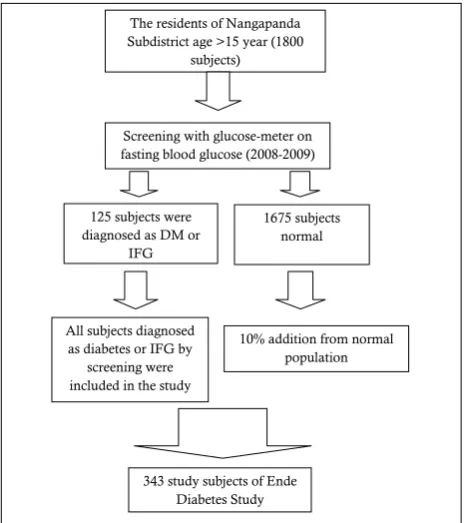
were also recruited (Figure 2). The addition of 13% from normal population is to prevent underestimation of diabetes prevalence from only positive-screening result, based on Kelly West’s theory about preventing common mistakes of false negative result from screening.15 In this
study, we have more than 13% subjects from normal population (218 subjects) to prevent drop out and higher the sensitivity of the research.
The respondents were asked to present at the speciied post in the end of 12 hours fasting. Pre-trained enumerators recruited from medical personnel (doctors and nurses), as well as local cadre health personnel took health history with speciic study forms. Physical examination was done by two doctors on duty in Nangapanda Public Health Center. Nutrition interview was done by registered dietician from Nutrition Unit Cipto Mangunkusumo Hospital Jakarta. Blood sample was drawn during fasting and 2 hours after 75 gram glucose load (2hPPG). Urine sample was also collected the same time. Blood glucose and urinary albumin was measured in Ende Public Hospital. Some of the fasting blood sample were sent to Department of Clinical Pathology Cipto Mangunkusumo Hospital Jakarta and test for HbA1c level as well as lipid proile (total-cholesterol, LDL-(total-cholesterol, HDL-cholesterol and triglyceride levels).
Using the WHO 1999 and American Diabetes Association 2003 criteria DM is deine if the fasting glucose ≥ 126 mg/dL or 2hPPG ≥ 200 mg/dL or if HbA1c ≥ 6.5%.16,17 The prediabetes using glucose
Figure 1.
Figure 2.
Ende map, East Nusa Tenggara Province (circle: Nangapanda sub-district) (Source: Health Section Ende District, 2010)
Study subjects of Ende diabetes study
level consists of Impaired Fasting Glucose (IFG) and Impaired Glucose Tolerance (IGT). IFG is deined as abnormal level of glucose on fasting ( ≥ 100 mg/dL - < 126 mg/dL) while IGT is deined as abnormal glucose level after oral glucose load (≥ 140 mg/dL - < 200 mg/dL). Prediabetes is also deined by HbA1c level between ≥ 5.7% - < 6.5%. All criteria has been adapted by Indonesian Society for Endocrinologists.
Map of Ende District
Map of Ende District
The residents of Nangapanda Subdistrict age >15 year (1800
subjects)
Screening with glucose-meter on fasting blood glucose (2008-2009)
1675 subjects normal 125 subjects were
diagnosed as DM or IFG
10% addition from normal population All subjects diagnosed
as diabetes or IFG by screening were included in the study
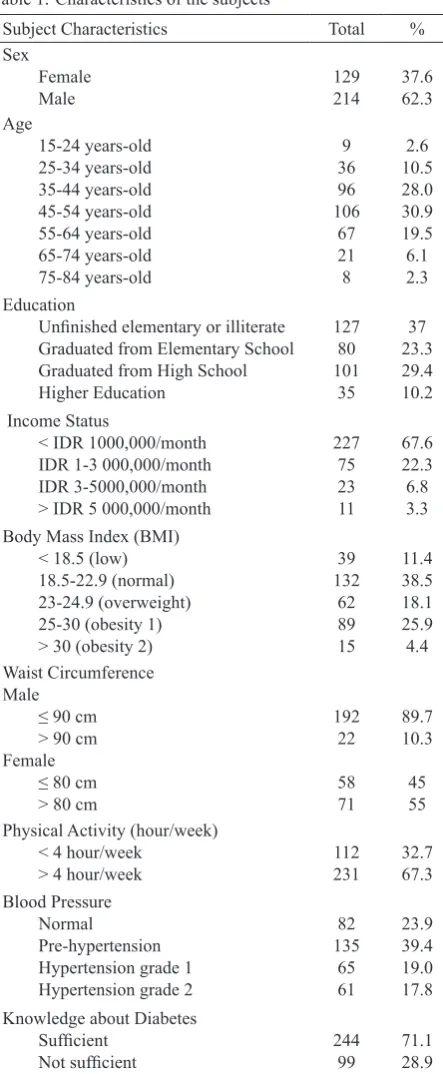
Subject Characteristics Total %
Not suficient 24499
71.1
28.9
Table 1. Characteristics of the subjects Data analysis
All data collected in this study were coded and processed by SPSS 13.0 program. The results were presented as percentage or 2 by 2 tables without statistical tests.
RESULTS
There were 343 subjects participating in this study.
Subject characteristics
The following data showed socio-demographic characteristics of the study subjects (Table 1).
More than half of subject was males (62.3%). Most of them were adults ranging from 45 to 54 year (30.9%). The educational level and socio-economic status of a considerable part of them were low, i.e. elementary school drop outs or illiterate (37%) and of low socio economic level with the income of < IDR 1000,000/ month (67.6%).
Most of the subjects had normal BMI (38.5%), nevertheless a small part of them were overweight (18.1%), while combination of obesity grade 1 and grade 2 was found in 30.3% of the subjects. Based on waist circumference, women have central obesity more than men (55% vs. 10.3%). Physical activities and knowledge about diabetes were good for both subjects. Meanwhile, there was fairly large amount suffered from hypertension (36.8%) and pre-hypertension (39.4%).
Diagnosis of Diabetes, IGT, and IFG
Diabetes prevalence is calculated from the subject who has 2hPPG value ≥ 200 mg/dL overtotal number of screened resident, and it was 28/1800 (1.56%). Subjects who have fasting blood glucose ≥ 126 mg/dL was 29/1800 = 1.61%. There were 36/1800 (2%) who have met diabetes fasting glucose and post glucose load. IFG prevalence was 112/1800 (6.2%) while IGT prevalence was 40/1800 (2.2%).
The subject who has a good glycemic control was 83.7%, a moderate glycemic control was 4.7% and a poor glycemic control was 10.2%. Diabetes prevalence based on the value of A1c was 51/1800 (2.83%).
Lipid proile
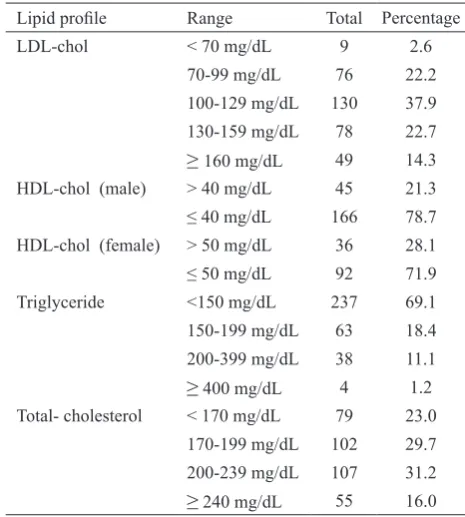
Dyslipidemia is related to the occurrence of diabetes as well as prediabetes, either as a risk factor or as comorbid. The proportion of the subjects with normal LDL-cholesterol (< 130 mg/dL) and normal triglyceride
Table 2.Blood glucose and HbA1c distribution among study Table 3.
subjects (Normal, IFG, IGT, and DM) Lipid proile among subjects of Ende Diabetes Study
Lipid proile Range Total Percentage
LDL-chol < 70 mg/dL 9 2.6
70-99 mg/dL 76 22.2
100-129 mg/dL 130 37.9
130-159 mg/dL 78 22.7
≥ 160 mg/dL 49 14.3
HDL-chol (male) > 40 mg/dL 45 21.3
≤ 40 mg/dL 166 78.7
HDL-chol (female) > 50 mg/dL 36 28.1
≤ 50 mg/dL 92 71.9
Triglyceride <150 mg/dL 237 69.1
150-199 mg/dL 63 18.4
200-399 mg/dL 38 11.1
≥ 400 mg/dL 4 1.2
Total- cholesterol < 170 mg/dL 79 23.0
170-199 mg/dL 102 29.7
200-239 mg/dL 107 31.2
≥ 240 mg/dL 55 16.0
Speciic distribution according to socio-demographic
factor and risk factors
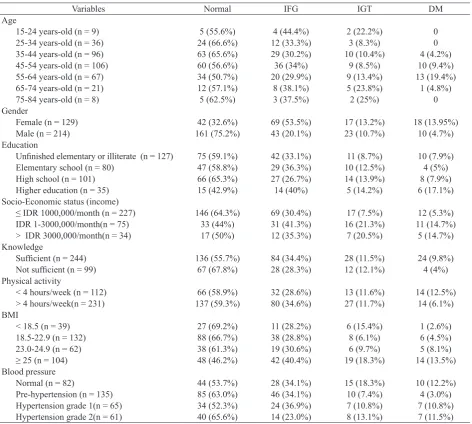
There was no age speciic pattern for the distribution of normal blood glucose as well as blood glucose values for IFG and IGT. However the percentage of DM was higher in older age group.
The distribution of diabetes mellitus was higher among females (13.95%) compared to their male counterpart (4.7%). The condition were also true for IFG and IGT. DM was more commonly found among the higher education level group (17.1%) compared to the lower education level group. For IFG and IGT there were no speciic preference for the different level of education. Diabetes mellitus, IFG and IGT were less commonly found in the low income group (5.3%, 30.4%, and 7.5% respectively) compared to the medium and higher income group (14.7%, 35.3-41.3%, and 20.5-21.3 % respectively). There was no differences of knowledge about diabetes among different blood glucose levels.
Daily activity is considered to be one of the important risk factors for the development of diabetes mellitus and other glucose intolerance. In this study, among the DM groups the number of subjects with less physical activity was more pronounced compared to those with more active one (12.5 vs. 6.1%). Obesity is also considered to be the most important factors for the development of insulin resistance, IGT as well as diabetes mellitus. In this study, IFG, IGT and DM were more frequent in the higher BMI groups. The proportion of IFG, IGT and DM was high among the obese group (40.4%, 18.3%, and 13.5% respectively). There was no speciic blood
pressure level for the normal, IFG, IGT as well as for the DM groups.
Distribution of HbA1c levels among all the groups did not show speciic pattern. Even among the normal group (according to blood glucose level) there were 40.0% who had HbA1c level > 8%. Similar irregularities and discrepancy can also be seen in IFG, IGT and DM groups.
DISCUSSION
This is the irst prevalence study which aim to describe prevalence and characteristics of diabetes in rural Indonesia. With logistic limitation, this study was able to yield a lot of informations, either about health or laboratory proile.
Diabetes in rural areas
Prevalence of diabetes in rural areas varies between countries, as well as between provinces or between areas in one country. It is inluenced by several determinants, i.e. economic growth, socio-cultural condition, modernization, and urbanization.18 Many Asian countries (developing countries), which in the last decade tend to have a very fast socio-economic-cultural growth, have a high increase in the prevalence of diabetes.18-19 Balagopal et al19 mentioned that the
prevalence of diabetes in Indian rural areas was 5.1% and 13.1%. Syeed et al18 also reported the similar number. There was an increase in the prevalence of diabetes (4.3%) as well as IFG (12.4%) in Bangladesh
Variables Total Percentage
FBG (fasting blood glucose)
< 100 mg/dL 201 58.7
100-125 mg/dL 112 32.7
≥ 126 mg/dL 29 8.5
2hrs Post Load
< 140 mg/dL 274 80.1
140-199 mg/dL 40 11.7
≥ 200 mg/dL 28 8.2
HbA1c
< 6.5% 287 83.7
6.5-8% 16 4.7
> 8% 35 10.2
Variables Normal IFG IGT DM Age
15-24 years-old (n = 9) 5 (55.6%) 4 (44.4%) 2 (22.2%) 0
25-34 years-old (n = 36) 24 (66.6%) 12 (33.3%) 3 (8.3%) 0
35-44 years-old (n = 96) 63 (65.6%) 29 (30.2%) 10 (10.4%) 4 (4.2%)
45-54 years-old (n = 106) 60 (56.6%) 36 (34%) 9 (8.5%) 10 (9.4%)
55-64 years-old (n = 67) 34 (50.7%) 20 (29.9%) 9 (13.4%) 13 (19.4%)
65-74 years-old (n = 21) 12 (57.1%) 8 (38.1%) 5 (23.8%) 1 (4.8%)
75-84 years-old (n = 8) 5 (62.5%) 3 (37.5%) 2 (25%) 0
Gender
Female (n = 129) 42 (32.6%) 69 (53.5%) 17 (13.2%) 18 (13.95%)
Male (n = 214) 161 (75.2%) 43 (20.1%) 23 (10.7%) 10 (4.7%)
Education
Uninished elementary or illiterate (n = 127) 75 (59.1%) 42 (33.1%) 11 (8.7%) 10 (7.9%)
Elementary school (n = 80) 47 (58.8%) 29 (36.3%) 10 (12.5%) 4 (5%)
High school (n = 101) 66 (65.3%) 27 (26.7%) 14 (13.9%) 8 (7.9%)
Higher education (n = 35) 15 (42.9%) 14 (40%) 5 (14.2%) 6 (17.1%)
Socio-Economic status (income)
≤ IDR 1000,000/month (n = 227) 146 (64.3%) 69 (30.4%) 17 (7.5%) 12 (5.3%)
IDR 1-3000,000/month(n = 75) 33 (44%) 31 (41.3%) 16 (21.3%) 11 (14.7%)
> IDR 3000,000/month(n = 34) 17 (50%) 12 (35.3%) 7 (20.5%) 5 (14.7%)
Knowledge
Suficient (n = 244) 136 (55.7%) 84 (34.4%) 28 (11.5%) 24 (9.8%)
Not suficient (n = 99) 67 (67.8%) 28 (28.3%) 12 (12.1%) 4 (4%)
Physical activity
< 4 hours/week (n = 112) 66 (58.9%) 32 (28.6%) 13 (11.6%) 14 (12.5%)
> 4 hours/week(n = 231) 137 (59.3%) 80 (34.6%) 27 (11.7%) 14 (6.1%)
BMI
< 18.5 (n = 39) 27 (69.2%) 11 (28.2%) 6 (15.4%) 1 (2.6%)
18.5-22.9 (n = 132) 88 (66.7%) 38 (28.8%) 8 (6.1%) 6 (4.5%)
23.0-24.9 (n = 62) 38 (61.3%) 19 (30.6%) 6 (9.7%) 5 (8.1%)
≥ 25 (n = 104) 48 (46.2%) 42 (40.4%) 19 (18.3%) 14 (13.5%)
Blood pressure
Normal (n = 82) 44 (53.7%) 28 (34.1%) 15 (18.3%) 10 (12.2%)
Pre-hypertension (n = 135) 85 (63.0%) 46 (34.1%) 10 (7.4%) 4 (3.0%)
Hypertension grade 1(n = 65) 34 (52.3%) 24 (36.9%) 7 (10.8%) 7 (10.8%)
Hypertension grade 2(n = 61) 40 (65.6%) 14 (23.0%) 8 (13.1%) 7 (11.5%)
Table 4.Variables – speciic distribution of glucose intolerance
rural areas. High socio-economic class, history of diabetes in family, lack of physical activities, increasing of age, BMI, and waist-circumference were important predictors for diabetes occurrence in Bangladesh rural areas.
The changing pattern from normal subject to pre-diabetes, then to diabetes are extremely inluenced by changes from normal BMI to obesity, along with the change of the dietary composition of the community. This pattern of development could also be seen in this study. Among the obese group, the proportion of IFG, IGT and especially DM wass higher compare to those with lower BMI. The total calorie intake as well as the dietary pattern in this rural area was similar to the total calorie intake and dietary composition in urban area Jakarta about 30 years back (1981-1982).
South African rural society also has a signiicant increase in epidemic of diabetes. Motala et al20 showed
that the prevalence of diabetes, IFG, and IGT was 3.9%, 1.5%, and 4.8% respectively. Diabetes occurrence and pre-diabetes was positively related with the history of diabetes, alcohol consumption, hypertension, and undesired lipid proile. Meanwhile waist circumference was a protective factor. In his study, Motala20 also
mentioned that one of the signiicant diabetes treatment problems in his country is that only a small proportion of diabetes patients were known DM. The proportion of very high undiagnosed DM in South African rural areas hampers a variety of integrated diabetes program.
Table 5.Diabetes based on HbA1c level
HbA1C Normal IFG IGT DMT2
< 6.5 % (n = 287) 185 (64.5%) 89 (31.0%) 33 (11.5%) 13 (4.3%)
6.5-8 % (n = 16) 1 (6.3%) 11 (68.8%) 3 (18.8%) 4 (25.0%)
> 8 % (n = 35) 14 (40.0%) 10 (28.6%) 4 (11.4%) 11 (31.4%)
problems, implementation of integrated services (medication, diet, physical activities, and education) carried out in rural areas were scarce. A survey on 40 diabetics in Saumlaki Health Center, West Southeast Moluccas, another remote rural area, reported that all patients never got complete education from health experts, only 4 subjects (10%) have suficient knowledge about diabetes, and only 8 subjects (20%) who conducted the blood glucose level tests regularly.21
Majumdar et al22 and Johnson et al23 found out that with
the procurement of integrated intervention (medical specialist team, nurses, pharmacists, dietitian, and diabetes educator) regularly provided to rural areas, will signiicantly increase glycemic-cardio-metabolic control (blood pressure, HbA1c, and lipid proile).
In the context of diabetes health service in rural areas, the role of primary physicians is very important.21-24
It is very dificult to ind specialist in rural areas. However, not all general practitioners are proicient and have enough competency in providing holistic and comprehensive diabetes service.23 All of these
problems lead to sub-optimal diabetes health services in rural areas.
Population studies on diabetes in Indonesia
There are ive important population studies conducted across Indonesia concerning diabetes and risk factors; diabetes study at Koja Utara (Tanjung Priok-North Jakarta-1982),8 diabetes study at Kayu Putih (East Jakarta-1993),9 diabetes study at Depok (South
Jakarta-2001),11 diabetes study at Singaparna, Bandung,12
and diabetes study at Tana Toraja, South Sulawesi.14
The diabetes studies at Koja Utara and Kayu Putih were carried out in urban area, meanwhile Depok study was a sub-urban-area study (although at present has become an urban area), however some variables studied, have similarities with Ende Diabetes Study. In this Ende Diabetes Study, the prevalence of diabetes was 2% (fasting or post glucose load criteria),1.61% using fasting blood glucose criteria and 1.57% using post glucose load criteria ), IFG 6.2%, and IGT 2.2%. These igures was not very different from the prevalence of diabetes in East Nusa Tenggara reported in the National Basic Health Study 2007 i.e. 1.8%,6 and also from Koja
Utara in 1981, showing the prevalence of diabetes 1.63% and IGT 3.7%. The present prevalence of diabetes in rural areas in East Nusa Tenggara is similar to the prevalence of urban area (Jakarta) 30 years ago. Meanwhile, the prevalence of IGT was also higher than diabetes on the two populations.
In this study, the proportion of diabetes among women was higher (13.95%) than men (4.7%). The proportion of diabetic women was almost the same as men in Koja Utara study. The difference of prevalence between sexes and the inluence of sex in DM needs more particular investigation. As an average in Indonesia, female sex has a higher risk to have diabetes than male counterpart (OR 1.3, 95% CI 1.2-1.4).25
Compared to sex, age plays a more important role as a diabetes risk. Both this study and the one at Koja Utara, revealed that there was an increase of prevalence of diabetes and IGT for people with higher age. At Koja Utara, the highest prevalence of diabetes was found in the 55 – 64 years age group. While at Ende Diabetes Study, the proportion of diabetics increased linearly according to the increasing age, starting from the age of 35 year (3.4%) to 9.4% among 45-54 years age group, and reach its peak also on age 55 – 64 year (19.4%). In the 64-75 years age group the age speciic prevalence of DM was low. It was probably due to the smaller number of the respondent in this age group. Many of them might have died from other diseases. The life expectancy among Indonesian is less than 65 years. There is no diabetics in the age < 35 year and ≥ 75 year. Age is a risk factor which need to be taken into account since in various diabetes studies across the world, age is a signiicant risk factor.5,26 Data from Indonesia
also mentioned that age was also closely related with prevalence of diabetes and IGT.
(54.5%) were obese with IMT ≥ 25 kg/m2. Obesity
itself is closely related to diabetes in various studies, both domestic and foreign countries.5,17,26-29 In a study
conducted by Aspray,29 the difference of prevalence
of diabetes between the urban and rural communities in Tanzania (Africa) could be explained by the presence of difference of obesity level between both populations. While in Indonesia, Mihardja found out that obesity was closely related with diabetes and IGT (OR 1.9 95% CI 1.7-2.1).25
In conclusion, prevalence of diabetes in Nangapanda population was 2% (using fasting or post glucose load), and 1.56 % using only post glucose load criteria, while the prevalence of IGT were 2.2% and IFG 6.2%% respectively. Using the HbA1c criteria, the prevalence of diabetes was 2.83% which should be elaborate further with future study.
Combining with results of other studies made in Indonesia, the prevalence of diabetes in rural areas is still lower than in urban areas. In order to have a thorough comprehension of the increase rate of the prevalence, serial studies should be carried out to compare the increase rate of diabetes prevalence between urban areas and rural areas.
Acknowledgments
We would like to express our gratitude to Research and Society Services Directorate, Universitas Indonesia, for the grant to inance the study, Division of Metabolic Endocrinology, Department of Medicine, Faculty of Medicine, Universitas Indonesia for support, Nutrition Department Cipto Mangunkusumo Hospital, Department of Clinical Pathology FMUI for collecting data (nutrition anamnesis and laboratory). We thank the study team from Department of Parasitology FMUI for their tools, infrastructure, and study sample framework; as well as Health Services of Ende District, Ende Public Hospital, Nangapanda Public Health Center team, and the administrative staffs of Subdistrict Nangapanda for all their help and participation during the execution of the study in the ield.
REFERENCES
1. Wild S, Roglic G, Green A, et al. Global prevalence of diabetes. Diabetes Care. 2004;27:1047-53.
2. International Diabetes Federation. IDF Diabetes Atlas. 4th ed. Brussels; IDF, 2009.
3. Zimmet P. Asia – the epicenter of the global diabetes epidemic: its history, progression, and prevention. Abstract Book of 8th International Diabetes Federation – Western Paciic Region Congress (IDF WPR Congress), Busan, Korea; 2010.
4. Mohan V, Mathur P, Deepa R, et al. Urban rural differences in prevalence of self-reported diabetes in India – the WHO-ICMR Indian NCD risk factor surveillance. Diab Res Clin Pract. 2008;80:159-68.
5. Al-Nozha M, Al-Maatouq M, Al-Mazrou YY, et al. Diabetes mellitus in Saudi Arabia. Saudi Med J. 2004;25:1603-10. 6. Badan Penelitian dan Pengembangan Kesehatan. Riset
Kesehatan Dasar 2007. Departemen Kesehatan Republik
Indonesia; 2008. Indonesian.
7. Yunir E. Prevalensi diabetes pada lima wilayah perkotaan di Jakarta. Buku Hasil Penelitian Penyakit-penyakit Perkotaan di Jakarta. Jakarta: Pusat Penerbit Ilmu Penyakit Dalam; 2006.
Indonesian.
8. Waspadji S. Diabetes Melitus di Kelurahan Koja Utara, Tanjung Priok [thesis]. Mount Pleasant (MI): Universitas Indonesia; 1984. Indonesian.
9. Waspadji S, Suyono S, Sukardji K, et al. Pengkajian status gizi – studi epidemiologi penelitian di Kayu Putih, Pulo Gadung. Jakarta: Balai Penerbit FKUI; 2003.
Indonesian.
10. Perkumpulan Endokrinologi Indonesia. Konsensus pengelolaan diabetes melitus di Indonesia. Jakarta: PB PERKENI; 2006. Indonesian.
11. Yunir E, Waspadji S, Rahajeng E. The pre-diabetic epidemiological study in Depok, West Java. Acta Med Indones- Indones J Intern Med. 2009;41:181-5.
12. Rusli RMA. Diabetes melitus di Singaparna, Kabupaten Bandung, Jawa Barat [dissertation]. Mount Pleasant (MI): Universitas Padjajaran; 1995. Indonesian.
13. Suastika K. Diabetes melitus di Desa Sangsit, Singaraja,
Bali. Unpublished data; 2002. Indonesian.
14. Adam J. Diabetes melitus di Tana Toraja, Sulawesi Selatan.
Unpublished data; 2001. Indonesian.
15. West K. Epidemiology of diabetes andit’s vascular lesions. New York: Elsevier; 1978.
16. International Diabetes Federation. Global guideline for type 2 diabetes. Brussels: IDF; 2005.
17. Engelgau MM, Thompson TJ, Herman WH, et al.
Comparison of fasting and 2-hour glucose and HbA1c
levels for diagnosing diabetes; diagnostic criteria and performance revisited. Diabetes Care. 1997;20:785-91. 18. Syeed MA, Mahtab HM, Khanam PA, et al. Diabetes
and impaired fasting glycemia in a rural population of
Bangladesh. Diabetes Care. 2003;26:1034-9.
19. Balagopal P, Kamalamma N, Patel TG, et al. A community-based diabetes prevention and management education
program in a rural village in India. Diabetes Care.
2008;31:1097-106.
20. Motala AA, Esterhuizen T, Gouws E, et al. Diabetes
and other disorders of glycemia in a rural South African
community. Diabetes Care. 2008;31:1783-8.
21. Pramono LA, Halim L, Ratuanak J, et al. Pasien diabetes di Saumlaki, Kabupaten Maluku Tenggara Barat: karakteristik,
gaya hidup, pengetahuan, dan aspek pengobatannya.
Unpublished data; 2010. Indonesian.
22. Majumdar SR, Guirguis LM, Toth EL, et al. Controlled trial of a multifaced intervention for improving quality of
care for rual patients with type 2 diabetes. Diabetes Care.
2003;26:3061-6.
24. Porterield DS, Kinsinger L. Quality of care for uninsured
patients with diabetes in a rural area. Diabetes Care.
2002;25:319-23.
25. Mihardja L, Delima, Siswoyo H, et al. Prevalence and
determinants of diabetes mellitus and impaired glucose
tolerance in Indonesia. Acta Med Indones. 2007;41:169-74. 26. Dewapura N. Diabetes melitus in Samoa: an
epidemiological and quality of care review. Samoa Med J. 2009;1:24-7.
27. Melidonis A, Tournis S, Kompoti MG, et al. Increased prevalence of diabetes mellitus in a rural Greek population. Rural and Remote Health. 2006;6:1-8.
28. Dabney B, Gosschalk A. Diabetes in rural America: a literature review. Rural Healthy People. 2010;57-72. 29. Aspray TJ, Mugusi F, Rashid S, et al. Rural and urban