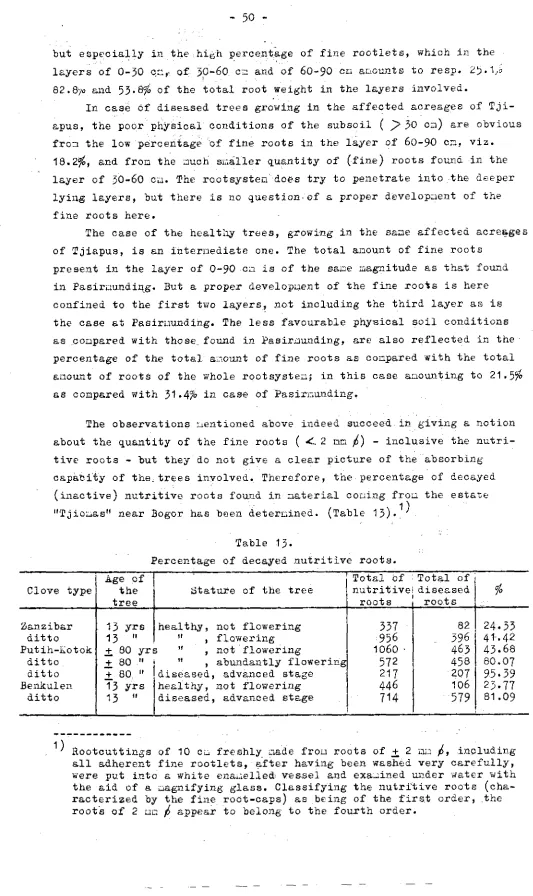
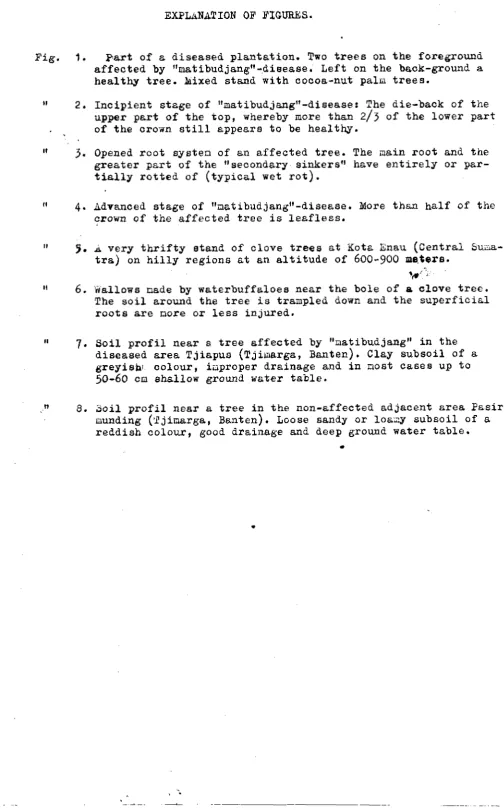
DOKTOB
D L L UILUU PEBTANIBN
PLDA
U N I r n R S I T B S I r n O N E S I AD E 6 G r i J TA~JQGUFGAM PRE
SIDEB
TERSEBUT,JaNG A
N DIPERTkKhNLNTERHSDBP
K E B E E ~ A T A N ~DARI
FLHAKZ u U L T b S PE;BTdNZU
DI
BOGOR 0 *D A M 1
GEDUNG N A S I O N ~ J
BOGOROLEH
LEKTOR
DI
FdCULTaS PERTILNLaN BOGOR4
' - , {.
.
:3V a
d e feiten op t e klimmen tot cen h e l d e r i e z i c h t in de~ l g e e e e n e wetten d e r n s t w d r , om d z a r d o o r d e f e i t e i l zelven be- ' * ' , - ; -
t e r t e leerea b e g r i j p e n ,
-
aietdear h e t d o e 1 der wetenschap. .-- .+ - 'I !
ZUGO DE
TRIES, q878.. * #-
,,De
~ d e r n h s l i n g d e r plentel?''-
a1
OED
50il280TO
THE &EMORYOF
IdY B E L O W PBRENTSJ :
C m L C U L m VITAE
A few
months
be?ore my grsduationfrom
the S t a t e School 'of
l r g r i c u l t u r e
in
Bogor in June1939,
I hsd been approachedon i n s t i g a t i o n o f
M r
TT..E.W.CANPER
VISSER,at
t h a ttime
Prin-h
c i p s l of t h e School, by t h eI n s t i t u t e
f o rPlant
Diseases on.
4
t"ne
matter
o f an appointment stthe
I n s t i t u t e .
I:
accepted t h e + ,%:
=#A- -
a ~ p g i n t m e n t o f J u n i o r issiatant Uycologist starting on July 1?A
of
the same y e a r , thereby being thefirst
Indonesian in t h i s-'.$
very spec i a l l z e d branch.1.
3
T h i s work
in
t h e phytopathologioslfield
requireda
lot . aof knowledge
of
v a r i o u s sciences811
connedted w i t h a g r i c u l -;:a
t u r e . FrequentlyI
was dissatisfied w i t h my workt the lack ofa
broader snd
more
thorough fundamental knowledge waskeenly
.:
f
f e l t as a great drawback,, m After a whole year of non-sctivity
I
was offered a new..
9
sphere of activity s t t h e Faculty
of
Agriculture in Bogor in ' .aJuly 1948, whereby
I
w a s enabled t o continue my studies at * ' 2 ,*4
t h e Faculty. But n o t
until
1950 1 could stsrt my s t u d i e sL
3
b e a i d e s doing a full-time job asa
phytopathological sssistant. 4 Only st the expense o f many s a c r i f i c e sI
had been able t o ao-.
:' 6c o m p l i a h these httudics a d
I
g o t degree as an Lgricultural.
rr
'- I
S c i e n t i s t in hsy 1 9 5 5 . --a >3r Concluding this t h e s i s
I
w i s h to express iuy heartfelt --.
thanks*-
the
f i r s t place t o my high valued Promotor,profes- 2L4e o r THUBG. But f o r h i m
I
would nevesvcontinued my s t u d i e s a d.
-..$
..
* under h i 5 i n s p i r i n g g u i d w - c e
I
have completed t h i s research 7,-
work.
I sm
greatly indebted to him and his w i f efor
the way - A3
they always were willing t o a i d . I .
1 esteem it
s
g r e a t p r i v i l e g e t o have been able t o work .. Ionce again
under
t h e guidance of my second Promotor, professor-*
VAN
SCHUYLFX3ORGII
e s p e c i a l l y i % c o m p l e t i n g the p e d a l o g i c a lpart
o f this resesrch work.; <,
With f e e l i n g s of g r e a t gratitude
I
r e c a l l t h e Nay p r o f e s - . 7s o r U f T W sided and i n s p i r e d m e in the for me very difficult
. .
undergraduate y e a r s st the F a c u l t y . But for his perseveranceI
. *+would never
have
continued those s t u d i e s .Furthermore,
I
am very much indebted t o t h o s e , who con- 4 I a tributed t o my s c i e n t i f i c e d u c a t i o n , andI
x i s h t o extend my . 'g r a t e f u l s p p r e c i a t i o n i n t h e f i r s t place t o p r o f e s s o r B O E D I J B -
I
wish t o acknowledge s p e c i f i e s l l y t h e aid o f p r o f e s s o r SUTISBOsnd bk
WLSilfidOWO WfRJODIHIJ1DJ0, whoenabled
me t o achiovcg o s l *
Important assistance
has been obtainedf r o m
t h eExtension
Service of the Department of Agriculture. To every officer involv-ed and s p e c i f i c a l l y t h o s e o f the provinces West-Jsva,
Centrsl
andSouth-Sumatra,
Celebes andt h e
Moluccas,I
wish to extendny grateful appreciation f o x t h i s h e l p snd
I
recognized t h a t w i t h o u tsuch c o o p e r a t i o n
the taskwould
hsve proved much mored i f f i c u l t if
not
impossible. hiay this prove t o be the b e g i o n i n g o f s o l o a e cooperation between t h e Extension Service on t h e one hand a d the Facultyof
~gricultureon the o t h e r
hand,I
wish a l s o to express my hartfelt thanks t o my f r i e n dDr
VuhSfor
the prolific interchangeo f
v i e w s , t o Urs JLLCOBS- JERTEMS f o r the aid w i t h the E n g l i s h translstion and t o Ir U R H ISUKGRTfaTiyIr;D Jd for the assistance in some
f
ieldobsexvat ions.In
addition,I
w i s h to acknowledge s p e c i f i c s l l y the c o o p e r - a t i o no f the
I n s t i t u t e of b o i l Science and the Inotitute ofP l s n t d i s e a w a
in Bogor.
Purthermore,
I
w i s h t o express my heartfelt thanks t o ~ 1 1my f r i e n d s , t h e personel o f t h e Phytopsthologfoal D i v i s i o n , who shared w i t h me the s w e e t s and b i t t e r s o f l i f e f o r e i g h t y ~ s r s
and w i t h o u t
whose devotedness a n d sense of dutyI
would not h v ebeen able t o complete this resegrch-work*
&Loreover,
I
w i s h t o acknowledge t h e ~ s s i s t a n c e obtainedf r o m other individusle too numerous t o nention.
To every
one o ft h e s e
I
extend my g r a t e f u l appreciation f o r this help.In s i l e n t
respectfulness and f u l l surrenderI
abide w i t h God t h e &L&IGHTY, %ho granted t h e courage a d forbearance n e c s s - sary t o accomplish t h i s work under circumst&nces1
live in.Finally,
I
wish t o e x p r e s s ny heastfelt t ~ ~my tw i f e ofor
the support she always gsvc me and t h e patience w i t h whichshe bore the many lonesome days and nights
I
had t o dedicate toF a g c
.
GdjrPTER
I
.
GEN;EkiL1
.
I r t r o d u c t i o l l
... ...;...
...
1...
.
2
,
synopsis of literature4
...
...
.
3
Symptons of t h e d i s e a s e..
7
...
.
CLPTER .
If
i$iYCOLOGICaL RESEaCII...
.
1 Resesrch by E I J t T L U S
(t934-1941)
2
.
Research by R E I T S b and T O J I B U I W I T ) J L I J A (1941-1943...
and
1948-?952)
...
.
B I~olations
out
of d i s e s s e d material...
b
.
I n o c u l a t i o f i s t e s t s...
c
.
Cau~le of the d i s e s s e...
.
3
Research by t h eauthor
(1943-1947)
s . Observations nade
in
t h eplsntstiun
of t h e...
e s t s t e "T j i o n s s t 4 st Sukansintri ( n e a r ~ o ~ o r ) b
.
a v i s i t at the clove plantations of smsllholders...
n e a r Bumisju
(central
~ s v e ) in1943
...
.
4
Futherown
investigations ( ~ f t e r 1952)...
a
.
O b s e r v a t i o n s medein
1952-1954
...
b
.
O b ~ e r v a t i o n s made in1955-7 956
...
b
.
Ccntrsl Sumatra...
.
B T.
j i m a r g s. ( ~ s n g k s s b i t w . ~ , 3saten)....
...
C
.
South S w a t r a...
Summary o f
the mycological re search...
CHAPTER
III
.
CULTUUL I;ND B O T d i I C a L STUDIES 27...
.
1 C u l t u r a l s t u d i e s 27
...
.
s Shade t r e e - a afid i~terplent 27
...
b. idixed or pure a t a d s 28
...
.
c P i c k i n g method8 2 9
...
.
d Grazing cattle 31
...
...
2
.
Botanicsl r e s e a r c h...
31
...
Su~lrpary
35
CHAPTER
IV
.
CLIMuTOLOGLCaL
RESEARCB...
.
3
Cliuate
corditionsfor
c l o v e s...,...
36
2.
The significance o f rainfall, e s p e c i a l l y the...
distribution of rsinfgll
36
...
.
3
The
influence of micro-climste39
...
.
4
The climate after harvest39
...
.
5
Intermittent fructif i c a t i o ~39
...
CHAPTER
V
.
PEDOLOGICU RESEARCH47
...
j. Synopsis of l i t e r s t u r e r e f e r r i n g t o clove s o i l s 41 2. Correlstion
of
soilconditions
&ad the outbreak ofj ' a a t i bud J angl'
.
...
.
a Observetions made by KxLSHOVXN in
1934
42
...
.
b Own observations
ir?
S w z t x s..-....
43
c
.
Obaervations m d ein
Tjimsrga ( ~ a n ~ k s s b i t u n ~ )..
45
...
Summsry and conclusion 52
CLAPTER
VI
.
CONSIDEEiTIOWS LBD CONCLUSIONS...
54
CHAPTER
VII
.
P U G T I C A L DIRECTIVESFOB
THE CONTROLOF TIIE
...
'~ULTIBIJDJBNC"-DISEBSE
IN
CLOVES
56
1, Introduction.
Alresdy in
1936
AL
sdvocated t h e extensionof
t h e culture of cloves in Indonesia by postulating thefirst
theoremof
h i s t h e s i s :'The i a p o r t m c e
of cloves
in t h e industry of native cigarettes called" "+'kretek", i sof
such a nature t h a t on accountof
t h i s reason alone" " i t would be remunerative t o paymore
a t t e n t i o n t o the culture o f " "cloves in t h e Netherlands E a s t Indiea t h a n has beenthe
case up till" g T n ~ w t i.
11
Previously, t h e
Conmissioner o f S t a t e
had mentioned i n t h e N a t i o n a l Assembly during a crisis-debate on February 10, 1932, t h a t in trying out new sources of prosperity the c u l t u r e of cloves might prove t o be promising,In
1939, it is t r u e , the Government paid some more sttention t o clove6 by establishingan
A d v i s o r yCommittee
t o
p r o d o t e t h ec u l t u r e
of commexcial crops,but no
real advances i n that d i r e c t i o n have been recorded. The timewas not y e t r i p e for
a
t r u e u n d e r s t m d i n g o i t h e import--ce of the c u l t u r eof cloves, until1 in the second
half
of
1953
t h e import of cloves from Zan- zibar failed. Then the price o f c l o v e s reached an unknown level(up
till ?+ 100,-
per kg), on accomt of which several llicretekl' f a c t o r i e s were forcedt o c l o s e down,
This
did
arouse
public c o n s c i e n c e . Now, p e o p l e wanted t o p l z n tclovee
even on
p l a c e s where previously no clove tree had ever grown.It
had evenbeen su,gested t o plant cloves on a large s c d e
(LUBIS,
1954,
p . 1 1 ) . Any kindof
plantmaterial whatsoever was used. Even in t h o s e regions of CentralSumatra, where
at
f i r s t no one dsred t o m a k e new clove plantstions on~ c c o u n t of the d i s s s t r o u s effects of the so-called fqmatibud~sng'f-disesse,
t h e clearings were once ~ g s i n planted t o cloves. P e o p l e were prepared t o
run the r i s k of s, a e c o ~ d serious fsilure. ( A L ~ V I , 1953,
p . 3 9 5 ) 1
But we
should not iet o u r h e a d s be turned w i t h t h i s g r e a t upsurge of enthusiasm t o cultivatecloves
from the p ~ r t of the population. S u r e l y n o t unjustly, t h e f a m o ~ s b o t a n i s tRUMPHIUS
once said in 8 l y r i e d mood:'qThat the L o r d in
Bis
,Visdom, g i v i n g eachcountry
i t s
r i c h e s hsth"lloonf ined the cloves w i t h i n the demesne o f t h e h o l u ~ o a s ~ ~ (RTDIIIXJS,
Thus far, the geographic distribution of cloves has been very limited
in
area.
Moreover, in t h e e x i s t i n g clove rr creages,great
d i ff
erencea asto
the stand o f the crop can be s t a t e d , d e p e n d i n g on local circumstances. They do thrive in t h e i rnative c o u n t r y ,
namely t h e five i s l a n d sGilolo
( ~ j a i l o l o, , 7 - d Y drs s a d w#l reach ~n abe
~ f -
o r ~lalmshsira). Xere the t r e ef l o i i e r s
a% an sge o l l J O - 1 5 0 years.In am-
boinaa
c l o v e t r e e may reach an age of7 5
yeara. In the r e g i o n s Painan,1
Asamkumbsng, Talu and Tjubaddc ( ~ e n t r ~ l ~cmatra), however
it
i s not easy t o find a tree older thar-15
years.In
Bumizju (Central ~ a v s ) no trees over - * - - -two
yeers o l d s r e f o u n d , whereas in & neighbouring v i l l a g e , Patugwan, at a distanceof
ebout4
k i l o m e t r e s , t r e e sof
some 70 y e a r s o l d w i l l befound.
Two gardens at T j i m ~ r g e ( r t s . & n t e n ) , a t s distance of only a few hundred metres from each o t h e r , might be v e r y different, e.6. in one g ~ r d e n more thsn67,5$
of the t r e e s p r o v e d t o be d i s e a s e d , whereas in t h e o t h e r one notEL s i n g l e t r e e was affected. nevertheless, there a r e some thriving c l o v e
plantations outside lalm~heira, such s s
t h o s e
in
t h e Tjiapus region ( 3 0 g o r ) ,in Patuguran (residency ~ e d u ) , and in Xota Ensu ( ~ e n t r s l sumctra).
Cloves require some Pery special conditions of soil, cllmate a n d
cul-
h r a l practices, as will be shewn l s t e r on. These requirements, therefore, should be taken into due account, especislly by theExtension
Service, in o r d e r to prevent gsest d i s ~ p p o i n t m e n t s among t h e p o p u l a t i o n snd t o d i r e c t t h e n o w - e v e r - i n c r ~ s m g i n t e r e s t in t h e culture of c l o v e s i n t o proper chan- n e l s .The economic significance of t h e culture of c l o v e s might be succinctly summarized s s f o l l o w s :
& f o r e the war t h e m o s t i m p o r t a n t c e n t r e s o f
c u l t u r e
i n this country w e r e the Uoluccss &nu C e l e b e s ( c s p e c i & l l y the uinshssa, Ambon and ~ l i a s ) , Benkulen, t h e v i e s t c o a s t of Sumstre, the k m p w g D i s t r i c t s and Atjeh, w i t h a t o t s 1 yearly production of one thousand t o n s . To-day, this production &mounts t o roughly 2500 t a n sLOBI IS^^^^
j 5 ) , which w a s by nd means sdequatet o meet the d o m e s t i c consumption, mcre in particular t h e demsnds o f the " k r e t e k l ' - i n d u s t r y . Thus, a y e a r l y average of 3,300 t o n s of c l o v e s were imported f r o m Zanxibsr in t h e y e a s 1928-1933.
In
t h e years1935-1939
the figures for t h e import o f c l o v e s , F S P . f r o m Zsnaibsr, were r e s p e c t i v e l y4,350;
5,416; 4,410;5 , 7 0 3
and8,659
t o n s , smouxltingt o
the value of several millions of guilders, The estimated demand to-day for the t i k r e t e k t v - i n d u s t r y amonnts t o about 12,000 tons, thus, t h e g r e a t e r p a r t is still being imported.In
7952 Indonesis h&d t o pay&
111.310.000,-- in f o r e i p - currency for the import of 5.588 tons of clove s. (TOJIB JUDL-dIBJaJA,1954,
p- 305).Before the war the export of Indonesian clovea more
or
less counter- balanced the import cf foreign c l o v e s . A s s s p i c e t h e IndonesianL CJsweliss u p e r i o r t o t h e Zmzibar clove, which
is
shown by t h e i r market prices,being 24-25 cents p e r kg for Zanzibar c l o v e s and 28-52 c t n t s p e r$$
kga~fcxr_~$nad9 and Amboa & ~ o v ~ ' s . (AL,1956,
p . 8 4 ) .In
t h e years 1935-1939 the export ofI n d o n e s i a n clovcs zmounted to
753;
1,659; 1,200; 9 5 2 a d 1,004 tons in the order mentioned. T h ~ s , t h e pre-WGI export of c l o v e s amouted t o sa average a n n u a l p r o f i t o f more than hslf e m i l l i o n g u i l d e r e inforeign currency.
No less t k a ~ 23.000 people esrned t h e i r l i v i n g
in
t h e Nkretek"-industry in 1928.(AL,
1936,p.94)
T h i s number ha^ been raised t i l l some 500.000p e r s o n s shortly b e f o r e t h e second world msr, n o t counting those getting 811
'
sxtr3-income
from t h e " k r e t e k i t - i n d u s t r y . ( L I Y ? 3 I ~ ~ $ . 6 2 ) . The estimated s l m u s lIn 1929 there were as many ss 70 f a c t o r i e s in Kudus
&lone,
whichnumber
h s dbeen r s i s e d till 152 factories
in
1934.
B e f o r e the second w o r l d war the t o -t&l ~ r n o ~ t of fsctories wss somewhere between 500 end 700 w i t h & consumption o f about 20,000 t o ~ e of c l o v e s . To-day, the number
of
f s c t o r i e si s somewhere
between 100 a d 200, most o f w h i c hnot
being eble to workt o
full c s p a c i t y .In
a d d i t i o n , t h e "kretekl'-industry hasat%ll.othcr
sdvanfages.For
i n s t a n c e , excise n o t i c e s t o a value of not l e ~ s than 1 million g u i l d e r s were needed ic Kudus a l o n e in1 9 3 3 ,
w h i l e t h e e x c i s e valuein
3934
elready m o u n t e d t o 1.3 nillion g u i l d e r s(AL,
4936,
p.98). Before the war xlot leas t h a n 20,000 t a n s o f tobscco and some 6.000 tons o f !'klobotf' ( b r a c t s of maize) h ~ v e been u s e d in tne " k r = t e k f t - i n d u s t r y(LUBIS,
1954,
p. 61)
,
t h u s s u p p l y i n g s t i l l another source of income. Now l e t us look at t h e world p r o d u c t i o n ' m d consumption o f cloves. As t o world-prod~ction, the following (table 1) is c i t e d f r o m an unpublished report of HUI'lbU.Export o f cloves in t o n s
--
From Zanzibar j A From , From
Year
1
(+
~ e m b a ) I Aiidagascar;
Indonesiai
1
935
3.681I
753
7936
I
10.44931349
1
1 - 6 5 9
1937
j
6.153
I I2.946
i
1.2001938 ! 7.906
1
4.619
952
7939
1
73.398
i 6.520 1.004Z m ~ z i b a r
( +
~ e m b s ) i s and &ways h s s been the w o r l d i s g r e a t e s t exporter o f c l o v e s ,For
t h e s e islands of t h e protectorate, t h e r e f o r e , c l o v e s r e p r e s e n t t h e backbone of t h e national revenue.In
the y e a r s9934-1938
t h e export of c l o v e sf r o m
Z ~ l l z i b s r amountedto
cn Eversge of E519.106.
-/-,
or 78.06% of t h e t o t a l export v a l u e .In
t h e y e s r s1945
and 1946 the amounts were r e s p .E 6 8 6 . 5 3 8 . - / - and S 1.243.106.-/-, asking up
68.5$;
and73.15%
of
t h et o t a l
smount
of
e x p o r t ir? t h e o r d e r mentioned. (NUT-w & S E F F l E L D , 1951,P.156).
As t o t h e destination of Zanzibar c l o v e s t h e following is c i t e d PromCestination of Bm-aibsr cloves.
Average annual consumption 1937
-
1939
!
...
Indont s i a
i
89.489
c w t s x)...
India
i
43.737
"...
3 , S a A *
21.949
"Great Britain snd N , Ireland
...
10.799
I ti
Germany
...
I4.658
" !E g y p t
...
; 2 . 2 8 1 It IOther countries
...,...,!
7-777
" - - -Thus, I n d o n e s i ~ i s t h e w o r l d f s g r e a t e s t comsuner of Lanaibar c l o v e s due to the existing " k r e t e k 1 I - i n d u s t r y .
In t h e following pages t h e a u t h o r w i l l try t o elucidate the causes
and
e f f e c t s o f t h e d r e a d e d q t m s t i b u d j a n g " - d i s e a s e , which i n certain r e g i o n sof
Sum&trs d e s t r o y e d extensive clove p l s n t a t ions and which, u n d o u b t e d l y ,c o n s t i t u t e s one o f t h e i m p o r t a t limiting factors
in the
geographic d i s t r i b - ution o f c l o v e s .Regardless of the e x i s t e n c e of som& s i m i l a r i t y in the nature of t h e
~ m p t o m s , i t w i l l be shown later on that t h e cause o f t h e +'mstibudjang"- d i s e s s e and that o f t'auaden- d e s t hvi
,
economically very importsnt d i seeseof clove^
in
Zw-zibar ( 0 - d ~ c m b a ),
are not identic. .Uoe will be made in t h i s p s p e r o f records in various departmental files snd of unpublished r ~ p o r t s of the author h i m s e l f .
The nsme
l ' m a t i b u a j ~ n g l l h ~ s first been used by KALSHOVEN(1936,
p. 1 7 0 ) ~Actuslly, "matibudjang" or nmstigadisn i s
an
i n a p p r o p r i a t e t e r m , f o r " b u d j a g t i means nyouth" m-d " g s d i s " m e w s t q v i r g i n t ' , whereas t h e di sesse occurs after the f i r s t hsrvest h s s b e e n g a t h e r e d . The expreasion nbudjangtq o r " g ~ d i s "i n
thia c s e e p r i n c i p e l l y s t r e s s e s the f a c t that t h e t r e e is
in
its prime. The term"rnsti
s e k a i d j & l m i l might hsve been chosen, analogically t o t h e term "suddea death", b ~ t this tern is even less ~ppropriate, s i n c ein
most c ~ s e sthe die-back occurs grsdually, somctimen within two or t h r e e yEars a f t e r t h e first v i s u a l symptoms of t h e d i s e a s e s p p e s r . For thia reason and, moreover, on account of h i s t o r i c s l r e a s o n s , we will maintain the (irappropriate) t e r m "matibudjang" or "m&tigadie".
RUbIPHIWS
( 9 6 9 7 )
mentioned nowhere t h e occurrence o f a die-bsck diseaee i n c l o v e s , which might be i d e ~ t i c t o t h e tlmatibudjangtL d i s e a s e . But he d i dmertion t h e occurrence of b o r e r s .
"Then the grestest p e s t o f s l l is a c e r t a i n worm x i t h t h e g e n e r s l i f "appesrance o f 8 common, white woodworm, or caterpillar, w i t h a hardt'
"and black-brown hesd, x h i c h g r o w s i n s i d e t h e wood, and c a u s e s the" " t r e e t o die s h o r t l y ~ f t e r m a r d s , the symptoms of which b e i n g the?' "oozing o u t of a w ~ t e r y s u b s t a c e at several p l a c e s of the trunk" "and on ~ c c o u n t o f t h i a d i s e a s e many t h o u a ~ n d s o f trees d i e d ontt "Leytimor and t h e c o a s t o f
Bitu
in t h e yezr 1667 and t h e r e a f t e r q t , 1) Such eminent s c i e n t i s t s i m p l y could not have overlooked t h e occurrenceof
such
a dissstrous d i s ~ s s e a s t'mstibudjang'T. L o s t l i k e l y , this d i s e a s edid n o t snd still d o e s not occur in t h e i&oluccas. as has been s t s t e d by the
-I-- tI
-
4-
1
>
Iiead of t h e E x t e n s i o r ? Service for t h s t d i s t r i c t in 1953.
1
The first investig&tions ou the nature o f t h e ''nztibudjsng"-disease
d s t e beck ao f e r as 1923, when some d i s e a s e d plantmsterial had been sent
from the r e s i d e n c y Benkulen tc t h ~ Institute of Plmt D i s e e e e s in Bogor. A s a r e s u l t o f t h e ~ e , Miss SGHriARZ coxlcluded, t h a t w e w e r e d e s l i n g w i t h s,
r o o t - d i s e a s e , very likely csused by a bacterium, r m e l y t h e slime-disease bsc
torium
probably, Xsnthomonza solanzcesram(-IT
SMB,1953,
p .407)
In
Jm-usry 1928, iiiss DOmR v i s i t e d sose clove gardens nesr Xaga =d 3Suarasorno&I
TapanuLi, in or&r t o s t c d y sr! un,know~ die-back d i s e a s e , which hsd alreadi b e e n reported f r o m thst r e g i o ~ z & s e z r l y ~s 1922 ( K A L S B ~ V E E ,19%
P.
1 6 7 ) .
In
December 1930, in h i s f irs'b reyorts on t h e culture o f c l o v e s ,6 1 ~ ~ G b
alresdy s t a t e d t h e frequcrt occurrence of d i e - b s c k s y m p t o ~ s in c l o v ep l e n t ~ t i o n s
in
Zenkulen.Inf
ormstion r e c e i v e d f r o m t h e i n h ~ b i t ~ t s indic- ated, t h s t in f o r m e r t i ~ e a z s ~ e r z l clove gardens e x i s t e d iw? l o c a l i t i e s ivhere t h e y were n o t found in 1930 due t o a d i s e a s e which h&d appezred a l l o f a sudden. (1twzs suy2osed
to be c ~ u s e d by a "t j e n d s w m ipuhIt = t o x i cMJLLBii, st the: tine mycoiogisf et t h e I n s t i t u t e of P l a t disease^^
io Bogor, ~ i s i f e d , I n compliznce w i t h z request of t h e agricultural officer i n v o l ~ a d , some c l o v e p l s n t s t i o n s r.esr Zanlza a r ~ d T a i s ( ~ e a k u l e n )
in
June 1931. He concluded: "A a ~ t e r i a l loss o f brafiches d o e s occur due to t h e attack o f cobweb-fungi, t h e o c c u r r e n c e a ff
~
(~oranthaceae),a
m d improper p i c k i n g methods". k s %ill be shown l a t e r , all t h e s e facJiors are ccmponent s o f t h e " w s t iSud jz~g"-6ise:1se.A f t e r t h e appoirtaent o f
Mr
I4iHJUD1X st Uzana ( ~ e ~ t e m b e r 1 9 3 2 ) ,more
sttention c o u l d be paid l o c a l l y t o t h e deteriorstion o f t h e c l o v e gardens.
From f i e l d o b s e s * ? ~ t i o n s it h a s b e e n c o n c l u d e d , t h a t die-back synptons
in
t h e gzrdena werc e v e r i n c r e a s i n g in i n t e n s i t y .In
some c a s e s t h e s e symptoms were o b v i o u s l y due t o cn attack of borers, but in o t h e r c a s e s t h e y c ~ u l d not be imputed t o t h e 1st:;er nor t o root-fungi,L o c a l i n v e s t i g ~ t i o n ~ , carrFed 0 u . t by
KALSdOVEW
(1934),
confiraed these o b s e r v a t i o n s , 3 r o ~ v s r i o - 1 s d s t a and o b ~ e r v a t i o n s he concluded tentatively, t h a t t h e l o c a l -dying-off o f t h e c l o v ~ t r e e s in Benkulen might be due t o ad i s e a s e d condition o f t h e r o o t s y s t e n , which in turo had been c s z s ~ d by f s c t o r ~ o f both persaitic and aon-parssitic z a t u r e . Such f a c t o r s might a r i s e under less favoursble soil c o ~ d i t i o n s , which
i n
t h e i rturn
night beIn 1934 XALS;IOVLX b r o u g h t ~ Z C K some soil ssaple s cont six?i:?,- i n ~ t e r i a l o f t h e smaller r o o t s . I n t h e s e , VAN
DEa
TEC2T could n o t a s c e r t a i n theoccurrence o f Eny p a r ~ ~ s i t i c nemztode, w h i l e L i d T W J S f o u n d t h a t t h e
f
ice rootlets were o f t e n missing o r a f f e c t e d . The f ~ ~ g u s C y l i n d r o c s r p o n s e e , and sfterwsrds, s Xaplosporell~. keve b e e n i s o l s t e d f r o m the d i s e ~ s e dneterial.
VAN DER
GOOT
(1935,p.46)
s e $ ~ r t e d suddex?-death in e x i s t i n g c l o v e p l z n t s t i o n s i n t h e r e s i d e ~ ~ c j r Benkulen ( ~ o r t h ~ r o ? ) . In benersl,it
~ G E been & g r e e d v.pon, t h a t d e a t h occurred ~ ~ f t e x t h e f i r s t harvest h s d been gathered in, ,The ss,me s u t h o r( 1 3 j 5 ,
p.48) s t s t e t L ~ f t e r w a r d s tile o c c u r -.-.
Fence o f a a e r i ~ u s p e s t in t h e r e s i d e n c y Sunstrat s w e s t c o s s t c s u s e d by an unlcnown d i s e s s e . Very probsbly he w ~ s d e a l i n g n i t h t h e " m a t i b u d j s n g q ' - disease
.
In
c e r t a i n r e g i o n s of S u m n t r s ( ~ s i n s n , ~ s a m k n n b s n ~ ) the "matibud j a g " - d i s e s s e causcd a dying-off o n such G Izrge s c s l e , t h a t , but f o r some raree x c e p t i o n s , no c l o v e s were r e p l z n t e d . The dfad t r e e s were felled f 3 - fuel
m d t h e clesrings were ebiindoned ( x ~ i r f ~ ,
7953
p . 3 9 5 ) .
Beceuse the "sudden-desth" di s e s s e of c l o v e s in Zsnzib~r
&a?
Pelriba shows Gone resenblr,ace w i t h the " m e t i b u d j a n g i l - d i s e z s e i n I n d v n e s i a , t h e z u t h o r w i l l p r e s e n t a s c c c i n c t su:anary o f t h e l i + , e r e l ; u r ~ or_ t h i s subject.aio s t l i k e l y t h e " sudden-dest h'' d i s e ~ , s e h s s slresdy been kncan since t h e middle o f t h e 19th century, i * c . sore t h a n 30 y e s r s a f t e r t h e i n t r a - duction o f the f i r s t c l ~ v e s i n t o Zanzibar in 1818 ( T ~ D ~ u ~ Y , 1943 p . 1 1 7 ) . dlsrmiag ez.as&e hzs bee11 r e c o r d e d fclr t h e f i r s t t i : r e in 1892.
In
1.307 snd o n c e h g ~ i . n i f i I 9 l 0 , it h s d Seen ~ u g g e a t e d t h ~ t "sudder?-d e 2 t h q 1 might b e c a u s e d b~ a fz;?gcs. DO;iSON, at t h ~ t
tine
mycologistin
,3 r i t i s h Last A f r i c a , drew t h C st$e.:?tio;? t o p o o r soil c ~ n d i t i o n s , when v i s i t i n g d a ~ z i b e r in 1914. J'ELhTORD ( 1 3 2 2 ) concluded, t h z t s u d d m - d e z t h n e s caused by s s p c i f i c 2atnogt.:?ic fc.n&us, g r o b s b l y P e z i z z s p . , w h e r e s s
TZOUP
( 1 9 3 2 ) s u s p e c t e d s zteaborer, ~ltho:&h t h s l k t t c r has b c e n refutedW I G G (1934) assumed t h a t t h e d i s e ~ s e might be dce L o a root-pzsasite, bat
CAMPBELL
(19401, t h o ~ g h t a c k l i n g this p r ~ b l e s f o r s whole y e & r , f s i l e d t o i s o l s t e any f w ~ g ~ s , bscterium o r pratuzoa, t h ~ s , he a s c r i b e d t h c d i s e a s e t o physiologicsl c L u s e s (IJUTIVLLN & SHEFIIELD,
7949,
p . 420).h y p o t h e s i s h a s been r e n o u n c e d since the en& of 1950, whea definite i n d i c a t i o n s w p r e o b t ~ i n e d that s fungus c a u s ~ s t h i s disease,
S ~ F F I E U , (1950) s t a t e d afterwsrda, t h z t 20 h i s t o l o g i c a l zbnor-
mslities could be a s c o r t ~ i n e d which might s e r v e s s a diagncstic o f "sudden-death".
Some
i : ~ d i c a t i o n s d i d e x i s t that "sudden-deatht1 mightb e t h e climax o f pow conditions o f e i t h e r n u t r i t i o r ! o r growth.
F i e l d observztions, h o w e v ~ r confirmed the p o s t u l a t e d hypothesis,
t h ~ t
t h d i s e s s e ~ w a s d u ~ t o some w ~ , r e s i t e .Other experiize;?tu c s r r i e d out by YUTivdiX ('1950) ol? the effect o f
sudde11-desth on t h e c~terrel&tionships, showed t h a t in
an
e a r l y s t a g e o f t h e d i e e s s e t h e waterr~lstionships ofan
affected p l ~ n t were rmch b e t t e r t h a n t h o s e of s h c s l t h y one,in
spite of t h e d i s e ~ s e d roots. This sgain is in favour o f t h e hypothesis t k t t h e d i s ~ a s e n i g h t beo f s p m s a i t i c n s t u r e .
In a
l a t e r p u b l i c ~ t i o n (1351)N U T U N ,
SHEFFIELD e tal.
s t a t e ds o u e n e a s u r e s o f control snd s e v e r s 1 s t a t i s t i c e l d s t t i . On ~ c c o u n t o f a g r e a t e r nunber of o u t b r e & s thsn h ~ d been expected at f i r s t , t h e controlling canpsign c ~ u l d not be c ~ r r i e d t h r o u g h . Thus, sone 2.170- 2.604 o u t b r e a k s of d i f f e r e n t e x t e n t w i t h En Everage of 25 dead t r e e s had been f o u n d in P e z b s alofie in 1950. Xew o u t b r e & s w e r e e v e r sdded,
t h e increnent anoufitihg to soxe 14;~ e6ch ~ e z r . Since direct c o n t r o l xessures were assuaed
to
be inprscticsl, the zuthors i i ~ e ~ t i o n e d s b o v erecon;acnded t o p l a n t a mixed population o f cloves and other c r o p s in c s s e o f repl~oting s f f e c t e d s c r e s g c s .
In
t h e i r l ~ t e s t publicstion on'
oudden-deatht1 NUTIUN snd ROBERTS ( 1954)
concluded that a f u g u s V s l s &1
~ u g e n i s e c a u s e s t h e d i sezse.
'Pron the f o r e g o i n g it n i g h t be concluded t h a t in the c o u r s e o f tiwe a l o t o f hypjfotheses and t h e o r i e s have been postwlated w i t h
r e f e r e n c e to the cause of sudden-death"
.
Based upon t h e r e s u l t s o f his own o b s e r v s t i o n s , t h e p r e s e n t suthor i s convinced t h ~ t Valss eugeniae is not t h e c ~ u s a l
f m g ~ s
of t h e I f n a t i - bud jsngv-disease in Indonesia. T h i s stateuent w i l l be e l u c i d a t e d ir thef o l l ~ w i n g s e c t i o n s ,
5 .
Sydptons of t h e d i s e s s e .The symptozs d e s c r i b e d heseund~r src l s r g e l y based on own f i e l d
observations made in P a i n s n , T a l u and T j u b s d ~ ( c e n t r a l ~uastra) and in Tjinarga ( ~ a n ~ k s s b i t m ~ , h e s t 3ava).
The t r e ~ s affected by the M ~ c t i b u d j ~ E a g n - d i s e s s e &re r a t h e r con- -spicuous (figure 1 ) ; on ~ c c o u n t of t h e falling o f f o f the l e e v e s of
t h e colour of t h e now v i s i b l e t w i g s . The leeves left s r e of E dull
g r e m c o l o u r , o c c ~ s i o n a l l y y e l l o * , b e i n g more o r less w i t h e r e d , stsnd- sing
o u t
shsrply s g ~ i n s t t h e d a r k g r e e n f o l i ~ g e of t h e h e z l t h y t r e ~ s .On
further exasinetion t h e d i v e r s e s t a g e s o f t h e d i s e a s e arediscernible.
k characteristic symptom o f t h e i n c i p i e n t stage o f t h e disesse is t h e die-bsck o f t h e upper part c f t h ~ t o p ( f i g u r e 21, whereby n o r e thm 2/j of t h e l o w e r p a r t o f the crown s t i l l a p p e a r s t o be h e s l t h y . Though t h e l e a v e s h ~ v e lost t h e i r g l o s s i n e s s f o r the n o s t p a t , they s r e still virtually nornel green. I n s o x c e s p s s dull green discolour&tion o f t h e l e & f iaey be n o t e d
i n
this s t a g e .In
n o s t c z s e s w i t h e r i n g h ~ s n o t y e t ~ p p e s r e d , B c o n s p i c ~ o u s i n f e c t i o r w i t h Sg>ih+leur~~ d o e s ex!-st o nt h e l e a v e s end the l o s f s t s l k s . d l i ~ o s t n o f l o x e r i n g o c c u r s 111 t h i s stage
of t h e d i s e a s e .
If
t h e r c o t s y s t e z i is opened up, it will be n o t e d t h a t thc n a i n r o o t h&s entirely o r pertially ~ ~ t t e d cff. ( ~ i g u r e3 ) .
This
i sa
t g p i c z l kind of v e t r o t , ahertby t h e bark of t h e r a o t oftell shows a blue-bleck discolouration, w h i l e t h e u n d e r l y i n g woody p s r t shoxc E wsteryr o t
w i t ha sour s n e l l . The t h i c k p r i i z w i e t e r s l r o o t s Ere st511 e n t i r e l y heslthy; only
a
psrt o f the ~ u t r i t i o nr o o t s
e r e discoloured a ~ d EVE d i e d b s c k ,I=
s following s t ~ g e nore t h s n z third o f t h e t o p hss d i e d b ~ c k .The die-back of t h e overground p a r t s spparently zdvsnces f r o n the t o p downwzrds. ivIore t h s n h s l f o f t h p crown ( c e n t r a l w-d 3 0 p p a t ) the= is
I e a f l e s s . ( ~ i ~ u r e
4).
The occcrrel?cr: of ~ , i ? e p i p h s - t ~ , t h e s c - c a l l e d" p a s i l m I t ( g c n t h s c e s e ) i s very c o n s p i c u o u s 5 2 t h i s p a r t of t h e t r e e .
At
t h e l o w e r still s u r v i v i n g p ~ r k of t h e crown nore t h s n hslf o f t h e v e g e t a t i v e t i p s shov, z die-back. Soac of t h e s e t i p s s t i l l try t o p u t forth new s h o o t s , b ~ t t h e y o v ~ g l e e v e s zre s h e d preaaturely, so t h a t the t i p s s r e once a g a i n l e a f l e s s . This in turn g i v e s r i s e t osunburn a d c v e n t u s l l y t o t h e infection w i t h x a e o s p o r i ~ a p . ( s pars- site
o f
weakness), causi-ng t h e t i p a to d i e ultisately. P s r t o f thel e s v e s l e f t show e dull green c o l o u r , being sonebines n o r ? or less
withered. The infection w i t h C o p h a l e ~ x is sggravsted in t h i s st.age of the d i s e a s e ; the o l d e r l e e v e s frequently a l s r show soze l a r g e s p o t s
o f grey colour due t o G l o ~ ~ r e l l i sp. ( t h e perfect 'orz o f ~ l o e ~ e ~ o r i u p ) .
In
thic s t a g e of the disease t h e d i e - b a c k i s accelereted t n r o o g h t h ei n f e c t i o x ? v i t h Belopeltis zfid ~ ~ I ~ F ; P < - I P s ~ ~ ~ ~r i t h ~_1-oeospoxiu;il on the fives.
Ia oj?eni>?g cp t h e rootsxstem, no d i s e ~ s ~ d s p o t s will show on the s z . p e r f i c i a 1 primery l z t e r e l r o o t s . 'The n u t r i t i o n r o o t s hsvc rotted o f f f o r t h c t r u e t e r p ~ r t , z i ~ is t h e c$ae w i t h t h e
adjacent smaller lstersl r o o t s azd the
m ~ i n
r o o t s , I n t h i s s t s g s o f t h e d i s e a s e n o f l o w e r i x g is possible.In
t h e l a s tstage
t h e t r e e i s practically l e a f l e s s ,thus,
t h e crown parts a r e grey bus t o t h e v i s i b l e t w i g s . The few l e s v e s s t i l l l e f t have w i t h e r e d snd e r e of s, d u l l green c o l o u r .
In
t h i s s t a g e o f t h e d i s e s s e t h ~ primsry lstersl m o t s have f r e q u e ~ t l y fiat y f . t rotted o f e ~ ? t i r e l y , whereas t h ~ g r ~ s t e r > a to f the trunk znd t h ~ S r s c c h e a <.rc c c ~ p l ~ t e l y d r y .
hccording t o i s l f o r n a t i o ~ l r e c e i v e d fro^ t h e i n h s b i tsnt s , ,
t h e i ~ h o l e p r o c e s s nsy l s s t as long a s t - i i o , s o i z e t i s e s e v e 2 f o u r , yes,rs, Som c a s e s are knowz, h o w r v ~ r , ia x h i c h dfsth o c c u r r e d r a t h e r suddenly, accoruing t o t h e clove p l z n t e r s . So f a r t h e p r e s e n t a u t h o r could a s c e r t a i n , s ~ c h 2, d y i i ~ g - o f f h a s zlways'
been prccedbd by t h e sppearsnce
of
visusl synptons o f t h e ''msti- bud j & i ~ g ~ ~ - c i i s e s s e a r d / o r d i e - b a c k . The sudden y c l l o i v i n g , w i l t i n g snd contingent falling-off of t h e f e z v e s , however, i s due t o t h eattzclc
o f r i r g b ~ r ~ r s ( s e e p s g e 18).
In
t h e clove-acreages ~f f e c t e d by t h e "oztibud jsngl'-disegse in Indoaesis, it h ~ s t h ~ s f s r been ~ g r e c d upon t h a t the d i s e s s eis p r e c e d e d by
an
e x c e p t i o n ~ l h i g h y i e l d o f cloves.The exessivc d i e b s c k of t h e g b s o r b i n k r o o t s , whereby the n s i n framexork of t h e r o o t s y s t e u i s m i i ~ p ~ i r ~ b , s a i s t h e c a s e
in
t h e z d v ~ n c e a s t a g e s of t h e "natibud j a n g l ' - d i s e e ~ e , rerrnblcs "sudden-desth". But the d e t e r i o r a t i o n o f t h e t r e e in c a s e o f t h e "inztibud j & r g V - d i s e a s e , however, o c c u r s nuch s l o w e rt h ~ n
inthe c a s e o f "sudden-desth". The s p p e s r a x c e of t h e v i s u s l synp-
tons in t h e f o r n ~ r G S S Q Day zrise on 8-10-year-old treea,ahereas in t h e l ~ t t e r c a s e it occurs on t r e e s of over 30 y e a r s o l d ,
Arl i x l c i p i e r t d i e b s c k o f t h o crown, progressing f r o s t h e t o p donnwards, a o r t h ~ occurrence o f weskness p ~ r s s i t e s Gloeosporiun, Cephsleuros, C o r t i c i U sp. 2nd X c l o p ~ l t i s , has enywhere been
T h r o ~ g h t h e findings o f UiLSHOWX
(1974)
it
has,more
o r less,buen a s c e r t s i n e d , thst t h e c a s e o f "metibudjeng" could ~ o t be of sn e ~ t o m c l o g i c nature. Lsttr i n v c s t i g ~ t i o n s w e r e c z r r i s d out by mycod
lo@*
nsmely
mTHBUS ( 1934-1941),
REITSidA a d T O J I B U D I r i 1 1 3 J X J A (1941-1943 and 1948-7952) 2nd T O J I B &DIr;IDJdJA(1943-1947
end frbm1 9 5 2 t i l l to-day).
I
7 . R e s e a r c h by KABTLAUS (1934-1941).
An examii18tion o f t h e d i ~ e s a c d n s t e r i s l , szmpled by ICALSHOVEN ia
1934,
b r o u g h t t o light t h . z t t h e finest r o o t l e t s a r e frkqucntly missing or z f f e c t ~ d . A t t h e plaza o f a t t a c h m e n t a dsrker r i n g was f o u n d ia the b i g g c r lstersl r c o t , Out of t h i s m&terial KARTHAUSi s o i a t e d among o t h e r t h e P a - g u s Cylindrocsrpon 82.
a
s p e c i e s kncwn -t o bf t h e c s u s s l fungus of a r o o t d i s e z s e in b u l b o a s p l z n t s . Apart from thst, t h e s e f m ~ g i are classified under c o m m o n soil f u n g i .
S i n c e 1934, d i s e ~ s e k m & t ~ r i a l k s r e g u l a r l y been sent t o the
L n y c o l o g i c s l D i v i s i o n of ihe I ~ s t i t u t t ? of P l s n t D i s e ~ . s e s at Bogor
where SdRTFLAUS p r s c t i c ~ l l y a l a s y s could i s o l ~ t e G Xzplosporella sp.
out of t h e s e . I n ~ , - ~ : ~ l a t i o n t e s t s ~ f t h t h e f x n g i r n e n t i o n ~ d , o n yo3m-g clove seedli:?gs y i e l d e d r a t h e r verylrzg r e s u l t s ; such t e s t s suc- c e e d e d o c c a a i o n s l l j r , b ~ l t i n most C G S E S th:; r e s v . l t s p r o v e d t o be
n e g a t i v e , so t h s t no firm p r o o f had b e e n obtained t h s t t h e frcbquently
i s o l s t c d B a p l o s p o r ~ f l a n o r t h e f o r e mentioned Cylindroc~rpon s y * , - wEa t h e c e u s ~ l f u g ~ s .
2.
-
R e s e a r c h by R E I T S U s n d A O J I B W I ' Y j I D J A J A(1941-1943
g - d1948-1
9 5 2 1 .
Since A p r i l 1941, REITS:.&, a s s i s t e d by
TOJIa
E U D T Y J I D J A J A , hadb k e n in chsrge o f t h e r e s c e r c h on 'tmatibadj~rg". In t h i n p e r i o d dr.J.W.BOLL, at t h z t
time
e s t a t e msnsgcr of "Tjiomas" in t h e regenoyb ~ g o p , ' r e p o r t e d t h e d i s - b s c k o f ~ , l d c l o v e t r e e s in the a ~ c t i o n S u l c ~ m a n t r i acme 16 kilometres f r o m Bogor. T h i s enabled us
t o
l o o k i n t o this m ~ t t e r locslly.I n g u ~ e r a l , t h e picture of the zffected clove t r c e s at Suka- mgntri s g r e e d with t h e d e s c r i p t i o n o f t h e d i s e s s e given in pege
7-9;.
affected t r e e s showing t h e incipient u p to t h e f i n d stage o f t h e d i s c s s e and even ?ather e x t e ~ s i v e g ~ p s too occurred in the plantation,-
11-
zbove
m a t
baaed,
s o w o t h e r symptoms of d i scase,
which were l s c k i r ? & on l s t c r investigstions.On f u r t h c r e x ~ . m i n s t i o n , t h z sxen o f t h e s f f e c t e d t r e e showed d z r k brown discolour~tions zkt s e v e r ~ , l p l a c e s o f i t s bark, which d i s c o l o u r ~ t i o n s c x t e n d a d i n t o t h e wood, s h ~ r p l y confined to z r s t h e r crotchety c o u r s e . T h r s e discolourations ~ l s o o c c u r r e d
at
t h e r o o t croivn cnd t h e s u p e r f i c i z l lsterel r o o t s of appsrently h e ~ , l t & t r e e s . kt a2 advgnced s t a g e o f t h e d i s e a s e , e x t e n s i v e s p o t s occur at t h e root collar (crown) and at t h ~ - l o w e r b o l e which inmazy
c a s e s ill r i n g t h e t r e e e r ! t i r c l y . These discolourationv extend dowzwards into t h e roots.If
t h e r o o t s y s t e m o p c r e d u p , t h e d i f f e r e x t s t s g e s of r o o t d i s ~ e ~ e a r e foxnd f r d a a p p s r e ~ ~ t l y h e s l t h y till who1l.y r o t - t e d -o f f r o o t s . i i i t h o u t ~ x c c 2 t i o n p y c n i d i z o f t h e
f ~ _ ' ~ ~ ~ a s
Bsplo s p o r e l 1 & ,2.
are found~ . t
t h ~ s.j.rfzct. o f t h e decsjtca r o o t s .In additior,
whole s t r i n g s of ~ h i z o m o r p ~ s o f t h e r e d root f a ~ g u s G ~ r o d e r m a p s e u d o f e r r e u m occur OP some o f t h e roots. In t h i s stzgf w e t rcthas chmged i n t o d r y r o t ; t h e d a r k e n e d woody p s r t s a r e c o n v c r ; e d into s ycllow-white, f r i s b l ~ ~ soft mess, These f-gi do n o t 9ccur
in t h ~ e & r l $ S ~ Z ~ E S of t h e d i s c s s o , thus, aa a matter o f c o u r s e , t h e y must b e c o n s i d e r e d t o be scconasry i f i v ~ d e r s .
a.
Isolations out o f d i s c ~ s o d nalcxizl. /-, > tbhe o b v i o u ~ p r o c ~ d u r e s a s t o trcce, u h i c h ftm6i, conting~ntly b s c t e . r i % , could bc i s o l e t c d o u t of t h e d i s c o l o u r ~ t i o n s i n t h e e e r l y s t e G c s o f t h e d i s - ~ s e , ~ L d t h e r n o r c , it s h o u l d be t r & c c d t o which e x t e n t t h e s e f u n g i o c c u r in t h e soil.
The f i r s t i s o l a t i o n s h a ~ c b e e n medc cut
of
diseased m&teriGl s e n t by t h e c s t ~ t e ; v a r i o u s f u l g i have b ~ e x l i s o l a t e d , c h i c f l y consisting o f ~ a p l o s p o r ~ l l a , Phoms and D i p l c d i s .Tekillg adva~ztsge o f t h e c x p c r i e n c c s o f bILTLLER
(1936,
~ ~ 4 6 ) ~~ c c o r d i n g t o w h i c h P h y t o p h t h o r ~ on p e p p e r c o u l d o n l y be c b t ~ i n e d
from i s o l a t i o n s rn~,de o u t of f r e s h mzterial, w e ourselves col- lected d i s e a s e d mstorial from the c l o v e g s r d e n s t Sukzwzntri, which m s t c r i ~ l wss p u t on Thzxtersdar t h a t v e r y d a y ,
From t h i ~ i n s , t e r i a l P h y t o p h t h o r s wes i s o l a t e d at l z s t . From later i s o l e t i o n s out o f d i s e s s c d p ~ t c h c s ( b s r k a s w e l l as woody psrts from t h e root collzr), the stem srd t h e primsry l a t e r ~ l r o o t s , Phytophthora was o b t s i n e , d again s n d a g a i r , often up till 100% of t h e i s o l s t i o n s ,
By August
1941 Eeven Phytoph- t h o r a s t r e i n s had been o b t e , i n e d , differing more or l e s si n
-
From t h e s ~ i s o l ~ t i o n c too l e s r n e d t h ~ L P h y t o p h t h c r a asn
only v e r y seldom be o b t s i n e d o u t o f d i s e a s e d naterisl w h i c h had b e e n left standing ~t t h ~ lsborstory o v e n o n l y f o r s d ~ , y .
According t o T K L N G f a m e t h o d P h y i o p h t h o r z could a l s o be isol- '
~ t c d o u t o f the soil surrounding t h e ~ f f e c t e d r o o t s .
(19'12
1.tnd1338).
The soil was madc i n t o s muddy mass, which, thereafter, wass s e s r e u o u t on t h e l e a - J E E
of
t h ec z ~ t o r
o i l
p l s n t ( ~ i c i n u a com- munis). A f t e r 24 h o u r s s e v e r a l black, wztcry s p o t s ~ p p e ~ r e d ,-
out o f ~ h i c h Phytcphthora c o u l d be i s o l a t s d .
b. Inoculation t e s t s.
The f i r s t i r o c u l a t i o n t e s t s mere s t s r t c d in June 19$1, Y o m g clove s e e d l i n g s ( 7 - 2 y e a r s o l d ) wcre inoculated
with H ~ p l o s p o r e l -
la, Pknms an& s e v e r ~ l o t h e r , not y e t i d e n t i f i ~ d , fungi. Tnese
- -
t e s t s y i e l d e d eegativc r e s u l t s .
Ultimo July o f t h ? sane yFar =-other ~ e r i e s of inoculstion t e s t s were c s r r i e d out on c l o v e t r ~ e s o f 20-30 y e a r s old in the gsrden o f t h e e s t a t e f'Tjiomaslt. X e x t t o t h e f m g i mentioned
earlier, a l s c t h e ( n w ) P h y t o v h t h o r ~ s t r a i n s , only j u s t o b t ~ i n e d , weir iaclndcd in t h e s e fieldtrials. Inoculstion was a p p l i e d on
t h e r o o t c o l l a r , t h e l o w r r b o l e up till
m
from t h c soil s u r f s c e and on t h c l s x g e s u p e r f i c i a l l ~ t e r s l s o o t s , l y i n g j u s t b e l o w thc soil r u f a c e . P a r t o f t h e bsrk( 3
squsrc cm) was c h i s e l e d o u t ~t t h e s e p l a c c s and the mound t h u s inflicted wes c o ~ p l e t c l y f i l l e d. -
up witn E p u r e c u l t u r e o f Phytophthor~ (a 7-day-old culture
on Th~xter-rice-ag~rj. Thcreefter t h e whole
w&s
covered up w i t h m o i s t cotton-wool and, in so far thc inoculztions were s p ? l i c dbeloiv t h c soil surface recovcred w i t h soil. Csre had b n c z t&en t h a t t h e funguo could not d r y o u t .
A f t e r sfiCcPnight t h e i n o c u l z t i o n s were checked. Only Phytoph- thors proved t o bc a b l e t o s,:read through t h e s d j o i : ~ i n g bark
s r d wood. Dccsyed patches had s u p e z e d extendiag s z v e r s l c e n t i -
, & m e t r e s upwards s s w e l l as downwsrds from t h e inocul&teG spot.
The Phytophthors c t r ~ i n involved c o u l d b e r e i s o l a t e d s g s i n from these d i s e ~ s e d g a t c h e s .
Psthogcnicity t o o t h ~ r c r o p s e x i s t i n g in the e s t s t c " F t i i o m ~ s " was a l s o s t u d i s d via. r ~ ~ g a r d i n g t e s p l s n t s rubberscedlings. At t h e r o o t c o l l a r and at t h e r o o t s of t e a b u s h e s (,Thes assarnica and
T.
s l a e aa i s )
o n l y a sf i g h t decay o c c u r r e d ; t h u s , P h y t o p h t h o r s living on c l o v e s would be more or l e s s harmless t o t e a bushes.Young rubber s c e d l i ~s g( ~ l e v e s brasiliensi S) a1 SO showed only
s p r e s d r s p i d l y s l l ovcr t h e b a r k an83 i n v ~ d e d t h e aood after s
vcry s h o r t tirnc.
It s h o u l d be n o t ~ d h c r e , t h ~ t t h e i n o c u l a t i o a s only succecdfd e f t e r E, relatively heevy injury i n f l i c t e d on t h e plant^ involved,
while no O i I C o f t h c p l a n t s had succumbed sftcr i n o c u l a t i o n .
c. Czuse of t h e d i s e ~ s e .
d i t h s r f e r e o c c t o t h e restilts mcctioned a b o v e , y i e l d e d by thf i s o l s t i o n s sl?d i r ? . o c u l s t i o n l i e sts c a r r i e d out, we a s a ~ m e d t h a t the d i e b e c k
of
c l o v e t r L p s in t h e g s r d e n o f t h e e s t ~ t e "Tjiomss"w a s c ~ u s e d b j z ~ U I I ~ L E o f t h s s p e c i c s Phytophthors, m o s t l l ~ e l y
P.cinnamomi. ;Itnough t h ~ sgmptoms shown by t h e t r e a s
i n
t h i s gerdtn, in g c n e r s l , p r o v e d t o b? similzr t o t h o s c o f t b k " m t i - b u d j a g ' ' - d i s e s s e in S ~ m s t r e , w e t h o u g h tit
r ~ t h e r t o o rash t o conclude, s t t h i s p o i n t , t h a t a t o p h t h o r s w z s the causal f u n g u s o f " n a t i b u d j m g " . L o c a l investigctiors (in ~ u r n s t r ~ ) s h o u l d becarried o E t f i r s t .
The ~ x a n i ; ? s t i o x ? of d i s e s s e d c l o v e t r e ~ s in t h e E x p e r i m e n t a l G z r d e n s of Economic C r o p s of t h e D ~ p s r t m e n t of A g r i c u l t ~ . x c a t B o g o r in 1950, yielded g u i t e o t h e r r c s u l t s .
It
proved n o t t o bc p o s s i b l e t o i s o l s t e P n y t o p h t h o r z o u t o f t h c d i s e a s c d r o o t s ;o u t
of
i s o l s t i o n s w e r E o b t ~ i e e d Pgthium and snother soil f u n b u s , v i z . Cylindroclsdium s c o p a r i m .From t h ~ s c findings aEITS,d
(1953,
p . 4 1 3 )
concluded t h a t , if t h ~ s u p u r f i c i s l r o o t s o f t h e clove t r e c s r e i n j u r ~ d by some n c c h a n i c ~ l nccfis, o r if t h ~ saaller r o o t s d i c - b ~ c k due t o p o o rconditions o f g r o w t h , such e s poor d r a i ~ ? a g k ~ impervious soil-
l a y e r s , ~ t a g n a t w a t e r , a lsek o f s;stsr, c t c . , t h e entrance o f soil o r & ~ , n i s c s
i~
m ~ d e p o s s i b l e . ~ h c e x t k m t o f invasion o f t h c microorgznisms into t h e r ~ o t s dkpencs o n the n a t u r e o f t h c o r - gznisms p r f sent ic t h c s o i l and on t h ~ ability of the plant t o resist t h e s e orgz,nisuis ( p a s a s i t c s ) . Thus in t h e e x c e p t i o n ~ l c a s e of S d c ~ m a n t r i ( 8 o g o r ) in 1941 ( s e e page 111, it was s.0. the fungus Yhytophthora, which could invade t h c injured super- f i c i a l r o o t s .As h s s a l r c a d y 5 e c ~ ncntion~d, t h e i n o c u l ~ t i o n t e s t E yiblded
In
1943-1947
the r e s e s r s h h s d br,n limitzdt o
obscrvstions n ~ d e in t h e clove g s r d c ~ ( o l d snd ne, plantations) o f t h e e s t s t e " T j i o a s s t ' et Sukamantri.In
1943
t h e z u t h o r h s d t h e opportunity t o visit t h ec l o v e p l ~ r ? t 8 t i o ; l s o f some s n s l l h o l d e r s z t Patuguran n e s r Bumiaju.
a. O b s e r v e t i o ~ n s d c in t h e p l s n t & t i o r o f t h c e s t ~ t e I f T j i o ~ a s q 1
at Sukmentri ( n c a r ~ o ~ o r ) .
0
F o r t h e g r z t e r part t h e s e dats were l o s t d u r i n g the turbulent dzys o f
t947.
iihat i s r e c o r a c d h ~ r c i s bascd principally on mcnory- work and on some data w h i c h turned up .%@in.The o b s e r v s t i o n s i a v o l v ~ d t h c o l d plantstion o f t h e e s t a t e , in ~ h i c h s c v c s s l t r c e s had r e s c h a d the sge of 7 0 - 8 0 y e a s s c c o r d i n g
to infornation r e c e i v e d , T h i s o l d plantation comprised r o u g h l y 400 trecs, s c ~ i t t e r e d ovEr a E r a s o f about 15 h b c t a r s s , which f o r - m e r l y had b r e n p l s x l t o d a l l over x i t h c l o v e t r e o s . The & r e s t e r p s r t
o f t h ~ s o t r e c s , t h u s , must h c v ~ d i c d d u ~ t o an a ~ k l ~ o w n csuse prior
t o t h e p e r i o d in ~ h i c h t h e s c observations w e r e made.
T i l l 1941 s z v e r s l d o z c a s o f t r b c . s d i e d e s c h y e a r . This number
% a s r e d u c e d till s f ~ w t r e t s only, a f t e r t h e advice, given b y
ELZITShd had been c e r r i ~ ~ o u t , nancly t o inprove drainsge condit- i o n s and t o a p p l y f e r t i l i z e r s .
Next t o t h e l o s s e s causcd by die-back, sevcrsl t r e s s u e r E lost each y e s r due t o windfall. D u r i r g s atorny downpour on 17 i ~ y ,
1945,
n o lass t h a n c i g h t t r e c s vit:rc blown; thc frequently verys u p e r f i c i g l r o o t a y ~ t e m s , l a c k i z g t h c s o - c a l l e d secondary sinkers, b c i o g bsrely ~ b l e t o c a r r y t h e -deight o f t h e o l d trees,
In a continuous g a p , f o u n d in t h e
old clove complex,
c o v e r i n gELE s r e a o f f o u r h e c l s r ~ s , nca c l o v ~ seedlings hzd been p l a n t e d
o u t i n ~ c t o b e r 1942. V ~ r i o u c clove t y p e s ~s *ell as hybrids msde by TOXOPEUS had b e c n u s e d in o r d L r t o study t h e i r resistance
gain st t h e "ma