Participatory Rural Appraisal (PRA) Report:
Cockle Harvesting Activity
Kartong, The Gambia
Gambia-Senegal Sustainable Fisheries Project
(USAID/BaNafaa)
2
This publication is available electronically on the Coastal Resources Center’s website at http://www.crc.uri.edu. For more information contact: Coastal Resources Center, University of Rhode Island, Narragansett Bay Campus, South Ferry Road, Narragansett, Rhode Island 02882, USA. Tel: 401) 874-6224; Fax: 401) 789-4670; Email: [email protected]
The USAID/BaNafaa project is implemented by the Coastal Resources Center of the University of Rhode Island and the World Wide Fund for Nature-West Africa Marine Program Office (WWF-WAMPO) in partnership with the Department of Fisheries and the Ministry of Fisheries and Water Resources.
Citation: WWF-WAMPO, 2012.Participatory Rural Appraisal (PRA) Report: Cockle Harvesting
Activity, Kartong, The Gambia. Gambia-Senegal Sustainable Fisheries Project (USAID/Ba Nafaa). Coastal Resources Center, University of Rhode Island, pp. 19.
Disclaimer: This report was made possible by the generous support of the American people
through the United States Agency for International Development (USAID). The contents are the responsibility of the authors and do not necessarily reflect the views of USAID or the United States Government. Cooperative Agreement # 624-A-00-09- 00033-00.
Cover Photo: TRY Members in Kartong sample cockles at low tide.
3
Acknowledgements
There is little doubt that involving all stakeholders as partners in developing management plans will assist in the progress towards improved management of the fishery resources. The local communities play a very important role in data collection for fishery management purposes. The participation of the community in collecting basic information on cockle harvesting and
processing activities is critical, especially in data deficient situations. We wish to thank Kartong TRY Association for their participation in data collection about the cockle resources, harvesting and processing practices. This information dramatically improved the data poor scenario and allowed very specific questions to be formulated and investigated.
4
Table of Contents
Introduction ... 5
Cockle Collection Sites and Community Map... 6
Chain of Activities of Cockle Collection ... 8
Selling, Revenue and Expenses ... 11
Work related Sicknesses ... 12
Assessment of Resources and People ... 12
Calendar of the Activities ... 14
Relationships with Other Groups ... 14
Impacts of the Activity... 15
Constraints and Solutions ... 16
Conclusion ... 17
ANNEX I – Additional Tables ... 18
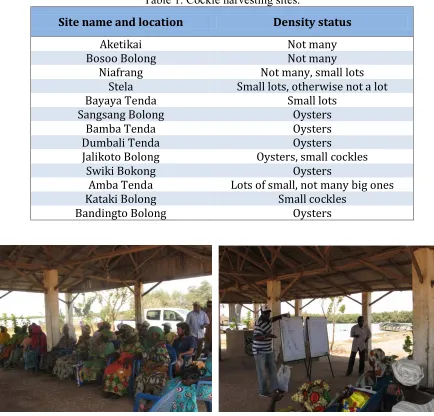
List of Figures Figure 1. TRY members/cockle harvesters ... 6
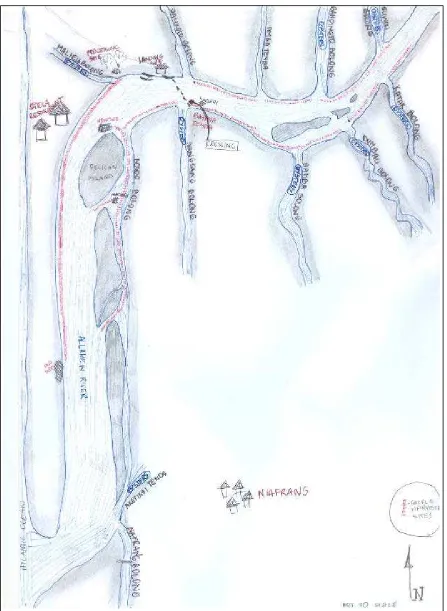
Figure 2. Community Map ... 7
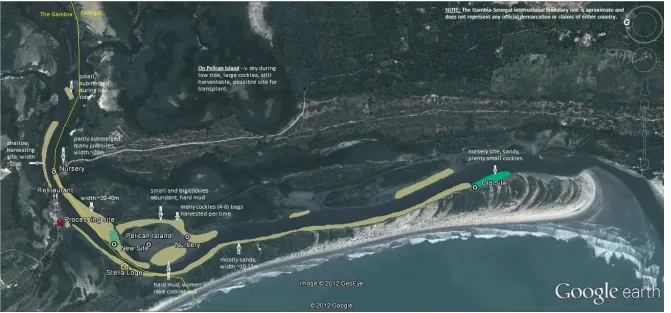
Figure 3. Map of cockle harvesting sites (with GPS). ... 8
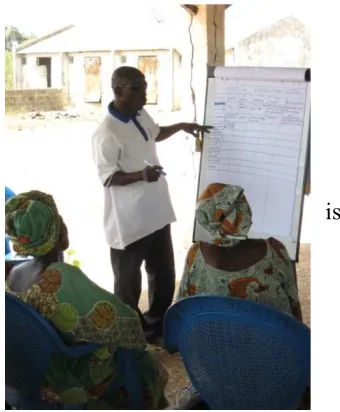
Figure 4. G. Jabis is leading the Chain of Activities session. ... 9
Figure 5. The seaweed that is brought in by high-high tide. ... 13
Figure 6. Isatou Jarju, TRY Kartong group secretary (left), and guests addressing the group... 15
List of Tables Table 1. Cockle harvesting sites. ... 6
Table 2. Assessment of resources for four periods. ... 12
Table 3. Women activities’ calendar. ... 14
Table 4. Constraints and Solutions. ... 16
Table 5. Chain of Activities. ... 18
5
Introduction
The study under USAID BaNafaa Project at Kartong, which is located the southern border of the Gambia near southern Senegal, involves the redistribution of cockles from high density areas to lower density areas. It was initiated at the end of 2011. The goal of the study is to determine if the transplanting of the cockles is feasible and can by adopted by the women to increase cockle populations in Allahein River and its tributaries. During the study the growth and mortality rates of the transplanted cockles have been monitored.
As a part of this study the PRA was conducted to collect local knowledge and the information on Kartong cockle harvesting activity. Planning Workshop Guidelines/Participatory Rural
Appraisal for Oysters Sustainable Use developed by Ibrahima Mat Dia was used for this PRA. The two-day meeting took place on May 8-9, 2012 and was attended by about 20 women - cockle harvesters and TRY members. On the first day of the meetings women were divided into two groups. Both groups answered the same questions and filled the same tables. The following day the answers were compared and discussed among the large group.
6
Cockle Collection Sites and Community Map
During the first activity TRY members identified and mapped the resources at Aketikai Bolong (Figure 1). The cockle and oyster collection sites are listed in Table 1 below and are shown in the community map (Figure 2), which was developed during the meeting. The harvesting areas were also mapped using GPS unit (Figure 3).
Women complained that the population of the cockles has decreased significantly in recent years. Table 1. Cockle harvesting sites.
Site name and location Density status
Aketikai Not many
Bosoo Bolong Not many
Niafrang Not many, small lots
Stela Small lots, otherwise not a lot
Bayaya Tenda Small lots
Sangsang Bolong Oysters
Bamba Tenda Oysters
Dumbali Tenda Oysters
Jalikoto Bolong Oysters, small cockles
Swiki Bokong Oysters
Amba Tenda Lots of small, not many big ones
Kataki Bolong Small cockles
Bandingto Bolong Oysters
7
8
9
Chain of Activities of Cockle Collection
TRY Kartong group has 40 registered TRY members who are engaged in both, oyster and cockle, harvesting. The women have been doing this work for most of their lives. They are organized and know each other well. Sometimes they argue among themselves but do not fight and hold anger against each other for long time.
Cockle harvesting and processing to obtain the end product is done in two days. On the third day the women travel to the
local markets to sell cockle meat.
Women usually follow the routine of activities that are summarized below (Table 5 and Table 6, Annex I).
Figure 4. G. Gabis is leading the Chain Of Activities session.
Day One
• Walking to the beach side. Travel usually takes about 30 minutes from Kartong village.
Everyone comes.
• Changing clothes and having breakfast.
• Traveling to harvesting site. The time varies from 5 minutes to 45 minutes, depending
on the distance to the harvesting site. The harvesting is done during low tide and sites are usually reachable on foot. Otherwise the boat and paddle are used. Life jackets, water shoes (or boots), baskets and rice bags are brought to harvesting site.
• Harvesting cockles. Women usually go together to the site, spread throughout it and
collect the cockles into their own rice bags. If there are plenty of cockles it takes about 30 minutes to fill one bag. If there are few cockles to harvest it can take up to 4-6 days to fill one rice bag.
Susu day (when there are not enough cockles): Each woman collects one basket. Usually 3-6 women at a time are harvesting. All collected cockles are given to same woman. The leftover cockles are left for the next person next day. Women use the cockles for selling and cooking.
• Returning. Women are brought back by boat one by one. The women indicated that it
10
processing site the same day. Some bags are brought, some are left for the following days. E.g. Fatou’s 3 bags are brought the same day and Binta’s 4 bags are brought the following day. If cockles are left in water for long time they die and destroy the ones around.
• Piling of cockles. The cockles are piled, covered with cloth and left for the following
day.
• Firewood collection. This activity usually takes 2-3 hours. Women use the boat, cutlers
and axe. Wood is scarce and difficult to find. Women often get wounded.
Day Two
• Cockle processing. The process is as follows: − Cook cockles with shell
− Shake cockles in the baskets to separate cockle meat − Cook cockles without shell
− Spread cockles to dry
Since the cockles are boiled in river (salty) water, no salt or seasoning is used during processing. Half rice bag of cockles fits in a pot at a time. Two to six bags can be cooked in one day. Processing can take all day if there are lots of cockles. Usually 2 to 7 women are working together, helping each other to cook and prepare cockles. They use cooking pots, firewood, and baskets. Women use less than one bundle of firewood, which cost 10 Dalasi (if purchased), to cook one pot of cockles.
• Transporting of processed cockles home. The cockles are carried home and left/spread
at a clean space overnight. The travel back to the village takes about 30 minutes on foot. To transport the cockles with the vehicle costs 10 Dalasi. The cockles then are spread on clean cloth inside the house in room with good ventilation. Cockles in such a way can be stored for only one night.
Day Three
• The following day women travel together to the markets to sell cockle meat. Women pack cockles in the baskets and take public transport to the markets. They spread between markets in Brikama, Latri Kunda and Serrakunda. The cost of traveling to Brikama is 25 Dalasi one way (50 Dalasi both ways) and to Serrakunda, including Latri Kunda, is 40 Dalasi one way (80 Dalasi both ways). Only Serrakunda market has a designated space for the women to sell cockle meat. In other markets women are often being harassed by the police. Selling can take all day, into the evening. Unsold cockles are brought back, dried and/or cooked for the families.
11
Selling, Revenue and Expenses
At the moment the set price for the cockle meat is 10 Dalasi per cup.
Two rice bags of cockles fill 1 basket, which generates 600+ Dalasi in gross revenue. Therefore, 1 bag of collected cockles is 30+ cups of prepared cockle meat, and 2 bags – about 60+ cups. Three types of baskets are used for selling the cockle meat*:
• Small – 60 cups (~600 Dalasi)
• Medium – 80 cups (~800 Dalasi)
• Big – 100 cups (~1000 Dalasi)
*fresh, measured same day after cooking
Per women none of them are saving any part of the revenue, which is usually used:
• To pay school fees
• To buy rice
• To pay for farming and gardening help
• To pay for seeds
• To pay for celebrations
• To pay for clothing for children
• To pay for health care
• To pay for sheep/goat for Tobaski
Work related expenses:
• Rent a boat – 1 basket of cockle shells (per woman per trip)
• Transporting the cockles from landing site to Kartong – 10 Dalasi
• Firewood, if purchased, (a bundle) – 10 Dalasi
• Breakfast – 5-10 Dalasi
• Transport to the markets:
− Pass (both ways):
Brikama - 50 Dalasi
Latri Kunda - 80 Dalasi
Serrakunda - 80 Dalasi
− Baggage fee:
12
Work related Sicknesses
Women indicated the following work related health concerns and injuries:
• Pneumonia
• Wounds
• Eye infections (during cooking)
• Rash from dirty water
• Ear infections
• Jellyfish stings
• Nail cuts/injuries
Assessment of Resources and People
Estimate of people doing the activity and availability of the resources for four periods is indicated in the Table 2 below.
Table 2. Assessment of resources for four periods.
Now 5 years ago 10 years
ago 30 years ago Observations
# of people ago, but cockles were dried and used for consumption only.
To harvest cockles now one needs a hoe, shiver or hand fork (less
1 day collection, 1 day cooking
Closer to landing site
13
Now 5 years ago 10 years
ago 30 years ago Observations
# of people
Less spread Spread, more abundant than cockles are less abundant and smaller in size.
Fuel wood
Difficult to find, over exploited
Easier to find than now
Plenty Plenty
Income
*Senegalese cockle harvesters process the cockles at their landing site in Casamance but sell them in Brikama market.
**each person pays 1 basket of shells for boat rental, 1 basket of shells is put aside to sell – money is put into a fund to replace the cooking pots.
Note.10-30 years ago the community closed cockle and oyster harvesting sites for 4-5 months. Upon closure community members collected flowers and grasses, and placed them at all landing sites. When people saw them, they knew the river was closed. If they ignored the ban and went into the river, they got wounds that never healed. At the end of this period Cham family harvested first and after declared the season opened.
Nowadays this tradition is not practiced. One of the expressed main reasons was that there is no more respect for elders and people do not listen to each other.
According to the women there is certain seaweed that is brought in by monthly high-high tide and wherever it lands, they believe, it kills the cockles underneath it (Figure 5). Mostly happens in dry season.
Figure 5. The seaweed that is brought
14
Calendar of the Activities
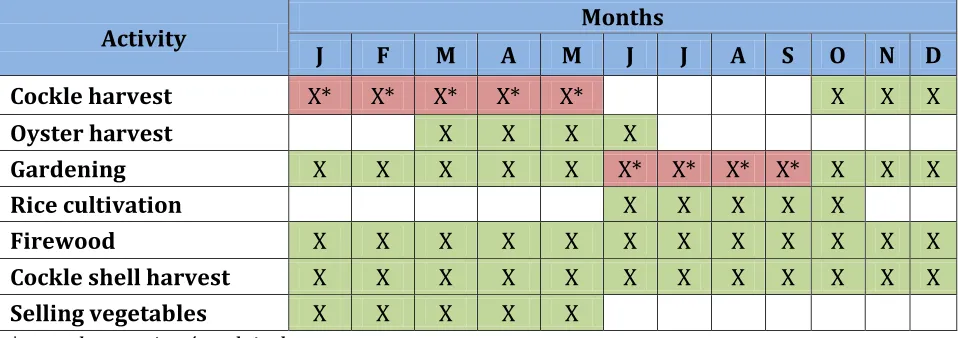
Women involved in cockle harvesting and processing are also engaged in oyster harvesting and other activities throughout the year. According to the women, the cockles start breeding at the beginning of rainy season (June) and continue up to September. Cockle harvesting starts after rice harvest. Women harvest only big ones and leave the small ones. When asked if they harvest ~17mm cockle, they said they would. The timetable of the activities in which women are involved throughout the year is listed in the Table 3 below.
Table 3. Women activities’ calendar.
Activity Months
J F M A M J J A S O N D
Cockle harvest X* X* X* X* X* X X X
Oyster harvest X X X X
Gardening X X X X X X* X* X* X* X X X
Rice cultivation X X X X X
Firewood X X X X X X X X X X X X
Cockle shell harvest X X X X X X X X X X X X
Selling vegetables X X X X X
*some harvesting/work is done.
Relationships with Other Groups
There are two other groups in the area:• Kartong Environment Group. The group never introduced themselves to TRY women
and never explained to TRY that they want to work together. TRY women think that group wants to take over beach and TRY activities. Environmental group has no problems per EJ but TRY women are not happy and think they want to take the lead. During this meeting Ebrima Jabang explained to the women that Kartong Environment group is not working against them that both of the groups have the same goal and should cooperate and work together.
15
Kabajo Alkalo and agreed with him that Kabajo people will never go to river to wait for Kartong women to fight them.
Impacts of the Activity
Indicated positive impacts by the women were mainly monetary rewards:
• Money
• Pay for school fees, rice
• Pay groups for farming
• Pay for naming ceremonies, donations
• Pay for health care
Figure 6. Isatou Jarju, TRY Kartong group secretary (left), and guests addressing the group.
Negative impacts:
• Heat (no shade)and smoke disturbs
• Shell wounds (cockles and oysters)
• Wounded by boats – accidents
• Cutting mangroves
• Killing small cockles
• Lack of awareness (shells were dumped back into water before)
• Long time away from family
• Time spent at river (little time left for garden)
16
Constraints and Solutions
Women listed their needs and possible ways to obtain them, which are listed in Table 4. Outside help was brought up to be a solution to most of the problems. However, different possibilities of how women themselves can generate income for the group were discussed as well. Women agreed that each of them can give to the group a small percentage of their revenue (e.g. from selling bags of oyster shells) to buy cooking equipment and other supplies used in the oyster processing.
Table 4. Constraints and Solutions.
Constraints Solution
Boat/paddle NGOs, government departments, other donors
Life jackets NGOs, government departments, other donors
Shelter/structure (especially during rainy season)
NGOs, government departments, other donors
Storage facilities NGOs, government departments, other donors First aid box Breakfast restaurant owner will provide Equipment/tools: gloves, boots, glasses,
ores, clean cloth, wheelbarrow
NGOs, government departments, other donors
Tarpaulin, dry racks, tables NGOs, Sandele
Pots for washing NGOs
Cooking pots NGOs
Transportation Donkey carts, community members, NGOs Marketing (no market) Discuss with Area Councils and TRY Credit facilities/microcredit
Clothes, uniforms, raincoats Sanitary facilities
Rescue
Law/ regulations/co-management TRY has rules and community decides on it Information outreach for others
Electricity at beach
17
Conclusion
18
ANNEX I – Additional Tables
Table 5. Chain of Activities.
Activity Time Estimated Resource used Trend Observation Determine low tide
Walk to site 30 min Everyone go
Change clothes, breakfast
Travel to site 5-45min Boat, basket, paddle, rice bags, life jackets, water shoes (if
available)
Usually they walk on foot when tide is low.
Harvesting cockles 4-6 days to fill one rice bag (if not many
~30min to fill one rice bag (if plenty)
When collected cockles are left in water for a long time they will die and destroy the ones around.
Returning ~1 hr One by one women
are brought back by boat.
Women do not bring all bags. E.g. 3 Binta’s bags are brought today, 4 Fatou’s bags – tomorrow.
Piling of cockles Pieces of cloth Cover the cockles with cloth and leave them for the following day.
Firewood finding ~2-3 hrs Boat, cutlers, axe Difficult to find, frequent wounding. Cockle cooking
(1.cook cockles with shell, 2. Cook cockles without shell, 3. Season cockles, 4. Spread cockles to dry
All day (if lots of dried cockles home
30 min cloth Bring dry cockles home to store overnight (only 1 night)
Good ventilation needed
Cockle meat selling at Brikama, LatriKunda, Serrakunda
All day Baskets, public transport
Unsold cockles are brought home, dried and/or used for cooking
Women go together to sell but spread to different markets, no designated market place (except in Serrakunda market), harassed by the police
Cockle shell selling Rice bags 1 bag – 60 D Is bought by
19
Table 6. Cockle, Oyster, Snail Harvesting and other Associated Activities
Activity Time estimated
Resource used Trend Observation
Cockle harvesting
4 hrs Buckets, trays for shivering,
boat/canoe, hoe, life jackets/boots
Before subsistence, now business
-less rainfall cause decline in stock
- strong current from the ocean causing cockles beds to be in deeper waters, not accessible. –high pressure on the resources
-before bigger and plentiful, now smaller and scarce. Oyster
harvesting
4hrs (depending on tides)
Buckets, knife/small axe, boat and
paddle, life jackets, gloves (improvised), socks from jeans material, boots.
Previously oyster use to grow on substrate in the sea, not from mangrove, also bigger in size. Also smoked and not boiled.
Traditional belief – oysters are boiled and boiled water spilled back which cause oysters to disappear. -overexploited
Scarce due to over exploitation
Firewood Anytime (low and high
Others are also collecting firewood (lime makers, fish smokers, fuel wood sellers, wood collected by many for household use) boots, gloves, empty bags, shivers to drop small cockles
Shells weren’t collected before but now is an
economical activity