GRAFTING OF CHLOROACETIC ACID ON EGDE CROSS-LINKED CHITOSAN TO
ENHANCE STABILITY AND ADSORPTION CAPACITY FOR Pb(II) IONS
Abu Masykur
1,*, Sri Juari Santosa
2, Dwi Siswanta
2, and Jumina
2 1Department of Chemistry, Faculty of Mathematics and Natural Sciences, Sebelas Maret University, Jl. Ir. Sutami 36A Surakarta 57126, Indonesia
2
Department of Chemistry, Faculty of Mathematics and Natural Sciences, Universitas Gadjah Mada, Sekip Utara Kotak Pos BLS 21, Yogyakarta 55281, Indonesia
Received August 2, 2013; Accepted December 11, 2013
ABSTRACT
The aims of this research is to synthesize a chitosan derivative insoluble in acidic aqueous medium and that has high adsorption capacity for Pb(II) ions by cross-linking and grafting. Cross-linking and grafting were done using ethylene glycol diglycidyl ether (EGDE) and chloroacetic acid, respectively. The modified chitosan was characterized using FTIR spectrophotometer, XRD and TG-DTA. Chitosan and Chit-EGDE-Acetate was applied as adsorbent of Pb(II) ions in a batch system. The concentration of Pb(II) in adsorption medium was quantified using AAS. The result showed that the adsorption was optimum at pH 5, contact time of 200 min for chitosan and 300 min for Chit-EGDE-Acetate. Adsorption of Pb(II) ions on both adsorbents followed pseudo second order kinetic equation. Adsorption of Pb(II) ions on chitosan followed Freundlich isotherm while that on Chit-EGDE-Acetate followed the Langmuir adsorption isotherm. The adsorption capacity of Chit-EGDE-Acetate for Pb(II) ions was 200.0 mg L-1while that for chitosan was 166.7 mg L-1. Interaction type of Pb(II) ions on adsorbent was determined by sequential desorption.
Keywords:chitosan; EGDE; chloroacetic acid; adsorption; Pb(II)
ABSTRAK
Tujuan penelitian ini adalah melakukan sintesis turunan kitosan yang tidak larut dalam medium asam dan mempunyai kemampuan adsorpsi ion Pb(II) yang tinggi dengan cara penautan-silang dan pencangkokan. Etilen glikol diglisidil eter (EGDE) digunakan sebagai reagen penaut-silang dan asam kloroasetat sebagai reagen pencangkokan. Kitosan dan hasil modifikasinya (Kit-EGDE-Asetat) dianalisis dengan spektrofotometer FTIR, XRD dan TG-DTA kemudian diaplikasikan sebagai adsorben ion Pb(II). Konsentrasi Pb(II) dalam larutan dianalisis dengan SAA. Hasil penelitian menunjukkan adsorpsi optimum terjadi pada pH 5, waktu kontak 200,0 menit untuk kitosan dan 300 menit untuk Kit-EGDE-Asetat. Adsorpsi ion Pb(II) pada kedua adsorben mengikuti persamaan kinetika pseudo orde-dua. Adsorpsi ion Pb(II) pada kitosan mengikuti isoterm adsorpsi Freundlich sedangkan pada Kit-EGDE-Asetat mengikuti isoterm adsorpsi Langmuir. Kapasitas adsorpsi Pb(II) pada Kit-EGDE-Asetat adalah 200,0 mg L-1 sedangkan pada kitosan 166,7 mg L-1. Interaksi Pb(II) pada adsorben ditentukan dengan desorpsi sekuensial.
Kata Kunci:kitosan; EGDE; asam kloroasetat; adsorpsi; Pb(II)
INTRODUCTION
Water pollution by chemicals is a problem throughout the world. Heavy metal ions are one of the most dangerous pollutants because they are typically very toxic even in small concentrations [1-2]. Lead (Pb) is one of the heavy metal that is usually found in wastewater. It is widely used in industries of the smelting of iron and steel, battery, the metal coating, paint, color/textile, and electrical wiring. Lead is widely used also as fuel additive [2-3].
acidic solution, prone to swelling, unsatisfactory mechanical properties and small adsorption capacity for certain metal ions [3]. To overcome these problems, chitosan can be modified by cross-linking to make chitosan that is stable in acid and has good mechanical properties. Though cross-linking reduces the adsorption capacity, but it will increase the stability of the polymer [8]. Stability is very important when used in the industry [9]. The problem of decreasing adsorption capacity after cross-linking can be solved by grafting certain functional group on chitosan. The cross-linking procedure may be performed by reaction of chitosan with different reagent such as epichlorhydrin (ECH) [10-12] glutaraldehyde (GLA) [13,14] and EGDE (15-17]. As GLA and EGDE tends to cross-link chitosan bonding through the amino groups and ECH does it preferably through the hydroxyl groups, it is possible to understand the adsorption mechanism [18-20].
In this research, chitosan is cross-linked using EGDE on the hydroxyl group followed by grafting the amine group using chloroacetic acid. Cross-linking of chitosan using EGDE produced modified chitosan that was not soluble in acid and had good mechanical properties [7,16-17]. Grafting chitosan with chloroacetic increased the number of active groups thus increasing the adsorption capacity of chitosan [21-22]. Modified chitosan obtained in this research was then used as an adsorbent of Pb(II) ions. Effect of solution pH, contact time, and the initial concentration of Pb(II) have been examined. Moreover, desorption processes were studied in this research.
EXPERIMENTAL SECTION
Materials
Chitosan with the deacetylation degree in the range of 75–85% and ethylene glycol diglycidyl ether (EGDE) were purchased from Sigma Aldrich (Germany). Benzaldehyde, ethanol, sodium hydroxyde pellet, 1,4
Procedure
Modification chitosan
Cross-linked chitosan was synthesized using procedure that was reported by Oshita et al. [15]. Chitosan (4.0 g) was dispersed in 40 mL ethanol, added 16 mL benzaldehyde and stirred for overnight. The mixture was filtered and washed with ethanol to remove unreacted benzaldehyde to obtain benzaldehyde-protected chitosan (Chit-Ben). The obtained Chit-Ben was put in a round flask containing 60 mL of dioxane and then added 8 mL of 1 M NaOH and 4.296 g EGDE. Mixture was refluxed for 6 h. The mixture was washed by ethanol and distilled water until neutral pH to obtain Chit-Ben-BADGE. Benzaldehyde was released from the amine group by stirring in 200 mL of 0.5 HCl for 15 h, and this process was done twice to obtain Chit-EGDE. Chit-EGDE was washed with ethanol and water to remove any remaining benzaldehyde and EGDE. Chit-EGDE was then grafted using chloroacetic following the procedure reported by Abreou and Campana-Fihlo [23]. Chit-EGDE was suspended in 80 mL isopropanol and stirred for 20 min and then added 28 mL of 40% NaOH dropwise. Chloroacetic acid (124 mL) in isopropanol (2 M) was added dropwise in the mixture and stirred for 15 h. Mixture was neutralized using acetic acid and washed with water and ethanol and then dried in an oven to obtain Chit-EGDE-Acetate.
Characterization
Chitosan and its derivatives were analyzed by FTIR spectrophotomether using KBr pellet method on wave numbers between 400-4000 cm-1. TG-DTA was done at temperature between 30-600 °C in air atmosphere with increasing temperature rates of 10 °C/sec. XRD analysis was done with powder
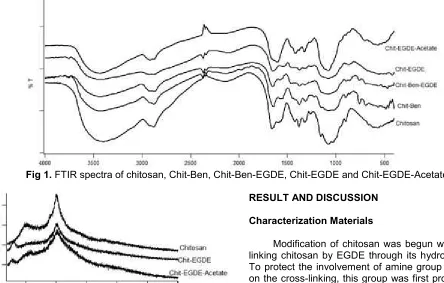
Fig 1.FTIR spectra of chitosan, Chit-Ben, Chit-Ben-EGDE, Chit-EGDE and Chit-EGDE-Acetate
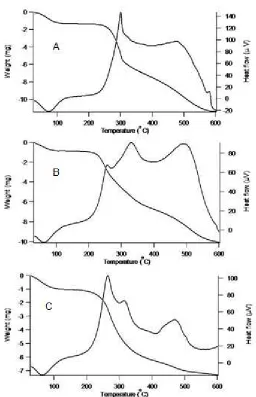
Fig 2. XRD patern of Chitosan, EGDE and Chit-EGDE-Acetate
Adsorption experiment
Adsorption properties of chitosan and Chit-EGDE-Acetate for Pb(II) ions were studied by a batch technique. A series of 25 mL of 150 ppm Pb(II) solutions with their acidities were adjusted to pH 2.0 to 6.0 by adding HNO3 or NaOH was placed in the bottles containing 15.0 mg of adsorbent and shaked for 20 h at 40 rpm. The mixture was filtered with Whatman filter paper no. 42. The concentration of remaining Pb(II) ions in solution is quantified by AAS. The content of metal ions adsorbed was calculated by the equation:
Q = [(Co– Ce)V]/(m) (1)
where Q is the amount of metal ions adsorbed in each gram of adsorbent (mmol g-1), Co and Ce are the concentration of metal ions before and after adsorption (mmol L-1) respectively, V is the solution volume (mL), and m is the weight of adsorbent (g).
Variation of the contact time between 0 to 800 min conducted to examine the adsorption kinetics. Variation of concentration was performed to determine the type of adsorption isotherms using concentration Pb(II) in the range 0 to 500 ppm. Type of interaction between Pb(II) and the adsorbent was elucidated by performing sequential desorption of adsorbed Pb(II) in water, KNO3 (0.1 M), HNO3(0.1 M) and 0.1 M Na2EDTA, respectively
RESULT AND DISCUSSION
Characterization Materials
Modification of chitosan was begun with a cross-linking chitosan by EGDE through its hydroxyl groups. To protect the involvement of amine group of chitosan on the cross-linking, this group was first protected with benzaldehyde through Sciff base reaction. Chitosan which has been protected was cross-linked using EGDE as cross-linker through the hydroxyl groups of chitosan and the benzaldehyde was then released from the amine group of chitosan by stirring the protected and cross-linked chitosan in the solution of 0.5 M HCl. The amine group free from its interaction with benzaldehyde was then grafted with chloroacetic in n-propanol solution. Modified chitosans was conducted by FTIR spectrophotometer, XRD and TG-DTA.
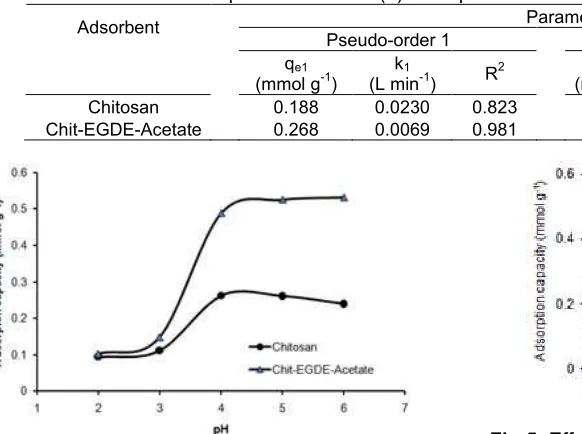
Fig 3.TG-DTA of chitosan (A), EGDE (B) and Chit-EGDE-Acetate (C)
is assigned to –COO-. Intensity peak at 1400 cm-1 increased, this is related to increasing ethylene group of carboxymethyl [21,26-27]
XRD diffractogram of chitosan, Chit-EGDE and Chit-EGDE-Acetate were shown in Fig. 2. XRD pattern
of chitosan showed typical peaks at an angle (2θ) of 10°
and 20° degrees [28]. Cross-linking processes made decreasing crystallinity of chitosan as indicated by the weakening of the peak at 10° and 20° [29]. Distance between chitosan chains was increased because of modification indicating that the hydrogen bonding
weaken [30]. The new peak at 2θ 6owas caused by the formation of a new bond between the chitosan chains. Chloroacetic grafting on the chitosan-crosslinked
increased peaks at 2θ 20o, this was due to the formation of new hydrogen bonding and formed a more organized structure.
functional groups attached to the main chain of chitosan. The third stage was the exothermic reaction that occurs at a temperature 303-600 °C with 34% weight reduction. This is related to the further degradation of the polymer chitosan into water, CO2 and other gases [29].
Table 1.Kinetic parameter for Pb(II) adsorption onto Chitosan and Chit-EGDE-Acetate
Parameters Adsorbent
Pseudo-order 1 Pseudo-order 2
qe1
Chitosan 0.188 0.0230 0.823 0.379 0.699 0.988
Chit-EGDE-Acetate 0.268 0.0069 0.981 0.538 0.089 0.999
Fig 4. Effect of pH on the adsorption of Pb(II) ion by Chitosan and Chit-EGDE-Acetate
Fig 5.Effect of contact time on the adsorption Pb(II) by chitosan and Chit-EGDE-Acetate
Effect of pH on Pb(II) Adsorption
Effect of solution pH on the adsorption ability of Pb(II) by chitosan and Chit-EGDE-Acetate was shown in Fig. 4. At lower pH (pH 2 and 3) adsorption was very small, because the partial protonation of the functional groups of chitosan and Chit-EGDE-Acetate. Pb(II) has positive charge so the electrostatic repulsion happening between metal ions and adsorbent. With the increase of pH value (pH 4-6) made functional group have negative charge and able to bind metal ions. In the higher pH, Pb(II) ions precipitated become Pb(OH)2 that can't be adsorbed and therefore the adsorption ability decrease because adsorption process takes place simultaneously with the precipitation process. Adsorption ability of Chit-EGDE-Acetate at each pH was higher than chitosan, this is may be due to the presence of carboxylate groups wich has high affinity toward Pb(II). Another advantage of the modified, was the material was insoluble in acidic solution so separation process adsorbent with the solution to be easy.
Adsorption Kinetics
Effect of contact time on the adsorption of Pb(II) ions by chitosan and Chit-EGDE-Acetate was shown in Fig. 5. Initially, adsorption increased rapidly due to many active sites of the adsorbent are still empty so bind Pb(II) ions quickly. When contact time increases, active sites on the adsorbent surface gradually filled and speed of adsorption decreases and eventually adsorption ability will be constant. At this time, active sites bound to Pb(II)
are maximum. Chitosan has active site amine and hydroxyl groups, while Chit-EGDE-Acetate besides have amine and hydroxyl groups, it is also rich with carboxylate group. Adsorption Pb(II) ions on Chit-EGDE-Acetate was higher than chitosan.
Adsorption kinetic was studied by modeling the data into pseudo first-order kinetics equation (Lagergren) and pseudo second order kinetics equation (Ho) [32]. Pseudo first-order kinetics equation is formulated as:
ln(qe-qt) = ln(qe) –k1t (2)
where qeand qtare the sorption capacity at equilibrium and at time t (mmol g-1) and k1 is a pseudo first order rate constants 1 (min-1).
Pseudo second order kinetic equations is formulated by:
Fig 6. Effect of initial concentration on adsorption of Pb(II) by chitosan and chitosan modified
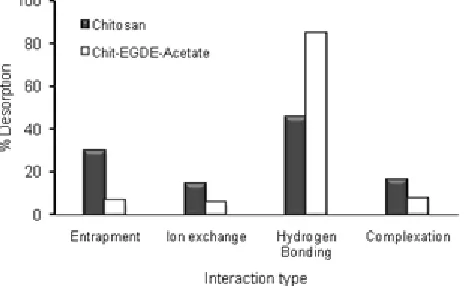
Fig 7. Interaction type of adsorption Pb(II) ions on Chitosan and Chit-EGDE-Acetate
Adsorption Isotherm
An adsorption isotherm provides a relationship between the solute concentration in the solution and the amount of metal adsorbed on the adsorbent when the two phases are at equilibrium. Fig. 6 shows adsorption Pb(II) ion on chitosan and Chit-EGDE-Acetate sorbent with various concentrations of metal ion in aqueous phase at equilibrium. Several models have been published to describe the adsorption isotherms. Freundlich and Langmuir adsorption isotherms are two types of models are most often used as a model of adsorption in solution.
where m is the number of metal ions adsorbed (mmol g-1), Kf (L mol-1) is the adsorption distribution coefficient related to Freundlich adsorption capacity, and n is the Freundlich constants indicating heterogenity of the surface.
Langmuir adsorption isotherm equation is based on the assumption that adsorption process occurs homogeneously and often applied for a single layer adsorption. Langmuir equation is formulated as:
1 1
+ C
bK e
e e
C
q b (5)
where qe is the amount of adsorbed per unit weight of adsorbent at equilibrium (mmol g-1), Ceis the adsorbate concentration in the aqueous phase at equilibrium (mmol L-1), b is the Langmuir adsorption capacity (mmol g-1), K (L mol-1) is the Langmuir adsorption equilibrium constants that can be used to determine the adsorption energy.
Table 2 showed the parameters of Freundlich and Langmuir isotherm adsorption. Adsorption Pb(II) ions on chitosan followed Freundlich adsorption isotherm with R2= 0.938, while the adsorption of Pb(II) in Chit-EGDE-Acetate agreed with the Langmuir isotherm adsorption with R2= 0.979. The adsorption capacity of Pb (II) in Chit-EGDE -Acetate was 0.789 mmol g-1 (200.0 mg g-1). It is greater than adsorption capacity of chitosan 0.778 mmol g-1 (166.7 mg g-1). Chit-EGDE-Acetate has amine group and also rich with carboxylate groups that is able to bind more Pb(II) ions.
The thermodynamic parameter for the adsorption
process such as free energy (ΔG0
) can be calculated from Langmuir equilibrium constant using equation (6) [2-3].
ΔG0
= -RT ln K (6)
where R is the general gas constant (8.314 J K-1mole -1
and for Chit-EGDE-Acetate is -22.90 kJ mol-1, thus this adsorption involve physisorption and chemisorption simultaneously.
Type Interaction of Adsorbent-Adsorbate
Type of interaction Pb(II) ions with the adsorbent was studied by sequential desorption. As a desorption agent, water, KNO3 0.1 M, HNO3 0.1 M and Na2EDTA 0.1 M were employed. Those desorption agents are responsible for adsorption of Pb(II) trough mechanism entrapment, ion exchange, hydrogen bonding and complexation, respectively. Results of desorption process are shown in Fig. 7. In the chitosan, desorption Pb(II) ions by water as much as 29%, 14% with KNO3, 45% with HNO3 and 16% with Na2EDTA. This suggests that interactions between chitosan and Pb(II) ions were vary. Greatest interaction was hydrogen bonding between Pb(II) ions and amine groups. Entrapment interaction can occur between Pb(II) ions on chain of chitosan. Complexes interaction can happen between Pb(II) ions with amine group and hydroxyl group simultaneously. This data agree with Freundlich isotherm adsorption, with the assumption that adsorption occurs on heteregeneous surface.
Desorbed Pb(II) from Chit-EGDE-Acetate with water, KNO3, HNO3 and Na2EDTA was 6.7, 5.8, 84.9 and 7.5% Pb(II), respectively. Type of interaction between the ions Pb(II) with Chit-EGDE-Acetate is dominated by hydrogen bonding between carboxylate groups and Pb(II) ions. This type of interaction is consistent with Langmuir isotherm adsorption. Interaction between Pb(II) ions and active sites on Chit-EGDE-Acetate was dominated by one type of interaction, i.e. hydrogen bonds. This data is agreed with Langmuir isotherm adsorption, with the assumption that adsorption occurs on homogenous surface as observed by Ozkahraman the adsorption Brilliant Green on to chitosan graft copolymers [34].
CONCLUSION
Modification of chitosan by cross-linking with EGDE and grafting with chloroacetic acid produced Chit-EGDE-Acetate that is insoluble in acids and have high adsorption capacity for Pb(II) ions. Modification was able to enhance the adsorption capacity for Pb(II). Adsorption process of Pb(II) ions on chitosan involved hydrogen bonding, entrapment, ion exchange and complex formation with relatively comparable percentage, while the adsorption of Pb(II) on Chit-EGDE-Acetate was dominated by hydrogen bonding between the adsorbent and adsorbate.
ACKNOWLEDGEMENT
This research was funded by the Competitive Research Grants Program of the Directorate General of Higher Education of the Republic of Indonesia, (DP2M DIKTI, No. 2881/H27/KU/2010). Thank for Prof. Dr. Shogo Shimazu from Chiba University, Japan for analysis with TG-DTA and Yosephin Dewiani Rahmayanti who helped to conduct this research.
REFERENCES
1. Ghaee, A., Shariaty-Niassar, M., Barzin, J., and Zarghan, A., 2012,Appl. Surf. Sci., 258 (19), 7732– 7743.
2. Yan, H., Dai, J., Yang, Z., Yang, H. and Cheng, R., 2011,Chem. Eng. J., 174 (2-3), 586–594.
3. Sölener, M., Tunali, S., Özcan A.S., Özcan, A., and Gedikbey, T., 2008, Desalination, 223 (1-3), 308– 322.
4. Guibal, E., 2004, Sep. Purif. Technol., 38 (1), 43– 74.
5. Copello, G.J., Varela, F., Vivot, M., and Diaz, L.E., 2008,Bioresour. Technol., 99 (14), 6538–6544. 6. Miretzky, P., and Cirelli, A.F., 2009, J. Hazard.
Mater.,167 (1-3), 10–23.
7. Liu, B., Wang, D., Xu, Y., and Huang, H., 2011,J. Mater. Sci., 46 (5), 1535–1541.
8. Chen, A., Liu, S.C., Chen, C.Y., and Chen, C.Y., 2008,J. Hazard. Mater., 154 (1-3), 184–191. 9. Dalida, P.M.L., Mariano, A.F.V., Futalan, C.M.,
Kan, C., Tsai W., and Wan, M., 2011,Desalination, 275 (1-3), 154–159.
10. Vieira, R.S., and Beppu, M.M., 2005, Adsorption, 11, 731–736.
11. Ramesh, A., Hasegawa, H., Sugimoto, W., Maki, T., and Ueda, K., 2008, Bioresour. Technol., 99, 3801–3809.
12. Zhang, Q., Deng, S., Yu, G., and Huang, J., 2011,
Bioresour. Technol., 102 (3), 2265–2271.
13. Suguna, M., Kumar, S.S., Reddy, A.S., Boddu, V.M., and Krishnaiah, A., 2011, Can. J. Chem. Eng., 89 (4), 833–843.
14. Santoso, U.T., Umaningrum, D., Irawati, U., and Nurmasari, R., 2008, Indo. J. Chem., 8 (2), 177– 183.
15. Oshita, K., Seo, K., Sabarudin, A., Oshima, M., Takayanagi, T., and Motomizu, S., 2008, Anal. Bioanal. Chem.,390, 1927–1932.
16. Katarina, R.S., Takayanagi, T., Oshita, K., Oshima, M., and Motomizu, S., 2008, Anal. Sci., 24 (12), 1537–1544.
24. Buhani, Suharso, and Sumadi, 2010, Desalination, 259 (1-3), 140–146.
25. Li, N., and Bai, R., 2005,Ind. Eng. Chem. Res., 44 (17), 6692–670.
26. Dong, Y., Xu, C., Wang, J., Wang, M., Wu, Y., and Ruan, Y., 2001,Sci. Chin. Chem., 2 (44), 216–224.
33. Erosa, M.S.D., Medina T.I.S., Mendoza, R.N., Rodriguez, M.A., and Guibal, E., 2001,
Hydrometallurgy,61 (3), 157–167.