ISSN :2301-9085
CREATIVE THINKING ABILITY OF STUDENTS IN GRADE VIII JHS TO SOLVE HIGHER ORDER THINKING PROBLEM CONSIDERED BY MATHEMATICS ABILITY
Angga Yuda Pratama
Mathematics Education, Faculty of Mathematics and Natural Sciences, State University of Surabaya e-mail: [email protected]
Mega Teguh Budiarto
Mathematics Education, Faculty of Mathematics and Natural Sciences, State University of Surabaya e-mail: [email protected]
Abstract
Mindset of curriculum 2013 is to create Indonesian creative people. creative thinking ability is needed to complete future chalenges. Creative thinking ability can be interpreted and developed through creative activities that supports, one of them is giving higher order thinking problem. Strategy in solving higher order thinking problem is influenced by student’s mathematics ability. Every student has different mathematics ability, then it is possible to have different creative thinking ability of each student. This study aims to describe the creative thinking ability of students in grade VIII JHS to solve higher order thinking problem considered by mathematics ability.
This research was a qualitative descriptive study used test and interviews. Subjects in this study consisted of a subject with high mathematics ability, a subject with medium mathematics ability, and a subject with low mathematics ability. The three subjects have the similar gender. This study was analyzed using Guilford's creative thinking indicators, namely fluency, flexibility, originality, elaboration, and redefinition.
The results showed that the creative thinking ability of the three subjects were different. Subjects with high mathematics ability can satisfied the indicators fluency, flexibility, originality, and elaboration. Subjects with medum mathematics ability can satisfied the indicators originality and elaboration. Subjects with low mathematics ability can satisfied the indicator originality. The three subjects have not been able to satisfed redefinition indicator because they have not been able to solved the problem in a different way from what is common.
Keywords: Creative Thinking, Creative Thinking Ability, Higher Order Thinking, Mathematics Ability.
BACKGROUND
Curriculum 2013 is a curriculum that demands student activeness in the learning process, because learning on the curriculum 2013 is more focused on students (student centered). Mindset of curriculum 2013 was want to created Indonesian creative people. This statement accordance with the basic, function, and objectives of national education that contained in the Law of the Republic of Indonesia Number 20, 2003 that be found in Permendikbud Number 21, 2016 about Basic Content of Basic and Middle Education on page 1.
One of the purpose of national education is to develop the potential of learners to become creative humans, because they are needed to complete future chalenges. The ability of innovation and creativity is also needed to work in the 21st century. It is found in the 21st century competence framework that shows that students must have
life and career skills, learning and innovation skills (critical and creative), the ability to use information and communicate (Partnership for 21th Century, 2009, pp. 1).
ideas that meet fluency, flexibility, originality, elaboration, and redefinition indicators.
In Permendikbud Number 21 of 2016 on Basic and Secondary Education Standard Content there are attitudes that must be demonstrated by learners both at the level of primary and secondary education. One of these attitudes is to demonstrate the skills of thinking and creative acting in the realm of skills. However, how is reality in the field? Based on observations by researchers in the field, mathematics learning in grade VIII SMPIT Baitul Izzah still emphasizes a lot of students' understanding without involving the ability to think creatively. Then, It can be concluded that creative thinking needs to be emphasized in mathematics learning.
Creative thinking is important for students, because it is necessary both in school and in social life. As for the facts about education in Indonesia that support that creative thinking is indispensable is the research data by GCI (Global Creativity Index) in 2015 from 139 countries in the world studied, Indonesia ranked 115th for global creativity index with points 0.202 below Tajikistan with points 0.205 and Cambodia with 0.213 points. This means that Indonesia's creativity level is still low.
Based on the description above, Indonesia's level of creativity that is still low should be improved even more. In learning mathematics teachers should be able to encourage the creative mindset of students. A way that teachers can use to train and improve students' creative thinking skills is by learning models in the classroom that require students to come out with their creative ideas and provide math problems that require reasoning and higher order thinking. Higher Order Thinking (HOT) implies an understanding of information and reasoning rather than merely remembering information. According to Crawford & Brown (2010) critical thinking and creative thinking is the embodiment of high order thinking (Higher Order Thinking). Because critical and creative thinking is the highest cognitive competence above other thinking ability. Therefore, in this study the authors use the HOT problems as an instrument to measure the level of creative thinking of students.
According to Krathwohl (2002), indicators for measuring higher order thinking ability include analyzing, evaluating, and creating. In solving the problem of HOT to know the ability of creative thinking needs logical reasoning ability. According to Piaget (in Rosyidi, 2013), children aged 11 above have entered formal operation stage. This allows the teacher to explore the ability to reason logically and draw conclusions from the information that has been obtained. Based on the situation in Indonesia that children aged 11 years above is junior high school students. Therefore, in this study, the subjects choosen are students of grade VIII JHS.
In determining the extent to which students' creative thinking ability, will be seen the ability of students in mathematics to solve the HOT problem that has been given. Students’ mathematics abilites are the ability of students to understand or solve math problems. In this case students' mathematics abilities are viewed based on scores obtained on the results of mathematical ability tests.
Dalam menentukan sejauh mana kemampuan berpikir kreatif siswa, akan dilihat kemampuan matematika siswa dalam menyelesaikan soal HOT yang telah diberikan. Kemampuan matematika siswa adalah kapasitas kemampuan siswa dalam memahami ataupun menyelesaikan masalah matematika. Dalam hal ini kemampuan matematika siswa dilihat berdasarkan skor yang diperoleh pada hasil pengerjaan tes kemampuan matematika. Dari hasil tes tersebut akan dikelompokkan menjadi tiga kelompok kemampuan yang berdasarkan pendapat Arikunto (2009) yaitu, kemampuan matematika tinggi, kemampuan matematika sedang, dan kemampuan matematika rendah yang masing-masing diambil satu orang siswa.
Based on the background above, researchers interested to research entitled “Creative Thinking Ability of Students in Grade VIII JHS to Solve Higher Order Thinking Problem Considered by Mathematics Ability”.
METHOD
This study is a descriptive study that used a quantitative approach. The aims of this research were described the creative thinking ability of students in grade VIII JHS to solve higher order thinking problem considered by mathematics ability. This research was conducted in one class grade eight of SMPI Baitul ‘Izzah Nganjuk. Data were collected by using test and interview. Mathematics test is used to obtain the test results data of the student's mathematics abilites. After that, the result data of student's mathematics abilites were devided by three categories. High, medium, and low student’s mathematics abilities. One student of three categories was tested by using HOT problems. Interwiew is used to obtain data of student’s respectively. HOT questioning and interviews were conducted to determine students' creative thinking ability in solving HOT problems in terms of mathematics ability.
Mathematics ability test was used to measured students' ability to solved math problems and to determined the subject of research with high, medium, and low math skills.
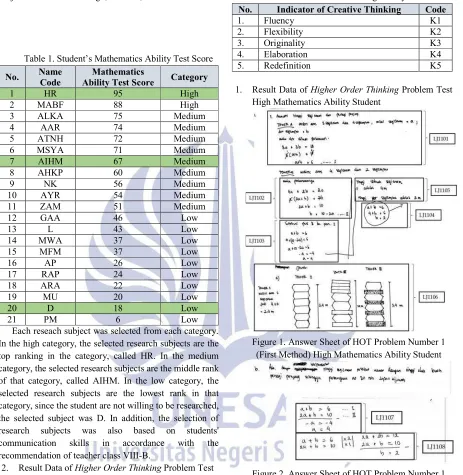
Table 1. Student’s Mathematics Ability Test Score No. Name Code Ability Test Score Mathematics Category
1 HR 95 High
2 MABF 88 High
3 ALKA 75 Medium
4 AAR 74 Medium
5 ATNH 72 Medium
6 MSYA 71 Medium
7 AIHM 67 Medium
8 AHKP 60 Medium
9 NK 56 Medium
10 AYR 54 Medium
11 ZAM 51 Medium
12 GAA 46 Low
13 L 43 Low
14 MWA 37 Low
15 MFM 37 Low
16 AP 26 Low
17 RAP 24 Low
18 ARA 22 Low
19 MU 20 Low
20 D 18 Low
21 PM 6 Low
Each reseach subject was selected from each category. In the high category, the selected research subjects are the top ranking in the category, called HR. In the medium category, the selected research subjects are the middle rank of that category, called AIHM. In the low category, the selected research subjects are the lowest rank in that category, since the student are not willing to be researched, the selected subject was D. In addition, the selection of research subjects was also based on students' communication skills in accordance with the recommendation of teacher class VIII-B.
2. Result Data of Higher Order Thinking Problem Test Subjects in this study amounted to three students, namely one student with high mathematics ability, one student with medium mathematics ability, and one low mathematics ability student.
Furthermore, the matter of HOT was given to the three selected subjects. HOT problem in this research is two description problem. This test is useful to know the ability of students' creative thinking ability in solving the HOT problem.
After the subject of the HOT question, a task-based interview is conducted. Interviews were conducted to find out more about wich creative thinking indicators are met by
the subject of research. The following will be presented Guilford creative thinking indicator code.
Table 2. Creative Thinking Ability Code No. Indicator of Creative Thinking Code
1. Fluency K1
2. Flexibility K2
3. Originality K3
4. Elaboration K4
5. Redefinition K5
1. Result Data of Higher Order Thinking Problem Test High Mathematics Ability Student
Figure 1. Answer Sheet of HOT Problem Number 1 (First Method) High Mathematics Ability Student
Figure 2. Answer Sheet of HOT Problem Number 1 (Second Method) High Mathematics Ability Student
Table 3. Data Presentation of HOT Problem Test and Interview of High Mathematics Ability Student on
Problem Number 1
Code Explanation Indicator
ST104 Subjects can show three different and correct
answers. K1
ST105 Subjects can explain the problems that exist in the
Code Explanation Indicator ST106 Subjects can name the
information in the
question. K4
ST107 ST108 ST109 ST111 ST115 ST118 ST119 ST122
Subjects can explain how
to solve problems in detail. K4
ST110 The subject solves the problem by using his own
ideas. K3
ST114 The subject can solve the problem using two
different ways K2
Based on the description in the previous explanation it can be concluded that in solving the problem HOT number 1 subjects meet the indicators of fluency, flexibility, originality, and elaboration. However, the subject has not met the redefinition indicator. The fluency indicator is fulfilled because the subject can solve the problem by showing three different and correct answers. Flexibility indicators are met because the subject can solve the problem using two different ways. The originality indicator is fulfilled because the subject solves the problem by using his own ideas. The elaboration indicator is met because the subject can name the information in the problem and can explain how to solve the problem in detail.
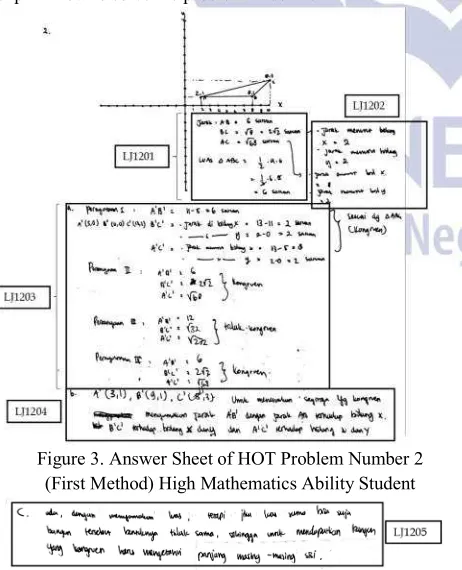
Figure 3. Answer Sheet of HOT Problem Number 2 (First Method) High Mathematics Ability Student
Figure 4. Answer Sheet of HOT Problem Number 2 (Second Method) High Mathematics Ability Student
Table 4. Data Presentation of HOT Problem Test and Interview of High Mathematics Ability Student on
Problem Number 2
Code Explanation Indicator
ST204 Subjects can show at least two different and correct
answers. K1
ST205 Subjects can explain the problems that exist in the
matter. K4
ST206
ST207 Subjects can name the information in the question. K4 ST208
ST210 ST211 ST212
Subjects can explain how to
solve problems in detail. K4
ST213 The subject solves the problem by using his own
ideas. K3
Berdasarkan uraian pada penjelasan sebelumnya dapat disimpulkan bahwa dalam menyelesaikan soal HOT nomor 2 subjek memenuhi indikator kelancaran, keaslian, dan penguraian. Namun, subjek belum memenuhi indikator keluwesan dan perumusan. Indikator kelancaran terpenuhi karena subjek dapat menyelesaikan soal dengan menunjukkan minimal dua jawaban yang berbeda dan benar. Indikator keaslian terpenuhi karena subjek menyelesaikan soal dengan menggunakan idenya sendiri. Indikator penguraian terpenuhi karena subjek mampu menyebutkan informasi yang ada pada soal dan dapat menjelaskan cara menyelesaikan soal dengan rinci.
Based on the description in the previous explanation can be concluded that in solving the problem of HOT number 2 subjects meet the indicators of fluency, originality, and elaboration. However, the subject has not met the flexibility and redefinition indicators. The indicator of fluency is fulfilled because the subject can solve the problem by showing at least two different and correct answers. The originality indicator is fulfilled because the subject solves the problem by using his own ideas. Elaboration indicator fulfilled because the subject is able to mention the information in the problem and can explain how to solve the problem in detail.
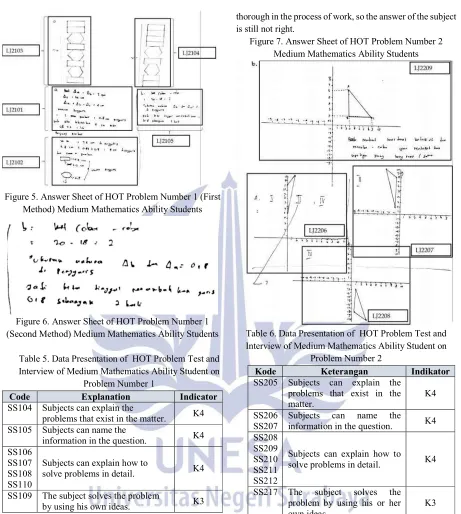
Figure 5. Answer Sheet of HOT Problem Number 1 (First Method) Medium Mathematics Ability Students
Figure 6. Answer Sheet of HOT Problem Number 1 (Second Method) Medium Mathematics Ability Students
Table 5. Data Presentation of HOT Problem Test and Interview of Medium Mathematics Ability Student on
Problem Number 1
Code Explanation Indicator
SS104 Subjects can explain the
problems that exist in the matter. K4 SS105 Subjects can name the
information in the question. K4 SS106
SS107 SS108 SS110
Subjects can explain how to
solve problems in detail. K4
SS109 The subject solves the problem
by using his own ideas. K3
Based on the description in the previous explanation it can be concluded that in solving the problem HOT number 1 subjects meet the indicators of originality and elaboration. However, the subject has not met the indicators of fluency, flexibility, and redefinition. The originality indicator is fulfilled because the subject solves the problem by using his own ideas. The elaboration indicator is met because the subject can name the information in the problem and can explain how to solve the problem in detail. Subjects have not met the indicator of fluency, although the subject can show two different answers, but the subject is still less
thorough in the process of work, so the answer of the subject is still not right.
Figure 7. Answer Sheet of HOT Problem Number 2 Medium Mathematics Ability Students
Table 6. Data Presentation of HOT Problem Test and Interview of Medium Mathematics Ability Student on
Problem Number 2
Kode Keterangan Indikator
SS205 Subjects can explain the problems that exist in the
matter. K4
SS206
SS207 Subjects can name the information in the question. K4 SS208
SS209 SS210 SS211 SS212
Subjects can explain how to
solve problems in detail. K4
SS217 The subject solves the problem by using his or her
own ideas. K3
Based on the description in the previous explanation can be concluded that in solving the problem HOT number 2 subject meets the originality and elaboration indicators. However, the subject has not met the indicators of fluency, flexibility, and redefinition. The originality indicator is fulfilled because the subject solves the problem by using his own ideas. The elaboration indicator is met because the subject can name the information in the problem and can explain how to solve the problem in detail.
thinking indicators, namely indicators of originality and elaboration.
3. Result Data of Higher Order Thinking Problem Test Low Mathematics Ability Student
Figure 8. Answer Sheet of HOT Problem Number 1 (First Method) Low Mathematics Ability Students
Figure 9. Answer Sheet of HOT Problem Number 1 (Second Method) Low Mathematics Ability Students
Table 7. Data Presentation of HOT Problem Test and Interview of Low Mathematics Ability Student on
Problem Number 1
Kode Keterangan Indikator
SR114 The subject solves the problem
by using his ideas. K3
Based on the description in the previous explanation can be concluded that in solving the problem HOT number 1 subject meets the indicator of originality. However, the subject has not met the indicators of fluency, flexibility, elaboration, and redefinition. The originality indicator is fulfilled because the subject solves the problem by using his own ideas. The subject has not been able to meet the elaboration indicator because the subject can not explain the results of the work in detail. The subject just explains that the results of his work obtained from the craftsmanship arbitrary.
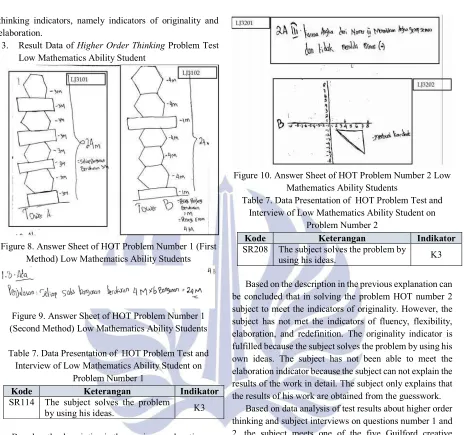
Figure 10. Answer Sheet of HOT Problem Number 2 Low Mathematics Ability Students
Table 7. Data Presentation of HOT Problem Test and Interview of Low Mathematics Ability Student on
Problem Number 2
Kode Keterangan Indikator
SR208 The subject solves the problem by
using his ideas. K3
Based on the description in the previous explanation can be concluded that in solving the problem HOT number 2 subject to meet the indicators of originality. However, the subject has not met the indicators of fluency, flexibility, elaboration, and redefinition. The originality indicator is fulfilled because the subject solves the problem by using his own ideas. The subject has not been able to meet the elaboration indicator because the subject can not explain the results of the work in detail. The subject only explains that the results of his work are obtained from the guesswork.
Based on data analysis of test results about higher order thinking and subject interviews on questions number 1 and 2, the subject meets one of the five Guilford creative thinking indicators, which is indicator of originality.
CONCLUSION
Based on the result of this research, we have conclusions as follows.
indicators because the subject has not been able to solve the problem in a way different from what is common.
2. Students with medium mathematics ability, based on all the answers given by the subject, it can be concluded that the subject meets the indicators of creative thinking ability of originality and elaboration, but has not met the indicators of fluency, flexibility, and redefinition. The originality of the subject is indicated by solving problems that use his own ideas. The elaboration of the subject is indicated by being able to explain the information in the question and can explain the problem-solving steps in detail. Subjects do not meet the indicators of fluency because on the matter number one, the subject can show two answers but still not right. Then at number two, the subject still can not find the other ’ ’ ’ triangular coordinates. The subject also has not met the flexibility indicator since the subject can only show one way of completion only. While the subject can not meet the redefinition indicators because the subject has not been able to solve the problem in a way different from what is common. 3. Students with low mathematics ability, based on all
the answers given by the subject, it can be concluded that the subject meets the indicator of creative thinking ability of originality, but has not met the indicators of fluency, flexibility, elaboration, and redefinition. The originality of the subject is indicated by solving problems that use his own ideas. Subjects have not met the indicators of fluency because on the matter number one, the subject can show two answers but the answers given the subject is still not right. Then at number two, the subject still can not find the other ′ ′ ’ triangular coordinates. The subject also has not met the flexibility indicator since the subject can only show one way of completion only. The subject has not met the elaboration indicator because the subject has not been able to explain the problem-solving steps in detail, the subject only states that the answer obtained from the alleged results only. While the subject can not meet the redefinition indicators because the subject has not been able to solve the problem in a way different from what is common.
SUGGESTION
Based on the result of this research, we have suggestion as follows.
1. For teachers should be more often to provide practice questions that require the ability of analyze, evaluate, and create, and the problem has many ways of completion and answers, especially in students
with medium and low mathematics ability so as to train students' creative thinking ability.
2. For other researchers if you want to do similar research related to the creative thinking ability of students to research on subjects with other grade or using other reviews, such as gender, type of intelligence, type of learning, or other reviews.
REFERENCES
Arikunto, S. 2009. Dasar-dasar Evaluasi Pendidikan. Jakarta: Bumi Aksara
Crawford, C. M. & Brown, E., Focusing Upon Higher Order Thinking Skills: Webquest and The Learned-Centered Mathematical Learning Environmen, dalam Journal Interactive Online Learning. Vol. 3(2), 1541-4914.2010. hal. 4
Krathwohl, D. R. 2002. A Revision of Bloom’s Taxonomy:
An Overview.
(Online).(www.unco.edu/cetl/sir/stating_outcome/
documents/Krathwohl.pdf, diakses pada 14
November 2016).
Peraturan Menteri Pendidikan dan Kebudayaan Republik Indonesia Nomor 21 Tahun 2016 tentang Standar Isi Pendidikan Dasar dan Menengah.
Partnership for 21st Century. 2009. Framework for 21st
Century Learning. (Online). (http://www.p21.org/about-us/p21-framework, diakses pada 14 November 2016).
Rosyidi, A. H., dkk. 2013. Menuju Praktik Pembelajaran Matematika di SMP yang HOT. Surabaya: Unesa University Press.