
EDITORIAL
EDITORIAL
The publication of the Eurasia Journal of Mathematics, Science and Technology Education (EJMSTE) is a significant event in the mathematics, science and technology field. This journal was born as a result of international collaboration among academic scholars throughout the globe. The Moment Publication is the sponsor of this journal. The editorial board consists of mathematics, science and technology educators from thirty one countries. We welcome submissions to bring international quality of EJMSTE.
The strength of any good journal arises from the academic perspectives represented by the members of its editorial board.
With the launching of our new publication, we invite readers to submit their manuscripts to the EJMSTE, and welcome all articles contributing to the improvement of mathematics, science and technology education.
We would like to thank to the editorial board of EJMSTE for their voluntary support. Please do not hesitate to send us your valuable comments and suggestions. The journal will publish refereed papers, book reviews and information about conferences, and provide a platform for exchanging views related to educational research.
We are very sad to learn the shocking death of Dr. Jim Kaput, the distinguished member of editorial board and wish our condolences to academic world for this enormous loss.
Dr.Hüseyin BAĞ
Editor in Chief
Volume 1 , Number 1 , November 2 0 0 5
Welcome to the Eurasia Journal of Mathematics, Science and Technology Education. We are happy to launch the first issue with the contribution of individuals from all around the world both as authors and reviewers. Both research and position papers, not excluding other forms of scholarly communication, are accepted for review. The long term mission of the EJMSTE is to continue to offer quality knowledge and research base to the education community and increased global availability of the articles published each issue. The editors and review board hope that you find the published articles academically and professionally valuable.
Online - While there is also a hard copy version of the journal, it is our intention to make the journal available over the internet. All submissions, reviewing, editing, and publishing are done via e-mail and the Web, allowing for both quality of the end product and increased speed and availability to all readers.
Publication Frequency - EJMSTE is
published three times a year in February, July and November for every year. individual use, no part of this publication may be reproduced or stored in any form or by any means without prior written permission from publisher.
ISSN 1305 - 8223 www.ejmste.com
This journal is abstracted or indexed in Index Copernicus and Higher Education Research Data Collection (HERDC).
CONTENTS
CONTENTS
Editorial i
1.Teaching Science and Mathematics for Conceptual Understanding? A Rising Issue
Pardhan, H., Mohammad, R. F. 1
2.Do high-school students' perceptions of science change when addressed directly by researchers?
Simonneaux, L., Albe, V., Ducamp, C.,
Simonneaux, J. 21
3.Working with Functions Without Understanding: An Assessment of the
Perceptions of Basotho College
Mathematics Specialists on the Idea of' Function
Polaki, M.V. 41
4.A New Graphical Logo Design: Logoturk
Karakirik, E. Durmus, S. 61
TEACHING SCIENCE AND MATHEMATICS FOR CONCEPTUAL UNDERSTANDING? A RISING ISSUE
Harcharan Pardhan Razia Fakir Mohammad
ABSTRACT. Working with in service science/mathematics teachers at the Aga Khan University Institute of
Educational Development, Karachi, Pakistan we find that even though the teachers take aboard innovative ideas, they find it challenging to implement the newly acquired ideas primarily because of their inadequate subject matter knowledge. In this paper we will describe and discuss select case studies from Pakistan to provide evidence regarding this issue and support it with literature from other parts of the world. We will finally share some implications and possible alternatives to address this issue.
KEYWORDS.Conceptual understanding; Pedagogical content knowledge; Pedagogical knowledge; Rising issues;
Subject matter (content) knowledge; Teaching science and mathematics.
INTRODUCTION
In recent years there have been signs of conceptual shift in the practice of teachers from traditional to innovative methods. Teacher educators at the Institute for Educational Development, Aga Khan University (AKU-IED), Karachi, Pakistan view a teacher as a facilitator in supporting and developing students' thinking capabilities in general and science and math in particular. This is to enable the students to become responsible and informed individuals within the society and also to assume responsibility for their own learning. Therefore, the notion of teacher's new role in the context of teacher education at AKU-IED has been interpreted from the constructivist philosophy that suggests characteristics for teaching in accordance to a child's psychological and social perspectives of learning in the classroom. The teacher educators thus view a teacher as a facilitator in supporting and developing students' thinking. In theory, then, a teacher is expected to set tasks for the students and analyse outcomes of the tasks in order to understand how students construct meanings, listen to the other students, understand their level of thinking, and help them to achieve a common agreement of a concept (Cobb, et al., 1991; Jaworski, 1994).
Eurasia Journal of Mathematics, Science and Technology Education
Volume 1, Number 1, November 2005www.ejmste.com
The teachers' engagement and experiences in the teacher educational programmes at AKU-IED generally lead to a change in their teaching perspectives on what mathematics and science teaching could or should be and what could be the limitations of the traditional mode of teaching for students' learning of the school subjects e.g. mathematics, science, and social studies. Findings from our experiences of working with teachers indicate that even though innovative teaching has been considered by the teachers to be desirable, the teachers in most cases can not successfully implement innovative methods for reasons that stem primarily from their own content (subject matter) knowledge.
Our findings concur with studies from other parts of the world that teachers need a good, basic conceptual understanding of content, in addition to pedagogy in order to shift their practice towards the promotion of student thinking. The discussion in this paper will focus on mathematics / science teachers' knowledge base needs particularly subject matter in planning and implementing innovations for conceptual understanding in their classrooms. The data (anecdotes/examples) that will be used in this paper for discussion and arguments is from our doctoral study field work and reflections of our own practice of working with teachers.
THEORETICAL FRAMEWORK
Shulman (1986; 1987) and Borko and Putnam (1995) suggest that a good knowledge of the subject is needed by teachers when designing curricula, lesson plans, and related instructional strategies which address the learning needs of students. In this regard Shulman has introduced a knowledge-base of teachers that;
Identifies the distinctive bodies of knowledge for teaching. It represents the blending of content and pedagogy into an understanding of how particular topics,
problems, or issues are organised, represented, and adapted to the diverse interests and abilities of learners, and presented for instruction (1986 P. 8).
This special knowledge of the teacher Shulman (1986) called pedagogical content knowledge (PCK). According to Shulman, (1986) pedagogical content knowledge includes an awareness of ways of conceptualising subject matter for teaching. The author has elaborated (PCK) as follows:
Understanding the central topics in each subject as it is generally taught to children of a particular grade level and being able to ask the following kinds of questions about each topic: what are the core concepts, skills and attitudes which this topic
has the potential of conveying to students? What are the aspects of this topic that are most difficult to understand for students? What is the greatest intrinsic interest? What analogies, metaphors, examples, similes, demonstrations, simulations,
manipulations, or the like, are most effective in communicating the appropriate
understandings or attitudes of this topic to students of particular backgrounds and prerequisites? What students' preconceptions are likely to get in the way of learning? (1986 P. 9)
This means that teachers need to ask questions to increase their own special form of professional understanding of teaching, for example, what are the aspects of this topic that are most difficult for students to understand? What students' preconceptions are likely to get in the way of learning? Swafford (1995) further goes on to suggest that teachers do not need to know only general aspects of classroom teaching and techniques of teaching but also need to know methods that are specific to the subjects. Thus, it is important that pedagogical knowledge of mathematics / science develops alongside knowledge of mathematical / science representations and of students' thinking. Pedagogical knowledge, thus, must include knowledge of mathematical / science representations. This in turn means for teachers to have a deeper perspective of the subject both from content as well as pedagogy point of view.
Since the introduction of the concept of pedagogical content knowledge by Shulman in 1986 other components like students' misconceptions Grossman, (1989), and learning environment (Cochran and Jones, 1998) have been added for students' meaningful learning. Ball (1990) emphasized that teachers themselves also need a deeper understanding of mathematical processes in order to understand students' thinking. Magnusson, Krajcik and Borko (1999) further presented nine orientations as part of pedagogical content knowledge for teaching of science (could be equally applicable to mathematics) process, academic rigor, didactics, conceptual change, activity-driven, discovery, inquiry, project-based science, and guided inquiry. In light of the nine orientations pedagogical content knowledge can be considered as, "an important construct for describing the role of teachers' knowledge in facilitating the students' knowledge development, particularly for complex subject matter such as mathematics/science" (Magnusson, Krajcik and Borko, 1999 : 4-5). Pedagogical content knowledge, then, is the knowledge base of a teacher that enables him/her to transform the subject matter knowledge and curricular activities into classroom.
appropriately integrated in sound manner and made part of the curriculum, can influence the teaching and learning of mathematics. This model implies that the teacher's conceptual understanding and cognition of the subject matter knowledge is crucial to student learning. This can be said of science teaching as well. Smith and Neale (1989), conducted a summer program for 10 primary science teachers to understand, facilitate, and document conceptual change in teachers content knowledge and the teaching and learning primary science. They reported that as the participating teachers changed their understanding of the subject content and how to teach it using effective strategies, they also taught differently. From Shulman's (1987) perspective of 'pedagogical content knowledge' teachers' ability to teach was enhanced. The authors further go on to write:
Teachers' knowledge of the content (emphasis is ours), their translation of that content into appropriate and flexible usage in lessons, their knowledge of children's
likely preconceptions to be encountered in lessons and the effective teaching strategies for addressing them, and especially their beliefs about the nature of science teaching, all proved to be critical components in the changes they were able
to make in their teaching. (Smith and Neale, 1989, p. 17)
The authors' work informs us that teachers' own content (subject matter) knowledge understanding is one of the critical components of teachers' knowledge base to teach effectively through innovative approaches. Nilssen (1995) and Borko et al. (1992) have cited examples from knowledge domain of mathematics about student teachers that after several attempts in trying to rectify a situation while implementing innovative ideas lost control and reverted to convential methods. This was also observed by Pardhan (2002) who worked with a group of in-service teachers at AKU-IED, Karachi, Pakistan. Furthermore, even some of the course participants of the institute who had become reflective practitioners shared their experiences to this effect. An anecdotal evidence being:
At times during a lesson when confronted with a question I would get stuck and would not know how to answer the question or give a satisfactory explanation. Once, while students were discussing the particle being the smallest 'unit' of matter, one student argued"… but I have read that particle (atom) consists of electrons, protons and neutrons. So how can a particle itself be the smallest part of the matter?" At that moment I felt myself blank and did not know how to respond to the student. I knew a lot about the individual concepts but I could not link them to help my students to understand what 'unit' meant. As a student I learnt science mainly through traditional approach: this is why I think I am facing problems. My lack of content knowledge is also affecting my pedagogical skills. (Journal entry of student teacher, 1999. Emphasis ours. Used with permission.)
Fennema and Franke (1992) had also revealed that mathematics teachers need a good basic conceptual understanding of the subject matter (mathematics) and the pedagogical
knowledge (mathematics knowledge) to shift their practice from "telling" to promoting student thinking. As the anecdote above suggests the authors' findings hold true even for science teachers. A number of other research findings also support the argument that content (subject matter) knowledge of the teachers is a critical component of teachers' special knowledge (PCK) from teaching perspective. The examples of studies that follow are from mathematics field, however, these can be applicable to the science field as well. The anecdote above from a science lesson support this.
Research findings of Lampert, (1988), Clarke, (1995) and Spence, (1996) revealed an unfamiliarity of new teachers in the secondary schools with the content of mathematics and the processes of concept building that affected students' mathematics education. The authors thus suggest that an important development should include improvement in the quality of these teachers' knowledge of school-level mathematics. Clarke (1995) reported that the teachers had personally, as students, studied a mathematical topic in isolation from other topics, which was not enough for them to promote conceptual understanding amongst students. Lampert (1988) questioned limited mathematical knowledge of a teacher in relation to achieving his or her new aim, of promoting students' mathematical thinking, in a classroom, "how can a teacher who lacks a 'network of big ideas' and the relationship among those ideas and between ideas, facts and procedures develop these things?" (p. 163 - 164)
Eisenhart et al (1993), in their description of a teacher's attempt to teach the division of fractions revealed a gap in the primary teachers' knowledge of the underlying structure of mathematics in terms of relationships and interconnections of ideas and their meaning to mathematical procedures. In their research, the teacher, himself, was unable to explain what it meant to divide, or to use different forms of representations, or to link the division of fractions with whole numbers. The teacher's incomplete knowledge-base hindered his decision to implement innovative teaching methods in the classroom. The authors research besides the teacher's lack of conceptual understanding of fractions, also identified a number of other factors (such as pressure of syllabus, workload) that inhibited him from teaching topics conceptually.
teaching topics like multidigit number multiplication their approach was still predominately based on memory of procedures rather than on understandings. Spence (1996) examined issues surrounding the mathematical knowledge of two teachers in their beginning attempts to teach mathematics. The author noted that the teachers' limited understanding of mathematics as a subject blocked their understanding of the students' learning processes and did not allow the teachers to analyse their own teaching practice. The author also found that one of the teachers was not even able to recognise her own lack of understanding of mathematics. Hutchinson (1996) reports that beginning teachers' problems with mathematical knowledge can frustrate them to a point that they find it safer to revert to traditional approach:
Even though Kate [the teacher] had a strong background in mathematics, she became frustrated when activities challenged that knowledge and appeared to revert to traditional method as the "one right way". Her previous learning in the
domain did not appear to be conceptually developed to allow for new challenges to that knowledge. (p. 182).
The above discussions, literature review and research findings suggest that the subject matter knowledge of science/mathematics teachers is crucial for shaping or reshaping their practice. This has also been our experience of working with mathematics and science teachers in Pakistan. In this paper we will share our similar experiences, learnings and their discussion and implications.
FINDINGS
The subject matter (science/mathematics) understanding of the teachers who graduate from the in service teacher development programme from AKU-IED, gets challenged as they teach mathematics or science with reasoning. Teachers' limited conceptual understanding of the content and heavy reliance on the prescribed textbook methods and particular answers becomes evident when they express their respective subject matter point of views while planning, teaching and analysing their lessons beyond the textbook. Teachers' limited understanding of the subject matter hinders their attempts to incorporate their new learnings in the planning of lessons making connections of their innovative/new ideas with the textbook methods and designing alternative assessment. Teachers perceive all this as a barrier to their own mathematical/science assumptions and their students' examination. In this paper we will use specific examples or anecdotes from our field based experiences of working with the participant teachers of our doctoral studies (Pardhan, 2002; Mohammad, 2002) to discuss further the above stated problems.
Teachers' Planning Processes
The examples from our wider set of experiences and their analysis revealed that problems with subject knowledge presented a barrier to the teachers in unpacking the conceptual underpinning of the subject specific procedures when they made effort to plan lessons according to their new vision of teaching. Most of the teachers at times were unable to review, clarify and rationalize the subject matter related assumptions behind the textbook exercises or while trying to teach beyond the textbook. For example in a pre-observation conference with a teacher educator, a teacher (Naeem) expressed his desire to plan a lesson on percentages for students' conceptual understanding. He shared that prior to AKU-IED experiences he had mostly used the textbook method with his students (he became silent and looked at the teacher educator). In order to pursue the talk the teacher educator asked Naeem to share his understanding of the topic. In response Naeem just restated the textbook given method 'multiplying a fraction by hundred converts it to percentage. He could not provide further explanation although the teacher educator tried to probe and prompt him. To initial Naeems' thinking beyond textbook the teacher educator suggested some real life examples on percentages e.g. exam grades, discounts, and tax and also discussed what they meant. This helped Naeem to recall the textbook definition of percentages as a part out of hundred. Discussion enabled Naeem to recollect his AKU-IED experiences, basically, what resources the programme facilitators used and he shared this with the teacher educator. He then thought of using some of those ideas e.g. making some posters of daily life commercials such as '20% extra toothpaste', '50% of the cost'. The rationale to use these posters he stated would be to initiate students discussion on percentages to enable them to explore the meaning themselves. However, in the middle of the discussion Naeem started raising concerns about accessibility of resources and arrangement for displaying the posters by saying "there is no material available in school and no arrangement of hanging charts in the classroom" 1(field notes January 6, 2000). In response to this the teacher educator tried to encourage Naeem to think of other alternatives which could work in his situation e.g. using chalkboard and oral discussion, Naeem's position in this regard is reflected in his words:
The writing could take more than 10 minutes, and in a 30 minute period, I do not think it is possible to teach a complete lesson. I do not think that verbal examples could motivate children to participate in the discussion. Children need stimulus; this is the beginning [to apply different methods] 2(6 Jan, 2000).
As the dialogue above reveals, for Naeem to plan a lesson beyond the textbook for percentages proved to be a demanding task. The teacher educator felt, perhaps, an equivalent fraction approach would enable Naeem to come up with a plan. The teacher educator thus suggested to Naeem to review equivalent fractions and building on it to help students to develop the meaning of percentages; Naeem liked the idea and wanted to give it a try. However, it did not take him long to turn back to the teacher educator saying "how can I teach fractions and their relation to percentage, at the same time complete the textbook exercise in limited time in one 7 Eurasia Journal of Mathematics, Science and Technology Education / Vol.1 No.1, November 2005
1Similar concerns have been raised by a number of science graduates as well. Some examples are "materials are not available…no space to store materials, models and charts…" (personal notes)
lesson (field notes Jan 6, 2000)3. Naeem found it difficult to plan a lesson beyond the textbook approach and explanations.
The example given above reveals the teacher's limited mathematical knowledge hindered him to explore alternate method of teaching. The teacher wanted to plan a lesson on percentages, but he was unable to discuss the meaning of percentages, their relation to fractions, the assumptions underlying the relevant formula, and the application of the formula in other new situations. Teachers' subject matter knowledge was solely restricted to the textbook and it was also found to influence their handling of students' responses or answers.
Handling students' responses
During the study it was found that limited subject matter knowledge was problematic for teachers to handle student responses or answers effectively. Teachers were unable to analyse content related assumptions behind students' responses or to use student answers to further enhance students' content understanding. The teachers struggled to attempt to reconcile a new method of teaching with their limited subject matter knowledge. This lead to the teachers recognizing their inadequate conceptual understanding. The effects of this on teachers' behaviours were; rephrasing the students verbal expressions; ignoring students' answers; and imposing own or textbook knowledge on students without understanding. The above conclusions are based on a number of lessons observed of the teachers. A selected sample anecdote is shared as evidence.
In a lesson on 'equations' a teacher [Sahib] ignored students responses in which either the student explanations were different from the one in the textbook or [Sahib] was unsure of the correctness of the response. Sahib had some of the students to come up to the chalkboard and solve equations. He encouraged them to provide reasons and explanations for their method. He started them off by using simple (e.g. x + 7 = 9) equations and then he moved the students to more difficult ones (2x 3 = 1). This is when [Sahib] faced problems as the teacher [Sahib] -student talk in the box below reveals.
8 Pardhan & Mohammad
3 Syllabus is a problem…some discussions become long and we rush to complete the syllabus. (Immediately after lesson self-reflection Saira September 27, 2000)
The teacher invited a student to the chalkboard to solve the equation 2x - 3 = 1
1 T What will we 'cancel' first? 2 S1 Three
3 T Good
4 T What is the sign with three?
5 S1 Minus
6 T What does minus three mean?
From this point onwards the students remained silent, looking at each other…. looking confused… teacher went on talking…. 'telling' textbook explanations and imposing his own ideas onto the students without a single attempt to find out why students (S1, S2) responses were different from his expected (textbook) ones.
9 Eurasia Journal of Mathematics, Science and Technology Education / Vol.1 No.1, November 2005
7 T Think again
The student (S1) did not respond….moving away from S1 and addressing the other students the teacher asked,
8 T Who will tell the meaning of minus three?
9 T Good. Yes, who will tell hmm…?
10 T We add three to one side and do the same operation on the other side…(no response from students…they looked confused).
The teacher moved to the student (S1) again,
11 T What next?
The student (S1) wrote, x = 2
So far student (S1) has responded well to the teacher's mostly recall type questions; however teacher [Sahib] hardly acknowledges. It appears Sahib wants explanations along the lines of the textbook.
12 T Why is x equal to 2? Sahib is attempting to probe student's (S1) understanding
The student without speaking wrote on the chalkboard x + 2 = 4
13 T (Sahib without responding to student's (S1) response turns to other students)
Anyone in the class, tell me the meaning of 2x?
14 S2 (Another student who raised his hand ) x plus x
The teacher ignores S2's response and invites another student to answer the question
15 S3 x multiplied by 2
16 T Good (as if teacher expected only correct textbook knowledge and hence acknowledges it but incorrect ones he ignored), if there is no sign between x and a number it means that there is a sign of multiplication.
The teacher wrote on the chalkboard in one of the corner, x * x = x2 and x + x = 2x
17 T In multiplication powers are added and in addition coefficients are added.
The teacher's inappropriate explanations, inadequate acknowledgement of students' responses and practically no attempt to seek for student explanations for their correct or incorrect responses had a negative impact on the students. Students became silent listeners and confused. As lines 16 and 17 reveal teacher himself had limited content knowledge that too was textbook knowledge. It was in the post-conference that the teacher realized that his knowledge was insufficient to understand the students' mathematical thinking processes and to analyze students' mathematical assumptions. The teacher was unable to extend students' ideas beyond textbook, to help them to formalize their intuitive thinking and challenge their incorrect notions to promote shared meaning of mathematical procedures. More importantly to make connections and meanings of own and new ideas with the textbook content. Not only Sahib but several other teachers we have worked with have revealed this concern.
Connection between new ideas and textbook content
The lack of teachers' mathematical understanding hindered them to make connections of new ideas with mathematical assumptions in the textbook procedures. These problems with mathematical knowledge acted as a barrier to teachers in linking their students' prior / former learning to the new concepts in the context of a lesson. The teachers often attempted to organise practical activities to teach for conceptual understanding but they could rarely incorporate any adequate explanations with reasoning within that chosen practical demonstration. Next we offer a case from our classroom observation that exemplifies this issue of teachers' inappropriate explanations.
The teacher [Sahib] introduced 'circles' through a practical demonstration. Sahib asked one student (Kamran: students sat on the floor, there were no student benches or chairs in the class) to stand up and stretch his arm, then the other students were asked to stand at a distance of Kamran's arm length; in this way he had the students to form a circle themselves with one student (Kamran) at the centre. Next he drew a circle on the chalkboard. He then asked students to imagine and identify their positions in the diagram on the chalkboard. From this moment onwards the teacher-students talk that followed is given below in the box.
10 Pardhan & Mohammad
4 Kamran was the student who was standing at the centre in the practical demonstration; therefore, the teacher asked
them to imagine the position of Kamran. 1 T Now look at the board.
2 T What is the distance between Kamran and each student?
3 S (A voice from the class ) about an arm.
4 T Where is Kamran4? (Kamran Kahaan hai ?)
5 S In the middle (Beech main).
The above example shows that the teacher did not use appropriate mathematical language in introducing the circle; for example, he seemed to be confused between the geometrical concepts of 'line segment' and the physical quantity 'distance' (e.g., line 10). He did not provide clear definitions of the terms that he used namely radius, radial segment, chord, and diameter. Neither did he explain clearly that he used the radius interchangeably to mean 'half length' of diameter as well as a 'line joining the centre to any point on the circumference'. The teacher found it difficult to integrate practical activities with the appropriate and mathematically accepted textbook explanations. We believe this was either because the teacher did not have 11 Eurasia Journal of Mathematics, Science and Technology Education / Vol.1 No.1, November 2005
5 According to the textbook a radial segment is a line which joins the centre to circumference and radius is the
distance between the centre and circumference.
The teacher next asked the students 'what will we call the distance between Kamran and each of you…'( repeated it three times). Students (in chorus each time) radius. He then joined two points on the circumference of the circle to form a chord and asked:
7 T When we join two points on a circle what do we call this distance?
8 S2 'radius',
9 S3 (Another voice ) 'diameter'
10 T The line or distance that joins two points of a circle is called a 'chord'.
The teacher then drew another line segment this time passing through the centre of the circle and' told' the students this is the diameter that also joines two points on the circle. He then asked:
11 T What difference do you see between these two lines? (pointing to the chord and then the diameter: chord and diameter were free-hand drawings)
12 S4 One is straight and the other is slanting.
13 S5 One passes through the centre while the other does not.
14 T How many radii are in a diameter?
(no response from the students.)
15 T What is the difference between a diameter and a radius?
16 T If diameter is two then the radius is one.
17 T If diameter is 10, what will be the radius?
18 S6 Five.
19 T A diameter has always two radii.
The teacher then asked the students to draw circles and identify diameter, chord and
adequate mathematical knowledge to provide the students with a clear explanation about these terms or the teacher had inadequate competency in using practical activities.
DISCUSSION
The above examples uncover an issue of the teachers' inability to integrate informal and formal subject matter assumptions, ideas and procedures and the students' former learning experiences in order to promote students' concept building in the subject. The teachers' knowledge was based on textbook knowledge for which they did not have much conceptual understanding. The teachers' own lack of subject matter understanding did not allow them to promote a child-centred learning environment. They, primarily sustained their authority in the classroom and used traditional teaching methods contrary to what they intended to achieve.
A gap existed between the teachers' personal subject matter knowledge and what they expected of students' learning with reasoning to be. The teachers' beliefs and aims of teaching were updated by AKU-IED's influence but their inadequate subject matter understanding obstructed them to achieve their aims of the lessons. The teachers' new expectations of their teaching exacerbated the problem of their limited subject matter knowledge. The teachers seemed to be unable to re-conceptualise their teaching in the real classroom conditions in the context of their improvement in practice. All three teachers taught the lessons in fragments without establishing explicit connections or incorporating students' responses.
The issue of how teachers can develop new roles with their inadequate mathematics or science background needs to be addressed. How can teachers teach differently, if they have only memorized rules themselves? If the teachers' own experience of doing mathematics/science means following the teachers' rules or memorizing what teacher or textbook says, then how can they provide the experience of mathematics/science with reasoning without them knowing the reasoning themselves? Do the teachers have resources and support to advance their knowledge at the school level? What would be the consequences of the teacher's limited knowledge for the children's learning?
We suspect that the limitation of mathematics/science is a big threat to the teachers' confidence and desire for developing innovative teaching. In the context of a Pakistan school, mistakes are not accepted due to an expectation that focuses on the product and 'the what' instead of the process and 'the why'. For example, when a parent asked for clarification of the teacher's explanation (that was different from the textbook's explanation), the teacher felt threatened. The teacher reverted to the textbook and blamed the student's carelessness in listening to the teacher, because s/he wanted to avoid further complications and misjudgments. The teacher did not want to be dishonest but for his/her it had implications for his/her appraisal and his/her position at the school. The teacher's behavior reflects the context of Pakistan schools, where mistakes are not
expected and accepted, particularly from professionals and elders. Our own background experience of living and teaching in Pakistan confirms that it is a matter of shame and threat to admit a lack in knowledge; it is highly embedded in the cultural norms of our context. As teachers make efforts to improve their teaching, they are likely to run a risk of being negatively viewed because it exposes their lack of knowledge and this will be seen as having a negative effect on students' learning outcomes.
Our analysis uncovers the issue that teachers cannot grow further professionally with their limited subject matter and pedagogical knowledge. The teachers need to enhance their mathematics/science understanding in order to understand what constitutes teaching of mathematics/science with reasoning. The teacher educators (in this case at AKU-IED) need to have a greater sensitivity to, and understanding of, the consequences of teachers' limited knowledge on students' learning as well as implementing the learning from a Visiting Teacher (currently called Education in Certificate: Mathematics or Science) programme. Should educators (in this case at AKU-IED) suggest that teaching directly from textbooks is more appropriate in the circumstances of limited understanding of mathematics and pedagogy? What implication has this for a future VT programme?
Our earlier discussion of the underlying philosophy of the teacher educators in Pakistan addresses6important issues in relation to development of teachers' mathematics/science teaching that supports school children's development of thinking capabilities. A traditional mode of teaching reduces children's cognitive and intelligent thinking and sustains the shortcomings in developing innovative teaching. However, the teachers appeared to be aware of the usefulness of the new methods of teaching and were motivated to improve their teaching. They also believed that to involve students in learning with reasoning is beneficial for students' development of thinking.
However, a transition from routine practice to a new perspective of teaching is not an easy task for the teachers in Pakistan. The teachers' own conceptual limitations restricted them in conceptualising the underlying assumptions of the philosophy of AKU-IED in the practicality of their new roles as teachers (Mohammad, 2005). The teachers were unable to explain the assumptions of their proposed new practice designed to help students develop conceptual thinking from a mathematics/science activity when they tried to implement their AKU-IED learning into the classroom. They had difficulties in engaging students in any problem solving method to enable students to generate their own ideas. The teachers were able to collect and include in their plans interesting activities, invite students' answers, organise group work, but they were unable to align such activities to the objectives of the lessons for conceptual understanding.
There are indicators in this study for AKU-IED that point to teachers' needs with which the teacher educators must be concerned. The teacher educators at AKU-IED (including 13 Eurasia Journal of Mathematics, Science and Technology Education / Vol.1 No.1, November 2005
6Based on concepts such as learning with reasoning, encouraging students' participation in activity and thinking and
ourselves) need to; review what teaching means in Pakistan schools; consider the people who will teach and their mathematics/science comprehension, and to improve the design and the delivery of the programmes.
Teachers cannot go further on their own with their limited understanding of mathematics /science subjects and mathematics/science teaching. They need to develop their own conceptual understanding first before they can make sense of students' thinking, handle their answers effectively and promote conceptual understanding (Mohammad, 2004).
Two major and crucial areas for the educators at AKU-IED to consider we feel are:
(a) Mathematics/Science Knowledge - teachers have very limited mathematics/science subject matter knowledge; they need to be taught mathematics/science. The Aga Khan University-Institute for Educational Development needs to address how, where, and when would teachers learn mathematics/science? What would be the consequences of teachers' limited mathematics/science in understanding of new ideology of learning presented at the AKU-IED?
(b) Mathematics/science Pedagogy - teachers do not appear to understand the values of teaching concepts such as negotiating, encouraging, participation. They do it, if at all; because AKU-IED said it was good. Where/when/how do they come to understand its value and need? Of course, (b) can be related to (a) but with regards to 'where/when/how' it needs to be addressed.
CONCLUSION
In this paper we have argued, with supporting evidences from Pakistan, for the need of sound subject matter knowledge of mathematics/science teachers to empower them to be more successful in implementing innovative teaching rather than in the struggle to revert to old practice. This, as the above literature review also suggests, resonates with the findings of other countries e.g. UK and USA. The issue, thus, is local as well as global. Currently, we feel the mathematics/science teacher education courses offered at the teacher education institutes predominantly address subject matter knowledge as a part of the over all discourse of the programme/course to deliver the new instructional theories, philosophies and pedagogy. As such the course time is always insufficient to cover all necessary content adequately. We feel there is urgent need for the teacher development institutes to provide alternate pathways to enhance teachers' (mathematics/science) subject matter knowledge. Possible alternatives can be: introduction of subject specialization courses that can allow teachers to study one or more subjects in depth. Another pathway can be establishment of University-School partnerships that can eventually lead to teachers' networking for on-going learning through 'communities of learners' (Pardhan and Rowell, 2005). In order to resolve teachers' issues related to subject matter knowledge, there is a need for 'communities of learners' at professional level among teachers who are committed to change their practices. Furthermore, teacher educators or teacher
education reforms should not focus solely on strategies for the development of individuals but also promote ways and means where the individuals can work with colleagues and organisational leaders to impact learning outcomes.
REFERENCES
Ball, D. (1990). The Mathematical Understanding that Prospective Teachers Bring to Teacher Education. The Elementary School Journal, pp. 449-466.
Borko, H., & Putnam, R. T. (1995). Expanding a teacher's knowledge base: A cognitive psychological perspective on professional development. In T. R. Guskey & M. Huberman (Eds.), Professional development in education: New paradigms and Practices. (pp. 35-66). New York: Teachers College Press.
Borko, H., Eisenhart, M., Brown, C. A., Underhill, R. G., Jones, D., & Agard, P. C. (1992). Learning to teach hard mathematics: Do novice teachers and their instructors give up easily? Journal for Research in Mathematics Education, 23(3), 194-222.
Clarke, B. (1995). Expecting the Unexpected: Critical Incidents in the Mathematics Classrooms. Unpublished Doctoral Dissertation, University of Wisconsin-Madison.
Cobb, P. et al. (1991). Assessment of a Problem Centred Second Grade Mathematics Project. Journal For Research in Mathematics Education, 22(1), pp. 3-29
Cochran, K. F., & Jones, L. L. (1998). The subject matter knowledge of presservice science teacher. In B. J. Fraser, & K. G. Tobin (Eds.), International handbook of education (pp. 707 - 718). London: Kluwer Academic Publisher.
Eisenhart, M., Borko, H., Underhill, R., Brown, A., Jones, D. and Agard, P. (1993). Conceptual Knowledge falls Through the Cracks: Complexities of Learning to Teach Mathematics for Understanding. Journal for Research in Mathematics Education, March, pp. 107-114
Fennema, E., & Franke, M. L. (1992). Teacher's knowledge and its impact. In Douglas A. Grouws (Ed.), Handbook of Research on Mathematics Teaching and Learning. New York: Simon and Schuster Macmillan, 147-164).
Grossman, P.L. (1992). Why models matter: An alternative view on professional growth in teaching. Review of Educational Research, 62, 2, 171-179.
Grossman, P. L. (1989). Learning to teach without teacher education. Teachers college record, 91, 191-208.
Hitchinson, E. (1996). Pre-service Teachers Knowledge: A Contrast of Beliefs and Knowledge of Ratio and Proportion. Doctoral Thesis, University of Wisconsin - Madison.
Jaworski, B. (1994). Investigating Mathematics Teaching: Constructivist Inquiry. London: Falmer Press.
Lampert, M. (1988). The Teacher's Role in Reinventing the Meaning of Mathematical Knowing in the Classroom. In Behr, M. J. et al. (ED) Proceedings of the 10th Conference of the North American Chapter of the International Group for the Psychology of Mathematics Education, pp. 433-480
Magnussan, S., Krajcik, J., & Borko, H. (1999). Nature, source, and development of pedagogical content knowledge for science teaching. In J. Gess-Newsome, & N. G. Lederman (Eds.) Examining pedagogical content knowledge. (pp. 95-132). London: Kluwer academic publisher.
Ma, L. (1999) Knowing and Teaching Elementary Mathematics, London: Lawrence Erlbaum Associates.
Nilssen, V. (1995). Unexpected answers: Case study of a student teacher derailing in a math lesson. Revised version of a paper presented at the Annual Meeting of the American Educational Research Association (San Francisco, CA, April 18-22).
Pardhan, H., & Rowell, P. (2005). Science Teacher Development in Pakistan: A Learning Community Approach. In Retallick, J., & Farah, I. (Eds), Transforming Schools in Pakistan towards the Learning Community. Oxford. (In press: to be published in April, 2005)
Pardhan, H. (2002). Collaborative Action Research for Science Teachers' Pedagogical Content Knowledge Enhancement. An Unpublished PhD Dissertation. Canada, Alberta: University of Alberta.
Mohammad, F. R. (2002). From theory to Practice: An Understanding of the Implementation of IN-service Mathematics Teachers' Learning from University in to the Classroom in Pakistan. Unpublished PhD Dissertation. UK, Oxford: University of Oxford.
Mohammad, F. R. (2005). 'Problems of teachers' re-entry in schools after in-service education', in I. Farah and B. Jaworski (Eds), Partnerships in educational development Karachi, Pakistan, Oxford University Press. (In press)
Mohammad, F. R. (2004). Practical Constraints upon Teacher Development in Pakistan, Journal of In-service Education, Vol. 30, Number 1.
Shulman, L.S. (1987). Knowledge and teaching: Foundations of the New Reform. Harvard Educational Review, 57, 1-22.
Shulman, L. S. (1986). Those who understand: knowledge growth in teaching. Educational Researcher, 15, 4-14.
Smith, D. C., & Neale, D. C. (1989). The construction of subject matter knowledge in primary science teaching. Teaching and Teacher Education, 5 (1), 1-20.
Spence, M. (1996). Psychologizing Algebra: Case studies of Knowing in the Moment. Doctoral Dissertation in preparation, University of Wisconsin-Madison.
Swafford, J. (1995). 'Teacher Preparation' in Prospects for School Mathematics. In
Carl, M. I. (Ed), Mathematics Education Trust of the National Council of Teachers of Mathematics.
Pardhan, Harcharan
Assistant Professor
Aga Khan University
Institute for Educational Development
IED-PDC, 1-5/B-VII, F.B. Area, Karimabad,
P.O. Box 13688, Karachi-75950, Pakistan Telephone: 6347611-4
Fax: (92) 21 634-7616
Email: [email protected]
Mohammad, Razia Fakir
Assistant Professor
Aga Khan University
Institute for Educational Development
IED-PDC, 1-5/B-VII, F.B. Area, Karimabad,
P.O. Box 13688, Karachi-75950, Pakistan Telephone: 6347611-4
Fax: (92) 21 634-7616
Email: [email protected]
APPENDIX 1
The lesson began with recall of text-book definition of matter 'matter has mass and occupies space': (Key: S1, S2,…. Represents individual student; SS represent all students and PT represents the teacher)
PT Tell me what is matter?
S1 There are three states of matter
PT I have not asked about states…
S2 Miss, anything that is like stone.
PT (no response to the student S2's answer) Anything that has…. (expecting students to respond … students quiet or some talking) What it has … Sara, what it has… (no response from Sara) …Anything which has mass and occupies space … now say together…
PT and SS (in chorus) Anything that has mass and occupies space (repeat a couple of times).What are three states of matter?
SS (almost all in chorus) Solid, liquid and gas
PT (repeats) Solid, liquid and gas…can you give me example? (lesson transcript)
PT is at the chalk board, most of the time facing the chalkboard. Many voices … hard to hear anything distinctly, students at the back of the class near me [R] seen doing their own things…busy talking…PT writes on chalkboard: Solid Liquid Gas…walks to a student in front close by…(field observations and notes)
S3 Sui Gas (local name for methane gas used as energy source by most house holds)
PT Very good (goes back to chalkboard writes 'Sui Gas' under 'Gas' and writes some own examples under 'Solid' and 'Liquids' and then erases everything). (lesson transcript)
It is five minutes into the lesson… mostly teacher talks and that too fast and expects quick standard answers. Mostly students closer to teacher's table just in front of the classroom seen paying some attention rest doing own things… looking around, fidgeting, or just sitting idle…In similar manner, for the next seven minutes students are asked 'what' and 'when' questions about shopping apples and milk and teacher manages few students to say apples 'we buy in kilo' and 'milk in liters'. Simultaneously keeps writing and erasing on board. Finally makes two columns: kilogram/gram/milligram/pau and liter/milliliter as headings. Note 'pau' is a local unit for 100 grams. And then suddenly turns to the class and 'now I will give …you (students) will have to be careful…' leans over a table by the chalkboard, picks up plastic bags with stuff in … co-teacher who had been standing in the front left corner of the class all this time helps to pass the bags …teacher randomly gives away items (including sheets of paper to rite on)
tied in plastic bags or loosely… students start talking, reaching for items or almost snatching items… some girls hold onto items for themselves…noise level goes up…teacher mostly stays in front of the class with one group in particular, facing away from the rest of the class …for the next fifteen to twenty minutes there is commotion in the class… most of the time students are unsure as to what to do or perhaps just seem to seek teachers consent. Students are heard asking questions but mostly low level 'what is this … thing? what to write? where to write this?' or reporting what the other student has written. Teacher responds now and then and that too by 'telling' rather than stimulating discussion. Teacher's questions are mostly low level 'what' 'where' type, though 'why' were heard at times, but these were inadequately capitalized upon for purposes of making students to think or get a satisfactory answer... (field observations and notes)
Students seemed to have difficulty in a) knowing what to do b) reading and writing words and c) understanding concepts. The student-teacher talk most of time was more like a guessing game as this transcript segment suggests: [Key: PT for teacher; S1, S2, ... for students]
PT (pointing at a student's work) this one here write 'coca cola' …what is this that you have written…(picks up a coca cola can)
S3 (pointing at a writing on the can) This here is its name
PT Read it
S3 Ko…kaa… ko…ka
S4 Teacher this (meaning the word coka cola) should come up here
(unlike most of the other students, this student had divided the page into two columns by drawing a straight line right across the middle of the page widthwise. 'Up' meant top have of the page …see appendix 6)
PT Why should it go up there?
PT (mixed voices of students…can only pick up some words …) ko…ka…teacher…ko… teacher…will go up (meaning top half of the page) …
PT Why would it be up?
S4 Teacher it has air… air is in it…
PT What comes in it?
S4 Yes, liquid comes in it.
PT Yes,
S3 Teacher solid…solid…Yes
S4 Gee…ram
PT Yes, it will come under 'gram'. Very good. (lesson transcript/ field notes: for sample transcript see Appendix 2)
Students' not knowing what to do lead to confusion and restlessness in class. The last ten minutes were mostly spent in teacher trying to manage class and in the process getting frustrated: Ten minutes to go for students' snack break to be followed by school recess… noise level has risen …materials are still on the tables or some on the floor…teacher is trying to get students' attention…it is not working… suddenly …(field observations/notes)
PT (almost shouting) Now girls…now girls…what have you written? Say your answers… (turns around faces the chalk board and the students sitting on her right in front…) under the column 'Kilogram/gram' ... (the students in front get all the attention and they contribute five items... rest of the students either moving around, talking or fighting … for the Litre/millilitre column teacher hurriedly entered five items herself without saying a word… it is only four minutes left for the lesson… in an angry loud voice) I want you all to stop…please bring all the things (only some students from the two groups in front responded and walked up to hand some items… co-teacher and teacher move around to collect items…trying to make students quieter and stay in their seats… students were getting restless…impatiently waiting for the bell to ring…). (lesson transcript/field notes)
Source: Pardhan, 2002: 62-65
DO HIGH-SCHOOL STUDENTS' PERCEPTIONS OF SCIENCE CHANGE WHEN ADDRESSED DIRECTLY BY RESEARCHERS?
Laurence Simonneaux Virginie Albe Christine Ducamp
Jean Simonneaux
ABSTRACT. The Universitй des Lycйens (University of High-School Students) was set up in France in order to make scientific knowledge more relevant to students and to combat a growing lack of interest in science among students. The scheme involves a series of lectures to students by scientists, each followed by a debate. The organisers hope that putting students in direct contact with researchers will motivate them and enable them to envisage the nature of science and careers in science in a different way. Each of the three lectures covered by this study focused on a socio-scientific issue. In spite of the socio-cultural differences observed, the students have a positive opinion of science, scientists and careers in science. But, in the meanwhile, they believe that scientific research may have negative effects. The lectures had little effect, either on their prior conceptions of science and scientists, nor on their acquisition of knowledge.
KEYWORDS.Nature of Science, Socio-Scientific Issues, Careers in Science.
FRAMEWORK AND PROBLEM
The Universitй des Lycйens (University of High-School Students) was set up in France by the Mission d'Animation des Agrobiosciences or MAA in order to make scientific knowledge more relevant to students and to combat a growing lack of interest in science among students. The scheme involves a series of lectures to students by scientists, each followed by a debate. The organisers hope that putting students in direct contact with researchers will motivate them and enable them to envisage the nature of science and careers in science in a different way.
For each session, the main speaker is a researcher. The researcher covers a scientific field based on his own individual experience but also on the collective experience in his field (i.e. evolution, challenges, constraints, motivation, issues under debate, among others).
The lecture is completed by another speaker from another field or professional sector, who reacts to the researcher's speech.
Eurasia Journal of Mathematics, Science and Technology Education
Volume 1, Number 1, November 2005Copyright © 2005 by MOMENT ISSN: 1305-8223
Each lecture is delivered to between 200 and 400 students. Each of the three lectures covered by this study focused on a socio-scientific issue. They were entitled "Plants: miniature chemical factories", "What will tomorrow's climate be?" and "Can economics help Africa?". We analysed the effect of the first lecture on 136 students, that of the second on 177 students and that of the third on 287 students. All the students came from one of three main categories, general, technical or professional courses. There was a further difference concerning students in the general category, who came from either economics or science streams.
Conferences
The conference: "Plants: miniature chemical factories"
The lecturer had to deal with the following themes: Plant cells are capable of synthesizing tens of thousands of molecules including the most complex ones. How does this occur? What types of substances are produced in this way? The lecturer also had to cover the various ways plant cells are used by industry and their incredible potential which still has to be exploited, in particular for research in the fight against cancer.
Some comments by the authors on this lecture
The lecturer, after having developed the theme described above, illustrated it by means of two applications which are exemplary of plant biotechnology, which is the lecturer's field of research: the production of golden rice enriched with vitamin A, and the production of gastric lipase to combat the symptoms of cystic fibrosis.
The development of plant biotechnology led to debates as to the their repercussions. These are controversial issues. We shall describe their definition below. In our opinion, the teaching of plant biotechnology involves a new challenge as it requires training informed people who are capable of taking well-founded decisions in spite of the uncertainty and of participating in social debates on the development in question. As indicated by Legardez, teachers, when confronted with socially controversial scientific issues, sometimes try to 'cool them down'. We wonder whether this was not the case here. A controversial or 'hot' body of knowledge such as the production of genetically modified plants was dealt with here in a diplomatic or 'cooled down' way during the lecture. The lecturer moreover refused to answer questions on GMOs.
The scientific content of the lecture was very challenging.
The conference: "What will tomorrow's climate be?"
The lecturer had to deal with the following themes: Which climatic changes may occur between 50 and 100 years from now? Is the planet actually heating up? Once again, this led to a debate on scientific knowledge. What is the status of our current knowledge on this issue, the
tendencies and different scenarios, the consequences on the level of the oceans, snow fields in mountains, agriculture, water reserves? What should be done to fight this trend and at what cost?
Some of the authors' comments on this lecture
The lecturer gave a fairly 'didactic' lecture on weather forecasting and its limits on climatology, on how the greenhouse effect functions and why it is necessary and on the causes of global warming while only considering the extent of global warming and not whether it was a reality. It should be said that there is a debate today concerning the 'hockey stickcurve', which is a symbol of planetary warming and which was published in Nature in 1998. Among the means being considered to fight the consequences of global warming on agriculture, the speaker described the development of transgenic plants capable of resisting drought.
The conference: "Can economics help Africa?"
The lecturer had to deal with the following themes: Economic science is not only useful to developed countries, but can also help poor countries to develop and lay the basis for peace on condition that it be adapted to the reality of those countries, since not all economic recipes are suitable for all countries. How much does it cost to develop the economies of poor countries and how can economics help prevent civil wars in Black Africa?
Some of the authors' comments on this lecture
This lecture stood out due to the 'friendly' personality of the speaker. He dealt with the use of mathematics in economics but also the importance of field surveys.
Socio-scientific issues
One of the goals of science education is to help students develop their understanding of how society and science are mutually dependent. This is the educational school of thought known as 'Science-Technology-Society' (STS) and it includes the study of controversial scientific issues. These issues lead to debates on the production of reference knowledge; they are omnipresent in the social and media environment.
In science education the notion of 'socio-scientific issues' has been introduced as a way of describing social dilemmas impinging on scientific fields (Gayford, 2002; Kolstoe, 2001; Sadler et al., 2004; Zeidler et al. 2002, Yang, 2005, Patronis et al., 1999…). These are issues on which people have different opinions and which have implications in one or more of the following fields: biology, sociology, ethics, politics, economics and/or the environment. Socio-scientific issues are controversial since they are intrinsically unpredictable.
use of new techniques and especially to be able to debate such issues. This means, among other requirements, that students have to understand the scientific content involved, including the epistemology and that they must be able to identify controversial topics and analyse their social implications (in economic, political and ethical terms, etc.). A person whose is 'literate' in science should be able to understand and participate in debates on 'socio-scientific" issues. In order to solve most problems arising in modern society, scientific solutions alone are not enough, in other words, they must also take into account the social implications of decisions relating to scientific investigation (Sadler et al., 2004 a & b ; Zeidler et al. 2002).
Given the increasing importance of many socio-scientific issues (biotechnology, environmental problems, etc.) in modern society, each student is already having to or will have to make decisions on such issues and schools should thus help them prepare to be informed citizens.
As named by Edgar Morin (1998), the issue raised is 'an historical and henceforth crucial problem of cognitive democracy'. Socio-biological issues, in Edgar Morin's terms, are 'polydisciplinary', multidimensional, transnational and in a context of increasing globalisation, planetary in nature. We believe that this didactic approach fits Edgar Morin's analysis well in that it is education based on 'the necessity of reinforcing critical thinking by linking knowledge to doubt, by integrating particular knowledge in a global context and using it in real life, by developing individuals' ability to deal with fundamental problems with which they are confronted in their own historical epoch'.
Conceptions of science, science education and the scientific professions
We based our investigative method on various research projects carried out at an international level on students' attitudes to science. This research highlighted the influence of various factors such as gender, school curricula, culture, etc. This issue was discussed in an excellent literary review published in September 2003 by Osborne et al.
A set of behavioural characteristics leading to a generally positive attitude to science was classified as follows:
- the manifestation of favourable attitudes towards science and scientists; - the acceptance of scientific inquiry as a way of thought;
- the adoption of 'scientific attitudes';
- the enjoyment of science learning experiences;
- the development of interests in science and science-related activities; and
- the development of an interest in pursuing a career in science or science related work. Klopfer (1971)
Several studies (Breakwell & Beardsell, 1992 ; Brown, 1976 ; Crawley & Black, 1992 ; Gardner, 1975 ; Haladyna, Olsen & Shaughnessy, 1982 ; Keys, 1987 ; Koballa, 1995 ; Oliver & Simpson, 1988 ; Ormerod & Duckworth, 1975 ; Piburn, 1993 ; Talton & Simpson, 1985, 1986, 1987 ; Woolnough, 1994) have incorporated a range of components in their measures of attitudes to science including:
- the perception of the science teachers; - anxiety toward science;
- the value of science; - motivation towards science; - enjoyment of science;
- attitudes of peers and friends towards science; - the nature of the classroom environment; - achievement in science; and
- fear of failure on course.
It should be noted that students may express their interest in science while not doing so when in the company of other students who do not share this interest. Adolescents are strongly influenced by group norms. Thus, Head (1985) considers that adolescence is a moratorium period during which the development of the personality is suspended and thus affected more by normative peer group expectations. For instance, it seems to be 'normal' for boys to study science and not for girls. Conforming is thus a way of establishing gender identity.
A distinction should be made between students' attitudes towards science and towards the learning of science. For instance, Whitfield (1980) and Ormerod (1971) asked students to classify their interest in different school disciplines. We followed their example by adding a question on the fear of failure in the various disciplines.
Recent research was undertaken on the relationship between attitude towards scientific disciplines and students' achievements in 3 countries (Australia, Cyprus, USA) (Papanastasiou & Zembylas, 2004). A computer model was built to analyse this correlation. The variables taken into account are the individuals' perception of competence and individuals' inclination to study biology, Earth sciences, physics and chemistry and the significance attached by fathers, mothers, friends and the individuals themselves to their achievements in scientific disciplines.
The research mentioned above demonstrates that environmental factors do influence students' attitudes to science, particularly their socio-economic background, enjoyment of science learning, fear of failure, extra-curricular activities (especially those carried out with the student's father), childhood experiences (e.g.: use of introductory science kits and games) and the attitudes of peers and friends. Is this also true for our sample group of students?
In society, science education specialists are increasingly studying the nature of science and the interdependence of society and science (Sadler et al, 2004). The consensus on the nature of science is as follows: some scientific knowledge is relatively stable while other knowledge is more provisional and likely to change according to new results or because previous results have been reinterpreted (Harding & Hare, 2000). Science is based on empirical proof and scientists use their creativity to obtain and interpret this proof. Scientific research and cultural norms mutually influence each other (Sadler et al., 2004). Knowledge of the nature of science affects the analysis of socio-scientific issues. In order to be able to deal with this type of issue, students have to know how to recognize and interpret data, to understand how different social factors can have different effects and to understand that stakeholders often have diverging opinions (Sadler et al., 2004). How do our sample students perceive the nature of science? What are the students' views on the interactions between science and society? Which factors affect scientific research? Does scientific research have an impact on society? If so, what kind of impact?
It should not be forgotten that attitude is a lasting quality whereas knowledge is ephemeral (Osborne, Simon & Collins, 2003, Simonneaux, 1995).
One criticism which could be made is that the methods used for measuring opinion only see the tip of the iceberg. These methods were therefore supplemented by a series of semi-directive interviews, in order to identify and better understand the students' opinions and their origins.
METHODS
We evaluated the amount of scientific knowledge acquired by students concerning subjects discussed in lectures and the subsequent effect on their perceptions of science, science education and the scientific and technological professions. This process entailed several phases:
- Interviews with the lecturers for the purpose of drawing up a thematic questionnaire, - Prior to the lecture, completion of a questionnaire on what science, science education and the scientific and technological professions meant to the students. This questionnaire was supplemented by thematic questions aimed at establishing how much the students already knew about the subject of the lecture.
- After the lecture, completion of a second questionnaire designed to measure changes in viewpoints and knowledge acquired on the subject.
- In-depth interviews with a sample group of students.
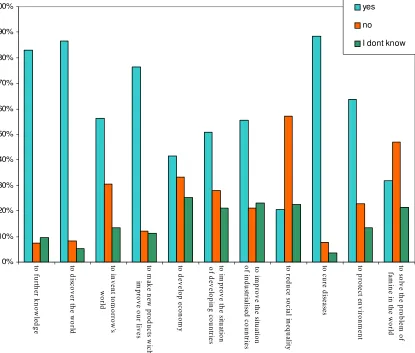
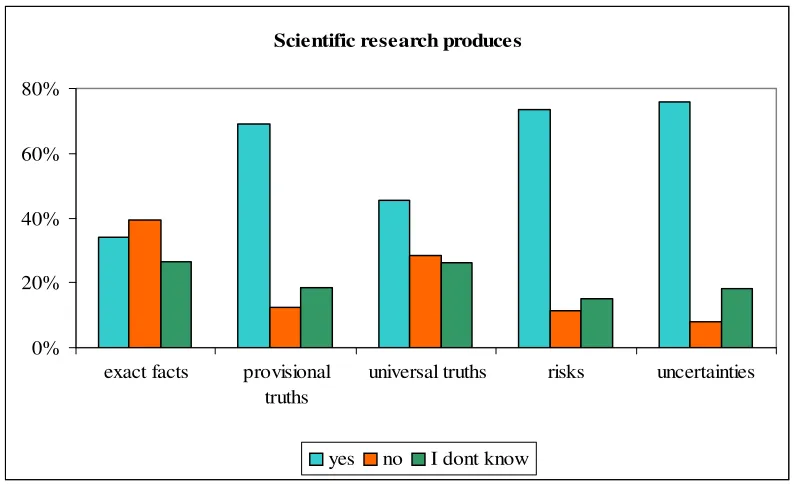
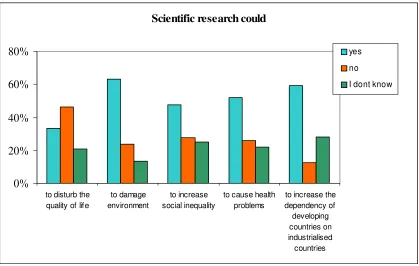
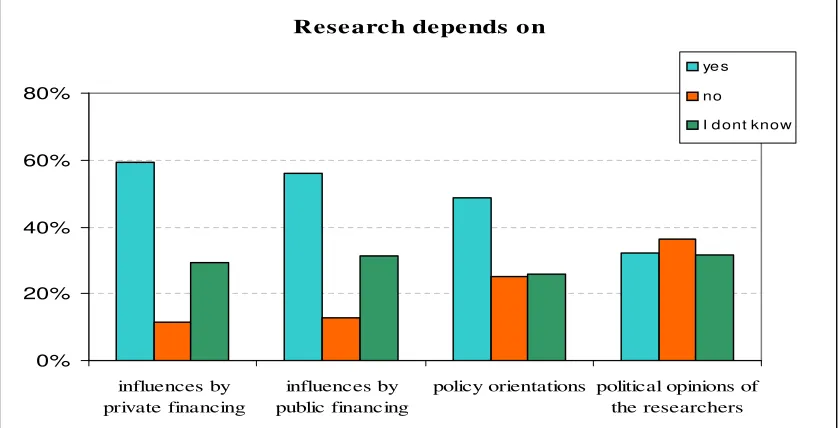
In this paper, we mainly describe the results of the lectures on students' perceptions of science, scientific teaching and scientific professions.


![Table 2.Definitions of Functions Given by College Mathematics Specialists [Number (%)]](https://thumb-ap.123doks.com/thumbv2/123dok/1070216.872044/51.595.88.511.427.715/table-definitions-functions-given-college-mathematics-specialists-number.webp)
![Table 2.Definitions of Functions Given by College Mathematics Specialists [Number (%)]](https://thumb-ap.123doks.com/thumbv2/123dok/1070216.872044/52.595.86.513.95.389/table-definitions-functions-given-college-mathematics-specialists-number.webp)
![Table 3. Examples of Functions by Given by College Mathematics Specialists [Number (%)]](https://thumb-ap.123doks.com/thumbv2/123dok/1070216.872044/53.595.86.512.105.419/table-examples-functions-given-college-mathematics-specialists-number.webp)
![Table 4. Symbolic Relations Identified by College Mathematics Students as Functions [Number (%)]](https://thumb-ap.123doks.com/thumbv2/123dok/1070216.872044/54.595.88.511.246.462/symbolic-relations-identified-college-mathematics-students-functions-number.webp)
