“All Sturm and no Drang”
Beckett and Romanticism
An Annual Bilingual Review
Revue Annuelle Bilingue
EDITORS:
Chief Editors: Marius Buning and Sjef Houppermans (The Netherlands)
Editorial Board: Marius Buning, Matthijs Engelberts, Sjef Houppermans
(The Netherlands), Dirk Van Hulle (Belgium), Angela Moorjani (USA) and Danièle de Ruyter (The Netherlands)
Advisory Board: Enoch Brater (USA), Mary Bryden (UK), Lance Butler
(France), Keir Elam (Italy), Stan E. Gontarski (USA), Onno Kosters (The Netherlands), John Pilling (UK), Jean-Michel Rabaté (USA) and Dominique Viart (France)
EDITORIAL CORRESPONDENCE:
All editorial correspondence should be addressed to: Dr M. Buning
Nicolaas Maesstraat 88 1071 RE Amsterdam The Netherlands [email protected]
Toute correspondance destinée à la rédaction doit être adressée à: Dr S. Houppermans
Faculteit der Letteren
Vakgroep Frans, Boîte postale 9515 2300 RA Leiden
Pays Bas
Subscriptions, Advertisements and Business Correspondence:
Editions Rodopi B.V., Tijnmuiden 7, 1046 AK Amsterdam, The Netherlands, Telephone (020) - 611.48.21, Fax (020) - 447.29.79
USA/Canada: Editions Rodopi, 295 North Michigan Avenue – Suite 1B Kenilworth, NJ 07033, USA, Tel.: ++ 1 (908) 298 9071,
Amsterdam - New York, NY 2007
Edited by
Dirk Van Hulle and Mark Nixon
“All Sturm and no Drang”
Beckett and Romanticism
The paper on which this book is printed meets the requirements of ‘ISO 9706: 1994, Information and documentation - Paper for documents - Requirements for permanence’.
Le papier sur lequel le présent ouvrage est imprimé remplit les prescriptions de "ISO 9706:1994, Information et documentation - Papier pour documents - Prescriptions pour la permanence".
ISBN: 978-90-420-2301-7
TABLE OF CONTENTS
Introduction
Beckett and Romanticism
1. Dirk Van Hulle
“Accursed Creator”: Beckett, Romanticism
and “the Modern Prometheus” 15
2. Paul Lawley
Failure and Tradition: Coleridge / Beckett 31
3. Elizabeth Barry
The Long View: Beckett, Johnson, Wordsworth
and the Language of Epitaphs 47
4. Mark Nixon
Beckett and Romanticism in the 1930s 61
5. Chris Ackerley
Samuel Beckett and Anthropomorphic Insolence 77
6. Franz Michael Maier
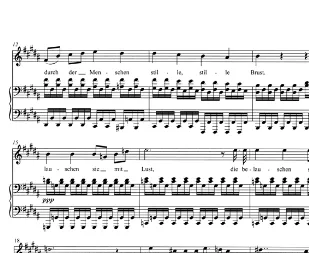
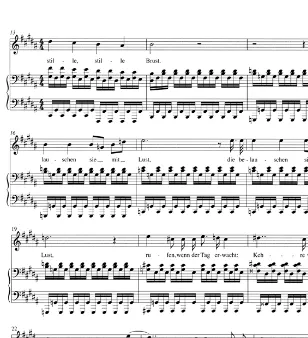
Two Versions of Nacht und Träume: What Franz Schubert Tells Us about a Favourite Song of Beckett 91
7. John Bolin
The “irrational heart”: Romantic Disillusionment
in Murphy and The Sorrows of Young Werther 101
8. Andrew Eastham
Beckett’s Sublime Ironies: The Trilogy, Krapp’s Last Tape,
and the Remainders of Romanticism 117
9. Michael Angelo Rodriguez
Romantic Agony: Fancy and Imagination
Beckett at Reading 2006
10. María José Carrera
“En un lugar della mancha”: Samuel Beckett’s
Reading of Don Quijote in the Whoroscope Notebook 145
11. Friedhelm Rathjen
Neitherways: Long Ways in Beckett’s Shorts 161
12. John Pilling
From an Abandoned Work:
“all the variants of the one” 173
13. Anthony Cordingley
Beckett and “l’ordre naturel”:
The Universal Grammar of Comment c'est/How It Is 185
14. Marion Fries-Dieckmann
Beckett and the German Language: Text and Image 201
15. Rónán McDonald
“What a male!”: Triangularity, Desire
and Precedence in “Before Play” and Play 213
16. Sean Lawlor
“Alba” and “Dortmunder”:
Signposting Paradise and the Balls-aching World 227
17. David A. Hatch
Samuel Beckett’s “Che Sciagura”
and the Subversion of Irish Moral Convention 241
18. Paul Stewart
A Rump Sexuality: The Recurrence
of Defecating Horses in Beckett’s Oeuvre 257
19. Gregory Byala
20. Maximilian de Gaynesford
Knowing How To Go On Ending 285
21. Karine Germoni
The Theatre of Le Dépeupleur 297
22. Dirk Van Hulle / Mark Nixon
“Holo and unholo”: The Beckett Digital Manuscript Project 313
Free Space
23. Jackie Blackman
Beckett Judaizing Beckett: “a Jew from Greenland” in Paris 325
24. Russell Smith
“The acute and increasing anxiety of the relation itself”:
Beckett, the Author-Function, and the Ethics of Enunciation 341
25. Thomas J. Cousineau
Demented vs. Creative Emulation in Murphy 355
26. Sjef Houppermans
Falling Down and Standing Up and Falling Down Again… 367
27. Carla Taban
Molloy: de ‘jeux de mots’ aux
modalités po(ï)étiques de configuration textuelle 377
28. Guillaume Gesvret
Posture de la prière, écriture de la précarité
(Mal vu mal dit, Cap au pire et ...que nuages...) 393
29. Anne Cousseau
Rencontre de Charles Juliet avec Samuel Beckett:
“Cette parole nue qui vient de la souffrance” 407
INTRODUCTION
No matter how tongue-in-cheek Beckett’s references to Romanticism sometimes are, they keep recurring with a remarkable persistence throughout his work. The “blue flower,” one of the key symbols of Romantic yearning for unreachable horizons, is already present in Beckett’s personal Sturm und Drang piece, his first published story “Assumption.” Later on, the Blaue Blume appears as the “blue bloom” in “A Wet Night,” alluding to Leopold Bloom’s activities in the “Nausicaa” episode of Ulysses. To what extent Romanticism plays a role in Beckett’s developing poetics and his positioning vis-à-vis his great examples Joyce and Proust is a fascinating, because difficult, question. In his essay on the latter’s work, Beckett discerns a “romantic strain in Proust,” a “retrogressive tendency,” receding from the Symbolists back towards Victor Hugo.
Although the blue flower seems to have withered after its reappearance in Watt, the impossible yearning it stands for never completely disappeared, from his early notes on Beethoven’s An die ferne Geliebte (in the Dream Notebook) to the “missing word” (Stirrings Still) “afaint afar away” (what is the word). The entry on “Romanticism” in the Grove Companion to Samuel Beckett points out, with reference to Molloy:
His condition is essentially that of SB himself, mockery qualified by an undercurrent of German Romanticism, in literature (Hölderlin), music (Schubert), and art (Caspar David Friedrich). Not least of this, as in the art of Jack Yeats, was the sense of isolation, the insignificant human figure in an indifferent world, far from Wordsworth’s pantheistic belief but at the heart of the Winterreise. This love is manifest more obviously in the later drama, where SB is less fearful of deciduous beauty. A good study of the Romantic impulse in SB’s writings, revealing unexpected insights into a tradition vehemently rejected but never quite denied, is currently lacking.
(487)
attitude toward this period in literature, music and art history. Far from being a comprehensive examination, the dossier on “Beckett and Romanticism” in the current issue of Samuel Beckett Today / Aujourd’hui tries to give an impetus to the study of this complex theme with contributions on Beckett’s attitudes toward Romantic aesthetics in general, including notions such as the sublime, irony, failure, ruins, fragments, fancy, imagination, epitaphs, translation, unreachable horizons, the infinite, the infinitesimal and the unfinished, but also on Beckett’s reading about the Romantic period (such as Mario Praz’s The Romantic Agony and Théophile Gautier’s Histoire du romantisme), his affinity with specific Romantic artists and their influence on works such as Murphy, the trilogy, Krapp’s Last Tape and All Strange Away.
The second part of the current issue presents a selection of papers given at the Beckett at Reading 2006 conference in Reading (30 April – 2 May 2006), which was jointly organised by the Beckett International Foundation and the University’s School of English and American Literature. The conference marked Beckett’s centenary, an event that Beckett himself had viewed in 1981 (the year of his 75th Birthday) as
something to be avoided:
I dread the year now upon us and all the fuss in store for me here, as if it were my centenary. I’ll make myself scarce while it lasts, where I don’t know. Perhaps the Great Wall of China, crouch behind it till the coast is clear.
(Letter to Jocelyn Herbert, 11 January 1981; RUL)
Reflecting the importance of the Beckett Foundation’s Archive to scholars, the focus of the conference somewhat naturally tended to be on empirical research and manuscript studies, but this did not exclude other approaches. Indeed, the variety of essays included in this issue shows the importance and benefits of scholarly dialogue and cross-fertilization between different approaches. Scholars attending the conference were also introduced to the ongoing project of establishing digital editions of Beckett’s manuscripts, and an outline of this work is presented at the end of the section.
“ACCURSED CREATOR”:
Beckett, Romanticism, and “the Modern Prometheus”
Dirk Van Hulle
The Romantic period is part of what Reinhart Koselleck has called the Sattelzeit (‘saddle period’), the era that flanks the French Revolution by fifty years on either side. To investigate Beckett’s ambiguous attitude towards this period, this essay starts with the Graveyard Poets and concludes with Mary Shelley’s “hideous progeny” – as she called Frankenstein in the introduction to the 1831 edition. The essay investigates the relationship between “the modern Prometheus” and his “creature,” and the theme of creation as a muddy but central issue in Beckett’s works and self-translations.
biblical reference is also an allusion to Goethe’s line “die Erde hat mich wieder” immediately after Faust’s suicide attempt, which Beckett quoted with a twist in the Addenda to Watt: “die Merde hat mich wieder” (1981, 251).
1. “night’s young thoughts”
In this down-to-earth view of humanity the origin of human creatures coincides with their final resting place, the focal point of the Graveyard Poets. In Murphy, Samuel Beckett refers to one of these poets by trivializing Edward Young’s Night Thoughts: “But now it was winter-time again, night’s young thoughts had been put back an hour” (73-74). The same pun recurs in the eighth of the Texts for Nothing, but this time in the form of a self-translation:
Tout cela est libre, tout cela est tentant. Vais-je y glisser, essayer d’en faire profiter encore une fois, mes infirmités de rêve, pour qu’elles deviennent chair et tournent, en s’aggravant, autour de cette place grandiose que je confonds peut-être avec celle de la Bastille, jusqu’à être jugées dignes de l’adjacent Père-Lachaise ou, mieux, prématurément soulagées en voulant traverser, à l’heure du berger.
(1991, 173)
The vacancy is tempting, shall I enthrone my infirmities, give them this chance again, my dream infirmities, that they may take flesh and move, deteriorating, round and round this grandiose square which I hope I don’t confuse with the Bastille, until they are deemed worthy of the adjacent Père Lachaise or, better still, prematurely relieved trying to cross over, at the hour of night’s young thoughts.
(1995, 134)
“Night-Piece on Death”: “Their books from wisdom widely stray, / Or point at best the longest way. / I’ll seek a readier path, and go / Where wisdom’s surely taught below” (qtd. in Punter and Byron, 11). David Punter and Glennis Byron summarize the Graveyard Poets’ aesthetics as an attempt to learn the secrets of life “from prolonged and absorbed meditation on its extreme limit: death” (11). Against this background Beckett’s reference to the Graveyard Poets may seem to be a reaction to Joyce’s encyclopaedic approach to literature – “in the direction of knowing more” (qtd. in Knowlson 1996, 352) – but the matter is more complex than it may appear to be.
After the war, Beckett still admitted to Jake Schwartz that he had an “innate passion for knowledge, which demanded periodic satisfaction” and that secretly he even dreamed of reading through all the volumes of an encyclopaedia – after which he received a complete set of the Encyclopaedia Britannica to quench his thirst for knowledge (Bair, 493-94). But this Faustian trait is relativized in a letter to Jacoba van Velde (12 April 1958): “On m’a donné l’édition 1911 de l’Encyclopédie Britannique. 28 volumes. Trop tard.” (NAF 19794, 53).
It might have been “too late” for encyclopaedic projects, but the question is whether Beckett would ever have been able to engage himself with total abandon in any encyclopaedic project, for a quarter of a century earlier he had already discovered that, in spite of this innate passion for knowledge, the accumulation of erudition and “verbal booty” was more of an obstacle than a incentive to his literary projects.2 Similarly, his allusions to Edward Young and the Graveyard
Poets involve a complex combination of attraction and resistance, as H. Porter Abbott notes: “By appropriating the romantic tradition of the associative, incondite meditation, Beckett accentuates his difference” (91). Porter Abbott draws attention to the stylistic correspondences between the “vaguely iambic dying fall” in Young’s Night Thoughts and the twilight passages in Beckett’s Texts for Nothing, but he immediately points out the differences as well:
hands, the ‘looseness’ of the text augments the anxiety of relatedness and the despair of meaning.
(91)
The same confidence characterizes Young’s “Conjectures on Original Composition” (1759): “The mind of a man of Genius is a fertile and pleasant field” (§34). Young emphasizes that unlike imitations, which are “often a sort of Manufacture,” an Original “rises spontaneously from the vital root of Genius” (§43). The “man of Genius” Young had in mind was modelled after a particular image, that had already been suggested in the beginning of the eighteenth century by the Earl of Shaftesbury in his Advice to an Author (1710): “Such a poet is indeed a second Maker; a just Prometheus under Jove” (qtd. in Abrams 1953, 280). In the history of the so-called Genie-Zeit, the figure of Prometheus personified the defiance of authority and established poetic codes.
As Jochen Schmidt illustrates in Die Geschichte des Genie-Gedankens, the idea of the artist as a god on earth (deus in terris), which was already prominent in the Renaissance, became more distinct when it was linked to the figure of Prometheus during the Genie-Zeit (Schmidt, 258-59). But it was Goethe who turned this simile into a programme by means of his poem “Prometheus,” which Beckett typed out (TCD MS 10971/1, 72r-v). As Mark Nixon points out (2006, 265), this excerpt is inextricably linked up with Beckett’s reading of John G. Robertson’s A History of German Literature (1902) and Goethe’s Aus meinem Leben: Dichtung und Wahrheit, the reading traces of which can also be found in the same notebook. In Beckett’s Books Matthew Feldman draws particular attention to the final stanza in relation to Beckett’s persistent exploration of “the creative act itself” in his post-war works (2006, 27).
facing downwards, looking at the earth, human beings were given an “upturned aspect” (trans. Kline), because Prometheus commanded them to stand upright and look towards the sky (“os homini sublime dedit caelumque videre / iussit et erectos ad sidera tollere vultus”; Ovid, I.85-86).
Apart from Prometheus’ defiance, his role as plasticator also seems to have caught Beckett’s special attention. Goethe’s Prometheus is not just one of the “rebels of the Genieperiode [who] exploited the element of Promethean defiance against vested authority, in order to attack the code of poetic rules,” as Abrams calls them; he is as ambitious as Doctor Praetorius in James Whale’s The Bride of Frankenstein (1935) in that he is intent on creating not just a homunculus (like Faust’s assistant Wagner), but an entire species:
Hier sitz ich, form Menschen Nach meinem Bilde,
Ein Geschlecht, das mir gleich sei”
(Here I sit, making men / In my own image, / A race that shall be like me)
(TCD MS 10971/1/72)
A year after the release of Whale’s Faustian sequel of Frankenstein, Beckett read (and took extensive excerpts from) Goethe’s Faust. After that reading experience, the focus on the creative act was increasingly mixed with the image of the homunculus. The making of such a small creature recurs a few times in the trilogy.3 Beckett’s own “creatures”
may be regarded as “homuncules” too, but what characterizes these literary compositions is that they are mainly occupied with decomposition.
2. “turning-point,” or: Wordsworth Ho
In this context it is remarkable how Beckett, presenting his work as a composition in reverse, uses Wordsworth as a contrasting background, notably his famous definition of poetry as “the spontaneous overflow of powerful feelings,” taking its origin “from emotion recollected in tranquillity.” While Wordsworth explains how “successful composition generally begins,”4 Beckett is more interested in “decomposition.” In
tranquillity” [Beckett 1995, 58]) and in Texts for Nothing (“what tranquillity, and know there are no more emotions in store” [125]). But it is in the trilogy that Molloy formulates the important reversal of composition into decomposition: “It is in the tranquillity of decomposition that I remember the long confused emotion which was my life [...] To decompose is to live too, I know, I know, don’t torment me, but one sometimes forgets” (1955-58, 25). This reversal comes close to the “tuning-point” in Krapp’s Last Tape, which only became “the vision at last” in the third typescript: “Spiritually a year of profound gloom and indigence until that memorable night in March, at the end of the pier, in the howling wind, never to be forgotten, when suddenly I saw the whole thing. The turning-point vision, at last”
(HRHRC 4.2, Ts. 3).
Krapp’s “vision” thus turns out to be a revision. Beckett explicitly asked James Knowlson to make clear once and for all that his own “revelation” was different from “Krapp’s vision” (Knowlson, 352; 772n55). Beckett’s reformulation of his own vision contrasted his own working method with Joyce’s. In this context Beckett’s vision also indicates a “turning-point” between a Joycean “work in progress” and his own “work in regress” – not simply in the sense of doing the opposite of Joyce, but rather as a radicalisation of the idea to accommodate decomposition in one’s composition, which is already present in Joyce’s Finnegans Wake, “writing its own wrunes forever” (Joyce 1939, 19).
Beckett’s written ruins are quite different from the “self-indulgence of Ossianic antiquarianism and the eighteenth-century taste for ruins,” which “have no attraction for him,” as John Pilling notes (1976, 136). Beckett’s writings are “wrunes” in the etymological sense of ruere, to collapse, to fall down. While the sole upright figure in Lessness may have been inspired by “Prometheus,” the text also writes its own ruins, opening with the words “Ruins true refuge” (1995, 197). In a similar way Winnie in Happy Days is decomposing in upright position. As a consequence, the “turning-point” implies a double perspective on the Prometheus myth in terms of creation and decreation, composition and decomposition, but also with regard to the relationship between creator and creature.
3. “Accursed progenitor”
regarding Prometheus as a satanic hero. In his Dichtung und Wahrheit Goethe argues that the difference between (notably Milton’s) Satan and Prometheus is that the latter is more contructive: Milton’s Satan attempts to destroy God’s creation while Prometheus is a creator himself (Goethe 1991, 687). Byron, in his poem “Prometheus,” pities his hero (“Thy Godlike crime was to be kind [...] / And strengthen Man with his own mind,” 265), whereas Percy Shelley, in the “Preface” to Prometheus Unbound, sees his hero as “the type of the highest perfection of moral and intellectual nature, impelled by the purest and the truest motives to the best and noblest ends” (207). The only imaginary being resembling Prometheus, according to Shelley, is another bringer of light: Lucifer or Satan, as depicted in Milton’s Paradise Lost (206-7). In A Defence of Poetry, too, he claims that “Nothing can exceed the energy and magnificence of the character of Satan as expressed in Paradise Lost. It is a mistake to suppose that he could ever have been intended for the popular personification of evil” (526).
While Percy Shelley clearly expressed his sympathy with Promethean bringers of fire and light, Mary Shelley empathized with Adam, as the epigraph to Frankenstein, or: The Modern Prometheus indicates: “Did I request thee, Maker, from my clay / To mold me man, did I solicit thee / From darkness to promote me? –– / Paradise Lost” (1992, 1). In Milton’s Paradise Lost, these lines are preceded by Adam’s exclamation: “O fleeting joys / Of Paradise, dear bought with lasting woes!” (262; Book X.741-42), which are the lines Winnie refers to in Happy Days: “What is that wonderful line? [Lips.] Oh fleeting joys – [lips] – oh something lasting woe.” [Lips. She is interrupted by disturbance from Willie. He is sitting up. She lowers lipstick and mirror […]]” (Beckett 1990, 141). Each “oh” is preceded by “lips,” prefiguring Mouth’s lips in Not I, but also stressing the importance of cosmetics in the midst of terrestrial joys and woes: the common etymology of cosmos and cosmetics is Winnie’s answer to Beckett’s quest for a “new form” which “admits the chaos and does not try to say that the chaos is really something else,” as Beckett told Tom Driver in the same year as the first production of Happy Days: “To find a form that accommodates the mess, that is the task of the artist now.”5
Satan, not Frankenstein or the modern Prometheus, but Frankenstein’s creature, Eve and Adam, Winnie and Willie become the focalizers. In Endgame, Hamm would prefer to undo creation, cursing his father as “Accursed progenitor!” and “Accursed fornicator!” (1990, 96) – insisting on the same “-tor” ending with an exclamation mark as in the Creature’s exclamation: “Accursed creator!” when he discovers Frankenstein’s journal: “Accursed creator! Why did you form a monster so hideous that even you turned from me in disgust? [...] Satan had his companions, fellow-devils, to admire and encourage him; but I am solitary and abhorred.” (126)
During the important moment in Frankenstein when Victor meets the “daemon” at the sea of ice in the middle of the “tremendous,” “vast,” “sublime,” “awful,” “magnificent,” “majectic,” and “solitary grandeur of the scene” (93-94) the creature reminds Frankenstein of his duties as a father: “Remember, that I am thy creature; I ought to be thy Adam, but I am rather the fallen angel” (96-97), threatening to become “the author of your own speedy ruin” (98).
When the focalization shifts to the nameless daemon and he is allowed to tell his tale, Mary Shelley inserts a moment of defamiliarization by presenting the rising of the moon as if it were an unprecedented phenomenon: “I started up and beheld a radiant form rise from among the trees” (99-100). In his Defence of Poetry Percy Shelley formulated this Shklovskyan defamiliarization avant la lettre by presenting poetry as the power that “creates anew the universe after it has been annihilated in our minds by the recurrence of impressions blunted by reiteration” and “purges from our inward sight the film of familiarity which obscures from us the wonder of our being” (533). It is with this unprejudiced, childlike view that the creature observes the De Laceys.
man, leaning his head on his hands in a disconsolate attitude” (104). While the De Lacey scene as a whole is ridiculed in Murphy, the more specific image of an old man with his head on his hands recurs repeatedly in Beckett’s later works, up until the penultimate text, Stirrings Still: “One night as he sat at his table head on hands he saw himself rise and go” (Beckett 1995, 259).
The old De Lacey in Frankenstein plays a mournful air on his instrument and a few lines further on the creature is overpowered by emotions, “a mixture of pain and pleasure, such as I had never before experienced” (104). The “pain and pleasure” and powerful emotions, reminiscent of Wordsworth’s “Preface” to the Lyrical Ballads6 and
Edmund Burke’s Philosophical Inquiry into the Origin of our Idea of the Sublime and the Beautiful (1757),7 recur in Beckett’s radio play
Words and Music: “by passion we are to understand a movement of the soul pursuing or fleeing real or imagined pleasure or pain pleasure or pain real or imagined pleasure or pain” (1990, 287). When a few moments later Music “Plays air,” Words is “Trying to sing, softly” of “a man / Huddled o’er the ingle” and “The face in the ashes” (291).
These ashes may be seen as remnants of Prometheus’ gift to humanity, but also – since the radio plays are so extraordinarily metafictional – as embers of a Romantic poetics, expressed in Percy Shelley’s Defence of Poetry by means of the image of the “fading coal”: “the mind in creation is as a fading coal which some invisible influence, like an inconstant wind, awakens to transitory brightness: this power arises from within” (531).8
Stephen Dedalus in Joyce’s Portrait of the Artist as a Young Man refers this image when he is setting forth his aesthetic theory on the scholastic quidditas:
The mind in that mysterious instant Shelley likened beautifully to a fading coal. The instant wherein that supreme quality of beauty, the clear radiance of the aesthetic image, is apprehended luminously by the mind which has been arrested by its wholeness and fascinated by its harmony is the luminous silent stasis of aesthetic pleasure
(Joyce 2000, 231)
begins, inspiration is already on the decline, and the most glorious poetry that has ever been communicated to the world is probably a feeble shadow of the original conception of the poet” (531; emphasis added). This passage contrasts sharply with the triumphant tone of the rest of the “Defence,” which celebrates poetry as “something divine” (531). Shelley sees it as “at once the centre and circumference of knowledge” with its “harmonious recurrence of sound”: “Hence the vanity of translation” (514). In the midst of this boisterous discourse, the “fading” of inspiration “on the decline” comes across as a moment of weakness in terms of rhetorical strategy. He has to admit that poetry inevitably fails to preserve the brilliance and radiance of the initial moment of inspiration. Beckett, however, focuses precisely on this “decline” and turns it into a view on composition as a form of decomposition, in which both translation and its “vanity” are crucial components.
Translation played an important role in literary Romanticism, especially in Germany. Adreas Huyssen sees translation as “eine Grundstruktur romantischen Denkens” (a basic structure of romantic thought; 121). While Percy Shelley spoke of “the vanity of translation” and “the burthen of the curse of Babel” (514), August Wilhelm Schlegel regarded poetic translations as merely imperfect approximations. Because of the unreachability of the original the approximation can be referred to such a distance that it might not be worthwhile undertaking the enterprise at all.9 And yet, that is precisely
the irresistible challenge of translation, the “unendliche Annäherung” (endless approximation; Huyssen, 121), which is the idea behind the Blaue Blume10 but also behind the asymptotic structure of Beckett’s late
works like Worstward Ho (“leastmost in the utmost dim”), Stirrings Still (“and here a word he could not catch”), and of course “Comment dire” / “what is the word.” In spite of this close affinity, the difference between the Romantics’ and Beckett’s notion of “unendliche Annäherung” is a reversal of perspective. Whereas the Romantic Sehnsucht for the sake of Sehnsucht is a longing for the infinite, Beckett ‘strives’ after the infinitesimal.
de la nuit avaient été reculées d’une heure” (1965, 58) and because of this recul they will (not unlike Achilles and the tortoise in Zeno’s paradox) never be able to catch up with Young’s Night Thoughts. In fact, they are only further removed from “l’heure du berger” – which is the “original” of the latter “thoughts,” translated from the French, stressing the unreachability of the original, until the infirmities “are deemed worthy of the adjacent Père Lachaise” (134). As Porter Abbott notes: “For Young, the graveyard was a place one passed through, coming out on the other side refined of one’s material being. In Beckett’s text, it seems instead a longed-for point of reentry” (92).
This longed-for reentry has more affinities with the moment at the end of Mary Shelley’s Frankenstein when Victor finds himself “at the entrance of the cemetery” (195) where everything is silent “except the leaves of the trees” (which Didi compares to the noise of the “dead voices” in Waiting for Godot; 1990, 58). But Victor Frankenstein is not allowed to stay, for his Creature lures him away again from the graveyard, that is, the place where its body parts were assembled. In the end, the place of the hideous progeny’s origin comes down to earth, Dreck, the “mud” or “dust thou art.” Beckett’s interest in what has so equestrianly been called the Sattelzeit is inevitably saddled with the realization that the main thing we do “à cheval” is to “give birth astride of a grave” (2003, 220).
Notes
1. I wish to thank Mark Nixon for drawing my attention to this document.
2. In his seminal introduction to the edition of the Dream Notebook, John Pilling notes that, by the end of 1931, “what had seemed to offer a way forward was beginning to reveal itself as an impediment,” referring to Beckett’s letter to Thomas MacGreevy of 8 November 1931, in which he writes: “I have enough ‘butin verbal’ to strangle anything I’m likely to want to say.” (qtd. in Pilling 1999, xiv).
4. “The emotion is contemplated till by a species of reaction the tranquillity gradually disappears, and an emotion, kindred to that which was before the subject of contemplation, is gradually produced, and does itself actually exist in the mind.” (Wordsworth; 1802 version)
5. “What I am saying does not mean that there will henceforth be no form in art. It only means that there will be new form, and that this form will be of such a type that it admits the chaos and does not try to say that the chaos is really something else. The form and the chaos remain separate. The latter is not reduced to the former. That is why the form itself becomes a preoccupation, because it exists as a problem separate from the material it accommodates. To find a form that accommodates the mess, that is the task of the artist now.” (Samuel Beckett to Tom F. Driver, “Beckett by the Madeleine,” Columbia University Forum 4, Nr. 3 (1961), 23; qtd. in Hesla, 6-7)
6. “What then does the Poet? He considers man and the objects that surround him as acting and re-acting upon each other, so as to produce an infinite complexity of pain and pleasure” (Wordsworth; 1802 version).
7. “Sect. VII. Of the Sublime / Whatever is fitted in any sort to excite the ideas of pain and danger, that is to say, whatever is in any sort terrible, or is conversant about terrible objects, or operates in a manner analogous to terror, is a source of the sublime; that is, it is productive of the strongest emotion which the mind is capable of feeling. I say the ‘strongest emotion’ because I am satisfied the ideas of pain are much more powerful than those which enter on the part of pleasure” (86).
8. In the third section of Stirrings Still a sentence thus arises “from deep within.” It is significant that as soon as it surfaces, it is already “on the decline,” for the most crucial word is missing: “So on till stayed when to his ears from deep within oh how and here a word he could not catch it were to end where never till then” (1995, 264).
9. According to Schlegel “Alle dichterischen Übersetzungen sind nur unvollkommene Annäherungen. Die Annäherung kann durch die Unnachahmlichkeit und Unerreichbarkeit des Originals in eine so weite Ferne verwiesen werden, dass man dan wohl besser tut, die Sache gar nicht zu unternehmen” (A. W. Schlegel, “Aus dem Indischen,” qtd. in Huyssen, 85).
treasures, but for the flower, so that the Blaue Blume became a symbol for a second-degree Sehnsucht, a longing for longing. For Beckett’s use of the symbol in “Assumption,” “Calvary by Night,” and Watt, see Ackerley and Gontarski, 2004, 63-64).
Works Cited
Abbott, A. Porter, Beckett Writing Beckett: The Author in the Authograph (Ithaca and London: Cornell UP, 1996).
Abrams, M. H., The Mirror and the Lamp: Romantic Theory and the Critical Tradition (Oxford: Oxford UP, 1953).
Ackerley, C. J., and S. E. Gontarski, The Grove Companion to Samuel Beckett (New York: Grove P, 2004).
Bair, Deirdre, Samuel Beckett: a biography (London: Jonathan Cape, 1978). Barth, John, “The Literature of Exhaustion,” in The Friday Book: Essays and
Other Nonfiction (Baltimore and London: The Johns Hopkins UP, 1997), 62-76.
Beckett, Samuel, Notes on German Literature, TCD MS 10971/1, Trinity College Dublin (1934-36).
–, Notes on Psychology, TCD MS 10971/8, Trinity College Dublin (1930s). –, Letters to Jacoba van Velde, NAF 19794, Bibliothèque Nationale de France,
Paris (1946-80).
–, L’Innommable (Paris: Minuit, 1953).
–, Molloy, Malone Dies, The Unnamable (New York: Grove P, 1955-58). –, Murphy (New York: Grove P, 1957).
–, Typescripts of Krapp’s Last Tape, HRHRC Samuel Beckett Box 4, Folder 2, Harry Ransom Humanities Research Center, University of Texas at Austin (1958).
–, Murphy (Paris: Minuit, 1965). –, Watt (London: Calder, 1981).
–, The Complete Dramatic Works (London: Faber and Faber, 1990).
–, The Complete Short Prose 1929-1989, ed. S. E. Gontarski (New York: Grove P, 1995).
–, Warten auf Godot / En attendant Godot / Waiting for Godot (Frankfurt am Main : Suhrkamp, 2003).
Burke, Edmund, A Philosophical Enquiry into the Sublime and Beautiful (London: Penguin Classics, 1998).
Byron, The Major Works, ed. Jerome McGann (Oxford: Oxford UP, 2000). Feldman, Matthew, Beckett’s Books : A Cultural History of Samuel Beckett’s
Interwar Notes (New York / London: Continuum: 2006).
Library,” in SBT/A 16, ed. Matthijs Engelberts, et al. (Amsterdam: Rodopi, 2006), 13-199.
Goethe, Johann Wolfgang von, Faust, 2 vols. (Stuttgart: Philipp Reclam jun., 1986).
Hesla, David, The Shape of Chaos: An Interpretation of the Art of Samuel Beckett (Minneapolis: U of Minnesota P, 1971).
Huyssen, Andreas, Die frühromantische Konzeption von Übersetzung und Aneignung (Zürich: Atlantis Verlag, 1969).
Joyce, James, Finnegans Wake (London: Faber and Faber, 1939). –, A Portrait of the Artist as a Young Man (London: Penguin, 2000).
Knowlson, James, Damned to Fame: The Life of Samuel Beckett (London: Bloomsbury, 1996).
Koselleck, Reinhart, “Einleitung,” in Geschichtliche Grundbegriffe: Historisches Lexikon zur politisch-sozialen Sprache in Deutschland, ed. Otto Brunner, Werner Conze and Reinhart Koselleck, vol. 1. (Stuttgart: Klett-Cotta, 2004).
Milton, John, Paradise Lost (Oxford: Oxford UP, 2004).
Moorjani, Angela, “Directing or In-directing Beckett: Or What Is Wrong with Catastrophe’s Director?” in SBT/A 15, “Historicising Beckett / Issues of Performance,” ed. Marius Buning et al. (Amsterdam: Rodopi, 2005), 187-99.
Nixon, Mark, “‘Scraps of German’: Samuel Beckett Reading German Literature,” in SBT/A 16, “Notes Diverse[s] Holo,” ed. Matthijs Engelberts, Everett Frost, with Jane Maxwell (Amsterdam: Rodopi, 2006), 259-82.
Ovid, (Publius Ovidius Naso), Metamorphoses, ed. Hugo Mangus, The Perseus Digital Library, www.perseus.tufts.edu, accessed 15 May 2007. –, The Metamorphoses, trans. A. S. Kline, 2000, www.tkline. freeserve.co.uk/
Ovhome.htm, accessed 15 May 2007.
Parnell, Thomas, “Night-Piece on Death,” in Poems on Several Occasions (London: Lintot, 1722), www.litgothic.com/Texts, accessed 13 May 2007.
Pilling, John, Samuel Beckett (London: Routledge and Kegan Paul, 1976). –, Beckett’s Dream and the “demon of notesnatching,” in Beckett’s “Dream”
Notebook, ed. John Pilling (Reading: Beckett International Foundation, 1999), vii-xxi.
–, A Samuel Beckett Chronology (Houndmills & New York: Palgrave, 2006). Punter, David, and Glennis Byron, The Gothic (Oxford: Blackwell, 2004). Schmidt, Jochen, Die Geschichte des Genie-Gedankens in der deutschen
Literatur, Philosophie und Politik 1750-1945, 2 vols. (Darmstadt: Wissenschaftliche Buchgesellschaft, 1985).
Shelley, Percy, Poetry and Prose, 2nd ed., ed. Donald H. Reiman (New York and London: W. W. Norton, 2002).
Warton, Thomas, The Pleasures of Melancholy (London: Dodsley, 1747). Wordsworth, William, “Preface,” in Lyrical Ballads, electronic scholarly
edition by Bruce Graver and Ron Tetreault, www.rc.umd.edu/ editions/LB, accessed 15 May 2007.
FAILURE AND TRADITION:
COLERIDGE / BECKETT
Paul Lawley
Using a model of literary tradition derived from T. S. Eliot and mediated by J. L. Borges, this paper proposes a tradition of creative failure which would enable the work of Beckett to be read through that of S. T. Coleridge, and vice-versa. Two texts by Coleridge are briefly considered in this context, and the problematic of creative failure in which they are implicated is related to key claims in Beckett’s Three Dialogues. A concluding statement suggests the benefits of reading Coleridge and Beckett within the common perspective of a literary tradition, the perception of which the two writers both shape and are shaped by.
I
The sea is very calm because, Hamm helpfully explains, “there are no more navigators” (Beckett 1986, 124). But once there were (“Once!”), and a particularly old one more than once told a story. It was about “how the Ancient Mariner cruelly and in contempt of the laws of hospitality killed a Sea-bird and how he was followed by many and strange Judgements: and in what manner he came back to his own Country” (Coleridge 1969, 186; 1800 text). The last of the strange judgements passed upon the old navigator1 is, if not the most colourful,
certainly not the least terrible. When he implores a hermit to “shrieve” him, the “holy Man” bids him say “What manner man art thou?” and the Ancient Mariner recounts the last event of his own story:
Forthwith this frame of mine was wrench’d With a woeful agony,
Which forc’d me to begin my tale And then it left me free.
That anguish comes and makes me tell My ghastly aventure.
(544-45, lines 611-18, 1798 text)
And then he begins, presumably, “There was a Ship …” (528, line 10). The final event of the Mariner’s story, the strangest of the strange judgements upon him, consists of his being compelled to tell his story of transgression and strange judgements, a story which ends with him being compelled to tell his story … – and so on. The mariner enters into “[t]he Night-mare LIFE-IN-DEATH” (194) of his own tale; the water-snake swallows its own tail, and the “penance of life” (208) is endlessly exacted.
Of course the poem is not like this. As we all remember, it has a frame which comprehends the Mariner’s narrative, from “It is an ancyent Marinere,/And he stoppeth one of three” (528), by way of reference to the Wedding Guest’s reactions, through to “A sadder and a wiser man/He rose the morrow morn” (546). Coleridge’s monster of solitudes finally affirms the efficacy of prayer in “goodly company” (545). The frame is distinct from the narrative itself: “The Rime of the Ancyent Marinere” is not a recursive narrative. To read it as such is not even an understandable misreading. Yet it is a forgivable one, and to speculate that the poem might have been recursive is a stimulating critical gambit.2 Recursive narrative has, in the words of the
psychoanalyst Donald P. Spence, “an uncanny feel about it” (188) which fits with this most uncanny of poems. No reader of Beckett, and no post-Beckett reader (a rather different thing), can (re)turn to the poem without perceiving the shadow of recursion that falls upon and around it.3 That shadow alerts us to the relation between transgression,
II
Coleridge and Beckett: both are writers preoccupied not just with what is narrated or uttered, but with the act of narration itself, the Scene of Utterance, and with utterance which is impossible to regulate: it is either blocked or unstoppable, impossible or irresistible, compelled or obliged. Both significantly abandoned works, and the relation of each man’s texts to the state of completion is often richly ambiguous. Failure and fragmentation are omnipresent, if not always actual. Thematically, too, ambiguous finitude is the common concern: the Nightmare Life-in-Death returns as and in “the long sonata of the dead” (Beckett 1959, 32).4
The analogies are intriguing, but they cannot in themselves be taken to constitute a significant critical relation – especially given the vast differences of creative context and philosophy which can properly be assumed between the Romantic philosopher-poet and the Modern novelist and playwright. Nor is this a matter of influence. As he was hardly less of a “library-cormorant” (Coleridge 1966, 156) than Coleridge himself, Beckett would have known the major writings at the very least.5 But neither Damned to Fame nor The Grove Companion
contains a single reference to Coleridge. Instead I should draw attention to the influence of Beckett on our reading of Coleridge. In this context a famous passage by T. S. Eliot is worth revisiting. “[W]hat happens when a new work of art is created is something that happens simultaneously to all the works of art which preceded it,” asserted Eliot in “Tradition and the Individual Talent” (1919). “The existing order [of monuments],” he continues,
is complete before the new work arrives; for order to persist after the supervention of novelty, the whole existing order must be, if ever so slightly, altered; and so the relations, proportions, values of each work of art toward the whole are readjusted; and this is conformity between the old and the new. Whoever has approved this idea of order […] will not find it preposterous that the past should be altered by the present as much as the present is directed by the past.
(15)
internal alteration and readjustment, nonetheless inhibits the conception of plural traditions. For a more playful treatment of the idea, one which characteristically homes in on the paradoxes involved and thereby implies plurality of perspective, we must go to Jorge Luis Borges’ essay “Kafka and His Precursors.”6
Borges describes the “Kafkaesque” features of texts by Zeno, Nan Yu, Kierkegaard, Browning, Léon Bloy and Lord Dunsany. (The motley nature of the crew itself suggests the implications for critical revaluation in this view.) He concludes:
In each of these texts we find Kafka’s idiosyncrasy to a greater or lesser degree, but if Kafka had never written a line, we would not perceive this quality; in other words, it would not exist. […] The fact is that every writer creates his own precursors. His work modifies our conception of the past, as it will modify the future.
(236; author’s italics)
The footnoting of “Tradition and the Individual Talent” after the last of these sentences serves only to underline the difference in emphasis. Where Eliot is concerned to establish the dynamics of the canon in an attempt to accommodate creative innovation to traditional cultural values, Borges is, both more and less modestly, interested in the parameters of meaning as they are evident in the paradox of readerly reception which surrounds the Kafkaesque.
As indeed it surrounds the Beckettian. We have already briefly reimagined “The Rime of the Ancyent Marinere” as recursive narrative. However, viewing Coleridge through a Beckettian lens is a matter not just – indeed perhaps hardly at all – of remarking formal resemblance but of situating both writers within particular traditions.7 Consider one
assumed forces” is discussed, and its results contemplated. But then the discussion breaks off with this:
Thus far had the work been transcribed for the press, when I received the following letter from a friend whose practical judgment I have had ample reason to estimate and revere, and whose taste and sensibility preclude all the excuses which my self-love might possibly have prompted me to set up in plea against the decision of advisers of equal good sense, but with less tact and feeling.
(164)
The friend upon whose practical judgement, taste, sensibility, tact and feeling Coleridge relies to guard against self-love turns out to be, as any editor will note, Coleridge himself. The trusted friend records his feelings on encountering the foregoing paragraphs and assures the author “that I look forward anxiously to your great book on the Constructive Philosophy which you have promised and announced: and that I will do my best to understand it” (165). But he goes on to advise unhesitatingly that the chapter should be withdrawn from this book and reserved “for your announced treatise on the Logos or communicative intellect in Man and Deity.” The argument has been so truncated in its presentation, he says, “that what remains looks (…) like the fragments of the winding steps of an old ruined tower.” “Be assured,” he warns, “if you do publish this chapter in the present work, you will be reminded of Bishop Berkeley’s Siris, announced as an Essay on Tar-water, which beginning with Tar ends with the Trinity” (166).
The friend signs off (“Your affectionate, etc.”) and the author responds to his advice:
In consequence of this very judicious letter, which produced complete conviction on my mind, I shall content myself for the present with stating the main result of the chapter, which I have reserved for that future publication, a detailed prospectus of which the reader will find at the close of the second volume.
(167)
[…] in the critical essay on the uses of the supernatural in poetry and the principles that regulate its introduction: which the reader will find prefixed to the poem of The Ancient Mariner” (167).
In fact the reader will not find it there – not in any of the editions. Coleridge never wrote it. Nor will the reader find at the end of the Biographia the “detailed prospectus” for the “great book on the Constructive Philosophy.” He never wrote that either. And the reader will similarly look in vain for the “treatise on the Logos or communicative intellect in Man and Deity.” It is not, of course, that Coleridge never wrote about these matters – far from it – but that the projected theological-philosophical magnum opus never emerged. It remained a project. This is Coleridge as Krapp – without the tapes and (usually) with maudlin self-pity rather than savage self-irony. There are “the aspirations […] the resolutions!” (Beckett 1986, 218) in the form of the long project lists in the Notebooks: “My Works’ […] ‘The Origin of Evil, an Epic Poem”; “On the art of prolonging Life – by getting up in a morning” (Coleridge 1957, 161, 174). And then there are the “awful occasions” of birthdays, with their inevitable reviews, “separating the grain from the husks” (Beckett 1986, 217): “… so completely has a whole year passed, with scarcely the fruits of a month. – O Sorrow & Shame! I am not worthy to live – Two and thirty years. – & this last year above all others! – I have done nothing! …” (2237, Editor’s note: “There are four leaves cut out after this one.”)
The essential question about Chapter XIII, though, concerns the kind of text the Biographia is at this point. The self-interruption, the staging of an interpersonal (non-philosophical) dialogue by interjection of a fictional letter (which counsels fragmentation out of fear of the prospect of fragmentation), the explicit reference out to non-existent, though confidently projected, texts; and the mixing of all these with post-Kantian philosophical discourse: not only is the generic juxtaposition of autobiography and philosophy not muted; it is actually highlighted – and it makes an effect which is hard not to perceive as comic. (The reference to Bishop Berkeley suggests Coleridge’s awareness of this.)8 Coleridge’s writing can be situated with that of
ones in which Beckett, most clearly in Watt, but not only there, takes his place.9 Indeed, he is both accommodated within them and in turn shapes our perception of them. These are texts which not only present but variously enact and even embody metatextually the comedy of exhaustibility: a task of writing is to be accomplished, whether a duty, a profession, a calling or an obligation; the task is definable, even if enormous, and the ambition is encyclopaedic. And it is possible – or so it seems. Yet the prodigies and contortions of redaction which are necessitated by the task always threaten to derail the project and themselves become its major concern. Self-defeat is perpetually impending; the limitations of the medium, including generic and even typographical conventions, are pressed upon the reader, and the results are comic. The comedy is one of incompletion, fragmentation and failure.
think of as distinctive of Beckett – Beckett being the writer who in the most direct and sustained manner confronted the implications of Coleridge’s theory. In interview Beckett himself repeatedly insisted upon his paradoxical preoccupation with failure, impotence and ignorance in art as a response to the literary omnicompetence of his master Joyce.11 If this insistence feels strikingly like a repetition of Coleridge’s distinction between the finite and infinite minds (with Joyce in the role of Godlike artist, “unwitnessed witness of witnesses” [Beckett 1995, 151]),12 it is because the art of failure had always been
there, nesting at the heart of a Romantic aesthetic which Coleridge propounded and, in some of his best poems, embodied.
To cast Coleridge as himself a theoretical origin would seem ironic. (He is, after all, among many other things, our greatest plagiarist.) It is a move which replicates the terms of his definition, in which presence and origin (“the infinite I AM”) are posed in sharp contradistinction to the absence (“the finite mind”) which necessitates or obliges repetition. Jacques Derrida’s critique of origins through the idea of repetition should make us wary of formulating “new” traditions in this way. Derrida writes of the kind of absence formed by repetition: “It is not absence instead of presence, but a trace which replaces a presence which has never been present, an origin by means of which nothing has begun” (295). This is surely what Borges’ claim amounts to in “Kafka and His Precursors”: “In each of these texts we find Kafka’s idiosyncrasy to a greater or lesser degree, but if Kafka had never written a line, we would not perceive this quality; in other words, it would not exist” (236). In Borges’ conception of tradition, it really is as with Beckett’s Bishop Berkeley: Esse est percipi. Kafka’s “repetition” of hitherto puzzling features in previous writing constitutes the “trace” by which we formulate “virtual” origins – “an origin by means of which nothing has begun.” Or, in Borges’ words, “every writer creates his own precursors.” We are considering the Coleridge created by Beckett.
III
his readers. The effect of this is to make one feel that he needs the perception of fragmentarity – that it is as comforting as the gothic cliché of the friend’s letter: “… like the fragments of the winding steps of an old ruined tower” (166). In other words, a genuine anxiety about incompletion is turned into something recognisable and reassuring – a manufactured anxiety. (In the Gothic imagination ruins are indeed true refuge.)
So it is with “Kubla Khan,” though there the case is more acute still. The poem was written in 1797-98, but published only in 1816 (the year before the Biographia), with the subtitle “A Vision in a Dream. A Fragment,” and a Preface which describes the interrupted genesis of the poem, insisting on its fragmentarity. The reflection has long been commonplace: “If Coleridge had never published his Preface, who would have thought of ‘Kubla Khan’ as a fragment?” (200), asked Humphry House in 1953. But he did, and it is difficult merely to ignore the Preface. An obvious interpretative move is to allow the Preface to dictate the thematic reading; thus the poem becomes reflexive and recapitulates the Preface (or vice-versa) in another mode. The first part (lines 1-36) describes Kubla’s pleasure dome; the second (37-54) has the poet recalling a vision he once had and speculating on the probable consequences of his reviving its music within himself. The crux of the second part, following the recollected vision of the “damsel with a dulcimer” (line 37) and her music, is located in the conditional subjunctivity of the poet’s response:
Could I revive within me Her symphony and song,
To such a deep delight ‘twould win me, That with music loud and long,
I would build that dome in air
(1969, 298, lines 42-46)
reader would be hearing the poem as the echo of the Preface, perception of the thing itself having been shaped by its belated supplement.13 His point is well made. Yet the shadow of failure, like the shadow of Kubla’s dome, is an unavoidable aspect of the poem. In the final lines, the poet’s imagined ecstasy of visionary reintegration itself engenders another split – this time between the poet and the community, “all who heard.” The shaman-poet becomes (would become) the scapegoat as his listeners segregate him, using a magic symbol which recalls ironically the “girdling” of Kubla’s dome with which the poem began:
And all should cry, Beware! Beware! His flashing eyes, his floating hair! Weave a circle round him thrice, And close your eyes with holy dread, For he on honey-dew hath fed, And drunk the milk of Paradise.
(298, lines 49-54)
It seems that unity and separation, wholeness and fragmentation, success and failure, stand in a dialectical relationship in this poem. The visionary utterance produces a split in that relation between poet and community which, for the Romantic poet, endows it with significance in the first place. The urge towards unity undoes itself. This dialectical movement can perhaps be seen as one imaginative response to the problem of writing a successful poem about creative failure. In the various forms of “Dejection” (1802) – whether letter or ode – Coleridge was to confront the same problem even more directly: how can one meaningfully write a poem about no longer being able to write poems? But, as the Coleridge of the Biographia recognised, this question had already surrounded “Kubla Khan,” where, conversely, success is imagined as failure. The Preface to the poem, in supplying a narrative of interrupted origins, of imperfect birth (“As if this earth in fast thick pants were breathing,” 297, line 18), registers this awareness and attempts to introduce what Beckett was to call, in contrasting his own work with Kafka’s, “consternation behind the form, not in the form” (Shenker, 148, my emphasis). “Kubla Khan,” he says, is From an Abandoned Work. And he calls his consternation a Person from Porlock.
the question of the ethics of artistic failure is explicitly confronted. That confrontation is properly acknowledged and enacted in its dialogue-form. (Compare, perhaps, Coleridge and his “friend.”) Having claimed in the first dialogue (on Tal Coat) that there is nothing to express, and no power or desire to express, “together with the obligation to express” (1983, 139), in the third dialogue B[eckett] hails Bram van Velde as “the first whose hands have not been tied by the certitude that expression is an impossible act.” D[uthuit] calls this a “fantastic theory” and suggests “that the occasion of [van Velde’s] painting is his predicament, and that it is expressive of the impossibility to express.” (This is the standard recuperative move – implicit or explicit – in readings of art about artistic failure.) B. retorts:
No more ingenious method could be devised for restoring him, safe and sound, to the bosom of Saint Luke [patron saint of painters]. But let us, for once, be foolish enough not to turn tail. All have turned wisely tail, before the ultimate penury, back to the mere misery where destitute virtuous mothers may steal stale bread for their starving brats.
(143)
He later recapitulates the claim, refusing the recuperative effort “to make of […] this fidelity to failure, a new occasion, a new term of relation,” thus making it “an expressive act, even if only of itself, of its impossibility, of its obligation” (145).
aporia, destabilising repetition and self-cancelling play. “Name, no, nothing is namable, tell, no, nothing can be told, what then, I don’t know, I shouldn’t have begun” (Beckett 1995, 144). The effort towards completion and unity is simultaneously an act of self-undoing. “Where would I go, if I could go, who would I be, if I could be, what would I say, if I had a voice, who says this, saying it’s me?” (114). We return to recursion: “Then I went back into the house and wrote, It is midnight. The rain is beating on the windows. It was not midnight. It was not raining” (Beckett 1959, 176).
IV
To read Coleridge through Beckett, then, is to remark his emerging realisation of the necessity to confront the formal implications of the thematicisation of failure. And it is to recognise this creative predicament as one which is not peculiar to Coleridge, with his intense (and self-fulfilling) consciousness of his own inability to consummate projects, but one which is implicit in a major Romantic conception of creativity (which Coleridge himself promoted). Conversely, to read Beckett through Coleridge is to contemplate afresh the Art of Failure and to situate it within a Romantic tradition of creativity as implicitly problematic rather than to accept Beckett’s own account of it as an ab contrario personal reflex from Joycean literary omnicompetence. This tradition is one in which specifically artistic impotence or blockage inevitably takes on larger resonances because of the centrality of creativity to being as such. It is a tradition of loss and lament. Eliot’s “Gerontion”; Yeats’s “The Circus Animals’ Desertion”; Mallarmé’s (projected) Le Livre; Hofmannsthal’s “Lord Chandos Letter”; Hopkins’ late sonnets; Baudelaire’s Spleen poems; the late poems of Hölderlin;14
Goethe’s “Harzreise im Winter” (which Beckett knew and echoed, and which predates Coleridge’s writing).15 I would suggest that it is the
Notes
1. In 1843 Wordsworth recalled: “some crime was to be committed which should bring upon the old navigator, as Coleridge afterwards delighted to call him, the spectral persecution, as a consequence of that crime, and his own wanderings” (Coleridge 1997, 498).
2. Cf. Wheeler: “Since the verse text as a whole is explicitly about both the tale and the telling, it becomes itself tainted by the never-ending repetition: the telling is never finished, and, as a result, neither is the verse text. […] [I]n its unity the work of art is at the same time a fragment” (1981, 45).
3. For a post-structuralist perspective, see Eilenberg, especially 47-53.
4. Cf. Stillinger on Coleridge’s revision: “Perhaps he kept changing his texts to show that he was not dead” (117). S. E. Gontarski asserts that “[t]he central compositional problem for Beckett is strikingly related to romantic – particularly Coleridgean – aesthetics” (16), but the matter of failure is not mentioned.
5. Bert O. States has briefly invoked the same Borges essay in connection with Beckett’s relation to St. Augustine. See States, 95, n. 4.
6. Monday 11 June 1962: “[SB] [t]ells Mary Hutchinson that he is not enjoying reading Coleridge’s Biographia Literaria, the discussions of Fancy in which may have influenced All Strange Away begun some 2 years later” (Pilling 2006, 160).
7. For a brief description of the post-(Harold) Bloom situation of writers and their predecessors, see Smith, 1-2.
8. On the Biographia as fragment, see Wheeler 1980, 130-31.
9. On the “Shandyesque” elements of the Biographia, see Perry, 152. For Beckett’s general relation to the eighteenth century writers mentioned, see Pilling, 141-45, and Smith, chapters 2 (27-46) and 4 (68-89). Note also B. S. Johnson in 1962: “A lot of trouble […] begins with a failure to place Samuel Beckett in his tradition: in spirit he belongs with Petronius, Rabelais, Cervantes, Nashe, Burton, and Sterne” (Knowlson, 284). For Beckett as “stoic comedian,” see Kenner, chapter 3 (“Comedian of the Impasse”), 67-107.
11. See Shenker, 148 and Knowlson, 47.
12. On the implications for Joyce criticism of Beckett’s positioning of him, see Dettmar.
13. For the impact of its Preface on the reading of “Kubla Khan,” see Stillinger, especially 73-79.
14. Beckett on Hölderlin (quoted by Patrick Bowles): “His only successes are the points where his poems go on, falter, stammer and then admit failure, and are abandoned. At such points he was most successful” (qtd. in Haynes and Knowlson, 148, n. 14).
15. The phenomenon of the Romantic fragment is clearly relevant here. See Rauber, McFarland, and Rosen, chapter 2, 41-115. For a reading which challenges conventional accounts of this “exemplary Romantic expression,” which is (so the claim goes) “achieved by [its] inachievement” (6), see Levinson.
Works Cited
Beckett, Samuel, Molloy, Malone Dies, The Unnamable (London: Calder and Boyars, 1959).
–, “Leishmann’s Rilke Translation” and “Three Dialogues,” in Disjecta: Miscellaneous Writings and a Dramatic Fragment, ed. Ruby Cohn (London: John Calder, 1983), 66-67 and 138-45.
–, The Complete Dramatic Works (London: Faber and Faber, 1986).
–, The Complete Short Prose, 1929-1989, ed. S. E. Gontarski (New York: Grove P, 1995).
Borges, Jorge Luis, “Kafka and His Precursors,” trans. James E. Irby, in Labyrinths: Selected Stories and Other Writings, ed. Donald A. Yates and James E. Irby (Harmondsworth: Penguin, 1970), 234-36.
Coleridge, Samuel Taylor, Notebooks, Vol. 1, 1794-1804, ed. Kathleen Coburn (London: Routledge and Kegan Paul, 1957).
–, Notebooks, Vol. 2, 1804-1808, ed. Kathleen Coburn (Princeton, N. J.: Princeton UP, 1961).
–, Collected Letters, Vol I, 1785-1800, ed. Earl Leslie Griggs (Oxford: Clarendon P, 1966).
–, Biographia Literaria: Or Biographical Sketches of my Literary Life and Opinions, ed. George Watson (London, Melbourne and Toronto: Dent, 1975).
–, The Complete Poems, ed. William Keach (Harmondsworth: Penguin, 1997). Derrida, Jacques, “Ellipsis,” in Writing and Difference, trans. Alan Bass
(London: Routledge and Kegan Paul, 1978), 294-300.
Dettmar, Kevin J. H., “The Joyce that Beckett Built,” in Beckett and Beyond, ed. Bruce Stewart (Gerrards Cross, Bucks.: Colin Smythe, 1999), 78-92. Eilenberg, Susan, “Voice and Ventriloquy in The Rime of the Ancient
Mariner,” in Coleridge, Keats and Shelley: Contemporary Critical Essays, ed. Peter Kitson (London: Macmillan, 1996), 45-73.
Eliot, T. S., “Tradition and the Individual Talent,” in Selected Essays, 2nd ed. (London: Faber and Faber, 1934), 13-22.
Gontarski, S. E., The Intent of “Undoing” in Samuel Beckett’s Dramatic Texts (Bloomington: Indiana UP, 1985).
Haynes, John (photographs) and James Knowlson (text), Images of Beckett (Cambridge: Cambridge UP, 2003).
House, Humphry, “Kubla Khan” and “Christabel,” in ‘The Ancient Mariner’ and Other Poems: A Casebook, ed. Alun R. Jones and William Tydeman (London: Macmillan, 1973), 200-16.
Kenner, Hugh, The Stoic Comedians: Flaubert, Joyce, and Beckett (Berkeley, Los Angeles, London: U of California P, 1974).
Knowlson, James and Elizabeth, eds., Beckett Remembering: Remembering Beckett: Uncollected Interviews with Samuel Beckett and Memories of Those Who Knew Him (London: Bloomsbury, 2006).
Levinson, Marjorie, The Romantic Fragment Poem: A Critique of a Form (Chapel Hill and London: U of N. Carolina P, 1986).
McFarland, Thomas, Romanticism and the Forms of Ruin: Wordsworth, Coleridge, and Modalities of Fragmentation (Princeton, N. J.: Princeton UP, 1981).
Pilling, John, Samuel Beckett (London, Henley and Boston: Routledge and Kegan Paul, 1976).
–, A Samuel Beckett Chronology (Houndmills, Basingstoke and New York: Palgrave Macmillan, 2006).
Perry, Seamus, Coleridge and the Uses of Division (Oxford: Clarendon P, 1999).
Rauber, D. F., “The Fragment as Romantic Form,” in Modern Language Quarterly 30 (1964), 212-21.
Reed, Arden, “The Mariner Rimed,” in Romanticism and Language, ed. Arden Reed (London: Methuen, 1984), 168-201.
Rosen, Charles, The Romantic Generation (London: Fontana P, 1999). Shenker, Israel, “An Interview with Samuel Beckett (1956),” In Samuel
Federman (London, Henley and Boston: Routledge and Kegan Paul, 1979), 146-49.
Smith, Frederik N., Beckett’s Eighteenth Century (London: Palgrave, 2002). Spence, Donald P., “Narrative Recursion,” in Discourse in Psychoanalysis and
Literature, ed. Shlomith Rimmon-Kenan (London and New York: Methuen, 1987), 188-210.
States, Bert O., The Shape of Paradox: An Essay on Waiting for Godot (Berkeley, Los Angeles, London: U of California P, 1978).
Stillinger, Jack, Coleridge and Textual Instability: The Multiple Versions of the Major Poems (New York and Oxford: Oxford UP, 1994).
Wheeler, Kathleen M., Sources, Processes and Methods in Coleridge’s Biographia Literaria (Cambridge: Cambridge UP, 1980).
THE LONG VIEW:
Beckett, Johnson, Wordsworth and
the Language of Epitaphs
Elizabeth Barry
This article will investigate the idiom of death and memorialization in Beckett’s work in relation to two particularly distinguished students of the epitaph, Samuel Johnson and William Wordsworth, and consider how Beckett negotiates the different expectations of writing about death that each figure has bequeathed. It will examine Beckett’s exploration, following that of Wordsworth, of how far writing about the dead can borrow, imaginatively, from the ‘dispassionate’ and ‘all-equalising’ perspective of death itself, and also consider Beckett’s particularly laconic treatment of the difficulty in avoiding, as the Romantic poet put it, a certain ‘triteness’ in the summation of a life.
Beckett’s fascination with the “shape of ideas,” as well as with the subject of death, makes it inevitable that he should at some point have thought about the convergence of these concerns in the form of the epitaph (Schneider, 173). In fact, in two important works in his oeuvre – works which seem, indeed, sustained epitaphs for love or life in their entirety – characters explicitly write their own epitaphs: the early short story First Love and the later novel Malone Dies. Many other characters in Beckett’s works pass through graveyards, and imagine not only their own deaths but their funerals, memorials, and final resting places as well. The narrators of these two works in particular, however, inhabit in advance of their end the milieu of death and explore its language and its observances with a particularly keen eye.
have had periods of high vogue since the eighteenth century. Beckett is part of a more select group: those who incorporate the epitaphs that they ‘cull’ into new writing of their own.
A likely influence on Beckett with respect to his contemplation of the epitaph is his cherished predecessor, Samuel Johnson, who wrote several pieces both on the epitaph in general and on those composed by his literary contemporaries. Johnson can indeed be said to have schooled Beckett in the contemplation of death itself, providing him not only with a model of writing on mortality and vanitas, but also with the dramatic spectacle of “the peevishness of decay,” in Beckett’s phrase, in the particular preoccupation with death that he and his circle displayed—something Beckett tried, and failed, to give dramatic life in his draft play Human Wishes (see Löwe, 194).
Perhaps the most prominent figure in the epitaphic tradition, however, is William Wordsworth, who makes a sustained meditation on graveyards and graves in the long poem The Excursion, and establishes the tombstone as a subject of literary interest forever by writing his well-known Essays upon Epitaphs. At first glance, Wordsworth’s work may not, among all the models of writing about death, represent the most sympathetic influence on Beckett’s work – despite the compelling allusions to the poet that occasionally surface in Beckett’s work. It is surprisingly fruitful, however, to consider how far Wordsworth and Beckett find similar kinds of creative inspiration in the form of the epitaph, and what might be learned from this shared interest about how both approach the subject of death. This essay will investigate the idiom of death and memorialization in Beckett’s work in relation to these two particularly distinguished students of the epitaph in past literary history, and consider how Beckett negotiates the different expectations of writing about death that each figure has bequeathed.