KOLEKSI
INOVASI PEDAGOGI
KENT 2013
INSTITUT PENDIDIKAN GURU KAMPUS KENT
Peti Surat 2, 89207 Tuaran
Sabah
i
KOLEKSI INOVASI PEDAGOGI KENT
2013
Diterbitkan oleh:
Institut Pendidikan Guru Kampus Kent
Peti Surat 2, 89207 Tuaran
Sabah
Tel.:088-788500
Fax.:088-788007
©Hak Cipta IPG Kampus Kent
Hak cipta terpelihara. Tiada bahagian daripada terbitan ini boleh
diterbitkan semula, disimpan untuk pengeluaran atau ditukarkan ke
dalam sebarang bentuk atau dengan sebarang alat juga pun, sama ada
dengan cara elektronik, gambar serta rakaman dan sebagainya tanpa
kebenaran bertulis daripada Pengarah Institut Pendidikan Guru Kampus
Kent terlebih dahulu.
Perpustakaan Negara Malaysia
Data Pengkatalogan-Dalam-Penerbitan
Cetakan Pertama 2013
Dicetak oleh:
SQS Printing Sdn. Bhd.
Lot. No. 3, 4A & 4B, Mosque Valley,
Jalan Masjid Lama,
88000 Kota Kinabalu
Sabah
ii
Prakata
Datuk Mary Teresa Kinajil Pengarah,
Institut Pendidikan Guru Kampus Kent
Sidang Editor
Koleksi Inovasi Pedagogi Kent 2013
Pengenalan Konsep Penukaran Pecahan Tak Wajar kepada
Bentuk Nombor Bercampur dan Sebaliknya Melalui
Congkak Converter
Dr. Khoo Chwee HoonCode name ‘S’
Tan Mee ChinThe Wonder of Beads and Spokes: The Use of Independent
Abacus in Teaching and Learning of Subtraction
Chiam Sun May
Visualizing Standard Deviation By Polyhedral
Benny Kong Tze Loong, Teh Ah Huatdan
Ng Lee FongVisualizing Irrational Number By TPACK Model
Benny Kong Tze Loong, Teh Ah Huat dan Dr. Kok Boon Shiong
e-Sejarah: Pengajaran dan Pembelajaran Teknik Penulisan
Sejarah Melalui Facebook
Dr. Lisa Yip Shukye dan Linah Bagu @ Siti Nurlina Abdullah
iii
iv
1
25
35
52
73
85
iii
Prakata
Pengarah Institut Pendidikan Guru Kampus Kent
Selamat sejahtera dan Salam 1 MalaysiaSekali lagi tahniah kepada sidang redaksi IPG Kampus Kent, Tuaran kerana berjaya menerbitkan Koleksi Inovasi untuk tahun 2013. Sememangnya inovasi adalah wadah utama institusi pendidikan di seluruh dunia dalam usaha untuk memastikan pembangunan modal insan berjalan seiring dengan perancangan latihan pembangunan. Syukur Institut Pendidikan Guru Kampus Kent tidak terkecuali dalam perancangan murni untuk menggarapkan agenda penyelidikan dan inovasi agar sebaris dengan agenda akademik dalam mendukung aspirasi Pelan Pembangunan Pendidikan Malaysia 2013 - 2025. Justeru, penerbitan Koleksi Inovasi Pedagogi 2013 adalah merupakan bukti kepada iltizam institut ini dalam membudayakan kecemerlangan sistem penyampaian pendidikan melalui penyelidikan dan inovasi dalam kalangan pensyarah.
Dalam usaha untuk melonjakkan kecemerlangan pendidikan negara, IPG Kampus Kent sentiasa merancang platform untuk para pensyarah dan guru memperlihatkan kematangan dalam dokumentasi inovasi pedagogi. Ini jelas terkandung dalam Koleksi Inovasi Pedagogi Kent 2013 yang kandungannya adalah hasil kejayaan pensyarah yang telah memenangi Pertandingan Inovasi dan Kreativiti Pensyarah IPG Kampus Kent 2013. Sehubungan dengan itu, IPG Kampus Kent sentiasa mencari peluang agar pengiktirafan berupaya Pertandingan Inovasi dan Kreativiti Pensyarah serta Pertandingan Inovasi Pedagogi Guru Pelatih dianjurkan setiap tahun. Komitmen menyeluruh ini dapat diabadikan dalam bentuk penerbitan yang berupaya dijadikan sumber rujukan kelestarian amalan dan budaya inovasi dan kreativiti dalam kalangan warga institut ini .
Pada kesempatan ini, saya merakamkan ucapan syabas dan tahniah kepada Sidang Editor Koleksi Inovasi Pedagogi Kent 2013 ini kerana kesepaduan kerja dalam menerbitkan koleksi inovasi bermakna ini. Semua penyelidik disaran agar sentiasa menyediakan ruang untuk penghasilan yang lebih baik agar dapat meneruskan usaha menghasilkan inovasi pedagogi yang boleh dikongsikan bersama dalam konteks pembangunan profesionalisme pendididk. Semoga kualiti penghasilan sentiasa dipertingkatkan dari setahun ke setahun untuk memperlihatkan semangat inovasi dan penambaikan berterusan ke arah kecemerlangan .
Sekian, terima kasih.
(DATUK MARY TERESA KINAJIL) Pengarah
iv
SIDANG EDITOR
KOLEKSI INOVASI PEDAGOGI KENT 2013
PENAUNG
Datuk Mary Teresa Kinajil
Pengarah
Institut Pendidikan Guru Kampus Kent
PENASIHAT
En. Romli Darus
Timbalan Pengarah
Institut Pendidikan Guru Kampus Kent
PENGERUSI
Pn. Tan Seok Kiang
Ketua Jabatan
Jabatan Penyelidikan dan Inovasi Profesionalisme Keguruan
KETUA EDITOR
Dr. Khoo Chwee Hoon
Ketua Unit Penataraan dan Inovasi
Jabatan Penyelidikan dan Inovasi Profesionalisme Keguruan
PANEL EDITOR
Pn. Tan Seok Kiang
Pn. Chiam Sun May
En. Ismail bin Ag Piut
REKA BENTUK MUKA DEPAN
Cik. Alimah Muslim
Koleksi Inovasi Pedagogi Kent 2013
1
Pengenalan Konsep Penukaran Pecahan Tak Wajar Kepada Bentuk Nombor Bercampur dan Sebaliknya
Melalui Congkak Converter Dr. Khoo Chwee Hoon
SINOPSIS
Inovasi ini bertujuan untuk memperkenalkan konsep penukaran pecahan tak wajar kepada bentuk nombor bercampur dan sebaliknya kepada murid-murid pemulihan matematik Tahun 5. Murid-murid ini mempunyai miskonsepsi dalam menukarkan pecahan tak wajar kepada bentuk nombor bercampur dan sebaliknya. Satu inovasi telah dicadangkan untuk membantu murid menukarkan pecahan tak wajar kepada nombor bercampur dengan menggunakan bahan konkrit iaitu congkak converter. Projek inovasi ini menunjukkan bahawa congkak converter dapat meningkatkan penguasaan konsep penukaran pecahan tak wajar kepada nombor bercampur dan sebaliknya.
1.0 PENGENALAN
Pendidikan Matematik penting dalam membina pemikiran aras tinggi dan kreativiti murid-murid. Menurut Mok (2004), Sukatan Pelajaran bagi sekolah rendah telah disemak semula pada tahun 1998 yang membolehkan murid-murid sekolah rendah dapat mempelajari kemahiran asas matematik. Salah satu topik yang penting dalam Sukatan Pelajaran 1998 ialah Pecahan. Hal ini menunjukkan topik pecahan ini perlu dikuasai oleh setiap murid. Topik Pecahan ini penting dalam membantu murid menghadapi kehidupan seharian dan menguasai topik-topik lain seperti Nombor Perpuluhan dan Peratusan.
Tujuan inovasi ini adalah untuk memperkenalkan konsep penukaran pecahan tak wajar kepada bentuk nombor bercampur dan sebaliknya kepada murid-murid Tahun 5 di sekolah kurang murid daerah Tuaran. Murid-murid ini mempunyai pelbagai miskonsepsi dalam menukarkan pecahan tak wajar kepada bentuk nombor bercampur dan sebaliknya.
Penyelidik telah bercadang satu inovasi untuk membantu murid menukarkan pecahan tak wajar kepada nombor bercampur dengan menggunakan bahan konkrit iaitu congkak converter.
2
Penyelidik menggunakan bahan konkrit sebagai satu inovasi kerana ia bertepatan dengan teori Jean Piaget (seperti dalam Haliza Hamzah & Samuel, 2009) yang mengatakan bahawa kanak-kanak yang berumur tujuh hingga sebelas tahun berada pada peringkat operasi konkrit. Oleh yang demikian, kanak-kanak boleh membuat perkaitan secara logik melalui bahan konkrit. Kanak-kanak lebih mudah menguasai proses penukaran pecahan tak wajar kepada nombor bercampur dan sebaliknya melalui bahan konkrit. Bah kata Confucius (551 – 479 SM) (seperti dalam Myrko Thum, n. d.), “Saya dengar dan saya lupa. Saya lihat dan saya ingat. Saya lakukan dan saya faham”. Dengan demikian, penyelidik berharap responden dapat menguasai proses penukaran pecahan tak wajar kepada bentuk nombor bercampur dan sebaliknya dengan berinteraksi pada congkak converter. Bahan inovasi ini juga dapat diguna pakai untuk mengukuhkan kemahiran-kemahiran murid dalam konsep tambah, tolak, darab dan bahagi.
2.0 KATEGORI Individu
3.0 KUMPULAN SASARAN
Kumpulan sasaran bagi inovasi ini adalah murid-murid pemulihan matematik Tahun 5. Murid-murid pemulihan matematik Tahun 5 ini menghadapi masalah untuk menguasai kemahiran penukaran pecahan tak wajar kepada bentuk nombor bercampur dan sebaliknya. Mereka mempunyai beberapa miskonsepsi dalam pengenalan konsep penukaran pecahan tak wajar kepada bentuk nombor bercampur dan sebaliknya.
Kumpulan sasaran ini dikenalpastikan melalui satu Ujian Pra yang disediakan oleh penyelidik. Murid-murid yang tidak dapat menyelesaikan tujuh soalan daripada 10 soalan yang diberikan akan dikategorikan sebagai murid pemulihan matematik untuk dua kemahiran ini.
Kumpulan sasaran yang pertama terdiri daripada murid-murid pemulihan matematik di sebuah sekolah kurang murid-murid. Oleh itu, kumpulan sasaran ini berfokus kepada tiga orang murid yang mempunyai miskonsepsi dalam tajuk Pecahan ini sahaja. Sebenarnya, inovasi ini merupakan satu kajian rintis untuk memastikan bahawa produk inovasi ini dapat memperkenalkan konsep penukaran pecahan tak wajar kepada bentuk nombor
Congkak Converter / Khoo Chwee Hoon
3
bercampur dan sebaliknya supaya boleh memperbaiki miskonsepsi pecahan dalam kalangan murid sekolah rendah.
Kemudian, kajian inovasi ini disebarluaskan ke sekolah bandar. Antara dua kelas murid Tahun 5 yang menyelesaikan Ujian Pra, didapati bahawa sebanyak 33 orang murid pemulihan matematik mempunyai miskonsepsi dalam penukaran kemahiran ini. Justeru itu, penyelidik telah memperkenalkan penggunaan Congkak Converter kepada kumpulan sasaran kedua ini. Sebenarnya, bahan inovasi ini juga boleh diguna pakai oleh murid-murid Tahun 6 yang mempunyai miskonsepsi yang sama.
4.0 LATAR BELAKANG
4.1 KEDUDUKAN SEBELUM INOVASI DILAKSANAKAN Menurut Bitter, Hatfield, dan Edwards (1989), pecahan adalah sukar untuk difahami. Salah satu sebabnya ialah penggunaan model-model yang tidak diterokai semasa konsep dibina. Nombor pecahan pada mulanya sepatutnya diajar dengan penggunaan pelbagai model dan bentuk. Sekiranya amalan ini tidak diikuti, pecahan akan terus menjadi topik yang sukar untuk dipelajari dan dihayati.
Pada kebiasaannya, murid-murid yang lemah atau tercicir kurang berminat untuk belajar Matematik. Mereka tidak memahami apa yang diajar dan menyebabkan mereka melakukan perkara lain dan berbuat bising. Hal ini sering dapat penyelidik perhatikan sepanjang masa praktikum mengajar di sekolah rendah. Sewaktu pelatih di bawah seliaan praktikum mengajar saya memaklumkan bahawa beliau akan mengajar tajuk Pecahan di sekolah praktikumnya. Penyelidik berasa sangat gembira dan bersemangat kerana tajuk Pecahan merupakan salah satu tajuk yang sangat sukar dikuasai oleh kebanyakan murid. Apabila penyelidik ternampak muka pelatih saya pula, didapati bahawa beliau begitu cermas dan risau kerana murid-muridnya sangat lemah dan kurang berminat terhadap tajuk Pecahan ini. Pelatih ini juga kurang keyakinan untuk mengajar tajuk Pecahan ini.
Berdasarkan analisis Ujian Pra yang ditadbirkan kepada empat orang murid di sekolah praktikum, didapati bahawa terdapat tiga orang murid mempunyai miskonsepsi
4
dalam penukaran pecahan tak wajar kepada bentuk nombor bercampur dan sebaliknya. Berikut adalah empat contoh hasil Ujian Pra yang diperolehi daripada dua orang murid.
Contoh 1: Hasil Ujian Pra (murid 34)
Menukarkan pecahan tak wajar kepada bentuk nombor bercampur
Contoh 2: Hasil Ujian Pra (murid 34)
Menukarkan nombor bercampur kepada bentuk pecahan tak wajar
Congkak Converter / Khoo Chwee Hoon
5
Contoh 3: Hasil Ujian Pra (murid 35)
Menukarkan pecahan tak wajar kepada bentuk nombor bercampur
Contoh 4: Hasil Ujian Pra (murid 35)
Menukarkan nombor bercampur kepada bentuk pecahan tak wajar
6
Jadual 1 menunjukkan taburan bilangan item yang dijawab oleh para murid dengan betul dalam Ujian Pra yang mengandungi dua bahagian iaitu
(i) 5 item penukaran pecahan tak wajar kepada bentuk nombor bercampur (item 1 – item 5) ; dan
(ii) 5 item penukaran nombor bercampur kepada bentuk pecahan tak wajar (item 6 – item 10).
Jadual 1: Taburan Bilangan Item Betul Dalam Ujian Pra Mengikut Item item Murid 1 Murid 2 Murid 3 Jumlah betul
1 √ √ √ 3 2 x x √ 1 3 x x √ 1 4 x x √ 1 5 x x √ 1 6 x x x 0 7 x x x 0 8 x x x 0 9 x x x 0 10 x x x 0 Jumlah skor 1/10 1/10 5/10 -
Selepas projek inovasi disebarluaskan, gabungan dua hasil ujian pra yang diperolehi oleh dua kumpulan sasaran ini dapat ditunjukkan dalam Jadual 2 berikut. Jadual 2: Taburan Penguasaan Konsep Pecahan Tak Wajar kepada
Nombor Bercampur dan Sebaliknya Mengikut Frekuensi dan Peratus (Ujian Pra)
UJIAN PRA
Penukaran Pecahan Tak Wajar kepada Nombor Bercampur
Penukaran Nombor Bercampur kepada Pecahan Tak Wajar Penguasaan konsep frekuensi peratus frekuensi peratus Tidak ada (0 markah) 13 36.1 34 94.4 Lemah (1 – 2 markah) 3 8.3 1 2.8 Sederhana ( 3 – 4 markah) 8 22.2 1 2.8 Baik (5 markah penuh) 12 33.3 0 0.0
Congkak Converter / Khoo Chwee Hoon
7
Sebelum inovasi dilaksanakan, hasil analisis keputusan Ujian Pra menunjukkan bahawa terdapat 36.1% kumpulan sasaran murid belum menguasai konsep penukaran pecahan tak wajar kepada nombor bercampur. Didapati bahawa terdapat 94.4% kumpulan sasaran murid belum menguasai konsep penukaran nombor bercampur kepada pecahan tak wajar.
Walaupun terdapat 33.3% kumpulan sasaran murid telah menguasai konsep penukaran pecahan tak wajar kepada nombor bercampur, tetapi kebanyakan daripada kumpulan sasaran murid ini belum menguasai konsep penukaran nombor bercampur kepada pecahan tak wajar.
Jadual 3 dan Carta 1 di bawah ini menunjukkan taburan frekuensi dan peratus murid mengikut tahap penguasaan konsep penukaran pecahan tak wajar kepada bentuk nombor bercampur dan sebaliknya. Sebelum inovasi dilaksanakan, didapati terdapat sebanyak 33.3% murid belum menguasai kedua-dua konsep ini lagi (1. Penukaran pecahan tak wajar kepada nombor bercampur; 2. Penukaran nombor bercampur kepada pecahan tak wajar). Manakala, 63.9% murid masih berada dalam tahap penguasaan konsep yang lemah sahaja. Hanya seorang murid (2.8%) berada pada tahap penguasaan konsep sederhana.
Jadual 3: Taburan Frekuensi dan Peratus Murid Mengikut Tahap Penguasaan Konsep
Penguasaan Konsep UJIAN PRA
Frekuensi Peratus
Tidak ada (0 markah) 12 33.3
Lemah (1 - 5) 23 63.9
Sederhana (6 - 8) 1 2.8
8
Carta 1: Carta Palang bagi Tahap Penguasaan Konsep dengan Peratus
Memandangkan topik Pecahan ini penting dalam membantu murid menghadapi kehidupan seharian dan menguasai topik-topik lain seperti Nombor Perpuluhan dan Peratusan. Justeru itu, satu inovasi amat perlu dilaksanakan untuk membantu murid-murid ini supaya penyelidik dapat memperkenalkan konsep penukaran pecahan tak wajar kepada bentuk nombor bercampur dan sebaliknya kepada kumpulan sasaran ini.
4.2 MASALAH YANG DIHADAPI
Secara khususnya masalah-masalah yang dihadapi oleh murid adalah seperti berikut:
4.2.1 Penukaran pecahan tak wajar kepada bentuk nombor bercampur melalui kaedah membahagikan penyebut dengan pengangka. Kesilapan-kesilapan itu adalah seperti yang berikut:
i. Tidak tahu menyusun pembahagi, hasil bahagi dan baki dengan betul setelah membahagi penyebut dengan pengangka. Murid menyusun nombor-nombor berikut menjadi nombor-nombor bercampur yang baru. 33.3 63.9 2.8 0 0 10 20 30 40 50 60 70 Tahap Penguasaan Tidak ada Lemah sederhana baik
P
eratus
Congkak Converter / Khoo Chwee Hoon
9
a) Menyusun pembahagi sebagai penyebut. b) Menyusun baki sebagai nombor (nombor
bulat pada nombor bercampur).
c) Menyusun hasil bahagi sebagai
pengangka.
Contoh 5 menunjukkan miskonsepsi murid dalam penukaran pecahan tak wajar kepada bentuk nombor bercampur .
Contoh 5: Miskonsepsi 1
4.2.2 Penukaran nombor bercampur kepada bentuk pecahan tak wajar.
Antara kesilapan itu ialah:
i. Mendarab penyebut dengan nombor (nombor pada nombor bercampur) untuk dijadikan pengangka baru.
ii. Menambah pengangka dengan nombor (nombor pada nombor bercampur) untuk dijadikan penyebut baru.
iii. Menolak penyebut dengan nombor (nombor pada nombor bercampur) untuk dijadikan penyebut baru.
iv. Menambah pengangka dengan nombor (nombor pada nombor bercampur) untuk dijadikan penyebut baru.
v. Menambah penyebut dengan nombor (nombor pada nombor bercampur). untuk dijadikan pengangka baru.
Menyusun hasil bahagi sebagai pengangka Menyusun baki sebagai nombor (nombor bulat pada nombor bercampur). Menyusun pembahagi sebagai penyebut.
10
Contoh 6, Contoh 7, dan Contoh 8 menunjukkan miskonsepsi murid dalam penukaran nombor bercampur kepada bentuk pecahan tak wajar.
Contoh 6: Miskonsepsi 2
Contoh 7: Miskonsepsi 3
Mendarab penyebut
dengan nombor (nombor pada nombor bercampur) untuk dijadikan pengangka baru. (3 x 9 = 27)
Menambah pengangka
dengan nombor (nombor pada nombor bercampur) untuk dijadikan penyebut baru. (4 + 3 = 7)
Menolak penyebut dengan nombor (nombor pada nombor bercampur) untuk dijadikan penyebut baru. (7 – 2= 5) ; (4 – 1 = 3)
Menambah pengangka dengan nombor (nombor
pada nombor
bercampur) untuk
dijadikan pengangka baru.
Congkak Converter / Khoo Chwee Hoon
11
Contoh 8: Miskonsepsi 45.0 OBJEKTIF
Congkak Converter merupakan satu inovasi pengajaran dan pembelajaran yang khas direka bentuk bagi memperkenalkan konsep penukaran pecahan tak wajar kepada bentuk nombor bercampur dan sebaliknya. Congkak Converter ini digunakan untuk mencapai objektif-objektif berikut:
5.1 Murid dapat menguasai konsep penukaran pecahan tak wajar kepada bentuk nombor bercampur dengan menggunakan Congkak Converter.
5.2 Murid dapat menguasai konsep penukaran nombor bercampur kepada bentuk pecahan tak wajar dengan menggunakan Congkak Converter.
5.3 Murid dapat menguasai penukaran pecahan tak wajar kepada bentuk nombor bercampur dengan tanpa menggunakan Congkak Converter.
5.4 Murid dapat menguasai penukaran nombor bercampur kepada bentuk pecahan tak wajar dengan menggunakan tanpa Congkak Converter.
6.0 TARIKH MULA DAN TARIKH SIAP PELAKSANAAN
Pelaksanaan inovasi Congkak Converter ini mengambil masa selama setengah tahun. Persediaan bermula pada bulan September 2012. Proses pelaksanaan termasuk membuat tinjauan
Menambah penyebut dengan
nombor (nombor pada
nombor bercampur). untuk dijadikan pengangka baru. (7 + 2 = 9) ; (4 + 1 = 5)
Menambah pengangka
dengan nombor (nombor pada nombor bercampur) untuk dijadikan penyebut baru.
12
awal, merancang projek inovasi, menyediakan bahan inovasi, pelaksanaan inovasi kumpulan sasaran pertama, dan prosedur pelaksanaan. Jadual 4 merumuskan proses pelaksanaan Congkak Converter.
Jadual 4: Proses Pelaksanaan Congkak Converter
Tarikh Proses Pelaksanaan
September 2012
MEMBUAT TINJAUAN AWAL
Pentadbiran Ujian Pra kepada murid-murid Tahun 5 di sekolah kurang murid.
September 2012
Menyemak dan menganalisis pola-pola kesilapan murid dalam Ujian Pra.
19 September 2012
MERANCANG PROJEK INOVASI
Merancang Rancangan Mengajar Harian 9 Oktober 2012 dengan menggunakan Congkak Converter dalam pengajaran dan pembelajaran tajuk Pecahan.
24 – 28
September 2012
MENYEDIAKAN BAHAN INOVASI Congkak Converter
9 Oktober 2012
PELAKSANAAN INOVASI KUMPULAN
SASARAN PERTAMA
Pelaksanaan Congkak Converter dalam Penukaran Pecahan Tak Wajar Kepada Bentuk Nombor Bercampur dan Sebaliknya di sekolah kurang murid.
16 Oktober 2012 Pentadbiran Ujian Pasca kepada murid-murid. 17 – 20 Oktober
2012
Menyemak dan menganalisis hasil Ujian Pasca.
Februari 2013
PENYEBARLUASAN PROJEK INOVASI DI SEKOLAH
Penyebarluasan projek inovasi di sekolah kepada murid-murid pemulihan matematik Tahun 5
Mac 2013
PENYEBARLUASAN PROJEK INOVASI DI IPG KAMPUS KENT
Penyebarluasan projek inovasi kepada pensyarah-pensyarah matematik di IPG Kampus Kent.
April 2013
PENYEBARLUASAN PROJEK INOVASI KEPADA MURID PEMULIHAN MATEMTIK TAHUN 6 Penyebarluasan projek inovasi kepada murid-murid pemulihan matematik Tahun 6 telah dilaksanakan.
Congkak Converter / Khoo Chwee Hoon
13
7.0 INOVASI YANG DILAKSANAKAN7.1 BENTUK BAHAN
Dalam melaksanakan projek inovasi ini, murid dibekalkan dengan
i) Kertas soalan Ujian Pra
Kertas soalan Ujian Pra mengandungi 10 item
Item 1 hingga item 5 berkaitan dengan penukaran pecahan tak wajar kepada bentuk nombor bercampur.
Item 6 hingga item 10 berkaitan dengan penukaran nombor bercampur kepada bentuk pecahan tak wajar.
ii) Kertas soalan Ujian Pasca
Kertas soalan Ujian Pasca mengandungi 10 item
Item 1 hingga item 5 berkaitan dengan penukaran pecahan tak wajar kepada bentuk nombor bercampur.
Item 6 hingga item 10 berkaitan dengan penukaran nombor bercampur kepada bentuk pecahan tak wajar.
iii) 1 set Congkak Converter mengikut kumpulan
1 set Congkak Converter mengandungi
1 prosedur penggunaan congkak converter
14
25 biji guli dalam satu mangkuk plastik besar yang bertutup
1 ruangan kosong untuk pecahan tak wajar (dilaminatekan)
1 ruangan kosong untuk nombor bercampur (dilaminatekan)
5 mangkuk plastik kecil (mewakili Nombor Bulat)
1 mangkuk plastik besar (mewakili Pengangka pecahan)
iv) 1 set kertas soalan untuk aktiviti kumpulan 7.2 PENGENDALIAN
National Policy on Education (1992, seperti dalam Manpal Singh 2004) mementingkan penggunaan bahan maujud dalam pengajaran dan pembelajaran. Hal ini bertepatan dengan teori Jean Piaget (seperti dalam Haliza Hamzah & Samuel, 2009) yang mengklasifikasikan kanak-kanak tujuh hingga sebelas tahun memerlukan bahan konkrit dalam memahami konsep-konsep yang abstrak.
Menurut Petit, Laird, dan Marsden (2010), terdapat tiga jenis model yang boleh digunakan oleh murid untuk menyelesaikan masalah dan memperkenalkan konsep pecahan. Antaranya ialah model luas, model set, dan garis nombor. Congkak converter adalah berdasarkan model set. Petit et. al. (2010) menjelaskan bahawa model set melibatkan pemikiran tentang bahagian pecahan daripada satu set objek. Model set yang murid akan berinteraksi selalunya berkaitan dengan koleksi objek-objek yang biasa boleh dijumpai di dalam bilik darjah seperti butang, gula-gula, dan guli.
Oleh itu, penyelidik telah menggunakan congkak converter iaitu bahan konkrit yang dekat dengan kanak-kanak agar kanak-kanak-kanak-kanak dapat menguasai konsep penukaran pecahan tak wajar kepada bentuk nombor bercampur dan sebaliknya serta melakukan proses-proses tersebut. Projek Inovasi Congkak Converter dilaksanakan melalui 6 fasa seperti berikut:
Congkak Converter / Khoo Chwee Hoon
15
Fasa 1: Tinjauan AwalDalam Fasa 1 ini, projek inovasi dimulakan dengan mentadbir Ujian Pra kepada kumpulan sasaran pertama di sebuah sekolah kurang murid. Kemudian hasil Ujian Pra dianalisis secara terperinci untuk mengenal pasti miskonsepsi-miskonsepsi yang dihadapi oleh murid-murid ini (rujuk contoh 5, Contoh 6, Contoh 7, Contoh 8).
Fasa 2: Sesi Input
Satu sesi input telah dilaksanakan dalam Projek Inovasi ini. Satu penerangan ringkas berkaitan prosedur penggunaan Congkak converter dalam penukaran pecahan tak wajar kepada bentuk nombor bercampur dan sebaliknya telah dijalankan dalam kelas. Contoh 9 dan Contoh 10 di bawah ini menerangkan bagaimana pengenalan konsep penukaran pecahan tak wajar kepada bentuk nombor bercampur dan sebaliknya mengikut langkah demi langkah berserta dengan gambar-gambar yang berwarna-warni.
Contoh 9: Penukaran Pecahan Tak Wajar kepada Bentuk Nombor Bercampur
16
Langkah 2: Letakkan guli yang sama bilangannya dengan pengangka
pecahan tersebut ke dalam ruangan besar pada congkak converter iaitu “9 biji guli”
Langkah 3: Penyebut pecahan (nilai 4) menjadi bilangan guli yang akan dipindahkan dari ruangan besar ke ruangan-ruangan kecil sehingga terdapat baki (1) di ruangan besar.
Congkak Converter / Khoo Chwee Hoon
17
Langkah 4: Baki (1) di ruangan besar akan menjadi pengangka baru bagi pecahan pada nombor bercampur.
Langkah 5: Penyebut bagi pecahan pada nombor bercampur adalah sama dengan penyebut pecahan tak wajar tadi (4).
Langkah 6: Bilangan ruangan kecil yang berisi guli (2) akan dijadikan sebagai nombor bulat pada nombor bercampur
1 + 1 = 2
18
Contoh 10 : Penukaran Nombor Bercampur kepada Bentuk Pecahan Tak Wajar
Langkah 1: Tuliskan soalan di tempat yang disediakan.
2
3
5
Langkah 2: Letakkan bilangan guli yang sama bilangannya dengan penyebut (penyebut pada pecahan nombor bercampur “5”) pada ruangan kecil congkak converter.
(Perhatian: Bilangan ruangan kecil yang perlu diisi dengan bilangan guli seperti yang di atas adalah bergantung pada nombor (nombor pada nombor bercampur). Pastikan bilangan ruangan kecil yang dimasukkan guli sama dengan nombor pada nombor bercampur.)
Congkak Converter / Khoo Chwee Hoon
19
Langkah 3: Masukkan bilangan guli yang sama bilangannya dengan pengangka (pengangka bagi pecahan nombor bercampur) pada ruangan besar (3).
Langkah 4: Kira bilangan guli yang ada pada congkak converter. Bilangan guli yang ada pada congkak converter akan menjadi pengangka bagi pecahan tak wajar (13).
Langkah 5: Gunakan penyebut pada pecahan nombor bercampur (5) sebagai penyebut pecahan tak wajar.
20
Fasa 3: Aktiviti Kumpulan – Penggunaan Congkak Converter
Murid-murid menggunakan Congkak Converter untuk melaksanakan aktiviti kumpulan yang diberikan oleh guru. Fasa 4: Persediaan sebelum ujian pasca
Guru mengajar murid menukar pecahan tak wajar kepada bentuk nombor bercampur tanpa menggunakan Congkak converter.
Fasa 5: Ujian Pasca
Guru menilai penguasaan konsep Penukar pecahan tak wajar kepada bentuk nombor bercampur dan sebaliknya melalui Ujian Pasca.
Fasa 6: Penyebarluasan projek kajian di sekolah-sekolah lain
Selepas projek inovasi telah dilaksanakan, penggunaan congkak converter telah disebarluaskan ke sekolah lain dan pensyarah-pensyarah matematik.
7.3 PERBELANJAAN
Jadual 5 menunjukkan anggaran perbelanjaan yang digunakan dalam projek inovasi ini. Kos yang digunakan adalah sederhana dan murah.
Jadual 5: Anggaran Perbelanjaan
Bil. Bahan Inovasi Harga perunit (RM)
kuantiti Harga (RM)
1 Congkak Converter 5.00 2 10.00
2 Pen whiteboard 1.50 2 3.00
3 kertas Ujian Pra 0.40 2 0.80
4 kertas Ujian Pasca 0.40 2 0.80
5 Pemadam 1.00 2 2.00
Congkak Converter / Khoo Chwee Hoon
21
8.0 BENTUK KEJAYAAN8.1 MEMPERBAIKI MISKONSEPSI PECAHAN DAN PENGUASAAN KEMAHIRAN PECAHAN MENINGKAT Selepas inovasi dilaksanakan, satu Ujian Pasca telah ditadbirkan kepada murid-murid tersebut. Analisis keputusan Ujian Pasca sangat membanggakan kerana ketiga-tiga orang murid dapat menyelesaikan semua item dalam Ujian Pasca dengan betul dan tepat. Oleh yang demikian, boleh dirumuskan bahawa Congkak Converter telah memperbaiki miskonsepsi Pecahan dalam kalangan murid. Seterusnya, murid-murid ini dapat menyelesaikan semua item dalam Ujian Pasca dengan betul dan tepat tanpa menggunakan Congkak Converter.
Melalui penggunaan bahan inovasi iaitu Congkak Converter, keempat-empat jenis miskonsepsi murid dalam penukaran pecahan tak wajar kepada bentuk nombor bercampur dan sebaliknya telah dapat diperbaiki. Akhirnya, penguasaan kemahiran murid dalam penukaran pecahan tak wajar kepada bentuk nombor bercampur dan sebaliknya telah meningkat.
8.2 AKTIVITI PENGAJARAN DAN PEMBELAJARAN YANG UNGGUL DAN KREATIF
Congkak Converter merupakan satu aktiviti pengajaran dan pembelajaran yang unggul dan kreatif. Bahan inovasi ini khas direka bentuk untuk memperkenalkan konsep penukaran pecahan tak wajar kepada bentuk nombor bercampur dan sebaliknya dalam kalangan murid. Congkak Converter ini direka khas kerana bahan inovasi seperti ini jarang dilaksanakan di sekolah.
8.3 PENJIMATAN MASA
Congkak Converter dapat memanfaatkan kedua-dua pihak murid dan guru.
8.3.1 Murid tidak perlu membuang masa membuat pembetulan yang banyak akibat kesilapan yang dihasilkan.
22
8.3.2 Congkak Converter ini berjimat masa guru kerana tidak perlu membetulkan kesilapan yang banyak dilakukan oleh murid.
8.4 PENINGKATAN KEBERKESANAN PENGAJARAN DAN PEMBELAJARAN
8.4.1 Penguasaan murid secara keseluruhannya dalam ujian pasca adalah meningkat sebanyak 76.7%. Hasil inovasi menunjukkan bahawa peratus penguasaan murid dalam kemahiran penukaran pecahan tak wajar kepada bentuk nombor bercampur dan sebaliknya meningkat dari 23.3% hingga 100%.
8.4.2 Pengajaran menjadi lebih menarik, mudah, dan penguasaan murid lebih menyeluruh kerana ia melibatkan “hand-on” murid dalam sesuatu topik. 8.5 PENINGKATAN KEPUASAN HATI MURID / GURU
8.5.1 Selepas murid diperkenalkan prosedur penggunaan Congkak Converter, murid-murid berasa bahan inovasi ini sangat menyeronokkan dan menggembirakan.
8.5.2 Guru berpuas hati dengan pencapaian murid kerana 100% murid telah menguasai kemahiran penukaran pecahan tak wajar kepada bentuk nombor bercampur dan sebaliknya dengan sepenuhnya.
8.6 FAEDAH – FAEDAH LAIN
8.6.1 Congkak Converter dapat menghasilkan murid yang berkemahiran penukaran pecahan tak wajar kepada bentuk nombor bercampur dan sebaliknya. Justeru mereka boleh menggunakan masa yang selebihnya untuk aktiviti lain yang berfaedah. 8.6.2 Inovasi ini juga mengurangkan beban guru dari
segi memberi bimbingan secara individu atau tunjuk ajar yang berulang-ulang.
9.0 KESIMPULAN
Secara keseluruhannya, Congkak Converter ini berjaya menghasilkan intervensi yang memberi kesan positif kepada
Congkak Converter / Khoo Chwee Hoon
23
pengajaran dan pembelajaran bagi topik yang dipelajari. Tidak dapat dinafikan pengenalan konsep penukaran pecahan tak wajar kepada bentuk nombor bercampur dan sebaliknya dengan menggunakan Congkak Converter dapat meningkatkan prestasi pencapaian murid berbanding dengan kaedah pengajaran dan pembelajaran secara tradisional (Chalk and talk). Program ini juga berjaya menerapkan tiga domain utama iaitu kognitif, psikomotor dan afektif di samping membentuk sahsiah dan keperibadian unggul selaras dengan hasrat Falsafah Pendidikan Kebangsaan dan seterusnya merealisasikan PIPP membangunan modal insan kelas pertama. Oleh yang demikian, penyelidik telah mencadangkan penggunaan “Congkak Converter” untuk mengajar tajuk pecahan.
Rujukan
Bitter, G. G., Hatfield, M. M., & Edwards, N. T. (1989). Mathematics methods for the elementary and middle school: A comprehensive approach. United State of America: Ally and Bacon.
Haliza Hamzah & Samuel. (2009). Perkembangan kanak-kanak. Selangor Darul Ehsan: UG Press.
Manpal Singh. (2004). Modern teaching of mathematics. New Delhi: Anmol Publications.
Mok. (2004). A prymary education course in mathematics for post graduate diploma (K. P. L. I.). Subang Jaya: Kumpulan Budiman.
Myrko Thum. (n. d.). Confucius says: The top 10 wise confucius quotes.
Dilayari Pada 12 Februari 2013 di URL
http://www.myrkothum.com/confucius-says-the-top-10-quotes-by-confucius/
Petit, M. M., Laird, R. E., & Marsden, E. L. (2010). A focus on fractions: Bringing research to the classroom. New York: Rautledge.
24
Aktiviti Pengajaran dan Pembelajaran “Congkak Converter”
Murid-murid sedang menggunakan congkak converter untuk menjalankan
aktiviti kumpulan.
Guru sedang memberi tunjuk ajar prosedur penggunaan congkak converter kepada murid
pemulihan matematik Tahun 5.
Murid menulis hasil jawapan dalam kertas aktiviti kumpulan yang disediakan oleh guru.
Guru mengajar murid menukar pecahan tak wajar kepada bentuk
nombor bercampur tanpa menggunakan
Congkak converter.
Murid sedang menyelesaikan Ujian Pasca tanpa Congkak
Koleksi Inovasi Pedagogi Kent 2013
25
CODE-NAME “S”
Tan Mee Chin1.0 INTRODUCTION
Code-name ‘S’ is an innovative strategy that has been carried out during English Language Proficiency classes for students in IPGK Kent who are weak in their basic understanding and awareness of how English Language works in terms of form, function and meaning. Data from a sample class showed that the innovative strategy was successful in improving and reinforcing the trainees’ proficiency in subject-verb agreement in the written form.
2.0 CATEGORY Individu
3.0 TARGET GROUP
PISMP Semester 3 students taking English Language Enrichment (ELS) course.
4.0 BACKGROUND
4.1 BEFORE THE INNOVATION WAS IMPLEMENTED 4.1.1 In the course of teaching English Language proficiency to
the KDP (Kursus Diploma Perguruan Malaysia) groups of students, it was found that despite 11 years of learning the language (from the primary level to the secondary level), many students seemed to be inadequate in their basic understanding and awareness of how the English Language works in terms of form, function and meaning. 4.1.2 Likewise, this semester,students taking ELS3101 English
Language Enrichment1 were also found to be lacking in their language proficiency, especially in the area of subject-verb agreement aspect.
4.1.3 In the Course ProForma for ELS3101 English language Enrichment1 for undergraduate students, the course
26
explores essential grammar and vocabulary to further enhance learners’ awareness of English. This means that learners will be reinforced with basic understanding and awareness of how the English language works in terms of form, function and meaning.
4.2 PROBLEMS STUDENTS ENCOUNTERED
4.2.1 Many students taking the ELS3101 and ELP courses are confused in using auxillary verbs such as ‘is’ and ‘are’; ‘have and has’; as well as ‘do and does’. These occur not only when they are conversing but also in their writing. This results in students’ inability to use the language competently as it shows their weakness in the area of subject-verb agreement.
4.2.2 Students also do not know when to use ‘do’ and ‘does’ either in the negative statement or question form.
For example:
Does he like to eat ice-cream? They do not like to play football.
4.2.3 Apart from these basic weakness in grammar usage, frequently students are also found to be confused in differentiating singular and plural verbs in the present tense.
For example:
He runs home crying. The cows moo in the field. 5.0 OBJECTIVES
This project was initiated to:
5.1 help overcome students’ confusion in using auxillary verbs e.g. verb-to-be, verb-to-do and verb-to-have.
5.2 enable students to understand and recognise that verb must agree with the subject noun in respect of grammatical number, i.e. singular verb for singular noun, and plural verb for plural noun.
Code – Name “S” / Tan Mee Chin
27
5.3 improve students proficiency in subject-verb agreement either in the oral or written form.
6.0 DEFINITION: ‘singular’
The word ’singular’ according to the Merriam Webster’s dictionary is defined as relating to, or being a word form denoting one person,
thing, or pronoun. It can also be related to a single instance or to
something considered by itself (eg abstract noun or group)
7.0 LITERATURE REVIEW
In a study by Stapa & Izahar (2010), the findings reveal that even at the level of postgraduate studies (majoring in English) Malaysian learners still face difficulties in subject-verb agreement. It is thus important for remedial actions be taken to curb this problem. According to Bock & Miller (1991),Studies of subject-verb agreement errors frequently shows that errors in sentences that speakers make are more likely to occur when a singular head noun is followed by a plural, as in “The producer of the adventure movies have arrived,than when a plural head is followed by a singular.
8.0 CODE-NAME “S”
What is code-name “S”? It is an innovative concept and it is innovatively used for students who are weak in the basic understanding of SVA (subject-verb agreement). Normally, students will be taught a complex sub-rules of SVA that include the agreement with coordinated subject and agreement with indefinite expressions of amount.This approach causes confusion among the weak students, therefore they will keep on committing errors either orally or in the written form.
To overcome this confusion, Code-name “S” only focuses on the singular form of the nouns, pronouns, verb and auxillary verbs in the present tense. It also especially focuses on the pronouns ‘I & you’, as this is also a cause of confusion to a majority of the students.
28
When students look at the subject or noun of the sentence, they will only need to know if it is a singular noun (‘S’ acts as a reminder). Then they will know that the verb or auxillary verb after the subject would have to end with an “S” (“S” reminder for singular nouns/pronouns). Students will then be able to distinguish verbs & auxillary verbs between singular plural nouns.
9.0 DATE OF COMMENCEMENT
Date of
commencement:
Course Target group
Jan 2013 – March2013 ELS3101 English Language Enrichment 1 PPISMP sem 3 10.0 MATERIALS: Experiment
In order to achieve the objectives for this subject innovatively, students are required to sit for a :
pre-test – This consisted of a quiz. Students needed to choose the correct auxillary verbs or verbs. (refer to appendice)
a short course – Students were taught the methods of using ‘Code-name “S”. (refer to procedures)
post- test – this consisted of the same quiz as the pre-test.
11.0 PROCEDURES
Table 1: A Sample of the experimental procedure.
Steps Procedure Notes
Step 1
The lecturer administered a pre-test to the students during P&P. The test was based on the basic subject-verb agreement rule.
The pre-test consists of a total of 20 filling- in- the blanks
sentences and a short paragraph for error analysis.
Code – Name “S” / Tan Mee Chin
29
Step 2i. A short course using ‘code-name ‘S’ was given to the students during teaching and learning time. This went on for 2 weeks.
‘S’ singular special
ii. The students were given a revision on :
Countable nouns
uncountable nouns
pronouns
auxillary verbs for singular nouns
auxillary verbs for plural nouns
‘S’ needs to be added to the auxillary verbs, (i.e. to-be, verb-to-do, verbs-to-have) by identifying if the subject noun is singular or plural. Example 1: The cat i s here. singular noun + ‘s’ Example 2: Ali run s home. singular noun + ‘s’ Example 3: It doe s not sleep here. singular + ‘s’ noun Students participated actively and enthusiastically.
30
Step 3 Students were taken through an activity to convince them that they are ‘special’. Then they were taught that even though ‘I’ and ‘you’ fall under the singular category, the auxillary verbs should be under the ‘special’ case. i.e. ‘I am...’, ‘You are...’, ‘I do not like to eat rice.’, ‘Do you come here everyday?’,
Activity using a mirror: What do you think of the person in the mirror?
What do you think of your best friend? (pointing to each other)
Expected answer: ‘special”
Step 4 After the short course, students were given a post-test.
Post-test offers the same test paper as in pre-test
Step 5 Students discussed and compared their pre-test and post- test marks.Students reflected orally on what they have learnt.
Discussion on their reflections.
12.0 DATA COLLECTED : 12.1 Pre-test
PRE TEST (QUIZ 1 – 50 MARKS) Range of marks Percentage of students
0 – 10 0 11 -19 69.6% 20 – 25 26% 26 – 30 0 31 - 40 4.3% 41 - 50 0 N = 23
Code – Name “S” / Tan Mee Chin
31
12.2 Post-testPOST TEST (QUIZ 2)
Range of marks Percentage of students
0 – 10 0 11 -19 0 20 – 25 17.4% 26 – 30 21.7% 31 - 40 43.5% 41-50 17.4% N = 23
0
10
20
30
40
50
60
70
80
0-10
11-20 21-30 31-40 41-50
Pe
rcent
ag
e
of
st
u
d
e
n
ts
Range of marks
Pre and post test results
Pre-test
Post-test
32 12.3 Results
Data from the pre and post tests show that the undergraduate students achieved better understanding of the basic subject –verb agreement concept. More than 17% of students had above 41 marks out of a total of 50 marks as compared to 0% from the pre-test.
69.6% or more than half of the students only obtained below average results, i.e.from 0 – 20 marks in the pre-test. However, in the post-test, 100% of the students obtained above 21 marks out of the full 50 marks. This shows that nearly 100% understood what was taught to them through code- name ‘S’.
13.0 ADVANTAGES
13.1 FOR THE STUDENTS
13.1.1 Exciting Achievements
i. P & P will be interesting and students’ participation will be eagerly awaited for.
ii. Students can practice their oral skills among themselves actively as well as to correct and remind each other of the “S’ factor. They will possess a sense of pride in their achievements .
iii. Students can share this knowledge with other peers as the ‘S’ factor
will be quite easy for the students’ to understand and share
iv. There will be less confusion for the students to progress from their
v. basic understanding of the subject to a more advance level.
13.1.2 Time and Cost Saving
Students need not have to spend a lot of time to understand the basic concept of subject-verb agreement. 13.1.3 A language bank
i. Students can easily practice using this innovation repeatedly when they teach pupils during their practicum or in their respective schools in future.
Code – Name “S” / Tan Mee Chin
33
13.2 PEDAGOGICAL SKILLSi. Students will not be confused easily as they progress in using the language accurately, when they can easily understand the basic grammar concept first.
ii. Students can collaborate with each other to comment on their
grammatical errors as they converse as it would be non-threatening.
13.3 FOR THE LECTURER
i. P & P for teaching grammar, under the topic subject-verb agreement makes lesson and task student-friendly and interesting.
ii. Assessment of students’ work can be easily accessible to the lecturer.
iii. English Language lecturer may use this innovation to teach any students who may be weak in their basic understanding of subject-verb agreement.
14.0 TIME MANAGEMENT
12.1 Students can practice using English Language competently anywhere and anytime.
12.2 Groups can easily share their achievements among their friends.
15.0 EXPENDITURE NIL
16.0 OTHERS
Teaching grammar innovatively using simple concept like ‘code-name “S” ‘ brings benefit to the present teaching and learning environment in IPG.
34 REFERENCE
‘singular’. (2011). In Merriam-Webster.com. Retrieved March 18, 2013, from http://www.merriam-webster.com/dictionary/singular
Nicol, J.L., Forster & Veres.(1997). Subject–Verb Agreement Processes in Comprehension , University of Arizona, Tucson.
Stapa & Izahar.(2010). Analysis of Errors in Subject-Verb Agreement among Malaysian ESL learners. The Southeast Asian Journal of English Language Studies vol. 16, Retrieved March 18,2013, from
Koleksi Inovasi Pedagogi Kent 2013
35
THE WONDER OF BEADS AND SPOKES: THE USE OF INDEPENDENT
ABACUS IN THE TEACHING AND LEARNING OF SUBTRACTION
Chiam Sun May
SYNOPSIS
This innovation uses modified abacus named Independent Abacus to improve Year 3 pupils’ perfomance in Subtraction. It was employed through a PISMP student during her teaching practicum. The abacus was employed as teaching and learning aids on the Year 3 pupils who were identified as low achievers. Data was collected through analysis of documents such as reflection from record book and journal, pre-test and post-test. It was analyzed by using quantitative and qualitative method. Data showed that there were improvements on pupils’ perfomances after the use of the abacus in the teaching and learning.
1. TITLE/THEME
The Wonder of Beads and Spokes: The Use of Independent Abacus in Teaching and Learning of Subtraction
2. BEFORE THE IMPLEMENTATION OF THE INNOVATION
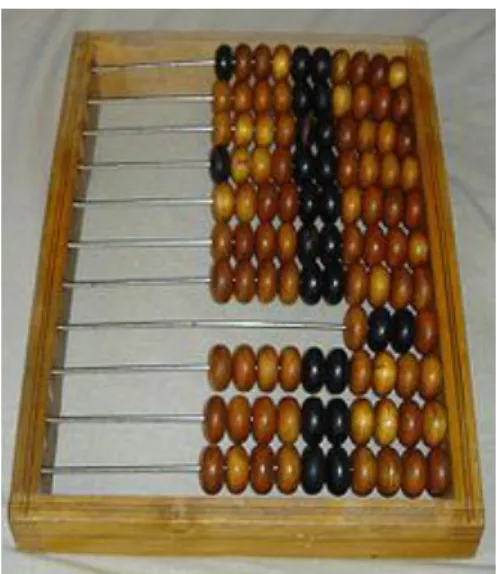
Baig and Halai (2006) say because of the abstract nature of mathematics, the role of concrete materials obviously help children to proceed from concretel to abstract thinking. Abacus is one of the concrete materials which is commonly used in the teaching and learning of Mathematics. The Russian abacus (tchoty/ schoty/ счёты) as shown inFigure 1 has a single slanted deck, with ten beads on each rod, except one rod which is usually positioned near the user, with four beads for quarter-ruble fractions (Wikipedia, 2005).
36
Figure 1: The Russian Abacus (Wikipedia, 2005)
The school abacus has a bead frame similar to the Russian abacus but with straight wires and a vertical frame. It is often seen as a plastic or wooden toy and usually used to represent numbers without the use of place value. Each bead and each wire has the same value and used in this way it can represent numbers up to 100 (Wikipedia, 2005) as shown in Figure 2.
The Wonder of Beads and Spokes / Chiam Sun May
37
3. PROBLEMS ENCOUNTEREDNina (Pseudonym) was one of the PISMP Mathematics student who carried out her third teaching practicum under my supervision during her semester 7. She was teaching the topic of subtraction in Year 3 for her second and third teaching practicum as well.
3.1 NINA’S FRUSTRATION DURING TEACHING PRACTICUM
Nina shared that her pupils faced difficulties in solving problems from this topic. She has tried several methods to assist her pupils but they still unable to master the basic concept of subtraction. This situation made Nina very unhappy and worry.
3.2 PUPILS HAVE DIFFICULTIES TO SBUTRACT TWO NUMBERS UP TO 4-DIGIT WITH REGROUPING
When it cames to the subtopic of subtract two numbers up to 4-digit, with regrouping, Nina needed longer time to make the pupils understand.
3.3 PUPILS FAIL TO MASTER BASIC CONCEPT OF SUBTRACTION
Nina believes that fail to master the basic concept of subtraction is the main reason which caused difficulties among her pupils. She believes that teaching and learning aids are interesting stimulators which is able to attract pupils’ attention. Teaching and learning aids is useful to both the teachers and pupils, when it comes to basic concept of Mathematics. She believes teacher who uses teaching aids in their lesson could deliver basic concept to the pupils effectively.
3.4 TO FIND OTHER ALTERNATIVES AS TEACHING AND LEARNING ACTIVITIES
In her first attempt, Nina demonstrated to her pupils how to do subtraction with regrouping by using different colours of counters. She showed them how to answer the same question by using standard method as the next step. However, when she evaluated the pupils during group activity and idependent practice, she found that most of
38
them still fail to master the basic concept of subtraction. Nina wanted to try Independent Abacus as her alternative. 4. THE INNOVATION
4.1 THE INDEPENDENT ABACUS
The Independent Abacus was adapted from the Russian abacus, the school abacus and the innovation of Mr. Suliman @ Ramuald Bin Muntiol, FasiLINUS Papar District. It consists of independent rods where each rod has ten beads. If the rod is used to represent ones, it will be used as the ones column where each bead worths one and so on.
The Independent Abacus Example:
a) Subtract two numbers up to 4 digits without regrouping 1 356 – 44 = _____
The Wonder of Beads and Spokes / Chiam Sun May
39
ii. Take away the beads that represent 44. The process of taking away started from the place value of ‘ones’ (O), following by the place value of ‘tens’ (T).
iii. 1 356 – 44 = 1 312, as represented by the beads on the Abacus.
b) Subtract two numbers up to 4 digits with regrouping 1356 – 47 = ______
40
ii. Take away the beads that represent 47. However, since the quantity of the beads in the place value of ‘ones’ were only six (which were less than 7), so the pupils need to take away 1 bead from the place value of ‘tens’.
iii. Since each bead on the place value of ‘tens’ worth 10,
iv. pupils subtracted 7 from 10 which is equal to 3. Pupils need to put another 3 beads on the place value of ones.
v. Take away 4 beads from the place value of ‘tens’ which is worth 40.
The Wonder of Beads and Spokes / Chiam Sun May
41
vi. The quantity of the beads on the Abacus represented the answer of 1356 – 47, which is 1309.
5. FOCUS OF THE INNOVATION
i. To identify pupils’ difficulties in performing subtraction. ii. To study the effectiveness of Independent Abacus to
improve pupils’ performance in subtraction.
iii. To build a positive perception on the use of concrete aids in teaching of basic concept of subtraction.
6. THE TARGET GROUP
The intervention of the innovation was crried out to a group of school pupils through Nina. It involved 17 Year 3 pupils from a primary school in Penampang area. They were 14 boys and 6 girls who were identified as average and below average achievers through their independent practise and indivual exercise given by Nina.
7. THE STEPS OF THE INNOVATION
Step Purpose
To Identify the pupils’ problems
Instrument employed: Reflective log Pre-test To assess the pupils’ mastery of basic concept in subtraction.
42
Teaching and learning session using the Independent Abacus as teaching aids
1. Show pupils to do subtraction by using Abacus
2. Pupils answer questions by using the Independant Abacus
Week 1: (2 hours)
Subtract two numbers up to 4 digits without regrouping
Week 2: (2 hours)
Subtract two numbers up to 4 digits without regrouping.
Week 3: (2 hours)
Subtract three numbers up to 4 digits with regrouping.
Week 4: (2 hours)
Subtract three numbers up to 4 digits with regrouping. Instrument employed: To reinforce the mastery of subtraction through the Independent Abacus To evaluate if the Independent abacus was effective to master the concept of subtraction.
The Wonder of Beads and Spokes / Chiam Sun May
43
Journal Writing Record book Post test Questionnaire8. BENIFITS FROM THE INNOVATION 8.1. REDUCE OPERATIONAL COST
The raw material consists of beads and spokes. The cost of the innovation is minimum.
8.2. TIME AND SPACE SAVING
Time taken to prepare teaching material is ignorable. The beads and the spokes require minimum space for storage and handy to be carried to the classroom by teachers. 8.3. EASILY AVAILABLE
Beads are available in various colours and various sizes. It can be easily obtained from most handicarft shops. The spokes are one of the common items available in most bicycle shops.
8.4 HANDS-ON EXPERIENCE FOR PUPILS
As the Independent Abacus has the benefits as stated in 8.1, 8.2, and 8.3, it does not burden teachers who wish to employ it as a teaching and learning aids. It is possible for the teachers to provide individual hands-on experience to the pupils.
8.5 INCREASE IN PERFORMANCE IN THE PUPILS AND THE WORK SATISFACTION OF NINA
The Independent Abacus has impacted Nina’s perceptions of teaching and learning aids; and gave her confident in teaching. It also showed that pupils have a better mastery in subtraction after the intervention with the Independent Abacus.
44 9. SUPPORTING DOCUMENTS
i. Appendix A - The Comparision of the Pre Test and the Post Test
ii. Appendix B - Pupils’ Responses from the Questionnaire iii. Appendix C: Analysis of Record Book and Journal Writing 10. REFERENCES
Baig, S. & Halai, A. (2006). Learning Mathematical Rules with Reasoning. Eurasia Journal of Mathematics, Science and Technology Education. (2): 2.
Nina (Pseudonym). 2010. The Wonder of Beads: The Use of Abacus in Teaching and Learning of Subtraction. Dissertation PISMP. IPGK Gaya. Wikipedia, the free encyclopedia. (2005). Abacus.
http://en.wikipedia.org/wiki/Abacus#Russian. Downloaded 25 May
2011.
11. ACKNOWLEDGEMENT
Special appreciation for they are generous in knowledge, material and information sharing.
i. Miss Nina (Pseudonym), PISMP (MT) Jan 2009 Intake Student of IPGK Gaya.
ii. Mr.Suliman @ Ramuald Bin Muntiol, FasiLINUS Papar District. Mr. Suliman @Ramuald Bin Muntiol is also a student of PGSR (MT) Nov 2008 Intake Student of IPGK Gaya.
The Wonder of Beads and Spokes / Chiam Sun May
45
Appendix A: The Comparision of the Pre Test and the Post Test
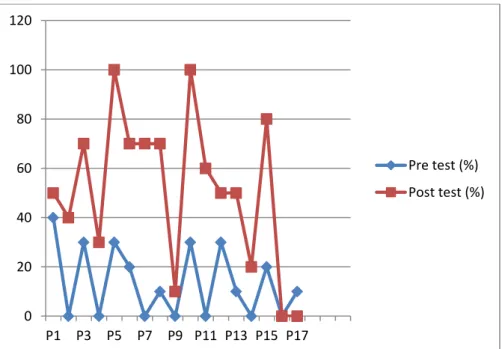
Figure 1: The Summary of the Mean of the Pre Test and the Post Test The mean of the pupils’ scores in the pre-test was 13.53 and it was increased to 51.18 in the post-test. It showed improvement on the pupils’ achievement after using the Independent Abacus in teaching and learning process.
Figure 2 : The Pupils’ Scores in the Pre Test and Post Test 0 20 40 60 80 100 120 P1 P3 P5 P7 P9 P11 P13 P15 P17 Pre test (%) Post test (%) 0 10 20 30 40 50 60
PRE - TEST POST - TEST
M
E
AN
TESTS
46
Figure 2 showed that all of the pupils obtained less than 50% in the pre test. Only 1 pupil scored 40%, which was the highest score, 4 pupils scored 30%, two pupils scored 20% and three pupils scored 10%. There were seven pupils with 0%. The range for the pupils’ score in the pretest was between 0 to 40%.
Figure 2 also showed the pupils’ scores in the post test. The highest score in the post test was 100%, and the lowest score was 0%. There were two pupils scored 100%, one pupil scored 80% and four pupils scored 70%. There was one pupil scored 60%, three pupils scored 50% and one pupil scored 40% in the post test. There was one pupil who scored 30%, 20% and 10% respectively in the post test. There were also 2 pupils who scored 0% in the test. So the range of the pupils’ scores in the post test was 0 to 100%.
Based on the data analysis from the pre test and post test, it is concluded that 15 pupils scored higher scores in the post test as compared to their have pre test scores. One pupil remained with 0% and one of them did not improve. It is concluded that the Independent Abacus assisted the pupils to improve their overall performance in Subtraction.
The Wonder of Beads and Spokes / Chiam Sun May
47
Appendix B: Pupils’ Responses from the Questionnaire
Items FREQUENCY (%)
Strongly Disagree
Disagree Not sure Agree Strongly
Agree
Pre Post Pre Post Pre Post Pre Post Pre Post
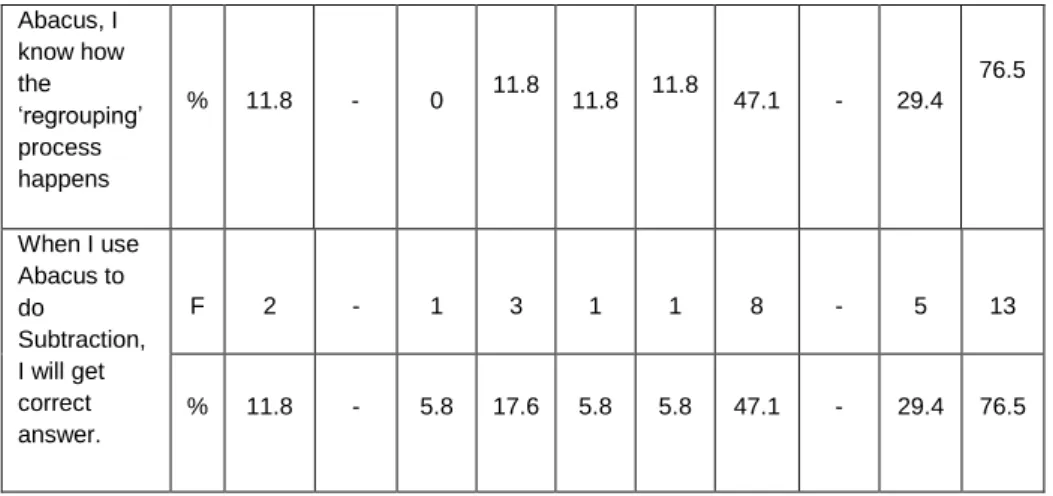
I really like Mathematics when my Mathematics teacher used Abacus to teach us. F 1 - 1 2 2 2 1 - 12 13 % 5.8 - 5.8 11.8 11.8 11.8 5.8 - 70.6 76.5 I know how to use Abacus to perform Subtraction. F 2 - 2 4 4 4 4 - 5 9 % 11.8 - 11.8 23.5 23.5 23.5 20 - 29.4 53 I know how to perform Subtraction when Abacus is provided. F 1 - 2 3 1 1 6 - 7 13 % 5.8 - 11.8 17.6 5.8 5.8 35.3 - 41.2 76.5 Abacus helps me to perform Subtraction. F 2 - 1 3 2 2 3 - 9 12 % 11.8 - 5.8 17.6 11.8 11.8 17.6 - 52.9 70.6 After I learnt Subtraction by using Abacus, I know how the ‘borrowing’ process happens. F 1 - 1 2 2 2 8 - 5 13 % 5.8 - 5.8 11.8 11.8 11.8 47.1 - 29.4 76.5 After I learnt Subtraction by using F 2 - 0 2 2 2 8 - 5 13
48 Abacus, I know how the ‘regrouping’ process happens % 11.8 - 0 11.8 11.8 11.8 47.1 - 29.4 76.5 When I use Abacus to do Subtraction, I will get correct answer. F 2 - 1 3 1 1 8 - 5 13 % 11.8 - 5.8 17.6 5.8 5.8 47.1 - 29.4 76.5
Table 1: The Comparision of the Pupils’ Responses on the Questionnaire Before the Pre Test and After the Post Test
Based on the data analysis, it is concluded that most of the pupils shown positive attitude towards the useof the Independent Abacus in teaching and learning of Subtraction. Most of the pupils agreed that the Independent Abacus helped them to understand the concept of subtraction and also helped them to improve their performance in subtraction.
The Wonder of Beads and Spokes / Chiam Sun May
49
Appendix C: Analysis of Record Book and Journal Writing
Data Resource Conclusion
Week 1
...and the lesson was so unsuccessfully done. I used Abacus as my teaching kit...however the pupils really think the Abacus as a ‘toy’ for them to play, not use the abacus for the counting purpose...they moved the beads and really enjoy the Abacus but they were unable to answer the questions. (JRNL/R/18 Feb 2010)
I am so unsatisfied with the lesson process....it seems like the pupils plays with the Abacus, not using it for the counting purpose...
(RCBK/R/18 Feb 2010)
Journal
Record book
On the first week of the implementation, the Independent Abacus managed to attract their attention. However, they did not use the Independent Abacus as a learning tool.
Week 2
...I spent longer time to explain to them on how to use the
Abacus to answer the
Record book Nina still faced difficulties in teaching the pupils to use the Independent Abacus to
50 questions...
( RCBK/R/26 Feb 2010)
perform Subtraction. She spent longer time to make her pupils to understand what she have planned. However, it showed that her pupils began to accept the Independent Abacus as a learning tool which could help them in performing subtraction. Week 3
I can see that I* have improve his performance. He is a fast learner...
(JRNL/R/29 Feb 2010)
...When I walk around the class and observed the pupils, I noticed that F* got the right answer (in his Abacus) he didn’t know how to write the process (algorithm) in his book.
(JRNL/R/1 March 2010)
Journal
Journal
Some of the pupils have improved their
performance in Subtraction in the third week after used the Abacus in the Mathematics class.
The pupils’ performance in perform subtraction were getting better. However they still have problem in writing the algorithm in their exercise book.
The Wonder of Beads and Spokes / Chiam Sun May
51
Week 4...I am so glad that pupils’ performances are getting better. Pupils were able to understand how to perform Subtraction with regrouping. They even help their friends (explain to them) how the process occurred. ...
(RCBK/R/1 March 2010)
Record book The pupils’ performances in
Subtraction were getting better. Some of the respondents also tried to help their friends to solve the questions by using the Independent Abacus.
52
VISUALIZING STANDARD DEVIATION BY POLYHEDRAL
Benny Kong Tze LoongTeh Ah Huat Ng Lee Fong
1.0 INTRODUCTION
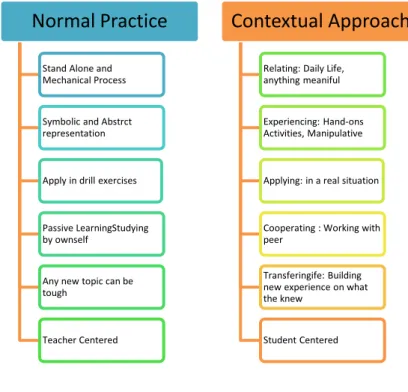
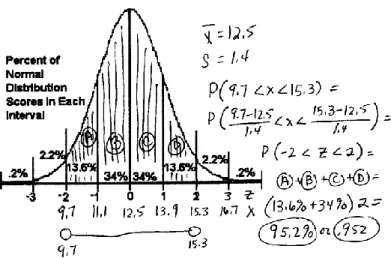
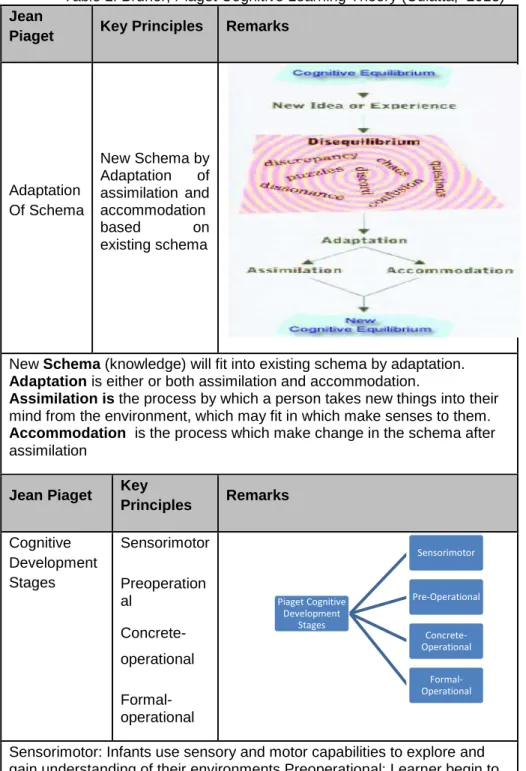
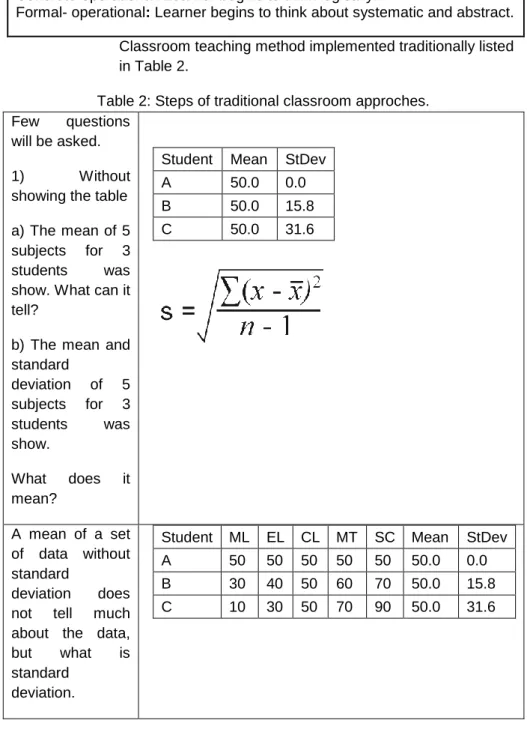
Learning Mathematics is something difficult for a lot of student, they cannot visualize those abstract concepts. One of it is standard deviation. The most common teaching and learning activity is usually just a mechanical ways of memorizing with little understanding of the abstract concept. By exploring the outcome of polyhedral, where content will be delivered through activities by referring learning theories (Cognitive “Bruner”- Constructivist “Piaget”) create a more contextual, meaningful and fun ways of learning. This innovation was involved PPISMP semester three students from IPG Kampus Kent.
2.0 CATEGORY Group
3.0 SAMPLE OF POPULATION
Students of PPISMP GSTT Dec 2011 intake are taking basic mathematics now in the third semester are studying Smart Statistic (MT3311D1). They were given the change to comparing standard deviations for a few sets of data in group. After given short briefing by the lecturer, they managed to explain the concept of standard deviation.
4.0 BACKGROUND
4.1 Cognitive Learning Theories
Cognitivism is a theory which looks into how people learn by attributing the process to in cognitive or mental activity. Learning can be seen as a change in individuals’ mental structures enabling them to gain new knowledge. Knowledge can be seen as schema or symbolic mental constructions. The implication of this theory for the teacher is that they could use various techniques such as structuring and meaningful organization of content and give practice for storing and retrieving information.