THIS REPORT CONTAINS ASSESSMENTS OF COMMODITY AND TRADE ISSUES MADE BY USDA STAFF AND NOT NECESSARILY STATEMENTS OF OFFICIAL U.S. GOVERNMENT POLICY
-
Date: GAIN Report Number:
Post:
Report Categories:
Approved By:
Prepared By:
Report Highlights:
On November 6, 2017, the Plant Protection Division updated its list of U.S. commodities that are allowed to be imported into Myanmar.
Swe Mon Aung, Agricultural Specialist Rey Santella, Agricultural Attaché Trade Policy Incident Report
Myanmar Pest Risk Analysis Requirement Update
Rangoon
Burma - Union of
2018 11/8/2017 Public
General Information:
On January 1, 2017, the Myanmar government, led by the Plant Protection Division (PPD), imposed new pest risk analysis (PRA) requirements for imported plant related commodities. Under the new directive, PPD authorities prohibited the import of plant and plant related products unless the exporting country provided PRA information that explained how it dealt with pest outbreaks and ensured the safety of the commodities. (See GAIN report BM 7004 for detailed PRA requirements).
Under a negotiated agreement, PPD granted the United States an extension to the new PRA requirements that went to effect on January 1, 2017. That extension expired on August 31, 2017. During the interim, several U.S. commodity groups submitted PRA information to the Animal and Plant Health Inspection Service (APHIS).
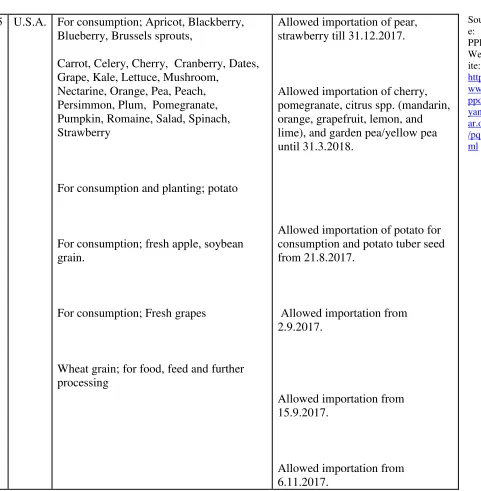
On November 6, 2017, PPD accepted the PRA information for U.S. wheat grain used for food, feed and processing bringing the total number of U.S. commodities approved for import to Myanmar to five (i.e., potatoes, apples, grapes, soybeans, and wheat).
Other commodities including cherries, strawberries, garden/yellow peas, etc., have until 2018 to submit the pertinent PRA information. (Please see table below for additional details.)
U.S. commodities not included in the PPD list need to work with APHIS to submit the pertinent PRA information as the Myanmar government will only accept official submissions by the designated National Plant Protection Organization. Thus, U.S. commodity groups and/or exporters are
recommended to work with APHIS and their respective importers to ensure they comply with the new requirements prior to exporting to Myanmar.
Table 1: U.S. Commodities Approved for Import to Myanmar
5 U.S.A. For consumption; Apricot, Blackberry, Blueberry, Brussels sprouts,
Carrot, Celery, Cherry, Cranberry, Dates, Grape, Kale, Lettuce, Mushroom,
Nectarine, Orange, Pea, Peach, Persimmon, Plum, Pomegranate, Pumpkin, Romaine, Salad, Spinach, Strawberry
For consumption and planting; potato
For consumption; fresh apple, soybean grain.
For consumption; Fresh grapes
Wheat grain; for food, feed and further processing
Allowed importation of pear, strawberry till 31.12.2017.
Allowed importation of cherry, pomegranate, citrus spp. (mandarin, orange, grapefruit, lemon, and lime), and garden pea/yellow pea until 31.3.2018.
Allowed importation of potato for consumption and potato tuber seed from 21.8.2017.
Allowed importation from 2.9.2017.
Allowed importation from 15.9.2017.