REINWARDTIA Vol 12, Part 5, pp: 347 – 356
THE DISTRIBUTION OF GLOMEROMYCOTA IN CACAO
RHIZOSPHERE IN INDONESIA
Received, August 26, 2008; accepted September 12, 2008
KARTINI KRAMADIBRATA
Herbarium Bogoriense, Botany Division, Research Center for Biology-LIPI, Cibinong Science Centre, Jl. Raya Bogor Jakarta Km 46, Cibinong 16911, Indonesia. E-mail: [email protected]
ABSTRACT
KRAMADIBRATA, K. 2009. The distribution of Glomeromycota in cacao rhizosphere in Indonesia. Reinwardtia
12(5): 347–356. ⎯ A study on the distribution of Glomeromycota (AF) in cacao soils in several cacao plantations in Java and Bali showed that Acaulospora walkeri as a dominant species and A. scrobiculata as a predominant species.
Key words:Glomeromycota, cacao, Java and Bali.
ABSTRAK
KRAMADIBRATA, K. 2009. Persebaran Glomeromycota pada rizosfer kakao di Indonesia. Reinwardtia 12(5): 347–356. ⎯ Disajikan persebaran Glomeromycota (JA) pada beberapa perkebunan kakao di Jawa dan Bali. Jenis
Acaulospora walkeri merupakan jenis yang dominan disusul oleh A. scrobiculata.
Kata kunci:Glomeromycota, kakao, Jawa dan Bali.
INTRODUCTION
Studies on Glomeromycota or arbuscular mycorrhiza fungi (AF) in agricultural soils and soils under natural vegetation in the tropical areas are relatively scarce, and only in some areas they are fairly well documented, such as in Brazil, Colombia, and Peru (Schenck et al., 1984; Schenck et al., 1986); Costa Rica, Mexico, and Panama (Janos & Trappe, 1982); Cuba (Ferrer & Herrera, 1981); India (Gerdemann & Bakshi, 1976; Bhattacharjee & Mukerji, 1980; Bhatta-charjee et al., 1982; Mukerji et al., 1983); Indonesia (Widiastuti & Kramadibrata, 1992 & 1993; Kramadibrata et al., 1995; Setya et al., 1995; Silviana et al., 1999; Chairani et al., 2002; Muliawan et al., 2002, and Kramadibrata & Gunawan, 2006), Malaysia (Wastie, 1965; Nadarajah, 1980; Chulan & Ragu, 1986); Pakistan (Iqbal & Bushra, 1980); Phillipines (Baradas & Halos, 1980); Taiwan (Wu & Chen, 1986). Boedijn (1935) did describe Endogone tjibodensis from natural vegetation in West Java, a taxon later redefined by Gerdemann & Trappe (1974) as Glomus vesiculiferum. Boedijn (1935) did not define the mycorrhizal status of this species and until the 1980’s the existence of these Indonesian studies remained unknown. Furthermore, detailed studies of Glomeromycota in soils under cacao plantation in Indonesia have not been carried out.
The aim of this study is to investigate the dis-
tribution of Glomeromycota in cacao rhizosphere throughout Java and Bali.
MATERIALS AND METHODS
Field sampling of soils under cacao plantation About 2–4 kg of soil was taken from around each cacao trees. The soil was a combination of four sub-samples which were taken from four points at 0–15 cm depth, 40–50 cm from the tree trunk, using a small trowel.
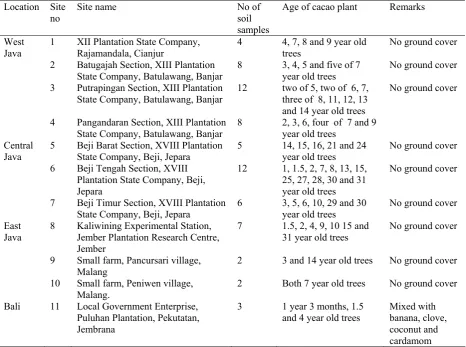
Ten plantations in Java and one in Bali were selected (Table 1). Each plantation was divided into plots on the basis of the ages of trees, or topographical variations of the sites. Table 2 shows the abiotic factors in sampling sites. A cacao tree in the centre of each plot was selected.
Extraction of spores from soil samples
Spores were extracted from soil samples by use of a series of sieves (Gerdemann & Nicolson, 1963), following a modification of the technique of centrifugation (Walker et al., 1982 and Gerdemann & Nicolson, 1963).
Taxa of Glomeromycota (AF) recovered from soil samples from Java and Bali
Table 3 presents a list of the taxa for which spores were recovered during sampling in 1987 for reasonably certain identification was possible.
Table 1. Origin of soil samples, no of soil samples and age of plant
Location Site no
Site name No of
soil samples
Age of cacao plant Remarks
West Java
1 XII Plantation State Company, Rajamandala, Cianjur
4 4, 7, 8 and 9 year old trees
No ground cover
2 Batugajah Section, XIII Plantation State Company, Batulawang, Banjar
8 3, 4, 5 and five of 7 year old trees
No ground cover
3 Putrapingan Section, XIII Plantation State Company, Batulawang, Banjar
12 two of 5, two of 6, 7, three of 8, 11, 12, 13 and 14 year old trees
No ground cover
4 Pangandaran Section, XIII Plantation State Company, Batulawang, Banjar
8 2, 3, 6, four of 7 and 9 year old trees
Central Java
5 Beji Barat Section, XVIII Plantation State Company, Beji, Jepara
5 14, 15, 16, 21 and 24 year old trees
No ground cover
6 Beji Tengah Section, XVIII Plantation State Company, Beji, Jepara
12 1, 1.5, 2, 7, 8, 13, 15, 25, 27, 28, 30 and 31 year old trees
No ground cover
7 Beji Timur Section, XVIII Plantation State Company, Beji, Jepara
6 3, 5, 6, 10, 29 and 30 year old trees
No ground cover
East Java
8 Kaliwining Experimental Station, Jember Plantation Research Centre, Jember
7 1.5, 2, 4, 9, 10 15 and 31 year old trees
No ground cover
9 Small farm, Pancursari village, Malang
2 3 and 14 year old trees No ground cover
10 Small farm, Peniwen village, Malang.
2 Both 7 year old trees No ground cover
Bali 11 Local Government Enterprise, Puluhan Plantation, Pekutatan, Jembrana
3 1 year 3 months, 1.5 and 4 year old trees
Mixed with banana, clove, coconut and cardamom
Table 2. Abiotic factors in sampling sites in Java and Bali
Location Site no
Site name Soil pHa Organic matter
content + (%)
Type of soil
Rainfall mm/yr Altitude (metres)
West Java 1 Rajamandala 5.3 (4.5-6.0) 7.20 Volcanic > 3,000 (A) + 300 2 Batugajah 5.2 (4.5-6.1) 8.79 Volcanic* > 3,000 (A) + 300 3 Pangandaran 5.8 (5.2-6.2) 5.96 Volcanic* > 3,000 (A) 0-20 4 Putrapinggan 5.8 (4.6-6.9) 7.40 Volcanic* > 3,000 (A) + 300 Central
Java
5 Beji Barat 5.2 (4.6-5.8) 6.71 Volcanic* 2,000 (D) 0-20
6 Beji Tengah 5.6 (4.9-6.0) 6.16 Volcanic* 2,000 (D) 0-20 7 Beji Timur 5.6 (5.2-6.0) 6.97 Volcanic* 2,000 (D) 0-20 East Java 8 Kaliwining 5.3 (4.6-6.4) 8.96 Volcanic 2,000 (D) + 45 9 Pancursari 5.6 10.39 Volcanic 2,500-3,000 (B-C) + 400 10 Peniwen 5.8 (5.6-6.1) 4.07 Volcanic 2,500-3,000 (B-C) + 400 Bali 11 Jembrana 6.0 (5-5-6.3) 6.86 Volcanic* nd + 45
Notes :
a
Mean pH with range indicated in parantheses nd = no data
+
Organic matter content (%), only sample for each site was determined
2009] KRAMADIBRATA: Glomeromycota in cacao rhizosphere in Indonesia 349
Table 3. List of Glomeromycota taxa recovered from cacao soils in Java and Bali
No Glomeromycota taxa Abbreviation
of taxa use in Figures 1, 2, 3
and 4
1 Acaulospora foveata Af
2 A. rehmii Ar
3 A. scrobiculata As
4 A. tuberculata At
5 A. walkeri Aw
6 Gigaspora gigantean Gig
7 Glomus aggregatum Gag
8 G. albidum Gal
9 G. diaphanum Gdi
10 G. fasciculatum Gfa
11 G. fuegianum Gfu
12 G. invermaium Gin
13 G. microaggreagtum Gmi
14 G. multicaulis Gmu
15 Paraglomus occultum Poc
16 Scutellospora fulgida Sfu
17 S. pellucida Spe
18 Glomus rubiforme ex
Sclerocystis pachycauluis
Gru
19 G. sinuosum ex S. sinuosa Gsi
Analysis of populations of Glomeromycota (AF) taxa present in sampling sites in Java and Bali
The methods of Koske (1987) were used to analyze the assemblages of spore types in each of the soil samples examined, to compare sites distributed throughout Java and Bali. For each sample examined and for each of the eleven sites the following calculations were made:
1. Species richness. It was used to determine whether there were differences in AF species diversity between samples taken at the same cacao sites as well as differences between sites distributed throughout Java and Bali. It was simply defined as the number of AF taxa recovered from each sample. Koske (1987) in his study of sand dune systems in eastern parts of the United States defines species richness of ‘root zones’ of Ammophila and other plants. However in the present study it was not possible to assign spores specifically to cacao root systems in all instances, although in most plantations few weed species occurred and it was highly probable that the taxa isolated were associated with the cacao root zone.
2. Frequency of occurrence. Koske (1987) used the percentage of samples from which particular taxa were recovered as an expression of their relative abundance. In the present study the total number of samples per site containing a taxon was divided by the overall number of samples per site
to derive a percentage frequency of occurrence. The numbers of samples per site varied between 2 and 12 (see Table 1), which obviously affected the range of data points that could be derived.
3. Population density. Koske (1987) used the term ‘density’ to describe number of spores per 100 cm3 of soil. Here population density has been used to describe numbers of spores of AF per 1 kg fresh weight soil (1 kg of soil ca. 500 cm3 of soil) calculated from direct counts of samples. Data from samples for each site were averaged to give a site value.
4. Spore biovolume. Koske (1987) derived this concept from Dickman et al. (1984) in order to compensate for the differences in size between spores of AF species, pointing out that frequency of occurrence may not accurately reflect the inoculum potential of different species, since large spores have a capacity for multiple germination and are therefore more effective as inoculums than small spores (Koske, 1981). Spore biovolume was calculated by measuring the diameter of 10–50
spores for each taxon and then multiplying the average volume, calculated by 4/3 Πr3
, by the average population density of a species at the site. Results were expressed per 1 kg fresh weight of soil (1 kg of soil ca. 500 cm3 of soil).
5. Dominance index. Koske (1987) derived this term from Southwood’s 1968 description of dominance in ecosystems, in an attempt to determine the dominance of AF spore type in AF population of a soil sample in terms of its total volume, rather than numbers, as given by percentage frequency. Dominance for each site is expressed as the ratio between the biovolume of the species with greatest spore biovolume (biovolume max) and the overall biovolume of AF spores at that site (biovolume total).
Biovolume max D=
Biovolume total
Freq. of occurrence of AF species
Relative Frequency = --- x 100 % Sum of the frequency of all AF Species
No of spores of individual AF species
Relative population density = --- x 100% Total numbers of all AF spores
Biovolume of spores of individual AF species
Relative biovolume = --- x 100% Total biovolume of all AF spores
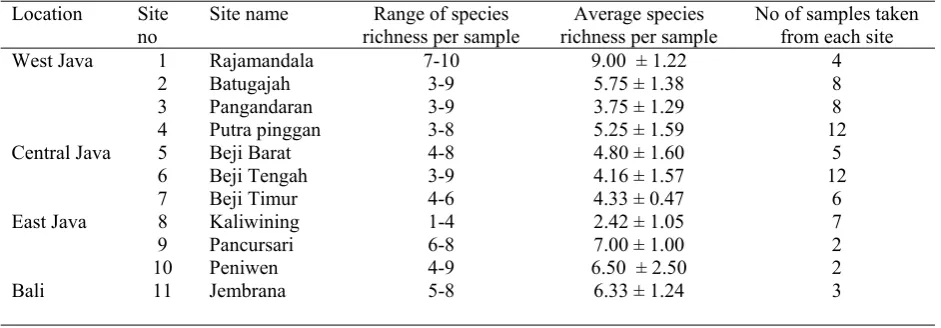
Table 4. Species richness of AF spores in cacao soils in Java and Bali
Location Site no
Site name Range of species richness per sample
Average species richness per sample
No of samples taken from each site West Java 1 Rajamandala 7-10 9.00 ± 1.22 4
2 Batugajah 3-9 5.75 ± 1.38 8
3 Pangandaran 3-9 3.75 ± 1.29 8
4 Putra pinggan 3-8 5.25 ± 1.59 12
Central Java 5 Beji Barat 4-8 4.80 ± 1.60 5
6 Beji Tengah 3-9 4.16 ± 1.57 12
7 Beji Timur 4-6 4.33 ± 0.47 6
East Java 8 Kaliwining 1-4 2.42 ± 1.05 7
9 Pancursari 6-8 7.00 ± 1.00 2
10 Peniwen 4-9 6.50 ± 2.50 2
Bali 11 Jembrana 5-8 6.33 ± 1.24 3
RESULTS
1. Species richness
The species richness found during the survey ranged between 1–10 for individual samples. The variation in species numbers for each site is shown in Table 4 together with average species richness for each of the sites in Java and Bali (see Figure 1). The variation in numbers of samples taken for each site seems to have little effect on the overall result of the species richness analysis. For example, in site 10 (Peniwen), East Java where only two samples were taken an average species richness of 6.50 ± 2.5 (range 4–9) was found, as against site 4 (Putrapinggan), West Java where 12 samples had an average species richness of 5.25 ± 1.59 (range 3–8). However, some sites were definitely species poor, especially site 8 (Kaliwining), East Java with an average species richness of 2.42 ± 1.05 (range 1–4) based on 7 samples, whereas others are clearly species rich, for example site 1 (Rajamandala), West Java, with an average index of 9.00 ± 1.22 (range 7–10) based on 4 samples.
2. Frequency of occurrence (Figure 1).
The results of this analysis are shown in Fi-
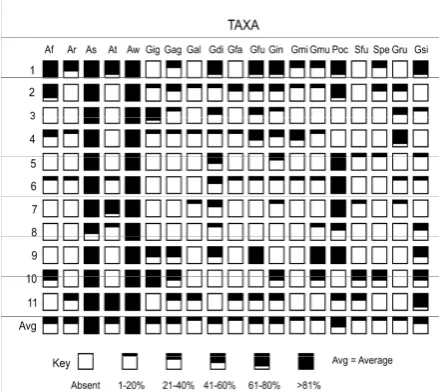
gure 1 where the average values for each of the 2 species considered are shown as incrementally shaded squares, each increment being equivalent to a 20% increase in the value of the frequency of occurrence. The figure shows that the taxon Acaulospora walkeri was present throughout Java and Bali at an overall average frequency of 98%. A. scrobiculata (93% overall average) was only slightly less frequent. However an examination of figure 1 indicates that frequency of occurrence of some taxa did vary with the geographical location of the sites. West Java (sites 1–4) shows high frequencies for A. foveata (73% average) and Glomus fuegianum (50% average). Central Java (sites 5–7) was characterized by a high frequency of G. occultum (91% average). G. multicaulis and Gigaspora gigantea, with overall averages of 55% and 50% respectively, seemed to be most abundant in East Java (sites 8–10). The Bali site (11) was distinguished by a high frequency of A. tuberculata (100%) and G. sinuosum (67%).
2009] KRAMADIBRATA: Glomeromycota in cacao rhizosphere in Indonesia 351
Figure 1. Frequency of occurrence of AF in Java and Bali. Key to sites is given in Table 2 and the full list of species is given in Table 3.
3. Spore population density (Figure 2).
Figure 2 shows spore population density for 19 of the AF spore types for the 11 sampling sites, using shading to illustrate numbers/kg fresh weight soil in increments of 20 up to 80 or more. The taxa showing the highest frequency of occurrence A. walkeri and A scrobiculata also had the highest spore populations (compare Figures 1 and 2). A. walkeri averaged of 440 spores per kg soil for all eleven sites, whilst A. scrobiculata averaged at 102.7 spores per kg. A. walkeri was very abundant at site 9 (Pancursari), East Java at 1278 spores/kg, at site 2 (Batugajah), West Java at 1015.7 spores/kg and at site 4 (Putrapinggan), West Java at 1204.5 spores/kg. A. scrobiculata was most abundant at Rajamandala (site 1), West Java at 693.6 spores/kg.
Figure 2 shows that spores of most other taxa were present but in much lower numbers, mostly in the range 1–20 spores per kg soil with the exception of Paraglomus occultum at sites 1 (Rajamandala) and 2 (Batugajah) in West Java and 9 (Pancursari) in East Java, and all sites in Central Java. Some taxa were only found as 11 spores in 1 subsample for some sites, giving a spore population of less than 1 per kg for the site. They do appear in the figure as spores per kg soil, for example, A. rehmii at site 6 (Beji Tengah, Central Java), G. diaphanum, G. albidum and G. gigantea in site 4 (Putrapinggan) in West Java and G. invermaium in site 6 (Beji Tengah) in Central Java. Clearly these taxa are widely distributed but their spore populations are low.
A comparison of Figures 1 and 2 shows that some species which had frequency of occurrence, and were found in a large proportion of
subsamples, nevertheless had low spore populations. For example, A. foveata at sites 1 (Rajamandala) and 2 (Batugajah) in West Java had 60–100% occurrence, but 8–11 spores/kg, A.
tuberculata at site 1 (Rajamandala) in West Java had 100% frequency, 10 spores/kg and G. sinuosum at site 1 (75% frequency, 2 sporo-carps/kg).
Figure 2. Population density of spores (per 1 kg soil) of AF in Java and Bali. Key to sites is given in Table 2 and the full list of species is given in Table 3.
4. Spore biovolume (Figure 3)
Figure 3 illustrates biovolumes of spores for AF taxa in µm3 per kg fresh weight soil. Squares are shaded in steps from 1.0 x 105µm3 to 1.0 x 109µm3. Biovolume of the spore population e.g. A. walkeri at 6.93 x 109µm3 at site 9 (Pancursari) in East Java and A. scrobiculata at 2.23 x 109µm3 per kg at site 2 (Batugajah) in West Java. The value of this method of analysis is shown by G. sinuosum dan G. rubiforme. The sporocarp of these AF were always less than 20 per kg soil (see figure 2 spore population density). Yet the biovolume of G. sinuosum exceeded 1.0 x 107µm3 per kg at site 1 (Rajamandala) and site 3 (Pangandaran) in West Java, site 6 (Beji Tengah) and site 5 (Beji Barat) in Central Java, site 8 (Kaliwining), site 9 (Pancursari), site 10 (Peniwen) in East Java and site 11 (Jembrana in Bali). At site 9 (Pancursari) the biovolume of G. sinuosum (1.67 x10⁷) ex-ceeded that of G. fuegianum (6.65 x10⁶) even though the latter had a spore population of 12.50 spores/kg whereas G. sinuosum occurred at a density of less than 1 sporocarp per kg soil.
(Batugajah) and site 3 (Pangandaran) in West Java and site 9 (Pancursari) and site 10 (Peniwen) in East Java (see figure 2), yet had biovolume of 1 x 10⁷ – 1 x 108µm3 per kg soil for all these sites (see Figure 3).
Figure 3. Spore biovolume (μm3 per 1 kg soil) of AF in Java and Bali. Key to sites is given in Table 2 and the full list of species is given in Table 3.
5. Dominance Indices (DI)
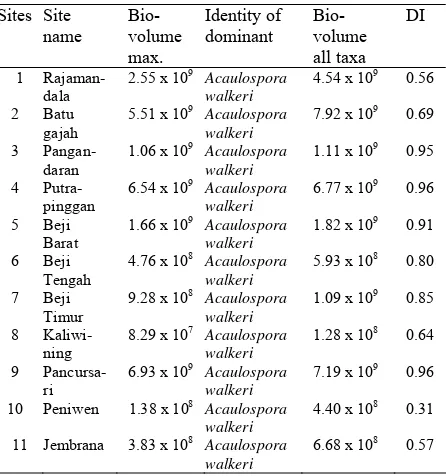
These are shown in Table 5 together with the biovolumes of the spores of the ‘dominant’ species and the total volume of spores of all AF species.
Table 5. Dominance Indices of AF in cacao soils from Java and Bali
Sites Site name
Bio-volume max.
Identity of dominant
Bio-volume all taxa
DI
1 Rajaman-dala
2.55 x 10⁹
Acaulospora walkeri
4.54 x 10⁹ 0.56
2 Batu gajah
5.51 x 10⁹ Acaulospora walkeri
7.92 x 10⁹ 0.69
3 Pangan-daran
1.06 x 10⁹ Acaulospora walkeri
1.11 x 10⁹ 0.95
4 Putra-pinggan
6.54 x 10⁹ Acaulospora walkeri
6.77 x 10⁹ 0.96
5 Beji Barat
1.66 x 10⁹ Acaulospora walkeri
1.82 x 10⁹ 0.91
6 Beji Tengah
4.76 x 10⁸ Acaulospora walkeri
5.93 x 10⁸ 0.80
7 Beji Timur
9.28 x 10⁸ Acaulospora walkeri
1.09 x 10⁹ 0.85
8 Kaliwi-ning
8.29 x 10⁷ Acaulospora walkeri
1.28 x 10⁸ 0.64
9 Pancursa-ri
6.93 x 10⁹ Acaulospora walkeri
7.19 x 10⁹ 0.96
10 Peniwen 1.38 x 10⁸ Acaulospora walkeri
4.40 x 10⁸ 0.31
11 Jembrana 3.83 x 10⁸ Acaulospora walkeri
6.68 x 10⁸ 0.57
In most cases the bulk of the biovolume was made up of the two Acaulospora species, A. scrobiculata and A. walkeri. The values of 0.5–0.6
reflect high biovolumes of more than one species e.g. site 1 (Rajamandala) in West Java (see Figure 3). Site 10 (Peniwen) in East Java shows the lowest value, due to high biovolumes of A. scrobiculata and G. gigantea.
6. Importance Values (IV see Figure 4)
In the preceding presentation of the results it has been made clear that assessment of frequency (Figure 1), population density (Figure 2) and bio-volumes (Figure 3) give conflicting pictures of the relative importance of different AF species in the spore populations at the different sites throughout Java and Bali. The idea of the Importance Value is to bring these three aspects together. The results are illustrated in Figure 4.
Figure 4. Importance values of AF in Java and Bali. Key to sites is given in Table 2 and the full list of species is given in Table 3.
2009] KRAMADIBRATA: Glomeromycota in cacao rhizosphere in Indonesia 353
in Central Java and 11.05 on site 8 (Kaliwining) perhaps indicated East Java and Central Java distribution.
By themselves, the data on frequency of occurrence can only roughly indicate distribution, however, the data do emphasize the almost universal presence of the two Acaulospora species in cacao soils throughout Java into Bali.
DISCUSSION
A particular feature of the Indonesian soil samples was the abundance of A. walkeri. It was not found in association with cacao in Ecuador (Kramadibrata, 2009). Geographical speciation may be the explanation for this difference, but as yet there is little evidence as to how AF speciate and what are the relative effects of geographical isolation, temperature and rainfall differences, soil characteristics and host range. Janos (1980) argued that poor dispersal of AF fungi probably constrained host specificity by limiting the ability of the fungi to encounter specific host, especially in diverse tropical forests. Pirozynski (1968) did note that temperature was the most important climatic factor regulating distribution and occurrence of fungi and Koske (1987) agreed that the structure of the AF community was affected by temperature; but he also noted that for most species, variation in frequency, spore density or spore biovolume could not be related to any abiotic factors. He argued that one reason could be the aggregated type of distribution of AF fungi spores in soil.
Cacao plantations are managed vegetation stands and man’s activity has been one of the most important single factors affecting the geographical distribution of fungi (Pirozynski, 1968). Thus the distribution of spore types collected in cacao plantations could have been brought about on their hosts through man’s activity.
However, the argument of Janos (1980) about poor dispersal of AF, could also be applied to speciation due to geographical separation (allopatric speciation). As yet there have been too few studies of spore populations to provide much data, but the present evidence of the abundance A. walkeri in Java and Bali with cacao, and its complete absence from Ecuador, may indicate a geographical factor. However, in contrast, A. scrobiculata seems to be a taxon with worldwide distribution, including sand dunes in the USA (Koske, 1987), tropical rain forest in Mexico and agricultural soils in the USA (Trappe, 1977), sand dunes in Australia (Koske, 1975), agricultural soils (Widiastuti & Kramadibrata, 1992 & 1993;
Silviana et al., 1999; Haerida & Kramadibrata, 2002; Chairani et al., 2002; Muliawan, et al., 2002), managed ecosystem or in the Bogor Botanic Garden (Setya et al., 1995) and under forest trees (Kramadibrata, 1993). Koske (1975) stated that he could find no evidence that this spore type was associated with a particular host or pH value in the sand.
There is a large literature on the distribution on AF spore types, most of it fragmentary, as in the example of A. scrobiculata quoted above. Few attempts have been made to make consistent investigation of spore assemblages under the same plant community over a wide geographical range, as was attempted here in the survey of Java and Bali. One exception was Koske (1987) who used the Atlantic seaboard of the USA to determine latitudinal differences in spore assemblages.
Koske (1987) concluded that temperature was the main factor in determining AF community in these sand dune systems. However, in Indonesia, with regular temperature throughout the year, it would not have affected distribution.
pH, organic matter and other soil properties have also been recorded as positive factors in recent publications such as by Schenck et al. (1984), Morton (1986), Sieverding (1987), Sieverding & Toro (1987 a & b) and soil pH was also mentioned by Wang et al. (1985) in connection with AF. Plant vigour may affect spore production of AF fungi as has been reported by Chilvers & Daft (1982), Daft & Nicolson (1972), Furlan & Fortin (1972), Hayman (1974) and Pugh et al. (1981). It was difficult to ascertain the vigour of the cacao trees under field conditions. Although the age of cacao trees were recorded, the many herbaceous plants surrounding them could not be ignored, and the AF spores associated with cacao trees were possibly also associated with these other plants. Thus whether the age of trees was a major factor in AF pattern of distribution, or pattern of association cannot be determined.
Temperature was mentioned earlier as a factor in AF distribution and a final point can be made about the overall significance of this study of a tropical crop. In Indonesia air temperature, day time is around 25–30º C and, although many fungi have a broad latitudinal range (Bisby, 1943; Pirozynski, 1968), so that it is difficult to identify a tropical species distribution, it might be speculated that spore types recorded in the survey were of taxa with a tropical or subtropical distribution.
Examination of the literature showed that a number of taxa found in this study have a very wide geographical range, for example G. fasciculatum (Molina, 1985; Walker & Koske, 1987). Other taxa found seem to have a distribution in the northern or southern temperate latitudes, for example S. calospora, from Scotland, Illinois, Pacific Northwest and New Zealand (Nicolson & Gerdemann, 1968; Gerdemann & Trappe, 1974; Mosse & Bowen, 1968). Koske (1987) found in a study of the spore density of this species in sand dunes that it was favoured by cooler soil temperatures and, together with G. gigantea, it was not found in sand dunes in Florida (Sylvia, 1986). Both of these species, although found in the present study, occurred in very low numbers. A similar explanation may be offered for the low numbers of G. mosseae, which has been found in northern latitudes (Gerdemann, 1961; Koch, 1961; Gerdemann & Trappe, 1974) and southern latitudes i.e. Australia and New Zealand (Mosse & Bowen, 1968). A similar hypothesis could be put forward for a number of the spores found infrequently during the study, but the greater number of studies carried out in the northern latitudes may well influence this data.
Other taxa which were found did have previous evidence of a tropical distribution. A. rehmii and A. tuberculata seem to occur together in the Javan soils and were described from the tropical zones of South and Central America (Sieverding & Toro, 1987; Janos & Trappe, 1982). S. fulgida was found in Indonesia and also in Ecuador (Kramadibrata, 2008). Koske & Walker (1986) described this species from sand dunes in the eastern north of the USA. Later Koske (1987) concluded that S. fulgida in the sand dune system in the east coast of the USA has a significant linear increase in frequency of occurrence and spore density with more southern latitudes, and proposed that it preferred warmer temperatures. This spore type was found from quite a wide area in Java and Bali. Its higher frequency and the higher spore density compared to S. calospora in
Java and Bali (see Figures 1 and 2) makes an interesting comparison. Other taxa with a probable tropical distribution which were found regularly in the survey in Indonesia included G. multicaulis (described by Gerdemann & Bakshi, 1976 from India). G. sinuosum (formerly Sclerocystis sinuosa or S. pakistanica) also from India (Gerdemann & Bakshi, 1976) and from Pakistan (Iqbal & Bushra, 1980) was another taxon with a possible tropical origin which was found in the survey. Most former Sclerocystis may have a tropical origin. Up to 1974 only three species of Sclerocystis were known; two of them S. coremioides and S. dussii have been previously found only in the tropics or subtropics or in tropical greenhouses (Gerdemann & Trappe, 1974; Janos, 1975). G. rubiforme (formerly known Sclerocystis pachycaulis or S. rubiformis) was originally described from temperate (Gerdemann & Trappe, 1974) but than reported from subtropical zone in Taiwan (Wu & Chen, 1986) under bamboo vegetation, it is also widely distributed under bamboo vegetation (Setya et al., 1995), durian (Chairani et al., 2002), cacao, cogon grass and corn (Widiastuti & Kramadibrata, 1992), forest trees in Indonesia (Kramadibrata unpublished data). An interesting feature was that in the 1987 survey G. sinuosum and G. rubiforme never occurred together in the same sample. The former species occurred in wide soil pH range (pH 4.6-6.9) compared to the latter (pH 5.2-6.3).
The distribution of other taxa is less capable of environmental interpretation. G. fuegianum was first described from southern temperate (Spegazzini, 1887), then New Zealand (Hall, 1977) and England (Godfrey, 1957). In spite of such previous records in temperate zones, it was found widely in the present study in Indonesia and it was also reported from under cogon grass, corn and cacao (Widiastuti & Kramadibrata, 1992). G. invermaium is a similar case. It was firstly described from New Zealand (Hall, 1977) associated with Trifolium repens but was widespread in Java and Bali associated cacao root.
ACKNOWLEDGEMENT
2009] KRAMADIBRATA: Glomeromycota in cacao rhizosphere in Indonesia 355
REFERENCES
BARADAS, N.S. & HALOS, P.M. 1980. Selection of mycorrhizal isolates for biological control of
Fusarium solani f. sp. phaseoli on Vigna unguiculata. In MIKOLA, P. (Ed.). Tropical Mycorrhiza Research. :247–248. Oxford Science Publication, Oxford.
BHATTACHARJEE, M. & MUKERJI, K.G. 1980. Studies on Indian Endogonaceae. II. The genus
Glomus. Sydowia 33: 14–17.
BHATTACHARJEE, M., MUKERJI, K.G., TEWARI, J.P & SKOROPAD, W.P. 1982. Structure and hyperparasitism of a new species of Gigaspora.
Trans. Brit. mycol. Soc. 78: 184–188.
BISBY, G.R. 1943. Geographical distribution of fungi.
The Botanical Review 9: 466–482.
BOEDJIN, K.B. 1935. The Endogone and Sclerocystis
in the Netherlands Indies. Bull. Jard. Bot. Buitenzorg 3: 503–503.
CHAIRANI, GUNAWAN, A.W. & KRAMADIBRA-TA, K. 2002. Mikoriza durian di Bogor dan sekitarnya. J. Mikrobiol. Indones. 7: 44–46.
CHILVERS, M.T. & DAFT, M.J.F. 1982. Effects of low temperature on development between Glomus caledonium and Allium cepa. Trans. Brit. mycol. Soc. 79: 153–157.
CHULAN, A.H. & RAGU, P. 1986. Growth response of Theobroma cacao L. seedlings to inoculation with vesicular-arbuscular mycorrhizal fungi. Plant and Soil 96: 279–285.
DAFT, M.J. & NICOLSON, T.H. 1972. Effects of
Endogone mycorrhiza on plant growth. IV. Quantitave relationships between on growth of the host and the development on the endophyte in tomato and maize. New Phytologist 71 : 287–295. DICKMAN, L.A., LIBERTA, A.E. & ANDERSON,
R.C. 1984. Ecological interaction of little bluestem and vesicular-arbuscular mycorrhizal fungi. Can. J. Bot. 62: 2272–2277.
FERRER, R.L. & HERRERA, R.A. 1981. El genero
Gigaspora Gerdemann et Trappe, (Endogonaceae) en Cuba. Rev. J. Bot. Nac., Habana 1: 43–46. FURLAN, V. & FORTIN, J.A. 1975. Formation of
endomycorrhizas by Endogone calospora on
Allium cepa under three temperature regimes. Nat. Can. 100: 467–477.
GERDEMANN, J.W. 1961. A species of Endogone
from corn causing vesicular-arbuscular mycorhiza.
Mycologia 57: 62–575.
GERDEMANN, J.W. & BAKSHI, B.K. 1976.
Endogonaceae of India: Two new species. Trans. Brit. mycol. Soc. 66: 340–343.
GERDEMANN, J.W. & NICOLSON, T.H. 1963. Spores of mycorrhiza Endogone species extracted from soil by wet sieving and decanting. Trans. Brit. mycol. Soc. 46: 235–344.
GERDEMANN, J.W. & TRAPPE, J.M. 1974. The
Endogonaceae in the Pacific Northwest.
Mycologia Memoir 5: 1–76.
GODFREY, R.M. 1957. Studies of British species of
Endogone. I. Morphology and taxonomy. Trans. Brit. mcol. Soc. 40: 117–135.
HAERIDA, I. & KRAMADIBRATA, K. 2002. Identifikasi jamur mikoriza arbuskula pada tanaman jagung manis di Jawa. Floribunda 2: 33– 37.
HALL, I.R. 1977. Species and mycorrhizal infection of N.Z. Endogonaceae. Trans. Brit. mycol. Soc. 68: 341–356.
HAYMAN, D.S. 1974. Plant growth responses to vesicular-arbuscular mycorrhizae. VI. Effect of light and temperature. New Phytologist 73: 71–80. IQBAL, S.H. & BUSHRA, P. 1980. Some species of
Sclerocystis (Endogonaceae) from Pakistan. Trans. myc. Soc. Japan. 21: 57–63.
JANOS, D.P. 1975. Effect of vesicular-arbuscular mycorrhizae on lowland tropical rain forest trees.
In SANDERS, F.E., B. MOSSE and P.B. TINKER. Endomycorrhizas. :437–446. Academic Press, London and New York.
JANOS, D.P. 1980. Vesicular-arbuscular mycorrhizae affect lowland tropical rain forest plant growth.
Ecology 61: 151–162.
JANOS, D.P. & TRAPPE, J.M. 1982. Two new
Acaulospora species from tropical America.
Mycotaxon 15: 515–522.
KOCH, H. 1961. Untersuchungen uber die Mycorrhiza der Kulturpflanzen unterbensonderer Berucksich-tigung von Althaca officinalis L., Helianthus annuus L., und Solanum lycopersicum L.
Gartenbau wissenschaft 26: 5–32.
KOSKE, R.E. 1975. Endogone spores in Australian sand dunes. Can. J. Bot. 5: 688–672.
KOSKE, R.E. 1981. A preliminary study of interactions between species of vesicular-arbuscular fungi in a sand dune. Trans. Brit. mycol. Soc. 76: 411–416.
KOSKE, R.E. 1987. Distribution of VA mycorhizal fungi along a latitudinal temperature. Mycologia
79 : 55–68.
KOSKE, R.E. & WALKER, C. 1986. Species of
Scutellospora (Endogonaceae) with smooth – walled spores from maritime sand dunes; two new species and a redescription of the spores of
Scutellospora pellucida and Scutellospora calospora.Mycotaxon 27: 219–235.
KRAMADIBRATA, K. 1993. Jenis-jenis Glomales da-ri DAS Cisadane. J. Mikrobiol. Indones. 2: 24–26. KRAMADIBRATA, K. 2009. Glomeromycota
recovered from cacao soil. Reinwardtia 12(5): 357–371.
KRAMADIBRATA, K., RIYANTI, E.I. & SIMA-NUNGKALIT, R.D.M. 1995. Arbuscular myco-rrhizal fungi from the rhizospher of soybean crops in Lampung and West Java. Biotropia 8: 30–38. KRAMADIBRATA, K. & GUNAWAN, A.W. 2006.
Arbuscular mycorrhizal fungi surrounding tropical kudzu and para grass. J. Mikrobiol. Indones. 11: 67–71.
search Laboratory, Corvallis, Oregon, 471 pp. MORTON J.B. 1986. Three new species of
Acaulospora (Endogonaceae) from high
Aluminium, low pH soil in West Virginia.
Mycologia 78: 641–648.
MOSSE, B & BOWEN, G.D. 1968. A key to the recognition of some Endogone spore types. Trans. Brit. mycol. Soc. 51: 469–483.
MUKERJI, K.G., BHATTACHARJEE, M & TEWARI, J.P. 1983. New species of vesicular-arbuscular mycorrhiza fungi. Trans. Brit. mycol. Soc. 81: 641–643.
MUELLER-DOMBOIS, D. & ELLENBERG, H. 1974.
Aims and methods of vegetation ecology. Wiley and Sons, New York and London. 547 pp.
MULIAWAN, J., GUNAWAN, A.W. & KRAMADI-BRATA, K. 2002. Mikoriza rambutan di Bogor dan sekitarnya. J. Mikrobiol. Indones. 7: 24–25. NADARAJAH, P. 1980. Species of Endogonaceae and
mycorrhizal association of Elaeis guineensis and
Theobroma cacao. In MIKOLA, P. (Ed.). Tropical mycorrhiza Research. :232–237. Oxford Science Publications, Oxford.
NICOLSON, T.H. & GERDEMANN, J.W. 1968. Mycorrhizal Endogone species. Mycologia 60: 313–325.
PIROZYNSKI, K.A. 1968. Geographical distribution of fungi. In AINSWORTH, G.C., & SUSSMAN, A.S. (Eds.). The Fungi an advanced treatise vol. 3. The fungal population. :487–504. Academic Press. New York and London.
PUGH, L.M., RONCADORI, R.W & HUSSEY, R.S. 1981. Factor affecting vesicular-arbuscular mycorrhizal development and growth of cotton.
Mycologia 73: 869–879.
REDHEAD, J.F. 1980. Mycorrhiza in natural tropical forest. In MIKOLA, P. (Ed.). Tropical mycorrhiza research. :127–142. Oxford Science Publications, Oxford.
SCHENCK, N.C., SPAIN, J.L. & SIEVERDING, E. 1986. A new sprocarpic species of Acaulospra
(Endogonaceae). Mycotaxon 25: 11–117.
SCHENCK, N.C., SPAIN, J.L., SIEVERDING, E. & HOWELER, R.H. 1984. Several new and unreported vesicular-arbuscular mycorrhizal fungi (Endogonaceae) from Colombia. Mycologia 76: 686–699.
SETYA, A.P., GUNAWAN, A.W. & KRAMADIBRA-TA, K. 1995. Cendawan mikoriza arbuskula pada bambu di Kebun Raya Bogor. Hayati 2: 85–86. SIEVERDING, E. 1987. VA mycorrhizal fungus,
Glomus glomerulatum sp. nov. with two hyphal attachments and spores formed only in sporocarps.
Mycotaxon 29: 73–79.
SIEVERDING, E. & TORO, T.S. 1987a. Entrophospa- ra schenckii: a new species in the Endogonaceae
from Colombia. Mycotaxon 28: 209–214.
SIEVERDING, E. & TORO, T.S. 1987b. Acaulospora denticulta sp. nov. and Acaulospora rehmii sp. nov. (Endogonaceae) with ornamented spore walls. Angew. Bot. 62: 217–223.
SILVIANA, GUNAWAN, A.W. & KRAMADI-BRATA, K. 1999. Biodiversity of arbuscular mycorrhizal fungi in the rhizospheres of mangosteen. In SMITH, F.A, KRAMADIBRATA, K., SIMANUNGKALIT, R.D.M., SUKARNO, N. & NUHAMARA, S.T. (Eds.). Proceedings of International Conference on Mycorrhizas in sustainable tropical agriculture and forest ecosystems. :97–100. Research and Development Centre for Biology-LIPI, Bogor Agricultural University and the University of Adelaide.
SOUTHWOOD, T.R.E. 1968. Ecological methods. Chapman Hall, London. 524 pp.
SPEGAZZINI, C. 1887. Las Trufas Argentinas.
Annales de la Sociedad Scientifica Argentina
29:125–126.
SYLVIA, D.M. 1986. Spatial and temporal distribution of vesicular–arbuscular fungi associated with
Uniola paniculata in Florida foredunes. Mycologia
78: 728–734.
TRAPPE, J.M. 1977. Three new Endogonaceae:
Glomus constrictus, Sclerocytis clavispora and
Acaulospora scrobiculata. Mycotaxon 6: 359–366. WALKER, C. and KOSKE, R.E. 1987. Taxonomic
concepts in the Endogonaceae: IV. Glomus fasciculatum redescribed. Mycotaxon 30: 252–262. WALKER, C., MIZE, C.W. & McNABB Jr., H.S.
1982. Population of Endogonaceae fungi at two locations in Central Iowa. Can. J. Bot. 60: 2518– 2529.
WANG, G.M., STRIBLEY, D.P., TINKER, P.B. & WALKER, C. 1985. Soil pH and vesicular-arbuscular mycorrhizas. In FITTER, A.H., ATKINSON, D., READ, D.J. & USHER, M.B. (Eds.). Ecological interactions in soil. :219–224. Special Publication No. 4 of the British Ecological Society.
WASTIE, R.L. 1965. The occurrence of an endogone type of endotrophic mycorrhiza in Hevea brasiliensis.Trans. Brit. mycol. Soc. 48: 167–178. WIDIASTUTI, H. & KRAMADIBRATA, K. 1992.
Jamur mikoriza bervesikula arbuskula di beberapa tanah masam dari Jawa Barat. Menara Perkebunan
60: 9–19.
WIDIASTUTI, H. & KRAMADIBRATA, K. 1993. Identifikasi jamur mikoriza bervesikula arbuskula di beberapa kebun kelapa sawit di Jawa Barat.
Menara Perkebunan 61: 13–19.
WU, Chi-Guang & CHEN, Zuei-Ching 1986. The
Endogonaceae of Taiwan. I. A preliminary investigation on Endogonaceae of Bamboo vegetation at Chi-Tow areas, Central Taiwan.