®
Multi-ethnic Recruitment
in an Emerging
West African Church
Multi-Ethnic Recruitment in an Emerging
West African Church:
The Relationship of Religion to Ethnic Identity
Barbara Jean Moore
SIL e-Books
23
201
1
SIL International
®ISBN: 978-1-55671-264-7
ISSN: 1934-2470
Fair-Use Policy:
Books published in the SIL e-Books (SILEB) series are intended for scholarly research and educational use. You may make copies of these publications for research or instructional purposes free of charge (within fair-use guidelines) and without further permission. Republication or commercial use of SILEB or the documents contained therein is expressly prohibited without the written consent of the copyright holder(s).
Series Editor
George Huttar
Volume Editor
George Huttar
Managing Editor
Bonnie Brown
Abstract
This dissertation examines the relationship of religion to ethnic identity as manifested in the
progress and development of an emerging independent church in rural West Africa. Testing a
model developed by the anthropologist, James W. Fernandez, it investigates the factors which
affect the success or failure of new religious movements to recruit across ethnic lines. The
application of this model to the growing Lobi and Tembo congregation in northeastern Côte
d’Ivoire has made it possible to reconsider, not only the factors affecting multi-ethnic church
growth but how studies of new religious movements in general can be made more profitable. I
am suggesting that this can be done in two ways:
1. For a better understanding of the dynamics affecting any religious movement, religious identity must be separated from ethnic identity. To subordinate religion to ethnicity as simply one of many objective criteria used by ethnic groups to define their distinctive character is no longer satisfactory.
2. Any attempt to comprehend why religious movements succeed or fail in their pan-ethnic aims requires that more attention be paid to a number of inter-related aspects usually neglected in such studies.
Contents
Abstract Contents
Acknowledgements 1 The Research
The Problem The Research Site Methodology Overview
2 Traditional Culture History
The Environment Social Structure Villages
The Life Cycle The Economic System Religion and World View Conclusion
3 Ethnic Identity Ethnicity as a Concept Theoretical Orientation One Ethnic Group or Two? Objective criteria
Subjective criteria Conclusion
4 History and Growth of the Banabé Church History of the Church
Two Protestant Churches in Banabé Leadership and Organization of Worship Profile of the Banabé Church—1987 Is This a Successful Multi-ethnic Church? Conclusion
5 Successful Multi-Ethnic Recruitment: Fernandez’ Model Necessary Conditions
n1. “…no sharp cultural differences…” (Fernandez 175:143) n2. “No sharp linguistic differences…” (Fernandez 1975:143).
n3. “No strongly preserved intertribal antagonisms…” (Fernandez 1975:143).
Facilitating Factors
f1. “Collaterality as opposed to lineality in worship” (Fernandez 1975:143). f2. “Spectator rather than participant ritual” (Fernandez 1975:143)
f3. “Focus upon ceremonial acts rather than upon the ‘word’” (Fernandez 1975:145). f4. “Therapeutic rather than redemptive orientation” (Fernandez 175:145).
f5. “Matter of Fact rather than ecstatic initiation” (Fernandez 1975:145).
f6. “Decentralization and liberality of authority structure” (Fernandez 1975:145). f7. “Peri-urban rather than rural location” (Fernandez 1975:145).
6 Rethinking Multi-Ethnic Recruitment Ethnicity: ethnic consciousness/ethnic group Involvement: local congregation/wider movement Content: message/structure
Conversion: adhesion/conviction Rethinking Multi-ethnic Recruitment Summary and Conclusion
Acknowledgements
In the years since beginning my doctoral research I have incurred many debts of gratitude. The completion of this project became possible only through the help and moral support of many friends and colleagues. First and foremost, I wish to thank my major advisor, Dr. Richard Curley, whose unflagging willingness to hear me out has been a real source of encouragement. His comments and advice always proved useful and instructive. I also appreciate the very careful reading and editing of this dissertation done by Dr. David Boyd, who helped to sharpen many of the points I wanted to make. Dr. Cynthia Brantley offered a number of very useful insights that helped me to round out and clarify several important sections. In addition, I am grateful to the many fellow students who were always ready to listen and encourage. In this list I include Forouz Jowkar, Liz LeTourneur, Maggie George-Cramer, Judy Polanich and Cynthia Arnott-White.
As a member myself of the Summer Institute of Linguistics and Wycliffe Bible Translators, this task could not have been done without their support and encouragement. The number of people in these organizations to whom I owe thanks are innumerable.
Certainly I am grateful to Dr. Hank Bradley who presently heads the anthropology department of SIL and has offered frequent words of encouragement. Similarly, I must thank John Maire, my director in Côte d’Ivoire, who has patiently waited for me to finish this project and return to work. Beyond these, however, two very special
individuals stand out. First is Dr. Elinor Abbot, who having been through the same process herself always knew how to revive my flagging spirits. Second is Esther Petermann who welcomed me into her home, and work and life in Côte d’Ivoire. I cannot say thank-you enough.
There is also an almost endless list of people in the village of ‘Banabe’, who gave of their time and of themselves in ways too numerous to count. Special thanks go to Emmanuel, Pierre and Salome, but I also include Lydia, Yao, Mariam, Moise, Samuel, Suprute, Soeur Odette and Soeur Therese. They all became real friends.
1
The Research
“After this I looked and there before me was a great multitude that no one could count, from every nation, tribe, people and language, standing before the throne and in front of the Lamb. They were wearing white robes and were holding palm branches in their hands. And they cried out in a loud voice: ‘Salvation belongs to our God, who sits on the throne and to the Lamb.” Revelation 7:9–10.
Modern history has recorded the curious proliferation of two apparently related but distinct social phenomena. Since the beginning of the colonial era, the world has witnessed the emergence of innumerable new religious movements, as well as the expansion of ethnic consciousness. Both have been said to be the result of social injustices and economic inequality (Lanternari 1963, Jules-Rosette 1979, Cohen 1969, 1981). Both have been said to provide hope and cohesion for small disadvantaged groups, where previously there had been chaos and despair (Peel 1968, Mitchell 1974, Fernandez 1982). But where ethnic consciousness has been said to divide nations and place groups in competition for scarce resources, religious movements, which often proclaim a universalist message, have been said to transcend ethnic barriers and provide for the unification of otherwise diverse groupings of people even across national boundaries. A closer examination of individual movements, however, shows that though many claim to be open to ‘every nation, tribe, people and language’, in actual fact, they have not only tended to exhibit a single ethnic foundation but seem to make little headway when it comes to crossing ethnic lines (Fernandez 1975). The research described here has several purposes. It analyzes this apparent discrepancy and considers why some religious movements are more successful than others in achieving their pan-ethnic aims. On the basis of this analysis, it asks if the defining characteristics of multi-ethnic religious movements do not need to be reexamined. Finally, it attempts to suggest how the overall findings contribute to a better understanding of the relationship of religion to ethnic identity.
The Problem
The appearance of myriads of new religious movements in all parts of the world during the last 130 years has been well documented, but possibly nowhere so thoroughly as in Africa.1 David Barrett indicates that by 1967:
“…some five thousand distinct ecclesiastical and religious bodies in thirty-four African nations, with a total of almost seven million nominal adherents drawn predominantly from two hundred and ninety different tribes in all parts of the continent…figuratively speaking only the top of the iceberg—hundreds more of such indigenous movements of renewal or protest remain in embryo inside the historical churches at varying depths without the disaffection they represent having as yet broken surface in schism.” (Barrett 1968:3–4)
Since 1967, thousands more of those ‘embryo’ movements have reached gestation and poured forth on the African scene. Harold Turner distinguishes them from what he calls “primal” or pre-contact religions in three ways. First, unlike traditional religions which are tied to one ethnic group, these new movements are “…missionary in nature and spread across tribal boundaries.” Secondly, there is “…the presence of a new kind of eschatology…beyond anything enshrined in the traditional mythology or expectations”. Finally, they “…serve as a form of
adjustment…due to the interaction of two societies…disparate in power and sophistication” (H. Turner 1979:5). Much of the attention given to investigating these movements has been focused on the latter two points, while their pan-ethnic influence has often been assumed. This omission should be remedied.
Whatever the reasons for the emergence of so many diverse and varied religious movements in Africa in the last 130 years, there remains the question of why, regardless of frequent pan-ethnic claims, the majority continue to be dominated by one ethnic group and limited to relatively narrow geographical areas? Why are so few successful in
attracting members from other regions and cultures? What factors make multi-ethnic growth possible in those that do succeed? What factors inhibit that growth? These are some of the questions that are being asked in this study.2 Of considerable help in beginning to shape an answer to these questions was a 1975 article written by the
anthropologist, James W. Fernandez, then of Princeton University and presently of the University of Chicago. The article is entitled, “The Ethnic Communion: Inter-ethnic Recruitment in African Religious Movements,” and was published in the Journal of African Studies (Vol. 2:2). In it he noted that, rather than transcending local
particularisms, as had often been claimed, African independent churches and religious movements, “…develop along ethnic lines and make little or no progress when they come to an ethnic frontier” (Fernandez 1975:131). Since the colonial period, both mission related and independent churches have avoided a strict tribal orientation and proclaim a universalist message that is pan-ethnic in its aims. They find, however, that it is a, “…much more difficult matter to pass beyond the ethnic frontier to a fully national membership” (Fernandez 1975:132). His efforts to explain why this was so offered a framework which helped to shape my research and became a springboard for a reconsideration of the elements that constitute a multi-ethnic religious movement. They also made possible a re-examination of the relationship of religion to ethnic identity. For these reasons, his work needs to be examined closely.
Fernandez had done intensive field research among a number of independent religious movements in Gabon, South Africa, Ghana, Togo and Dahomey (Benin), over a period of years in the 1960’s, and the paper mentioned above was a partial result of a comparison of those studies. In the article, before delving into the factors that might enhance or inhibit the success of a multi-ethnic church, he gives an overview of the five religious movements he considered. As at least a minimal acquaintance with these movements will make a later interpretation of Fernandez’ model easier to follow, I will outline them briefly before I move on.
The first is Bwiti,3 which had 5,000 to 8,000 adherents in the l960’s, and had risen among the Fang of northern Gabon after World War II as an effort to revive the Fang ancestor cult, Bieri. This was done, however, by borrowing heavily from another ancestor cult, that of Bwiti, of the (primarily) Baloumbo-Mitsogo of southern Gabon. In its early stages, Bwiti appealed to many ethnic groups of both northern and southern Gabon but as the years passed, membership became tribalized with Fang participants providing at least 90% of the membership in all congregations around Libreville (Fernandez 1975:132–133).
The second movement considered is found in South Africa. At the time of Fernandez’ research, the Amakhehleni, or Old Man’s Cult, had over 400 adherents, several miles south of Durban in Natal. It was founded by John Mfene shortly after the Second World War, with a focus on healing physical and mental ills through methods drawn from the Zulu Cult of the Dead. Since his death, the power of his spirit has particularly been called on for advice in diagnosing and treating ailments. The permanent membership is 70% Zulu, with the rest predominantly Xhosa, but with some Sotho also. A constant transient population of from 25 to 75 ailing individuals live on the grounds and are usually 50% non-Zulu. Anyone who is sick or suffering, regardless of ethnic origin, is invited to attend group rituals (Fernandez 1975:133–134).
Another South African movement is the Church of God in Christ, numbering over 500 members, which began in the outskirts of Durban but later moved to the Umlazi township. Its pastor, at the time of Fernandez’ research, was William Richmond, whose mother was Zulu and father Indian. Services, which had a very Christian orientation, were held entirely in Zulu. The two most distinctive features of the meetings were long sermons and a dramatic laying on of hands for the purpose of restoring a spiritually wholesome state through the power of the Holy Spirit. The membership was 90% Zulu, a few Xhosa and Sotho, and an occasional Indian. (Fernandez 1975:134,138) The fourth group Fernandez studied is the Christianisme Celeste, which had more than 2000 adherents in Dahomey and Togo at the time of his research. Its leaders pointed with pride to their strong multi-ethnic membership. This
2
There is another closely related question that will not be dealt with in this paper, both because it is beyond its scope and because, as an ethical or philosophical question, it is best left to be answered by the religious movements themselves. The question asks whether a universalist doctrine demands a multi-ethnic church at the local level. The assumption is that if the message is for everyone, then everyone ought to be able to worship together. While this may be possible at a denominational or even multi-denominational level, it could very well be that local congregations will always feel more comfortable where language and cultural differences are minimal. This would not preclude joint projects and mutual support but would suggest that local problems and decision making are best left to those who operate within one cultural system. For more information on this matter see McGavran 1980, chapter 12.
movement began under the influence of the Aladura churches of western Nigeria in the l940’s. It’s founder, Samuel Oshoffa, was of Goun and Nago parentage. His teachings spread to several areas and drew in members from a number of different ethnic groups including the Fon and the Mina, as well as the Nago and Goun. On closer inspection, however, it was seen that in local congregations, a single ethnic group tended to dominate. In Porto Novo, the congregation was 90% Goun and only 5% Fon and 5% Nago. In Cotonou, however, 80% of the
membership was Fon, 15% Mina, and 2% Nago and Goun. Taken worship center by worship center, the movement was found to follow the pattern of single ethnic group dominance (Fernandez 1975:134).
The last and largest group which Fernandez studied was the Apostles’ Revelation Society, numbering more than 20,000 members in Ghana and Togo. It was founded by the Prophet Mawu Fe Ame Wovenu in 1940 with a
predominantly Ewe membership in the Volta region, but spread to Accra and other parts of Ghana and into Togo, as well as to the Akan in Koforidua. Like the Christianisme Celeste, Fernandez says that the Society is a highly
Christian movement, which operates in the midst of strong traditional beliefs with little syncretism. Services are held in the major languages of Ghana, but the Ewe affiliation remains very dominant. In the mother church at Tadzewu in the Trans-Volta, the Ewe population constitutes about 90% of the membership. The situation is slightly better in Accra where the congregation is only about 80% Ewe (Fernandez 1975:134–135).
Although these five movements were quite different in their orientations, doctrine, and practices, they each claimed to have a message or power available to all people regardless of ethnic affiliation. Why, then, was their appeal so limited? Some began with a more universal appeal, but gradually came to recruit from only one ethnic group. Why did they lose their initial gains? In spite of the general trend away from multi-ethnic involvement, why were some of these movements more successful than others in drawing members from across ethnic lines? Fernandez considered the similarities and differences in content, orientation, ritual practices, etc. of these various groups and the result was a statement of the necessary conditions and the limiting factors which he suggests might explain their differential success.
“My experience suggests that in a situation where strongly preserved intertribal antagonisms are absent and where there are no sharp cultural or linguistic differences between ethnic groups pan-ethnic recruitment is facilitated by:
l. collaterality as opposed to lineality in worship 2. spectator rather than participant ritual
3. focus upon ceremonial acts rather than upon the ‘word’ 4. therapeutic rather than redemptive orientation
5. matter of fact rather than ecstatic initiation
6. decentralization and liberality of authority structure
7 peri-urban rather than rural location” (Fernandez, l975, p.143–145).
He then states that several propositions emerge from this discussion, three of which are quite transparent: 1. The greater the affinity of cultures available for recruitment to religious movements, the greater the
possibility of multi-ethnic membership
2. The greater the “equality” of cultures (defined in terms of their freedom from historical and contemporary experience of domination and subordination) available for recruitment, the greater the possibility of multi-ethnic membership
3. more peri-urban in orientation the greater the possibility of multi-ethnic membership (Fernandez 1975:145) Other propositions, he says, are not so clear:
1. The greater the dependence upon kinesthetic expression (ritual) in a religious movement, the greater the possibilities for multi-ethnic membership
a. Conversely the greater the dependence upon the “word” the fewer the possibilities of multi-ethnic membership
b. But the greater the complexity of ritual and the greater the emphasis upon full membership participation, in its intricacies, the fewer the possibilities of multi-ethnic membership 2. The greater the therapeutic orientation of a religious movement the greater the possibilities of multi-ethnic
membership
b. But the more highly ecstatic and dissociated the initiation experience the fewer the possibilities of multi-ethnic membership
4. The greater the emphasis upon lineal and genealogical ties to deity the fewer the possibilities of multi-ethnic membership
c. Conversely the greater the emphasis upon a generalized filial principle (collaterality) the greater the possibilities of multi-ethnic membership (Fernandez 1975:145).
Fernandez offers these propositions for further inquiry, but many questions are left unanswered. From the brief outline of the five religious movements considered, it is not always clear how he derived some of these hypotheses, and therefore how they should be applied. Some seem to be given a great deal of weight and others are brushed over as if needing little consideration. Although he groups certain related proposals, the question of interdependence is not really addressed. He considers three features as necessary conditions for successful multi-ethnic church growth. These include a lack of sharp cultural differences, little linguistic disparity and the absence of deep-seated
animosities. He does not, however, seem to allow that some of the other factors he cites may not merely limit pan-ethnic aims, but preclude them. It is not really clear, from the information provided, just why the first three features should be separated as necessary conditions from the other facilitating factors.
Regardless of the problems with interpretation and application, and the many questions left unanswered, I set out with this model as my framework, both to test its premises and to see if that very testing could clarify, not only the questions being asked, but potential sources for their answers. To do so, I looked for a setting where the independent religious movement involved was not only clearly successful in its multi-ethnic recruitment, but where at least some of the necessary conditions and facilitating factors did not appear to be in operation. I found such a situation in the northeastern segment of Côte d’Ivoire (Ivory Coast).
The Research Site
The research described here focuses on a small independent church, which began in 1979 among the Lobi (‘Lo-bi) and Tembo (‘Tem-bo) peoples of northeastern Côte D’Ivoire (see Figure 1), in a village which shall be referred to as “Banabe” (Ba-na-’be). Initial interest in this site developed from conversations with one of the Bible translators4 working in Banabe, studying the language of the Tembo people. Although Christians from various ethnic groups had been meeting together on the porch of the translators home for some time, the church as it is constituted today began when a Tense man (‘Ten-se, singular of Tembo), whom I will call “Jean” (Fr.), came to believe that what he was helping to translate5 was true. Never having been to school, he yet learned to read and began to share portions of the
translation with his family and his neighbors. From the start, when he read sections in the Sunday services, all that was said was translated into both Lobi (the language of the Lobi) and French for those who did not understand Teen (the language of the Tembo). The church grew, as both Lobi and Tembo believers were added, until they far outnumbered the few other ethnics involved. Jean came to be accepted as the pastor of the church, but was helped in leadership by other Lobi and Tembo believers, both men and women. At the end of my research period, in
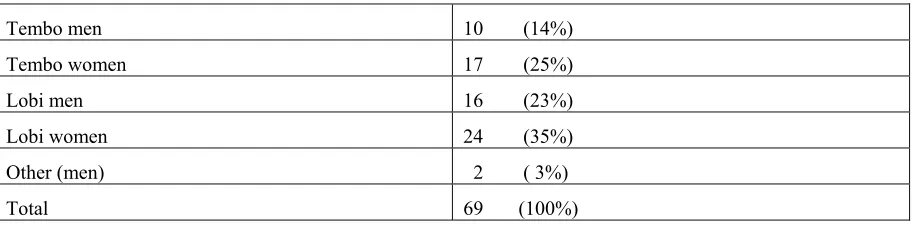
November 1987, the church numbered nearly 70 adults, as well as numerous children. The Lobi outnumber the Tembo about 3 to 2, which is not surprising as Banabe is essentially a Lobi village, though located in what is otherwise primarily Tembo territory.
My attention was drawn to the Banabe church by what appeared to be a situation of successful multi-ethnic recruitment, but with the absence of at least two of the positive factors that Fernandez felt were either necessary or important for enhancing multi-ethnic church growth. First, they were operating with two mutually unintelligible languages, a situation which Fernandez had felt would preclude the possibility of a religious movement being able to recruit extensively across ethnic lines. Second, Banabe, a Lobi village occupying Tembo territory, would have to be considered a rural, and not an urban, environment. Successful multi-ethnic recruitment, along with the absence of these two positive factors described in Fernandez’ model, suggested that the Banabe situation could be a good site for testing his hypotheses.
To show, however, that Banabe was, in actual fact, a valid location for studying multi-ethnic church growth and for applying Fernandez’ model, three questions needed to be answered. Can the church at Banabe be considered an independent church or religious movement? Although two language groups are clearly involved, can it be
4
Working with the Summer Institute of Linguistics or Wycliffe Bible Translators, with which I am also affiliated.
established that the church is multi-ethnic? If the congregation is made up of more than one ethnic unit, is it successfully recruiting from each of the primary ethnic groups involved? None of these questions can be answered quite as easily as it would first appear. The second question, regarding multi-ethnicity, will be dealt with at length in Chapter Three, following a careful definition of the ethnic concept. The success the church has had in drawing from both language groups will be demonstrated in Chapter Four after a history and description of the church has been laid out. Only the first question will be discussed here. Can the church at Banabe be considered an independent church or religious movement? The answer depends on what is meant; both by ‘independent’, and by ‘church’. Nowhere in Fernandez’ article does he make it clear just what he means by an “independent church” other than to indicate that he is referring to religious movements which are not directly associated with, nor governed by, expatriate mission organizations. He would seem to differentiate independent churches from “cults” but does not clarify the distinction (Fernandez 1975:131). It is necessary to look to other sources to establish what constitutes an independent church.
David Barrett, in his book Schism and Renewal in Africa (1968), sees independency as a strictly Christian phenomenon. He first defines it quite narrowly,
(A) “Independency is defined as the formation and existence within a tribe or tribal unit, temporarily or permanently, of any organized religious movement with a distinct name and membership, even as small as a single organized congregation, which claims the title Christian in that it acknowledges Jesus Christ as Lord, and which has either separated by secession from a mission church or an existing African independent church, or has been founded outside the mission churches as a new kind of religious entity under African initiative and leadership” (Barrett 1968:50).
He then indicates that this definition still left it somewhat ambiguous as to whether a given “tribal unit” did in fact have any independent church movements. His final definition sought to answer that question,
(B) “Independency is present in a tribe if members of the tribe or tribal unit concerned, or of sub-tribes classified under it, have either (a) initiated or otherwise produced at any time the
phenomenon of an independent church movement, however small, from within its own tribal ranks on its own tribal territory, rural or urban, and in the main under its own tribal leadership, or (b) contributed significantly within its own territory to a similar movement originating in another tribe” (Barrett 1968:50).
By either of these definitions, the Banabe congregation could be considered ‘independent’ or an ‘independent church’. It is a single congregation, located in the territory of the groups involved, professing to be Christian and claiming Jesus Christ as Lord. Furthermore, it is modeled after, but independent from, mission churches in the area. Like Barrett, Harold Turner considers independent churches to be distinct from other forms of religious movements, such as those he calls “Neo-primal”, “Syncretist” and “Hebraist”, in that such churches again have a fundamental Christian character.
“…there are what may properly be called independent churches, bodies which intend to be Christian, which use the Scriptures, and which often regard themselves as having effected a local reformation of European Christianity and so have become more Christian than the missions and their connected older churches…In Africa, where this form predominates, they may be described as having been founded in Africa, by Africans, for Africans to worship in African ways and to meet African needs as Africans themselves feel them…” (Turner 1979:10–11).
Once more, the Banabe church fits the description, although possibly not so precisely. Certainly it is modeled after European derived mission churches, but not with an aim at reformation. Banabe church leaders are very open in their desire for guidance from mission affiliated churches, but have indicated they want to be left to make final decisions themselves. Though they do not yet have all of the Bible in a language they can understand, the majority of the members of the congregation appear to view the Scriptures as providing the basis for their beliefs and practices.
Returning now to Fernandez, it does not seem that he would make such a sharp distinction between those independent churches which propound an essentially fundamental Christian message and others that have
“…only those movements will be discussed which may be defined against a background of Christian evangelisation. Religious movements formed under the impetus of Islamic
evangelisation…will be ignored, though they are of importance, particularly in Sudanic Africa” (Fernandez 1964:534–535).
He then distinguishes four types of religious movements based on whether they are more acculturated than traditional, and more instrumental than expressive (Fernandez 1964:537). The term independent church is not used at all, though it would seem that the majority of those meeting Barrett’s and Turner’s definitions would fit into his category of “separatist” movements. By 1975, Fernandez is using the term “independent church”, but not in a very precise way. He prefaces his comparison of the five religious movements with a general discussion of what he refers to first as “…African independent churches and religious movements…” and later as “…independent churches and cults in Africa…” (Fernandez 1975:131). Whether independent churches differ from religious movements or cults is unclear. He does, however, refer to Bwiti and the Amakhehleni (Old Man’s Cult) as “cults”, while he calls the other three “churches”. Paired with the description he gives of the various movements, this suggests that he would attribute to the latter three a status at least loosely related to that given for independent churches by Turner and Barrett.
One point all three writers are making, is that independent religious movements must be independent from
something, in this case mission-directed Christian churches. For Barrett, that is the only case to which independence applies. But there is no particular reason that independent religious movements cannot spring from the other world religions. Though there have been fewer of them, independent movements have been shown to have developed from Islam (Alexandre 1969 and Fisher 1970) and most likely can be shown to have developed from all of the world religions. For the purpose of the discussion here, independent churches will refer to those which have either separated from, or been modeled after, essentially fundamental Christian churches, which make Jesus Christ the center of their worship, and the Bible as the basis for their teachings, but have no formal affiliation with any mission organization. This accords, both with the more precise definitions given by Turner and Barrett, as well as with the direction Fernandez seems to have been going in his 1975 article. As such, the Banabe church can clearly be designated an independent church.
Methodology
From the time of my arrival in Banabe in mid-September of 1986 until I left in early November of 1987, the focus of my research was consciously qualitative. From the outset I took a basically traditional ethnographic approach which involved primarily participant observation and open-ended interviews. I felt that even to come to a partial
understanding of the church in Banabe, I had to be part of that church, to worship with the congregation, to participate in their ceremonies, even as I was alert to all that they said and did. I also felt that I needed to be able to view the church in the context of the larger community, both in Banabe which is primarily Lobi, and in the surrounding countryside, which is largely Tembo. To comprehend what I was seeing, I further needed to be able to ask questions, of Lobi and Tembo, of men and women, of followers of the “new” path, and of those of the old. Therefore, in an avowedly subjective manner, I sought to study the emergence of a new multi-ethnic church and to discover some of the reasons for its success in recruiting from both language groups. In this context, I also hoped to apply Fernandez’ model and to reinterpret it in light of what I learned.
The ethnographic paradigm does not, of course, consist of one approach, but several. Different interpretive emphases focus on different data collection procedures but the commitment to extended participant observation as the primary tool is consistent throughout. The final result, regardless of the approach taken, is ethnography, a description, or better, an interpretation, of the situation studied. How to view that final product is not always agreed upon.
“Since the ethnographer filters the data, the question arises as to whether we treat the product as science, art, journalism, or even fiction. Does ethnographic problem solving constitute “normal science” so that we can speak of an ethnographic paradigm, or is “doing ethnography” largely an effort to hold, as it were, a mirror up to nature in whatever way the individual deems fit?
The answer to these queries is, in the end, a matter of individual taste” (Sanday 1979:22).
culture, as an integrated whole, their primary focus of study. The core of the semiotic approach, on the other hand, is the emic perspective, or a search for the “native’s point of view”. It is a search for meaning. Though quite different in their applications of this approach, the “thick description” of Geertz (1973) and the “ethnoscience” of
Goodenough (1970) are representations of this style of doing ethnography. The final approach, the behavioristic, is demonstrated most clearly in the work of Beatrice Whiting (1963). Ethnography is still important, but not as a search for meaning or to understand culture as an integrated whole. It provides the observational data to which a series of deductive propositions may be applied. Its main goal is to discover behavioral patterns during ethnographic observation (Sanday 1979:23–34).
“Obviously the ethnographic paradigm in anthropology is internally differentiated. The main differences are whether the primary focus is on the whole, the meaning, or the behavior and the degree to which the analytic goal is diagnosis or explanation. Which mode one adopts in one’s own work is a matter of taste and not of dogma. Most anthropologists who go into the
field…probably…employ some combination of these ethnographic styles…
What counts in the long run is not how the facts are dressed but whether they make sense” (Sanday 1979:34).
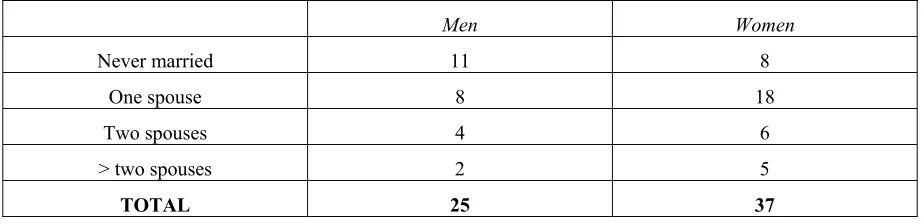
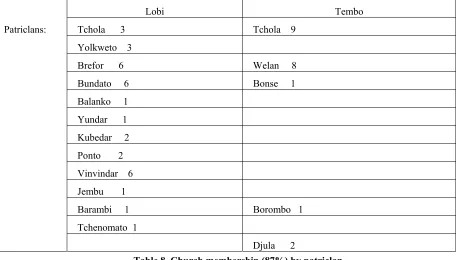
I certainly found that my own approach was a combination, not just of two of the styles, but of all three. Arriving in the field with a series of hypotheses to be tested in the context of an emerging church is most closely aligned with the behavioral approach, but my goals were not really the same. Although testing the hypotheses laid out by Fernandez in his 1975 article was certainly implicit in my application of his model to the Banabe situation, a more compelling concern was to discover the questions that needed to be asked before such research can be done at all. This meant interpreting not only the ethnographic context to which the model was to be applied, but the model itself. At this juncture, my approach was essentially semiotic. Finally, by seeking to place the Banabe case within the environment of the traditional Lobi and Tembo cultures, I was taking a holistic approach, which, even if seldom fully achieved, offers further validity to the more narrow perspectives of the first two ethnographic styles. At the same time, while my primary focus throughout remained qualitative, I did not discount the need for some quantitative support in this essentially interpretive endeavor. The church was, after all, made up of individuals who could be counted and about whom much could be learned through demographic studies. This was made easier by the fact that the church was small and my sample consisted of 100% for many features and 87% (60 of 69) for the rest. I also had access to information regarding the populations of Banabe and the surrounding villages from local
government offices.
I was, of course, aware before my arrival that the task I had set myself involved a situation which was not amenable to the classic ethnographic method of participant observation. Typically, the fieldworker is expected to immerse herself in the language and culture of the people in such a way that she is able to conduct much of the research in the language of the people. My own linguistic background and work in South America6 had long since made me suspicious of the language ability claimed by first-time researchers who spent only a year or so in doing fieldwork, but the herculean effort of learning two languages and (even though similar) two cultures was, I knew, beyond my capabilities. Since I was aware that there were written materials available in Teen, but not Lobi,7 and as the primary pastor of the church was a Tense, it seemed logical to choose Teen as the language on which to focus.
Having made this decision, my first four months in the field had three goals. I would make a start on learning the Teen language. I would move into one of the surrounding Tembo villages for a period of time where I could both practice the language and begin to become acquainted with their way of life. I would attend and observe all services or gatherings of believers where practicable and begin to develop interview questions. Since the church is in Banabe, it may be noted that the final goal was somewhat in conflict with the other two. I dealt with this by remaining in the outlying village during the week and returning to Banabe for market on Saturday and remaining until Monday morning. Although I attained all three goals in the time allotted, the results were not really all that I had hoped. It
6
I have been a member of the Summer Institute of Linguistics since 1967 and was originally trained as a linguist-translator. I began work in 1970 with the monolingual Hupda Macu people, who are situated between the Papuri and Tiquie Rivers in Brazil. Due to changing political policies, contact was sparse and sporadic for seven years but during that time, I and two colleagues did a complete phonological and partial grammatical analysis of the language. I wrote or co-authored three articles for publication on grammatical aspects of Hupda-Macu.
7
soon became obvious that I would need to learn enough Lobi to at least be able to perform the somewhat lengthy greetings required for any real acceptance. From then on, although my focus remained on Teen, I made sporadic efforts to learn some Lobi. Also, as the work progressed, my time had to be divided between both Lobi and Tembo members of the congregation, such that I was not able to progress in either language to the level I would have liked. Knowing that I would have to deal with two languages in my research situation I had always intended to rely heavily on French, in which I am fluent and reasonably proficient. Aware as well that there would be relatively few fluent tri-lingual speakers in the church, I was on the lookout, from the outset, for someone who could help me in my research. There were actually a number of possibilities, but one stood out as having all of the qualities I needed in a research assistant. This was a 37 year old Lobi man, whom I will call “Jerome”. He was a native of Banabe, and so had grown up around many Tembo, and was essentially bilingual in the two languages. He had also attended the local school for 9 years and was fluent in French. As a young man, he had had aspirations to use his education to get good work in the south, but at 19 he had begun to go blind. Jerome returned to Banabe, and had resided in or around the area ever since. He became a Christian in 1982, while in Bouna, and now attended Sunday services at the church in Banabe, where he is a leader. He directs much of the singing and does the translation into French. Prior to becoming a believer, Jerome had never married, but about a year before my arrival, he took a Lobi wife, a widow who attended the church and who is considerably older than he is. During the time of my research they shared a compound with another Lobi couple, who are also believers, and their nine children.
Jerome proved to be an excellent assistant, not only because of his availability and his capacity to speak three languages, but because he soon adopted my work as his own. I began to meet with him on a daily basis not long after I returned from the outlying village where I had resided off and on for eight weeks. At first we would spend 2– 3 hours a day going over any questions I had, and discussing any topic I raised. There were no forbidden areas. He knew everyone in the region, how they were related, what they had done all their lives and generally any gossip that was going around about them. If there was something he didn’t know, he knew someone who did and would find out for me. When I began the more formal interviews of each of the members of the church, he showed an amazing capacity to understand what I was looking for and made some very useful suggestions as I developed my interview schedule. He soon took over arranging the interviews and convincing those that were initially reluctant that they should indeed make themselves available to do it. I would have been lost without him.
Jerome was the mainstay of my research endeavor but I had several other key informants who complemented his contributions. Jean, the pastor of the Banabe Church, met with me regularly to answer any questions I had about either church matters or the culture of the Tembo people. A good many of the others who helped me were members of the congregation of the Banabe church but several people from the community played their part as well. Those interviewed, both formally and informally, included individuals from each of the language groups, both men and women, of varying ages. Although all of my efforts were at least partially aimed at getting as complete a picture as possible of the Lobi and Tembo lifestyles, and of the way the Banabe church fit into the larger community, I paid particular attention to ceremonial events and to conflict situations. These episodes provided a particularly rich source of cultural data that aided in understanding, not only how members of the church and the community viewed the world and their place in it, but gave insights into the questions that needed to be asked if Fernandez’ model was to be applied adequately.
During this entire time I was also becoming acquainted with the community of Banabe and its surroundings. I regularly attended the Saturday market, or went to the fields to work when there was an “invitation”. I helped at various times to plant, weed, harvest and store the millet which is their primary staple. I picked cotton and pounded sorghum. I carried firewood and tended children. Probably most important of all, I attended funerals, which occurred far more often than I would have liked to have seen. Funerals proved to be, not only an extremely important
concentration of cultural material, but the doorway to acceptance by many in the village who would have otherwise relegated me to a purely “church” status. For example, following the first funeral that I was able to attend from beginning to end (27 hours, with Jerome at my side), the son of the elderly Lobi woman who had died, came to visit me. He wanted to thank me for honoring his mother by remaining for the entire ceremony, and to offer me any assistance I might need. A prominent man in his sixties, he proved to be an invaluable informant on the history of Banabe and the beliefs and practices of the Lobi people.
difficulty was in the ambiguity of the hypothesis, or in the definition of terms used in it. As will be seen in Chapter Five, when this occurred, the material I collected at Banabe often provided what was needed to redefine or clarify the proposals so that they might be applied, if not in this setting, at a future research site.
Before closing this section, I feel it is important to mention that I am well aware of the problems inherent in the approaches I took and the decisions I made regarding how to pursue my data collection. I would like to focus briefly on three that I feel might be considered the most glaring. The first regards the matter of language choice. Putting aside the impossibility of learning both Lobi and Teen in the time allotted, it would certainly have been ideal to have conducted the research in the language of the people I was studying. Even if only one language had been involved, however, I do not believe I would have attempted to conduct my formal interviews in that language, or have put much validity in my own understanding of overheard conversations without corroboration from someone like Jerome. Regardless of my language learning abilities, a few months study of the local vernacular could hardly match up with the twenty-five or more years that Jerome had been exposed to, and used, French.
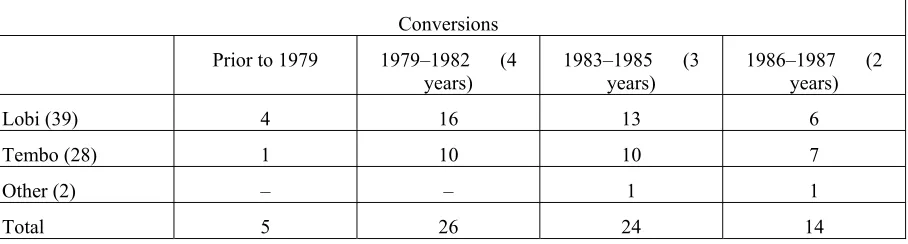
A second area for discussion regards any possible influence my presence and work may have had on the Banabe church and, therefore, on the results of my research. There may well have been effects of which I am not aware. I can be fairly certain, however, that my presence played no significant part in the amount or direction of growth in the Banabe church. The material recorded in Chapter Four on conversions since the inception of the church should make that clear. I took essentially the same position as the translators8 who had been with the congregation since it began. I attended the church regularly, but took no part in the services except to pray aloud when asked. I did the latter in English as it was assumed that all present would pray in their own language. There were several crises among the congregation and church leadership while I was there but I offered no advice and was asked for none. I did lend money on several occasions but generally only after the church leaders agreed that the occasion warranted it. If I did not seek their advice, I often was not repaid. No one outside the church ever asked me for money. One service which the translators often provided, but which I could not, was transportation of the sick from outlying villages to the clinic in Banabe, or even to Bouna. I had no car. People in the congregation and in the community accepted my presence, not only in church services, but at market, during funerals, and in various situations about the town. I was essentially ignored.
Finally, I recognize that some of the biases that I, myself, brought to the field situation were bound to have an affect both on the collection of my data and my interpretation of the results. As I have said, this is true for any
ethnographic researcher. I differed greatly from the subjects of my research in that I was a white, single, western female working in an essentially patriarchal, black African society where few females stay unmarried past the age of 20. I was an anomaly. Even as I tried to make allowances for our entirely disparate world views I was aware that I tended to judge many practices from thoroughly western viewpoints. In contrast to all these differences, I was similar to the majority of the congregation in the Banabe church in that I shared their essentially fundamental Christian beliefs. When I participated with them in worship services I was not simply going through the motions. This was a help in that I could enter into the circumstances in ways a non-believer really could not do. It was also a hindrance because there was the very real danger of assuming that practices, and even beliefs I found familiar, held the same meanings for the participants in Banabe as they did for me. I do not believe, however, that my own
8
Only one of the translators was present in Banabe during a significant part of my stay in the village. This was for a period of about 6 months and included the time I was living in a neighboring Tembo village. The other translator had married and was leaving the project. She paid a five day visit with her husband in May of 1987 after her former partner had departed.
I am sure that the presence of the translators in Banabe during intermittent periods throughout the history of the church had some influence on its formation. I was not able, however, to observe any concrete examples of this. Only two individuals (Jean and Isaie, see Chapter Four) attributed their conversions directly to the actions of the translators. All other members of the congregation indicated some other primary influence, generally a Lobi or Tembo believer. When a group of responsables (Fr.) was formed to help make church decisions, the translators were asked to serve in this capacity but they refused. They felt they were there to do Bible translation and must focus on that task.
Christian background was any more detrimental to my objectivity than would have been that of a non-religious researcher. Both positions are biased. The problem is not in having biases but in not recognizing and allowing for them. I believe I did both.
Overview
The primary purpose of this study is to examine an emerging West African church using Fernandez’ model for successful multi-ethnic growth in hopes of learning more, not only about the primary components of such movements, but to ascertain more precisely the relationship of religion to ethnic identity. There are several issues, however, that must be dealt with before this can be done. The history and organization of the Protestant Church of Banabe can only be understood within the framework of the traditional cultures (Lobi and Tembo) from which it has sprung. Furthermore, a foundation must be laid to validate the application of the model to this particular case. Chapter Two is primarily descriptive, offering an abbreviated ethnography of the Lobi people, their background, language, economic system, social and political structure and world view. Rather than attempt a parallel description of the Tembo system, which shares many similarities with that of the Lobi, such differences as I was able to
discover between the two groups are incorporated into the narrative. These very similarities make it necessary to ask whether it is indeed valid to consider the Lobi and the Tembo as separate and distinct ethnic groups. Chapter Three is divided into two sections. Part One deals with the problem of defining the concepts of ethnicity and ethnic group as a basis for the second section which shows that the Lobi and the Tembo must, in fact, be viewed as two distinct ethnic categories.
2
Traditional Culture
“The God who made the world and everything in it is the Lord of heaven and
earth…From one man he made every nation of men, that they should inhabit the whole earth; and he determined the times set for them and the exact places where they should live.” Acts 17:27.
Over long years of contact, the Lobi and Tembo peoples have shared and assimilated cultural practices to such an extent that, to a casual observer, there is little difference between the two groups. Being the minority population, it seems likely that the Tembo may have done more assimilating than the Lobi, but this can only be conjecture. Records show that, during the colonial period, the Tembo were considered a sub-group of the Lobi and even today, outsiders who have not visited the region are unlikely to be aware of the existence of the Tembo as a separate ethnic category. Numerous studies of the Lobi have been done (Labouret 1931; Fieloux 1980; de Rouville 1987), all of which refer to the Tembo (Téguessié) as a distinct population, but no independent examination of them has yet been undertaken, although the need for it has been indicated (Fieloux 1980:35).
In what follows I will attempt to give a broad, but not exhaustive, overview of the traditional cultures of the Lobi and Tembo peoples. This will lay a foundation for establishing in Chapter Three that the two populations each demonstrate a distinct ethnic consciousness. Because of the similarities in the two social systems, it would be extremely repetitious to lay out parallel accounts. Consequently, what I offer is essentially a description of the Lobi system with such differences as were ascertained for the Tembo emphasized where appropriate. I do not claim to have discovered all such differences. An independent cultural study of the Tembo people yet waits to be done.
History
Lobi oral tradition has little to say about their historical past before they crossed the Black Volta River into modern day Burkina Faso more than 200 years ago. Using genealogical data, Labouret places this event in about 1770, at Batié Nord, west of Gaoua (Labouret 1931:28). Since that time they have continued to migrate slowly both south and west until, in the latter part of the nineteenth century, they came into what is present day Côte d’Ivoire (Fieloux 1980:18). Much of this region was unoccupied except by scattered villages of people who referred to themselves as the Tembo.1
The Tembo themselves do not seem to know much about the time before they came to reside in their present territory, except to say that they traveled from the north and that the land was empty on their arrival. They did encounter the ruins of innumerable large stone houses and walls,2 long since abandoned, but no other sign of their previous inhabitants existed. Some of the Christians in Banabé now say that these must have been the houses of people who lived in the area before the flood described in the Old Testament (Genesis 7–8).
When the Lobi arrived, the entire region was claimed by the Koulango Kingdom centered in Bouna to the
southwest. Both Lobi and Tembo had to seek permission from the Koulango land chief at Sai to found new villages in the unoccupied territory. Gradually, however, through migration and passive assimilation, the Lobi have
displaced the Koulango population and become the dominant ethnic group in the region, including the area around Bouna. In 1969, Fieloux indicated Lobi villages located 80 km. south of Bouna. Today they can be found as far south as Bondoukou.
1
Studies done on the Lobi by French colonial officers and anthropologists refer to the Tembo as the Téguessié (Labouret 1931, Fieloux 1980, de Rouville 1987), but do not indicate the source of this designation. In Côte d’Ivoire today, non-Tembo, including any Lobi who speak French, call them the Loron, a name derived from Dioula, a trade language used throughout much of the country.
2
Lobi and Teen (languages of the Lobi and Tembo peoples) are both considered Voltaic languages, or members of the Gur sub-family of the major Niger-Congo linguistic stock in West Africa (Murdock 1958). The two languages are not, however, mutually intelligible, Teen having more affinity with Koulango than with Lobi (Leenhouts and Petermann 1979). The speech of the Dian is lexically most similar to Lobi, while that of the Gan and the Dorossie are close but more distantly related (Bendor-Samuel 1971).
The Environment
Terrain. The Lobi occupy a territory that extends from roughly central Burkina Faso in the north, south into Côte d’Ivoire, skirting the Comoé National Park, encompassing Bouna, intruding into Koulango country and moving toward Bondoukou (see Chapter One:Figure. 1). Although the Tembo can now be found scattered in much of the southern portion of this region and beyond, they are concentrated much more heavily in the canton of Tehini in northeastern Côte d’Ivoire, and around Galgouli in southern Burkina Faso (see Figure 2).
The land is characterized by vast flat areas of high grass with scattered, gnarled trees of numerous species. Chains of low hills, rocky outcroppings and stream beds divide the area in various places although the latter are often dry except at the height of the rainy season. Permanent water holes are few.
Climate, rainfall. This area, often referred to as the wooded savanna, is a transition zone between the dense forest to the south and the grassy savanna in the north (Roberts et al. 1973:32). The heaviest rainfall is generally
concentrated in six months of the year from May to October with the dry season then extending from November to April. The average annual rainfall ranges from 1200mm per year near Gaoua to 1300mm around Bouna, however the variation from year to year can be extreme. At Gaoua, for example, charts show that between 1920 and 1960 the range was from as little as 823mm per year to as much as 2,359mm per year (Barlet 1962:49). Maximum
temperatures are reached in March or April (30–35 C) and the minimum in December or January (10–12 C). The temperature variation is slightly greater in Burkina Faso than in Côte d’Ivoire (de Rouville 1987:23–24). These two essentially distinct seasons of the year are set apart by their particular activities. The beginning of the rains also marks the beginning of planting, while harvest coordinates with the beginning of the dry season. The most elaborate rituals, second funerals and initiation rites, are reserved for early in the dry season when the need for hard labor is at a minimum and the granaries are full. This is also the time for repairing and building numerous structures, opening new fields, or moving to a new village. Markets are crowded as more commodities are available and there is an increase in social interaction between individuals from different regions.
As the dry season draws to a close and granary stocks are declining, the heavy work of preparing for the next harvest begins. People tend to remain in their villages as each family concentrates on planting what is necessary to make survival possible. Little is available in the market and those attending generally come from the immediate vicinity.
Social Structure
Kinship/Descent. Both the Lobi and the Tembo utilize a double unilineal descent system of kinship organization. Each individual belongs to both a matriclan and a patriclan. Cecile de Rouville suggests that the formation of the patriclans is a fairly recent innovation, co-occurring with the adoption of the initiation (Lobi: dyoro; Teen: dyorbiye) tied to the Black Volta cult which is believed to be of Birifor origin (de Rouville 1987:135). This is supported by the existence of a Crow-type kinship terminology (Schusky 1972:33) for both the Lobi and the Tembo, and by the fact that the matriclan seems to mark their primary identification. It does this by forming a part of each person’s name and thereby establishing the ‘family’ to which he or she belongs. The matriclan concerns itself primarily with economic matters and the fertility of women. What the Lobi and Tembo consider real or movable wealth belonging to men is generally passed from a man (e.g. animals, money, cowrie shells) to his sister’s son. A woman’s wealth (e.g. clay pots, cloths, cowrie shells) goes to her daughter. The patriclan, on the other hand, can be said to have more ritual significance and initiation is within its domain. Inheritance of fixed property (houses, rights to land, certain protector spirits), is from father to son.
taken from the base of the tilka altar ‘planted’ before the father’s house. The Tembo do not have this practice, which may explain why the Tembo say that if a father is not satisfied with the way he was initiated, he may send his children to be initiated by a different patriclan. For the Lobi, the taking of the medicine (nuokhati) fixes his or her patriclan membership for life, but neither Tembo nor Lobi becomes a participating member until after initiation which can take place at anywhere from 7–17 years of age. Even then, a man does not have his own tilkha or punsan
until he receives his hoe from his father, often after the age of 30. This marks his full adult stature, the right to form his own household, and to plant his own patriclan spirit altar before his door. A woman may have other personal protector spirits but she never has a tilkha or punsan.
Matriclan. There are 4 basic matriclans divided into an unknown number of exogamous sub-matriclans,3 each with its unique origin myth.4 The primary matriclans are traditionally in alliance with one other matriclan and in
opposition to the other two. Until pacification in the 1930s, the Lobi wars between opposing matriclan families kept most villages situated as armed camps continually on the look out for ambushes. Older men and women tell how in those days they remember their fathers were never without their bows and arrows, even when they ate, and their mothers were accompanied to the fields or the stream by armed guards.
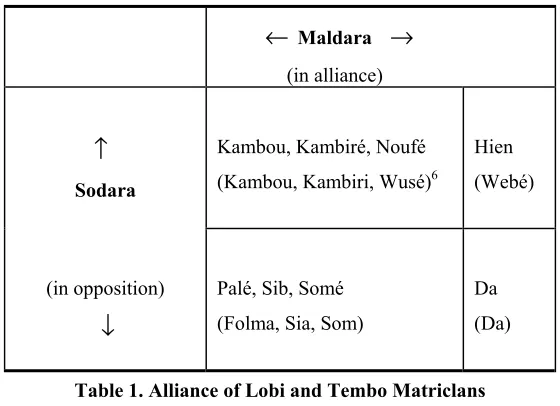
Today, to all appearances, the hostility between opposing matriclans (Lobi: sodara) has been forgotten, but the alliance (Lobi: maldara) still has important functions to play in conflict resolution, in child-rearing, and in hosting the funerals of the elderly, i.e. those who have shown their worth by growing old.
As already stated, there are four primary matriclans5 which are paired in alliance (maldara) and in opposition (sodara) to the other two as follows:
←
Maldara
→
(in alliance)
↑
Sodara
Kambou, Kambiré, Noufé (Kambou, Kambiri, Wusé)6
Hien (Webé)
(in opposition)
↓
Palé, Sib, Somé (Folma, Sia, Som)
Da (Da)
Table 1. Alliance of Lobi and Tembo Matriclans
3
Cecille de Rouville lists 61 sub-matriclans for her research area around Iridiaka in Burkina Faso and states that the list is non-exhaustive.
4
Two sisters of the same mother (same matriclan) went one day to search for firewood. After they collected their wood, they could not agree on the way back to their village and each headed off in a different direction. One of them became lost and became the ancestress of the Kambou. The other found her way home and became the ancestress of the Kambiré.
Fieloux (1978:79) says that, in sub-matriclan origin myths, women generally play the dominant roles in a story dealing with how one woman is distinguished from another in some household task. The actual stories vary somewhat from region to region and depending on who is telling the tale.
5 Besides the Tembo and the Lobi there are five neighboring double unilineal descent groups who exhibit the same four-part
organization of uterine segments. The Birifor and Dagara share the same cultural base with the Lobi and have the same names for the four matriclans. The Gan, Dorossie and Dian, who have borrowed many Lobi cultural traits use different names (de Rouville 1987:136).
6
Prior to pacification, a latent hostility existed between sodara but a reciprocal joking relationship was, and is, the norm for allied matriclans, or maldara. The sodar relationship gradually ended following pacification by the colonial regime in the 1930s. Feuds with ritual killings7 no longer occur. I was told, however, that it was not good to
refer to someone as being in a ‘sodar’ relationship to them, as the comment carried the implication that they are not on good terms. One simply says that the person is ‘chakbal’, from a different family.
The alliance: maldara. In contrast to the sodar connection, the alliance is still strong. Each matriclan is seen to have some hereditary fault that is picked up by the alliance to joke about, i.e. the Da are ‘liars’ and accept kidding from those who are maldar about this but not from anyone sodar.
When a very old person dies, it is the alliance who ‘gives’ the funeral. The women come to ‘wail without tears’ and to deride the family for the poor showing they would have made without the alliance. They are paid for their work by family members throwing handfuls of cowrie shells at their feet for which they scramble. The men of the alliance interrogate the body to discover why the person died and to learn if things will now go well with the family. Portions of a bull sacrificed after the burial are given to alliance members for their participation.
Another primary function of the alliance is to help resolve conflict. If the anger between two individuals in the same matriclan has gotten out of hand and the family can not calm the situation, the alliance is called in. A shea tree branch is burned and the ashes put in front of the angry person to cool the situation. That individual can no longer ‘make words’ with his/her opponent.
Occasionally more formal rituals are necessary ‘to cool what is hot’. These should be performed on the altar of the ‘watil/gbala’, the titular spirit of the matriclan, or if this is too far away, on the main road that leads from the village to the altar. These rituals generally symbolize the cooling down of the heated situation. Cold water may be spit on the ground, a hot coal may be put in a gourd of cold water, or cold ashes may be thrown on the ground or over those involved.
Prior to pacification, the performance of these rituals could be a very serious matter indeed. Blood feuds among those in a sodar relationship sometimes stretched into years and many individuals died. But there was always a limit. If the matriclan itself was in jeopardy, allies of the two groups involved would symbolically ‘break the bow’ on the main road and then spit three mouthfuls of cold water drunk from a long necked gourd into which a hot coal had been placed. This signaled to all that the feud had ended.
Though the killing of a member of one’s alliance was strictly forbidden, this sometimes occurred by accident during a raid. The resolution was immediate. One return death was permitted within a day of the original killing and no return vengeance was allowed (Fieloux 1980:70). This was called a ‘hot arrow’. The bow was then broken to indicate the matter was ended and the ritual cooperation and association between the alliance restored.
Similarly, it was forbidden for members of the same matriclan to kill one another, or for them to avenge such a death. If a quarrel occurred, however, a member of the alliance came immediately to break the bow, and if a killing had resulted, to sacrifice a young chicken on the site. At the same time the culprit’s MB sent ritual gifts, such as a
7
Labouret relates the details of a blood feud, portions of which he witnessed, that began in the area around Iridiaka in what was then Upper Volta in 1918 and going strong well into 1921. He does not make clear the matriclan relationships of the opponents and allies, but the events as he recounts them are as follows.
It seems that the husband of a woman named Bokoné, in the village of Sanhouara, died. By custom, Bokoné should then have married a matriclan relative of her dead husband, but this she refused to do. Instead she went to live with another man, by the name of Dihina, in the village of Gourbirira. Dihina refused to pay any of the bridewealth due to the first husband’s family.
Before very long, Bokoné left Dihina to live with a man named Binndyor back in Sanhouara. Dihina became very angry about this, not (Labouret says) because he cared so much for Bokoné but because her leaving reflected on his reputation as a vigorous man and avenger of blood. For this reason, he killed Binndyor in July of 1919. Two days later, several residents of Gourbirira came to visit Sanhouara and the inhabitants of the latter killed one of them in reprisal for the murder of Binndyor.
cow, a hen, etc., to the altar of the clan’s watil/ gbala. Only then could the guilty party be reintegrated into his matriclan. Not to make these sacrifices would have meant that the women of the matriclan would be barren. Although pacification has greatly altered things as regards the sodar relationship, the alliance and its role in conflict resolution is still very important. A killing will likely mean arrest and prison for the guilty party today but the need to ‘cool what is hot’ and restore relationships continues.
One other situation in which the alliance is summoned involves young children. An infant who is restless and cries a lot is suspected of being a ‘returning one’, a previously born child who died. Its crying suggests it again does not wish to stay. Cuts are made in one or both cheeks to encourage the child to remain. This cutting is made by women of the alliance. Many adults are seen to have the scars from these ritual markings on their cheeks.
Patriclan. The total number of patriclans is unknown. Sixty or more are named and many of these also have sub-patriclans. As residence tends to be patrilocal, only a few patriclans will be represented in any given area. Although an individual’s primary identity seems to be through his or her matriclan, the tie between men of the same patriclan is apparently stronger than their ties within the matriclan. Adultery with the wife of a matriclan brother is wrong, but forgivable, when the proper rituals are performed. Adultery with the wife of a patriclan brother means certain, and nearly immediate, death brought about by the patron spirits of the patriclan.
It can be said that an individual is born into his or her matriclan (those of the same skin—family), but is ritually inducted into his or her patriclan (those of the same house). For the Lobi, as already indicated, the ritual that establishes a child’s patriclan membership is performed 3–4 days after birth. This membership is then confirmed at the initiation when the child is 7–17 years of age. For the Tembo, it appears that patriclan membership is not established until the initiation. In either case, though the ‘rule’ is that the child enters the same patriclan as his or her father, this may not always be true, as has already been indicated. For the Lobi, if the biological father is for some reason unavailable when the child is born, another male relative may be asked to administer the ‘medicine’
(nuokhati) that establishes patriclan membership. He will not necessarily be from the same patriclan. For the Tembo, although the child will commonly go to the initiation of his or her father’s patriclan, this also is not necessary. The father or male guardian may decide, for whatever reason, to send them to another initiation site, which then establishes the child’s patriclan membership.
Each patriclan has its own tilka/punsan, or protector spirit, whose altar is planted before the entrance to the house of each independent male. The kind of wood used to make the altar is specific for each clan. It is difficult to
overemphasize the importance of this protector spirit, at least for males. When a man receives the hoe from his father or male guardian and thereby becomes independent, he has the right to plant his own tilka/punsan altar before the door of his house. From that point on, no matter how many times he migrates or moves the location of his dwelling, he never really leaves his ‘house’ or patriclan. The altar of the tilka/punsan goes with him, including some of the mud it was originally planted in. Together they represent not just his own home, but that of his entire ‘house’. It is the tie that unites him with all other members of his patriclan.
Villages
Traditional Lobi and Tembo villages are composed of polygynous family compounds spread over a large area. Small multi-purpose gardens may be scattered near each family unit or near the larger fields for staple crops found beyond village structures. Though this arrangement is still the most common, especially for villages away from the main roads, external pressure has caused many more prominent villages to group all buildings together in a more western pattern. Even in remote areas, however, the traditional, many-roomed, single family dwelling in Côte d’Ivoire (but not in Burkina Faso) has given way to a more typical West African pattern of each compound being composed of several clustered, single function units.
compound could be observed. These are still the most common type of dwelling among the Lobi and Tembo of Burkina Faso.
The dwelling pattern in Côte d’Ivoire has changed. Today, compounds are composed of many single room, single function, thatch-roofed structures arranged in a roughly circular pattern. A man has his own house as does each of his wives with her children. Married dependent sons have a separate dwelling as do older, unmarried sons. Chickens have their own enclosure and, if a man is a diviner or has many personal spirits, he may construct a separate habitation for them. Cattle are kept in a corral just outside the compound. Sheep and goats are left to roam at will.
Population. Village population typically varies from about 40 to 200 or more. However, settlements on the road or with markets are often larger. Except where outsiders (non-Lobi, non-Tembo) have come to reside, villages tend not to