FINAL REPORT
VOLUME 1
SUMMARY REPORT
RESP
FINAL REPORT
VOLUME 1
SUMMARY REPORT
V
OLUMESI
ANDII
C
REDITSThe Renewable Energy Siting Partnership document is a product of the 2011 Memorandum of Understanding between the Rhode Island Office of Energy Resources, then directed by Kenneth Payne, and the University of Rhode Island.
The RESP document was created under the management of Principle Investigators Marion Gold, URI Outreach Center and Jennifer McCann, URI CRC/RISG.
Management Team
To demonstrate the University of Rhode Island’s commitment to the RESP project, Dr.
John Kirby, Dean of the College of the Environment and Life Sciences (CELS), and David M. Farmer, Dean of the Graduate School of Oceanography appointed the following people to oversee all aspects of the RESP:
Marion Gold, URI Outreach Center Jennifer McCann, CRC/RISG Dennis Nixon, URI GSO
Richard Rhodes, Ph.D., URI CELS
A
CKNOWLEDGEMENTSThe State of Rhode Island Office of Energy Resources gratefully acknowledges the extensive time, energy, and thought the following committed individuals dedicated to the creation of the Rhode Island Renewable Energy Siting Partnership Final Report:
Project Team
Marion Gold, team lead, URI Outreach Center Jennifer McCann, team lead, CRC/RISG Michelle Carnevale, CRC/RISG
Teresa Crean, CRC/RISG Sue Kennedy, CRC/RISG Helen Manning, CRC
Danny Musher, URI Outreach Center Amber Neville, CRC/RISG
Sarah Schumann
Senior Advisor: Malcolm Spaulding, Ph.D., URI DOE Annette Grilli, Ph.D., URI DOE
John Merrill, Ph.D., URI GSO Peter Paton, Ph.D., URI Gopu Potty, Ph.D., URI DOE James Opaluch, Ph.D., URI CELS Sarah Butler, URI
Thomas Boving, Ph.D., URI CELS Pamela Cady, URI CELS
Christopher Damon, URI Tiffany Davis, URI Corrie Heinz, URI Kelly Knorr, URI James H. Miller, URI
Danny Musher, URI Outreach Center Edson Okwelum, URI ENRE
Christopher O’Reilly, URI
Research Finance and Support Team Kate Manning Butler, CRC/RISG Mike Milkman, URI Outreach Center
Technical Team
Environmental Data Center, Department of Natural Resources Science at URI: Peter August
Christopher Damon Tiffany-Lane Davis Charles LaBash
Consultants 10up LLC
Applied Science Associates, Inc. Environment Northeast
Roger Williams University Sea Grant Law Fellows and Faculty
Susan Farady, Director, Marine Affairs Institute, Director, RISG Legal Program Julia Wyman, Staff Attorney, Marine Affairs Institute
Nathan Brown Kristina DiSanto Alexa Fedorchak Eric Kretsch Cara Nunez
Christopher Caisse Sarah Martin Sabrina Ulmasova
State Agency Assistance and Coordination RI Coastal Resources Management Council RI Department of Environmental Management RI Economic Development Corporation RI Office of Energy Resources
RI Office of the Governor
RI Department of Administration, Division of Planning, Statewide Planning Program
Government Agency Review Robert Ballou, RI DEM James Boyd, CRMC Barbara Cesaro, RI OER Kevin Flynn, RI SPP Paul Gonsalves, RI SPP Nancy Hess, RI SPP
Christopher Kearns, Office of the Governor Hannah Morini, RI EDC
Kenneth Payne, RI OER Jared Rhodes, RI SPP
T
ECHNICALA
DVISORYC
OMMITTEEM
EMBERSAcoustics
Jim Cummings, Acoustic Ecology Institute
Peter McPhee, Massachusetts Clean Energy Center Ken Kaliski, Resource Systems Group, Inc.
Avian and Bat
Eugenia Marks, Rhode Island Audubon Society Rhonda Smith, USFWS
Charlie Brown, RI DEM
Economics
Abigail Anthony, Ph.D, Environment Northeast
Timothy Tyrrell, Ph.D, School of Community Resources and Development, ASU
Hydropower and Hydropower Resource
Guy Lefebvre, RI Rivers Council Rachel Calabro, Save the Bay
Jon Petrillo, The Essex Partnership, LLC. Art Gold, Ph.D, Watershed Hydrology, URI
Douglas Hall, Idaho National Laboratory Wind and Water Program Alisa Richardson, RI DEM Office of Water Resources
Catherine Sparks, RI DEM
Landfill Solar
Mark Dennen, RI DEM Landfill Closure Program Palmer Moore, NEXAMP, Inc.
Alan Benevides, Woodard & Curran, Inc.
RI Energy.Org
Abigail Anthony, Ph.D, Environment Northeast Mike Guerard, Optimal Energy, Inc.
Stephan Wollenburg, Energy Consumers Alliance of New England
Shadow Flicker
Ken Kaliski, Resource Systems Group, Inc.
Peter McPhee, Massachusetts Clean Energy Center
Wind Energy Chapter
Malcolm Spaulding, Ph.D, URI Engineering Tyler Studds, Massachusetts Clean Energy Center
Stephan Wollenburg, Energy Consumers Alliance of New England
Wind Power Modeling and Siting
John Merrill, Ph.D, URI Graduate School of Oceanography Tyler Studds, Massachusetts Clean Energy Center
Wind Resource Assessment
Annette Grilli, Ph.D, URI Engineering
The RESP stakeholder and public engagement process brought together a diverse and well-rounded group of key constituencies by reaching out to two core groups of people simultaneously. The first group included organizations deemed to be essential in developing and implementing renewable energy siting strategies in the state, including municipalities, relevant state and federal agencies, regional planning councils, non-governmental organizations, chambers of commerce, historical societies, universities, tourism groups, utilities, land trusts, and the Narragansett Indian Tribe. The second key group was self-selecting, and included members of the public and the business community. Both groups were indispensable to creating a transparent and objective RESP process meeting the needs of all Rhode Islanders.
M
UNICIPALW
ORKINGG
ROUPThe RESP Team acknowledges and appreciates the contributions of the municipal representatives who attended the six Municipal Working Group meetings between October 2011 and March 2012. Attendees included town planners, town managers, and town council members from all of Rhode Island’s 39 cities and towns, as well as representatives from regional planning councils. Sessions, which took place at the University of Rhode Island Bay Campus, were open to the public but targeted towards the needs of municipal planners and decision makers.
RESP
S
TAKEHOLDERG
ROUPResidents, Citizens, and Members of the RI Public that engaged in the public stakeholder process throughout the 16–month-long course of the RESP.
Point Energy Solutions
Providence Water Supply Board Real Goods Solar
Representative Larry Ehrhardt Representative Teresa Tanzi Rhode Island School of Design Rhode Power
RI Land Trust Council RI Rivers Council
Roger Williams University rTerra
Save the Bay Schneider Electric Senator Jack Reed
SPG Renewables
Stillwater Preservation Conservancy Tech Comm Partners
The Nature Conservancy U.S. Department of Agriculture U.S. Fish and Wildlife Service U.S. Navy
University of Rhode Island VHB
Washington County Regional Planning Council
Wind Energy Development LLC
A committee formed to help the Rhode Island Division of Planning, Statewide Planning Program develop a set of wind energy siting guidelines.
Jeff Broadhead, Washington County Regional Planning Council Lisa Bryer, Town of Jamestown
Julian Dash, RI Economic Development Corporation
Thomas Getz, (Retired) RI Department of Environmental Management Daniel Goulet, Coastal Resources Management Council
Kenneth Payne, (Retired) RI Office of Energy Resources Garry Plunkett, East Bay Wind Consortium
Jon Reiner, Town of North Kingstown Andrew Shapiro, Apex Wind
Larry Taft, Audubon Society of Rhode Island Barry Wenskowicz, Narragansett Bay Commission
H
YDROPOWERW
ORKINGG
ROUPA working group comprised of academics, state and federal agencies, non-profit and environmental groups, and others all with expertise in issues surrounding hydropower
development in Rhode Island. The group contributed to the formation of RIDEM’s Draft
Guidance on Siting Considerations for Development of New Hydropower Facilities.
AC Alternating Current
ALP Alternative Licensing Process
APE Area of Potential Effect
ATM Applied Technology and Management
AWEA American Wind Energy Association
BGEPA Bald and Golden Eagle Protection
BOS Balance of System
CEC California Energy Commission
CEEP Center for Energy, Economic, and Environmental Policy
CERCLA Comprehensive Environmental Response, Compensation, and Liability Act
CERCLIS Information System
CLF Conservation Law Foundation
CRC Coastal Resources Center
CRMC Coastal Resources Management Council
CWA Clean Water Act
CWIF Caithness Wind Information Forum
CZMA Coastal Zone Management Act
DAB Digital Audio Broadcasting
DC Direct Current
DEC Department of Environmental Conservation
DEM The Department of Environmental Management
DHAC Division of Hydropower Administration and Compliance
DMD dam management district
DOE Department of Energy
DSSMP Dam Safety Surveillance and Monitoring Plan Outlines
EA Environmental Assessment
EBEC East Bay Energy Consortium
ECN Energy Research Center of the Netherlands
EERE Office of Efficiency and Renewable Energy
EFH essential fish habitat
EIA Energy Information Administration
EIS Environmental Impact Statement
ELUs Ecological Land Units
EMD Energie-og Miljødata
EMI Electromagnetic interference
EPA Environmental Protection Agency
EPA Environmental Protection Agency
FERC Federal Energy Regulatory Commission
FM Frequency Modulation
FPA Federal Power Act
FT Federally Threatened
HCP Habitat Conservation Plan
HPMP Historic Properties Management Plan
HSWA Hazardous and Solid Waste Amendments
IEA International Energy Association
ILP Integrated Licensing Process
IPCC Intergovernmental Panel on Climate Change
ISET Institut für Solare Energieversorgungstechnik
ISO Independent System Operation New England
ITP Incidental Take Permit
kW kilo watts
L&Rr Landfill And Resource Recovery
LCP Landfill Closure Program
LIHI Low Impact Hydropower Institute
MA DEP Massachusetts Department of Environmental Protection
MA DPH Massachusetts Department of Public Health
MBTA Migratory Bird Treaty Act
MOU Memorandum of Understanding
MSFCMA Magnuson-Stevens Fishery Conservation and Management Act
MW mega watts
NATHPO National Association of Tribal Historic Preservation Officers
NBEP Narragansett Bay Estuary Program
NCSHPO National Conference of State Historic Preservation Officers
NEPA National Environmental Policy Act
NHPA National Historic Preservation Act
NITHPO Narragansett Indian Tribal Historic Preservation Office
NMFS National Marine Fisheries Service
NOAA National Oceanic and Atmospheric Administration
NOI Notice of Intent to File a License
NPL National Priority List
NPS National Park Service
NREL National Renewable Energy Laboratory
NWCC National Wind Coordinating Committee
NYSDEC New York State Department of Environmental Conservation
NYSERDA New York State Energy Research and Development Authority
OSWER Office of Solid Waste and Emergency Response
PAD Pre-Application Document
PV Photovoltaic
RCRA Resource Conservation and Recovery Act
REC Renewable Energy Certificate
RERL Renewable Energy Research Lab
RES Renewable Energy Standard
RESP Renewable Energy Siting Partnership
RHA Rivers and Harbors Act
RI DEM Rhode Island Department of Environmental Management
RIDEC R.I. Economic Development Council
RIDEM Rhode Island Department of Environmental Management
RIEDC Rhode Island Economic Development Council
RIGIS Rhode Island Geographic Information System
RIHP&HC Rhode Island Historical Preservation and Heritage Commission
RINHP Rhode Island Natural Heritage Program
RIPUC Rhode Island Public Utilities Commission
RIRRC Rhode Island Resource Recovery Corporation
SC State Species of Concern
SDM Streamflow Depletion Methodology
SEC Solar Energy Cover
SHPO State Historic Preservation Officer
SIWP Site Investigation Work Plan
SODAR Sonic Detection and Ranging Instrument
SPP The Statewide Planning Program
ST State Threatened
THPO Tribal Historic Preservation Officer
TLP Traditional Licensing Process
TMDL Total Maximum Daily Load
TMY Typical Meteorological Year
UHF Ultra High Frequency
URI University of Rhode Island
USACE United States Army Corps of Engineers
USDOE United States Department of Energy
USEPA United States Environmental Protection Agency
USFWS U.S. Fish and Wildlife Service
USGS U.S. Geological Survey
RENEWABLE ENERGY SITING PARTNERSHIP
V
OLUMEI.
S
UMMARYR
EPORTTable of Contents
Executive Summary ... 1
INTRODUCTION TO VOLUME I ... 13
1. Renewable Energy Policy in Rhode Island & Origins of the RESP ... 14
2. Objectives of the RESP ... 21
3. A User’s Guide to RESP Products ... 23
4. References ... 26
CHAPTER 1.WIND ENERGY ... 29
1. Introduction... 32
2. Wind Resource Assessment ... 33
3. Potential Effects of Wind Energy Development ... 57
4. Wind Energy Siting ... 131
5. Overview of Relevant Wind Energy Regulations and Policy ... 149
6. Conclusions and Considerations for Moving Forward ... 164
7. References ... 178
CHAPTER 2.LANDFILL SOLAR ... 191
1. Introduction... 194
2. Technical Siting Considerations ... 195
3. Environmental and Social Considerations ... 211
4. Legal and Regulatory Considerations ... 215
5. Landfill Solar Resource Assessment and Screening Analysis... 221
6. References ... 225
CHAPTER 3.HYDROPOWER ... 233
1. Introduction... 236
2. Rhode Island Hydropower Resource Assessment ... 240
3. Hydropower Development Constraints and Opportunities ... 247
4. Regulatory Considerations ... 269
5. RESP Hydropower Stakeholder Workshops ... 290
6. References ... 293
CHAPTER 4.RIENERGY.ORG ... 303
1. Introduction... 306
2. Gathering the Data ... 306
3. RI Energy.org Contents ... 311
4. Appendix A: Map Viewer Layers ... 313
5. Appendix B: Rhode Island Energy Data Center Technical Documentation... 325
CHAPTER 5.STAKEHOLDER PROCESS AND PUBLIC ENGAGEMENT ... 373
1. Project Timeline ... 376
2. Stakeholder Events and Working Groups ... 377
Executive Summary
In recent years, Rhode Island has experienced mounting interest in in-state development of renewable energy. This trend is visible both on the ground, with the introduction of new renewable energy projects, and at the policy level, with the enactment of new renewable energy policies. As technologies like wind energy, solar energy, and hydropower gain momentum in this small and densely populated state, residents and decision makers are striving to make planning and siting decisions that optimize local renewable energy opportunities while balancing these benefits with other public and private priorities, such as quality of life, public safety, and environmental protection. In this endeavor, it is vital that Rhode Islanders have access to the best available information about opportunities and constraints shaping renewable energy development in the state.
The Renewable Energy Siting Partnership (RESP) is a state-wide renewable energy resource assessment and siting analysis in Rhode Island that blends a worldwide literature review, state-specific original research, and an extensive stakeholder engagement process to help Rhode Islanders evaluate and plan for renewable energy in their communities. Commissioned by the Office of Energy Resources (OER) and led by the University of Rhode Island (URI), the RESP was a 16-month process designed to promote informed and collaborative decision-making about renewable energy in Rhode Island.
Insights gained through the RESP are designed to enrich local deliberations about whether to pursue renewable energy opportunities, where to site renewable energy projects, and how to mitigate any negative impacts caused by these projects. The RESP engaged scientists, policy makers, and the public in examining these questions for each of three categories of renewable energy in Rhode Island:
1. Onshore wind energy projects between 100 kW and 1.5 MW;
2. Low-head hydroelectric power facilities on preexisting dams in Rhode Island; and 3. Solar power facilities 1 MW or greater located on closed landfills.
While the applicable permitting entities and issues of concern are different for each of these forms of energy, the objectives of the RESP were the same: to synthesize a range of information and resources, and to make this information available to stakeholders and decision makers through a variety of user-friendly and informative decision support tools.
The RESP Process
extensive stakeholder and public engagement process, and coordinating a technical and public review phase to validate the accuracy and completeness of the RESP document.
Scientific analysis: Original research by URI scientists contributed valuable estimations regarding the availability, distribution, and potential impacts of wind, solar, and hydropower resources in Rhode Island. Models developed by URI scientists supported the following aspects of the RESP:
Development of a statewide wind energy siting methodology for identifying favorable wind energy locations and appropriate practices to minimize possible adverse impacts on surrounding communities and habitats;
Calculation of hydropower production potential at 57 existing dams across Rhode Island and identification of environmental, socioeconomic, and regulatory constraints relevant to hydropower development; and
Development of a screening methodology to support identification of landfill sites favorable for solar energy development, and approximations of solar production potential at these sites.
Stakeholder and public participation: The RESP stakeholder outreach and public engagement process granted the public a central role in issue identification, information synthesis, and development of final RESP products. Key stakeholder participants included municipalities, state and federal agencies, regional planning councils, non-governmental organizations, chambers of commerce, historical societies, universities, tourism groups, utilities, land trusts, businesses, and the public. The RESP reached out to these groups through a series of monthly general stakeholder meetings, field trips to current renewable energy sites, a traveling lecture series, two targeted hydropower stakeholder workshops, a Renewable Energy Day, a Municipal Working Group, and a Wind Energy Siting Working Group. Through these varied forums for involvement, the public was able to express concerns and make inquiries regarding the effects of new renewable energy in the state, engage in mutual learning with scientists and government officials, and help state agencies incorporate this information into siting guidelines.
In a second instance of extensive collaboration with a state agency, the RESP team joined forces with the Rhode Island Department of Environmental Management (RIDEM) to explore opportunities and constraints affecting hydropower development in Rhode Island. The collaboration between RIDEM and the RESP team strengthened the RESP hydropower analysis and supported the publication of an RIDEM document titled “Management Guidance on Siting
Considerations for Development of New Hydropower Facilities,” which stands alongside the
RESP report as one of the most current and comprehensive accounts of hydropower potential in Rhode Island. As part of this collaboration, RIDEM and the RESP team hosted two joint all-day workshops for hydropower stakeholders. These events not only integrated stakeholder expertise into the RIDEM and RESP processes simultaneously, but enabled stakeholders to articulate desired distinctions between the respective roles of these two projects.
Development of final products: The RESP presents the results of its analysis in two forms. The first is a summary report presenting the results of the RESP scientific research, and findings from other scientific studies that collectively represent the best available knowledge on renewable energy resources in Rhode Island and potential effects of its development. The second is a website containing a collection of resources designed to inform renewable energy planning and siting decisions in the state. This website, available at RI Energy.org, presents energy data, resource mapping tools, impact modeling tools, and other useful information developed and synthesized by the RESP. Together, the RESP report and website represent the most comprehensive resource to-date for citizens, businesses, and government officials contemplating renewable energy in Rhode Island.
Review process: The RESP report and website were strengthened by both a technical review process and a public review process that spanned over ninety days. The comments received during each review phase helped to ensure the RESP documents and online resources were clear and accurate.
W
INDE
NERGYWind energy is a nascent but growing industry in Rhode Island. The state’s first large -scale wind turbine began functioning in 2006, and by the time the RESP was concluded in 2012, eleven more turbines had been erected. Yet prior to the RESP, the opportunities and implications of this emergent form of energy in the state remained vague. Drawing on a variety of existing and original spatial and descriptive information, the RESP aimed to help stakeholders and decision makers more clearly visualize the available resources, obstacles, and consequences associated with future wind energy development in Rhode Island.
Evaluation of wind energy potential relied on modeled and empirical wind speed data, while mapping of constraints drew on existing geospatial datasets maintained by URI’s Environmental
Data Center. Both were interpreted in conjunction with the RESP’s extensive stakeholder
engagement process to improve their accuracy and relevance for use in decision making.
The U.S. Department of Energy estimates that wind energy production currently requires wind speeds greater than 7 m/sec (16mph) at 80m (262 ft). As a whole, Rhode Island’s average statewide wind speeds at this height are less than that minimum, at 5.5-6.0 meters/sec (12-13 mph) which can be explained by the state’s generally low elevation and the presence of forests over much of its inland territory. However, Rhode Island does contain specific areas that may be favorable for wind energy development. RESP maps show that the highest potential for generation of wind energy in Rhode Island lies along the coast, where wind speeds are less affected by drag than in forested regions further inland. Coastal regions of the state experience wind speeds measuring an average of 6.5-7.5 meters/sec (15-17 mph) for the mainland coast and Narragansett Bay islands, and 8-9 meters/sec (18-20 mph) for Block Island. Not surprisingly, most existing wind turbines in Rhode Island at the time of the RESP are located in coastal regions.
Wind resources are not the only factors determining the favorability of a location for wind energy development. In addition to exploring spatial patterns in the wind itself, the RESP mapping process evaluated the spatial distribution of siting considerations or factors that may make wind energy development less practical or desirable. Siting considerations include water bodies, impermeable surfaces (e.g., roads, bridges and parking lots), homes and buildings, legally protected wildlife habitat, airports, communications towers, important bird habitat, areas with recreational, and/or historical significance, and residential neighborhoods where safety, tranquility, and/or aesthetics may be affected in undesirable ways by wind turbines. Although wind energy is not categorically off-limits in areas where these factors are present, site selection or the project review process may be informed by the presence or proximity of certain resources, habitat or infrastructure.
The RESP facilitated identification of concerns at the local level by synthesizing current global and in-state knowledge pertaining to impacts of wind turbines on surrounding communities. The RESP stakeholder engagement process played a key role in vetting this comprehensive synopsis and tailoring it to local conditions. Key RESP findings on potential impacts and mitigation measures relating to wind energy development are presented below.
the rotor is spinning, the location of landfall is controlled by the angular velocity of the rotor, the position of the breaking point on the blade, and the size of the fragment. Setbacks from residential homes, roads, or other buildings and infrastructure are commonly used to minimize safety concerns from structural failures.
Icing: Icing occurs when water freezes on the surface of turbine blades and other parts. It is important to assure that ice is not thrown from a moving blade in such a way that it injures people and property upon landfall. Rhode Island experiences weather conditions conducive to icing about 0-2 times annually. During those times, there may be a risk of ice throw if a turbine continues to operate. The effects of icing can be minimized through setbacks, temporary shutdown procedures, and ice detection mechanisms.
Acoustic impacts: The operation of wind turbines can produce white noise (also called
broadband noise), tonal noise, impulsive noise (“swishing”), low-frequency noise, and infrasound. Turbine noise dissipates with distance from the turbine. At close proximities, wind turbine noise can be considered annoying, and, for some people residing near turbines, has been reported to cause sleep disturbance. However, the level of annoyance and overall impact experienced by people living near a wind turbine or multiple wind turbines varies widely. Moreover, there is a lack of conclusive evidence to date demonstrating adverse health effects associated with wind turbine noise. The level of background noise produced by other activities in the vicinity is an important factor to consider when predicting the acoustic impacts of a wind turbine at a given site. Where ambient noise levels are high, as in densely populated or industrial zones, turbine noise tends to be less noticeable. RESP researchers developed a tool to model the acoustic impacts of a hypothetical wind turbine at any point in Rhode Island; this modeling tool1 is available at RI Energy.org.
Shadow Flicker: Moving wind turbine blades can cause a flickering shadow effect when positioned within the line of sight between the sun and a viewer. Shadow flicker can be considered annoying and, when frequent, can cause disruption to daily life. It does not, however, induce seizures, as was once hypothesized. Shadow flicker takes place only when the sun is shining. In an average year in Rhode Island, slightly over half of the days each year are sunny or partly sunny. In addition, shadow flicker is visible only during times of the day and the year when the sun is at a low angle in the sky. The area of land which may be affected by shadow flicker in our latitudes will typically be shaped like a bow tie or flattened cross when viewed from above. Using these rules of thumb, RESP researchers developed a tool to model the effects of shadow flicker at any point in Rhode Island; this modeling tool is available at RI Energy.org. Predictive models can be used to establish setback zones that protect nearby residents from the effects of shadow flicker.
Electromagnetic signal interference: Like other tall structures, wind turbines have the potential to interfere with electromagnetic waves, such as those used by television, cell phones, radio, and scanning telemetry systems. Turbines can cause both blocking and reflection of these signals when located in the line of sight between a transmitter and a receiver. For example, many public safety radio systems rely on fixed radio links which could be disrupted if wind turbines are placed within the line of sight between a receiver and transponder, especially those using microwave wavelengths and frequencies in the gigahertz range. Appropriate siting of wind turbines to avoid sight lines of affected technologies will
1 Utilizing the siting tools on RI Energy.org, a Wind Siting Case Study was created and included in this document as an
minimize any possible impacts. Electromagnetic occurrence is less problematic with newer wind turbines than with older ones made of metal.
Avian and bat impacts: The effects of wind turbines on bird and bat populations are highly variable and can be partly controlled through proper siting and mitigation measures, such as stopping or slowing the turbine during migration periods. When in close proximity with turbines, birds and bats may undergo collisions, displacement, and habitat loss; bats can also suffer from barotrauma, a form of internal tissue damage that transpires when bats encounter the sudden low pressure zone created by a spinning turbine rotor. Likelihood of collision varies as a function of species abundance, species behavior, season, location, and turbine characteristics. However, compared to collision rates with buildings and other existing infrastructure, bird collisions with wind turbines are relatively infrequent. Most bird mortalities caused by collision occur during spring and fall migrations, while most bat mortalities occur from mid-summer to fall. Construction of turbines can cause habitat fragmentation, and presence of turbines can lead birds or bats to avoid parts of their territory that are vital for their survival. The four most important habitat types used by birds in Rhode Island are grasslands, scrub-shrub, forests, and coasts. Vulnerable species, such as those on federal and state endangered and threatened species lists, represent a priority concern when siting wind turbines. Two federally listed threatened bird species and one federally listed endangered bat species are known to frequent habitat in Rhode Island. In addition, 53 Rhode Island bird species are listed as endangered, threatened, or of concern by the state. Siting projects to avoid impacting known nests and/or key habitats may minimize negative effects to these vulnerable species.
Cultural and historic impacts: The environment around a proposed wind turbine may contain historic buildings, artifacts, and landscapes; sites of cultural importance to Native American tribes; and places valued for their scenic or recreational value. Such sites are scattered throughout Rhode Island. Wind turbines can cause both direct and indirect effects on historic, cultural, and recreational sites when not sited in a way that respects these established and irreplaceable uses. Many historic and cultural sites are legally protected by the federal National Register of Historic Places, the Rhode Island State Register of Historic Places, municipal historic districts, and/or the Narragansett Indian Tribe Historic Preservation Office. Consultation with the managers of these entities is of the essence when siting new wind turbines in the state.
Property Values: Possible effects of wind turbines on property values are often raised as a concern among community members during the wind turbine siting or review process. Most scientific studies to date have found no measurable effect of wind turbines on home sales prices, but this is not to say that no relationship exists. Notably, all large-scale analyses have so far focused on wind farms, as opposed to isolated turbines; wind farms are far more likely to be located in rural areas at significant distances from their nearest neighbors. More research is needed to further clarify the effects of wind development on property values in
contexts like Rhode Island’s (i.e., high population density areas, including urban and
suburban settings). The relationship between turbines and property values is a high priority for future analysis.
Considerations for Moving Forward
The task of harnessing wind energy potential in Rhode Island is complicated by the fact that the windiest parts of the state tend to also be densely populated or important wildlife habitat. Given the existing uses of these areas, care must be taken to avoid and/or minimize potential negative impacts. Proper siting is the best known antidote to potential negative impacts associated with wind energy development. This conclusion section summarizes the RESP findings, and provides considerations moving forward in the drafting of statewide siting guidelines, or designing municipal review procedures for proposed projects, or wind energy ordinances. It also provides a list of pre-construction assessments and post-construction monitoring studies that a municipality may want to consider when determining what information or data is required during the review and permitting process. In addition, this conclusion section outlines siting or mitigation options that may be used to minimize the impacts of wind energy development.
H
YDROPOWERThe presence of over 742 dams in Rhode Island’s waterways is a testament to the state’s
long and rich history of harnessing water energy. The RESP hydropower analysis assessed opportunities to tap the energy potential of these existing dams by retrofitting them for hydropower production. Although only seven dams are currently licensed to generate electricity (with a collective total capacity of 6.7 MW), interest in developing existing dams for hydropower is growing, as evidenced by the recent proposal of six new facilities of this type. Like the wind energy analysis, the RESP hydropower analysis involved a two-pronged approach that evaluated energy production potential alongside development constraints, assisted by the valuable insights of a wide array of stakeholders.
RESP researchers estimate that Rhode Island’s existing dam sites have a potential to
generate approximately 21 MW of nameplate power and produce upwards of 90 GWh of energy. These figures were calculated by generating predicted site-specific flow values at the 57 largest existing dam sites in the state, including those dams currently producing electricity. RESP flow value estimates, which were produced by models based on basin relief and drainage area data, represent the most refined calculation of hydropower potential in Rhode Island to date. The RESP estimate is consistent with other studies of hydropower potential in Rhode Island, including a 2012 RIDEM study that estimated potential energy production in the state at 15-20 MW, based on analysis of 326 dams.
According to RESP findings, Rhode Island’s hydropower resource is predominately
clustered within two rivers and at a handful of dam sites. Much of it is concentrated in the Blackstone River (almost 13 MW estimated nameplate potential) and the Pawtuxet River (about 5 MW estimated nameplate potential). The Wood-Pawcatuck, Ten Mile, and Woonasquatucket rivers account for approximately 2.75 MW of collective estimated nameplate potential. Of the 21 MW total estimated nameplate capacity in the state, 6.7 MW are available at sites already developed for hydropower, 4.8 MW are available at sites currently proposed for hydropower, and 9.2 MW are available at undeveloped sites with no immediate plans for development. By far the largest number of dams (44) fall into this final category, reflecting the fact that most dams in the state have relatively low commercial hydropower potential on a per-site basis compared to those sites already developed or proposed for development.
RESP research identified several possible impacts from hydroelectric generation on downstream habitat and surrounding communities. Existing dams have complex effects on many aspects of river ecology, including oxygen levels, stream flow, and fish passage. Many of these
effects can be ecologically detrimental. On the other hand, many Rhode Island’s dams are now
hydropower development on existing dams in Rhode Island must confront the dual role of dams in both degrading and maintaining river ecosystems. The RESP evaluated these complex interactions through a literature search, extensive collaboration with RIDEM, and a targeted public process that included two all-day workshops with dam and river stakeholders. Key findings are summarized below.
Fish passage: Populations of diadromous fish (i.e., those that migrate between freshwater and marine habitats) have declined significantly since the 19th century, primarily due to the widespread obstruction of rivers by dams. In recent years, RIDEM and other organizations have made significant progress towards restoring fish passage to the Ten Mile, Blackstone, Pawcatuck, Pawtuxet, and Woonasquatucket Rivers. Utmost care must be taken to assure that new hydropower facilities do not reverse this progress. Fish passage restoration can be achieved through dam removal or through installation of fish ladders; hydroelectric additions to existing dams are clearly incompatible with dam removal. If a hydropower tailrace (the channel where water is carried away from a turbine) is placed too close to a fish ladder, it can make this type of fish passage ineffective. But despite these possible conflicts between fish passage restoration and hydropower development, many RESP stakeholder participants also foresee a potential synergy between fish passage restoration and hydropower development on existing dams. In this vision, constructive reuse of dams that have long lain idle may present an opportunity to improve fish passage on Rhode Island rivers by providing additional impetus and new sources of funding for restoration that would otherwise be unavailable. With careful planning and coordination among relevant stakeholders, it may be possible to reconcile the co-location of hydropower with fish passage restoration in a mutually beneficial fashion.
Water quality: Development of hydropower may cause changes in streamflow, dissolved oxygen, temperature, sediments, and wetlands in Rhode Island rivers. When installed on existing dams, hydroelectric turbines tend to result in a removal of dissolved oxygen, because although water flowing over a dam gains oxygen by mixing with air, water passing through a turbine does not interact with air. Sediments collected behind dams can present a serious water quality threat if long-buried contaminants are disturbed or released during modification of a dam for hydroelectric generation. Operation of hydropower facilities can occasionally lead to fluctuations in water flow, causing drying of the river and harm to wildlife. By altering natural water levels within a river, dams can cause changes in water temperature with possible repercussions for aquatic life. Each of these effects is a function of the unique biological and physical conditions present within each river system, and can potentially be controlled through careful pre-development analysis and creation of hydroelectric operating plans customized to the specific environmental conditions present at each dam site.
Historical and cultural resources: Many of Rhode Island’s dams played a vital role in the
development of the state’s culture and economy, and provide visible reminders of the past.
such as the National Register of Historic Places, local historic district ordinances, or regulations pertaining to the John H. Chafee Blackstone River Valley National Heritage Corridor.
Recreational considerations: Many of Rhode Island’s waterways are popular destinations for paddling, hiking, swimming, and nature contemplation. Installation of hydropower facilities on existing dams has the potential to alter the recreational value of Rhode Island rivers by obstructing river bank access points, altering water depths needed to support paddling activity, impeding fishing activities in the immediate vicinity of the dam, and adversely affecting fish populations pursued by freshwater anglers. Input from the public and recreational users will assure that new hydropower usage of existing dams does not conflict
with established recreational uses of Rhode Island’s waterways.
Dam safety: Many dams were constructed at a time when population densities were lower than they are today, and many are now located upstream of neighborhoods and urban centers. Failure of these dams could lead to serious injury, property damage, economic losses, and even loss of life. At sites where impoundment sediments contain contaminants, structural failure can also cause downstream contamination leading to harmful water quality effects. RIDEM has classified 97 dams in Rhode Island as high-hazard (i.e., dam failure would result in loss of human life) and 83 as representing a significant hazard (i.e., dam failure would cause significant economic damage). Some historical dams in Rhode Island may have been neglected over the years, and dam safety must be carefully evaluated and addressed prior to any hydropower construction activities. Obligatory evaluation of dam safety prior to hydropower construction can be seen as an opportunity to address dam safety issues that are currently underfinanced.
S
OLARE
NERGY ONC
LOSEDL
ANDFILLSAs the second most densely-populated state in the nation, Rhode Island faces geographic limitations on the amount of space available for indigenous energy production. Therefore, if communities choose to develop renewable sources of energy, strategic siting of electricity generation facilities is paramount, particularly with space-intensive technologies requiring flat expanses of open land like solar. In a state like Rhode Island, where space is at a premium, solar energy may be best suited to lands with limited utility for other forms of development. The
RESP analysis evaluated 58 closed landfills and estimated that suitably sloped areas (with a gradient less than 6%) on these landfills have a capacity to support a total of 391 MW of solar power. Slope is an important consideration in solar energy siting because steep gradients can pose structural and design challenges for ground-mounted photovoltaic arrays and lead to
However, not all land area meeting slope criteria is available for development. Solar energy installations are generally incompatible with certain established land uses, such as forests or homes. Land use classes most amenable to solar energy development include waste disposal, vacant or barren lands, brushlands, and agricultural lands. After narrowing down landfill acreage to available land area to those portions of closed landfills characterized by these latter land use classifications, the RESP team refined its estimate of solar energy capacity to 110 MW. RESP researchers concluded that out of the 58 closed landfills evaluated, 37 sites could support photovoltaic solar arrays of 1 MW or greater capacity.
Lastly, the RESP classified landfills according to several additional site suitability characteristics identified in partnership with RIDEM. The final product of this analysis is a comprehensive spreadsheet detailing each site in terms of its landfill cap composition, current landfill usage, interconnection feasibility, and ownership status. Ideal landfill sites for solar energy development share a combination of the following characteristics:
Open acreage with southern exposure
Few site owners and adequate zoning for solar development
Critical infrastructure, such as electric distribution lines and access roads, already in place
Lack of current land use (e.g., recreation) that is incompatible with solar energy development
Formal closure, proper capping, and minimal remediation required
Managing potential impacts of landfill solar energy development is generally less complex than with other types of renewable energy development, or even comparable solar installations located in more pristine or densely populated areas. Because landfill solar development occurs on property already contaminated by past waste disposal, the maintenance of pristine environmental, visual, aesthetic, cultural, or historical resources is often less challenging. Compliance with a suite of existing regulations can help mitigate principal environmental impacts, such as the effects of stormwater runoff from the landfill, or potential detrimental effects on sensitive elements of the surrounding ecosystem, including endangered species or nearby wetlands.
If done properly, developing Rhode Island’s landfills for solar electricity generation has the opportunity provide a dual benefit: an increase in power production from renewable sources and the adaptive reuse of fallow land. Additionally, solar development can help leverage funding that might otherwise be unavailable to help communities participate in the Landfill Closure Program. And if a site is properly suitable for development, a landfill once considered to be a public liability can now become a community asset.
Conclusion
RESP findings represent a publicly accessible, centralized collection of information that will enable community members and others to formulate educated opinions about options for renewable energy in their communities. It is hoped that this information will improve development proposals, increase transparency with regard to potential impacts of proposed developments, and make for a collaborative exchange of ideas and information among developers, decision-makers, and community members when deciding whether and where to construct renewable energy facilities in a community.
RENEWABLE ENERGY SITING PARTNERSHIP
I
NTRODUCTION TOV
OLUMEI
Table of Contents
Introduction to the Rhode Island Renewable Energy Siting Partnership ... 14 1.RENEWABLE ENERGY POLICY IN RHODE ISLAND AND ORIGINS OF THE RESP ... 14
Energy in Rhode Island ... 16 Climate change ... 17 Ocean Acidification ... 19 Air quality ... 19 Energy stability ... 20 Economic development and job creation ... 20 Potential drawbacks to renewable energy ... 21
Introduction to the Rhode Island Renewable Energy Siting Partnership
In recent years, Rhode Island has witnessed rapid growth in the development of in-state renewable sources of energy.1 As interest in renewable energy continues to rise, it is imperative that new renewable energy facilities are permitted and sited in a way that balances the benefits of renewable energy with other public and private priorities, such as quality of life, public safety, health, and environmental protection. Due to limited past experience with renewable energy in Rhode Island, possible trade-offs between renewable energy and other priorities are not yet fully understood, and mechanisms to resolve them have not been formally proposed. The Renewable Energy Siting Partnership (RESP) is a first step in filling these gaps.
The RESP was a collaborative process, overseen by the University of Rhode Island (URI), that brought together scientists, decision-makers, and the public to identify and explore issues of importance related to the siting and permitting of new renewable energy facilities in the state. Spanning 16 months, the RESP focused on three specific categories of renewable energy:
1. Onshore wind energy projects between 100 kW and 1.5 MW;
2. Low-head hydroelectric power facilities on preexisting dams in Rhode Island; and 3. Solar power facilities 1 MW or greater, located on closed landfills.
The RESP synthesized the best available knowledge regarding potential power production and possible social and environmental impacts of each of these categories of renewable energy in Rhode Island, and identified important areas of focus for future investigation. RESP findings do not constitute formal policy guidance, but instead offer an informational starting point for decision makers and communities seeking to define appropriate approaches to renewable energy in their respective jurisdictions.
1.
R
ENEWABLEE
NERGYP
OLICY INR
HODEI
SLAND ANDO
RIGINS OF THERESP
State policy makers have long recognized the need for comprehensive siting and planning analysis, backed by sound science and public input, to guide renewable energy development in Rhode Island. For the last decade, two issues—diversifying Rhode Island’s fossil fuel-reliant energy mix and meeting expected growth in energy demand using a cleaner energy supply— have driven Rhode Island energy policy. The State’s official push to satisfy both of these goals through increased production of renewable sources of energy began with the 2004 enactment of Rhode Island’s Renewable Energy Standard, or RES (R.I.G.L. 39-26-1 et seq.). This legislation mandated that Rhode Island meet 16% of its electrical power needs from renewable sources by
1 At the time of this writing in 2012, Rhode Island contains five hydroelectric facilities, ten commercial-scale land-based wind
turbines, and assorted other renewable energy facilities. According to the U.S. Energy Information Administration (2012),
the year 2019. The goals of the RES are to (i) diversify the energy sources supplying electricity consumed in the state, (ii) stabilize long-term energy prices, (iii) enhance environmental quality by reducing air pollutants and carbon dioxide emissions (two factors that adversely affect public health and contribute to global warming), and (iv) create jobs in Rhode Island in the renewable energy sector. The Renewable Energy Standard (RES) stopped short of issuing guidance on renewable energy siting and planning.
Several subsequent policies have picked up where the RES left off. Foremost among these was the 2006 Comprehensive Energy Conservation, Efficiency, and Affordability Act (S903), a suite of legislation that created an institutional framework for renewable energy development in Rhode Island. This Act contained siting considerations scattered throughout its many provisions. Perhaps most importantly, the Act directed the Department of Administration, Division of Planning, Statewide Planning Program to add to the State Guide Plan guidelines for the location of renewable energy resources and facilities in Rhode Island.
Also in 2006, Governor Donald Carcieri set a goal of generating 15% of Rhode Island’s electricity from offshore wind power by 2020. During that year, the RIEDC commissioned a study to assess ways in which wind resources in Rhode Island could be used to meet 15% of the state’s average electric demand. The study, called RIWINDS, screened and prioritized onshore and offshore areas based on their viability for wind energy installations over 1.5 MW. RIWINDS, which was released in April 2007, concluded that over 95% of utility-scale wind energy opportunities in Rhode Island lie offshore (ATM 2007).
RIWINDS helped characterize the broad resource limitations of wind energy in Rhode Island, but it lacked a stakeholder-informed consideration of constraints on the siting of wind turbines in the state and was targeted at utility-scale facilities, which it ultimately determined to be unfeasible in most of the state’s onshore territory. Over the next several years, the Office of Energy Resources, the Statewide Planning Program, and the Rhode Island Economic Development Corporation (RIEDC) considered ways to advance further investigation of land-based siting constraints and energy opportunities around the state.
developers a head start in prioritizing locations where offshore wind power projects would be feasible, and avoiding locations where development would not be appropriate.
By the time the CRMC approved the Ocean SAMP in 2010, several onshore wind energy facilities had been constructed, and several others had been proposed. Yet the State had not yet performed a comprehensive renewable energy siting analysis or integrated renewable energy into the State Guide Plan as prescribed by the 2006 Comprehensive Energy Conservation, Efficiency, and Affordability Act. In 2010, The Division of Planning initiated work with its own stakeholder advisory committee on the Interim Siting Guidelines, which will be finalized and published after the completion of the RESP. In 2011, the Office of Energy Resources initiated a formal process for renewable energy siting in the state that would help satisfy these lingering needs. This effort, which would ultimately examine hydropower and solar energy in addition to wind power, crystallized in late 2011 as the RESP.
As a result of the successful partnership established between the State and URI during the Ocean SAMP, the Office of Energy Resources asked URI to conduct a similar process for the RESP. The Ocean SAMP did not provide the impetus for the RESP, since the initial events leading to the RESP took place before the Ocean SAMP. However, the Ocean SAMP provided a model which the RESP drew on heavily. This model was based on a two-pronged approach rooted in sound science and extensive stakeholder input. Because the RESP replicated this information-gathering model as much as possible, albeit under a shorter time frame, the RESP and the Ocean SAMP are conceptually congruent, providing a near-seamless treatment of renewable energy planning across the land-sea divide.
Energy in Rhode Island
Rhode Island is interconnected to the wider New England energy production and distribution grid, and both exports and imports electricity to and from other states in the region (ISO New England Inc. 2011a). Electricity generation in Rhode Island, and in New England more generally, is heavily fossil fuel-dependent. In New England, 73% of electricity generated in the region derives from natural gas, oil, and coal (ISO New England Inc. 2011c). In Rhode Island, almost all electricity generation depends on natural gas (ISO New England Inc. 2011a). Gas-fired electrical generating facilities in Rhode Island are located in Burrillville, Providence, Tiverton, and Johnston (Rhode Island Office of Energy Resources 2010); several of these plants have dual-fuel capability that would allow them to generate energy from another fossil fuel source in the event of a natural gas shortage or price spike (ISO New England Inc. 2011c).
environmental, and economic reasons that the state has decided that renewable energy should make up part of this expected growth in capacity. These include climate change, ocean acidification, air quality, energy stability, and job creation. Each of these rationales is reviewed below.
Climate change
Scientists around the globe now state that signs of global warming and its consequences – sea level rise, melting of snow and ice, increasing air and ocean temperatures, and increasing precipitation and dryness – are unequivocal (IPCC 2007a). Moreover, the Intergovernmental Panel on Climate Change (IPCC), a consensus-based organization comprised of thousands of the world’s climate scientists, is quite certain that most of the observed increase in global average temperatures since the mid-20th century, and its concomitant impacts on ice, snow, sea level, and precipitation, are due to increased greenhouse gas concentrations in the atmosphere stemming from anthropogenic sources, such as fossil fuel combustion (IPCC 2007a). Carbon dioxide concentrations in the atmosphere have risen from pre-industrial levels of 280 parts per million (ppm) to 390.45 ppm in 2011 (NOAA Earth Systems Research Laboratory 2012), representing an increase of 39.4%. IPCC scientists expect that if human-induced greenhouse gas emissions continue unchecked, warming trends and climatic changes during the 21st century will be much greater than those of the 20th century (IPCC 2007a).
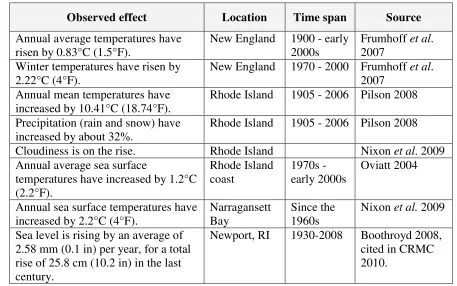
Table 1. Effects of climate change in New England and Rhode Island
Observed effect Location Time span Source
Annual average temperatures have
Cloudiness is on the rise. Rhode Island Nixon et al. 2009
Annual average sea surface
Sea level is rising by an average of 2.58 mm (0.1 in) per year, for a total rise of 25.8 cm (10.2 in) in the last century.
Newport, RI 1930-2008 Boothroyd 2008,
The effects of climate change in New England and Rhode Island are increasingly apparent (see Table 1). These effects may have serious consequences for both the environment and economy in Rhode Island. Increased precipitation has potential to cause flooding, property damage, loss of tourism income, increased runoff of pollutants and nutrients into coastal waters, and threats to the safety of infrastructure. Increased temperatures have potential to cause affect recreational opportunities, agriculture, species distributions, and electricity demand. Sea level rise has potential to alter coastal property and infrastructure, and can lead to increased beach erosion and marsh inundation. Species adapted to specific habitats may not be able to adapt to the changing physical characteristics of these habitats, and relationships between species may undergo transformations.
Electricity generation accounts for an increasing percentage of greenhouse gas emissions in the United States, and currently accounts for 40% of man-made carbon dioxide emissions (U.S. EPA 2012a).2 Based on emissions from power plants, New England’s contribution to carbon dioxide emissions per unit energy generated is below the national average,3 due to the lower carbon dioxide emissions rates of natural gas (U.S. EPA 2012a).4 However, carbon dioxide is just one of several gases that contribute to the global warming. Methane (CO4) is
pound for pound 25 times more effective than carbon dioxide at trapping heat in the atmosphere over a 100-year time period (IPCC 2007b). While burning natural gas for energy does not release methane (unless leaks occur), the processes by which natural gas is produced, processed, stored, transmitted, and distributed account for almost one third of human-induced methane emissions in the U.S.5 While a large segment of the pre-generation handling of natural gas used in New England takes place in other regions, the methane emissions that take place as a result of those processes can be considered an indirect consequence of reliance on natural gas as a predominant power source in New England.
When wind energy is used as a replacement for fossil fuel-based energy, a single 1 MW turbine is estimated to displace approximately 1,800 tons of carbon dioxide per year (AWEA 2009). A solar or hydroelectric project of the same magnitude can be expected to yield a similar result (the actual displacement of greenhouse gases varies as a result of the mix of fuel sources used within a region). IPCC scientists agree that widespread deployment of existing and near-ready renewable energy and energy-saving technologies would make it possible to stabilize
2 Carbon dioxide is not the only gas emitted by electricity generation and other anthropogenic processes that is implicated in
causing a greenhouse gas effect, but it represents the largest percentage, at approximately 84% of total greenhouse gas emissions in the U.S. (U.S. EPA 2012b).
3 New England has an annual carbon dioxide output rate of 827.95 lb/MWh; the U.S. as a whole has an annual carbon dioxide
output rate of 1,293.05 lb/MWh (U.S. EPA 2011).
4 The carbon dioxide output of natural gas is 1,135 lbs/MWh, as compared to coal (2,249 lbs/MWh) or oil (1,672 lbs/MWh) (U.S.
EPA 2012c).
greenhouse gas concentrations in the atmosphere and avert the worst predicted effects of climate change (IPCC 2007a).
Ocean Acidification
As carbon dioxide continues to accumulate in the atmosphere, much of it is absorbed by ocean waters. The ocean absorbed roughly half of the carbon emitted from human activities between 1800 and 1994 (Sabine et al. 2004), and continues to absorb an estimated one-third of current emissions (Feely et al. 2004; Canadell et al. 2007; Cooley and Doney 2009). As seawater absorbs carbon dioxide, it becomes more acidic. The IPCC estimates that the average pH of ocean surface water has decreased by 0.1 units since the dawn of the industrial revolution (IPCC 2007a), and predicts that it will increase by another 0.14 to 0.35 units over the 21st century if emissions continue to rise at their present rate (IPCC 2007a).
While the physiological effects of increased acidity on ocean organisms are not yet well documented, ocean acidification is expected to have negative impacts on marine shell-forming organisms and their dependent species (IPCC 2007a). In New England, shelled organisms that may be affected include quahogs, foraminifera, slippershell snails, sea stars, and coral (CRMC 2010). Ocean acidification can also lead to corrosion on vessels and marine infrastructure (CRMC 2010).
Air quality
In addition to producing carbon dioxide and other greenhouse gases, burning of fossil fuels produces nitrous oxides (NOX), volatile organic compounds, carbon monoxide, sulfur
dioxide (SO2), and particulate matter. Nitrous oxides may contribute to ground level ozone
(smog) and acid rain. Ground-level ozone can cause breathing problems, asthma, reduced lung function, and lung diseases (WHO 2011). Acid rain (also called acidic deposition) can harm forests and aquatic ecosystems by changing the pH of the environment, and can damage surfaces such as car exteriors (U.S. EPA 2012c). Sulfur dioxide may contribute to acid rain and can cause respiratory problems such as bronchoconstriction and increased asthma symptoms (U.S. EPA 2012d). Particulate matter, which consists of a mixture of solid and liquid particles suspended in the air, has is thought to increase the chances of incurring respiratory disease, cardiovascular disease, and lung cancer (WHO 2011). Natural gas, the primary fuel used for electricity generation in Rhode Island, releases lower quantities of harmful air pollutants than coal and oil.6 However, this does not mean that the effects are negligible.
When wind energy is used as a replacement for fossil fuel-based energy, a single 1 MW turbine displaces an estimated 9 tons of sulfur dioxide and 4 tons of nitrogen oxide each year (AWEA 2009). A solar or hydroelectric project of the same magnitude can be expected to yield
6 Natural gas produces only 0.1 lbs/MWh of sulfur dioxide (compared to 13 lbs/MWh for coal and 12 lbs/MWh for oil), and 1.7
a similar result (the actual displacement of air pollutants varies as a result of the mix of fuel sources in a region).
Energy stability
Natural gas is not an energy resource indigenous to New England; it is imported to the region through natural gas pipelines from other states in the Northeast, Texas, Louisiana, the Trans-Canada pipeline passing through New York and Vermont, and through the offshore LNG receiving facilities Northeast Gateway Deepwater Port and Neptune LNG LLC, located off the coast of Massachusetts (U.S. Energy Information Administration 2009; U.S. Department of Energy 2004; Rhode Island Office of Statewide Planning 2002; Excelerate 2010). If long-distance shipping of gas were ever to become impractical or expensive, Rhode Island would be cut off from this critical supply.
Price stability
Rhode Island’s almost exclusive dependence on natural gas exposes it to fluctuations in the price of energy. The U.S. Department of Energy (2004) recognized the region’s need for increased energy “to alleviate New England’s volatile energy market and reduce its over-reliance on natural gas….thereby increasing electric reliability and lowering energy costs by utilizing local resources in the generation of electricity (U.S. Department of Energy 2004:1).” Indigenous energy sources like wind, solar, and hydropower can be produced within Rhode Island’s borders, providing a greater guarantee of availability in the face of uncertainty.
Economic development and job creation
As a new industry, renewable energy has the potential to create new jobs. Moreover, unlike coal mining or oil drilling, renewable energy generation can take place in Rhode Island, keeping more jobs in the region where the energy is consumed.
According to the US Department of Energy, wind energy development creates thousands of long-term, high-paying jobs in fields such as wind turbine component manufacturing, construction and installation, maintenance and operations, legal and marketing services, transportation and logistical services, and more (U.S. DOE 2011). In 2010, an estimated 75,000 people were employed in the wind industry across the U.S. (U.S. DOE 2012), and employment in the wind turbine manufacturing industry along has increased rapidly in the last several years. The American Wind Energy Association (AWEA) reports that in 2008 alone, the industry grew by 35,000 new workers (AWEA 2010).
Potential drawbacks to renewable energy
While renewable energy is of interest to many stakeholders because of the benefits cited above, it should be noted that no energy source is entirely free of consequences. While renewable sources such as wind, solar, and hydropower may avoid many of the downsides associated with the burning of fossil fuels, they may nonetheless have negative impacts that communities should consider. Previous experience around the world suggests that renewable energy facilities, when not sited appropriately, can on occasion have deleterious effects on local quality of life and wildlife populations. In contrast to conventional energy sources, which tend to have negative externalities that are spread over large regions (e.g., air pollution) or the entire globe (e.g., climate change), the externalities of renewable energy sources may be highly localized (e.g., acoustic impacts of wind turbines), leading affected residents to feel that they are disproportionately affected.
For these reasons, the RESP does not take a one-sided stance in favor of renewable energy promotion. Instead, the RESP adopts a neutral stance and strives to shed light on both the opportunities and negative consequences associated with development of this new industry in Rhode Island, so that municipalities in the state can make informed decisions tailored to their own unique local circumstances and preferences. Above all, the intent of the RESP is to promote careful siting and planning as tools to help municipalities attain the benefits of renewable energy without causing inadvertent impacts on local residents and wildlife.
2.
O
BJECTIVES OF THERESP
URI’s Coastal Resources Center (CRC)/R.I. Sea Grant and the URI Outreach Center formally initiated the RESP process in August 2011 and concluded it in December 2012. The goal of the RESP was not to promote renewable energy or to determine the best spots in the state to site renewable energy projects. Rather, in light of Rhode Island’s Renewable Energy Standard mandate to obtain 16% of the state’s electricity from renewable sources by 2019, and the growing interest in renewable energy around the state as a route to economic development and environmental protection, the RESP set out to collect and synthesize information that would serve local decision makers and stakeholders as they make siting and permitting decisions in their own communities.