Ab Initio
Study of Proton Transfer and Hydration on Phosphorylated Nata de coco
Sitti Rahmawati
1,2, Cynthia Linaya Radiman
2, and Muhamad Abdulkadir Martoprawiro
2,* 1Chemistry Study Program, Mathematics and Sciences Division, Faculty of Teacher Training and Educational Sciences,Tadulako University, Jl. Soekarno Hatta Km 9 Palu 94118 Indonesia
2Inorganic and Physical Chemistry Division, Faculty of Mathematics and Natural Sciences, Bandung Institute of Technology, Jl. Ganesha 10 Bandung 40132 Indonesia
Received May 9, 2017; Accepted August 10, 2017
ABSTRACT
This research aims to calculate energetics parameters, hydrogen bonding, characteristics local hydration, and proton transfer in phosphorylated nata de coco (NDCF) membrane using ab initio method. The minimum energy structure of NDCF membranes and the addition of n water molecules (n = 1-10) determined at the B3LYP/6-311G** level indicates that proton dissociation requires a minimum of four water molecules. Dissociated protons stabilize with the formation of (hydronium, Zundel, Eigen) ions. Calculation of the interaction energy with n water molecules indicates an increasingly negative change in energy (ΔE) and enthalpy (ΔH), and hence an increasingly positive interaction with water molecules. This interaction facilitates the transfer of protons in the membrane matrix. Calculation of the rotational energy at the center of C-O indicates that the pyranose ring structure, with a maximum barrier energies of ~ 12.5 J/mol, is much more flexible than the aromatic backbones of sulfonated poly(phenylene) sulfone (sPSO2) and the polytetrafluoroethylene (PTFE) backbones in perfluorosulfonic acid ionomers (PFSA). These energy calculations provide the basis that the flexibility of the pyranose ring and the hydrogen bonding between water molecules and phosphonate groups influence the transfer of protons in the membrane of NDCF.
Keywords:proton transfer;ab initio; nata de coco
ABSTRAK
Penelitian ini bertujuan untuk menghitung parameter energetika, ikatan hidrogen, karakteristik hidrasi lokal, dan transfer proton pada membran nata de coco terfosfosfatasi menggunakan metodeab initio. Struktur energi minimum untuk nata de coco terfosfatasi dan penambahan n molekul air (n = 1-10) yang ditentukan dengan metode B3LYP/6-311G(d) menunjukkan bahwa untuk disosiasi proton minimal dibutuhkan empat molekul air. Proton yang terdisosiasi distabilkan dengan terbentuknya ion-ion hidronium, Zundel dan Eigen. Perhitungan energi interaksi dengan n molekul air menunjukkan perubahan energi (∆E), dan perubahan entalpi (∆H) yang semakin negatif. Hal ini menunjukkan interaksi dengan molekul air makin kuat. Interaksi ini dapat mempermudah transfer proton dalam matriks membran. Perhitungan energi rotasi pada pusat C-O menunjukkan bahwa struktur cincin piranosa jauh lebih fleksibel dibandingkan struktur aromatik polifenilen sulfon tersulfonasi (sPSO2), dan struktur politetrafluoroetilen (PTFE) dalam ionomer asam perfluorosulfonat (PFSA): energi penghalang terbesar dari cincin piranosa ~ 12,5 J/mol. Perhitungan energi tersebut memberikan dasar bahwa fleksibilitas dari cincin piranosa dan ikatan hidrogen antara molekul air dengan gugus fosfonat mempengaruhi transfer proton pada membran NDCF.
Kata Kunci:transfer proton;ab initio; nata de coco
INTRODUCTION
Fuel cells are a promising energy source hoped to alleviate the future energy crisis. A variety of different fuel cells are currently being studied and developed, each with their own advantages, weaknesses, and potential applications. In general, fuel cells generate energy efficiently (40–80%) and are environmentally friendly [1-3]. Fuel cells are also capable of continuous energy conversion as long as they are fed a sufficient supply of natural gas, hydrocarbons, or alcohol. Of the
various approaches, the Proton Exchange Membrane Fuel Cell (PEMFC) is one of the most promising, being both highly efficient and environmentally friendly. PEMFC utilizes a solid polymer membrane as an electrolyte [4-7].
proximity of chemicals with high proton conductivity (0.08 S/cm) [3,8-10]. On the other hand, Nafion cannot be reused, leading to a high environmental and production cost [8] of the PEMFC. In addition, Nafion is susceptible to dehydration, leading to a fall in proton conductivity at high temperatures [2,11-12].
These shortcomings have led to a search for alternatives to Nafion as an electrolyte in fuel cells, capable of operating at higher temperature, with higher mechanical robustness, but with a proton conductivity level approaching Nafion. Studies on phosphorylated bacterial cellulose (nata de coco) have been synthesized and characterized [4]. Phosphorylated nata de coco has been shown to possess proton conductivity approaching that of Nafion 117. The chemical structure of phosphorylated nata de coco differs from that of Nafion; the hydrophobic and hydrophilic domains contained in phosphorylated nata de coco are what facilitate proton transfer through a cluster network. Due to water in the media, protons and hydroxyl ions are in balance. The formation of ester cellulose eases the transfer of protons in the membrane matrix, as Hδ+ from the –Oδ-Hδ+ in phosphate rings are easily detached and quick to react with water producing ionized water. Oδ- also interacts with ionized water, resulting proton transfer and increasing the conductivity of the phosphorylated nata de coco membrane. In addition, hydrophilic and phosphate rings are able to form intermolecular hydrogen bonds and between water molecules. The rate at which the electrolyte membrane bonds with water will determine the proton transfer rate [13].
A number of models and simulations were developed to comprehend the hydration process and proton transfer in the membrane. The classical molecule dynamics (MD) andab initiomolecular dynamics (AIMD) methods were used to determine proton mobility as a function of hydration conditions and sulfonated function rings [14-15]. Studies on SSC PFSA membrane fragments show that the formation of hydrogen bonds between water molecules is highly dependent on acid ring connectivity. The study also shows that Zundel ions (H5O2+) play an important role in facilitating proton transfers in low hydration conditions. The results of ab initio computation on sPSO2 ionomers show that, as a whole, proton transfer occurs in various structures within sPSO2, with meta-meta conformity generally preferred over orto-orto conformity. sPSO2 ionomers are more effective in producing moving protons in low-water conditions [16]. A study of proton transfer energetics in phosphoric acid clusters shows that the (second) energy barrier of proton transference and its endothermic properties fall with an increase in the size of phosphoric acid clusters [17]. In line with these findings, this study will evaluate proton transfer in bacterial cellulose membranes (phosphorylated nata de coco); the structure
of hydrogen bonds between molecules, and how the structure reacts to the gradual addition of n water molecules at various points in the bacterial cellulose structure.
EXPERIMENTAL SECTION
Instrumentation
Devices research used in this study consists of hardware and software. Super computer hardware in the form of High Performance Computer (HPC) systems at ITB Bandung. This facility is an integrated computer facilities consisting of 20 modules, each of which has two hexacore intel X5650 (Hyper threading per core subject which produce a total of 24 cores per module) RAM 16 GB and 320 GB Hard Disk capacity. The software used is a Linux-based operating systems with input in the form of z-matrix structure and computational calculations using GAUSSIAN 09 for Linux, and ChemCraff, Jmol, GaussView used to make the initial coordinates of the molecular structure and visually see the output.
Computation Method
The quantum mechanical ab initio method was used to compute the interaction energy between phosphorylated nata de coco molecules. All electronic structural calculations utilized the Gaussian09 software. Previous studies indicated of the minimum energy structure, the electronic structure, and geometry optimization are determined at the quantum mechanicalab initiomethod, indicated the migration of protons in the interaction of acetic acid-water and ammonia [18].
Initial structure and geometric optimization
The first procedure was the creation of initial structure coordinates (z-matrix) of the molecules in the phosphorylated nata de coco polymer membrane. The bonds’ lengths, relative orientations, and dihedral orientations are required to calculate the z-matrix. Next, geometric optimization of the polymer membrane molecule was conducted using the DFT/B3LYP method with the 6-311G (d) basis set. This optimization was generated until the most stable conformity structure of the phosphorylated nata de coco molecule. The final energy obtained from this optimization indicates the lowest energy level with the most structurally stable molecule with minimum intra-atom repulsion.
Energy calculation
dimers, trimmers, etc.) was used to calculate energy, by adding a water molecule in the same position. The DFT method with the B3LYP function and the 6-311G(d) basis set was used to generate these calculations. The change in energy between dimers, trimmers, etc. was then obtained from the various optimized conformance structure energy calculations. These calculations heavily influence subsequent results in this study [16].
To investigate changes in proton transfers and hydrogen bonding in the vicinity of the phosphoric acid groups in low water conditions, water molecules were added one by one (i.e. + nH2O, wheren = 1-10) to the optimized structures generated in the previous steps. Finally, optimizing the results of this process, obtained the interaction energy between water molecules and the phosphonate groups. The binding strength (due to hydrogen bonding) was evaluated at the B3LYP/6-311G(d) level and subsequently corrected for zero-point energy (ZPE) and basis set superposition error (BSSE) as has been done by Wang and Paddison systems sulfonated poly phenylene sulfone. [16]. The calculation
of energy changes (ΔE) using the formula of equation 1,
the same principle used to calculated the enthalpy
changes (ΔH) and free Gibbs energy change (ΔG). The
rotational energy barriers with the method described above as then conducted to determine the flexibility of the pyranose ring backbone.
Phosphorylated nata de coco is a polymer that
contain of β-1,4 bonds D-glucose phosphonate units
(monomer). Interaction energy changes of phosphorylated nata de coco are determined by added one water molecule to its monomer (two, three, four and five) on the same position. The results of various
structure optimizations are Interaction energy changes of the monomers and water showed no significant changes, about -12.55 kcal/mol [19]. These results tell that two monomer structures can represent longer phosphorylated nata de coco polymer in the interaction energy calculation with water molecule [20].
The structure of phosphorylated nata de coco is comprised of several hydroxyl ions and phosphonate groups (–PO3H2), which has been shown to affect local hydration and properties of the proton transfer. The minimum energy structure of phosphorylated nata de coco, determined through the B3LYP/6-311G(d) method elaborated upon above, is shown in Fig. 1.
For the conformation shown in Fig. 1, the hydrogen bond between the phosphonate (–PO3H2) and hydroxyl (–OH) groups is comparable to the
hydrogen bond in phosphoric clusters, namely 1.810 Ǻ
[17], classified as medium hydrogen bonds [20].
Backbone Conformation
Aside from intra molecular interaction, the B3LYP/6-311G (d) method was also used to calculate the interaction between pyranose rings by rotation at
Fig 1. Structural optimization of phosphorylated nata de coco dimers (B3LYP/6-311G(d))
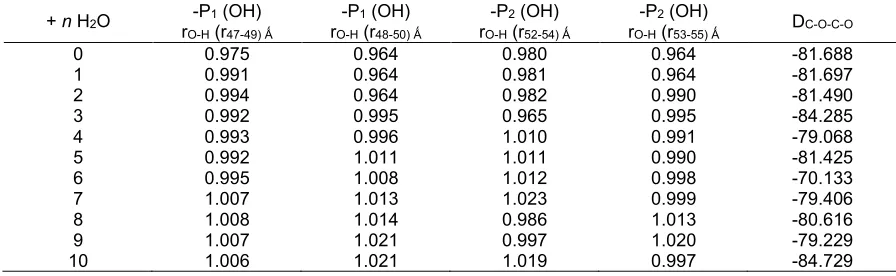
Table 1. Results of the structure optimization of the phosphorylated nata de coco dimer + n water molecules (B3LYP/6-311G (d) method)
0 0.975 0.964 0.980 0.964 -81.688
1 0.991 0.964 0.981 0.964 -81.697
2 0.994 0.964 0.982 0.990 -81.490
3 0.992 0.995 0.965 0.995 -84.285
4 0.993 0.996 1.010 0.991 -79.068
5 0.992 1.011 1.011 0.990 -81.425
6 0.995 1.008 1.012 0.998 -70.133
7 1.007 1.013 1.023 0.999 -79.406
8 1.008 1.014 0.986 1.013 -80.616
9 1.007 1.021 0.997 1.020 -79.229
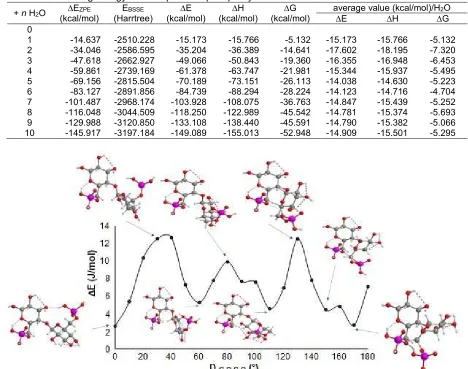
Table 2.Binding energy for the optimized phosphorylated nata de coco dimer +nwater molecules
+nH2O ∆EZPE (kcal/mol)
EBSSE (Harrtree)
∆E
(kcal/mol)
∆H
(kcal/mol)
∆G
(kcal/mol)
average value (kcal/mol)/H2O
∆E ∆H ∆G
0
1 -14.637 -2510.228 -15.173 -15.766 -5.132 -15.173 -15.766 -5.132 2 -34.046 -2586.595 -35.204 -36.389 -14.641 -17.602 -18.195 -7.320 3 -47.618 -2662.927 -49.066 -50.843 -19.360 -16.355 -16.948 -6.453 4 -59.861 -2739.169 -61.378 -63.747 -21.981 -15.344 -15.937 -5.495 5 -69.156 -2815.504 -70.189 -73.151 -26.113 -14.038 -14.630 -5.223 6 -83.127 -2891.856 -84.739 -88.294 -28.224 -14.123 -14.716 -4.704 7 -101.487 -2968.174 -103.928 -108.075 -36.763 -14.847 -15.439 -5.252 8 -116.048 -3044.509 -118.250 -122.989 -45.542 -14.781 -15.374 -5.693 9 -129.988 -3120.850 -133.108 -138.440 -45.591 -14.790 -15.382 -5.066 10 -145.917 -3197.184 -149.089 -155.013 -52.948 -14.909 -15.501 -5.295
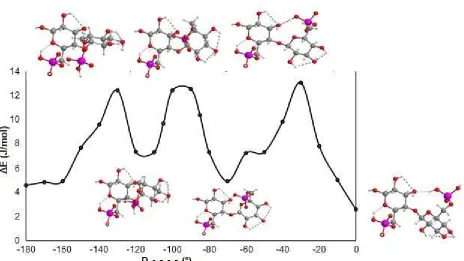
Fig 2. Relative rotational energy along central C–O bonds in phosphorylated nata de coco dimers obtained at B3LYP/6-311G(d)
the C-O bond. Structural parameters, including the dihedral degree of rotation for the C-O bond (DC-O-C-O) and the O-H bond length (-PO(O···H)2) is shown in Table 1. Electronic energy, zero point energy, change in internal energy, Gibbs free energy, and change in enthalpy are shown in Table 2.
The interaction between the phosphonate (-PO(O ··· H)2) and hydroxyl groups and the interaction of pyranose rings significantly affects conformance. Each phosphate groups in the phosphorylated nata de coco dimer is expected to interact with neighboring hydroxyl and pynarose rings or with its hydroxyl unit. Consequently, the pyranose ring tends to rotate about its C–O bond to minimize the steric effect. The determination of the global minimum energy of the phosphorylated nata de coco dimer structure in Fig. 2 and 3 show that the two pyranose rings are regulated by an advantageous barrier energy configuration. The potential energy surface (PES) scans have been
Fig 3. Relative rotational energy along central C–O bonds in dimer phosphorylated nata de coco obtained at B3LYP/6-311G(d)
Proton Transfer and Hydration
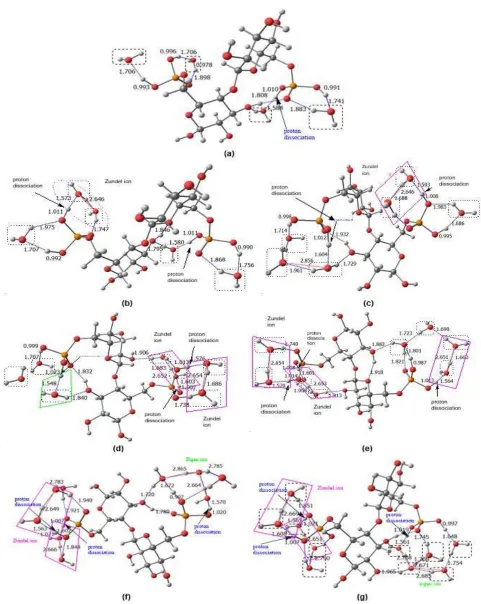
To investigate proton transfer near the phosphate ring (-PO(O···H)2) at a low degree of hydration, water molecules were added one by one to the phosphorylated nata de coco dimer. Utilizing the B3LYP/6-311G (d) method, multi hydration phosphorylated nata de coco dimers were obtained from various structures with n molecule air (n= 1–10), with the resulting conformances shown in Fig. 4.
The optimization results obtained from energy data of each structure, so it can be calculated change in energy, enthalpy change and the Gibbs free energy change using equation 1. Table 2 displays data from the energy calculation results and BSSE computation that corrects the bonding energy between molecules. An increasingly negative change in energy, Gibbs free energy and enthalpy indicates a stronger interaction with
water molecules. The values of ΔE, ΔG and ΔH show
the stability parameters of a system's thermodynamics; the more negative the reaction will tend to be stable because the reaction takes place spontaneously. The addition of one water molecule to the system lowers the change in energy, enthalpy change and the change in
Gibbs free energy (ΔE, ΔG and ΔH), so that the intensity
of the interaction between the phosphorylated nata de coco dimers with the water molecule also increases. The
values of ΔE, ΔG and ΔH indicate the thermodynamic
stability parameters of a system, the more negative the
reaction will tend to be stable because the reaction is spontaneous. The addition of one water molecule to the system lowers the system, so that the intensity of the interaction between the phosphorylated nata de coco dimers with the water molecule also increases, encouraging the transfer of protons in the membrane matrix as the Hδ+ from –Oδ-Hδ+ in the phosphate ring is able to easily dissociate and is free to interact with water to produce protonated water. –Oδ- will also interact with other protonated water molecules leading to increased proton transfer and increasing the conductivity of the phosphorylated nata de coco membrane. Intermolecular interaction between polymer chains will fall and interaction between phosphate groups and water will subsequently rise [13]. The
average value of ΔE, ΔG and ΔH for the interaction
between water molecule and nata de coco dimer increased gradually at addition of 1-2 water molecules, decreased gradually up to addition of five water molecules, and were relatively constant for the next addition of water molecules.
The bonding energy tends to be similar, with a rise in bonding energy corresponding to increased hydration. The local hydration of the phosphorylated nata de coco dimer was considerably different from that of PFSA and sPSO2; in sPSO2 proton dissociation occurred with the addition of a minimum of three water molecules (dO-H =
1.02 and 1.06 Ǻ), while in PFSA a minimum of five water
molecules ((dO-H = 1.01 and 1.02 Ǻ) was required [16,21-22]. In phosphorylated nata de coco dissociation (dO-H=
1.01 Ǻ) was observed with the addition of four water
molecules, with the dissociated proton stabilizing into a hydronium ion as seen in Fig. 4a. With the addition of five and six water molecules, the two dissociated protons stabilized into Zundel and hydronium ions as seen in Fig. 4b. The existence of a Zundel ion resulted in a minimum bonding energy, hence encouraging proton transfer as Zundel ions function as a mediator in the proton transfer process. With the addition of seven and eight water molecules, the three dissociated protons formed two Zundel ions and one hydronium ion as seen in Fig. 4c. Finally, with the addition of nine and ten water molecules, one Eigen ion and two Zundel ions were formed as a result of the dissociation seen in Figure 4d. The hydronium ion forms an Eigen ion through the hydrogen bonds formed with three water molecules with
an average O-H distance of 2.56 Ǻ. The formation of an
Eigen ion indicates that the proton has migrated to the second hydration layer [23].
CONCLUSION
Optimization results from the B3LYP/6-311G (d) calculation shows that proton dissociation requires a minimum of four water molecules. Dissociated protons are stabilized with the formation of hydronium, Zundel, and Eigen ions. The gradual addition of n water molecules (with n= 1-10) leads to increasingly negative changes in energy (∆E) and enthalpy (∆H), indicating stronger interaction with water molecules. This interaction may encourage proton transference in the membrane matrix. Rotational energy calculations show that the pyranose ring structure is significantly more flexible than the aromatic sPSO2 structure and the poly tetra fluoro ethylene (PTFE) structure in perfluoro sulfonic acid (PFSA) ionomer. The highest rotational barrier energy of the pyranose rings were ~12.5 J/mol. These energy calculations provide the basis that the flexibility of the pyranose ring and the hydrogen bonding between water molecules and phosphonate groups influence the transfer of protons in the membrane of phosphorylated nata de coco.
ACKNOWLEDGEMENT
The authors are grateful for financial support of the scholarship Beasiswa Pendidikan Pascasarjana Dalam Negeri (BPP-DN), Ministry of Research, Technology and Higher Educationof the Republic of Indonesia, the through Doctoral program Graduate School of Institut Teknologi Bandung, Indonesia.
REFERENCES
[1] Schuster, M., de Araujo, C.C., Atanasov, V., Andersen, H.T., Kreuer, K-D., and Joachim Maier, J., 2009, Highly sulfonated poly(phenylene sulfone): Preparation and stability issues, Macromolecules, 42 (8), 3129–3137.
[2] Maiyalagan, T., and Pasupathi, S., 2010, Components for PEM fuel cells: An overview, Mater. Sci. Forum, 657, 143–189.
[3] Zaidi, S.M.J., and Matsuura, T., 2009, Polymer Membranes for Fuel Cells, Springer, New York. [4] Wang, Y., Chen, K.S., Mishler, J., Cho, S.C., and
Adroher, X.C., 2011, A review of polymer electrolyte membrane fuel cells: Technology, applications, and needs on fundamental research, Appl. Energy, 88 (4), 981–1007.
[5] Smitha, B., Sridhar, S., and Khan, A.A., 2005, Solid polymer electrolyte membranes for fuel cell applications—A review, J. Membr. Sci., 259 (1-2), 10–26.
[6] Mecheri, B., D’Epifanio, A., Traversa, E., and Licoccia, S., 2008, Sulfonated polyether ether ketone and hydrated tin oxide proton conducting composites for direct methanol fuel cell applications,J. Power Sources, 178 (2),554–560. [7] Song, A.K., Batista, C., Sarpeshkar, R., and Han,
J., 2008, Rapid fabrication of microfluidic polymer electrolyte membrane fuel cell in PDMS by surface patterning of perfluorinated ion-exchange resin,J. Power Sources, 183 (2), 674–677.
[8] Spry, D.B., and Fayer, M.D., 2009, Proton transfer and proton concentrations in protonated Nafion fuel cell membranes, J. Phys. Chem. B, 113 (30), 10210–10221.
[9] Bae, B., Miyatake, K., and Watanabe, M., 2008, Sulfonated poly(arylene ether sulfone) ionomers containing fluorenyl groups for fuel cell applications,J. Membr. Sci., 310 (1-2), 110–118. [10] Wilkinson, D.P., Zhang, J., Hui, R., Fergus, J., and
[11] Neburchilov, V., Martin, J., Wang, H., and Zhang, J., 2007, A review of polymer electrolyte membranes for direct methanol fuel cells,J. Power Sources, 169 (2), 221–238.
[12] Liu, Q., Song, L., Zhang, Z., and Liu, X., 2010, Preparation and characterization of the PVDF-based composite membrane for direct methanol fuel cells,Int. J. Energy Environ., 1 (4), 643–656.
[13] Radiman, C.L., and Rifathin, A., 2013, Preparation of phosphorylated nata-de-coco for polymer electrolyte membrane applications, J. Appl. Polym. Sci., 130 (1), 399–405.
[14] Cui, S., Liu, J., Selvan, M.E., Paddison, S.J., Keffer, D.J., and Brian J. Edwards, B.J., 2008, Comparison of the hydration and diffusion of protons in perfluorosulfonic acid membranes with molecular dynamics simulations, J. Phys. Chem. B, 112 (42), 13273–13284.
[15] Habenicht, B.F., Paddison, S.J., and Tuckerman, M.E., 2010, The effects of the hydrophobic environment on proton mobility in perfluorosulfonic acid systems: An ab initio molecular dynamics study, J. Mater. Chem., 20 (30), 6342–6351.
[16] Wang, C., and Paddison, S.J., 2013, Hydration and proton transfer in highly sulfonated poly(phenylene sulfone) ionomers: An ab initio study, J. Phys. Chem.A, 117 (3), 650−660.
[17] Vilciauskas, L., Paddison, S.J., and Kreuer, K-D., 2009, Ab initio modeling of proton transfer in
phosphoric acid clusters, J. Phys. Chem. A, 113 (32), 9193–9201.
[18] Wijaya, K., Tahir, I., and Harnowo, 2003, Study of double protons migration mechanism in supramolecular structures of acetic acid-water and acetic acid-ammonia by ab initiomethod,Indones. J. Chem., 3 (2), 102-110.
[19] Rahmawati, S., Radiman, C.L., and Martoprawiro, M.A., 2016,Ab initiostudy of phosphorylated nata de coco membrane structure, Prosiding Seminar Nasional Sains dan Pendidikan Sains, ISBN: 978-602-74182-0-2, 54–57.
[20] Rahmawati, S., Radiman, C.L., and Martoprawiro, M.A., 2016, Ab initio calculation of hydration and proton transfer on sulfonated nata de coco,Eur. J. Chem., 7 (4), 442–447.
[21] Paddison, S.J., 2005, Molecular modeling of the short-side-chain perfluorosulfonic acid membrane, J. Phys. Chem. A, 109 (33), 7583–7593.
[22] Paddison, S.J., and Elliott, J.A., 2006, On the consequences of side chain flexibility and backbone conformation on hydration and proton dissociation in perfluorosulfonic acid membranes, Phys. Chem. Chem. Phys., 8, 2193–2203.